Skip to content

Custom Polybag Packaging
Private-label garment packing built around product protection, SKU accuracy, brand presentation and warehouse-ready delivery.
- 30+ finishing and packing workers handle pressing, folding, hangtags, stickers, individual packing and carton preparation for womenswear orders.
- 15+ QC inspectors support garment and packing checks, including labels, barcode stickers, size identification, polybags, folding method and carton marks.
- Base garment MOQ starts from 200 pcs per style/color; custom printed or special-spec packaging can carry separate supplier MOQ requirements.
- Packaging can connect individual garments with barcode, SKU, size/color identification, private-label packing, carton marks and warehouse receiving instructions.
Built for Branded Womenswear Programs
Global Womenswear Brands
Private-Label Programs
Premium Ecommerce
Specialty Retail
Sourcing Teams
Multi-SKU Collections

From Finished Garment to Warehouse-Ready Unit
The polybag enters the process after the garment has passed its finishing and packing preparation. Each step has a separate purpose: appearance, identification, protection, carton control and receiving accuracy.
- Garment QC and Finishing: Measurements, visible defects, loose threads, stains, label position and garment appearance are reviewed before packing. Pressing and final cleaning are completed before the piece is folded.
- Folding and Identification: The garment is folded according to its construction and fabric behavior, then matched with the correct hangtag, barcode, SKU, size and color identification required by the packing instruction.
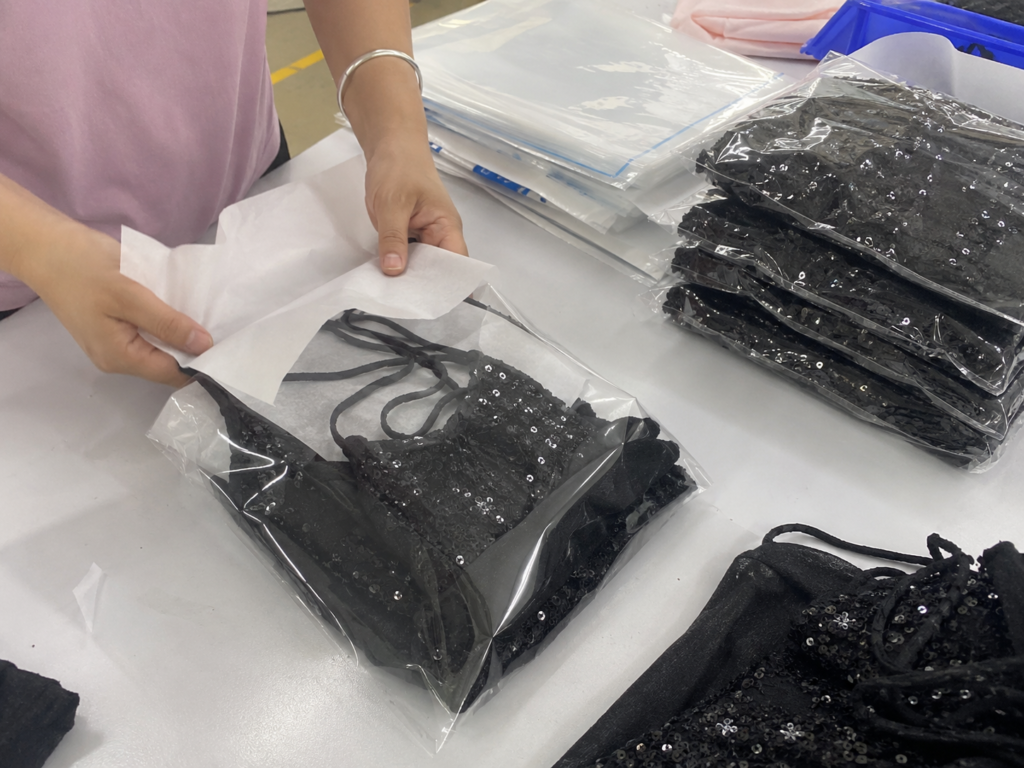
- Individual Polybag Packing: The approved bag specification is matched to the folded garment. Bag size, closure, printed information, warning text, air-hole requirement and sticker placement are checked by project.
- Carton Ratio and Marks: Packed units are grouped by approved style, color and size ratio. Carton marks and quantity breakdown are checked against the packing list and shipment requirement.
- Warehouse and Delivery Files: Warehouse labels, carton marks, packing lists and delivery instructions are prepared according to the agreed program, including client-nominated forwarder requirements when applicable.
Polybag Options for Private-Label Womenswear
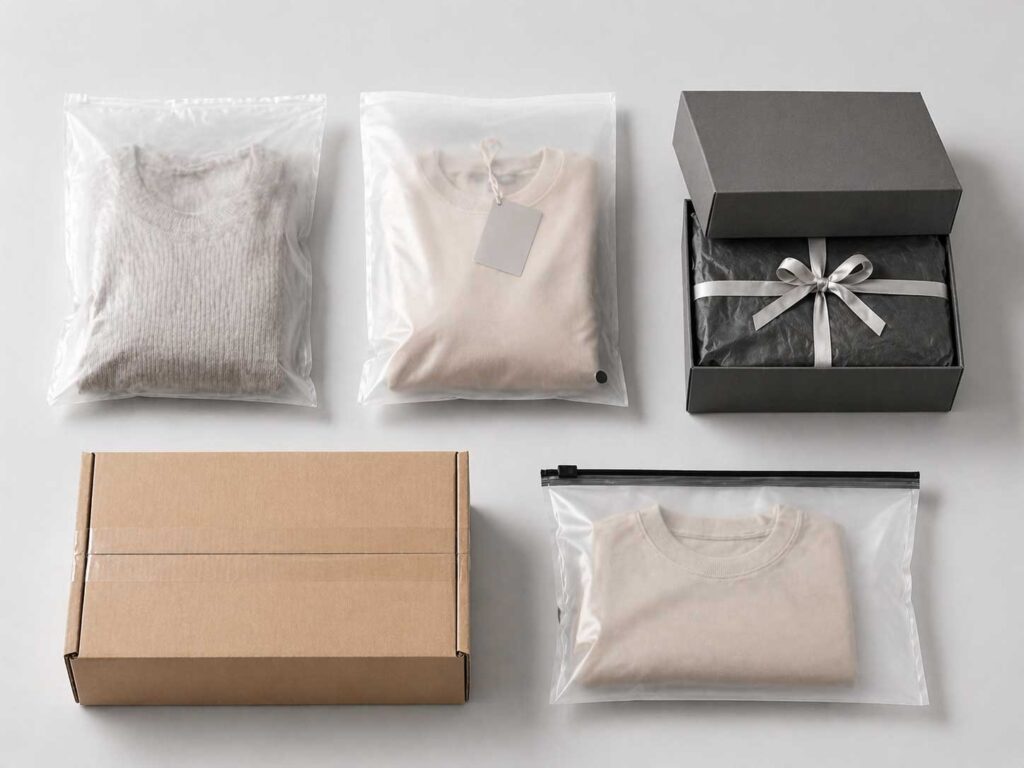
Clear Polybag

Frosted Polybag

Printed Polybag

Recycled Polybag

Self-Adhesive Closure

Air-Hole / Warning Options
Control the Polybag Specification Before Bulk Packing
A usable packaging specification is more than a bag size. It connects the physical garment, brand artwork, warehouse identification and supplier feasibility. Jinfeng reviews the packaging requirement before it becomes a bulk packing instruction.
| Specification | What to Confirm | Why It Matters |
| Bag dimensions | Folded garment width, length and thickness | Avoids over-compression, excess movement and poor presentation |
| Material / finish | Clear, frosted, recycled-content option by project | Affects appearance, cost, availability and brand policy |
| Thickness | Project requirement and supplier capability | Affects protection, hand feel, material use and cost |
| Closure | Self-adhesive or approved alternative | Affects packing speed, reopening and unit presentation |
| Air holes | Quantity, size and position if required | Supports handling requirements and avoids late rework |
| Printed artwork | Logo, warning text, print position, approved file | Controls brand consistency and packaging legality |
| Barcode / SKU | Sticker size, scan orientation and placement | Supports receiving, allocation and fulfillment |
| Size / color ID | Sticker format and position | Reduces picking and packing confusion |
| Quantity | Garment volume plus packaging supplier MOQ | Determines sourcing feasibility and unit cost |
| Packing instruction | Approved photos, sequence and carton rules | Turns the specification into repeatable bulk execution |
One Polybag Does Not Fit Every Dress
Garment construction changes the way a product should be folded, protected and sized into a bag. Polybag planning should follow fabric sensitivity and silhouette rather than forcing every SKU into one generic packing method.

Satin Dresses

Chiffon Dresses
Chiffon is lightweight and often layered. Excessively tight packing can create concentrated wrinkles, while loose packing without organized folding can leave the garment tangled inside the bag.Lining, long hems and delicate straps need to be arranged before the unit is sealed so the garment can be unpacked with less reshaping.

Sequin Dresses

Mesh and Lace Dresses

Maxi Dresses

Structured and Corset Dresses

Folding Method Comes Before Bag Size
Polybag dimensions should be confirmed after the folding method is understood. A packaging supplier can manufacture a bag to a specification; the apparel manufacturer must first decide how the finished garment can be folded without compromising appearance, trims or silhouette.
- Satin: Control Pressure Lines
Pressing is completed before folding. High-visibility front panels, bust areas and long satin surfaces should not be folded through prominent visual zones when another fold direction is available. The approved folded size then becomes the basis for bag dimensions.
- Chiffon: Keep Layers Organized
Layered chiffon, lining and long skirt panels are aligned so the garment does not twist inside the bag. Light folds and an orderly placement of straps help reduce the amount of re-steaming needed after unpacking.
- Sequin: Separate Abrasive Surfaces
Decorated areas are positioned to reduce sequin-on-sequin or sequin-on-delicate-fabric abrasion. Lining and interior panels can be used as buffers where the style allows, while exposed hardware is kept away from the decorated face.
- Maxi: Manage Length Without Crushing
Long hems need a fold plan that balances carton efficiency with presentation. A smaller bag may reduce volume but create more crease lines; a larger folded format may protect appearance but increase packaging and freight volume.
- Structured Styles: Preserve Shape
Corset cups, boning and shaped bodices are not treated like flat jersey garments. Fold direction is planned around the structure, and the bag should not force the bodice into a compressed profile.
Finishing Standards Before Individual Packing
A clean polybag cannot compensate for unfinished garments. Packaging begins only after the piece has reached the approved finishing condition. Jinfeng uses a dedicated finishing and packing team to keep the last production steps connected to the final delivery standard.
- Thread and Surface Cleaning: Loose threads, lint and visible surface contamination are removed before the garment enters the bag. The inside of the bag is also kept free from thread waste or packing debris that can lower presentation quality.
- Pressing Review: Pressing follows fabric behavior. Satin, chiffon, velvet and structured styles do not use one identical handling approach. The garment should be packed only after the visible surface and seam areas are in acceptable condition.
- Label and Hangtag Check: Main labels, size labels, care labels and hangtags are checked against the approved style and size information before individual packing. Placement and content errors are easier to correct before the garment is sealed.
- Sticker and SKU Match: Barcode, SKU, size and color stickers are matched against the correct garment. For multi-style collections, the purpose is to prevent an accurate garment from being paired with an inaccurate identification label.
- Individual Packing: The approved folded garment enters the correct bag specification and is sealed according to the packing instruction. Units are then grouped into the required color-size ratio for carton packing.

Barcode, SKU, Size and Color Identification
Barcode Sticker
SKU Label
Size Sticker
Color Sticker
Style Number
Confidential Data
Ecommerce Packing and Retail-Ready Packing
Ecommerce-Ready Packing
Retail-Ready Packing

Printed Polybags Need Artwork and Production Control
Printed packaging carries brand information, so the approval process should be handled with the same discipline as labels and hangtags. Jinfeng coordinates the brand file with the garment packing requirement and confirms supplier feasibility before bulk use.
- Artwork File: Logo, warning text, symbols and layout should be supplied in usable artwork with a clear size and position requirement. Low-resolution screenshots are not a reliable bulk-printing standard.
- Print Position: The printed area must remain readable after the garment is inserted and the bag is sealed. Placement should not conflict with barcode stickers, size labels or adhesive closure zones.
- Brand Color: Packaging print color should follow an approved reference. Material finish can change the visual result, so printed samples or supplier proofs may be needed before a large program is released.
- Warning Text: Where warning text is required, wording and placement should follow the brand’s market or warehouse requirements. Jinfeng does not replace a client’s legal or compliance review.
- Supplier MOQ: Printed polybags may require a different MOQ from the garment MOQ. Artwork, color count, bag construction and material choice can affect the supplier threshold and should be checked early.
- Revision Control: When artwork changes, the latest approved version needs to replace the previous packing file. Old files should not remain active on the production floor after a revision.
Packaging Development from Brand File to Bulk

Brand Files
Logo artwork, polybag reference, label files, barcode data, SKU table, packing instruction, warehouse guide and carton-mark requirements are collected.

Requirement Review

Specification Confirmation

Cost and MOQ Check

Approval Sample / Proof

Packing Instruction

Bulk Packing
Finished garments are matched with the correct labels, stickers and bag specification, then packed according to the approved ratio.

Packing QC and Shipment
Unit-level and carton-level checks are completed before shipment files and warehouse requirements are finalized.
Packing QC Connects the Garment to the Warehouse
Packing QC is not a cosmetic final look. Its purpose is traceability: the garment inside the bag, the identification outside the bag and the carton information all need to describe the same unit.
- Garment-to-Label Match
Style, size and color are checked against sewn labels and the approved packing data before external stickers are applied. - Hangtag and Care Information
Hangtags, care labels and size information are checked for the correct style and approved content. Incorrect brand files are stopped before carton packing. - Barcode and SKU
Barcode stickers and SKU labels are reviewed for correct item association and placement. Scan checks can be added when required by the project or receiving specification. - Polybag and Folding
Bag size, closure, printed information, warning text and folding method are checked against the approved packing instruction. A bag that damages the garment is not considered correct simply because the print is accurate. - Packing Ratio
Color and size ratios are checked before cartons are closed. Multi-SKU programs require disciplined separation to prevent the right units entering the wrong carton. - Carton Marks
Style, color, size, quantity, carton number, PO reference, gross/net weight and carton measurements are checked as required by the shipment instruction.
Prevent Packaging Errors Before They Reach Receiving
Wrong Size Sticker
Wrong Barcode
Mixed SKU
Wrong Polybag Size
Wrong Carton Mark
Outdated Artwork

Polybag Packing Continues into Carton Control
The individual bag is only one layer of delivery. Large apparel programs also need a carton system that preserves the style, color and size logic created at unit level.
- Color and Size Ratio
Packed units are grouped according to the approved carton ratio. Ratio rules should be clear before the packing line starts, especially when a collection contains several sizes and multiple colorways. - Carton Numbering
Carton numbers help connect physical cartons to the packing list and shipment record. Numbering is kept consistent across split or phased shipments. - Carton Marks
Marks may include style number, color, size, quantity, carton number, PO number, gross/net weight, carton measurement, destination and shipping mark as required. - Warehouse Labels
Client warehouse labels can be added when supplied in the approved format. Placement is coordinated so warehouse information remains legible after freight handling. - Packing List
The final packing list should reflect the actual carton breakdown. Unit-level accuracy loses value if the carton record does not match the physical shipment. - Phased Shipment
When a program ships in more than one batch, packing records help keep the same label, polybag and carton logic across each release.
Custom Polybag MOQ and Cost Drivers
Garment MOQ and packaging MOQ are not the same calculation. Jinfeng’s base garment MOQ starts from 200 pcs per style/color, while a custom printed bag, special material or dedicated packaging component may have a separate supplier MOQ. Cost is reviewed from the approved specification rather than hidden inside a generic unit price.
Cost / MOQ Driver | Typical Effect | Planning Note |
Bag dimensions | Changes material use and carton volume | Confirm after folding method |
Material / finish | Affects appearance, sourcing and unit cost | Check availability by project |
Thickness | Changes material consumption and feel | Confirm supplier range |
Printed artwork | Adds print setup and approval work | Separate MOQ may apply |
Color count / coverage | Can increase print cost | Use approved artwork |
Closure / air holes | Adds bag-specific processing | Confirm before quote |
Barcode / SKU stickers | Adds material and packing labor | Supply SKU table early |
Manual folding / inserts | Adds handling time | Define packing sequence |
Recycled-content option | May affect MOQ, look and documentation | Verify supplier files |
Order quantity | Affects packaging purchasing efficiency | Plan across valid SKU volume |
Recycled and Plastic-Reduction Options by Project
Recycled Polybag
Paper-Based Alternatives
Plastic Reduction
18 Styles, 28,000 Pieces: Packaging Across a US Private-Label Program
An anonymous US large private-label client worked with Jinfeng Apparel on an 18-style womenswear program of around 28,000 pieces. The collection covered satin, mesh, jersey, lace and crepe dresses, creating different folding behavior, surface risks and packing requirements across one coordinated order.
The Challenge
The program had to keep multi-style development, SKU control, private-label packing, client inspection and shipment documentation aligned. Hangtags, barcodes, polybags and carton marks could not be managed as separate last-minute tasks because one mismatch could affect receiving accuracy across thousands of garments.
Packaging Standardization
Jinfeng organized the packaging requirement by style and maintained the approved hangtag, barcode, polybag and carton-mark logic through bulk production. Packaging files were treated as part of the order record, alongside fabric, trim and sample-version information.
SKU and Carton Control
Packed units were checked against style, color and size information before carton packing.
The carton stage followed the approved breakdown and mark requirements so the physical shipment could be reconciled with the packing documentation.
Inspection and Phased Shipment
Client inspection support and shipment files were coordinated with phased delivery.
The purpose was not only to send 28,000 garments, but to keep the packaging identity consistent across multiple styles and shipment batches.
What the Case Proves
For a large apparel program, custom polybag packaging works best when it is managed inside the production system.
Garment condition, SKU data, labels, bag specification, packing ratio and shipment documents all need one controlled record.

Prepare These Files Before Packaging Approval
Brand and Label Files
Polybag Requirement
Barcode and SKU Table
Folding Instruction
Carton Requirement
Warehouse Guide
Custom Polybag Packaging Frequently Asked Questions

Build Packaging Around the Garment, Not After It
Custom polybag packaging is most reliable when garment finishing, folding, identification and carton control are planned together. Jinfeng Apparel integrates private-label packing into custom womenswear production so approved garments can move from final QC into individual polybags, SKU identification, carton packing and export delivery without separating packaging from the production record.
- Send a tech pack, style reference or approved sample so folded dimensions and fabric sensitivity can be reviewed.
- Provide the polybag reference or artwork, including print, warning text, closure and air-hole requirements where applicable.
- Share barcode and SKU data with style, color and size mapping before bulk packing.
- Include packing ratio, carton-mark format and warehouse receiving instructions for retail or ecommerce programs.
- Custom packaging MOQ, cost and timing are confirmed from the final specification and packaging supplier requirements.
- Packaging files, barcode data and warehouse instructions can be managed under NDA-based cooperation.