Skip to content

Fit Comment Template Standardization
Turn Fit Feedback Into Clear Pattern and Production Instructions
Fit comments work best when every issue can be located, measured, corrected, reviewed, and closed. Jinfeng Apparel supports fashion teams that need structured communication between technical development and manufacturing, carrying approved fit decisions from sample review into pattern correction, revised samples, PP approval, and bulk measurement control.
- 7+ senior pattern makerssupport pattern development and fit correction.
- 2 sample rooms + 20+ sample machinistssupport structured sample development and revisions.
- 12+ merchandiserscoordinate sample status, technical files, and production follow-up.
- 15+ QC inspectorssupport measurement and garment inspection during production.
Technical Teams Behind Every Fit Correction
7+ Pattern Makers
2 Sample Rooms
20+ Sample Machinists
12+ Merchandisers
15+ QC Inspectors
One Connected Workflow
Who Benefits From Standardized Fit Comments
Technical Design Teams
Product Development Teams
Sourcing Teams
Fashion Brand Groups
Private Label Programs
Seasonal Collections
Where Fit Communication Usually Breaks Down
Comments Without Measurements
Conflicting Sample Versions
A correction can be valid and still fail when applied to the wrong version.
First sample, fit sample, revised sample, photo sample, and PP sample need clear identification so old comments do not re-enter an already corrected pattern.
What a Fit Comment Template Should Capture
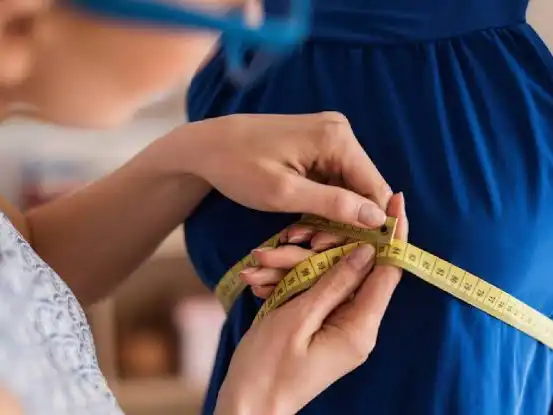
A useful fit-comment template connects visual fit, measurements, pattern changes, and approval status. Every field should help the next person make a decision or execute a correction rather than simply creating more documentation.
| Field | What It Records | Manufacturing Use |
|---|---|---|
| Style Number | Unique garment reference | Prevents style confusion |
| Sample Stage | First, fit, revised, PP, Golden | Identifies the correct round |
| Revision Number | Current file or sample version | Maintains revision control |
| Fit Date | Review date | Establishes chronology |
| Sample Size | Size being evaluated | Links comments to base size |
| POM | Point of measurement | Identifies exact measurement location |
| Approved Spec | Required measurement | Provides target value |
| Actual Measurement | Measured sample value | Shows variance |
| Tolerance | Permitted difference | Supports pass/fail judgment |
| Garment Area | Neckline, bust, waist, hip, etc. | Locates the issue |
| Fit Observation | What is happening on body | Describes the problem |
| Requested Change | Specific correction required | Gives clear instruction |
| Pattern Action | Pattern adjustment required | Connects fit to pattern work |
| Construction Note | Sewing or structure change | Separates pattern from sewing issue |
| Photo Reference | Image linked to comment | Adds visual evidence |
| Priority | Critical or secondary issue | Controls revision sequence |
| Status | Open, revised, approved | Tracks closure |
| Next Sample | Required next action | Controls development flow |
Turn Observations Into Executable Fit Instructions
A fitting comment becomes useful to manufacturing when it explains what is wrong, proves where the problem appears, defines the required correction, and gives the pattern or sample team enough information to verify the change.
Start With the Observed Problem
A comment such as “waist too loose” communicates a general impression but leaves several unanswered questions. Is the full waist circumference loose, or only the back waist? Is the problem caused by excess pattern width, stretch recovery, incorrect seam allowance, waist placement, or an inaccurate sample measurement? Does the sample exceed the approved specification?
A stronger comment records the visible condition first:
Observed: Excess fabric appears at the back waist and side waist when the garment is worn in the approved base size.
The observation should describe what can be seen or measured without immediately assuming the technical cause. Separating observation from correction is especially important on stretch garments, bias-cut satin, corset styles, lined dresses, and complex silhouettes where the same visible issue can have different causes.
Photographs can support the observation with front, side, back, and detail views. When measurements are relevant, actual values should be compared with the approved specification before a pattern adjustment is requested.
Define a Measurable Correction
A technical instruction needs a target. Consider an illustrative example:
Approved waist specification: 72.0 cm
Measured sample waist: 74.0 cm
Variance: +2.0 cm
Requested change: Reduce total waist circumference by 2.0 cm while maintaining balanced side seams.
The numerical values above are only an example of how a comment can be structured. Actual values must come from the approved project specification.
A measurable correction helps the pattern maker determine where the adjustment should be distributed. Depending on garment construction, reducing 2.0 cm may involve several seam locations rather than removing the full amount from one side seam.
The correction also needs context. A fitted woven dress, stretch bodycon style, corset bodice, and bias satin slip dress may require very different pattern treatment even when the measured waist variance appears similar.
Close the Comment Through Verification
A correction is not finished when the pattern file is edited. The revised garment must show whether the change produced the intended result.
The verification sequence should normally connect:
Fit Comment → Pattern Correction → Revised Sample → Measurement Check → Fit Review → Approval Status
If the waist measurement reaches the target but new pulling appears at the hip or side seam, the original correction may need further balancing. A good revision process therefore reviews both the requested measurement change and its effect on the whole garment.
Once approved, the relevant pattern, measurement specification, construction notes, and sample reference become part of the production standard. The goal is not simply to close comments quickly. The goal is to close them without transferring a new fit problem into bulk production.
Connect Fit Comments With Measurement Specifications
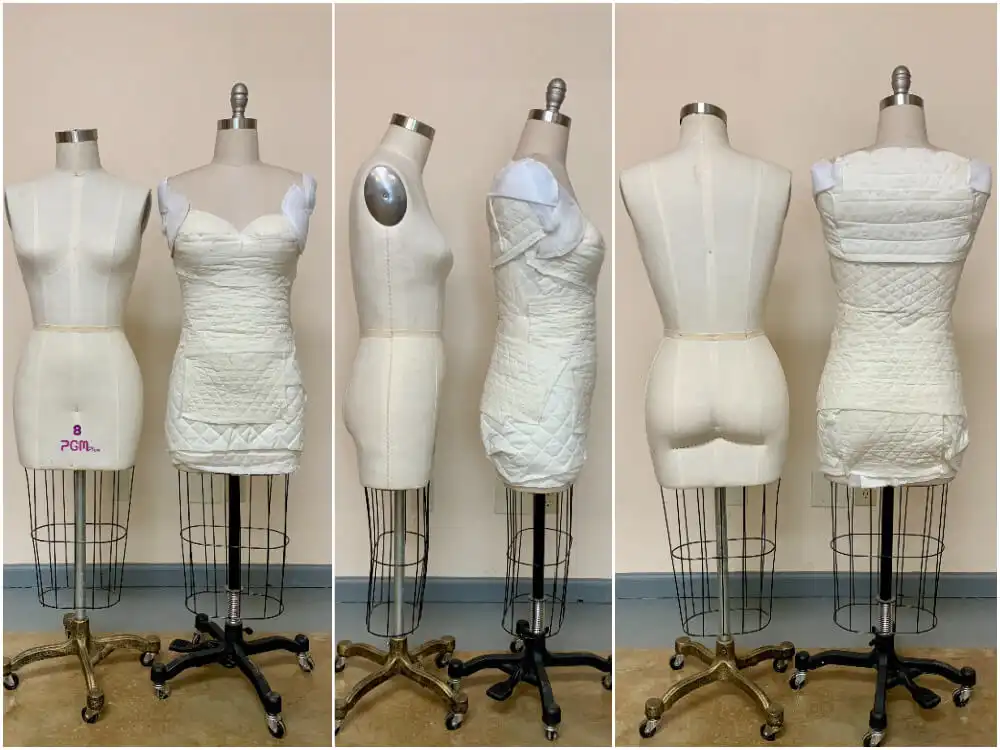
Measurements give fit comments a technical reference. Visual feedback and numerical data should support each other, especially when a correction affects garment dimensions, grading, balance, coverage, or production inspection.
| Fit Area | Useful Reference | Typical Review Question | Possible Technical Action |
|---|---|---|---|
| Neckline | Neck drop / width | Too low, wide, or gaping? | Adjust neckline pattern |
| Bust | Bust / upper bust / underbust | Compression or excess volume? | Rebalance bodice |
| Armhole | Armhole depth / shape | Gaping or cutting into body? | Correct armhole curve |
| Waist | Waist circumference / placement | Loose, tight, high, or low? | Adjust width or position |
| Hip | Hip circumference / ease | Pulling or excess volume? | Rebalance hip curve |
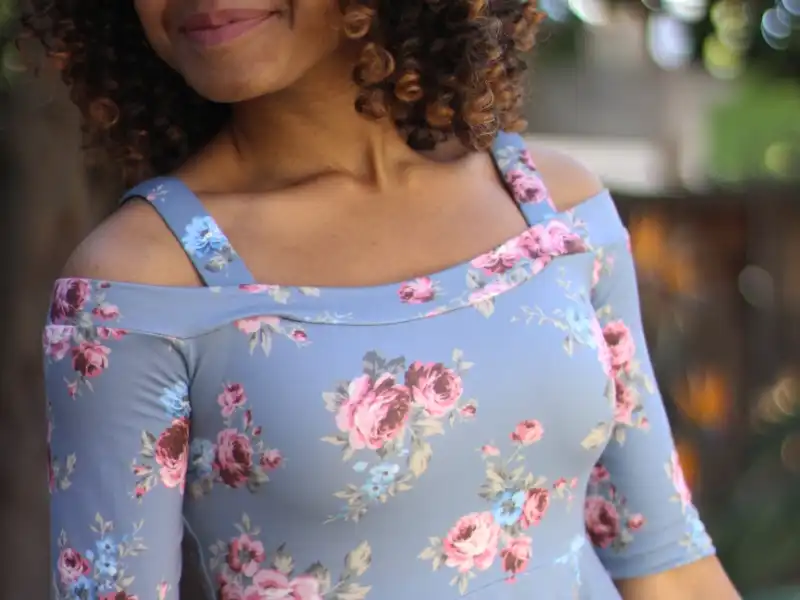
| Strap | Strap length / position | Falling, digging, or misplaced? | Correct length or placement |
| Side Seam | Seam position | Rotating forward or backward? | Rebalance front/back |
| Slit | Slit height | Too high or restricting movement? | Adjust opening |
| Hem | Front/back length | Uneven when worn? | Correct balance |
| Jumpsuit Rise | Crotch length / torso balance | Pulling or excessive drop? | Correct rise and torso |
Standardize Photos and Visual Fit Annotations
Fit photographs are most useful when every image has a defined view, identifiable garment area, and a written action. Random photographs create discussion; controlled visual records create manufacturing instructions.
Detail View
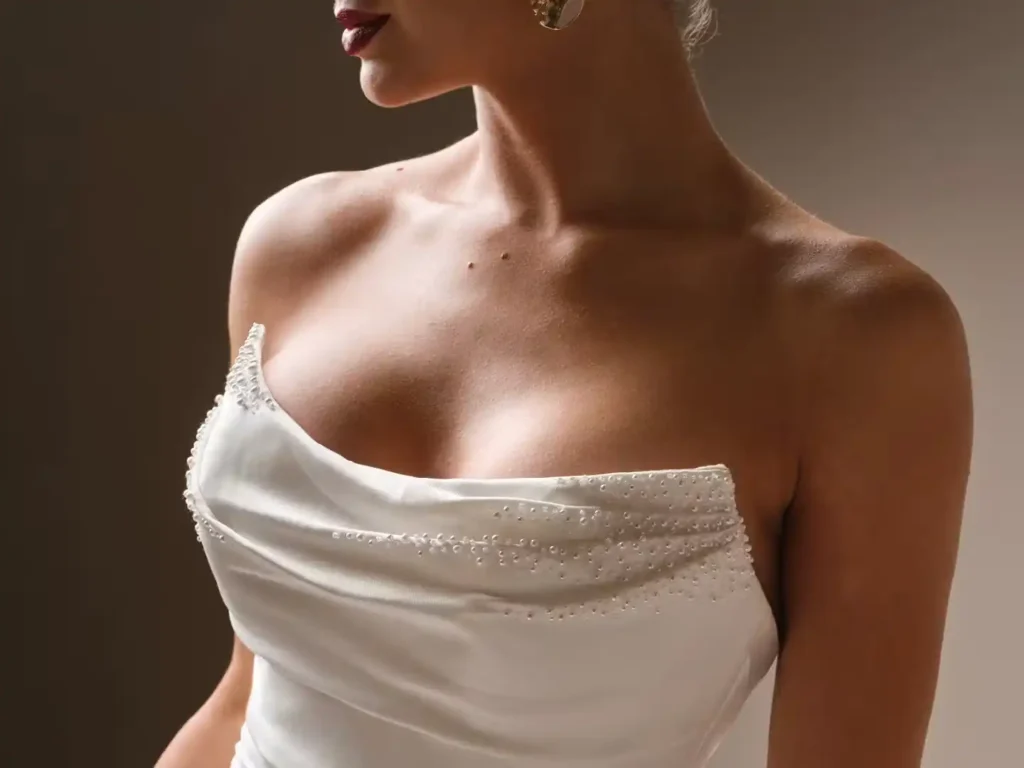
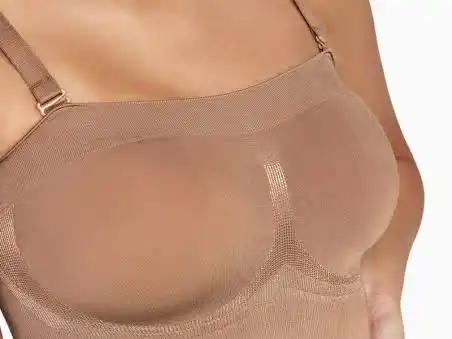
Close-up images work best for localized issues such as armhole exposure, neckline gaping, zipper waviness, boning position, cup shape, lace placement, mesh tension, ruching distribution, slit finish, or lining exposure.
A detail image should be connected to a written correction. The photo proves where the problem appears; the technical note explains what must change.
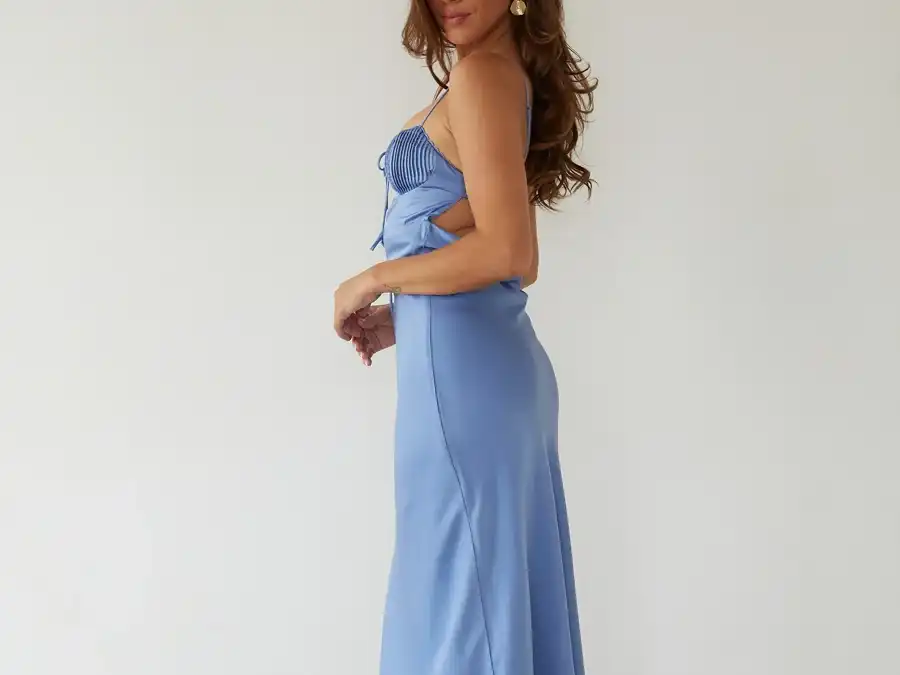
Side View
Side views reveal issues that may not be visible from the front, including side-seam rotation, bust projection, waist balance, back length, hip shape, hem pitch, slit position, and jumpsuit torso balance.
For fitted dresses, side-seam position is especially useful because movement toward the front or back can indicate imbalance between front and back pattern dimensions.
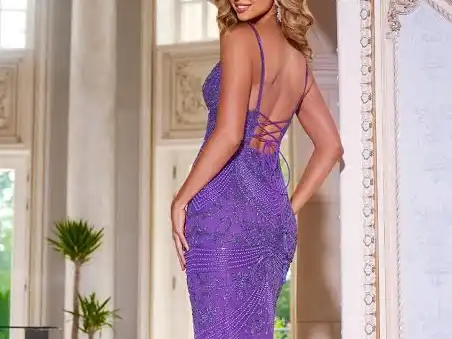
Back View
Back views support evaluation of back neckline gaping, shoulder balance, strap position, center-back alignment, waist excess, hip shape, zipper behavior, and hem level.
On backless or low-back garments, photographs should also verify stability and coverage rather than judging the design only from front appearance.
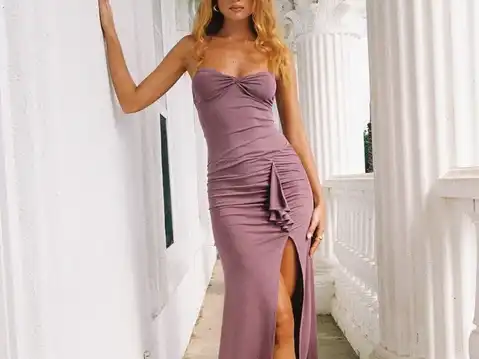
Front View
Front photographs should clearly show neckline level, bust shape, waist placement, hip balance, center-front alignment, hem level, ruching symmetry, and any pulling or excess fullness. Arms should remain in a consistent position when possible so fit can be compared across sample rounds.
Annotations should point to a specific issue rather than circle a large area without explanation. A note beside the image can reference the corresponding fit-comment number or POM.
Control the Fit Zones That Matter Most
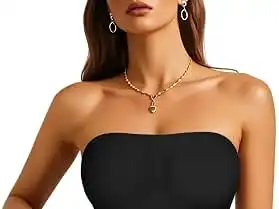
Neckline Control
Bust Structure
Armhole Shape
Waist Placement

Hip and Seat
Strap Position
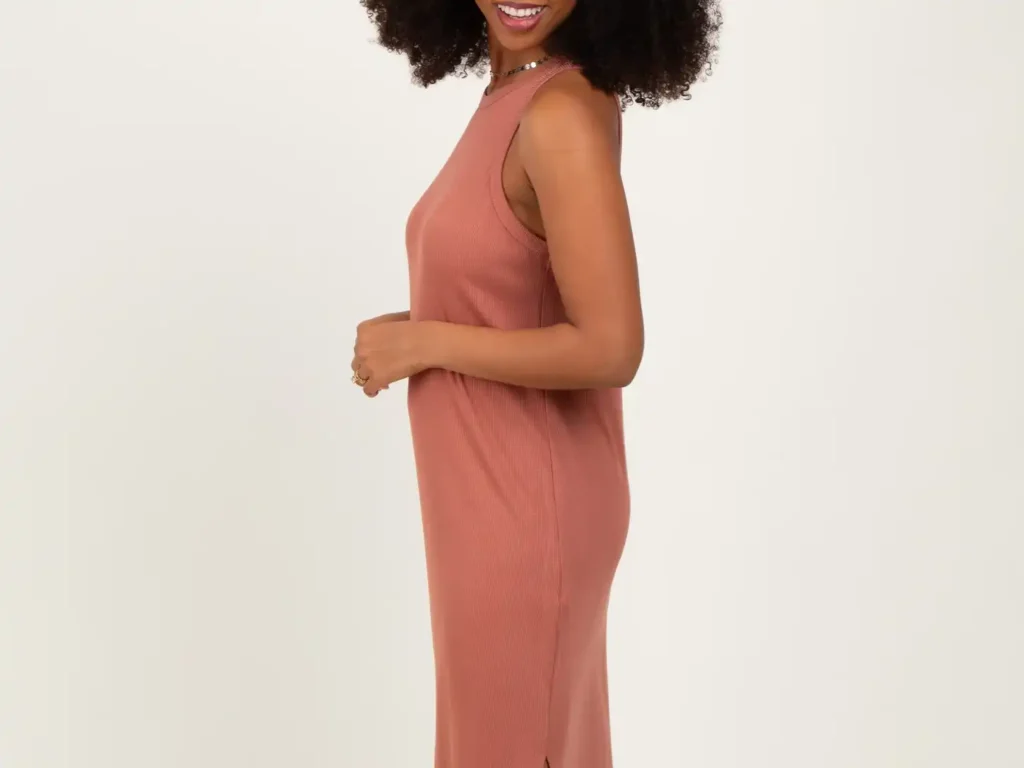
Slit Position
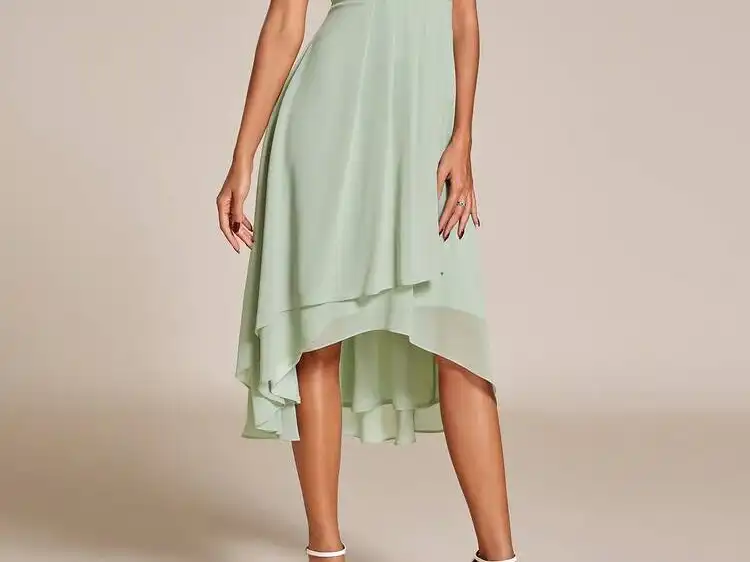
Hem Balance
From Brand Comments to Revised Fit Samples
Receive Fit Feedback
Review the latest fit sheet, annotated photos, updated size chart, tech pack notes, and sample identification. Confirm the correct style, size, sample stage, and revision before technical work begins.
Classify Each Issue
Review Measurements
Plan Pattern Corrections
Produce Revised Sample
Re-Measure
Re-Fit and Review
Close Approved Comments
Turn Fit Comments Into Pattern Corrections
The most important step happens after comments are received. Jinfeng Apparel’s pattern team reviews how the requested change affects garment geometry, neighboring measurements, construction, fabric behavior, and the approved silhouette before a revised sample is produced.
Balance the Pattern, Not One Measurement
A request to reduce the waist by 2 cm does not automatically mean taking 1 cm from each side seam.
Distribution depends on design structure.
A dress may contain:
- Side seams
- Princess seams
- Center-back seam
- Darts
- Corset panels
- Ruching
- Elasticated sections
- Lining
- Internal boning
Removing width from the wrong location can correct the tape measurement while distorting the visual fit.
For example, excessive back-waist fullness may require more adjustment in the back pattern than the front. A corset bodice may need panel rebalancing rather than a simple side-seam reduction.
A stretch bodycon style may require checking fabric recovery before reducing pattern width.
Pattern corrections therefore begin with the visible problem and approved measurement, then consider garment structure before modifying the pattern.
Protect Connected Fit Areas
Fit points rarely behave independently.
Shortening a strap can raise the neckline, lift the armhole, alter bust position, and change back tension. Raising a waist seam can alter skirt proportion and slit position. Increasing hip ease can influence side-seam alignment and hem fall.
Pattern review should consider connected areas before the revised garment is cut.
For fit-sensitive womenswear, Jinfeng Apparel can review key areas including:
- Bust
- Upper bust
- Underbust
- Waist
- High and low waist
- Hip
- Shoulder
- Strap
- Armhole
- Neckline
- Slit
- Garment length
- Front/back balance
- Lining
- Jumpsuit crotch length
The purpose is to preserve the intended silhouette while correcting the problem identified during fitting.
Convert Approval Into Production Files
Approved fit should leave a clear technical record.
Depending on the project, production preparation can involve:
- Final Pattern
The corrected pattern becomes the working production reference. - Updated Size Chart
Approved measurement changes are reflected in the current specification. - Grade Rule
Size development follows the approved grading direction rather than an outdated pre-fit specification. - Construction Notes
Sewing instructions affected by the fit correction are updated. - PP Sample
The pre-production garment verifies approved materials, pattern, construction, labels, and workmanship before bulk execution. - Golden Sample / Approved Reference
Where used, an approved reference supports workmanship and production comparison. - QC Measurements
Production inspection uses the approved measurement standard rather than earlier sample data.
Fit-comment standardization therefore reaches far beyond the fitting session. It determines which technical information becomes the manufacturing standard.
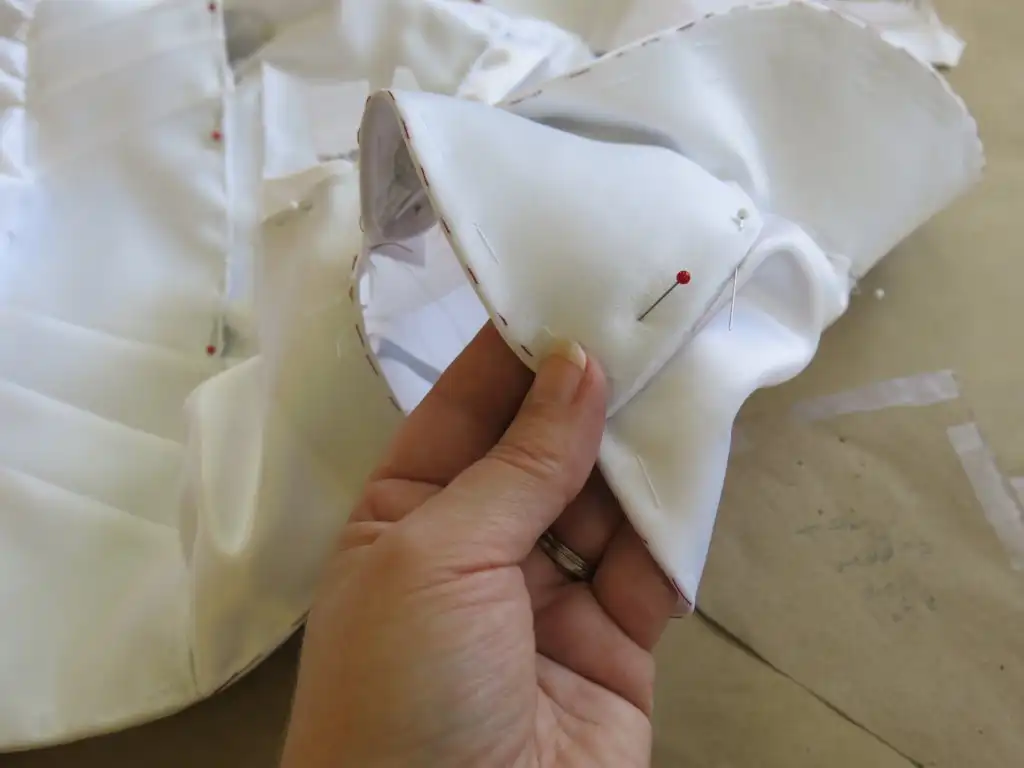
Keep Every Sample Revision Under Control
First Sample
Fit Sample
Revised Sample
Photo-Ready Sample
PP Sample
Golden Sample
Standardize Fit Across Multi-Style Collections
Group Styles Intelligently
A 10–30 style program should not be treated as one undifferentiated sample queue.
Styles can be grouped by silhouette, fabric family, pattern complexity, construction type, and launch priority.
A satin slip dress and structured corset dress may belong to the same collection but require different fitting logic, sample handling, and pattern expertise.
Grouping reduces unnecessary context switching and helps technical teams review related fit issues together.
Prioritize Critical Styles
Not every sample carries the same commercial urgency. Hero products, campaign styles, photo samples, complex constructions, and styles using long-lead materials may need earlier review.
A controlled priority system can identify:
- Hero SKU
- Photo deadline
- Launch deadline
- Fabric readiness
- Pattern complexity
- Fit risk
- Current sample stage
- Approval dependency
The goal is not to make every sample “urgent.” The goal is to move the styles that control the collection calendar first.
Keep Independent Revision Histories
Each style should have its own revision status even when several garments share fabrics or fit blocks.
A useful tracker can distinguish:
- Style 01 — Revised Sample Approved
- Style 02 — Waiting for Pattern Correction
- Style 03 — Fit Sample Under Review
- Style 04 — PP Sample Pending
Separate histories prevent one style’s corrections from being accidentally applied to another style with similar construction.
Lock Approved Standards Before Bulk
Multi-style production magnifies small documentation errors.
Before bulk starts, approved files should identify the current pattern, measurement specification, construction instructions, and sample status for each style.
Jinfeng Apparel supports multi-style development and project follow-up through pattern, sampling, merchandising, production, QC, packing, and delivery teams.
Work With Your Existing Technical Files
Excel Fit Sheets
PDF Tech Packs
Annotated Photos
Size Charts
Original Samples
Line Sheets
Fit Standards Change With the Garment
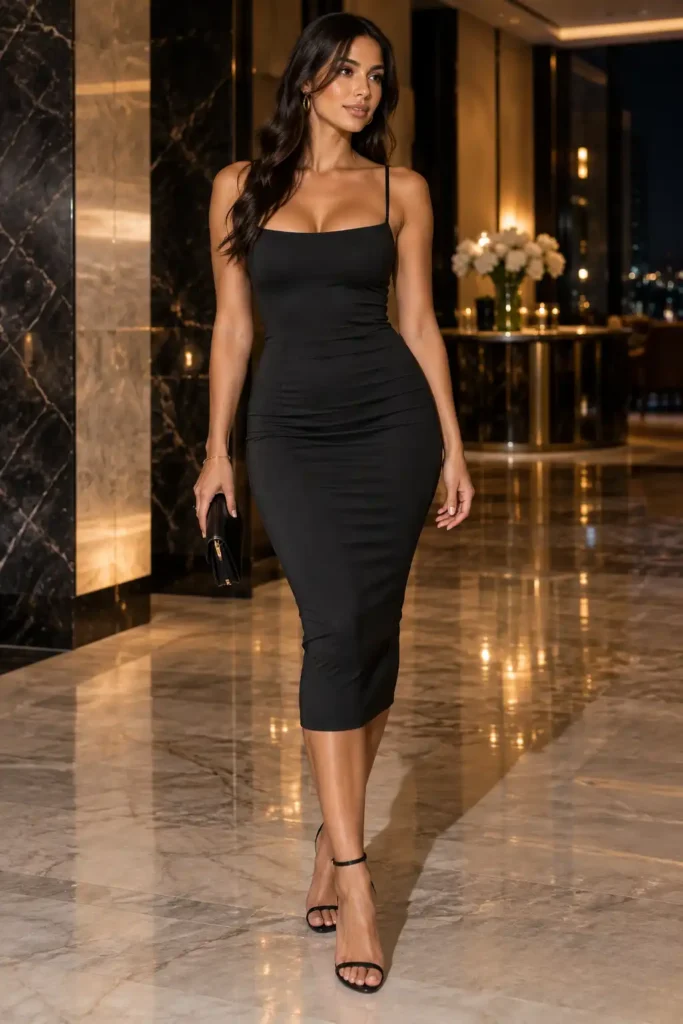
Bodycon Dresses

Corset Dresses

Slip Dresses

Halter Dresses

Strapless Dresses
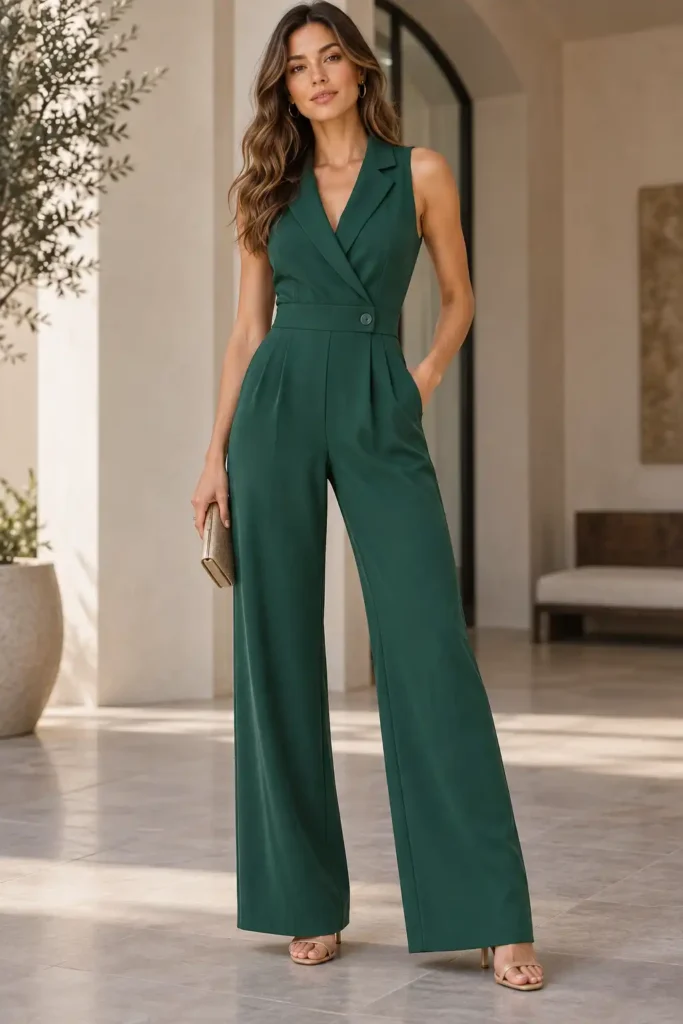
Jumpsuits
Move Approved Fit Into PP Production Standards
Final Pattern
Approved Size Chart
Grade Rule Review
Construction Confirmation
PP Sample Approval
Production Reference
Carry Fit Standards Into Bulk Production
Bulk consistency depends on controlling the same fit decisions repeatedly across cutting, sewing, finishing, and inspection. Approved development standards need to remain visible after sampling ends.
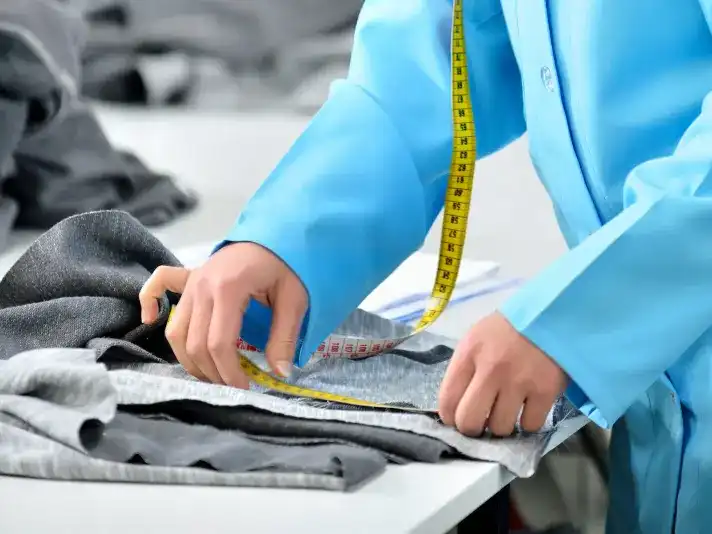
Measurement Control During Production
Production measurements should be checked against the approved size specification and project tolerance rather than relying on visual inspection alone.
Priority measurement points vary by style. A fitted bodycon dress may emphasize bust, waist, hip, length, and side-seam balance, while a jumpsuit requires additional attention to torso and crotch length.
Measurement inspection should also recognize that garment construction and fabric behavior affect final dimensions. Stretch, pressing, lining, seam tension, and handling can change measurement results even when the paper pattern is correct.
In-Line Fit Risk Monitoring
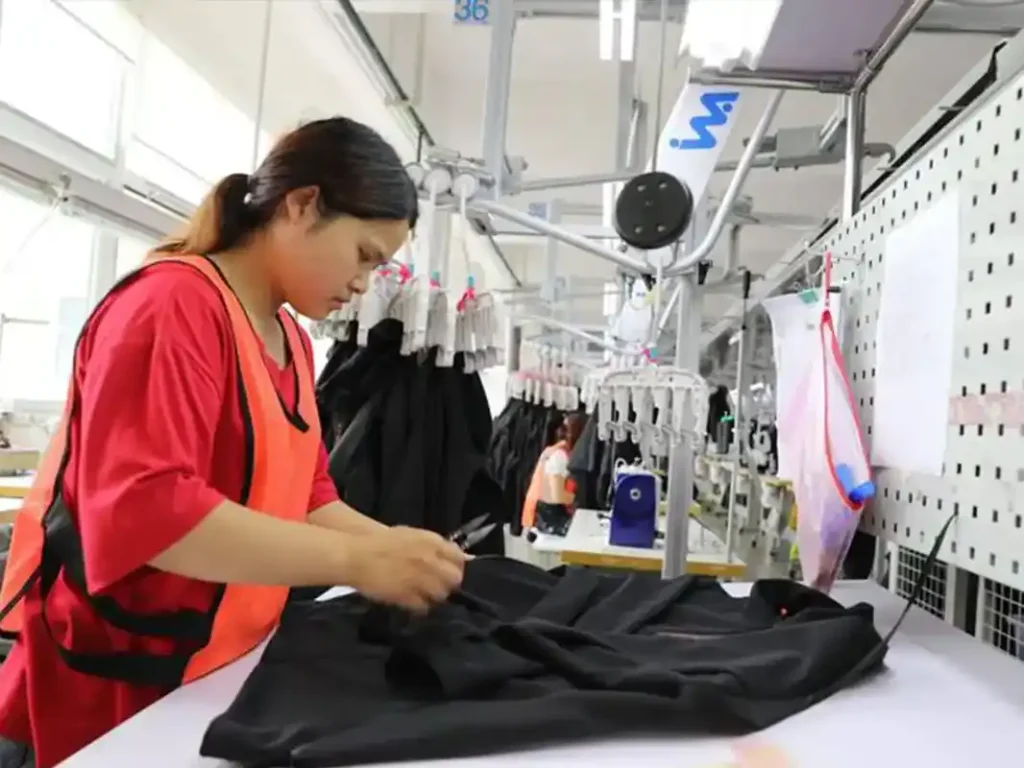
Waiting until final inspection to discover systematic fit problems can create unnecessary rework.
In-line checks can identify issues such as:
- Incorrect seam allowance
- Distorted neckline
- Strap-length variation
- Zipper waviness
- Uneven ruching
- Lining mismatch
- Incorrect slit height
- Side-seam imbalance
- Measurement drift
When a repeated problem appears, production teams can review the cause before more units are completed.
Final Garment and Packing Review
Final inspection should confirm measurements, workmanship, appearance, pressing, labels, and packing requirements according to the approved project standard.
Fit-sensitive garments also need protection during finishing and packing. Poor pressing or excessive compression can affect satin, structured bodices, long dresses, and garments with boning or shaped cups.
Jinfeng Apparel’s QC structure supports incoming material checks, cutting and sewing control, in-line inspection, garment inspection, pressing review, packing QC, measurement tolerance, and project-specific inspection requirements.
Multi-Style Development With Controlled Sample Versions
Fit-comment discipline becomes especially important when one program contains many styles, fabrics, colors, and development rounds. Jinfeng Apparel uses project records, sample stages, pattern updates, and technical follow-up to keep development connected to later production.

U.S. Private Label Program
An established U.S. private-label apparel program developed 18 womenswear styles totaling around 28,000 pieces with Jinfeng Apparel.
The assortment covered:
- Satin dresses
- Mesh dresses
- Jersey styles
- Lace dresses
- Crepe dresses
The program required coordination across different fabrics, sample versions, SKU information, private-label packaging, inspection requirements, and phased shipment.
Instead of treating the collection as one production block, project follow-up was organized by style. Fabric and trim information, sample status, labels, barcodes, polybags, carton marks, and shipment preparation were tracked according to the requirements of each product group.
For a multi-style program, sample-version discipline matters because a satin style may still require fit revision while a jersey style has already moved closer to PP approval. Keeping individual style records prevents approved files from being mixed with development-stage information.
The program moved from multi-style development through production, client inspection support, private-label packing, and phased delivery without relying on one generic technical file for the entire assortment.

U.S. Occasionwear Program
Another U.S. occasionwear program covered 12 satin mini and midi dress styles totaling around 20,000 pieces.
Fit and production attention centered on:
- Satin drape
- Color consistency
- Zipper flatness
- Lining comfort
- Mini and midi length balance
- Multi-color production stability
Satin exposes small fit and construction problems quickly.
Side-seam imbalance, zipper distortion, excessive waist fullness, poor lining length, or uneven hem level can become highly visible under light.
Development therefore requires alignment between the approved visual result and the technical information used for production.
Sample review does not end with “approved fit.”
Pattern, measurements, construction, fabric direction, pressing, and finishing need to remain consistent when the style reaches bulk production.
Client names, original tech packs, patterns, unpublished designs, labels, and commercial details remain confidential unless written authorization is provided.
Protect Fit Files and Unreleased Designs
Tech Pack Protection
Jinfeng Apparel supports NDA-based cooperation. Technical files are used for the corresponding project’s review, pattern development, sampling, production, QC, packing, and delivery.
Pattern Protection
Fit Photo Protection
Label and Brand Protection
Frequently Asked Questions About Fit Comment Standardization

Send Your Fit Comments for Project Review
A clear fit-comment system is valuable only when the manufacturing team can interpret the information correctly and carry approved decisions into pattern development, revised samples, PP preparation, bulk production, and QC.
Jinfeng Apparel supports established fashion brands, product development teams, sourcing organizations, and private-label programs that need structured womenswear development across dresses, skirts, jumpsuits, matching sets, and related fashion collections.
For an initial project review, send as much of the following information as available:
- Tech pack or reference images
- Current fit-comment sheet
- Size chart and POM definitions
- Front, side, back, or detail fitting photos
- Current sample stage
- Existing pattern-change notes
- Fabric and trim requirements
- Product list or line sheet
- Quantity plan by style and color
- Size range
- Private-label requirements
- Target production or delivery schedule
- Existing QC or inspection requirements