Skip to content

Bubble-Hem Dress Development
From sculpted hem volume to production-ready patterns, Jinfeng Apparel develops bubble-hem dresses for fashion brands building commercial dress collections.
- 7+ senior pattern makers support silhouette, proportion, hem balance and pattern revision.
- 2 sample rooms and 20+ sample machinists support structured dress prototyping, construction trials and revised samples.
- 15–25 days is a common first-sample reference for comparable complex dress structures; final timing depends on fabric, lining and development difficulty.
- 100,000+ pcs monthly capacity supports multi-style, multi-color and multi-size production programs after PP approval.
Development Capacity for Shape-Driven Dress Collections
7+ Pattern Makers
2 Sample Rooms
20+ Sample Machinists
15+ QC Inspectors
6 Owned Factories
Multi-Style Programs
Bubble-Hem Dress Styles We Can Develop

Bubble Mini Dress

Drop-Waist Bubble Dress
Moving the skirt seam below the natural waist changes the entire silhouette.
The torso appears longer while the rounded hem becomes the visual focus. Pattern work needs to control low-waist position, hip clearance and the transition from the fitted upper section into the fuller skirt. If the seam sits too high, the design loses its drop-waist character; too low and the wearer may lose movement or the bubble may appear visually heavy.

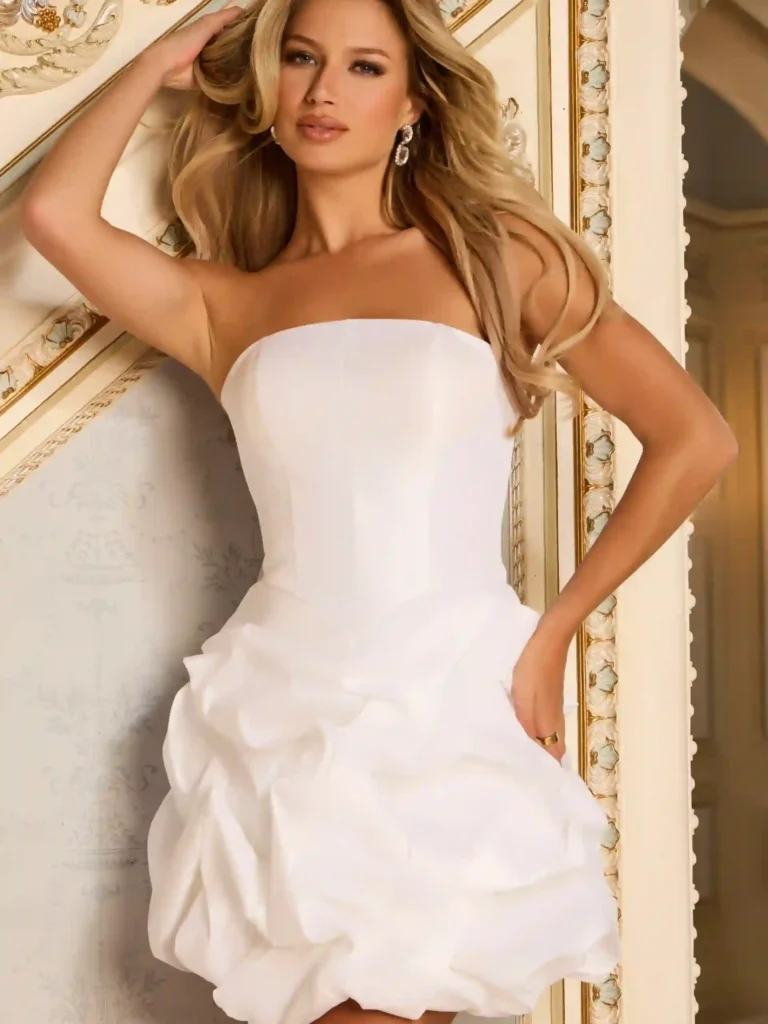
Strapless Bubble Dress
A strapless upper body combined with a full bubble hem creates two separate engineering demands: upper-bust stability and lower-skirt volume.
The bodice may require cup, boning, anti-slip or internal support depending on the design, while the skirt requires controlled shell-to-lining balance. Fit reviews should check both areas together because a heavy skirt construction can influence how the upper garment sits during movement.

Corset Bubble Mini

Soft Bubble Midi

Occasion Bubble Dress
Engineering the Bubble Shape Into the Pattern
A successful bubble hem is not created by simply gathering more fabric. The rounded silhouette comes from a controlled relationship between the outer skirt, inner structure, fullness distribution, waist position, joining method and fabric behavior.
Outer Skirt Volume and Length
The outer layer needs enough additional length and circumference to turn inward and create three-dimensional volume, but adding fabric without a plan produces unpredictable results. Pattern makers review the intended front profile, side projection and hem circumference before defining the shell shape.
For a subtle commercial bubble, volume may be distributed relatively evenly around the skirt. A more directional design may carry greater volume at the side or back. Pattern development therefore begins from the target silhouette rather than applying one standard gathering ratio to every style.
The finished dress length and outer-shell cutting length must be treated as separate measurements. A longer shell does not automatically create a better bubble. Excessive length may collapse downward, create heavy folds or pull unevenly against the lining. Insufficient shell length produces a shallow turn-under and a flatter appearance.
Inner Structure and Lining Relationship
Lining plays a structural role in many bubble hems. Its length, width, attachment point and hand feel influence where the outer fabric turns inward and how strongly the hem lifts.
A lining that is too short can pull the shell upward aggressively, creating uneven peaks or excessive tension. A lining that is too long may provide too little lift and leave the silhouette flat. Very stiff lining can distort the outer fabric, while overly soft lining may not support the intended geometry.
During sampling, shell and lining are reviewed together. Changing the outer fabric can require a lining review because fabric weight, drape and stiffness alter the load placed on the inner structure.
Jinfeng records lining patterns and pattern revisions as part of approved project files for future production and repeat orders.
Circumference, Balance and Seam Position
The hem is viewed as a complete circumference rather than a front-view detail. Front, back and side panels need compatible volume distribution, and side seams should remain visually controlled after the fabric turns inward.
Unequal gathering or inconsistent sewing tension can move the fullest area away from the intended position. Side seams may rotate, one side can lift higher, or the back may collapse while the front stays full. Pattern balance, not final pressing alone, must correct these problems.
Before approval, the development team compares dress length, waist position, shell volume, lining level, seam position and side profile against the reference.
Changes are documented before the revised sample rather than relying on verbal comments alone.

Fabric and Lining Choices Shape the Final Volume
Bubble construction responds strongly to fabric weight, stiffness, drape and surface behavior. Jinfeng evaluates shell and lining as one system so the selected material creates the intended profile without introducing avoidable sewing, comfort or bulk-production risks.
Material Direction for Bubble-Hem Development
| Material Direction | Typical Weight / Character | Bubble Effect | Development Focus | Main Risk |
|---|---|---|---|---|
| Satin | 80–220 gsm | Soft to moderately structured | Shine direction, lining, crease control, hem volume | Snagging, shade variation, wrinkles |
| Organza | 30–100 gsm | Crisp and architectural | Layer control, transparency, edge handling | Crush marks, uneven layers |
| Tulle | 15–80 gsm | Light support volume | Layer count, inner support, softness | Uneven layers, exposed structure |
| Crepe | 120–250 gsm | Controlled softer bubble | Drape, hem weight, seam balance | Insufficient shape on soft qualities |
| Cotton Blend | 120–260 gsm | Clean casual structure | Shrinkage, fullness, pressing | Wrinkling, bulk at gathered areas |
| Polyester Blend | 80–260 gsm | Wide range of outcomes | Hand feel, body, crease recovery | Quality varies by construction |
Fit and Proportion Around the Bubble Silhouette
Upper Body Balance

Waist and Hip Transition

Length and Size Grading
Jinfeng develops US, UK, EU, AU, alpha and extended sizing according to the brand’s own size chart, base size, grade rules, fabric characteristics and fit preference rather than imposing a generic size standard.
Turning Visual Volume Into Production Specifications
Comments such as “make it puffier” or “reduce the bubble” are useful creatively but not precise enough for repeatable production. Development converts visual comments into controlled pattern, measurement and construction variables.
| Development Variable | What It Controls | Sample Review | Bulk Control |
|---|---|---|---|
| Waist Position | Silhouette proportion | Front and side fit | Measurement check |
| Finished Dress Length | Wearability and visual balance | On-body measurement | Size-spec control |
| Outer Skirt Length | Amount of turn-under volume | Side-profile review | Pattern version |
| Lining Length | Lift and internal tension | Inside + worn review | Lining pattern |
| Hem Circumference | Overall fullness | Front/back distribution | Cutting control |
| Gathering Distribution | Where volume appears | Symmetry review | Sewing marks/instructions |
| Side-Seam Position | Left/right balance | Movement review | Sewing QC |
| Shell-Lining Attachment | Final bubble shape | Inside construction check | Workmanship standard |
| Pressed Shape | Final presentation | Photo/PP review | Finishing QC |
| Packing Recovery | Shape after shipment | Fold/recovery test | Packing method |
Bubble-Hem Dress Sampling From Reference to PP
Reference Review
Pattern Development
First Sample
Fit and Shape Review
Revised Sample
PP Sample
Correcting Common Bubble-Hem Sample Problems

Bubble Looks Too Flat
A flat result may come from insufficient shell length, insufficient circumference, fabric that drapes too heavily, lining that provides too little lift or an attachment position that allows the shell to fall downward.
The correction is selected after identifying the cause rather than simply adding more gathers.

Bubble Looks Too Bulky

Left and Right Sides Differ
Uneven gathering, inaccurate sewing marks, cutting variation or shell-to-lining imbalance can shift volume toward one side.
Review includes side seams, hem level, fullness distribution and sewing tension before a revised sample is made.

Lining Pulls the Hem Up

Side Seams Rotate

Fabric Change Alters Shape
Workmanship Behind a Clean Bubble Hem
Bubble construction hides much of its engineering inside the garment. Clean workmanship determines whether the finished silhouette appears deliberate and balanced rather than simply gathered and folded.
Fullness Distribution and Joining
Gathering must be distributed according to the pattern rather than pushed randomly around the circumference. Marking points help control where fullness belongs, and shell-to-lining joining needs consistent seam allowance and tension.
Uneven stitching changes the way the shell turns inward. A few centimeters of uncontrolled distribution can become visible as a high point, flat section or asymmetric side profile. The seam therefore functions as both construction and shape control.
Inside finishing should also avoid unnecessary thickness. Heavy seam buildup around the turned hem can reduce softness, create hard ridges or make the dress difficult to press and pack.
Zipper, Side Seam and Lining Control
Bubble skirts often sit below fitted or semi-fitted bodices, making zipper flatness and side-seam stability important.
A zipper that waves or bulges interrupts the clean transition between the upper body and rounded lower silhouette.
Lining should sit inside the garment without twisting, dropping below the shell or pulling one area upward. Its attachment is inspected along with side seams and closures because internal tension can influence the external shape.
For light-colored or semi-transparent fabrics, lining color and coverage also become visual design decisions rather than purely functional choices.
Finishing, Pressing and Shape Recovery
Structured volume cannot be pressed like a flat A-line hem. Finishing needs to remove unwanted creases while preserving intended roundness. Excess pressure may collapse organza-supported shapes or create shine and pressure marks on satin.
Packing is evaluated with the same logic.
The garment needs a folding method appropriate to its material and construction, especially when strong bubble volume or crease-sensitive satin is involved.
After unpacking, the hem should recover toward the approved profile without requiring unrealistic retail preparation.

Moving From PP Sample to Repeatable Bulk Shape
A good development sample proves the concept. A production-ready standard proves that the concept can be reproduced across quantities, colors and sizes without rebuilding the silhouette by eye for every garment.
Lock the Approved Standard
Before production, the approved PP file connects the final pattern, grading, shell fabric, lining, trims, measurements, construction method, labels, packing and QC checkpoints. Jinfeng’s production process requires PP approval and confirmed production files before bulk execution.
Bubble-specific information should remain attached to the style: hem construction, lining pattern, gathering placement, finished length, shape comments and any visual reference used during approval.
Control the Production Inputs
Material batches, pattern versions and cutting direction are checked before sewing.
If the bulk fabric behaves differently from the approved sample fabric, the effect must be evaluated early because changes in weight or stiffness can influence the silhouette.
Size bundles and cutting panels need clear separation, while sewing instructions help operators reproduce the same fullness distribution and internal attachment rather than interpreting the garment independently.
Check Shape During Production
Waiting until final inspection is too late for structural problems. In-line review can identify uneven gathering, lining tension, side-seam movement or hem imbalance while correction is still manageable.
Finished garments are then compared with measurements and approved appearance.
The aim is controlled consistency within the approved standard, not an unrealistic promise that every soft textile product will be mathematically identical.

Product-Specific QC for Bubble-Hem Dresses

Material Consistency

Cutting Accuracy

Bubble Symmetry
Front, side and back views are compared for balanced volume.
Local flat areas, excessive peaks and left-right differences are identified before packing.

Lining Position
Lining is checked for exposure, twisting, uneven attachment and excessive pull.
Its finished relationship to the outer shell should follow the approved sample.

Finished Measurements
Bust, waist, dress length and other brand-required points are checked against the approved specification.
Bubble-related measurements are linked back to pattern and construction records where needed.

Pressing and Packing Recovery
Pressing marks, creases and shape damage are reviewed before packing. Folding is selected according to fabric and silhouette so the garment can recover appropriately after transport. Jinfeng’s standard QC system also checks labeling, barcodes, folding and carton information for traceable delivery.
Managing Multi-Style Dress Development Programs
Development by Style Group
Revision Tracking
Production Allocation
Anonymous Structured Dress Development Case
Complex silhouette development is most credible when pattern, sampling and bulk execution can be connected into one project. Brand identities, unpublished designs, tech packs and proprietary patterns remain confidential.
18 Styles / Approximately 36,000 Pieces

An anonymized seasonal fashion program involved 18 structured mini, party and occasion dress styles with an overall order volume of approximately 36,000 pieces. The project reflected the current Jinfeng order profile in which established brand programs commonly involve multiple styles rather than isolated single-SKU production.
Development included structured woven and satin directions, lining-dependent silhouettes, fitted bodices and volume-sensitive skirts. The main challenge was maintaining visual proportion while moving multiple designs through first sample, revisions and PP approval on different timelines.
Pattern and sample work were prioritized according to launch importance and structural complexity. Fit comments were converted into revised pattern and measurement files, while fabric changes were reviewed for drape, lining and cost impact before approval.
From Development Records to Production Control

Once styles reached PP approval, the production standard moved from visual comments into documented files covering pattern version, fabric, trims, measurements, construction, labels, packing and QC points.
Higher-risk silhouettes received added attention during cutting and in-line sewing. Hem balance, lining relationship, zipper appearance, finished measurements and pressing were checked before final packing.
The program structure also allowed approved patterns, fabric references and construction records to remain available for color extensions and subsequent seasonal development.
Jinfeng’s policy allows anonymized project evidence while protecting real brand names, logos, tech packs and unpublished designs.
Cost, MOQ and Development Timing
Bubble-hem costing depends on construction choices rather than the style name alone. Fabric consumption, lining, pattern work, sample revisions, sewing time, size range and packing method all affect the final commercial structure.
Cost Drivers
Outer-shell consumption can rise when a silhouette needs significant volume, while lining and double-layer construction add material and sewing work.
Fabric substitution, structural simplification, cutting optimization and size-ratio planning can help control cost without weakening brand-level appearance.
Order Structure
Jinfeng Apparel’s standard MOQ starts from 200 pcs per style/color, depending on fabric availability, color development, trims, construction complexity, packaging and production schedule. Special materials or customized trims may carry separate supplier requirements.
Development Timing
Simple first samples can fall around 7–10 days, standard dress first samples around 10–15 days, and comparable complex dress developments around 15–25 days. Revised and PP samples are commonly around 7–15 days, subject to the actual modifications and final material availability.
Extend an Approved Bubble Shape Into More SKUs

New Colors and Reorders

Mini, Midi and Fabric Extensions

Seasonal Collection Continuity
Bubble-Hem Dress Frequently Asked Questions
Start Your Bubble-Hem Dress Development
A strong bubble-hem program begins with a clear visual target and a manufacturing plan that explains how the shape will be built, reviewed and repeated. Jinfeng Apparel can review reference images, tech packs, original samples, sketches and collection files to identify fabric direction, lining requirements, fit points, pattern complexity and likely development risks before sampling begins.
For a more useful first evaluation, send enough information for the development team to understand both the garment and its commercial requirements:
- Reference image, sketch, tech pack or original sample
- Target bubble shape: subtle, rounded, structured or exaggerated
- Preferred fabric, hand feel or existing fabric swatch
- Desired mini, midi or other finished length
- Target size range and base-size chart
- Color plan and expected quantity by style/color
- Lining, zipper, cup, boning or other structural requirements
- Private-label and packing requirements
- Target launch date or required production window
- Any existing fit comments or previous sample problems
The initial review helps determine whether the design needs fabric alternatives, structural clarification, pattern development or a dedicated sampling route before formal bulk planning.