
Custom Floor-Length Dresses
Floor-Length Dress Development for Established Fashion, Occasionwear and Premium Ecommerce Brands
Jinfeng Apparel develops custom floor-length dresses from reference images, original samples, sketches, line sheets and tech packs, supporting fabric direction, pattern development, fit correction, sample validation, bulk production, quality control and private-label packing. Long dresses require more than extending a basic dress pattern: fabric drape, total length, front-to-back balance, lining, slit position and finished presentation all need to work together.
- 7+ senior pattern makers working across maxi, evening, corset, slip, halter, strapless and backless dress structures.
- 2 sample rooms + 20+ sample machinists supporting first samples, fit samples, revisions and pre-production approval.
- 15+ QC inspectors covering fabric, cutting, sewing, garment measurement, finishing and packing checks.
- Floor-length development focuses on total length, front/back balance, hem sweep, lining length, slit height and walking movement, rather than treating a maxi dress as a longer version of a short dress.
Manufacturing Capacity Behind Your Floor-Length Dress Program
6 Owned Womenswear Factories
10+ Long-Term Production Partners
100,000+ Pcs Monthly Capacity
18+ Sewing Lines
6+ Flexible Production Lines
12+ Merchandising Specialists
Built for Established Floor-Length Dress Collections
Occasionwear Brands
Premium Ecommerce Brands
Resort and Vacation Labels
Fashion Retail Programs
Sourcing and Buying Teams
Product Development Teams
Where Floor-Length Dresses Commonly Go Wrong

Uneven Finished Hems

Incorrect Overall Length

Poor Fabric Drape

Lining Exposure

Unstable Slit Placement

Packing and Pressing Damage
Floor-Length Dress Styles We Develop for Fashion Brands

Satin Floor-Length Dresses

Chiffon Maxi Dresses

Slip Floor-Length Dresses
A long slip silhouette looks simple but leaves little room for poor proportion. Neckline depth, bust fit, strap length, side seam stability and hip ease must work together while the fabric falls cleanly from the body.Satin and fluid woven fabrics make construction quality, pressing and zipper or closure placement particularly visible.

Halter Maxi Dresses

Backless Floor-Length Dresses

Corset Floor-Length Dresses

A-Line Long Dresses

High-Slit Maxi Dresses

Lace Floor-Length Dresses

Mesh Floor-Length Dresses

Formal Evening Dresses

Resort Maxi Dresses
Fabrics Selected for Drape, Structure and Finished Length
Fabric selection determines far more than color or hand feel in a floor-length dress. Weight, width, stretch, transparency, shrinkage, drape and surface finish affect pattern ease, skirt volume, cutting efficiency, lining, pressing and final cost. Jinfeng Apparel works across a broad womenswear fabric system and validates material direction through sampling before bulk production.

Satin: Shine Direction and Surface Control
Satin is widely used for slip dresses, bridesmaid styles, formal maxis and evening gowns. A smooth surface gives a premium appearance but also exposes needle marks, seam puckering, zipper distortion, snagging and pressing damage. Fabric direction matters because panels cut in inconsistent directions can reflect light differently, making the same color appear uneven under studio lighting.
Stretch satin also changes pattern behavior. Added elastane may improve body fit but can affect seam tension, recovery and finished length. Heavier satin usually creates a stronger formal silhouette, while lighter satin gives more movement and can require extra lining or careful handling around bias areas.
During sample development, the fabric is evaluated together with neckline, bust, hip, skirt fall and intended closure. Bulk production then follows confirmed material direction, cutting orientation, sewing method, pressing condition and packing requirements rather than treating all satin constructions alike.
Chiffon: Layering, Transparency and Hem Balance
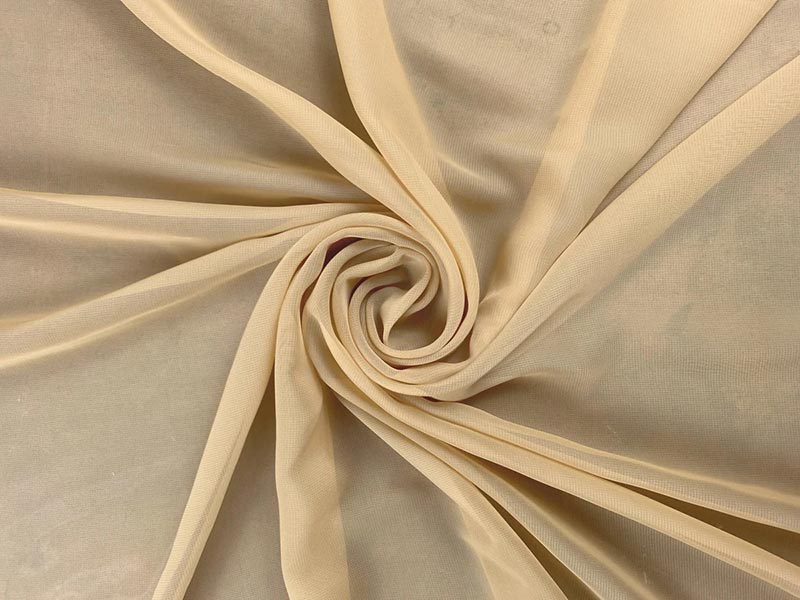
Chiffon suits soft wedding, bridesmaid, resort and occasionwear programs where movement is more important than structure. Its lightweight construction creates several manufacturing challenges: panels can shift during cutting, edges can distort, the garment may require several layers, and a floor-length hem can become uneven after the fabric hangs.
Transparency must also be planned from the start.
Lining color, lining length and coverage affect both modesty and the final color seen through the outer layer. A pale lining under colored chiffon may brighten the shell, while a dark lining can deepen it.
For layered skirts, panel quantity, overlap and hem finishing must remain consistent across bulk units.
The objective is not simply to produce more fabric movement but to keep that movement controlled enough for repeatable photography, fitting and retail presentation.

Crepe, Rayon and Viscose: Fluidity With Different Stability
Crepe can provide stronger dimensional stability than very lightweight chiffon while retaining a clean, flowing appearance suitable for formal, occasion or premium day-to-evening dresses.
|Rayon and viscose can create excellent resort drape and soft movement but often require closer attention to shrinkage, fabric relaxation and wrinkle behavior.
A design developed in one fluid fabric cannot automatically move into another.
The same paper pattern may hang closer to the body, stretch vertically or fall more heavily after the material changes. Waist position, hem length, slit opening and overall ease may need to be reviewed again.
Fabric testing and sample observation therefore precede any assumption that a lower-cost or more available substitute will create the same floor-length silhouette.

Lace, Mesh and Tulle: Transparency and Layer Engineering
Lace, mesh and tulle are often combined with lining, underlayers or structured bodices in occasion and evening dresses. Lace requires motif placement and damage control; mesh requires stretch and recovery management; tulle requires layer-volume planning and clean hem treatment.
Long skirts make differences between layers highly visible. If an inner layer is shorter, tighter or differently balanced, the outer layer may pull, collapse or expose unintended areas. Layer order and attachment points therefore become part of garment engineering.
Complex sheer materials may also increase cutting loss and inspection time. Material quality is evaluated not only for appearance but also for how reliably it can be reproduced across a bulk run.

Velvet, Sequin and Organza: Statement Materials With Higher Handling Risk
Velvet requires consistent nap direction, careful pressing and protection against pressure marks. Sequin fabric introduces cutting, needle, seam-thickness, shedding, scratching and packaging concerns. Organza creates structure and volume but can show seam construction and edge finishing more clearly than softer fabrics.
Statement materials are often used in evening and holiday floor-length styles where visual impact is high. Their manufacturing risk is also higher, so sample approval must cover both appearance and repeatability.
For sequin or embellished garments, lining and skin contact areas deserve particular attention. For velvet, panel direction and packaging pressure are critical. For organza, skirt volume, layering and edge finishing need to remain consistent across sizes.

Linen, Linen Blends and Printed Wovens: Resort Long-Dress Direction
Linen and linen-blend fabrics suit relaxed resort maxis where natural texture and breathability matter. They are not handled like satin evening fabrics: wrinkle character, shrinkage, seam behavior and wash response need to match the intended product positioning.
Printed woven materials add another layer of control. Print direction, repeat scale, border placement or large motifs can affect cutting efficiency and the visual balance of a long skirt. A placement that looks correct on one sample size may require planning when graded into additional sizes.
Material selection therefore considers commercial appearance, available width, fabric consumption and bulk reproducibility together.
Engineering Length, Hem Balance and Skirt Movement
Floor-length dress development depends on proportion. A long silhouette magnifies errors in front length, back length, waist placement, lining and skirt balance, so Jinfeng Apparel evaluates the garment as a complete vertical structure rather than only checking a single total-length measurement.
Total Length Is a Design Measurement
Finished dress length must match the intended market and silhouette. A formal gown designed to sit close to the floor follows a different proportion from a resort maxi intended for easier movement. Height, body length, waist position, skirt volume and footwear direction all influence how a specified measurement appears when worn.
Length therefore needs a defined measuring method in the size chart. Changing the starting point—from shoulder, high point shoulder or another reference—can produce confusion if the measurement method is not documented consistently.
Front and Back Balance
Front and back lengths rarely behave identically once bust volume, back shape, waist seam, zipper and fabric drape are introduced.
A garment can meet flat measurements and still appear higher at the front or lower at the back when worn.
Fit samples are checked from front, side and back views so paper-pattern corrections can address garment balance rather than hiding the issue through irregular hemming at the end of production.
Hem Sweep and Fabric Consumption
Skirt sweep affects movement, silhouette and material usage. A slim column maxi uses far less fabric and behaves very differently from a wide A-line or full evening skirt. Increasing sweep also increases cutting area, handling and pressing requirements.
For large brand programs, sweep decisions influence both appearance and costing.
Fabric width, panel count, print direction and lining construction need to be considered before the bulk quotation is finalized.
Lining Length and Layer Relationship
Lining must support the outer layer without becoming visually intrusive. Long dresses may use full lining, partial lining, stretch lining or several internal layers depending on fabric transparency and design.
The relationship between outer hem, lining hem and slit needs to be confirmed during sampling. Static cling, stretch differences and fabric movement can cause a lining that looks correct on a table to become visible when worn.
Slit Height and Movement
Slits need a defined measurement reference and a construction method appropriate for the fabric. Height, reinforcement and lining opening are reviewed together because changing one element can affect both appearance and wearability.
Walking and sitting evaluation is valuable for high slits, especially on fitted floor-length dresses. A visually strong design still needs sufficient coverage and seam stability for its intended market.
Hanging, Pressing and Final Hem Review
Certain fluid fabrics can change after sewing because weight redistributes through the skirt. Hem balance should therefore be reviewed after the garment has reached its intended construction state rather than relying only on early panel measurements.
Pressing can also alter how fabric falls. Final inspection reviews hem balance, side seams, lining, drape and overall presentation after finishing, creating a more reliable reference for bulk packing.

Pattern and Fit Development Before Bulk Production
Jinfeng Apparel uses 7+ senior pattern makers, two sample rooms and 20+ sample machinists to translate design references into production-ready womenswear patterns. Floor-length garments are reviewed around bust, waist, hip, neckline, straps, overall length, slit and lining because fit errors at the top of the garment often change how the entire skirt hangs.
- Bust, Waist and Hip Relationship
A floor-length dress may be fitted, semi-fitted or fluid, but the upper-body pattern still determines how the skirt begins to fall. Incorrect bust shaping can pull the front length upward. A misplaced waist seam can shorten the body visually. Insufficient hip ease can cause side seams and slits to distort.
Pattern review therefore looks at body measurements together rather than solving each point independently.
- Neckline, Strap and Back Stability
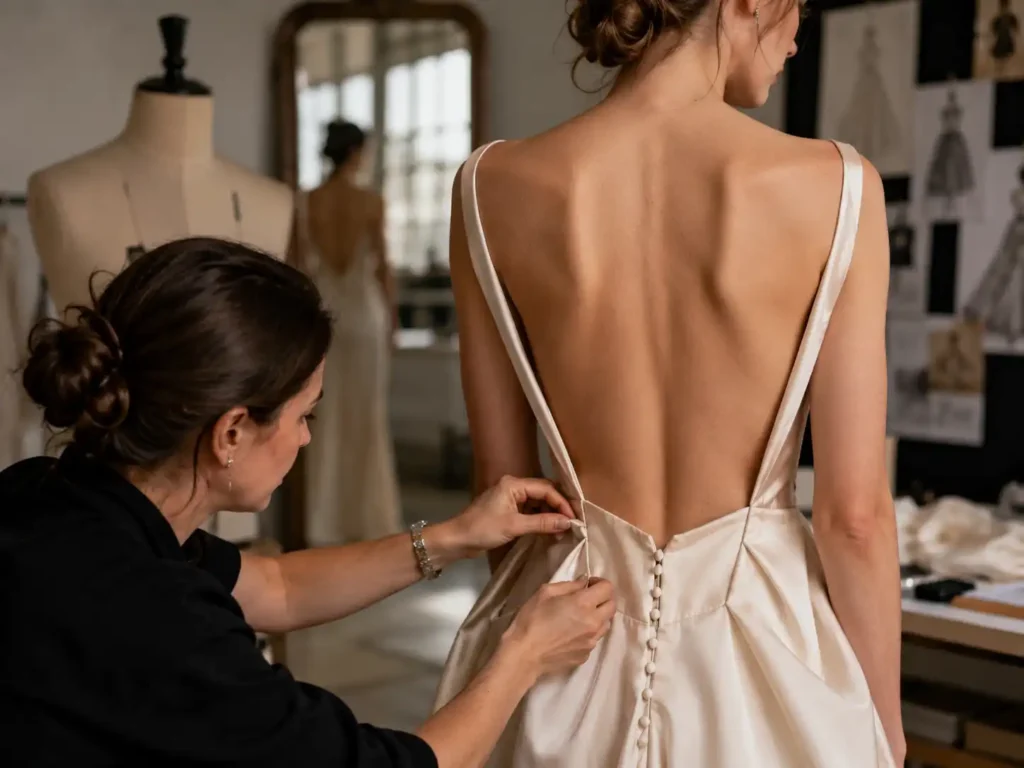
Halter, backless, strapless, slip and deep-neckline long dresses depend on tension paths through the bodice. Strap length, upper-bust fit, side coverage, back height and closure position determine whether the garment stays stable during wear.
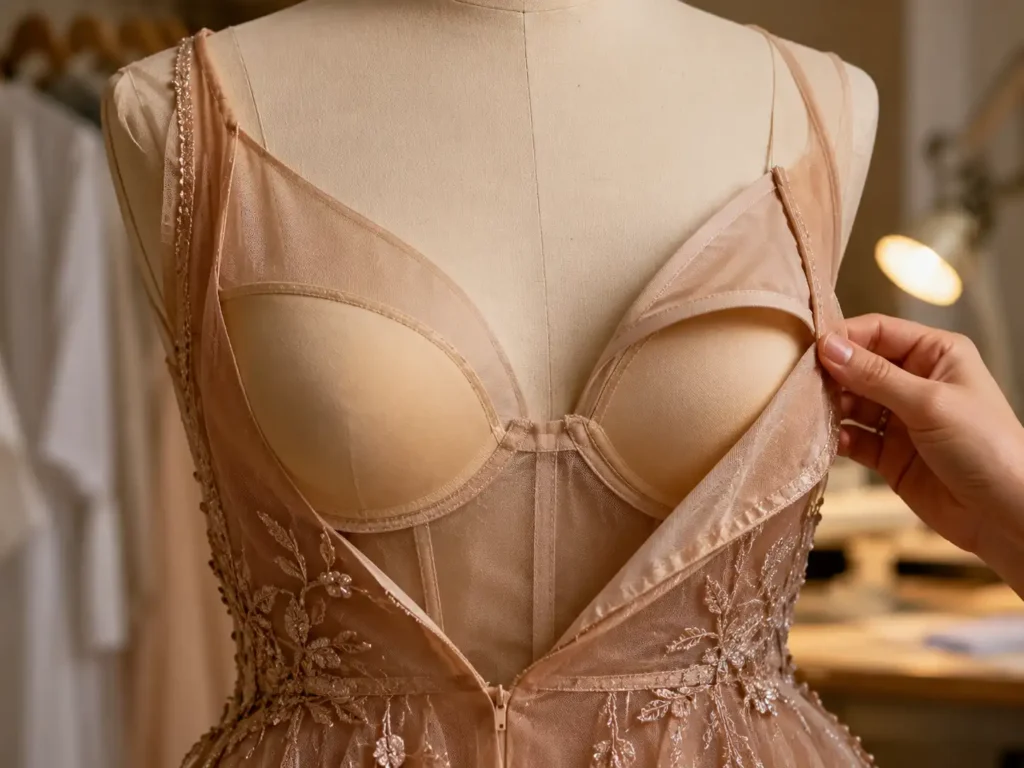
For styles with minimal upper-body coverage, internal support can include cups, boning, anti-slip tape or lining depending on the design. These components are reviewed for comfort as well as structure.
- Waistline and Vertical Proportion
High waist, natural waist, dropped waist and corset structures all change perceived leg length and skirt proportion. A floor-length silhouette exaggerates these differences.
Waistline position is therefore checked during fitting against the intended styling rather than simply placed according to a generic block. When the design moves into petite, tall or extended-size ranges, the position may also need graded adjustments.
- Fit Feedback Converted Into Pattern Changes
Comments such as “too long,” “too loose at the bust” or “slit feels too high” need to become measurable actions. Jinfeng Apparel records measurement changes, pattern impact, fabric impact and construction impact before revised samples or PP approval.
Approved corrections are transferred into the final pattern, size chart and production documents so bulk sewing does not continue from an outdated version.
Size Grading for Standard, Petite and Tall Programs
A development sample can fit correctly while other sizes fail if grading is treated as simple proportional enlargement. Floor-length dresses require special attention to total length, waist position, straps, armholes, slits and lining when a style expands across a broader retail size architecture.
| Size Program | Key Areas to Review | Floor-Length Risk | Production Control |
|---|---|---|---|
| Standard XS–XL | Bust, waist, hip, length, strap, slit | Length and slit proportion shift between sizes | Grade rule + size chart + measurement QC |
| Extended Sizes | Bust support, waist position, hip ease, armhole, strap width | Simple enlargement can distort support and silhouette | Proportion adjustment + fit validation |
| Petite | Body length, waistline, strap, armhole, total length | Shortening only the hem can leave the waist and slit too low | Petite proportion review + separate grade logic |
| Tall | Body length, waistline, strap, slit, skirt length | Adding only hem length can leave bodice proportions too short | Tall proportion review + confirmed length increments |
| High-Slit Styles | Hip, slit start, lining opening, total length | Slit can become progressively too high or too low | Slit measurement rule + movement check |
| Structured Bodices | Upper bust, under bust, cup, boning, waist | Support can fail if only circumference is graded | Structure-specific grading + fit sample |
Construction Details That Change How a Long Dress Performs

High Slits

Full and Partial Linings
Corset Boning

Built-In Cups

Strapless Support

Halter Construction
Backless Structures

Invisible Zippers

Ruching

Layered Skirts
Chiffon, tulle, organza and lace may use several skirt layers. Layer length, fullness and attachment order affect the finished hem and movement.
|Excess variation can create visible steps or imbalance around the garment.

Pleated Long Skirts
Pleats influence waist thickness, skirt volume and finished length.
Pleat amount and spacing need consistency, while heat-set or pressed pleats must survive finishing and packing without losing the intended line.

Embellished Surfaces
Sampling Built Around Fit, Fabric and Bulk Repeatability
Sampling at Jinfeng Apparel is a development process rather than a single garment-making step. Seven distinct sample types can be used for different purposes, including first, fit, revised, photo-ready, salesman, PP and Golden samples. Floor-length programs use the stages required by the style and launch plan rather than forcing every project through an identical sequence.
Project and Material Review
Development begins from available information such as a tech pack, reference image, original sample, sketch, fabric swatch, line sheet or trim information. Quantity plan, target market, size range and intended launch timing help determine whether the selected material and construction are commercially suitable.
First Sample
The first sample verifies design structure, fabric direction, basic proportion and manufacturing feasibility. It is not automatically treated as a bulk standard.
For a maxi dress, early checks may include total length, bust and waist proportion, skirt fall, slit position, lining, zipper and whether the chosen fabric supports the intended silhouette.
Fit Sample
Fit review focuses on the garment on the body. Bust, waist, hip, neckline, straps, armholes, length, slit and lining are assessed together.
Front, side and back fitting information provides more useful pattern feedback than a general comment such as “the dress feels slightly off.”
Revised Sample
Revisions convert fitting or design feedback into updated measurements, patterns and construction instructions. Medium-complexity dresses commonly require one first sample and one to two revised samples; complex corset, strapless, evening, sequin, lace or mesh structures may require around two revision rounds depending on the actual style.
Photo-Ready or Sales Samples
Fashion programs may require a sample for ecommerce photography, lookbooks, showroom presentations or internal selling. These samples emphasize visual finish, pressing, fabric appearance and correct fit but should still be distinguished from the later PP standard used for bulk production.
PP Sample
The pre-production sample locks the final fabric, color, trims, measurements, sewing method, labels and packing direction before bulk production.
Changes after PP approval can affect material purchasing, production allocation, cost and schedule.
Golden Sample
Key programs may establish a Golden sample as the highest-priority physical reference for bulk production, QC, repeat orders and dispute evaluation.
The Golden standard connects the approved pattern, measurements, fabric, construction, trims and finished visual result in one reference garment.
Fabric Changes Are Rechecked Against the Pattern
Replacing a fabric is not equivalent to changing a color. A new material can alter drape, stretch, vertical drop, transparency, shrinkage, seam behavior and skirt weight. Jinfeng Apparel therefore reviews material substitutions against pattern and construction before assuming an approved sample can move unchanged into another fabric direction.

Drape Changes the Silhouette
A fluid rayon maxi and a heavier crepe maxi can use similar styling while producing visibly different volume around the waist, hip and hem. Heavier fabric may pull the skirt downward; firmer material can increase visual width. Pattern ease and skirt sweep may need adjustment to maintain the intended shape.

Stretch Changes Fit and Length
Stretch satin, mesh and spandex blends behave differently from non-stretch woven fabrics. Recovery influences bust, waist and hip fit, while vertical stretch can affect finished length after the garment hangs.

Transparency Changes Lining
Moving from opaque crepe to chiffon, lace or mesh introduces lining and coverage decisions. Lining may change color appearance, garment weight and slit construction, so the inner layer becomes part of the pattern and not only a material substitution.

Shrinkage and Relaxation Affect Bulk Control
Rayon, viscose, knits and stretch fabrics may require specific shrinkage or relaxation considerations before cutting. A sample that was made from a small fabric quantity does not automatically prove that bulk fabric will behave identically.

How an Approved Sample Becomes a Bulk Standard
The most important production handover happens after the garment looks right. Jinfeng Apparel converts approved sample information into controlled production files so the bulk team is not expected to reproduce a garment from photographs or informal messages.
- Final Pattern: Approved fit corrections are transferred into the final pattern version. Pattern version control prevents cutting teams from using an earlier sample pattern after later revisions have already been approved.
- Size Chart and Grade Rule: Confirmed sample measurements become the basis for the size chart and grading logic. Critical points such as dress length, bust, waist, hip, strap and slit require clear measurement methods so bulk QC can compare finished garments against the same reference system.
- Fabric and Trim Records: Fabric reference, color, lining, zipper, cups, boning, labels and other trims are documented before production. Any approved substitutions need to be reflected in current records rather than relying on previous sample versions.
- Sewing and Construction Instructions: The production team receives construction information covering seams, lining, closure, support structures, slit reinforcement, hem treatment and other garment-specific requirements. Complex areas receive explicit checkpoints so sewing methods remain consistent across the run.
- Label, Packing and QC Requirements: Label position, care information, hangtags, barcodes, folding instructions and carton requirements are prepared alongside the QC checklist. Product and packing standards therefore move into production together instead of being handled as separate last-minute requests.
The sample-to-bulk handover links final pattern, size chart, fabric reference, trims, sewing instructions, labels, packing requirements and quality checkpoints before production begins.
Bulk Production Control for Long and Fluid Dresses
Bulk floor-length production creates different handling requirements from shorter garments. Large panels, fluid fabrics, long hems and structured bodices can magnify small deviations, so control needs to begin before sewing and continue through finishing rather than depending on final inspection alone.

Fabric Confirmation and Inspection
Bulk fabric is checked for color, hand feel, weight, width, defects and product-relevant risks such as satin shade variation, mesh snagging, lace damage or sequin loss. Fabric direction and color-lot information are particularly important where long panels sit next to one another.

Fabric Relaxation and Cutting
Knits, stretch materials, power mesh and certain blended fabrics may require relaxation control before cutting.
Cutting follows the confirmed pattern version, fabric direction, print orientation and size bundling requirements.

Panel Checking
Cut components are checked before entering sewing. Panel quantity, size identification, direction and visible defects are reviewed so errors are found before they become part of an assembled garment.

Sewing and In-Line Inspection
In-line checks focus on measurement, seam quality, zipper position, lining attachment, straps, corset elements, ruching, lace placement, slit construction and other style-specific requirements.

Pressing and Finishing
Floor-length garments depend heavily on pressing because a long continuous surface makes wrinkles, seam impressions and shine marks more visible. Satin and velvet need particular care, while pleated or layered garments require finishing that preserves the intended structure.

Final Garment and Packing Release
Finished garments are reviewed for measurements, appearance, color, zipper function, labels, pressing and packaging. The approved standard, measurement chart and QC criteria remain available for comparison before cartons are released.
Floor-Length Dress Quality Control Checkpoints
Quality control for long dresses must reflect the garment’s actual construction. Jinfeng Apparel checks material, cutting, sewing, measurements, appearance and packing, with product-specific attention to total length, front/back balance, lining, slits, fabric direction and finishing.
| QC Stage | Key Floor-Length Checks | Common Risk Being Controlled |
|---|---|---|
| Incoming Fabric | Color, hand feel, width, defects, shrinkage direction, snags, lace/sequin condition | Material inconsistency before cutting |
| Cutting | Pattern version, grain/direction, panel length, print placement, size bundling | Wrong direction, mixed sizes, inaccurate long panels |
| Sewing | Seam quality, zipper flatness, straps, lining, support, slit, ruching | Distortion and structural inconsistency |
| Measurement | Bust, waist, hip, total dress length, strap, slit height | Fit drift and incorrect finished length |
| Appearance | Hem balance, symmetry, drape, stains, holes, loose threads | Uneven or visually unstable garments |
| Pressing | Wrinkles, shine marks, seam impressions, pleat condition | Poor ecommerce and retail presentation |
| Private Label | Main label, care label, size label, hangtag, barcode | SKU and compliance-information mistakes |
| Packing | Folding, polybag, size sticker, carton mark, packing ratio | Wrinkles, wrong SKU packing, warehouse issues |

Packing Long Dresses Without Losing the Finished Look
Packing is part of the product specification for floor-length dresses. A correctly sewn garment can arrive looking poor if a long skirt is compressed, folded against the wrong surface or packed before pressing has properly settled.
- Folding Method: Fold direction depends on dress construction, fabric and embellishment. Long hems should not be forced into compact folds that create concentrated crease lines. Structured bodices, cups or boning also need protection from excessive pressure.
- Satin and Velvet Protection: Satin can show sharp creases, friction marks and surface pressure. Velvet can show crushed nap and persistent packing impressions. Packing density and contact surfaces therefore need to suit the fabric rather than using one method for every dress program.
- Tulle, Lace and Embellished Styles: Tulle volume can collapse when heavily compressed, while lace and sequin surfaces may catch or rub against other garments. Protective layers, correct garment orientation and controlled carton packing help reduce damage during transport.
- Private-Label Packing: Jinfeng Apparel supports woven labels, size labels, care labels, hangtags, polybags, barcode stickers and carton marks according to confirmed brand requirements. Packaging suppliers may have their own MOQ, so printed or specialized materials are reviewed early enough to avoid delaying final shipment.
MOQ, Cost and Production Planning for Long Dresses
Quantity Structure
Fabric Consumption
Fabric MOQ
Construction Complexity
Color and Size Planning
Too many colors or fragmented size ratios can reduce production efficiency.
Mature collection planning often groups fabrics, color stories and production quantities so the same material or trim can support several related styles without losing brand differentiation.
Timeline Planning
Representative Multi-Style Floor-Length Dress Programs
Brand programs frequently contain 10–30 styles rather than one isolated dress, with total quantities commonly reaching 20,000–80,000 pieces across a collection. The anonymous examples below reflect realistic order structures used for planning large fashion programs; brand identities and proprietary design information remain confidential.
U.S. Occasionwear Program — 18 Styles / 42,600 Pieces
Program mix: Satin floor-length dresses, corset maxis, high-slit evening dresses, mesh-lined styles and wedding-guest silhouettes.
The assortment combined fitted bodices with several skirt constructions, creating different requirements for satin direction, lining, cups, boning, zipper flatness and slit positioning. Quantities were distributed by style, color and size rather than handled as one homogeneous production run.
Development priorities focused on keeping bust and waist proportions consistent while allowing each skirt to retain its intended drape. Corset-led styles required additional fit validation, while satin styles received greater attention around shine direction, pressing and packing.
The production handover used approved patterns, size charts, material references, construction instructions and packing requirements before bulk allocation. High-volume commercial styles could be assigned separately from more complex evening structures so production efficiency did not force all 18 styles into the same manufacturing method.
Premium Ecommerce Program — 12 Styles / 28,800 Pieces
Program mix: Slip maxis, halter dresses, backless satin styles, ruched long dresses and fitted occasion silhouettes.
The primary challenge was visual consistency for ecommerce photography. Small differences in neckline angle, strap length, side-seam position, zipper shape or hem balance can become obvious when products are photographed from several angles.
Sampling therefore emphasized front, side and back fit observations together with fabric shine and drape. Several styles shared similar satin directions but used different necklines and back treatments, allowing fabric sourcing to be coordinated while preserving unique construction specifications.
Bulk quality checkpoints focused on total length, straps, bust coverage, slit position, zipper flatness, pressing and pack-out presentation. SKU information, labels and carton identification were incorporated into the production files rather than added after garment completion.
Resort and Event Program — 24 Styles / 63,200 Pieces
Program mix: Printed rayon maxis, chiffon resort dresses, halter long dresses, lined lace styles, event maxis and several seasonal colorways.
Large style counts increase the risk of mixing fabrics, prints, trims and packing instructions. The development process therefore grouped similar materials while keeping pattern, print direction, lining and SKU information separated by style.
Rayon and viscose directions required shrinkage and drape consideration, while chiffon styles needed layer and transparency management. Printed long dresses required controlled print direction and scale so the skirt did not appear visually twisted or unbalanced.
A coordinated production plan allows commercial resort styles and more detailed event dresses to follow appropriate manufacturing paths while remaining part of one seasonal launch. Repeat colors or proven shapes can later reuse approved pattern, fabric, packing and QC records where material availability remains suitable.

Custom Floor-Length Dresses Frequently Asked Questions

Send Your Floor-Length Dress Program for Review
- Reference images, sketches, original samples or tech packs
- Line sheet and number of styles
- Target quantity per style and color
- Preferred fabric or target fabric appearance
- Color plan or Pantone references where available
- Size range and size chart
- Key measurements, especially finished dress length and slit requirements
- Construction details such as lining, cups, boning, ruching or embellishment
- Main label, care label, hangtag and barcode requirements
- Packing and warehouse instructions
- Intended launch or required delivery window
- Any current manufacturing problem the new program needs to solve


