 Skip to content
Basque-Waist Dress Trend: Pattern and Fit Guide

Your trusted Women’s Apparel Manufacturer from China

The Basque waist has become one of the most recognizable dress proportions in current fashion because one seam can change the entire impression of the body. Instead of ending at the natural waist, the bodice extends downward and usually forms a V, rounded V, or U-shaped point at center front. That gives designers a strong visual tool, but it also creates a surprisingly demanding development problem. A sketch may look clean and effortless while the first physical sample exposes issues around bust shaping, front-body length, upper-hip tension, skirt balance, seam symmetry, and internal support.
A well-developed Basque-waist dress works when the center-front point is proportioned to the torso, the fitted bodice controls bust and waist volume without riding up, and the skirt joins the lowered seam without pulling or puckering. Fabric stability, lining, support, grading, and QC then determine whether that shape remains consistent across sizes and repeat orders. The waistline is therefore both a fashion detail and a structural decision.
The timing explains much of the renewed interest. Basque waists remained highly visible in bridal collections through 2025 and 2026, while Fall/Winter 2026 runway reporting identified the silhouette at houses including Jacquemus, Saint Laurent, Alaia, and Dior. Summer 2026 retail coverage also showed the idea moving into cotton, linen-blend, mini, and midi dresses rather than staying limited to formal gowns. For a fashion team, that shift makes the trend more useful: it can now be developed as a family of products rather than a single ceremonial look. The interesting part begins when a moodboard becomes a pattern, because that is where a flattering line either turns into a reliable product or starts fighting the body.
What Is a Basque-Waist Dress?
A Basque-waist dress has a fitted bodice that extends below the natural waist and drops into a V-shaped, U-shaped, or softly curved center-front waistline. Unlike a standard drop waist, the side waist can remain relatively high while the center front descends lower. The shape changes torso proportion, waist definition, skirt attachment, and the way the dress must be patterned and fitted.
What Defines a Basque Waist?
The defining feature is the seam relationship between the bodice and skirt. On a conventional natural-waist dress, that seam is broadly horizontal around the body. On a Basque-waist dress, the line moves downward toward the center front, creating a V, rounded V, U, or elongated curve. A shallow version may fall only a little below the natural waist, while a deeper version can extend toward the upper hip and produce a more sculpted, corset-like impression. The deeper the point becomes, the more the bodice begins to interact with abdominal and upper-hip shape rather than waist circumference alone.
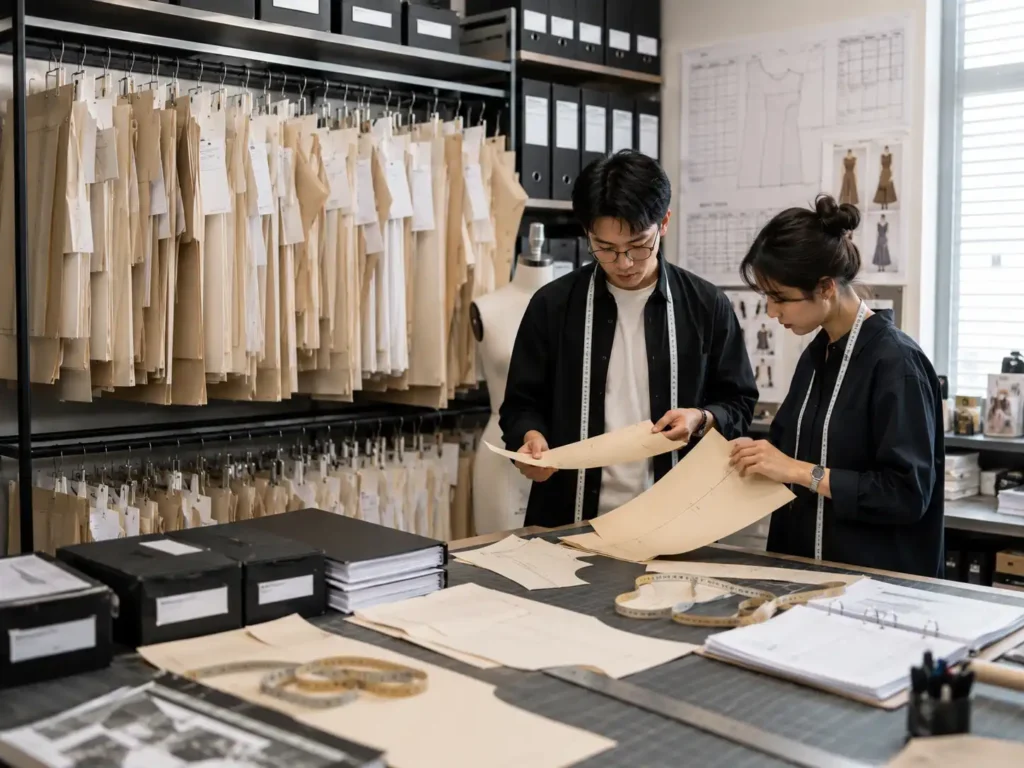
From a pattern perspective, the point is not decorative. The lower edge of the front bodice must be extended and shaped so it can lie against the torso, and the skirt must be drafted to match that non-horizontal seam precisely. A development file is therefore stronger when it defines three things separately: the side-waist position, the center-front point, and the curve or angle connecting them. A reference image can communicate mood, but those three pattern relationships are what allow the factory to reproduce the intended silhouette rather than producing a generic low-waist dress.
Is Basque Waist the Same as Drop Waist?
Basque waist and drop waist are related, but they are not interchangeable. A traditional drop waist generally moves the waist seam downward around most or all of the body, which means the bodice continues farther over the upper hip before the skirt begins. A Basque waist usually creates a shaped descent, with the center front positioned lower than the side waist. This difference changes both the visual line and the technical fit risk. The drop-waist bodice must manage more hip circumference around the body, while the Basque shape places extra emphasis on the front point and the transition from side waist to center front.
The terminology matters in sample development because an imprecise brief can create the wrong block before sewing even starts. If a tech pack says only “low waist,” one pattern maker may lower the entire waist seam while another may create a pointed front. A clear sketch, a measurement reference, and a side-view note reduce that ambiguity. The distinction is also useful for merchandising because the two silhouettes read differently on the body even when both sit below the natural waist.
Waistline Type | Center-Front Position | Side-Waist Position | Visual Effect | Main Fit Risk |
Natural waist | Near natural waist | Near natural waist | Balanced, classic proportion | Waist circumference and balance |
Drop waist | Lowered | Lowered | Longer upper body, lower skirt start | Upper-hip ease and mobility |
Basque waist | Lower V/U point | Usually higher than center | Sculpted, elongated torso | Point placement and seam distortion |
High waist | Above natural waist | Above natural waist | Longer-looking leg line | Bust-to-waist proportion |
Is a Basque Waist Always Corseted?
A Basque waist describes the shape of the waistline; corsetry describes how the bodice is supported and shaped. The two often appear together because an extended fitted bodice benefits from stability, but one does not require the other. A light cotton or linen-blend midi can use a shallow Basque curve with darts, lining, and localized interfacing. An occasion dress may add cups and selective boning. A strapless satin style with a deep point may need a multi-panel internal structure to keep the neckline secure and the lower front flat.
This distinction becomes important during costing. Designers sometimes select a reference because they like the low V waist without realizing that the smooth surface is being created by internal cups, boning, seam tape, interfacing, or a second structural layer. Removing those components may save material and sewing time, but it may also change the silhouette. The correct decision is to identify what level of support the dress actually needs, then choose the simplest structure that delivers the approved fit. Structure should reinforce a sound pattern, not compensate for one that is too short, too tight, or incorrectly shaped.
How Does the Waistline Change the Silhouette?
The Basque line directs the eye downward through the center of the torso, so it can make the upper body appear longer and the waist more defined. That effect is strongest when the waist point, neckline, and skirt volume are proportioned as one composition. A deep V under a compact bust and short torso can look heavy if it reaches too close to the hip, while the same depth may look elegant on a longer torso. A shallow curve can feel contemporary and wearable, but it may disappear visually if the skirt begins too close to the natural waist.
Hem length also changes the reading of the bodice. A deep point on a mini creates a strong contrast between a long fitted upper section and a short skirt. On a midi or floor-length dress, the same point can feel more formal because there is more vertical length below it. In practice, the most convincing samples are rarely created by treating the waistline in isolation. Neckline width, bust shaping, side-waist position, skirt fullness, and hem length all need to support the same proportion.
Why Is the Basque Waist Trending?
The Basque waist is trending because it offers visible waist definition without relying on a conventional horizontal waist seam. It combines the sculpted appeal of corset dressing with a more elongated torso line and can be adapted to mini, midi, occasion, party, and evening silhouettes. Its recent spread from bridal into broader ready-to-wear has made it commercially relevant beyond formal gowns.
How Did It Move Beyond Bridal?
Bridal fashion provided an ideal environment for the Basque waist because fitted bodices, full skirts, structured foundations, and dramatic waistlines already fit naturally within the category. The shape gained strong visibility in bridal collections before appearing more frequently in broader fashion coverage. By 2026, runway reporting was describing Basque waists as a ready-to-wear direction as well as a wedding-dress detail, and retail stories were showing versions in cotton, linen blends, shorter lengths, and less formal silhouettes. That expansion is important because a trend becomes much more useful when it can live in several price tiers and wearing occasions.
The translation from bridal to everyday fashion is not achieved simply by shortening a gown. Successful ready-to-wear versions usually simplify the internal structure, reduce skirt volume, use cleaner exterior seams, or choose more relaxed fabrics. A brand can keep the same visual waist idea while changing the rest of the product substantially. A structured mini may target party dressing, a satin midi may sit in occasionwear, and a softer woven version can work in resort or seasonal daywear. The waistline supplies continuity without forcing the entire collection into one formal aesthetic.
Which Silhouettes Are Driving the Trend?
The Basque waist works particularly well when a controlled bodice releases into a skirt with visible movement or volume. That is one reason full minis, A-line midis, corset dresses, and occasion silhouettes are common applications. The contrast makes the lower point easy to read. When the skirt is slimmer, the effect can still be strong, but the pattern becomes less forgiving because upper-hip ease and lower-bodice shaping are exposed rather than hidden by fullness.
For product development, it is useful to treat the Basque waist as a system that can generate several silhouettes. A corset bodice with a full mini skirt gives a youthful party proportion. A clean strapless bodice with a controlled A-line midi creates a more polished event look. A square-neck woven dress with a softer U-shaped waist can feel modern without looking formal. A longline bodice with a close skirt produces a sharper, more body-conscious effect but needs more accurate fit around the upper hip. The visual language can remain consistent even though the internal construction and sewing time vary significantly between those products.
How Is the Modern Basque Waist Different?
Modern Basque-waist dresses usually feel current because the historical idea has been edited rather than copied literally. The exterior often has fewer decorative seams, less ornate trimming, more precise necklines, and a stronger contrast between a clean bodice and the skirt. Some versions are highly architectural, while others use soft drape and only a modest center-front dip. The result is a proportion concept rather than one fixed historical costume reference.
That flexibility is valuable for design teams because the waistline already carries a lot of visual information. When a deep V waist is combined with exposed cups, lace-up backs, heavy ruching, cut-outs, rhinestones, and multiple fabrics, the dress can quickly become visually crowded and expensive to manufacture. A cleaner approach often makes the silhouette easier to understand at first glance and easier to merchandise. One practical design test is to remove embellishment from the sketch. If the neckline, waistline, and skirt proportion still create a recognizable product, the structure is doing real design work. If the sketch loses its identity immediately, the trend detail may be acting only as decoration.
Is the Trend Commercially Practical?
It can be commercially practical, but the answer depends on how the waist is interpreted. A shallow Basque seam in a stable woven fabric may add relatively little complexity compared with a standard fitted dress. A deep strapless version with cups, boning, multiple bodice panels, lining, and a sharp center-front seam creates more operations, more fit checkpoints, and more opportunity for variation. The retail price and expected quality level need to justify that extra development and sewing work.
A useful collection strategy is to establish one or two proven Basque blocks rather than developing every style from zero. Once the bust shape, front length, side-waist position, center point, and grading logic are stable, the same foundation can sometimes support new necklines, colors, skirt lengths, or compatible fabrics. That approach does not eliminate sampling, especially when materials change, but it reduces unnecessary pattern risk. For brands with seasonal drops, a technically proven block can turn a trend-led silhouette into a repeatable platform instead of a one-season experiment.
How Is a Basque-Waist Pattern Built?
A Basque-waist pattern is created by extending the bodice below the natural waist, controlling bust-to-waist shaping, and forming a balanced V, U, or curved lower edge that can join the skirt cleanly. Pattern makers must coordinate center-front length, side-waist position, waist suppression, upper-hip ease, darts or panels, seam angles, and skirt geometry rather than simply lowering one point.
How Deep Should the Front Point Be?
There is no universal center-front depth that works for every Basque-waist dress. The right point depends on torso length, bust projection, natural-waist location, upper-hip level, skirt shape, and the design effect the collection is trying to create. A deeper point increases vertical emphasis, but it also moves the lower bodice into a wider part of the body. That means the pattern has to manage more than waist circumference; it must also account for abdominal contour and the beginning of the hip.
A useful development specification records the point as a measurable relationship rather than a visual guess. The team can track center-front bodice length, side bodice length, natural-waist position, center-front drop, bust-to-waist distance, and waist-to-upper-hip distance. During fitting, those measurements are checked against the actual body because two fit models can share the same waist circumference while having noticeably different vertical proportions. In Jinfeng Apparel’s documented pattern-development system, key control points include bust, upper bust, underbust, waist, high and low waist, hip, front length, and back length, reflecting the number of connected measurements that can influence a lowered waistline.
How Do Darts and Panels Shape the Bodice?
The center point attracts attention, but the upper bodice usually determines whether that point stays where it was designed. A fitted Basque bodice needs enough volume for the bust and enough suppression through the waist. That difference is distributed through darts, princess seams, curved side seams, underbust seams, or multiple corset-style panels. Changing where suppression is placed can alter both appearance and comfort, even when the final waist circumference remains the same.
A smooth reference photograph can therefore hide a surprising amount of internal work. The exterior may show only two or three seams while the lining or inner foundation uses additional shaping. During sample review, the team should examine bust apex position, upper-bust tension, underbust fit, waist suppression, side-seam balance, and center-front stability together. If the bust area is too tight, the bodice may ride upward and make the Basque point look too high. If the underbust is loose, the waist may appear less defined. If the waist is over-suppressed, horizontal stress lines can develop even though the numeric waist measurement technically matches the spec.

How Should the Side Waist Be Shaped?
The curve from side waist to center front determines whether the Basque line looks elegant or forced. A dramatic V added to an otherwise standard bodice can create an abrupt angle that distorts the skirt or makes the lower edge appear pasted onto the garment. A smoother transition generally produces cleaner seam flow, but if the curve becomes too flat, the characteristic Basque effect may disappear. The side position therefore needs to be designed together with the point rather than treated as a fixed anchor.
Balance matters in three dimensions as well. Extending only the front without checking back length and side-seam position can cause the garment to tilt forward. A side seam that should fall vertically may rotate, and the back waist may rise. These issues are easy to miss in a front-facing e-commerce photograph but become obvious when the wearer turns or moves. During fitting, the waistline should be reviewed from front, side, and three-quarter views. When the front point approaches the upper hip, additional contouring or ease may also be necessary because the lower bodice is now crossing a body zone that widens below the natural waist.
How Does the Bodice Join the Skirt?
The pointed seam where the bodice meets the skirt is one of the most sensitive operations in the dress. A sharp V creates a change of sewing direction at center front, so seam matching, notches, clipping, pivot accuracy, and pressing all influence the final result. Small left-right differences can be visually obvious because the center point acts like an arrow. Slippery satin, bulky gathers, multiple layers, or stiff interfacing can make that area harder to control.
The skirt pattern must match the bodice seam line rather than merely match the cut edge. Extra fullness also changes the load on the seam. A gathered skirt can create bulk around the point, while a flatter A-line panel may produce a cleaner join. The operator needs enough seam allowance to sew securely but not so much bulk that the point becomes thick. After sewing, pressing is critical because reflective fabrics reveal tiny ridges and puckers. The best QC check is not only a flat-table inspection; the dress should also be viewed on a form or body to confirm that the V remains centered and the skirt falls evenly from both sides.
How Should a Basque Waist Fit?
A well-fitted Basque waist should stay secure through the bust and waist, keep the center point flat against the torso, maintain straight side seams, and allow the skirt to fall without pulling upward. The waist point should suit the wearer’s torso proportion rather than being fixed at one depth for every body. Fit must be checked from front, side, back, and during movement.
Where Should the Basque Point Sit?
The point should feel connected to the natural waist and upper-hip proportion rather than floating at an arbitrary level on the abdomen. A modest drop can create a subtle elongated effect, while a deeper point produces stronger vertical emphasis and a more structured visual identity. The lower the point moves, however, the more it enters a zone where the body widens, which increases sensitivity to upper-hip fit and lower-front contour.
Fitters should look at relationships rather than one isolated number. The distance from bust apex to natural waist, natural waist to upper hip, side waist to center point, and bodice length relative to skirt length all affect the final impression. On a shorter torso, an extremely deep point can make the bodice dominate the figure. On a longer torso, a shallow point may not create enough visual difference from a standard waist. The sample should therefore be judged on the intended fit model and then translated into grading rules that preserve the same proportion across the size range instead of blindly repeating one fixed drop value.
How Do Bust, Waist and Hip Balance Affect Fit?
Bust, waist, and upper hip work as a connected system in a Basque-waist dress. If the bust is too tight, it can lift the entire front bodice and make the point appear higher than intended. If the waist is over-suppressed, the garment may develop horizontal stress lines or pull the lower front away from the body. If there is insufficient room at the upper hip, the point can rise, bow outward, or create diagonal drag lines even when the waist measurement is technically correct.
This is why fit comments need to describe causes rather than simply request visual changes. “Lower the V” may be the wrong correction if the V is already correctly positioned in the pattern but is being pushed upward by hip tension. A better review identifies where the fabric is being asked to travel and where it is being restricted. In a documented sample-development process, that diagnosis is then converted into pattern revisions, updated measurements, and new sample instructions. The goal is to solve the primary fit problem once instead of making several cosmetic changes that produce new defects somewhere else.
Fit Symptom | Area to Check First | Likely Cause | Practical Risk |
Center point lifts | Lower bodice / upper hip | Insufficient ease or contour | V depth changes on body |
Bodice rides upward | Bust / front length | Insufficient length or bust room | Waistline shifts higher |
Horizontal waist wrinkles | Waist shaping | Excess tension or length imbalance | Distorted waist definition |
V stands away from body | Lower front shaping | Poor contour or weak support | Point looks detached |
Side seam rotates forward | Front/back balance | Front too short or back too long | Garment tilts |
Neckline gaps | Upper bust | Excess width or weak shaping | Exposure and instability |
Skirt pulls into V | Waist/skirt seam | Seam mismatch or excess tension | Puckering and asymmetry |
Do Torso Proportions Change the Pattern?
Yes, and vertical proportion is one of the main reasons a Basque waist cannot be developed from circumference measurements alone. Two people may have similar bust, waist, and hip measurements but different front-body lengths, back-body lengths, bust projection, or waist-to-hip distances. A fuller bust can consume additional front length, while a shorter waist-to-hip section gives the lower point less vertical space before the body begins to widen.
A structured dress therefore needs both horizontal and vertical control points. Bust, underbust, waist, and upper hip establish width, while front waist length, back waist length, side length, and center-front extension establish balance. When a brand expands a fitted style across several sizes, these measurements do not all increase at the same rate. The grader has to preserve the design relationship rather than simply scaling the V equally in every direction. This is especially important for sharp points because a small proportional change is easier to see than the same dimensional change on a soft horizontal waist seam.
What Fit Problems Signal a Bad Pattern?
The most useful warning signs are problems that repeat when the wearer returns to a neutral position. Temporary wrinkles during movement are normal; persistent drag lines, twisting, lifting, or asymmetry point to a structural issue. A first fit should therefore include standing, walking, sitting, raising the arms, and turning. If the bodice climbs upward and does not settle back, the garment is not stable enough for approval even if the front photograph looked good at the start of the fitting.
Watch the center point first because it reveals several problems at once. If it shifts left or right, check symmetry and side-seam balance. If it lifts, check upper-hip ease and front length. If it bows outward, check contour and internal support. Diagonal lines from bust to waist often indicate that width and length are being borrowed from the wrong area. The fitter should also separate pattern defects from material and sewing defects. A soft fabric may collapse despite a balanced pattern, while bulky seam allowances or poor pressing can imitate a fit problem. Correct diagnosis prevents unnecessary pattern changes.
Which Fabrics and Structures Work Best?
Stable woven fabrics, supported satin, and moderately firm fashion fabrics usually hold a sharp Basque waist most easily. Softer fabrics can create a gentler effect but may need lining, interfacing, or internal support. Stretch materials improve comfort but require controlled recovery. The deeper and more fitted the waist point, the more important fabric stability, seam behavior, and internal structure become.

Which Fabrics Hold the Shape Best?
Fabric selection changes both the appearance of the waist and the difficulty of producing it consistently. Stable woven fabrics are generally easier to control because the seam geometry does not stretch heavily during handling. Satin can create a polished occasionwear surface, but the same sheen that makes it attractive also highlights puckering, uneven seam tension, and poor pressing. Matte crepe can be more forgiving visually, while mesh and lace may expose or complicate the internal construction that supports the bodice.
The useful questions are practical: how much does the fabric stretch, how well does it recover, how heavy is it, how does it drape, how thick are multiple layers, and how does it respond to pressing? A sequin textile may look striking but can create bulk at the V point and require special seam preparation. A soft fabric can produce beautiful movement but may not hold a sharp lower bodice without support. A fabric does not need to be heavy to work; it needs to be predictable enough for the chosen structure. During sourcing, approving a swatch by appearance alone is therefore risky. The sample should test both the surface look and the mechanical behavior of the seam.
When Are Lining and Boning Needed?
Lining is often useful even when boning is not. It can cover seam allowances, improve comfort, reduce transparency, stabilize the outer fabric, and create a cleaner inside finish. Interfacing can reinforce only the areas that need extra control, such as the neckline, zipper, center front, or waist seam. Cups may shape the bust, while boning helps a fitted bodice resist vertical collapse and remain stable during wear. Strapless and deeply fitted versions are more likely to need that support than soft day dresses.
The key is to avoid using structure as a substitute for pattern correction. If the front body is too short, adding boning does not create the missing length. If the cup shape is wrong, more rigidity can make the defect more obvious. If the waist is too tight, a stronger internal layer may increase discomfort. A practical way to brief development is to define a soft, medium, or highly structured target before sampling. That gives design, pattern, sourcing, and costing teams a shared expectation and reduces the chance that a visually simple sketch turns into an unexpectedly complex garment after the first fitting.
How Do Stretch and Drape Change Fit?
Stretch changes how the bodice distributes pressure around the torso, while drape changes the way the skirt leaves the waist seam. A fabric with moderate stretch can improve comfort and reduce the need for rigid shaping, but recovery becomes essential. If the fabric relaxes after wear, the waistline may soften, the neckline may loosen, and the center point may sit differently after several hours. A pattern developed in one stretch fabric should not be transferred automatically to another simply because both fabrics are marketed as stretch.
Drape influences the lower half of the silhouette. A fluid skirt tends to fall vertically from the Basque seam, creating a softer line, while a firmer fabric can project away from the body and emphasize volume. Changing fabric therefore changes more than hand feel; it can alter the proportion between the long bodice and skirt. Before approving a substitution, compare stretch direction, recovery, weight, thickness, drape, surface finish, opacity, and pressing response. For repeat programs, keeping the approved fabric reference with the pattern and fit comments gives the development team a practical benchmark when a mill offers an alternative.
Which Structure Fits Each Dress Type?
The correct structure depends on what the product promises the wearer. A party mini may need strong waist definition but still allow comfortable movement. An occasion midi may prioritize a clean surface and stable fit for several hours. A bridal-inspired evening dress can justify more internal support because a sculpted silhouette is part of the perceived value. A softer resort or day dress may use the Basque line as a visual seam treatment rather than a true corset construction.
That means maximum structure is not the goal. The goal is the minimum structure that reproduces the intended shape reliably. Overbuilding a casual-looking dress can make it expensive, hot, or stiff. Underbuilding a premium fitted style can create neckline movement, collapsing panels, or a center point that will not stay flat. During early development, it helps to identify the support level before the final fabric is ordered so that the shell, lining, cups, boning, interfacing, zipper, and seam construction are costed together. That also makes later sample comments more useful because the team is evaluating the garment against a defined structural target.
How Do You Develop It for Production?
A production-ready Basque-waist dress moves from first pattern to fit sample, documented corrections, PP approval, grading, bulk production, and QC. The approved waist shape must be converted into measurable pattern points, size specifications, sewing instructions, material standards, and inspection checkpoints. The objective is not one attractive sample, but a silhouette that can be reproduced consistently across sizes and repeat orders.

How Do You Test the First Fit Sample?
The first fit sample should answer structural questions before the team spends too much time debating small decorative details. Start several feet away and judge overall balance: does the dress read like the original design, is the center point visually centered, and does the skirt begin at the intended level? Then move closer and review bust coverage, upper-bust stability, waist circumference, center-front position, side-waist balance, upper-hip ease, and skirt fall. Front, side, and back photographs are useful because a Basque waist can look correct from the front while the side seam is already rotating.
Movement is part of the test. The wearer should walk, sit, raise the arms, and return to a relaxed stance. If the bodice shifts upward and fails to settle back, the fit is not stable. Jinfeng Apparel’s documented development resources include 7+ senior womenswear pattern makers, two sample rooms, and 20+ sample machinists, with control points covering bust, upper bust, underbust, waist, low waist, hip, front length, and back length. Those kinds of linked checkpoints are particularly relevant to a lowered, fitted waistline.
What Should Be Corrected Before PP Approval?
Before a pre-production sample is approved, every change that can influence bulk manufacturing should be converted from a comment into a controlled record. A note such as “make the waist nicer” is too vague for production. A usable correction states what changes, what remains unchanged, and how the result will be checked. If the center point moves, the pattern and measurement reference should move with it. If the fabric changes, the new fabric needs approval. If a seam method is revised to reduce puckering, the sewing instruction needs to reflect that change.
The controlled package may include the revised pattern, measurement chart, fabric approval, lining, cups or boning specification, zipper, seam allowance, construction notes, pressing requirements, labels, and QC checkpoints. In Jinfeng Apparel’s documented sample-revision workflow, bulk-relevant changes are transferred into updated patterns, size charts, BOMs, fabric and trim records, sewing instructions, and QC checklists before the project proceeds. That documentation matters because production involves many people who were not in the fitting room. The PP sample becomes reliable only when the physical garment and technical records describe the same version.
How Do You Grade the Basque Waist?
Grading a Basque waist requires more judgment than enlarging the entire pattern evenly. Bust, waist, hip, and vertical body lengths do not change at identical rates across a size range. If the center-front extension is graded mechanically, the point can look increasingly shallow, deep, narrow, or wide as sizes move away from the base. The grading team therefore needs to understand which visual relationships are part of the design and should remain recognizable.
Important relationships include the depth of the center point, the difference between side waist and center front, the amount of upper-hip coverage, bust-to-waist proportion, and the point at which the skirt releases. A wider size range benefits from fitting more than one size before bulk production, especially when the bodice is strapless or heavily structured. The base-size sample confirms the original design, while an additional smaller or larger fit can expose grading issues before they are multiplied across the whole run. The more sculpted the bodice, the less forgiving an incorrect grade becomes because small changes affect both fit and the visible geometry of the waist seam.
How Is Bulk Fit Consistency Controlled?
Bulk consistency is created through a chain of controls rather than a single final inspection. The correct pattern version must reach cutting, the fabric must behave close enough to the approved quality, sewing operators need clear instructions around the center point, and QC teams need measurable checkpoints. A sharp V deserves particular attention because asymmetry, seam puckering, and point distortion are easy to see on the finished garment.
Production Stage | Basque-Waist Check | Main Risk Prevented |
Pattern release | Correct V/U geometry and version | Wrong silhouette enters cutting |
Fabric approval | Stretch, recovery, weight, drape | Approved fit changes in production |
Cutting | Grain, notches, panel symmetry | Twisting and mismatched seams |
Sewing | Exact center-point join and seam handling | Rounded or off-center point |
Pressing | Flat seam without ridge or shine damage | Visible puckering |
Garment QC | Bust-waist-hip balance and measurements | Size inconsistency |
Packed reference | Approved sample and records retained | Repeat-order drift |
The most effective factories also keep an approved reference sample or sealed standard where appropriate. That gives pattern, production, and QC teams a physical benchmark rather than asking each department to interpret the original sketch independently. When a style is reordered, the reference reduces the chance that small undocumented changes gradually alter the fit, and it gives new operators or inspectors a practical standard they can compare against without relying on memory.
How Do Pattern Records Support Repeat Orders?
An approved pattern becomes more valuable after the first successful production run. If a style sells, the next request may be a new color, a new fabric, a different skirt length, or a related seasonal version. When the pattern, measurement chart, fabric reference, trim details, construction notes, fit comments, and QC requirements are retained together, the development team can start from a proven foundation instead of rebuilding the product from memory.
Those records do not mean the old pattern should be reused blindly. A new fabric may stretch differently, a heavier skirt may change seam load, and a shorter hem may alter visual proportion. The advantage is that the change can be compared against an approved baseline. Jinfeng Apparel’s documented long-term production system retains pattern, fabric, trim, measurement, and packing records to support repeat orders and seasonal development. For a Basque-waist style, that continuity is particularly useful because waist placement, point shape, bodice support, and skirt transition are all visually sensitive. The real commercial value is not creating one attractive sample; it is reproducing the same intended silhouette when the product returns.
Conclusion
The Basque waist earns attention because it can transform a familiar dress shape with one strong proportion change, but that apparent simplicity is exactly what makes development demanding. The center point has to suit the torso, the bust and waist must hold the garment in position, the lower bodice needs enough room to follow the upper hip, and the skirt seam must be engineered so that the point stays sharp and balanced. Fabric and internal structure then decide whether the approved shape survives wear, grading, pressing, and bulk sewing.
For fashion teams planning a Basque-waist mini, midi, occasion dress, or corset-inspired style, the most productive starting point is a clear reference combined with measurable fit intent. Once the design is converted into an approved pattern, material standard, sample, and QC record, the trend becomes much easier to repeat and extend. A development partner with established dress-pattern, sampling, fit-correction, and production systems can help turn that visual idea into a product that still looks right when it moves beyond the fitting room.
Share This Article :

Jerry Lee
Categories

Latest blogs
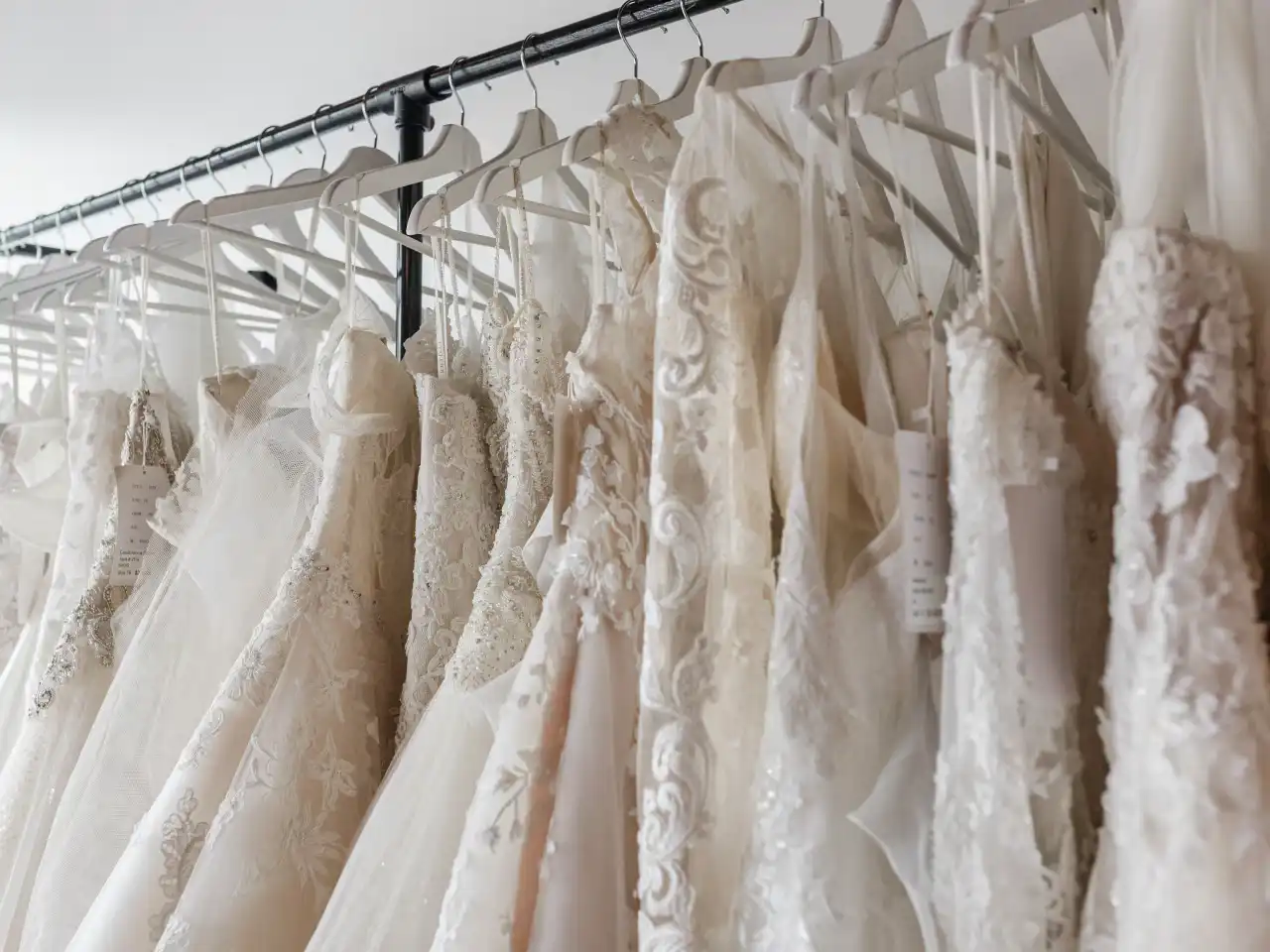
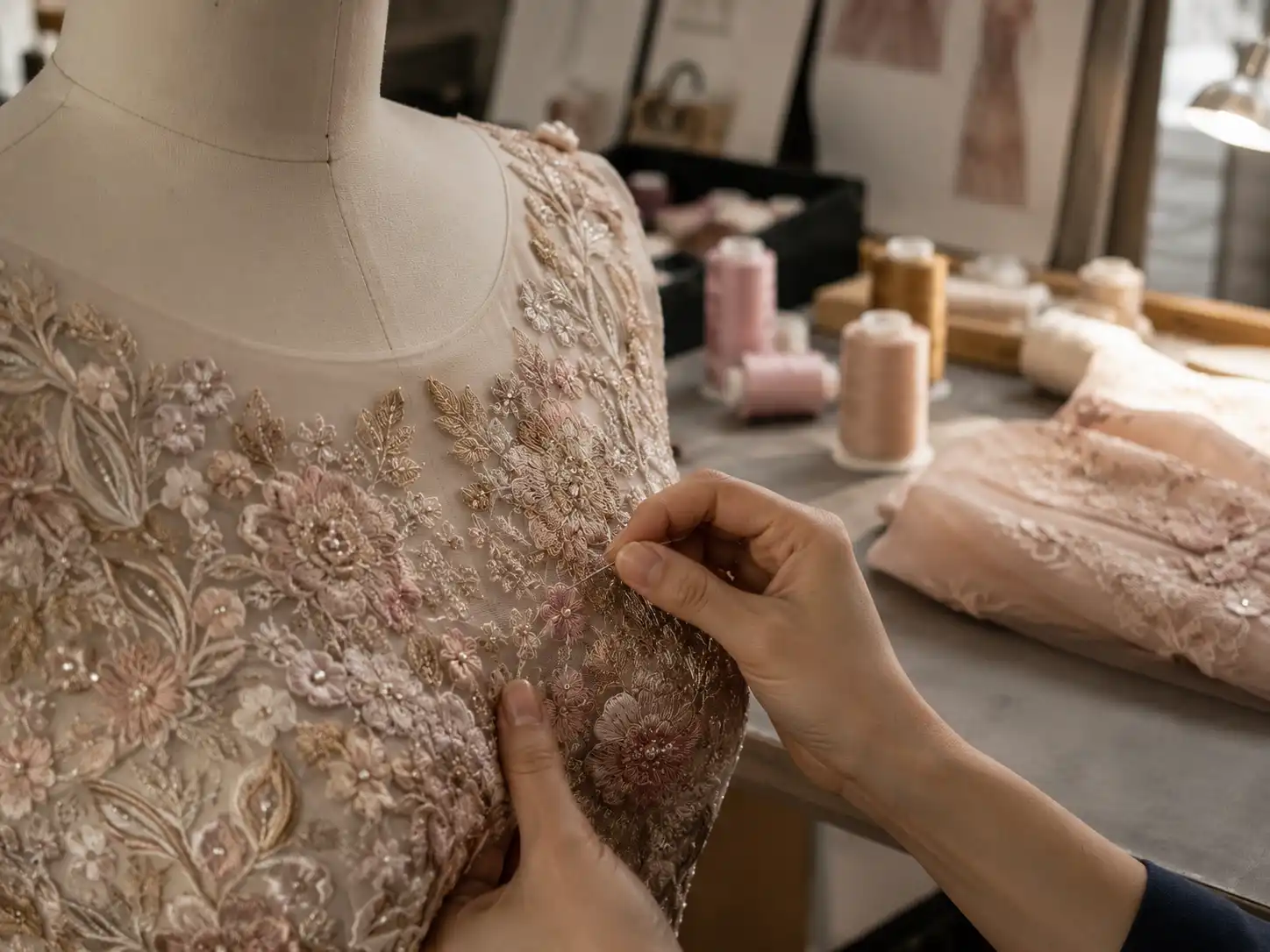
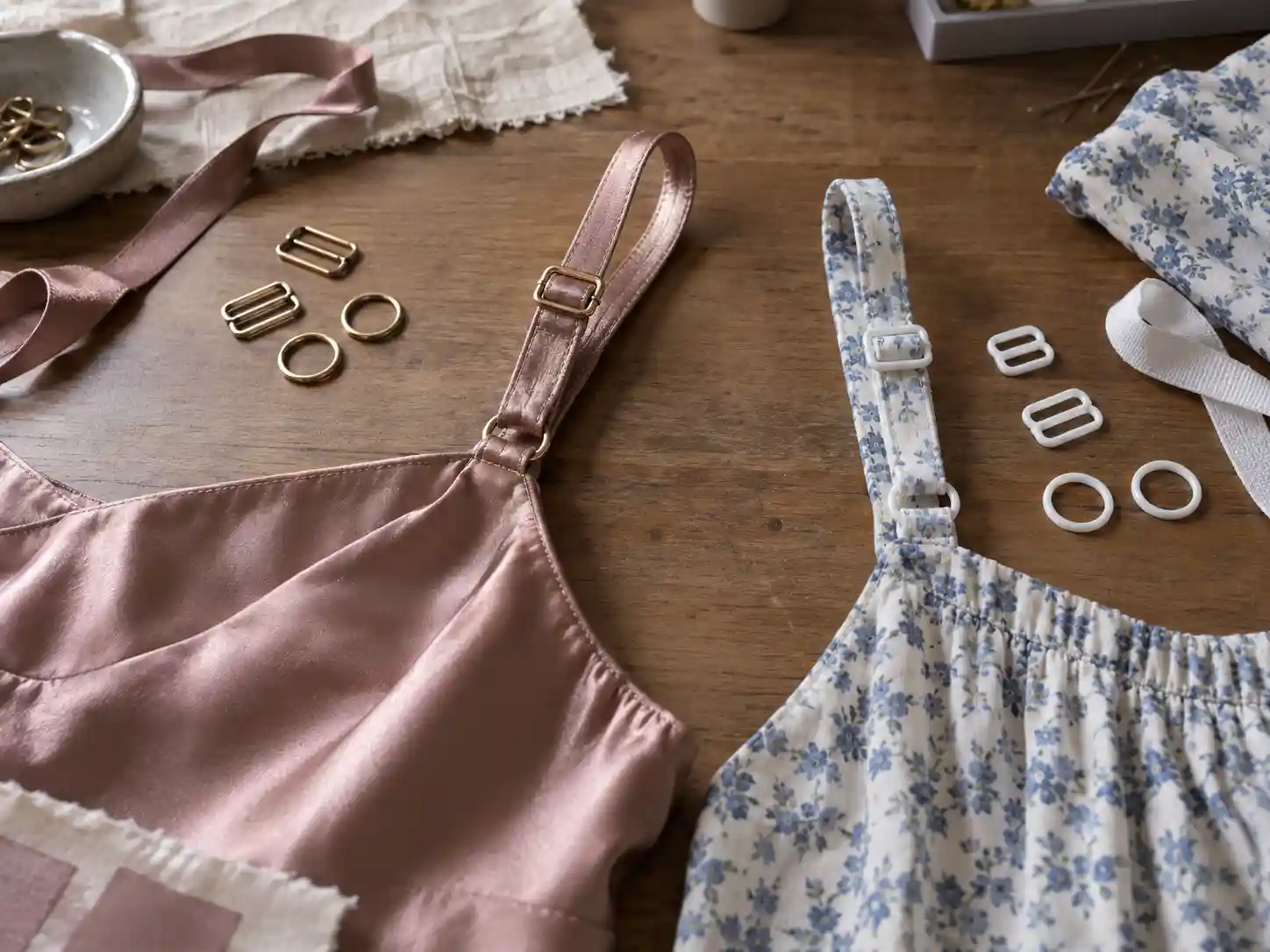
Table of Contents
Here, developing your OEM/ODM private label clothing collection is no longer a challenge—it’s an excellent opportunity to bring your creative vision to life.

