
Repeat-Order Pattern Management for Consistent Womenswear Production
A successful style should return to production from an approved technical baseline, not from memory, an old email attachment or a pattern file with uncertain revision status. Jinfeng Apparel organizes the final pattern, size information, material records, sewing instructions, sample approvals and quality references needed to prepare recurring womenswear orders with fewer interpretation gaps.
- 7+ senior pattern makers and 20+ sample machinists support pattern correction, approved-sample development and repeat-order preparation.
- Final pattern, size chart, fabric, color, trim, sewing, packing, QC and revision records can be retained for later production review.
- MOQ starts from 200 pieces per style and color; material, trim, construction, packaging and schedule conditions still require confirmation.
- Repeat programs commonly involve 10-30 styles and approximately 20,000-80,000 pieces per brand order.
A Womenswear Team Built for Repeat Production
Pattern and Sample Resources
Production Coordination
Six owned women’s fashion factories, 18+ sewing lines and 6+ flexible lines provide production-routing options for established styles. More than 12 merchandisers support order follow-up, file communication and coordination across sampling, materials, bulk production and packing.
Inspection and Finishing
Built for Brands with Recurring Womenswear Styles

Bestseller Replenishment

Seasonal Color Extensions

Multi-Style Repeat Programs
Where Repeat Orders Lose Their Approved Fit
Wrong Pattern Revision
Fit Comments Not Carried Forward
Fabric Behavior Changes
Grading and Size Drift
Construction Notes Become Detached
Production Assumptions Replace Checks
The Record Set Behind a Repeat Style
A reusable style record should explain more than the shape of individual pattern pieces. Each retained item answers a different production question, and missing links can force the factory to reinterpret decisions made during the first order.
| Record | Production purpose | Risk when missing |
|---|---|---|
| Final pattern set | Approved panels, seam allowances, notches, grain lines and construction references used for the released garment. | Old or incomplete pattern pieces enter cutting. |
| Size chart and grading | Approved points of measure, size increments, tolerances and relevant fit comments. | Fit and proportion drift across the size range. |
| Fabric record | Composition, construction, weight or handfeel reference, finish, color and relevant material observations. | A new lot or substitute changes drape, stretch or shrinkage. |
| Trim record | Zippers, elastic, lining, lace, buttons, labels, hardware and related placement or performance notes. | Unavailable or altered trims change construction or appearance. |
| Sewing instructions | Seam type, stitch method, reinforcement, lining, opening and finishing details needed to reproduce the approved build. | Operators follow a different assembly interpretation. |
| Sample approvals | Fit, revised, PP or Golden Sample references and the comments resolved before approval. | A visual sample and the written standard no longer agree. |
| QC and packing records | Measurement findings, recurring defect points, folding, polybag, barcode, SKU and carton information. | Past defects repeat or finished goods reach the wrong presentation standard. |
| Revision history | Brand comments, change dates, affected components and the final accepted direction. | An earlier change is mistaken for the production baseline. |

One Approved Baseline, Not a Folder of Similar Files
A repeat style may pass through First Sample, Fit Sample, Revised Sample, Photo-Ready Sample, Salesman Sample, PP Sample and Golden Sample stages. Not every sample represents the same technical status. A photo sample may prioritize appearance, while a fit revision can contain changes that must be transferred into the final production pattern and size chart.
The repeat-order baseline should point to the pattern and supporting records accepted for production, including later corrections made before or during the first bulk run. File names alone are not enough when several documents use similar style descriptions. The retained set needs a recognizable style reference, revision status and connection to the approved sample or production record used as the benchmark.
When a new comment changes neckline depth, strap length, waist location, hem length, lining coverage or grading, the affected records should be reviewed together. Updating a size chart while leaving an older pattern active creates the same risk as updating a pattern without transferring the approved measurement and sewing information. Controlled alignment matters more than the number of files stored.
Pattern, Specification, Sample and QC Must Agree
Pattern to Measurement
Measurement to Sample
Sample to Production
Production to QC
Classifying the Repeat Order Before Production
The style code may remain unchanged while the technical risk changes substantially. Jinfeng reviews the commercial request against the previous approved set and separates a direct repeat from a color extension, material change or revised product version.
Order condition | Required review | Release direction |
Same style, same specification | Quantity, size ratio, material and trim availability, labels, packaging, delivery window and production route. | Previous approved references may be used after current conditions are confirmed. |
Same style, new color | New fabric lot, lab dip or color standard, lining and trim matching, shade behavior, label/SKU and packaging updates. | Color approval is required; sample need depends on material and construction impact. |
Same pattern, new fabric | Weight, stretch, recovery, shrinkage, drape, opacity, surface, seam response, lining and pressing behavior. | Technical review is required; a new fit or PP sample may be needed. |
Pattern or size change | Affected panels, points of measure, grading, construction, consumption, costing and previous sample relationship. | Treat as a controlled new revision with updated approval before bulk. |
Fit-Sensitive Points in Women’s Fashion Reorders

Bust, Cup and Neckline

Waist and Hip Balance
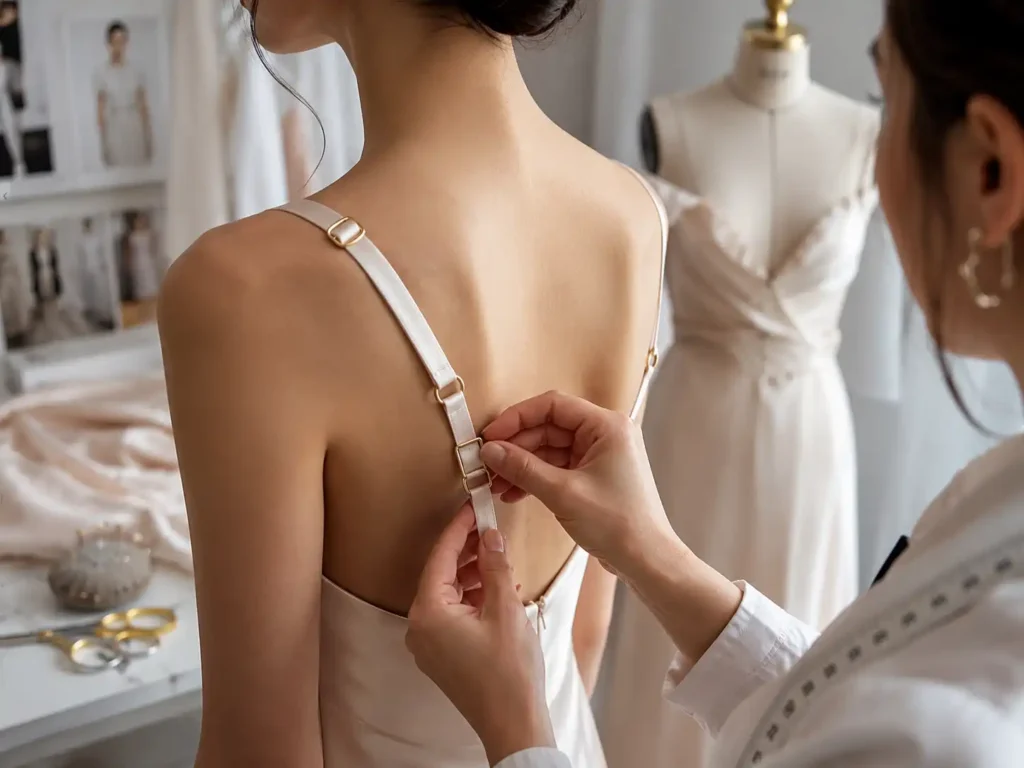
Straps, Armholes and Back

Length, Slits and Lining

Grading Across Sizes

Bias and Stretch Behavior
Building Repeat Readiness During the First Order
1. Review the Input
2. Develop and Correct Fit
3. Confirm Materials
4. Lock Pre-Production Direction
5. Record Bulk Findings
6. Prepare the Reorder Baseline

The Repeat-Order Pre-Production Review
Retrieving an approved pattern is the first step, not the release decision. Before new cutting begins, the previous production set is compared with the current order so changes in materials, commercial information and production conditions can be identified early.
The review confirms style reference, current quantity, size ratio, colorways, requested measurements and the relevant pattern revision. Fabric availability, lot or source, weight, stretch, shrinkage, finish and color standard are checked according to the product. Lining, zippers, elastic, lace, hardware, labels and other trims are reviewed for availability and equivalence rather than assumed to be unchanged.
Branding and packing data also need current confirmation. Care labels, main labels, hangtags, barcodes, SKUs, polybags, folding instructions and carton information may change even when the garment does not. The production route, capacity window and delivery schedule are then reviewed against material readiness and style complexity.
Any difference with potential impact on fit, construction, appearance, compliance documents, cost or delivery is recorded for decision before bulk. The result may be direct confirmation, a material or color approval, an updated sample, revised costing or a controlled new pattern version. Silence is not treated as technical approval.
When a New PP or Golden Sample Is Needed
Repeat production does not always require the full development route again, but skipping sample confirmation must be based on an unchanged and verified production condition. A previous sample remains useful only when its pattern, material, construction and branding references still match the new order.
A new PP Sample may be appropriate when the fabric source or performance changes, a new trim alters construction, the pattern or size specification is revised, label or placement details change, or the previous bulk record identifies a point requiring renewed control. Same-style new-color orders may need color or material approval even when another physical fit sample is unnecessary.
Golden Sample references can support line briefing, workmanship comparison and final appearance review. They do not remove the need to inspect current bulk materials or first production output. Fabric lots, operator handling, pressing, finishing and packaging can introduce differences after approval, so the accepted sample must remain connected to current measurements and production instructions.
Sample timing depends on complexity, material availability and the approval stage. Jinfeng sample work can range approximately from 7 to 35 days across different sample types and constructions; timing is confirmed for the individual project rather than presented as one fixed turnaround for every repeat style.

Repeat-Order Quality Control Against the Approved Standard
Incoming Material Review
First Output Comparison
In-Line Measurement Control
Workmanship Verification
Historical Risk Review
Final and Packing Checks
Capacity with Technical Continuity
Scale alone does not protect an approved pattern. Jinfeng combines technical records with production planning so recurring styles can be assigned according to garment construction, material readiness, quantity and schedule. Six owned women’s fashion factories, 10+ long-term satellite production partners, 18+ sewing lines and 6+ flexible lines provide routing capacity for dress-led womenswear programs.
Regular monthly capacity exceeds 100,000 pieces, supported by 12+ merchandisers, 15+ QC inspectors and 30+ finishing and packing workers. Production allocation may change between orders, so the released pattern, measurement standard, sample reference, sewing instructions and QC points must travel with the style. The records provide continuity when production timing, line arrangement or order mix changes.


Repeat Program: 18 Styles, 48,000 Pieces
An established womenswear brand planned a recurring order covering 18 dress and matching-set styles with an overall volume of approximately 48,000 pieces. The program contained proven silhouettes, repeat colors, several new colorways and selected fabric or trim updates. The commercial request looked familiar, but the technical status was not identical across all 18 styles.
Jinfeng separated the styles by change condition instead of releasing the complete order under one repeat label. Unchanged styles were checked against their final pattern, size chart, approved sample direction, sewing notes and previous QC records. New colors were reviewed for fabric and trim matching. Styles with material changes received renewed attention to stretch, drape, shrinkage, opacity, lining and seam response.
Pattern-sensitive points were identified by product: neckline and strap position for fitted dresses, waist and hip balance for bodycon silhouettes, length and lining coverage for occasion styles, and grading consistency across the ordered size range. Labels, barcodes, SKU information, folding and carton requirements were checked against the current order rather than copied from the earlier shipment.
Production release followed the approval condition of each style. Records and sample references were used during line briefing and QC, while previous findings were brought forward as inspection points. The example reflects Jinfeng’s normal order environment of 10-30 styles and approximately 20,000-80,000 pieces per brand order; the brand identity and unreleased design information remain confidential.
How to Audit a Repeat-Order Manufacturing Partner
A sourcing or technical team can evaluate repeat-order readiness by asking for evidence of the complete approval chain rather than a general statement about saved patterns. Useful review points include the released pattern reference, final size chart, grading information, revision history, PP or Golden Sample relationship, material and trim records, previous QC findings and packing instructions.
The manufacturer should also explain how same-style new colors, fabric substitutions, revised measurements and unavailable trims are classified. A strong answer identifies which changes require written confirmation, material approval, a new sample or revised costing. A weak answer treats every reorder as an automatic copy and offers no method for separating an old development file from the production-approved baseline.
- Request a redacted example showing pattern revision, sample approval and production release status.
- Confirm who owns the pattern and how access to confidential brand files is controlled.
- Ask how material substitutions and new dye lots are reviewed before bulk cutting.
- Check whether historical QC findings become inspection points in the next order.

Pattern Records and Unreleased Designs Stay Protected
Pattern and Tech Pack Protection
Sample and Image Control
Labels and Packaging
Long-Term Record Use
Repeat-Order Pattern Management Frequently Asked Questions
An old pattern can be reviewed, but direct production depends on whether it represents the final approved version and still matches the current size chart, material, construction and order requirements. Jinfeng first identifies the relevant pattern and historical references, then checks current fabric, trims, colors, labels, packaging, quantity and schedule. A missing approval link or technical change may require clarification, correction or a new sample before bulk release.
The useful record set can include the final pattern, size chart, grading information, fabric and color references, trim record, sewing instructions, sample comments, PP or Golden Sample reference, packing method, carton data, QC findings and brand revisions. The exact set varies by product. Retaining connected records is more valuable than saving many unclassified files because the next production team must know which combination created the approved garment.
Not always. A new color using the same confirmed fabric construction and performance may need color and trim approval without repeating the full fit process. A new dye lot, finish, weight, stretch, recovery or shrinkage behavior can affect fit or sewing, however. Jinfeng reviews the material condition and garment construction before confirming whether color approval, a PP Sample or renewed fit validation is appropriate.
The same pattern can serve as a starting point, but a fabric change requires technical review. Weight, stretch, recovery, shrinkage, drape, opacity, surface, seam response and pressing behavior can alter the finished silhouette. Fitted, bias-cut, lined and structured dresses are particularly sensitive. Depending on the difference, the order may need pattern adjustment, a fit sample, a PP Sample or written acceptance of the revised result.
The production baseline should identify the final approved pattern and its relationship to the current measurement chart, sample approval and construction instructions. When later comments alter fit, grading or components, the affected records are reviewed together and treated as a controlled revision. Clear style references, revision status and approval evidence help prevent an earlier development version from returning to cutting during a repeat order.
Grading is reviewed against the approved size chart and relevant pattern record, with attention to the points that shape the garment across sizes. Bust, waist, hip, length, neckline, armhole, strap and opening increments may require different treatment depending on the silhouette. Petite, tall or plus-size ranges should not be inferred from the base size unless their grading and fit direction were previously approved.
MOQ starts from 200 pieces per style and color. Final feasibility depends on fabric and color minimums, trim sourcing, printing or embellishment requirements, garment construction, packaging and the production schedule. A repeat pattern does not remove supplier minimums for a discontinued fabric, special dye lot, custom zipper, branded trim or packaging component, so current material conditions are reviewed before quotation and order confirmation.
A complete approved record set can reduce redevelopment work, but no fixed acceleration applies to every order. Material availability, dyeing, trim lead time, new colors, substitutions, sample requirements, quantity, line capacity and delivery timing remain influential. A repeat order with unchanged and available inputs may move more efficiently, while a new fabric or revised specification can require renewed development and approval before production.
Jinfeng can support NDA-based cooperation and protect tech packs, patterns, sample photographs, labels, packaging and unreleased designs within the project workflow. Public cases remain anonymous unless written authorization permits brand disclosure. Brands should identify any special access, retention or return requirements at the start of cooperation so the handling method can be aligned with the project and confidentiality agreement.
Send the style reference, previous purchase or production information, latest tech pack, final size chart, available pattern files, sample comments, approved sample photographs, fabric and trim references, colorways, current quantity and size breakdown, labels, packaging instructions and target delivery window. Missing items can be discussed, but identifying the latest approved version and every planned change makes the initial review more accurate.

Prepare the Next Repeat Order from the Right Baseline
A repeat style deserves the same discipline that made the first production successful.
Jinfeng Apparel can review the previous pattern, measurement and sample references, separate unchanged requirements from new conditions, and define the approvals needed before recurring womenswear moves into bulk production. The initial review becomes more accurate when the latest technical files and a clear list of planned changes are available.
- Style number, previous order reference and latest approved tech pack
- Final pattern, size chart, grading or fit comments available for review
- Current colors, fabric and trim status, including every proposed substitution
- Quantity and size breakdown for each style and color
- Label, barcode, SKU, packing and carton requirements
- Target sample approval, production and delivery schedule


