 Skip to content
Dress Pattern Development
Pattern development for fashion brands that need accurate fit, controlled revisions, size grading, sampling, and reliable transfer into bulk production.
- 7+ senior womenswear pattern makers focused on dress structure, proportion, fit correction, and production pattern control.
- 2 sample rooms and 20+ sample machinists connect first patterns with physical sample validation and revised pattern work.
- Development can start from a tech pack, reference image, original sample, sketch, or line sheet after structure and feasibility review.
- Core fit checks cover bust, upper bust, waist, hip, neckline, armhole, strap, dress length, slit, lining, and other style-specific points. across fit-sensitive dress categories.
Pattern Development Capacity Built Around Dress Fit and Sampling
7+ Senior Pattern Makers
2 Dedicated Sample Rooms
20+ Sample Machinists
Dress Pattern Development From Design Intent to Production Standard
Dress pattern development covers more than drawing pattern pieces. Each stage converts design information into a more controlled production standard, with fit, measurement, construction and size logic checked before the garment reaches bulk manufacturing. The result is a controlled chain from visual idea to measurable garment standard.
| Development Stage | What It Controls | Main Output |
|---|---|---|
| Structure Review | Silhouette, support, closure, lining, fabric behavior and construction feasibility | Development direction |
| First Pattern | Base size, style lines, balance, seam shape and initial garment proportions | First pattern set |
| Sample Validation | How the pattern performs in real fabric and construction | First / fit sample |
| Pattern Correction | Fit comments, measurements and construction changes | Revised pattern |
| Size Grading | How the approved base size expands across the required size range | Grade rules and size patterns |
| PP / Final Pattern | Approved fit, fabric, trims and sewing standard before bulk | PP / production pattern |
| Bulk Control | Production measurements, Golden sample reference and QC checkpoints | Repeatable production standard |
Four Inputs That Can Start Dress Pattern Development

Tech Pack Development

Reference Image Development

Original Sample Development

Sketch or Line Sheet
A Controlled Pattern Development Path From Brief to Bulk
Structure Review
First Pattern
First Sample
Fit and Revision
Grading and PP
After the base fit is approved, grade rules are prepared for the required size range. The PP stage confirms final fabric, trims, construction, measurements, labels and packing expectations. Major fit changes should be resolved before PP approval. Grading is not released blindly when the base fit is still moving; the approved base standard must be clear before size rules are finalized.
Bulk Standard
The approved pattern, size chart, PP comments and Golden sample become production references. Bulk scheduling is confirmed only after quantity, materials, packaging and production requirements are locked, allowing QC measurements to follow the same approved standard. Production teams then work from controlled records rather than trying to interpret old fitting messages, sketches or early sample versions. Each released style remains linked to its approved pattern and sample version.
Critical Fit Points That Decide Whether a Dress Works
Bust and Upper Bust
- Check bust, upper bust and under bust separately.
- Review cup and boning positions when used.
- Confirm neckline depth and side coverage on the fit sample. For soft fabrics, the same measurements can feel different from a structured woven, so support and fabric behavior are reviewed together. Changes to cups, boning or lining can shift the bust position and may require another fitting check.
Waistline and Torso
Waist measurement alone does not define a flattering waistline. Natural waist, high waist, low waist and corset waist positions create very different body proportions. Front and back torso length also affect whether the waistline sits level.
- Check waist circumference and vertical position.
- Review front and back length balance.
- Recheck waist shaping when fabric stretch or boning changes. A waistline that is technically level can still look wrong if the torso proportion does not match the silhouette. Pattern correction therefore checks both circumference and vertical placement, especially on corset, low-waist and fitted occasion dresses.
Hip and Ease
- Compare hip measurement with fabric stretch and recovery.
- Check side seam direction.
- Test sitting and movement where the style requires it. Fabric recovery and lining can change the amount of usable ease. For stretch dresses, the sample is observed after movement to see whether the hip area returns to shape or continues to grow, because bulk consistency depends on stable recovery.
Neckline and Armhole
- Measure neckline depth and width.
- Review armhole coverage from front and side views.
- Check whether binding, lining or reinforcement changes the finished shape. For deep V, square neck or low armhole styles, coverage is reviewed against the intended market and styling. Small changes to shoulder angle, lining or binding can alter the finished opening, so the pattern and construction method are checked together.
Strap and Shoulder
- Check strap length and attachment points.
- Review left-right balance.
- Confirm neck pressure, shoulder tension and back coverage during fitting. Adjustable hardware can provide limited wearer adjustment, but it does not correct a poor pattern. The base strap geometry still needs to place the neckline, bust and back opening correctly before sliders or elastic are used as finishing details.
Length Slit and Lining
- Measure front, back and side lengths.
- Confirm slit height during movement.
- Check lining length, transparency and hem relationship before bulk. Fabric hanging time and pressing can also change visible length, especially on maxi, bias-influenced or layered dresses. Final hem decisions should be made after the garment has settled in the approved fabric rather than directly after sewing.
Fabric Behavior Must Be Built Into Every Dress Pattern
Pattern accuracy depends on fabric behavior. Stretch, recovery, drape, weight, transparency, surface friction and lining all change how a dress hangs and moves. A pattern that works in one fabric may need meaningful adjustment when the material changes.
How Stretch and Recovery Change Pattern Ease and Stability
Stretch dresses cannot be developed from body measurements alone. The pattern must account for stretch direction, recovery, garment pressure and the visual fit expected from the style.
A bodycon dress in a stable ponte behaves differently from one in soft jersey or high-stretch mesh.
The same hip measurement can require different pattern ease because one fabric returns quickly while another grows during wear.
For fitted styles, Jinfeng reviews how the fabric stretches across bust, waist and hip, then checks whether the side seams remain vertical and whether the dress length rides upward when worn.
Recovery matters just as much as stretch percentage: weak recovery can cause the neckline, armhole or hip area to become loose after movement.
If the sample fabric changes, the pattern may need to be re-evaluated rather than simply cut again in the new cloth.
Pattern decisions can include changing negative ease, reshaping the side seam, adjusting armhole tension, revising lining stretch, or changing seam construction. Wash or relaxation behavior also matters for knit and stretch styles. The purpose is not to force every stretch fabric into the same block; the purpose is to create a stable garment that holds the intended silhouette across wear and production.
How Drape Weight and Bias Affect Dress Pattern Balance
Woven dress patterns are strongly affected by weight and drape. A light chiffon maxi needs enough controlled volume to move without creating an uneven hem, while a heavier satin or crepe can pull differently at the neckline, waist and side seams. Slip dresses may also use bias-influenced construction, where fabric growth and diagonal tension can change length and side-seam balance after hanging.
Pattern development therefore considers more than the outline of each piece. Grain direction, seam position, hem sweep, lining length and the relationship between front and back panels all influence how the finished dress settles. Long dresses are especially sensitive because small differences in fabric growth become visible at the hem. Satin also shows tension and distortion easily, so zipper placement and seam shaping must be controlled without creating ripples.
When Jinfeng reviews a fabric substitution, the team compares weight, hand feel, drape, stretch, transparency and shrinkage risk. A meaningful material change can require a revised pattern or new sample. Treating fabric replacement as a color change creates avoidable fit and balance problems later in production. Pattern pieces for long or fluid dresses may also need controlled resting and rechecking before the hem is finalized. When the final garment includes a zipper, shaped waist seam or asymmetric drape, those construction points are checked again after the fabric has settled. This avoids locking a paper pattern that looks correct before gravity and fabric growth have shown their full effect.
How Transparency Lining and Surface Materials Change Construction Patterns
Mesh, lace, chiffon, light satin and sequin fabrics create pattern requirements that do not appear in a basic opaque woven dress.
Transparency changes where lining begins and ends. Lace placement can change seam positions. Sequin thickness affects seam allowance and comfort. Fine mesh can stretch at the neckline or armhole even when the base measurements appear correct.
For transparent or semi-transparent dresses, lining patterns must be developed together with the outer shell. Coverage, length, slit position and stretch need to work as a system. If the lining is too short, it can expose areas the outer layer was meant to cover; if it is too tight, it can distort the outer fabric. Corset or structured styles may add cups, boning or internal support that also require dedicated placement within the pattern.
Surface-sensitive fabrics change handling as well. Satin can show pulling and zipper waviness; lace needs motif awareness; sequin fabric needs comfortable seam placement and lining protection. Pattern development becomes a construction plan, not merely a set of shapes. The goal is a sample that can be sewn consistently without sacrificing the intended visual effect. The production pattern also needs to anticipate how difficult materials will be cut and handled. Extra control around seam placement, support pieces and lining boundaries helps the cutting and sewing teams repeat the approved look without relying on individual operator judgment.

Different Dress Silhouettes Need Different Pattern Logic

Bodycon Pattern Logic

Corset and Strapless

Slip Dress Pattern

Halter and Backless

Ruched and Cut-Out
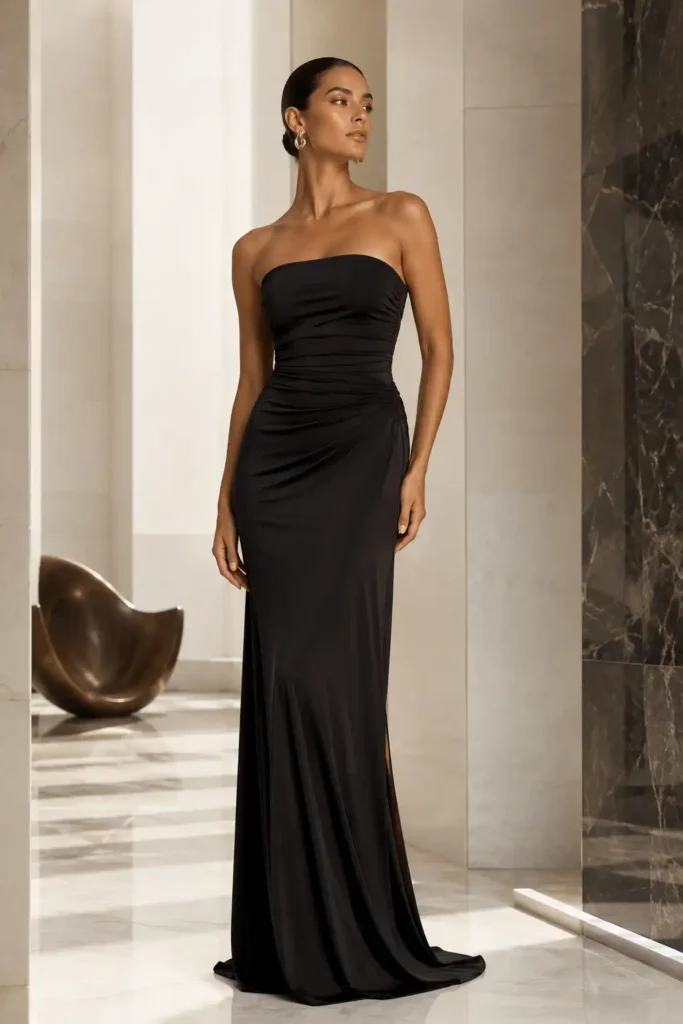
Maxi and Evening
Fit Feedback Must Become Measurable Pattern Changes
Comments such as “too tight,” “too low” or “does not sit right” are not enough for controlled development. Fit feedback needs measurements, viewing angles and clear revision records so the pattern team can identify the cause and update the correct pattern area.

Measuring Fit Before Changing the Dress Pattern
Fit starts with objective reference points. Jinfeng compares the sample against the approved size chart and checks the body areas that matter for the specific silhouette.
For dresses, common measurements include bust, upper bust, under bust, waist, hip, front length, back length, strap length, armhole, neckline depth, slit height and total dress length.
Structured or exposed styles may require additional checks around cup position, boning, back coverage or internal lining.
Fitting images are most useful when they show the front, side and back under consistent posture. Close-up photos of a neckline, side seam, cup, armhole or slit help distinguish a pattern issue from a sewing or fabric issue. Pull lines, twisting, gaping and uneven hem behavior are read together with measurements instead of being treated as cosmetic defects.
The goal is to find the real cause. A neckline may look too low because the strap is too long, the upper bust is too loose, or the entire front body length is incorrect. A bodycon dress may ride up because hip ease is too tight or because the fabric recovery is weak. Measuring first prevents random corrections that solve one area while creating a new problem elsewhere. Measurements are also compared with the intended fabric. A sample made in a substitute material may show a problem that disappears or becomes worse in the final fabric, so the team records which observations are structural and which are material-dependent before changing the pattern.
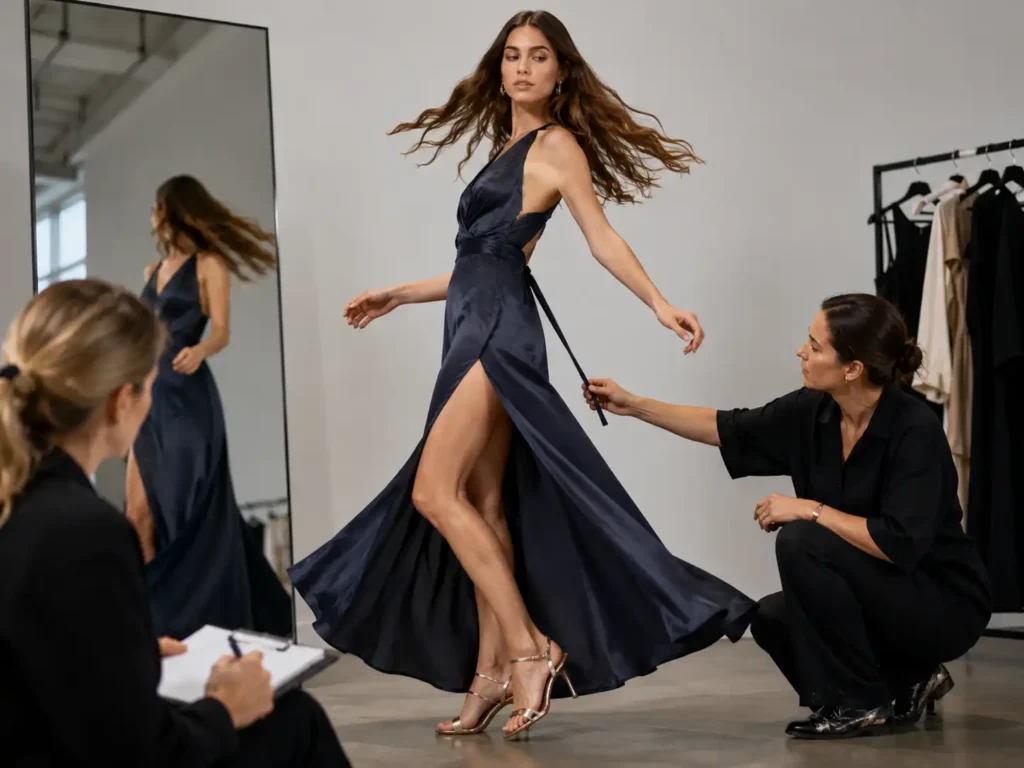
Turning Fit Feedback Into Precise Pattern Revision Actions
After the problem is identified, the revision should be expressed as a pattern action rather than a vague instruction. “Raise neckline 1 cm,” “shorten strap 1.5 cm,” “add hip ease,” “move waist seam,” or “increase lining coverage” gives the sample room a controlled instruction that can be checked again. Complex changes may also require construction updates, such as adjusting boning length, cup position, seam allowance, zipper position or ruching distribution.
Jinfeng records whether the issue affects the pattern, fabric, trims, construction or measurements. Pattern-related changes are transferred into the revised pattern before the next sample. If the fabric changes in weight, stretch or drape, the team reviews whether the previous correction still applies. Significant material or structural changes may require a revised sample because the fit evidence from the earlier version is no longer reliable.
Revision records also protect the brand’s design intent. Multiple rounds of development can become confusing when comments remain only in messages. A documented change history shows what was changed, why it changed, whether cost or timing moved, and what the next approval step should be. Where several comments interact, the sequence of corrections matters. Raising a neckline before shortening a strap can produce a different result from changing both together. The pattern team groups related fit points and verifies the combined effect on the next sample instead of stacking isolated changes without checking the overall silhouette.

Locking Pattern Revisions Before PP Sample Approval
PP should not be used as another exploratory sample. By the time a style enters PP, the main fit, fabric, trims, construction, measurements, labeling and packing direction should already be confirmed. Pattern corrections from the fit and revised samples need to be reflected in the final pattern, updated size chart, BOM, sewing instruction and QC checkpoints.
Jinfeng treats bulk-relevant changes as formal file updates. The team can carry revised patterns, measurement records, fabric approvals, trim approvals, sewing notes, label files, packing instructions and PP comments into the production package.
A Golden sample can then serve as a physical reference for the approved garment standard.
If a major change appears after PP – such as new fabric stretch, a different cup, major neckline adjustment or altered dress length – the pattern should be reviewed again instead of forcing the old standard into bulk. Locking revisions before production reduces the chance that one unresolved sample issue becomes thousands of repeated garments. Before PP release, the current files should clearly identify the approved version and remove obsolete instructions from the production package.
A factory line should not need to decide which old comment is still valid. Version control keeps pattern, measurement and sewing information consistent across merchandising, sample room, production and QC teams.
Size Grading Must Preserve Shape Coverage and Proportion
A good base-size sample does not guarantee a good size range. Grading needs style-specific rules so the garment keeps the intended fit, coverage and visual proportion as bust, waist, hip, length and support points change.
Why One Approved Base Size Is Not the Range
When a brand develops XS-XL or a broader size range, grading cannot be treated as equal enlargement in every direction.
The bust may need a different increment from the waist.
Strap length, neckline depth and armhole shape may need controlled change rather than the same percentage growth.
Mini dress length may need careful limits so larger sizes keep coverage without changing the intended silhouette too much.
Fit-sensitive styles make the risk more obvious. A corset dress can lose support if cup position and upper-bust growth are not considered.
A bodycon dress can become too tight at the hip or too loose at the waist if stretch and body proportion are ignored.
A maxi dress may require length rules that preserve hem balance across different body heights and sizes.
Jinfeng develops grading around the approved base pattern and the brand’s size chart.
The purpose is to maintain the shape language of the approved sample while giving each size enough coverage, support and movement for its intended wearer. The approved base size remains the visual anchor. Grading should preserve where the waist sits, how much leg is shown, how the neckline frames the body and how the dress balances from front to back. Those visual proportions are part of the product, not secondary details added after measurements are graded.
How Grade Rules Preserve Style-Specific Dress Proportions
Different pattern areas can require different grading logic.
Bust, waist and hip increments define core body fit, but other points protect the styling.
Neckline depth influences coverage. Armhole growth affects side exposure.
Strap length can change bust height. Slit height affects movement and safety.
Lining length needs to remain compatible with the outer shell.
Plus-size, petite or tall adjustments may also require more than simply adding or subtracting total length. Waistline position, shoulder-to-bust distance, armhole, strap, hip placement and slit position can shift relative to the body. Jumpsuits add crotch length and rise, while structured dresses add support placement.
The grading plan should therefore be reviewed against the actual silhouette and fabric. A grade rule that works for a loose woven A-line dress may not be suitable for a bodycon mesh dress or corset mini. Style-specific grading reduces the risk of a range that looks consistent on a spec sheet but inconsistent on the body. Brands with an established fit block can provide their grade rules or historical approved measurements. When available, those records are reviewed alongside the new style so the collection does not drift away from the fit language already recognized by the market. New constructions can still require exceptions to the normal rule.
How Measurement QC Verifies the Graded Size Range
Grading only becomes useful when bulk measurements follow the approved size standards. Jinfeng links size grading with measurement QC so the production team can compare finished garments against the relevant size chart and tolerance requirements. Bust, waist, hip, dress length, strap, armhole, neckline, slit and other style-specific POMs can be included in the measurement plan.
Size management also continues into labels and packing. The correct garment size must match the size label, polybag identification, SKU information and carton breakdown. For multi-size fashion programs, a pattern error and a packing error create different problems but both can lead to returns or warehouse rejection.
The final objective is a coherent chain: approved base fit -> grade rules -> size patterns -> production measurements -> size identification. When those records stay aligned, a brand can develop a range rather than a single good sample. During production, measurement trends are more useful than isolated end-of-line checks. If a repeated size begins moving outside the approved range, the team can trace cutting, sewing or pressing conditions before the deviation spreads through the full order. Grading and QC therefore work as one control system rather than separate departments. The same discipline matters when a brand changes a size ratio for a reorder. Production quantity can shift toward different sizes without changing the grade rule itself, so pattern records and packing breakdowns must remain separate. Keeping those two systems clear prevents commercial assortment changes from creating accidental technical changes.
Final Patterns Must Transfer Cleanly Into Bulk Production
Pattern development creates value only when the approved fit survives cutting, sewing and quality control. Jinfeng connects the final pattern with PP approval, production instructions, measurement checks and Golden sample references before bulk manufacturing begins.

How the PP Sample Locks Final Production Intent
The PP sample is the point where the approved pattern meets the final production materials and construction.
Fabric, color, lining, trims, zipper, cups, boning, labels and packing direction should already be confirmed.
The garment is checked against the final size chart and development comments so the team can identify any remaining difference between the approved pattern and the actual production setup.
A PP sample should not carry unresolved fit problems into production.
If the neckline still gaps, the waistline is wrong or the hem is unbalanced, the final pattern needs correction before the style is released.
Major fabric changes also require review because stretch, weight or drape can alter the fit evidence established during earlier samples.
Jinfeng records PP-relevant comments and connects them with the production pattern, BOM, sewing instruction and QC checklist. Bulk production scheduling is then built around confirmed quantity, material arrival, packaging and production allocation rather than an assumed fixed lead time.
The PP review also confirms whether the production line will use the same material behavior that was validated during fitting. If a bulk fabric lot is materially different in stretch, weight or hand feel, production release may require renewed review. Pattern approval is meaningful only when the material and construction environment remain compatible with the approved sample.

How a Golden Sample Supports Production Line Control
A Golden sample provides a physical reference for what the approved garment should look and feel like.
Pattern files and measurements explain the technical standard; the Golden sample shows the combined result of fabric, fit, construction, trim placement and finishing. Production and QC teams can compare details that are difficult to communicate through numbers alone.
For dress programs, reference points can include neckline height, strap position, waist seam, zipper flatness, ruching distribution, lining coverage, slit height, hem appearance and overall drape. Structured dresses may also need cup, boning and anti-slip placement checked against the approved sample.
Golden sample records are also useful for repeat orders. They do not eliminate the need to recheck new fabric lots, colors, trims or production conditions, but they preserve the approved visual and construction standard so the next order does not start from memory. For multi-style programs, each Golden sample must stay tied to its own pattern and instruction set. Similar-looking black dresses can have different lining, zipper, cup or hem requirements. Clear style identification prevents one approved standard from being applied to the wrong SKU when several styles run in parallel. When the same style is produced again, the Golden sample can be reviewed against current material and trim approvals. Any intentional update is recorded as a new controlled version so the historical reference remains useful rather than being overwritten without explanation.

How Bulk QC Uses Approved Pattern Measurements and Records
Bulk quality control needs to follow the same fit logic established during development. Jinfeng’s QC process covers incoming material, cutting, sewing, in-line inspection, garment inspection, pressing, packing and AQL-based final checks where required. Pattern-related measurements are carried into garment inspection so size drift can be found before the entire order is completed.
Cutting accuracy matters because a correct pattern can still fail when grain direction, stretch direction, fabric relaxation or bundle identification is wrong. Sewing control matters because seam allowance, zipper insertion, lining, boning, ruching or strap attachment can change the finished measurement even when the pieces were cut correctly.
The final production standard is therefore not a single pattern file. It is the combination of approved pattern, size chart, grade rules, material approvals, sewing instructions, PP comments, Golden sample and QC measurements working together. QC feedback also returns value to the pattern record. If production reveals recurring strain, seam movement or measurement drift around one area, the finding can be recorded for the next repeat or related style. Development history then becomes a living technical asset rather than a file that stops being useful after the first order ships. Measurement and workmanship findings can also guide sampling for related styles in the same collection. A recurring issue around a neckline, zipper or hem becomes a known risk point that the development team can check earlier on the next product.
What Fashion Brands Should Require From a Pattern Partner
Dress-Specific Expertise
Physical Fit Validation
Revision Traceability
Size Grading Control
Production Handoff
Pattern File Protection
Jinfeng Pattern Development Evidence for Larger Fashion Programs
Large fashion programs need more than one skilled pattern maker. Jinfeng Apparel combines pattern, sampling, merchandising, QC and production resources so approved fit decisions can continue through sample revisions, bulk production and repeat-order records. The figures below are confirmed internal resources used as topic-relevant evidence rather than general factory decoration.
| Capability | Confirmed Jinfeng Resource | Value for Dress Development |
|---|---|---|
| Pattern development | 7+ senior womenswear pattern makers | Dress structure, fit correction and pattern revision |
| Sample validation | 2 sample rooms | First, fit, revised, PP and Golden sample workflow |
| Sample sewing | 20+ sample machinists | Construction testing and sample execution |
| Project follow-up | 12+ merchandisers / order follow-up specialists | Revision records, timeline and cross-team coordination |
| Quality control | 15+ QC inspectors | Measurement, sewing, garment and packing checks |
| Production system | 6 owned womenswear factories + 10+ long-term satellite partners | Factory matching by style, fabric and order complexity |
| Regular capacity | 100,000+ pcs monthly capacity | Support for multi-style bulk programs after development approval |
US Occasionwear Program From Pattern Review to Bulk
One recent program profile reflects the scale Jinfeng regularly manages for established fashion accounts: multiple dress styles developed in parallel, fit-sensitive pattern work, varied fabrics and a bulk order large enough to require disciplined revision and production records.

Program Brief: 18 Styles and 43,200 Pieces
An anonymous U.S. occasionwear and fast-fashion womenswear brand developed an 18-style dress program with a total bulk quantity of approximately 43,200 pieces. The assortment combined bodycon, corset mini, satin slip, ruched mesh, halter, backless and occasion midi directions. Materials included stretch knit, satin, mesh, lace and lined woven constructions.
The challenge was not simply the number of styles. Each silhouette carried a different pattern risk. Bodycon styles needed stretch and recovery review. Corset minis required cup, boning and upper-bust control. Satin slip styles needed strap, neckline and hem balance. Mesh and lace styles required lining coverage and edge stability. The brand also needed the development files to remain organized because several styles moved through sampling at the same time.
Jinfeng grouped the program by fit and construction risk before sampling. Pattern and sample priorities were set by style complexity instead of forcing every dress through one identical process. The project team tracked which styles were at first pattern, fit sample, revised sample or PP stage so comments could be converted into the correct version of the pattern and size chart. A shared line sheet and version list were used to keep the 18 styles visible across development. Styles with simpler construction could move faster, while fit-sensitive styles were held until the relevant support, lining or stretch decisions were resolved. The brand therefore received a development sequence based on technical risk rather than a single promise applied to every style.

How Fit Feedback Became Measurable Pattern Revision Actions
Fit comments were handled as measurable actions. Bust, upper bust, waist, hip, strap length, neckline depth, armhole coverage, dress length and slit height were reviewed according to the silhouette. Corset styles also required cup and boning position checks; mesh styles required lining and transparency review; bodycon styles were checked for side-seam twisting and length riding up.
Instead of using broad comments such as “make it tighter” or “raise the front,” the development team recorded specific pattern actions and checked whether each action affected fabric, construction or grading. Significant changes were carried into revised patterns before a new sample was made. Fabric changes were also reviewed for stretch, drape and lining impact because a new fabric could invalidate an earlier fit decision.
The result was a cleaner transition into PP. The brand could see which version was being approved for each style, while production teams received updated patterns, measurements and construction instructions rather than disconnected comments from previous sample rounds. Revision history also helped when several styles used related fabrics or blocks. A fit change approved on one bodycon style was not automatically copied to another; the team checked whether the fabric, neckline and length made the same correction appropriate. This prevented cross-style assumptions from creating new problems elsewhere in the collection.

How PP and Pattern Records Controlled the Bulk Handoff
After fit, fabric, trims and construction were confirmed, the approved styles moved into PP and Golden sample control before bulk production. Pattern records, size charts, grade rules, sewing instructions and QC checkpoints were organized by style so production lines had a defined standard to follow.
The 43,200-piece program was managed as a multi-style production plan rather than one large quantity. Different fabrics and structures were assigned to appropriate production units, while merchandising and QC teams followed the approved development records. Measurement checks focused on the same fit points established during sampling, helping keep the production standard tied to the approved pattern.
Pattern and sample records were retained for repeat and seasonal development. A later same-pattern color, fabric update or style extension can start from the approved history, while material batch, stretch, color, MOQ, timing and any structural change still receive a fresh review. The retained records reduce repeated explanation without pretending that a new order is automatically identical to the previous one. The retained history gave the brand a clearer starting point for future seasonal work. A proven base can shorten technical discussion, yet every new color, fabric or detail still passes through a focused review. That balance – reuse of approved knowledge without blind repetition – is central to long-term pattern management for larger fashion programs.
Protecting Tech Packs and Pattern Assets During Development
NDA-Based File Control
- Project files stay tied to the assigned order.
- Unreleased styles are not used as public examples without approval.
- Anonymous case descriptions can be used without exposing protected assets. Access can also be limited to the internal functions needed to execute the project, reducing unnecessary circulation of sensitive design information across unrelated work.
Project-Specific Pattern Records
Approved pattern files are kept as project records for revision, grading, bulk production and repeat-order support.
Records may include first pattern, revised pattern, PP pattern, bulk pattern, lining pattern, size grading, cup or boning position, strap position, slit position and revision notes.
Reusing a record for the same brand does not mean blindly copying it: fabric stretch, weight, color, lining, fit changes and new construction still need review before the pattern is released again.
The record is maintained to support the same brand’s development history, not to create a generic house pattern that can be sold or transferred to unrelated programs.
Pattern Records Make Repeat Orders Easier to Recheck
Pattern Version
First, revised, PP and bulk production patterns can be retained by style. Version history helps the team identify the approved base instead of rebuilding the pattern from an old message or unmarked sample. The approved version is linked to sample status so older development patterns are not mistaken for the current production standard. Clear naming and approval status also help merchandising, production and QC teams open the same current version.
Size and Grading
Fabric Reference
Trim Placement
QC Notes
Golden Sample
Prepare Better Files Before Starting Pattern Development
Development Brief
Fit Feedback Pack
Choose the Right Starting Point for Your Dress Project

I Have a Tech Pack

I Have a Reference
Dress Pattern Development Frequently Asked Questions

Start Your Dress Pattern Development Project
Send enough information for a useful pattern review rather than a generic price request.
Jinfeng Apparel can begin from a tech pack, original sample, reference image, sketch or line sheet, then review structure, fit risk, fabric direction, sampling route and the information needed before bulk planning. Pattern development is most efficient when the design direction, size range and quantity plan are clear at the start.
For an initial review, include:
- Style image, tech pack, original sample or sketch
- Base size, required size range, and any current fit problem
- Fabric preference, stretch or drape expectation
- Lining, zipper, cup, boning, strap or other structural details
- Color plan, quantity per style / color, and private-label or packing requirements
- Target launch or delivery requirement, including any old sample or supplier-transfer concern


