Skip to content
Clubwear Product Development
Turn clubwear concepts into production-ready styles built for strong visual impact, controlled fit, repeatable construction, and coordinated collection launches.
- 10-30 style clubwear programs can be developed as coordinated collections rather than isolated samples.
- 20,000-80,000-piece brand orders can be planned across multiple styles, fabrics, colors, sizes, and production batches.
- 2 sample rooms, 7+ senior pattern makers, and 20+ sample machinists support parallel style development and fit correction.
- Bodycon, mesh, corset, satin, sequin, cut-out, backless, jumpsuit, bodysuit, and matching-set development are managed with product-specific controls.
Built for Structured Clubwear Development Programs
Clubwear Brands
Partywear Labels
Ecommerce Fashion Teams
Product Developers
Sourcing Teams
Private Label Programs
What Clubwear Product Development Covers
Concept Review
Material Direction
Pattern Development
Sample Validation
PP Approval
Bulk Readiness
Clubwear Styles Developed as Commercial Products

Bodycon Dresses

Corset Clubwear

Mesh Pieces

Sequin Styles

Satin Minis

Cut-Out Dresses

Matching Sets

Jumpsuits and Bodysuits
Turning Clubwear Concepts Into Commercial SKUs
A strong reference image is only a starting point. Product development converts visual ideas into garments that can be fitted, costed, repeated, graded, inspected, packed, and reordered without losing the features that made the concept commercially attractive.
Protect the Selling Visual Before Engineering the Garment
The first development decision is identifying which visual elements drive the style. A clubwear concept may rely on a sharply shaped corset waist, a precise cut-out, a transparent mesh zone, a high-shine satin surface, a dramatic sequin placement, or an unusually low back. Those elements should be protected during technical development, while secondary details remain open to adjustment when they create fit, comfort, material, cost, or production problems.
- Visual priority: Define the feature that creates the main selling impression before changing pattern or materials.
- Wearability: Check bust coverage, neckline stability, mini length, movement, skin contact, and tension points early rather than after photography samples are finished.
- Construction feasibility: Confirm whether seams, linings, closures, boning, elastic, embellishment, and edge finishes can be reproduced consistently in bulk.
- Cost logic: Evaluate whether expensive details contribute enough visual value to justify their material, labor, loss, or inspection impact.
- Bulk repeatability: Avoid solutions that only work on one carefully handled sample but become unstable across thousands of pieces.
For example, a heavily ruched mesh mini may look strongest with extreme gathering in a concept image. During development, the gathering ratio, lining length, mesh recovery, seam thickness, and side-seam stability need to be balanced. Reducing unnecessary fabric volume or changing the mesh specification may preserve the same visual energy while making measurements, sewing, and bulk consistency easier to control.
Build a Technical Product Without Flattening the Design
Commercial development is not about simplifying every clubwear style into a basic garment.
The goal is to convert creative decisions into measurable controls.
A structured mini can retain its sharp waist and sculpted bust if cup shape, boning position, lining, top-edge support, zipper, and pattern tension are clearly defined.
A cut-out dress can keep a bold exposure line if the opening is anchored through pattern shape, elastic support, or stable seam construction rather than relying on fabric tension alone.
- Pattern rules: Translate silhouette into controlled bust, waist, hip, neckline, length, and opening measurements.
- Material rules: Record weight, stretch, recovery, transparency, surface direction, lining, and trim references that influence the approved look.
- Construction rules: Define seam type, support, closure, reinforcement, and decorative handling needed to reproduce the sample.
- Approval rules: Record revisions through first, fit, revised, and PP samples instead of mixing verbal instructions from different rounds.
- Production rules: Transfer the final pattern, size chart, BOM, trim card, sewing standard, QC checklist, and packing instructions as one production package.
The most valuable development outcome is a style that still looks intentional when it moves from one sample to multiple sizes, colors, production lines, and repeat orders. Strong clubwear remains visually distinctive because the technical system protects the design rather than replacing it.
Fabric Direction for High-Impact Clubwear
Fabric selection sets the boundaries for fit, transparency, shine, support, comfort, and production control. Jinfeng Apparel evaluates clubwear materials according to product role and construction risk, not only color and hand feel.
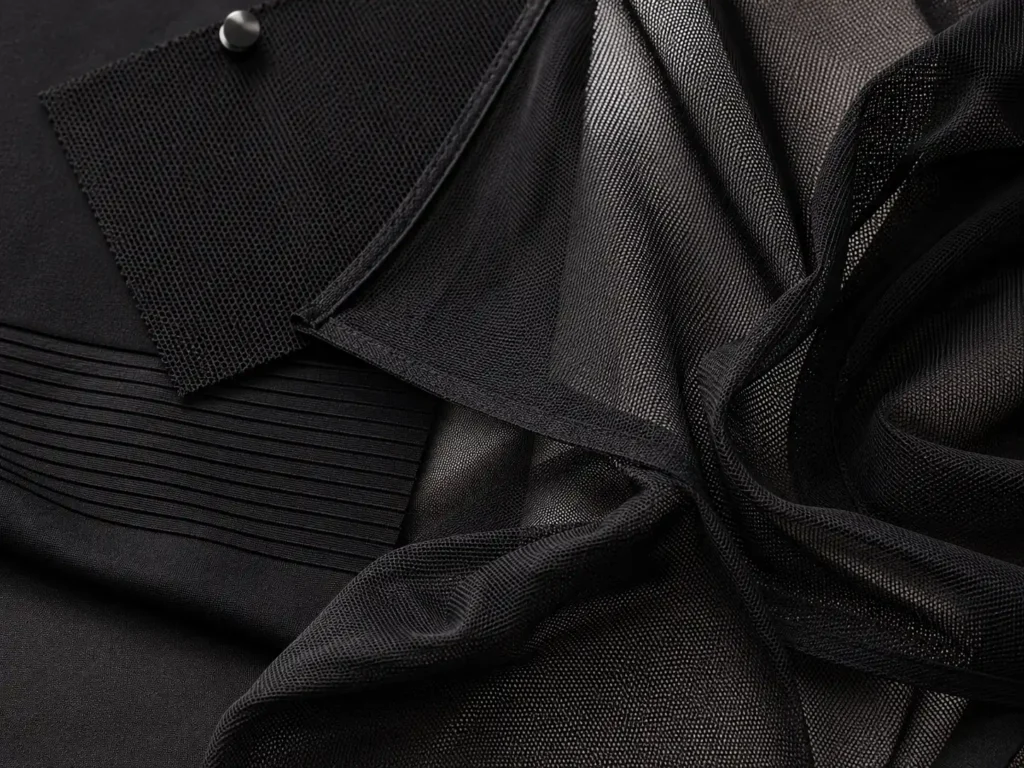
Mesh and Power Mesh for Controlled Transparency and Tension
Mesh is one of the most useful clubwear materials because it can create exposure, layering, shaping, and contrast without adding heavy structure. The challenge is that different meshes behave very differently in fit and production. Lightweight stretch mesh may create a soft transparent layer but provide limited recovery. Power mesh can add stronger compression and support but may change hand feel, opacity, seam tension, and edge behavior. Selecting the wrong mesh can force pattern changes after the first sample and make a design feel either too loose or too restrictive.
- Transparency: Compare mesh against skin tone, lining color, and the intended photography environment. Double layers or partial lining can change the visual effect significantly.
- Stretch and recovery: Measure how the material returns after tension, especially around bust, waist, hip, side seams, and narrow cut-out bridges.
- Edge control: Necklines, armholes, cut-outs, and raw-looking edges may curl, wave, or grow if binding, elastic, or seam tension is not matched to the fabric.
- Damage risk: Fine mesh should be inspected for holes, snags, needle marks, and distortion during cutting, sewing, finishing, and packing.
- Lining interaction: Lining length and stretch must follow the outer layer without creating visible pulling, exposed edges, or an unintended change in transparency.
For fitted clubwear, mesh approval should happen before pattern lock. Changing from soft mesh to power mesh after fit approval can alter the entire balance of the garment.

Jersey, Rib Knit, and Ponte for Body-Contoured Styles
Stretch knits are common in bodycon clubwear because they allow close fit with movement, but the fabric must recover after tension.
High stretch without recovery can produce loose necklines, twisted side seams, growing hems, and inconsistent body measurements after wear or washing.
Jersey often gives softer drape, rib knit can create stronger vertical texture and stretch, while ponte provides more structure and surface stability. Each needs a different pattern and sewing approach.
- Recovery: Evaluate how quickly and completely fabric returns after controlled stretching. Recovery affects bust, waist, hip, neckline, and hem stability.
- Relaxing before cutting: Stretch fabrics may need time to relax so pieces are not cut while the material is temporarily extended or compressed.
- Cutting direction: Grain and stretch orientation should remain consistent across panels to reduce twisting and uneven tension.
- Seam balance: Side seams, center seams, necklines, and hems should remain flat instead of tunneling or rotating around the body.
- Wash stability: Shrinkage and post-wash measurements matter when a fitted style depends on small tolerances to maintain its intended silhouette.
The pattern should be developed around the approved material rather than assuming every stretch knit will fit the same base block.
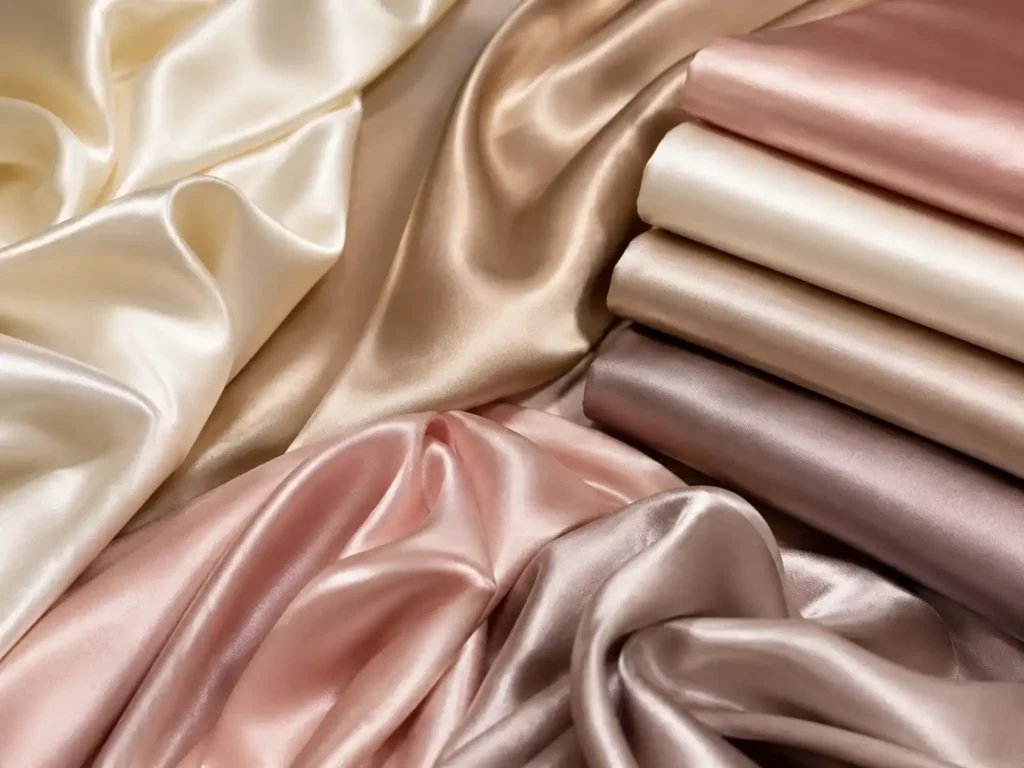
Satin and Stretch Satin for Shine Without Production Noise
Satin creates a premium clubwear surface because light reacts strongly with the weave, but the same reflectivity also reveals puckering, pressing marks, seam tension, zipper distortion, and color variation. Matte satin, conventional satin, and stretch satin can produce different drape and fit outcomes even at similar weights. Development should establish surface direction, lining, grain, closure, and pressing expectations before the style reaches PP approval.
- Shine direction: Panels cut in different directions can appear like different shades under lighting even when they come from the same fabric lot.
- Color control: Satin can exaggerate dye-lot variation and lighting differences, so physical approvals are more reliable than screen-only references.
- Zipper flatness: Invisible zippers need enough seam stability to avoid bubbling, especially around fitted waist and hip areas.
- Snag risk: Surface protection during sewing, pressing, inspection, and packing helps reduce pulls that become obvious under direct light.
- Crease management: Folding, pressing, polybag size, and carton pressure influence how a satin style arrives for photography or retail handling.
Stretch satin adds another fit variable because recovery and directional stretch must be considered alongside the visual surface.
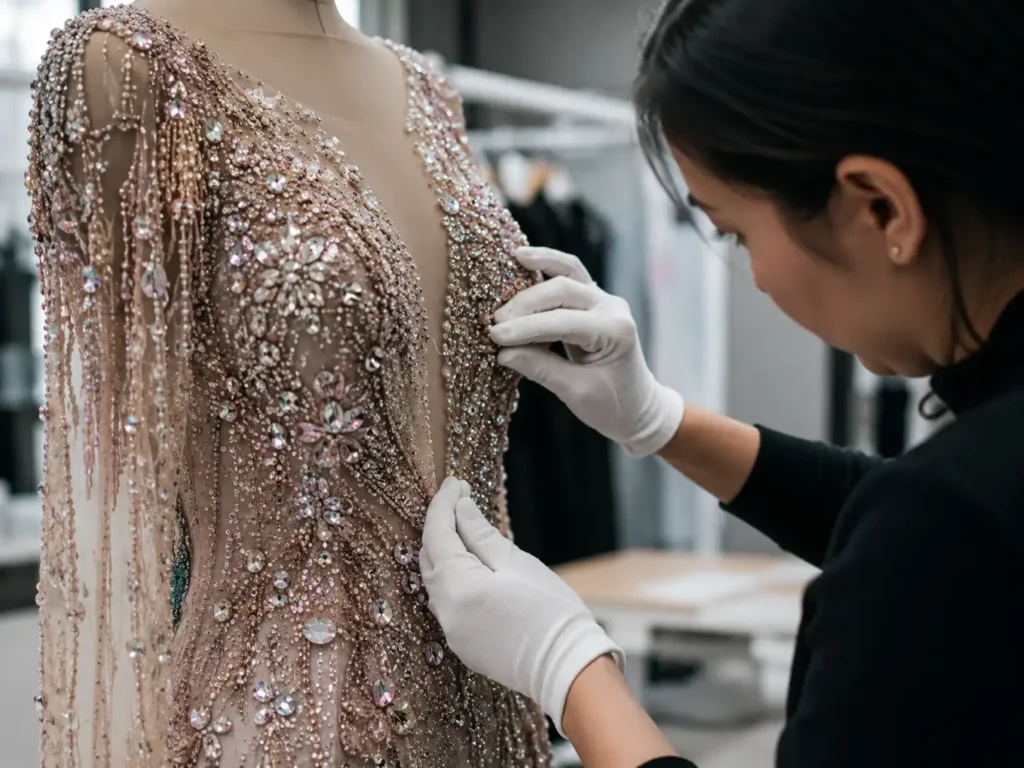
Sequin and Decorative Surfaces for Statement Styles
Sequin fabric can turn a simple silhouette into a hero SKU, but bulk production adds risks that are easy to hide in one carefully made sample. Sequin attachment, base fabric strength, seam thickness, needle breakage, skin contact, lining, zipper areas, and packing all affect the finished garment. Development should decide where decoration must remain uninterrupted and where sequins need to be removed or controlled around seam allowances, closures, armholes, and necklines.
- Attachment: Check how firmly sequins or decorative elements are fixed to the base fabric before cutting and sewing.
- Seam preparation: Excess decoration inside seams can create bulky joins, broken needles, uneven topstitching, or discomfort.
- Skin contact: Soft lining, binding, or local edge treatment can reduce scratching around armholes, necklines, side openings, and hems.
- Weight balance: Dense decoration can change drape, pull a neckline, or stretch a lightweight base fabric over time.
- Packing protection: Surface-to-surface friction and excessive compression can damage sequins, stones, or metallic finishes during transit.
For statement clubwear, the development team should treat decoration as part of the garment structure rather than a final visual add-on.
Fit Engineering for Body-Focused Clubwear
Clubwear fit is judged in motion and on body, not only on a flat measurement table. Pattern development needs to balance shape, coverage, support, tension, and movement so strong silhouettes remain stable across approved sizes.

Bust, Neckline, and Upper-Body Stability
Upper-body fit controls whether a clubwear style feels intentional or risky. Strapless, corset, halter, deep-neck, mesh, and cut-out designs all place different loads on the bust and neckline. A neckline can match the pattern measurement and still gape because fabric recovery, cup shape, strap angle, or seam tension is wrong. Development should evaluate the whole support system rather than correcting one measurement in isolation.
- Bust coverage: Confirm the intended exposure line on body, including movement and different cup positions within the approved size range.
- Cup and support: Built-in cups, boning, underwire, anti-slip tape, lining, and seam shaping need compatible positions rather than independent placement.
- Neckline tension: Stretch fabrics need enough recovery to sit flat without pulling the garment upward or creating pressure marks.
- Strap angle: Halter, spaghetti, cross-back, and adjustable straps change load direction around neckline and armholes.
- Armhole and side-bust shape: Excess opening can expose lining or create gaping, while over-tightening can distort the bust and restrict movement.
Fit feedback should be translated into pattern corrections and measurement updates before the next sample round. Repeated verbal adjustment without updating the pattern creates avoidable variation when grading or transferring the style into bulk.

Waist, Hip, Mini Length, and Cut-Out Balance
Fitted clubwear often depends on a precise relationship between waist compression, hip allowance, hem position, and exposure. If the waist is tightened without adjusting hip shape, side seams can swing forward or backward. If a mini hem is shortened without checking movement, the style may ride up during walking or sitting. Cut-outs add another tension path because openings can expand when surrounding panels stretch.
- Waist shaping: Control the visual waist while maintaining enough movement and avoiding excessive seam strain.
- Hip balance: Review side-seam position, back rise, panel distribution, and fabric recovery around the fullest area.
- Mini-length stability: Fit should be assessed while standing, walking, and sitting, not only against a static dress-form length.
- Cut-out symmetry: Openings should remain balanced left to right and should not twist when fabric tension changes across the body.
- Slit security: Side, front, and back slits need controlled opening height, reinforcement, and lining treatment where required.
For ruched styles, gathering can disguise some fit variation but can also pull seams and shorten garment length. The gathering ratio and anchor points therefore need to be defined rather than adjusted freely during sewing.

Jumpsuit and Bodysuit Proportion Under Movement
Jumpsuits and bodysuits introduce torso and crotch measurements that dresses do not have. A fitted jumpsuit can look correct in a standing photo while becoming restrictive when the wearer sits or bends. Bodysuits can pull the neckline downward or create excessive crotch tension if torso length, stretch, and closure position are not balanced. Development should include movement testing before grading and PP approval.
- Torso length: Check the distance from shoulder or neckline through the body to crotch in relation to fabric stretch and intended compression.
- Crotch depth: Insufficient depth restricts movement; excessive depth changes the clean fitted silhouette.
- Waist placement: A low or high waist shifts visual body proportion and must remain consistent with the intended style direction.
- Leg and hip transition: Stretch orientation and pattern shape influence whether seams remain straight and whether the garment pulls upward.
- Closure comfort: Snap, hook, zipper, or other closure areas need secure construction without creating hard contact points.
When fit feedback changes fabric, lining, stretch percentage, or support components, the pattern should be reassessed rather than assuming the previous version remains valid.
Design Details Controlled Before Bulk Production

Cut-Out Placement

Ruched Construction
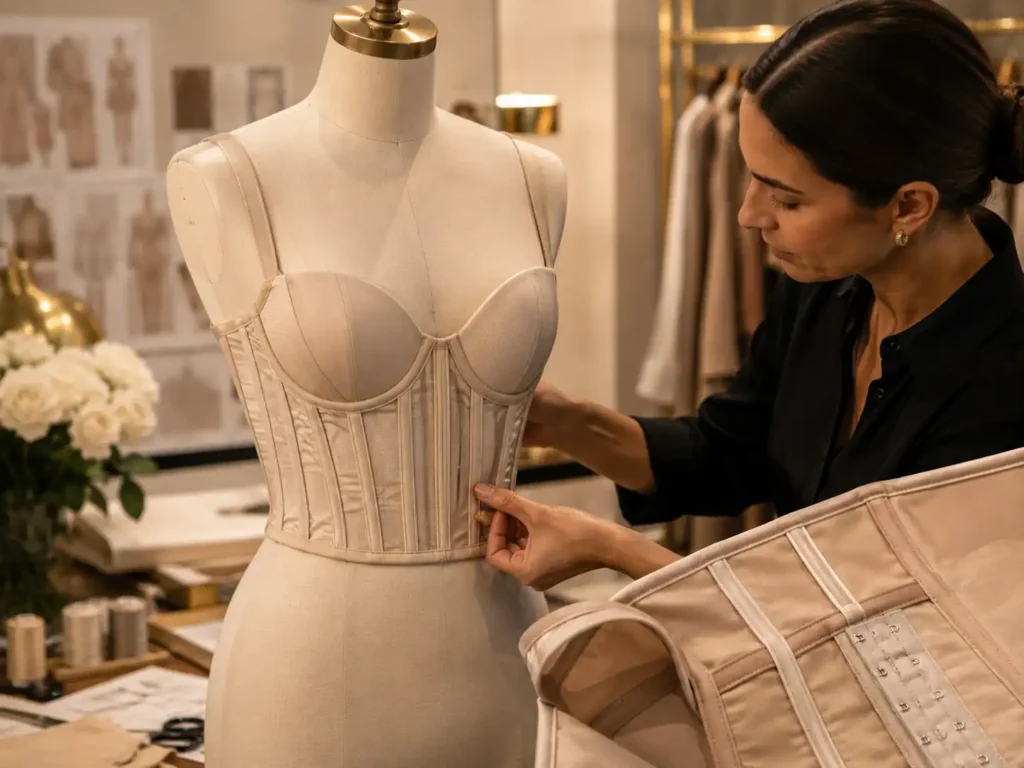
Cups and Boning
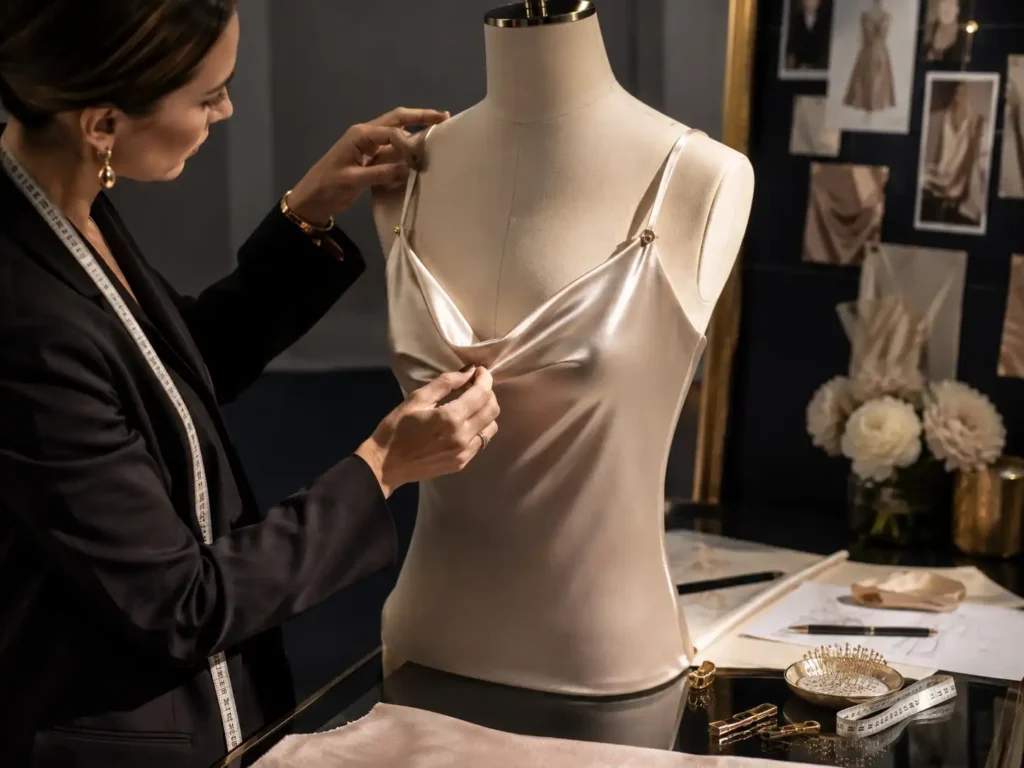
Straps and Hardware

Zippers and Closures
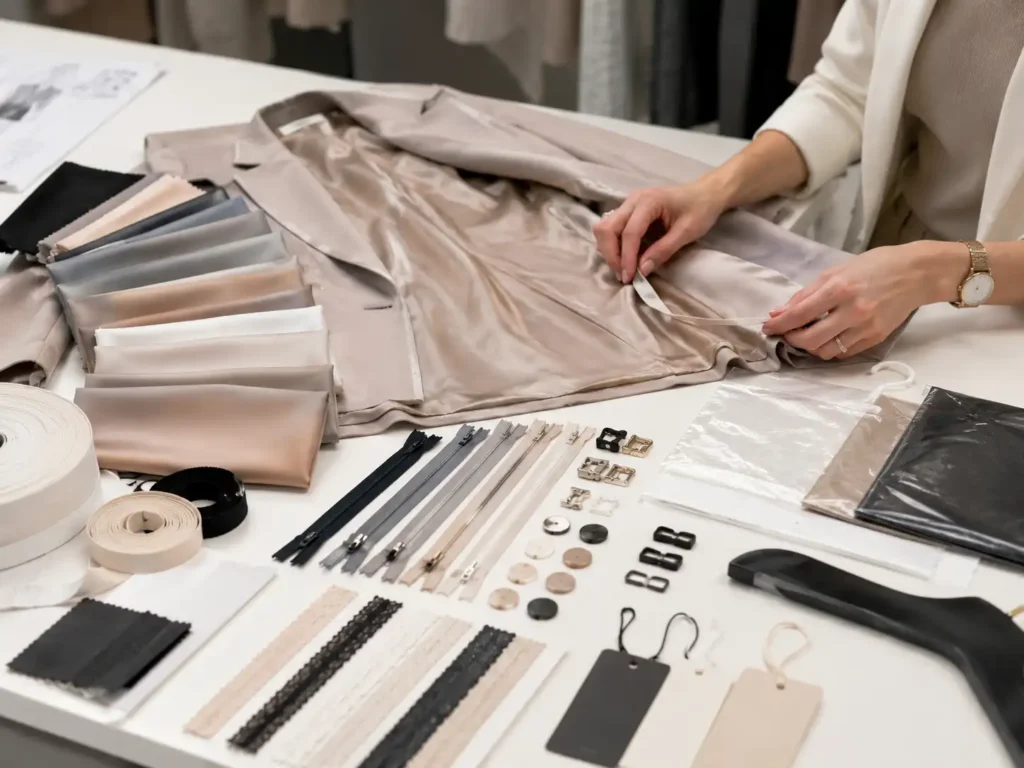
Linings and Coverage
Clubwear Sample Development From First Cut to PP
Sampling converts design direction into evidence. Each round should answer specific questions about material, pattern, fit, construction, and production feasibility, with revisions recorded before the style advances to the next approval stage.

First Sample Establishes the Working Product
The first sample is used to test whether the selected material, base pattern, construction, and visual priorities can coexist in a real garment. It is not treated as a guarantee of final fit. For a regular dress structure, a first sample is commonly around 10-15 days after required materials and development information are ready; simpler structures may be around 7-10 days. Complex corset, mesh, sequin, strapless, or evening-inspired clubwear often requires around 15-25 days or a project-specific assessment because material sourcing, support construction, embellishment, and pattern work add development steps.
- Input review: Reference image, tech pack, original sample, sketch, or line sheet is checked for missing construction and measurement information.
- Material setup: Fabric, lining, zipper, cups, boning, elastic, hardware, and decorative components are selected or approximated for the intended test.
- Pattern setup: Bust, waist, hip, neckline, strap, opening, length, and other critical points are translated into the working pattern.
- Construction test: Sewing order, seam behavior, support, closures, gathering, lining, and decorative handling are evaluated during sample making.
- First review: The completed garment is assessed for proportion, visual direction, fit risk, comfort, and production feasibility.
A first sample that exposes a problem early is useful. The expensive outcome is carrying an unresolved problem into a later sample or bulk production.

Fit and Revised Samples Convert Feedback Into Pattern Changes
Fit feedback should be specific enough to change the garment, not just describe it. Comments such as “too loose,” “too revealing,” or “not enough shape” need to be translated into measurable corrections: reduce neckline width, raise bust coverage, alter cup position, change waist suppression, adjust cut-out size, move a strap, shorten a slit, or change lining length. Photos, measurement notes, and fit comments are reviewed together so the pattern maker can identify whether the root cause comes from pattern shape, fabric behavior, support, or construction.
- Fit sample: Confirms body balance, comfort, movement, and critical exposure points using the working material direction.
- Revised sample: Applies approved pattern, material, construction, or trim corrections and creates a new version for comparison.
- Version control: Pattern notes, measurement updates, trim changes, fabric substitutions, and approval comments are recorded by style.
- Re-test after material change: Switching from soft mesh to power mesh, or from woven satin to stretch satin, can require another fit review because tension and drape change.
- Escalation for complex issues: Cup shape, boning, strapless support, sequin comfort, or difficult cut-out balance may need additional focused revisions before PP.
The aim is to reduce uncertainty step by step rather than forcing every comment into one rushed revision.

PP Sample Locks the Production Standard
PP approval marks the transition from development into controlled production preparation.
The PP sample should reflect the intended fabric, approved color direction, pattern, key measurements, construction, trims, label positions, and important packing requirements closely enough to become the reference for bulk execution. For complex clubwear, a Golden sample may also be retained as an additional sealed reference for production and inspection.
- Final pattern: All approved fit and structure corrections are incorporated before grading and bulk cutting.
- Measurement standard: Size chart, grade rules, and tolerances are aligned with the approved garment.
- BOM and trim confirmation: Fabric, lining, zipper, cups, boning, elastic, hardware, labels, and decorative materials are confirmed.
- Sewing standard: Construction details that influence appearance or fit are converted into clear instructions.
- QC checkpoints: High-risk items such as mesh damage, sequin loss, zipper flatness, side-seam twist, neckline stability, and length are added to inspection focus.
- Packing standard: Label placement, folding, polybag, barcode, and carton requirements are confirmed when relevant.
Bulk should begin from an approved standard, not from a mixture of first-sample notes and late verbal changes.
Sample Revisions Focus on Six Critical Areas
Fit Corrections
- Update pattern and measurement notes.
- Recheck balance after major changes.
- Confirm movement, not only standing fit.
Fabric Corrections
- Compare weight, stretch, recovery, and opacity.
- Reassess pattern impact after substitution.
- Confirm bulk availability before final approval.
Construction Corrections
- Remove unnecessary bulk at stress points.
- Strengthen high-tension openings and closures.
- Record final sewing sequence for transfer.
Coverage Corrections
- Review bust and side-bust coverage.
- Check lining edges through sheer areas.
- Confirm mini and slit safety in movement.
Trim Corrections
- Confirm material, finish, size, and color.
- Test contact areas for comfort.
- Lock approved references before bulk purchasing.
Visual Corrections
- Protect the main selling feature.
- Convert visual feedback into technical actions.
- Recheck the revised garment as a complete look.
When a Clubwear Style Is Production-Ready
Production readiness is reached when the approved sample, technical files, material references, and execution standards tell the same story. The checklist below prevents a strong sample from entering bulk with unresolved fit, material, labeling, or construction decisions.
| Approval Area | Must Be Locked Before Bulk | Clubwear Risk If Unresolved |
|---|---|---|
| Fit and pattern | Final pattern, critical measurements, grading direction | Twisted side seams, unstable neckline, inconsistent body fit |
| Fabric | Approved quality, color, stretch, recovery, transparency, surface direction | Different drape, shade, compression, or sheerness in bulk |
| Lining and support | Lining coverage, cups, boning, anti-slip, elastic | Exposure changes, weak bust support, discomfort |
| Trims and closures | Zippers, hooks, hardware, rhinestones, sequins, strap components | Function failure, color mismatch, scratching, inconsistent appearance |
| Construction | Sewing sequence, seam handling, ruching, cut-out finish, reinforcement | Bulk operators reproduce different versions of the style |
| PP reference | Approved PP sample and key visual standards | Production begins from outdated first-sample comments |
| QC standard | Measurement tolerance and style-specific defect focus | Problems are found late instead of at incoming or inline stages |
| Label and packing | Label positions, barcode/SKU, polybag, folding, carton marks | Mixed SKUs, incorrect labels, avoidable packing rework |
Develop a Clubwear Collection, Not Isolated Styles
A strong clubwear drop balances statement products with repeatable commercial styles. Product roles, fabric families, color direction, construction difficulty, and launch sequence should be considered together before every style enters sampling at the same priority.

Build a Commercial Product Mix Around Clear Roles
A 10-30 style clubwear program becomes easier to manage when every product has a reason to exist.
Hero styles may carry stronger corset structure, sequin work, dramatic cut-outs, or complex mesh layering and therefore need longer development.
Commercial core styles may use proven bodycon blocks, simpler mini silhouettes, repeatable stretch fabrics, or coordinated sets that can support broader quantities and later color extensions.
Entry styles can provide a lower construction level while staying within the collection’s visual language.
- Hero SKU: High visual impact, higher development attention, strong campaign value.
- Commercial core: Repeatable silhouette with controlled fit and scalable construction.
- Matching product: Top, skirt, bodysuit, or set component that increases styling options.
- Color extension: Approved core style developed into additional shades after fabric and fit direction is stable.
- Repeat candidate: Product designed with records and material references that make replenishment easier if sales justify another run.
Collection planning should avoid overloading the assortment with only difficult statement garments.
A profitable drop often needs a deliberate mix of technical complexity, price points, and production lead times.

Create Coherence Through Fabric, Color, and Exposure Language
A mesh mini, satin corset dress, sequin skirt, and fitted jumpsuit can belong to one collection when surface, color, hardware, proportion, and exposure decisions are coordinated. Coherence does not require every garment to use the same fabric. It requires controlled relationships between products. Black shades across mesh, satin, lining, and hardware should be reviewed together; metallic trims should not compete; lining colors should support the intended transparency; and cut-out or neckline exposure should feel intentional across the line.
- Fabric families: Group stretch, satin, mesh, decorative, and structured styles so sourcing and sample timing can be managed more efficiently.
- Color story: Approve core shades on the actual materials that will appear together in photography or retail presentation.
- Hardware and trims: Reuse compatible finishes where appropriate to strengthen visual consistency and reduce unnecessary development variation.
- Exposure level: Coordinate neckline, back, cut-out, slit, and sheer zones so the assortment does not feel randomly designed.
- Packing identity: Align labels, barcodes, polybags, and carton information across the line so the finished collection arrives as one organized program.
The collection should look connected while allowing every style to retain the technical solution its fabric and silhouette require.

Sequence Development Around Launch Risk
Not every style should move at the same speed.
Sequin or custom-trim pieces may need earlier material confirmation.
Corset styles may need additional fit rounds.
Proven stretch bodies may move faster once fabric recovery and base fit are approved.
Launch planning therefore works best when style priority reflects complexity, photography needs, material lead time, and production readiness rather than assigning one identical deadline to the entire line.
- Start complex materials early: Decorative fabrics, special trims, lace, and structured components can create longer sourcing or sample paths.
- Protect photo deadlines: Campaign or lookbook samples should be scheduled separately from bulk production approval when needed.
- Lock core styles first: Stable commercial products can establish fabric, fit, and packaging standards that support related styles.
- Stage approvals: Allow complex hero styles to receive extra attention without delaying every simpler style in the collection.
- Plan replenishment records: Final patterns, fabric references, color approvals, trim cards, and packing requirements should be retained for styles likely to repeat.
A collection timeline should connect sample decisions to the selling calendar, not simply measure days from inquiry to shipment.
Multi-Style Development Managed by Risk and Priority
Large clubwear programs become difficult when every style is treated as an independent project. Grouping development decisions by fabric, construction, fit risk, and launch role helps the team see where approvals can be shared and where a style needs separate technical attention.
| Development Group | Typical Clubwear Examples | Main Control | Recommended Priority Logic |
|---|---|---|---|
| Stretch core | Bodycon mini, jersey dress, ponte dress, bodysuit | Recovery, measurement, side-seam balance | Lock fabric and base fit early; use records for related styles |
| Sheer group | Mesh dress, cut-out mesh, power-mesh paneling | Transparency, lining, edge stability | Approve mesh quality and lining before final pattern lock |
| Structured group | Corset mini, strapless dress, bustier style | Cups, boning, top-edge support, waist shaping | Allow extra fit and revised-sample time |
| Decorative group | Sequin dress, rhinestone style, embellished set | Attachment, skin contact, seam bulk, packing | Start material and trim checks earlier |
| Satin group | Satin mini, slip dress, satin set | Shine direction, zipper, puckering, crease control | Confirm fabric surface and color before bulk planning |
| Coordinated sets | Crop top + skirt, matching two-piece | Proportion, color match, size pairing, SKU packing | Develop both pieces together as one selling look |
| Jumpsuit group | Fitted jumpsuit, mesh jumpsuit, party jumpsuit | Torso length, crotch, waist, mobility | Include movement fitting before grading |
| Hero styles | High-detail cut-out, corset-sequin hybrid | Multiple combined risks | Give earlier sampling priority and more approval checkpoints |
Transfer Approved Samples Into Repeatable Bulk Production
Sample approval only creates value when every decision is transferred accurately into production. Jinfeng Apparel uses the final pattern, materials, construction instructions, measurements, label details, and QC points to bridge the development team and bulk execution.

Build One Final Production Package From Approved Decisions
Bulk problems often begin when separate teams hold different versions of the same style. A pattern maker may be working from the latest fit correction while production still has an earlier measurement table; a zipper may have changed during revision but the trim list remains outdated; or the sample room may have added local reinforcement that was never written into the sewing instruction. Production transfer should remove those gaps before cutting begins.
- Final pattern: Use the version that reflects the approved fit and construction, including lining, cut-outs, boning, cup, strap, slit, and trim placement.
- Size chart and grade rules: Align production measurements and tolerances with the approved pattern rather than an obsolete first-sample specification.
- BOM and trim card: Confirm fabric, lining, zipper, hardware, elastic, cups, boning, labels, sequins, rhinestones, and other components by style.
- Sewing standard: Record high-impact construction points such as ruching ratio, neckline binding, mesh reinforcement, zipper handling, sequin clearing, and lining connection.
- PP and Golden reference: Keep the approved garment available to compare construction, proportions, and finishing during production.
- Packing instructions: Transfer label, barcode, folding, polybag, SKU, and carton requirements before finishing begins.
One controlled production package prevents late interpretation from replacing approved development decisions.

Translate Clubwear Risk Into Inline Production Checks
Clubwear contains risk points that should be inspected while garments are being made, not only when cartons are ready.
Stretch recovery and side-seam balance can be checked during early sewing.
Mesh holes, distorted edges, or wrong lining positions can be found before finishing. Corset cup and boning positions can be compared against reference measurements before final closure.
Sequin loss and scratching can be reviewed during sewing rather than after all decorative styles are complete.
- Early pieces: Review first output from the production line against the PP reference before quantities build up.
- Measurement focus: Track bust, waist, hip, body length, mini length, neckline, strap, slit, and jumpsuit crotch points according to style risk.
- Material behavior: Watch for stretch growth, satin puckering, mesh distortion, decorative loss, and lining pull during production.
- Construction consistency: Compare ruching, cut-out shape, cup placement, boning position, zipper flatness, and trim alignment across repeated pieces.
- Corrective action: Stop, identify the root cause, correct the method, and recheck affected production rather than allowing the same defect to continue.
Inline control reduces the cost of correcting problems after final inspection and protects the visual standard established during development.

Preserve Records for Reorders and Collection Extensions
A successful clubwear style often continues through repeat orders, new colors, fabric variations, or related silhouettes.
Development records make those next steps faster, but they should be used with judgment. Fabric batches can change, stretch and weight may differ, trims may be discontinued, and a new color may behave differently under satin or mesh surfaces.
Reorders therefore begin from preserved standards plus a fresh review of variables that may have changed.
- Pattern records: Keep first, revised, PP, bulk, lining, grading, and placement information by style.
- Fabric records: Retain composition, weight, width, stretch, hand feel, drape, transparency, color, supplier reference, and approval swatches when available.
- Trim records: Keep approved zipper, hardware, cup, boning, elastic, label, and decorative references.
- QC notes: Record recurring measurement or workmanship points that need attention on future runs.
- Packing records: Preserve labels, barcodes, polybags, carton marks, and SKU instructions for repeat production.
- Change review: Reassess pattern or sample needs if fabric stretch, weight, lining, length, neckline, support, or other core variables change.
Repeat speed comes from disciplined records, not from skipping confirmation.
Production Capacity Built for Multi-Style Clubwear Programs
Owned Factory Network
Satellite Production Support
Sewing and Flexible Lines
Project Coordination
Quality Control Team
Finishing and Packing
Clubwear Quality Control Starts Before Final Inspection
Quality control protects the development work already invested in fabric, pattern, sample, and PP approval. Clubwear inspection needs to follow product-specific failure points from incoming material through sewing, measurement, finishing, and packing.

Inspect Materials and Early Construction Before Problems Multiply
Incoming material inspection establishes whether the production fabric and trims match the approved direction before cutting. Stretch fabrics should be checked for weight, stretch behavior, recovery, shade, and visible defects. Mesh requires attention to holes, snags, opacity, and edge damage. Satin should be reviewed for shade, surface direction, pulls, and obvious flaws. Sequin or embellished materials need checks for attachment stability, missing decoration, base-fabric damage, and contact comfort. Trims such as zippers, cups, boning, elastic, hardware, and labels should also be confirmed against approved references.
- Fabric identity: Confirm material type, color, hand feel, stretch, transparency, and surface appearance against the approved standard.
- Cutting control: Keep grain, stretch direction, print or shine direction, and panel matching consistent where relevant.
- First-line output: Compare early sewn pieces with the PP reference before production volume builds.
- Mesh handling: Check cut edges, holes, needle damage, distorted openings, and lining placement during construction.
- Decorative handling: Monitor sequin clearing, seam thickness, broken decoration, scratches, and reinforcement around closures or contact areas.
- Structured components: Verify cup, boning, anti-slip, zipper, and reinforcement positions before the garment is fully closed.
Finding a repeatable defect during early production is far less expensive than discovering it after finishing and packing.

Measure the Points That Control the Clubwear Silhouette
Measurement inspection should reflect the style rather than relying on a generic dress checklist. A bodycon garment depends on bust, waist, hip, total length, hem, and side-seam balance. Strapless and corset pieces add top-edge, cup, under-bust, waist, boning, and zipper concerns. Mesh cut-outs need controlled opening dimensions and symmetry. Jumpsuits add torso and crotch measurements. The approved size chart and measurement tolerance provide the reference, while fit-sensitive points receive more frequent attention during production.
- Bust-waist-hip relationship: Track the measurements together because changing one area can alter seam position and garment balance.
- Neckline and straps: Check depth, width, strap length, and attachment placement to maintain coverage and symmetry.
- Mini length: Confirm finished length after sewing and pressing, especially on high-stretch or heavily ruched garments.
- Cut-outs and slits: Measure opening positions and heights so exposure remains consistent across repeated pieces.
- Jumpsuit proportion: Review body length, waist position, crotch depth, inseam or leg length, and mobility-related measurements.
- Grading consistency: Compare key measurements across sizes rather than assuming the base-size fit automatically transfers correctly.
Measurement control is most useful when deviations trigger correction during production instead of becoming a final-inspection statistic.

Final Garment and Packing Checks Protect the Launch Condition
Final inspection confirms both garment execution and delivery condition. Clubwear is highly visual, so surface marks, incorrect pressing, twisted seams, visible lining, uneven ruching, unstable hardware, missing sequins, or poor packing can reduce perceived quality even when basic measurements pass. Labels, barcodes, SKU identification, folding, and carton information also need review because multi-style drops can create expensive warehouse errors if products are packed under the wrong identity.
- Garment appearance: Check seam flatness, symmetry, finishing, pressing, lining visibility, stains, pulls, and decorative condition.
- Function: Test zippers, hooks, snaps, straps, adjusters, lace-up closures, and other functional trims.
- Comfort: Review scratch risk, hard trim contact, exposed boning, rough seams, and problematic decorative edges.
- Packing: Use product-appropriate folding and protection to reduce satin creases, sequin abrasion, and distortion of structured pieces.
- SKU accuracy: Match size labels, care labels, hangtags, barcode stickers, polybags, and carton marks to the correct garment.
- Inspection coordination: Client inspection or AQL requirements can be incorporated according to the agreed project standard.
The final objective is not merely a passed inspection; it is a clubwear product that arrives in the condition established during development.
Clubwear Development Cases From Concept to Bulk
Anonymous project examples show how fit, fabric, support, and multi-style coordination change the development plan. Order figures below reflect current brand-program ranges used for Jinfeng clubwear and related fashion collections.

US Mesh Bodycon Collection
An established US clubwear label developed an 18-style program totaling approximately 36,000 pieces across mesh bodycon dresses, cut-out minis, ruched dresses, bodysuits, and coordinated crop-top-and-skirt sets. Development began with a line sheet and reference samples, then styles were grouped by stretch fabric, sheer construction, and launch priority. The main issues appeared around mesh transparency, recovery, neckline stability, lining length, cut-out proportion, and side-seam balance.
Jinfeng Apparel compared stretch mesh and power-mesh directions for different style roles, adjusted lining coverage around bust and hip areas, corrected neckline binding on high-tension pieces, and revised pattern balance where cut-outs pulled the side seams forward. Core bodycon styles moved through first sample, fit review, revised sample, and PP approval, while more exposed mesh styles received an additional focused fit check. Final production files recorded approved mesh quality, lining, stretch direction, key measurements, cut-out positions, and packing instructions. Bulk QC concentrated on mesh holes, recovery, measurement stability, neckline shape, lining exposure, and SKU packing. The program was produced in coordinated batches so core styles could progress while higher-risk mesh designs completed final approval.

Structured Partywear Program
A premium fashion label developed a 12-style partywear program totaling approximately 24,000 pieces, combining corset minis, strapless dresses, satin bodycon styles, sequin statement pieces, and two coordinated sets. The collection depended on sharp waist shaping and strong photo impact, but early sample review showed several technical risks: cup shape varied across silhouettes, boning sat too close to the upper edge on one corset, satin zippers were not flat enough, and sequin edges created uncomfortable contact around the armhole.
Development was reorganized by construction risk. Corset styles received pattern corrections for upper-bust fit, cup position, boning length, waist shaping, and anti-slip placement. Satin styles were reviewed for fabric direction, zipper stability, lining, and pressing. Sequin pieces received softer lining and local edge treatment, while seam allowances were adjusted to reduce decorative bulk near closures. Each style moved through the required first, fit or revised, and PP sample stages before the production package was locked. Bulk control used final patterns, BOM references, measurement points, PP standards, and product-specific QC notes. The program remained visually connected through coordinated black and metallic finishes while allowing separate manufacturing standards for structured, satin, and embellished categories.
MOQ and Project Fit for Clubwear Development
Per Style Color
Material Conditions
Best Project Inputs
Protect Unreleased Clubwear During Product Development
Tech Pack Protection
Pattern and Sample Protection
Label and Launch Protection
Frequently Asked Questions About Clubwear Product Development
Yes. Reference images can be used for structure review, fabric direction, key measurement planning, trims, and an initial development route. Final pricing and production specifications still require confirmation of material, construction, quantity, colors, size range, and packing requirements. More complete input produces a more accurate first sample and fewer assumptions during development.
Yes. A line sheet is especially useful for multi-style programs because it shows style count, category mix, color direction, and product priority. Each style can then be grouped by fabric family, pattern complexity, fit risk, trim requirements, and launch timing before sampling begins. Technical information is added or confirmed as development moves forward.
Timing depends on structure and material readiness. Simpler styles may be around 7-10 days, regular dress first samples around 10-15 days, while corset, strapless, mesh, sequin, or other complex clubwear commonly needs around 15-25 days or a project-specific assessment. Custom materials or special trims can extend the schedule.
Bodycon development reviews fabric stretch and recovery together with bust, waist, hip, neckline, side-seam balance, hem position, and wash stability. Fabric relaxing and cutting direction may also influence the result. Fit comments are converted into pattern and measurement updates before PP approval rather than relying on simply making the garment tighter.
Mesh transparency is reviewed with the actual fabric direction, lining color, lining length, stretch, layering, and lighting conditions. Power mesh and lighter stretch mesh can produce very different opacity and support. Development may adjust lining, panel placement, or material choice so the approved exposure level remains stable in production.
Yes. Corset development can cover structured patterns, cups, boning, lining, anti-slip support, zipper or lace-up closures, upper-bust fit, waist shaping, and strapless stability. More complex structures normally require focused fit review because cup position, boning placement, and top-edge tension interact closely with the final silhouette.
A style is ready when the final pattern, approved fabric, trims, measurements, construction, PP reference, QC requirements, labels, and packing instructions are aligned. Bulk should not begin while major fit, material, or structure decisions remain open. Late changes after PP approval can affect cost, material purchasing, and production timing.
Yes. Multi-style programs can be organized by fabric group, construction level, fit risk, sample priority, and launch timing. Core stretch styles, sheer mesh pieces, structured corsets, satin styles, decorative products, sets, and jumpsuits may move through different technical routes while remaining under one collection schedule and packaging system.
Regular MOQ starts from 200 pieces per style/color, depending on fabric availability, color development, trims, construction complexity, packing, and production scheduling. Fabrics, decorative materials, labels, or special packaging may carry separate supplier minimums. Multi-style collections should therefore include quantities by style and color rather than only one total order figure.
Yes. NDA-based cooperation is supported. Tech packs, patterns, samples, private-label details, packaging files, unreleased styles, and order information can be handled as project-confidential materials. Anonymous manufacturing cases may describe product categories and technical solutions without revealing brand names, proprietary files, or unreleased design assets.

Start Your Clubwear Development With Clear Project Inputs
Strong clubwear development begins with enough information to make useful technical decisions. Send reference images, a tech pack, original sample, or line sheet together with the planned style count and quantity per style/color.
Fabric direction, color plan, size range, launch timing, private-label requirements, and any quality or inspection standard help the team assess pattern work, sampling route, material risk, production fit, and quotation basis before commitments are made.
For multi-style collections, mark hero products and priority styles so complex corset, mesh, sequin, or decorative pieces can start earlier while commercial core products follow a controlled schedule.
Please include:
- Reference images, tech packs, original samples, or line sheets
- Style count and quantity per style/color
- Fabric and trim direction
- Color plan and size range
- Target launch or delivery window
- Label, barcode, packaging, and SKU requirements
- Quality manual, inspection, or measurement requirements if applicable