 Skip to content
Occasionwear Product Development
Technical development for occasionwear collections, from fabric direction and pattern engineering to approved samples, bulk standards, and repeat-ready production.
- Dedicated development resources:2 sample rooms, 7+ senior pattern makers and 20+ sample machinists support structured dress development before bulk production.
- Built around real brand programs:current cooperating brand orders commonly involve 10–30 styles and approximately 20,000–80,000 garments per order.
- Development goes beyond appearance:fit, fabric behavior, internal support, lining, closures, construction feasibility and repeatability are reviewed before production standards are locked.
- Manufacturing follows development:approved patterns, PP samples, Golden Samples and QC references connect the development room with controlled bulk execution.
Development Capacity Behind Occasionwear Collections
Since 2008
Six Owned Factories
10+ Production Partners
100,000+ Monthly Capacity
12+ Merchandisers
15+ QC Inspectors
Built for Established Occasionwear Product Teams
Product Development Teams
Occasionwear Brands
Dress-Led Fashion Brands
Sourcing Offices
Merchandising Teams
Quality & Technical Teams
Occasionwear Categories Developed for Commercial Collections
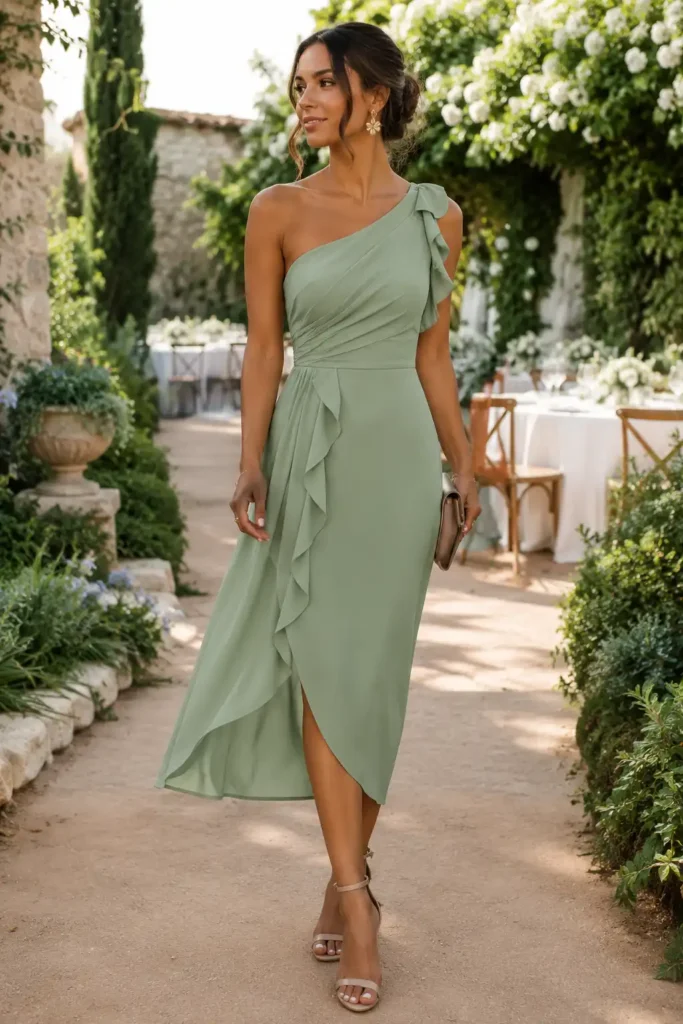
Wedding Guest Dresses

Cocktail Dresses

Evening Dresses

Party Dresses

Graduation Dresses

Formal Dresses
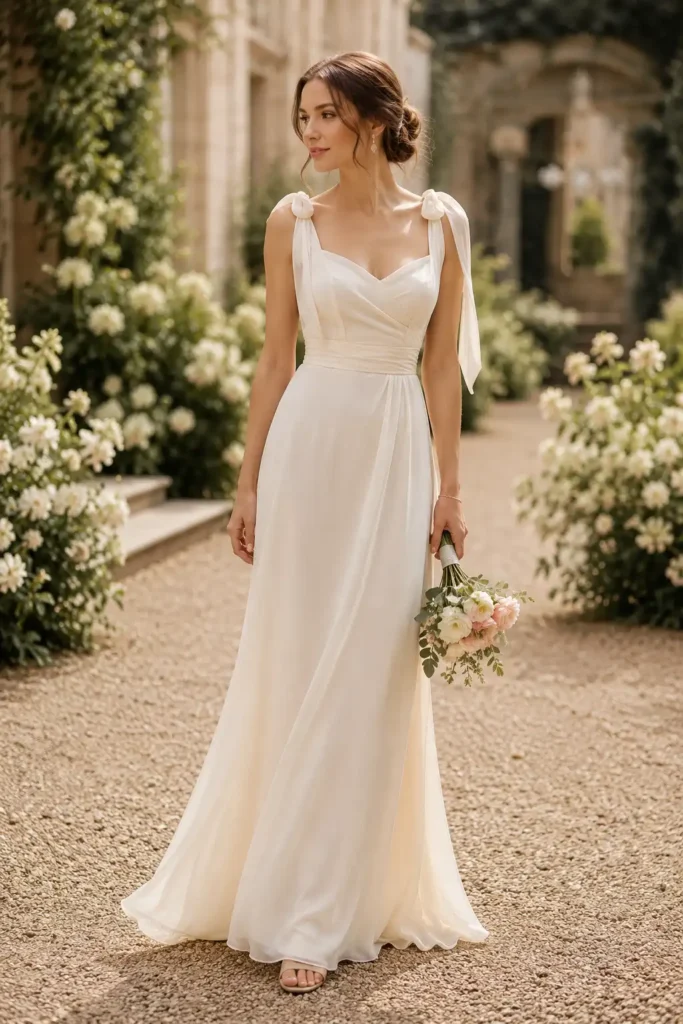
Bridesmaid Dresses

Occasion Jumpsuits

Occasion Matching Sets
From Brand Brief to a Controlled Development Plan

Project Input Review

Feasibility & Risk Review

Fabric & Trim Direction

Sampling & Approval Plan
Fabric Direction Shapes Occasionwear Before Pattern Approval
Occasionwear fabric cannot be separated from fit, construction or visual position. Material weight, stretch, surface, transparency, drape and recovery influence pattern decisions, internal support, sewing methods, sample revisions and final bulk consistency.
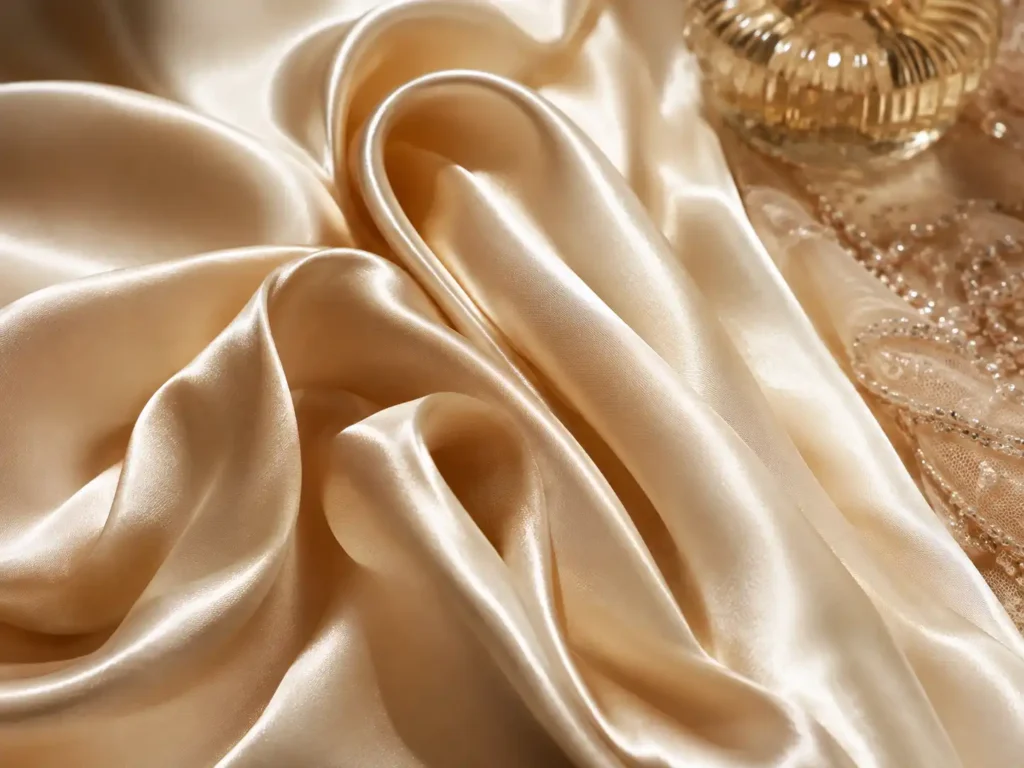
Satin: Control Drape, Shine and Surface Risk
Satin can produce the polished surface expected from cocktail, wedding guest, party and evening dresses, yet its visual simplicity makes technical faults highly visible.
Fabric weight and weave influence whether a dress hangs fluidly, holds a shaped bodice or reveals seam impressions.
Matte satin, stretch satin, lighter satin and heavier constructions should therefore be evaluated against the intended silhouette rather than selected only from a color card.
Surface direction matters during cutting because inconsistent orientation can create apparent shade changes under light. Snagging, wrinkling, pressing marks and zipper distortion also require attention. A fitted satin dress may need more controlled seam handling than a fluid slip silhouette, while structured satin can interact differently with cups, boning or interfacing.
Development review should consider sheen direction, drape, opacity, stretch, lining, zipper behavior, seam placement and pressing. Sample feedback then needs to reach the pattern and production instructions. Jinfeng’s own material risk framework identifies shade difference, snagging, wrinkles, gloss direction and pressing as key satin control points.

Mesh: Balance Transparency, Stretch and Stability
Mesh works across partywear, bodycon styles, cut-outs, illusion sections and layered occasion dresses, but several meshes that look similar on a swatch can behave very differently on the body.
Stretch direction, recovery, density and transparency affect both fit and visual coverage. Power mesh may provide control, while a softer stretch mesh can work better for draping or layered transparency.
Pattern pieces must respect stretch orientation. Necklines and cut-out edges can distort when the material lacks stability, and the wrong seam tension can cause rippling or puckering.
Double-layer constructions change opacity and recovery, while lining choices alter the finished color and perceived quality. Areas close to the body also need smooth seam placement because stiffness or heavy seam allowances can become uncomfortable.
Development should confirm whether the mesh is decorative, structural, lined, doubled or combined with a base fabric. Sample assessment then focuses on transparency, neckline shape, edge stability, seam stretch and damage. Jinfeng identifies transparency, stretch direction, holes, neckline deformation and lining as major mesh control points.

Lace: Treat Motif Placement as Part of Product Design
Lace development is not only a matter of choosing a decorative textile. Motif scale, edge design, transparency, density and repeat influence how pattern pieces should be positioned and how seams will appear.
Wedding guest, cocktail and evening dresses often use lace as full overlays, panels, trims or focal sections, and each use creates different cutting and assembly requirements.
A motif crossing the center front may need visual symmetry.
Scalloped borders may need to land at a specific neckline, sleeve or hem position. Low-density lace can tear near seam lines, while bulky motifs can create uneven thickness around zippers or fitted seams. The lining color also changes the final appearance substantially, especially when contrast between lace and base fabric is part of the design.
During development, lace should be evaluated with the actual pattern concept rather than only as a flat swatch.
Placement plans, seam positions, edge finishing, lining and garment balance can then be reviewed in the sample. Jinfeng’s occasionwear material framework highlights joining, motif matching, damage, edge finishing and lining as key lace risks.

Sequins: Engineer Visual Impact Without Creating Wear Problems
Sequin fabrics deliver the strong visual effect expected from party and evening products, but decorative surfaces introduce cutting, sewing, comfort and packing complications. Sequin size, attachment method, base fabric and density influence seam thickness and needle performance. A heavily embellished seam allowance can become stiff, while exposed sequins near armholes or internal seams may scratch the wearer.
Pattern placement also affects the appearance of motifs or direction. Inconsistent orientation can make adjacent panels look mismatched. During sewing, damaged or missing sequins may need controlled repair rather than random replacement. Zippers, hems and lining transitions require additional planning because excessive bulk can prevent a clean finish.
Development should establish where sequins need removal before seaming, how edges are stabilized, how lining protects the skin and how finished garments are packed to reduce abrasion. Jinfeng identifies sequin loss, skin scratching, needle breakage, seam thickness and packing protection among the primary risks for sequin occasionwear.
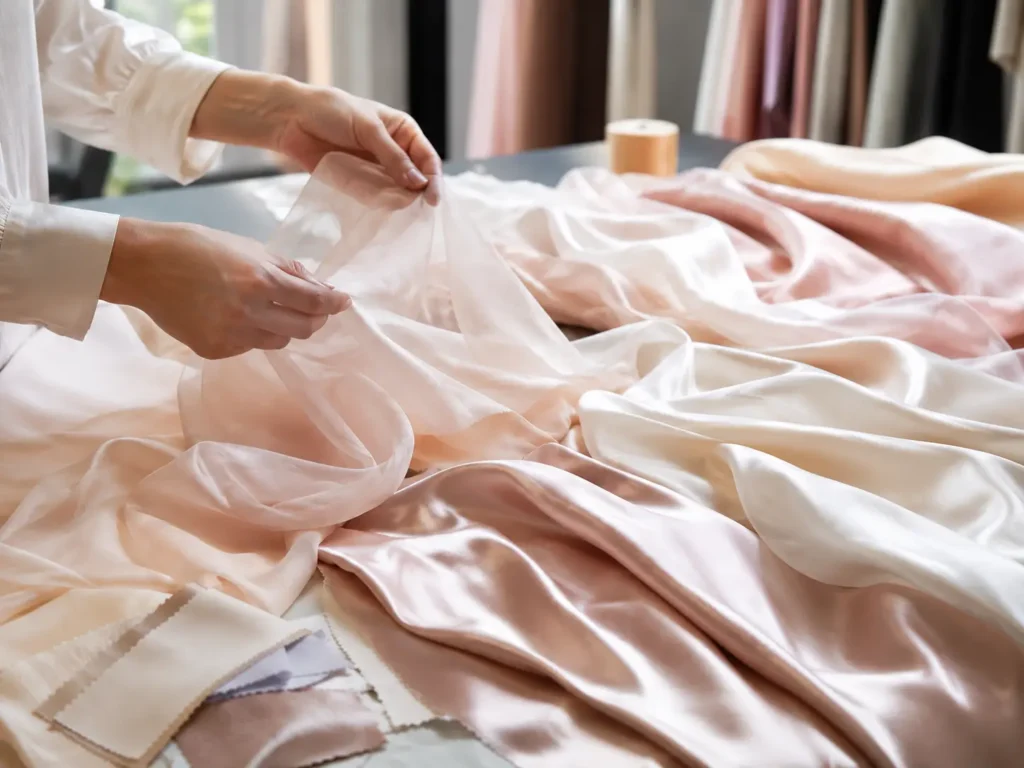
Chiffon, Crepe and Velvet: Match Material Behavior to Silhouette
Chiffon, crepe and velvet occupy different occasionwear positions and therefore need different development decisions. Chiffon supports fluid maxi, bridesmaid and layered designs, but transparency, cutting movement and hem balance require control. A lightweight layer may need lining or multiple layers, and long hems make small cutting or hanging differences more visible.
Crepe can offer a cleaner matte appearance and often works well for cocktail, formal or draped silhouettes. Weight and stretch should still be matched with structure: one crepe may fall well in a wrap dress while another is better suited to a clean column silhouette.
Velvet introduces pile direction, pressure marks and visible surface differences. Pattern orientation must be planned consistently, while pressing and handling require care to avoid flattening the pile. Jinfeng’s material allocation guidance specifically identifies chiffon transparency and hem balance, plus velvet pile direction, pressure marks, shade difference and sewing marks, as production controls.
Fit Development for Occasionwear That Must Hold Its Shape
Occasionwear fit is judged quickly because fitted bodices, exposed necklines, short lengths and formal silhouettes leave little room for imbalance. Development focuses on body proportion, security, movement and the relationship between outer fabric and internal structure.

Bust, Neckline and Upper-Body Security
Bust fit cannot be solved by chest circumference alone. Cup position, neckline depth, upper-bust tension, shoulder or strap placement, armhole shape, side coverage and back height work together. Strapless and corset-led styles add anti-slip support and boning, while deep-V or backless designs may need internal anchor points to preserve the intended line.
Sample review should therefore identify what creates the problem. A gaping neckline might result from pattern shape, fabric stretch, insufficient support or strap position. Tightening one measurement without diagnosing the cause can introduce pulling elsewhere. Fit comments become more useful when accompanied by photographs, measurements and clear notes about movement.
Jinfeng’s pattern and structure framework specifically covers bust, upper bust, underbust, waist, hip, shoulder strap length, armhole, neckline depth, slit height and lining. Strapless development additionally focuses on anti-slip control, bust fit, boning and cup shape.

Waist, Hip and Silhouette Balance
Occasionwear often depends on a deliberate waist-to-hip relationship. Bodycon, corset, ruched and fitted midi styles can lose their intended visual effect when the waist sits too high, too low or too loose, even if the size chart appears technically close. Hip ease also influences side-seam direction, zipper behavior, skirt fall and movement.
Pattern development should look at the garment as a silhouette rather than isolated measurements. Waist shaping can be distributed through seams, darts, panels, ruching or internal structure. Hip tension may need additional ease, a different seam shape or fabric with better recovery. In stretch styles, fabric behavior becomes part of the fit equation, while woven occasion dresses depend more heavily on precise shaping.
A revised sample should confirm whether modifications actually improve the intended body line. Jinfeng records pattern corrections and size information so approved proportions can be carried into PP and bulk production rather than reinterpreted on the sewing line.

Length, Slits and Movement
Mini, midi and maxi occasionwear each create different length risks. A mini dress needs enough coverage while maintaining the intended fashion proportion. A midi must balance the body visually and work with the skirt shape. A maxi or floor-length dress needs controlled front and back length, hem balance and movement, especially when the fabric is fluid or the design includes a slit.
Slit height is both a design and wearability decision. Position, overlap and fabric movement influence how much is exposed during walking. Long dresses also need enough room through the skirt and lining to avoid restricting stride. Jumpsuits add crotch depth and torso length to the same movement review.
Development samples should be assessed standing, walking and sitting rather than only on a mannequin. Jinfeng’s occasionwear fit controls include total length, front and back balance, slit position, lining length and movement, with long hems and floor-length silhouettes receiving particular attention.

From Fit Comment to Production Measurement
A fit comment has value only when it changes a controlled development reference. Notes such as “raise neckline,” “reduce waist,” “add hip ease” or “shorten strap” need to be translated into pattern corrections and measurable specifications. Visual comments should also identify where the change begins and whether associated pieces, lining or internal support need adjustment.
Jinfeng’s development process can record changes through updated patterns, size charts, BOM information, sewing instructions and QC points. Before bulk production, final references may include the PP sample, final pattern, grade rule, Golden Sample and QC measurements.
The aim is not to claim a universal “perfect fit.” Different brands use different fit preferences, base sizes and target markets. The goal is to capture the approved fit accurately enough for pattern grading, production and repeat orders to follow the same defined standard.
Internal Construction Behind Polished Occasionwear

Cups & Bust Shaping

Boning & Structured Support

Lining Engineering

Zippers & Closures
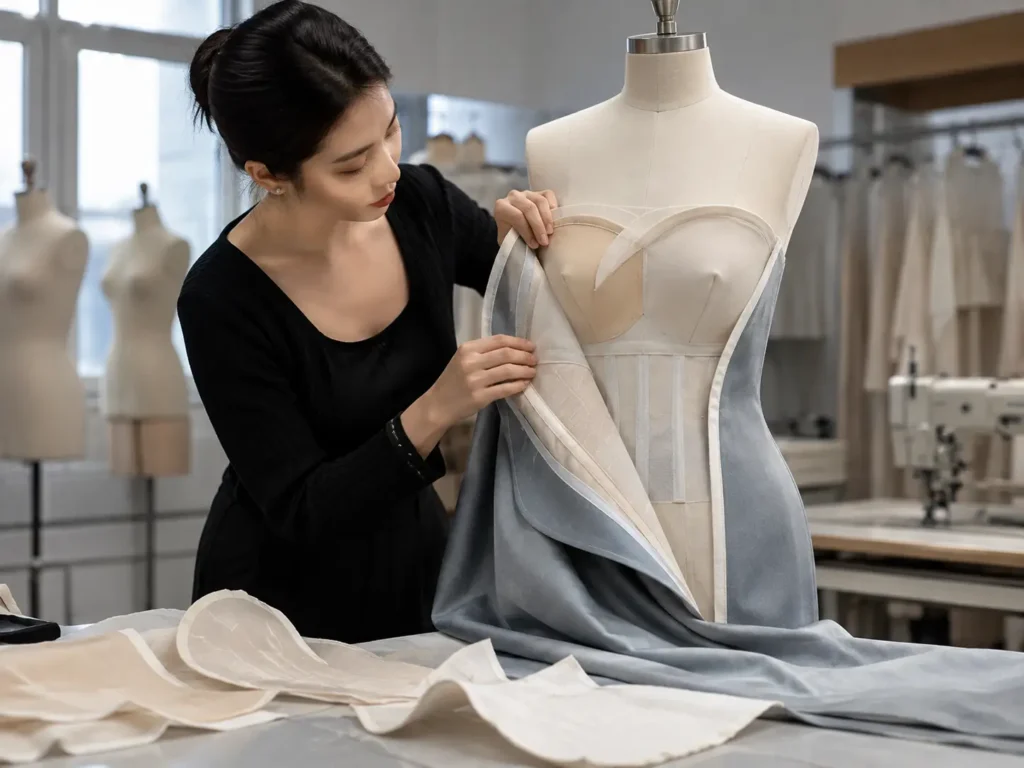
Interfacing & Stabilization

Anti-Slip & Internal Security
Design Details Converted Into Repeatable Construction
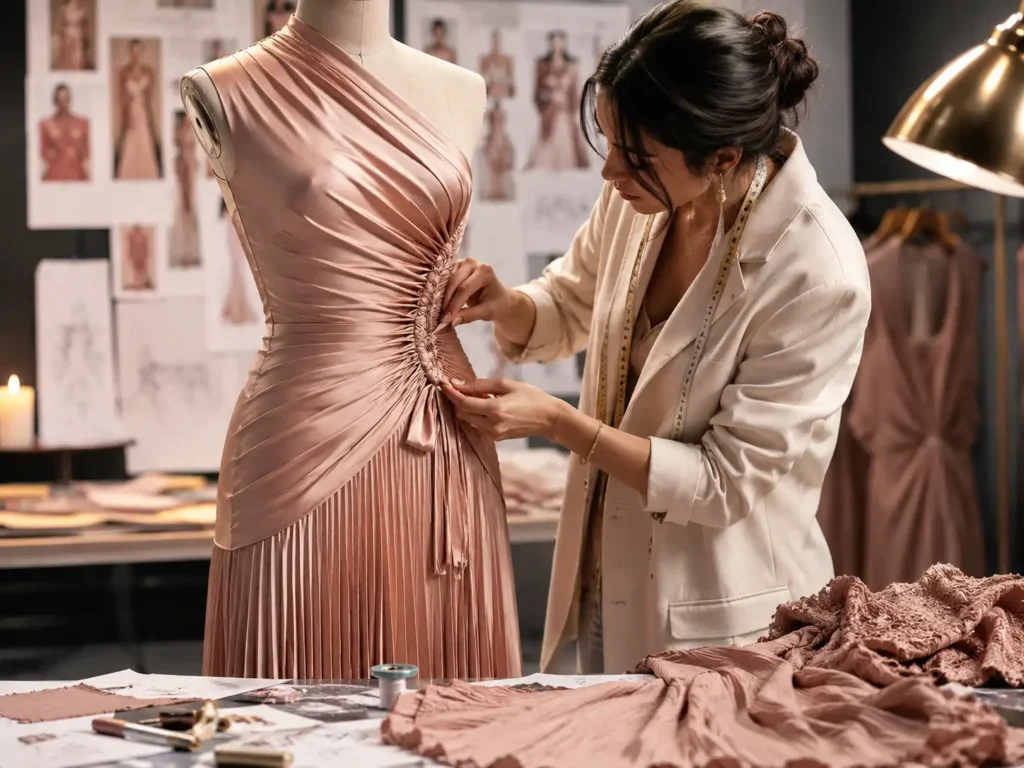
Ruching & Draping
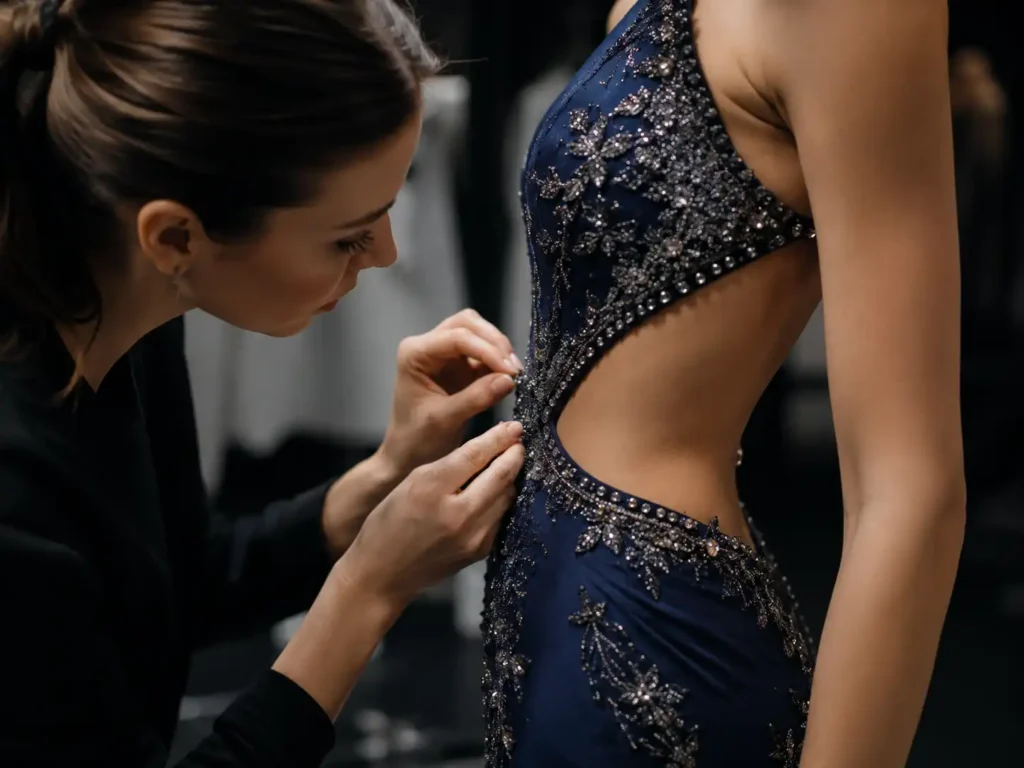
Cut-Out Structures

Corset-Inspired Details

Lace Placement

Mesh & Illusion Panels

Sequins & Embellishment
Pattern Development Turns Visual Direction Into Garment Architecture
A pattern defines how the garment occupies three-dimensional space. For occasionwear, pattern work must translate silhouette, proportion, coverage, movement, fabric behavior and internal construction into a repeatable set of pieces suitable for sampling, grading and production.

From Design Intent to First Pattern
A sketch or reference image communicates appearance but rarely explains every hidden construction decision. Pattern development begins by interpreting silhouette, neckline, seam placement, bust shaping, waist position, hip line, garment length, sleeves or straps, slit position and internal structure. Fabric direction is considered because the same pattern concept may behave differently in rigid satin, stretch mesh or fluid chiffon.
The first pattern should create a controlled starting point rather than pretending the design is already final. Pattern makers need enough information about size expectations, target fit, material and construction to choose appropriate ease and shaping. Complex bodices may require panel development, cups or boning; draped styles may require additional volume and controlled anchor points.
Jinfeng supports pattern development through 7+ senior pattern makers, with sample rooms and sample machinists available to test the first physical result.

First Sample as a Pattern Test
The first sample reveals whether the initial pattern interpretation produces the intended garment on the body. Key questions include whether the neckline sits correctly, the bust and waist are balanced, side seams hang vertically, the skirt falls as intended and the chosen material supports the silhouette.
A first sample is not automatically a production standard. It may confirm some decisions while exposing others. Fabric could be correct but the waist may need repositioning. The silhouette may look right but a zipper may distort. A cut-out may need added support, or a long hem may show imbalance. Technical feedback should separate pattern problems from sewing, material and construction issues before modifications are made.
Jinfeng’s development rules explicitly distinguish first samples from later PP and Golden Sample standards, preventing early development garments from being treated as final bulk references.

Pattern Correction After Fit Review
Fit comments should become pattern actions. A raised neckline may require reshaping several connected pattern edges.
Adjusting the waist could affect bodice length, skirt joining and zipper position. Increasing hip ease may change side seams, lining and grading. Technical correction therefore needs to consider the complete pattern relationship rather than altering one measurement in isolation.
Jinfeng can work from measurement notes, fit photographs and written comments to revise patterns and prepare another sample when required. Changes are recorded so the latest approved version can be identified. When fabric, trims or internal support also change, their impact is considered alongside the pattern revision.
The aim is to reach a stable pattern version that reflects the approved silhouette and can move toward PP confirmation without carrying unresolved fit problems into production.

Final Pattern, Grading and Production Reference
After fit and construction are approved, the pattern must become a production-controlled reference. Final measurements, grade rules, lining patterns, internal pieces and relevant construction information need alignment with the PP sample. Size development should follow the brand’s approved grading logic rather than enlarging every measurement uniformly.
Jinfeng can retain first, revised, PP and bulk production pattern records as part of long-term project management. Golden Sample information, size charts, QC measurements and construction records provide additional references for production and repeat orders.
Stable pattern control becomes especially important for multi-color or repeat programs. A successful fit should not need to be rediscovered each season. Approved information can instead form the technical base for later production or related style development.
Occasionwear Samples With Different Approval Purposes
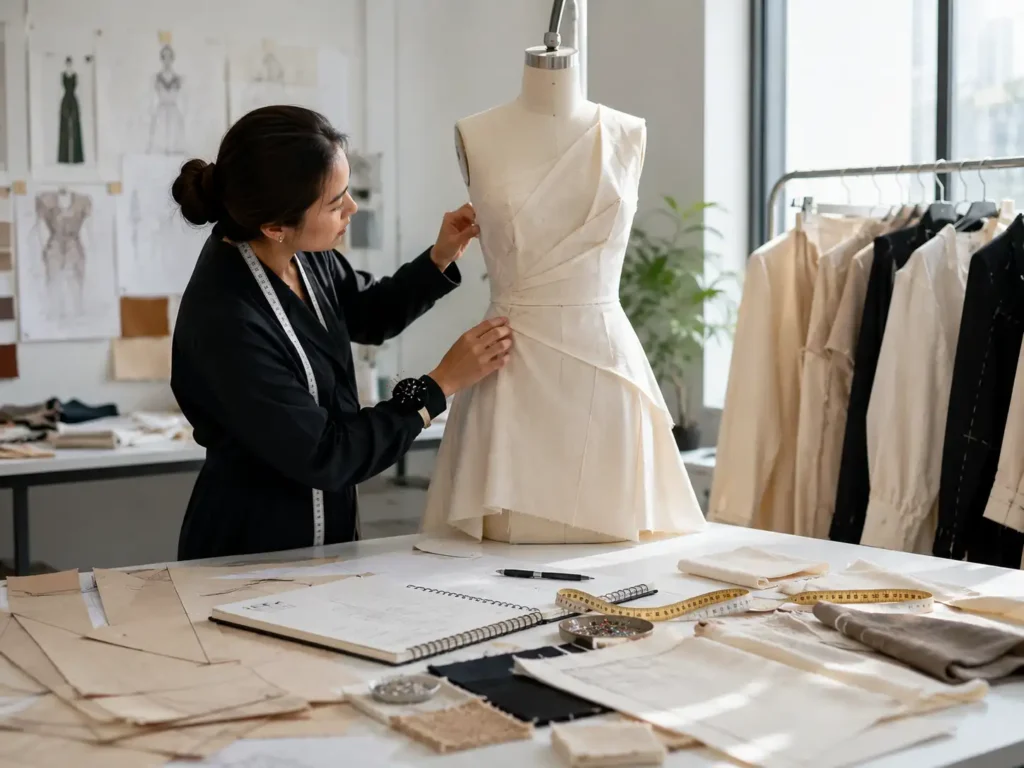
First Sample

Fit Sample

Revised Sample

Photo-Ready Sample

PP Sample

Golden Sample
Sample Problems Become Measurable Technical Corrections
A useful development partner does more than acknowledge comments. Every issue needs diagnosis, a technical correction route and an updated reference so the same problem does not reappear during PP approval or bulk production.
Fit Issues: Correct the Cause, Not Only the Measurement
Comments such as “too loose at bust,” “waist looks wide,” “hip is pulling” or “neckline gaps” may have several causes. Pattern shape, fabric stretch, seam position, internal support or strap length can all create a similar visual symptom. Development should first identify where the imbalance begins.
For example, a gaping neckline might not be solved by reducing circumference. The shoulder position or neckline curve may be incorrect, or the fabric may need stabilization. A tight hip can pull the zipper and change skirt balance, so adding ease without reviewing side-seam shape may move the problem rather than resolve it.
Jinfeng can translate fit comments into pattern changes, updated measurements and revised samples. When the correction is approved, related information can move into the size chart, pattern version and QC reference. The process creates a technical record instead of relying on memory between sample and production teams.
Material Issues: Reassess Fabric Before Reworking the Garment
Some sample problems are caused by material rather than pattern. A lightweight satin may reveal seam impressions, a mesh may stretch more than expected, a lace may be too rigid for a fitted shape or a lining may change the drape of an outer fabric. Repeated pattern alteration will not solve a material mismatch.
Development review should compare the original visual objective with the fabric’s real behavior. If substitution is needed, the alternative should be judged for hand feel, drape, stretch, opacity, surface and cost rather than chosen solely because it is available. The new fabric may also require another pattern or sewing adjustment.
Jinfeng’s material team can support fabric selection and substitution when original options create cost, MOQ, lead-time or construction problems. Once a material change is confirmed, associated pattern, trim, sample and quotation information should be updated so later decisions are based on one consistent specification.
Construction Issues: Change Workmanship Without Losing Design Intent
A sample can fit correctly yet still show technical problems: zipper waviness, bulky seams, visible lining, unstable neckline edges, uncomfortable boning or decorative seams that do not lie flat. Construction corrections require careful separation between appearance and execution.
An invisible zipper in satin may need stabilization, different seam handling or adjusted garment ease. A corset top may need revised boning or cup placement. Mesh joining could require different seam treatment to avoid rippling. Lace may need repositioning so motifs do not create heavy seam intersections.
Jinfeng reviews construction changes in relation to appearance, comfort, sewing time, cost and repeatability. If a proposed solution works only for one hand-finished sample but cannot be reproduced consistently in bulk, another construction route should be considered before PP approval.
Visual Issues: Convert Creative Feedback Into Production Language
Fashion teams often communicate visually: “make the waist sharper,” “more elegant drape,” “cleaner neckline,” “less bulky” or “more flattering.” Those comments are valid creative directions but must be translated into specific production actions before a factory can reproduce them.
A sharper waist may require pattern shaping, seam relocation or internal support. Cleaner drape could involve fabric weight, bias direction, seam placement or reduced lining stiffness. A less bulky neckline may need narrower seam allowance, different interfacing or a revised facing.
Jinfeng can use reference photos, marked sample images, measurements and written notes to interpret creative feedback and record the resulting technical decisions. Updated tech pack notes, pattern revisions, BOM details, sewing instructions and QC points help keep visual intent connected to measurable production standards.
Occasionwear Development Workflow From Brief to Production Standard
Each development stage should create a clear output and decision point. The workflow below keeps design, material, fit, cost and production preparation connected rather than treating sampling as an isolated activity.
| Development Stage | Jinfeng Focus | Brand Decision | Main Output |
| Project Review | Product category, references, quantity, target market, launch date, MOQ and available technical files | Confirm project scope | Development brief |
| Style Analysis | Silhouette, fabric behavior, construction, fit risks, trims and complexity | Confirm direction | Risk and feasibility notes |
| Material Direction | Fabric, lining, trims, colors, supplier MOQ and availability | Select material route | Fabric and trim direction |
| Pattern Development | Base size, silhouette, bust-waist-hip relationship, length and structural pieces | Approve first pattern route | First pattern |
| First Sample | Fit, appearance, fabric behavior and construction feasibility | Issue development comments | First sample report |
| Revision | Pattern, fit, material, trim or workmanship correction | Approve revised direction | Revised pattern/sample |
| PP Approval | Final fabric, trims, size, construction and production standard | Release for production planning | PP sample and specifications |
| Golden Sample / Handover | Final physical reference, QC points and production records | Confirm final standard | Bulk and repeat-order reference |
Moving an Approved Sample Into Bulk Production
Approval is not the finish of product development. Bulk readiness requires a controlled transfer of the accepted fit, material, construction and appearance into production documents, factory instructions and inspection references.

Lock the Approved Technical Standard
Before bulk execution, approved information needs to be aligned: final pattern, size chart, grade rule, fabric, lining, trims, BOM, construction instructions, color requirements, labels, relevant packing standards and QC points. If one reference contradicts another, the production team can make a technically reasonable decision that still differs from the approved sample.
The PP sample acts as a critical checkpoint because it represents the final production direction. Golden Sample management can add a physical benchmark for production and inspection. Jinfeng’s process treats PP and Golden Sample references as part of bulk control rather than decorative approval steps.
Any post-approval change should be assessed for impact. A new fabric color may affect dye lot and availability; changing a zipper can alter seam behavior; a fit change may require pattern and grading updates. Controlled handover means every approved change reaches the production reference before cutting begins.

Transfer Development Knowledge Into Production
Sample-room knowledge cannot remain inside the sample room. Details such as difficult seam areas, fabric direction, support placement, lining attachment, zipper handling, embellishment method and pressing sensitivity need to reach the relevant production team.
Jinfeng’s manufacturing structure allows styles to be assigned according to product type, fabric and construction. Production management can transfer PP standards, arrange sewing capacity and coordinate execution across the assigned production units.
For occasionwear, the handover should highlight risk points developed during sampling. Satin pieces may need gloss direction and pressing control; mesh may require stretch and edge guidance; lace may require placement references; corset pieces need clear support construction. The aim is to prevent the production line from “rediscovering” solutions already established during development.

Control Bulk Consistency Around Critical Points
Bulk consistency does not mean every operation deserves equal attention. High-risk characteristics should receive stronger control because they have greater impact on fit or visual appearance.
Key occasionwear references may include bust and waist measurements, strap length, neckline shape, zipper flatness, slit position, lining length, hem balance, lace alignment, sequin condition and pressing appearance. Incoming material checks and cutting control can prevent problems before sewing, while in-line inspection identifies workmanship drift before an entire order reaches finishing.
Jinfeng supports incoming material QC, cutting QC, sewing QC, in-line inspection, garment inspection, pressing review and packing QC. The approved sample and technical records give those inspections a defined standard instead of relying on general statements about quality.

Preserve Information for Repeat Orders
Successful occasionwear styles often return in new colors or seasonal repeats. Rebuilding the product from memory increases development work and creates unnecessary variation. Pattern versions, size information, fabric and trim records, PP approvals, Golden Sample references, workmanship notes and packing standards can therefore become long-term development assets.
Jinfeng retains pattern and order information for repeat production and related style development. When a repeat uses the same approved construction, the team can begin from established references and then focus on changes such as color, material availability, quantity or packaging.
Repeat production still requires confirmation because fabric batches, supplier availability and commercial requirements can change. The advantage is a structured starting point rather than a complete redevelopment of an already proven garment.
Coordinating Multi-Style Occasionwear Collection Development

Style Priority Planning

Shared Material Planning

Parallel Sample Management

Launch & Production Sequencing
Occasionwear Quality Control Starts During Development
Quality inspection is stronger when the risks are defined before bulk production. Fabric behavior, fit points, construction details and approved sample corrections become specific inspection priorities instead of leaving final inspectors to judge an occasion dress only after it is finished.

Satin: Shade, Snags, Zippers and Pressing
Satin quality problems are highly visible because light reflects across the surface. Incoming material review should consider shade and obvious surface defects, while cutting needs consistent gloss direction.
Sewing inspection should watch for seam impressions, snagging and zipper distortion. Final garment review includes drape, zipper flatness, hems and pressing.
A technically correct measurement does not guarantee a good satin dress. Over-pressing can create shine differences or marks; a slightly wavy zipper can become prominent on a clean fitted back. Production control therefore needs the approved visual standard alongside measurements.
When several colors or batches are included, material traceability and shade management become more important. Jinfeng’s satin control framework identifies color difference, snagging, wrinkles, gloss direction and pressing as recurring risks requiring attention.

Lace & Mesh: Placement, Damage and Transparency
Lace and mesh require inspection before and after sewing because damage or placement errors can already be introduced at cutting. Lace motifs may need symmetry or specific positioning, while mesh needs consistent stretch direction and careful handling around necklines, cut-outs and seams.
During sewing, inspectors can check joining quality, edge stability, puckering and lining alignment. Finished garments should be reviewed for holes, unintended transparency, distorted necklines and visible seam problems. A dark lining under lace can produce a very different appearance from the approved sample even when the outer material is technically identical.
Jinfeng’s complex-fabric controls identify motif matching, damage, edge finishing and lining for lace, plus transparency, stretch direction, holes, neckline deformation and lining for mesh.

Sequins & Decorative Surfaces: Security and Wearability
Decorative garments need inspection for more than missing embellishment. Seam areas should be checked for excessive bulk, rough internal surfaces and damaged decorative elements. Armholes, necklines and side seams deserve attention because contact with skin can turn an attractive sample into an uncomfortable retail product.
During bulk sewing, sequin damage can occur around stitch paths or zippers. Repairs should follow a defined visual standard so replaced elements do not create random differences. Final packing must also protect decorated surfaces from abrasion or crushing.
Jinfeng’s sequin risk controls include loss, skin scratching, needle breakage, seam thickness and packing protection. Those risks are better managed when the development sample has already established how embellishment should interact with seams, lining and closures.

Structured Fit: Measurements, Support and Closures
Corset, strapless, bodycon and fitted occasion dresses need garment inspection connected with the approved fit standard. Bust, upper bust, waist, hip, strap position, neckline shape, boning and cup placement can interact; inspecting only total circumference may miss a garment that measures correctly but wears incorrectly.
Zipper operation and flatness should be checked under the same fit tension expected from the finished garment. Anti-slip elements and internal support need correct placement. Lining should cover internal components without creating excess bulk.
Jinfeng uses PP samples, final patterns, size charts, grade rules, Golden Samples and QC measurements as key references for controlling fit-related production consistency.
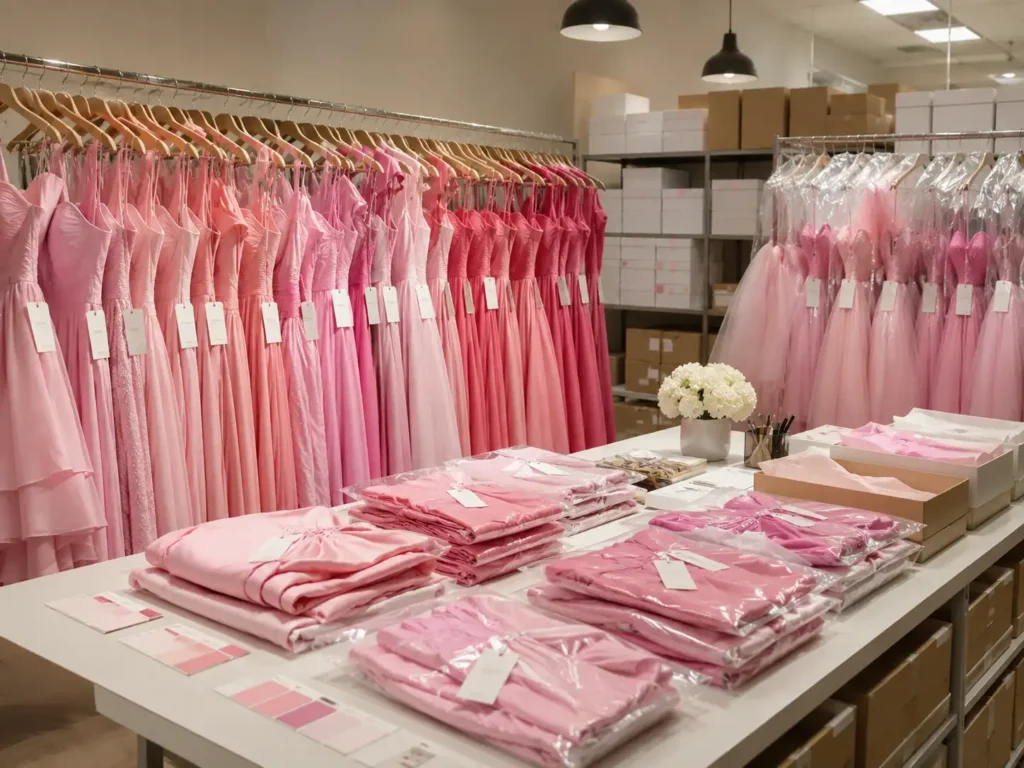
Final Presentation: Hems, Pressing, Labels and Packing
Occasionwear is often sold through strong product imagery and premium visual presentation, making final finishing commercially important. Hem balance, loose threads, pressing, surface cleanliness and garment shape influence how a dress appears immediately after unpacking.
Labels, care information, barcodes, SKU labels and packing requirements also need verification when a program is prepared for retail or ecommerce fulfillment. Jinfeng’s packing confirmation can cover main labels, size labels, care labels, hangtags, barcode stickers, SKU labels, polybags, cartons and carton marks according to the project specification.
Final quality control therefore closes the loop from approved development details to the garment received by the brand’s warehouse or nominated logistics partner.
MOQ, Development Cost and Commercial Feasibility
Occasionwear cost changes with material, internal structure, decorative work, sample complexity and production quantity. Jinfeng evaluates commercial feasibility against the actual garment rather than applying one price logic to every dress.
| Commercial Factor | Development Impact | Production Impact |
|---|---|---|
| MOQ | Jinfeng’s base MOQ starts from 200 pcs per style/color; special fabrics or trims can carry separate supplier MOQs. | More colors and specialized materials can divide purchasing volumes and change efficiency. |
| Fabric | Stock, custom-dyed, custom-woven, certified, imported, lace or sequin materials have different availability and supplier conditions. | Fabric cost, waste, shade control and material lead time influence unit cost and schedule. |
| Internal Structure | Cups, boning, interfacing, lining and support add development decisions and sample work. | Additional operations increase sewing time, materials and QC points. |
| Decorative Details | Lace placement, sequins, ruching, cut-outs and corsetry may require more sampling or construction validation. | Complex workmanship can increase labor, inspection and repair requirements. |
| Sample Revisions | Fit, fabric or construction changes may require revised samples before PP approval. | Late structural changes can affect pattern, BOM, cost and production timing. |
| Private Label & Packing | Labels, hangtags, barcodes and packaging specifications should be confirmed during project planning. | Special packaging, SKU handling and warehouse requirements add materials and operational steps. |
| Timing | Launch dates influence sampling priority, material selection and approval deadlines. | Production timing is confirmed according to style complexity, quantity, materials, colors, sizes, packing and QC after PP direction is clear. |
US Occasionwear Program From Sample to Bulk
A real development case is more useful when it shows the technical decisions behind the order. The following anonymized US occasionwear program demonstrates how material, fit and production standards were handled without disclosing protected brand information.

12 Styles Across a 20,000-Piece Program
An anonymous US occasionwear brand developed a 12-style program covering satin mini dresses, satin midi dresses and wedding guest products, with a total order quantity of approximately 20,000 pieces. Materials included matte satin, stretch satin and lightweight lining, while construction details included ruched waists, invisible zippers, lining, slits and adjustable straps.
The project structure reflects the way established occasionwear programs are usually managed: several related silhouettes share a commercial season but create different technical risks. Satin mini and midi styles require controlled fit and zipper behavior, while wedding guest products place more emphasis on refined drape, lining comfort and polished visual appearance.
Development did not move directly from design to production. The sample route included First Sample → Revised Sample → PP Sample → Golden Sample. Each approval stage narrowed the gap between visual direction and production standard before bulk execution.

Color, Zipper and Lining Problems Were Resolved During Development
Key project challenges included satin color consistency, zipper bulging, lining comfort and maintaining the approved result across multiple bulk colors. Those issues are connected. A different satin weight or stretch can change zipper behavior; lining color influences the outer appearance of lighter satin; waist and hip fit can increase tension around an invisible zipper.
Development work therefore included reconfirming satin weight and gloss direction, reviewing lining color and zipper specification, and correcting the waist-to-hip pattern. Revised samples allowed those decisions to be checked physically rather than approved only on paper.
The PP stage became the production checkpoint. Instead of accepting a visually strong early sample and expecting the production line to reproduce it automatically, the project moved through controlled revisions until material, fit and construction were aligned.

Approved Standards Continued Into Bulk QC
After PP approval, production attention remained focused on the risks identified during development. Zipper appearance, satin shade, pressing and consistency across colors were treated as known control points rather than unexpected final inspection problems.
The Golden Sample created a physical reference for bulk comparison. Pattern corrections and approved materials provided the technical base, while in-line QC helped identify execution issues before final packing. Private-label packing was then completed according to the program requirements.
The value of the case is not the order volume alone. A 20,000-piece occasionwear program can only remain commercially useful when sample decisions are converted into repeatable production instructions and inspection criteria. Development, bulk production and QC therefore operate as one connected workflow rather than three separate services.
Brand Protection, Testing and Approval Support
NDA Cooperation
Tech Pack Protection
Pattern & Sample Protection
Unreleased Design Protection
Testing by Project
Third-Party Inspection Support
Occasionwear Product Development Frequently Asked Questions
Yes. Jinfeng can review reference images, sketches, line sheets, tech packs or original samples. Reference-led development requires additional structure analysis because a photograph does not show every measurement, internal component or sewing detail. Fabric direction, lining, fit preference, construction and target quantity are clarified before accurate sampling begins.
Yes, when enough product information exists to establish the intended garment. Missing measurements, BOM details, construction information, fabric specifications or label requirements are identified during project review. Development accuracy improves as the technical information becomes clearer, so unresolved items are normally confirmed before PP approval and bulk production.
Yes. Jinfeng develops corset, strapless and other structured dress types within its women’s fashion product scope. Development can consider cups, boning, anti-slip support, neckline security, bust shape, waist fit, closures, lining and fabric behavior. Final construction depends on the actual design and fit requirement rather than using one standard corset structure for every style.
Yes. Jinfeng works with satin, lace, mesh, chiffon, crepe, velvet, sequins and other women’s fashion materials. Fabric selection is evaluated according to silhouette, stretch, drape, opacity, surface, construction, MOQ and availability. Custom-dyed, imported, certified or specialized fabrics may have separate supplier MOQ and lead-time conditions.
No. A photo-ready sample is created for campaign, ecommerce, lookbook, showroom or related visual use. A PP sample confirms the intended bulk-production standard, including final material, trims, measurements, construction and relevant production requirements. A visually approved photo sample should not automatically replace PP approval.
Fit comments are reviewed against pattern shape, measurements, fabric behavior and internal construction. Corrections can cover bust, waist, hip, neckline, straps, armholes, length, slits, lining or other critical points. Approved changes are transferred into revised patterns and technical references so later samples and bulk QC follow the corrected standard.
The standard starting MOQ is 200 pieces per style/color. Material availability, custom color development, trims, construction complexity, private-label requirements and production scheduling can affect the final MOQ. Special fabrics may also carry supplier-based minimums independent of the garment production MOQ.
Yes. Sample fees are evaluated according to pattern work, fabric, trims, construction complexity and development requirements. When an approved style moves into a qualifying formal bulk order, the sample fee can be deducted from the bulk order according to the agreed project arrangement. Sample fees are not unconditionally refunded when development stops before bulk production.
Yes. Jinfeng supports multi-style development using style identification, material tracking, trim tracking, sample status, revision logs, BOM records and production timelines. Complex styles can be prioritized earlier, while lower-risk styles progress in parallel according to fabric availability, launch timing and sample-room planning.
Yes. Approved patterns, size information, material and trim records, PP information, Golden Sample references, workmanship notes and packing requirements can be retained for repeat orders. Materials and commercial conditions are reconfirmed for each new order because supplier availability, color batches, quantities and packaging requirements can change over time.

Send Your Occasionwear Development Brief
Jinfeng Apparel works with established fashion brands, occasionwear labels, sourcing teams and multi-style apparel programs that need structured product development followed by controlled production. A useful first review does not require every detail to be final, but enough information should be available to understand the product direction, expected order structure and launch requirements.
Send the materials already available, and the development team can identify missing technical information, fabric questions, fit risks and the most suitable next step before formal sampling begins.
For a faster project review, include:
- Tech pack, sketch, reference image, original sample or line sheet
- Occasionwear category and approximate number of styles
- Expected quantity per style and color
- Preferred fabric, lining and trim direction
- Size chart, base size or existing fit standard
- Target market and intended retail positioning
- Private-label, barcode or packing requirements
- Target launch date and production timing requirements
- Testing, inspection or NDA requirements
- Any known sample, fit or production problem that needs correction


