 Skip to content
What Are the Different Types of Dress Straps? A Guide to Styles, Fit, Support, and Construction

Your trusted Women’s Apparel Manufacturer from China

Dress straps are easy to underestimate because they occupy so little space on a garment. In practice, they can change the neckline, shoulder balance, bust position, armhole exposure, back appearance, comfort, and even the way a dress behaves after several hours of wear. A few millimeters of width or a small change in attachment position can make the difference between a strap that quietly disappears into the design and one that constantly slips, twists, digs into the shoulder, or pulls the bodice out of shape.
The main types of dress straps include spaghetti, narrow, wide, tank, halter, tie, cross-back, one-shoulder, adjustable, detachable, and convertible straps. The best option depends on the silhouette, neckline, fabric weight, desired support, body coverage, adjustment needs, and visual direction. A strap should therefore be developed together with the bodice rather than treated as a decorative component added after the main pattern is finished.
That becomes especially clear during sampling. A strap may look effortless in a fashion sketch, yet the physical garment still needs a finished width, wearable length, front and back attachment points, seam construction, reinforcement, suitable hardware, and a clear relationship with the neckline and armhole. Many problems that appear to be “neckline issues” or “bust fit issues” actually begin with strap length or placement. Understanding the different types is therefore useful not only for naming styles, but also for developing dresses that look correct, feel comfortable, and can be reproduced consistently in production.
What Are the Main Types of Dress Straps?
Dress straps can be classified by width, position, shape, adjustability, and attachment method. The main groups include spaghetti, narrow, wide, tank, halter, tie, cross-back, one-shoulder, adjustable, detachable, and convertible straps. Some primarily create a visual effect, while others play a more important role in neckline control, upper-bodice stability, shoulder comfort, and fit adjustment.
Spaghetti, Narrow, and Wide Straps
Spaghetti straps are among the most recognizable dress-strap styles. They are commonly used when the designer wants the shoulder area to remain visually light, which explains their frequent appearance on slip dresses, satin dresses, summer styles, party dresses, and lingerie-inspired silhouettes. In product development, “spaghetti” is more useful as a proportional category than as one universal measurement. Finished widths around 3–10 mm are common working ranges, although the approved sample and technical specification should always determine the final dimension.
Narrow fabric straps usually sit between classic spaghetti straps and visibly wide shoulder straps. A finished width of roughly 8–15 mm is practical for many styles because it can still look delicate while giving the sewing team more room for stable seams, reinforcement, elastic insertion, rings, or sliders. For a brand that likes the clean appearance of a fine strap but needs slightly more reliability in wear and manufacturing, this middle range can be a useful compromise.
Wide straps generally begin around 20–25 mm and may extend beyond 50 mm depending on the silhouette. They provide more shoulder coverage and spread contact pressure over a larger area, which can improve comfort when the garment is carrying meaningful weight. Width by itself, however, does not guarantee support. A loose bodice with 40 mm straps can still feel unstable, while a structured corset dress can remain secure with very narrow straps because much of its support comes from the torso.
Tank-style straps are more integrated into the bodice than most narrow straps. Instead of looking like a separate cord attached to the neckline, they often continue naturally from the front and back bodice pattern. This makes them suitable for dresses where coverage, cleaner armhole shaping, and a stronger visual shoulder line are part of the design rather than secondary details.
Strap Type | Practical Finished Width* | Typical Adjustment | Common Dress Applications |
Spaghetti strap | 3–10 mm | Fixed or slider | Slip, satin, party, summer |
Narrow fabric strap | 8–15 mm | Fixed or adjustable | Mini, midi, occasion |
Tank strap | 20–40 mm | Usually fixed | Bodycon, casual, structured styles |
Wide strap | 25–50+ mm | Usually fixed | Occasion, fuller bodices, structured styles |
Tie strap | 15–50+ mm | Self-tie | Resort, romantic, summer |
Elastic strap | 5–20 mm | Stretch-based | Bodycon, knit, lightweight dresses |
*These figures are practical development ranges rather than universal standards. Final measurements should follow the approved design, fabric behavior, intended fit, and technical specification.
Halter, Tie, and Cross-Back Straps
Halter straps redirect the visual and structural line of the dress toward the neck. They may tie behind the neck, close through hardware, pass through loops, or extend directly from the bodice. Halter designs are widely used on resort dresses, backless dresses, evening styles, summer collections, and partywear because they expose more of the shoulders and upper back while maintaining a strong connection between the front bodice and the body.
The main fitting question with a halter is how much tension is concentrated around the neck. If too much of the garment weight is transferred upward, a dress can become uncomfortable even though it looks attractive on a mannequin. This deserves extra attention when the skirt is long, the fabric is heavy, or the dress carries sequins, rhinestones, or other decorative weight. A comfortable halter usually works together with appropriate bust, underbust, waist, or torso control rather than asking the neck straps to do everything.
Tie straps combine styling with adjustability. They work especially well in resort, romantic, feminine, and warm-weather collections where a bow or knot feels natural to the design. The usable strap length must include more than the distance across the shoulder. A compact knot, a medium bow, and an oversized statement bow each require different free lengths, and the fabric itself will affect how large and stable the finished knot becomes.
Cross-back straps travel diagonally across the back and can help reduce outward shoulder movement when their attachment positions and tension are well balanced. They are also popular as a decorative feature on party dresses, fitted styles, and low-back silhouettes. The tradeoff is additional complexity. More crossing points mean more opportunities for twisting, asymmetry, incorrect assembly, and visible differences between the left and right sides.
One-Shoulder and Asymmetric Straps
A one-shoulder dress is not simply a conventional dress with one strap removed. The entire upper bodice becomes asymmetric, which changes how tension moves through the neckline and torso. The supported side and unsupported side no longer behave in the same way, so the pattern needs to control the upper edge carefully. Depending on the design, the shoulder element may be narrow, wide, gathered, pleated, twisted, embellished, or fully integrated into the bodice.
Because only one shoulder provides visible vertical support, the opposite side may depend more heavily on internal construction. Lining, elastic, boning, grip tape, bust shaping, side-seam control, and torso tension can all become important. Shortening the single strap may raise one side of the garment, but it will not automatically stabilize an inadequately shaped opposite neckline.
Asymmetric multi-strap dresses add another level of complexity. Two or three straps may originate from a single front point, spread toward the back, or cross at different angles. These details can create a strong fashion identity, especially in party and occasion collections, but they also make small inconsistencies easier to see. A 5 mm difference may be almost invisible in a skirt seam while being obvious between two parallel straps beside the wearer’s face.
For that reason, production instructions should define spacing, angle, attachment location, orientation, and finished length with measurable reference points. Comments such as “make straps more even” are not enough once a style moves beyond a single sample.
Adjustable, Detachable, and Convertible Straps
Adjustable straps normally use sliders, rings, buckles, or similar components that allow the wearer to change the usable length. Their main purpose is not to compensate for weak pattern development. They provide a controlled range of personalization within a correctly developed garment. This is particularly useful on slip dresses and other open-neckline styles where a relatively small vertical adjustment can noticeably change bust position and neckline depth.
Detachable straps use hooks, loops, snaps, buttons, or other removable systems. They are common when one dress is intended to switch between strapless and strapped styling. The attachment should remain discreet, but it also needs to tolerate repeated handling. A small hook may look elegant, yet if the receiving loop stretches, rotates, or sits too close to an unstable edge, the garment can become frustrating to wear.
Convertible straps take this concept further by allowing different configurations such as straight shoulder, cross-back, halter, asymmetric, or strapless wear. Each option should be tested independently because the body path changes. A strap that fits well in a straight configuration may be too short when crossed diagonally across the back, while a halter setting may concentrate more tension around the neck.
Jinfeng Apparel’s documented trim system includes strap sliders, elastic bands, tapes, closures, and other adjustment components, with trim selection considered together with fabric, construction, comfort, durability, cost, and production requirements. This reflects an important practical principle: an adjustable strap is not one component. It is a small system involving fabric, hardware, stitching, positioning, fit, and inspection.
How Do Dress Straps Affect Fit and Support?
Dress straps influence neckline height, bust position, armhole coverage, shoulder pressure, and upper-bodice stability. Width changes how pressure is distributed, while length and placement affect where the bodice sits on the body. Good support usually comes from the relationship between the straps and the whole bodice rather than from the straps alone.
Strap Width and Pressure
A common assumption is that wider straps automatically make a dress more supportive. Wider straps do spread force across a larger shoulder area, so they can feel more comfortable when they are carrying part of the garment’s weight. This becomes noticeable on longer dresses, fuller-bust styles, or garments made with heavier materials. The wearer does not experience weight only as a total number; she experiences where that force is concentrated on the body.
Support, however, may come from several other places. A corset-inspired party dress may have narrow straps while relying on boning, cups, underbust shaping, lining, side seams, and waist tension. In that situation, the straps are helping control neckline position rather than suspending the entire dress from the shoulders.
The reverse can also happen. A dress with 30–40 mm straps may still feel unstable if the upper bust is too loose, the armhole is too open, or the neckline has insufficient tension. Increasing strap width does not correct those pattern problems. It can change comfort and visual proportion, but the underlying bodice still needs to fit properly.
For development teams, it is more useful to separate appearance, load, and stability. A narrow strap may be exactly right visually. The next question is how much tension it is expected to carry, followed by which parts of the bodice are responsible for keeping the dress in position.
Strap Length and Neckline Position
Strap length is one of the smallest measurements on a dress that can affect several fit areas at once. If a fixed strap is shortened, the front bodice moves upward. The neckline may rise, the bust level may shift, the armhole can become tighter, and pressure at the shoulder may increase. Lengthening the strap can lower the neckline, increase side-bust exposure, open the armhole, and reduce upper-bodice tension.
On a lightweight slip dress, a change of around 10–15 mm can sometimes produce an obvious difference in neckline position. That does not mean this is a standard alteration amount for every style. It simply shows how sensitive many strappy silhouettes are to vertical balance, particularly when the front neckline is low or the fabric is soft and fluid.
Measurement language should also be precise. “Strap length” may mean total cut length before sewing, finished overall length, exposed length between attachment seams, or the length of an adjustable strap at a defined slider position. Those values can differ considerably, and production problems often begin when different teams assume they are talking about the same measurement.
The Jinfeng Apparel fact sheet identifies strap length together with bust, upper bust, underbust, shoulder width, armhole, neckline depth, back coverage, and lining length as controlled pattern points. Treating these measurements as connected is far more reliable than adjusting the strap without checking what happens to the rest of the upper body.

Strap Placement and Slipping
When straps repeatedly fall off the shoulder, shortening them is often the first reaction. Sometimes that works, but it can also create unnecessary shoulder pressure or pull the neckline too high while leaving the basic strap angle unchanged. Back attachment position is frequently just as important. A strap connected too far toward the outer shoulder can naturally move outward as the wearer walks or moves her arms.
Moving the rear attachment slightly inward changes the direction of tension. Shoulder slope, back neckline shape, strap friction, fabric stretch, and size can also influence stability. This is one reason the same visual strap placement does not always perform identically across fabrics or silhouettes.
Front placement matters as well. Moving a strap inward can visually narrow the neckline and change how the dress frames the upper chest. Moving it outward may create a cleaner fashion line on some styles, but it can increase armhole exposure or make the strap more likely to slip. The correct choice therefore involves both appearance and movement.
A proper fitting should include standing, raising the arms, reaching forward, walking, and sitting. A strap that stays perfectly positioned in a front-facing photograph may behave very differently once the shoulder begins moving naturally.
Fit Symptom | Common Possible Causes | Useful Checks |
Strap slips outward | Rear position too wide, strap too long, shoulder slope, low fabric friction | Check back attachment and movement |
Neckline sits too low | Strap too long, upper bodice too long, weak bust shaping | Review vertical balance before shortening |
Armhole exposes too much | Strap length, armhole curve, side seam balance | Review side view and underarm fit |
Shoulder feels painful | Strap too short, narrow load area, bodice relying heavily on strap | Check torso support and strap tension |
Strap twists | Fabric torque, seam position, hardware direction | Review grain, turning and slider orientation |
Left/right neckline uneven | Unequal strap length or attachment points | Measure from fixed pattern landmarks |
Back neckline gaps | Excess length, wide placement, back pattern imbalance | Review back fit before altering strap |
Bodice Support Matters
The most comfortable dresses usually distribute support across several areas rather than forcing two straps to carry the entire garment. A structured bodice may use torso circumference, waist shaping, princess seams, lining, boning, cups, elastic, underbust construction, or grip components. The straps then help maintain vertical position and neckline balance while the torso carries a meaningful share of the load.
This distinction becomes especially important in backless, deep-V, corset, and convertible strapless styles. Removing back coverage takes away fabric that would normally help stabilize the garment. The remaining structure must compensate, otherwise the wearer may feel the straps doing too much work.
One useful observation during fitting is what happens when the straps are lightly lifted away from the shoulders. If the entire bodice immediately collapses or falls dramatically, the garment may be relying heavily on shoulder suspension. That is not necessarily incorrect for a soft slip dress, but the design team should understand that behavior before approving the fit.
When a wearer reports that straps feel uncomfortable, the root cause may therefore be elsewhere. A loose torso can transfer more load to the shoulder than intended. Correcting the bodice may improve comfort more effectively than simply widening or lengthening the straps.
Which Strap Construction Should You Choose?
Fixed straps work well when the design needs a clean and repeatable fit, adjustable straps provide controlled length flexibility, tie straps add styling freedom, and detachable or convertible systems offer multiple looks. The right construction depends on fabric thickness, support requirements, hardware compatibility, intended use, and how much additional sewing and QC complexity the product can reasonably support.
Fixed or Adjustable
Fixed straps are simple in concept, but they demand accurate pattern development because the wearer has no way to change their length after purchase. Once the fit has been approved, however, they are easy to communicate and reproduce. The technical specification can define finished width, finished length, front attachment, back attachment, seam method, and any reinforcement without introducing additional hardware.
This makes fixed straps particularly suitable when the brand wants a clean visual line. They avoid visible sliders, strap tails, rotating rings, or hardware that can interrupt delicate fabrics. They can also reduce the number of components that need to be sourced, color matched, assembled, and inspected.
Adjustable straps are valuable when relatively small differences in torso length or shoulder proportion meaningfully change the fit. Slip dresses, bridesmaid styles, satin occasionwear, and lightweight dresses often benefit from that flexibility. A wearer can alter neckline height within a controlled range without changing the underlying garment size.
The hardware needs to fit the strap properly. A thick folded strap may resist movement through a narrow slider, while a smooth satin strap combined with loose hardware may creep longer during wear. The goal is not the largest possible adjustment range. It is a useful range that keeps the neckline and armhole within the intended fit window.
Tie Construction
Tie straps appear relaxed and flexible, but they still need precise development. The wearer needs enough free length to reproduce the intended knot or bow. A compact shoulder knot uses much less fabric than a large romantic bow, and a design that photographs beautifully with long ribbon-like tails may feel impractical if those tails constantly move into the arm or back.
Fabric changes the behavior significantly. Soft crepe, cotton blends, and lightly textured wovens tend to create more friction than smooth satin. Satin can produce an elegant bow but may loosen more readily depending on the surface and thickness. A wide double-layer tie will also create a much larger knot than a narrow single-purpose strap.
Finished width matters because it changes both appearance and bulk. A 15 mm strap may create a neat knot close to the shoulder, while a 50 mm strap can form a prominent bow that becomes part of the garment’s main silhouette. The construction should therefore be developed in the real fabric rather than approved only from a drawing.
For production, paired straps need consistent finished lengths and end shapes. When a campaign image shows symmetrical bows, even relatively small length differences become visible once the garment is tied.
Detachable Construction
Detachable straps need to look discreet while remaining secure. Small hooks and loops are attractive because they can disappear inside a neckline, but they concentrate force into a very limited area. The receiving loop therefore needs enough strength and reinforcement to tolerate repeated attachment, removal, and normal garment tension.
Connector direction is another practical consideration. A hook should be oriented so that normal pulling force helps keep it engaged rather than turning it outward. The wearer should also be able to connect the strap without excessive effort, particularly when the attachment points sit behind the body.
Repeated use should be considered during sampling. A loop that survives one fitting may gradually stretch after many cycles. Thread chains, delicate elastic loops, and fine fabrics need particular attention because they can distort more easily than a reinforced woven loop.
For dresses designed to convert from strapless to strapped, the strapless configuration should still function properly on its own. Detachable straps should add a second styling option rather than hide a bodice that lacks enough grip or internal structure to stay in position without them.
Convertible Construction
Convertible dresses are useful only when their advertised configurations actually fit and feel comfortable. A conventional shoulder path is usually shorter than a cross-back route, while a halter configuration changes both length requirements and where tension is felt. Moving the same strap between these positions without testing can create a dress that technically converts but performs well in only one setting.
Connection points should be clearly identified in the technical file. Front-left, front-right, back-left, back-right, and any optional center or halter loops should be documented so that sampling, production, QC, packing, and customer instructions all refer to the same system.
It is also useful to photograph every approved wearing configuration during sample confirmation. These images can later support production references, ecommerce photography planning, customer service, and instruction cards. They also reduce ambiguity when a style contains several loops that look similar.
Packing becomes another control point. If a garment uses removable straps, spare pieces, hooks, or other loose components, the final inspection should confirm that the complete set is present. A dress can be perfectly sewn and still generate customer complaints if one small accessory is missing.

Which Materials Work Best for Dress Straps?
Self-fabric straps are usually preferred when visual continuity matters, elastic works when controlled stretch is useful, lace and mesh provide transparency or decoration, and tapes or hardware-compatible constructions offer greater stability. The right material must suit the finished width, expected load, stretch, comfort, adjustment system, and sewing method rather than simply matching the appearance of the dress.
Self-Fabric Straps
Self-fabric straps are popular because they match the main garment naturally in color, texture, print, and sheen. Satin dresses frequently use satin rouleau or narrow folded straps, while woven dresses may use turned fabric tubes or clean folded bands. Knit dresses can also use self-fabric, although stretch behavior becomes a much more important part of the development process.
Not every fabric converts easily into a narrow strap. Satin can reveal seam bulk, twisting, uneven turning, and pressure marks because its surface is smooth and reflective. Loosely woven fabrics may fray while being turned. Fine chiffon may require reinforcement, and heavy embellished fabrics may simply become too bulky at small widths.
Grain direction also changes performance. Straight-grain woven straps tend to remain more dimensionally predictable. Bias-cut straps can curve beautifully around the body but may lengthen under tension or after hanging. If that growth is not considered during sampling, the finished neckline can end up lower than the approved fitting.
Stretch fabrics require another level of control. High stretch does not automatically mean good strap performance. Recovery matters just as much. A strap that stretches easily but does not return to its original length can allow the neckline to drop gradually during wear, particularly on bodycon dresses.
Elastic, Lace, and Mesh
Elastic can be useful where the strap needs to move with the wearer without becoming excessively loose. It may be exposed, concealed inside self-fabric, or incorporated into a more decorative structure. The correct finished length should be established by fitting because different elastic constructions can produce very different tension even when they have similar nominal stretch percentages.
A soft lingerie-style elastic and a firmer woven elastic may both extend substantially but feel completely different on the shoulder. This is why a blanket rule such as “shorten the elastic by 10%” is not reliable across every material and dress. The force, recovery, width, thickness, and intended wearing tension all matter.
Lace straps are normally selected for their decorative effect. They can continue a lace bodice elegantly over the shoulder or soften a formal neckline without adding the visual weight of a solid fabric band. The challenge is that decorative lace may contain open motifs, scalloped edges, or delicate yarns that are not ideal load-bearing structures. Hidden reinforcement can sometimes provide stability while preserving the visual effect.
Mesh creates transparency and can work beautifully with illusion, party, corset, and bodycon styles. Narrow mesh strips experience concentrated stress, however, so needle damage, edge curling, seam tearing, and local stretching deserve careful review. Testing a large mesh swatch alone does not reveal how the material will behave once reduced to a narrow strap.
Decorative Straps
Decorative straps can become a focal point of the entire dress. Rhinestone chains, metallic chains, pearls, beads, sequins, braided cords, embellished tapes, and combinations of fabric with hardware are frequently used in party, club, evening, and special-occasion collections because the shoulder area remains visible in both close-up photography and social-media imagery.
The main technical issue is concentrated load. A chain or rhinestone strap may connect to the dress through only a small attachment point. Even if the decorative component itself is strong, the surrounding fabric may need reinforcement so that tension does not tear or distort the bodice edge.
Weight and skin contact also matter. Decorative components that feel light in the hand may become uncomfortable after several hours of wear. Metal edges, stone settings, bead movement, and chain links should be checked against the skin rather than evaluated only on a hanger.
Snagging is another common concern. Rhinestone prongs, chain links, and decorative settings can catch fine mesh, lace, chiffon, long hair, or other garments. Color approval also becomes more complicated because “gold” hardware, gold sequins, metallic fabric, and warm satin may all reflect light differently. The final combination should be approved together under realistic lighting.
Material | Main Advantage | Main Risk | Important Control Point |
Satin | Premium visual continuity | Twisting, seam show-through | Width and smooth turning |
Jersey | Comfort and stretch | Length growth | Recovery and stabilization |
Elastic | Controlled flexibility | Overstretch or weak recovery | Finished tension |
Lace | Decorative appearance | Weak edges and distortion | Reinforcement |
Mesh | Lightweight transparency | Stretch and tearing | Seam method and recovery |
Tape/Webbing | Dimensional stability | Can look too utilitarian | Hand feel and edge comfort |
Beaded/Chain | Strong visual impact | Weight, snagging, point loading | Attachment security |
Strap Hardware
Hardware selection begins with compatibility between the finished strap and the opening it must pass through. A slider should move when the wearer deliberately adjusts it while still holding its position during normal use. If it moves too freely, the strap may gradually lengthen. If it is too tight, repeated friction can damage delicate satin or make adjustment frustrating.
Rings should remain flat and should not force the strap to rotate unnecessarily. Hooks need smooth edges, especially when placed close to the skin. Buckles and sliders should also be considered in relation to garment thickness because a large hardware component can look heavy on a delicate slip dress even when it functions perfectly.
Surface finish deserves attention as well. Silver, gold, matte, polished, gunmetal, and painted finishes may interact very differently with satin, rhinestones, sequins, and other materials. The actual production combination should therefore be reviewed during sampling rather than leaving metal finish as a final purchasing decision.
Jinfeng Apparel’s documented trim-development system covers strap sliders, elastic, tapes, closures, and decorative accessories, with specification, color, durability, comfort, MOQ, cost, and lead time reviewed during sampling and production. That approach is particularly useful for straps because a visually minor piece of hardware can have a surprisingly large effect on comfort and consistency.
How Are Dress Straps Developed and Tested?
Dress straps are developed by defining their material, width, finished length, attachment position, adjustment range, hardware, construction, and intended support. Samples are then checked through measurement, fitting, movement, and visual inspection. Before production, approved changes should be transferred into patterns, measurement files, trim records, sewing instructions, and QC checkpoints so the same result can be repeated consistently.
Length and Placement Development
Strap development should begin with the intended wearing experience rather than with a number copied from a sketch. The design drawing establishes the visual direction, but the physical sample determines whether the line actually works on a three-dimensional body. Shoulder slope, bust position, neckline depth, armhole shape, torso length, back exposure, fabric stretch, and bodice structure all influence the final strap path.
Attachment positions should be measurable. Instead of communicating that a strap should move “a little closer to the neck,” a technical file can reference the neckline edge, armhole seam, princess seam, center front, center back, or another stable pattern landmark. This matters once the style is graded across sizes because a visual adjustment made only on a sample cannot automatically be reproduced consistently.
Adjustable straps require several measurements rather than one. The file may need the finished width, minimum usable length, nominal fitting length, maximum usable length, slider size, ring size, strap tail, and attachment points. Without these references, different production teams may each interpret “adjustable strap” slightly differently.
Jinfeng Apparel’s documented pattern-development capability covers strap length together with bust, upper bust, underbust, waist, shoulder width, armhole, neckline depth, back coverage, lining, and other important measurements. The fact sheet also records 7+ senior womenswear pattern makers, two sample rooms, and 20+ sample machinists supporting development work.
Sample Fitting
A strappy dress should be reviewed from the front, side, and back because each angle exposes different problems. The front reveals neckline height, symmetry, and the way the straps frame the chest. The side view often shows underarm exposure, forward or backward pull, and whether the bodice is sitting at the intended level. The back reveals shoulder stability, cross-back alignment, and whether straps drift toward the outer edge.
Movement testing can remain simple and still be useful. Raising both arms, reaching forward, sitting, walking, rotating the shoulders, and putting the dress on and off again can reveal slipping, twisting, digging, hardware rotation, and excessive neckline movement that may not appear while the wearer stands still.
The intended bra situation should also be considered. A daytime bra-friendly dress and a low-back party dress have different expectations. A strap placement that creates a beautiful neckline may expose conventional bra straps, while another design may deliberately use more inward placement or wider coverage to work with ordinary underwear.
Fit assessment becomes more reliable when the actual intended fabric and hardware are used. Temporary elastic, substitute sliders, or different fabric weights can make a prototype behave differently from the final garment, particularly in narrow strap constructions.

Correcting Strap Problems
The first visible problem does not always reveal the real cause. A strap that slips may be too long, but the rear attachment may also be too wide. A neckline that sits too low may improve when the straps are shortened, yet excess upper-bodice length or insufficient bust shaping could be the deeper issue. An armhole that gaps may involve the strap, armhole curve, side seam, or bust volume.
For that reason, useful fitting comments describe what is happening rather than prescribing a correction before the cause has been confirmed. “Center-front neckline sits approximately 12 mm below intended position” gives the pattern maker more useful information than “shorten straps.” The pattern can then be reviewed together with the neckline, armhole, bust, and shoulder.
Version control is equally important. A second sample may solve shoulder slippage while unintentionally raising the neckline too much. If the team keeps clear records of the original issue, adjustment, sample version, measurement change, and resulting fit, later decisions become much easier to trace.
The documented sample-revision process used by Jinfeng Apparel considers client fitting feedback, measurements, mannequin observation, live fitting, fabric stretch, and target-market preferences when correcting patterns. This kind of diagnosis is particularly useful for strap-related issues because one change can influence several neighboring parts of the garment.
Production and QC
Once the sample is approved, the strap needs to become a repeatable production specification. The sewing and inspection teams should know exactly how the width is measured, whether the stated length includes hidden seam sections, what slider position is used for measurement, how far the strap enters the bodice seam, and whether the attachment requires reinforcement.
There is no single tolerance that makes sense for every strap. A 4 mm satin spaghetti strap and a 40 mm woven shoulder strap have very different visual sensitivity. Final tolerances should therefore be determined according to the customer specification, approved sample, material behavior, and finished dimension rather than applying one general number to every design.
Left and right symmetry deserves particular attention because straps sit close to the wearer’s face and shoulders. A small difference that might disappear in a long skirt seam can be obvious in the upper body. Cross-back, double-strap, and multi-strap constructions increase this sensitivity further because the eye naturally compares parallel lines and angles.
All production-relevant corrections should move from fitting comments into controlled documentation. Jinfeng Apparel’s documented workflow records approved revisions into updated patterns, measurement files, BOM information, fabric and trim approvals, sewing instructions, and QC checklists before the style progresses through later production stages.
How Do You Choose the Right Dress Strap?
Choose a dress strap by considering the silhouette, neckline, fabric, body coverage, structural support, target size range, wearing occasion, and adjustment needs together. Slip dresses often suit narrow adjustable straps, while backless styles may work better with halter or cross-back arrangements. Party and evening dresses allow more decorative options, but visual impact should remain balanced with comfort and secure construction.
Slip and Satin Dresses
Slip dresses naturally work with spaghetti or narrow adjustable straps because the light shoulder line complements the fluid, minimal silhouette. Adjustable straps are especially useful when the neckline is relatively open because a small change in vertical position can noticeably alter how much of the upper chest is exposed and where the bust sits inside the garment.
Satin makes workmanship particularly visible. Its smooth surface can highlight twisting, uneven turning, bulky joins, mismatched hardware, and inconsistent left-right attachment. A narrow satin strap may contain very little fabric, but that does not make it technically insignificant. Clean construction often requires greater control precisely because there is nowhere to hide irregularities.
The team should also consider how much weight the straps are actually carrying. A lightweight mini slip and a floor-length satin dress may use visually similar straps while creating very different loads. A narrow strap can still work on the longer garment if the torso and bodice construction distribute weight effectively rather than hanging the whole dress from the shoulders.
During fitting, it is useful to check the garment after it has been worn for several minutes rather than judging it immediately. Satin straps, bias-cut components, and soft-bodied dresses can settle under gravity, which may gradually lower the neckline even when the first fitting looks correct.
Bodycon and Corset Dresses
Bodycon dresses introduce the question of stretch compatibility. If the torso stretches significantly while the strap remains rigid, the two parts may respond differently during movement. That can increase shoulder pressure or distort the neckline. Stretch self-fabric, controlled elastic, or carefully fitted fixed straps may each work depending on the silhouette and how much tension the torso itself is intended to carry.
Corset-inspired bodycon dresses follow a different structural logic. Their support may come from boning, cups, lining, underbust shaping, waist control, and fitted side seams. Narrow straps can therefore remain delicate without being responsible for holding the entire garment in position.
This is an important distinction for designers. A thin strap does not necessarily mean weak support, and a wide strap does not automatically create a stable bodice. The internal structure determines how much responsibility the strap needs to carry.
Fitted dresses should also be reviewed after the fabric has settled during wear. Stretch materials can relax slightly as body heat and movement increase. If the torso relaxes more than expected, additional load can transfer toward the shoulders. A strap that feels comfortable during the first minute may begin digging later if the underlying body fit is not sufficiently stable.
Party, Evening, and Backless Dresses
Party dresses offer more freedom to treat straps as a statement feature. Rhinestone chains, metallic chains, multi-strap layouts, asymmetric shoulders, halters, cross-back designs, narrow satin straps, and decorative ties can all create strong visual recognition because the shoulder and back areas remain prominent in close-up photography and social-media content.
The tradeoff is that decorative elements often introduce weight, harder surfaces, snagging points, or concentrated load at the attachment. A rhinestone strap should therefore be evaluated for more than appearance. The team needs to check whether the attachment is reinforced, whether the stones touch the skin, and whether the hardware catches mesh, lace, hair, or other parts of the dress.
Evening dresses may carry substantially more fabric than party minis, particularly in floor-length satin, velvet, sequin, lace, or layered mesh designs. In those cases, the relationship between the strap and internal bodice structure becomes increasingly important. The dress should not automatically transfer all additional skirt weight to the shoulder.
Backless dresses are especially sensitive because removing the back fabric also removes part of the structure that normally stabilizes the upper body. Halter, cross-back, tie, and multi-strap constructions can compensate, but they work best when developed together with bust support and side-body control. Jinfeng Apparel’s documented pattern capabilities include halter, backless, one-shoulder, strapless, corset, slip, and bodycon dress structures.
Bridesmaid and Resort Dresses
Bridesmaid dresses often need to work across several body proportions while maintaining a coordinated visual appearance. Adjustable straps can be particularly useful because two wearers may have similar bust and waist measurements but different torso lengths or shoulder slopes. A controlled adjustment range allows neckline position to be refined without changing the overall garment size.
Tie shoulders can also work well with chiffon, satin, crepe, and softer romantic designs. The main consideration is visual consistency. One wearer may create a compact knot while another produces a large bow. When coordinated group photography is important, the intended tying method should be shown clearly in product imagery or styling instructions.
Resort dresses tend to prioritize movement, visual lightness, warm-weather comfort, and open back or shoulder details. Halters, tie straps, spaghetti straps, and narrow adjustable constructions suit this environment naturally. Lightweight satin, chiffon, rayon, viscose, linen blends, mesh, and printed woven fabrics can all support these styles, although each creates a different amount of friction, stretch, and shoulder feel.
Jinfeng Apparel’s product knowledge base specifically links adjustable straps with bridesmaid and vacation styles and halter construction with homecoming, vacation, and resort dresses. The useful lesson is broader than those individual categories: strap selection should follow how and where the dress will actually be worn, not simply what looks attractive in isolation.
A strap occupies only a small part of a dress pattern, yet it can influence almost every aspect of the upper body. Width changes visual weight and pressure distribution. Length changes neckline and armhole position. Placement affects shoulder stability. Material determines stretch, friction, and comfort, while hardware introduces its own questions around adjustability, durability, and appearance. The best strap is therefore not simply the most fashionable option; it is the one that works naturally with the complete dress.
For brands developing custom collections, the most useful point to lock down is rarely just the name of the strap. A production-ready design should establish finished width, material, length or adjustment range, front and back attachment positions, hardware, reinforcement, construction method, and fit expectation. When those details are resolved during pattern development and sampling, the final dress feels effortless to the wearer even though considerable technical thinking may sit behind that simplicity.
Jinfeng Apparel supports custom womenswear development from tech packs, reference photos, samples, line sheets, and sketches, with pattern development, fabric and trim sourcing, sampling, bulk production, and QC forming part of the development process. For strap-heavy dresses, that integrated approach is particularly useful because fit, material, hardware, and production consistency need to be considered together rather than passed between teams as separate decisions.
Share This Article :

Jerry Lee
Categories

Latest blogs
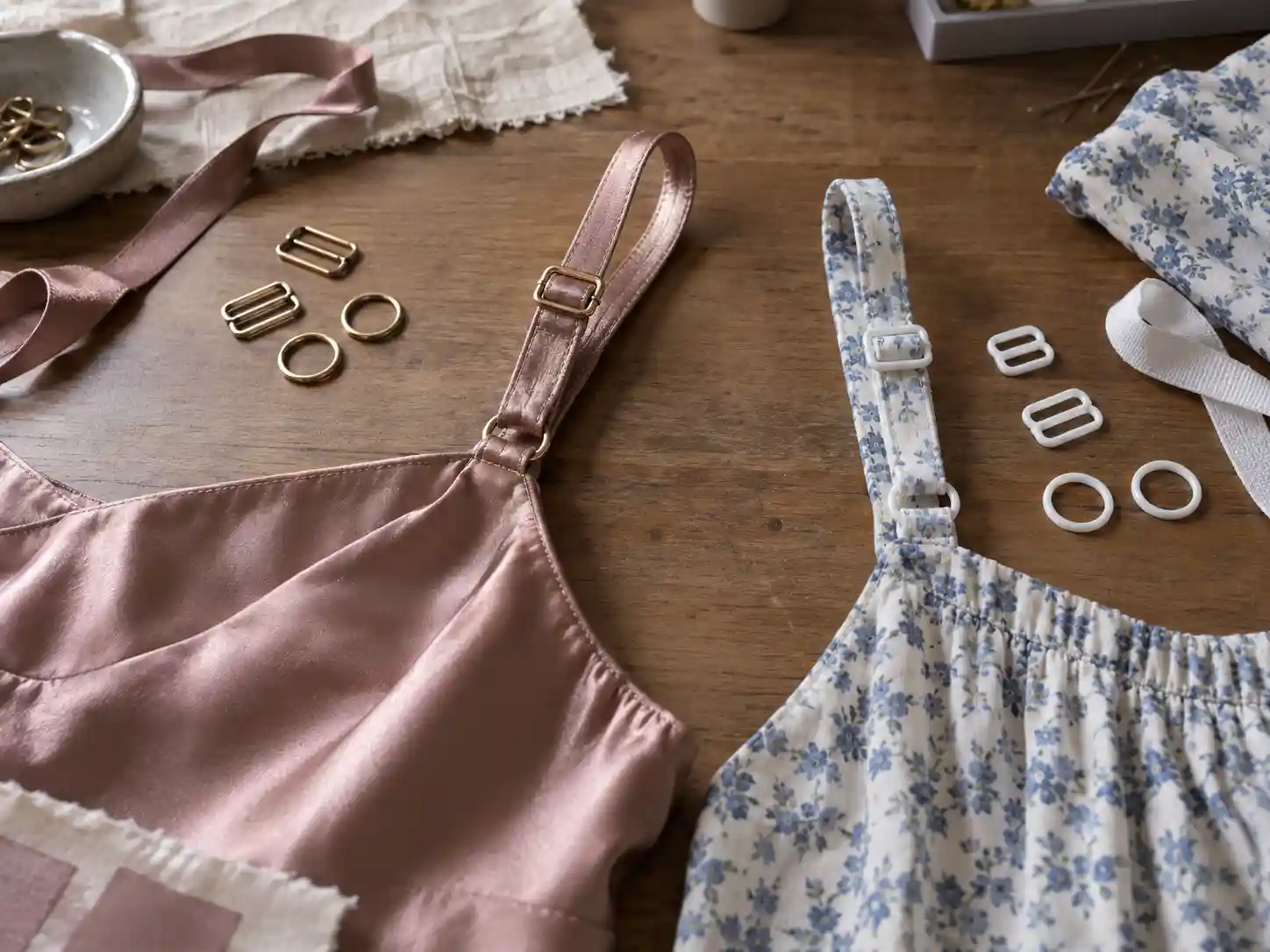
Table of Contents
Here, developing your OEM/ODM private label clothing collection is no longer a challenge—it’s an excellent opportunity to bring your creative vision to life.

