 Skip to content
Trend-Led Clubwear Development for Fashion Brands
Turn fast-moving clubwear directions into production-ready styles through focused design development, fabric and trim engineering, pattern correction, sample revision, fit control and scalable manufacturing.
Jinfeng Apparel supports established fashion brands developing clubwear collections where visual impact must work together with fit, movement, coverage, construction stability and repeatable bulk quality.
- 2 dedicated sample rooms for parallel development
- 7+ senior pattern makers supporting complex fitted silhouettes
- 20+ sample machinists for development and revision work
- 6+ flexible production lines supporting multi-style programs
From bodycon minis and corset dresses to mesh, cut-out, ruched, strapless, sequin and coordinated sets, development decisions are made around how the garment will fit, move, recover and reproduce in production—not around reference images alone.
Clubwear Development Built for Established Fashion Teams
Global Fashion Brands
Clubwear Specialists
Large DTC Programs
Regional Fashion Leaders
Sourcing Teams
Product Development Teams
Trend-Led Means More Than Following Fashion Trends
Silhouette Direction
Exposure Direction
Structure Direction
Surface Direction
Fabric Direction
Styling Direction
Turning Trend Direction Into Production-Ready Clubwear
Strong clubwear development moves through controlled decisions. The objective is not to copy a reference quickly; the objective is to understand the visual idea, remove production uncertainty and preserve the intended look from first pattern through bulk delivery.
Interpret the Idea Before Cutting the Pattern
Development begins by reading the design as a complete product rather than a flat image. A fitted mesh mini, for example, may appear visually simple while involving several interacting decisions: stretch direction, opacity, lining coverage, neckline stability, body compression, zipper or pull-on entry, hem recovery and seam placement.
The first review should establish the intended silhouette, level of body exposure, target fabric behavior, support requirement and key visual proportions. When references do not contain enough technical information, the missing points are identified before pattern work begins.
Product form is also considered early. A trend direction may work more effectively as a mini dress, bodysuit, coordinated top-and-skirt set or fitted jumpsuit depending on the intended wearing occasion and construction. Moving the design into the right product category can reduce unnecessary seams, improve fit or make a styling idea easier to merchandise across a collection.
Material availability is reviewed at the same stage. A concept built around a very specific metallic surface, stretch lace or mesh weight needs sourcing confirmation before the pattern is treated as final.
Key development questions include:
- Where must the garment hold the body?
- Where must it stretch or release?
- Which areas require lining or support?
- Which proportions define the original visual impact?
- Which details carry the highest fit or production risk?
- Which materials need approval before further development?
Build Commercial Construction Around the Look
Once the direction is clear, visual details are converted into construction decisions. A corset-inspired mini may need cup shaping, boning, lining and a stable top edge.
A cut-out bodycon dress may need elastic stabilization or adjusted seam paths. A sheer mesh style may need targeted double layers instead of full lining to preserve the intended transparency.
Construction development is also where unnecessary complexity can be removed without flattening the design. Decorative seams with no fit or visual function may be simplified. A trim can be changed when the original option creates excessive weight or instability. A fabric can be substituted when its recovery cannot support the silhouette.
Pattern and construction decisions are reviewed together because the two cannot be separated in high-risk clubwear. Moving a seam by a small amount can alter cup placement, waist shaping or cut-out exposure. Changing from a rigid fabric to a high-stretch fabric can require a different block rather than a simple size adjustment.
The target is a garment whose design language survives physical use:
- neckline stays in the intended position;
- cut-outs remain where they were designed;
- bodycon areas recover after movement;
- straps hold the garment without excessive tension;
- corset sections shape without uncontrolled distortion;
- lining remains hidden;
- closures sit flat;
- hem and slit positions remain visually balanced.
Validate Before Scaling Into Bulk
The first sample is treated as a development tool, not a finished answer. Fit, proportions, construction and fabric behavior are reviewed together. Comments are translated into pattern corrections and sewing changes before the next sample stage.
A development team may adjust bust shaping, underbust position, waist level, hip contour, torso length, neckline depth, strap length, slit height, hem position or the amount of stretch reduction. Construction comments can include lining coverage, zipper placement, boning route, seam allowance, elastic stabilization and finishing methods.
Once the appearance and fit are approved, the development result is converted into controlled production references. Final pattern files, approved measurements, grade rules, material references and construction instructions are aligned with the PP or Golden Sample.
The approved garment then becomes more than a photo reference. It becomes the physical production standard used to guide sewing, measurement checking, finishing and final inspection.
For trend-led programs, the value of a short development cycle comes from removing uncertainty early. Skipping review stages may save time before production but create far larger problems after fabric is cut.

Clubwear Styles Developed Around Real Construction Risks
Clubwear is not one technical category. Every silhouette places pressure on different areas of the garment. Product development therefore changes according to stretch, support, exposure, closure, surface treatment and the way the garment moves on the body.

Bodycon Mini Dresses

Corset Mini Dresses

Mesh Club Dresses
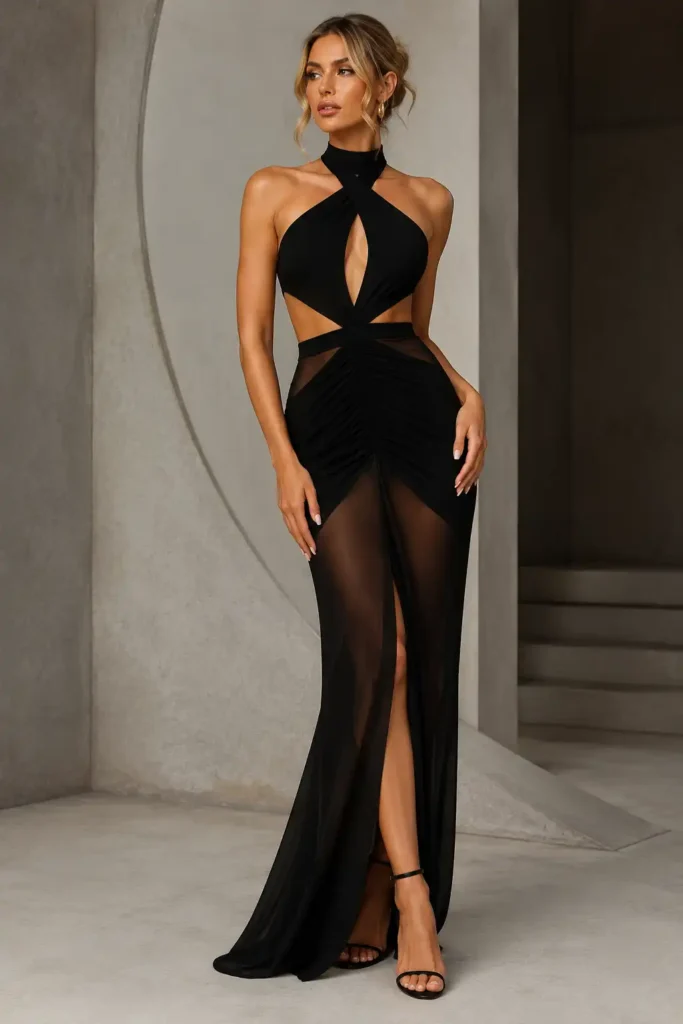
Cut-Out Dresses

Ruched Dresses

Strapless Dresses

Halter Club Styles

Backless Dresses

Sequin Party Dresses

Corset Matching Sets

Sheer Going-Out Sets

Party Jumpsuits
Design Details Engineered Before They Become Production Problems
Neckline Geometry
- Check front depth and width
- Stabilize high-stress edges
- Confirm lining visibility
- Review movement exposure
Cup and Bust Shape
- Confirm cup position
- Control seam smoothness
- Align underbust shaping
- Review support components
Cut-Out Placement
- Map exposure points
- Test body movement
- Stabilize edges
- Recheck after fitting
Back Construction
- Control side tension
- Position closures accurately
- Protect open-back shape
- Prevent strap distortion
Strap Engineering
- Confirm finished length
- Check hardware position
- Reinforce anchor points
- Test tension during movement
Slit Position
High slits require a balance between visual effect and mobility.
Slit height, seam strength, lining opening and overlap are checked together. Stretch fabrics may also change the apparent slit height once the garment is worn.
- Set approved height
- Reinforce slit top
- Match lining opening
- Check walking movement
Ruching Control
- Define gathering ratio
- Control left-right balance
- Check finished length
- Lock critical positions
Hem and Mini Coverage
Mini silhouettes can change noticeably through fitting and stretch. Front length, back length, hip shaping and fabric recovery are considered together so the approved visual proportion remains consistent when the garment is worn.
- Confirm body-worn length
- Review back coverage
- Check stretch recovery
- Maintain hem balance
Fabric Development for High-Impact Clubwear Collections
Fabric selection determines much more than color and hand feel in fitted clubwear. Recovery, opacity, stretch direction, weight, surface stability and abrasion behavior directly influence pattern reduction, support, lining, sewing and long-term garment shape.
Mesh and Power Mesh Need Different Pattern Decisions
Soft mesh and power mesh may look similar in swatches while behaving very differently on the body. Soft mesh can create fluid transparency and layering, but low recovery may allow necklines or hems to grow. Power mesh offers stronger recovery and compression, making it suitable for support panels, fitted bodies and internal control.
Development begins by identifying the function of each mesh zone. A fully sheer sleeve does not need the same performance as a body panel carrying bust or waist tension. Using a single mesh specification across every area can create unnecessary compression in one zone and insufficient stability in another.
Important checks include:
- stretch direction and usable width;
- recovery after extension;
- transparency at rest and under body stretch;
- snag sensitivity;
- seam appearance;
- edge curling;
- interaction with elastic;
- compatibility with lining fabrics.
For double-layer mesh, both layers must be oriented correctly. Misaligned stretch direction can create twisting or uneven tension. Color also changes when two layers overlap, so bulk color approval should reflect the final construction rather than a single-layer swatch.
Pattern reduction is decided after fabric behavior is understood. A pattern built for high-recovery power mesh cannot simply be transferred to a softer mesh while preserving the same fit.
Satin, Lace and Stretch Knits Need Controlled Pairing
Stretch satin works well for fitted evening and club silhouettes because it combines surface shine with movement, yet shine makes seam puckering, tension marks and pressing errors highly visible. Pattern direction and sewing control become especially important around bust seams, side seams and zippers.
Lace introduces another set of decisions. Motif placement, scallop use, transparency, stretch and edge handling may define the design.
When lace overlays a lining or mesh base, both layers must move together without pulling or bubbling.
Jersey and stretch knit bodycon styles depend heavily on weight and recovery. Two fabrics with similar fiber content can perform very differently after wear. A lighter knit may drape well but reveal seam allowances or fail to recover at the hip. A heavier fabric may provide a cleaner silhouette while requiring stronger seam construction.
Development therefore reviews:
- fabric weight and drape;
- two-way or four-way behavior;
- recovery under repeated extension;
- opacity over high-stretch body areas;
- seam bulk;
- pilling or snag risk where relevant;
- compatibility with lining and trims;
- pressing sensitivity.
Fabric approval should happen in the construction context where possible. A fabric that looks ideal on a hanger may not support the intended silhouette once tension is applied.
Sequin and Metallic Surfaces Need Construction Planning Early
Sequin, foil, metallic and glitter surfaces are often chosen because they create immediate visual impact. The same surface treatments can introduce abrasion, stiffness, decoration loss and seam bulk if development begins too late.
Before pattern approval, material behavior is reviewed around the most difficult garment areas: curved bust seams, armholes, zippers, side seams, hems, straps and high-friction zones.
For sequin fabrics, development can consider whether decoration should be removed from seam allowances, whether the lining needs additional protection and how the hem should be finished. Heavy surface decoration can also affect garment balance, especially in strapless or asymmetric styles.
Metallic stretch materials require attention to recovery and surface cracking. Some finishes perform well during initial fitting but show stress lines after repeated extension. Testing material behavior before bulk helps avoid using a visually attractive surface in an unsuitable high-tension zone.
Material sourcing is therefore linked directly to product engineering rather than separated as a purchasing step. The selected fabric must support the silhouette, fit standard, construction and expected wear conditions together.

Internal Structure and Trims Supporting the Outer Silhouette
Boning Support
- Select appropriate rigidity
- Map boning routes
- Secure ends cleanly
- Check comfort at movement points
Cup Construction
- Confirm cup position
- Match outer bust shape
- Control lining attachment
- Review size progression
Clear Elastic
- Define application area
- Control elastic tension
- Avoid edge puckering
- Verify recovery
Waist Elastic
- Match garment stretch
- Control waist position
- Avoid visible ridges
- Test seated comfort
Invisible Zippers
- Stabilize zipper seam
- Match zipper length
- Control waist intersections
- Check smooth operation
Hook-and-Eye Closures
- Reinforce closure area
- Control spacing
- Protect skin contact
- Match finished overlap
Strap Hardware
- Match hardware size
- Reinforce strap ends
- Control adjustability range
- Check surface finish
Lining Systems
- Map coverage zones
- Match stretch behavior
- Prevent lining exposure
- Control seam bulk
Interfacing Zones
- Match fabric weight
- Reinforce stress areas
- Control bonding appearance
- Test drape after application
Pattern Development for Complex Clubwear Proportions
Pattern development is where clubwear begins to behave like a garment rather than an image. Jinfeng’s two sample rooms, 7+ senior pattern makers and 20+ sample machinists support development from reference images, sketches, original samples or technical packs.
Shape the Bust, Waist and Hip as One System
Fitted clubwear often concentrates several strong curves into a short garment length. Bust, underbust, waist and hip therefore cannot be adjusted independently. Changing one area can alter side-seam balance, neckline position, cut-out placement or hem level.
Pattern review can include:
- bust and upper-bust dimensions;
- underbust position;
- waist and low-waist level;
- high hip and full hip;
- front and back length;
- side-seam shape;
- dart or princess-line position;
- garment length.
Bodycon products also require negative ease to be distributed according to fabric behavior. Excessive reduction at the waist may create attractive compression on a mannequin while pulling the garment upward during walking. Insufficient reduction at the hip can produce bagging after wear.
Corset silhouettes create a different challenge. Cup shape, underbust position, waist contour and back closure need to work as one continuous structure. A small cup-position change may require adjustments across several surrounding pattern pieces.
The aim is not to force one generic block onto every design. Pattern direction follows silhouette, fabric behavior and approved brand measurements.
Control Exposure Through Measurable Pattern Locations
Clubwear often uses exposure as part of the design language, which makes accurate pattern positioning critical. Neckline depth, slit height and cut-out placement need measurable reference points because visual estimates are difficult to reproduce consistently.
Pattern files can control:
- neckline depth from approved reference points;
- cut-out width and height;
- front and back waist location;
- open-back depth;
- slit height;
- strap entry points;
- side-seam exposure;
- lining coverage;
- hem position.
During fitting, these points are reviewed on the body rather than only on the flat pattern. Stretch can move a cut-out several centimeters from its flat position. A low back can drop further once the garment carries bust and shoulder tension. A high slit can appear higher after the garment stretches around the hip.
Adjustments are recorded before later sample stages so the approved look is built into the pattern itself rather than recreated manually during sewing.
Lock the Approved Pattern Before Size Grading
After fit correction, the approved base pattern becomes the reference for grading. Grading is not simply proportional enlargement. Clubwear details such as cup position, cut-outs, straps, corset panels and mini lengths may need controlled progression so visual proportions remain consistent across the brand’s size range.
The grading review can cover:
- bust-waist-hip progression;
- front and back length;
- armhole and neckline shape;
- cup and underbust position;
- strap length;
- cut-out placement;
- slit position;
- rise and torso length for jumpsuits.
Final patterns are connected to approved measurements and grade rules before PP or Golden Sample confirmation. Production QC can then check critical measurements against the same reference.
A disciplined grading process matters especially for trend-led products because dramatic design details create little tolerance for positioning errors. A minor shift that is barely visible on a basic T-shirt can change coverage significantly on a cut-out or strapless mini dress.

Fit Engineering for High-Risk Clubwear Silhouettes
Bodycon Recovery
Corset Support
Strapless Stability
Cut-Out Control
Backless Balance
Mini Coverage
Sample Development Built Around Correction and Approval
A first sample is expected to reveal information. Jinfeng uses sample development to test proportion, fit, construction and material behavior, then converts review comments into controlled pattern and sewing revisions before bulk preparation.
First Samples Establish the Product Direction
Development can begin from a technical pack, sketch, original garment or reference image. Before cutting the sample, the available information is reviewed for missing measurements, unclear construction, material dependencies and high-risk details.
Typical sample development can fall within approximately 5–15 days, depending on garment complexity, fabric and trim availability, pattern requirements and the number of technical details requiring confirmation.
The first sample is used to evaluate several questions at once:
- Does the silhouette match the intended direction?
- Are bust, waist and hip proportions balanced?
- Is the garment length correct when worn?
- Do cut-outs, neckline and slit positions create the intended exposure?
- Does the fabric provide enough recovery?
- Are support components doing their job?
- Is the construction suitable for repeatable sewing?
A first sample can also reveal conflicts between the visual reference and physical reality. A deep neckline may need stabilization. A rigid sequin fabric may require an entry opening. A fitted corset style may need a different cup construction than originally sketched.
Those findings become development comments rather than being pushed into production unresolved.
Fit and Revised Samples Remove Technical Uncertainty
After the first review, comments are translated into specific actions. Pattern corrections can include bust shape, underbust position, waist level, hip curve, front or back length, strap length, neckline depth, cut-out placement, slit height and overall ease.
Construction changes may include:
- modifying lining coverage;
- changing elastic tension;
- adjusting boning routes;
- reinforcing closures;
- reducing seam bulk;
- changing zipper length or position;
- correcting ruching distribution;
- changing seam or binding methods.
A revised sample is then evaluated against the new pattern rather than being altered informally. Keeping the revision in the pattern is essential because production cannot depend on hand corrections performed only on the sample.
Photo-ready or salesman samples can be developed when the commercial calendar requires them, while PP and Golden Sample stages serve a different purpose: confirming production standards.
PP and Golden Samples Transfer Development Into Production
Before bulk production, the approved garment needs a stable technical reference. PP or Golden Sample confirmation connects the pattern, measurements, materials and construction into one production standard.
A production-ready approval can include:
- final pattern version;
- approved size chart;
- grade rules;
- fabric and color reference;
- trim specification;
- zipper, elastic, cup or boning details;
- approved construction;
- critical measurements;
- label and packaging requirements;
- visual reference for finishing.
Bulk teams then work from the approved standard rather than from early development samples.
When fabric color, weight, finish or trim specification changes after approval, the affected areas should be reviewed again. Clubwear fit is highly sensitive to material behavior, so a change that looks minor on a purchase order can alter compression, drape or stability.
Development therefore finishes only when the production inputs are aligned—not simply when one attractive sample has been photographed.

Faster Development Comes From Organized Parallel Work
Two Sample Rooms
7+ Pattern Makers
20+ Sample Machinists
Early Fabric Review
Risk-First Review
Controlled Approvals
Decide Which Trends Deserve Full Product Development
Not every visually strong concept should receive the same production investment. Before bulk commitment, development teams can review whether the look, materials, fit requirements, construction and production conditions support the intended commercial position.
| Development Factor | What Needs Review | Risk When Ignored | Development Decision |
|---|---|---|---|
| Visual Impact | Hero silhouette, neckline, exposure, surface | Design loses its original appeal | Protect defining features |
| Wearability | Movement, coverage, support, skin contact | Returns and fit complaints | Correct structure and pattern |
| Fabric Availability | Weight, stretch, recovery, color, MOQ | Late material substitution | Approve sourcing early |
| Fit Risk | Bust, waist, hip, straps, torso, cut-outs | Repeated sample revisions | Prioritize fit checkpoints |
| Construction Complexity | Boning, lining, ruching, embellishment | Cost and sewing instability | Simplify where appropriate |
| Target Cost | Fabric, trims, sewing time, finishing | Style misses price architecture | Engineer cost before PP |
| Production Stability | Repeatable sewing and measurement control | Sample-to-bulk variation | Define production standards |
| Repeat Potential | Recolor, fabric change, replenishment | Development work cannot scale | Archive approved references |
Approved Samples Become Controlled Bulk Production Standards
The development process creates value only when approved fit, appearance and construction survive production. Jinfeng connects final patterns, material approvals, sewing instructions, critical measurements and Golden Sample references to bulk control rather than treating sampling and manufacturing as separate activities.
Lock the Product Inputs Before Cutting
Bulk consistency begins before sewing. Fabric, color, trims, pattern versions and size information must match the approved development record before cutting starts.
Incoming material control can review:
- color and shade consistency;
- fabric width and weight;
- hand feel and surface condition;
- shrinkage where relevant;
- color fastness requirements;
- lace or mesh damage;
- sequin loss;
- snagging;
- stretch and recovery concerns.
Cutting then follows the approved pattern version, grain or stretch direction, size bundling and required placement. Printed, lace, stripe or directional materials may introduce additional positioning controls.
These checks matter because sewing cannot correct a fabric or cutting problem later. A bodycon garment cut against the intended stretch direction can have completely different fit from the approved sample. A shade difference across panels may become highly visible in satin or metallic styles.
Development records therefore need to reach production before the first bulk piece is cut.
Translate the Golden Sample Into Sewing Controls
A Golden Sample provides a physical target, but production teams also need clear checkpoints. Sewing instructions identify which areas carry the highest visual and fit risk.
For clubwear, these can include:
- seam allowance at high-tension areas;
- stitch control on stretch fabric;
- zipper flatness;
- cup and boning position;
- strap length;
- elastic tension;
- ruching distribution;
- cut-out symmetry;
- lace placement;
- lining attachment;
- slit reinforcement;
- finished garment measurements.
Inline inspection catches deviations while production is still running. Finding a strap-length issue during sewing is far more controllable than discovering it after thousands of garments reach finishing.
Critical measurements are linked back to the approved specification. Sewing quality and measurements are reviewed together because a garment can meet a flat measurement and still appear wrong when seam tension or component positioning changes.
Keep Repeat Orders Connected to the Approved Record
Trend-led programs often create winners that return as repeat orders, new colors or fabric updates. Rebuilding an approved style from memory introduces unnecessary variation.
Jinfeng can retain:
- pattern files;
- measurement records;
- fabric references;
- color references;
- trim specifications;
- production notes;
- packing requirements;
- Golden Sample information;
- historical order records.
A repeat order still requires material review because a new fabric lot, color or finish can behave differently. The archived standard provides the starting point, while changed inputs are checked against the original fit and appearance.
The same approach supports coordinated seasonal development. A successful corset block, bodycon fit or set proportion can inform related styles without assuming every new design uses identical construction.
Product history becomes a development asset instead of disappearing after shipment.

Clubwear Quality Control Focused on Visible Failure Points
Mesh Inspection
- Surface damage
- Layer alignment
- Edge stability
- Stretch recovery
Satin Inspection
- Shade consistency
- Seam puckering
- Surface marks
- Zipper flatness
Bodycon Inspection
- BWH measurements
- Recovery
- Seam tension
- Hem balance
Corset Inspection
- Cup position
- Boning routes
- Closure security
- Lining finish
Sequin Inspection
- Decoration loss
- Seam damage
- Skin contact
- Hem finish
Strapless Inspection
- Upper-edge balance
- Elastic control
- Bust symmetry
- Support structure
Zipper Inspection
- Smooth operation
- Seam flatness
- Alignment
- Secure ends
Ruching Inspection
- Gathering ratio
- Symmetry
- Finished length
- Drawstring security
Production Capacity for Multi-Style Clubwear Programs
6 Owned Factories
10+ Satellite Partners
18+ Sewing Lines
6+ Flexible Lines
100,000+ Monthly Capacity
Dedicated Follow-Up Teams
Private Label Details Prepared for Brand-Ready Delivery
Woven Labels
Size Labels
Care Labels
Hangtags and Barcodes
Ecommerce Packing
Retail Cartons
Protecting Unreleased Designs and Compliance Requirements

NDA and Design Protection

Project Compliance Support

Third-Party Testing
Anonymous Clubwear Programs Reflect Real Multi-Style Development

16-Style Clubwear Drop
Program scale: 16 styles / approximately 32,000 pieces
The range combined bodycon minis, ruched dresses, mesh styles, cut-out dresses and coordinated sets. Development attention centered on using compatible stretch behavior across several fitted silhouettes while keeping neckline depth, mini length and cut-out placement consistent with the approved brand direction.
Several styles required revised pattern work after first fitting because fabric recovery changed body-worn length. Mesh garments also used different lining coverage according to exposure zones rather than one full-lining construction across the program.
The production reference package included final patterns, approved measurements, fabric and trim standards, critical sewing points and packing information. Styles sharing related construction were scheduled together where appropriate while retaining separate quality checkpoints for mesh, ruching and bodycon recovery.

24-Style Party Program
Program scale: 24 styles / approximately 68,000 pieces
A larger partywear program combined corset dresses, strapless minis, sequin pieces, satin fitted dresses, asymmetric silhouettes and going-out sets. The biggest technical risk came from treating visually similar fitted products as though they used the same internal structure.
Corset and strapless styles received separate review for cup placement, boning, upper-edge stability and closures. Satin garments focused more heavily on seam smoothness, zipper installation and pressing control. Sequin styles required different seam and lining treatment to manage decoration bulk and skin contact.
Development comments were separated by product family so one construction correction did not become an incorrect blanket rule for the entire range.
The approved styles then moved into bulk with category-specific inline and final inspection points.

12-Style Repeat Capsule
Program scale: 12 styles / approximately 24,000 pieces
The capsule was structured around proven fitted shapes with new color, fabric and design variations. Archived pattern and measurement references provided a stable development starting point, while new materials were still reviewed because stretch, weight and recovery differed from previous production.
Several styles retained the approved base fit while updating neckline, ruching or surface details. Others required pattern adjustment because the new fabric changed compression and drape.
Using existing product records reduced unnecessary redevelopment without assuming that repeat orders should bypass material checks.
Final production standards were refreshed around the approved fabric lots, trims, packaging and new color references before bulk release.
Frequently Asked Questions About Clubwear Development

Bring Your Next Clubwear Collection Into Development
Send Jinfeng Apparel the design information already available—reference images, sketches, technical packs, original samples or an early collection plan. Our team can review product structure, fabric requirements, pattern risk, fit priorities, sample direction and production considerations before the program moves into bulk.
A stronger initial brief allows development decisions to happen earlier and reduces unnecessary revisions later. For a multi-style clubwear collection, include as much of the following information as available:
- Reference images, sketches or tech packs
- Planned style count and target quantity
- Preferred fabrics or fabric direction
- Colors and colorway plan
- Brand-defined size range
- Key fit requirements
- Special cut-outs, corsetry or support details
- Surface treatments or embellishment
- Label and packaging requirements
- Target launch or delivery window
- Existing QC or measurement standards


