 Skip to content
Corset Cup, Boning and Layout Development
Structured corset development for fashion brands requiring controlled cup shape, support lines, panel geometry, fit validation and repeatable production.
- Corset patterns developed around bust, upper-bust, underbust, waist and neckline control.
- 7+ senior pattern makers, 2 sample rooms and 20+ sample machinistssupport structured womenswear development.
- Cup position, boning placement, lining, closure and panel balance are reviewed together before production standards are locked.
- Complex corset samples normally require more development time than standard dresses, especially when structure, lace, mesh or special trims are involved.
Corset Development Starts With Structural Relationships
Cup Shape
Support Structure
Boning provides controlled support after the pattern establishes the intended silhouette. Position, length, channel construction and interaction with the cup, waist and side body determine whether the bodice remains stable without becoming unnecessarily rigid.
Panel Layout
Six Failures We Check Before Production
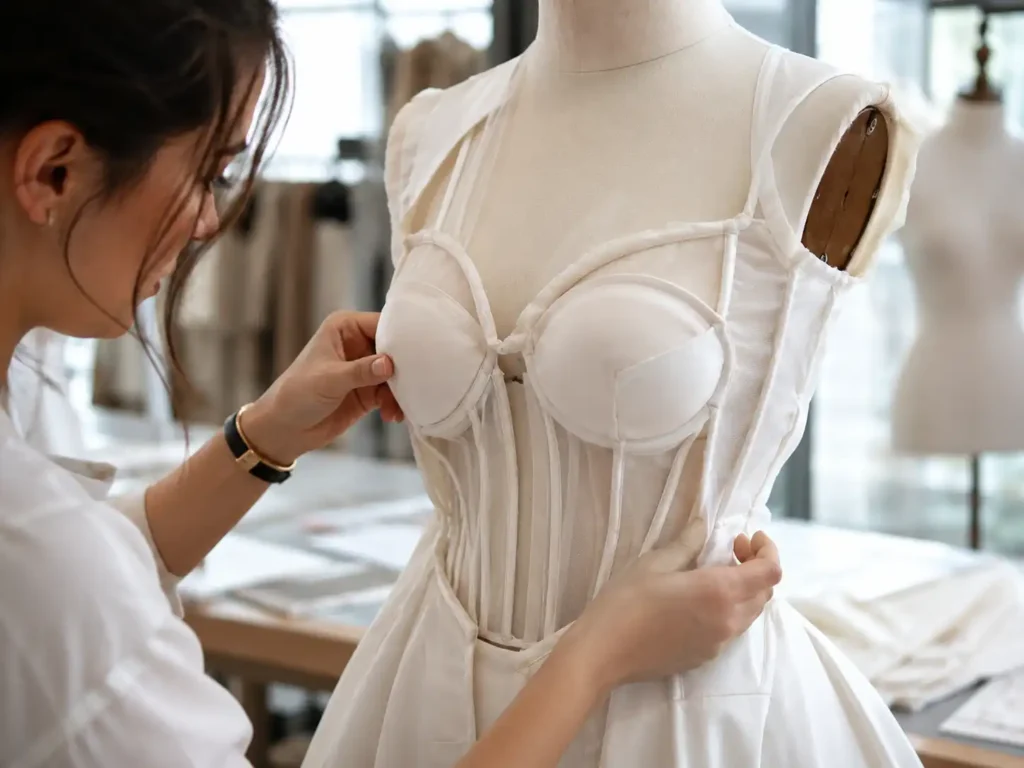
Cup Gaping

Bust Compression

Boning Collapse

Waist Distortion

Neckline Exposure
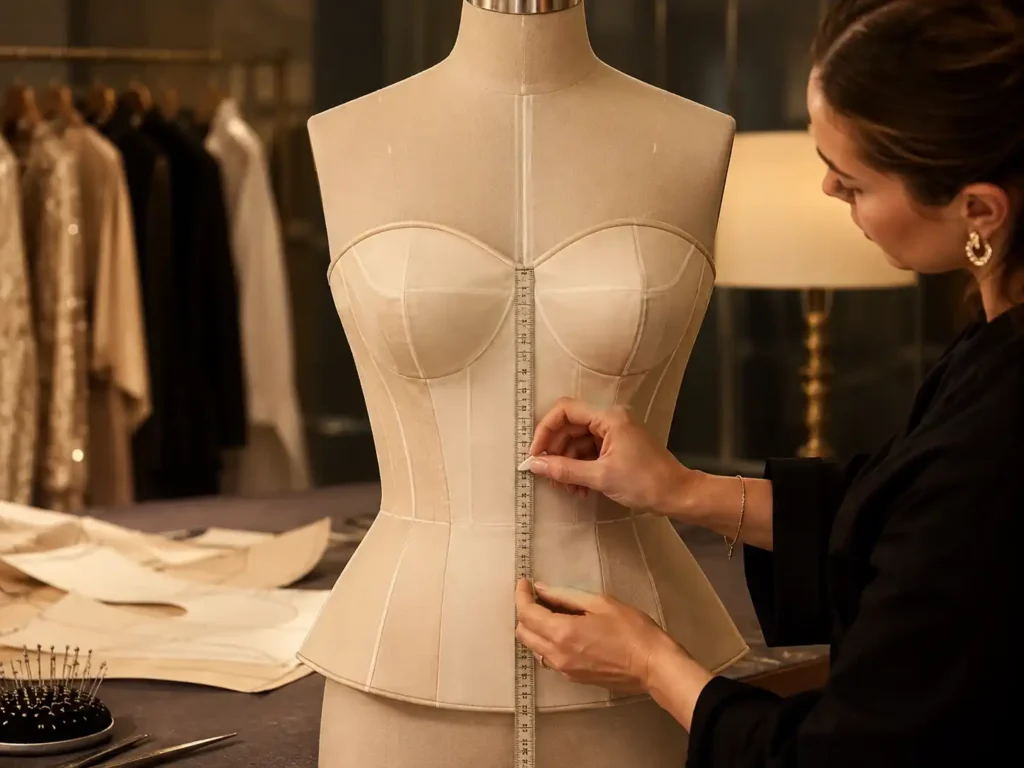
Panel Asymmetry

Cup, Boning and Panels Work as One Structure
A corset bodice is developed as a connected load-bearing system. Visual styling remains important, but production decisions need to consider how bust volume, waist shaping, seam direction, internal support and closure tension interact once a garment is worn.
Build the Silhouette Before Adding Support
Pattern development begins with the shape the finished garment needs to create. Bust projection, upper-bust contact, underbust level, waist position, side-body length and back height establish the basic geometry. Cup shape is then integrated into the surrounding panels rather than treated as a loose component placed inside an existing dress pattern.
Panel lines distribute shaping from the bust toward the waist and side body. Their position influences both appearance and structural behavior. A seam running through a high-tension area may also become a suitable support line, while another visual seam may not require the same reinforcement. Boning placement therefore follows the needs of the pattern instead of a fixed decorative map.
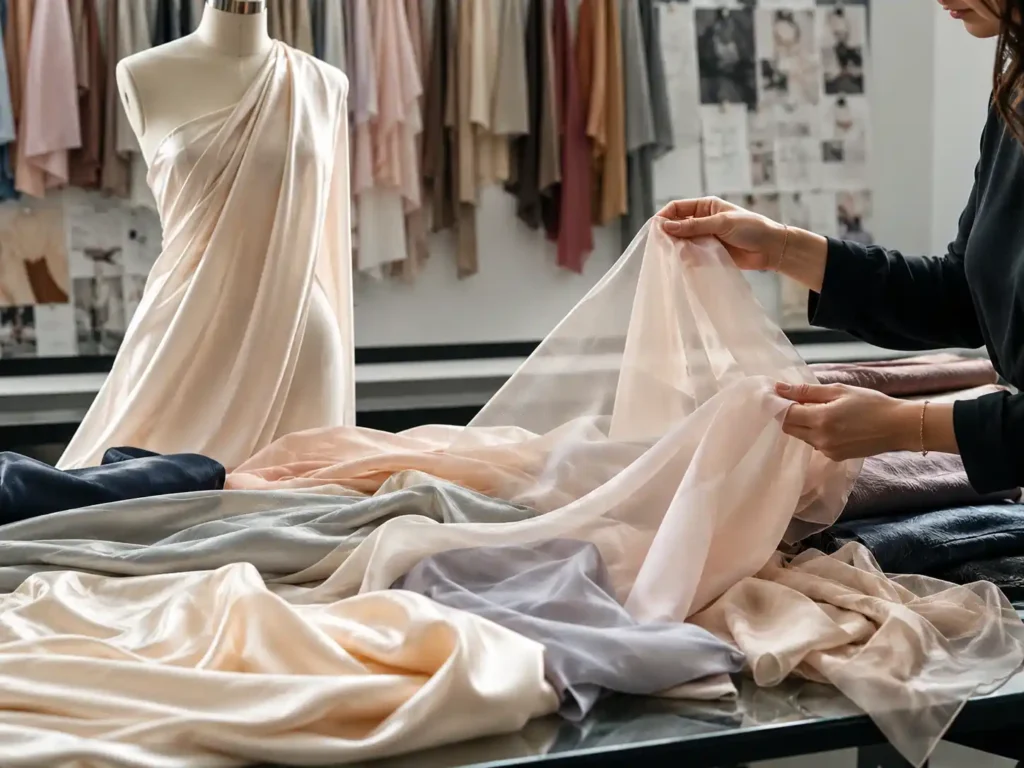
Internal support must also work with the shell fabric. A structured woven may hold seam shape differently from stretch satin, soft mesh or lace. Lining, interfacing or internal reinforcement can change the amount of support required and affect how visible boning channels become on the outer surface.
Closure construction completes the system. Zippers, hook-and-eye sections and lace-up backs introduce different tension around the back and side body. A stronger closure can expose weak panel balance if surrounding sections were not developed for the same load.
Development therefore moves through a connected sequence: body measurements → cup geometry → panel layout → seam position → boning route → lining and reinforcement → closure → fit validation. Structural decisions are revised together during sampling until the approved configuration can be transferred into a production pattern, construction instructions and QC checkpoints.
Control Volume, Position and Coverage Together
Development starts with the desired visual effect: lifted, rounded, natural, shallow, pronounced or softly shaped. Cup depth and width influence projection, while cup position determines where the bust sits relative to the neckline and waist. A cup placed only a small distance too high or too low can change the entire proportion of a fitted bodice.
Upper-edge control receives equal attention. Strapless, sweetheart and low-neck corset designs need enough contact around the upper bust to prevent gaping without creating excessive pressure. Side coverage must also connect correctly with the side panel so the bust remains contained during movement.
Cup thickness and softness are selected according to the design. A heavy molded cup inside a lightweight satin bodice may create a visible edge, while an overly soft cup may not provide enough shape for a structured neckline. Fixed cups, lining pockets and sewn-in support each require different internal construction.
Fit validation remains essential because a cup cannot be approved from flat measurements alone. Front, side and three-quarter views reveal projection, spacing, upper-edge contact and neckline balance more clearly. Target-market sizing also matters: grading only the outer bodice without reviewing cup position can create inconsistent proportions across the size range.
Approved changes are transferred back into the pattern and construction documents. Cup location, attachment method, lining relationship and relevant measurement points need to become repeatable instructions rather than informal sample-room adjustments.
Jinfeng’s internal development rules specifically treat cup placement as part of workmanship and fit correction, with approved changes carried into sewing instructions and QC checkpoints.

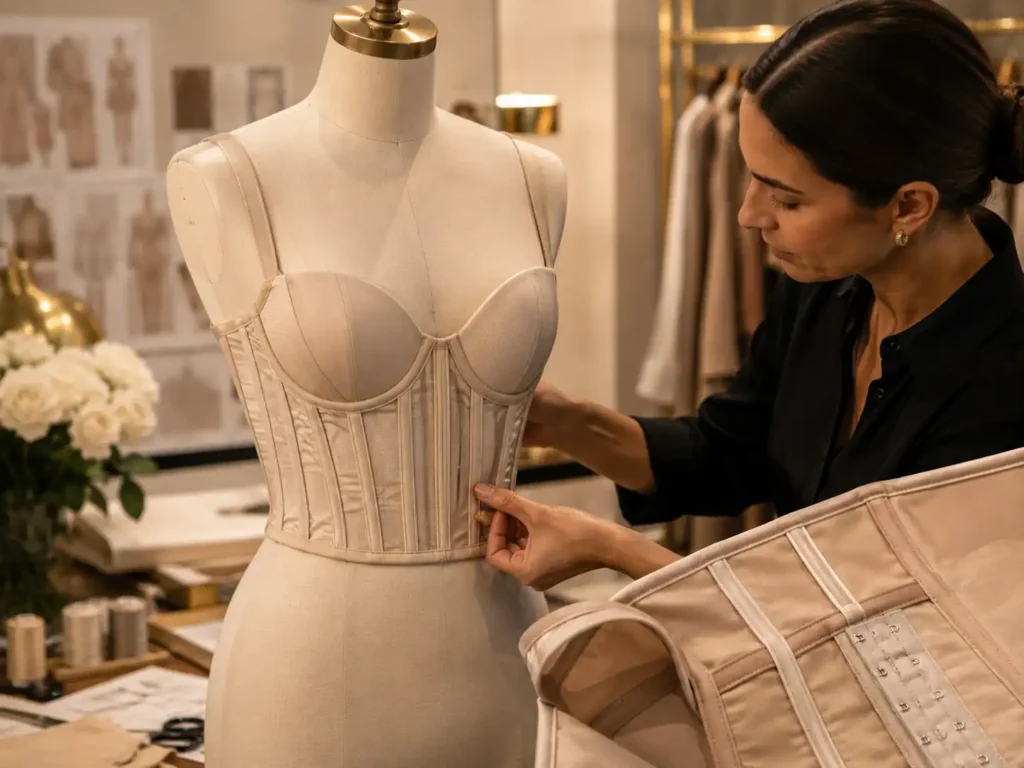
Boning Layout Built Around Real Support Lines
Boning provides stability, but effective corset development is not a matter of adding the greatest possible number of bones. Placement needs to follow the shape, tension and wearing requirements already established by the pattern.
Position Boning Where the Bodice Needs Stability
A boning route may follow selected seams, sit inside dedicated channels or reinforce specific front, side or back areas. Placement is reviewed around the cup edge, center front, waist transition, side body and closure because each area experiences different tension when the garment is worn.
Spacing also affects the result. Large unsupported areas can fold or collapse, while excessive reinforcement can make a fashion corset unnecessarily rigid. Party, occasion and fast-fashion corset dresses often need enough structure to hold the intended silhouette without feeling like traditional heavy corsetry.
Boning channel construction influences appearance as well as durability. Channels need consistent width and straight sewing so the bone remains controlled without rotating. Channel position must also avoid creating unwanted ridges on satin or other smooth surfaces.
Length and end protection require specific attention. Bones ending too close to the neckline, cup edge or waist seam can create pressure points, visible bumps or premature wear. Internal ends should remain protected and positioned away from areas where movement or body contact creates discomfort.
Material choice follows the product requirement rather than a universal rule. Different levels of flexibility may be required around curved areas, straighter center sections or highly structured zones. The shell fabric, lining and intended support level all influence the decision.
Jinfeng’s corset-development framework specifically recognizes boning placement, support lines, waist shaping, channel construction, end protection and skin comfort as separate development controls rather than one generic “boning” step.
Panel and Seam Layout Controls the Final Silhouette
Cup and boning decisions cannot compensate for incorrect panel geometry. Corset layout development therefore begins with the way front, side and back panels distribute bust volume, waist suppression and body length through the garment.
Turn Design Lines Into Production Structure
A front bodice may contain several visually similar seam arrangements while producing very different fit results. Panel width at the bust controls volume distribution. Width at the waist controls shaping. The angle connecting both areas affects how smoothly the garment follows the torso.
Seam placement around the cup is especially important. A line positioned too close to the bust apex can distort the intended shape, while an overly wide side panel can push the cup inward or change neckline tension. Structural lines therefore need to be evaluated on the body rather than copied directly from a fashion sketch.
Side panels carry a large part of the corset’s stability. Side length, underarm height, waist position and connection to the back determine whether the bodice remains upright or collapses during movement. Strapless styles need even greater attention because shoulder straps cannot compensate for weak side support.
Back layout depends on the chosen closure. A zipper requires flat alignment and controlled seam tension. A lace-up back allows greater adjustment but introduces concentrated pulling forces around eyelet or loop areas. Hook-and-eye structures create another tension profile. Surrounding panels must be developed accordingly.
Panel symmetry is transferred into the final pattern before grading. Left and right seam lengths, cup relationship, boning locations and waist points need matching references so sewing operators and QC teams can reproduce the intended shape.
The goal is not merely a visually attractive sample. Development finishes only when panel geometry can be measured, graded, sewn and inspected consistently across the planned size range.
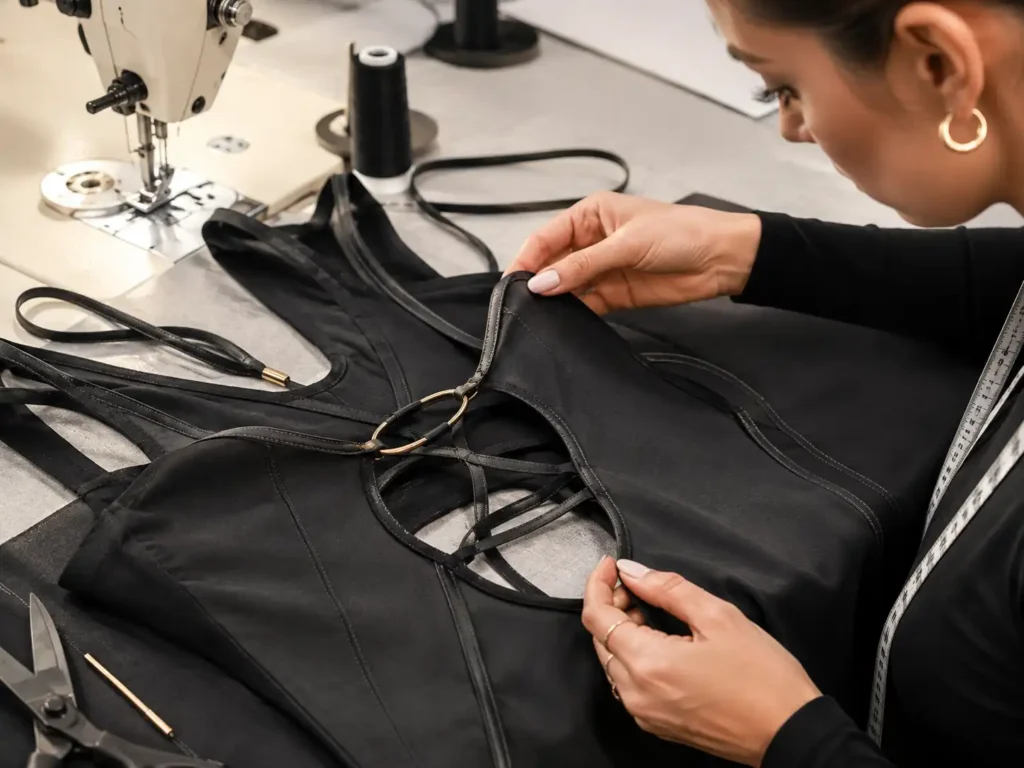
Supporting Components Behind a Stable Corset Bodice
Small components can change fit, wearing comfort and bulk consistency. Cup shape, boning and pattern geometry remain central, but lining, anti-slip support and closure systems determine whether the developed structure performs correctly in real wear.

Structural Lining
Lining supports internal construction, covers channels and separates structural components from the skin. Stretch, softness, weight and attachment method need to suit the outer fabric and required support. Incorrect lining can pull against the shell, expose internal edges or weaken a strapless structure.

Anti-Slip Support

Zipper Construction

Lace-Up Back

Hook-and-Eye Support

Cup Attachment
Fit Control Across the Upper Body Structure
Corset fitting is evaluated through specific body zones rather than a generic “tight” or “loose” judgment. Measurement review, fit photographs and sample comments are translated into pattern changes before final production standards are released.
| Control Area | Development Check | Typical Failure | Development Action |
|---|---|---|---|
| Upper Bust | Top-edge contact and tension | Gaping or digging | Adjust neckline length, cup position or upper panel |
| Full Bust | Volume, projection and symmetry | Compression or empty cup | Revise cup geometry and surrounding panels |
| Underbust | Cup-to-bodice transition | Floating or folding | Adjust underbust level and support line |
| Center Front | Vertical stability | Bowing or collapse | Review panel balance and support placement |
| Waist | Shaping and tension | Horizontal folds or distortion | Correct panel suppression and waist position |
| Side Body | Height and support | Underarm collapse | Revise side panel and boning route |
| Back | Closure tension | Pulling or twisting | Balance back width, closure and reinforcement |
| Neckline | Coverage during movement | Exposure or gaping | Revise cup height, upper edge and anti-slip support |
Fabric Choice Changes Corset Structural Behavior

Satin
Structured Woven

Stretch Satin

Mesh

Lace

Layered Materials
Development Teams Behind Structured Corset Programs
Pattern Development Team
Sample Development
Production Handoff

Complex Corset Sampling Before Bulk Production
Development moves through controlled sample stages so structure, fit and manufacturing details can be corrected before quantity magnifies a problem.
Validate Structure in Progressive Sample Stages
- The first sample establishes the initial interpretation of the design. Pattern proportion, cup direction, panel geometry, fabric behavior, closure construction and general feasibility are reviewed. A first sample can reveal structural conflicts that were not visible in a sketch or tech pack.
- A fit sample places greater emphasis on the body. Upper-bust contact, bust projection, underbust position, waist suppression, side-body support, neckline security and movement comfort are evaluated. Front, side and back observations are more useful than flat measurements alone for structured bodices.
- A revised sample incorporates approved corrections. Cup shape or position may change. Boning routes may be moved, extended or reduced. Panel seams can be adjusted to improve shaping. Lining, anti-slip support, zipper construction or lace-up reinforcement may also be updated.
- The PP sample represents the final production configuration. Fabric, color, approved trims, measurements, cup position, boning arrangement, construction and related production requirements should be confirmed before bulk cutting. Major structural changes after PP approval create cost, material and scheduling risk.
- A Golden sample becomes the physical reference for production, inspection and repeat orders.
Jinfeng’s internal lead-time guidance reflects the additional work required for complex structured pieces: standard dresses may use a shorter development cycle, while corset, strapless, lace, mesh and sequin samples commonly require about 15–25 days, subject to fabric, trim and structural requirements.
Turning Fit Feedback Into Pattern Corrections
Fit comments only become useful when they change the technical production standard. Jinfeng converts approved sample feedback into updated pattern, measurement and construction records rather than leaving critical corrections inside email threads or annotated photographs.
Convert Comments Into Measurable Production Changes
A fit comment such as “the bust feels flat” does not automatically mean a larger cup is required. Pattern makers review the full relationship between cup depth, cup position, underbust level, side-panel tension and neckline shape. Measurements and fit photographs help identify whether the problem comes from cup geometry, panel construction or garment balance.
A comment such as “the waist does not look defined” may lead to panel reshaping rather than tighter overall measurements. Increasing suppression in the wrong area can create diagonal wrinkles, push the side seam forward or make the garment uncomfortable.
Boning feedback follows the same principle. “Add more boning” is not treated as a complete technical instruction. The team evaluates where the structure is collapsing, which support line is weak and whether reinforcement should be added, moved or changed.
Approved changes are transferred into relevant records:
- final pattern;
- lining pattern;
- size chart;
- grading rule;
- cup position;
- boning position;
- trim information;
- sewing instruction;
- measurement tolerance;
- QC checkpoints.
A revised sample or PP sample confirms whether the updated construction performs correctly.
Jinfeng’s internal development rules specifically require sample feedback to move into final pattern, size chart, PP sample, Golden sample and QC measurement references before bulk production.
Such documentation also supports later repeat orders because approved cup and boning positions can be retrieved together with pattern and production records.

What Gets Locked Before Corset Bulk Production
PP approval creates a clear boundary between development and production. Changes to cup, boning, fabric or measurements after bulk preparation can affect material purchasing, sewing instructions, production timing and finished-garment consistency.
| Production Standard | Items to Confirm Before Bulk |
| Fabric | Shell, lining, reinforcement, color and approved source |
| Cup | Shape, thickness, size, position and attachment |
| Boning | Type, length, route, channel and end position |
| Pattern | Final shell and lining patterns |
| Measurements | Approved size chart and tolerances |
| Grading | Size range and grade rules |
| Construction | Panel seams, neckline, waist, closure and internal finishing |
| Trims | Zipper, anti-slip, hook-and-eye, lace-up components and labels |
| Quality | Golden sample, measurement checks and workmanship checkpoints |
| Packing | Approved label and packing requirements where applicable |

Corset-Specific QC Goes Beyond Final Measurements
Structured garments need inspection points that follow the developed construction. A finished corset can meet basic bust and waist measurements yet still fail because cup shape, bone position, panel symmetry or closure tension differs from the approved sample.
Inspect the Structure, Not Only the Finished Size
- Cup inspection begins with left-right symmetry. Shape, placement, attachment and upper-edge appearance are compared against the approved standard. A few millimeters of visual shift can become obvious in a structured neckline, especially on satin or symmetrical bustier designs.
- Boning inspection covers location, length, channel construction and end protection. Bones should remain in the intended route without twisting, migrating or creating sharp pressure points. Channel seams need consistent width so support remains stable throughout the garment.
- Panel and seam inspection checks symmetry, alignment and surface tension. Front seams should follow the approved visual lines while side seams remain correctly positioned on the body. Diagonal pulling can indicate a construction or pattern issue rather than a simple pressing problem.
- Measurements remain part of the process. Bust, upper bust, waist, garment length and other approved POMs are checked according to the size chart and tolerance. Structured styles may also require inspection of neckline height, side-body height or closure length.
- Lining and internal finishing receive separate attention because exposed seam allowances, poorly covered boning ends or twisted lining can affect comfort even when the outside looks correct.
Jinfeng operates with 15+ QC inspectors covering material, inline, final and packing inspection, allowing product-specific checks to be carried through several production stages rather than left until final packing.
From Approved Corset Sample to Repeatable Bulk
A beautiful sample has limited commercial value if the structure cannot be reproduced across thousands of garments and several sizes. Production repeatability depends on converting approved fitting decisions into documents, physical references and measurable controls.
Make the Approved Structure Reproducible
The final corset pattern becomes the foundation of bulk production. Panel geometry, cup opening, neckline, waist shape, lining and closure positions must match the approved sample before grading begins.
Grading requires more than enlarging every pattern edge by the same amount. Bust, upper-bust and waist proportions change across sizes, and cup position needs to remain visually balanced. Grade rules therefore need to preserve the intended silhouette while maintaining enough wearing comfort and coverage.
Material records help prevent hidden structural changes. A replacement cup with slightly different depth or a bone with different flexibility can change the fit even when the outer pattern remains unchanged. Approved trims are therefore linked to BOM and production information.
Sewing instructions transfer the sample-room construction into repeatable operations. Cup attachment, boning channel location, panel sequence, closure installation, lining attachment and finishing points need clear references for production teams.
A Golden sample gives production and QC teams a physical target. Measurement charts and tolerances add objective checks, while inline inspection identifies drift before an entire quantity is completed.
Repeat orders benefit from retained records. Jinfeng keeps pattern, grading, material, trim and construction references for confirmed programs, including cup and boning positions where relevant.
The objective is straightforward: the shape approved during fitting should remain recognizable when production moves from one sample to many sizes, multiple colors and large commercial quantities.


Structured Corset Program From Development to Bulk
A representative anonymized brand program shows how a corset development project can move from several related silhouettes into a coordinated production order without treating every style as an isolated sample.
18 Styles and 42,000 Pieces Across One Structured Program
The program contained 18 corset-led womenswear styles with a combined order quantity of approximately 42,000 pieces, including corset mini dresses, strapless structured dresses, bustier-inspired party dresses and related fitted silhouettes.
Several shell materials were involved, including satin, lace, structured woven fabric and selected mesh panels. Internal requirements varied by style: built-in cups, boning, anti-slip support, lining, invisible zippers and lace-up back constructions appeared across the assortment.
Early sample reviews identified three recurring development issues. First, cup projection and upper-edge contact needed adjustment on selected strapless styles. Second, several boning routes followed visual seams but did not provide enough side-body support. Third, waist suppression was too concentrated in a narrow panel area, creating visible tension toward the side seam.
Pattern corrections were made according to style rather than applying one corset block across the entire program. Cup geometry and position were adjusted where required. Selected boning lines moved toward stronger support zones. Side and front panel balance was revised to produce cleaner waist shaping. Anti-slip placement and neckline contact were also checked during fitting.
Revised samples were reviewed before PP standards were released. Approved cup positions, boning layouts, final patterns, measurements and construction points were incorporated into production records.
Bulk production then followed individual style files and common program-level controls for cup symmetry, boning position, waist measurement, neckline appearance, lining and closure construction.
The main result was not simply completion of 42,000 pieces. The more important outcome was a repeatable structural system that could support later color extensions and related corset silhouettes without restarting development from zero.
What Drives Corset Development and Production Cost
Pattern Complexity
Cup Construction
Boning Requirements
Internal Support
Closure Construction
Sample Revisions
Send the Right Information for Structure Development
Tech Pack
Reference Images
Original Sample
Size Standards
Material Direction
Quantity and Launch Plan
Corset Cup and Boning Frequently Asked Questions
Cup position is reviewed against bust level, underbust position, neckline height, side-panel construction and the intended silhouette. Flat measurements alone are not enough. Fit photographs and sample measurements help determine whether the cup needs to move, change depth or connect differently with the surrounding bodice.
Boning follows required support zones rather than a fixed universal map. Panel layout, waist shaping, cup construction, side-body stability, closure and fabric behavior are reviewed before final routes are approved.
Yes. Fit evaluation may reveal folding, insufficient side support, pressure points or unnecessary rigidity. Boning can be repositioned, shortened, extended or removed before the revised or PP sample is approved.
Yes. Reference images can establish design direction, but measurements, fabric, cup, internal support, closure and size requirements still need development. More complete information normally reduces sample revisions.
Yes. A physical sample can be measured and reviewed for pattern balance, cup construction, boning, lining, seams and fit. Required changes should be defined according to the brand’s own design and sizing requirements.
The cause is reviewed before reducing the neckline. Corrections may involve cup depth, cup position, upper-bust measurement, panel tension, neckline length or internal support. A revised fit sample may be required for significant changes.
Often, yes. Stretch, recovery, weight, transparency and surface smoothness affect pattern tension, lining, reinforcement, seam stability and the visibility of internal support.
Final patterns are graded using approved size rules rather than simply enlarging the sample pattern. Bust, upper-bust, waist, neckline and cup position are reviewed so the intended proportion remains consistent.
Final fabric, cup, boning, measurements, pattern, grading, construction, closure, trims, lining and QC standards should be confirmed through the PP approval process before bulk cutting.
Production uses final pattern files, approved materials, sewing instructions, Golden sample references, measurement tolerances and product-specific QC points covering cup symmetry, boning placement, panel construction and finishing.

Send Your Corset Structure for Development Review
Send your corset dress, bustier or structured bodice project when the design requires more than ordinary sewing. Jinfeng can review available development information and identify the main pattern, cup, support, material and sampling points before the project moves into formal sample development.
For a more useful review, include enough information for the team to understand both the visual target and the planned production program. Tech packs are preferred when available, but an original sample, design sketch or detailed reference images can also establish the starting direction.
Please provide:
- Tech pack, sketch or reference images
- Original sample if available
- Target size range and market
- Preferred shell fabric and lining
- Cup requirements or target bust shape
- Boning or support requirements if already specified
- Closure and internal trim details
- Planned styles, colors and quantities
- Private-label requirements where applicable
- Target launch or production timing

