...

Printed Resort Dresses

Custom printed resort dress development for fashion brands building vacation, cruise, summer and destination collections with stronger print identity, reliable fit and controlled bulk execution. Jinfeng Apparel develops printed resort dresses around the full relationship between artwork, base fabric, silhouette and production method—not simply by applying a print to an existing dress pattern.

  • Since 2008 developing fashion-led womenswear
  • 6 owned women’s fashion factories with 10+ long-term satellite production partners
  • 100,000+ pcs monthly regular capacity across multi-style womenswear programs
  • 2 sample rooms, 7+ senior pattern makers and 20+ sample machinists
  • Resort-focused development across maxi, midi, mini, halter, slip, wrap, backless and matching looks
  • Print control covering artwork scale, repeat, direction, placement, base fabric, shrinkage and bulk consistency

Printed Resort Dresses for Established Fashion Collections

Seasonal resort programs need more than attractive samples. Merchandising, product development and sourcing teams need a manufacturing partner able to organize multiple silhouettes, print stories, fabric groups, size ranges and delivery priorities under one controlled development program.

Global Fashion Brands

Seasonal fashion programs often combine hero prints with commercial silhouettes across mini, midi and maxi lengths. Development needs to remain coordinated from artwork and fabric sourcing through pattern approval, photo samples, PP approval and bulk production. Jinfeng Apparel supports dress-led collections where several silhouettes share coordinated print stories while maintaining separate fit, lining, construction and finishing requirements.

Resort and Vacation Labels

Resort-focused labels need garments that look strong in campaign photography while remaining comfortable for warm-weather travel. Fabric drape, opacity, neckline coverage, backless construction, hem movement and packing performance can affect the commercial result as much as the artwork itself. Development is therefore planned around the intended wearing environment rather than treating resort dresses as ordinary summer dresses.

Sourcing and Product Teams

Professional sourcing programs usually require transparent development records, clear approval points, measurable fit standards and realistic production planning. Jinfeng Apparel works from tech packs, line sheets, artwork, reference garments, fabric swatches, size charts and launch schedules, then connects development decisions with sampling, production files, QC checkpoints, private-label packing and shipment preparation.

Printed Resort Dress Styles for Seasonal Collections

Printed resort collections work best when print scale, dress length, fabric movement and wearing occasion are designed together. A tropical motif suitable for a full maxi can overpower a short mini; a small repeat suitable for a wrap midi may lose impact on a flowing halter silhouette. Jinfeng develops each direction around the finished garment rather than treating silhouettes as interchangeable print carriers.

Printed Maxi Dresses
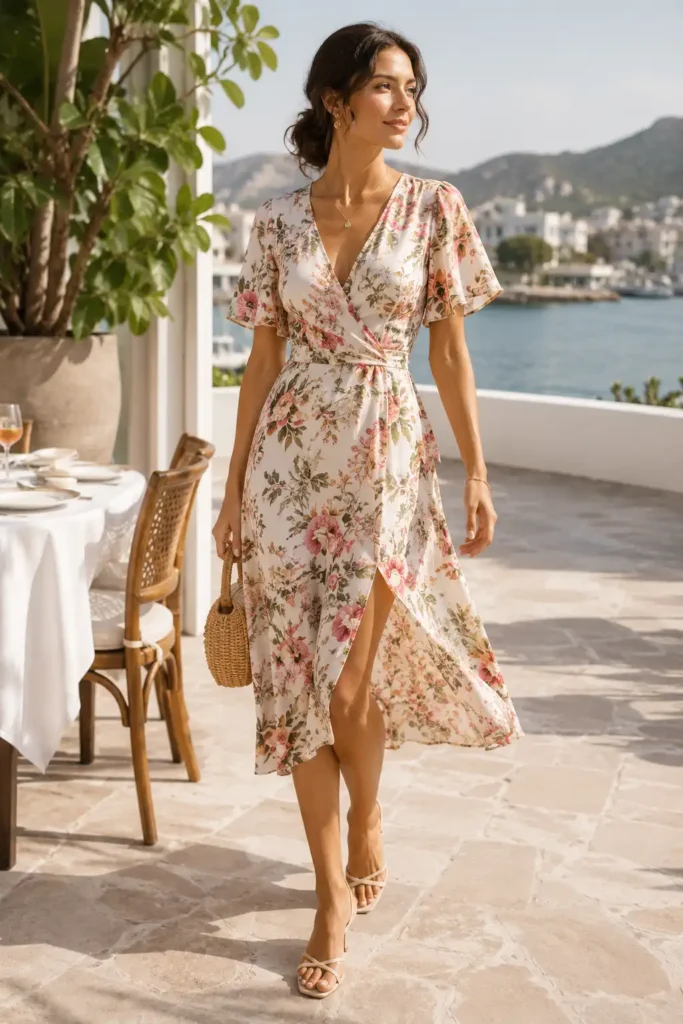
Long printed resort dresses rely heavily on fabric movement and print balance. Chiffon, rayon, viscose and lightweight printed woven fabrics are common directions, but fabric weight must remain compatible with the volume and length of the skirt. Production control covers print direction, long-panel cutting, waist placement, lining length, shoulder or strap stability and hem balance. Large floral or botanical artwork also needs review across front and back panels so the finished dress looks intentional rather than randomly assembled.

Floral Midi Dresses

Floral midi dresses are commercially versatile for resort lunches, destination events, cruise wardrobes and vacation dinners. Wrap, fit-and-flare, slip and softly shaped A-line constructions are common. Development should check the relationship between floral scale and body proportion, particularly around bust darts, waist seams and panel joins. Rayon, viscose, chiffon and printed woven fabrics can create very different drape, so pattern balance and fabric shrinkage need to be reviewed before bulk cutting.

Halter Resort Dresses

Halter styles create strong resort imagery but require careful control around neck pressure, bust coverage, armhole depth and back exposure. Print placement becomes more visible because front panels often narrow toward the neckline. For engineered or directional artwork, pattern pieces need to be reviewed before cutting. Long halter maxis also need enough support to prevent the neckline from pulling downward under garment weight while keeping the silhouette light and relaxed.

Wrap Resort Dresses

Printed wrap dresses combine strong commercial appeal with more complex fit control than their relaxed appearance suggests. Wrap overlap, neckline stability, tie position, waist level and skirt opening must be evaluated across the size range. Large repeats may become visually uneven when overlapping fronts cross each other. Fabric drape also changes how securely the wrap closes, so chiffon, rayon and viscose constructions often require different overlap and lining decisions.

Printed Slip Dresses

Slip silhouettes place more attention on fabric surface, print clarity and strap position because the construction is visually clean. Printed satin can create a polished dinner-resort direction, while rayon or viscose creates a softer daytime look. Strap length, neckline depth, bust coverage, side-seam balance and bias movement need review during fitting. For patterned fabrics, distorted motifs along bias-cut areas should be evaluated before confirming bulk construction.

Printed Mini Dresses

Resort minis work well for daytime travel, brunch, beach clubs and evening holiday styling. Short length increases the importance of hem security, lining coverage and proportion around the waist and hip. Large print elements need careful placement because even small cutting differences become visually obvious on compact garment panels. Halter, strapless, wrap, ruched and backless constructions can all be developed, with fit standards adjusted around the intended level of exposure.

Tiered Printed Dresses

Tiered resort dresses create movement and volume, making them suitable for botanical, bohemian and tropical print stories. The main manufacturing challenge is maintaining balanced tier depth, controlled gathers and consistent print direction across large fabric consumption. Repeated motifs may look different on each tier if scale and cutting direction are ignored. Fabric weight also matters: excessive weight can pull the waist downward, while overly light fabric may require lining to control transparency.

Backless Vacation Dresses

Backless printed dresses are visually strong for beach destinations, poolside events and holiday campaigns, but the structure needs enough stability to remain wearable. Neckline shape, side coverage, strap anchoring, back opening and waist position work together. Print direction around narrow straps and curved back edges can easily look inconsistent if cutting is not planned. Lining and seam-finishing decisions also need to remain discreet because exposed interiors can reduce the premium appearance.

Resort Matching Looks

Printed resort programs often extend beyond a single dress silhouette into coordinated skirt-and-top combinations or related dresses sharing the same artwork family. Shared print stories can strengthen collection identity, but each garment still needs separate consumption, placement, fit and MOQ evaluation. Coordinating base fabrics and color stories can simplify development, while separate hero silhouettes help create stronger merchandising depth across campaign, ecommerce and retail assortments.

Custom Print Development for Resort Dress Collections

A strong resort print needs to work as fabric, garment and collection identity at the same time. Artwork scale that looks balanced on screen may become too dominant on a mini dress or disappear across a full maxi. Print method, repeat structure, color count, fabric composition and panel shape all affect the final result.

Digital and Repeated Print Development

Digital printing can support detailed floral, botanical, abstract and multicolor artwork where fine tonal variation is important. Screen printing may be more suitable for repeat designs with controlled color counts and sufficient production volume. Selection starts with the base fabric because polyester, rayon, viscose, cotton blends and other fibers require different printing routes and finishing considerations.

Artwork files should define repeat size, intended scale, color references and orientation. A 30 cm repeat and a 60 cm repeat can create completely different visual proportions on the same silhouette. The print also needs to be reviewed against fabric width and marker planning so important motifs do not fall awkwardly into side seams, darts or high-visibility joins.

Before garment bulk production, print development needs a clear approval stage. Color appearance can shift with fabric composition, surface texture and finishing, while shrinkage can subtly change motif size. Print approval should therefore connect directly with the final base fabric rather than relying only on digital artwork approval.

Placement and Engineered Print Control

Placement prints require tighter coordination between artwork and pattern pieces because the motif is expected to appear in a defined position after sewing. Front panels, back panels, neckline sections, sleeves or skirt areas must be mapped before bulk cutting. A motif positioned correctly on a sample size may shift across larger sizes if grading is not considered during artwork planning.

Border prints create a different challenge. The lower skirt may require a decorative border while the upper body uses a smaller repeat or cleaner area. Maxi dresses, wrap dresses and tiered silhouettes need enough fabric allowance to maintain a visually even border after cutting, seam allowance and hem finishing.

Engineered artwork can also influence pattern efficiency and fabric consumption. Before production, Jinfeng reviews whether the print should be centered, mirrored, directionally matched or allowed to fall naturally. Clear rules are then transferred into cutting and QC instructions rather than leaving individual operators to interpret the artwork independently.

Exclusive Prints and Collection Scale

Exclusive print programs often involve more than a single artwork file. Mature resort collections may use one hero floral, one smaller coordinating repeat and several solids or simplified print variations across 10–30 styles. Keeping the collection visually connected requires decisions around shared colors, motif scale, base fabrics and the role of each silhouette.

A maxi hero style may use the largest artwork scale, while a mini or fitted midi can use a reduced version. Matching looks may use the same print family with different placement. Such planning creates stronger collection identity while avoiding a repetitive assortment where every garment feels like the same print applied to a new pattern.

Artwork confidentiality and design protection also matter for unreleased collections. Jinfeng Apparel can work under NDA arrangements and does not publish confidential tech packs, original artwork, patterns, unpublished styles or private-label files without authorization.

Match Print, Fabric and Silhouette Before Sampling

Printed resort dresses perform differently depending on the base fabric. Print clarity, drape, opacity, shrinkage, wrinkle behavior and sewing stability should be assessed together. Fabric selection therefore starts from the intended silhouette, wearing environment and artwork rather than choosing a print solely from appearance.

Fabric DirectionSuitable Print DirectionStrong Dress ApplicationsManufacturing Focus
ChiffonFloral, botanical, soft abstractMaxi, tiered, wrapTransparency, lining, print direction, long hem
RayonTropical, floral, repeated printMidi, wrap, relaxed maxiShrinkage, drape, seam stability
ViscoseDigital floral, abstract, geometricMaxi, slip, relaxed midiDrape, shrinkage, pressing response
Linen BlendStripe, botanical, graphic repeatMidi, shirt-inspired resort dressWrinkle behavior, shrinkage, seam appearance
Printed WovenRepeat, border, placement printMini, midi, structured vacation dressDirection, panel alignment, cutting
Satin / Stretch SatinFloral, artistic, evening-resort printSlip, bias, destination dinner stylesSnagging, shade, shine, bias movement

Fit Control for Resort Silhouettes That Need Movement

A relaxed resort appearance still depends on disciplined pattern work. Necklines, armholes, bust coverage, straps and long hems become especially visible in lightweight printed garments because movement and transparency expose fit problems quickly. Jinfeng Apparel supports development with 7+ senior womenswear pattern makers, 2 sample rooms and 20+ sample machinists.

Halter Fit Control

Halter construction needs balanced neck tension, secure bust coverage and controlled armhole exposure. Tie length, neckline height and underarm position should be checked on the intended sample size before grading. Long skirts can add downward weight, so upper-body support cannot be evaluated independently from the full garment.

Slip Dress Balance

Slip dresses require accurate strap length, neckline depth and side-seam balance. A small strap adjustment can move the entire neckline several centimeters on the body. Bias-cut versions also need enough recovery time during development because hanging can change garment length before final hem decisions.

Wrap Dress Coverage

Wrap dresses need sufficient front overlap across the intended size range. Waist position, tie placement, bust opening and skirt movement are checked together. A wrap construction that looks secure on one fitting body can expose too much during walking or sitting if the overlap is not properly controlled.

Backless Stability

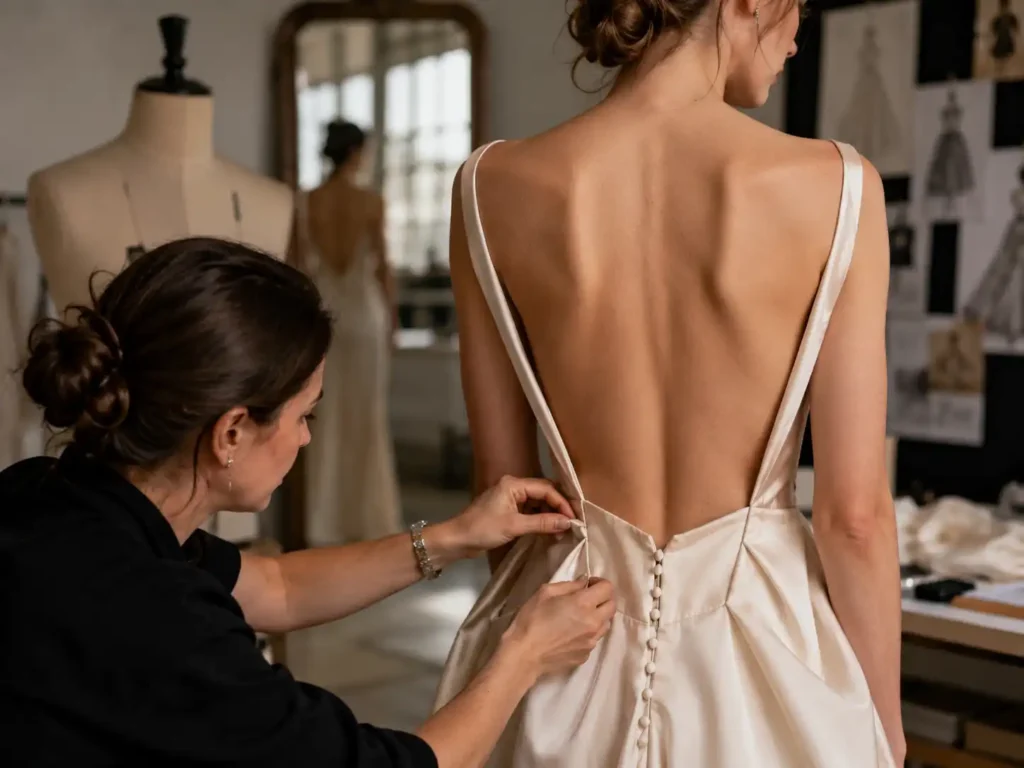
Backless dresses need secure anchoring around neck, shoulder, side body or waist depending on the construction. Deep back openings often reduce structural support, making the front neckline and side coverage more sensitive. Pattern balance is reviewed before relying on elastic, ties or trim as a correction.

Strapless Resort Fit

Strapless resort styles need stable upper-body fit without making the garment feel heavy. Bust shape, top-edge tension, internal support and waist position should work together. Printed fabric also makes seam placement highly visible, especially when motifs cross fitted bodice panels.

Maxi Hem Balance

Maxi dresses need level front, side and back hem relationships after the fabric has settled. Lightweight rayon, viscose and chiffon may behave differently after hanging, steaming or pressing. Length is therefore reviewed together with fabric behavior, footwear intention and silhouette volume before final bulk standards are confirmed.

Design Details That Change Print and Construction

Small design details can strongly affect printed resort production. A ruffle may interrupt a large floral motif; a cut-out may expose lining edges; adjustable straps can change neckline placement; smocking can compress artwork until its scale looks completely different. Design review therefore connects aesthetics with construction before the first production-ready sample is approved.

Adjustable Straps

Adjustable straps improve fit flexibility across sizes, but slider position, strap width and attachment strength need to remain compatible with lightweight fabrics. Printed straps also require orientation control where directional artwork is visible.

Halter Ties

Halter ties need suitable width and reinforcement to prevent twisting or excessive neck pressure. For placement prints, tie pieces may require dedicated cutting areas so the artwork remains visually consistent with the main body.

Backless Openings

Backless shapes require clean internal finishing because the inside edge often becomes visible during wear. Binding, facing, lining and seam allowance decisions should protect the silhouette without making lightweight resort fabrics feel stiff.

Ruffles and Flounces

Ruffles add movement but significantly increase fabric consumption. Large-scale prints can become visually fragmented once gathered, so print scale should be reviewed before confirming the final ruffle depth and fullness.

Smocking and Elastic Areas

Smocking compresses fabric width and changes how a printed motif appears. Stretch amount, stitch density and recovery need to be considered alongside print scale so the finished area does not look overcrowded or distorted.

Cut-Out Construction

Cut-outs change both support and print continuity. Their placement needs to remain stable across sizes, while internal finishing should stay flat and discreet. Large motifs crossing cut-out edges may require artwork or pattern adjustment.

Resort Dresses Designed for Travel and Warm Weather

Resort garments are often packed, folded, photographed and worn in warm environments within a short period. Fabric movement, opacity and recovery after unpacking matter alongside color and silhouette. Product development should therefore consider travel behavior before the bulk order reaches packing.

Lightweight Without Looking Thin

Lightweight fabric does not automatically mean premium resort performance. The shell needs enough body for the selected silhouette while remaining breathable and fluid. Chiffon may need selective lining; rayon and viscose need shrinkage review; linen blends need enough structure to avoid looking collapsed after packing.

Transparency Under Control

Bright outdoor light can reveal transparency that looks acceptable under indoor fitting-room conditions.

Light colors, wide necklines, backless shapes and long flowing skirts should be assessed together with lining coverage and seam visibility.

Packing Recovery

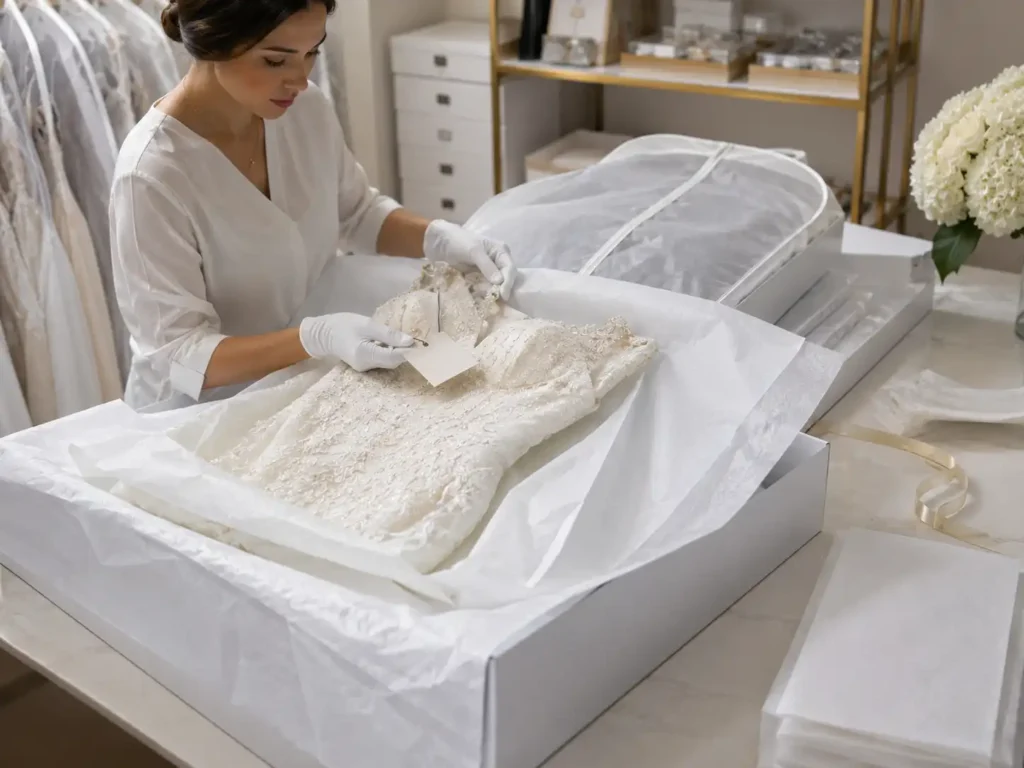
Long maxis, ruffled dresses and rayon styles are sensitive to folding and compression. Packing needs to protect presentation while remaining commercially realistic. Folding method, tissue use where required, polybag size and carton loading should reduce deep creases and protect decorated or delicate surfaces.

From Print Artwork to Approved Resort Fabric

A reliable print approval path keeps creative decisions connected to production realities. Artwork should not move directly from a computer screen into bulk fabric. Base fabric, scale, repeat, color and garment construction all need confirmation before fabric purchasing and cutting.

Artwork Review

The starting package can include repeat artwork, placement artwork, Pantone or color references, target scale, reference images and intended silhouettes. Missing information is identified before print quotation so later revisions do not create unnecessary waste.

Base Fabric Confirmation

Print appearance changes with fiber content, weave, weight and surface texture. The intended base fabric is reviewed for drape, opacity, width, shrinkage and garment suitability before the print route is finalized.

Strike-Off and Color Review

Print samples or strike-offs are reviewed against artwork direction and agreed color references. Color accuracy is assessed on the actual base fabric whenever possible rather than relying only on screen appearance.

Scale and Direction Approval

Repeat size, motif direction and orientation are checked against the garment pattern. Large floral elements may need different positioning rules for fitted bodices, wrap fronts, narrow straps and maxi skirt panels.

Garment Sample Validation

The printed fabric is then evaluated in an actual garment. Fit, drape, motif position, transparency and seam interaction are reviewed together before PP approval.

Bulk Print Standard

Approved references are transferred into bulk fabric and cutting requirements. Production teams follow defined direction, color and placement expectations rather than making visual decisions independently during cutting.

Sampling Printed Resort Dresses Before Bulk Production

Sample development turns artwork, fit and fabric decisions into a measurable production standard. Jinfeng Apparel operates 2 sample rooms with 7+ senior pattern makers and 20+ sample machinists, allowing multi-style resort programs to move through development with dedicated pattern and sample control.

Project Review Before Pattern Work

Development begins with available information such as tech packs, reference garments, photos, sketches, line sheets, print artwork, fabric preferences, trim requirements, size charts, estimated quantities and launch timing.

The first review checks more than whether a garment can be sewn. Print method, base fabric availability, likely consumption, construction difficulty, transparency, lining, artwork placement, expected shrinkage and possible supplier MOQ all influence the development route.

For a 15-style resort program, styles may be grouped by shared fabric or print family so sampling decisions remain organized. A chiffon floral maxi, rayon wrap midi and printed satin slip should not be pushed through one identical technical route simply because they belong to the same collection.

First Sample and Fit Review

Pattern development focuses on the measurements most relevant to each silhouette. Resort styles may require close review of bust, waist, hip, dress length, front and back length, strap length, armhole depth, neckline depth, slit position, lining and hem balance.

The first sample establishes silhouette and construction direction, not an automatic bulk standard. Fit comments can lead to changes in pattern shape, strap length, wrap overlap, neckline coverage, lining length, seam method or fabric selection.

Printed garments also need visual review. A floral motif may look balanced on flat fabric but become poorly positioned once darts, gathers or wraps shape the garment. Sample review therefore covers both body fit and print performance.

Revised, Photo, PP and Golden Standards

Different sample stages serve different commercial purposes. A revised sample responds to fit or construction comments. A photo-ready sample may prioritize approved visual presentation for campaign use. A PP sample confirms the production standard before bulk. A Golden sample can be retained as an approved physical reference for production and QC.

Sample timing is quoted by project because artwork readiness, custom printing, fabric sourcing, construction complexity and revision count can change the schedule. Resort collections tied to a fixed campaign date should work backward from launch and photography milestones rather than relying on one generic sample-time promise.

Changes are documented before moving forward. Updated pattern information, measurements, fabric, print, trims, sewing method and approval status should all align before the style is released for bulk production.

Sample Revisions Stay Traceable Across the Collection

Multi-style resort programs become difficult to manage when every fit comment, fabric change and print revision lives only inside separate messages. Jinfeng Apparel records development changes so approved decisions can move into PP samples and production files with fewer version conflicts.

Pattern Changes

Bust shape, waist location, strap length, armhole, neckline, wrap overlap, skirt volume and hem balance are updated in the pattern rather than relying on sewing-room memory.

Measurement Changes

Updated measurements are compared against the working size chart. Approved values are carried into later sample checks and bulk measurement standards.

Fabric and Print Changes

Switching from rayon to viscose, changing print scale or selecting a new lining can affect drape, shrinkage, cost, MOQ and pattern behavior. Changes are reassessed before approval.

Construction Changes

Seam method, lining attachment, elastic, tie construction, zipper, binding and reinforcement details are recorded when they affect the approved garment.

Approval Status

Each development stage needs a clear status so production does not proceed from an outdated sample or artwork version.

Production Transfer

Approved sample comments become part of the handover into PP, bulk production instructions and QC checkpoints.

Bulk Production Built Around Print Consistency

A strong sample has limited value if the bulk order loses print direction, size balance or fabric behavior. Bulk preparation begins only after approved product information has been aligned across PP sample, fabric, print, trims, size chart, color, construction and packing requirements.

Fabric, Print and Cutting Control

Bulk printed fabric is checked before cutting for visible defects, shade variation, print direction and relevant fabric behavior. Shrinkage and fabric condition matter particularly for rayon, viscose and lightweight woven materials because unstable fabric can change both final measurements and print appearance.

Marker planning needs to respect directional motifs and defined placement requirements. Fitted bodices, wrap fronts and long maxi panels may require different cutting rules. For large florals or border prints, fabric consumption can increase when pattern pieces cannot be rotated freely.

Cut panels should be checked before sewing when orientation or placement is critical. Catching an incorrect directional panel after the garment is fully assembled creates unnecessary rework and can disrupt production flow.

Sewing and In-Line Control

Printed resort garments may combine very different sewing conditions within one collection. Chiffon needs stable handling around fine seams and lining. Rayon needs controlled feeding to avoid distortion. Satin needs protection from snagging and pressure marks. Smocked or elastic areas need recovery consistency.

In-line inspections focus on issues that become expensive if discovered late: neckline shape, strap attachment, seam twisting, waist alignment, wrap overlap, print orientation and hem preparation.

Long garments need particular attention because small deviations at the waist or side seam can become visibly larger at the hem. Bulk teams work from approved construction information rather than adjusting individual garments by appearance alone.

Finishing, Inspection and Packing

Finishing should preserve the intended resort look without flattening or damaging the fabric. Pressing temperature and technique vary by material. Chiffon, rayon, satin and linen blends should not receive identical finishing treatment.

Completed garments move through garment inspection, pressing review, measurement checks and packing control. AQL or client inspection requirements can be integrated according to the project.

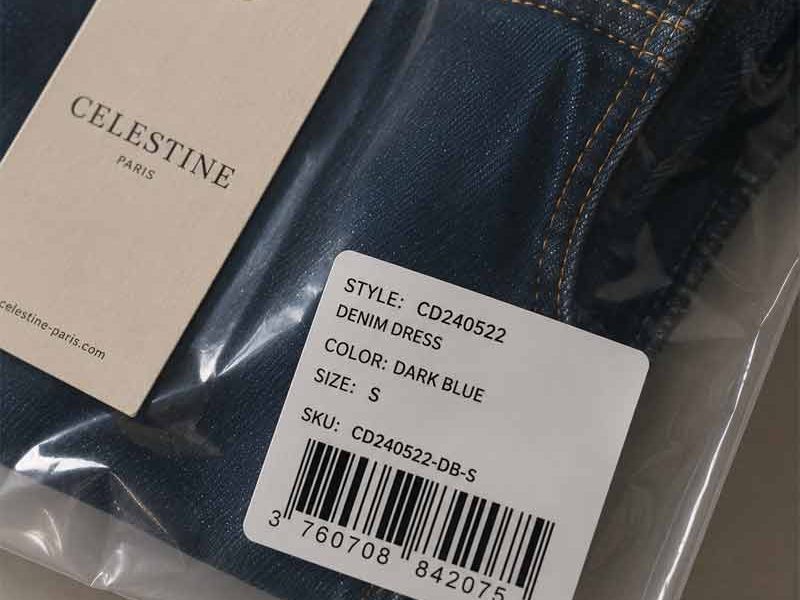
Packing standards are confirmed before final packing begins. Labels, barcodes, SKU information, polybags and carton marks need to match the approved order information, particularly when a multi-style collection contains many prints, sizes and delivery groups.

Bulk Production Built Around Print Consistency​

Printed Resort Dress Quality Control Checkpoints

Quality control follows the risks created by print, fabric and silhouette rather than relying on a generic final inspection. Incoming material, cutting, sewing, in-line inspection, finished garments, pressing and packing all provide different opportunities to detect problems before shipment.

QC AreaKey Printed Resort Checks
Printed FabricPrint direction, repeat appearance, color consistency, visible defects
Fabric BehaviorShrinkage, transparency, hand feel, drape, width where relevant
CuttingMotif orientation, placement rules, panel direction, fabric defects
SewingSeam stability, twisting, gathers, strap attachment, wrap construction
FitBust, waist, hip, neckline, armhole, strap length, dress length
Long DressesSide balance, front/back length, lining length, hem consistency
FinishingPressing marks, fabric damage, appearance after steaming
PackingLabels, barcode, SKU, folding, print protection, carton marks
Final InspectionAgreed measurements, workmanship, visual standards, AQL/client requirements

MOQ and Cost Logic for Custom Printed Dresses

Custom printing adds variables that do not exist in standard solid-color fabric programs. Jinfeng Apparel’s garment MOQ starts from 200 pcs per style/color, while custom printed fabrics can require higher quantities depending on base fabric, print method, artwork complexity, color count and print supplier requirements.

Standard Fabric Programs

Where suitable stock printed fabric is available, development can sometimes follow the standard garment MOQ more closely. Availability still needs confirmation by actual print, color, lot, width, quantity and fabric condition. A stock print should never be assumed available simply because a similar fabric appeared in a previous collection.

Exclusive Print Programs

Custom digital, screen, placement, border or exclusive prints can carry separate fabric supplier minimums. Artwork scale, print method and base fabric all influence the required fabric quantity. Large silhouettes such as tiered maxis also consume more meters per garment, changing the relationship between garment quantity and print-yardage requirements.

Cost Structure

Printed resort dress pricing can be influenced by:

  • Base fabric and printed fabric cost
  • Artwork or print development requirements
  • Fabric consumption and cutting efficiency
  • Lining and transparency control
  • Print placement or directional cutting
  • Pattern and sample development
  • Sewing time and construction complexity
  • Finishing and pressing requirements
  • QC and inspection requirements
  • Labels, barcodes and packaging
  • Testing or certification requirements where applicable
  • Logistics arrangement

The aim is cost control without weakening brand-level appearance. Simplifying a hidden construction detail may be commercially sensible; reducing lining or print control where it damages fit or presentation usually is not.

moq

Build Printed Resort Collections Instead of Isolated Styles

Resort programs become commercially stronger when hero silhouettes, supporting styles, print families and fabric groups are planned as a collection. Jinfeng Apparel can support multi-style development where each style/color still follows its applicable MOQ and production requirements.

Product Mix

A balanced assortment may combine one or two statement maxis with commercial midis, short vacation dresses and related matching looks. Hero styles can carry larger artwork or more complex construction while commercial silhouettes use simpler repeat prints and shared fabrics.

Print and Fabric Groups

Several styles can be organized around coordinated artwork families and compatible base fabrics. One botanical story might appear as a large-scale maxi print, reduced midi repeat and small coordinating print. Shared base fabrics can simplify color management and purchasing where the design direction allows.

Launch Priorities

Not every style needs the same development urgency. Campaign pieces, ecommerce photography samples, commercial volume styles and later drop extensions can be prioritized differently. Line sheets should identify hero SKUs, launch dates, expected quantities and print groups so sample and production planning can follow the commercial calendar.

Private Label Packing for Resort and Vacation Dresses

Private-label presentation should protect the garment while remaining consistent across a multi-style collection. Jinfeng Apparel supports brand labels, care and size labels, hangtags, barcodes, SKU identification, polybags, cartons and carton marks according to project requirements.

Brand and Product Identification

Woven, satin, printed or heat-transfer labels can be developed according to the garment and brand direction. Care labels, size labels and fiber-content information need to remain aligned with the confirmed material composition and target-market requirements.
5.-Barcode-SKU-Sticker

Barcode and SKU Control

Printed collections can contain several visually similar floral or tropical designs across multiple sizes. Correct SKU, barcode and hangtag matching therefore becomes a meaningful production-control task rather than an administrative detail.

Long-Dress Packing

Maxi dresses require folding methods that protect long hems and reduce unnecessary compression. Rayon and viscose garments may show deeper fold lines than stable woven fabrics, while satin or delicate surfaces need additional protection from snagging or abrasion.

Ecommerce and Retail Presentation

Packing can be organized for ecommerce, specialty retail or brand-specific distribution requirements. Polybag size, folding method, barcode position and carton configuration should be confirmed before bulk packing begins.

Testing, Inspection and Brand Compliance Support

Established fashion programs often operate under brand-specific quality and compliance requirements. Jinfeng Apparel can coordinate project requirements around fabric testing, garment testing, client inspection, AQL inspection, labeling information and supporting documentation.

Inspection Support

Inspection arrangements can include in-line quality records, final garment inspection, AQL sampling or client-appointed inspection depending on the project. The inspection method should be agreed before final packing rather than added only after the order is complete.

Fabric and Garment Testing

Third-party testing can be coordinated through laboratories such as SGS, Intertek, BV, ITS or another specified laboratory when required by the project. Testing scope depends on fabric, market and brand requirements.

Responsible Sourcing Documentation

SMETA / Sedex / BSCI-related documentation and client factory-audit support can be coordinated where applicable. Certification status should be reviewed against the actual production arrangement rather than assumed across every facility.

Certified Fabric Resources

OEKO-TEX, GOTS, organic and GRS-related fabric resources can be explored through the supply chain by fabric type, color, supplier, certification scope, MOQ and batch. Certified fabric availability is confirmed at project level.

Resortwear Collection Case With 15 Printed Styles

An established European resortwear label worked with Jinfeng Apparel on a 15-style vacation collection totaling approximately 36,000 pieces, centered on chiffon, rayon and printed maxi and midi dresses. The program combined several artwork directions, long silhouettes, lightweight fabrics and private-label packing for seasonal launch.

Collection Structure

The line included floral maxis, wrap midis, halter dresses and lightweight printed silhouettes intended for destination travel, campaign photography and warm-weather retail.
Several styles shared related print stories while using different fabric weights and construction.

Main Production Risks​

Main Production Risks

Four areas required early control:

  • Printed fabric direction across long panels
  • Transparency on lightweight chiffon constructions
  • Rayon shrinkage affecting final dress length
  • Creasing and presentation of long dresses after packing

Development Control

Artwork and base fabric were reviewed together before the relevant printed garments moved into final sample stages. Pattern and sample review focused on bust coverage, strap and halter positioning, waist placement, lining and long-hem balance.

Sample comments were carried into the approved production information rather than being treated as isolated fitting notes. Print direction and packing requirements were added to production and QC checkpoints.

Bulk and Delivery Result

Bulk production was organized by style and fabric group so printed chiffon, rayon and related constructions could receive appropriate handling. In-line checks focused on orientation, fit, long-length balance and seam stability, followed by finished-garment inspection and private-label packing.

The program demonstrated the value of treating resortwear as a collection system rather than a group of unrelated dresses. Shared records for patterns, fabrics, prints and packing also created a cleaner basis for later style extensions and repeat orders.

Repeat Printed Resort Styles With Better Continuity

Strong resort styles often return in a new print, a refreshed color direction or an adjusted silhouette. Repeat-order management becomes more efficient when the original development information remains organized.

Retained Pattern Records

Approved patterns and measurement information provide a controlled starting point for repeating the same silhouette or developing a related version.

Fabric and Print Records

Fabric specifications, print references and previous production information help identify what can be repeated and what needs new supplier confirmation.

Trim and Construction Records

Zippers, elastic, straps, lining, sewing methods and finishing details can be referenced when preparing a repeat program.

Packing Records

Label position, barcode format, polybag requirements and carton marks can be carried forward where the brand maintains the same packing standard.

New Print Extensions

A proven maxi or wrap dress can be refreshed with a new artwork family, but new prints still require evaluation for scale, color, direction, base fabric and supplier MOQ.

Reorder Planning

Repeat orders can move more efficiently because key records already exist, while final timing still depends on fabric availability, print preparation and production capacity. MOQ continues to follow the relevant style/color requirements.

Frequently Asked Questions About Printed Resort Dresses

Yes. Projects can use original brand artwork for digital, screen, placement, border or other suitable print routes depending on the base fabric and production requirements. Artwork scale, repeat, color references, direction and intended silhouettes should be reviewed before bulk fabric is ordered.
Common directions include chiffon, rayon, viscose, linen blends and printed woven fabrics, with satin used for selected polished resort styles. Selection depends on print method, silhouette, drape, opacity, shrinkage, garment construction and target wearing environment.
Yes. Floral maxi dresses are strongly aligned with Jinfeng Apparel’s resort and vacation dress direction. Development can cover halter, slip, wrap, tiered, backless and other maxi silhouettes with control over print direction, lining, length and packing.
Yes. A large print used on a maxi may need to be reduced for a mini or fitted midi. Scale should be reviewed against garment dimensions, panel shapes and intended visual balance rather than applying one repeat size across an entire collection automatically.
Print direction is defined during fabric and garment approval, then transferred into cutting and QC requirements. Directional prints may require restricted marker rotation, panel checks and approved references so front, back and related garment sections remain visually consistent.
They can. Garment MOQ starts from 200 pcs per style/color, while exclusive printing may require higher quantities depending on base fabric, print method, artwork complexity, color count, fabric consumption and printing-supplier requirements.
Yes. Multi-style programs can be organized by print family, fabric group, silhouette complexity and launch priority. Each style and color still needs to meet its applicable MOQ and production requirements.
Fabric behavior is reviewed during development and before bulk cutting. Shrinkage can affect finished measurements, particularly long dress length, waist position and print appearance, so pattern and production standards should reflect the approved fabric behavior.
Yes. Projects can include brand labels, care labels, size labels, hangtags, barcodes, SKU identification, polybags, carton marks and retail- or ecommerce-oriented packing. Certain custom packaging materials may have their own supplier MOQ.
A strong starting package includes tech packs or reference images, line sheet, print artwork, preferred fabric direction, size chart, estimated quantities, target market, packing requirements and launch schedule. Jinfeng can then review feasibility, sourcing, sampling and bulk-production requirements.

Start Your Printed Resort Dress Collection

A well-developed printed resort collection needs the print, fabric, silhouette, fit and production plan to work together from the first sample through bulk delivery. Jinfeng Apparel supports established fashion brands and sourcing teams developing dress-led vacation, cruise and resort programs with structured product development, fabric and print review, pattern making, sampling, production control, QC and private-label packing.
For a meaningful project review, send the information already available. A complete tech pack is helpful but development can also begin from organized references and artwork when the commercial direction is clear.
Please include where available:

  • Tech packs or reference garments
  • Front, back and detail images
  • Original print artwork or print references
  • Preferred fabric direction
  • Size chart and size range
  • Color and print list
  • Estimated quantity by style/color
  • Private-label and packing requirements
  • Target market
  • Photography, launch or delivery milestones
Printed Resort Dresses

Tell Us About Your Dress Project

Share your product details, estimated quantity and development requirements. Our team will review your project and provide practical OEM/ODM production feedback.

Premium Women’s Apparel Production for Fashion Brands

From dress sample development to bulk production, JF Apparel supports fashion brands with confidential OEM/ODM manufacturing, reliable quality control and scalable production support.

START YOUR DRESS PROJECT

Ready to Develop Your Next Dress Collection?

Share your design concept, product requirements or sourcing plans with our team. We’ll review your project and provide practical feedback on development, materials, MOQ and production.

7-10 Days

Sample Development

200 PCS

Starting MOQ

Fast Response

Professional Follow-Up