 Skip to content
Structured Bodice Development
Pattern engineering, bust support, internal structure, fitting and production control for fashion brands developing repeatable structured womenswear collections.
- 7+ senior pattern makersdevelop corset, strapless, bustier and structured dress patterns around bust, upper-bust, under-bust, waist and neckline control.
- 2 sample rooms and 20+ sample machinistssupport first samples, fit samples, revisions, PP samples and production standards.
- Complex corset, strapless, lace, mesh and structured styles commonly require 15–25 days for first-sample development, depending on fabrics, trims and construction.
- Structured programs move through controlled pattern, cup, boning, fit and sample approvals before bulk production begins.
Development Resources Behind Structured Bodice Programs
7+ Pattern Makers
2 Sample Rooms
20+ Sample Machinists
15+ QC Inspectors
18+ Sewing Lines
6 Owned Factories
Built for Teams Managing Fit-Sensitive Womenswear
Product Development Teams
Established Fashion Brands
Sourcing and Technical Teams
Sourcing, technical and quality teams often evaluate a supplier by how clearly development standards can be defined before bulk production. Relevant questions include who controls pattern revisions, how fabric and trims are approved, how size grading is reviewed, what PP sample represents and how structural measurements are checked during production. For a structured bodice program, vague answers create risk. Jinfeng uses documented development stages, production references and QC checkpoints so technical requirements can move from initial review to sampling, bulk production, packing and repeat-order records with less dependence on informal conversations.
Common Failures We Review Before Bulk Production
Upper-Bust Gaping
Bodice Collapse
Cup Misplacement
Strapless Slipping
Boning Discomfort
Grading Distortion
Inside the Anatomy of a Structured Bodice
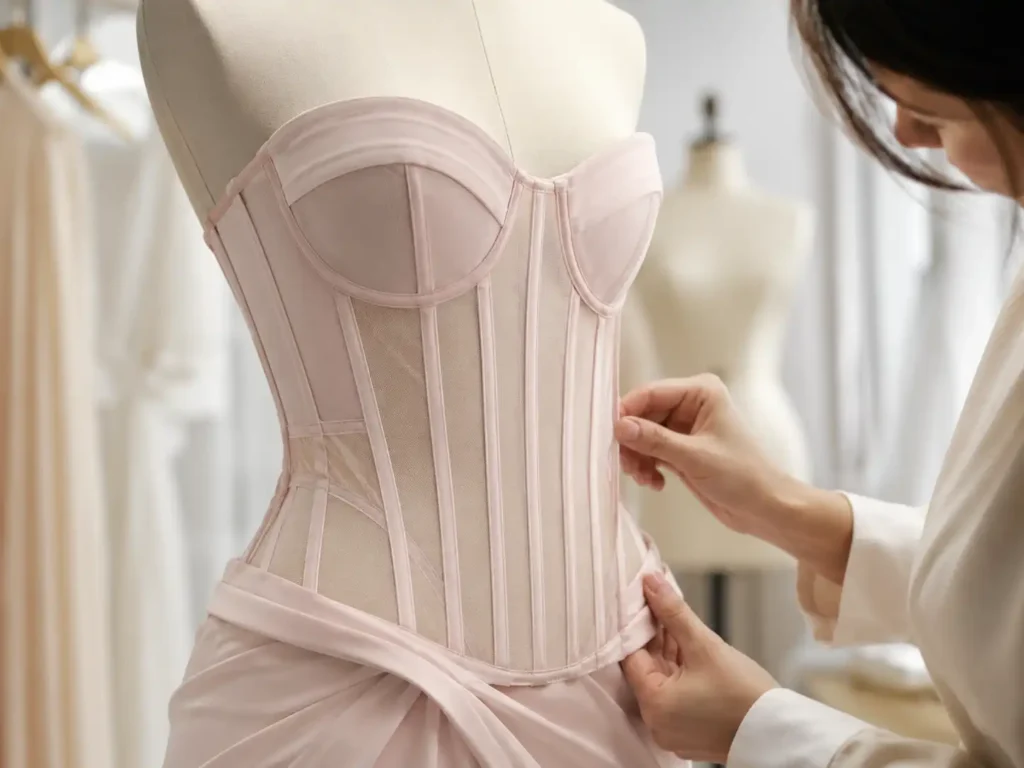
Outer Shell
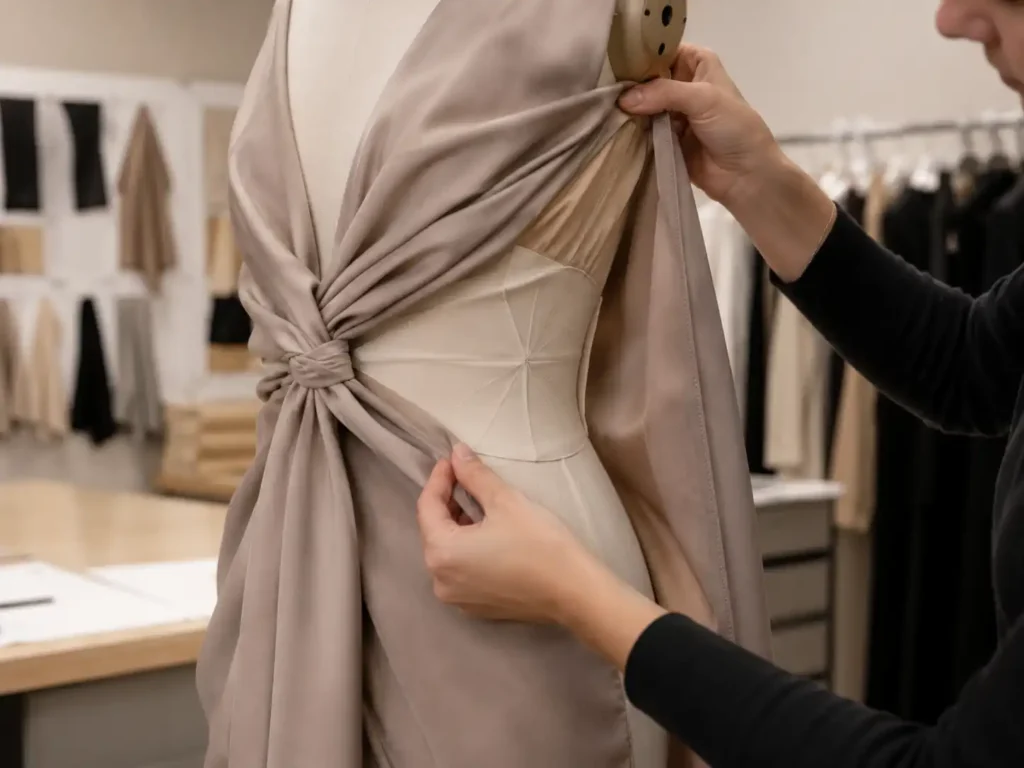
Support Layer
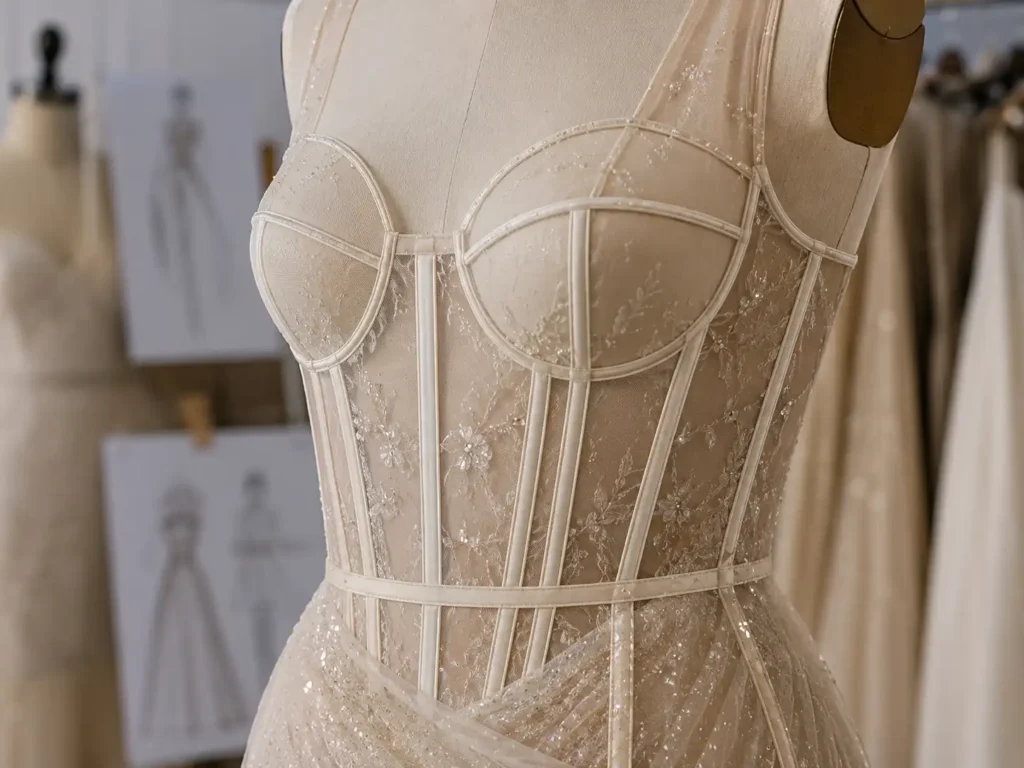
Bra Cup
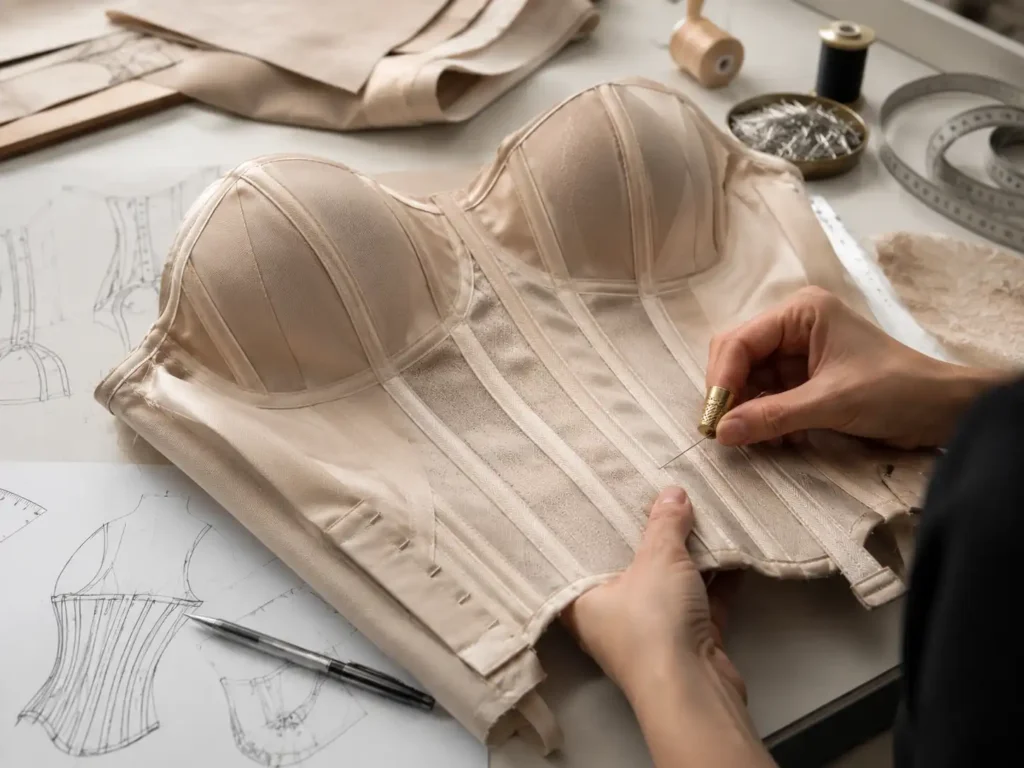
Boning System

Lining
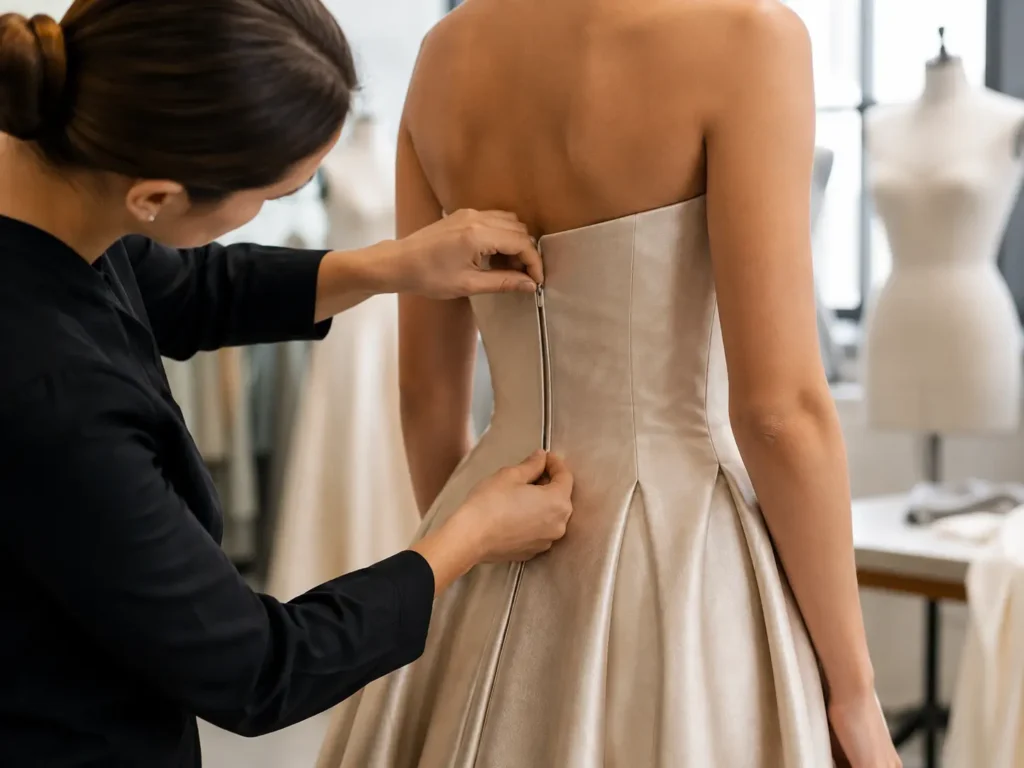
Closure and Grip
Structured Bodice Styles We Develop for Fashion Collections

Corset Mini Dresses

Strapless Dresses

Bustier Dresses
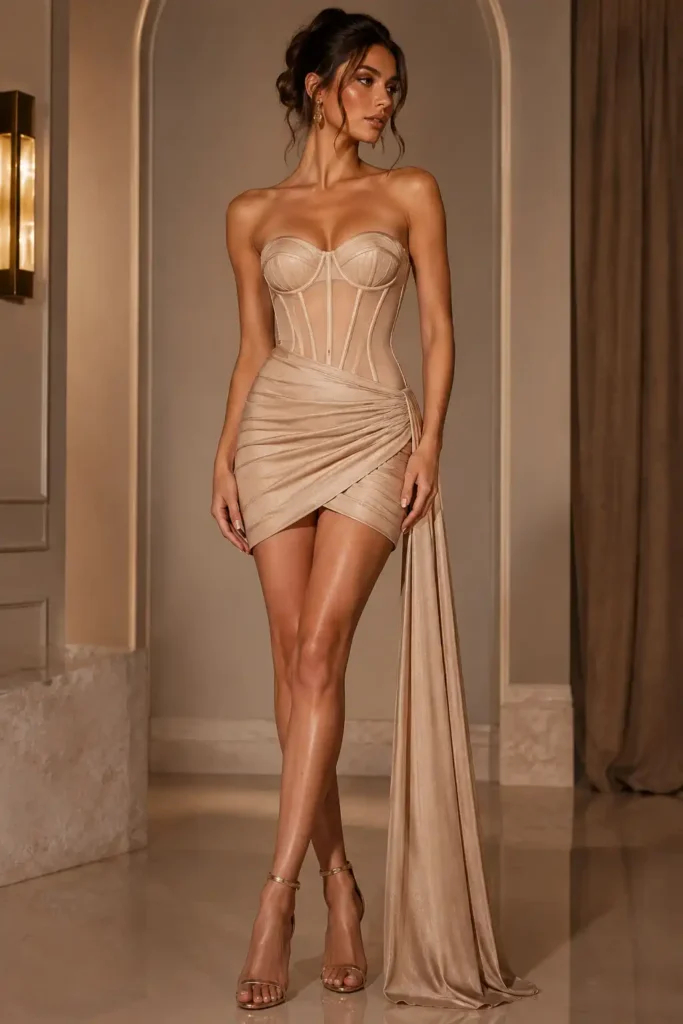
Structured Occasion Dresses

Corset Tops and Sets

Structured Partywear
Match Shell Fabrics with the Right Internal Support
Fabric selection changes how much reinforcement a structured bodice needs and how visible internal construction becomes. Jinfeng reviews shell behavior together with lining, cups, boning and sewing methods before locking the development direction.
| Shell Direction | Main Development Risk | Typical Support Direction | Key Production Control |
|---|---|---|---|
| Structured Satin | Seam ridges, snagging, shine-direction changes | Lining + selective reinforcement + boning | Grain direction, seam smoothness, pressing, cup edges |
| Stretch Satin | Growth and reduced support | Stable lining + controlled boning | Stretch recovery, waist measurement, neckline tension |
| Lace | Softness, placement variation, transparency | Backing or lining + localized support | Lace placement, seam joining, lining color, edge finish |
| Mesh | Transparency, stretch, support visibility | Lining/power-mesh zones + cups + boning | Coverage, stretch direction, channel security |
| Structured Woven | Excess rigidity or pressure | Selective lining + boning as needed | Ease, seam balance, comfort, pressing |
| Sequin/Decorated Fabric | Thickness, broken decoration, uncomfortable seams | Stable backing + protected internal channels | Seam allowance, decoration clearance, skin protection |
Pattern Engineering Turns Structure into a Production Standard
Pattern development creates the geometry which every later decision depends on. Jinfeng uses references, measurements, technical files and fitting feedback to move structured concepts from visual design into controlled patterns suitable for sampling, grading and bulk production.

From Design Reference to Structural Pattern
A design image communicates silhouette but rarely contains enough information to define a structured bodice. Pattern development begins by identifying neckline geometry, panel lines, bust projection, waist position, back shape, closure location and intended support. Tech packs, original samples and measurement charts can add clearer direction, but experienced pattern interpretation remains necessary when visual references do not explain hidden construction.
For corset and bustier styles, the pattern needs space for cups, boning channels, lining and seam allowances while keeping the outside proportion clean. Princess seams must shape the bust without creating peaks or flat areas. Side seams need to stay balanced once the bodice is tightened around the body. Strapless necklines require upper-bust control without excessive compression.
Jinfeng’s 7+ senior pattern makers work across corset, strapless, bodycon, occasion and other fit-sensitive womenswear. Development records can include first pattern, revised pattern, PP pattern, bulk pattern, lining pattern and grading information so approved decisions remain traceable beyond the first sample.
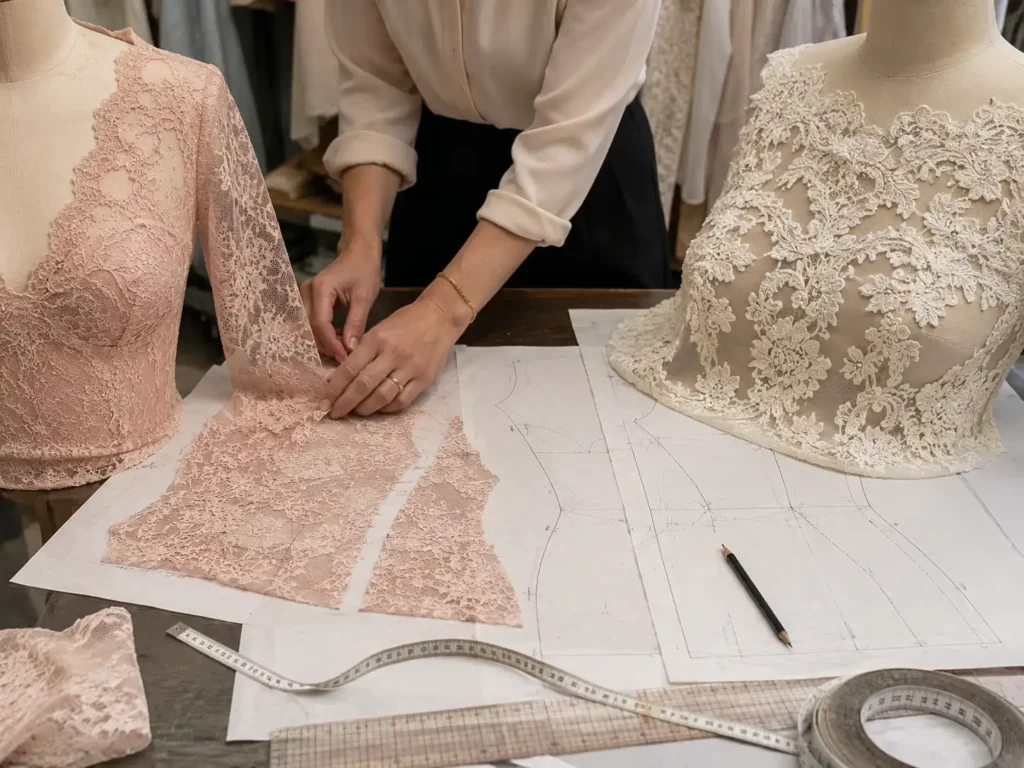
Fit Feedback Becomes Pattern Correction
Fit comments are useful only when they can be converted into a clear pattern action. “The bust looks wrong” may come from cup position, neckline shape, bust-point location, side tension, fabric stretch or inadequate support. Pattern correction therefore begins by locating the visible problem and testing likely structural causes.
Front, side and back photographs are valuable because structured bodice problems often change with viewing angle. A center front can appear balanced from the front while side projection remains too flat. A neckline can look secure in a standing photograph but open during arm movement. Measurements around upper bust, bust, under bust and waist help distinguish sizing issues from construction issues.
Approved corrections need to update relevant files rather than remain in chat history. Pattern version, measurement changes, cup location, boning route, lining pieces and sewing instructions should reflect the decision before another sample is produced. Clear revision records reduce the risk of old instructions returning during bulk preparation.

Final Pattern Must Support Repetition
A production-ready pattern does more than fit one model. It needs predictable seam relationships, marked support positions and construction logic which sewing teams can repeat. Boning locations, cup placement, strap positions, closure points and lining edges should remain connected to defined pattern references.
Before bulk, fit feedback, revised measurements and sample approvals are consolidated into the final or PP pattern. Size grading then extends the style across the approved size range according to the brand’s size chart and grade rules. Structured sections require particular attention because cups, neckline and support lines cannot simply move at the same rate as every body measurement.
Repeat-order records can preserve approved patterns and structural notes. New fabrics, new colors or changed support components still require review because stretch, weight, stiffness and trim dimensions may alter the original pattern behavior.
Bust and Cup Engineering for Shape, Security and Comfort
A structured bodice succeeds or fails around the bust. Jinfeng reviews cup geometry, upper-bust control, under-bust support, neckline and internal components together instead of treating a foam cup as an isolated accessory.
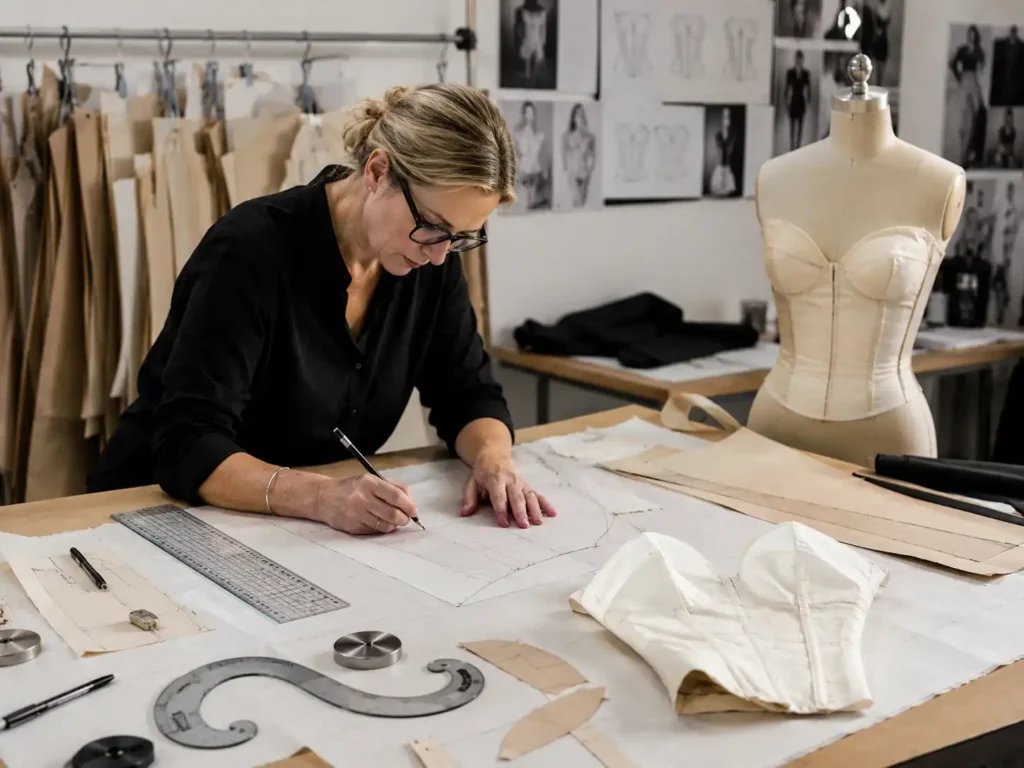
Cup Shape and Position Need Pattern Coordination
Cup development begins with shape rather than simply choosing a nominal size. Width, depth, projection and softness affect how the bust sits inside the bodice. A shallow cup can flatten the intended silhouette, while an overly projected cup can create an artificial shape or gap near the neckline.
Position is equally important. Cup center, bust point, under-bust line and princess seam should work together. A cup positioned too high can reduce coverage at the lower bust and lift the neckline unnaturally. A low cup can produce empty space at the top and shift the visual bust point downward. Left-right symmetry needs control during sample sewing and bulk attachment.
For fixed cups, Jinfeng can mark cup locations through pattern and sewing references after fit approval. Cup material, thickness and firmness are also reviewed alongside shell and lining so the support remains compatible with the intended fashion look.

Upper Bust, Under Bust and Neckline Work Together
Strapless and corset styles depend on tension distribution. Tightening the top edge alone often creates bulging or discomfort without solving slipping. Upper-bust shaping, under-bust control, waist anchoring and side-panel fit need to share the load.
Neckline depth also changes the support strategy. A lower neckline exposes more cup and upper-bust structure, leaving less fabric to stabilize the top. Deep-V or sculpted necklines may need different internal solutions from a straight strapless edge. Anti-slip tape can assist grip, but it cannot compensate for incorrect pattern geometry.
Fit samples should review bust coverage during movement as well as standing posture. Photos from front, side and back help the pattern team assess whether cup, neckline and side tension remain balanced. Adjustments can then be carried into revised patterns before PP approval.
Comfort Remains Part of Support Engineering
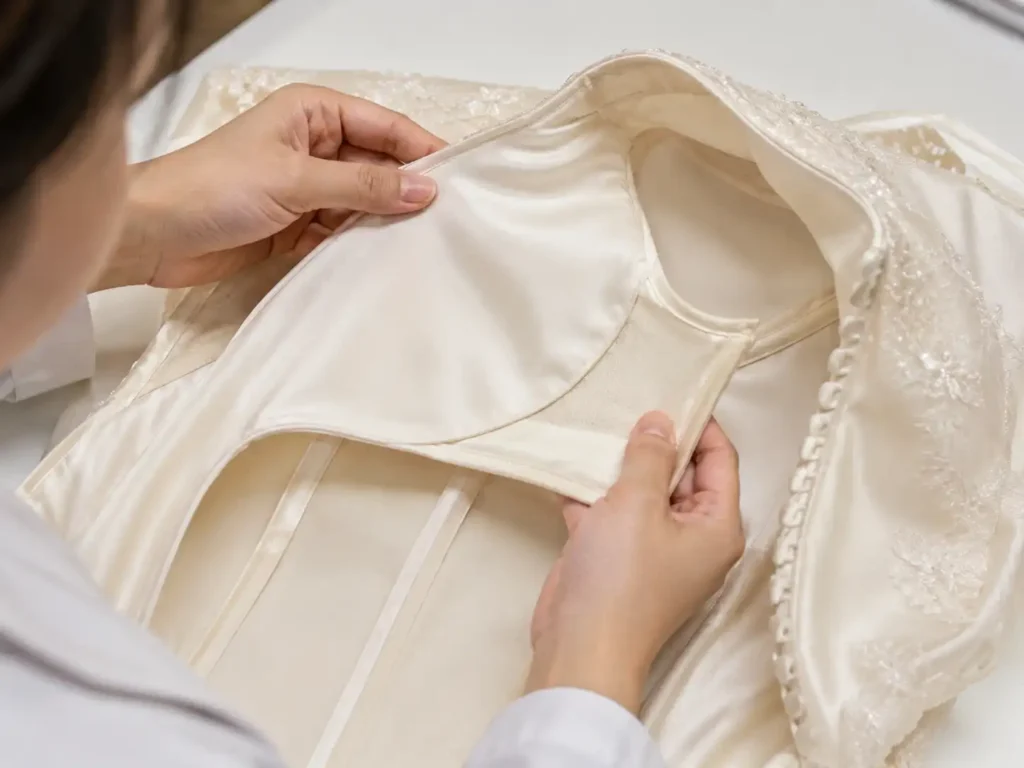
A structured silhouette should feel secure without creating unnecessary pressure. Cups, boning, under-bust seams and closures can become uncomfortable when edges, channels or seam allowances concentrate force in the wrong areas.
Comfort review includes cup edge position, lining softness, boning ends, underarm height and pressure around the waist or upper bust. The garment should also allow expected movement for its wearing occasion. An evening dress may prioritize long-duration comfort, while partywear needs stability during more active movement.
Jinfeng evaluates structure and comfort together during sample development. When support changes, related pattern or trim information is updated so bulk sewing follows the approved construction rather than relying on operator judgement.
Boning Systems Need Support Without Harshness or Distortion
Boning controls shape, but placement and construction determine whether support feels intentional or uncomfortable. Jinfeng develops boning together with pattern lines, cups, lining and closures so reinforcement strengthens the silhouette without creating visible ridges or pressure points.

Boning Routes Follow Structural Need
Boning should be positioned where the bodice needs resistance against folding, collapse or loss of waist shape. Seam lines often provide natural channels, but every seam does not automatically require reinforcement. Corset-inspired dresses may use vertical support around center front, princess lines or side sections, while softer structured dresses can rely on fewer targeted channels.
Placement affects appearance. A boning route sitting too close to a cup edge can distort bust projection. Poorly positioned side boning may force the side seam away from the body. Waist shaping can also become uneven if left and right support lines do not mirror each other.
During development, the pattern and sample teams review whether the selected route supports the intended silhouette and whether production sewing can reproduce the location consistently.
Channels, Ends and Lining Protect the Wearer
Boning requires controlled channels. Channel width should allow the reinforcement to sit securely without twisting, while seam allowances and lining need enough clearance to avoid bulky ridges. Ends require protection so hard edges do not push through fabric or irritate skin.
Internal cleanliness matters in premium fashion. Exposed rough edges or poorly secured channels can create complaints even when the exterior looks good. Lining can help isolate structural elements from the body, but lining tension should remain compatible with the outer shell.
Sample inspection therefore looks at channel straightness, boning length, end protection, internal stitching and comfort at pressure points. Approved internal construction should become part of sewing instructions and QC checkpoints before bulk.

Boning Must Stay Consistent in Production
Small positional variation becomes visible quickly in corset styles. One panel can appear wider, one cup can sit higher or the center front can twist when boning placement changes between garments. Production therefore needs clear reference positions rather than visual approximation.
Pattern markings, seam references and approved samples help sewing teams maintain placement. In-line inspection can catch channel or symmetry problems before garments reach final finishing. Measurement inspection then checks whether the structured shell still matches approved bust, waist, neckline and length standards.
Repeat orders benefit from preserved boning position, cup position, pattern records and Golden sample references. Any change in fabric stiffness, cup type or boning specification should trigger review before old construction is reused.
Fit Samples Show Whether the Bodice Works on Body
Flat measurements cannot reveal every structured-bodice problem. Fit samples allow pattern, cup, neckline and internal support to be assessed on the body before bulk decisions are locked.

Front, Side and Back Views Reveal Different Risks
Front views help assess center-front balance, neckline symmetry, cup position and waist shaping. Side views show bust projection, underarm coverage, side-seam balance and whether the bodice rotates forward or backward. Back views reveal closure tension, back neckline balance and left-right symmetry.
Structured garments should also be reviewed during movement. Raising arms, walking, sitting or changing posture can expose slipping, gaping or pressure which remains hidden in static photographs. Strapless styles especially benefit from movement feedback because security cannot be judged from one standing image.
Fit comments become more useful when accompanied by marked photos and measurements. Jinfeng uses front, side, back and detail feedback to determine whether pattern, cup, boning, lining or trim changes are required.

Fit Corrections Need Clear Cause and Action
A loose neckline does not always mean reducing the entire upper circumference. A tight waist may involve pattern shape rather than size. Cup exposure can result from cup placement, neckline depth or shell tension. Each visible issue needs a defined cause before a correction is approved.
Possible actions include adjusting upper-bust shaping, moving cup position, changing neckline height, altering princess seams, shifting waistline, changing boning placement or modifying lining support. Some corrections affect only pattern; others require material or trim changes.
Approved feedback should enter the revision record so the next sample tests a defined solution. For major structure changes, a revised sample is normally more reliable than attempting to carry an unverified correction directly into PP production.
Fit Approval Must Consider Bulk and Grading
A beautiful sample on one fit model is only the beginning. Fit needs to remain compatible with the intended size range and production process. Before PP approval, the development team should understand which points are critical for grading and measurement QC.
Structured areas such as cup position, bust coverage, upper-bust circumference, neckline, strap placement and waist tension deserve particular attention. A fit correction which works only in the sample size may require a different grading rule to remain balanced across smaller and larger sizes.
Jinfeng connects sample feedback with updated patterns, size charts, grade information and QC measurements so fit decisions can move into bulk production with clearer standards.
Size Grading Must Protect the Original Bodice Balance
Commercial size ranges introduce new structural risks. Structured bodices cannot be enlarged or reduced uniformly because bust projection, neckline, cup, support and body proportions change at different rates.

Grade the Body and Structure Together
Basic bust, waist and body-length increments form only part of structured grading. Cup location, upper-bust width, neckline length, princess-seam shaping and boning position also need review. Keeping support components fixed while the surrounding pattern grows can push cups inward or outward and alter the intended silhouette.
Jinfeng can work from the brand’s approved size chart and grade rules, then relate pattern changes to structural parts. Size labels and packing ratios are handled later, but fit consistency begins with the graded pattern itself.
Measurement QC provides a second control by checking whether cut and sewn garments remain within approved tolerances for each size.

Smaller and Larger Sizes Create Different Problems
Smaller sizes may need narrower panels and adjusted cup positions without allowing seams to crowd together.
Larger sizes can require more support, different cup proportions or greater attention to neckline and under-bust stability. A single support formula may not perform equally across the entire range.
Structured designs also need visual consistency. The waist should still appear positioned correctly, boning should not migrate toward the side seam and neckline proportions should remain aligned with the design.
When size-range expansion introduces significant structural changes, a size-set review or additional fitting can be considered before large-scale production.

Fabric Changes Can Alter Grade Performance
A grade rule approved in one fabric may behave differently in another. Stretch, recovery, thickness and stiffness influence how measured garment dimensions translate to body fit.
Switching from structured satin to stretch satin, for example, may change upper-bust security and waist recovery even when the nominal pattern measurements stay similar.
Repeat orders using new fabrics therefore need renewed evaluation rather than automatic reuse of the previous pattern. Jinfeng keeps pattern, measurement, fabric and trim records, allowing old standards to be referenced while new variables are checked.
Sampling Converts a Design into a Production-Ready Standard
Structured bodices often require more than one sample because each round answers a different question. Sample stages separate design exploration from fit validation and final production approval.

First Sample Establishes Structure and Direction
The first sample puts pattern, fabric direction, cups, lining, boning and major construction into a real garment. Its purpose is not to pretend every detail will be final on the first attempt.
The first sample reveals whether the design concept works physically and where development needs correction.
For ordinary dresses, first samples commonly require around 10–15 days. Complex corset, strapless, lace, mesh, sequin or evening styles commonly require around 15–25 days, depending on pattern difficulty, material availability and special trims.
Custom fabrics or unusual support components can extend the schedule.
Early review focuses on silhouette, bust, waist, neckline, support, material behavior and construction feasibility. Clear feedback then determines whether the next step is a fit sample or revised sample.

Revised and Fit Samples Resolve Specific Problems
Fit samples test the garment on body.
Revised samples test approved changes.
Either stage may involve updated pattern lines, measurements, cup positions, boning routes, fabrics, closures or lining.
Jinfeng records approved revisions so the development history stays connected with later production files.
Revised samples commonly require around 7–15 days, while more complex changes are confirmed according to the amount of re-patterning, material replacement or new trim development involved.
A major fabric or structure change can justify another full fit review rather than a minor sewing adjustment.
Development moves forward when shape, support, comfort and commercial feasibility agree closely enough for production preparation.

PP and Golden Samples Lock Manufacturing Standards
A PP sample uses final or approved production-direction fabrics, trims, measurements, construction, labels and relevant packing details. PP development commonly requires around 7–15 days once required materials are available. Major design changes should be resolved before PP because the purpose of PP is production confirmation rather than open-ended redesign.
After approval, a Golden sample can serve as an important physical reference for bulk sewing, QC, packing and later repeat orders. Pattern files, BOM, fabric references, trim details, sewing instructions and measurement standards should agree with the approved garment.
The development path therefore becomes: First Sample → Fit Sample → Revised Sample → PP Sample → Golden Sample → Bulk Production, with stages adjusted according to project complexity rather than forced into a one-size schedule.
Three Locks Before Structured Bodices Enter Bulk Production
PP Sample Approval
Trim and Support Lock
Golden Sample Reference
Approved Development Must Translate Cleanly into Bulk Production
Bulk production creates a different challenge from sampling: every approved decision must remain repeatable across operators, sizes, colors and production batches. Structured styles need disciplined preparation before cutting and sewing begin.

Production Files Carry the Approved Construction
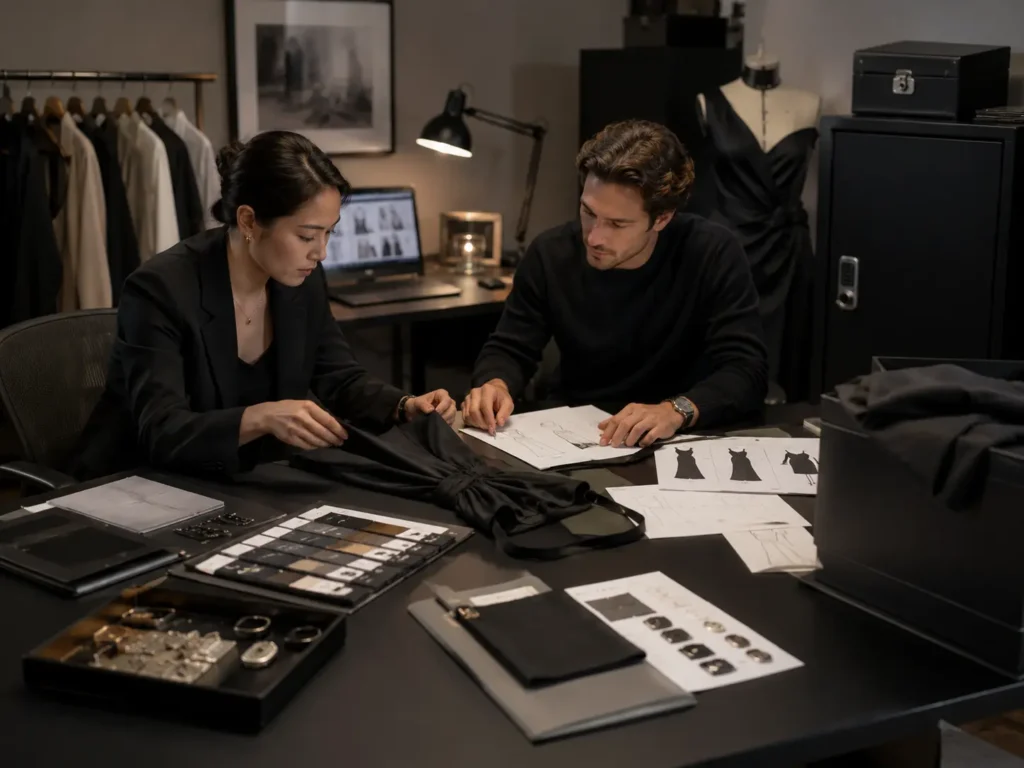
The production package should reflect final development decisions. Relevant references can include final pattern, size chart, grade rules, BOM, approved fabric, cup and boning specifications, sewing instructions, trim placement, label direction, packing requirements and QC checkpoints.
Structured bodices benefit from explicit placement references. Cup location, boning route, anti-slip tape, neckline finishing and lining attachment should not depend on individual operator memory. When a revised sample changes any bulk-relevant detail, the corresponding production file needs an update as well.
Jinfeng’s project-management process tracks requirement confirmation, sample versions, fabric and trim status, production progress, QC feedback and packing confirmation. A clear file trail helps multi-style programs stay organized when several structured designs move through production at the same time.

Cutting and Sewing Need Structural Discipline
Cutting affects symmetry before sewing begins.
Grain direction, satin face direction, stretch orientation and matching left-right panels can influence the final bodice.
Structured garments with multiple shaped pieces are sensitive to cutting accuracy because small panel differences can shift seam lines or bust balance.
During sewing, cup attachment, boning channels, zippers, lining and seam order need to follow approved construction. In-line checks can catch twisted channels, asymmetric panels, misplaced cups or neckline issues while correction is still possible at line level.
Production capacity alone does not guarantee reliable structured garments. Allocation should account for product complexity, fabric behavior and QC requirements so a detailed corset program receives a production setup appropriate for the work.

Bulk Timeline Is Confirmed After Key Inputs Are Locked
Jinfeng does not use one fixed bulk-production promise for every structured style.
Production timing depends on quantity, style complexity, fabric, trims, colors, size range, packaging, QC requirements and production schedule.
A realistic production plan is prepared after PP direction, required materials and order quantities are confirmed.
Special-dyed fabrics, customized trims or complex packaging can add procurement time before sewing starts. Launch-critical programs can also be planned around shipment priorities, with air, sea or split-shipment options evaluated according to project requirements.
Clear timelines are more useful than unrealistic speed claims because structured garments carry greater risk when material or development steps are skipped.
Structured Bodice QC Follows the Garment from Material to Packing
Quality control needs product-specific checkpoints. Cup shape, boning alignment and upper-bust stability cannot be judged through a generic final inspection alone.
Structural QC Starts During Sewing
In-line review focuses on construction while the garment can still be corrected efficiently. Structured styles can be checked for left-right panel symmetry, cup placement, boning channels, seam direction, neckline construction, zipper installation, lining position and internal cleanliness.
A visible difference of only a small amount around a cup or boning line can change the garment’s appearance more than the same difference on a loose silhouette. QC therefore needs to understand critical points rather than only counting obvious sewing defects.
Problems identified during sewing are fed back for correction and reinspection rather than being left until final packing.
Measurement QC Protects Fit Across Sizes
Measurement inspection checks key dimensions against approved standards and tolerances. Structured dresses may require special attention around bust, upper bust, under bust, waist, neckline, strap length, garment length and relevant seam positions.
Measurements should be connected with fabric behavior. Stretch garments and non-stretch structured wovens do not behave identically, so tolerances and inspection methods should reflect the approved client standard and product construction.
Size labels, polybag stickers and carton breakdown also need to correspond with the garment size to prevent correct garments from becoming warehouse or retail errors.
Final QC Connects Appearance, Function and Packing
Final inspection reviews finished appearance, support, closures, symmetry, lining, pressing and packaging. Satin needs careful handling for snagging and pressing marks. Lace and mesh require hole and placement review. Structured bodices need clean cup and boning presentation without visible internal distortion.
Jinfeng’s overall QC system includes incoming material QC, cutting QC, sewing QC, in-line inspection, garment inspection, pressing review, packing QC, AQL inspection and client-inspection support. Structured-product checkpoints are added according to style risk rather than replaced by generic final inspection.
Repeat-order records can preserve previous QC observations and Golden-sample references, allowing later production to compare against established standards while still checking new fabric batches and other changed variables.
Cost and MOQ Depend on Structure, Materials and Program Scope
MOQ by Style and Color
Structure Changes Cost
Quote After Technical Review
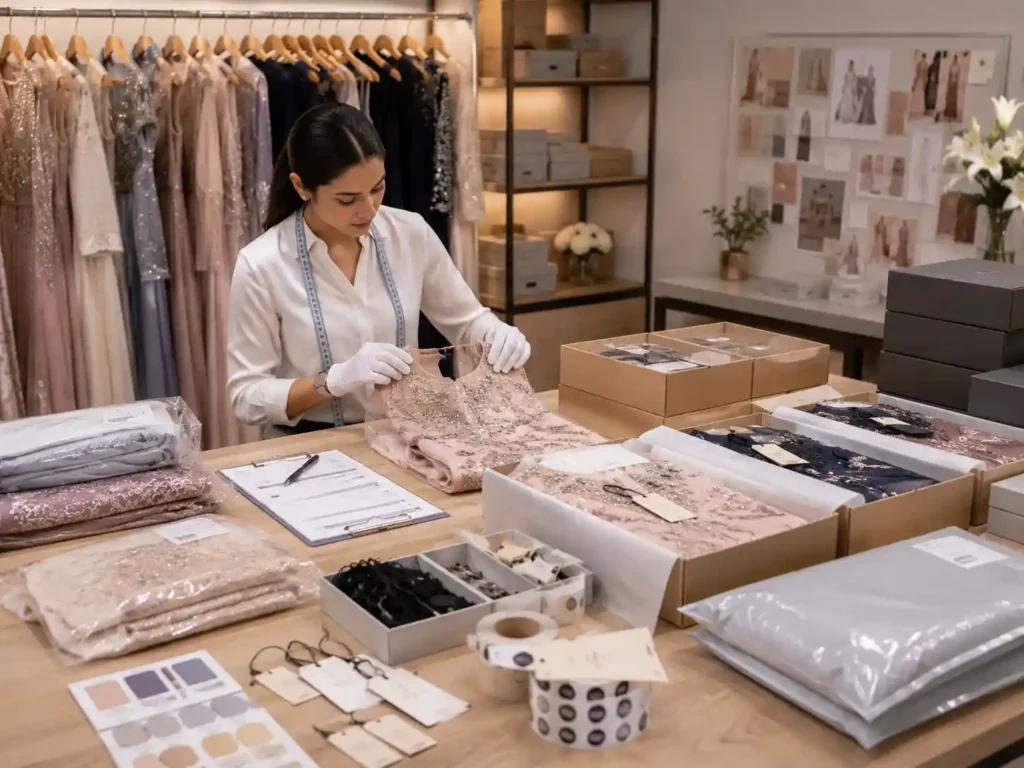
More complete project files create more useful quotations. A tech pack, reference image or original sample should ideally be accompanied by target quantity per style/color, size range, fabric direction, color plan, support requirements, private-label details and delivery target. Structured styles are reviewed before quoting because small changes in cup, boning, lining or fabric can materially affect cost. Samples are charged separately; when an approved style moves into a qualifying bulk order, the sample fee may be deducted by project.
Brand-Ready Handling Beyond the Bodice Construction
NDA and Design Protection
Private Label and Delivery
Repeat-Order Records
Repeat production becomes easier when previous standards remain available. Jinfeng can retain pattern, size chart, grading, fabric reference, color information, cup and boning positions, trim records, BOM, sewing instructions, QC notes, Golden sample and packing requirements. New colors, fabrics or support components still need confirmation because material differences can alter fit or production. Historical records reduce unnecessary redevelopment while keeping each new batch subject to current material and quality checks.
Check These Points Before Approving a Structured Bodice Supplier
A capable supplier should be able to explain how structure becomes a repeatable garment, not only show finished corset photos. The following qualification points help technical and sourcing teams distinguish sample-making ability from complete development and production control.
| Qualification Point | Strong Evidence to Request | Warning Sign |
|---|---|---|
| Pattern Development | Internal pattern review, revision process, fit correction | Send image, we copy it |
| Bust Engineering | Cup position, upper/under-bust control, neckline review | Cup treated as generic trim |
| Boning | Defined route, channel, end protection, comfort review | No explanation beyond add boning |
| Fit Sample | Front/side/back feedback and pattern correction | Flat measurements only |
| Size Grading | Grade rules linked to cup, neckline and support | Simple proportional enlargement |
| Material Review | Fabric, lining and support evaluated together | Fabric substitution without reassessment |
| PP Sample | Final materials, measurements and construction locked | Bulk begins from an early sample |
| Golden Sample | Physical reference used for production and QC | No common production reference |
| Bulk QC | Cup, boning, measurements, symmetry and lining checked | Final appearance check only |
| Brand Protection | NDA, protected tech packs and patterns | Client designs openly shared |
Structured Bodice Development Frequently Asked Questions
Complex corset, strapless, lace, mesh, sequin and evening styles commonly require around 15–25 days for first-sample development. Timing depends on pattern difficulty, fabric availability, cups, boning, special trims and material development. Ordinary dress samples can be faster, while custom fabrics or unusual support components may extend the schedule.
Yes. Jinfeng can begin from reference images, sketches, tech packs, line sheets or original samples when the brand has legitimate development rights. Reference images still require structure interpretation because hidden pattern, lining, cup and boning details cannot be confirmed visually. More complete measurements and construction direction reduce unnecessary sample revisions.
Cup position is reviewed against bust point, neckline, upper bust, under bust, princess seams and overall pattern balance. Fit samples help verify projection and coverage on body. Once approved, cup location can be incorporated into pattern or sewing references so production pieces remain aligned rather than positioned by visual judgement.
Strapless stability can involve upper-bust shaping, cups, boning, waist anchoring, side-panel control, anti-slip materials and closure tension. Tightening the top edge alone can create discomfort without solving support. Fit testing during movement helps determine whether the structure remains secure before PP approval.
Yes, when fit or support review shows a need. Boning type, length, route or channel can be adjusted during development. Any change affecting bulk construction should be documented and tested before final approval. Major structural changes may require a revised sample rather than moving directly into PP.
Most structured styles use lining or another internal support arrangement, but construction depends on shell fabric and design. Lining can improve comfort, opacity and internal cleanliness while separating boning or seam allowances from skin. Stretch, weight and tension need to remain compatible with the shell to avoid distortion.
Grading reviews bust, upper bust, under bust, waist, neckline, cup location, straps, panel lines and support positions rather than scaling every component equally. Jinfeng can work from the brand’s size chart and grade rules, then use measurement QC to check production against approved size standards.
A PP sample confirms final production direction after fabric, trims, measurements, construction and relevant label or packing requirements are settled. For structured bodices, cup, boning, lining, closure and fit details should already be resolved. Major design changes after PP can affect production timing and cost.
Jinfeng’s standard MOQ starts from 200 pcs per style/color. Sizes can be distributed within the confirmed quantity. Custom-dyed fabrics, lace, sequins, special cups, boning, unique trims or private-label packaging may carry separate supplier MOQ, so final requirements are reviewed by project.
Bulk preparation uses approved patterns, measurements, fabric and trim references, sewing instructions, PP/Golden samples and QC checkpoints. Structured garments receive product-specific checks around cups, boning, neckline, measurements, symmetry and lining. Incoming, cutting, sewing, in-line, garment, pressing and packing inspections support the overall production process.

Send Your Structured Bodice Project for Development Review
Structured bodice quotations become more accurate when the development team can review the product before discussing final price, sampling and production timing.
Send a tech pack, reference image, sketch, line sheet or original-sample information together with the intended order plan. Jinfeng can review pattern complexity, fabric direction, cup and boning requirements, lining, fit risks, size range, sample route, MOQ fit and bulk-production considerations. Projects with multiple styles can also include a line sheet so shared materials, colors and development priorities can be evaluated together.
For a useful first review, include:
- Style images, tech packs or design files
- Target quantity per style/color
- Intended size range and size chart
- Preferred shell fabric and lining direction
- Cup, boning, strapless or support requirements
- Private-label and packaging requirements
- Target launch or required delivery window
- Any previous fit or production problem needing correction


