 Skip to content
Sequin Placement Development
Turn Sequin Artwork Into Production-Ready Garments
A strong sequin concept needs more than decorative material. Placement has to work with garment structure, fit, movement, lining, seams and repeat production.
- Complex sequin styles typically require 15–25 daysfor first-sample development, depending on structure, fabric availability and decorative requirements.
- Development is supported by 2 sample rooms, 7+ senior pattern makers and 20+ sample machinists.
- Sequin-focused production controls cover loss, skin contact, seam thickness, lining, zipper flatness and packing protection.
- 15+ QC inspectorssupport material, inline, finished-garment and packing checks.
- MOQ starts from 200 pcs per style/color, subject to sequin fabric, special decoration and material requirements.
Built Around Garment-Level Sequin Development
Development Resources
Sequin Production Focus
Bulk Quality Control
Developed for Established Fashion Programs
Product Development Teams
Sourcing and Technical Teams
Partywear and Occasionwear Programs
What Sequin Placement Development Really Controls
Sequin placement development converts visual direction into garment-level instructions that can survive pattern making, sample correction, size grading and bulk production. A reference image alone rarely contains enough information to control all of those stages.
From Artwork to Garment Map
sequins or a directional surface effect, but production requires a much more specific interpretation. The first task is to understand where the decoration belongs in relation to the garment rather than treating the artwork as a flat image.
The development review considers the design reference together with garment length, neckline, center front, bust area, waistline, side seams, zipper, armhole, slit and hem. A placement that looks balanced on a flat artwork may shift once darts, curved seams, stretch, drape or body shaping are introduced.
Pattern pieces therefore matter early. The garment must be able to close, stretch, hang and move without forcing the decorative area into an unstable position. Dense sequins near a side seam can make sewing bulky. Decoration around an armhole can become uncomfortable. A motif ending at the waist can look uneven when grading alters body proportions.
The aim is not to make the design less expressive. The aim is to preserve the intended visual hierarchy while giving production teams clear reference points for cutting, sewing, sample review and later QC.
Placement Must Follow Structure
Sequin placement cannot be separated from construction. Dress panels move through cutting and assembly before becoming a finished garment, and every seam can alter the visual relationship between decorative areas.
Center-front placement needs to remain visually centered after sewing. Symmetrical motifs require left-right balance. Decoration crossing a waist seam needs continuity between upper and lower panels. Zipper areas require enough clearance and thickness control for smooth installation. Necklines and armholes need special review because exposed sequin edges can contact skin.
Stretch fabrics introduce another variable. A motif placed on an unstretched panel may widen or distort when worn. Dense areas can also reduce local stretch compared with the surrounding fabric. Sample fitting is therefore used to judge how the decorative surface behaves on the body rather than only on the cutting table.
Placement decisions are recorded together with approved pattern, material and construction information so later revisions do not rely on memory.
Approval Must Become a Standard
A visually approved first sample is not automatically ready for production. Changes in fabric, lining, seam method, size chart or trim can alter the final appearance even when the artwork itself remains unchanged.
Approved development needs to move into a controlled sample sequence. Revised samples capture corrections. PP samples confirm the final combination of fabric, construction, sizing and production requirements. For suitable high-requirement programs, a Golden Sample provides a physical reference for bulk sewing, QC and future repeat orders.
The final objective is repeatability. A placement is commercially useful only when production teams can understand what was approved, inspectors know what to compare, and later batches can return to the same documented standard.

Files That Make Development More Accurate
Reference Images
Artwork or Motif File
Tech Pack
Size Chart
Fabric Direction
Commercial Plan
Sequin Placement Directions We Can Develop

All-Over Placement

Motif Placement

Scattered Placement

Gradient Placement

Border Placement

Zoned Placement
Match Sequin Placement to Base Fabric
Base fabric controls how a sequin surface hangs, stretches and reacts to sewing. Fabric choice should be confirmed before placement is locked because a change in weight or stretch can alter both appearance and fit.
| Base / Construction | Typical Behavior | Placement Risk | Development Focus |
| Mesh Base | Light, flexible, may be transparent | Distortion, snagging, exposure | Stretch direction, lining, neckline stability, seam handling |
| Knit / Stretch Base | Moves with the body | Motif distortion under stretch | Recovery, body fit, density, side seams |
| Polyester Base | More stable and controlled | Added weight from dense sequins | Direction, drape, cutting, seam bulk |
| Dense All-Over Sequin | Strong visual coverage, heavier hand | Needle breakage, thick seams, material loss | Seam clearing, lining, zipper, packing |
| Soft Lining System | Separates sequins from skin | Poor lining can shift or expose edges | Coverage, length, attachment, comfort |
Placement Must Work With the Pattern
The most important placement decisions happen where decoration meets real garment structure. Pattern lines determine where panels join, where the body creates volume and where a decorative area may become difficult to sew or uncomfortable to wear.

Center Front and Symmetry
Centered artwork looks simple until garment shaping is added. Bust shaping, princess lines, ruching or stretch can move the apparent center even when the flat panel is technically correct.
Development starts from the approved base pattern. Decorative position should be reviewed against neckline depth, bust point, waistline and garment length rather than measured only from the raw fabric edge. For symmetrical designs, left and right areas need to balance after sewing, pressing and fitting.
Sequin direction also affects visual symmetry. Reflective surfaces can appear different when adjacent panels are turned or cut in different directions. Panel orientation therefore belongs in the development review, particularly for full-coverage or strongly directional materials.
When a brand requires a specific placement tolerance, the measurement method and acceptable range should be defined by project. Jinfeng does not apply an invented universal tolerance to every style because garment structure and decorative method vary too widely.
Seams, Darts and Zippers
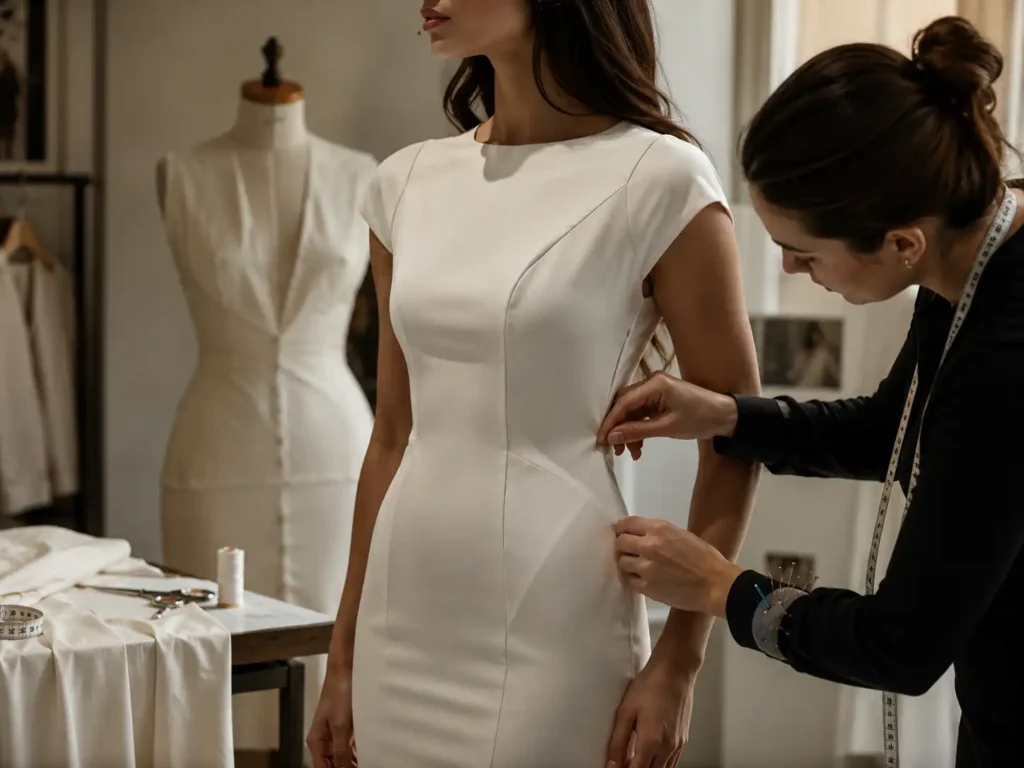
Side seams, waist seams, darts and zippers are common conflict points. Dense decoration can create a thick seam allowance, increase needle breakage or prevent a concealed zipper from lying flat.
A visually perfect artwork may need construction adjustment around those areas. Sequin material near seam allowances can require controlled handling so the seam closes cleanly without leaving sharp edges or uneven bulk. Dart shaping also changes surface geometry; a motif crossing a dart may no longer look continuous after the dart is sewn.
Zipper zones deserve particular attention on fitted dresses. Added bulk can create waviness, stiffness or visible ridges. Sample making allows the team to see whether decoration, seam allowance, lining and zipper tape can coexist before the style moves toward PP approval.
The development record should keep approved pattern and construction information together. Changing one without reviewing the other creates unnecessary bulk risk.

Necklines and Armholes
Decorative zones near the neckline or armhole affect both appearance and comfort. Party and evening pieces frequently bring sequins close to exposed skin, where rough edges or loose pieces can create irritation.
Sample review checks whether lining or binding provides sufficient separation. Neckline shape also matters: a deep V, halter, strapless or one-shoulder dress has different tension and coverage requirements. Heavy decoration near the top of a garment can alter how the neckline sits or how straps carry weight.
Armhole zones need enough clearance for movement. Dense sequins directly under the arm can cause rubbing even when the dress looks clean on a mannequin. Development therefore balances visual placement with real wearing conditions.

Hems, Slits and Movement
Hem and slit areas are active parts of the garment. They move while walking, sitting and dancing, and decorative material can make edges heavier or stiffer than expected.
A dense border near a mini-dress hem can change how the skirt hangs. Decoration around a high slit needs enough stability to avoid catching or exposing rough seam areas. Long evening pieces also need careful packing so decorative hems are not crushed during transport.
The best placement solution preserves the visual effect while allowing the garment to behave naturally. Development decisions should therefore be made on the finished sample, not solely on the flat artwork.
Keep Placement Balanced Across Size Grading
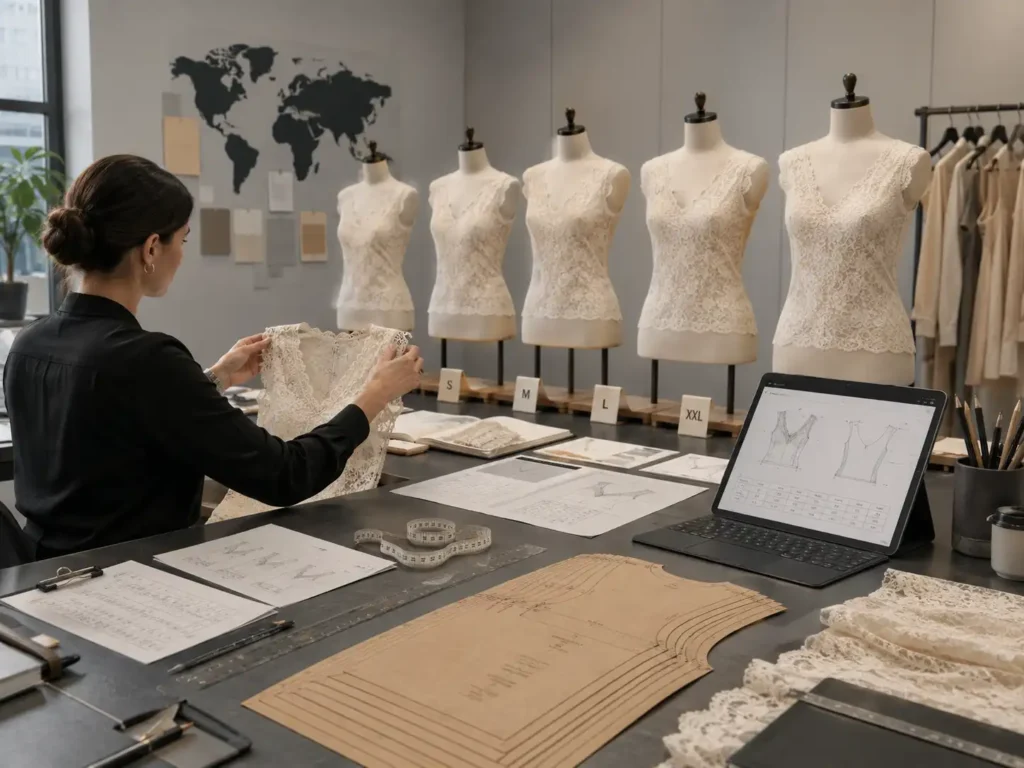
A placement approved on the base size may not remain visually balanced when bust, waist, hip and body length change. Jinfeng develops sizing from supplied brand standards rather than treating decoration as a fixed graphic pasted onto every size.
Establish the Base Size First
The base size creates the first relationship between artwork and garment landmarks. Jinfeng can work with common US, UK, EU and AU systems, alpha sizing from XS–XL, plus extended and plus-size ranges according to supplied size charts.
Before placement grading is reviewed, the base pattern, fit and garment proportions should be stable. Moving a neckline, waist or skirt length after decorative position is approved can change the entire visual balance.
Important reference points may include center front, neckline edge, bust area, waist seam, hip level, side seam, slit and hem. Those relationships are more useful than a single measurement from the top of a raw fabric panel.
Do Not Scale Decoration Blindly
Size grading is not always a simple percentage enlargement. Wider bust and hip measurements, longer body lengths and different seam positions can change the way a motif sits on the body.
A centered bodice motif may need to remain visually centered rather than grow at the same rate as garment width. A gradient beginning at the waist should continue to relate to the waist after grading. Border placement may need a different repeat strategy when the neckline circumference changes.
Review is especially important for fitted partywear because stretch and body shaping affect the decorative surface after the garment is worn.
Extended Sizes Need Separate Review
Jinfeng can support extended and plus-size development according to brand size charts, fit preference and approved tolerances. Larger sizes should not be created by simply enlarging a smaller pattern.
Bust structure, armhole coverage, shoulder width, waist position, hip ease, slit height and movement allowance may all need separate adjustment. Placement should follow the corrected garment architecture.
For multi-size programs, final grading information should be locked before bulk cutting. Production and QC then work from the approved size chart, pattern versions and decorative references rather than relying on one sample size.
Control Comfort Around Sequin Construction
A successful sequin garment has to photograph well and remain wearable. Decorative intensity should never hide problems such as scratching, stiff seams, weak lining or an uneven zipper.
Skin Contact
Seam Thickness
Needle Risk
Lining Coverage
Zipper Flatness
Packing Protection
Sampling Turns Placement Into a Production Standard
Sampling is where artwork, pattern, fabric, fit and sequin construction meet for the first time. Jinfeng uses separate sample stages so visual approval does not get confused with final production approval.
Project Review Before Cutting
Development starts by reviewing available files: reference images, tech pack, artwork, size chart, fabric direction, quantity and launch plan. Any conflict between design, fabric and construction should be identified before sample work goes too far.
Sequin material itself may require separate development. Depending on pattern, color, base fabric and decorative specification, special sequin material development can take roughly 7–30 days. Standard available materials may move faster, while custom directions require supplier confirmation.
Pattern and material decisions are therefore handled together. A heavy all-over fabric may require a different structural solution from a light mesh-backed placement even if the dress silhouette appears similar.
First Sample
Complex corset, sequin, lace, mesh and evening styles commonly require around 15–25 days for a first sample, depending on material availability and construction. A normal dress may be faster, but decorative complexity should not be compressed into an unrealistic promise.
The first sample tests far more than appearance. Jinfeng reviews placement position, fit, garment weight, seam thickness, lining, skin-contact zones, zipper behavior and whether the proposed construction can be repeated in bulk.
Comments should be specific enough to convert into pattern or construction actions rather than vague requests such as “make it look better.”
Revised Sample
Revised samples typically require around 7–15 days, with timing depending on the amount of change.
Changes involving a new base fabric, new sequin material or major pattern correction can require a separate schedule.
Approved comments should be transferred into updated records: pattern, size chart, fabric approval, trim approval, sewing instruction and QC checkpoints where relevant.
Keeping revisions documented reduces the risk of one change being corrected while another approved detail is accidentally lost.
Photo Sample and PP Sample
A photo-ready sample serves campaign, ecommerce, lookbook or showroom needs. It may focus on visual presentation but should not automatically be treated as the bulk standard.
The PP sample has a different role. It confirms final production details after fabric, trims, measurements, construction and other requirements have been resolved. PP samples commonly require around 7–15 days once final materials are ready.
Separating visual samples from production samples is particularly valuable for sequin styles because small decorative changes can have large consequences for labor, material consumption and bulk consistency.
Lock the Standard Before Bulk Production
PP Sample
Golden Sample
Move Approved Placement Into Bulk Production
Bulk consistency depends on how well the approved sample is translated into factory instructions. Production should not rediscover design decisions on the sewing line.
Transfer the Approved File Set
The production package should bring together final pattern versions, size chart, fabric and trim approvals, sewing instructions, approved sample comments and QC requirements. Decorative direction belongs in the same production system rather than sitting in a separate message thread.
For sequin garments, special attention is paid to surface direction, seam areas, lining, zipper, skin-contact zones and packing protection. When a detail changes, the related instruction needs to change with it.
A clean handover reduces the gap between what development approved and what production teams actually see.
Assign the Right Production Route
Jinfeng operates six owned women’s fashion factories together with long-term production partners, allocating work according to product and construction needs. The internal manufacturing system identifies Factory 2 as the primary unit for sequin dresses, party dresses, club dresses and evening styles requiring strong control over sequin loss, skin contact, seam thickness and packing protection.
Factory selection is not based only on available capacity. Fabric type, silhouette, construction complexity, order size and delivery plan all influence allocation.
For multi-style programs, styles may be grouped according to material and construction so standards remain easier to control.
Control Changes During Production
Once bulk production starts, unrecorded design changes create risk. A decorative area moved to solve a sewing issue may affect symmetry, fit or visual balance somewhere else.
Production questions should therefore return to the approved sample and file set. Merchandising, production and QC teams can then decide whether the issue needs a construction adjustment, revised instruction or client confirmation.
The production schedule itself is confirmed after PP approval, final materials, quantities, sizes, packing and QC requirements are known. Jinfeng does not apply one universal bulk lead time to all sequin styles because material sourcing and decorative complexity vary by project.

QC Must Measure More Than Missing Sequins
Sequin quality control starts before sewing and continues through finished-garment and packing inspection. Jinfeng’s 15+ QC inspectors work across material, inline, final and packing stages.
Incoming Material Review
Sequin fabric is checked before cutting for visible defects, sequin loss, surface damage, color variation and other material issues relevant to the order.
Material direction should also be understood before panels are cut. Reflective surfaces can look different when pieces are turned, so direction control is particularly important for strong all-over effects.
Base fabric behavior matters as well. Stretch, hand feel, weight and surface stability influence how the material performs once shaped into a garment.
Problems found before cutting are far less expensive to resolve than problems discovered after hundreds of garments have been sewn.
Cutting and Panel Control
Cutting QC checks correct pattern versions, size bundling, panel quantity, fabric direction and other orientation requirements.
For placement-sensitive garments, panel position should follow the approved development method. A beautiful motif can still fail when it shifts at center front, breaks at a seam or appears different between left and right sides.
Bulk cutting should therefore work from the same pattern and decorative references used for approval.
Changes in size, color or material batch should be identified rather than assumed to behave identically.
Sewing and Finished Garment Review
Inline sewing checks focus on seam quality, seam allowance, symmetry, zipper flatness, lining attachment and other construction points. Sequin styles add surface integrity, sharp-edge risk and decorative interaction with seams.
Finished garments are then checked for measurements, overall appearance, color difference, loose threads, zipper function, lining and visible surface problems.
Placement inspection should follow the agreed project standard. Some programs may require defined reference measurements; others may use approved visual boundaries combined with pattern landmarks. The method should be confirmed before bulk inspection starts.
Packing Protection
Final QC does not stop when sewing is complete. Sequin surfaces can be damaged by poor folding, rubbing, compression or unsuitable packing materials.
Hangtags, size identification, polybags, folding and carton arrangements should be checked together with garment protection. Decorative pieces near hems, sleeves or bodices may need a folding method that avoids direct pressure on the most sensitive areas.
Packing is part of product quality because a dress that leaves the factory correctly but arrives with crushed or damaged sequins is still a failed delivery.
Common Sequin Placement Failures to Catch Early
Most expensive sequin problems begin during development and become obvious only after sampling or bulk sewing. Early identification keeps visual corrections from becoming production-wide rework.
| Failure | Likely Cause | Best Stage to Catch It | Production Impact |
| Motif looks off-center | Placement ignores garment landmarks | First sample | Visually unbalanced garment |
| Left/right mismatch | Weak symmetry reference | Sample / inline QC | Obvious appearance inconsistency |
| Distorted motif | Stretch-base mismatch | Fabric review / fitting | Placement changes on body |
| Thick side seam | Dense sequins enter seam allowance | Construction sample | Bulky sewing and poor fit |
| Scratching at armhole | Decoration too close to skin | Wear test / sample | Comfort complaints |
| Wavy zipper | Sequin bulk beside zipper | Sample construction | Poor back or side appearance |
| Excess sequin loss | Material or handling problem | Incoming / inline QC | Surface defects and rework |
| Crushed decoration | Packing pressure | Packing trial | Arrival damage |
What Changes Sequin Development Cost
Sequin Material
Coverage and Pattern
Base Fabric
Lining and Construction
Wastage and Protection
Quantity and Schedule
US Holiday Partywear Program
A sequin program becomes meaningful when development controls continue into real commercial quantities. Current Jinfeng brand programs commonly involve 10–30 styles and total order quantities between 20,000 and 80,000 pieces.

Program Profile — 18 Styles / 36,000 Pieces
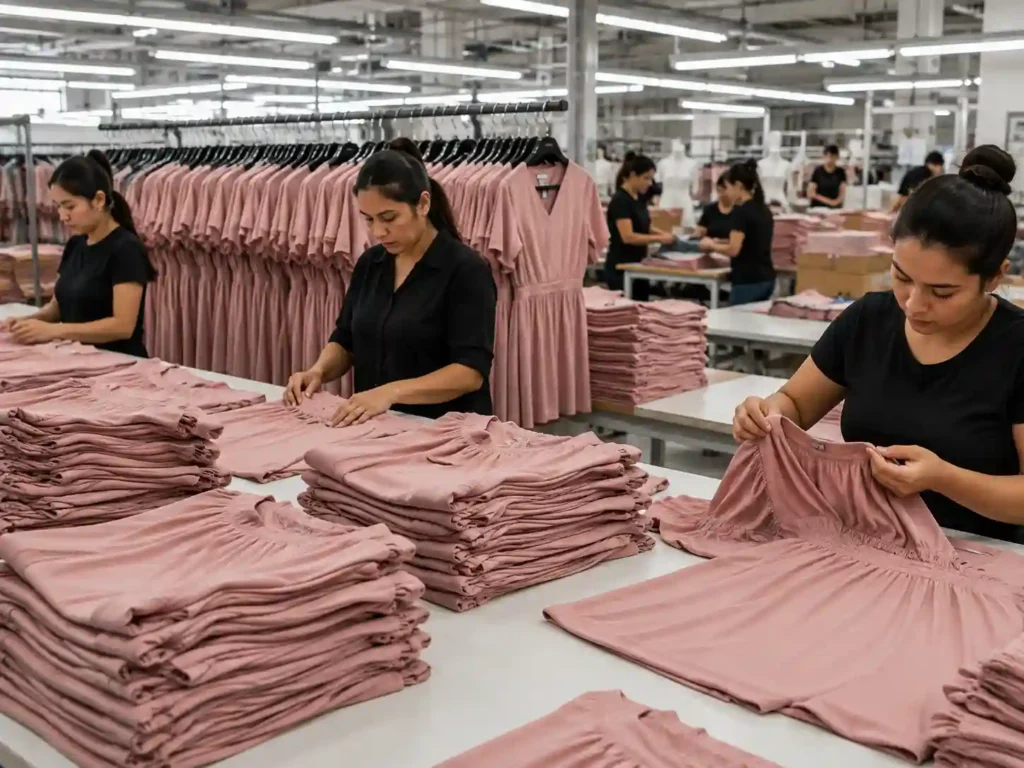
A representative US holiday partywear program at current brand-order scale can cover around 18 styles and 36,000 pieces, including sequin mini dresses, fitted party dresses, skirt sets and evening-led holiday styles.
Rather than treating all 18 styles as one construction group, development is separated by base fabric, silhouette and decorative intensity.
Dense sequin pieces require stronger seam and packing review; mesh-backed styles need transparency, lining and stretch checks; fitted styles require closer review of bust, waist, hip and zipper behavior.
Sampling is managed by version so placement comments, pattern corrections, lining changes and construction decisions do not become mixed across similar-looking styles. PP approval then closes the major production variables before factory allocation.
Development and Bulk Control
Key production risks in a program of this scale include sequin loss, skin scratching, needle breakage, thick seam allowances, zipper waviness, inconsistent reflective direction and packing damage.
The control route combines incoming sequin-material review, sample fitting, revised construction where required, PP confirmation, production instructions, inline QC and finished-garment checks.
Multi-style projects also need disciplined tracking. A fabric approved for one style cannot automatically be assumed suitable for another silhouette. Similar sequins on different bases can behave differently once stretched or shaped.
The objective is not merely to complete 36,000 garments. It is to keep the approved visual direction, fit and construction recognizable across every style group and production batch.
Evaluate More Than Sequin Sewing Ability
Pattern Integration
Sample Discipline
Look for separate first, revised, photo-ready and PP sample purposes. Jinfeng’s two sample rooms and 20+ sample machinists support structured development before a style is transferred to bulk production.
Bulk Verification
Prepare a Better Sequin Placement Brief
Design Inputs
Garment Inputs
Production Inputs
Sequin Placement Development Frequently Asked Questions

Send Your Sequin Placement Project
Send Jinfeng Apparel the files already available—whether the project begins with a reference image, artwork, tech pack or existing sample.
Our team will review the garment structure, sequin direction, base fabric, size range, lining, construction risk, quantity and sampling requirements before confirming the next development step.
For a more useful first review, include:
- Reference images or artwork
- Tech pack, if available
- Product type and silhouette
- Base size and full size range
- Preferred sequin or base fabric
- Target colors
- Quantity by style/color
- Required sample purpose
- Launch date
- Label and packing requirements
- Existing QC or inspection requirements


