 Skip to content
Bow-Detail Dress Development
Turn bow details into production-ready dresses with controlled proportion, structure, placement and repeatability.
A bow can look simple in a sketch and become one of the hardest parts to reproduce consistently in bulk. Jinfeng Apparel develops bow-detail dresses for established fashion brands, sourcing teams and product development departments that need more than decorative sewing.
- 2 sample rooms support first, fit, revised, photo-ready, PP and Golden sample stages.
- 7+ senior pattern makers review bow proportion, placement and interaction with the dress pattern.
- 20+ sample machinists support satin, mesh, lace, structured and occasion dress development.
- 15+ QC inspectors support bow symmetry, attachment, garment balance and packing checks before shipment.
Built for Professional Dress Development Teams
Product Development Teams
Sourcing and Buying Teams
QA and Production Teams
Where Bow-Detail Dresses Commonly Go Wrong
Wrong Bow Proportion
Loss of Shape
Garment Distortion
Unstable Placement
Sample-to-Bulk Drift
Packing Deformation
Development Capacity Behind Every Bow Detail
2 Sample Rooms
7+ Pattern Makers
20+ Sample Machinists
15+ QC Inspectors
18+ Sewing Lines
100,000+ Regular Monthly Capacity
Bow-Detail Dress Styles We Develop

Front Bow Dresses

Back Bow Dresses
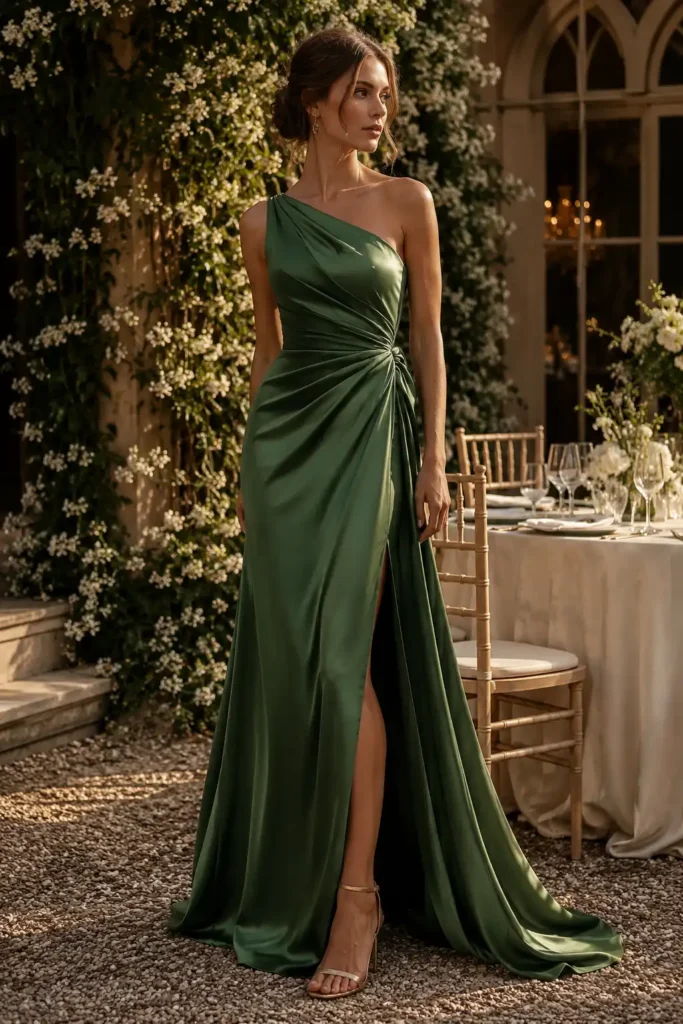
Waist Bow Dresses

Hip and Side Bows

Shoulder Bow Dresses

Oversized Statement Bows
Fabric Direction Determines Bow Shape and Behavior
The same bow pattern can look fluid, crisp, flat or unstable depending on fabric weight, surface, drape and internal structure. Fabric selection therefore needs to happen before the bow construction is finalized. Jinfeng reviews both the dress body and bow requirement so the visual effect remains compatible with sewing, pressing, fit, cost and bulk handling.
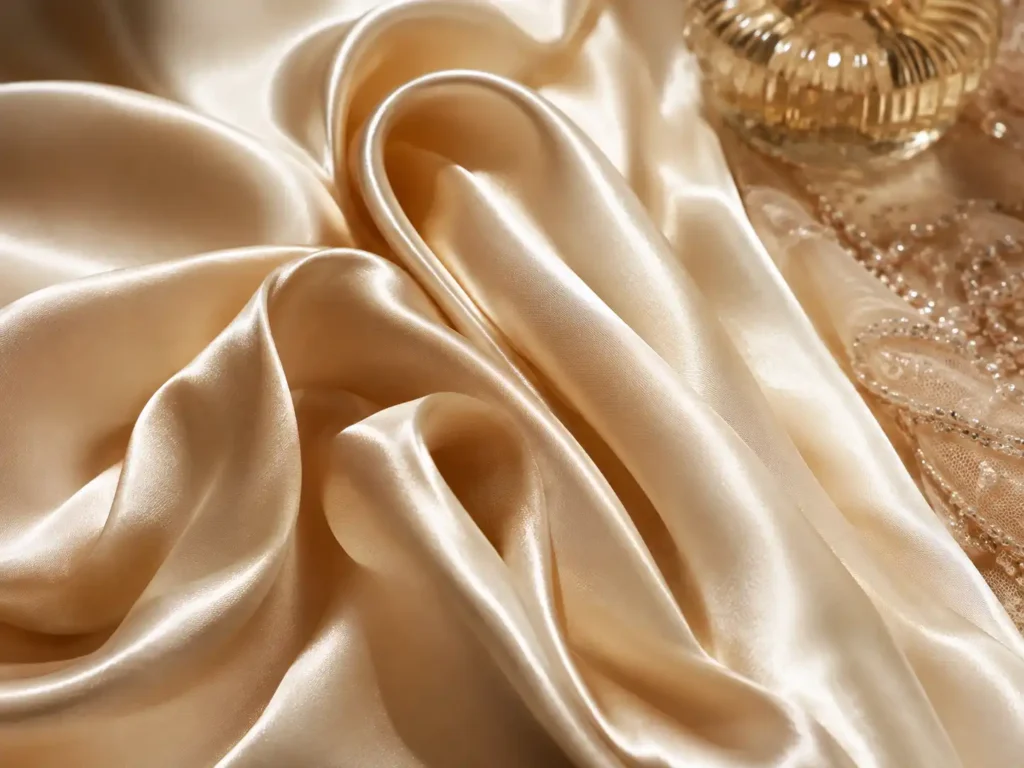
Satin for Fluid or Polished Bows
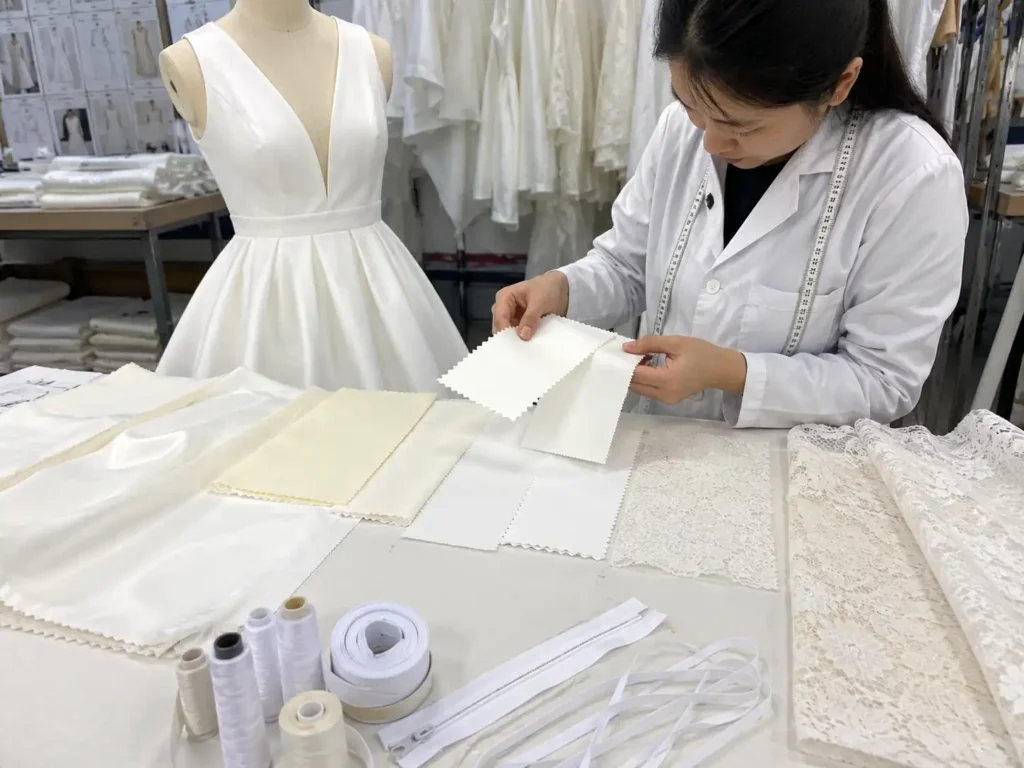
Satin is common in party, occasion and evening dresses because the surface catches light and photographs well. Its behavior varies widely by fiber content, weight, weave and backing. A soft satin may produce elegant tails but lose volume in large loops, while a heavier satin can hold a stronger silhouette but increase knot bulk. Sample work should evaluate surface marking, seam impression, snagging risk, pressing temperature and whether an additional internal layer is needed. For a hip or back statement bow, the goal is not maximum stiffness. The goal is enough body to maintain the intended form without making the attached dress panel buckle or stand away from the body.

Taffeta for Crisp Statement Shapes
Taffeta can create sharp, architectural bows with visible volume, making it useful for party and occasion silhouettes. Crispness also makes folding, pressing and packing more sensitive. Seam allowances can print through, sharp creases can remain after compression and large knots can become bulky quickly. During development, bow depth, layer count and internal reinforcement should be balanced against the dress body. A structured taffeta bow attached to a lightweight bodice may require reinforcement at the anchor area so the dress carries the bow without twisting. Packing trials are especially important when the bow must arrive with a clean three-dimensional shape.
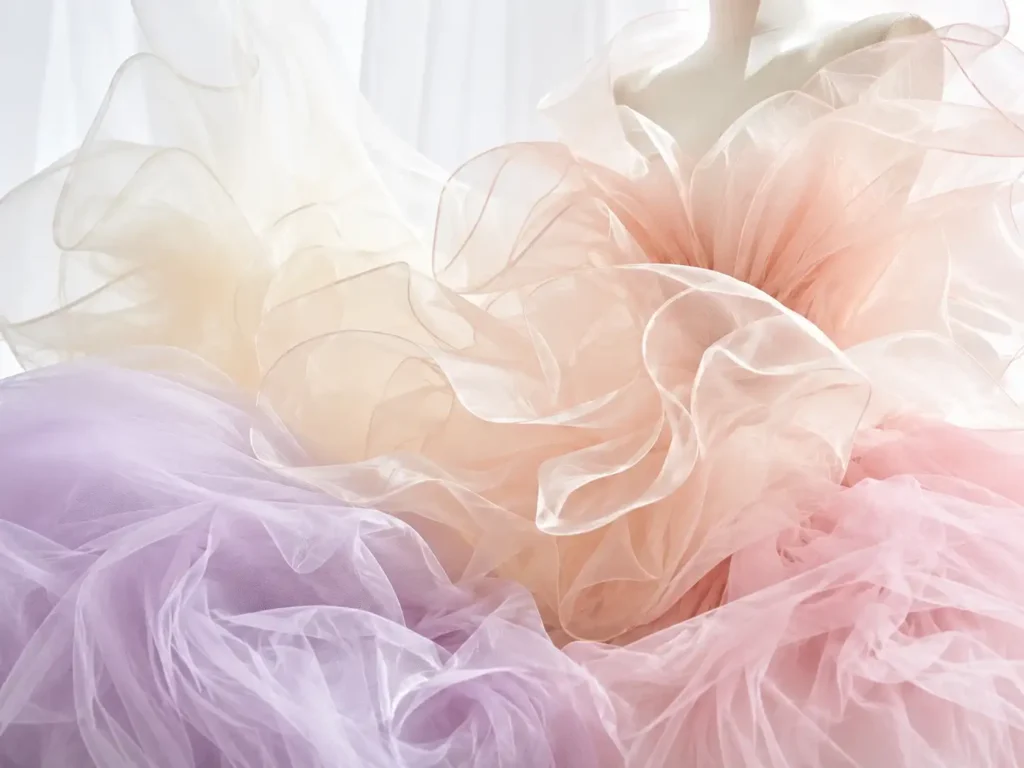
Organza for Lightweight Volume
Organza creates volume without the same mass as heavier structured fabrics. It works well for layered bows, transparent effects and statement details where a light silhouette is preferred. Transparency means seam finishing and internal construction remain visible, so raw edges, backing and attachment points need cleaner treatment. Multiple organza layers can increase shape while keeping the bow visually light. Development should also consider abrasion and snagging around sharp accessories, zippers or carton compression. For layered organza bows, consistent cutting and layer alignment are important because small shifts become visible through the transparent structure.

Crepe and Soft Wovens for Draped Bows
Crepe and softer woven fabrics support a more relaxed bow language. They suit waist ties, shoulder bows and soft back details where natural drape is part of the design. Problems arise when a sketch shows a crisp bow but the selected fabric cannot support the geometry. Adding too much reinforcement can change hand feel and create a hard patch at the attachment point. Sampling should establish whether the bow is expected to hang, fold or stand. The answer determines pattern width, internal layer, knot construction and whether a different fabric should be used for the bow while keeping the main dress fabric unchanged.

Mesh and Lace Need Layered Engineering
Mesh and lace can create distinctive bow details, but both require a support strategy when the bow needs volume or stable edges. Stretch mesh may distort under its own tension, while lace can have directional motifs, open areas and uneven edge density. The bow may need lining, backing, narrow seam finishing or selective reinforcement. Placement also needs to respect lace motif direction and transparency. When a mesh or lace bow is attached to a fitted dress, reinforcement should protect the base fabric without creating a visible hard block. Fabric approval should therefore include both appearance and construction compatibility.
Bow Construction Must Match the Dress Architecture
Different bow formats need different construction logic. A soft waist tie, a sculpted hip bow and a back statement bow should not share one generic sewing method. Development decisions should define the desired shape first, then establish the layers, support, attachment and finishing needed to reproduce it in bulk.
| Bow Format | Key Build Variables | Common Failure | Development Control |
|---|---|---|---|
| Soft Draped Bow | Fabric drape, tie length, loop size, knot thickness | Flat or uneven loops | Confirm finished dimensions, tying allowance and fabric recovery on sample |
| Structured Bow | Backing, layer count, seam allowance, pressing | Too stiff or too soft | Test reinforcement level and edge shape before PP approval |
| Oversized Statement Bow | Loop depth, internal support, weight, anchor points | Collapse, twisting, garment pulling | Review weight distribution, support and multi-point attachment |
| Waist or Hip Bow | Knot volume, waist/hip placement, side-seam relationship | Bulky waist or distorted skirt | Coordinate bow pattern with waistline, side seam and drape |
| Shoulder or Strap Bow | Strap length, tie function, armhole and neckline balance | Uneven neckline or unstable strap | Lock finished strap/bow length and grade placement with garment size |
| Back Bow | Back opening, zipper, neckline, anchor width | Bow rotates or closes intended opening | Establish stable anchor area and movement clearance in fit sample |
Pattern Development Converts Bow Ideas Into Repeatable Pieces
Pattern work gives the bow measurable geometry and connects it to the dress pattern. Jinfeng can review reference images, original samples, sketches, line sheets and tech packs, then develop the garment and bow pieces for fitting, revision, grading and production. Bow pattern development is treated as part of the dress architecture rather than a separate decorative afterthought.
Bow Pieces, Grain and Finished Dimensions
Loop panels, knot pieces, tails, straps and internal support pieces should be defined separately when the design requires them. Grain direction influences how satin, crepe and woven fabrics fold and recover. Finished bow dimensions need to account for seam allowance, turning, pressing and internal layers. A paper pattern that looks correct before sewing can produce a different finished size after multiple layers are enclosed. For statement bows, sample measurements should record visible width, loop depth and tail drop after pressing, not just flat cut-piece dimensions. Those finished references become more useful during sewing and final inspection.
Placement Anchors on the Garment Pattern
Bow location should be tied to measurable garment landmarks: center front, center back, neckline seam, waist seam, side seam, shoulder point, strap join or hip line. Visual placement alone is difficult to reproduce when garments move through multiple sewing operators. Pattern notches, seam references and measurement instructions create repeatable anchors. For asymmetrical designs, the offset from center or side seam should be defined clearly. Placement also needs to respect zipper paths, darts, boning, lining joins and openings so the attachment method does not interfere with fit or dressing function.
Dress Structure and Bow Load Work Together
Large bows can create load on a fitted bodice, waistline or back panel. Pattern development should identify whether the base area can carry the bow without stretching, collapsing or twisting. A light mesh panel may need hidden reinforcement. A satin side panel may need a wider internal anchor to avoid puckering. A strap bow may need a revised strap width or join construction. Structural changes are reviewed in sampling because reinforcement added to support the bow can also change hand feel, stretch or fit. The goal is a stable visual result without turning the garment into a rigid construction unnecessarily.
Grading Preserves Visual Proportion
Bow grading is not automatically the same as garment grading. A decorative bow may remain one size across several garment sizes, while a waist-integrated or strap-functional bow may need controlled adjustments. The decision depends on the role of the bow, the size range and the visual target. Jinfeng reviews bow placement together with bust, waist, hip, shoulder, neckline and strap changes so larger or smaller sizes do not shift the bow into an awkward position. Grading rules should be approved before bulk patterns are released, particularly for fitted dresses where a few centimeters can change the visual balance.
Placement, Fit and Grading Need One Standard
Bow position is part of fit when the detail sits on a neckline, strap, waist, hip or back opening. Development should define how the bow relates to body landmarks and how the relationship changes across sizes. The same visual result cannot be assumed from one base-size sample.
| Bow Location | Main Fit Risk | Review During Sampling | Grading Focus |
|---|---|---|---|
| Neckline / Bust | Neckline pull, bust distortion, center shift | Bow center, neckline depth, bust shape | Center placement and neckline relationship |
| Shoulder | Shoulder drop, armhole exposure, uneven strap tension | Shoulder point, armhole, strap length | Placement shift and strap length |
| Waist | Wrong visual waist, excessive knot bulk | Waist seam, bodice length, knot thickness | Waistline position and proportion |
| Hip / Side | Skirt twisting, side-seam drag, visual imbalance | Hip line, side seam, bow weight | Hip placement and skirt balance |
| Back | Opening distortion, zipper conflict, bow rotation | Back width, opening, neckline, movement | Anchor width and back placement |
| Functional Strap Bow | Uneven neckline, inconsistent tying | Finished strap length, bow loop, tie allowance | Functional length across sizes |
Sampling Turns Bow Proportion Into a Production Standard
A bow should be judged on the actual garment, not only as a separate component. Sampling allows the development team to see how fabric, bow volume, attachment, fit and photography interact before the style reaches bulk production. Jinfeng supports multiple sample stages so changes can be recorded and transferred into the PP standard instead of being left as informal comments.

First Sample - Prove the Overall Direction
The first sample tests whether the dress silhouette and bow concept work together. Review points include bow scale, location, loop depth, tail length, fabric response, garment balance, opening function and any obvious pulling around the attachment area. A reference image may show a large bow without revealing internal support, so the first physical sample is often where construction assumptions are tested. The development team records what needs to change in the garment pattern, bow pattern, reinforcement, seam method or fabric direction. Fixed sample timing is not promised before material and construction review because custom fabrics, special trims and complex bow structures can change the development path.

Fit and Revised Samples - Correct the Interaction
Fit feedback should address the bow and the dress together. If a waist bow sits too low, the cause may be bodice length rather than bow placement alone. If a hip bow drags the skirt, the solution may involve anchor width, internal reinforcement or skirt balance. Revised samples can also test alternative backing, reduced layer count, modified knot thickness or a different bow width. Pattern changes, measurement changes, fabric substitutions, sewing changes and comments should be recorded so each revision has a clear reason. Complex styles may need more than one revision when fit and visual structure are both being changed.

Photo-Ready Samples - Check the Camera Result
For trend-led party and occasion programs, the sample used for campaign photography may need a higher level of visual finish than an early fit sample. Bow symmetry, surface condition, pressing, angle, tail position and silhouette become especially visible under studio lighting. A bow that looks acceptable in normal wear can photograph flat or uneven. Photo-ready sample planning is therefore useful when launch imagery is important. The photography sample should not automatically replace the production standard unless all fit, material, construction and packing requirements have also been confirmed.

PP and Golden Samples - Lock the Bulk Reference
Before bulk production, the PP sample should reflect the approved fabric, color, measurements, bow construction, attachment, trims, labels and packing method. Major redesign should not be left until this stage. After PP approval, production files should match the confirmed standard. A Golden sample can then serve as a physical reference for production, QC and repeat orders. Sample lead time and bulk delivery timing are confirmed by project after fabric availability, revision scope, order quantity, production loading, QC requirements, packing and launch date are reviewed. Dates are planned around the real development path rather than quoted as one universal number.
Workmanship Details Make Bow Quality Visible

Clean Bow Edges

Controlled Knot Volume
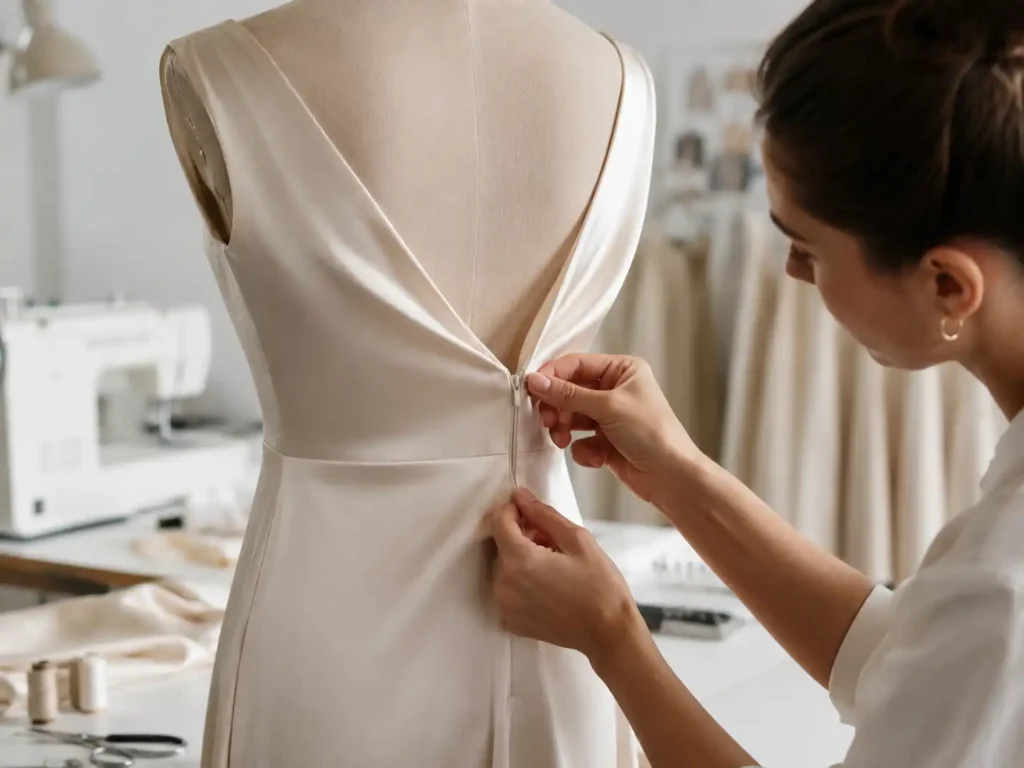
Hidden Reinforcement

Stable Attachment
Matched Symmetry

Controlled Pressing
Move the Approved Sample Into Bulk Without Losing Detail
Final Pattern
Fabric and Trim Record
Bow Construction Standard
Sewing Instructions
QC Checklist
PP Lock and Handover
Bulk Production Is Planned Around Style Complexity
Large fashion programs often combine simple commercial dresses with higher-risk hero styles. Jinfeng uses multiple factories, sewing lines, flexible lines, merchandisers and QC resources to allocate production according to fabric, construction and launch requirements instead of treating every style as the same workload.

Multi-Style Production Allocation
Jinfeng operates 6 owned womenswear factories and works with 10+ long-term satellite production partners. More than 18 sewing lines and 6+ flexible production lines support multi-style, multi-color and multi-size programs. Bow-detail styles are grouped according to fabric and construction so a structured taffeta statement bow is not planned like a simple soft tie bow. Capacity for each style is evaluated against line skill, order quantity, production schedule and QC requirement before confirmation.

Merchandising and Production Follow-Up
12+ merchandisers and order follow-up specialists support project communication across development, material readiness, sample approval, production, packing and shipment preparation. For collection programs, style priority can be aligned with launch dates and material arrival rather than allowing one complex style to block an entire assortment. Production updates should remain tied to confirmed milestones: fabric arrival, PP approval, line start, in-line inspection, finishing, final inspection and packing.

Large Orders Need Controlled Scaling
Regular monthly capacity across the production system exceeds 100,000 pieces, but the figure is not presented as unlimited capacity for every complex bow style. A large statement bow, special fabric, hand-applied embellishment or highly fitted silhouette can reduce line speed and require additional checkpoints. Jinfeng evaluates capacity by style complexity and production window, then matches the program to appropriate resources. Mature programs benefit from early quantity, color, size-ratio and launch information because those inputs affect line allocation and material planning.
Bow-Specific Quality Control Protects Bulk Consistency

Material Check
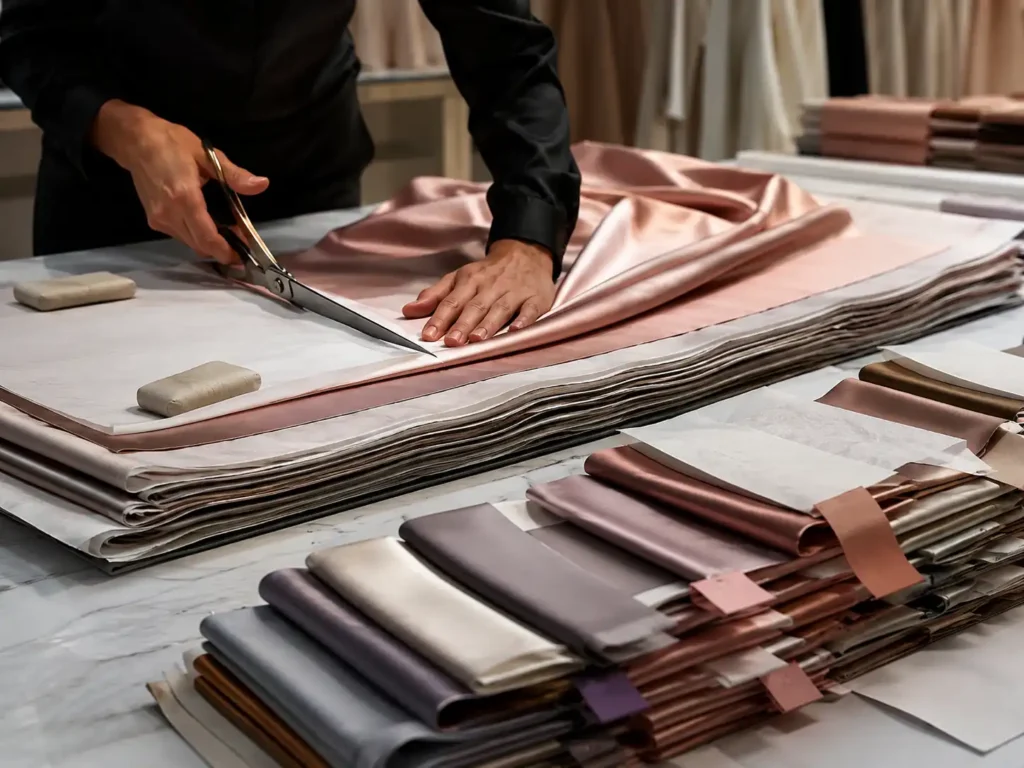
Cutting Check
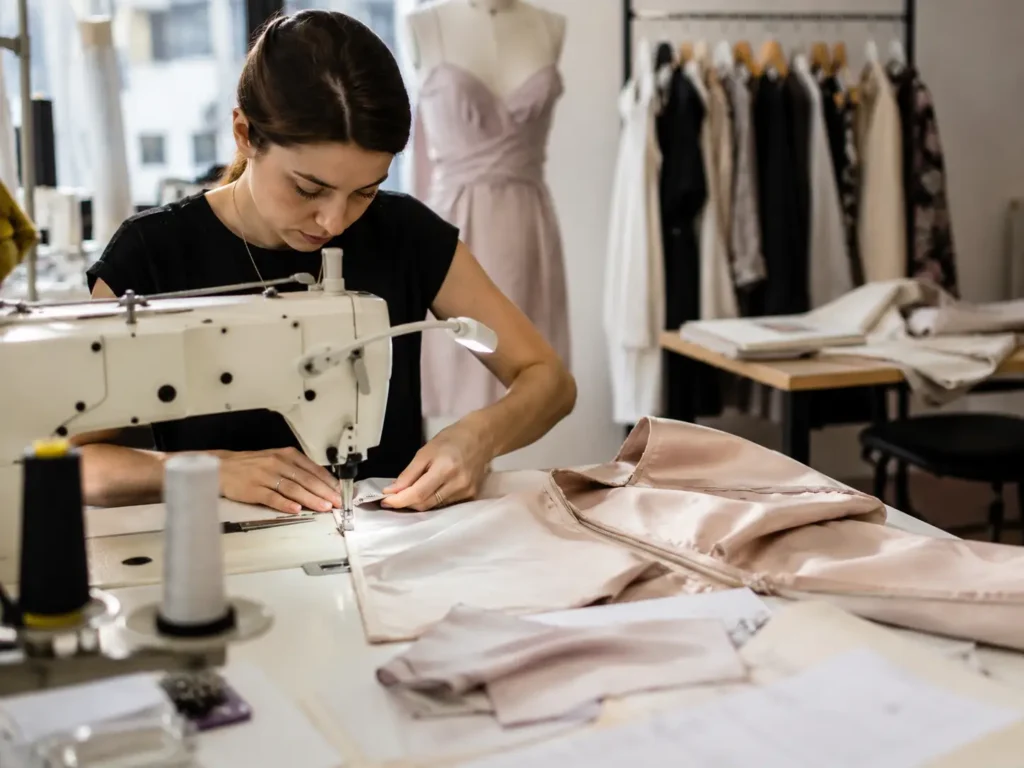
In-Line Sewing Check

Placement and Symmetry Check

Finished Garment Check

Packing Condition Check
Pressing and Packing Protect Bow Shape in Transit

Shape Before Packing

Support the Critical Areas

Control Fold and Carton Pressure

Plan Receiving Recovery
Control Cost Without Losing the Bow's Visual Role
Protect the Visual Priority
Optimize Construction Intelligently
Plan Quantity and Color Efficiently
Protect Unreleased Designs and Manage Brand Programs
Development File Protection
Private-Label and Packing Control
Multi-Style Project Management
Representative Bow-Detail Collection Development Program
The following anonymized program profile reflects the scale and workflow used for current established-brand orders while protecting brand identity, artwork, pricing and unpublished design information. The purpose is to show how bow-detail styles can be managed inside a larger commercial collection rather than treated as isolated samples.

Program Scope and Product Mix
A representative US trend-led womenswear program can include 18 styles and approximately 46,800 total pieces across mini, midi and occasion dresses. Six styles in the assortment may use bow-led details, including a structured hip bow, a satin back bow, shoulder tie bows and a softer waist bow. Individual style quantities in a program of this scale can move well beyond 1,000 pieces once colors and size ratios are confirmed. The challenge is not only making each prototype attractive; development, materials, PP approval and production allocation need to remain coordinated across the full 10-30 style collection structure that established brand orders commonly use.

Development Challenge
The highest-risk bow styles usually combine visual scale with fabric behavior. A soft satin oversized bow may photograph flat, while a heavily reinforced version can pull the hip or back panel out of shape. Shoulder tie bows can also affect strap length and neckline balance. Development therefore separates bow geometry from garment fit: loop and tail dimensions are adjusted, reinforcement is tested, attachment width is reviewed, and the base garment pattern is corrected where necessary. Revised samples document changes rather than relying on verbal comments. Styles that change material or bow structure after the first sample are re-evaluated before PP approval.

Bulk Control and Handover
After approval, the production handover includes final patterns, size chart, fabric and trim references, bow dimensions, reinforcement method, sewing instructions, placement points, label requirements, packing method and a style-specific QC checklist. Bow-heavy styles can be allocated to lines suited to the construction rather than forced into the same production route as simpler dresses. In-line review focuses on loop size, knot build, placement and attachment before finishing. Final checks add pressing, garment balance and packing condition. Program quantity, fabric arrival and launch timing determine the production sequence, while 12+ merchandisers support follow-up across the wider assortment.

Commercial Result Standard
The objective for a program at this scale is not a marketing claim of “perfect production.” The commercial standard is more measurable: approved samples are translated into documented construction references; style changes are locked before bulk; high-risk bow points are checked during production; private-label and packing instructions remain aligned with SKU requirements; and repeat orders can call on retained pattern, fabric, trim, packing and Golden sample records. Exact brand names, logos, tech packs, order numbers and private files remain undisclosed unless written authorization is provided.
Build Repeatable Bow Styles Across Seasons
Retain the Approved Standard
Extend the Style Carefully
Plan Reorders Around Current Conditions
Bow-Detail Dress Frequently Asked Questions
Soft fabric, insufficient internal support, oversized loops or a weak knot structure can cause collapse. Development should test the desired volume on the actual dress, then adjust layer count, backing, reinforcement or bow dimensions without making the attachment area excessively rigid.
No. Some fabrics hold shape through weave, layer construction or seam geometry alone. Interfacing is selected only when the target silhouette needs additional support. Excessive reinforcement can create hard edges, bulk or garment distortion, so support should be tested during sampling.
Sometimes. Decorative bows may remain one size across several garment sizes, while waist-integrated, shoulder or functional tie bows may need grading or placement adjustments. The correct rule depends on visual proportion, fit and the role of the bow in the garment.
Placement should be tied to measurable garment references such as center front, center back, waist seam, side seam, shoulder point or strap join. Pattern notches, finished measurements, sewing instructions and approved sample references help production teams repeat the position consistently.
Yes, but suitability depends on satin weight, drape and desired structure. A fluid satin may need layered construction or support, while a heavier satin may create too much knot bulk. Sample testing should evaluate shape, surface condition, pressing and garment pulling.
The solution may involve a wider anchor, hidden reinforcement, multiple attachment points, reduced bow weight or changes to the base garment pattern. Large bows should be reviewed together with the bodice, waist, hip or back panel rather than attached after fit is already finalized.
The number varies by structure, fabric, fit and revision scope. Jinfeng supports first, fit, revised, photo-ready, PP and Golden sample stages as required. Complex bow styles may need additional revision when proportion, support or garment fit changes after the first physical sample.
Inspectors can compare loop width, tail length, knot center, angle and placement against approved measurements and sample references. Cutting accuracy, sewing method and pressing also affect symmetry, so control should begin before final inspection rather than rely on end-line correction.
Packing method can be adapted to bow structure. Fold direction, protective tissue, polybag space and carton pressure may be adjusted for oversized or structured bows. The method should be tested against recovery after packing and balanced against commercial packing cost.
Reference images, sketches, original samples and line sheets can be reviewed for development. A complete production standard still needs measurable information, so pattern, fabric, construction, size chart, bow dimensions, labels, packing and approval comments are developed and confirmed before bulk production.

Send Your Bow Dress Project for Development Review
A useful first review starts with enough information to understand the intended look, production scale and launch requirement. Jinfeng Apparel can assess a bow-detail dress from a tech pack, reference image, sketch, original sample or line sheet, then identify the fabric, pattern, bow structure, sampling and bulk-production points that need confirmation.
Established brand programs often contain 10-30 styles and total order quantities from approximately 20,000 to 80,000 pieces, so early visibility on style count, priority, quantity and launch date helps the team plan development and production resources. Standard MOQ starts from 200 pcs per style/color, while actual material, trim, packaging and production requirements are reviewed by project. NDA-based cooperation can be arranged before sensitive design files are shared.
Please include:
- Reference image, sketch, original sample or tech pack
- Expected style count and priority styles
- Target quantity by style and color
- Preferred fabric direction or material reference
- Size range and size chart if available
- Bow location, approximate scale and desired structure
- Private-label and packing requirements
- Target launch date, receiving window or appointed forwarder details


