 Skip to content
Printed Fabric Approval
Turn an approved print into production-ready womenswear with controlled color, scale, placement, cutting direction and bulk garment consistency.
Jinfeng Apparel supports fashion brands in connecting printed fabric development with garment sampling, pattern engineering, production and quality control. Approval is managed around the finished garment rather than a fabric swatch alone.
- 15+ QC inspectorssupport incoming fabric, cutting, garment and packing quality control.
- 2 sample rooms and 20+ sample machinistshelp move approved fabrics into physical garment samples.
- 7+ senior pattern makerssupport print placement, panel direction and garment structure development.
- Standard garment production starts from 200 pcs per style/color; custom-print fabric MOQ is assessed separately by material, print method and supplier.
- Printed woven fabrics can be reviewed for weight, drape, transparency, shrinkage, direction and garment suitability before bulk production.
- Approval records can move forward into PP sample, production instructions and bulk QC references.
Manufacturing Support Behind Every Print Approval
2 Sample Rooms
7+ Senior Pattern Makers
20+ Sample Machinists
15+ QC Inspectors
12+ Merchandisers
100,000+ Pieces
Built for Fashion Teams Managing Printed Collections
Product Development Teams
Sourcing Teams
Merchandising Teams
Quality Teams
Established Fashion Brands
Sourcing Offices
What Printed Fabric Approval Really Covers
Printed fabric approval is the physical confirmation of how approved artwork performs on the intended fabric before it becomes a production reference. It sits between design intent and garment manufacturing, with different approval checkpoints serving different purposes.
Artwork Approval
Artwork approval confirms the design itself: motif, color direction, layout, scale intention and graphic information.
A digital file may look correct on screen while producing a different result after printing because fabric surface, opacity, texture and print process affect the final appearance.
Physical Fabric Approval
Physical approval evaluates the print on real fabric. Color, scale, repeat, registration, direction, visual sharpness, base-fabric behavior and garment suitability can now be judged. Once approved, the physical reference should be linked to the correct artwork version and production instructions. Artwork approved does not automatically mean fabric approved. Fabric approved does not automatically mean garment approved. Each stage closes a different production risk.
Eight Details to Approve Before Bulk Printing

Print Color

Artwork Accuracy
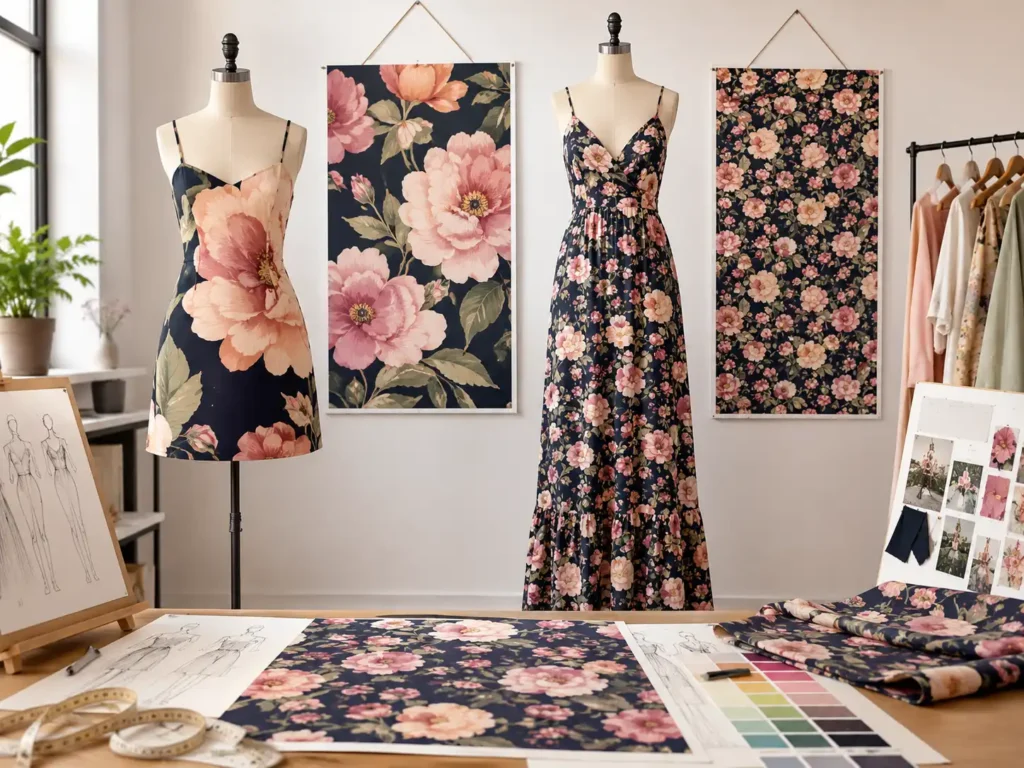
Print Scale

Pattern Repeat

Color Registration

Print Direction
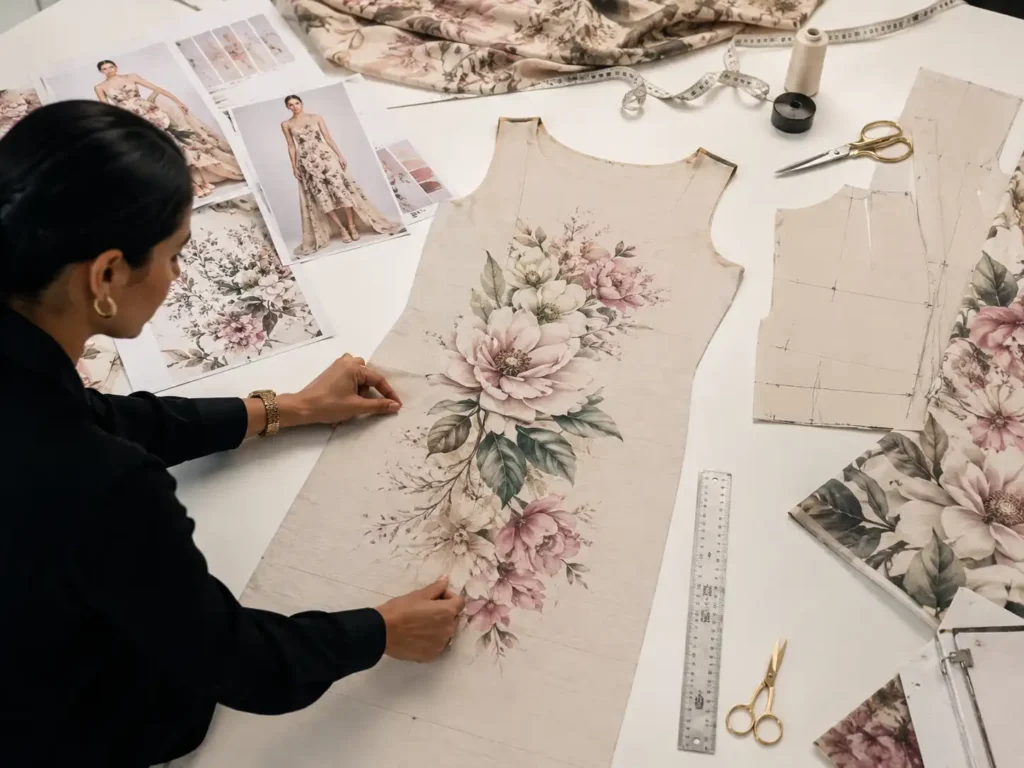
Print Placement

Fabric Performance
Lab Dip, Strike-Off, Bulk Fabric and PP Sample
Several approval terms appear during development, but they do not authorize the same decisions. Keeping them separate prevents a color reference, small print trial or garment sample from being treated as approval for an unrelated production stage.
| Approval Reference | Main Purpose | Typical Review Points | Production Meaning |
|---|---|---|---|
| Lab Dip | Solid-color dye development | Pantone direction, hue, depth, lighting response | Color reference for dyed fabric; not a printed-pattern approval |
| Strike-Off / Print Trial | Printed design on selected or comparable base fabric | Color, scale, repeat, registration, sharpness, direction | Print-development reference before bulk print commitment |
| Bulk Printed Fabric | Confirm production fabric against approved references | Batch appearance, color consistency, defects, width, shrinkage, direction | Material can proceed according to approved garment-production controls |
| PP Sample | Confirm the production garment | Fit, construction, fabric, print placement, trims, measurements, finishing | Garment-level reference before bulk sewing proceeds |
Information Needed Before Printed Fabric Development
Artwork or Reference
Color Standard
Target Garment
Print Scale and Repeat
Quantity Plan
Launch Timing
Different Print Methods Need Different Approval Decisions

Digital Print

Screen Print
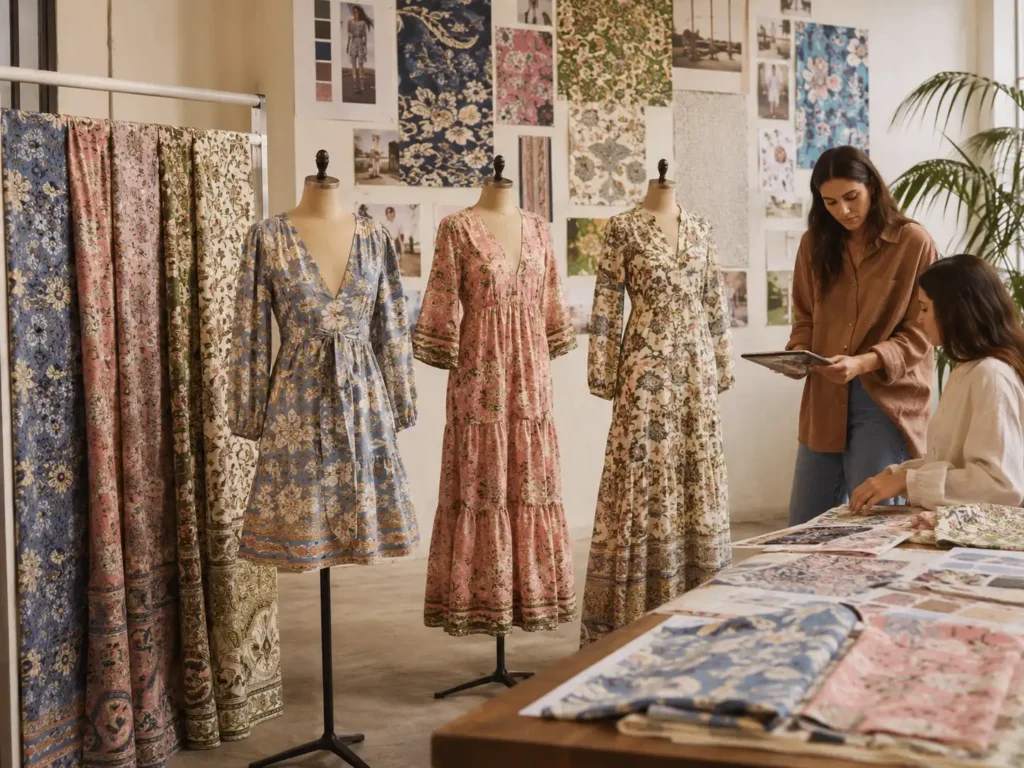
All-Over Repeat

Placement Print

Border Print

Exclusive Print
Base Fabric Changes the Final Printed Appearance
Print development begins with artwork, but garment quality depends heavily on the material receiving the print. Jinfeng’s fabric team evaluates composition, weight, width, hand feel, drape, stretch, transparency, shrinkage risk, color behavior and suitability for bulk garment production before a fabric direction is treated as ready.

Lightweight Woven Fabrics Need More Than a Color Check
Chiffon, rayon, viscose and other lightweight woven fabrics can create attractive resort and fashion prints, but their behavior affects both visual and manufacturing results. A translucent base can reduce perceived color density, while fine fabric movement changes how large motifs appear once the garment is gathered or draped.
Shrinkage also matters. A print may be visually approved before fabric behavior has been considered, yet dimensional movement later changes panel length, repeat position or garment measurements.
For maxi dresses, skirts and loose resort shapes, print direction and hem balance need to be reviewed together with the material.

Smooth and Shiny Surfaces Change Color Perception
Satin and other smooth surfaces can produce strong visual color shifts under different lighting and viewing angles. A printed color may appear deeper or brighter depending on surface shine, weave direction and photography conditions. Physical approval should therefore include normal viewing, close inspection and garment-sample review where appearance is commercially important.
Garment construction can introduce another variable. Panels cut in different directions may reflect light differently even when print color came from one fabric batch. Pattern planning, grain direction and cutting instructions become part of the visual-quality system.

Stretch Fabrics Add Distortion Risk
Jersey and stretch constructions may change motif shape when worn. Circular designs can become oval, straight lines can curve across the body, and dense motifs can spread apart when the material extends.
Print scale should therefore be reviewed together with expected garment stretch, bust-waist-hip fit and recovery. A flat fabric image cannot fully predict how a bodycon or fitted dress will look once worn.

Print Suitability Must Match the Garment
Material selection should always answer one final question: can the fabric deliver the intended garment repeatedly at production scale?
Jinfeng evaluates whether the fabric is suitable for lining, ruching, fitted construction, long flowing panels and stable bulk cutting. Alternative fabrics can also be reviewed when the original direction creates unacceptable MOQ, timing, cost or production risk.
From Artwork to Approved Bulk Printed Fabric
Artwork Review
Base Fabric Direction
Print Method Review
Strike-Off Development
Approval or Revision
Bulk Fabric Preparation
Incoming Fabric Review
Garment Sample Confirmation
Printed Fabric Strike-Off Approval Checklist

Check Color

Check Scale

Check Repeat

Check Registration
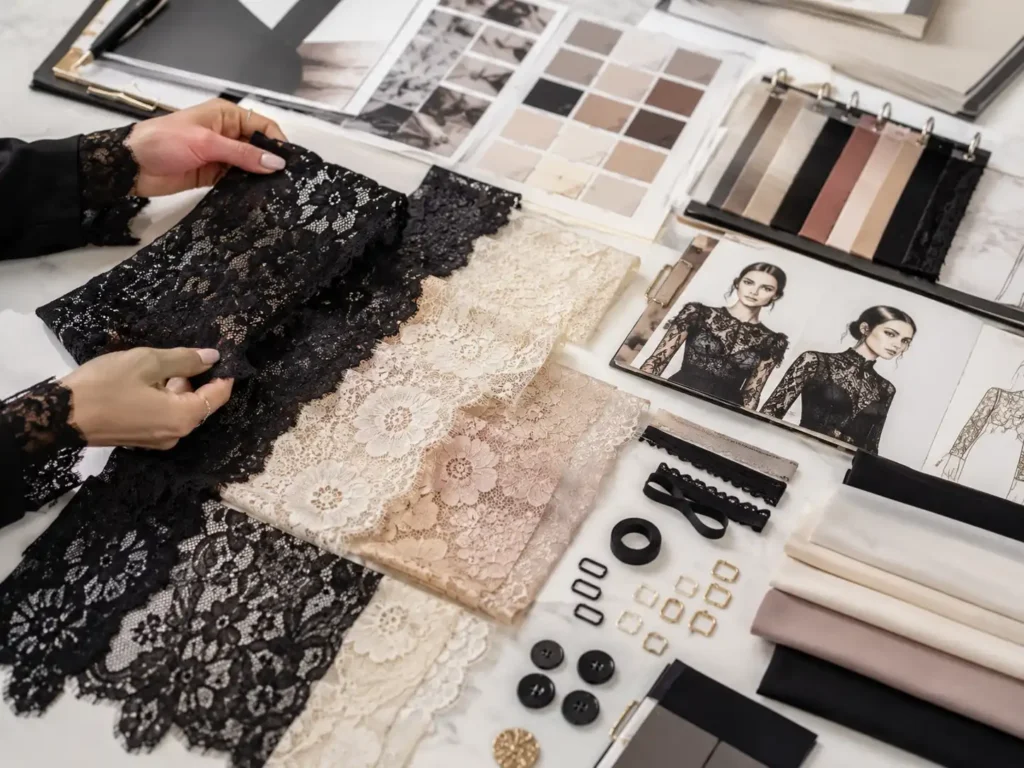
Check Direction

Check Placement

Check Fabric Hand

Record the Reference
Control Print Color With Physical Approval References
Color disputes often begin when different teams compare different references. Jinfeng treats print color as a controlled approval item connected to fabric batch, physical standards, lighting conditions, lining choice and garment appearance.
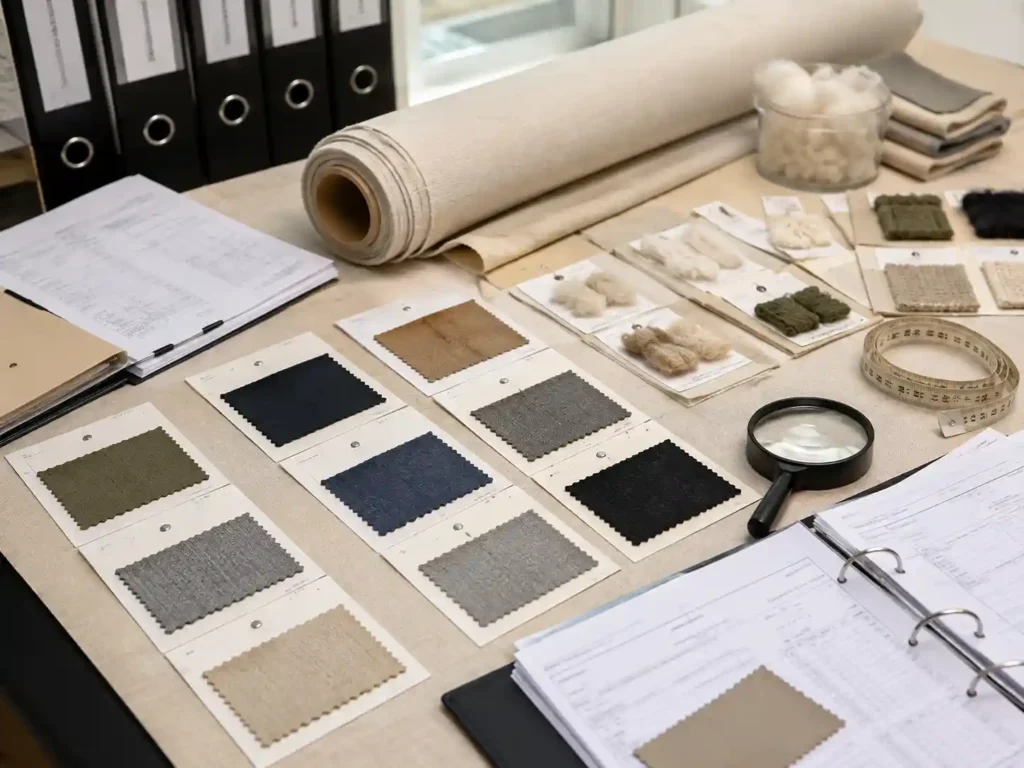
Pantone Is a Starting Reference, Not the Finished Fabric
Pantone numbers create a shared language during development, but the actual printed result remains dependent on fabric and process. Surface texture, transparency, base color and shine can influence perceived color even when ink or dye formulation follows a target direction.
For important fashion colors, physical samples should be reviewed alongside the Pantone reference rather than assuming a screen image represents final production.

Evaluate the Whole Color Story
A printed dress may combine several color systems: print colors, lining, zipper tape, labels and trims. A white lining beneath a semi-transparent printed fabric can brighten the visible result; a darker lining can deepen it. Satin trims can reflect more light than matte printed material.
Approval therefore needs garment context where those relationships influence the finished product.

Separate Development Color From Bulk Color
A development strike-off confirms the print direction. Bulk material still needs comparison with the approved reference because print runs and fabric batches can introduce variation.
Incoming QC should flag noticeable color differences before cutting. If material variation is present, the production team can assess the commercial impact before mixed shades are sewn into the same style.

Keep Approval Comments Specific
Useful comments include “background too yellow,” “red motif too dark,” “green lacks saturation,” or “lining makes ground color appear cooler.”
Clear comments shorten revision discussions and reduce the chance of correcting the wrong variable.
Control Print Scale, Repeat, Direction and Placement
Many expensive printed-garment failures begin after the fabric itself has already been described as “approved.” Print engineering must continue into pattern development because garment panels interrupt, rotate and reshape the artwork.
Scale Must Be Judged on Garment Dimensions
A 20 cm floral motif can feel balanced on a maxi skirt and overpowering on a fitted mini bodice. Large motifs can also create unintended focal points around the bust, waist or hip when the cutting position is uncontrolled.
Jinfeng’s pattern team can review print scale against actual style proportions. Relevant dimensions may include bodice width, skirt length, waist position, neckline, slit height and major panel size.
Repeat Controls Visual Rhythm and Material Use
Repeat planning influences how motifs appear across large areas. If a repeat creates concentrated clusters, large blank zones or strong vertical bands, the issue can become obvious after several panels are sewn together.
Matching motifs exactly across every seam can also increase fabric consumption. Commercial approval should distinguish areas where matching is essential from areas where natural variation is acceptable.
Direction Must Reach the Cutting Team
Directional prints require a clear cutting rule. Florals with recognizable stems, animals, text, scenic artwork and border designs cannot be rotated freely simply to improve marker efficiency.
- Top and bottom direction
- Grain direction
- One-way marker requirement
- Placement-sensitive panels
- Border location
- Approved pattern version
Placement Must Follow the Pattern
Placement prints need physical coordinates relative to garment panels. A design intended to sit at center front can drift after grading if each size uses the same absolute artwork position without pattern review.
Bust, waist, neckline, hem and side seams should be considered before the placement is released. For engineered fashion prints, pattern making and printing cannot be treated as separate departments working from unrelated files.
Approved Fabric Must Survive the Cutting Room
Bulk consistency depends heavily on what happens between fabric inspection and sewing. Jinfeng’s cutting QC checks pattern versions, panel direction, print placement, panel quantity, size bundling, fabric direction and stretch direction before pieces reach sewing lines.
Pattern Version Comes First
An approved fabric paired with an outdated pattern can still produce the wrong garment.
Revised samples may change neckline shape, waist position, skirt length or panel construction, which can also change where a printed motif lands.
Bulk cutting therefore needs the confirmed production pattern and related revision notes.
Direction Controls Both Appearance and Consumption
One-way prints restrict marker rotation.
When garment pieces cannot be turned 180 degrees, material consumption can rise compared with a non-directional print.
A realistic costing review should recognize the fabric impact instead of forcing a marker layout that damages the approved appearance.
Placement Needs Cutting References
For placement-sensitive designs, cutting teams may need panel markings, template references or clear pattern notes identifying where motifs should sit.
- Center-front motif
- Neckline relationship
- Bust position
- Waist seam
- Side seam
- Slit
- Sleeve
- Hem border
Size Bundling Prevents Panel Mix-Ups
Several sizes may share similar-looking panels. Correct bundling is important when print position changes with graded patterns or when directional cutting creates specific left/right panel relationships.
Fabric Behavior Still Matters
Rayon and viscose may require shrinkage consideration; stretch fabric requires direction control; delicate lightweight materials require handling that avoids distortion.
Printed approval therefore becomes part of a wider cutting plan rather than a decorative sign-off.
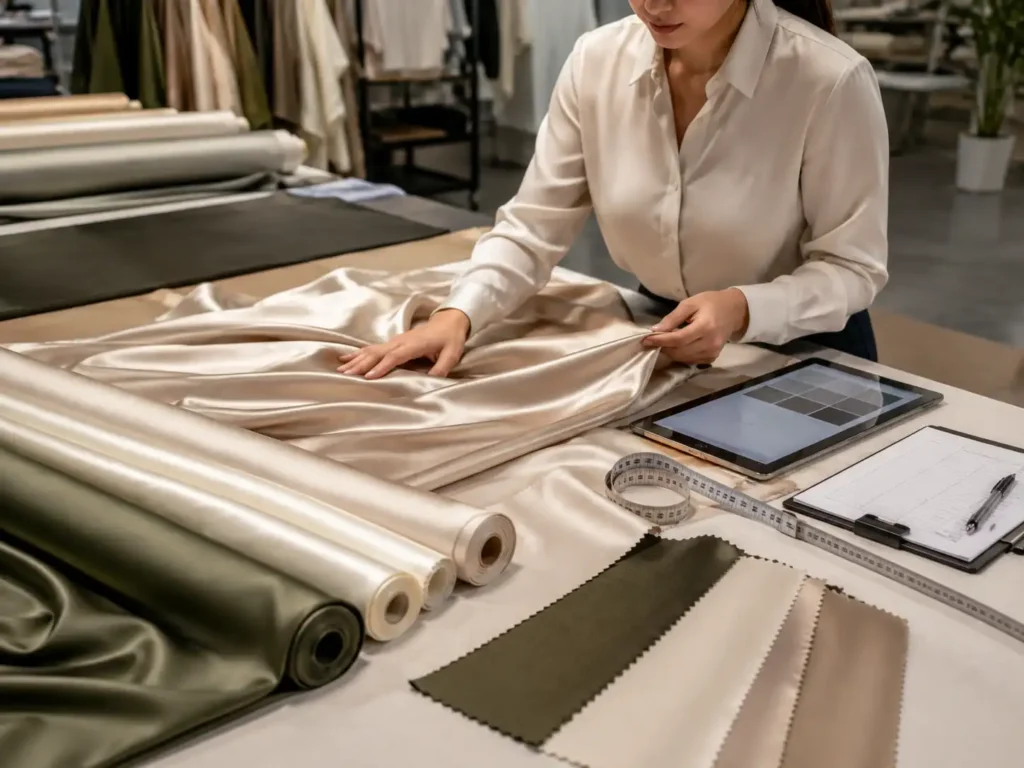
Fabric Approval Is Not Final Garment Approval

First and Revised Samples

Photo-Ready Sample

PP Sample

Golden Sample
Printed Garments Need QC Beyond Fabric Approval
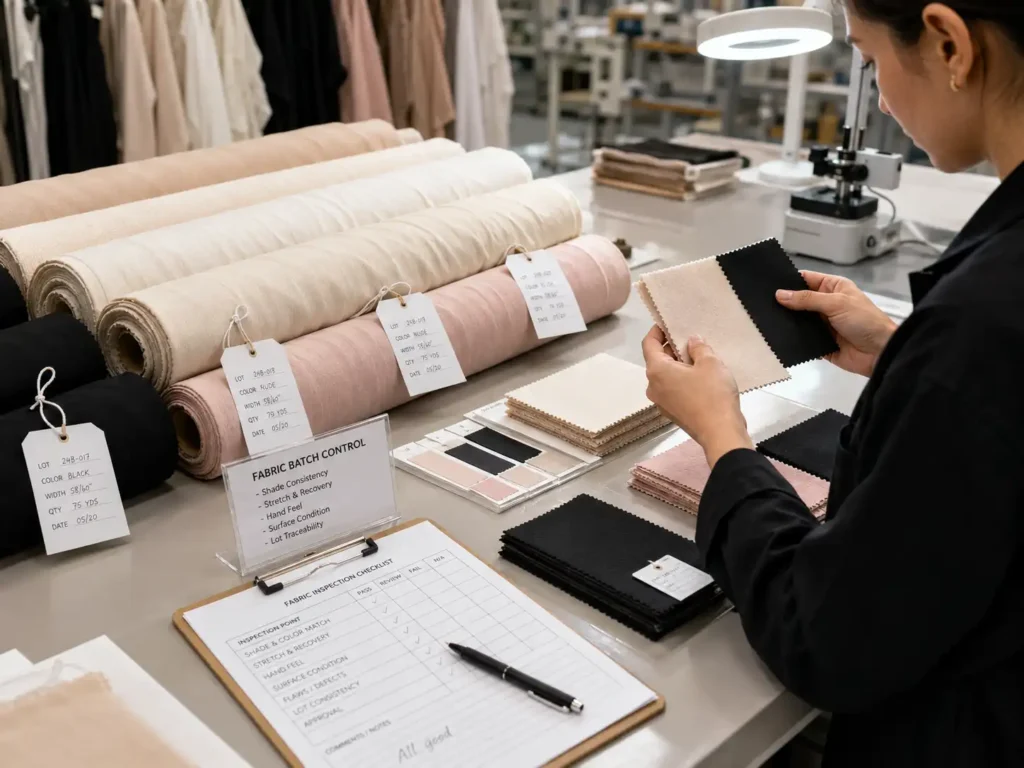
Incoming Fabric QC

Cutting QC

Sewing QC

Garment Inspection

Pressing Review

Packing QC
What Changes Print MOQ, Cost and Timing
Custom printing introduces commercial variables beyond garment sewing. Jinfeng reviews garment quantity together with fabric-supplier requirements so the production plan reflects real print development rather than an unrealistic unit-price target.
| Factor | Why It Matters | Commercial Impact |
|---|---|---|
| Base Fabric | Composition, width, stock status and supplier MOQ vary | Changes material MOQ, cost and sourcing time |
| Print Method | Digital, screen, placement and border prints use different setups | Influences development cost and suitable production volume |
| Artwork Complexity | Color count, fine detail and repeat structure affect setup | Can add development or revision work |
| Print Scale | Larger repeats and engineered layouts change production planning | May affect material use and sampling |
| Placement | Position-sensitive graphics need pattern coordination | Adds development control and may affect cutting yield |
| Number of Colors | Additional print colors can increase process complexity | Influences cost depending on printing method |
| Quantity | Print suppliers often set their own production minimums | Custom-print MOQ may differ from garment MOQ |
| Testing Requirements | Color fastness, composition or other testing may be requested | Scope, laboratory and timing are confirmed by project |
| Approval Rounds | Revised strike-offs add development stages | Timing depends on how many physical revisions are required |
| Garment Construction | Lining, ruching, panels and print matching change consumption | Affects final garment costing |
Printed Resort Collection From Approval to Bulk
A representative anonymized fashion program shows why print management cannot stop at artwork approval. The collection involved multiple silhouettes, lightweight materials, directional florals and different garment lengths, making fabric behavior and cutting control part of the commercial result.
18 Styles Across One Seasonal Collection
An established U.S. womenswear brand developed an 18-style resort and vacation collection totaling approximately 42,000 garments. The assortment included floral maxi dresses, printed midi dresses, skirts, relaxed dresses and matching separates.
The material direction combined printed woven fabrics, viscose, rayon and selected lightweight blends. Several styles shared coordinated print stories but used different silhouettes and garment lengths.
- Floral scale across mini, midi and maxi proportions
- Directional motifs through long skirt panels
- Rayon and viscose shrinkage risk
- Transparency and lining requirements
- Print appearance around gathers and waist seams
- Seasonal color consistency
- Cutting efficiency for one-way prints
- Packing creases on long travel-focused garments
Printed Fabric Was Reviewed Through Garment Context
A floral that looked balanced on a fabric sample appeared too concentrated around the upper body of one fitted style.
Scale and cutting position were reviewed before the collection moved forward.
Longer silhouettes required separate attention because the same print repeat created a different visual rhythm over maxi-length panels.
Directional motifs also limited panel rotation during marker planning.
Instead of treating fabric approval as a standalone sourcing task, relevant decisions were carried into sample development and cutting instructions.
Sample Revisions Closed Garment-Level Risks
Samples were reviewed for fabric transparency, lining length, print position, waist relationship, skirt balance and on-body appearance. Changes affecting bulk production were reflected in the relevant pattern and production references before PP approval.
The development sequence allowed printed fabric decisions to be checked against real garment proportions before the final bulk configuration was released.
Bulk Control Protected the Approved Direction
Incoming material and cutting checks focused on print direction, visible color difference, fabric behavior and panel orientation. Finished garment review then checked overall print appearance alongside measurements, construction and finishing.
For a program of 42,000 pieces across 18 styles, an error repeated after bulk cutting would be substantially more expensive than an additional review during development. The value of approval came from preventing repetition of the wrong decision at scale.
Where Jinfeng Fits in Print Approval
Brand Approval
Fabric Supplier Coordination
Garment Engineering
Bulk Manufacturing Control
Frequently Asked Questions About Printed Fabric Approval

Start Your Printed Womenswear Program With Jinfeng
Printed fabric approval works best when artwork, material, garment structure and bulk production are planned as one connected program.
Jinfeng Apparel supports established fashion brands with fabric sourcing coordination, pattern development, sampling, PP approval, bulk manufacturing, QC and private-label production for dresses, skirts, jumpsuits, matching sets and seasonal womenswear collections.
For an initial project review, send enough information for the team to evaluate both the print and the garment application:
- Artwork, print reference or original fabric swatch
- Tech pack, sketch, reference garment or line sheet
- Pantone numbers or physical color standards where available
- Intended print scale or repeat information
- Target fabric or preferred material direction
- Style quantity and estimated units per style/color
- Size range
- Placement or directional requirements
- Private-label and packing requirements where relevant
- Target launch or delivery schedule


