 Skip to content
Print Placement Control
Custom Womenswear Manufacturing Built Around Accurate Artwork Positioning
For printed dresses, skirts, tops and matching sets, placement quality depends on more than a print file. Artwork scale, garment pattern, panel position, fabric direction, grading and production handover all affect where the finished motif sits on the body. Jinfeng Apparel integrates print-position review with pattern development, sampling, cutting control and garment QC so approved visual standards can move into bulk production with fewer avoidable shifts.
- 7+ senior pattern makers supporting artwork-to-pattern review
- 2 sample rooms and 20+ sample machinists for placement verification before bulk
- 15+ QC inspectors, with cutting QC covering print placement, direction and size bundling
- 100,000+ pcs regular monthly capacity for structured womenswear programs
Brand-Level Capacity Behind Print Placement Programs
Since 2008
2 Sample Rooms
7+ Senior Pattern Makers
20+ Sample Machinists
15+ QC Inspectors
100,000+ Pcs Monthly
Regular monthly production capacity designed for seasonal collections, multi-style programs and replenishment planning.
Built for Fashion Teams Managing Placement-Sensitive Styles
Product Development Teams
Sourcing and Merchandising Teams
Technical and QA Teams
Seasonal Brand Programs
What Print Placement Control Means in Garment Manufacturing
Print placement is the exact relationship between artwork and the finished garment, not simply the area where printing occurs. Reliable execution depends on how artwork scale, position, direction and panel geometry are translated into a pattern, sample and bulk-production reference.

Print Location Is Only the Starting Point
“Front,” “back,” “sleeve” or “skirt panel” identifies a general print location. Production still needs a more precise reference: where the motif starts, where its visual center sits, how far it is from neckline or seam landmarks, whether the artwork crosses panels, and which part of the motif must remain visible after sewing. A placement-sensitive dress therefore needs more information than a flat mockup. The garment shape, seam map and body proportion determine whether the design reads correctly once worn.
For a floral mini dress, a motif centered correctly on the artwork file may appear too low after neckline depth and bust shaping are introduced. On a maxi dress, a border print can lose balance when hem allowance or finished length changes. On a matching set, a graphic relationship between top and skirt can break if each piece is developed independently. Jinfeng treats placement as part of garment development, allowing pattern and sample decisions to be reviewed together with print direction and visual balance.
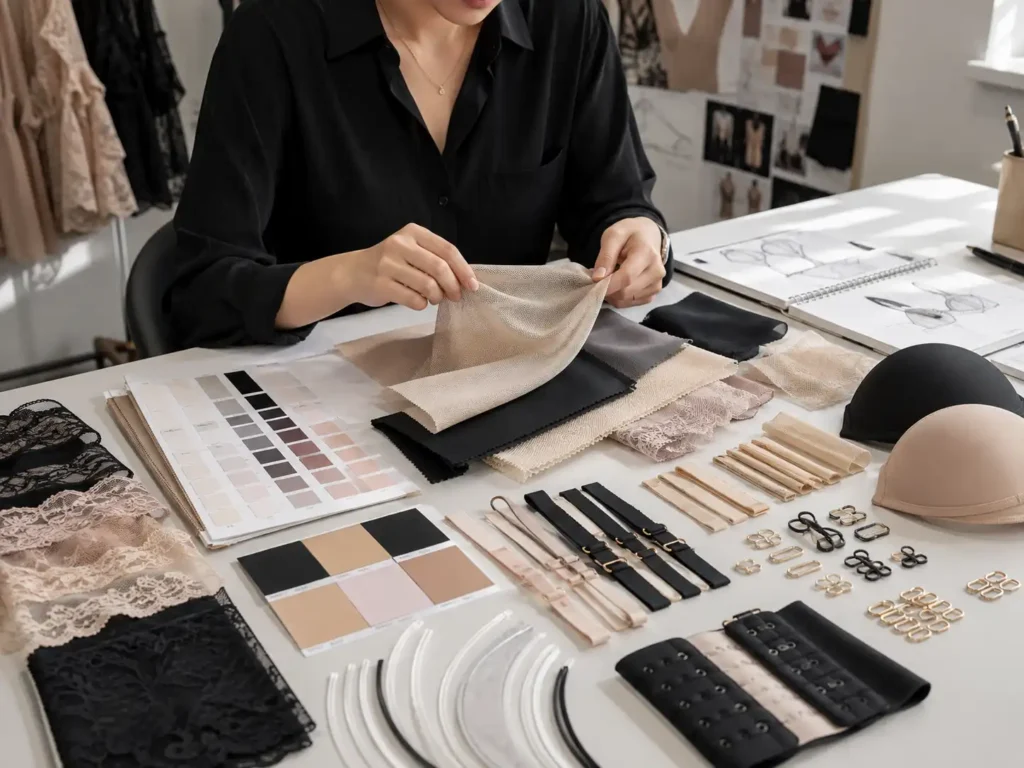
Scale, Direction and Alignment Are Separate Decisions
Print scale defines the physical size of the artwork. Print direction defines orientation. Alignment defines the relationship to garment landmarks such as center front, center back, neckline, waist seam, side seam, panel edge or hem. Each variable can fail independently. A correctly centered motif can still be the wrong size; a correctly scaled border can still run in the wrong direction; a floral layout can match the approved position but lose its intended visual balance after grading.
A professional placement specification should therefore identify the artwork version, final dimensions, orientation, key garment references and any critical visual zones. Direction-sensitive florals, border prints and panel graphics need especially clear notes. Jinfeng can review these items during development and translate approved references into pattern, sample and cutting-stage controls.

Final Appearance Is Judged on the Garment
Flat measurements are necessary, but the finished garment remains the final visual reference. Bust shaping, ruching, darts, pleats, elastic tension, waist seams, asymmetric panels and stretch recovery can alter how a print appears after assembly. For fitted or draped womenswear, a motif may move visually even when the cut panel itself was correct.
Sample review therefore needs both measurement and appearance checks. First samples establish whether the artwork works with the silhouette; revised samples correct pattern or placement relationships; PP approval locks the final production direction; Golden sample records provide a stable reference for bulk review. Jinfeng uses garment development and QC together rather than treating print position as a stand-alone decoration step.
Common Placement Failures Before They Reach Bulk Production
Too High or Low
Off-Center Placement
Size-to-Size Drift
Motifs Cut by Seams
Direction Errors
Sample-to-Bulk Shift
Print Types That Need Different Placement Decisions

Placement Motif Print

Border Print

Directional Floral Print

Engineered Panel Print

Repeat Print

Graphic Matching Sets
What to Provide Before Placement Development Starts
Clear inputs reduce interpretation loops and help pattern, sampling and sourcing teams identify risks early. Jinfeng can begin from a tech pack, original sample, reference image or artwork file, but production decisions become more reliable as the following information is confirmed.
| Project Input | What It Controls | Risk When Missing |
|---|---|---|
| Artwork file and version | Motif shape, scale and orientation | Wrong artwork or outdated revision enters sampling |
| Placement reference | Intended position on the garment | Graphic sits too high, low or off-center |
| Garment measurements | Relationship to neckline, bust, waist and hem | Visual proportion changes after pattern development |
| Size chart and grade direction | Size-to-size placement logic | Placement drifts across the size range |
| Base fabric direction | Shrinkage, stretch, drape and print behavior | Position distorts or panels are cut inconsistently |
| Original sample or visual reference | Overall appearance benchmark | Factory interprets the artwork differently from the brand team |
| Target quantity and color plan | Sourcing, print route and production planning | MOQ or production route changes late in development |
From Artwork File to a Garment-Specific Placement Map
A print file becomes production-ready only after the artwork is related to real garment geometry. Jinfeng connects artwork review with pattern development so critical motifs, borders and directional elements can be assessed against the final silhouette before bulk cutting begins.
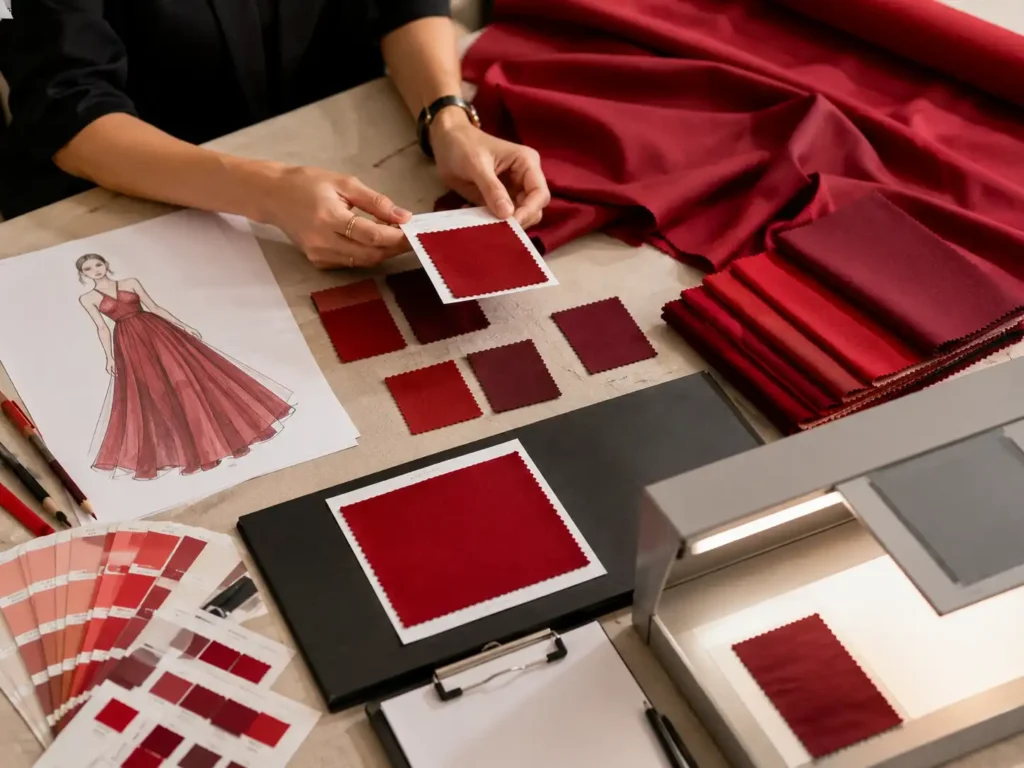
Establish the Garment Reference System
Placement review starts by identifying stable garment references. Depending on the style, useful landmarks may include center front, center back, neckline point, shoulder seam, waist seam, side seam, panel edge, slit position or finished hem. The correct reference depends on the visual goal. A chest motif may rely on center front and neckline distance; a border print may rely on final hem length; an asymmetric floral may rely on a panel edge and waist position.
Pattern development matters because garment landmarks move when fit changes. Lowering a neckline, raising a waist, shortening a mini dress or changing bust shaping can alter the visual relationship even if the artwork file remains unchanged. Placement therefore needs to be reviewed after the pattern begins to reflect the intended fit. Jinfeng’s 7+ senior pattern makers can support pattern interpretation and correction before placement-sensitive samples move toward PP approval.
For complex references, the most useful development record is not a screenshot alone. Artwork dimensions, key distances, orientation notes and pattern landmarks create a clearer production instruction. Such records also help sourcing, merchandising and QA teams discuss the same visual target without relying on subjective phrases such as “slightly higher” or “more centered.”

Check the Motif Against Pattern Panels
Once pattern panels are available, the artwork needs to be checked against actual panel shape.
A focal flower may fall into a dart.
A graphic edge may disappear into a side seam.
A border may become too shallow after hem allowance is added. A mirrored motif may lose symmetry if left and right panels are not planned together. These are garment-development problems, not printing-machine problems.
Jinfeng can review front and back relationships, panel direction, critical seam intersections and the amount of artwork that remains visible after assembly. For printed woven dresses, cutting direction and panel control are especially important because print, grain direction and finished drape are linked. For stretch garments, recovery and garment tension can also change the appearance after sewing.
The sample stage is where two-dimensional assumptions become visible. Instead of waiting for bulk inspection, placement-sensitive areas should be assessed on the first or revised sample.
If the motif conflicts with fit or construction, pattern or artwork relationships can be corrected before the PP standard is locked.
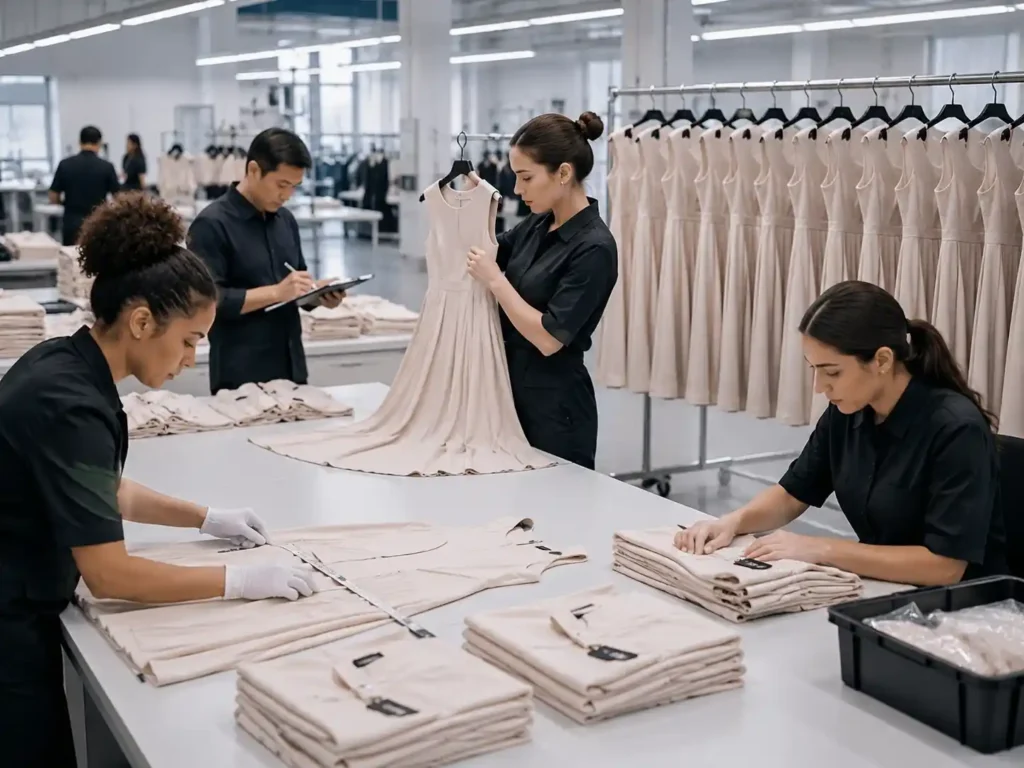
Convert Approval Into Repeatable Instructions
Approval must create a record that production can follow.
The approved artwork version, scale, orientation, key placement references, final pattern and sample status need to remain synchronized.
A revised pattern paired with an old placement note can create the same failure as a wrong artwork file.
Jinfeng’s development process can carry the confirmed pattern, measurements, fabric references, construction details and QC notes forward into bulk planning.
When a project reaches PP approval, placement-sensitive information should be treated as part of the production standard rather than as an optional visual preference.
Repeat orders benefit from the same discipline.
Pattern files, fabric references, trim records, Golden sample references and packing records can be retained for future production, reducing the risk of rebuilding the style from memory when a bestseller returns in another season or color.
Fabric Variables Can Move a Correct Print Out of Position

Shrinkage Before Cutting

Stretch Direction

Fabric Grain and Drape

Print Scale and Repeat

Color and Base Fabric

Border and Directional Layout
Size Grading Needs Visual Placement Review, Not Simple Scaling
A placement approved on one base size cannot automatically be copied across the complete size range. Garment proportions, neckline depth, bust position, waist location and finished length change through grading, so the visual relationship needs to be evaluated where the artwork matters most.

Define What Should Stay Constant
Some placement decisions are tied to a fixed garment landmark. A chest motif may need a controlled distance from the neckline. A center-front graphic may need to stay aligned to center front. A border may need a controlled relationship with the finished hem. Other designs need proportional changes so the motif still looks balanced as the garment grows.
The first task is to decide what should remain constant and what may change by size. Without that distinction, a single coordinate can be applied mechanically across S, M, L and XL even when the visual result becomes progressively less balanced. Jinfeng’s pattern team can review placement together with the size chart and grade rules, especially when bust, waist, hip, strap, armhole or dress length changes affect the artwork relationship.

Check Placement at Critical Sizes
Not every program needs a full physical sample in every size, but critical sizes should be considered during development according to style risk. A fitted bodycon dress may need closer attention to bust-waist-hip growth and stretch behavior. A maxi dress may need review of length and border relationship. A halter or deep-neck style may need placement checks against neckline and bust coverage.
Brand teams can define which sizes require physical verification, measurement review or visual mockup before production. Jinfeng can work from approved size charts and final patterns, then carry the agreed logic into cutting and QC references. The aim is not to force one placement rule across every size; the aim is to preserve the intended visual balance with a controlled method.

Keep Artwork and Pattern Revisions Synchronized
Grading problems often appear after late fit corrections. Raising the waist, shortening a strap, changing neckline depth or adjusting dress length can change the placement relationship even if the artwork itself is untouched. Final pattern revision, size chart, artwork and PP sample therefore need to be aligned before production release.
Jinfeng’s sample process includes first, fit, revised, photo-ready, PP and Golden sample stages according to project needs. The final production reference should reflect the approved pattern and placement together. Separating those files creates avoidable bulk variation.
Sampling Turns Placement Decisions Into a Wearable Standard
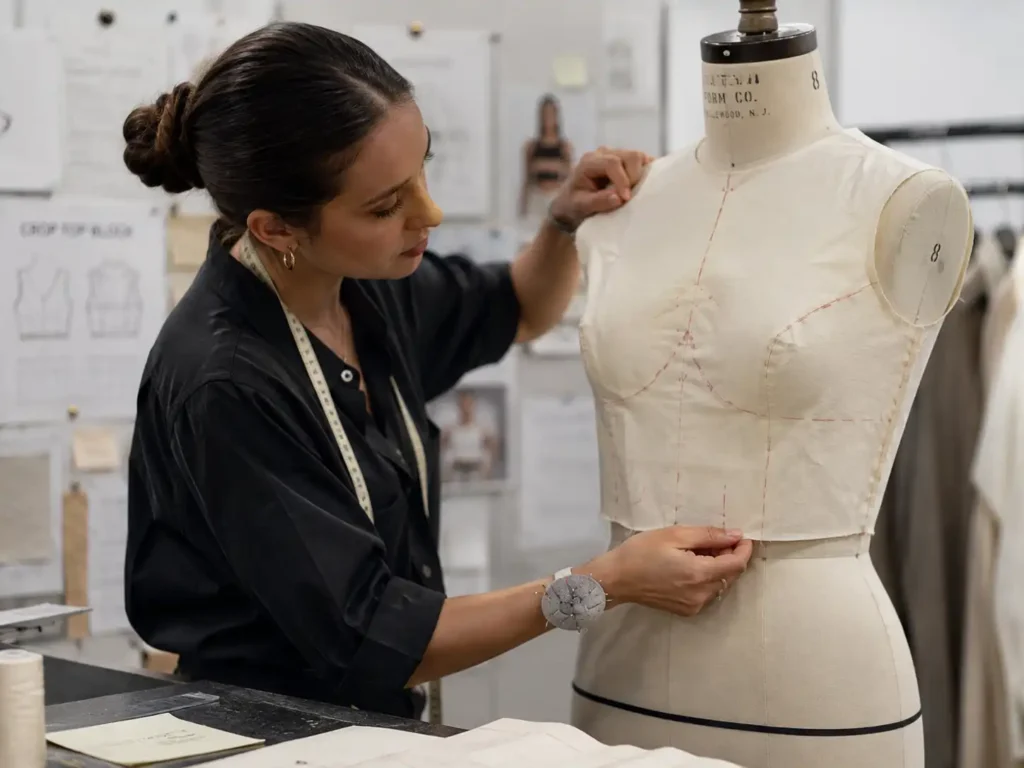
First Sample

Fit Sample

Revised Sample
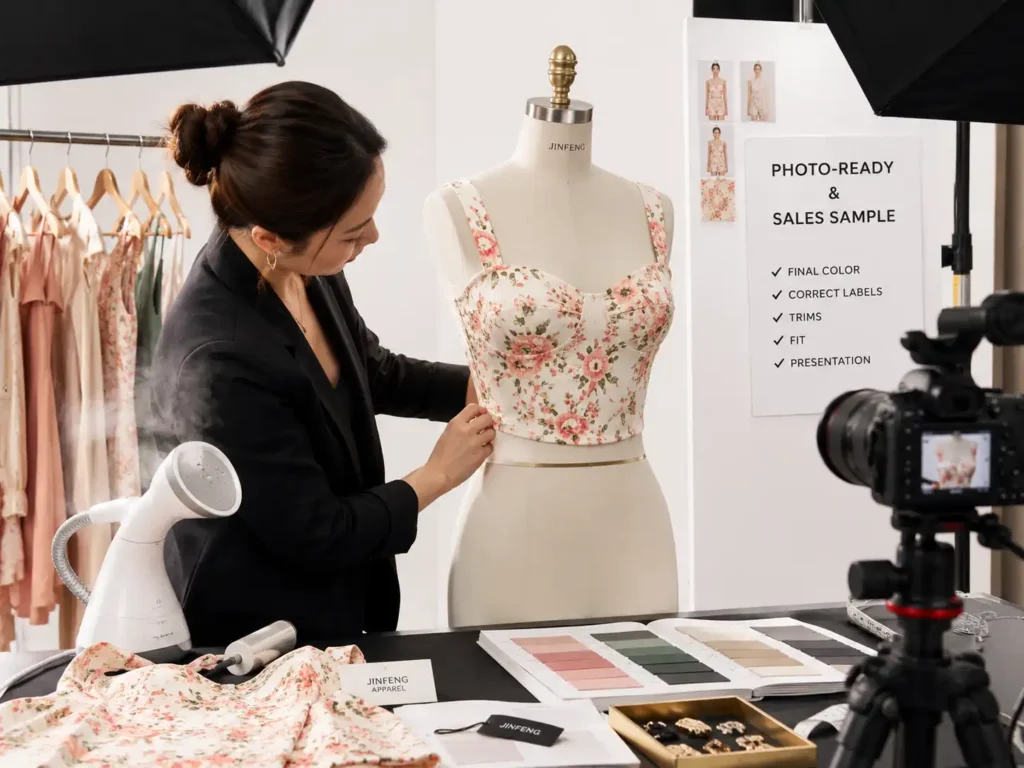
Photo-Ready Sample

PP Sample

Golden Sample
PP Approval Locks the Placement Standard Before Bulk
A PP sample should close open technical decisions, not simply prove that one garment can be made. Placement-sensitive projects need final artwork, pattern, fabric and construction references aligned before production starts, because late changes can affect material use, cutting, cost and schedule.
What Should Be Locked
The PP stage should confirm the approved artwork version, physical scale, orientation and the garment reference points used to judge placement. Final pattern, size chart, base fabric, print route, construction, label position and packing requirements also need to reflect the same approved style version. Where a border, engineered motif or directional floral is critical, the corresponding panel and cutting direction should be clear before bulk fabric is committed.
Jinfeng does not treat the first sample as the automatic production standard. Fit changes, revised artwork, fabric substitution or construction corrections can all affect the final relationship. PP approval is valuable because it connects the final technical direction to the garment that production and QC will reference.
What Happens When Changes Come After PP
Late artwork or pattern changes can trigger more than a visual update. A larger motif can require a different print layout. A changed hem length can affect border position. A revised waist seam can move a focal floral. A new base fabric can alter shrinkage, hand feel or drape. For those reasons, changes after PP need to be reviewed for cost, material, production and timing impact rather than passed directly to the line.
A controlled change process protects both brand intent and production stability. Jinfeng can review the requested revision, identify which linked records must change, and confirm whether another sample or approval step is needed before bulk continues.
Sample-to-Bulk Transfer Keeps Approved Placement From Getting Lost
The strongest sample is still vulnerable if the production team receives incomplete or outdated information. Jinfeng uses structured handover logic so final pattern, artwork, material and QC references move together into bulk preparation.

Build a Single Production Reference
After approval, the production package should reflect the same style version across final pattern, size chart, fabric reference, artwork file, placement instruction, construction notes, trims, labels, packing method and QC checkpoints. Placement-sensitive points should be visible enough for cutting and inspection teams to act on them without reinterpreting the designer’s intent.
The handover also needs a clear reference garment. PP or Golden sample use depends on the project, but the physical benchmark must match the approved documents. If the garment has changed while the artwork note has not, the production standard is already inconsistent before cutting starts.
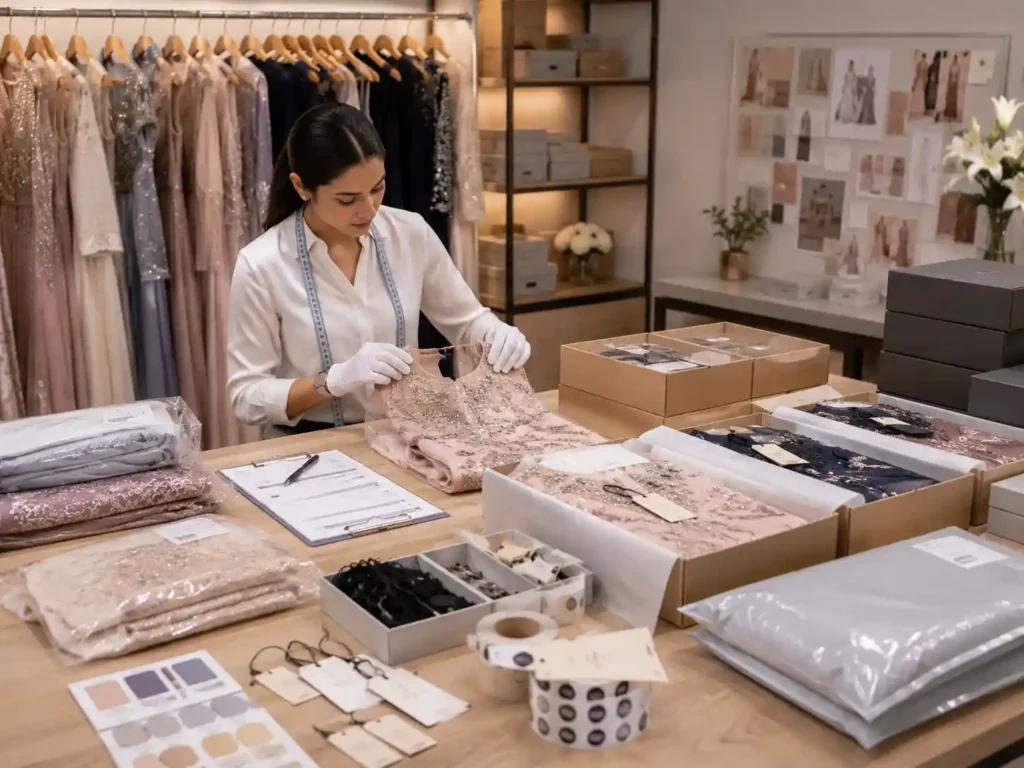
Carry the Standard Into Cutting and QC
Placement risk is highest before sewing because panel errors become expensive after assembly. Cutting teams need the correct pattern version, fabric direction and artwork orientation before bulk panels are bundled. QC needs the same references so inspection decisions match the approved standard.
Jinfeng’s documented QC scope includes cutting checks for pattern version, panel direction, stripe or check matching, print placement, panel quantity, size bundling, fabric direction and stretch direction. Production control therefore begins before garments reach the sewing line. In-line and garment inspection can then focus on whether assembly preserves the approved visual result.
Cutting QC Is the Critical Gate for Placement Accuracy
Many placement failures become irreversible after panels are cut. Jinfeng’s cutting QC covers print placement, panel direction, fabric direction, stretch direction, panel quantity and size bundling so errors can be intercepted before sewing multiplies them across an order.
Confirm Before the First Bulk Cut
Bulk cutting should begin from the final pattern and approved production references. The cutting team needs to know which side is face, which direction the artwork runs, where critical motifs sit and whether any panels require matching or special orientation. Direction-sensitive woven fabrics, border prints and engineered motifs need especially clear controls.
For placement-sensitive styles, a pre-cut review can compare the cutting plan against the approved garment or placement instruction. The aim is to identify conflicts before fabric is consumed: a floral landing inside a dart, a border falling too close to the hem, a front motif shifted from center, or a left/right panel cut from inconsistent directions.
Check Panels While Cutting Is Running
Production control should not rely on a final garment inspection to discover a cutting error. During cutting, pattern version, panel direction, print placement, front/back orientation and panel counts can be checked against the approved standard. Printed woven fabrics also need attention to grain and print direction so drape and artwork orientation remain consistent.
Where size bundles are used, cut parts must stay organized by size and style. A placement-sensitive panel mixed into the wrong size bundle can create visual inconsistency even when sewing quality is good. Jinfeng’s cutting QC includes size bundling and panel quantity checks to reduce that risk before line input.
Release Only Verified Bundles to Sewing
Once panels are cut, the next decision is whether the bundle is safe to release. Placement, direction, panel count and visible fabric issues should be resolved before sewing starts. Reworking a single cut panel is far less disruptive than discovering a repeated placement error after hundreds of finished garments have been assembled.
The same logic supports complex printed resort dresses and other directional styles in Jinfeng’s manufacturing scope. Print-direction cutting, pattern records and QC notes give production teams a clearer basis for repeating approved appearance across a multi-style program.
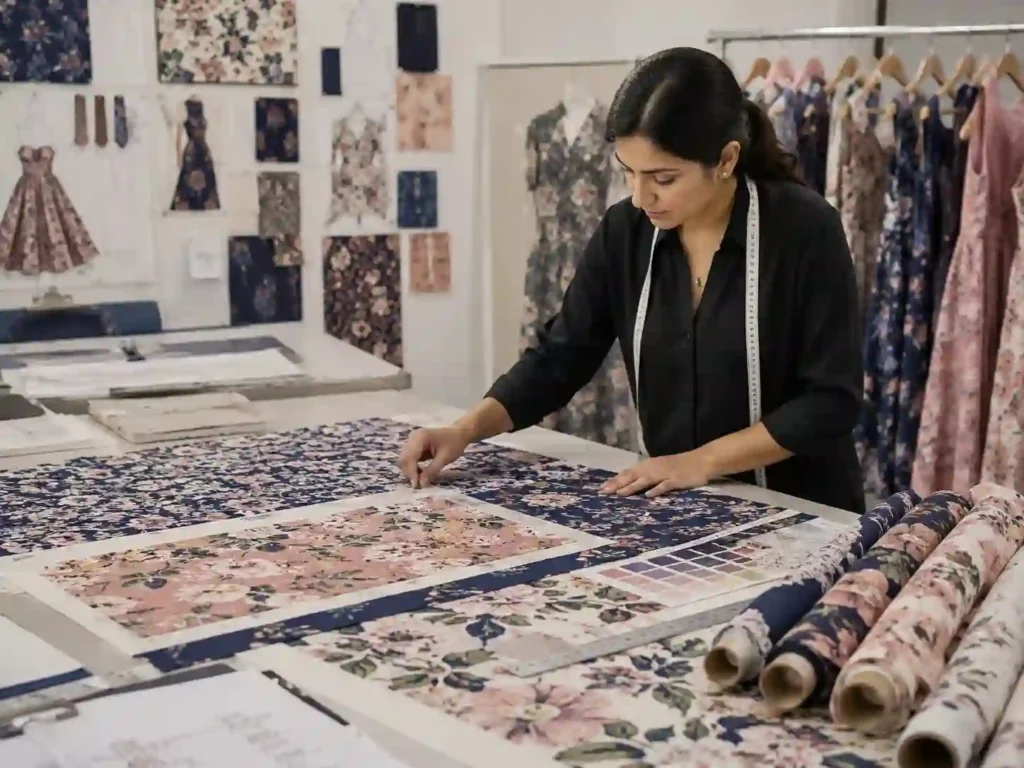
In-Line Checks Protect Placement After Panels Are Sewn
Seam Relationship
Symmetry and Orientation
Garment Proportion
Final Appearance
Garment inspection can review stains, holes, loose threads, asymmetry, zipper behavior, lining exposure and placement-sensitive visual points before packing. Quality decisions should use the agreed project standard rather than a generic visual check.
How Print Placement Can Be Evaluated During QC
Placement tolerance should be defined by the project, artwork and approved garment rather than presented as one universal number. The most reliable inspection method links each visual requirement to a measurable or clearly observable reference.
| Control Item | Recommended Reference | Typical QC Question |
| Vertical position | Neckline, shoulder point, waist seam or finished hem | Is the motif too high or low against the approved standard? |
| Horizontal position | Center front, center back or panel edge | Is the artwork centered or intentionally offset as approved? |
| Artwork scale | Approved physical artwork dimensions | Has the motif printed at the approved size? |
| Orientation | Approved artwork direction and panel direction | Is the print rotated, mirrored or inverted? |
| Seam relationship | Waist seam, side seam, dart or panel join | Is a critical motif cut or interrupted incorrectly? |
| Size relation | Approved size chart, grade rule and critical-size reference | Does the visual position remain balanced across sizes? |
| Final appearance | PP or Golden sample where agreed | Does the finished garment match the approved visual standard? |
Womenswear Styles Where Placement Control Matters Most

Printed Resort Dresses

Floral Mini Dresses

Printed Maxi Dresses

Printed Blouses

Printed Skirts

Matching Sets
Custom Print MOQ Depends on More Than Garment Quantity
Base Fabric and Print Route
Artwork and Color Plan
Collection Structure
Structured for Long-Term Brand and Seasonal Programs
Development Team
Manufacturing Network
Quality Team
Repeat-Order Records
Frequently Asked Questions About Print Placement Control
Print placement is the exact visual and measurable relationship between artwork and the finished garment. It includes position, scale, direction and alignment to landmarks such as center front, neckline, waist seam, panel edge or hem. Placement should be reviewed with the garment pattern and sample because construction and fit can change the final appearance.
No. Print location identifies a general area such as front, back or sleeve. Print placement defines where the artwork sits inside that area and how it relates to garment landmarks. A “front print” instruction alone is not enough for an engineered motif or border-sensitive dress.
Placement can be checked against approved artwork dimensions, garment reference points, final pattern, PP sample and Golden sample where agreed. For Jinfeng programs, cutting QC can also review print placement, panel direction, fabric direction, panel quantity and size bundling before sewing.
It can. Neckline depth, bust position, waist placement, garment length and panel dimensions change through grading. Some artwork positions stay tied to fixed landmarks, while others need proportional adjustment. The correct rule depends on the style, artwork and approved size strategy.
Placement-sensitive details should be aligned by PP approval together with final pattern, artwork version, base fabric, construction and measurements. Late changes can affect cutting, material use, cost and schedule, so revisions after PP need a controlled review before bulk continues.
Yes. Shrinkage can change panel dimensions and the relationship between artwork and finished garment length. Rayon, viscose and other fabrics with dimensional change risk should be assessed before placement-sensitive bulk cutting. Stretch and recovery can also alter visual position on fitted garments.
Border prints need coordination between finished garment length, hem allowance, panel direction and border depth. Maxi dresses and skirts are especially sensitive because small length or cutting changes can make the border look uneven or too shallow.
Useful inputs include the current artwork file, placement reference, tech pack or garment measurements, size chart, base fabric direction, original sample or visual reference, color plan and target quantity. More complete inputs reduce interpretation loops before sampling.
Jinfeng’s regular MOQ starts from 200 pcs per style/color, while custom print materials or print suppliers can require higher minimums. Digital print, screen print, border print, special substrates and exclusive artwork should be reviewed by project before quotation is confirmed.
Yes, repeat-order support can retain pattern, measurement, fabric, trim, Golden sample, QC and packing references. Material availability, print supplier conditions and any new color or fabric changes still need confirmation before the repeat order is released.

Send Your Artwork for a Production Feasibility Review
A strong placement program starts before fabric is cut. Send the files your team already uses, and Jinfeng can review whether artwork scale, garment proportion, pattern direction, base fabric and approval stages are aligned for development.
The review can also identify where a placement-sensitive style needs a physical sample, revised pattern, print-direction note or PP lock before bulk production. Quotations and schedules are confirmed after the project scope, fabric route, print requirements and quantity plan are clear.
Please include where available:
- Current artwork file and version
- Tech pack, original sample or reference images
- Size chart and target size range
- Base fabric or preferred fabric direction
- Placement measurements or visual references
- Style/color quantity plan
- Target launch or delivery window
- Any critical seam, border or motif requirements


