 Skip to content
All-Over Print Dress Development
From print concept to production-ready dresses for seasonal collections, private-label programs, and repeat orders.
Jinfeng Apparel develops printed dresses as complete garments, not as artwork placed on fabric and handed to a sewing line. Print scale, fabric behavior, pattern shape, panel direction, lining, fit, cutting, sewing, pressing, packing, and repeat-order records are reviewed as one production system.
- 10-30 stylescan be coordinated within a collection program, subject to fabric, print, sampling, and production planning.
- 20,000-80,000 piecesis a common total program range for established brand projects described by current cooperation patterns.
- 7+ senior pattern makerssupport fit, panel shape, neckline, waist, hip, hem, and print-sensitive construction review.
- 2 sample rooms and 20+ sample machinistssupport first samples, revisions, photo samples, PP samples, and Golden samples.
- 15+ QC inspectorssupport incoming material, cutting, sewing, garment, pressing, and packing checks.
- MOQ starts at 200 pcs per style/color, while printed fabric, custom color, special trims, and packaging may carry separate supplier requirements.
What All-Over Print Dress Development Really Involves
Beyond Printed Fabric
A print may look accurate on a flat swatch and still fail after cutting and sewing. Bust shaping, waist reduction, hip volume, darts, gathers, side seams, zipper seams, sleeves, and curved hems can change motif size and visual balance.
Development therefore begins with both the print direction and the intended silhouette. A resort maxi, fitted midi, printed mesh bodycon, and relaxed day dress need different fabric behavior, panel planning, and finishing standards even when they use the same artwork family.
- Review artwork scale against garment size.
- Check one-way versus non-directional layouts.
- Confirm whether key motifs can tolerate panel breaks.
- Evaluate lining and transparency before pattern approval.
Garment Geometry Matters
All-over repeat does not remove placement risk. A large flower can land directly across a bust dart, a geometric stripe can break at the center back, and a directional motif can turn upside down on a wrongly nested panel.
Pattern shape also changes how fabric falls on the body.
Product development needs to account for front and back balance, seam positions, hem sweep, neckline shape, and size grading so the print remains commercially acceptable across the full size range.
- Curved panels can visually bend straight motifs.
- Stretch can widen or distort printed shapes.
- Gathers can compress a large repeat into dark visual zones.
- Maxi hems need balanced direction and clean folding after pressing.
Bulk Repeatability Matters
An approved photo sample has limited value if bulk pieces vary in shade, direction, measurement, or packing. Production control must transfer the approved fabric reference, final pattern, size chart, print notes, trim card, sewing instructions, labels, packing standard, and QC checklist into the factory workflow. Incoming material, cutting, in-line sewing, garment measurement, pressing, and packing checks then protect the approved standard. Repeat orders still require review when fabric batches, colors, print files, or suppliers change.
- Separate dye or print lots when shade variation is visible.
- Keep panel direction consistent during cutting.
- Compare bulk measurements against approved tolerances.
- Retain records for new colorways and repeat programs.
Printed Dress Directions We Develop

Printed Resort Maxi

Floral Midi Dress

Printed Chiffon Dress

Rayon Viscose Dress

Printed Linen Blend

Printed Mesh Dress

Printed Mini Dress

Seasonal Print Collection
From Print Concept to a Wearable Garment
A two-dimensional print file has to survive body curves, seams, gathers, stretch, and size grading. Jinfeng reviews those interactions before the approved print direction becomes a production standard.

Artwork Scale and Repeat
Scale against the garment: A motif balanced on a screen can become oversized on a mini dress or too small across a wide maxi skirt. Artwork scale is reviewed against garment length, panel width, repeat interval, waist position, and hem sweep. Large florals, geometric repeats, border effects, and one-way motifs require different pattern decisions.
Repeat direction: Non-directional repeats give more cutting freedom. One-way prints require relevant panels to face the same direction, which can increase fabric consumption. Strong focal motifs around center front, bust, waist, or hem should be identified before costing and sampling.
Size range: Pattern grading changes panel widths and seam positions. Exact motif placement will not remain identical across every size. The production goal is controlled orientation, balanced appearance, and stable fit across the approved size range.

Body Shape Changes the Print
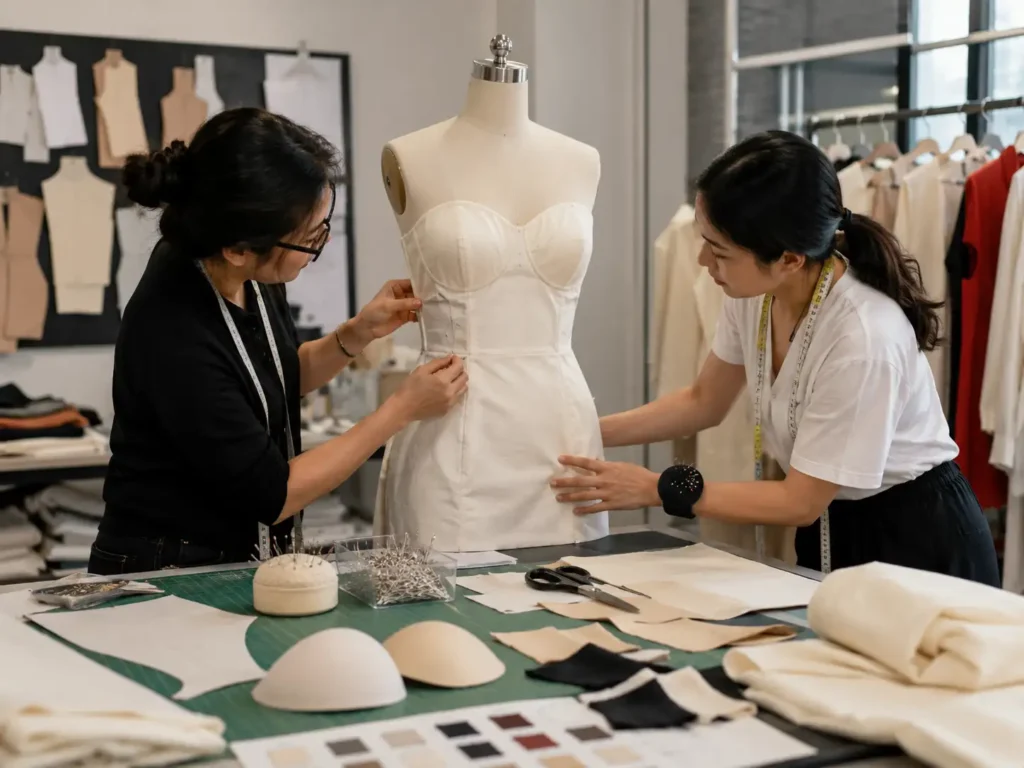
Bust, waist, and hip shaping: Darts, princess seams, side seams, and fitted panels change flat artwork into three-dimensional form. Straight graphics can bend and florals can compress around shaping points. Fitted silhouettes need more scrutiny than relaxed resort dresses.
Stretch behavior: Printed mesh, jersey, and spandex blends can enlarge or lighten motifs when worn. Stretch direction, recovery, weight, lining, and pattern ease are reviewed together so a print approved on a flat table still looks controlled on the body.
Gathers and ruching: Gathered waists, shirring, and side ruching compress artwork and create denser visual zones. Sample review checks whether the effect supports the design while keeping garment measurements and symmetry within the approved standard.
Construction Can Break the Visual Flow
Seams and zippers: Side seams, center-back zippers, button plackets, and wrap edges naturally interrupt artwork. Exact motif matching is not always required for an all-over repeat, but stripes, checks, oversized graphics, or high-contrast geometrics need a defined acceptance standard before bulk.
Necklines and small parts: Curved necklines, sleeves, straps, belts, and ties can crop a large motif. Small components need direction notes when a reversed print would look accidental.
Hems and tiers: Maxi hems and tier seams expose print direction and panel balance. Fabric relaxation, pressing, and final hemming can alter the garment after sewing, so print control remains connected to garment engineering through final finishing.
Fabric and Print Route Decision Matrix
Print method cannot be selected from artwork alone. Fiber content, surface, stretch, weight, color depth, hand feel, target quantity, garment silhouette, and supplier capability all influence the final route. Jinfeng reviews garment requirements and coordinates print feasibility by project; no unsupported claim is made about in-house print machinery.
| Fabric Direction | Typical Dress Use | Development Priority | Print Consideration | Main Bulk Risk |
|---|---|---|---|---|
| Chiffon | Resort, maxi, wedding guest, day event | Transparency, lining, drape, hem | Lightweight surface needs clear color and direction review | Slippage, shade, print direction, uneven hem |
| Rayon / Viscose | Resort, vacation, midi, maxi | Drape, shrinkage, seam growth | Print result must remain stable after fabric handling and pressing | Shrinkage, skew, color variation, hem growth |
| Printed Woven | Floral, brunch, resort, shirt dress | Direction, hand feel, structure | Repeat size and panel direction affect marker planning | Wrong panel direction, mismatching strong motifs |
| Linen Blend | Resort, vacation, lifestyle dress | Wrinkle character, shrinkage, ease | Natural surface can change color appearance and sharpness | Creasing, skew, shrinkage, packing marks |
| Printed Mesh | Bodycon, party, festival, layered dress | Stretch, transparency, lining | Print coverage changes when mesh stretches on body | Motif distortion, hole risk, neckline deformation |
| Stretch Jersey | Fitted, ruched, going-out dress | Recovery, weight, side seam stability | Artwork scale must be checked under intended stretch | Twisting, growth, print distortion, size variation |
Choosing Fabrics for Printed Dress Programs
Fabric controls drape, opacity, print appearance, fit, seam behavior, shrinkage, packing, and price. Jinfeng reviews printed dress fabrics as garment materials first, then confirms whether the print direction can be executed consistently through sampling and bulk.
Flowing Wovens for Resort Dresses
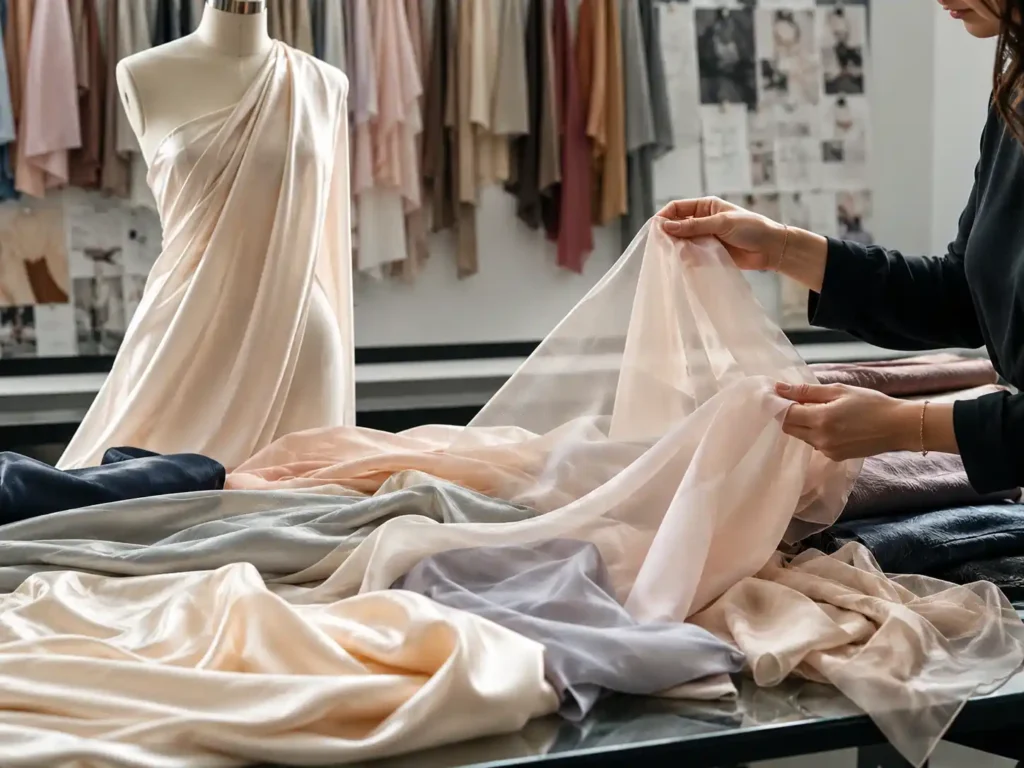
Rayon and viscose: Strong options for vacation, resort, floral midi, and maxi programs because of their fluid drape. Development focuses on shrinkage, skew, print direction, seam growth, and hem balance. A long panel can change after handling or pressing, so measurements and final hem approval need to reflect real fabric behavior.
Chiffon: Chiffon adds movement but also introduces transparency, cutting slippage, visible seam allowance, lining, and delicate hem work. Printed chiffon with a one-way motif needs consistent panel orientation. Lining color and length also affect the perceived print color and overall garment finish.
Crepe and light wovens: Crepe can provide more body and lower transparency than chiffon while retaining a clean drape. A substitute fabric should be reviewed for weight, texture, print sharpness, shrinkage, and pattern impact rather than treated as a simple price replacement.

Printed Mesh and Stretch Fabrics
Transparency under stretch: Printed mesh can appear lighter or more open across bust and hip zones. Fit review should include the intended lining, stretch direction, bust coverage, hip fit, neckline stability, and movement rather than relying only on flat swatches.
Recovery: Stretch mesh, jersey, rib knit, and spandex blends need enough recovery to protect neckline shape, side-seam balance, waist fit, and finished measurements. Weak recovery can make a sample look acceptable at first and then relax during wear or handling.
Pattern implications: A woven floral pattern cannot be reused unchanged for printed stretch mesh. Ease, seam allowance, lining pattern, neckline reinforcement, and measurement tolerances may all need revision before bulk.

Linen Blends and Printed Wovens
Natural surface: Linen blends and printed wovens suit resort, vacation, brunch, and lifestyle dresses. Their firmer hand affects folds, waist shaping, sleeves, slits, ties, and packing. Wrinkling may be part of the fabric character, but excessive skew, shrinkage, or hard packing creases still need control.
Directional artwork: Florals with obvious stems, scenic repeats, stripes, or geometric prints require disciplined panel orientation. Directional cutting can reduce marker efficiency because panels cannot be rotated freely, so costing needs to reflect actual fabric consumption.
Small components: Belts, ties, pockets, plackets, and facings can look wrong when cut in a conflicting direction. Direction notes should therefore cover visible small parts as well as main front and back panels.
Where Pattern and Print Must Work Together
A dress pattern defines the surface where the print is seen. Panel shape, seam location, dart intake, grading, and construction details can improve or damage the visual result before sewing begins.
One-Way Prints Need Direction Control
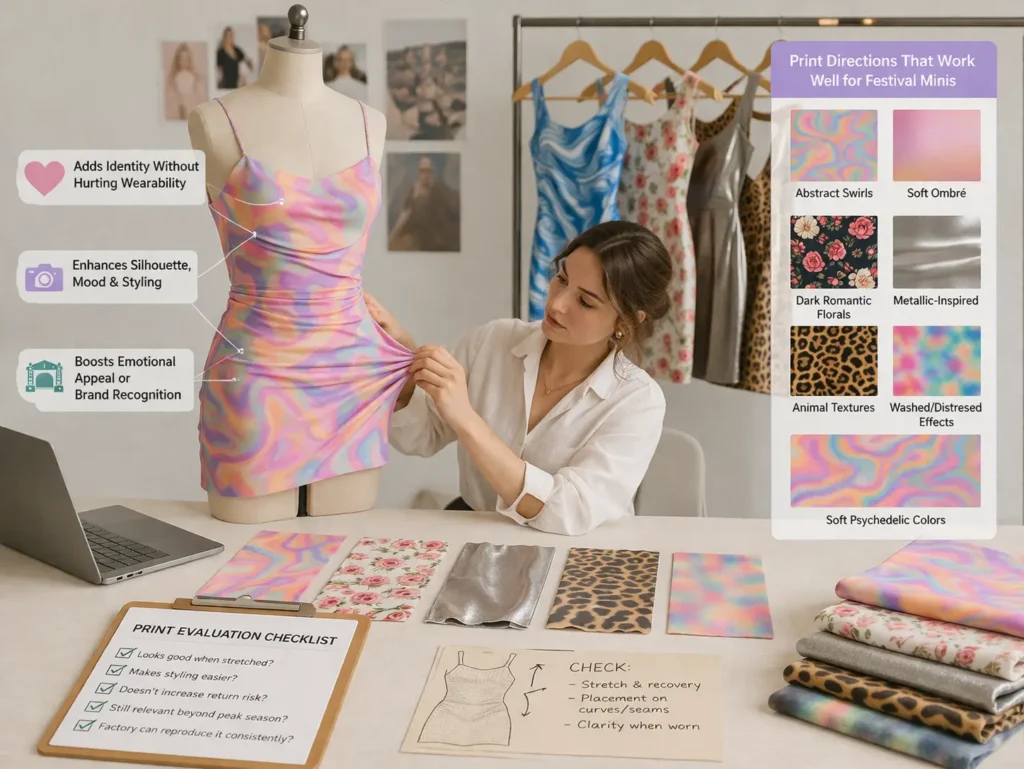
Panel orientation: One-way florals, scenic patterns, lettering, animals, and directional geometrics require visible panels to face the intended direction. Front, back, sleeves, ties, belts, pockets, and other visible components are included where relevant.
Marker planning: Directional cutting may increase consumption because panels cannot rotate freely. Fabric width, repeat size, panel length, order size, and matching requirements influence yield. Costing should reflect the real marker rather than a non-directional assumption.
Production notes: Direction must move into cutting instructions. Front/back side, grain, stretch, print direction, panel quantity, size bundling, and any matching rule need to be clear before cutting starts.
Large Motifs Need Early Decisions
Focal areas: Large florals or graphic motifs can be cut by darts, waist seams, princess seams, or zippers. Some breaks are acceptable in an all-over repeat; others create an awkward focal point. Key areas around center front, bust, waist, and center back should be reviewed during sampling.
Matching level: Exact matching across a zipper or side seam raises cutting complexity and fabric usage. When matching is required, the rule should be documented before bulk fabric is committed. When it is not required, an agreed visual tolerance prevents unnecessary rejection.
Hem sweep: Maxi skirts can display several repeats across a wide lower panel. Artwork that feels balanced on a bodice may become too dense across a full skirt, making garment-scale review essential.

Darts and Ruching Change Print Density
Darts: Dart intake closes the print and can narrow or hide motifs around bust and waist shaping.
Ruching: Side ruching and gathered seams compress fabric and increase visual density. Sample approval should confirm both appearance and finished measurements.
Tier seams: Tiered resort dresses restart the print at each join. Repeat direction, tier length, and gather ratio should look deliberate rather than accidental.
Seam consistency: Variable seam allowance can move strong printed lines and create left/right imbalance. Sewing instructions and in-line inspection help keep the approved visual effect stable in bulk.
Fit Control Across Printed Dress Silhouettes

Mini Dress Fit
- Check bust and waist proportion before print scale is locked.
- Confirm safe hem length for the target market.
- Review strap, neckline, zipper, lining, and cut-out positions.
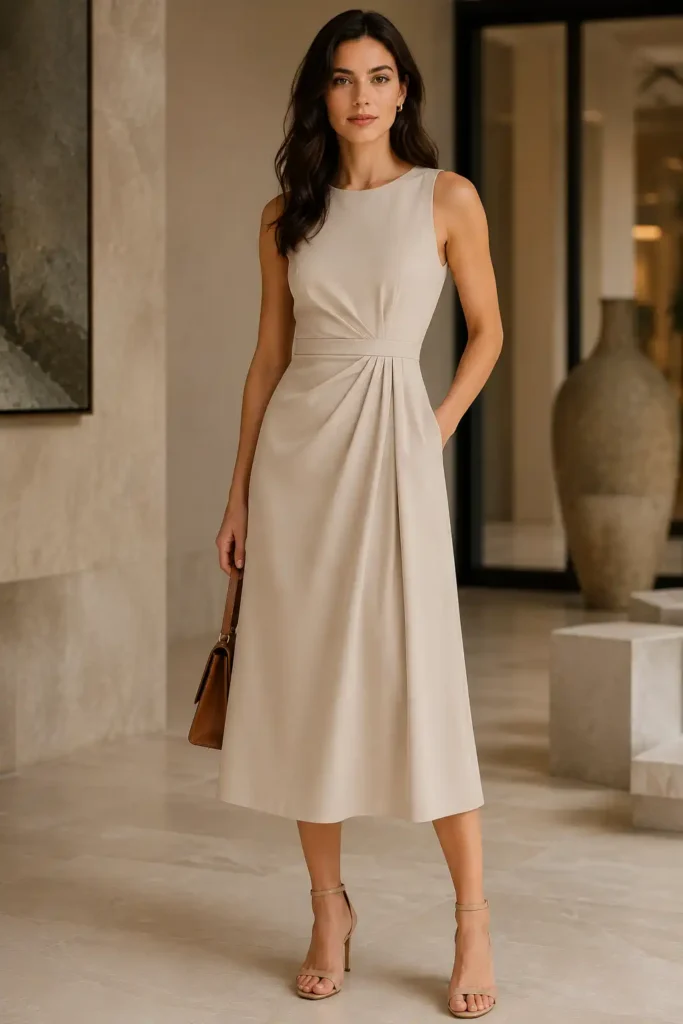
Midi Dress Balance
- Review waistline against torso length.
- Check side-seam hang and hem level.
- Confirm print direction remains consistent through skirt panels.
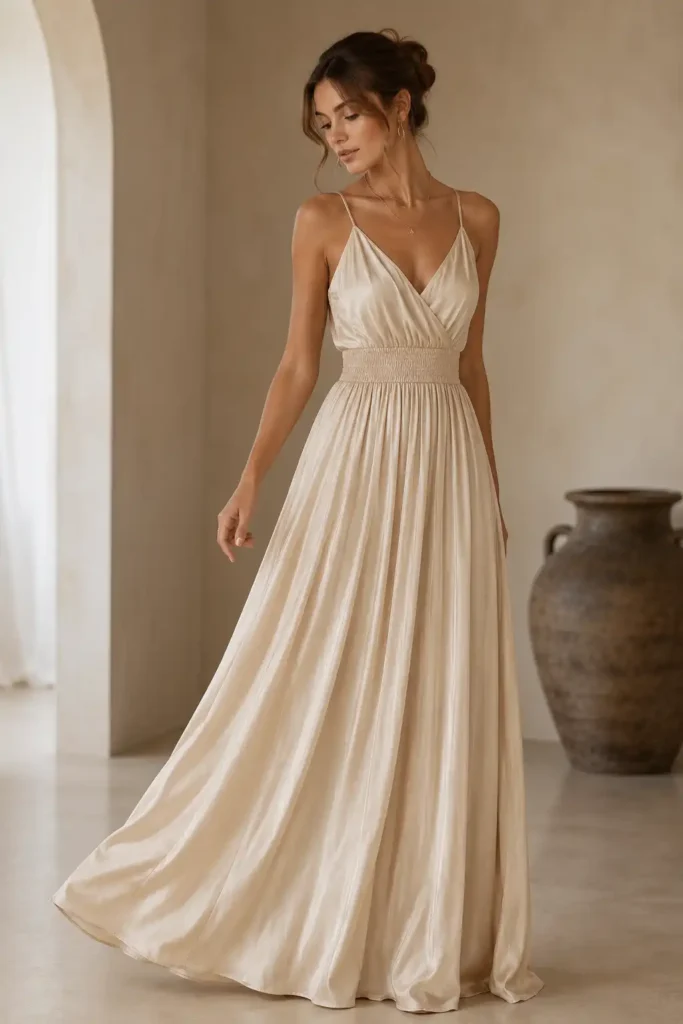
Maxi Dress Control
- Review length after the fabric has settled.
- Control lining length below outer layers.
- Plan packing to reduce hard fold lines across focal motifs.

Fitted Printed Dress
- Match fabric recovery to pattern ease.
- Review print appearance on the body, not only flat.
- Check bust, waist, hip, side seam, and hem after handling.
Relaxed Resort Shapes
- Protect one-way direction during cutting.
- Check shrinkage before long-length approval.
- Keep ties, belts, and small components visually consistent.

Printed Mesh Silhouettes
- Confirm lining coverage and color.
- Stabilize neckline and armholes where required.
- Inspect holes, recovery, print position, and finished measurements.
Sampling Printed Dresses Before Bulk Production
Sampling turns artwork, fabric, pattern, and construction assumptions into a garment that can be measured, worn, photographed, revised, and finally locked for production. Printed styles need approval at both fabric level and garment level.
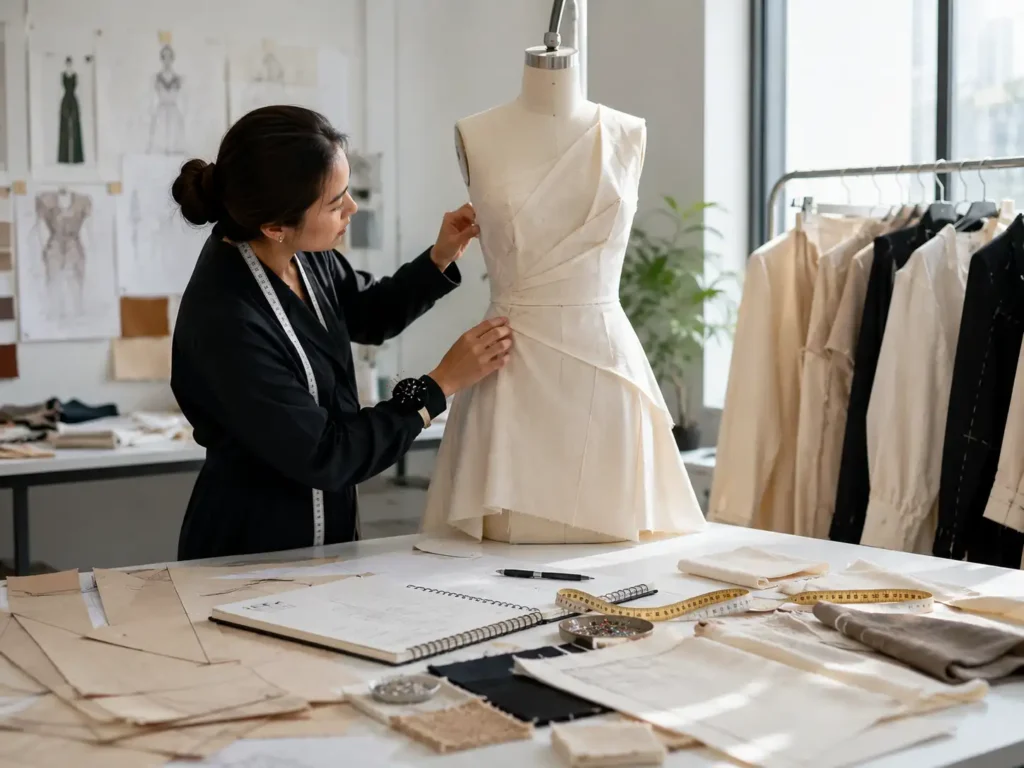
First Samples Test the Product Direction
A first sample verifies silhouette, fabric behavior, print scale, print direction, proportion, lining, and construction feasibility. Development can start from a tech pack, reference image, original sample, sketch, line sheet, print artwork, fabric direction, or size chart. Better input reduces interpretation risk.
A normal dress first sample is commonly planned around 10-15 days after workable materials and specifications are ready. Medium-complexity dresses, sets, or jumpsuits may require 12-18 days. Complex mesh, corset, lace, or sequin styles may require 15-25 days. Custom fabric or special trim development can require 20-35 days or supplier-dependent timing.
Review includes front, side, and back views; bust, waist, hip, neckline, armhole, strap, slit, lining, and length; plus print scale, direction, strong motif breaks, transparency, zipper behavior, and overall photo appearance.

Revisions Turn Feedback Into Pattern Changes
Useful revision feedback is measurable: bust tightness, waist position, hip ease, neckline depth, strap length, armhole exposure, hem length, slit height, lining length, print scale, or motif position.
Photos and measurement notes help the pattern team interpret the correction.
A fabric change may require pattern changes because stretch, weight, drape, transparency, shrinkage, and recovery alter fit.
Revised samples are commonly planned around 7-15 days, depending on pattern changes, material availability, print updates, and trim adjustments.
Sample versions, fabric references, print files, size charts, and comments remain identifiable so bulk is not released from an outdated sample or pattern.

PP and Golden Samples Lock Bulk Standards
The PP sample confirms final fabric, color, print direction, construction, measurements, labels, trims, and relevant packing details.
PP timing is commonly 7-15 days once final materials are available.
Major changes after PP approval can affect material purchasing, cost, production scheduling, and delivery.
A Golden sample provides a physical reference for production, QC, repeat orders, and dispute review.
Print file/version, scale, color reference, direction, panel expectations, and matching requirements are linked to the final pattern, size chart, BOM, trim information, sewing instructions, packing standard, and QC checklist before bulk release.
Development Workflow From Artwork to Bulk
Brief Review
Fabric Print Direction
Pattern Development
First Sample
Revision Round
PP Approval
Bulk Handover
Repeat Records
Cutting Control for All-Over Printed Fabrics
Cutting is where print direction becomes irreversible. A wrong panel orientation, mixed size bundle, missed defect, or unclear matching rule can spread through a sewing batch before the finished garment reveals the problem.

Panel Direction Before Bundling
Printed fabrics need a clear face side, grain or stretch direction, and approved print orientation. One-way florals, scenic prints, lettering, animals, and directional geometrics require consistent front, back, sleeve, tie, belt, pocket, and other visible-piece direction where relevant.
Printed mesh and jersey add stretch direction to the decision. A visually correct motif direction cannot override the structural stretch needed for fit and recovery, so the marker needs to satisfy both requirements.
Cut pieces are bundled by style, color, and size. Similar colorways can be easy to mix during a large collection, making clear bundle identification and cut-quantity checks important before sewing.
Print Matching Must Be Defined
All-over repeat does not automatically mean exact matching at every seam. Tossed florals may accept normal interruption, while stripes, checks, border effects, oversized graphics, and high-contrast geometrics may need tighter alignment.
Matching increases fabric usage because panels need to move within the marker. The requirement should therefore be agreed before final costing and bulk fabric commitment. Where focal motif control is required, an approved sample, marked pattern, print reference, or cutting note gives the production team an observable standard.
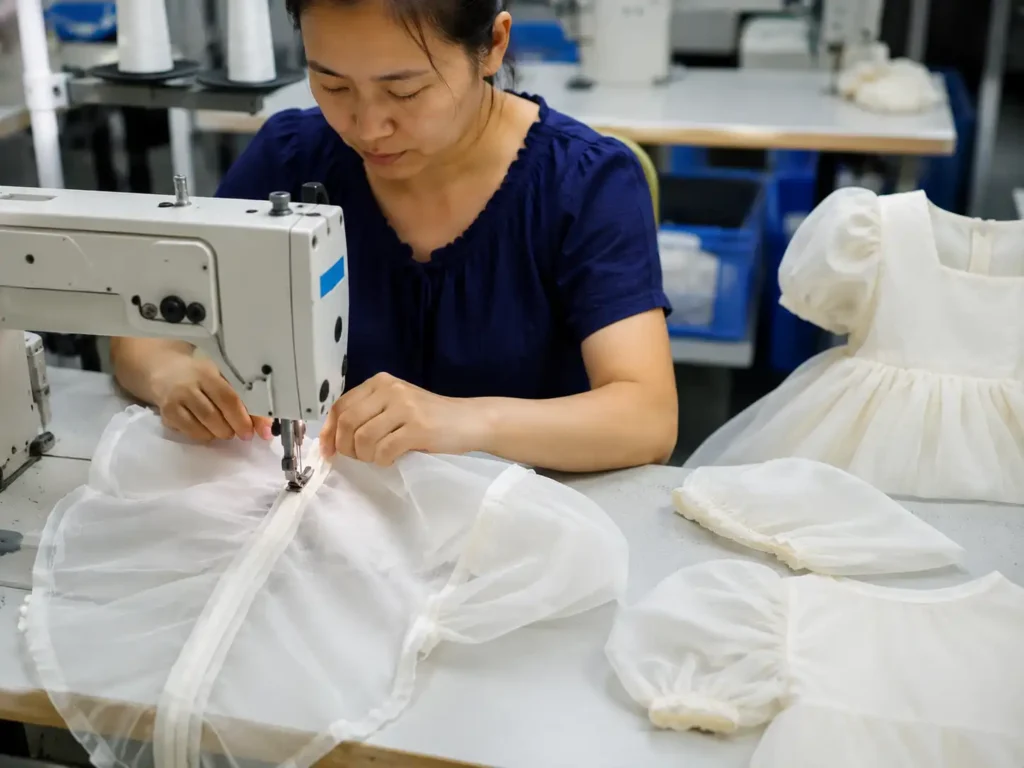
Defects Are Stopped Before Sewing
Incoming material review can cover color, hand feel, width, weight, shrinkage, visible defects, shade difference, mesh snags, holes, and print issues relevant to the approved project. Suspect lots should not be mixed casually across a garment program.
After cutting, panels can be checked for face side, direction, matching where required, damage, holes, quantity, and size bundling. Finding a wrong direction during cut-panel inspection is far less costly than finding it after sewing.
Cutting information then transfers into sewing instructions covering seam allowance, zipper position, lining method, ruching, label placement, and trim location so approved print direction survives assembly.
Sewing Printed Panels Without Losing Visual Balance

Seams and Zippers
- Review seam allowance against the approved instruction.
- Check center-front and center-back balance.
- Prevent stretching during zipper insertion on soft fabrics.
- Confirm strong printed lines do not exaggerate a wavy seam.

Lining and Transparency
- Match lining color and length to the garment standard.
- Secure attachment points so lining does not expose at hem or neckline.
- Check shrinkage differences between outer fabric and lining.
- Review printed mesh coverage under intended stretch.

Ruching, Hems, Finishing
Ruching compresses a print; tier seams restart it; long hems reveal direction and balance; pressing can leave shine or creases on sensitive fabrics. Construction and finishing need to preserve the intended visual effect after the garment leaves the sewing line.
- Control ruching position and density.
- Check maxi hem balance after fabric settling.
- Use pressing methods suitable for the fabric surface.
- Fold and pack so strong motifs are not damaged by hard creases.
Bulk Consistency Checks for Printed Dresses
Bulk quality depends on process control rather than a final visual check alone. Printed dress programs need traceable checkpoints from incoming fabric through packing so color, direction, fit, construction, and SKU information remain aligned.
| Checkpoint | What Is Checked | Printed Dress Risk Controlled | Working Record |
|---|---|---|---|
| Incoming Material QC | Color, hand feel, width, weight, defects, shrinkage, visible print quality, lot difference | Shade variation, wrong print batch, defects entering cutting | Fabric reference, lot record, inspection notes |
| Cutting QC | Pattern version, panel direction, print placement, front/back side, size bundling, quantity | Reversed panels, wrong direction, mixed sizes, missed matching requirement | Cutting instruction, bundle record, approved pattern |
| Sewing / In-Line QC | Seam allowance, stitch quality, symmetry, zipper, ruching, lining, slit, damage | Visual distortion, wavy seams, inconsistent construction | Sewing instruction, in-line QC notes |
| Garment Inspection | Measurements, appearance, fit effect, shade, stains, holes, zipper function, hem | Size variation, garment-to-garment visual inconsistency | Measurement sheet, defect record, Golden sample reference |
| Packing QC | Hangtags, barcode, size sticker, polybag, folding, carton mark, packing ratio | Wrong SKU, color/size mix, packing or warehouse receiving errors | Packing instruction, barcode list, carton record |
Managing Multi-Style and Multi-Color Print Collections
Style Grouping
- Separate fitted, flowing, mesh, and structured styles where needed.
- Identify shared base patterns and unique constructions.
- Prioritize hero styles needed for photography or sales review.
Colorway Control
- Confirm physical color standards or lab dips where applicable.
- Review lining and trim colors against each print ground.
- Keep color approval records for bulk and repeat orders.
Fabric Grouping
- Compare hand feel, weight, drape, transparency, and shrinkage.
- Recheck pattern requirements after changing fabric families.
- Avoid assuming one print approval covers every substrate.
Sample Priority
- Build a sample priority list.
- Track first, revised, photo, PP, and Golden sample status.
- Link approvals to the intended launch calendar.
SKU and Packing Records
- Separate packing instructions by SKU where needed.
- Verify barcodes and size/color labels.
- Keep carton marks aligned with packing lists and actual goods.
Repeat Development
- Retain pattern, fabric, print, trim, and packing references.
- Reconfirm changed colors or materials.
- Use sales feedback to prioritize new seasonal extensions.
Private Label and Retail-Ready Printed Dresses
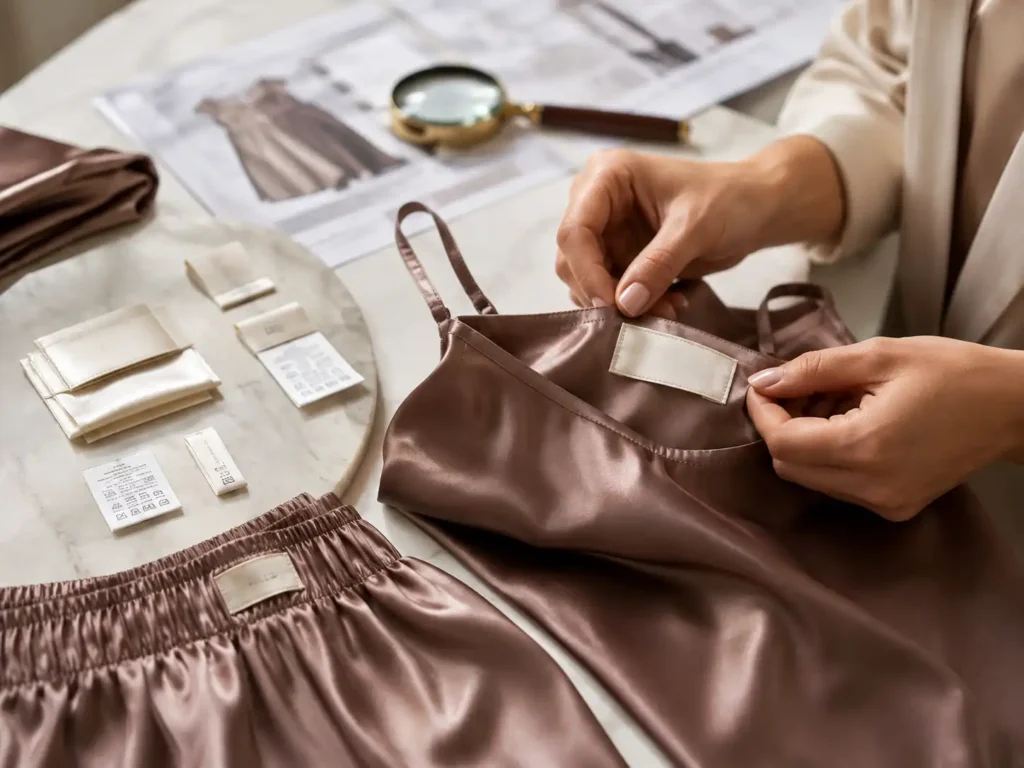
Brand Label System
- Woven or printed brand labels
- Size and care labels
- Label placement review
- Label QC before packing
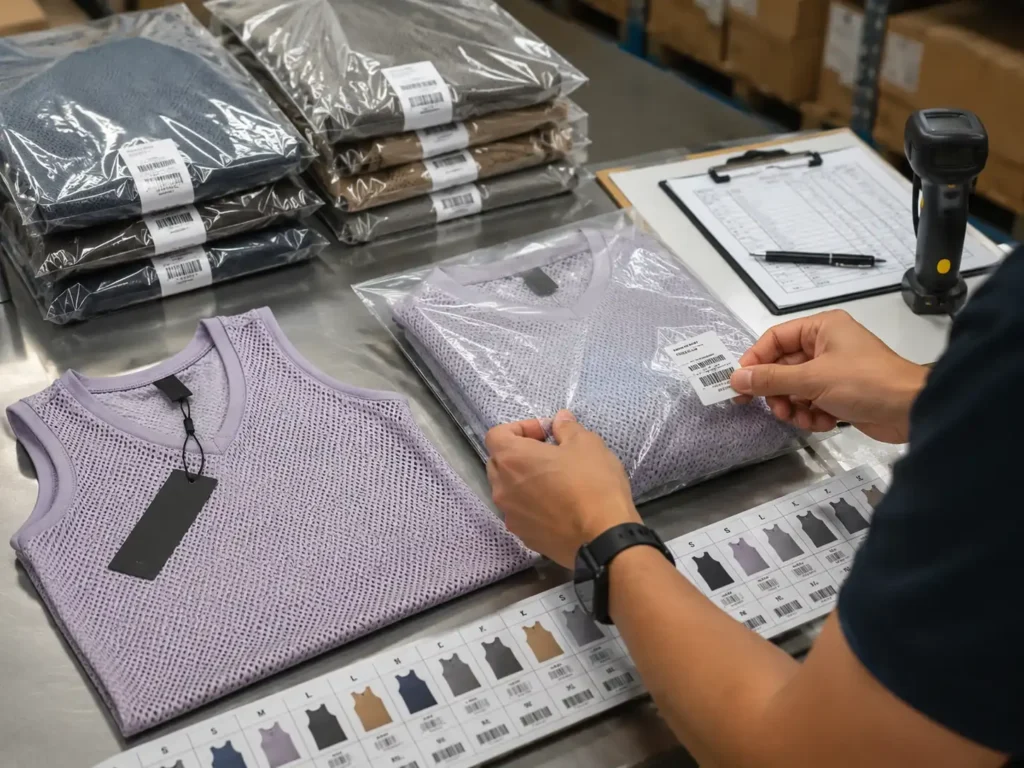
Barcode and SKU Control
- Style/color/size mapping
- Barcode sticker verification
- SKU label matching
- Packing-list consistency
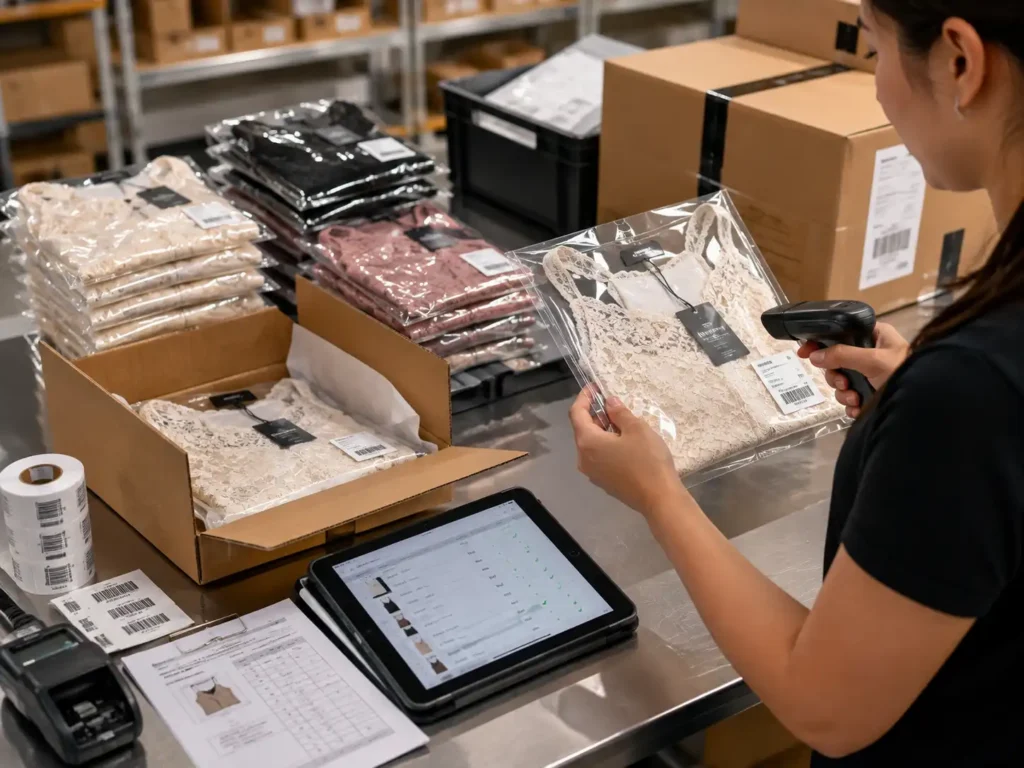
Individual Garment Packing
- Correct garment in correct polybag
- Hangtag and barcode match
- Clean folding and stain check
- Packing size suited to silhouette

Cartons and Warehouse Marks
- Carton mark verification
- Color and size ratios
- Packing-list alignment
- Warehouse-label support by requirement
Printed Dress Programs With Measurable Production Challenges
US Resort Print Collection
- 15 styles
- Approx. 32,000 pieces
- Chiffon, rayon, viscose, printed woven
- Key controls: transparency, direction, shrinkage, hem, packing
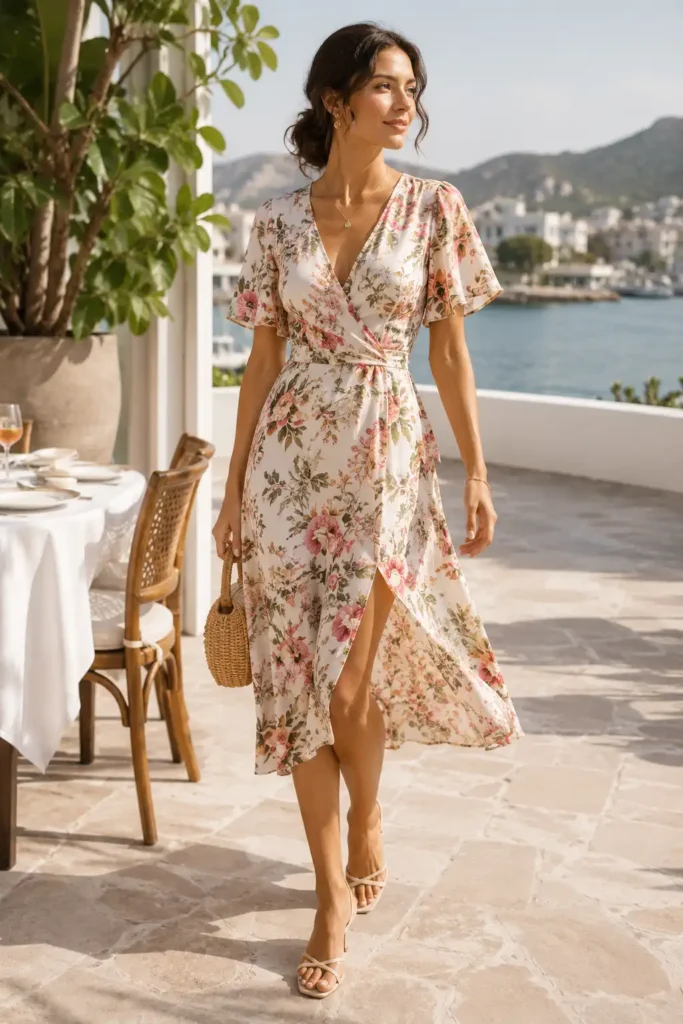
Australian Floral Resort Program
- 13 styles
- Approx. 28,000 pieces
- Linen blend, viscose, rayon, floral printed woven
- Follow-up development: new prints on proven silhouettes
US Multi-Style Private Label Program
- 18 styles
- Approx. 48,000 pieces
- Multi-fabric private-label assortment
- Key controls: sample versions, SKU packing, inspection, phased shipment
Capacity, MOQ, and Program Fit
Program Fit
Jinfeng is positioned for established fashion labels, sourcing teams, private-label programs, ecommerce groups, retail programs, and seasonal collections with clear product direction and batch-production plans.
Strong input includes artwork or print direction, reference styles, tech packs or line sheets, target size range, fabric preference, order quantity, packaging requirements, and delivery calendar.
- Suitable for multi-style seasonal programs
- Suitable for repeat and replenishment planning
- Suitable for private-label and retail-ready requirements
- NDA-based development can be arranged
MOQ Planning
- 200 pcs per style/color baseline
- Print and fabric supplier MOQs confirmed by project
- Color count affects material and SKU planning
- Packing components may have separate requirements
Production Allocation
- Complex first-time styles receive risk review before allocation
- Repeat programs can use retained pattern and production records
- Multi-batch delivery can be planned by project
- Launch timing is coordinated with material and approval milestones
Protecting Artwork, Unreleased Styles, and Brand Files
NDA-Based Development
Artwork and Design Protection
Anonymous Program Proof
Frequently Asked Questions About Printed Dress Development
Fabric printing creates a printed material. Dress development must also control pattern shape, body fit, panel direction, seams, darts, lining, zipper, hem, sample approval, bulk cutting, sewing, measurement, packing, and repeat-order records. A print can be correct on fabric and still fail as a garment if those variables are not coordinated.
Common directions include chiffon, rayon, viscose, printed woven, linen blends, mesh, and stretch jersey, depending on silhouette and selling occasion. Fabric selection is reviewed by drape, weight, transparency, stretch, recovery, shrinkage, hand feel, surface, print requirement, MOQ, and bulk stability rather than by fabric name alone.
No. Tossed florals and many regular repeats can accept normal seam interruption. Stripes, checks, large geometrics, border effects, or dominant motifs may require stricter matching. Matching expectations should be set before final costing because marker planning and fabric consumption can change.
Direction is reviewed during pattern and cutting preparation. Visible panels such as front, back, sleeves, ties, belts, and other components are oriented according to the approved print direction. Cutting QC checks pattern version, panel direction, front/back side, fabric direction, size bundling, and any defined print-matching requirement.
Not automatically. A new fabric may change stretch, recovery, weight, drape, transparency, shrinkage, thickness, lining, seam behavior, pressing, and finished measurements. Jinfeng reviews whether pattern correction, lining changes, costing updates, or a revised sample are needed before the new material enters bulk.
A normal dress first sample is commonly planned around 10-15 days after workable materials and specifications are ready. Medium-complexity styles may require 12-18 days, while complex mesh, corset, lace, or sequin constructions may require 15-25 days. Custom fabric or special material development can require 20-35 days or supplier-dependent timing.
The standard starting MOQ is 200 pcs per style/color. Printed fabric, custom color, special trims, certified material requirements, and custom packaging can carry separate supplier MOQs. Quantity planning should therefore be reviewed by style, color, fabric, and packing structure rather than by total order quantity alone.
Bulk control includes incoming material inspection, print and shade review where applicable, cutting direction checks, in-line sewing inspection, garment measurement, appearance review, pressing, packing QC, and approved sample comparison. AQL sampling or client-appointed inspection can be supported according to the agreed inspection plan.
Yes, when the artwork and fabric suit the intended silhouettes. A print may extend across mini, midi, maxi, skirt, set, or jumpsuit directions, but each silhouette still needs its own pattern, fit, panel, fabric-behavior, and construction review. Shared artwork does not remove garment-specific development work.
Yes, subject to material and print re-approval. Jinfeng can retain pattern, size, fabric, trim, packing, and QC records from the approved style. A new print or colorway still requires review of artwork scale, direction, color, fabric availability, lining, labels, SKU data, and any effect on lead time or cost.

Start Your All-Over Print Dress Program
Send the files your product team already uses to develop a collection. Jinfeng can review the dress structure, fabric direction, print-sensitive construction points, sampling route, MOQ fit, bulk production requirements, private-label details, and delivery milestones before the program moves into formal development.
A clearer brief allows faster decisions around pattern work, sample priorities, print direction, fabric alternatives, colorways, packing, and production allocation. For a more accurate project review, include:
- Print artwork, repeat file, or visual direction
- Tech pack, line sheet, sketch, reference image, or original sample
- Target fabric or preferred hand feel
- Quantity per style and color
- Size range and size chart
- Label, barcode, SKU, polybag, and carton requirements
- Target launch date or warehouse receiving window
- Any inspection, testing, or compliance instructions required by the program


