 Skip to content
Bust-Waist-Hip Fit Development
Fit development for women’s fashion brands that need more than three measurements on a size chart.
Jinfeng Apparel translates brand measurements, tech packs, reference garments and fit comments into production-ready patterns for fitted dresses, bodycon styles, corset dresses, slip dresses, strapless designs, occasionwear, jumpsuits and other proportion-sensitive womenswear.
- 7+ senior womenswear pattern makers working across fit-sensitive dress structures
- 2 sample rooms supported by 20+ sample machinists
- Ordinary dress first samples typically require about 10–15 days after development inputs are confirmed
- Complex corset, strapless, lace, mesh, sequin and evening styles commonly require about 15–25 days, depending on construction, fabric and trims
- Fit control extends beyond bust, waist and hip circumference to upper bust, underbust, waist position, hip depth, neckline, armhole, strap, length, slit and lining
Fit Development Backed by Manufacturing Capability
7+ Pattern Makers
2 Sample Rooms
20+ Sample Machinists
15+ QC Inspectors
18+ Sewing Lines
100,000+ Monthly Capacity
What Is Bust-Waist-Hip Fit Development?
Bust-waist-hip fit development converts target body proportions into garment measurements, pattern shape, ease, fit samples, revisions and graded sizes. The objective is not simply to match three circumferences. A successful fitted garment must place volume, length and shaping in the correct areas while preserving the intended silhouette, comfort and movement.
Body Measurements Are the Starting Point
Bust, waist and hip measurements establish a basic body framework, but three circumferences cannot describe the entire torso. Two people may share the same full-bust measurement while having different upper-bust width, bust projection, torso length or back shape. Similar hip measurements can also carry different front-to-back distribution.
For production development, brand measurement standards therefore need to be read together with the garment type. A fitted stretch mini dress may use controlled or negative ease, while a woven satin slip dress usually requires different allowance and shaping. Corset construction adds support requirements, and a jumpsuit adds torso and rise dimensions to the same bust-waist-hip relationship.
Garment Measurements Include Ease
Finished garment measurements are not automatically equal to body measurements. Ease changes according to fabric behavior, intended silhouette and movement.
Stretch jersey may sit closer to the body because the material can extend and recover.
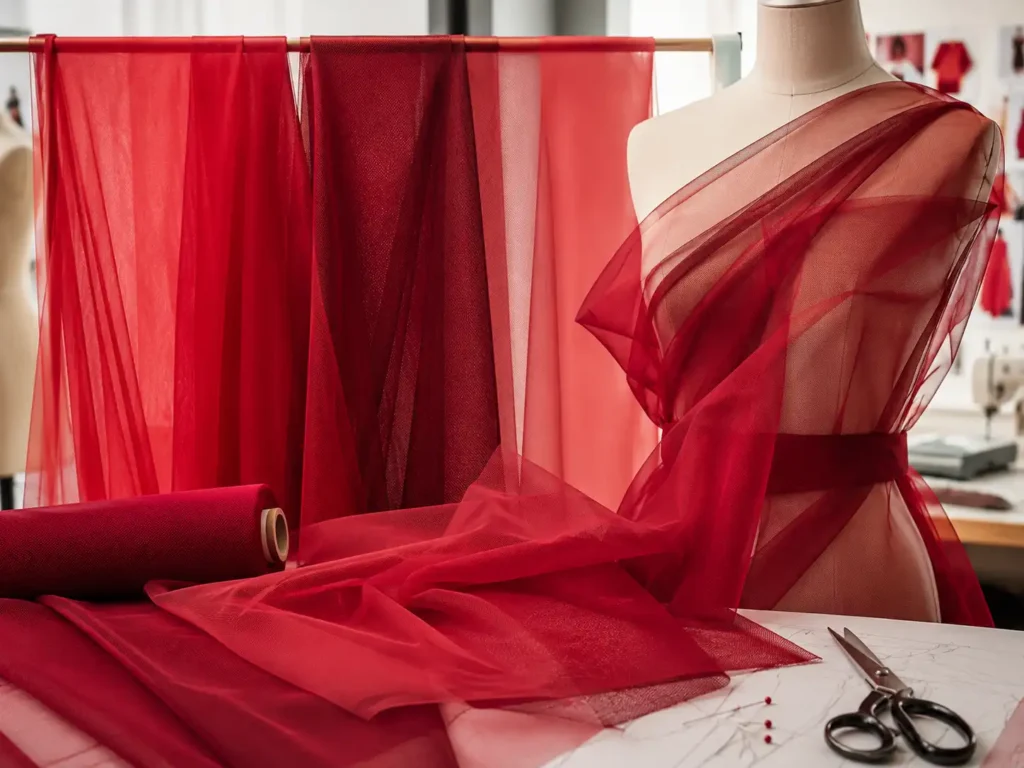
Woven satin has limited stretch and needs enough room for movement without creating hip drag lines or zipper stress. Power mesh can add controlled support, while soft mesh may contribute little structural resistance.
For that reason, Jinfeng reviews measurement requirements together with fabric direction before locking pattern dimensions.
Pattern Shape Controls Where Volume Sits
A waist measurement can be numerically correct while the waist seam sits too high or too low. Hip circumference may be correct while shaping reaches full hip too early. Bust width may match the chart while the bust point, neckline or front length still creates pulling.
Pattern development translates measurements into shape: dart intake, side-seam curvature, front/back balance, waist placement, bust shaping, hip depth and hem balance all determine how the garment behaves on body.

Built for Fit-Sensitive Womenswear Programs
Product Development Teams
Technical Design Teams
Sourcing Teams
Occasionwear Brands
Premium Ecommerce Brands
Multi-Style Collections
When Bust Waist and Hip Fit Goes Wrong

Bust Too Tight

Bust Too Loose
Excess fabric at the upper bust or neckline may cause gaping, reduced support or an unstable strapless edge. A loose bust does not automatically mean the full bust circumference should be reduced.
Upper-bust shaping, neckline length, strap placement, cup structure or back width may be responsible. Fit photographs from front, side and back views help pattern makers separate circumference problems from positional problems.

Waist Too Loose
A loose waist can flatten the intended silhouette, especially on bodycon, corset, occasion and fitted midi dresses.
Excess fabric may collect at the back waist even when the front looks acceptable. Pattern correction may involve side-seam shaping, dart intake, center-back contour, front/back waist balance or waistline position. Fabric recovery also matters on stretch styles because a sample can fit initially but grow after wear.

Waist Too Tight

Hip Too Tight

Hip Too Loose
Fit Depends on More Than Three Measurements
Upper Bust and Full Bust
Underbust and Bust Support
Front and Back Length
Waist Position
High Hip and Full Hip
Front and Back Balance
How We Develop Bust Fit
Bust fit changes significantly between a soft slip dress, a stretch bodycon style and a structured corset. Jinfeng Apparel reviews circumference, vertical placement, coverage, support and fabric behavior together before approving the pattern.

Full Bust and Bust Point
ull-bust measurement establishes overall volume, but the pattern still needs to place that volume correctly. Bust-point position affects dart direction, princess seams, cups and shaping seams.
On a fitted woven dress, misplaced volume may create diagonal wrinkles from the bust toward the waist or armhole. On a stretch garment, the fabric may disguise the problem during a static fitting but reveal distortion during movement.
Jinfeng pattern corrections can adjust seam shape, dart intake, front length and local volume rather than making a broad circumference change.

Upper Bust and Neckline Stability
Upper-bust width affects how necklines and armholes sit against the body. Excess upper-chest width may create neckline gaping; insufficient width may create tension around the armhole or neckline edge.
Strapless styles require particularly careful upper-edge control.
The pattern must combine bust volume with an anchored upper edge and supportive internal construction rather than relying on a smaller circumference alone.

Underbust and Internal Structure
Corset and structured occasion dresses may use bra cups, boning, underwire, elastic or anti-slip components. Their specifications need to work with the pattern.
A cup that is too shallow can push volume upward. Boning that is too rigid can create pressure. An underbust line placed incorrectly can weaken support even when external measurements appear accurate.
Jinfeng treats trims and internal materials as part of fit development rather than adding them after the pattern has been approved.

Front Length and Bust Projection
Bust projection consumes vertical fabric length. When a front bodice is too short, the waistline may lift and the front hem may appear uneven.
Front and back length therefore need separate review on fitted styles.
Correction can involve front bodice length, bust shaping or waist placement rather than increasing the complete garment length.
How We Control Waistline Position and Shape
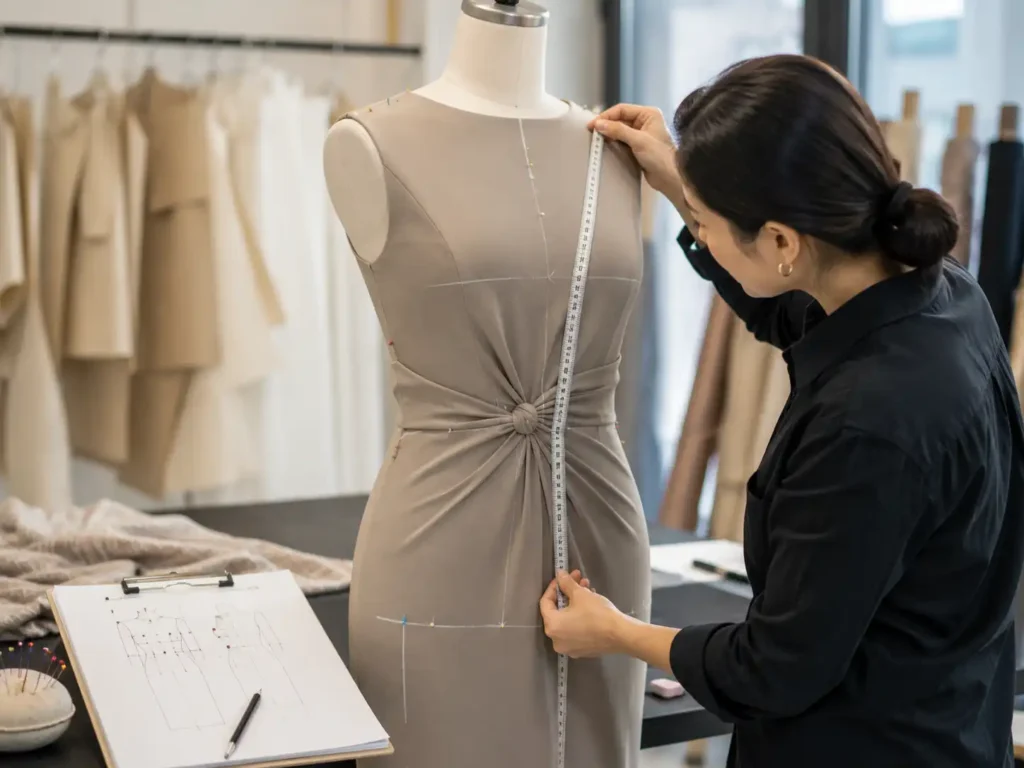
Waist fit is a combination of circumference, height, contour and torso length. A numerically correct waist can still look wrong when the shaping is distributed incorrectly or the waistline sits in the wrong position.
- Natural Waist: A natural-waist dress usually needs the narrowest visual point of the garment to align with the intended body position. Back-waist excess, side-seam curvature and front-waist length all affect whether the waist appears level.
- High-Waist Structure: High-waist silhouettes shift the shaping upward. The transition from underbust to waist and high hip becomes more important because excessive suppression can create pressure, while insufficient shaping can make the garment appear boxy.
- Low-Waist Fashion: Low-waist dresses require deliberate repositioning rather than simply lengthening a normal waist block. Hip contour begins sooner relative to the seam, and the balance between torso length, low waist and full hip becomes more visible.
- Corset Waist Shaping: Structured corset waists can intentionally create compression, but support, comfort and wearability still need validation. Boning placement, lining, closure and waist reduction must work together.
- Stretch Waist Control: Jersey, rib knit and stretch satin can produce a close waist with less seam shaping, but recovery becomes critical. A fabric that stretches easily and recovers poorly can become loose after wear.
- Ruching and Waist Perception: Ruching changes visual shape and local volume. Poorly positioned ruching may create a bulky waist or shift seam balance even if garment measurements remain within specification. Pattern and construction need to account for the additional fabric.

How We Develop Hip Ease and Balance
Hip fit controls silhouette, side-seam balance, mobility and lower-garment stability. Close-fitting dresses need enough shaping to follow the body while allowing the fabric and construction to perform as intended.
- High Hip
The high-hip area creates the transition from waist to full hip. If the curve expands too quickly, the dress may look square. If it expands too slowly, diagonal tension can appear before the garment reaches full hip.
- Full Hip
Full-hip circumference needs to be considered with fabric type and silhouette. A woven fitted dress needs physical ease, while a stretch bodycon style may use controlled negative ease according to stretch and recovery.
- Front and Back Distribution
Adding the same amount to front and back is not always correct. Seat projection, abdomen shape and style seams affect how volume should be distributed. Side-seam position during fitting provides useful evidence of imbalance.
- Side-Seam Balance
A vertical side seam is a strong visual check. When it moves forward or backward, the problem may involve front/back volume, fabric torque, cutting direction or pattern shape.
- Hem Movement
Hip fit affects hem behavior. Tight hips may pull a mini dress upward during walking, while excessive lower-body ease can reduce the intended fitted silhouette. Slit position and hem circumference are reviewed with hip measurements.
- Sitting and Walking Comfort
Static fit alone is insufficient. A style can look correct while standing and become restrictive when sitting or walking. Fit review should therefore assess movement before final pattern approval.
Fit Development Across Different Dress Structures

Bodycon Dress

Corset Dress

Slip Dress

Strapless Dress

Mesh Dress

Satin Dress

Jumpsuit

Occasion Dress
Fabric Changes the Fit Equation

Jersey
Ponte and Roma
Stretch Satin

Woven Satin
Mesh and Power Mesh
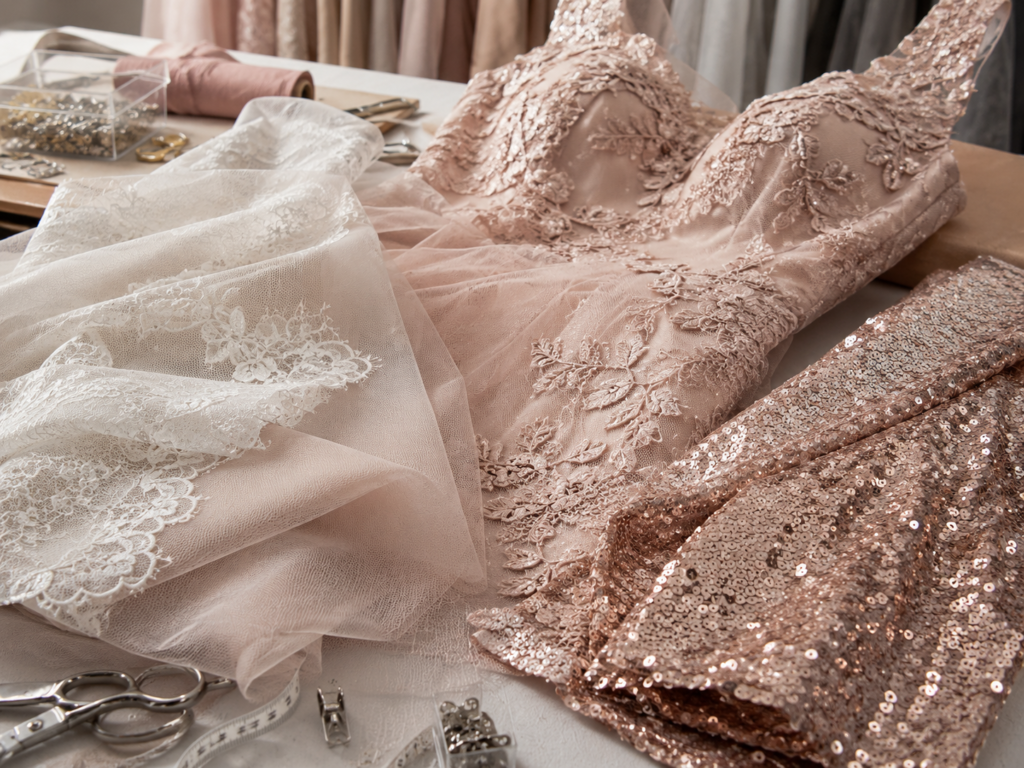
Lace and Other Wovens
From Measurements to Production-Ready Patterns
A production pattern needs to survive fitting, grading, cutting and sewing. Jinfeng Apparel develops patterns from tech packs, original garments, reference images, sketches or existing pattern information, then updates the production standard as fit feedback is approved.
Development Input
The strongest starting package normally includes a tech pack, measurement chart, size range, reference images and intended fabric.
An original garment can provide valuable evidence for existing shape and construction.
Fit Map
Pattern makers identify the areas most likely to control appearance or comfort:
- upper bust and full bust
- underbust where required
- waist position and circumference
- high hip and full hip
- front and back length
Fabric Translation
Pattern dimensions are checked against fabric stretch, recovery, drape, thickness and layering.
A change from woven satin to stretch satin, for example, may require a new ease decision even when the visual design remains unchanged.
: First Pattern
The first pattern converts approved development assumptions into cuttable pattern pieces. Its purpose is to create a real garment for evaluation, not to claim that every fit decision is already final.
Revision Control
Approved fit changes need to return to the pattern. Measurements, seam shape, dart intake, length and construction notes are updated so the next sample tests a known revision rather than relying on verbal instructions.
Production Readiness
Before bulk production, the approved pattern needs to align with the final measurement chart, fabric, trims, sewing method and PP sample. Large structural changes after PP approval increase cost, timing and production risk.
Fit Samples Turn Measurements Into Real Feedback
Fit sampling is where numerical specifications meet the body. Jinfeng Apparel distinguishes first samples, fit samples, revised samples and PP samples because each serves a different decision.

First Sample
The first sample verifies whether the design direction, fabric, construction and basic proportions can become a workable garment.
Ordinary dress first samples commonly take about 10–15 days after development inputs and usable fabric direction are confirmed. Simple styles may be completed in about 7–10 days.
Complex corset, strapless, lace, mesh, sequin or evening structures commonly require about 15–25 days, subject to fabric and trim development.
A first sample is not automatically the bulk standard.

Fit Sample
A fit sample focuses on how the garment performs on body. Review points can include:
- bust width and bust projection
- waist position and waist shaping
- high hip and full hip
- front/back balance
- neckline depth
- armhole coverage
- strap length
- dress length
- slit height
- lining position

Revised Sample
Revision is normal in fitted womenswear. A simple style may require one first sample and one revised sample. A medium-complexity style commonly needs one or two revised rounds.
Corset, strapless, evening, sequin, lace and mesh styles often require around two revised rounds depending on structure and feedback.
Revised samples commonly require about 7–15 days depending on the changes and material availability.

PP Sample
The PP sample represents the final pre-production standard using confirmed construction, measurements, fabric and trims. PP samples commonly require around 7–15 days when final materials are available.
Once PP approval is given, major changes to fabric, measurements or construction should not be treated as casual adjustments because they can affect price, production schedule and quality risk.

Turning Fit Comments Into Pattern Corrections
“Too tight” and “too loose” are useful starting observations, but production changes need a precise location and a clear pattern action. Jinfeng Apparel converts fit comments into measurable, traceable revisions.
- The Bust Feels Tight
Possible causes include insufficient full-bust volume, insufficient front length, misplaced bust point, narrow upper chest, shallow cup shape or limited fabric stretch.
A blanket circumference increase may make the waist and back too loose. Pattern makers first identify where tension originates. - The Neckline Gapes
A gaping neckline may come from excessive upper-bust width, incorrect neckline length, strap placement, bust projection or front shoulder balance.
Reducing the entire bust circumference can create a new problem without solving the opening edge. - The Waist Is Loose at Back
Back-waist excess may require center-back contouring, side-seam redistribution, dart adjustment or a front/back balance correction. Total waist circumference alone does not identify the correct location. - The Hip Feels Tight
The fitting review separates high hip from full hip and considers whether the tension is mainly front, side or back. Fabric stretch and side-seam position are also checked. - The Dress Rides Up
Riding can result from tight hips, inadequate hem room, excessive negative ease, fabric recovery or torso-length imbalance. Increasing dress length alone may not solve the cause. - The Side Seam Twists
Side-seam movement may indicate front/back volume imbalance, pattern shape, fabric torque or cutting direction. Fit photos and garment measurements help separate these causes.
Fit Must Survive Size Grading
A strong base-size sample is only the beginning. Grading expands or reduces a pattern through a size range while preserving the intended silhouette, body proportions and critical construction points. Bust, waist and hip do not need identical growth logic in every style.
| Control Area | Base-Size Review | Grading Risk | Production Check |
|---|---|---|---|
| Bust | Volume, projection, ease | Upper chest or bust grows incorrectly | Bust POM measurement |
| Waist | Circumference and vertical position | Shape becomes boxy or over-suppressed | Waist POM measurement |
| High Hip | Transition below waist | Curve develops too early or late | High-hip check if specified |
| Full Hip | Ease and front/back balance | Larger sizes become restrictive | Hip POM measurement |
| Neckline | Depth and opening stability | Opening becomes too wide | Neckline measurement |
| Armhole | Coverage and mobility | Exposure or restriction increases | Armhole / related POM |
| Strap | Length and position | Upper body proportion shifts | Strap measurement |
| Dress Length | Front/back and hem balance | Length progression becomes inconsistent | Length measurement |

Locking Fit Before Bulk Production
Bulk production should start from a controlled fit standard, not from memory of the latest fitting session. Jinfeng Apparel transfers approved fit information into final development documents before sewing lines begin production.
- Final Pattern: Every approved correction needs to be reflected in the pattern version used for bulk cutting. Old and revised pattern versions should not be mixed.
- Final Measurement Chart: Bust, waist, hip and other critical POMs need to match the approved fit direction. Tolerances and measurement methods should be clarified before inspection begins.
- Confirmed Fabric: Fabric stretch, recovery, weight, drape and shrinkage can change fit. Bulk fabric should be checked against the quality used for approval, especially for stretch and fit-sensitive products.
- Confirmed Trims: Zippers, cups, boning, elastic, anti-slip tape and linings can influence fit and support. Substitute trims should not enter bulk production without review when their performance changes garment structure.
- PP Approval: PP approval acts as the bridge from development to production. Major structural revisions after PP approval can require pattern updates, new samples, costing changes or a revised production schedule.
- QC Checkpoints: Critical measurements and high-risk construction details are converted into inspection points for production and final QC.
Keeping Measurements Stable in Bulk
Bulk fit consistency depends on more than an approved sample. Fabric batches, cutting, sewing tension, seam allowance, pressing and handling can all move finished measurements. Jinfeng Apparel uses process checks to reduce drift before finished garments reach final inspection.
Incoming Material Check
Fit stability starts with fabric. For relevant styles, incoming review can include color, weight, hand feel, width, stretch, shrinkage risk, fabric defects and batch differences.
Cutting Control
Pattern version, fabric direction, stretch direction, size bundling and cut quantity are checked before sewing. Incorrect stretch orientation can change bodycon fit even when the pattern pieces are technically correct.
Inline Measurement
Production problems are easier to correct before an entire run is finished. Inline checks can detect seam, waist, zipper, strap or measurement deviation while the sewing line is still active.
Final Garment Inspection
Finished garments are checked for measurement, seam balance, zipper performance, lining exposure, symmetry, pressing and visible defects.
Repeat-Order Records
Approved patterns, measurement files, fabric references, trim records, QC notes and Golden Sample information can be retained for repeat production.
From Approved Fit to Repeatable Production
Jinfeng Apparel combines fit development with a coordinated womenswear production structure built for multi-style collections, repeat programs and fit-sensitive dresses. Bulk production timing is confirmed after PP approval, fabric and trim status, quantities, colors, size ratios, packing requirements and production allocation are locked. Complex structures and custom materials require different schedules from standard dress construction.
6 Owned Factories
10+ Production Partners
18+ Sewing Lines
6+ Flexible Lines
15+ QC Inspectors
12+ Merchandisers
A 46,800-Piece Fit-Sensitive Dress Program
Multi-category manufacturing becomes stronger when styles are allocated according to their real production requirements. Jinfeng uses an owned-factory and long-term satellite-partner structure so garment types, fabrics, construction complexity, quantity and schedule can be matched to suitable production units.
Program Scope
- 18 dress styles
- 46,800 pieces total
- Multiple colors and size ratios
- Mix of fitted mini, bodycon, satin, mesh and structured occasion silhouettes
- Brand-supplied fit direction and size standards
- Private-label packing and multi-SKU production requirements
The challenge was not simply producing 18 visually different dresses. Several styles shared a close-fitting commercial silhouette while using fabrics with different stretch, drape and support characteristics
Development Problem
Early fitting identified three recurring areas requiring style-specific correction:
Bust balance: Several fitted bodices needed local volume or upper-edge correction without increasing the complete upper-body circumference.
Waist position: Different structures created different visual waist positions. Corset-influenced styles required more precise anchoring than soft satin designs.
Hip behavior: Stretch and woven styles could not share identical ease assumptions. Some fitted samples needed improved high-hip shaping and front/back balance rather than a simple full-hip increase.
Pattern and Sample Actions
The development team separated the styles by construction and fabric behavior.
For stretch bodycon groups, pattern review focused on stretch direction, recovery, bust-waist-hip tension and side-seam balance.
For satin and woven groups, more physical ease was retained, with close attention to drag lines, zipper flatness, waist shaping and hip movement.
Structured styles added internal support review so cup shape, boning and upper-bust security worked with external measurements.
Fit comments were transferred into revised patterns and measurement files before PP approval.
Production Control
Before bulk cutting, each style was linked to its final pattern and measurement standard.
Production checks focused on critical POMs and high-risk construction points rather than relying only on finished appearance.
Inline inspection was used to identify size or sewing drift before a complete style run was finished. Final inspection compared finished garments against approved standards and packing requirements.
Commercial Result
The value of the fit-development process was consistency across a commercially meaningful collection rather than a single perfect sample.
An 18-style, 46,800-piece program requires pattern records, size control, material discipline and production communication to remain aligned through multiple SKUs.
The same logic supports later reorders because approved patterns,measurements, fabric references, trim information and QC notes can be retained for future production, with new material batches reviewed again where necessary.

Bust-Waist-Hip Fit Development Frequently Asked Questions

Start Your Fit Development Project
A strong fit program starts with clear development inputs. Send the information already available, and Jinfeng Apparel can review how the proposed bust, waist and hip proportions relate to the style structure, fabric direction, sample process and eventual bulk-production requirements.
For the most useful project review, include:
- Tech pack or reference images
- Existing size chart and POM definitions
- Existing pattern files, when available
- Original sample information, when available
- Fit comments from previous samples
- Front, side and back fit photographs
- Fabric composition, stretch or preferred fabric direction
- Target size range
- Style and color plan
- Planned quantities
- Required private-label details
- Target launch or delivery window


