 Skip to content
Strap Length Consistency Solutions Across Sizes
Keep strap length, bust position, neckline depth and armhole balance aligned from base size through the full graded size range.
Strap fit is rarely controlled by one measurement alone. Jinfeng Apparel reviews strap length together with attachment position, bust coverage, neckline depth, armhole shape, front and back bodice balance, fabric behavior and approved grade rules before transferring a style into bulk production.
- 7+ senior womenswear pattern makers
- 2 dedicated sample rooms
- 20+ sample machinists
- US, UK, EU, AU and XS–XL development supported
- Extended, plus, petite and tall adjustments evaluated by project
- PP sample, final pattern, grade rule and QC measurements carried into production
Jinfeng’s approved development facts specifically include strap length among the core measurements controlled through pattern, sample and bulk-production development.
Technical Teams Behind Cross-Size Strap Fit
7+ Pattern Makers
2 Sample Rooms
20+ Sample Machinists
15+ QC Inspectors
Built for Fit-Sensitive Womenswear Programs
Product Development Teams
Technical Design Teams
Sourcing Teams
QA Teams
Where Strap Fit Usually Breaks Across Sizes
Neckline Drops
Armhole Opens
Bust Position Shifts
Fixed Straps Pull
Adjustable Range Fails
Production Adds Variation
Strap-Sensitive Dress Styles Need Different Controls

Slip Dresses

Camisole Dresses

Spaghetti Straps

Halter Dresses

Backless Dresses

Cowl-Neck Dresses

Corset Strap Dresses

Bodycon Party Dresses
Strap Length Works With the Entire Upper Bodice
A strap is a structural connection between the front and back of a garment. Changing its length changes where the upper bodice sits, while changing the bodice can alter the amount of strap needed. Jinfeng therefore reviews a connected group of measurements instead of isolating one specification.
Finished Strap Length
The measuring method must be clear before grading begins. “Strap length” can be interpreted differently depending on construction: finished edge to edge, seam-to-seam, attachment point to attachment point, or total adjustable length. A specification without an agreed measuring method leaves room for different readings during sampling and bulk inspection.
Fixed straps require a defined finished measurement for each required size. Adjustable designs additionally need total length, usable adjustment range, slider and ring configuration, loop construction and attachment method confirmed.
Front Attachment Position
Moving the front attachment point by a small amount can change how force is distributed across the neckline and upper chest.
A placement too far toward the armhole may increase side exposure or make the strap appear visually wide. A placement too far inward can distort neckline proportion and change support.
Attachment placement should therefore be related to neckline width, upper-bust shape, armhole geometry and the intended visual line of the garment.
Back Attachment Position
Back placement influences strap angle and the direction in which the bodice is supported.
Backless or low-back designs are especially sensitive because the strap may provide part of the stability normally supplied by a higher back panel.
A front measurement can remain technically correct while the final garment still feels wrong if the back attachment point shifts incorrectly during grading.
Bust and Neckline Position
Raising a strap generally raises the upper bodice; lengthening it generally lowers the bodice. The resulting change can alter bust coverage, cowl depth, cup location, neckline exposure and the relationship between the garment and the wearer’s bust level.
Jinfeng reviews bust, upper bust and under bust alongside strap and neckline measurements rather than relying only on the strap value. The company’s documented pattern-development system lists all of these as core fit control points.
Armhole and Side Coverage
Armhole depth and side coverage can reveal a grading problem even before the strap itself looks incorrect.
A larger armhole combined with a longer strap may create excessive underarm exposure. Shortening the strap alone may fix exposure but introduce shoulder pressure or neckline distortion.
The preferred correction is based on pattern balance and fit results rather than a one-measurement reaction.
Front and Back Balance
Front and back bodice lengths change with body proportion and product design.
Strap grading should respect the intended balance between both sides.
A style with a low back, fuller bust, cowl front or shaped neckline may need a different solution from a simple straight camisole.
Build Strap Grading From Fit, Not Arithmetic
A base-size sample proves one size. Commercial grading must preserve the intended wearing result across the approved range, which means each strap decision should be considered within the brand’s size chart, target market and fit preference.

Start With Approved Base Fit
Development begins from an approved or reviewable base size.
The team checks whether bust position, neckline, armhole, back level and strap balance reflect the intended silhouette before attempting to extend the pattern into other sizes.
If the base size already has poor strap geometry, grading simply distributes the same problem.

Read the Grade Rule
A brand may already have established grade rules.
Jinfeng can work from supplied size charts, base size and grading requirements rather than replacing them with an arbitrary universal system.
The documented Jinfeng process uses the client’s size chart, base size, grade rule, measurement tolerance, target market, fabric stretch and fit preference as development inputs.

Separate Horizontal and Vertical Change
Bust circumference may increase substantially while the vertical distance required at the shoulder changes only slightly. Applying identical proportional growth to every point can create exaggerated strap length or incorrect neckline positions.
Strap grading therefore needs to be evaluated alongside vertical bodice measurements rather than derived simply from chest-size growth.

Recheck Attachment Points
The pattern may require movement of front or back attachment positions across the range. Leaving placement completely fixed can sometimes create an increasingly incorrect strap angle as garment width changes.
The correct decision depends on style geometry, neckline shape, armhole, shoulder relationship and brand fit standards.

Validate Critical Sizes
A grade rule should be tested through samples or agreed validation sizes where fit risk is highest.
The goal is not merely to confirm that each number follows a mathematical increment.
The goal is to confirm that neckline position, bust coverage, armhole exposure and strap tension remain appropriate on the body.

Update Before Production
Approved corrections need to reach the final pattern, graded specification and production measurement standard.
Old sample comments should not remain disconnected from the files used on the sewing floor.
Define Strap POM Before Sampling and Production
Clear measuring rules reduce disagreement between design, technical, sampling and inspection teams. Jinfeng can work from a supplied tech pack and review whether the strap specification, grade rules and related measurements provide enough information for reliable development.
| Control Item | What Should Be Defined | Production Purpose |
|---|---|---|
| Base Size | Approved development size | Establishes the fit reference |
| Strap POM | Exact finished measuring method | Prevents different measurement interpretations |
| Strap Type | Fixed, adjustable or tie | Determines construction and grading logic |
| Front Attachment | Defined pattern or garment position | Controls neckline and bust relationship |
| Back Attachment | Defined pattern or garment position | Controls angle and back balance |
| Total Strap Length | Size-specific finished value | Provides measurable garment standard |
| Adjustable Range | Minimum and maximum usable position | Confirms functional fit range |
| Size Range | XS–XL, numeric or extended range | Defines grading and validation scope |
| Grade Rule | Approved changes between sizes | Transfers fit across the range |
| Tolerance | Approved production allowance | Creates an executable QC standard |
| Neck Drop | Related vertical measurement | Tracks neckline result |
| Armhole | Related side measurement | Tracks underarm coverage |
Size Systems Need More Than One Grading Assumption
Standard Size Runs
Extended and Plus
Extended and plus sizing requires more than scaling an XS–L pattern upward. Bust support, armhol
e coverage, shoulder relationships, strap width or position, back coverage and fabric recovery may need separate consideration. Jinfeng’s documented plus-size approach specifically calls for proportion and support review rather than simple enlargement.
Petite and Tall
Petite and tall adjustments are not limited to hem length. Strap length, bodice length, waist position, armhole, neckline and overall vertical balance can move together.
A style that sits correctly on the chest in a standard block may need a different vertical solution for petite or tall proportions.
Validate Strap Fit Through Size-Set Sampling
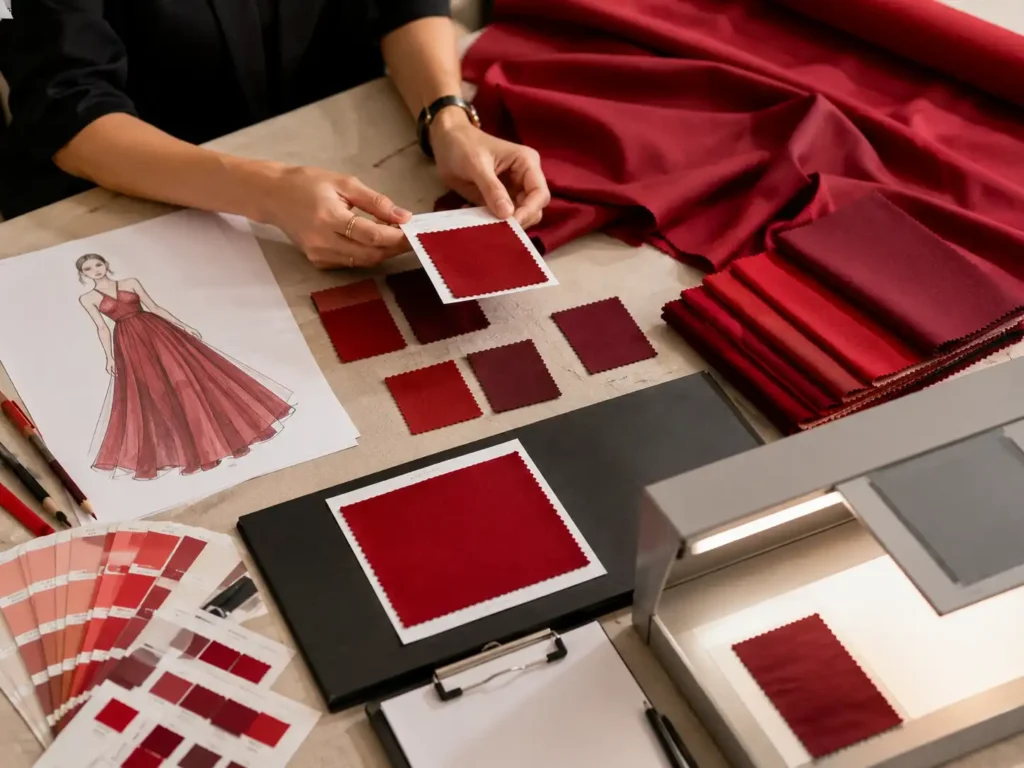
Numbers create a specification; fit samples reveal how those numbers behave on the body. For strap-sensitive dresses, Jinfeng uses fit comments, garment measurements and pattern review to identify whether an issue belongs to the strap, the bodice, the grading or the material.
Establish the Base
The first objective is not to force every later size to copy the visual proportions of a mannequin. The base fit establishes design intent: neckline height, bust coverage, shoulder or neck pressure, armhole exposure, back position and the overall vertical placement of the garment.
A base-size issue should be corrected before a full grade is treated as production-ready.

Review Multiple Angles
Front photographs help evaluate neckline symmetry, bust level and strap angle. Side views show underarm exposure, side-seam balance and whether the front bodice is riding upward or dropping. Back views reveal back level, strap angle and attachment symmetry.
Close-up images of the strap and neckline help pattern makers distinguish an actual pattern problem from a sewing or attachment issue.

Observe Movement
Standing fit alone can hide instability.
Depending on the style, fit feedback may include walking, sitting or raising the arms.
A strap that looks balanced while standing may shift during movement if the armhole, neckline or back construction does not provide enough stability.
Turn Fit Feedback Into Measurable Pattern Changes
Sample review becomes valuable only when visible issues are converted into measurements, documented corrections and updated production files. Jinfeng’s sample review process links garment measurement to pattern revisions before final production approval.
| Fit Observation | Measurements to Review | Possible Technical Action |
|---|---|---|
| Neckline too low | Strap, neck drop, front length | Shorten strap, revise neckline or front bodice |
| Underarm exposure | Armhole, strap, bust | Adjust armhole, attachment or upper bodice |
| Bust sits too low | Strap, front length, bust POM | Raise bodice or revise strap geometry |
| Back falls low | Strap, back length, attachment | Correct back balance or back attachment |
| Strap pulls | Strap, shoulder relation, armhole | Add required length or rebalance pattern |
| Strap angle changes | Front/back attachment, width | Reposition attachment points |
| Adjustable range insufficient | Total strap, slider range | Revise strap construction |
| Left/right mismatch | Finished strap, attachment | Correct sewing or assembly control |
Fabric Behavior Can Change the Same Strap Fit
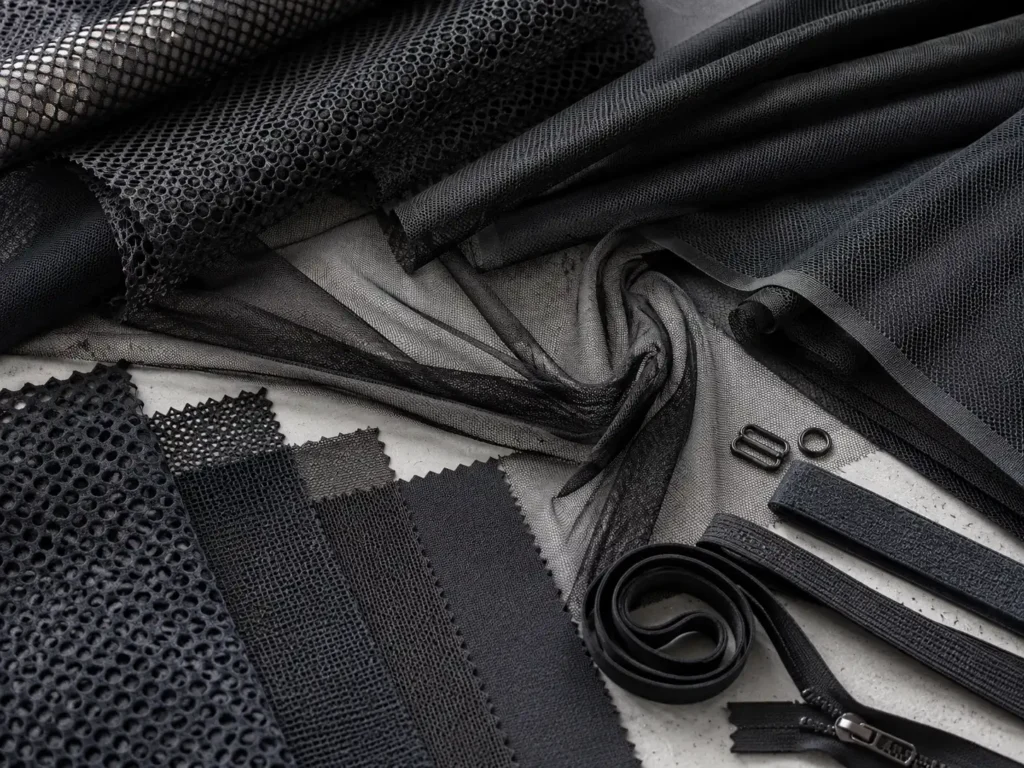
A strap measurement does not behave identically across every fabric. Drape, stretch, recovery, weight, lining and construction can change how the bodice hangs from the strap, especially on slip, bodycon, mesh and lightweight occasion dresses.

Satin and Wovens
Mesh and Stretch

Lining Systems

Narrow Strap Construction
Correct the Pattern Before Bulk Production
Fit comments should never stop at “approved with changes.” Jinfeng converts confirmed modifications into the pattern and technical files that production and QC will actually use.
Review the Evidence
Pattern correction begins by comparing available information:
- approved or previous sample
- fit photographs
- measurement results
- size chart
- grade rule
- brand comments
- fabric stretch or drape
- target-market fit preference
A strap issue can then be separated from related neckline, armhole or bodice problems.
Revise the Pattern
When a change affects garment geometry, the paper or digital pattern needs to reflect it.
Shortening a physical strap sample without updating the corresponding pattern or specification creates a risk that the bulk team will reproduce the earlier measurement.
Jinfeng records pattern-related fit corrections before revised sampling.
Update the Grade
A correction to the base size may also require the grade rule to be reviewed.
The team checks whether the same correction applies across the range or whether different sizes need different treatment to preserve the same wearing result.
Revalidate the Garment
A revised or PP sample provides physical confirmation that the new technical instruction works in the intended fabric and construction.
Major changes in material or upper-bodice structure may require more than a simple measurement amendment.
Freeze the Production Standard
Before bulk production, the approved configuration should be represented in the final pattern, size chart, grade rule, measurement tolerance and PP reference.
The module library specifically defines this stage as the point where fit feedback is converted into final pattern, size chart, PP sample and QC measurements.

Lock Strap Standards With PP and Golden Samples
PP Sample Approval
Golden Sample Standard
Controlled Handover
Control Strap Measurements During Bulk Production
Cutting Preparation
Sewing Control
Attachment Placement
Symmetry Review
Measurement Inspection
Golden Sample Comparison
A Golden sample helps inspectors compare not only a number but also the intended appearance of the upper bodice. Jinfeng’s documented size-stability process combines pattern version control, size charts, grade rules, tolerances, cutting QC, inline checks, finished measurement and Golden sample comparison.
Keep Approved Fit Stable on Repeat Orders
Pattern Version
Measurement Records
Golden Sample
Recheck New Variables
Strap Length Consistency Frequently Asked Questions
Not necessarily. A brand’s approved grade rules, body proportions, garment structure and fit target determine whether strap length changes and by how much. Some styles require greater attention to attachment position, neckline or bodice length instead of simply adding a fixed strap increment between sizes.
No. A satin slip dress, halter dress, backless dress, cowl-neck dress and stretch bodycon style place different loads on the strap and upper bodice. Fabric behavior, neckline geometry, back height, support requirements and adjustable construction can all change the required approach.
The tech pack should define a repeatable Point of Measure. Depending on construction, measurement may run between finished attachment points or follow another approved method. The key requirement is that sampling, production and QC teams use the same definition.
They may. Width changes across a graded range can alter strap angle and neckline proportion even when finished strap length is correct. Front and back attachment points should therefore be reviewed as part of pattern grading rather than automatically frozen for every style.
A shorter strap generally raises the upper bodice while a longer strap generally lowers it, but the final result also depends on front bodice length, bust shape, armhole, attachment placement and fabric. Neckline corrections should therefore be made from the complete fit result.
Fit-sensitive styles benefit from validation beyond the base sample. The exact sampling plan depends on the style, size range, brand standard and identified risk. Critical sizes can be reviewed through fit results and measurements before production approval.
The specification may need total strap length, slider or ring type, loop construction and usable adjustment range. Production inspection should confirm both functional adjustment and the relationship between the strap and approved upper-bodice position.
Extended and plus ranges often need additional proportion review. Bust support, shoulder relationship, armhole coverage, strap position, back coverage and material recovery may require adjustment rather than simple proportional enlargement.
Changing stretch, recovery, weight or drape can change the wearing position even when pattern measurements remain unchanged. Fabric substitution can therefore require another fit assessment and, where necessary, pattern or strap adjustment.
The strongest starting package includes a tech pack, size chart, base size, grade rule if available, fit photos or comments, target size range, fabric information and an approved or reference sample where relevant. Jinfeng can then assess whether the issue is primarily strap-related or part of the wider upper-bodice fit.

Send Your Strap Fit Project for Technical Review
If a strappy dress fits correctly in the base size but shifts across XS–XL, extended sizing or a new target market, send the technical information behind the fit problem rather than only a general style photo.
Jinfeng Apparel can review the relationship between strap length, attachment placement, bust position, neckline, armhole, fabric behavior and the approved grading system before recommending the next sampling or pattern step. Development timing and bulk scheduling are assessed after style complexity, fabric, trims, size range, revision scope and PP requirements are confirmed, avoiding unrealistic fixed lead-time promises before the product is reviewed.
For a more useful assessment, include:
- Tech pack or specification sheet
- Approved base size
- Full size range
- Size chart
- Grade rule, if available
- Strap POM and construction
- Fixed or adjustable strap requirement
- Front / side / back fit photos
- Fit comments by size
- Fabric composition and stretch information
- Reference or approved sample details
- Planned styles and quantities
- Required launch or delivery window
- Existing QC or measurement tolerance standard


