 Skip to content
Backless vs Open-Back Dresses: What Is the Difference and Which Design Works Best?

Your trusted Women’s Apparel Manufacturer from China
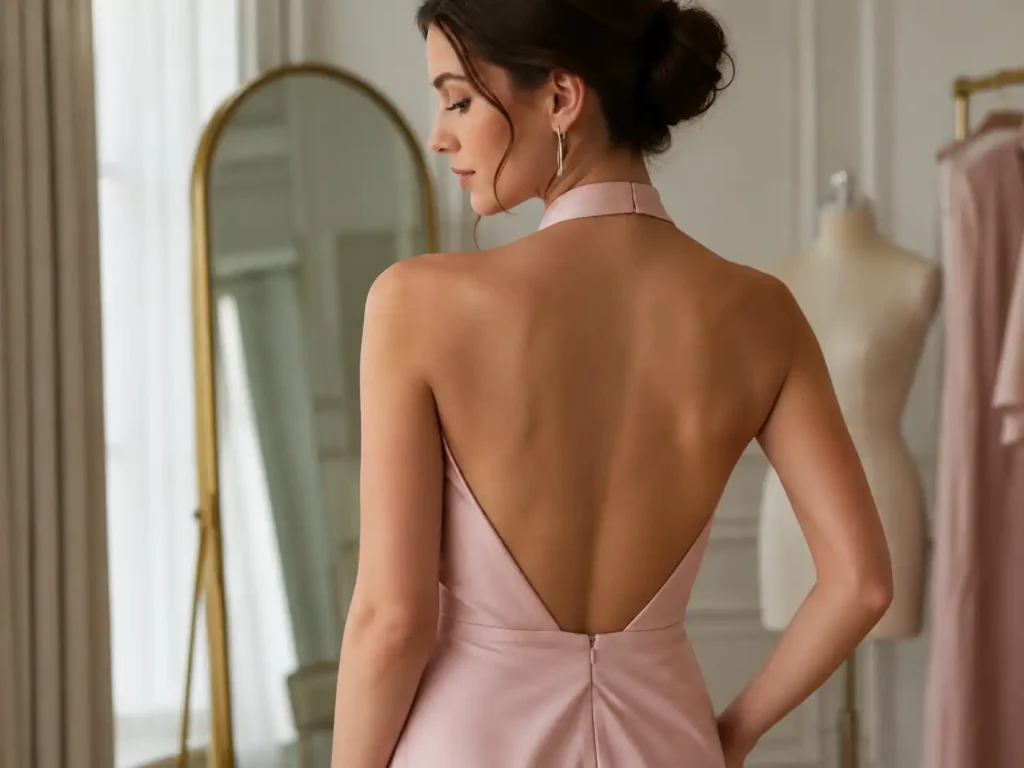
A dress can look almost conventional from the front and become completely different when the wearer turns around. That shift is exactly what makes backless and open-back dresses useful across partywear, occasionwear, resortwear, evening collections and modern going-out fashion. The problem is that the terminology is much less precise than many design teams assume. One retailer may call a waist-deep scoop “backless,” another may call it “open-back,” and a third may place low V-backs, tie-backs and nearly bare-back styles in the same product category. For customers, that overlap is mostly harmless. For product development, it can create very real fit and construction problems if the visual idea is not translated into measurable specifications.
Backless and open-back dresses overlap, but they are not always identical. An open-back dress is best treated as the broader design family: the back may be partially opened through a V, scoop, keyhole, ties, lace-up construction or sheer panel. A backless dress usually exposes most of the back and therefore depends more heavily on straps, side coverage, bust support and precise pattern balance for secure wear.
That difference becomes obvious in the sample room. Lower the back another 10 or 20 mm, narrow the side panel, soften the fabric, or move a strap attachment point, and a dress that looked perfect on a sketch can suddenly gape, slide, expose the side bust or become impossible to wear without internal support. The most useful question is therefore not simply what these dresses are called. It is how much structure can disappear from the back before another part of the garment has to take over its job, and how that choice affects comfort, appearance and repeatable production.
What Is the Difference Between Backless and Open-Back Dresses?
An open-back dress is a broad design category covering partial to substantial rear exposure, while a backless dress usually removes most conventional back coverage. The practical difference is not the label alone but the opening depth, width, side coverage, strap system, bust support and amount of structural fabric that remains to keep the garment stable during movement.
Back treatment | Typical rear exposure | Remaining structure | Support sensitivity | Common use |
Low back | Low-moderate | High | Low-medium | Occasion, resort |
Open V-back | Moderate | Medium-high | Medium | Cocktail, evening |
Scoop/open back | Moderate-high | Medium | Medium-high | Going-out, evening |
Deep open back | High | Low | High | Party, statement styles |
Backless | Very high | Very low | High-very high | Party, resort, eventwear |
Illusion back | Visually high | Medium-high | Medium | Occasion, formal |
Backless vs Open-Back
Fashion retailers do not use “backless” and “open-back” according to one universal technical standard. One brand may call a waist-deep scoop backless, while another may describe the same construction as open-back. For merchandising, both labels can make sense because shoppers usually respond to the overall look. For designers and pattern makers, however, relying on the name alone is risky because several very different structures can sit under the same commercial term. The safest working definition is to judge how much conventional back fabric remains and what components are carrying the garment once that fabric has been removed.
An open-back dress can still retain substantial shoulder-blade coverage, side-back panels, a waist section, transparent mesh or crossing straps. A strongly backless design may retain little more than shoulder straps, a halter connection, narrow side panels and the lower waist or skirt attachment. As rear coverage decreases, the remaining parts have to do more work. Straps may carry additional vertical load, side panels must protect the bust, and the front neckline must resist dropping or gaping. This is why a visually simpler backless dress can demand more pattern development than a more covered open-back style.
Exposure Is More Than Depth
Back depth receives most of the attention because it is easy to see and measure, but depth alone does not describe how revealing a dress feels. Opening width, side-bust coverage and the position of the lowest rear point can change the result just as much. Two dresses may both finish near the natural waist, yet a narrow V-back can retain large diagonal sections over the shoulder blades while a wide U-shaped opening removes almost all of that support. The second dress will usually behave more like a true backless construction even though both share a similar center-back depth.
For development, rear exposure is better defined with several measurements rather than one. Useful references include center-back opening depth, maximum opening width, side-seam or side-bodice height, strap attachment position, distance from the lowest opening point to the waist, and the relationship between back depth and front neckline depth. In minimal fitted styles, changes of only 10-20 mm can noticeably alter side coverage or neckline position. That is why final proportions should be approved on a body in front, side, three-quarter and back views instead of being judged only from a flat sketch.
Structure Changes With Coverage
A conventional closed-back dress distributes tension through a relatively large network of shoulders, back panels, side seams, waist and sometimes a center-back closure. When that network is opened, the forces do not disappear; they move elsewhere. A halter design transfers more load toward the neck. A spaghetti-strap backless dress depends heavily on strap length and side-bodice fit. A lace-up construction spreads tension through multiple loops. A fitted stretch dress can use controlled fabric recovery, while a structured evening style may rely on cups, lining, waist anchoring or other internal support.
This is also why fabric consumption alone says very little about manufacturing difficulty. Removing a back panel may save some shell fabric, yet the design can require additional lining, cups, reinforcement, narrow straps, ties, binding, hardware or repeated fit adjustments. The best backless products make that engineering feel invisible. The wearer should experience a clean, confident rear view rather than the constant need to pull the neckline upward, reposition a strap or check whether the side body is exposing more than intended.
Specifications Beat Labels
For ecommerce, terms such as backless dress, open-back mini, low-back satin dress and tie-back maxi help customers find the style they want. Inside a development workflow, those terms eventually have to become measurable instructions. Instead of writing only “deep open back,” a useful specification identifies where the opening begins, the finished width at defined reference levels, its lowest point, side coverage, strap dimensions and the intended support or underwear solution. Those details allow different people in design, pattern, sampling and bulk production to work from the same interpretation.
Clear specifications also make repeat orders easier. A successful back opening should not need to be recreated from campaign photographs six months later. When pattern shape, back depth, strap length, tie position, lining height and construction details are recorded, the design can be recolored, reordered or adapted to another fabric with less uncertainty. For commercial product development, the useful distinction is therefore not simply whether a style is called backless or open-back. It is how much structure remains and where the garment obtains stability after the back is opened.
Which Open-Back Designs Are Most Common?
Common open-back constructions include low V-backs, scoop backs, keyholes, tie-backs, lace-up backs, crisscross straps and illusion backs. Each creates a different balance of skin exposure, adjustability and structural support. The best option depends on silhouette, fabric, intended occasion, bust-support requirement, expected movement, underwear compatibility and how much fit variation the design needs to accommodate across the planned size range.

V-Back, Scoop and Keyhole
The low V-back is one of the easiest open-back ideas for customers to understand. Two diagonal edges descend from the shoulder or upper-back area toward a central lower point. A relatively narrow V can descend surprisingly low while preserving useful fabric over the shoulder blades and side body, which can make it more stable than a wide scoop reaching the same depth. The main fitting concerns are edge gaping, shoulder balance and whether the lowest point stays centered when the wearer moves rather than shifting toward one side.
A scoop back creates a softer visual line, but curves reveal pattern imbalance quickly. If the finished edge is even slightly too long for the body, it can flare outward instead of lying cleanly against the skin. A keyhole behaves differently again because fabric remains around most of the opening, so the loss of structure is relatively limited. Its technical challenges are usually clean edge finishing, symmetry and closure quality. These three options are useful because they allow a collection to control exposure without automatically moving into fully backless construction.
Tie-Back and Lace-Up
Tie-backs combine styling with adjustability and are common in resort, vacation, party and lightweight summer dresses. A bow or pair of ties may connect the upper back, waist or bust area and allow the wearer to fine-tune tension. Adjustment is helpful, but it should not compensate for a weak base pattern. If the wearer has to pull the tie excessively tight simply to stop the front from dropping, the dress is asking the tie to solve a problem that belongs to the bodice structure.
Lace-up backs spread adjustment through several attachment points and can range from decorative ribbon lacing to genuinely structural corset-inspired systems. The distinction matters because decorative loops are not automatically designed to control major waist or bust tension. Development should define loop spacing, finished opening width, reinforcement, lace length and the practical adjustment range. A lace-up back may use very little shell fabric but still require considerable sewing time because each loop, eyelet or attachment point must be placed consistently and reinforced well enough to survive repeated wear.
Crisscross and Adjustable Straps
Crisscross backs create a visually open rear view while giving the garment more opportunities to control movement than two nearly vertical spaghetti straps. Crossing straps can limit lateral movement and spread tension across several attachment points, but the result still depends on strap elasticity, width, length and stitch strength. If the straps are too long, the neckline can descend; if they are too short, they can distort the armhole or create uncomfortable shoulder pressure. The crossing point itself should also stay visually centered rather than migrating as the wearer moves.
Adjustable sliders can be especially useful for ecommerce styles because torso length varies among customers who share similar bust and waist measurements. A practical adjustment range of several centimeters can help the wearer position the neckline without changing the whole dress size. Fixed straps give a cleaner appearance but put more pressure on pattern and production consistency. In minimal designs, a difference of only 5-10 mm in finished strap length can visibly change neckline height. Strap width should also reflect load: the narrowest strap is not always the most comfortable or reliable choice.
Illusion and Sheer Backs
Illusion backs create the appearance of exposed skin while retaining transparent or semi-transparent material across part of the rear bodice. Fine mesh, tulle or lace can connect areas that would otherwise require visible straps, stabilize decorative work and moderate exposure while preserving a light visual effect. The key question is whether the sheer layer is decorative, supportive or both. Soft fashion mesh may contribute little structural strength, power mesh can provide stronger recovery, and stable tulle may support embroidery but offer limited comfort against the skin.
Color and finishing deserve just as much attention as transparency. A supposedly invisible mesh can become very visible against different skin tones or under flash photography, and a bulky binding can destroy the lightness the design was meant to create. When lace is placed over mesh, motif position becomes another quality variable. A premium illusion back should look deliberate from a distance and clean at close range, with the technical support disappearing visually even though it remains essential to the garment’s performance.
How Do Backless and Open-Back Dresses Differ in Fit and Support?
Backless dresses usually need more deliberate fit engineering because less rear fabric remains to stabilize the bodice. Support must come from straps, side panels, waist anchoring, cups, lining, ties or front construction. Open-back styles with more remaining fabric generally tolerate more fit variation and offer easier bra compatibility, although every design still depends on balanced pattern geometry.
Back Depth and Pattern Balance
Lowering a back opening affects more than the rear view because a dress behaves as one connected structure. Changing the back can alter front neckline position, shoulder tension and side-seam balance. The deeper and wider the opening becomes, the more carefully the remaining pattern has to be controlled. A narrow deep V can retain two diagonal areas of structural fabric, while a wide scoop at the same depth may remove most of that support. The second construction can therefore require stronger strap, side or waist control even though the center-back measurement looks similar.
Several small measurements interact strongly in these styles: strap length, shoulder attachment point, opening depth, side-bodice height, front neckline depth, waist fit and fabric stretch. For sensitive fitted details, many product teams use tighter working tolerances than they would for a long hem or a less structural seam. A practical internal target might be around +/-5 mm on selected strap or opening positions and +/-5-10 mm on certain fitted bodice dimensions, but the final tolerance must always be set according to fabric, size range and brand quality requirements rather than copied as a universal rule.
Bust and Side Coverage
Backless dresses often create a front-bodice problem that is easy to underestimate. Once support is removed from the back, the bust area may no longer stay where the sketch intended. Side coverage becomes especially important when a low back is combined with a deep armhole. The fabric zone between the armhole, side seam and back opening can become so narrow that the garment looks secure from directly behind but reveals too much from a three-quarter angle or when the wearer reaches forward.
Correcting side exposure should not automatically mean raising the side seam dramatically. Better revisions may combine a modest side-height change with strap repositioning, armhole reshaping or improved bust contour. Stretch fabrics need an additional check because a side panel that looks wide enough when relaxed can narrow as it stretches over the body. A reliable fitting therefore includes front, side, three-quarter and back views plus ordinary movement. For ecommerce, side-view product photography also helps customers understand the actual level of exposure before purchase.
Cups, Lining and Internal Support
Built-in cups are useful when the back opening prevents a conventional bra from being worn, but cups alone do not create support. They provide shape and coverage; the surrounding bodice still needs a structure capable of holding them in the correct position. Before sampling, the product team should decide whether the dress is compatible with a normal bra, designed around a low-back solution, internally supported, intended for adhesive support products or deliberately minimal with limited structured support. That decision influences back height, strap position, lining and side coverage from the beginning.
Cup placement should be graded rather than simply enlarged. Vertical and horizontal positions need to remain compatible with the brand’s size chart, and the lining has to conceal cup edges without rolling or becoming visible from the opening. Lining can also stabilize the outer fabric, reinforce edges and improve comfort. In clean backless designs, the technical construction works best when it remains almost invisible from the outside. The wearer should notice that the dress feels secure, not be able to identify every mechanism that creates that security.
Movement and Wearing Security
A backless dress cannot be properly evaluated while a fit model stands still with perfect posture. Real wear introduces shoulder rotation, sitting, bending, walking and repeated arm movement. A useful fitting sequence includes relaxed standing, both arms raised, arms reaching forward, seated posture, several steps of walking and upper-body rotation. The goal is not an extreme stress test; it is to confirm that ordinary movement does not make the front descend, expose the side bust or cause straps and ties to migrate away from their intended positions.
Tie-back and halter designs deserve particular attention because the wearer can change the tension herself. The dress should remain wearable at a reasonable adjustment level rather than requiring uncomfortable tightening. Party styles may also benefit from a more active movement check because the target customer may dance or wear the garment for several hours. Good support does not always mean rigid structure. Often the best solution is a balanced pattern that allows the garment to return naturally to its intended position after movement without repeated manual adjustment.
Which Fabrics Work Best for Open-Back Dresses?
There is no single best open-back fabric. Stretch jersey works well for body-contoured styles, satin creates fluid evening and slip silhouettes, mesh enables sheer structure, and lace provides decorative coverage. The right choice depends on drape, stretch, recovery, weight, edge stability and transparency because removing rear structure makes fabric behavior more influential on fit and wearing security.

Stretch Jersey and Knits
Stretch jersey is practical for fitted open-back and backless dresses because it can stay close to the body without relying entirely on rigid seams or heavy internal structure. It is especially effective for bodycon minis, fitted midis and going-out styles. The critical performance characteristic, however, is recovery rather than stretch alone. A fabric can stretch easily but return too slowly, causing the neckline or back edge to loosen during wear even if the first fitting looked comfortable and clean.
Stretch percentage should be reviewed together with recovery and direction. Two fabrics both described as stretch jersey may behave very differently: one may stretch moderately across the width and snap back strongly, while another may stretch much farther but recover poorly. Four-way stretch adds vertical growth, which can be important in dresses carried by narrow straps. Development teams should therefore approve the actual production-quality fabric before final fit approval. Relaxation before cutting also matters because knit fabric that has been tensioned on a roll or during handling can change dimensions after sewing.
Satin and Fluid Wovens
Satin creates some of the strongest open-back visuals because exposed skin contrasts cleanly with a smooth reflective surface. It works especially well for slip dresses, evening gowns, party styles and minimalist occasionwear. The tradeoff is that satin exposes construction problems quickly. A slightly long back edge may stand away from the body, an invisible zipper can bulge, and uneven pressing or seam tension can leave marks that are difficult to hide on a glossy surface. Stable and stretch satins also behave differently and should not be treated as interchangeable.
Fabric weight changes support requirements as well. A lightweight satin mini may place limited load on the straps, while a full-length lined gown can create noticeably more downward force through narrow shoulder or halter components. Stretch satin can improve comfort and close-body fit, but excess reliance on stretch may allow the neckline to distort. Stable satin often needs more accurate shaping but can hold clean lines more predictably. The best choice is not simply the most luxurious hand feel; it is the satin whose weight, drape and stability match the intended back structure.
Mesh and Illusion Fabrics
Mesh is especially useful in open-back dresses because it can create the impression of bare skin while still connecting parts of the garment. It may stabilize lace, support decorative applique or provide a sheer panel across an otherwise open area. Not all mesh offers useful structure. Soft fashion mesh may stretch dramatically under small loads, power mesh can provide stronger recovery, and stable tulle can hold shape while offering limited flexibility. The function of the sheer layer should therefore be defined before the material is selected.
When mesh sits around a neckline or back opening, edge construction has to be planned early. Binding adds stability but may look visually heavy. Turning and lining can produce a cleaner finish but may introduce bulk. Fine mesh also needs suitable needle choice and careful handling because broken filaments or small holes can become visible at seam lines. If an illusion effect is part of the design, color approval should include both normal viewing and photography. A mesh that looks subtle in person may appear much lighter or darker under studio lighting.
Lace, Chiffon and Light Wovens
Lace creates openness through the fabric itself, allowing a dress to reveal and conceal at the same time. In open-back styles, motif placement becomes a major quality issue. A large floral pattern that lands beautifully around center back in the sample should not drift randomly in bulk if that placement is a defining feature. Symmetrical placement or scalloped-edge use can also increase material consumption because pieces may need to be positioned around the lace design rather than purely for marker efficiency.
Chiffon and lightweight rayon or viscose fabrics work well in resort and vacation dresses because they create softness and movement, but they usually provide little structural support by themselves. Stability then has to come from shoulder or halter geometry, waist anchoring, lining or carefully positioned ties. Lightweight fabrics can also distort around curved openings where portions of the edge fall near the bias direction. A useful fabric decision asks two separate questions: does this material create the visual effect we want, and can the remaining garment structure control it throughout wear and production?
| Fabric | Typical behavior | Main advantage | Main open-back risk | Common use |
| Stretch jersey | Soft, elastic | Close body fit | Poor recovery, edge growth | Bodycon, going-out |
| Stretch satin | Fluid, moderate give | Sleek fit with comfort | Seam or edge distortion | Party, fitted midi |
| Stable satin | Fluid, little stretch | Clean premium appearance | Gaping, seam rippling | Slip, evening |
| Chiffon | Very light, fluid | Movement and softness | Low support, edge stretching | Resort, maxi |
| Mesh | Sheer, variable stretch | Transparency and layering | Holes, growth, weak edges | Party, illusion |
| Lace | Patterned, variable stability | Decorative coverage | Motif mismatch, distortion | Occasion, evening |
| Rayon/viscose woven | Soft, fluid | Relaxed drape | Dimensional movement | Resort, vacation |
How Do You Develop a Secure Open-Back Dress?
A secure open-back dress starts by converting visual ideas into measurable specifications. Define back depth, width, side coverage, strap geometry, front neckline and support strategy before pattern development. Fit the sample on a moving body, record every correction, confirm the final pattern and approved sample, then control the same sensitive measurements and construction details during bulk production.
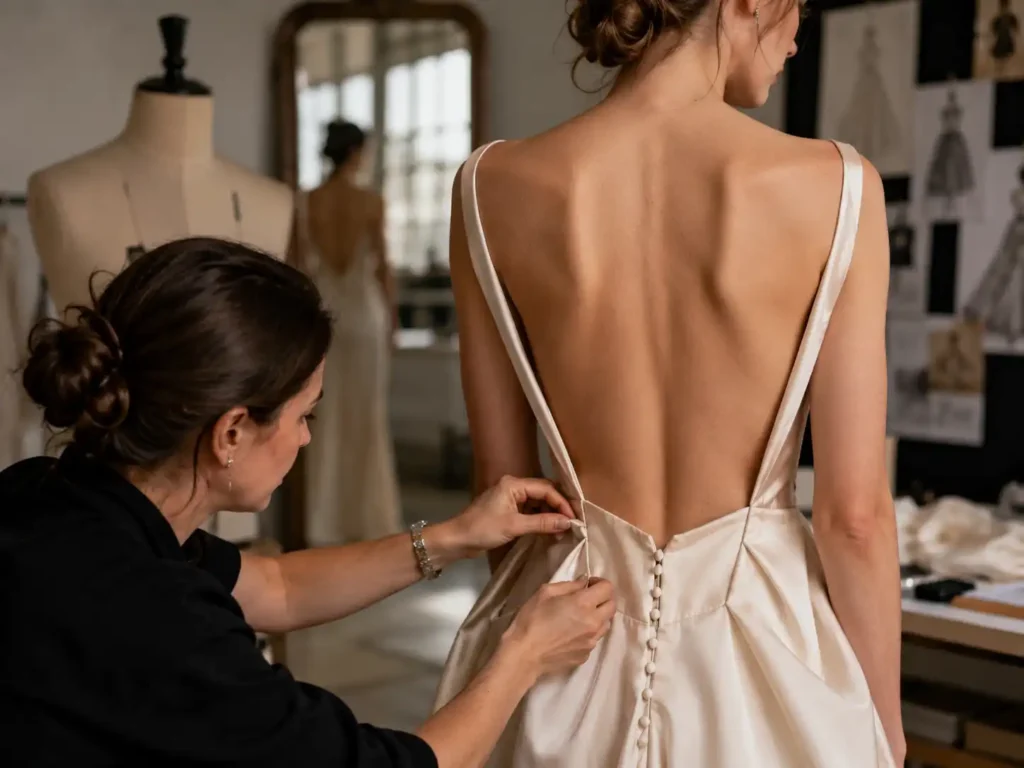
Define Structure Before Sampling
A reference image communicates mood and proportion, but it should not be the only source of technical information. Perspective, model posture and retouching can make a back opening look higher, lower or narrower than it really is. Before the first pattern is cut, the team should define opening shape, center-back depth, maximum width, upper and lower termination points, side-bodice coverage, strap type, closure or tie system, cup and lining requirements, and the intended underwear solution. These decisions prevent different departments from solving the same design in different ways.
Whenever possible, measurements should use fixed garment or body landmarks. An instruction such as “make the back 5 cm lower” becomes unreliable if the original reference point is unclear, while “finished center-back opening point 12 cm above the waist seam” gives pattern and QC teams something repeatable. For complicated styles, front, side and back technical sketches are valuable because the side view often contains critical coverage information missing from a rear drawing. The aim is not to predict every sample correction but to remove preventable ambiguity before fabric and development time are spent.
Fit the Whole Garment
When the first sample arrives, the dramatic rear view naturally attracts attention, but the whole garment needs to be fitted. Start with overall vertical position. If the dress sits too low, check strap length before changing neckline shape. If the side bust is exposed, review both the armhole and the relationship between back width and strap attachment. If the back edge gaps, determine whether the edge itself is too long or whether another part of the bodice is pulling it away from the body. Corrections should describe a cause, not just a visual symptom.
Movement checks should happen before approval. Standing, sitting, walking, reaching forward and raising the arms reveal issues that a static photograph cannot. Fluid or bias-responsive materials may also need time hanging before final judgment because length and shape can change under gravity. If a fitting comment says only “make back tighter,” the next sample can easily move in the wrong direction. A more useful note records the exact area and amount of correction, allowing the pattern maker to solve the issue without creating new tension elsewhere.
Control Sensitive Measurements
Backless dresses contain several measurements where modest variation can change the wearing experience substantially. Strap length, opening depth, side-bodice height, tie position, cup placement, opening width, symmetry and lining height should be identified as specific control points rather than treated as visual details. These are the dimensions most likely to affect exposure and support, so they usually deserve more attention than a decorative seam that does not influence fit.
Size grading needs equal care. The objective is not to expose exactly the same surface area on every size but to preserve a comparable visual proportion and an acceptable level of security across the target body range. A mechanical enlargement can make a larger size disproportionately revealing or leave a smaller size with too much coverage. Reviewing at least the base size plus selected smaller and larger sizes is therefore valuable when the back opening is a defining feature of the garment rather than a minor decorative cutout.
Transfer Approved Fit to Bulk
A successful sample is only useful if its corrections reach the production pattern, measurement specification, construction sheet and approved reference sample. One of the simplest ways for sample-to-bulk inconsistency to appear is for the physical sample to change while the written specification remains old. Strap length, opening depth, tie position, cup placement and side coverage should all be updated after approval, and construction notes should reflect any reinforcement, lining or edge-finishing changes made during fitting.
Bulk control works best when sensitive components are checked before they become difficult to correct. Strap lengths and attachment positions can be verified during sewing, cups can be checked before lining is closed, and tie locations can be compared with pattern notches before final finishing. Final inspection should combine measurement and appearance because a garment can technically meet a bust measurement while still having a twisted strap or asymmetric opening. The production goal is not merely to pass one sample but to reproduce the approved visual and wearing behavior across the full order.
| Control point | What changes when it is wrong | Practical working control* |
| Strap length | Neckline height and bust position | Often around +/-5 mm for sensitive fitted styles |
| Back depth | Exposure level and rear balance | Often around +/-5-10 mm |
| Side-bodice height | Side-bust coverage | Often around +/-5-10 mm |
| Tie attachment | Tension direction | Checked to fixed pattern/notch position |
| Cup position | Bust shape and support | Left/right placement kept symmetrical |
| Opening width | Exposure and stability | Measured at defined reference level |
| Back symmetry | Visual quality | Left/right shape aligned to approved sample |
| Lining height | Coverage and finish | Maintains approved shell-to-lining relationship |
Working controls are practical development references rather than universal industry standards; final tolerances should be set for the specific fabric, construction, size range and brand quality level.
Which Back Design Is Better for Your Collection?
Neither backless nor open-back construction is universally better. Moderate open backs usually provide easier support, broader coverage and greater underwear compatibility, while deeper backless designs create stronger visual impact. The better commercial choice depends on target customer, occasion, fabric, size range, support expectations, retail price and how much sampling and construction complexity the collection can reasonably absorb.
Match Exposure to the Customer
The strongest design is not always the one with the lowest back. A collection usually performs better when exposure matches how the target customer actually dresses. An occasionwear customer may want a noticeable rear detail without giving up conventional underwear. A party customer may accept a non-bra-friendly design if the front feels secure. A resort customer may value adjustable ties and relaxed drape more than rigid bust structure. These differences are commercial, not merely technical, and they influence return risk, styling confidence and how the dress is presented online.
Within one collection, exposure can be tiered instead of treated as all or nothing. A statement hero style can use a dramatic backless construction, while related commercial dresses use moderate V-backs, scoops or tie-backs. This keeps a consistent visual language without making every SKU equally demanding to wear. Product photography should support that strategy by showing side and three-quarter views rather than only the dramatic rear angle. Customers are more likely to feel confident when the real amount of side and back exposure is visible before purchase.
Match Support to the Occasion
Different occasions create different movement and support requirements. A resort maxi may be worn during relaxed walking and dining, so a halter or adjustable tie can work naturally. A club or party dress may need to stay secure through much more active movement. An evening gown may carry more garment weight through straps because of length, lining or embellishment. The front design must be considered at the same time; combining an extremely low back with a deep front neckline and minimal side coverage can make stabilization unnecessarily difficult.
Internal support also affects how the product is experienced at retail. Cups, stable lining or strategically placed elastic can increase development and production cost, but they can reduce the customer’s need to solve underwear problems independently. Customers may accept a non-bra-friendly design when the dress itself provides enough coverage and shaping. They are less likely to appreciate discovering after delivery that the garment hides a conventional bra poorly and also offers no internal alternative. Support should therefore be part of the product proposition rather than treated only as a factory construction issue.
Consider Fabric and Complexity
A common assumption is that backless dresses should be cheaper because they use less fabric. In practice, any shell-fabric saving can be outweighed by the work needed to make reduced structure wearable. Built-in cups, additional lining, reinforcement at strap attachments, adjustable hardware, ties, lacing, stabilized edges and repeated fit revisions all add time or components. Satin may require extra attention to seam flatness, mesh needs careful handling and binding, and lace may need controlled motif placement even when the back looks visually simple.
Size range can amplify the complexity. A design developed for a narrow fitted range does not automatically transfer into extended sizing by enlarging every dimension proportionally. Bust support, opening width, side coverage and strap position may need dedicated adjustments. Statement designs can still justify the extra development because they differentiate a collection and create campaign value. The important point is to understand what the design needs to work before pricing it. Product teams make better decisions when they ask what structure is required rather than assuming less visible fabric means less manufacturing effort.
Choose for the Whole Collection
A single beautiful sample can become misleading if it is evaluated without the rest of the assortment. Collection planning has to consider photography, target retail price, size range, fabric availability, color options, repeat-order potential and how the style sits beside other products. Partywear can benefit from a deep backless hero dress, eveningwear may favor a sculpted scoop or low V, resortwear works naturally with ties and halters, and occasionwear can use illusion panels or more bra-friendly openings to reach a broader customer group.
Before confirming a design, a product team should be able to answer five questions clearly: is the back opening the main selling feature or a supporting detail; can the target customer wear it with the provided support solution; does the selected fabric remain stable around the opening; can the design be graded without losing appropriate coverage; and can the approved construction be reproduced consistently at production scale. When those answers align, the choice between backless and open-back becomes much easier because the decision is grounded in actual product behavior rather than a single reference image.
Conclusion
Backless and open-back dresses belong to the same visual family, but they should not be treated as interchangeable once a design enters development. Open-back describes a broad range of partial rear openings, while a strongly backless dress removes enough conventional structure that straps, side coverage, front shaping, lining and internal support become much more important. The practical difference is therefore not a vocabulary test; it is a change in how the garment carries itself on a moving body.
For brands developing party, evening, resort, date-night or occasion collections, the strongest results come from deciding exposure, support and fabric together rather than in separate stages. A dramatic rear view should still feel secure from the front and side, grade sensibly across the intended size range and remain reproducible in bulk. Jinfeng Apparel develops custom women’s fashion from pattern and sample review through bulk production, so backless and open-back projects can be assessed around measurable fit, construction and fabric behavior instead of treating the opening as a decorative cutout alone.
Share This Article :

Jerry Lee
Categories

Latest blogs
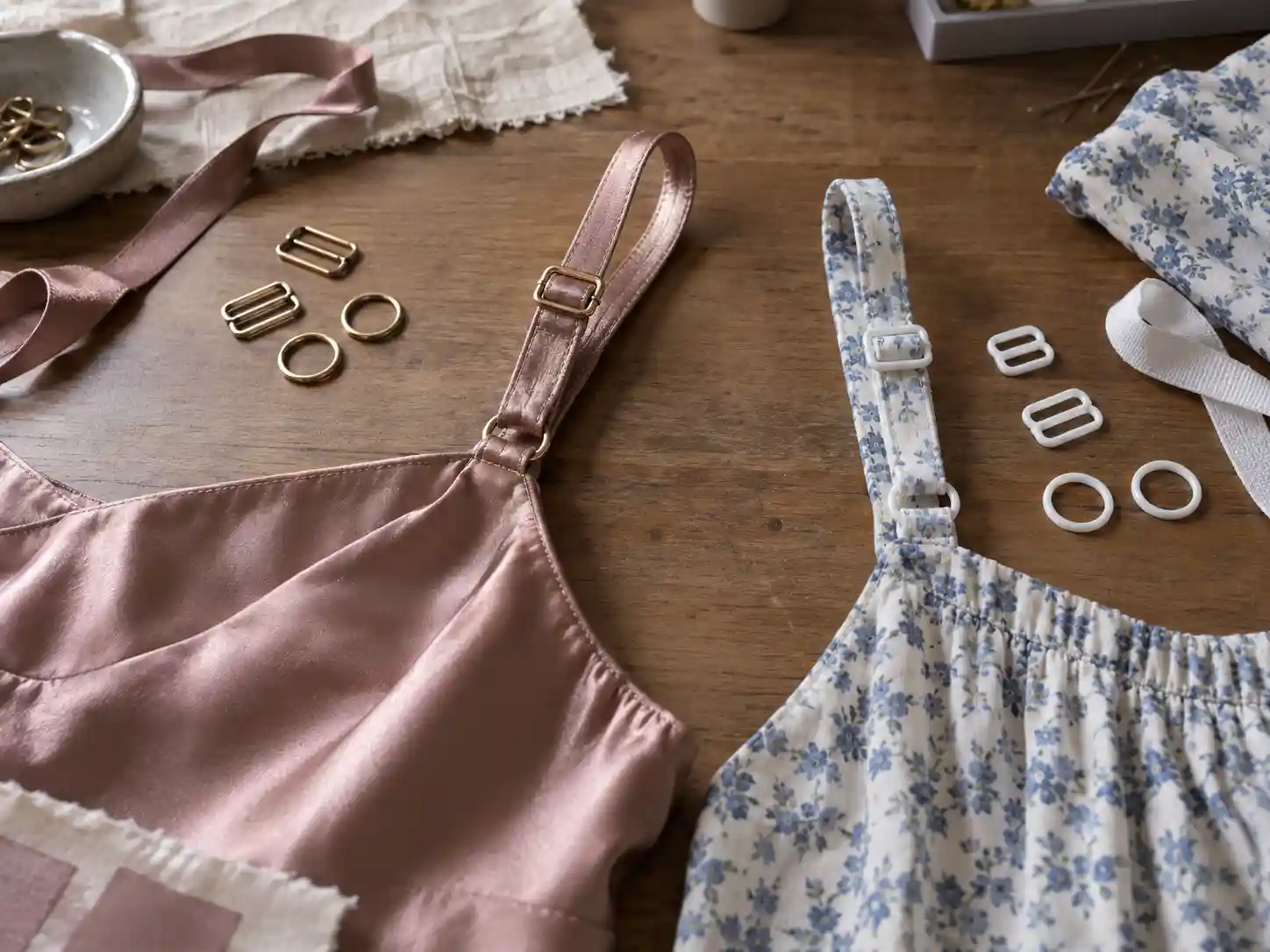
Table of Contents
Here, developing your OEM/ODM private label clothing collection is no longer a challenge—it’s an excellent opportunity to bring your creative vision to life.

