 Skip to content
Custom Dress Solutions for Reducing Fit-Related Returns
Fit problems that reach the consumer are expensive to correct. Jinfeng Apparel develops custom dresses around pattern accuracy, fit validation, size grading, fabric behavior, PP approval and bulk measurement control, helping established fashion brands move avoidable fit risk upstream before a style reaches full production.
- 2 sample rooms dedicated to development and revision work
- 7+ senior pattern makers for fit-sensitive womenswear
- 20+ sample machinists supporting first, fit, revised and PP samples
- 15+ QC inspectors covering materials, sewing, measurements and finished garments
- Sample timing by complexity: about 7-10 days for simple styles, 10-15 days for regular dresses, and 15-25 days for complex structures
- 6 owned women’s fashion factories plus 10+ long-term satellite production partners for multi-style bulk programs
Fit-Related Returns Often Begin Before the Dress Is Shipped
Pattern Fit
Fabric Behavior
Bulk Consistency
Six Manufacturing Causes Behind Common Dress Fit Complaints
Base Pattern Mismatch
Grading Distortion
Fabric Stretch Shift
Support Structure Error
Length and Proportion
Measurement Drift
Fit Development for Product, Technical, Sourcing and QA Teams
Product Development
Technical and Fit
Sourcing
Quality Assurance
Different Dress Silhouettes Create Different Fit Return Risks
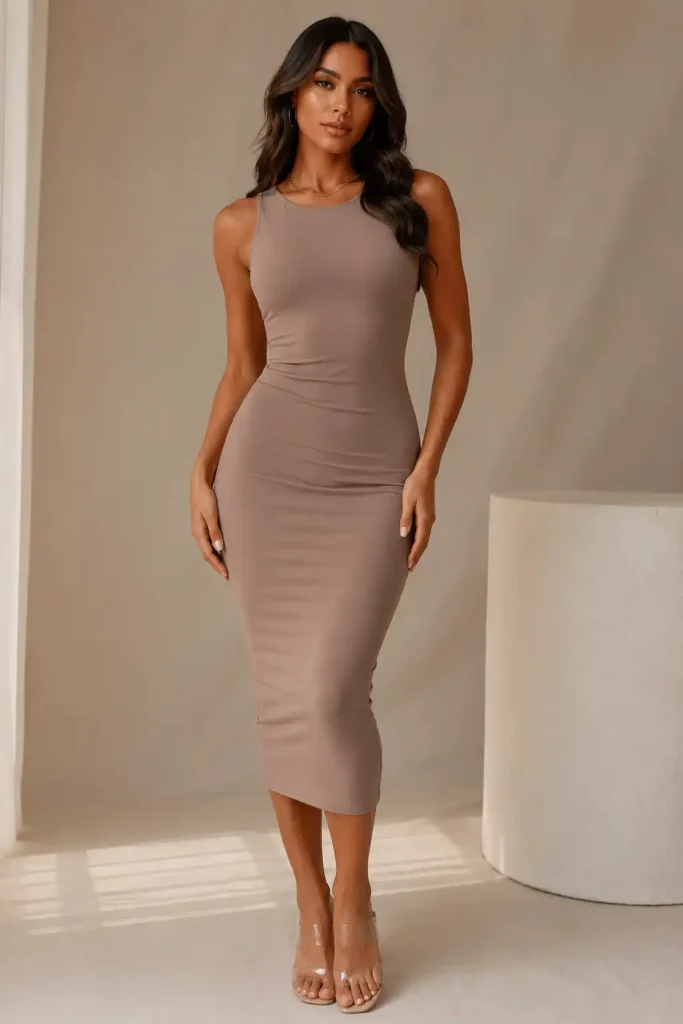
Bodycon Dresses

Corset & Strapless

Slip & Satin

Mesh & Cut-Out

Mini / Midi / Maxi
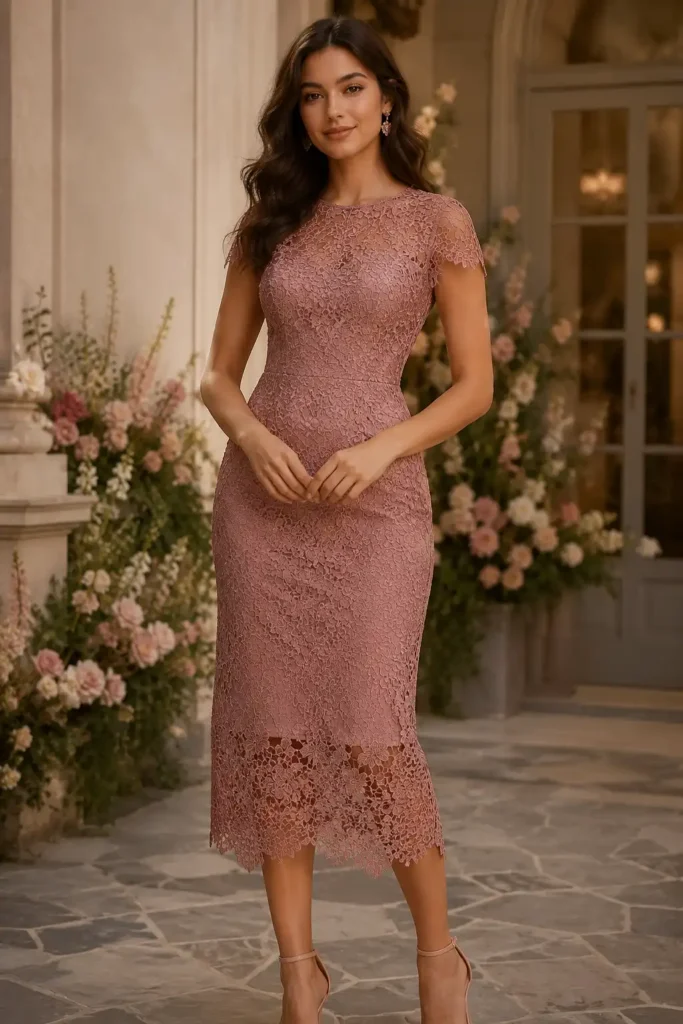
Occasion Dresses
Evening, cocktail, wedding-guest and event dresses combine visual expectations with support and comfort. Satin, chiffon, lace, mesh, lining, slits, fitted waists and structured bust areas may all interact. A reliable fit program validates the points consumers notice immediately – neckline, bust stability, waist placement, hip movement, slit safety, lining coverage and hem balance – before the same details are repeated across a multi-style collection.

Measure the Points That Actually Control Dress Fit
A size chart is only useful when its measurement points reflect the way a specific dress is meant to fit. Jinfeng reviews measurements together with pattern shape, structure and intended wearing ease rather than treating every POM as an isolated number.
For fitted dresses, bust, upper bust, underbust, waist and hip measurements need to be read together. A waist may measure correctly while the torso length places it too high or too low. A hip may be within tolerance while the side seam twists because front-to-back balance is wrong. Strap length can change neckline position; neckline depth changes perceived coverage; armhole depth affects both comfort and exposure.
Length-sensitive styles require the same discipline. Mini length should be checked with body movement and the intended waist placement. Midi and maxi dresses need front, back and side balance, particularly when drape, bias cutting or asymmetry is involved. Slit height and lining length should be reviewed as functional measurements because consumers experience them during movement rather than on a flat table.
Sample measurement records should therefore connect to fit comments. When a brand marks “bust loose” or “dress too short,” the next step is to identify which pattern area and which POM must change, document the revised value and verify the result in the next sample. The approved measurements later become production and QC references instead of disappearing after the fitting session.
Fabric Behavior Can Change Fit Even When Measurements Match
Fit cannot be separated from material. A measurement chart may stay unchanged while a new fabric weight, stretch level, recovery rate or lining produces a different wearing result. Fabric substitutions therefore need technical review before they are treated as a simple sourcing change.
Jinfeng reviews fabric direction during development because stretch and drape determine how much ease the pattern needs and how stable the finished garment remains after sewing, pressing and wear. When fabric changes during sampling, the team rechecks drape, stretch, transparency, shrinkage risk, lining requirements and pattern impact before deciding whether a revised sample is needed.
For fit-sensitive styles, bulk fabric approval matters as much as the first sample. If the sample was made in substitute fabric, the final production fabric should be compared before PP approval. A bodycon dress in a firmer jersey, a satin slip with a different drape, or a mesh dress with weaker recovery can all require pattern or construction adjustment even when the nominal composition appears similar.
| Fabric / Behavior | Common Dress Use | Typical Fit Risk | Development & Bulk Control |
|---|---|---|---|
| Jersey / stretch knit | Bodycon, fitted mini, casual dress | Growth, weak recovery, side-seam twist, ride-up | Review stretch direction and recovery; relax fabric before cutting; align ease and measurement tolerance with fabric behavior |
| Ponte / Roma | Structured knit, office, fitted midi | Too rigid or too compressive if weight/recovery changes | Confirm weight, support and recovery; validate waist/hip balance and wash-related dimension change |
| Stretch satin | Fitted occasion, corset-inspired, party dress | Different stretch by lot, zipper distortion, tightness around curves | Confirm stretch direction and lining compatibility; recheck pattern when bulk fabric differs from sample fabric |
| Non-stretch satin | Slip, cocktail, evening, wedding guest | Pull lines, gaping, zipper bulge, visible tension | Control grain/shine direction, ease, zipper installation, lining and pressing; review drape on the approved fabric |
| Mesh / power mesh | Bodycon, cut-out, layered, clubwear | Transparency, neckline growth, inconsistent compression | Match mesh recovery to pattern and lining; check neckline stability, coverage and seam tension |
| Chiffon | Maxi, occasion, resort, layered dress | Drape shift, transparency, hem imbalance, sliding during cutting | Confirm lining, grain, cutting stability, waist placement and hem balance before bulk |
| Lace | Occasion, wedding guest, structured dress | Motif placement changes fit appearance; rigid lace can restrict movement | Review motif, seam placement, edge finishing, lining stretch and movement at bust/armhole/hip |

Pattern Development Starts With the Intended Wearing Result
Jinfeng Apparel can start from a tech pack, reference image, original sample, sketch or line sheet, but pattern development becomes more accurate when the intended fit, target market, size range and fabric direction are clear from the beginning.
- Define the Fit
Before pattern work, the team identifies whether the dress should skim, compress, drape, support or create controlled volume. Bodycon and corset styles need different ease logic from a satin slip or chiffon maxi. Neckline, coverage, waist position, hip shape, slit height and overall length are treated as design and fit decisions rather than late-stage corrections. - Read the Structure
Reference images often hide internal construction. Pattern development should establish closure type, lining, cup or boning needs, seam placement, ruching direction, cut-out support and how the fabric carries tension. A pattern can match the outline of a photo and still fail once worn if the internal structure has not been translated correctly. - Build for Production
The purpose of the pattern is not to create one attractive sample. Final development needs a pattern that can be graded, cut consistently and handed to production with controlled seam allowance, construction notes and fit-critical measurements. Any fit change that affects bulk must enter the revised pattern, updated size chart and related production files before PP approval. - Respect Material Change
A change in fabric weight, stretch, recovery or lining can alter the pattern requirement. Jinfeng records whether a material change affects the approved shape and whether a revised sample is necessary, rather than assuming the original pattern can always be reused.
Fit Samples Turn Visual Feedback Into Measurable Decisions
A first sample proves that a design can become a garment. A fit sample goes further: it tests whether the garment works on the body and gives the pattern team specific information for correction.
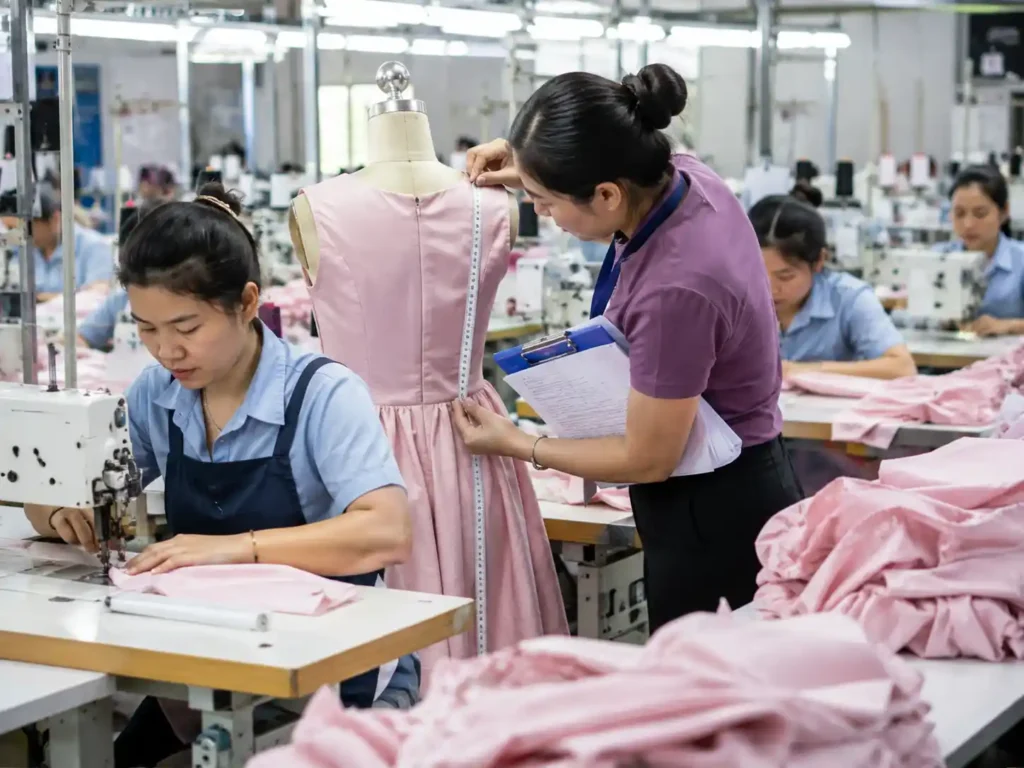
For fit-sensitive dresses, Jinfeng checks bust, upper bust, underbust where relevant, waist, hip, dress length, strap length, armhole, neckline depth, slit height, cup or boning position and lining length. The exact points depend on the silhouette. Internal mannequin review and measurement are used as standard development tools, while real-person fitting can be arranged when the project requires on-body validation.
Useful fit feedback is specific. Front, side and back images, close-ups of tension or gaping, marked measurements and clear descriptions such as “waist sits 2 cm high” or “upper bust opens when moving” give the pattern maker something actionable. Broad comments such as “make it fit better” usually create another round of interpretation instead of a controlled revision.
Sampling time is tied to complexity rather than a single promise. Simple styles are typically around 7-10 days, regular dresses around 10-15 days, and complex corset, strapless, lace, mesh, sequin or evening structures around 15-25 days, with special fabrics and trims following supplier lead times. The objective is a production-ready standard, not a rushed first sample that pushes unresolved fit problems into bulk.
For a collection with many styles, fit work should also be prioritized. Hero SKUs, fit-sensitive silhouettes and styles sharing the same pattern family can be reviewed first so the team learns from the earliest fittings before repeating the same issue across the assortment.

Revision Notes Must Become Production Files, Not Chat History
Record the Cause
Update the Pattern
Update Supporting Files
Decide on Resampling

Size Grading Is Where a Good Sample Can Become a Bad Size Run
A base size that fits well does not prove that XS, S, M, L, XL or extended sizes will preserve the same silhouette. Grading needs to protect proportion and wearing function as the body dimensions change.
Grading review should focus on how each measurement grows, not only how much it grows. Bust shaping, upper-bust coverage, waist placement, hip ease, armhole depth, strap length, neckline depth, slit height and dress length may need different grade behavior. Structured and revealing styles are especially sensitive because a few millimeters in the wrong direction can change coverage, support or perceived proportion.
For bodycon garments, grade rules must work with fabric stretch and recovery so larger sizes do not become excessively tight or smaller sizes overly loose. Corset and strapless dresses require attention to cup, upper bust, boning and waist relationships. Midi and maxi styles may need different length logic for standard, petite or tall programs rather than adding the same amount everywhere.
Jinfeng records final grade rules as part of the production standard and connects them with measurement QC. When a brand has historical fit-return patterns by size, those comments can help identify which grade intervals deserve closer review. A recurring “tight at hip in larger sizes” issue should trigger a hip and ease investigation, while “straps too long in smaller sizes” points toward strap grading and upper-body proportion rather than a general size-chart rewrite.
The aim is not to claim one grading system fits every market. It is to make the grade rule explicit, test the highest-risk sizes where needed, and make sure production and QC use the approved version.
Stop Unresolved Fit Problems Before PP Approval
Bust Stability
Waist Placement
Hip Ease
Straps & Armholes
Length & Slits
Fabric Interaction
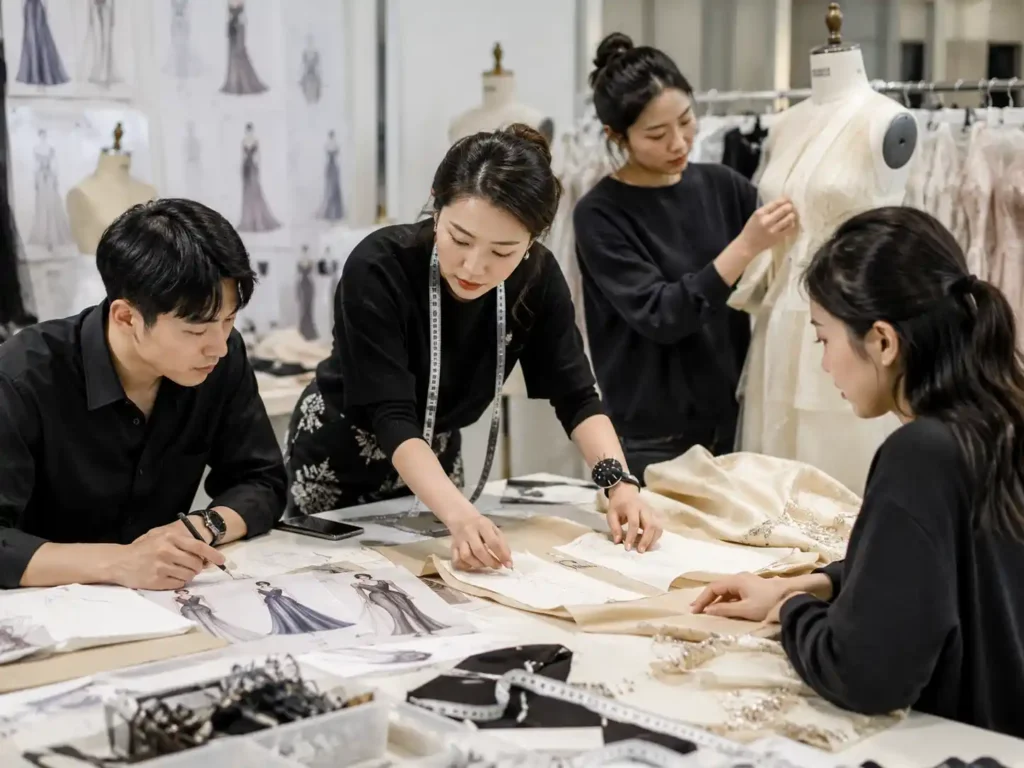
PP and Golden Samples Lock the Fit Standard for Production
Once core appearance and fit are confirmed, the PP sample becomes the pre-production reference. Major design or material changes after approval require a new review because they can affect cost, lead time and bulk risk.
Before PP approval, Jinfeng confirms the final pattern, size chart, grade rule, fabric, lining, trims, seam allowance, construction method, measurement tolerance, QC points and packing method relevant to the style. Labels and private-label elements are also aligned when they are part of the project so the production standard is complete rather than limited to garment shape.
For key programs or higher-control orders, a Golden sample can be established as a physical benchmark for production, QC, repeat orders and later dispute review. A Golden sample does not replace written files; it works together with the final pattern, measurement chart, BOM, sewing instructions and QC checklist. That combination is what allows the approved fit to be communicated beyond the sample room.
PP approval is deliberately treated as a lock point. If fabric, structure, measurements, color or construction changes afterward, the team re-evaluates the affected pattern and production risks instead of silently absorbing the change into bulk.
Transfer Approved Fit Into Bulk Without Losing the Standard
Fit control can fail during handover even when the sample is correct. Jinfeng connects the sample room, merchandising, production and QC teams through a documented sample-to-bulk transfer rather than relying on memory or a single sample photograph.
The handover package can include the final pattern and grade rule, approved size chart, measurement tolerances, fabric reference, trim card, BOM, sewing instructions, PP comments, label placement, packing instructions and product-specific QC points. Complex structures such as corset cups, boning, anti-slip tape, mesh edge finishing, lace placement or satin zipper installation are written into production instructions so the sewing line receives a repeatable method.
Production management then matches the style to the appropriate factory and line according to product type, fabric, construction complexity, quantity and schedule. Jinfeng operates 6 owned women’s fashion factories and works with 10+ long-term satellite production partners, supported by 18+ sewing lines and 6+ flexible production lines. The point of the multi-factory system is not unlimited capacity; it is the ability to route different dress structures to suitable production units while keeping project standards under one management process.
For multi-style programs, the transfer is organized by style and version. A 15- or 20-style collection cannot be managed safely if patterns, PP comments and trims are mixed together. Style-level production files, sample versions and QC priorities make it easier to preserve the approved fit across many SKUs and multiple size/color combinations.

Measurement QC Must Follow Fit Risk Through Bulk Production
Final inspection alone is too late for a fit problem that has already been repeated across hundreds of garments. Jinfeng’s QC process covers incoming materials, cutting, sewing, in-line measurement, finished garments, pressing and packing, with product-specific fit points added to the checklist.
The measurement plan should be built around the silhouette. Bodycon dresses need close control of bust, waist, hip and length together with stretch behavior. Strapless styles need upper-bust and support checks. Slip dresses need strap, neckline and length balance. Maxi styles need hem level and overall length. The objective is to detect a drift where it begins and prevent it from becoming a full-batch correction.
Jinfeng has 15+ QC inspectors working across the manufacturing system. Their role is not limited to counting defects before shipment; fit-sensitive programs require coordination with pattern, production and merchandising teams when a recurring measurement or construction issue appears.
| Production Stage | Fit Risk | Key Checks | Corrective Action |
|---|---|---|---|
| Incoming fabric | Stretch/recovery or drape differs from sample | Fabric direction, lot, stretch, recovery, hand feel, shrinkage risk | Hold or segregate questionable lots; review pattern impact before cutting |
| Cutting | Wrong grain, stretch direction or pattern version | Final pattern version, fabric direction, size ratio, cut-part identification | Stop cutting if version/direction is wrong; correct before issue spreads |
| Sewing / inline | Seam tension or construction changes shape | Bust/waist/hip balance, side seams, zipper, neckline, straps, support details | Correct line method and affected pieces before large quantities accumulate |
| Measurement QC | Bulk dimensions drift outside agreed tolerance | Fit-critical POMs by silhouette and size | Separate affected pieces; trace cause to cutting, sewing, pressing or pattern use |
| Finished garment | Fit-related visual defects remain | Symmetry, drape, neckline, lining, slit, hem balance, pressing | Repair where feasible; escalate recurring issue to production and QC lead |
| Packing / pre-shipment | Size or SKU identification creates wrong-fit deliveries | Size label, size sticker, carton breakdown, packing list | Correct identification before shipment and align with approved packing records |
Fit Control Changes With Construction and Workmanship
Corset Structure
Zipper Flatness
Lining Control
Seam Tension
Slit & Hem
Pressing

Use Return Reasons to Improve the Next Production Run
Historical return information becomes more useful when it is translated into specific manufacturing questions. Jinfeng can review anonymized fit comments, size complaints, recurring problem areas and affected SKUs alongside the existing pattern and size system.
A comment such as “runs small” is only a starting point. If the issue is concentrated in larger sizes, grading and ease should be reviewed. If the same style feels tight only in one production lot, fabric stretch or shrinkage may be the cause. Repeated “too short” comments can point to length, waist placement, ride-up or target-body proportion. “Bust loose” can involve cup shape, neckline, strap length, upper-bust grading or fabric recovery rather than total bust circumference alone.
The manufacturing feedback loop can follow a simple sequence: collect recurring return reasons by style and size; separate fit issues from styling preference or consumer selection; map the fit issue to pattern, grade, fabric, construction or measurement control; develop a revised sample where required; confirm PP standards; and add the changed points to the next bulk QC checklist.
Jinfeng does not position itself as a consumer sizing software provider and does not promise a fixed return-rate reduction. The manufacturing role is narrower and more useful: address the fit risks that can be influenced through product development and production, then preserve the approved correction in formal files for future orders.
Fit Development Is Backed by a Dedicated Womenswear Team
2 Sample Rooms
7+ Pattern Makers
20+ Sample Machinists
15+ QC Inspectors
12+ Merchandisers
Multi-Factory Production
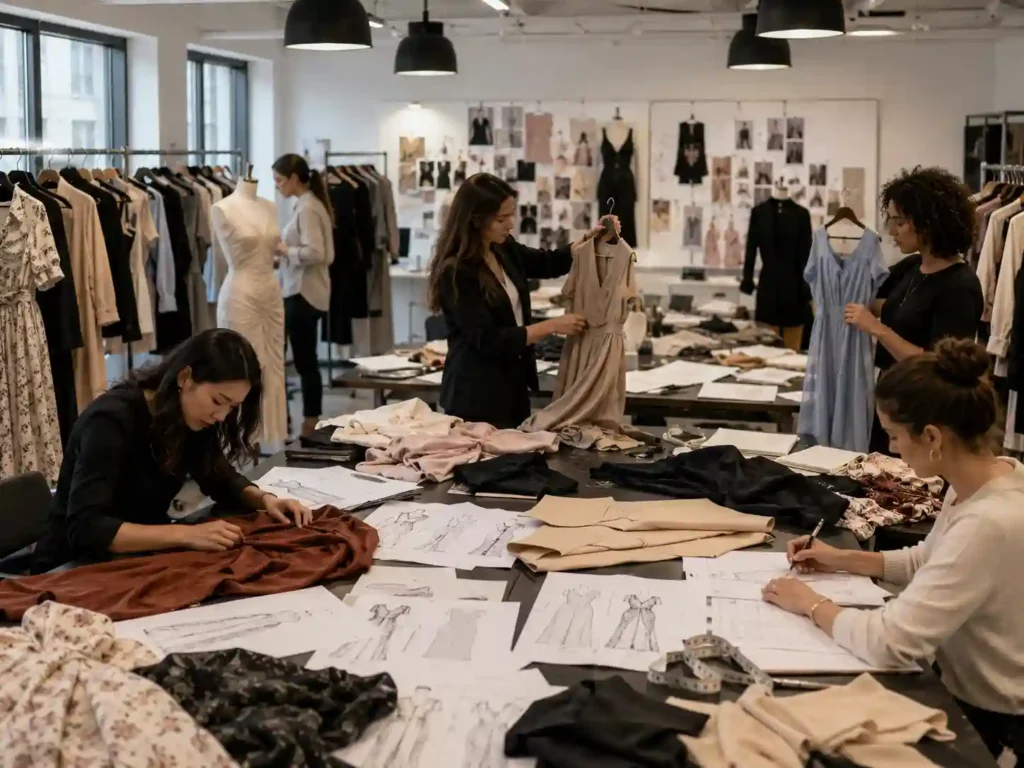
Multi-Style Fit-Correction Program
A representative fit-focused program shows how a large dress collection can be managed without turning every comment into an isolated sample issue. The following case is presented without brand identity or confidential design files.
An established overseas womenswear brand developed an 18-style dress program totaling approximately 48,000 pieces across fitted minis, corset-inspired styles, stretch bodycon dresses, satin occasion dresses and mesh-led party styles. The collection used multiple fabric behaviors and a broad size run, making a single fit rule unsuitable for every SKU.
Early samples exposed four recurring development risks: upper-bust gaping on structured styles, hip tightness in fitted woven silhouettes, inconsistent strap and neckline position between sample sizes, and different recovery between sample fabric and proposed bulk stretch fabric. Instead of treating each comment separately, the development team grouped the issues by pattern family and material behavior. Pattern makers revised upper-bust shaping and support placement, adjusted hip ease where needed, corrected strap and neckline relationships, and rechecked stretch-sensitive patterns against the intended bulk fabric direction.
The sampling path used first sample, fit review, revised samples on the higher-risk styles, PP approval and Golden sample references for key structures. Comments were converted into revised patterns, updated size charts, measurement tolerances, construction notes and QC points before handover. The brand and Jinfeng then locked the final version by style rather than allowing comments to remain scattered across messages.
During bulk preparation, fit-critical measurements were assigned to QC by silhouette: bust/waist/hip and length for bodycon; upper bust, cup/support and waist for corset-inspired styles; strap, neckline and length for satin slips; recovery, neckline stability and lining position for mesh dresses. Production moved forward after the approved standards were aligned with final fabrics and trims. The result was a more controlled development-to-bulk process with reusable pattern, measurement and QC records available for the next collection. No consumer return-rate percentage is claimed because retail return performance depends on factors outside manufacturing as well as fit execution.
Repeat Orders Keep the Fit Record, but Changes Still Need Review
A successful fit should not need to be rediscovered from zero on every reorder. Jinfeng keeps confirmed project records so repeat production can start from the latest approved standard while still checking variables that may have changed.
Repeat-order records can include pattern files, grade rules, measurement charts, fabric references, color records, trim details, construction notes, packing requirements, QC comments and Golden sample references. These records reduce repeated interpretation and help keep the same fit logic across replenishment or seasonal continuation.
Reorders are not blind copies. A new fabric lot, different stretch level, new color, changed lining, altered dress length, revised neckline, updated cup or boning, or a new size extension can affect the pattern and fit standard. Those changes are reviewed before production so the value of the historical record is preserved without assuming every variable remains identical.

Share Fit and Return Data Under NDA-Based Cooperation
Fit improvement often requires sensitive information: unreleased tech packs, current patterns, size charts, consumer fit comments, product photos and return reasons. Jinfeng supports NDA-based cooperation and protects project files throughout development and production.
Brands can share only the information needed for the review. Fit-return data may be anonymized by removing consumer identities and focusing on style, size, complaint category and recurring problem area. Tech packs, samples, patterns, fabric and trim details, private-label files and unpublished designs are used for the corresponding project and should not be published or reused as marketing material without authorization.
For sensitive vendor-change or corrective-development programs, NDA confirmation can happen before detailed files are uploaded. Clear confidentiality makes it easier for technical teams to share the real problem instead of sending incomplete references that limit the accuracy of pattern and fit analysis.
Frequently Asked Questions About Reducing Dress Fit Risk
No responsible manufacturer should guarantee a fixed retail return-rate reduction. Returns also depend on consumer selection, product descriptions, size guidance, styling preference and market behavior. Jinfeng focuses on manufacturing-side causes that can be improved through pattern development, fit sampling, grading, fabric review, PP approval and bulk measurement control.
Yes. A review can start from the current tech pack, pattern information, size chart, sample photos, fit comments and anonymized return reasons. The team can map recurring complaints to likely pattern, grading, fabric, construction or measurement-control areas before deciding whether a revised sample is required.
Useful inputs include the style image or tech pack, current size chart, target market, size range, approved or problem sample photos, fit comments, fabric information and recurring return reasons by style or size. Marked front, side and back fitting images are particularly helpful for pattern correction.
A first sample validates structure, material direction, basic pattern proportion, construction feasibility and the development direction. A fit sample focuses more directly on on-body measurements and relationships such as bust, waist, hip, strap, neckline, armhole, slit, length and lining. A first sample is not automatically the bulk standard.
The number depends on product complexity and the size of the changes. Simple dresses may move from a first sample to one revised sample. Medium-complexity dresses commonly need one or two revisions. Corset, strapless, lace, mesh, sequin and evening styles may need around two revisions or additional review when structure or materials change.
Simple styles are typically around 7-10 days, regular dresses around 10-15 days, and complex corset, strapless, lace, mesh, sequin or evening structures around 15-25 days. Special fabrics, custom trims, printing, dyeing and material supplier lead times can extend the schedule.
Yes, grade rules can be reviewed as part of the approved production standard. Attention is placed on fit-critical relationships rather than only uniform scaling. Bust, waist, hip, armhole, strap, neckline, slit, lining and length may require different progression depending on silhouette, fabric and target sizing strategy.
The fabric change should be reviewed for weight, stretch, recovery, drape, transparency, shrinkage and lining interaction. If the change affects fit or construction, the pattern and sample may need to be re-evaluated before PP approval. A fabric substitution should not be treated as a color-only change.
Jinfeng transfers the final pattern, size chart, grade rule, measurement tolerance, fabric and trim approvals, sewing instructions, PP comments and QC checklist into production. Fit-critical measurements are checked during bulk rather than waiting only for final shipment inspection.
Yes. Jinfeng supports NDA-based cooperation and protects tech packs, patterns, samples, size charts, fabric and trim information, private-label files, unpublished designs and project data. Fit-return information can also be shared in anonymized form when consumer-level details are not required for manufacturing analysis.

Send the Fit Problem Before Your Next Bulk Order
If a current dress program is generating repeated fit complaints, or a new collection contains silhouettes where fit risk needs tighter control, send the project information before the next production standard is locked.
Jinfeng Apparel can review the manufacturing side of the problem – pattern, grade rules, fabric behavior, construction, sampling and measurement control – and define what should be verified before bulk. The most useful starting point is a clear style list with fit evidence rather than a general request for “better sizing.”
- Style images, tech packs or current line sheet
- Current size chart and target size range
- Target market and intended fit or silhouette
- Fabric direction, approved fabric or known material concerns
- Fit comments, marked sample photos or recurring return reasons
- Quantity plan by style/color and key launch or delivery window
- Any private-label, packing or warehouse requirements that affect the production brief


