 Skip to content
Lace and Mesh Sourcing
Source Lace and Mesh With Garment Fit, Construction and Bulk Production Already in Mind
Finding an attractive lace or mesh swatch is only the beginning. Jinfeng Apparel helps fashion brands source, evaluate and approve materials around the finished garment rather than treating fabric as an isolated purchase.
- 10–30 stylescan be managed within a multi-style brand program.
- Brand orders commonly total 20,000–80,000 piecesacross approved styles.
- 2 sample rooms, 7+ senior pattern makers and 20+ sample machinistssupport material-to-garment validation.
- 15+ QC inspectorssupport fabric, sewing, appearance and finished-garment control.
- Lace, stretch lace, embroidered lace, lace trims, stretch mesh, power mesh, tulle and related lining materials can be evaluated according to each project.
- Sourcing decisions consider stretch, recovery, transparency, width, hand feel, drape, color, construction, MOQ, cost and bulk availabilitybefore production approval.
Built for Fashion Teams Managing Real Collections
Fashion Brand Teams
Sourcing and Development Offices
Occasion and Fashion Programs
Small Material Errors Become Large Production Problems
Wrong Lace Motif
Poor Mesh Recovery
Excessive Transparency
Stiff Lace Hand Feel
Unstable Bulk Color
Sewing Damage
Lace and Mesh Options for Fashion Development
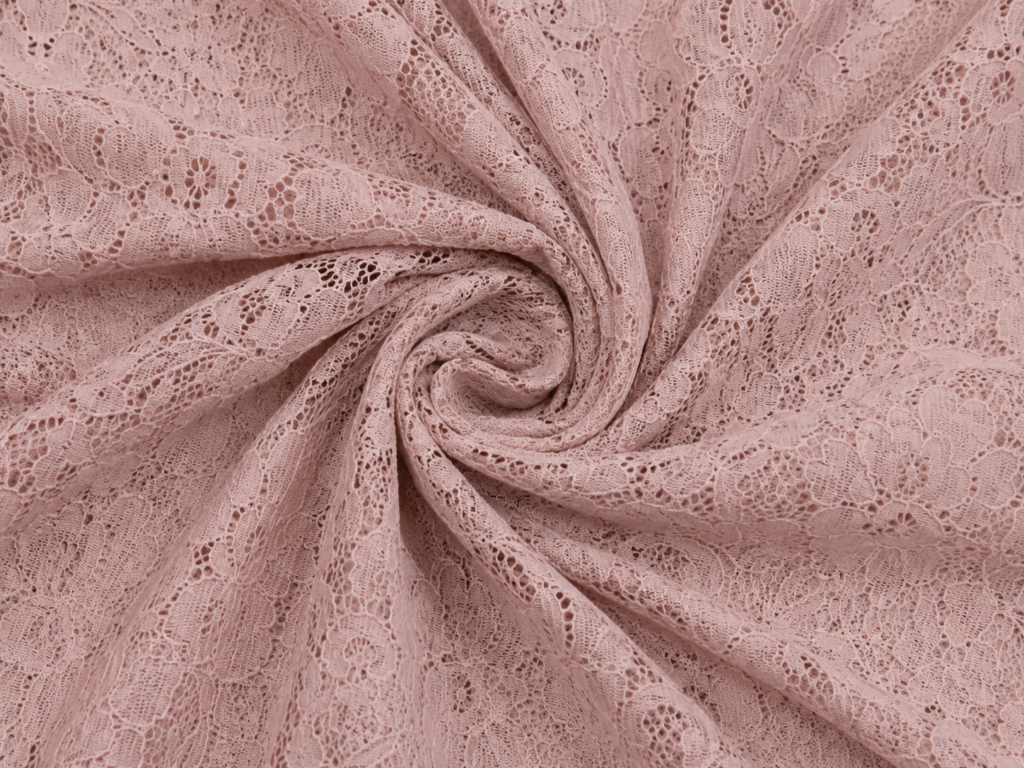
Stretch Lace
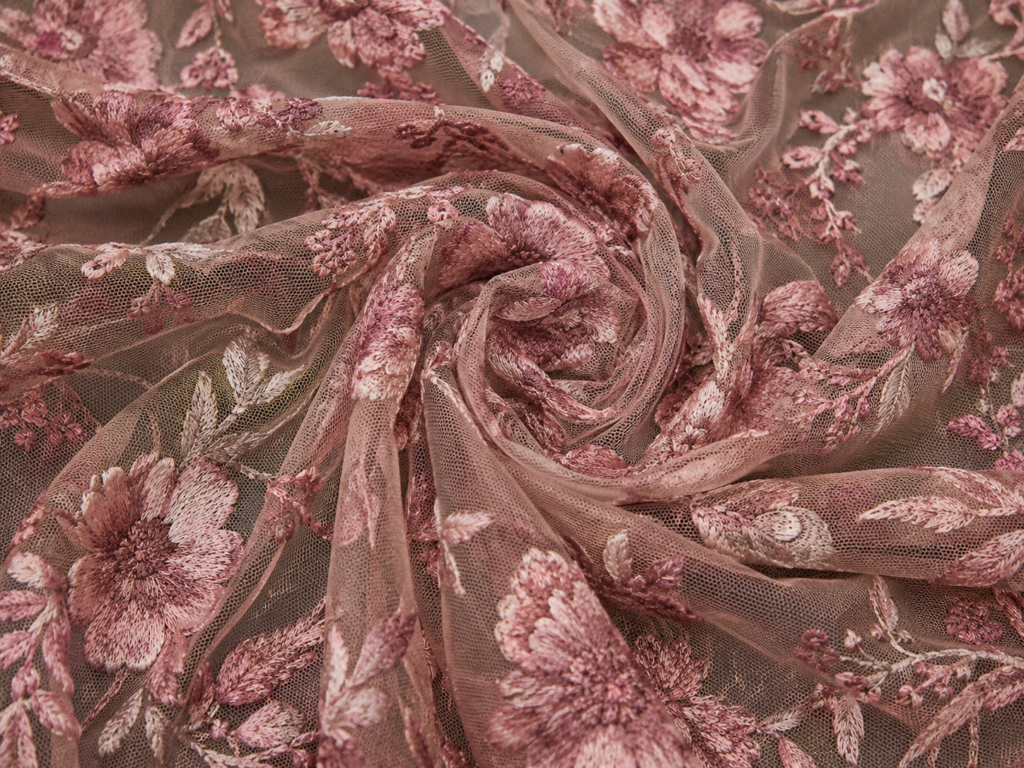
Embroidered Lace
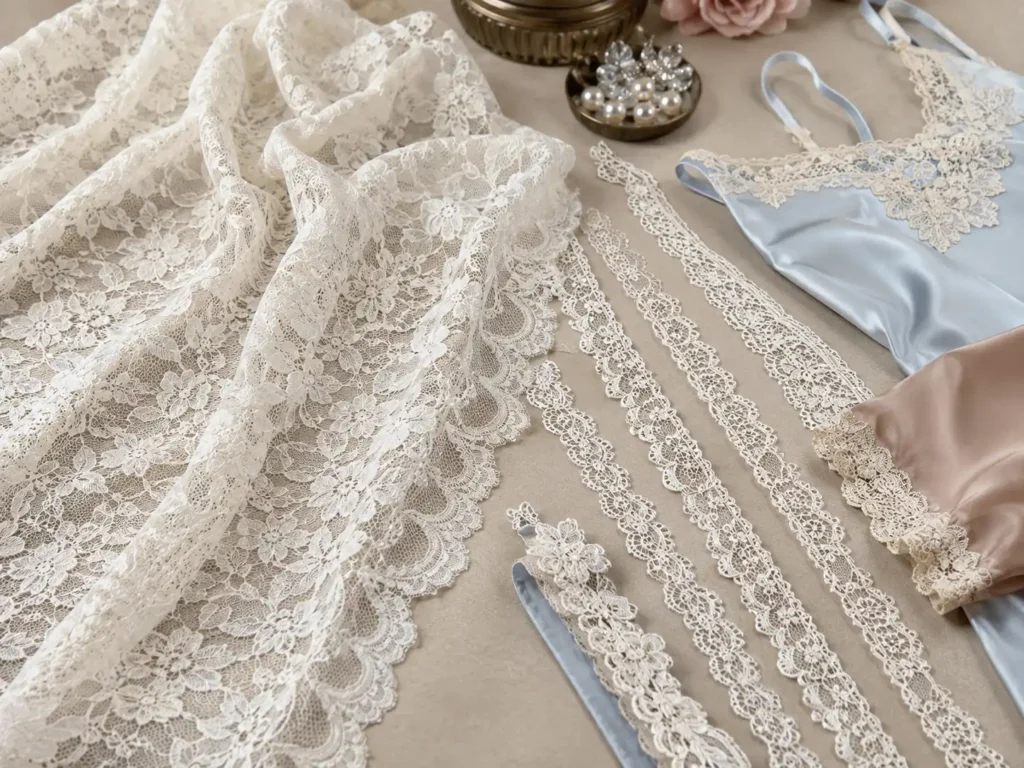
Lace Trims
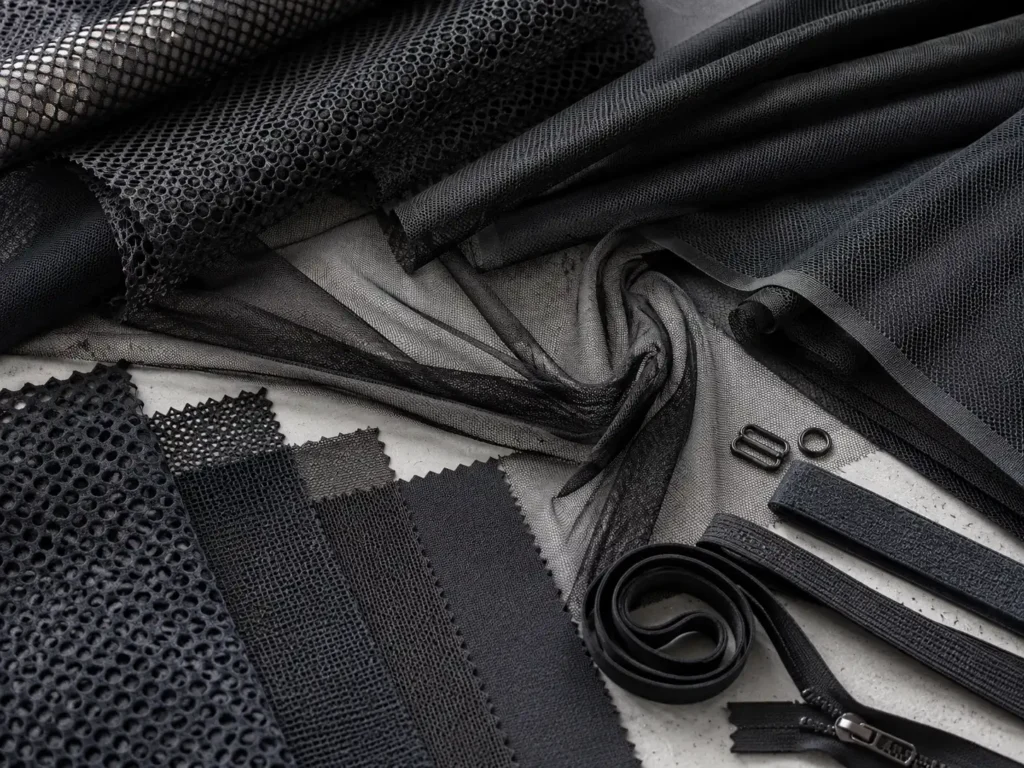
Stretch Mesh

Power Mesh

Tulle and Structured Mesh
Choose Lace by Garment, Not Swatch Alone
Lace sourcing becomes more reliable when visual design and garment engineering are reviewed together. Motif, width, stretch and edge structure influence cutting, pattern placement and sewing, while lining changes the color, opacity and comfort of the final garment. Jinfeng evaluates lace as part of a finished womenswear product.
Stretch Lace for Body-Following Silhouettes
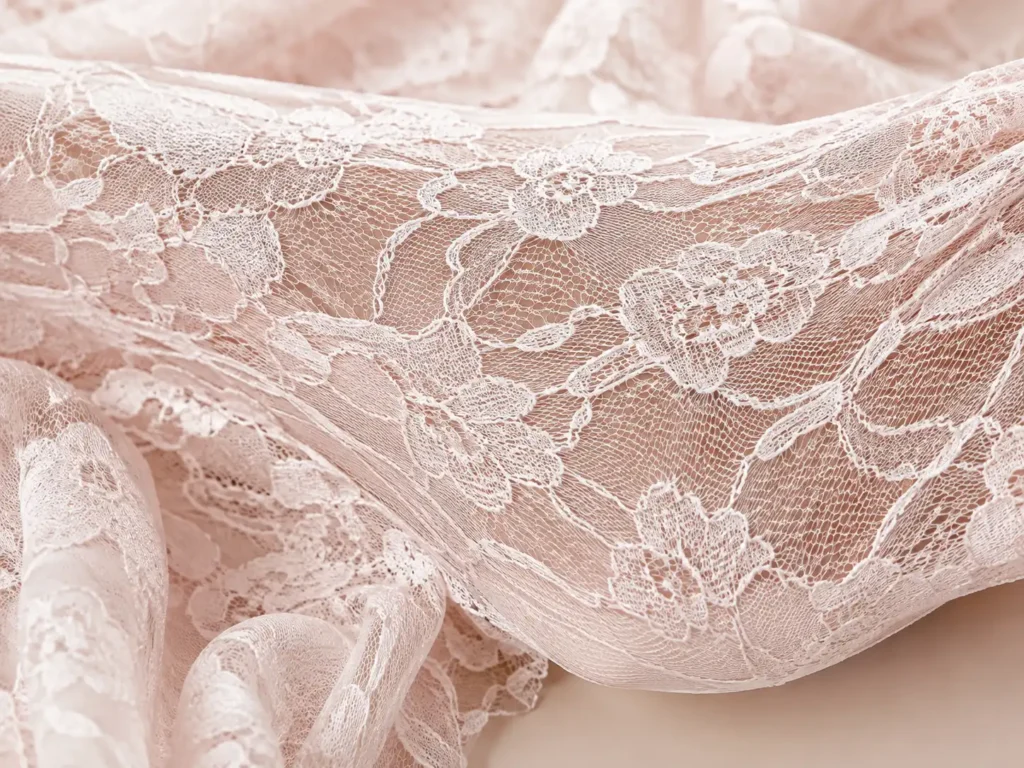
Stretch lace is useful when a garment needs surface detail without giving up body movement. Fitted mini dresses, midi dresses, bodysuits and close-fitting tops often benefit from lace with controlled stretch and recovery. A visually similar lace can perform very differently once placed over a fitted pattern, so selection begins with the silhouette and target feel.
Stretch direction matters: Crosswise stretch may be enough for some fitted styles, while other constructions need greater multidirectional movement. The pattern team checks how stretch changes bust, waist and hip fit rather than assuming a previous pattern can be reused without adjustment.
Recovery matters as much as stretch: Lace that extends easily but recovers slowly can create loose necklines, distorted side seams or areas that bag after wear. Sampling allows the team to see whether the chosen lace returns cleanly after being placed under garment tension.
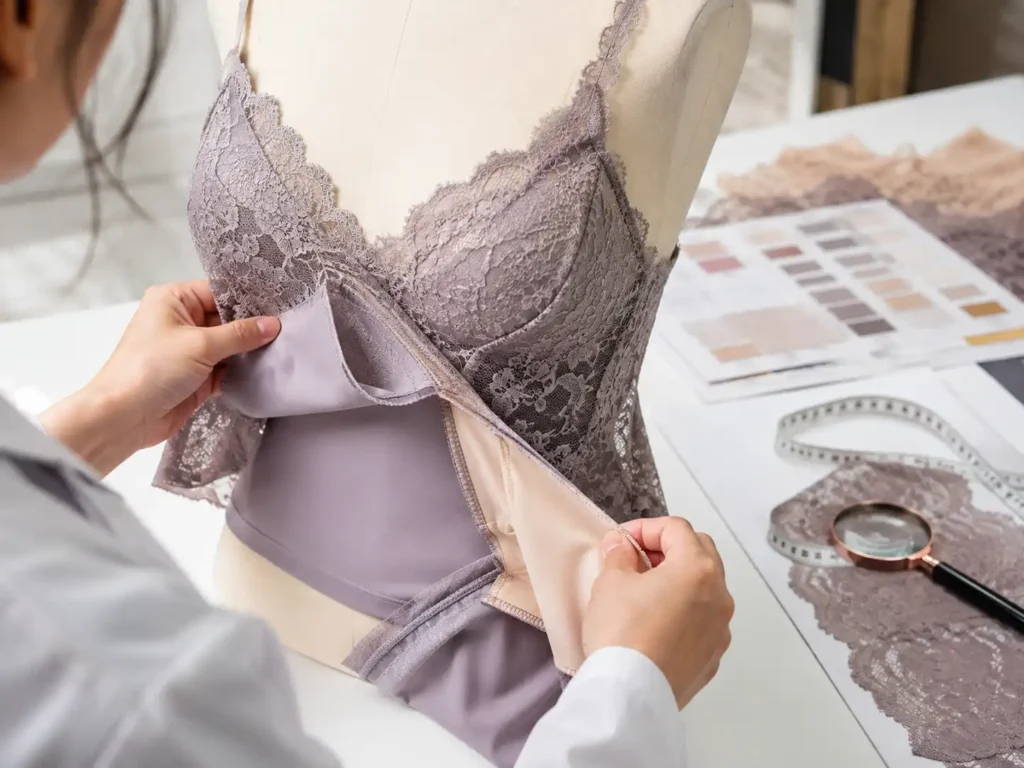
Lining changes performance: Stretch lace paired with a rigid lining behaves differently from stretch lace paired with a compatible stretch lining. The combination can alter comfort, ease and final measurements. Lining therefore needs to be selected as part of the fabric system.
Edge and motif affect construction: Scalloped edges may be intentionally positioned at neckline, sleeve or hem areas, while continuous motifs may require different cutting and finishing. The chosen pattern should use the visual character of the lace without creating unnecessary production loss.
Embroidered and Decorative Lace for Visual Impact
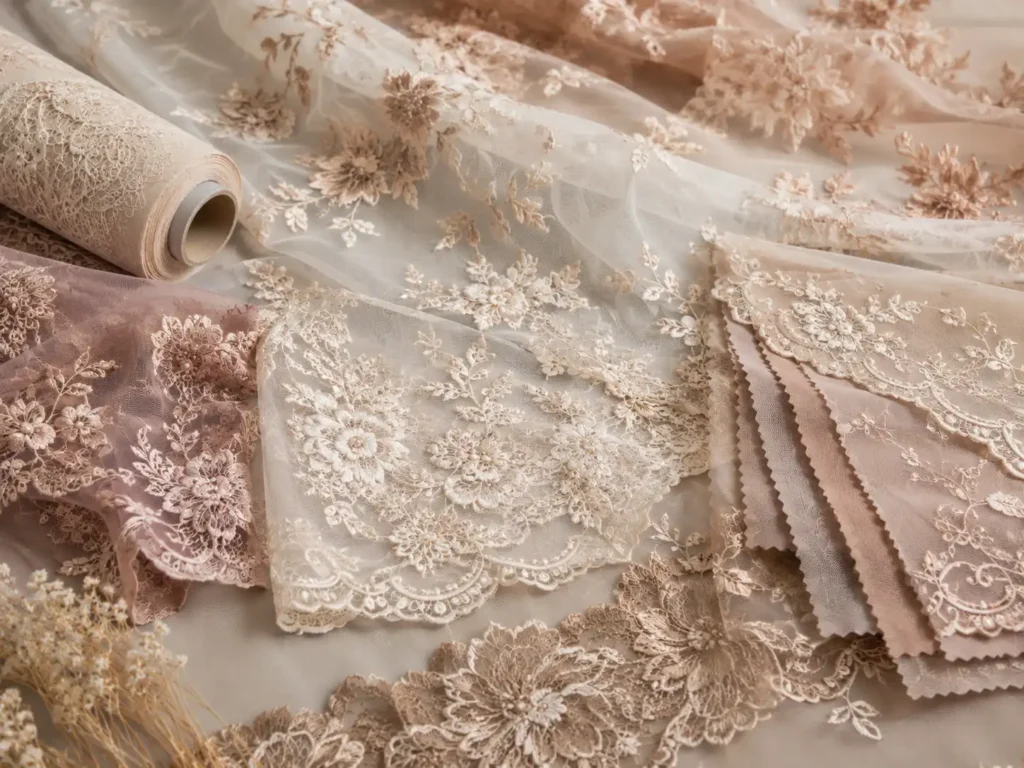
Embroidered lace can create a higher-value surface for cocktail dresses, wedding-guest styles and occasion collections, but embroidery introduces additional variables beyond the ground fabric.
Jinfeng evaluates how embroidery density, motif size and ground stability interact with the garment.
Ground mesh stability: Dense embroidery placed on a very delicate ground may pull or distort the base.
The risk increases around curved seams, darts and high-tension areas. Sampling checks whether seams remain flat and whether the motif keeps its intended shape.
Motif scale and position: Large motifs can become unbalanced when cut across narrow bodice panels. Placement needs to consider center front, bust position, waist seam, neckline and left-right symmetry. For styles where matched placement is visually important, cutting plans should account for the additional fabric consumption.
Weight and drape: Embroidery adds weight. A fabric that hangs beautifully as a swatch may pull differently once several panels are assembled. Heavy embroidery can also influence shoulder load or hem balance on longer dresses.
Skin contact: Raised embroidery, metallic yarns or firm edges may feel uncomfortable at armholes, necklines and close-fitting areas. Lining, binding or adjusted placement can reduce direct contact without hiding the intended visual effect.

Lace Trim, Scallops and Edge Planning
Lace trim should not be treated as a smaller version of lace fabric.
Trim has a specific width, edge direction and repeat that determines where it can be applied cleanly.
A design may use trim around a neckline, along a cut-out, at a hem or as a narrow insert between garment panels.
Width must match the design: A trim that is visually attractive but too wide can change neckline depth or reduce the proportion of the main fabric.
A trim that is too narrow may disappear in photography.
Scallop direction needs planning: Decorative scallops often become a finished edge.
Reversing or cutting through them removes much of the visual value, so garment pattern and trim direction should be coordinated.
Color must work with the whole garment: Lace trim may sit next to satin, mesh, jersey or lining.
Slight shade differences become more noticeable when materials touch directly.
Supply continuity matters: A trim used across several styles becomes a collection-level dependency.
MOQ, stock, dyeing and repeat availability are reviewed before using one trim across a large seasonal program.
Match Mesh Structure to Transparency and Support
Mesh creates sheer effects, body contouring, internal support and layered depth, but those functions require different constructions. Jinfeng evaluates mesh according to transparency, recovery, hand feel, tension and garment position so decorative mesh is not confused with supportive mesh.
Soft and Stretch Mesh for Sheer Fashion
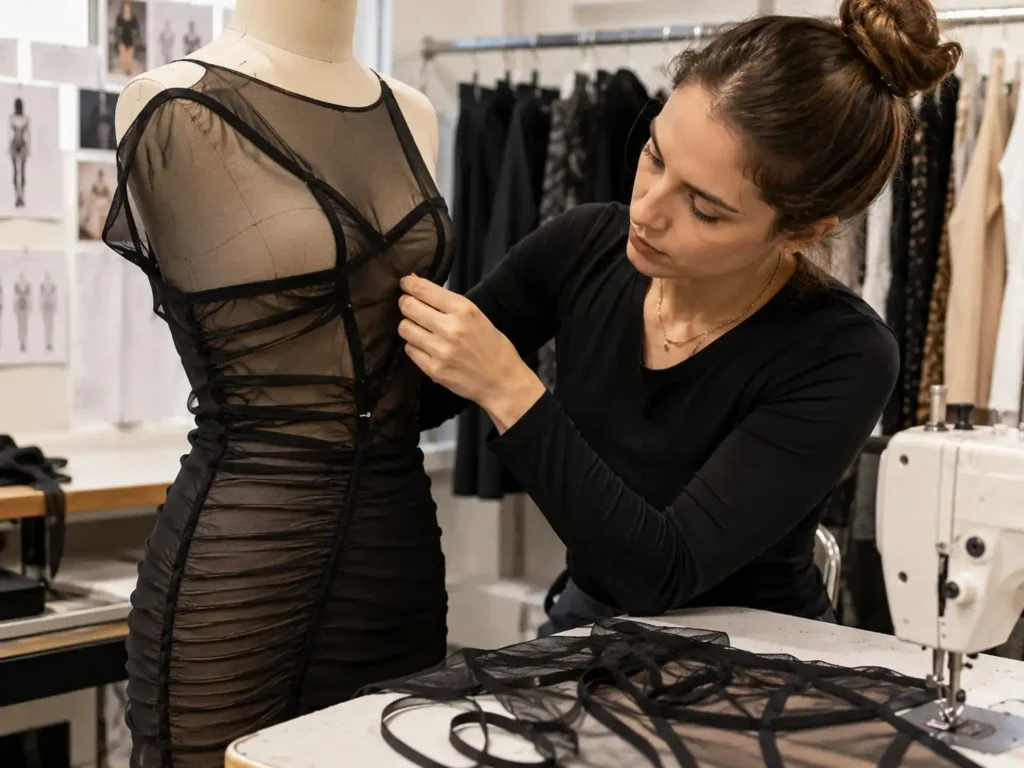
Soft mesh is often chosen for sleeves, yokes, overlays, body panels and sheer dress sections where comfort and visual lightness are important. Stretch versions add movement and allow closer fits, yet greater stretch does not automatically mean better performance.
Transparency under tension: Mesh openings become larger when stretched. Coverage should therefore be assessed over the body or an equivalent sample construction rather than by viewing the relaxed fabric against a table. Bust, hip and seat areas can show a different transparency level from loose sleeves.
Recovery after stretching: A stable mesh should return close to its intended shape after fitting and sewing. Weak recovery can create rippling around necklines or sagging across panels. Recovery becomes particularly important when the style uses negative ease.
Hand feel and skin contact: Fine mesh can still feel rough depending on yarn and finish. Necklines, underarms and fitted sleeves need closer attention because small irritation becomes more noticeable during extended wear.
Edge behavior: Raw mesh edges can curl, stretch or distort. Binding, narrow hems, lining attachment and seam construction are selected according to the intended finish and garment position.

Power Mesh for Internal Structure
Power mesh is used when support and controlled stretch matter more than an ultra-soft sheer hand feel.
It can provide an internal layer behind corset panels, fitted waists, bodycon areas or strategic shaping zones without requiring a heavy woven support fabric.
Compression should match the garment: Too much resistance can make a dress difficult to wear; too little provides no meaningful support.
The correct balance depends on silhouette, pattern ease and where the mesh is positioned.
Seam tension needs control: Strong recovery pulls against seams.
Stitch construction and seam allowance need enough stability to prevent waviness, broken stitches or uncomfortable ridges.
Pattern grading must reflect material behavior: A supportive mesh can change how sizes grade across bust, waist and hip measurements. Pattern decisions are reviewed after the actual material is selected rather than copied from a softer mesh version.
Comfort remains important: Supportive materials may sit close to the skin for long periods. Edge placement, lining and seam finishing should avoid abrasive contact around bust, waist and armhole areas.
Double-Layer, Tulle and Decorative Mesh
Layering can change transparency without replacing the original mesh.
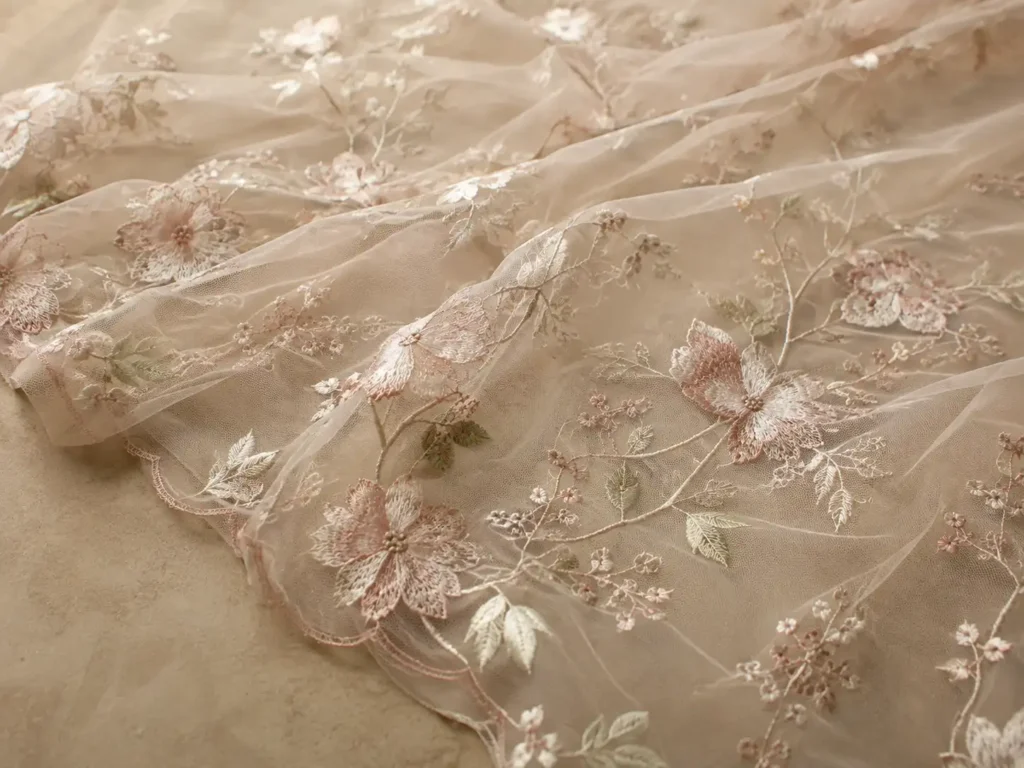
Two layers of fine mesh may produce richer coverage while keeping a soft appearance, and different color combinations can create visual depth.
Tulle or structured mesh, by contrast, may be chosen to create volume or hold shape.
Double-layer mesh: Layer direction and color need consistency. If two stretch layers are assembled carelessly, differing tension can create twisting or rippling.
Tulle: Stiffness varies widely. Softer tulle can create floating overlays, while firmer versions suit volume and sculptural details. Edge comfort and hem treatment should be tested before bulk.
Printed or decorative mesh: Print placement, color, stretch and surface treatments add further sourcing variables. Distortion can occur when printed motifs are stretched over fitted areas.
Material substitutions: If the original mesh becomes unavailable, a replacement should be compared for weight, stretch, recovery, transparency, hand feel and pattern impact before approval. A visually similar substitute may still require pattern or lining changes.
Match Materials to the Garment You Are Building

Lace Occasion Dress

Mesh Bodycon Dress

Corset-Inspired Dress

Party Mini Dress

Sheer Tops and Bodysuits

Cocktail and Romantic Styles
We Evaluate Suppliers Beyond a Good-Looking Swatch
A lace or mesh source becomes useful only when material quality, communication and repeat supply can support the finished collection. Jinfeng’s fabric and trim team evaluates sourcing options around development feasibility, bulk availability and garment requirements rather than relying on appearance alone.

Material Capability and Production Fit
The first review asks whether a supplier can provide the required material consistently enough for the intended garment program.
A mill or fabric source may be excellent at decorative lace but unsuitable for stable stretch mesh, or strong in basic mesh while lacking reliable embroidery control.
Jinfeng compares the proposed material with the design requirement: composition, width, weight, hand feel, drape, stretch, transparency and visible surface quality.
Lace also requires closer attention to motif repeat, ground stability and edge structure. Mesh requires recovery and dimensional behavior under tension.
The team then considers the garment itself. A material intended for a fitted dress is evaluated differently from one intended for a loose overlay. The goal is not to approve fabric in isolation. Approval should support pattern development, sampling, sewing and expected production quantities.
When a source cannot meet the technical direction, alternative materials can be reviewed before the style advances too far into development.

Color, Repeat Supply and Collection Planning
Large programs often use a material across several styles or return to the same fabric in later drops. Availability therefore matters beyond the first order. Jinfeng records fabric source, color, dye lot, MOQ, price and lead-time information when relevant to the project.
Color capability is reviewed together with the garment components. Lace may include a ground and embroidery yarn that react differently to dyeing. Mesh can appear lighter when stretched. Lining may shift the visible shade beneath a semi-transparent outer layer.
Repeat supply also requires realistic expectations. Different dye lots can show minor variations, while discontinued constructions or price changes may require substitutions. When a replacement becomes necessary, the team compares original and alternative materials before deciding whether the existing pattern, lining or sample approval can remain unchanged.
For multi-style programs, common-material planning can reduce unnecessary fragmentation, but only when one material performs correctly across all related silhouettes.

MOQ, Lead Time and Commercial Feasibility
Fabric MOQ does not always follow garment MOQ. Special lace, custom embroidery, custom dyeing, unusual colors, certified materials and proprietary constructions can carry separate mill requirements. Width and motif placement may also increase material consumption beyond a simple garment yield estimate.
Jinfeng reviews fabric MOQ together with style quantity, number of colors, cutting loss and total collection volume. If a material direction creates an unreasonable cost or supply risk, alternatives can be considered before final sample approval.
Lead time is evaluated in the same way. Stock fabric can move differently from custom-dyed fabric, and a decorative lace requiring new production cannot be scheduled like an available mesh base. Development decisions are therefore linked with the intended launch plan.
A fast answer is less valuable than an accurate feasibility assessment. Clear limitations early in the process reduce expensive changes after patterns, samples and purchase commitments are already made.

Documentation and Project Requirements
Some brand programs require material-related documentation, recycled-content verification or third-party testing. Jinfeng can coordinate sourcing toward OEKO-TEX, recycled or organic material directions when requested, but documentation is reviewed according to the specific supplier, fabric, batch and certificate scope.
No single certification claim is applied automatically across every fabric. The team checks what documentation is available for the selected material and whether further testing or verification is needed for the project.
SGS, Intertek, BV or another appointed laboratory can be coordinated where a project requires external testing. Requirements should be identified early because testing, documentation and certified material sourcing may affect fabric availability, cost, MOQ and production scheduling.
The objective is traceable project information rather than broad certification language unsupported by the selected material.
Technical Checks Before Lace or Mesh Approval
A material can look right and still create problems in fit or production. Jinfeng records the specifications that affect garment construction and compares approved references with later production material where required.
| Specification | Lace Review | Mesh Review | Garment Impact |
|---|---|---|---|
| Composition | Fiber blend and ground structure | Fiber blend and yarn type | Hand feel, care and performance |
| Weight | Overall weight and embroidery load | Fabric weight and support level | Drape, structure and comfort |
| Width | Critical for motif and marker planning | Checked for cutting efficiency | Consumption and production cost |
| Stretch | Rigid or stretch direction | Stretch direction is critical | Pattern ease and fit |
| Recovery | Checked on stretch lace | Key performance point | Neckline and shape stability |
| Transparency | Ground and open-area coverage | Checked relaxed and stretched | Lining and coverage decisions |
| Hand Feel | Surface and edge comfort | Skin feel and softness | Wear comfort |
| Drape | Important for full-garment balance | Depends on soft/supportive use | Silhouette |
| Motif / Surface | Scale, repeat and direction | Print or surface design if used | Placement and visual balance |
| Color | Ground, embroidery and trim shades | Shade under different tension | Finished garment appearance |
| MOQ | Supplier and development dependent | Supplier and color dependent | Order feasibility |
| Lead Time | Stock, dyeing or custom production | Stock or custom production | Development planning |
| Shrinkage Risk | Reviewed according to material | Reviewed according to material | Finished measurements |
| Bulk Availability | Repeat and batch considerations | Repeat and batch considerations | Reorders and multi-batch delivery |
Control Stretch, Recovery and Transparency Together
Mesh and stretch lace are often approved too quickly because a fabric “stretches enough.” Garment performance depends on how far it stretches, how well it returns, where the tension occurs and how transparent the material becomes on the body.
Stretch Must Follow the Garment Direction
A fitted garment does not apply tension evenly. Bust, waist, hip, armhole and neckline areas place different loads on the fabric, and pattern pieces may also be oriented differently during cutting.
Jinfeng reviews stretch direction before pattern approval.
A mesh with strong crosswise stretch may work for a fitted body panel but behave differently in a narrow strap or vertically stressed section. Stretch lace can also distort the visual motif when extended too far, creating an appearance that was not obvious in the relaxed swatch.
Pattern ease is adjusted around the actual material rather than an assumed category such as “stretch mesh.” For bodycon dresses, the team pays particular attention to bust, waist and hip balance. For fitted tops or bodysuits, neckline, armhole and body-length tension become more important.
Cutting direction is then carried into production control so bulk panels follow the same approved material orientation.
Recovery Protects Shape After Fitting
Two fabrics can have similar stretch yet dramatically different recovery. Recovery describes whether material returns toward its original dimensions after extension. Poor recovery is a common reason fitted mesh garments begin to look loose around high-tension areas.
Jinfeng evaluates recovery through sample wear behavior and construction review. Necklines should return after dressing, side seams should remain balanced, and fitted panels should not progressively relax during handling.
Seam construction also interacts with recovery. A highly elastic mesh sewn with inappropriate tension can produce waviness or puckering even when the fabric itself is suitable. Power mesh may require a different approach because stronger recovery puts more force on seams and joining points.
When a mesh or stretch lace is replaced, recovery is reviewed again. Similar weight and appearance do not guarantee similar pattern performance. If behavior changes materially, pattern or sample revision may be necessary before production approval.
Transparency Changes in the Finished Garment
Transparency should never be judged only from a relaxed swatch. Openings in mesh become larger during stretch, and skin tone, lining color and lighting influence the final appearance.
For sheer dresses, Jinfeng reviews where transparency is intentional and where coverage must remain controlled. Bust, seat and hip areas may need lining, double layers or a different mesh density, while sleeves and upper yokes can remain more transparent.
Lining placement is checked against the garment pattern so coverage does not move unexpectedly during wear. A nude lining creates a different effect from black or self-color lining beneath the same lace or mesh. Double mesh layers can also shift visual depth without introducing a conventional lining.
Bulk production checks focus on keeping the approved combination consistent rather than applying one universal transparency rule across every fashion style.

Build Color Around the Complete Material System
Reference and Lab Dip Control
Lace and Lining Color
Mesh Under Tension
Bulk and Repeat Color
Make Lining and Trims Work With the Fabric
Lining and Coverage

Zippers and Closures
Cups, Boning and Support

Decorative Trims
Move From Fabric Swatch to Approved Garment
Fabric sourcing is not complete when a swatch is selected. Jinfeng carries the chosen material into pattern development and sampling so transparency, fit, motif placement, lining and construction can be validated before bulk production.
Source, Shortlist and Compare
Development can begin from a reference image, tech pack, existing garment, physical swatch, fabric photo or material description. The fabric team searches for suitable directions and narrows options according to visual similarity and garment requirements.
Each candidate can be compared for composition, weight, width, hand feel, drape, stretch, recovery, transparency, color direction, MOQ, cost and availability where relevant. Decorative lace receives additional review for motif scale, ground fabric and edges. Mesh receives closer review for stretch direction, support and transparency.
The aim is to avoid sending a large quantity of unrelated swatches. A smaller, better-qualified selection helps product teams decide faster while keeping production feasibility visible.
For projects using several related garments, sourcing can also consider whether one material can support multiple styles without creating fit or construction compromises.
Validate Fabric Through Sampling
Jinfeng operates 2 sample rooms with 20+ sample machinists, supported by 7+ senior pattern makers. Selected lace or mesh moves into garment development so material behavior can be seen on the intended silhouette.
The sampling team supports first samples, fit samples, revised samples, photo-ready samples, PP samples and golden samples according to the development stage. Fit corrections, construction updates, material changes and approvals are recorded before bulk production.
Lace samples are reviewed for motif position, bust coverage, edge treatment, lining appearance and seam quality. Mesh samples are checked for worn transparency, stretch, recovery, lining coverage, neckline stability and dimensional behavior.
If a material looks attractive but creates an unsatisfactory fit or construction result, the team can compare alternatives instead of forcing an unsuitable fabric into production.
Confirm the Production Reference
After revisions are resolved, the approved construction needs a clear reference for bulk execution. The final pattern, size chart, grading information, approved material direction and relevant sample records become the basis for production.
A PP sample or golden sample can provide a physical reference where required by the project. Bulk fabric still needs to correspond with the approved direction; changes in weight, stretch, transparency or color may require another review.
Material approval therefore connects directly with production approval. Swatch, pattern and garment decisions are not treated as separate conversations.
The result is a clearer transition from creative selection to repeatable manufacturing.

Fabric Changes Can Change the Entire Pattern
Switching from one lace or mesh to another is rarely a purely cosmetic decision. Stretch, weight, width and transparency affect fit, drape, lining and cutting, so pattern implications need review whenever a material changes.
Fit Is Built Around Material Behavior
Jinfeng’s pattern team works with key points such as bust, upper bust, underbust, waist, high and low waist, hip, garment length, front and back length, shoulder width, strap length, armhole, neckline depth and slit height according to the style.
Stretch lace may allow a closer fit than rigid lace. Power mesh can create greater resistance than soft mesh. A heavier embroidered lace may pull differently across shoulder seams or waist joins. Each change can affect the balance of the garment.
For bodycon silhouettes, bust-waist-hip relationships and garment length require particular attention because excessive negative ease can distort motifs or increase transparency.
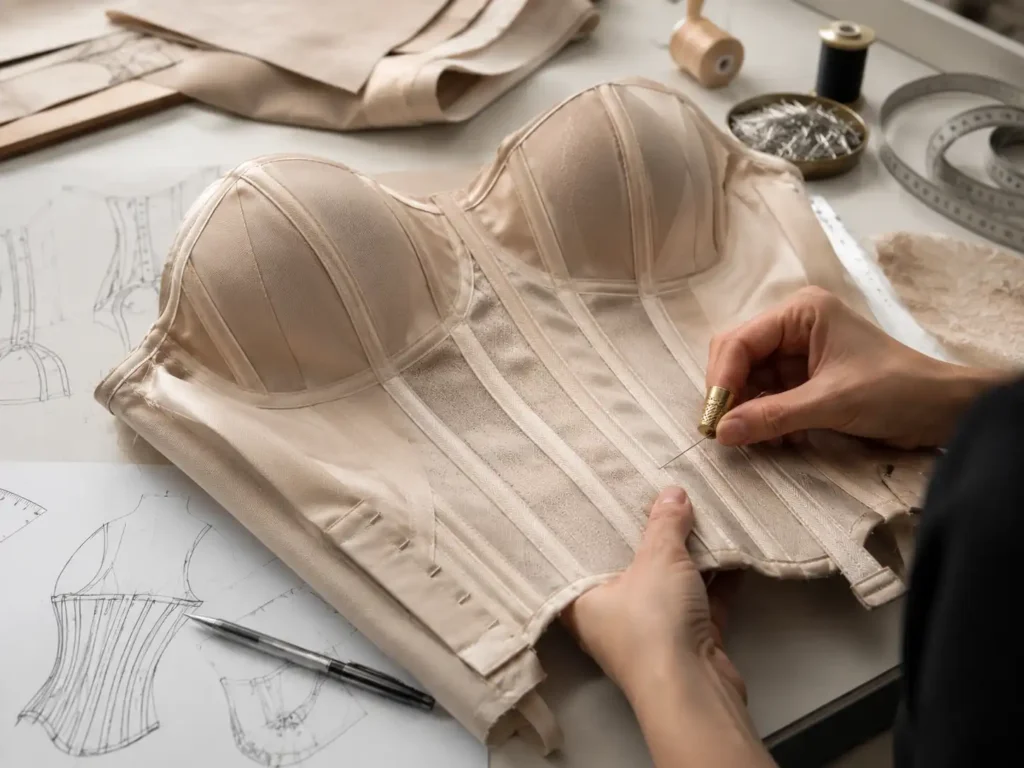
For corset-inspired styles, the pattern also interacts with cups, boning, lining and internal mesh support. A material change can alter compression and cup positioning even when the outer pattern shape looks identical.
Width and Motif Influence Pattern Placement
Fabric width directly affects marker planning and material consumption. Lace requires additional consideration because motifs may need to be centered, mirrored or aligned across seams.
A large floral repeat may need deliberate positioning around the neckline or bust. Scalloped edges may be used at hems or sleeves, changing how pattern pieces are placed on the cloth. Matching left and right panels may require additional material compared with ordinary directional cutting.
Mesh is visually simpler but still requires directional control when stretch differs by orientation. Cutting panels in inconsistent directions can produce different fit across garments even when all pieces come from the same roll.
Pattern and cutting teams therefore need the approved material information before bulk markers are finalized.
Replacement Materials Require Re-Approval
When an original fabric becomes unavailable or pricing changes, Jinfeng compares the substitute with the approved material rather than relying only on appearance.
Review points include composition, weight, stretch, recovery, drape, hand feel, transparency, color, MOQ, cost and lead-time impact. The team then checks whether lining, pattern or construction needs adjustment.
A meaningful stretch difference may require pattern changes. Increased transparency may require revised lining. A heavier fabric may change drape and seam behavior. A different width may alter consumption.
Where garment performance changes, a revised sample can be produced before the replacement enters bulk manufacturing.

Understand MOQ, Cost and Supply Before Approval
Garment production quantity and fabric-mill requirements are related but not identical. Special lace, custom colors, embroidery and certified materials can introduce separate sourcing conditions, so commercial feasibility is reviewed before a fabric becomes locked into the collection.
| Sourcing Factor | What Can Change | Jinfeng Review |
|---|---|---|
| Garment Quantity | Style and color volume | Production starts from 200 pcs per style/color, subject to project conditions |
| Stock Fabric | Available color and quantity | Confirm usable stock and repeat availability |
| Special Lace | Motif, width, source and stock | Check supplier MOQ and cutting implications |
| Custom Dyeing | Color and dye-lot requirement | Review mill threshold, color approval and schedule impact |
| Embroidered Lace | Ground, motif and embroidery setup | Review development feasibility, price and quantity |
| Stretch Mesh | Construction and color availability | Confirm recovery and bulk availability |
| Power Mesh | Support level and specification | Confirm performance before quantity commitment |
| Certified Material | Supplier, batch and certificate scope | Review documentation and separate sourcing conditions |
| Fabric Width | Marker efficiency and motif position | Estimate consumption and cutting loss |
| Multi-Style Program | Shared or unique materials | Consolidate only where garment performance allows |
| Material Replacement | Price or availability change | Compare fabric and assess pattern/sample impact |
Bulk Fabric Must Match the Approved Direction
A successful sample does not protect a collection if bulk fabric behaves differently. Jinfeng links approved swatches and sample records with incoming material review so relevant differences can be identified before they spread through cutting and sewing.
Compare Bulk Material Before Cutting
Incoming bulk fabric can be reviewed against project records for the characteristics that matter to the garment. Depending on the material and style, the comparison may cover color, hand feel, width, stretch, recovery, transparency, motif appearance and visible defects.
Lace requires close inspection for holes, broken areas, fraying, motif variation or embroidery defects. If motif direction influences the design, rolls need to remain consistent with the approved cutting plan.
Mesh is checked for obvious holes or damage and for any visible change in structure or hand feel. Stretch mesh used on fitted styles deserves extra attention because a difference in recovery can affect measurements even when color and appearance look similar.
Major deviations should be resolved before cutting rather than discovered after finished garments have been assembled.
Keep Dye Lots and Color Relationships Visible
Bulk color is considered together with lining and visible trims.
A small shade shift becomes especially noticeable when lace sits directly over lining or when mesh panels join an opaque fabric.
Dye-lot information can be recorded as part of the fabric history.
Where a program is produced across multiple batches, the team can identify whether new material needs another color review.
Repeat orders receive similar treatment. The original fabric record helps establish the expected direction, but a later dye lot is not automatically assumed to be identical.
Fresh comparison may be needed before production restarts.
Manage Material Replacements Before Production
Unavailable fabric, supplier changes or price movement sometimes make substitution necessary. Jinfeng records the difference between original and replacement material and assesses whether the change affects pattern, lining, costing or sampling.
Replacement evaluation considers composition, weight, stretch, hand feel, drape, transparency, color and commercial conditions. A material that appears close in a photograph may still alter garment behavior.
If the replacement influences fit or construction, a revised sample can be approved before bulk production. Clear change control prevents the production team from unknowingly manufacturing a garment that differs from the approved development version.
Inspect the Details Lace and Mesh Expose
Motif Direction
Lace Seam Matching
Holes and Snagging
Lining Position
Transparency
Stretch and Shape
Edge Finishing
Finished Appearance
Final appearance checks cover symmetry, stains, loose threads, visible holes, wrinkles, lining exposure, zipper flatness and other defects relevant to the style. QC references the approved garment standard rather than inspecting delicate materials as generic fabric products.
Inspect the Details Lace and Mesh Expose
Jinfeng’s 15+ QC inspectors support quality control across production. Lace and mesh inspections focus on visible material and construction risks rather than relying on generic statements about quality.
Motif Direction
Lace panels are checked for the approved motif direction and overall visual balance. On symmetrical areas, left and right sides should follow the intended placement. Direction errors are especially obvious at center front, bust and neckline areas.
Lace Seam Matching
Where a design requires visual continuity, seam joins are reviewed for motif alignment and symmetry. Not every lace style requires exact matching, so the production standard follows the approved sample and design intent rather than applying unnecessary matching to every garment.
Holes and Snagging
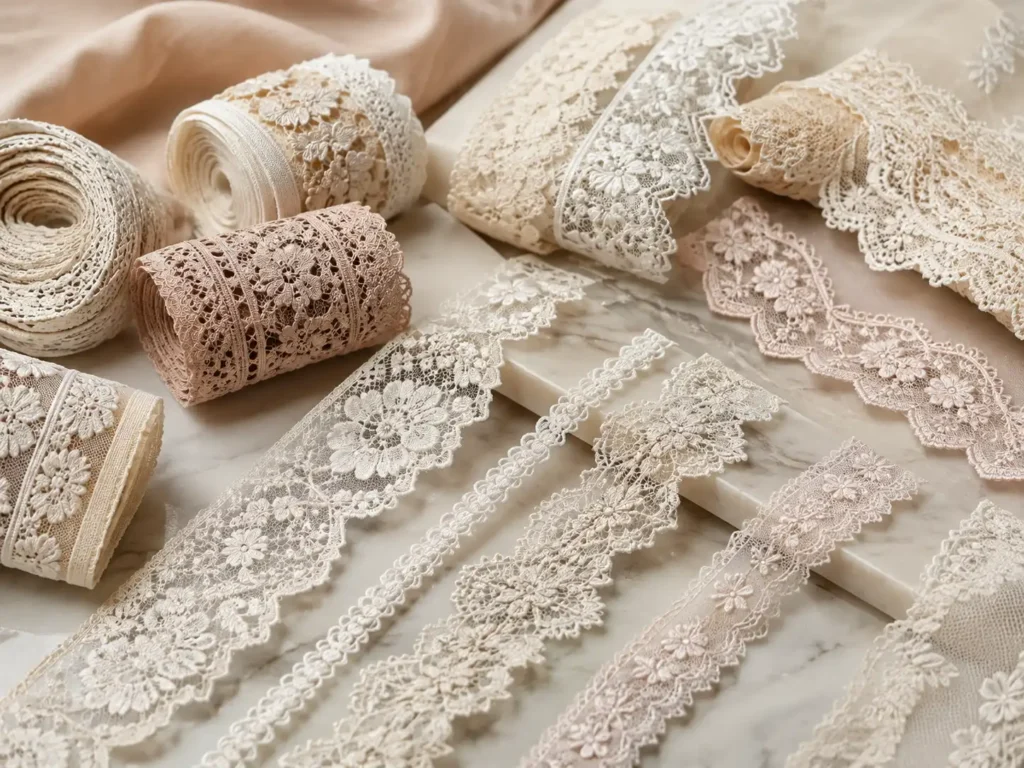
Open lace and fine mesh can be damaged during handling. QC looks for visible holes, pulled yarns, broken embroidery, snagging and edge damage before packing. Damaged sections are easier to identify when inspection considers the specific material surface.
Lining Position
Lining is checked for correct coverage and attachment. It should not unintentionally appear above a neckline, through a cut-out or below a lace edge. Sheer designs also need consistent coverage across sizes.
Transparency
Mesh panels are reviewed against the approved construction and lining placement. Excessive transparency caused by incorrect layer position, wrong material or unusual tension requires attention because flat inspection alone may not reveal the full issue.
Stretch and Shape
Fitted mesh and stretch lace areas are checked for deformation, loose edges, wavy seams or uneven tension. Neckline, armhole and waist areas receive closer attention where poor recovery can affect garment appearance.
Edge Finishing
Lace scallops, narrow hems, binding and mesh edges should follow the approved finish. Fraying, stretched edges and irregular stitching reduce the appearance of delicate garments even when the main seams are technically secure.
Finished Appearance
Final appearance checks cover symmetry, stains, loose threads, visible holes, wrinkles, lining exposure, zipper flatness and other defects relevant to the style. QC references the approved garment standard rather than inspecting delicate materials as generic fabric products.
Lace and Mesh Frequently Asked Questions
Yes. A reference image can be used to identify possible directions based on motif scale, texture, stretch, color and garment application. A physical swatch or existing garment provides more reliable information when exact hand feel or construction matters. Final selection is confirmed from available sourcing options rather than promising an exact material match from an image alone.
Yes. Stretch lace can be sourced for fitted dresses, bodysuits and related styles. Jinfeng reviews stretch direction, recovery, motif behavior, hand feel and lining compatibility. Pattern development is based on the actual selected material because different stretch lace constructions can require different ease and fit corrections.
Stretch mesh with suitable recovery is usually more appropriate than rigid decorative mesh. The correct specification depends on transparency, target fit, body coverage and whether the mesh is an outer layer or internal support. Sampling is used to assess worn transparency and garment tension before bulk approval.
Yes. Power mesh can be evaluated for corset-inspired styles, supportive linings and body-contouring sections. The team reviews resistance, recovery, comfort and seam behavior because a stronger mesh can influence fit and pattern grading.
Transparency is reviewed together with stretch, garment position and lining coverage. Mesh may become more transparent when stretched over bust, hip or seat areas. Options include a different mesh density, strategic lining, double layers or adjusted construction depending on the intended visual effect.
Yes. Lace and lining are reviewed together because the lining can significantly change the visible lace color. Pantone references, physical swatches or lab dips may be used according to the sourcing route. Bulk color is compared with the approved project direction where required.
Jinfeng can source alternatives and compare composition, weight, stretch, recovery, drape, transparency, color, cost, MOQ and availability. If the replacement changes garment behavior, pattern, lining or sampling may need to be revised before production.
Often, yes. Garment production starts from 200 pcs per style/color, while special lace, custom dyeing, embroidery and certified fabrics may carry separate supplier requirements. Fabric MOQ is evaluated together with style quantity, colors, width, cutting loss and total collection volume.
Project records can include the approved swatch, color reference, material specification and garment sample. Incoming bulk material is compared on relevant points such as color, hand feel, width, stretch, transparency, motif and visible defects before cutting when the project requires those controls.
Yes. Jinfeng can retain records including fabric source, composition, weight, width, stretch, hand feel, transparency, color, dye lot, MOQ, price, lead time, approved swatch reference and bulk issue notes. New batches are still reviewed where color or material conditions have changed.

Send Your Lace and Mesh Development Brief
A useful sourcing review starts with enough information to understand the finished garment, not only the fabric name. Send reference images, tech packs, existing swatches or fabric photos together with the styles you plan to develop. Include target quantities, color direction, size range, preferred stretch, transparency level, lining requirements and any special trim or compliance needs.
For multi-style programs, a line sheet or collection overview helps the team identify which styles may share materials and which require separate lace or mesh specifications. Jinfeng can then coordinate fabric sourcing with product development, pattern review, sampling, bulk production and quality control under one project structure.
For the clearest initial evaluation, provide:
- Reference images, sketches, tech packs or existing garments
- Lace or mesh swatches when available
- Style list and estimated quantity by style
- Required colors or physical color references
- Intended size range and target market
- Stretch, recovery or support expectations
- Desired transparency and lining coverage
- Lace motif or trim preferences
- Private-label and packaging requirements
- Required testing or material documentation
- Target launch or production schedule
- Any known fit, construction or quality concerns


