 Skip to content
Trumpet Dress Development
Develop trumpet dresses from reference image, sketch, original sample or tech pack into controlled patterns, approved samples and repeatable bulk production.
- 2 dedicated sample rooms supporting structured women’s dress development
- 7+ senior pattern makers for silhouette, fit and pattern correction
- 20+ sample machinists supporting sample sewing and revision
- Development control from pattern → fit sample → revised sample → PP sample → Golden sample
- Structured review of hip fit, flare transition, fabric behavior, lining, construction and bulk consistency
- Production system designed for established fashion brands, seasonal collections and multi-style programs
Built for Serious Trumpet Dress Development Programs
Product Development Teams
Occasionwear Brands
Occasionwear collections often combine fitted silhouettes with satin, stretch crepe, lace, mesh, sequins, structured bodices or statement hems.
These materials react differently when shaped through the hip and released into a trumpet flare.
Development therefore needs close coordination between pattern, fabric, lining and construction rather than treating each decision independently.
Sourcing and Merchandising Teams
For a multi-style program, development decisions affect more than sample appearance. Fabric availability, color planning, sample revisions, grading, production scheduling, QC and private-label packing all influence whether a style is commercially ready.
Jinfeng Apparel supports multi-style development and long-term production through a structured womenswear manufacturing system rather than separating sample development from later bulk execution.
What Actually Defines a Trumpet Dress Silhouette?
A trumpet dress is defined by a fitted upper silhouette that follows the body through the waist and hip before transitioning into a controlled flare lower on the skirt. The exact flare point can vary by design, body proportion, fabric and brand aesthetic, which means a name such as “trumpet” should never replace a clear pattern specification.
A successful development process defines the silhouette through measurable relationships rather than relying only on a style label.
Fitted Upper Silhouette
The bodice and upper skirt normally create a continuous visual line through the waist and hip.
Pattern shaping must control the bust-to-waist and waist-to-hip relationships while keeping side seams, princess seams or panel seams balanced.
Excess ease can weaken the sculpted trumpet appearance. Too little ease can create drag lines, restricted movement and unstable zipper behavior.
Controlled Flare Transition
The flare must emerge gradually enough to look intentional rather than appearing as a sudden extension attached below a fitted skirt.
Development decisions include:
- where the flare begins;
- how quickly the panel width increases;
- whether the flare comes from side seams, multiple panels, godets or combined shaping;
- how the flare behaves during walking;
- how the hem hangs in the selected fabric.
Balanced Hem Volume
More hem width does not automatically create a better trumpet dress. Excess sweep may overwhelm a commercial silhouette, increase fabric consumption and make the lower skirt difficult to press and pack.
Insufficient sweep can make the garment look closer to a narrow column dress.
Jinfeng Apparel therefore treats hem volume as part of silhouette engineering rather than an isolated measurement.
Trumpet vs Mermaid vs Fit-and-Flare Development
These silhouettes often overlap in fashion terminology, but their pattern behavior is different. A development team should define the intended body fit, flare transition and movement rather than depending only on the style name.
| Development Point | Trumpet | Mermaid | Fit-and-Flare |
|---|---|---|---|
| Upper body | Fitted | Strongly fitted | Fitted or semi-fitted |
| Hip shaping | Defined | Very defined | Moderate |
| Thigh shaping | Controlled | Usually more restrictive | Softer |
| Flare transition | Gradual to pronounced | Later and more dramatic | Earlier and softer |
| Movement requirement | Moderate to high | More restricted | Usually easier |
| Pattern sensitivity | High | Very high | Moderate |
| Fabric influence | Strong | Very strong | Strong |
| Typical effect | Sculpted and elegant | Dramatic and body-contoured | Softer and more fluid |
| Development focus | Flare balance + mobility | Extreme fit + dramatic hem | Waist shaping + fluid flare |
Trumpet Dress Styles We Can Develop

Satin Trumpet Dresses

Stretch Crepe Trumpet Dresses
Stretch crepe can support a close fit while providing more movement than rigid woven fabrics.
Pattern reduction, recovery and seam stability still need careful testing. Too much negative ease can distort seams and create horizontal drag lines. Too little shaping can remove the sculpted trumpet effect.

Corset Trumpet Dresses
Corset-based versions require coordination between bodice support and skirt fit.
Cups, boning, waist position, lining and zipper construction must align with the hip and flare pattern. A visually strong bodice will not compensate for a lower skirt that releases at the wrong point.

Lace Trumpet Dresses

Mesh Panel Trumpet Dresses

Evening Trumpet Dresses
Pattern Architecture Behind a Trumpet Dress
Trumpet dress development begins with the pattern architecture, not with the hem. A balanced silhouette is created by controlling how the garment follows the body before releasing into the lower skirt. Pattern decisions around bust shaping, waist suppression, hip curve, thigh ease, seam placement and grain direction all influence the final flare.
Bust-to-Waist Balance
For dresses with a fitted bodice, the bust and waist cannot be developed separately from the skirt. The waist seam or continuous waist area establishes the visual transition into the hip.
When the bust area pulls forward, the entire side seam can rotate. When the waist is over-reduced, wrinkles may appear above the hip and alter the intended silhouette.
Pattern review therefore looks at front and back balance, dart or princess seam distribution, neckline support and waist placement together.
Hip Curve Development
The hip line is one of the most sensitive parts of a trumpet silhouette.
Development needs to confirm:
- the fullest hip position;
- front-to-back distribution;
- side seam shape;
- seat allowance;
- fabric stretch or lack of stretch;
- intended body contour.
Thigh Shaping
The upper skirt should create a sculpted line without preventing normal movement.
For rigid fabrics, enough functional ease may need to be retained through the thigh before the pattern begins to release.
For stretch fabrics, the pattern may be closer to the body, but stretch recovery and seam stability become more important.
Panel and Seam Placement
Trumpet dresses can use side seams, princess lines, multi-panel skirt construction, godets or combinations of these methods.
Panel distribution influences:
- flare smoothness;
- fabric consumption;
- seam visibility;
- grading behavior;
- symmetry;
Grain Direction
Long fitted dresses expose grain problems quickly.
If panels are cut inconsistently, one section may stretch differently from another.
Symptoms can include twisted side seams, an uneven hem or asymmetric flare.
For satin and other reflective fabrics, grain direction also affects visual shade and shine.
Hem Sweep Planning
Hem sweep must be confirmed in relation to the flare point, garment length and fabric.
A dramatic sweep may suit an evening program but create unnecessary cost and packing volume for a cleaner commercial collection.
The pattern team therefore treats sweep as a measurable design decision linked to product positioning.
Engineering the Flare Point and Lower Silhouette
The flare point determines whether a fitted long dress reads as trumpet, mermaid or a softer fit-and-flare silhouette. It also affects walking comfort, fabric consumption, seam balance and the way the skirt moves on the body.
No single fixed measurement works for every design.
Flare Placement

A flare beginning higher on the thigh creates earlier movement and a softer shape. A later release creates a more dramatic fitted line but can restrict mobility.
The correct position depends on:
- the intended visual reference;
- wearer proportion;
- garment length;
- fabric stretch;
- target market;
- desired walking ease.
Flare Angle

Two dresses can begin flaring at the same height but look completely different because the rate of expansion is different.
A shallow panel angle produces a restrained silhouette. A stronger angle creates more volume and movement.
Multiple panels can distribute the expansion more evenly than simply adding width at the side seam.
Front and Back Distribution

The back flare does not always need to match the front flare exactly.
A style with a train or stronger rear volume may require different back-panel development while keeping the front cleaner for walking.
Balance still matters. Excess back volume without sufficient structure can pull the skirt backward and distort the waist or zipper line.
Flare and Fabric Weight

A flare drafted for lightweight crepe will not behave identically in dense satin, lace over lining or heavily embellished material.
Fabric weight can change how quickly the lower skirt opens, how the hem falls and how much internal support is required.
For important fabric changes, Jinfeng Apparel re-evaluates the pattern rather than assuming the original flare remains correct.
Fit, Movement and Wearability Must Work Together
A trumpet dress should preserve its fitted silhouette while allowing the wearer to stand, walk, sit and move naturally. Development cannot be judged only from a front-view mannequin photo. Side view, back view and movement reveal problems that static presentation may hide.
Hip and Thigh Ease
Fit must be evaluated through both measurements and real movement.
Common warning signs include:
- horizontal drag lines below the hip;
- side seams shifting forward or backward;
- fabric pulling across the seat;
- restricted stride;
- zipper stress;
- flare opening too late during walking.
Sitting Comfort
A long fitted dress behaves differently when the wearer sits.
The garment needs enough functional allowance around the seat and thigh while maintaining the intended standing silhouette.
For rigid woven constructions, sitting tests become particularly important before the pattern is locked.
Walking and Stairs
A visually dramatic lower skirt can still create problems if the front hem, flare opening or train interferes with walking.
The development team should evaluate the relationship between front length, heel height, sweep and movement rather than treating floor length as a single fixed number.
Zipper Behavior
A center-back or side zipper crosses areas under tension. If pattern shaping and zipper construction are not coordinated, the zipper can wave, bulge or pull.
Flat zipper appearance depends on correct seam balance, stabilizing method, pressing and surrounding fabric tension.
Lining Movement
The lining should support comfort and opacity without fighting the outer shell.
A lining that is too tight can restrict the garment even when the outer fabric fits correctly. Excess lining can become visible near the hem, slit or flare.

Fabric Selection Changes the Entire Trumpet Silhouette
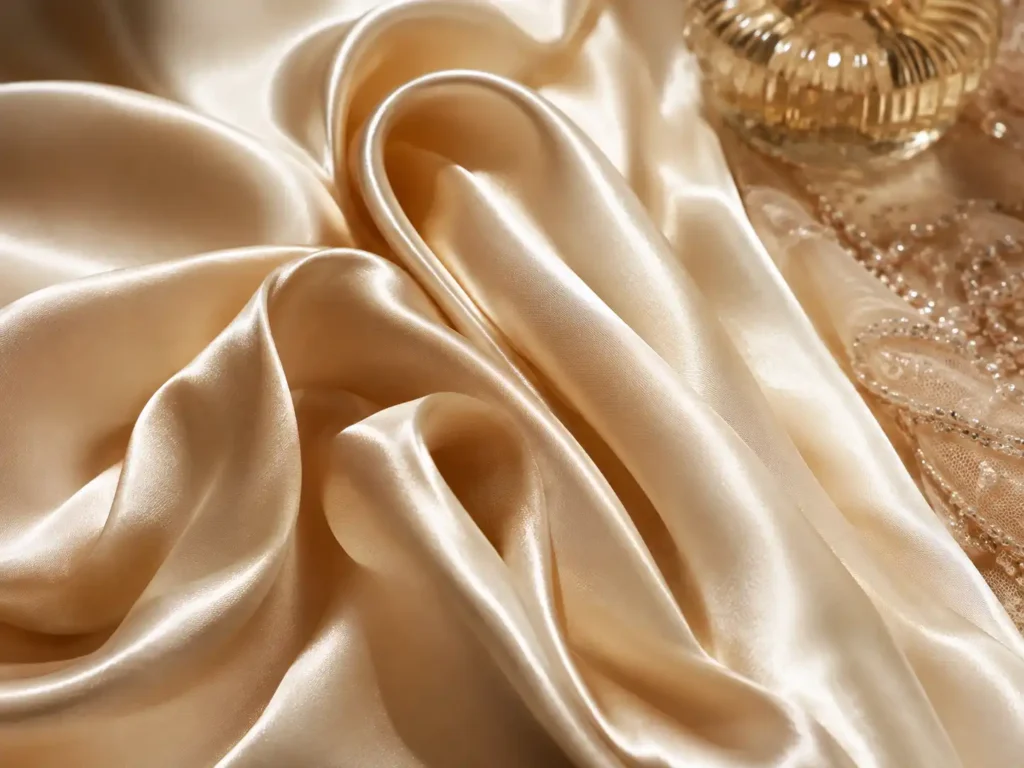
Satin
Satin can create a refined, fluid trumpet shape but exposes construction imperfections easily.
Development attention includes:
- fabric weight;
- shine direction;
- grain;
- snagging ris

Stretch Crepe

Jersey
Jersey produces a softer, more body-following interpretation. Pattern reduction must be linked to actual fabric performance.
Excess reduction can produce strain and transparency; insufficient reduction can weaken the sculpted line.

Lace
Lace adds another layer of pattern planning. Motif placement, stretch direction, seam visibility, lining shade and edge treatment may all change the development route.
Large motifs can also affect cutting consumption when symmetrical placement is required.

Mesh
Mesh can create illusion panels or layered detailing without adding heavy structure. Development should review:
- transparency;
- stretch;
- recovery;
- seam stability;
- lining placement;
- neckline support.
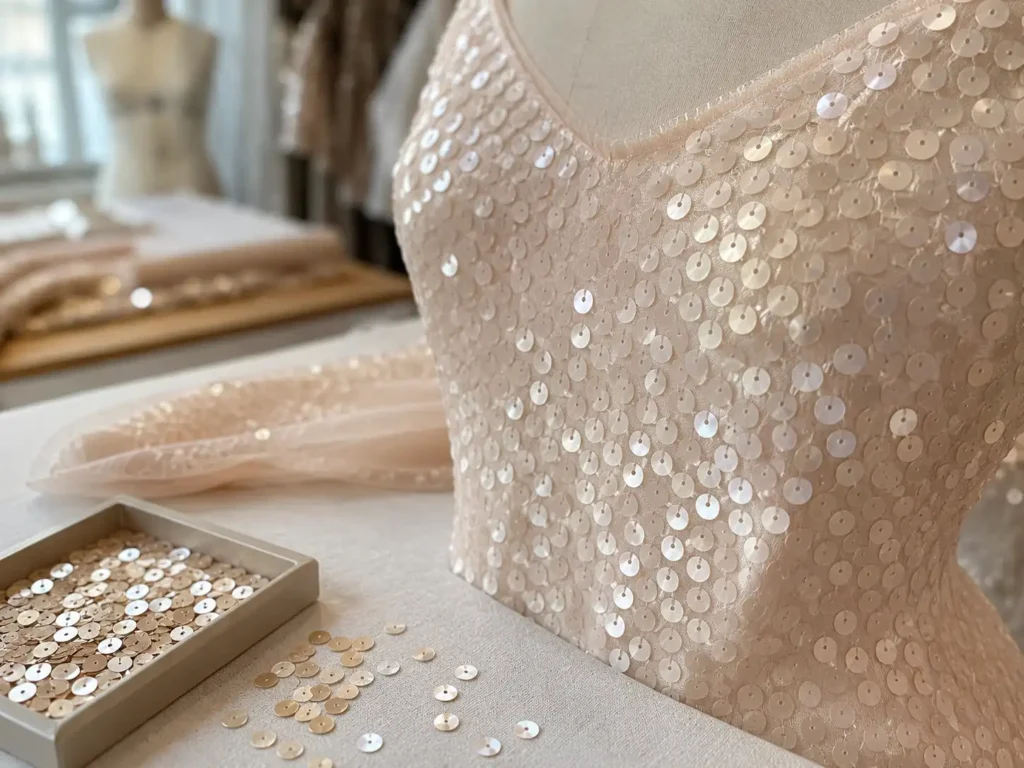
Sequin and Embellished Fabrics

Structured Wovens
Structured fabrics produce a sharper silhouette but normally require more functional ease.
They can work well for sculptural occasionwear, but pattern and movement tests become more important around the thigh and knee.

Fabric Substitution
When an original fabric has unsuitable MOQ, cost, availability or performance, Jinfeng Apparel can review alternatives by comparing:
- weight;
- hand feel;
- stretch;
- recovery;
- drape;
Construction Details Keep the Silhouette Under Control
Lining Engineering
For fitted dresses, the lining cannot be treated as an unrelated inner shell. It needs enough mobility through the hip and thigh while remaining clean around the neckline, zipper, slit and hem.
Zipper Installation
A stable zipper area requires correct pattern balance, seam support and controlled sewing. Bulging often indicates a relationship problem between fabric tension, seam handling and fit rather than simply a poor zipper.
Internal Support
Corset or structured versions may use cups, boning, stabilizers or other internal support according to the design.
Support should reinforce the intended bodice without creating a rigid transition into the fitted skirt.
Seam Construction
Bulky seams can become visible through satin or fitted areas. Weak seams may stretch under tension. Construction should therefore be established during sample development and carried into production instructions.
Slit Development
A slit may improve movement in a fitted silhouette, but the location and height must remain consistent with the brand’s design and coverage requirements.
Slit construction also affects lining and seam reinforcement.
Hem Finishing
Hem treatment influences drape.
A narrow hem, blind finish, facing or other method can alter the lower edge differently.
The choice should support the intended flare rather than stiffening or collapsing it.
Every Development Starts With a Technical Review
Reference Image Review
A reference image can communicate silhouette and styling, but many manufacturing details remain invisible. The review therefore identifies questions around:
Tech Pack Review
Original Sample Analysis
Commercial Feasibility
Trumpet Dress Sampling From Pattern to Approval

Technical Assessment
The process begins with the available design files and commercial requirements.
The team reviews silhouette, fabric direction, trims, structure, target fit, quantity plan and areas likely to affect cost or production stability.

Pattern Development
Senior pattern makers translate the design into measurable garment architecture.
For trumpet silhouettes, particular attention is given to bust-waist-hip proportion, hip curve, thigh ease, flare placement, hem sweep and front/back balance.

First Sample
The first sample verifies whether the design works in a real garment. It is used to check:
- silhouette
- fabric behavior
- pattern proportions
- construction feasibility

Fit Sample

Revised Sample

PP Sample
Fit Feedback Becomes Documented Pattern Revision
Fit comments create value only when they are converted into measurable corrections. Jinfeng Apparel classifies sample issues, reviews the likely cause and updates the corresponding pattern, measurement or construction information before another sample is approved.
Fit Feedback We Need
Useful feedback can include:
- front, side and back fitting photos;
- close-up photos of problem areas;
- garment measurements;
- comments about movement;
- comments about pressure or looseness;
- neckline and coverage observations;
- preferred flare position.
“Make the hip better” provides little technical direction.
“Reduce excess at back waist while keeping seat ease” gives the pattern team a defined problem to solve.
Pattern Corrections
Pattern changes may involve:
- bust shaping;
- waist suppression;
- hip curve;
- seat allowance;
- thigh ease;
- flare position;
- side seam balance;
- center-back balance;
- skirt length;
Corrections are reviewed as connected changes because altering one area can affect another.
Fabric Corrections
If the main problem comes from fabric behavior, changing the pattern alone may not solve it.
The team may compare a different weight, stretch level, lining or construction approach before confirming the next sample.
Construction Corrections
Some fit problems originate in sewing or internal construction rather than the base pattern.
Zipper tension, lining restriction, seam bulk or support materials may require adjustment before another fit evaluation.
Revision Records
Bulk-relevant corrections should not remain only in email or chat messages.
Jinfeng Apparel records approved changes into updated:
- pattern files;
- measurement charts;
- fabric records;
- trim records;
- sewing instructions;
- QC checkpoints.
A significant structural or fabric change may require another revised sample before PP approval.

Locking the Pattern Before Bulk Production
Moving into bulk production with unresolved fit issues is one of the fastest ways to multiply a small sample problem across thousands of garments. Jinfeng Apparel uses the approved sample stage to convert development decisions into production standards before cutting begins.
Final Pattern
The final pattern should reflect every approved sample correction.
Pattern pieces, seam relationships, flare geometry and construction points need to match the approved garment rather than an earlier development version.
Measurement Chart
The measurement chart gives QC a measurable standard.
For trumpet dresses, critical points may include:
- bust;
- waist;
- hip;
Grade Rules
Approved grade rules define how measurements change through the size range.
The flare must remain proportional as the pattern increases or decreases rather than becoming disproportionately narrow or wide.
PP Approval
Fabric, color, trims, construction, fit and private-label details should be aligned before release.
Major structural changes after PP approval can disturb material planning, cutting and production consistency, so significant changes are normally resolved earlier in development.
Golden Sample Reference
The approved physical reference helps the sewing and QC teams compare silhouette, finishing and critical details during production.
Together with the final pattern and measurement files, it creates a stronger production standard than a reference image alone.

Grading Trumpet Dresses Across a Size Range
Trumpet silhouettes should not be graded by enlarging every area at the same rate. The challenge is to preserve the intended fitted line and flare relationship while supporting different body proportions across the range.
Bust-Waist-Hip Proportion
The transition between bust, waist and hip determines the upper silhouette.
Grade rules should maintain the intended contour without creating excessive suppression in larger sizes or excessive ease in smaller sizes.
Flare Position
The flare point should remain visually proportional to the wearer rather than drifting to an awkward height as sizes change.
Depending on the brand’s fit model and size system, vertical grading may require careful review together with circumference changes.
Hem Sweep
If the lower sweep grows too slowly, larger sizes can look less dramatic than the approved base size.
If it grows too aggressively, fabric use and lower-skirt volume can increase unnecessarily.
Length and Proportion
Dress length is only one part of vertical grading.
Waist position, hip level, flare transition and slit location may all influence the visual proportions of the garment.
From Approved Sample to Repeatable Bulk Production
Bulk production begins only after the approved development standard is clear. Jinfeng Apparel operates a structured women’s fashion manufacturing system supporting multi-style, multi-color, multi-size and multi-batch programs for established brands.
The company operates 6 owned women’s fashion factories, works with 10+ long-term satellite production partners and maintains 100,000+ pcs monthly production capacity across its women’s fashion manufacturing network.
For trumpet dresses, the manufacturing focus is not simply output volume. Production teams need to reproduce the approved silhouette consistently.
Fabric and Trim Confirmation
Bulk fabric and trims are checked against approved references before cutting.
Relevant points can include:
- shade;
- hand feel;
Cutting Control
Long fitted panels need accurate grain and panel identification.
Incorrect cutting direction can create twisting or inconsistent shine, especially in satin and other directional fabrics.
Sewing Instructions
Production instructions translate the approved sample into repeatable operations.
For a trumpet dress, instructions may highlight:
- seam sequence;
- zipper application;
- lining method;
Inline Production Checks
Problems should be identified while production is running rather than only after all garments are complete.
Inline checks can focus on hip measurements, seam balance, flare symmetry, zipper behavior, lining and critical construction details.
Finishing and Pressing
Pressing can improve or damage the final silhouette.
Satin, lace and embellished materials require different handling to protect surface appearance while keeping seams and flare lines clean.
Bulk production timing is confirmed according to style count, material readiness, construction complexity, quantity, packing requirements and production schedule.

Trumpet Dress Quality Control Points
Quality inspection needs to reflect the silhouette. Generic garment inspection alone can miss problems that specifically affect trumpet dresses.
| QC Point | What We Check | Common Risk |
|---|---|---|
| Bust / waist / hip | Measurement against approved specification | Silhouette distortion |
| Thigh fit | Ease and symmetry | Restricted movement |
| Flare point | Position and balance | Style appears mermaid or column |
| Flare symmetry | Left/right and panel balance | Uneven lower skirt |
| Side seams | Vertical balance | Seam twisting |
| Center back | Alignment and zipper line | Back distortion |
| Zipper | Flatness and function | Bulging or waving |
| Lining | Length, tension and coverage | Restriction or exposure |
| Hem | Level and finish | Uneven sweep |
| Slit / train | Position and finishing | Movement or safety issue |
| Fabric surface | Shade, snagging, marks | Visible quality variation |
| Packing | Folding and surface protection | Creases or embellishment damage |
What Drives Trumpet Dress Production Cost?
Fabric Consumption
A larger hem sweep increases material consumption.
Long dresses in satin, lace or directional fabric may also require specific cutting layouts that create additional waste compared with a simple straight skirt.
Panel Count
More panels can improve control over the flare but increase cutting, matching and sewing operations.
The pattern should use enough shaping to achieve the required silhouette without adding unnecessary complexity.
Lining and Support
Full lining, corset structures, cups, boning or internal stabilization add both material and labor.
These elements may be necessary for certain occasionwear designs and should be evaluated as part of the garment architecture.
Decorative Materials
Lace placement, sequins, beads, rhinestones or appliqué increase material handling and QC requirements.
The location of decoration may also change cutting consumption and seam construction.
Sample Revisions
A style requiring major pattern, fabric or construction changes may need additional sampling before PP approval.
Clear technical information at the beginning helps reduce avoidable development loops.
Commercial Cost Optimization
Jinfeng Apparel can review ways to control cost without weakening the intended appearance, including:
- alternative fabric options;
- construction simplification;
- trim substitution;
Anonymous Trumpet Occasionwear Development Case
An established US occasionwear program approached Jinfeng Apparel with a multi-style collection containing fitted evening and event dresses, including several trumpet and soft-mermaid silhouettes.

Initial Development Review
Jinfeng Apparel separated the collection by construction risk.
The trumpet styles were reviewed for:
- hip and thigh shaping;
- flare start;
- fabric stretch;
- hem sweep;
- lining;
- zipper construction;
- size grading..

First Sample Findings
The first sample of one fitted satin style showed three main issues:
- the back hip carried excess tension;
- the flare opened later than the approved reference;
- the center-back zipper area appeared slightly raised under tension.
Instead of increasing the full hip circumference uniformly, the pattern team reviewed back-seat shaping, thigh distribution and flare geometry.

Pattern Revision
he revised development adjusted:
- back hip shape;
- side seam balance;
- lower panel expansion;
- flare transition;
- zipper seam control.
The front silhouette remained close to the original reference while movement improved through the rear hip and thigh.

Fabric-Specific Adjustment
A related stretch-crepe style required a different correction.
Rather than adding the same ease used for satin, the pattern was adjusted according to the fabric’s recovery and seam behavior.
The goal was to preserve a close body line without producing strain wrinkles.

Fit and PP Approval
Fit feedback was converted into updated pattern and measurement records before the revised samples were reviewed.
After the silhouette, fabric, construction and measurements were approved, the styles moved into PP confirmation.
Bulk-relevant specifications were then locked for production and QC.

Bulk Control
Production checks concentrated on the areas most likely to change the silhouette:
- hip measurement;
- thigh ease;
- side seam direction;
- flare symmetry;
- zipper flatness;
- lining tension;
- hem level.
Private Label, Repeat Orders and Export Delivery
Private Label Execution
Available project support can include:
- woven labels;
- size labels;
- care labels;
- hangtags;
- barcode stickers;
- SKU labels;
- polybags;
- carton marks;
- warehouse labels.
Repeat Order Records
Repeat orders benefit from retaining the development information established during the first production. Jinfeng Apparel can maintain records including:
- patterns;
- measurement charts;
- fabric references;
- trim information;
- production notes;
- packing requirements;
- Golden sample references.
Delivery Coordination
Export delivery can be coordinated according to project requirements through express, air or sea freight and with client-nominated forwarders.
Shipping terms and timing depend on destination, order structure, packing requirements and selected logistics method.
For established fashion programs, production and delivery planning should begin before packing rather than after the order is finished.
Trumpet Dress Development Frequently Asked Questions

Start Your Trumpet Dress Development Project
A successful trumpet dress program begins with a clear silhouette and finishes with a pattern, sample and production standard that can be reproduced reliably across sizes and bulk quantities.
Jinfeng Apparel supports established fashion brands from initial development review through fabric direction, pattern development, fit samples, sample revision, PP approval, bulk production, quality control, private-label packing and export delivery.
To receive a more useful project review, send the information already available to your team:
- reference image, sketch, original sample or tech pack;
- target fabric or preferred fabric direction;
- planned quantity per style and color;
- size range and measurement chart;
- target market;
- color plan;
- private-label and packaging requirements;
- planned launch or required delivery window.


