 Skip to content
Custom Matching Sets
Premium Coordinated Womenswear Developed as One Complete Fashion Look
Jinfeng Apparel develops custom matching sets for established fashion brands, premium ecommerce labels, sourcing teams, resortwear programs, partywear collections, and private-label womenswear lines. Each set is developed as a coordinated product system rather than two unrelated garments, with fabric direction, top-to-bottom proportion, color control, pattern development, sample review, production pairing, labeling, SKU management, and packing planned together from the beginning.
- MOQ starts from 200 pcs per style/color, subject to fabric, trim, construction, and packing requirements.
- Current brand programs commonly involve 10-30 stylesand 20,000-80,000 total pieces per order.
- Development is supported by 2 sample rooms, 7+ senior pattern makers, and 20+ sample machinists.
- Bulk quality control is supported by 15+ QC inspectors, covering materials, cutting, sewing, garments, pressing, pairing, and packing.
- Matching-set control focuses on top-to-bottom proportion, same-lot color consistency, size pairing, SKU accuracy, and complete-set packing.
- Product directions include top + skirt, crop top + maxi skirt, top + pants, top + shorts, corset sets, satin sets, knit sets, and resort co-ords.
Capacity Built for Coordinated Fashion Set Programs
6 Owned Fashion Factories
Jinfeng Apparel operates six owned women’s fashion factories and works with more than ten long-term satellite production partners. Production can be allocated by garment structure, fabric direction, workmanship, and program timing rather than forcing every set into one production route. Matching-set programs involving skirts, pants, crop tops, corset tops, satin pieces, knit pieces, or mixed seasonal categories can therefore be planned around the construction needs of each style while keeping one project team responsible for approvals, pairing, quality records, and delivery coordination.
100,000+ Monthly Pieces
18+ Sewing Lines
6+ Flexible Lines
2 Sample Rooms
15+ QC Inspectors
Matching Set Manufacturing for Established Fashion Programs
Global Fashion Brands
Premium Ecommerce Labels
DTC Womenswear Programs
Partywear and Occasionwear
Resortwear Collections
Sourcing and Buying Teams
Custom Matching Set Styles for Fashion Collections

Crop Top + Mini Skirt
- Best for: party, club, festival, summer, date-night, and social-led drops.
- Key controls: bust fit, crop length, waist position, hip ease, skirt length, color pairing.
- Retail value: strong styled look with the option to merchandise top and skirt separately.

Crop Top + Maxi Skirt
- Best for: resort, holiday, beach-to-dinner, destination events, summer capsules.
- Key controls: waist-to-hem length, midriff gap, lining opacity, hem level, print direction.
- Retail value: strong full-look photography and easy extension into dresses or alternate tops.

Corset Top + Skirt
- Best for: partywear, occasionwear, evening-inspired collections, statement ecommerce launches.
- Key controls: cup shape, boning, neckline stability, waist compression, skirt rise, zipper flatness.
- Retail value: premium visual identity and strong collection extension potential.

Top + Wide-Leg Pants
- Best for: resort, premium casual, office, travel, dinner, capsule collections.
- Key controls: rise, hip ease, waistband, leg fall, top length, fabric drape, shade consistency.
- Retail value: versatile styling and strong single-piece wearability after the set is split.

Top + Shorts
- Best for: vacation, resort, summer, brunch, festival, casual fashion.
- Key controls: rise, leg opening, waistband comfort, top length, print alignment, shrinkage.
- Retail value: easy seasonal color expansion and efficient capsule development.

Satin Matching Sets
- Best for: party, evening-inspired, occasion, dinner, premium ecommerce programs.
- Key controls: shine direction, shade, snag risk, zipper bulging, pressing, crease management.
- Retail value: strong photo appeal and easy extension into camisoles, skirts, pants, and dresses.

Knit and Ponte Sets
- Best for: bodycon, elevated casual, office, travel, transitional collections.
- Key controls: stretch recovery, side-seam stability, neckline shape, waist hold, hip recovery.
- Retail value: comfort, repeat color potential, and versatile seasonal merchandising.

Resort and Printed Sets
- Best for: resort, vacation, boutique, premium ecommerce, destination collections.
- Key controls: print placement, motif direction, shrinkage, opacity, lining, color repeatability.
- Retail value: coordinated storytelling across a complete seasonal collection.
Tops and Bottoms Developed as One Fashion System
A strong matching set is not created by finishing one top, finishing one bottom, and placing them side by side. Pattern proportions, fabric behavior, visual balance, and size logic need to connect from the first development review through final packing.
Build the Top Around the Complete Silhouette
Top development begins with bust fit, neckline, shoulder or strap position, torso length, lining, closure, and the intended relationship with the bottom. A crop top for a high-waisted skirt requires a different finished length from a top designed for mid-rise pants. Corset tops require cup placement, boning, waist shaping, closure stability, and comfort checks. Halter and strappy tops need neckline and strap control. Satin camisoles need grain, drape, neckline stability, and clean seam finishing.
For matching sets, the top is reviewed through three lenses:
- Independent fit:Bust, neckline, armhole, strap, closure, and hem must work as a standalone garment.
- Set proportion:Finished top length must connect correctly with the waistband or rise of the paired bottom.
- Fabric relationship:Weight, shine, stretch, transparency, lining, and color need to look intentional beside the bottom.
A top can technically pass measurements and still fail visually when paired with the bottom. Full-set fitting therefore checks the complete vertical line, including how much skin is exposed, where the visual waist sits, whether the torso looks compressed, and whether the fabric volume is balanced. Photo-sample review can also reveal proportion issues that are less obvious on a flat measurement table.
Engineer the Bottom for Fit, Movement, and Pairing
Skirts, pants, and shorts each create different fit demands. A skirt may require waistband stability, hip shaping, zipper control, lining, slit positioning, pleat balance, and hem accuracy. Pants add rise, crotch depth, seat fit, leg shape, pocket behavior, inseam, and hem considerations. Shorts compress many of those fit points into a smaller garment, making rise and leg opening especially visible.
Matching-set development links bottom construction to the upper garment instead of treating fit in isolation:
- Waistline:Determines where the set visually connects and how much midriff is exposed.
- Hip and seat fit:Influences movement, side-seam direction, pocket behavior, and overall silhouette.
- Length:Mini, midi, maxi, short, cropped, or full-length bottoms need to support the proportions established by the top.
- Closure and lining:Zippers, elastic, hooks, lining, and seam bulk should not distort the waistline or compete with the top.
- Size pairing:The grading system must make sense when garments are packed and sold as a coordinated set.
The final goal is a complete outfit with controlled proportion, not two pieces that happen to share a color.
Fabric Direction for Premium Custom Matching Sets
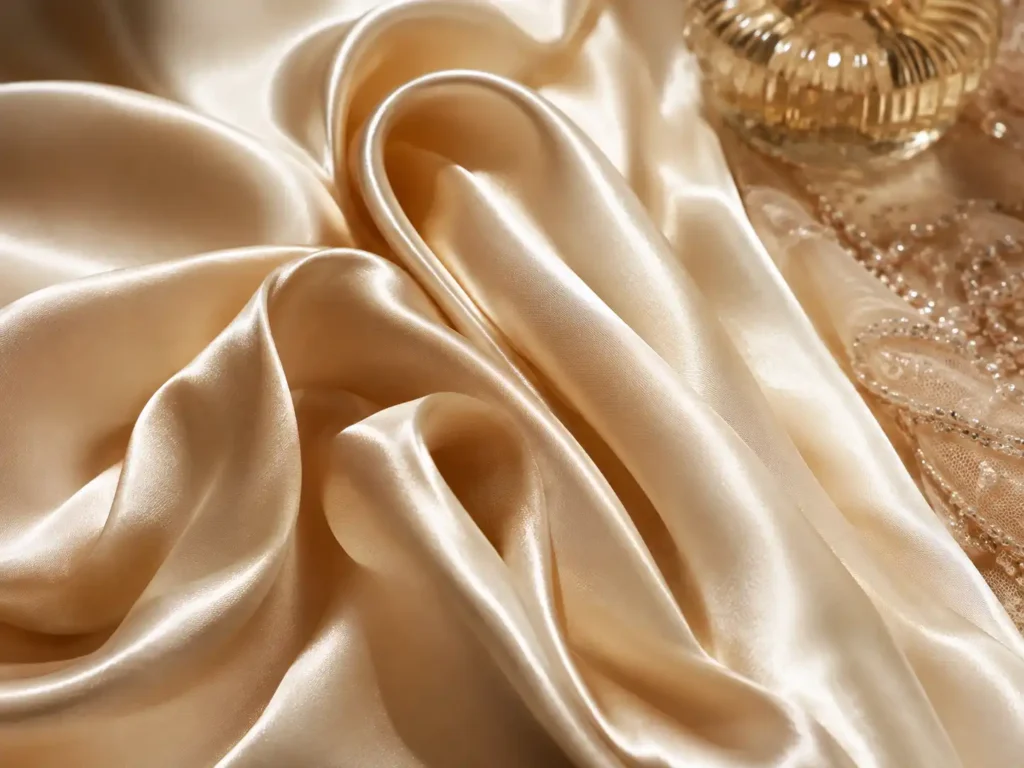
Satin
- Watch: shade, shine direction, snags, zipper bulging, seam puckering, pressing marks.
- Good for: party, occasion, evening, dinner, premium ecommerce.

Stretch Knit and Jersey
- Watch: recovery, growth, seam waviness, twisting, opacity, neckline stability.
- Good for: bodycon, casual fashion, travel, transitional collections.

Ponte and Structured Knit
- Watch: bulk, stretch balance, side-seam stability, waistband thickness, pressing.
- Good for: office, polished casual, bodycon, structured knit collections.
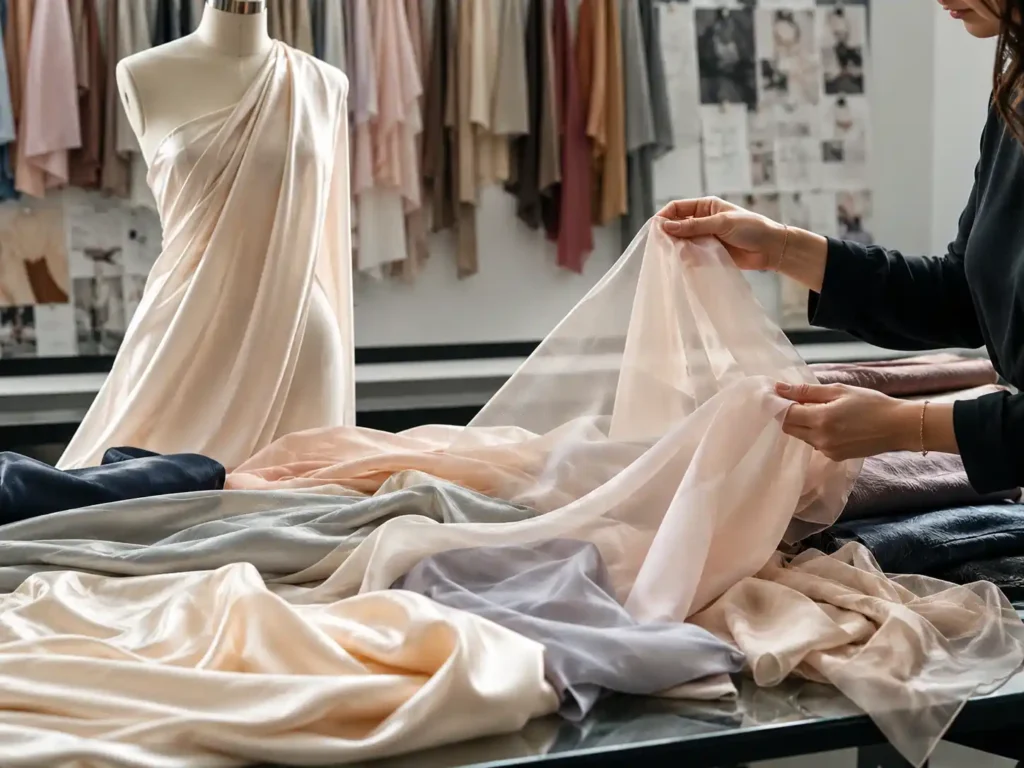
Chiffon
- Watch: transparency, lining shade, seam slippage, hem level, fabric movement.
- Good for: resort, occasion, vacation, layered summer programs.

Mesh
- Watch: transparency, recovery, holes, seam stability, lining coverage, layered shade.
- Good for: party, club, bodycon, statement fashion.

Lace
- Watch: motif placement, joins, edge finishing, lining color, seam bulk.
- Good for: romantic, resort, occasion, party, premium capsule collections.
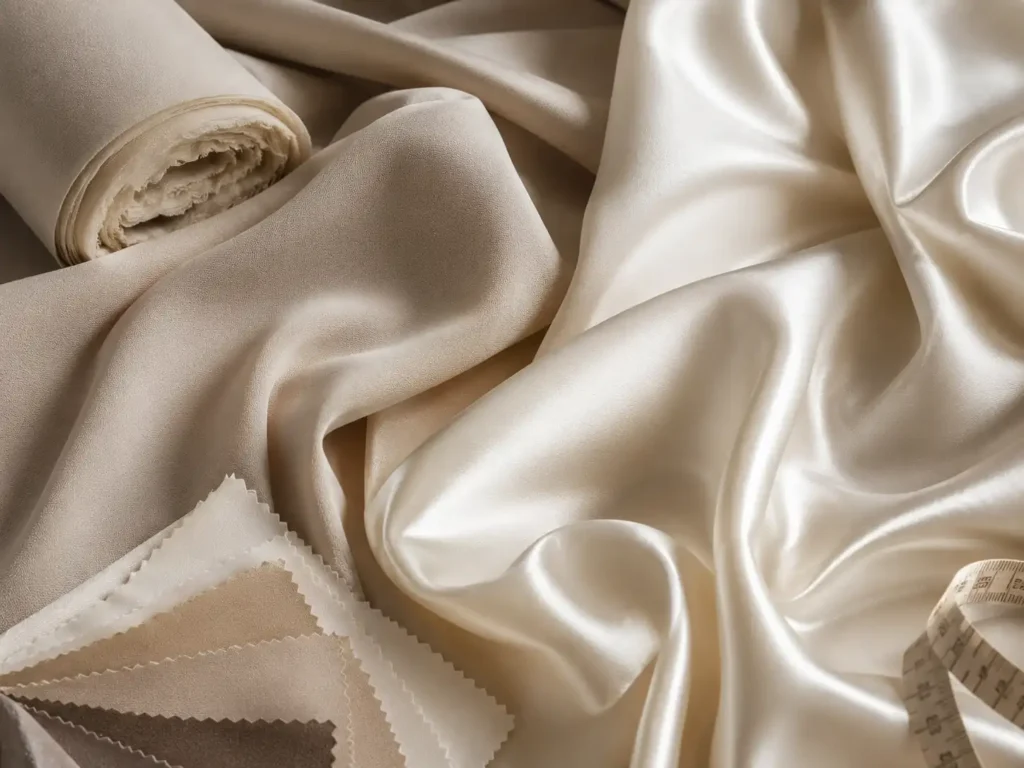
Crepe and Suiting
- Watch: pressing, interfacing balance, seam impression, drape, wrinkle recovery.
- Good for: office, tailored fashion, premium casual, modern occasion.

Rayon and Linen Blends
- Watch: shrinkage, creasing, opacity, seam strength, print stability, hem length.
- Good for: resort, summer, travel, boutique, vacation collections.
Full-Set Fit and Proportion Control Before Bulk
Matching sets expose proportion errors quickly because every line is read as part of one outfit. Jinfeng Apparel reviews the top, bottom, and complete silhouette together so measurements, visual balance, movement, and size relationships are resolved before the bulk standard is released.
Control the Vertical Proportion
The vertical relationship between top and bottom defines the character of a matching set. A crop top ending 20-30 mm higher or lower can change the amount of midriff exposure, while a skirt waistline or pant rise can shift the visual waist and alter the entire silhouette. Development therefore does not rely on isolated garment measurements alone. The team reviews top length, waistband position, skirt or pant length, neckline depth, and hem relationships on-body or against the approved fit standard.
Key checkpoints include:
- Top finished length:Checked against the planned rise or waistline of the bottom.
- Midriff exposure:Controlled by the relationship between top hem and bottom waist, not by one measurement alone.
- Visual waist:Confirmed so the set does not shorten the torso or create an unintended low-rise effect.
- Bottom length:Mini, midi, maxi, short, cropped, or full-length proportions are assessed against the top volume and intended footwear or occasion.
- Movement:Sitting, walking, arm movement, and waistband behavior are reviewed where relevant to the silhouette.
A size chart may be numerically correct while the full look still feels visually off. Fit comments therefore need to describe both measurement corrections and the intended appearance of the complete set.
Grade Two Garments Without Losing the Look
Size grading becomes more complex when two garments are sold or packed as one coordinated product. Bust, waist, hip, rise, torso length, skirt length, and pant length do not all increase at the same rate. Jinfeng Apparel works from confirmed base-size standards and grade rules, then checks whether the relationship between top and bottom remains visually balanced across the requested size range.
Areas requiring close review include:
- Bust-to-waist relationship:Important for fitted tops, corset tops, and bodycon combinations.
- Waist-to-hip transition:Critical for fitted skirts, slim pants, and stretch bottoms.
- Rise and torso relationship:A higher rise can reduce visible midriff as sizes change if the grading is not coordinated.
- Strap and neckline position:Larger sizes may require more than simple linear increments.
- Hem and length grading:Longer garments need proportional control so the design does not become visually heavy in larger sizes.
Where a brand uses separate top and bottom sizing, the packing and SKU system must be designed around the approved size logic. Where a fixed set size is used, fit testing should confirm that the top-bottom relationship remains commercially acceptable across the range.
Fit the Set for Its Selling Scenario
A partywear set, resort set, office co-ord, and premium casual set should not be fitted in the same way.
Partywear may prioritize secure bust fit, controlled body contour, stable cut-outs, and clean waist shaping.
Resortwear needs movement, comfort, drape, and often more relaxed ease. Tailored co-ords rely on shoulder balance, waist structure, rise, leg line, and pressing. Knit sets need recovery and dimensional stability after wear.
Jinfeng Apparel links fit review to the intended sales scenario so the garment performs as expected rather than merely matching a measurement sheet. Fit comments can address comfort, exposure, support, silhouette, movement, and photo appearance alongside numerical corrections. The approved sample then becomes the reference for PP confirmation, bulk measurement control, and repeat-order records.

Color, Fabric Lot, and Print Alignment Control
A matching set can fail even when both garments are individually well made. Shade variation, reversed satin direction, print imbalance, or different lining effects can make a coordinated outfit look mismatched. Jinfeng Apparel treats visual consistency as a bulk-production control point from material approval through final pairing.
Keep Top and Bottom Within the Same Color Logic
For solid-color sets, material planning should keep the top and bottom within the same approved fabric and color basis whenever construction permits.
Different dye lots can produce visible shade variation, especially in black, navy, red, pastel shades, saturated fashion colors, and reflective surfaces such as satin. Material receiving, lot identification, cutting allocation, and sewing release should therefore preserve the connection between the two garments.
Color control becomes more complex when the set uses:
- different outer and lining fabrics;
- stretch and non-stretch panels;
- lace over a colored lining;
- mesh over an opaque base;
- contrast trims, elastic, binding, zippers, or buttons;
- satin panels with different grain or shine directions.
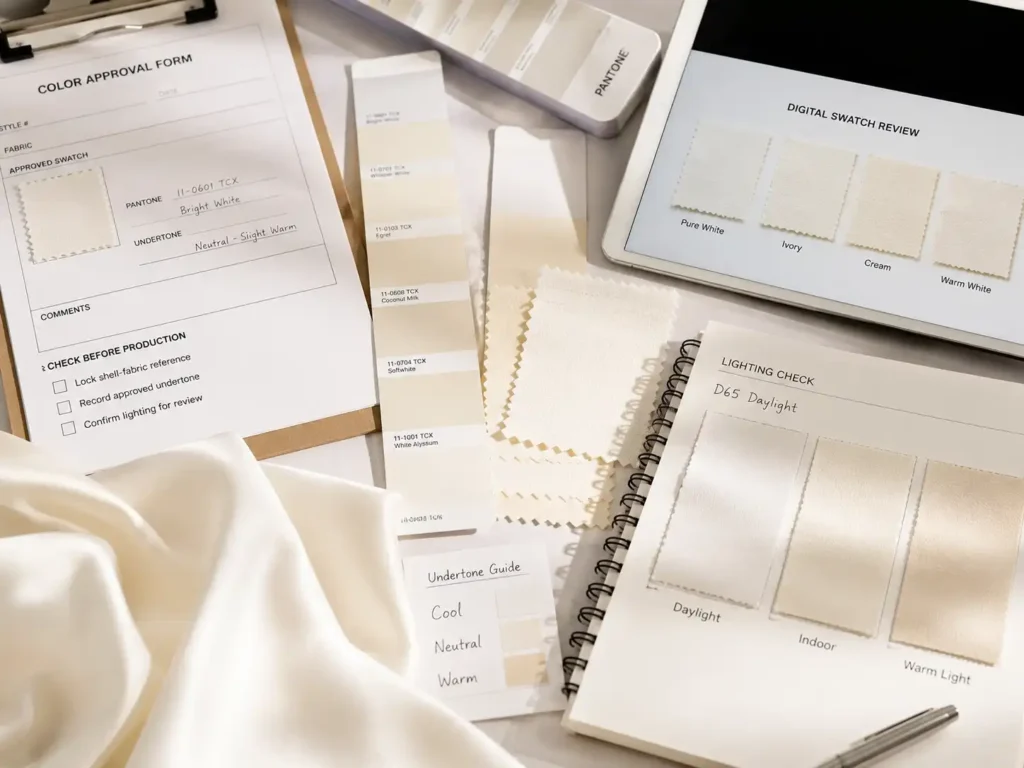
Approval should consider the complete layered appearance rather than checking each material swatch in isolation. Under studio lighting, daylight, and ecommerce photography, small differences can become more visible than they appear under factory lighting.
Manage Satin Shine and Direction
Satin creates a specific matching-set risk because apparent color changes with light direction. Two pieces cut from the same roll can still look different if major panels are oriented differently.
Grain direction, nap-like visual behavior, panel placement, and cutting instructions should be defined before bulk cutting begins. Sample photos are useful for identifying shine-direction problems because cameras often reveal tonal differences more aggressively than the eye.
For satin sets, Jinfeng Apparel can review:
- main panel direction across top and bottom;
- bias-cut versus straight-grain areas;
- zipper and seam flatness;
- lining shade and show-through;
- pressing temperature and pressure;
- fold lines and packing crease risk.
The objective is not to promise that every reflective surface looks identical under every angle.
The objective is to control fabric direction and processing so the set presents a coherent appearance under normal wear, photography, and retail conditions.
Align Prints Across a Coordinated Look
Printed sets require a different approach from solid colors. The exact motif does not always need to match at every seam, but scale, orientation, placement, and visual density should support the intended design. A large floral may need controlled placement around the bust or center front, while a border print may require specific cutting positions. Stripes, checks, engineered prints, and directional motifs demand even more planning.
Development should confirm:
- print repeat and usable width;
- directional or non-directional cutting;
- motif placement on top and bottom;
- placement tolerance for bulk production;
- shrinkage or distortion after finishing;
- how print placement changes fabric consumption and cost.
Where a brand wants a broader capsule, the same print can also be developed into related dresses, skirts, tops, pants, or jumpsuits, with placement rules adapted to each silhouette rather than copied mechanically.

Construction Details That Keep Matching Sets Consistent
Construction quality shapes how premium a set feels after fitting, pressing, wearing, and packing. Jinfeng Apparel reviews closure systems, lining, waist structures, straps, internal support, ruching, pleats, slits, lace, mesh, and embellishment according to the design rather than applying one standard construction to every style.
Waistbands, Closures, and Flatness
Waistbands create the visual connection between many tops and bottoms. A bulky waistband, rippling zipper, twisting elastic, or raised hook-and-eye can disrupt an otherwise clean silhouette.
Skirt and trouser waist structures are selected according to fabric weight, stretch, lining, rise, and intended fit. Invisible zippers need flat insertion and adequate seam support; elastic waistlines need recovery without creating uncontrolled gathers; tailored waistbands may require interfacing and clean internal finishing.
For set development, closure choice is reviewed together with the top. A corset top with a center-back zipper and a fitted skirt with another zipper can create excessive visual hardware if both openings are highly visible.
A halter top paired with high-waist trousers may need a cleaner front to preserve the intended styling. The aim is coordinated construction, not simply technically acceptable components.
Lining, Coverage, and Internal Support
Lining can affect color, opacity, fit, comfort, and drape. Chiffon, lace, mesh, light satin, and pale woven fabrics often need lining decisions before pattern dimensions are finalized because an added layer changes bulk and movement. Corset tops may require cups, boning, internal panels, or anti-slip support depending on the design. Mesh tops and skirts may use different coverage zones, while lace can require carefully selected lining shades to preserve motif visibility.
Key development points include:
- lining stretch compatibility with the outer fabric;
- lining color under mesh, lace, chiffon, or pale satin;
- clean attachment at waistlines, necklines, and zippers;
- cup position and internal support where applicable;
- prevention of lining roll-out or show-through;
- comfort against skin and movement during wear.
Lining is treated as part of the set’s appearance and fit, not a hidden afterthought.
Ruching, Pleats, Slits, and Shape Details
Ruching, pleating, draped panels, cut-outs, gathers, and slits can create a strong matching-set identity, but they also introduce repeatability risks. A ruched top and ruched skirt need compatible gathering density. Pleated bottoms need stable pleat depth and symmetry. Slit height must remain within approved proportions across sizes. Draped panels need consistent attachment points so the silhouette does not shift between sample and bulk.
Jinfeng Apparel can document construction points in sample comments, sewing instructions, pattern markings, and approved sample references. During bulk, in-line inspection focuses on details that are difficult to correct after assembly, including asymmetric gathering, twisted panels, unstable cut-outs, or incorrect slit positions. Finished garment inspection then checks the visual result against the approved standard.
Lace, Mesh, Sequin, and Surface Work
Fashion sets using lace, mesh, sequins, rhinestones, or other surface elements require handling rules that protect appearance and comfort. Lace needs motif direction, edge finishing, join control, and lining consideration. Mesh needs stretch and seam stability. Sequins require attention to loss, rough edges, seam allowance, skin contact, and packing protection.
Decorative placement should also remain coordinated between the top and bottom so the set reads as one design story.
Complex surface work can affect material yield, labor, sample revision, QC time, packing method, and final cost. Jinfeng Apparel reviews these factors before quotation is finalized so construction decisions are linked to the commercial target rather than added after production planning has already been fixed.
Matching Set Sampling from Concept to PP Approval
Sampling converts the design into measurable construction, fit, color, and packing decisions. Jinfeng Apparel supports first sample, fit sample, revised sample, photo sample, PP sample, and Golden sample stages according to project needs. Timing is confirmed after fabric availability, technical completeness, complexity, and approval rounds are reviewed.
Start with a Complete Development Brief
Development begins by confirming the product combination, reference files, intended market, fabric direction, color, size chart, construction details, quantity by style and color, labels, packing, testing needs, target price if available, and launch date. Inputs can include a tech pack, line sheet, reference image, sketch, original sample, or a combination of materials.
For matching sets, the brief should define both garments at the same time. If the top and bottom are handled as unrelated briefs, teams can miss critical relationships such as crop length versus waist rise, matching fabric lots, paired size logic, combined SKU structure, or coordinated print placement. Early clarification reduces sample rounds caused by avoidable interpretation gaps.
Useful inputs include:
- technical drawings or reference images for both pieces;
- base size and measurement expectations;
- preferred fit and midriff exposure;
- fabric composition, weight, stretch, handfeel, or reference swatch;
- color standards or print artwork;
- label and packing structure;
- planned quantity by style/color and expected launch window.
Review the First Complete Set, Not Two Isolated Samples
The first sample is used to test construction direction, initial fit, fabric behavior, proportion, and design interpretation. A top may require bust or neckline correction while the bottom may require waist, hip, rise, or length adjustment. Both pieces are also reviewed together for overall silhouette.
Common matching-set revisions include:
- top length too short or too long relative to the waistband;
- skirt waistline positioned too high or too low;
- pants rise changing the intended torso proportion;
- bust coverage or neckline stability not matching the design intent;
- color or shine appearing different between garments;
- fabric weight making one piece feel visually heavier than the other;
- size relationship creating an unbalanced fit.
Feedback should identify measurable corrections and visual intent. Clear fit comments, marked photos, updated measurements, and revised technical notes help the next sample move closer to approval without relying on vague instructions such as “make it fit better.”
Lock Photo, PP, and Golden Sample Standards
A photo sample can focus on appearance for campaign, ecommerce, or internal review, while a PP sample confirms the standard intended for mass production.
These stages serve different purposes and should not be treated as interchangeable.
Before PP approval, final fabric, color, trims, construction, measurements, labels, and packing requirements should be aligned closely enough for production instructions to be released.
Once the approved standard is locked, the Golden sample and project records support bulk inspection and later repeats.
Records can include pattern versions, size charts, BOM, fabric references, color information, trim details, sewing instructions, label files, packing instructions, and QC notes.
Major design changes after PP approval should be treated as controlled changes because they may affect material consumption, pattern work, line planning, cost, and delivery.
Build the Timeline Around Real Dependencies
Jinfeng Apparel does not use one fixed sample or delivery time for every matching set. A simple knit set using available fabric follows a different path from a custom-dyed satin corset set, a printed resort program, or a lace set with special trims. The timeline is planned after technical files, fabric availability, color development, trim requirements, sample complexity, testing needs, approval rounds, and launch date are understood.
Project planning can then identify:
- fabric and trim confirmation dates;
- sample priority by hero style;
- first-sample and revision sequence;
- photo-sample or salesman-sample requirements where applicable;
- PP lock date;
- bulk material readiness;
- production allocation;
- inspection and packing windows;
- shipment method and delivery window by project.
A realistic timeline is more useful than a generic promise because it shows where approvals can accelerate the program and where delays would create downstream risk.
Coordinated Bulk Production for Multi-Piece Fashion Sets
Bulk production begins only after the required development and approval points are sufficiently locked. Matching sets add coordination pressure because separate cutting and sewing processes must converge into the correct color, size, SKU, label, and packing combination at finishing.
Release Materials and Cutting as a Coordinated Program
Before cutting, the production team confirms approved fabric, color, trims, pattern version, size information, sewing instructions, labels, packing requirements, and quantity breakdown. For matching sets, fabric-lot allocation and component relationships are reviewed so the top and bottom remain visually consistent. Directional fabrics, satin, prints, lace, mesh, and stretch materials may need specific cutting instructions.
Cutting control can include:
- approved pattern and size verification;
- grain, stretch, or shine direction;
- print or motif direction;
- cut quantity by size and color;
- bundling and identification;
- coordination of top and bottom material lots;
- handling rules for slippery, stretch, or delicate fabrics.
Cutting errors multiply quickly in two-piece programs because an incorrect component can create an incomplete set at packing. Accurate identification from the cutting stage helps reduce later pairing problems.
Control Sewing Through In-Line Checkpoints
Top and bottom pieces may require different sewing operations, but both remain under one approved project standard.
Sewing instructions define seams, stitch requirements, zipper insertion, lining, elastic, straps, boning, pockets, waist structures, ruching, pleats, slits, or special workmanship according to the style.
In-line inspection is used to identify construction or measurement issues before they spread across a larger quantity.
Matching-set in-line checks focus on more than individual workmanship:
- whether top and bottom are following the correct approved version;
- whether color and material allocation remain consistent;
- whether key proportions are drifting during production;
- whether trims, labels, or closures match the correct style and color;
- whether rework could disturb the planned pairing quantity.
When a problem is found, correction should happen close to the production stage where it originated rather than waiting until final inspection, when rework becomes slower and more expensive.
Pair, Finish, and Pack the Complete Set
After sewing, garments move through inspection, pressing, finishing, pairing, label checks, barcode checks, polybag packing, carton assortment, and final inspection according to the project. Matching sets require complete-set verification before packing: the correct top must be paired with the correct bottom in the correct size, color, SKU, and label configuration.
Finishing control may include:
- pressing appropriate to satin, knit, lace, mesh, suiting, or printed fabrics;
- removal of loose threads and surface contamination;
- measurement and appearance review;
- top-bottom shade comparison;
- correct label and hangtag placement;
- barcode and SKU verification;
- pair completeness;
- polybag and carton-mark confirmation;
- carton ratio and warehouse requirements.
The commercial unit is the complete set. Final production control therefore ends only when the garments are correctly paired and packed for the intended sales or warehouse system.

Quality Control Checkpoints for Matching Set Production
Jinfeng Apparel’s QC system covers incoming materials through final packing and can support AQL inspection and client inspection requirements. Matching-set inspection adds pairing, shade, size, SKU, and complete-pack checks so two correctly made garments do not become an incorrectly assembled retail unit.
| QC Stage | Core Inspection | Matching-Set Specific Control |
|---|---|---|
| Incoming Materials | Fabric, lining, trims, labels, packing materials | Lot identity, shade relationship, matching trims, print/color approval |
| Cutting QC | Pattern, direction, quantity, size, print, stretch direction | Top-bottom lot allocation, satin direction, print placement, paired quantities |
| Sewing QC | Stitching, seam allowance, zipper, lining, construction details | Approved version control across both garments, consistent workmanship |
| In-Line Inspection | Key measurements, structure, workmanship | Top-bottom proportion, waist relationship, color continuity, size logic |
| Garment Inspection | Measurements, appearance, fit-related details, pressing | Complete-look balance, shade comparison, surface consistency |
| Set Pairing | Component identification | Correct top + bottom, correct size/color combination, no missing piece |
| Packing QC | Labels, barcode, polybag, carton marks, assortment | Set SKU, paired tags, barcode accuracy, complete-set packing |
| Final / AQL | Defect classification, carton review, shipment readiness | Packed-set verification, quantity reconciliation, client inspection support |
Private Label, SKU, and Set Packing Control
Matching sets become retail-ready only when labels, size information, barcodes, SKU logic, pairing, and carton details are correct. Jinfeng Apparel supports woven labels, size labels, care labels, hangtags, barcode labels, polybags, carton marks, and project-specific packing instructions for private-label womenswear.
Build a Clear Label Structure
A matching set may use one shared brand identity while still requiring separate labels on the top and bottom. Woven labels, size labels, and care labels need to follow the approved placement and legal or brand requirements for each garment.
Hangtags may be attached separately or configured around the intended merchandising method, subject to the brand’s instruction.
Label control should confirm:
- brand label artwork and approved dimensions;
- size-label logic for both garments;
- care-content information by final fabric and construction;
- hangtag quantity and attachment point;
- style, color, and size references;
- any required compliance or destination-market information;
- confidentiality and use of private-label artwork only for the relevant order.
Incorrect labels can make a technically good garment unsellable or difficult to receive into a warehouse, so label approval should be locked before bulk packing begins.
Design SKU and Size Pairing Before Packing
A set may use one retail SKU for a fixed top-bottom size combination, separate component references, or a more complex pairing system defined by the brand. Whatever system is chosen, production and packing teams need a clear mapping before final assembly. Size pairing is especially important when tops and bottoms have different fit behavior or when the brand allows mixed sizing.
A workable packing instruction should define:
- style code and color code;
- top size and bottom size relationship;
- barcode or SKU for the finished retail unit;
- whether pieces are tagged individually or together;
- polybag labeling;
- pack ratio and carton assortment;
- carton marks and warehouse labels;
- handling of unmatched or replacement components.
Jinfeng Apparel can incorporate these instructions into packing checklists and QC review so the correct garments arrive as the correct selling unit.
Protect the Set Through Pressing and Shipping
Packing must protect the fabric while also fitting the brand’s ecommerce, retail, or warehouse workflow. Satin may require careful folding to reduce hard creases. Sequins and surface embellishment may need protection from abrasion. Structured corset tops should not be crushed in a way that distorts cups or boning. Long skirts and wide-leg pants need fold planning so the garment reaches final pressing and unpacking in acceptable condition.
Packing instructions can address:
- folding method by garment structure;
- tissue or protective material where required;
- polybag size and warning information when applicable;
- barcode visibility;
- paired-set completeness;
- carton quantity and ratio;
- carton marks and shipment references;
- photo confirmation for approved packing presentation where agreed.
The objective is a set that remains correct from final inspection through warehouse receiving, not merely when it leaves the sewing line.

Multi-Style Collection Management for Seasonal Fashion Drops
Line Sheet Planning
Fabric Grouping
Sample Priority
PP Approval Map
Production Allocation
Delivery and Repeat Planning
MOQ and Cost Structure for Custom Matching Sets
Custom matching sets are quoted from the complete product structure rather than from garment count alone. MOQ starts from 200 pcs per style/color, while fabric availability, custom color, trims, print development, special workmanship, private-label packing, testing, and production planning may create additional minimums or cost effects.
| Cost or MOQ Driver | What Changes the Requirement | Development Consideration |
|---|---|---|
| Base MOQ | Style, color, fabric availability, construction | Starts from 200 pcs per style/color; final structure confirmed by project |
| Fabric | Composition, weight, stretch, certified source, stock status | Stock fabric can differ from custom-dyed or custom-produced fabric minimums |
| Color | Stock shade, lab dip, custom dye, repeat color | New color development may require separate fabric minimums and approval steps |
| Artwork, repeat size, printing method, fabric base | Print setup, placement, consumption, and color approval affect cost and lead planning | |
| Trims | Zippers, buttons, elastic, lace, cups, boning, rhinestones | Custom trims may carry their own supplier minimums |
| Pattern and Fit | Top + bottom pattern work, grading, revisions | Two garments require separate pattern and measurement control plus full-set review |
| Workmanship | Lining, corset structure, ruching, pleats, sequins, special seams | More operations increase sewing time, QC attention, and rework risk |
| Private Label | Labels, hangtags, barcode, polybag, carton marks | Brand materials and packing components may have separate supplier minimums |
| Testing / Compliance | Market, fabric, product, requested standard | Scope is confirmed by project, material source, batch, and destination requirements |
| Delivery | Shipment mode, split shipment, packing volume | Freight and timing depend on order profile and destination plan |
Brand Protection and Project-Based Compliance Support
Established fashion programs involve unpublished designs, private-label artwork, technical files, commercial timelines, and destination-market requirements. Jinfeng Apparel supports NDA-based project handling and project-specific testing or compliance coordination without making universal certification claims that are not tied to the actual fabric, supplier, factory, batch, or order.
Protect Unreleased Product Information
Tech packs, patterns, sample photos, label artwork, packaging files, and unreleased designs are handled for project development, production, QC, packing, and delivery purposes.
NDA support is available where required. Access should remain limited to relevant merchandising, pattern, sample, production, QC, packing, and logistics functions involved in the order.
Matching-set programs often contain a broader seasonal story, so confidentiality may extend beyond one garment. A line sheet can reveal launch timing, color direction, coordinated silhouettes, and future product extensions.
Jinfeng Apparel can work with anonymous case presentation and restricted use of brand assets rather than exposing logos, unpublished products, PO details, or private files in public marketing.

Confirm Compliance by Real Project Scope
Testing and certification requirements vary by destination market, fiber composition, fabric supplier, product type, trims, labeling, and the brand’s own standards. Jinfeng Apparel can support project-based coordination involving ISO 9001 quality-management references, SMETA/SEDEX or BSCI-related audit support where applicable, OEKO-TEX fabric resources by supplier and batch, GOTS or GRS-related material options by project, and third-party testing through organizations such as SGS, Intertek, or Bureau Veritas where required.
No certification should be assumed to cover every factory, every fabric, every color, or every product automatically. Before development is finalized, the relevant certificate scope, fabric source, batch documentation, testing requirement, destination labeling, and brand manual should be checked against the actual order. Final regulatory responsibility should also be reviewed with the brand’s compliance team or appointed professional where appropriate.
Repeat Orders and Collection Expansion Without Starting Over
Matching sets are especially strong for repeat development because one approved fabric, print, pattern direction, or color story can support several related products. Jinfeng Apparel keeps project records so proven styles can move into replenishment, new colors, new fabrics, or broader capsules with clearer reference points.
Reorder from Controlled Records
Repeat orders can use retained patterns, size charts, BOM, fabric references, color records, trim records, sewing instructions, packing requirements, QC notes, and Golden samples.
These records provide a working baseline for checking whether a new order still follows the previous approved standard.
They also make it easier to identify deliberate changes, such as a new color, revised waistband, alternate fabric, or updated packaging, without losing the original construction logic.
Extend a Winning Set into More Styles
A successful matching set can become the start of a broader line. The same satin story may expand from cami + skirt into corset + skirt, top + pants, mini dress, or midi dress. A resort print can move from crop top + maxi skirt into shorts, pants, jumpsuit, or dress. A knit set can develop into alternate necklines, skirt lengths, or pant silhouettes.
Each extension still requires its own fit, consumption, construction, and QC review. Product-line development is not simple copy-and-paste; the shared element creates brand continuity while the new silhouette must be engineered for its own wearing scenario.
Plan Seasonal Color and Fabric Updates
New colors and new fabrics can refresh a proven silhouette, but both can change the product. A new dye lot may alter shade and handfeel. A different satin may change drape and shine. A new knit may change stretch recovery and finished measurements. A printed fabric may require new placement rules and consumption. Jinfeng Apparel reviews these changes against the previous approved records rather than assuming the new material will behave identically.
The combination of retained development records and controlled revalidation gives mature fashion programs a stronger base for seasonal launches, bestseller replenishment, and annual line planning.
Custom Matching Sets Frequently Asked Questions
Jinfeng Apparel develops women’s fashion combinations including crop top + skirt, top + pants, top + shorts, corset top + skirt, satin sets, knit sets, printed resort sets, party co-ords, and related two-piece fashion programs. Development is evaluated by fabric, fit, structure, production risk, private-label requirements, and planned quantity rather than by product name alone.
Yes. The development process reviews each garment separately and also checks the complete outfit. Top length, bust fit, waistline, rise, hip fit, skirt or pant length, midriff exposure, fabric drape, and visual balance can be reviewed together before PP approval and bulk production.
Color control begins with approved fabric and lot identification. Where construction permits, paired garments are planned from compatible material lots, with additional attention to satin shine direction, lining shade, mesh or lace layering, print direction, trims, and final top-bottom comparison during inspection and pairing.
A brand may use fixed set sizing or a more complex top-bottom size structure. The required size logic should be defined before packing and barcode setup. Pattern grading, fit review, SKU mapping, label files, and pairing instructions are then built around the approved selling model.
Common directions include satin, stretch knit, jersey, ponte, chiffon, mesh, lace, crepe, suiting, rayon, linen blends, denim, and printed woven fabrics. Selection depends on silhouette, wearing occasion, drape, stretch, opacity, lining needs, shrinkage, surface risk, color requirements, MOQ, and target cost.
Sampling time is confirmed by project after technical completeness, fabric availability, color development, trims, construction complexity, testing needs, and revision rounds are reviewed. Jinfeng Apparel supports first sample, fit sample, revised sample, photo sample, PP sample, and Golden sample stages according to the project rather than using one fixed timing for every style.
MOQ starts from 200 pcs per style/color. Final order structure depends on fabric availability, custom color or print requirements, trims, construction, labels, packing, and production planning. Special materials or private-label components may carry separate supplier minimums.
Yes. Support can include woven labels, size labels, care labels, hangtags, barcodes, SKU labels, polybags, carton marks, and packing instructions. Matching-set packing can also include defined top-bottom size pairing, combined or separate tagging, set completeness checks, carton ratios, and warehouse label requirements.
Quality control can include incoming material inspection, cutting QC, sewing QC, in-line inspection, garment inspection, pressing review, set pairing, packing QC, AQL inspection, and client inspection support. Matching-specific checks include shade, top-bottom proportion, correct size pairing, SKU, barcode, label, and complete-set packing.
Yes. Repeat development can use retained patterns, size charts, BOM, fabric references, color records, trim files, packing instructions, QC notes, and Golden samples. New colors or new fabrics still require confirmation because shade, handfeel, stretch, drape, shrinkage, or surface behavior may differ from the previous order.

Send Your Matching Set Program for Development Review
Share the information already available for your matching-set program and Jinfeng Apparel can review product scope, fabric direction, development requirements, MOQ fit, sample priorities, private-label needs, production planning, QC focus, and shipment considerations.
A complete tech pack is helpful but not the only starting point; line sheets, reference images, sketches, original samples, fabric references, and existing measurement standards can also be used to begin a structured review.
For a more accurate first assessment, include:
- company or brand profile and target market;
- matching-set combinations and number of styles;
- expected quantity by style and color;
- tech packs, line sheets, sketches, reference images, or original samples;
- preferred fabrics, colors, prints, and special workmanship;
- base size, size range, fit preference, and grading information if available;
- woven labels, care labels, hangtags, barcode, SKU, and packing requirements;
- testing or compliance requirements for the destination market;
- target price where relevant and the planned launch date;
- preferred shipment method or nominated forwarder if already decided.


