 Skip to content
How Does Mesh Fabric Affect Dress Cost? A Manufacturer’s Cost Guide

Your trusted Women’s Apparel Manufacturer from China
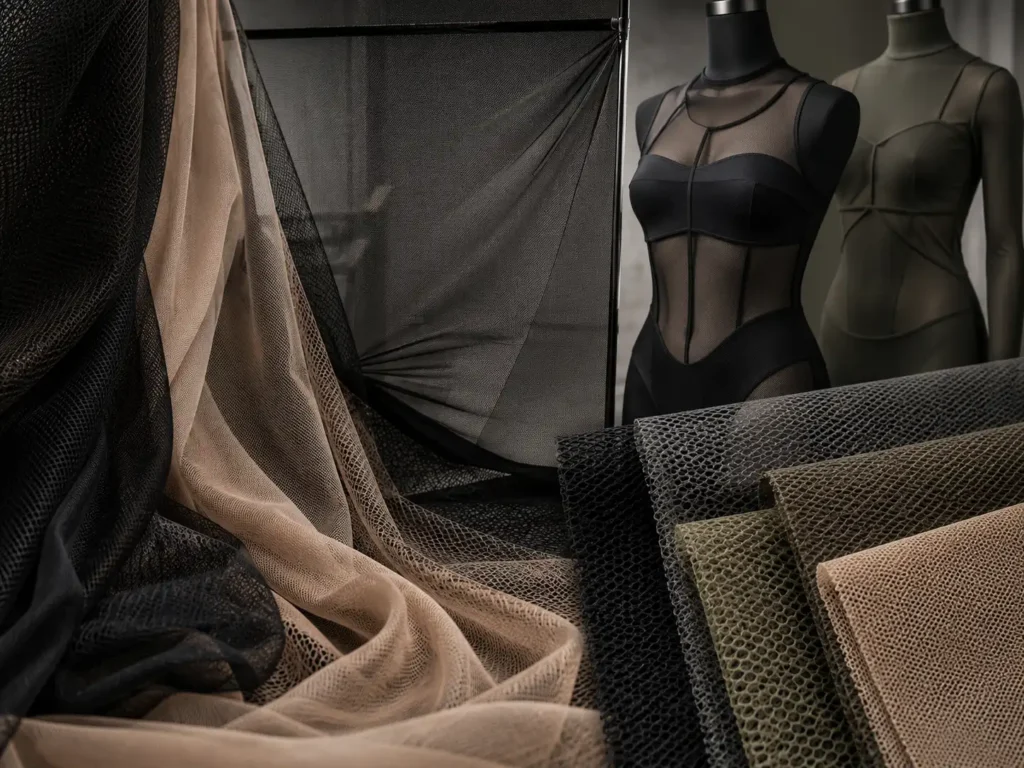
A mesh dress can look almost weightless on a model, yet the production cost behind it may be anything but light. That is where many costing conversations go wrong. The eye sees a thin, transparent fabric and assumes less material must mean a lower price. A production team sees something very different: stretch direction, recovery, lining coverage, double layers, narrow bindings, unstable edges, print placement, ruching ratios, cutting loss, seam visibility, and extra inspection points. Two dresses that look almost identical in an ecommerce photo can therefore create very different manufacturing costs.
Mesh fabric affects dress cost through fabric price, usable width, consumption, stretch and recovery, transparency, layer count, lining, cutting efficiency, sewing difficulty, finishing, wastage, and quality control. A cheaper mesh does not always create a cheaper dress. The most reliable costing method evaluates the fabric together with the pattern, construction, order quantity, and production process rather than comparing price per meter alone.
A useful way to think about mesh is to stop asking, “How much does the fabric cost?” and start asking, “What does this fabric make the garment require?” A fabric that is 15% cheaper per meter can still raise the unit cost if it is narrower, needs a second layer for coverage, moves during cutting, or takes longer to sew without distortion. The surprise often comes only after sampling, which is why cost control works best before the design reaches bulk production.
How Does Mesh Fabric Affect Dress Cost?
Mesh changes dress cost through a chain of connected variables rather than one isolated fabric price. Consumption, width, lining, layering, stretch behavior, cutting loss, sewing time, reinforcement, finishing, and QC all influence the final unit cost. The most accurate quotation therefore treats the dress as a complete manufacturing system, where one fabric decision can change several downstream operations at the same time.
What Makes Up Mesh Dress Cost?
A professional mesh dress quotation usually contains far more than the visible shell fabric. The manufacturer has to account for main mesh, lining, elastic, binding, zippers, cups or other structural trims, pattern development, grading, cutting, sewing, finishing, inspection, packaging, and normal production loss. Jinfeng Apparel’s documented costing method follows this broader logic and includes fabric, trims, construction, pattern work, sampling, cutting, sewing time, pressing, QC, packing, wastage, testing, logistics, and order quantity rather than quoting from fabric price alone.
The difference becomes obvious when two styles are compared side by side. A loose, single-layer resort cover-up may need little more than mesh, thread, labels, basic seams, and simple finishing. A fitted party dress can require a separate lining pattern, elastic or narrow binding, controlled negative ease, an invisible zipper, shaped bust coverage, ruching marks, and tighter measurement control. Both products can be called a “mesh dress,” yet the second garment moves through many more technical operations before it is ready to pack.
Cost Component | Simple Mesh Dress | More Complex Mesh Dress | Main Cost Effect |
Main mesh | Single layer | Double layer or specialty mesh | Higher fabric consumption |
Lining | None or partial | Full or shaped lining | More material and sewing |
Pattern | Basic silhouette | Bodycon, cut-out, corset | More development work |
Cutting | Standard marker | Multi-layer or placement print | More time and potential waste |
Sewing | Basic seams | Binding, ruching, support | More labor minutes |
QC | General appearance | Stretch, symmetry, transparency | More inspection points |
Packing | Standard | Retail or ecommerce specific | Added materials and handling |
Is Mesh Price the Main Cost?
Mesh price matters, but it is rarely a reliable predictor of the finished garment cost by itself. Two fabrics with similar appearance can behave very differently once a pattern is laid across their usable width. A more expensive fabric may create a shorter marker, work in one layer, recover better after stretching, and sew more cleanly. A cheaper alternative may consume more length, require lining, or need slower handling, so the apparent saving disappears before the first finished garment leaves the line.
Consider a purely illustrative example. Fabric A costs $4.20 per meter and has a usable width of 150 cm, while Fabric B costs $3.60 per meter but has only 125 cm of usable width. If a particular pattern consumes 1.45 meters of Fabric A and 1.80 meters of Fabric B, raw mesh cost is about $6.09 versus $6.48 before lining, trims, or labor. The point is not the exact numbers; it is the relationship between price, width, marker efficiency, and garment consumption.
How Is Mesh Dress Cost Calculated?
A practical costing process begins with the approved design and actual material specification. The pattern team estimates consumption from marker layout, usable width, size range, and design details. The costing team then adds lining and trims, followed by cutting and sewing operations, special treatments, normal wastage, quality control, finishing, and packing. Fabric cost itself is influenced by type, composition, weight, width, stretch, drape, transparency, dyeing, printing, stock availability, custom development, supplier MOQ, color count, and expected wastage.
A simplified working formula is useful for discussion: fabric consumption × fabric price + lining and trims + cutting and sewing labor + special processes + normal wastage + QC and finishing + packing = manufacturing cost before logistics and commercial terms. This is also why a factory can only give a reliable quotation after it understands the construction. A photograph may show the silhouette, but it may not reveal whether the body uses single mesh, double mesh, power mesh, hidden lining, bonded support, or a separate internal layer.
What Changes Cost Fastest?
The fastest-moving cost variables are often the ones that multiply through several stages at once. Adding full lining increases fabric purchasing, creates another pattern set, adds cutting, introduces more seams, and extends finishing time. Heavy ruching increases material usage, marking, gathering work, symmetry checks, and rework risk. A placement print can raise fabric price and also reduce marker efficiency. In other words, the most expensive design decision is not always the most visible one.
For development teams, a useful habit is to separate cost into three buckets: material cost, conversion cost, and risk cost. Material cost covers the cloth and trims that physically go into the garment. Conversion cost covers pattern, cutting, sewing, pressing, and finishing. Risk cost is less obvious but very real: lower marker efficiency, delicate fabric handling, possible holes, stretch distortion, repeat inspections, or greater rework exposure. A strong costing conversation looks at all three instead of focusing only on the supplier’s fabric quotation.
Which Mesh Types Cost More?
No mesh type is automatically the most expensive in every project. Cost depends on fiber, density, width, stretch, recovery, finish, printing, embroidery, and sourcing conditions. More importantly, the fabric with the highest price per meter can still produce the better finished cost when it reduces layering, improves cutting efficiency, gives stronger recovery, or makes sewing more stable across bulk production.
How Do Regular and Stretch Mesh Compare?
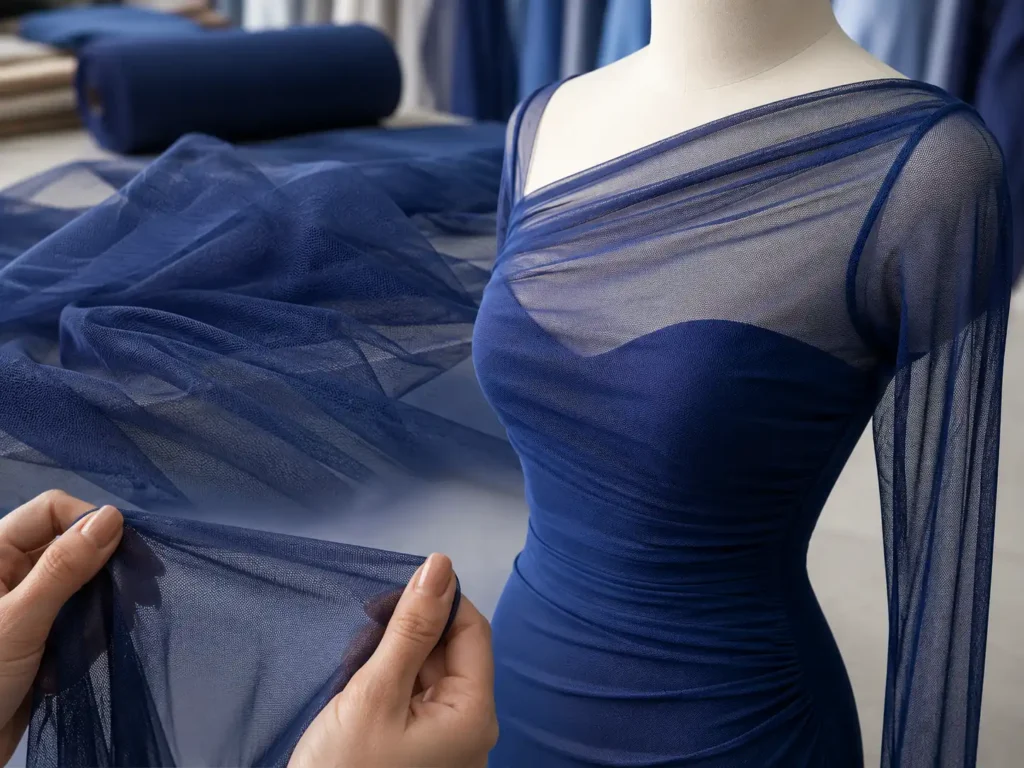
Regular mesh is often suitable when the garment needs transparency and visual lightness but little body stretch. It works well for overlays, loose silhouettes, decorative sleeves, and selected resort pieces. Stretch mesh is more appropriate when the dress follows the body and needs to move with the wearer. The cost difference therefore comes from performance requirements as much as from the fabric quotation itself, because fitted construction demands more attention to direction, recovery, and finished measurements.
A stretch-mesh bodycon dress may need the pattern team to check where the greatest stretch runs, how much negative ease the style can tolerate, and whether the fabric returns to shape after repeated extension. If the fabric stretches well across the width but behaves differently in the length, pattern orientation becomes important and can influence marker efficiency. Necklines and armholes may also need binding or stabilization to avoid growth during sewing. Jinfeng Apparel’s documented mesh controls include stretch direction, dimensions after stretching, neckline binding, lining, and transparency management.
Is Power Mesh More Expensive?
Power mesh usually sits in a more performance-driven category than lightweight decorative mesh because it is selected for controlled stretch, recovery, and support. It can be useful inside bodycon dresses, structured transparent panels, or areas where the design needs shaping without an obviously heavy internal layer. Jinfeng Apparel’s fabric framework places power mesh within a higher-cost fabric tier used for bodycon and premium dress applications, which reflects the additional performance expected from the material rather than a simple “thicker is better” assumption.
The higher fabric cost can still be commercially sensible. If a standard stretch mesh becomes loose after wear, the saving at purchasing stage can turn into fit complaints, sample revisions, or extra reinforcement. Power mesh may also allow support to be placed only where it is needed instead of adding a second full layer. The practical decision should consider support, comfort, transparency, recovery, seam bulk, and compatibility with the outer fabric. Using power mesh everywhere is rarely necessary; using it strategically can give the design a cleaner cost-to-performance balance.
Do Printed and Embroidered Mesh Cost More?
Printed, glitter, and embroidered mesh can raise cost in two places at once. The first increase is obvious: additional printing, surface treatment, embroidery, or specialty yarn changes the fabric price. The second increase is less visible: motif placement can reduce cutting freedom. A random all-over print is usually easier to nest than a large directional print that must sit in the same position on every front panel, while embroidery can restrict where seams, necklines, or hems can cut through decorative areas.
If a motif needs to sit at the center front or mirror across the body, the marker may sacrifice otherwise usable fabric so the visual result stays consistent. Border embroidery can force the hem to follow a particular fabric edge, and dense embroidery inside seam allowances may create thickness or discomfort. The mesh knowledge base used for custom dress development includes regular, stretch, power, printed, double-layer, fine, large-hole, glitter, and embroidered mesh as distinct material categories because each one creates different design and production requirements.
Mesh Type | Common Dress Use | Relative Cost Pressure | Main Production Attention |
Regular mesh | Overlay, resort, sleeves | Low-medium | Transparency and seam neatness |
Stretch mesh | Bodycon, club styles | Medium | Stretch direction and recovery |
Power mesh | Support panels | Medium-high | Tension, comfort, edge control |
Printed mesh | Fashion and party styles | Medium-high | Print direction and placement |
Glitter mesh | Statement dresses | Medium-high | Surface handling and abrasion |
Embroidered mesh | Occasion and evening styles | High | Motif placement and cutting waste |
Which Mesh Suits Each Dress?
The best mesh is the one that achieves the desired silhouette and visual effect with the fewest unnecessary production complications. A loose beach or resort overlay usually does not need the recovery performance of a fitted bodycon style. A cut-out dress needs stable edges around openings, while a sheer occasion overlay needs elegant seam appearance, controlled transparency, and a lining color that supports the design rather than competing with it.
For fitted dresses, stretch direction and recovery usually matter more than softness alone. For ruched dresses, the mesh needs to gather cleanly without becoming bulky where multiple layers meet. For printed styles, artwork position can dominate the cutting plan. For corset combinations, the mesh may function mainly as an outer fashion layer while the internal structure carries support. Choosing by product function rather than fabric name prevents a common costing mistake: paying for performance the design does not need, or saving on a material that cannot support the intended construction.
How Do Mesh Specs Change Cost?
Mesh specifications influence both purchasing and manufacturing. GSM, usable width, stretch, recovery, transparency, color, and print method can change consumption, pattern layout, lining needs, and sewing difficulty. Small differences that look insignificant on a swatch can become meaningful when multiplied across hundreds or thousands of dresses, especially in fitted or highly layered styles where the fabric drives both fit and production stability.
How Does GSM Affect Cost?
GSM measures fabric weight per square meter, but it should not be used as a simple quality ranking. A very light mesh can be ideal for a soft overlay, while a denser mesh may be better for fitted garments that need more coverage or support. The cost effect comes from what the fabric weight allows the designer to avoid or what it forces the factory to add. A slightly denser fabric may work in one layer, while a lighter material may require two layers or extra lining.
Weight can also influence sewing behavior. Fine mesh may be more vulnerable to stretching, holes, or seam distortion, while heavier mesh can create bulk where several layers meet around gathered seams, bindings, or internal structures. A useful review therefore considers GSM together with opacity, stretch percentage, recovery, drape, seam behavior, and intended layer count. The company’s documented fabric-cost variables include weight, width, stretch, drape, transparency, dyeing, printing, MOQ, and wastage rather than treating GSM as an isolated purchasing decision.
How Does Fabric Width Affect Cost?
Fabric width is one of the most practical cost variables because garment factories buy length while patterns consume area. A wider usable width can allow front, back, sleeve, and lining pieces to sit more efficiently across the marker, reducing the number of meters needed for each garment. Narrow fabric can force the same pieces into a longer marker, which means a fabric that appears cheaper per meter can become more expensive per finished dress.
The scale effect is easy to underestimate. A consumption improvement of only 0.08 meters per garment represents 40 meters across 500 dresses, 80 meters across 1,000 dresses, 200 meters across 2,500 dresses, and 400 meters across 5,000 dresses. These figures are simple consumption examples, not guaranteed savings, because actual value depends on fabric price, size mix, pattern shape, and marker efficiency. The important point is that usable width deserves to sit beside price and GSM in every serious fabric comparison.
How Do Stretch and Recovery Affect Cost?
Stretch determines how far the mesh extends, while recovery determines how well it returns toward its original dimension. A fabric that stretches easily but recovers poorly can produce an excellent first fitting and a disappointing garment after wear. Necklines may grow, waist panels may loosen, hem positions can change, and side seams can move away from their intended balance. Those problems become costly when they require pattern correction, edge reinforcement, sample revisions, or additional production controls.
For fitted mesh dresses, development teams usually look at the direction of greatest stretch, relaxed measurement, measurement under controlled extension, recovery after repeated stretching, and the interaction between shell and lining. If a highly elastic mesh is paired with a rigid lining, the outer and inner layers may pull against each other and create rippling or restricted movement. Jinfeng Apparel’s mesh development standard specifically calls for review of transparency, stretch recovery, lining placement, and neckline stability before PP sample approval.
Do Color and Printing Raise Cost?
Color can become a cost driver before the fabric reaches the factory. A stock black or white may be readily available, while a custom shade can require lab dips, minimum dye quantities, shade approval, and additional lead time. Dividing a large program across many colors also reduces the quantity placed into each color, which can make fabric purchasing, cutting, shade management, labels, and SKU packing less efficient even when the total order quantity remains unchanged.
The math is straightforward. A 2,400-piece order divided into two colors creates 1,200 pieces per color, while the same order divided into eight colors creates only 300 pieces per color. Printed mesh introduces another layer because random all-over prints usually allow more cutting freedom than directional or placement prints. Jinfeng Apparel’s standard production MOQ begins at 200 pieces per style/color, while custom-dyed, custom-printed, and special materials can be subject to separate supplier minimums.
How Do Layers and Lining Change Cost?
Layers and lining raise mesh dress cost because they change several cost categories at once: material consumption, pattern pieces, cutting, sewing, finishing, and inspection. The increase depends on whether coverage is full, partial, or localized. A carefully planned lining can improve comfort and commercial wearability, while unnecessary double layers can add significant cost without creating a visible benefit for the customer.

Is Double-Layer Mesh More Expensive?
Double-layer mesh normally costs more than a comparable single-layer construction because it uses additional material and creates more handling. It does not automatically double the finished garment price, since labels, packaging, pattern development, and many other fixed or semi-fixed costs remain similar. However, the fabric, cutting, sewing, and inspection portions do increase, especially when both layers need to stay aligned across fitted panels or curved seams.
Double mesh can be valuable when the design needs deeper color, controlled transparency, or a smoother fitted appearance without introducing a visibly opaque lining. The problem appears when the second layer is used only to compensate for a poor first fabric choice. If the two layers stretch differently or are cut under unequal tension, one can twist, creep, or bubble against the other. Double-layer mesh is specifically identified in the manufacturer’s costing documentation as a construction that increases fabric consumption, which is why it is best used only where the visual or functional benefit justifies the added process.
How Does Lining Affect Cost?
Lining creates a second garment system underneath the visible mesh. It may require its own pattern, cutting, bundling, seams, zipper attachment, hem finish, and inspection. The lining specification also affects fit. A rigid lining under a highly elastic shell can restrict movement, while a very loose lining can shift beneath transparent mesh and become visible in photographs or during wear. Color choice is equally important because black mesh over black lining creates a different product from black mesh over nude lining.
Common solutions include full lining, bodice-only lining, mini-length lining under a sheer midi or maxi shell, skin-tone lining, local bust and hip coverage, or an integrated brief or bodysuit structure. Jinfeng Apparel’s mesh control framework lists density, color, number of layers, lining color, lining length, skin-tone lining, double mesh, and localized coverage as practical transparency controls. The most efficient approach is usually to place coverage where the wearer and the design actually need it rather than lining every area by default.
How Do Ruching and Gathers Affect Cost?
Ruching changes cost because the fabric used before gathering is longer or wider than the finished area suggests. A side seam that appears 40 cm long on the completed dress may use significantly more mesh before it is gathered, depending on the desired fullness and silhouette. There is no single correct gathering ratio for all fabrics, because stretch, recovery, thickness, and the visual effect all influence how much excess material can be controlled cleanly.
The labor effect can be just as important as the consumption effect. Operators need consistent gathering amount, placement, tension, and left-right symmetry. When elastic is used to create or stabilize the ruching, the elastic tension must also be repeatable across the production run. Very elastic mesh can relax differently from flat areas, so sample approval should consider how the garment looks after handling and wear rather than only when it first comes off the machine. Ruching is therefore both a fabric-cost and labor-cost decision, not merely a decorative detail.
Do Cut-Out and Corset Designs Cost More?
Cut-outs show clearly that using less visible fabric does not always create a cheaper garment. Removing a section at the waist, neckline, or back reduces shell area, but exposed edges may need elastic, binding, clean-finish seams, or reinforcement so the opening keeps its shape. When cut-outs are positioned on stretch mesh, uneven tension can distort the body line, which means pattern accuracy and operator control become more important than the amount of fabric removed.
Corset combinations add cups, boning, support lining, anti-slip tape, shaped seams, and sometimes lace-up details. A mesh corset dress may therefore contain several internal layers even though the outside looks light and transparent. The cost framework used for custom dress development identifies corset structure, built-in cups, boning, ruching, cut-out finishing, mesh lining, and binding among higher-complexity processes. The fabric is only one part of the product; the structure underneath it often determines the real sewing time.
Construction | Material Effect | Labor Effect | Main Production Risk |
Single mesh | Baseline | Lower | Excessive transparency |
Double mesh | Higher consumption | More layer handling | Twisting or creeping |
Full lining | Adds second fabric | More cutting and sewing | Shell-lining mismatch |
Heavy ruching | More pre-gather length | More marking and control | Asymmetry |
Cut-outs | Less shell area | More edge finishing | Stretch distortion |
Corset + mesh | Adds cups, boning, lining | Technical sewing | Fit inconsistency |
How Does Mesh Affect Production Cost?
Mesh can raise production cost because it is often less stable than a straightforward woven fabric during cutting, sewing, and inspection. Fine or elastic mesh may shift, stretch, or tear, while printed and layered versions require positioning and alignment. These characteristics increase handling time and make consistent bulk production more dependent on pattern accuracy, operator skill, machine settings, and timely in-line quality control.
Is Mesh Harder to Cut?
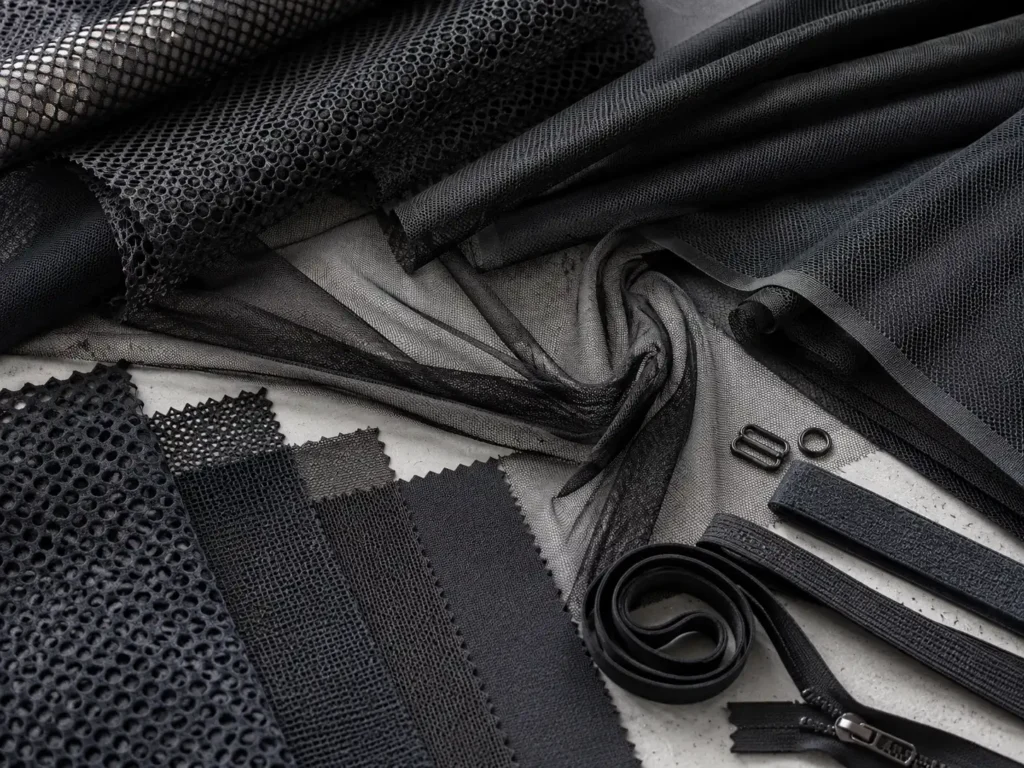
Some mesh fabrics cut easily, while others require much tighter control. Fine stretch mesh can move during spreading, and excessive tension while laying the fabric can change the dimensions of the cut pieces once they relax. The cutting team also has to respect stretch direction. Rotating a pattern piece simply to improve marker efficiency may change how that section fits on the body, which can create a much larger problem than the fabric saving it was meant to achieve.
Printed and embroidered mesh add placement restrictions, while multi-layer mesh can slip between layers. Orders with many sizes and colors create additional bundle-management work because cut pieces must remain correctly separated for sewing. The documented cutting-cost framework used for custom womenswear includes spreading, marker planning, cutting, piece numbering, color and size separation, lining coordination, placement matching, and cutting wastage; multi-layer mesh is specifically listed among higher-complexity cutting situations. Reliable consumption is therefore calculated from an actual pattern or marker rather than estimated from dress length alone.
How Does Mesh Increase Sewing Time?
Sewing cost is closely linked to operation time. A simple dress with a limited number of stable seams can move through production quickly, while a visually similar mesh style may include narrow binding, elastic application, two-layer alignment, ruching, clean-finished transparent seams, cut-out edges, and internal support. Transparent material also exposes workmanship, because bulky seam allowances, uneven stitching, or twisted layers can remain visible from the outside instead of being hidden inside an opaque shell.
Typical time-consuming operations include binding necklines and armholes, controlling elastic tension, joining stretch mesh without waviness, attaching lining cleanly, matching two mesh layers, and keeping ruched sections symmetrical. The production fact sheet notes that mesh joining is vulnerable to deformation and holes and therefore requires finer handling, while mesh lining and binding are also listed among technical operations that increase construction complexity. This is why garment weight or fabric area alone is a poor basis for comparing sewing cost.
How Do Defects Increase Cost?
A defect becomes more expensive the later it is discovered. A small hole found during incoming-fabric inspection may require replacing one panel, while the same hole discovered after sewing, pressing, labeling, and packing can require seam opening, component replacement, re-finishing, and another inspection cycle. Mesh is particularly sensitive because small pulls, distorted edges, uneven recovery, and misplaced prints can be highly visible once the garment is worn or photographed under strong lighting.
Common issues include holes, pulls, inconsistent transparency, poor recovery, distorted necklines, uneven armholes, twisted double layers, incorrect print placement, visible seam bulk, and asymmetric ruching. Some come from the material, while others are created by cutting tension or sewing technique. The best production system tries to move detection upstream so problems are corrected before more labor is invested. That principle is especially important in fashion programs where a launch date can make late rework more expensive than the physical repair itself.
Does Mesh Require More QC?
Mesh does not always require more inspectors, but it usually requires a more specific checklist. An opaque dress may mainly be reviewed for measurements, seams, stains, pressing, and general appearance. A mesh style adds transparency, stretch recovery, lining placement, visible seam construction, printed placement, and the stability of necklines or armholes. Fitted styles may also need checks after handling to confirm that the garment has not grown beyond the approved measurement range.
Useful inspection points include bust coverage, lining length, neckline stability, recovery after stretch, print position, left-right symmetry, seam visibility, holes, surface damage, and finished measurements. Jinfeng Apparel’s broader QC model covers incoming material, cutting, sewing, in-line inspection, measurement, garment appearance, pressing, packing, AQL inspection, and rework management. The goal is not to add inspection for its own sake, but to catch the types of errors that become expensive when they are discovered only at final packing.
How Can Brands Control Mesh Dress Cost?
Brands can control mesh dress cost most effectively by protecting the details customers notice while simplifying the hidden complexity they do not. Better fabric width, strategic lining, efficient marker layouts, fewer unnecessary layers, practical ruching, coordinated color planning, and suitable order quantities can all reduce cost without making the garment look visibly downgraded. Cost engineering works best before the final sample is frozen.

Which Fabric Substitutions Reduce Cost?
A useful fabric substitute is not simply the lowest-priced option. It is a material that performs the same commercial job with fewer cost penalties. If the mesh forms the entire fitted body, stretch and recovery are critical. If it is only an overlay, hand feel, transparency, drape, and seam appearance may matter more. Replacing one fabric with another should therefore compare composition, GSM, usable width, transparency, stretch direction, recovery, hand feel, color availability, supplier MOQ, and bulk consistency.
A $0.50-per-meter saving can disappear quickly if the alternative is narrower, needs an extra layer, or creates more sewing problems. Conversely, a slightly more expensive stock fabric may reduce custom-dye costs, lead time, or supplier minimums. Jinfeng Apparel’s fabric sourcing framework specifically supports alternative-fabric review when original material cost is high and considers product use, target price, hand feel, drape, stretch, transparency, lining needs, and bulk-production risk. The best substitution keeps the customer-facing effect while reducing hidden cost or technical risk.
How Can Construction Reduce Cost?
Construction optimization works when the team separates visible value from hidden complexity. If dramatic side ruching is the feature that makes a style sell, removing it may weaken the product. If a double layer sits under an area already covered by opaque lining, it may add cost without changing what the customer sees. The practical goal is not to remove detail indiscriminately; it is to spend production time where the design earns its visual impact.
Common opportunities include using double mesh only in coverage-sensitive zones, choosing partial rather than full lining where comfort allows, reducing unnecessary panel seams, simplifying hidden support, localizing ruching, standardizing binding methods, and sharing trims or construction methods across several collection styles. The documented cost-control methods used in custom womenswear include fabric substitution, construction simplification, trim replacement, cutting-layout optimization, MOQ planning, color consolidation, and size-ratio planning. These adjustments can be especially useful when a collection has several related mesh styles rather than one isolated product.
How Can Cutting Reduce Waste?
Pattern layout becomes more valuable as order volume increases. A marker improvement of only 0.05 meters per garment represents 25 meters over 500 pieces, 50 meters over 1,000 pieces, and 400 meters over 8,000 pieces. Those figures are only mathematical examples, because actual savings depend on fabric price and pattern geometry, but they show why consumption work that looks minor during sampling can become commercially meaningful at bulk scale.
Waste reduction can come from choosing a more usable fabric width, optimizing size combinations on markers, removing unnecessarily large seam allowances, improving ruffle and facing layouts, coordinating shell and lining pieces, and avoiding print-placement restrictions that do not add visible value. Technical limits must still be respected. Turning a stretch panel in the wrong direction to save a few percent of fabric can create a larger fit problem later. Good marker efficiency is not simply the smallest number of meters; it is the smallest number of meters that still preserves the approved garment behavior.
Do Quantity and Colors Affect Unit Cost?
Quantity affects how development, purchasing, and production costs are distributed, while color count determines how that quantity is fragmented. A 3,000-piece order in three colors is operationally different from the same total quantity across twelve colors. More color splits can mean more fabric lots, more shade management, more cutting groups, more SKU separation, more packing labels, and lower quantity in each production configuration, even though the total order remains unchanged.
The same principle applies to size range. More sizes are manageable, but they influence grading, marker combinations, cutting ratios, and QC administration. Jinfeng Apparel’s standard MOQ starts from 200 pieces per style/color rather than being calculated only from total order quantity, and custom-dyed, printed, or special materials may carry separate supplier minimums. For meaningful costing, brands should provide expected quantity by color and an approximate size ratio instead of simply stating one total order number.
What Is Needed for an Accurate Quote?
The fastest route to a useful quotation is to give the factory enough information to identify the real cost drivers. A complete tech pack is ideal, but a clear reference package can also work when it shows the front and back design, mesh direction, lining areas, stretch requirement, color plan, size range, and intended construction. The manufacturer should also know whether the material is stock, custom dyed, printed, embroidered, or tied to a specific supplier.
Useful quote inputs include garment measurements or a size chart, mesh type or swatch, composition and GSM if known, usable width, stretch requirement, transparency target, lining coverage, print or embroidery artwork, quantity by color, size ratio, labels, packaging, delivery requirements, and target cost when available. Without these details, a quotation is more likely to be a broad estimate. For mesh dresses in particular, decisions such as single versus double layer, regular versus power mesh, full versus partial lining, and random versus placement print can change both the material bill and the entire production route.
Conclusion
Mesh dress costing becomes much easier to understand once fabric price is separated from finished-garment cost. The number on a supplier swatch is only the beginning. Width determines marker efficiency, stretch and recovery influence pattern and seam behavior, transparency controls layering and lining, prints can reduce cutting freedom, and construction details such as ruching, cut-outs, or corset support add labor far beyond what the garment’s weight suggests. The most economical material is therefore the one that delivers the required look and performance with the least unnecessary complexity.
For brands developing party, bodycon, resort, occasion, or statement mesh dresses, the strongest cost decisions are usually made before bulk production: compare usable width rather than only price per meter, test stretch and recovery, decide exactly where opacity is needed, confirm how decorative motifs affect cutting, and simplify hidden construction where it does not change the customer-facing result. When the fabric, pattern, lining, and production route are reviewed together, cost control becomes less about chasing the lowest quote and more about building a dress that can be reproduced consistently at the intended quality and commercial position.
Share This Article :

Jerry Lee
Categories

Latest blogs
Table of Contents
Here, developing your OEM/ODM private label clothing collection is no longer a challenge—it’s an excellent opportunity to bring your creative vision to life.

