 Skip to content
Sleepwear-Inspired Fashion Pieces Manufacturer
Custom slip dresses, satin sets, lace camisoles, fashion bodysuits and lounge-to-street collections developed for global women’s fashion programs.
Jinfeng Apparel turns sleepwear and lingerie-inspired concepts into retail-ready women’s fashion through fabric sourcing, pattern development, fit review, sampling, bulk production, quality control and private-label packing. The focus is not basic nightwear. Development centers on outerwear-ready coverage, secure necklines, controlled transparency, balanced drape and repeatable bulk execution.
- Collection scale: structured for 10-30 styles and total order programs commonly ranging from 20,000 to 80,000 pieces.
- Product scope: slip dresses, satin separates, lace-trim tops, bodysuits, robe-inspired layers and pajama-style matching sets.
- Development timing: simple samples normally require 7-10 days, regular fashion dresses 10-15 days and complex structures 15-25 days after materials are confirmed.
- Production entry: MOQ starts from 200 pieces per style/color, subject to fabric, trim, color and construction requirements.
Development Capacity for Multi-Style Fashion Programs
Since 2008
6 Owned Factories
10+ Production Partners
2 Sample Rooms
20+ Sample Machinists
100,000+ Monthly Capacity
What Makes Sleepwear-Inspired Fashion Retail-Ready?
Sleepwear-inspired fashion uses visual codes associated with slips, camisoles, pajama shirts, robes and lingerie, yet the finished garment is engineered for public wear, retail presentation and repeat production. The difference appears in coverage, support, stability, sizing, finishing and quality control rather than in styling alone.
Sleepwear Design Language
Satin shine, fine shoulder straps, lace edging, soft cowl necklines, bias drape, pajama piping, relaxed collars and robe-style belts create the recognizable mood. Those elements can support date-night, party, resort, bridal morning, holiday and lounge-to-street collections. A successful range keeps the softness and intimacy of the reference while controlling how the fabric behaves under studio lighting, movement, sitting and regular wear. Fabric weight, opacity, surface reflection and recovery must be reviewed before the pattern is finalized because the same silhouette can appear refined in one satin and inexpensive in another.
Fashion-Ready Construction
Outerwear use changes the technical standard. Neckline depth must remain stable, straps need reliable adjustment and reinforcement, armholes require enough coverage, linings must stop unwanted transparency, slits must allow movement without overexposure, and closures must suit the garment structure. Bodysuits require correct torso length and crotch opening; corset-inspired tops need balanced support without painful boning; relaxed sets require controlled ease rather than shapeless volume. Jinfeng Apparel evaluates each concept as a sellable garment, not as a decorative copy of a sleepwear reference.
Built for Established Fashion and Retail Programs
Global Womenswear Brands
Premium Ecommerce Brands
Online performance depends on photo impact, accurate fit, stable size grading, clean packaging and reduced return risk.
Development reviews shine, transparency, neckline security, garment length and measurement tolerance before bulk production.
Occasionwear Labels
Party and occasion ranges often combine satin, lace, mesh, corsetry, cut-outs and close-fitting silhouettes.
The production plan must control delicate surfaces, body proportions, lining coverage and decorative details across all sizes.
Product Development Teams
Sourcing Offices
Private-Label Programs
Common Risks Behind Delicate Fashion Concepts
Fabric Looks Inexpensive
Garment Becomes Too Sheer
Studio lighting and movement often reveal more than a flat swatch suggests.Opacity is checked with the intended color, lining and wearing position so coverage remains suitable without making the garment heavy.
Bust Feels Unstable
Straps Twist or Slip
Bulk Loses Sample Quality
Surface Arrives Damaged
Sleepwear-Inspired Fashion Pieces We Manufacture

Satin Slip Dresses

Lace-Trim Mini Dresses

Nightgown-Inspired Midis

Babydoll Fashion Dresses

Satin Cami Sets

Pajama-Style Co-Ords

Robe-Inspired Layers

Lace Camisole Tops

Corset-Inspired Tops

Fashion Bodysuits

Lounge-to-Street Sets

Satin Fashion Separates
Build a Cohesive Sleep-to-Street Collection

Date-Night Capsule

Holiday Satin Collection

Bridal Morning Range

Resort Lounge Drop

Party Lingerie Edit

Refined Lounge Essentials
Fabrics That Control Drape, Comfort and Finish
Material selection determines whether a sleepwear-inspired piece feels elevated or costume-like. Jinfeng Apparel compares weight, hand feel, stretch, recovery, drape, transparency, shine, shrinkage, wrinkle behavior, color, MOQ, cost and lead time before fabric approval. Any material change triggers a review of lining, pattern, costing and sample requirements.
| Fabric Direction | Best Use | Control Point | Main Bulk Risk |
|---|---|---|---|
| Polyester Satin | Slip dresses, camisoles, sets, shirts | Weight, shine, grain direction, snag resistance | Shade variation, seam puckering, pressing marks |
| Stretch Satin | Body-skimming dresses, corset tops, fitted skirts | Stretch percentage, recovery, surface stability | Growth, rippling seams, inconsistent fit |
| Lace | Camisoles, trims, panels, bodysuits | Motif, width, stretch, skin contact, edge finish | Holes, fraying, mismatched placement |
| Mesh | Sheer layers, sleeves, bodysuits, panels | Transparency, stretch direction, edge control | Deformation, holes, lining mismatch |
| Power Mesh | Support panels, bodysuits, structured fashion | Recovery, compression, comfort, negative ease | Over-compression, size drift, seam stress |
| Jersey | Lounge dresses, tops, soft sets | Weight, stretch, recovery, shrinkage | Twisting, growth, dimensional change |
| Rib Knit | Fitted lounge sets, tanks, dresses | Rib recovery, width stability, wash response | Bagging, seam waviness, inconsistent stretch |
| Velvet | Evening robes, corset pieces, holiday styles | Nap direction, pressure handling, seam control | Shade direction, crush marks, bulk variation |
| Rayon/Viscose | Fluid sets, robes, midis, printed pieces | Drape, shrinkage, crease behavior, colorfastness | Shrinkage, hem movement, wrinkle sensitivity |
Construction Details That Make Each Piece Wearable

Adjustable Straps

Neckline Stability
Cowl, V-neck and lace-edged necklines need the correct amount of drape without collapsing or opening during movement.
Stay tape, binding, lining, cup structure or pattern shaping can be used according to the intended softness and support.

Lining Coverage

Cups and Boning

Elastic and Binding

Zippers and Closures
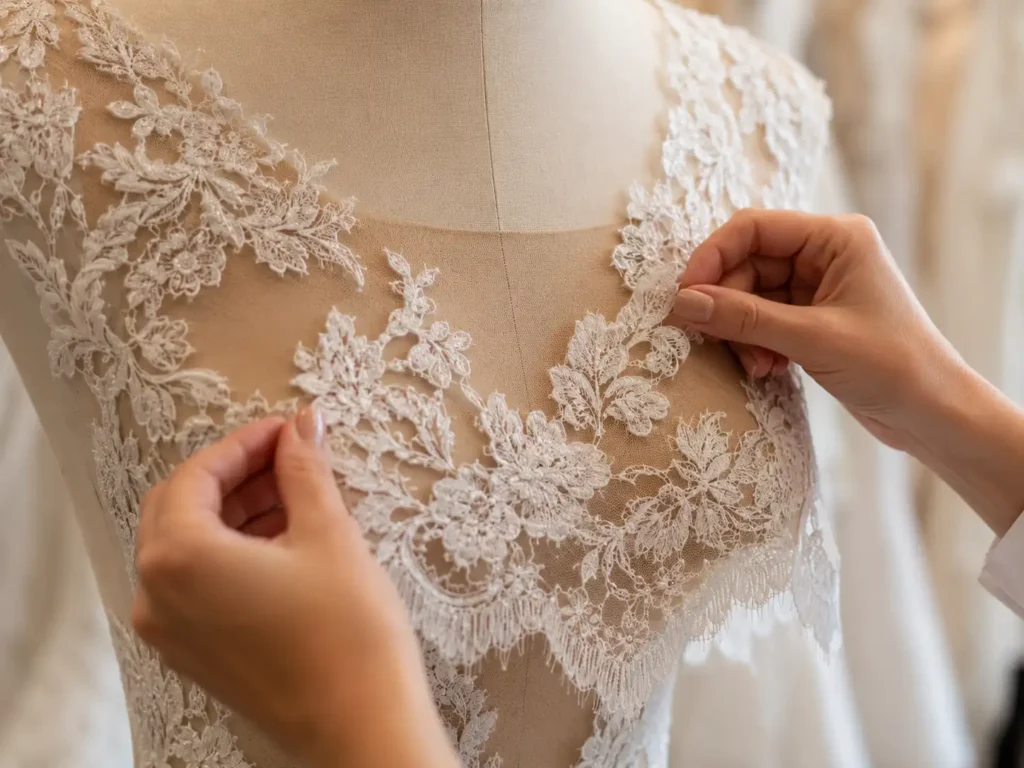
Lace Edge Finish

Hem and Slit Control
Fit Engineering for Soft and Delicate Silhouettes
Sleepwear-inspired shapes often use less visible structure, which makes pattern accuracy more important. Fit review covers bust, waist, hip, garment length, strap length, armhole, neckline, back coverage, slit position and torso length against the approved size chart and reference standard.
Slip and Bias-Cut Fit
Bias and fluid silhouettes can lengthen, twist or pull differently after hanging. Pattern work begins with grain direction and the relationship between bust, waist and hip ease. Side seams should remain visually balanced, the neckline should sit without tension, and the hem should not rise sharply over the hip. Samples are allowed to relax before final hem review when material behavior requires it. Grading is checked carefully because a small error in hip ease or strap position becomes more visible in larger sizes. If the fabric changes in weight, stretch or composition, the fit standard is reviewed again rather than assuming the original pattern remains valid.
Cowl and Camisole Fit
Cowl depth is created through pattern volume, not by simply lowering the neckline. Too little volume looks tight; too much can expose the bust or collapse unevenly. Camisole fit also depends on strap angle, armhole depth, bust shaping and back width. Adjustable straps can fine-tune height but should not be used to compensate for an incorrect body pattern.
Fit comments are translated into measurable changes such as strap length, neckline drop, side seam position, armhole coverage and garment length. A revised sample confirms the combined effect before PP approval.
Corset and Bodysuit Fit
Corset-inspired fashion must support the intended silhouette without creating hard pressure at the ribs, underarm or waist. Cup placement, panel seams, boning channels, back closure and lower-edge shape are checked together. Bodysuits add torso length, crotch width, leg opening, snap position and stretch recovery to the fit equation. A garment can look correct from the front while still pulling at the crotch or gaping at the back, so movement and side-view assessment are part of sample review. Grading rules may differ from ordinary tops because vertical body length and stretch behavior influence comfort.
Relaxed Set Proportions
Pajama-inspired sets need intentional ease rather than uncontrolled volume. Shirt shoulder width, sleeve length, collar scale, button spacing and body length are balanced against trouser rise, hip ease, leg shape and inseam. For satin or viscose sets, the fabric should move without creating excessive drag at the seat or twisting at the leg. Top and bottom samples are reviewed as one retail look, including tuck-in options, layering and shoe styling.
Size grading preserves the relaxed character while preventing shoulders, rises and hems from growing too aggressively.
From Design Reference to Production-Ready Specification
Reference Review
Fabric Direction
Construction Analysis
Pattern Development
Sample Planning
Cost and MOQ Review
Sampling, Fit Review and PP Approval
The sample process is used to create a production-ready standard, not only an attractive prototype. Each round should close defined questions about fabric, measurements, construction, color, trims, labels and packing before the next stage begins.
Sample Timing by Complexity
- Simple styles: normally 7-10 days after suitable fabric and trims are available.
- Regular fashion dresses and sets: normally 10-15 days after materials and specifications are confirmed.
- Complex corset, lace, mesh, multi-layer or special-trim styles: normally 15-25 days.
- Specially dyed, woven, printed or developed materials follow the material supplier schedule and may extend the sample calendar.
First and Fit Samples
The first sample tests the product direction, while a fit sample focuses on measurements, proportion and wearing behavior. Comments should identify measurable changes: neckline drop, strap length, bust shape, waist position, hip ease, garment length, slit height, torso length or lining coverage. Jinfeng Apparel records pattern changes before producing a revised sample so the approval history remains clear across a multi-style program.
Photo and Sales Samples
Photo-ready and salesman samples can be scheduled for approved priority styles when a launch requires campaign shooting, wholesale presentation or internal merchandising review.
These samples should use confirmed or near-final materials so photography does not create expectations that bulk production cannot match. Any temporary substitute is recorded, along with the required change for PP and bulk.
PP and Golden Standards
The PP sample confirms the final production route, including approved fabric, color, trims, measurements, workmanship, labels and packing details. A golden sample or sealed standard provides the reference for bulk inspection and repeat orders. Production should not begin from scattered email comments or an unapproved first sample because unresolved details become multiplied across thousands of garments.
Multi-Style Sample Management
Programs containing 10-30 styles are grouped by fabric family, construction, trim readiness and launch priority. A sample tracker records status such as pattern development, first sample, comments received, revision, fit approval, PP approval and bulk release.
The method helps product teams see where each style stands without forcing every style through the same schedule.

Workmanship for Satin, Lace and Lightweight Fabrics

Narrow Hem Control

Bias Seam Stability

Lace Motif Placement

Clean Binding

Strap Reinforcement

Pressing and Finish
From Approved Sample to Scalable Bulk Production
Bulk planning starts only after the production standard is clear. Jinfeng Apparel allocates styles by fabric, structure, order volume and delivery priority across 6 owned factories and more than 10 long-term production partners, supported by 18+ sewing lines, 6+ flexible lines, 12+ merchandisers and 15+ QC inspectors.
Material Booking and Approval
Fabric, lining, lace, elastic, cups, boning, zippers, labels and packaging are booked against approved specifications. Bulk color, batch, hand feel, stretch and surface are checked before cutting. Special materials may require lab dips, print strike-offs or supplier sample approval. Material readiness is tracked separately from garment sewing so production does not begin with unresolved substitutions.
esolved substitutions. H3:
Satin slips, elastic bodysuits, lace dresses and relaxed sets are not assigned through the same production logic. Allocation considers the team’s product experience, machine and handling requirements, style complexity, quantity, inspection needs and timeline.
Satellite partners are long-term resources used under project management and QC controls, not anonymous temporary workshops.
Cutting and Bundle Control
Cutting plans account for grain direction, nap, print direction, lace motif, shade batches and size ratios. Sensitive fabrics require clean handling and controlled stacking.
Bundles are identified by style, color, size and batch to reduce shade mixing and component errors. Matching-set tops and bottoms are coordinated so retail sets remain consistent.
Sewing and Inline Review
The approved workmanship standard is translated into operation instructions and inline checkpoints. Inspectors review high-risk areas such as strap attachment, neckline shape, cups, boning, lace placement, mesh seams, zipper installation, hem finish and set matching. Issues are corrected during production rather than waiting until the final inspection.
Finishing and Packing Window
Thread trimming, measurement review, pressing, surface inspection, label check and packing require their own schedule. Delicate garments cannot be compressed into a shortened finishing window without increasing damage risk. Launch planning should therefore include material arrival, PP lock, production, QC, packing and shipment as separate milestones.
Multi-Batch and Repeat Orders
Large programs may use phased delivery by launch date, channel or warehouse requirement. Pattern, measurement, fabric, trim, label, packing and carton records are preserved to support repeat orders. Reorders still require material batch and color confirmation because a previous approval does not remove variation in a new supply lot.
Quality Control for High-Visibility Garment Risks
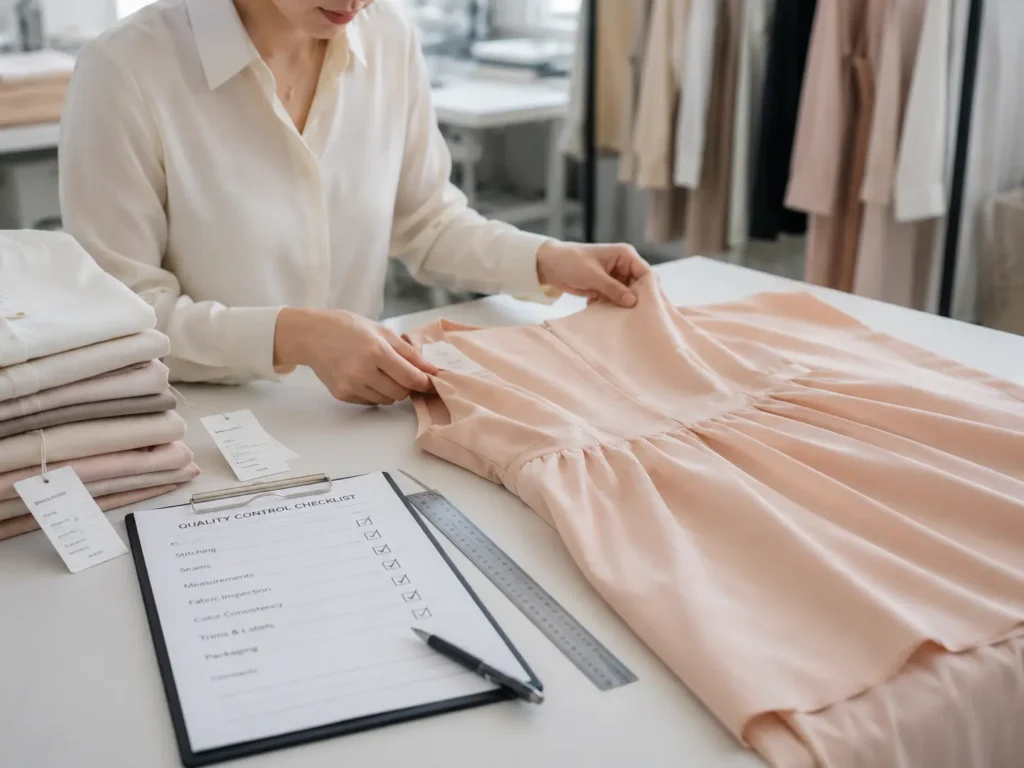
Quality control follows the risk profile of the garment. Satin, lace, mesh, narrow straps and soft structures require more than a general final check because defects can appear in material receipt, cutting, sewing, pressing or packing. Inspection records connect approved standards with production actions.
| Risk | Inspection Focus | Control Stage |
|---|---|---|
| Satin snagging | Surface pulls, scratches, needle damage and handling marks | Incoming material, sewing, finishing |
| Shade variation | Roll, dye-lot, lining and top-bottom color consistency | Fabric inspection, cutting, final check |
| Strap instability | Length, adjustment range, attachment strength and twisting | Sample, inline, garment inspection |
| Excess transparency | Outer fabric, lining color, coverage and movement | Sample approval, final inspection |
| Lace damage | Holes, fraying, motif placement and edge condition | Cutting, sewing, final inspection |
| Mesh deformation | Stretch direction, recovery, hole damage and seam shape | Material review, inline inspection |
| Seam puckering | Thread tension, stitch density, feeding and pressing | Sewing start-up, inline inspection |
| Hem imbalance | Front, side and back length after resting and pressing | Sample, finishing, final measurement |
| Size inconsistency | Key measurements against tolerance and grading standard | Inline measurement, final inspection |
| Packing damage | Folding, pressure, hardware contact, polybag and carton load | Packing QC, shipment preparation |
Private Labels and Retail-Ready Packaging
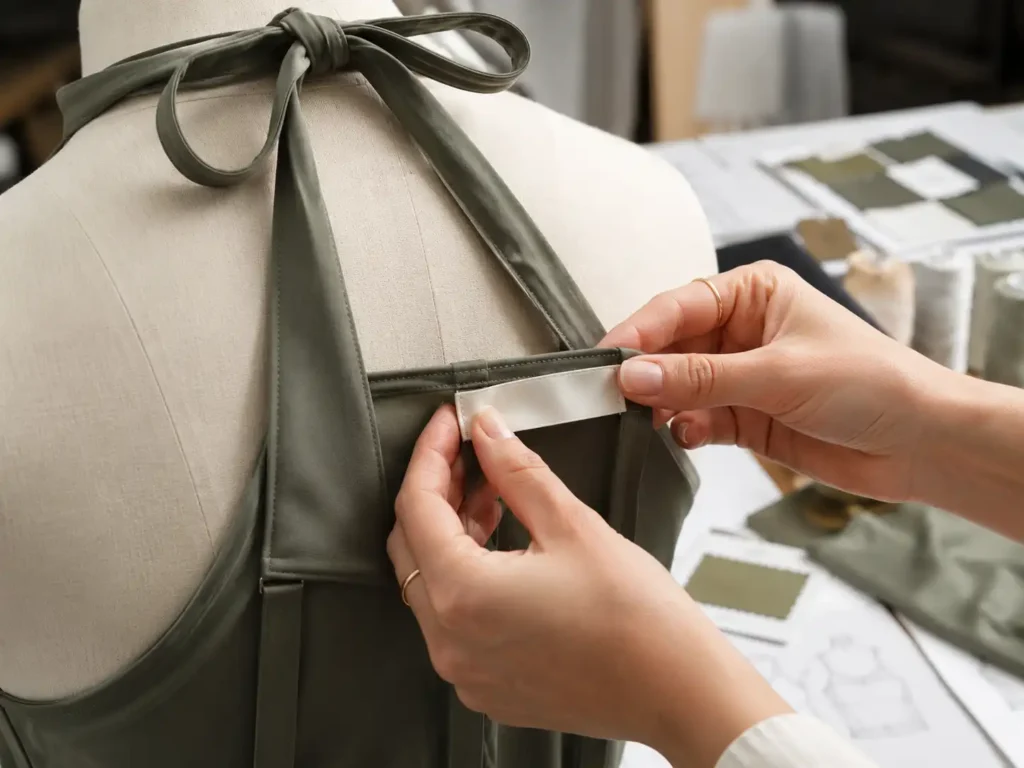
Woven Labels

Size Labels

Care Labels

Hangtags
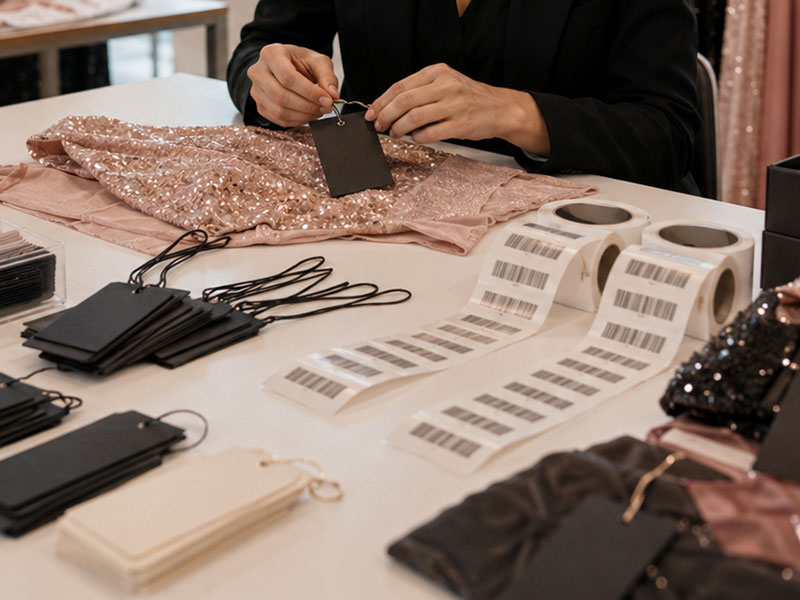
Barcode Stickers

Branded Polybags
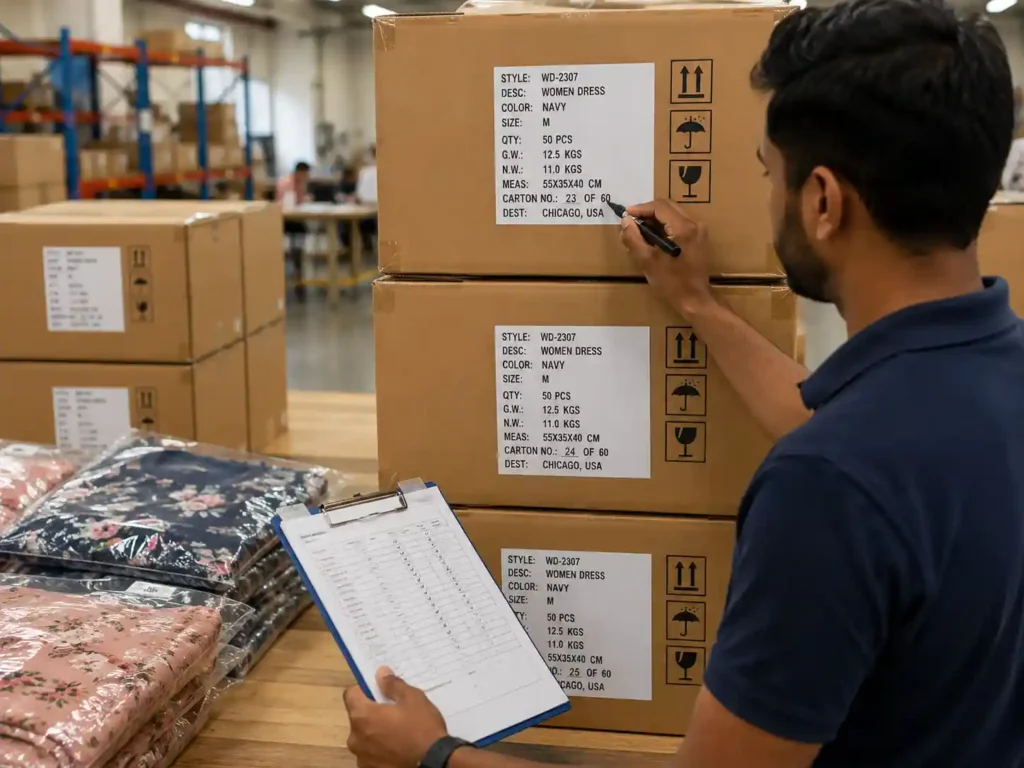
Carton Marks
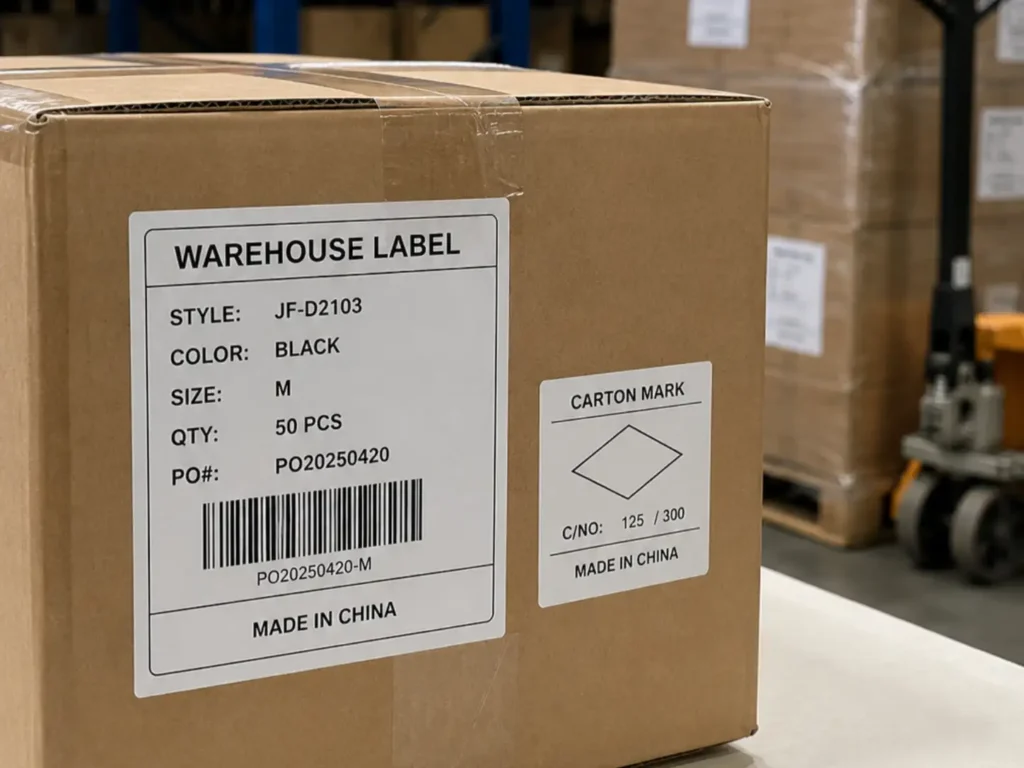
Warehouse Labels
MOQ, Quotation and Project Fit
MOQ starts from 200 pieces per style/color. The production model is designed for brands with clear product direction, sampling requirements and bulk plans. Fabric suppliers, lace, custom dyeing, print development, hardware and private-label materials may carry separate minimums that must be checked before quotation.
Well-Matched Programs
A suitable project normally includes a defined product type, reference image or tech pack, planned quantity by style and color, target size range, fabric direction, label requirements and delivery window.
Multi-style seasonal ranges, repeatable ecommerce programs, sourcing-office projects and private-label collections fit the development model particularly well.
Programs with 10-30 styles can be grouped by material, pattern complexity and launch priority so sampling and production remain manageable.
Quantity Examples
- One style in black, 200 pieces: can be evaluated under the regular MOQ structure.
- One style in black and ivory, 200 pieces per color: 400 pieces total and suitable for evaluation.
- One style split into two colors at 100 pieces each: does not normally meet the per-color production structure.
- Twenty styles totaling 40,000 pieces: quantity planning can be reviewed by style, color, material group and launch phase.
- Special lace, custom print, certified material or branded packaging: supplier-level minimums may apply beyond the garment MOQ.
Quotation Inputs
A reliable quotation requires style drawings or samples, construction details, fabric or hand-feel direction, quantity by style/color, size range, label and packing requirements, destination and requested timing.
The price reflects material consumption, trim specification, pattern and sewing complexity, quantity efficiency, QC, packing and project management.
A single image without quantity and material direction supports only an initial assessment.
Compliance Support and Confidential Product Development
Material and Testing Support
NDA-Based Cooperation
Protected Project Evidence
Sleepwear-Inspired Fashion Programs in Practice

Satin Slip and Cami Collection
A North American fashion program developed 12 styles across satin slip dresses, cowl camisoles, bias skirts and a pajama-inspired trouser set. The order plan totaled 28,800 pieces, with 2-3 colors per style and a coordinated size range. The first technical concern was material consistency: the selected satin needed enough weight for clean drape, controlled shine under flash and reduced transparency in pale colors. A second concern involved shared color across different silhouettes; skirts, tops and dresses had to remain visually matched even when cut on different grain directions. Development grouped the range into three pattern families and two fabric batches. Hero slip styles moved first for fit and photo-sample approval. Strap range, neckline drop, bust shaping, lining length and hem level were recorded by style. Pale shades received a lining comparison, while darker shades were reviewed for surface marks and dye-lot consistency. Simple camisoles moved through sample review in approximately 7-10 days, while bias dresses required 10-15 days because hem behavior and drape needed additional checking.
Before bulk cutting, fabric rolls were separated by batch and shade. Inline inspection focused on seam puckering, strap attachment, cowl symmetry and side-seam balance. Packing used wider folds for longer dresses to reduce hard crease lines. The order was released in two shipment phases so campaign and initial retail quantities moved before the remaining replenishment units. Pattern, fabric, trim and packing records were retained for potential repeat production.

Lace and Mesh Going-Out Capsule

Pajama-Inspired Matching Set Program
A multi-channel women’s fashion brand developed 24 styles and 63,600 pieces across satin shirts, piped trousers, shorts sets, robe jackets and relaxed camisoles. The commercial goal was a sleep-to-street assortment rather than classic nightwear. The range used prints, solid satins and soft viscose directions, creating a need to coordinate collar scale, piping width, shirt length, trouser rise and set packing while still allowing each material family to behave naturally. Sampling was organized by six fabric groups and three launch priorities. Printed styles waited for strike-off approval, while solid-color hero sets entered fit review first. Shirt and trouser proportions were assessed together, including shoulder ease, sleeve length, button spacing, hip room, rise and inseam. Piping color and width were standardized across related styles. A soft viscose trouser was adjusted after the first sample showed excessive growth at the knee and seat; the fabric direction and pattern ease were revised before the next round. Production planning separated print batches, solid dye lots and matching-set components. Cutting bundles were controlled by style, color, size and set code. Inline inspection covered piping alignment, collar symmetry, button placement, rise measurement, leg twisting and top-bottom shade matching. Finished sets were packed by SKU with both pieces confirmed before sealing. The program shipped in three phases aligned with campaign launch, retail floor date and follow-up stock, while approved records supported later color extensions.
Sleepwear-Inspired Fashion Frequently Asked Questions
Start Your Sleepwear-Inspired Fashion Project
Send the available development files to Kelly for an initial project review. A complete brief allows Jinfeng Apparel to assess style structure, suitable fabric direction, sample complexity, MOQ fit, bulk production risks, private-label requirements and a realistic schedule. Tech packs are welcome, although a line sheet, original sample photos or clear reference images can also begin the discussion. Files remain limited to project evaluation, development, production, quality control, packing and delivery coordination.
- Product type and reference image, sketch, line sheet or tech pack
- Quantity plan for each style and color, including the expected total program volume
- Preferred fabric, hand feel, shine, stretch, opacity and lining direction
- Size range, measurement chart and fit standard
- Cup, boning, strap, closure, lace, mesh or trim requirements
- Brand labels, care labels, hangtags, barcode and packaging instructions
- Target sample date, launch date, delivery window and destination market


