 Skip to content
Dress Production Partner in China
From dress development and fit approval to multi-style bulk production, QC, private-label packing and repeat-order support.
Jinfeng Apparel supports established fashion brands, sourcing teams and growing womenswear programs that need more than garment assembly.
- Since 2008in custom women’s fashion manufacturing
- 6 owned women’s fashion factoriessupported by 10+ long-term satellite production partners
- 100,000+ pcs regular monthly production capacityacross approved production programs
- 2 sample roomssupporting development, fit correction and pre-production approval
- Dress-focused production covering party, occasion, satin, mesh, bodycon, resort, evening and structured styles
- Production managed from development files and approved samples through bulk QC, private-label packing and export preparation
Production Capacity Built Around Fashion Collections
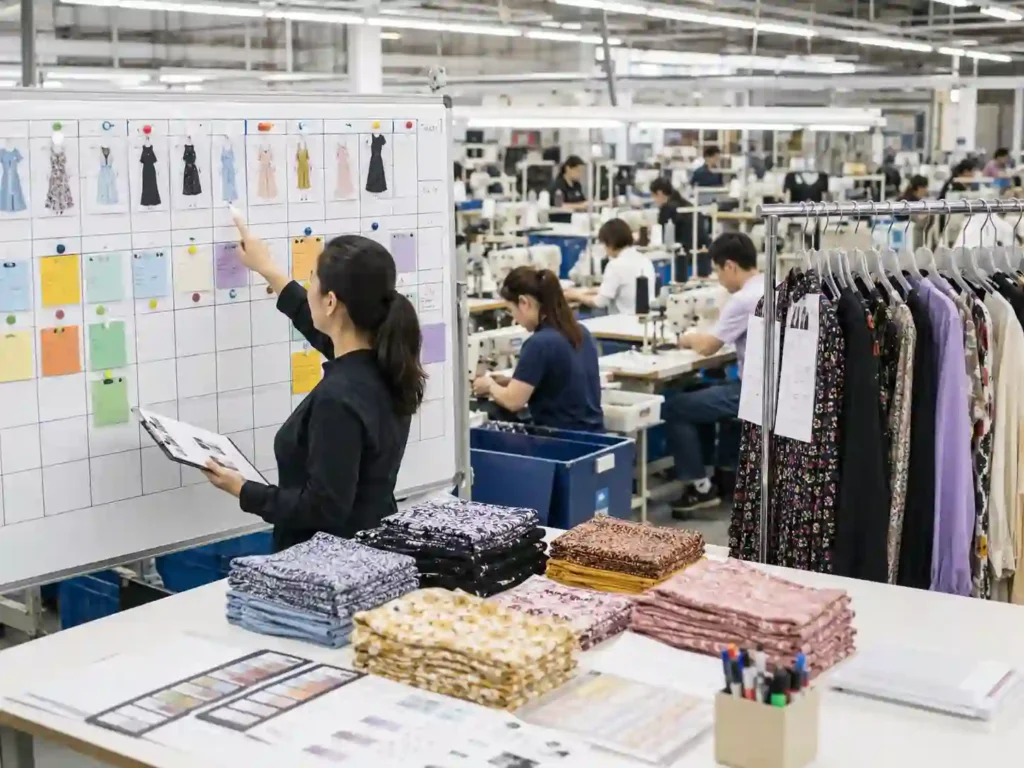
Large dress programs require development resources, production capacity and quality teams working as one system. Jinfeng combines owned manufacturing resources with specialized development, merchandising, QC and finishing teams rather than relying on a single production line.
Since 2008
6 Owned Factories
100,000+ Pcs Monthly
2 Sample Rooms
15+ QC Inspectors
18+ Sewing Lines
Built for Established Fashion Production Programs
Global Fashion Brands
Sourcing Teams
Product Development Teams
Merchandising Teams
Premium Ecommerce Brands
Private Label Programs
Where Dress Production Commonly Goes Wrong
Sample and Bulk Drift
An attractive development sample does not automatically create consistent commercial production. Problems appear when fabric references change, patterns are not formally locked, sewing instructions remain informal or production teams receive incomplete sample information. Key risks include:
- approved measurements not reflected in final production patterns
- material substitutions without reviewing fit or drape
- inconsistent zipper, lining or trim specifications
- sewing methods changing between sample and production
- packaging instructions arriving after garments are already finished
A controlled handover needs final patterns, approved size charts, material references, trim information, construction instructions and a QC checklist before production begins.
Fit Problems Scale Fast
A 1 cm balance issue on one sample can become thousands of poorly fitting garments when a problem reaches bulk. Dress fit needs more than a basic bust-waist-hip table. Common concerns include:
- neckline opening and bust coverage
- strap position and length
- armhole shape
- waist placement
- hip ease or stretch
- slit opening and safety
- hem balance
- lining exposure
- size grading between core sizes
Unclear Production Control
- material approval
- revised sample approval
- PP approval
- production instructions
- measurement tolerance
- inline inspection
- packing confirmation
- final inspection
How to Evaluate a Dress Production Partner
A serious manufacturing evaluation should go beyond price and sample appearance. Development structure, production control and repeat-order capability often determine whether a supplier can support a growing dress program after the first order.
| Qualification Area | What to Verify | Jinfeng Production Approach |
|---|---|---|
| Dress Development | Can the manufacturer interpret tech packs, reference garments and construction details? | Pattern, fit, fabric, trim and sample development are managed before bulk release. |
| Sample Resources | Is sampling supported by dedicated pattern and sample teams? | 2 sample rooms, 7+ senior pattern makers and 20+ sample machinists support development work. |
| Fit Control | How are comments converted into final production standards? | Revised patterns, measurements and PP approval establish the final production reference. |
| Material Control | Are fabric behavior, color, trim and supplier requirements reviewed? | Fabric and trim selections are evaluated through sourcing, sampling, approval and bulk control. |
| Production Structure | Can multi-style collections be allocated and scheduled? | 6 owned factories plus 10+ long-term satellite partners support project-based production allocation. |
| QC | Is quality checked before final packing? | Incoming material, cutting, sewing, measurement, garment and packing checks are used across production. |
| Private Label | Can labels, hangtags, barcodes and packing be controlled? | Brand components are managed against approved specifications and placement requirements. |
| Brand Protection | Can designs and files be handled under confidentiality? | NDA-based cooperation can protect tech packs, patterns, samples, labels, packaging and unreleased designs. |
| Inspection Support | Can outside inspection be coordinated? | Third-party inspection and testing support can be arranged according to project requirements. |
| Repeat Production | Are standards preserved for later orders? | Patterns, BOM information, QC notes, packing standards and Golden Samples can support repeat production. |
A Production Network Managed as One System
A dress production partner needs more than factory space. Product development, material approvals, production allocation and quality decisions must remain connected from the first line sheet through finished cartons.
Owned Production as the Core
Jinfeng operates six owned women’s fashion factories supported by 10+ long-term satellite production partners. Owned factories form the central production base, while satellite resources provide additional category and capacity flexibility when projects require it.
Production allocation begins with the garment rather than an empty sewing line. A stretch bodycon program needs different handling from a bias-cut satin dress. A structured evening dress with cups, boning and lining requires a different workflow from a lightweight printed resort dress.
Key allocation considerations include:
- fabric behavior and cutting requirements
- stretch direction and recovery
- dress construction and internal structure
- decorative workmanship
- style count
- quantity by style and color
- production calendar
- QC sensitivity
- packing requirements
Project allocation is therefore part of production engineering. The objective is not to push every garment into the fastest available line, but to place approved products into production resources suited to their construction.
Production Planning Before Cutting
Large collection programs create complexity long before sewing starts.
Twenty styles can mean different fabrics, color groups, size ratios, zippers, linings, labels and carton requirements moving through the supply chain simultaneously.
Before commercial cutting begins, production preparation may include:
- approved PP sample
- confirmed fabric and color
- trim specification
- final pattern
- size chart and grading information
- production order
- sewing notes
- label placement
- packing instructions
- QC checklist
Material availability is especially important.
A garment cannot be scheduled accurately when the main fabric remains unapproved or a special trim has not cleared its supplier requirement.
Production calendars are therefore built around real material and approval status instead of an assumed sewing date.
Flexible Capacity Without Losing Control
Regular monthly capacity exceeds 100,000 pieces, supported by 18+ sewing lines and 6+ flexible production lines. Production scale matters, but coordination matters more for multi-style fashion programs.
Large orders are not treated as one number. Capacity planning considers:
- style grouping
- factory allocation
- cutting sequence
- material arrival
- sewing load
- inspection windows
- finishing capacity
- private-label packing
- shipment preparation
A 60,000-piece collection containing 25 styles carries far more planning variables than 60,000 identical garments. Project review therefore starts from the style list, construction, colors and required delivery window before production capacity is committed.
Dress Categories Developed for Commercial Production

Party Dresses
- Key focus: fit, stretch, transparency, embellishment
- Typical control: pattern balance, seam recovery, lining coverage, finishing

Occasion Dresses
- Key focus: drape, structure, clean finishing
- Typical control: PP approval, lining, hem, zipper, pressing

Satin Dresses
- Key focus: shine, drape, grain direction, shade
- Typical control: fabric approval, cutting direction, pressing, packing

Mesh Dresses
- Key focus: transparency, stretch, recovery
- Typical control: lining coverage, seam stability, neckline shape

Bodycon Dresses
- Key focus: stretch recovery, shaping, grading
- Typical control: bust-waist-hip balance, side seams, hem behavior

Resort Dresses
- Key focus: lightweight drape, prints, shrinkage
- Typical control: fabric testing, length balance, packing method

Evening Dresses
Evening dresses may combine structured bodices with flowing skirts, internal support, lining, decorative trims or complex necklines. Development needs to verify internal structure before surface finishing. A visually beautiful sample still requires construction standards clear enough to reproduce across commercial quantities.
- Key focus: structure, support, refined finishing
- Typical control: bodice construction, lining, closures, PP sample

Structured Dresses
Corset-inspired and structured dresses require careful coordination between pattern, bra cups, boning, underwire, anti-slip elements, lining and closure position. Incorrect internal tension can distort the neckline or waist even when outside measurements appear correct.
- Key focus: bust support, waist shaping, internal structure
- Typical control: cup position, boning, pattern tension, fit approval
Fabric and Trim Decisions Before Production
Material choice changes the way a dress hangs, stretches, reflects light, recovers after movement and responds to sewing. Jinfeng treats fabric and trim development as part of garment engineering rather than a purchasing step after design approval.
Satin, Crepe and Fluid Wovens
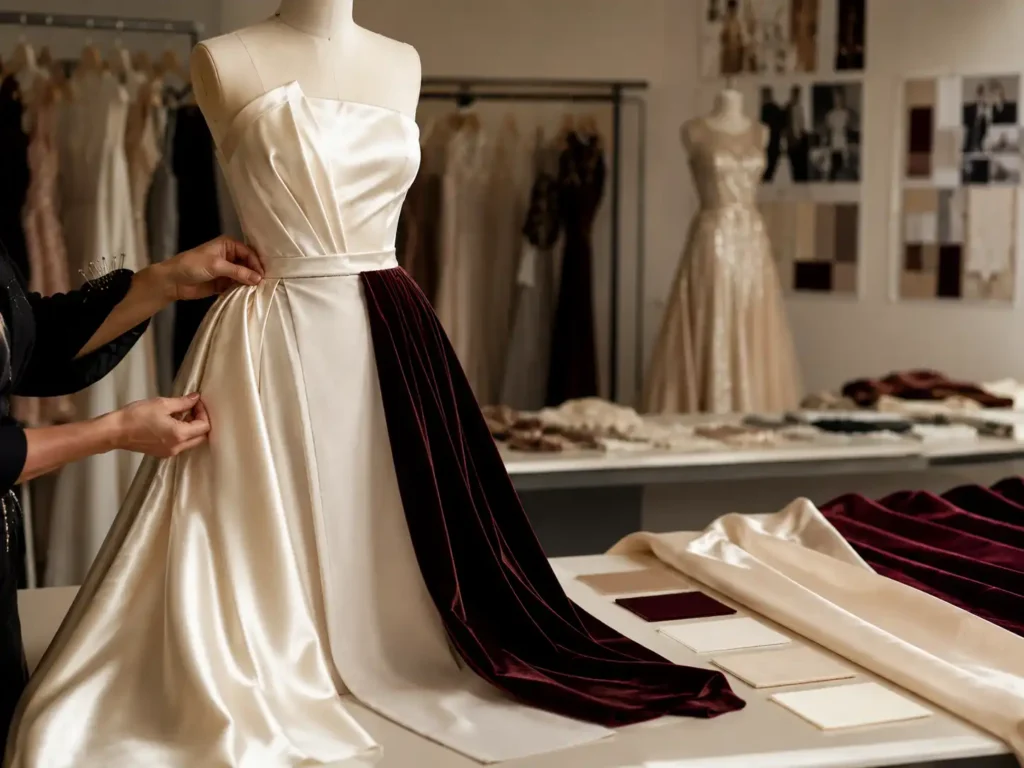
A satin dress can change dramatically when weight, weave, surface finish or fiber composition changes. A lighter satin may create a softer drape but reveal seam tension or body outlines more easily. A heavier satin can improve coverage while changing movement and pattern balance.
Development review can consider:
- weight and hand feel
- shine level
- drape
- snag sensitivity
- shade variation
- wrinkle behavior
- shrinkage
- grain direction
- lining compatibility
- zipper behavior
Bias-cut dresses need additional attention because fabric stretch along the bias can change garment length and side-seam balance after hanging.
Crepe and other fluid wovens may reduce shine but introduce different pressing, shrinkage or texture considerations. Fabric substitution therefore requires more than finding a similar color. Jinfeng compares relevant performance factors and re-checks whether the pattern, lining or production method needs adjustment when a material changes.

Mesh, Lace and Transparency
Mesh and lace bring visual depth but increase development risk because transparency and structure interact with fit.
For mesh, important factors include:
- stretch percentage and direction
- recovery
- transparency
- hole size
- surface feel
- lining coverage
- seam stability
- neckline recovery
A softer mesh may look more refined but lack enough recovery for a fitted neckline.
A stronger power mesh may improve support but change the intended hand feel.
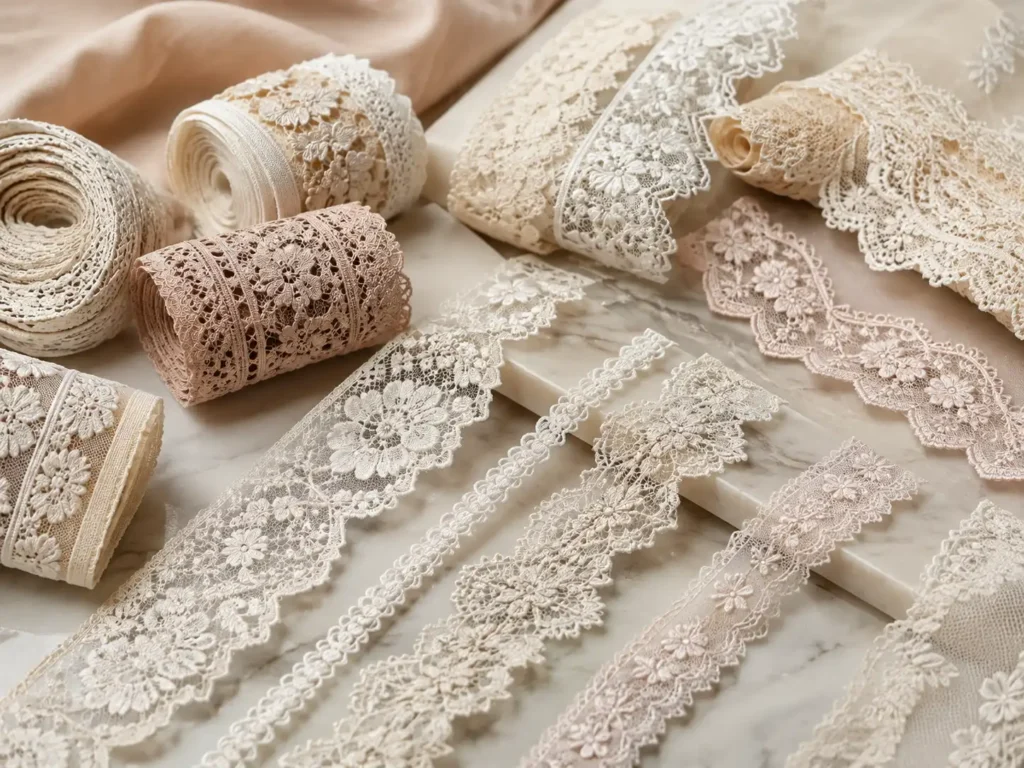
Lace adds another layer of control. Motif placement, scalloped edges, joining points and lining color can change the final appearance significantly.
Cutting efficiency also depends on motif direction and placement requirements.
During development, the objective is to confirm the actual combination of shell, lining, elastic or support materials that can be reproduced in production—not merely approve each material separately.

Stretch Fabrics and Recovery
Stretch dresses require material decisions to work together with the pattern. Two fabrics with similar appearance can produce completely different fit when stretch and recovery differ.
Development review can cover:
- two-way or four-way stretch
- stretch direction
- recovery after extension
- fabric weight
- opacity under tension
- seam recovery
- edge curling
- shrinkage
- surface pilling risk
Bodycon and fitted dresses are especially sensitive. A fabric with weaker recovery can cause waist or hip areas to relax after wear. A fabric with stronger compression can make an approved pattern feel smaller than expected.
When stretch fabric changes after sampling, pattern assumptions should be reviewed again. Jinfeng does not treat a fabric replacement as a simple purchasing substitution when fit, lining or construction may also be affected.
Trims as Part of Construction
Dress trims include far more than decoration. Invisible zippers, hooks, sliders, elastics, bra cups, underwires, boning, anti-slip tape, linings, lace trims, sequins, rhinestones and branded components can influence fit, comfort and manufacturability.
Jinfeng’s trim system covers closure, adjustment, support, decoration, branding and packaging materials.
Selection criteria can include:
- color matching
- strength
- comfort against skin
- placement
- material compatibility
- sewing method
- supplier MOQ
- development time
- production cost
- QC risk
Special trims may carry separate supplier requirements or longer development windows, so key trims should be evaluated before the final production calendar is locked.
Pattern, Fit and Construction Developed Together
A dress can match a sketch visually and still fail commercially if proportion, movement or internal structure is wrong. Pattern development converts design intent into dimensions and construction rules that can survive grading and bulk production.
Fit Starts With Body Proportion
Core measurements provide a starting point, not a complete answer. Dress fit depends on how measurements relate to neckline depth, bust shaping, waist position, hip ease, strap placement and garment length.
Development can review:
- bust width and shaping
- neckline opening
- shoulder and strap position
- armhole depth
- waist placement
- hip ease
- side-seam balance
- slit height
- hem level
- lining length
A fitted satin dress and a stretch jersey dress cannot use identical ease logic. A corset-style bodice requires support and tension control that a relaxed resort dress does not need.
Fit comments should be translated into measured pattern corrections rather than verbal sewing adjustments. Jinfeng’s development framework records revised measurements, pattern changes and construction notes before moving toward PP approval.
Structure Must Survive Movement
Static fit during a showroom check can hide problems that appear when the wearer walks, sits or raises her arms. Product development therefore needs to examine movement and stress around areas such as:
- neckline
- bust
- underarm
- waist seam
- hip
- slit
- zipper
- strap attachment
Structured dresses add internal components such as cups, boning, underwires and anti-slip tape. Their tension must support the body without pulling the neckline or distorting outer fabric.
Cut-outs and mesh inserts create another structural challenge because seam tension needs to remain balanced around open areas.
Production-ready construction is reached when appearance, comfort and sewing method agree.
A complicated structure should not enter bulk simply because a first sample can be assembled once.
Grading Protects the Silhouette
A good sample in one size does not guarantee a balanced range. Grading changes proportions, not merely every measurement by the same amount.
Important grading areas can include:
- neckline width
- strap position
- bust shaping
- waist level
- hip distribution
- slit length
- skirt sweep
- body length
- sleeve or armhole balance
Stretch properties also influence grade rules. A fitted mesh or jersey dress may require different ease decisions from a non-stretch satin style.
Before commercial production, approved measurements and grade rules should be consistent with the final pattern. Measurement checkpoints then give QC teams a defined reference rather than asking inspectors to judge fit visually.

Sampling Built to Reduce Bulk Risk
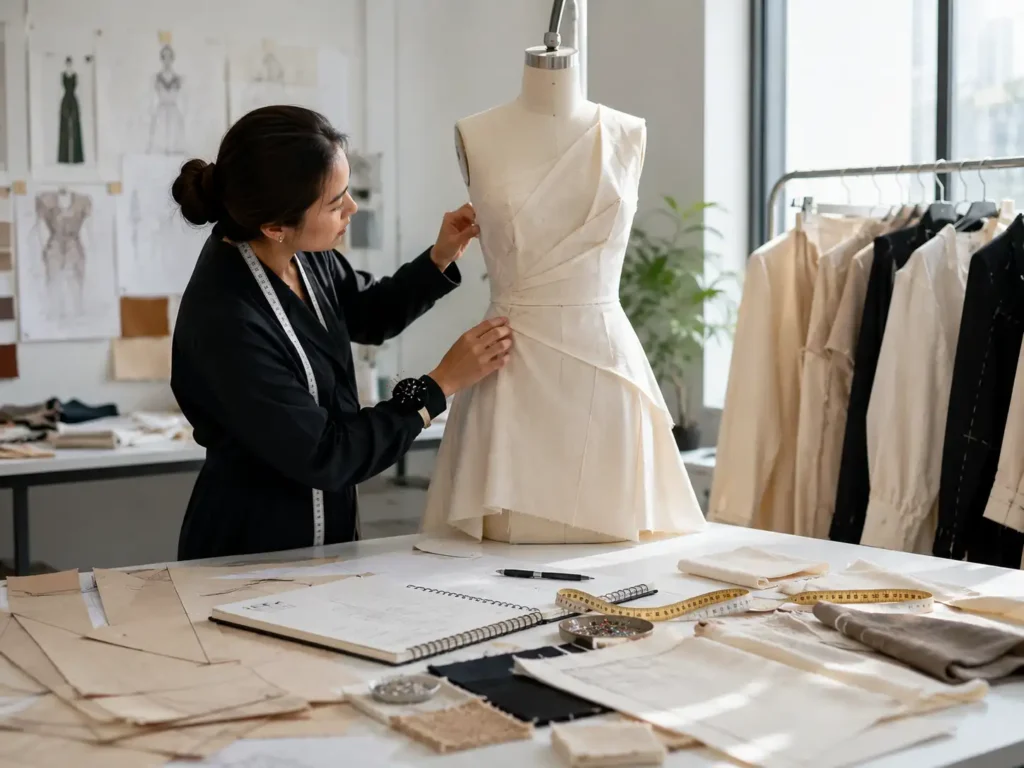
Sampling is a development process, not a request for one perfect garment on the first attempt. Jinfeng uses dedicated sample resources to test design, fabric, pattern, fit and construction before commercial quantities are released.
From Design Input to First Sample
Development can begin from several forms of product information:
- tech pack
- line sheet
- reference image
- sketch
- original garment sample
- measurement specification
More complete information creates a clearer development path, but incomplete design input can still be reviewed for feasibility.
The initial review can identify:
- fabric direction
- construction method
- lining requirement
- trim requirement
- pattern complexity
- likely fit risks
- production feasibility
- information still required
Jinfeng operates 2 sample rooms, with 7+ senior pattern makers and 20+ sample machinists supporting development work.
The first sample is used to test the physical interpretation of the design. It should reveal whether silhouette, fabric behavior, structure and workmanship are moving in the correct direction. Treating a first sample as automatic bulk approval can carry unresolved fit or construction problems into production.

Fit Review and Sample Revision
Sample feedback needs enough detail for pattern and construction teams to act on it.
Useful comments can include:
- measurement notes
- fitting photographs
- marked-up tech packs
- annotated sample images
- material feedback
- construction comments
- reference fit comparisons
A comment such as “waist too loose” is less useful than a measured change showing where and by how much the garment should be corrected.
Revision records can update:
- pattern
- measurements
- fabric or trim references
- construction notes
- cost impact
- production implications
When material changes significantly, fit may need to be checked again because drape, stretch, recovery and shrinkage can alter garment behavior.
Jinfeng’s source rules explicitly require material changes to be reviewed for pattern, lining, costing and lead-time impact.

Sample Types With Different Jobs
Not every sample should be judged for the same purpose.
First Sample: verifies initial silhouette, construction and material direction.
Fit Sample: concentrates on body proportion, movement and measurement correction.
Revised Sample: verifies changes after development feedback.
Photo-Ready Sample: supports visual presentation when a program needs campaign or ecommerce imagery, while commercial feasibility still needs to remain intact.
PP Sample: becomes the final production approval reference after required details are confirmed.
Golden Sample: provides a retained physical standard for production, QC, packing and future repeat orders.
Fixed sample completion promises are avoided because timing depends on material readiness, style construction, revision scope and sample type.
Production planning becomes more reliable when development milestones are agreed from actual product requirements rather than one universal sample-day claim.
PP and Golden Samples Lock Production Standards
PP Sample Approval
A PP sample is not simply another fit sample. It represents the final production approval before bulk cutting and sewing proceed under the confirmed standard.
Relevant approvals may cover fabric, color, trims, measurement, construction, labels, hangtags and packing direction. Once approved, any meaningful change should be reviewed for cost, material or production impact before implementation.
Casual changes after PP approval can disrupt fabric purchasing, sewing instructions, QC standards and delivery planning.
Golden Sample Control
A Golden Sample gives production, merchandising and QC teams a shared physical reference.
It can preserve agreed appearance, construction, trim position, measurements, label placement and packing direction. For repeat orders, retained standards also reduce the risk of relying only on old emails or individual memory.
Golden Sample control is especially useful when a successful style returns in another production batch. New colors or changed materials may still require approval, but the original standard provides a strong technical starting point.
Controlled Change Process
Fashion programs sometimes change after development. A trim becomes unavailable, a color is replaced or a merchandising team requests a fit adjustment. Changes remain manageable when their impact is evaluated before implementation. A controlled review asks:
- Does the pattern need revision?
- Does the sample need remaking?
- Does cost change?
- Does material availability change?
- Does QC need a new reference?
- Does packing information change?
- Does the production calendar need adjustment?
How Approved Samples Transfer Into Bulk
The most important production transition happens after sample approval. Approved garments must become repeatable technical information for cutting, sewing, inspection and packing teams.
Final Pattern and Measurement Handover
Fit comments should end as final production information.The handover can include:
- final pattern file
- approved size chart
- grade rules
- tolerance points
- key garment measurements
- construction notes
A production operator should not need to interpret old comments such as “make the waist slightly tighter.”Final documents should already reflect the accepted correction.Pattern changes also need alignment with fabric behavior.If a fabric used during development is replaced, stretch, recovery, shrinkage or drape can change the garment.
Final patterns should therefore correspond to the actual approved production material.The same principle applies to grading. Commercial size specifications should match final pattern rules so QC measurements can be checked against a consistent source.
Material and Construction Handover
Production needs more than the outer fabric.
A complete material handover can identify:
- shell fabric
- lining
- interlining
- elastic
- zipper
- hooks
- cups
- boning
- decorative trims
- labels
- hangtags
- packaging components
Trim cards and BOM information help separate approved components from visually similar substitutes.
QC and Packing Join the Same Standard
Sample approval only protects bulk when inspection and packing teams receive the same references.
QC information can include:
- measurement checkpoints
- visual defect standards
- fabric concerns
- seam concerns
- trim placement
- pressing requirements
- label placement
- packing method
Packing instructions may cover SKU, barcode, size sticker, polybag, folding and carton marks.
Jinfeng’s production rules specifically connect final pattern, size chart, fabric reference, trim card, sewing instructions, label placement, packing instructions and QC checklist during sample-to-bulk transfer.

Multi-Style Production Without Losing Visibility
Fashion collections rarely arrive as one style in one color. Large programs can involve dozens of SKUs moving through material purchasing, cutting, sewing, QC, finishing and packing at different speeds.
Collection-Level Production Planning
A program containing 10–30 styles needs planning at collection level as well as style level.
A production plan can consider:
- style count
- quantity by style
- quantity by color
- size ratio
- material grouping
- trim grouping
- construction difficulty
- factory allocation
- production sequence
- shipment window
Programs using shared fabrics or trims can sometimes gain purchasing and production efficiency when development decisions are coordinated early.
Fashion calendars also require judgment about sequencing.
Simple styles may move ahead while more complex structured or embellished products remain in development.
Holding an entire collection for one unresolved style can be unnecessary, while releasing an unresolved complex garment too early creates a different risk.
Collection production therefore relies on controlled release rather than treating every SKU as if it had reached the same stage.
Bulk Production Control
After approval and material arrival, production may move through:
fabric inspection
→ relaxing where required
→ cutting
→ panel checking
→ sewing
→ inline inspection
→ pressing
→ finishing
→ garment inspection
→ packing.
Control points vary according to product risk.
For satin, attention may concentrate on surface damage, shade, cutting direction, seam appearance, zipper and pressing.
For mesh, inspection may emphasize holes, transparency, seam stability and stretch deformation.
For bodycon garments, measurement and recovery are critical.
For embellished dresses, decorative placement, shedding risk and surface protection require closer review.
Jinfeng’s regular capacity of 100,000+ pieces per month is supported by 18+ sewing lines and 6+ flexible lines, while final capacity remains project-dependent according to style complexity and allocation.
Finishing and Shipping Preparation
Production does not finish at the sewing machine.
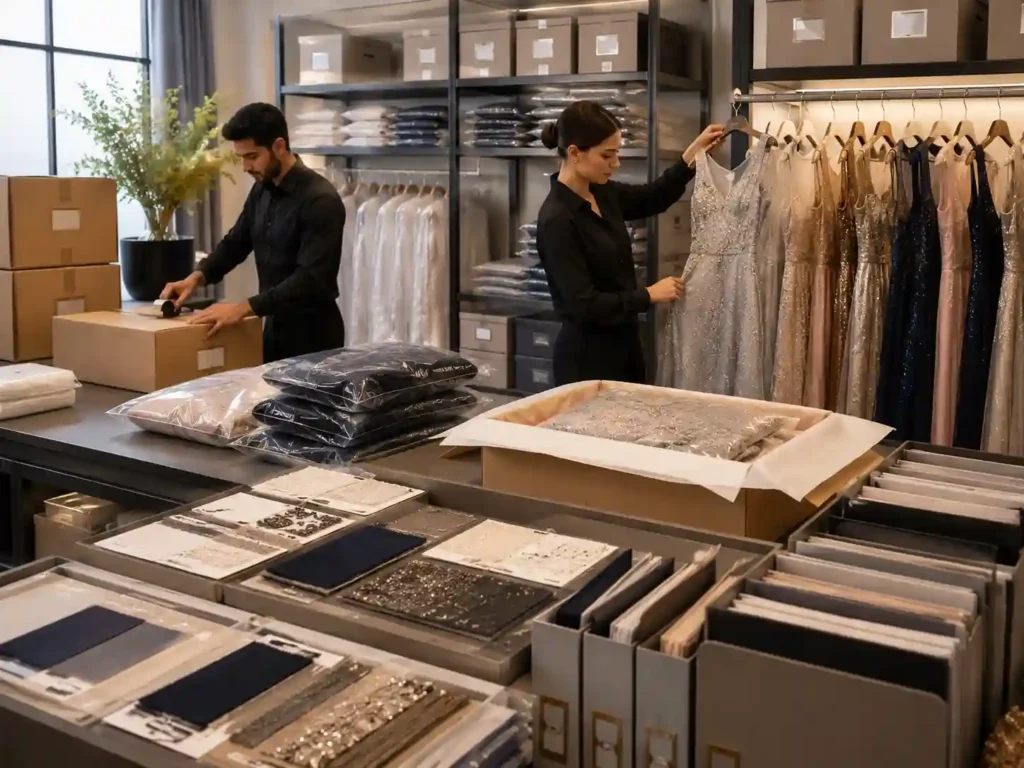
Jinfeng has 30+ finishing and packing workers supporting garment completion and packing preparation.
Finishing can include:
- thread cleaning
- pressing
- appearance review
- label confirmation
- folding
- polybagging
- SKU checks
- carton packing
- carton marks
Shipping preparation can then align packing lists, commercial documents and forwarder requirements according to agreed trade terms.
Express, air and sea freight can be coordinated, while EXW, FOB, CIF, DAP or DDP arrangements are evaluated according to each project rather than promised universally.

Project Management Across Every Production Stage
Reliable communication depends on clear ownership. Jinfeng combines merchandising, development, production, quality and packing roles so project information can move with the garment rather than remain with one salesperson.
Merchandising Coordination
Jinfeng has 12+ merchandisers and order follow-up specialists supporting project coordination. Their role connects style information, sample feedback, material status, production planning, packing requirements and shipment preparation.
A strong merchandiser does more than forward messages. The role helps identify missing decisions and keeps approval records aligned with production progress.
Development Coordination
Pattern makers and sample teams handle the technical translation between design and garment. Development comments should flow back into revised patterns, measurements and construction notes.
Coordination becomes especially important when design changes affect fabric, lining, trims or cost. A change is not complete until each affected production reference has been updated.
Production Coordination
Production teams need final, approved information rather than ongoing development discussion. Merchandising and production management therefore coordinate material arrival, production allocation, sewing readiness, QC timing, finishing and packing.
Multi-style programs benefit from visibility by style because not every SKU will reach each production stage on the same day.
Quality Coordination
QC teams operate against approved references rather than personal judgment. Measurement tables, Golden Samples, fabric concerns, construction notes and packing instructions help align inspection with product requirements.
Problems identified during inline inspection should reach production teams early enough for correction before large quantities accumulate.
Packing Coordination
Brand components need the same control as garment components. Packing teams work against approved label, barcode, polybag, folding, SKU and carton instructions.
Packaging errors are easier to prevent when requirements are confirmed before the final production stage rather than delivered after finished goods have already reached packing.
Shipping Coordination
Shipment preparation brings packing quantities, carton data, export documents and nominated forwarder information together. Delivery method can be aligned with project timing and commercial requirements.
Jinfeng can work with client-nominated forwarders and project-based shipping arrangements rather than forcing every program into one logistics method.
Quality Control From Fabric to Packed Carton
Quality control works best when defects are prevented or identified close to the production stage where they originate. Final inspection remains important, but it cannot replace material, cutting and inline controls earlier in the process.
| QC Stage | Main Control Areas | Common Dress Risks |
|---|---|---|
| Incoming Material | Fabric appearance, color, usable quality, trim reference | Shade variation, surface damage, incorrect stretch, trim mismatch |
| Cutting | Direction, marker accuracy, panel condition | Wrong grain, fabric damage, mismatched panels |
| Sewing | Construction, seam appearance, component placement | Puckering, uneven seams, zipper distortion, mesh damage |
| Inline Inspection | Workmanship during production | Repeated defects spreading across the line |
| Measurement | Approved points and tolerance | Bust, waist, hip, length or strap variation |
| Garment Inspection | Overall appearance and function | Uneven hem, lining exposure, closure problems |
| Pressing Review | Surface and silhouette | Satin marks, distorted seams, unwanted creases |
| Packing QC | Labels, SKU, polybag, folding, carton marks | Mixed sizes, wrong barcode, incorrect packing |
| Final / AQL | Finished shipment according to agreed inspection plan | Shipment-level quality and quantity issues |
Private Label Packing Ready for Brand Operations
Woven Labels
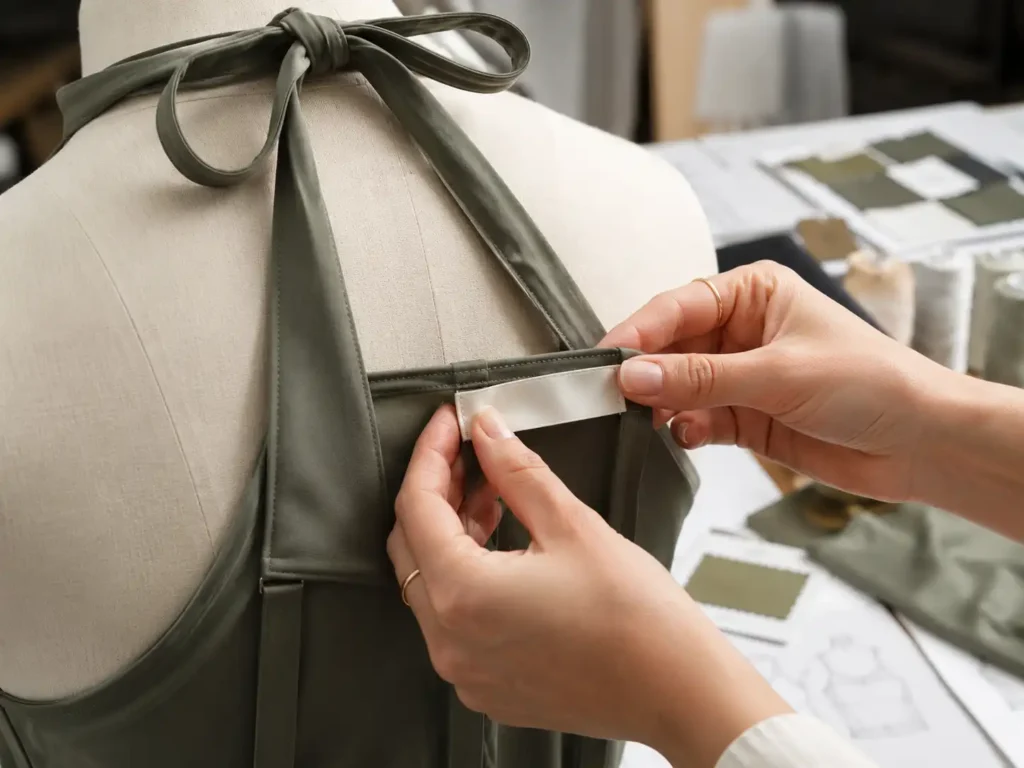
- Confirm artwork and construction
- Approve placement
- Verify color and size
- Check attachment during production

Care and Size Labels
- Size identification
- Fiber and care information according to supplied requirements
- Approved label position
- Production and packing verification
Hangtags
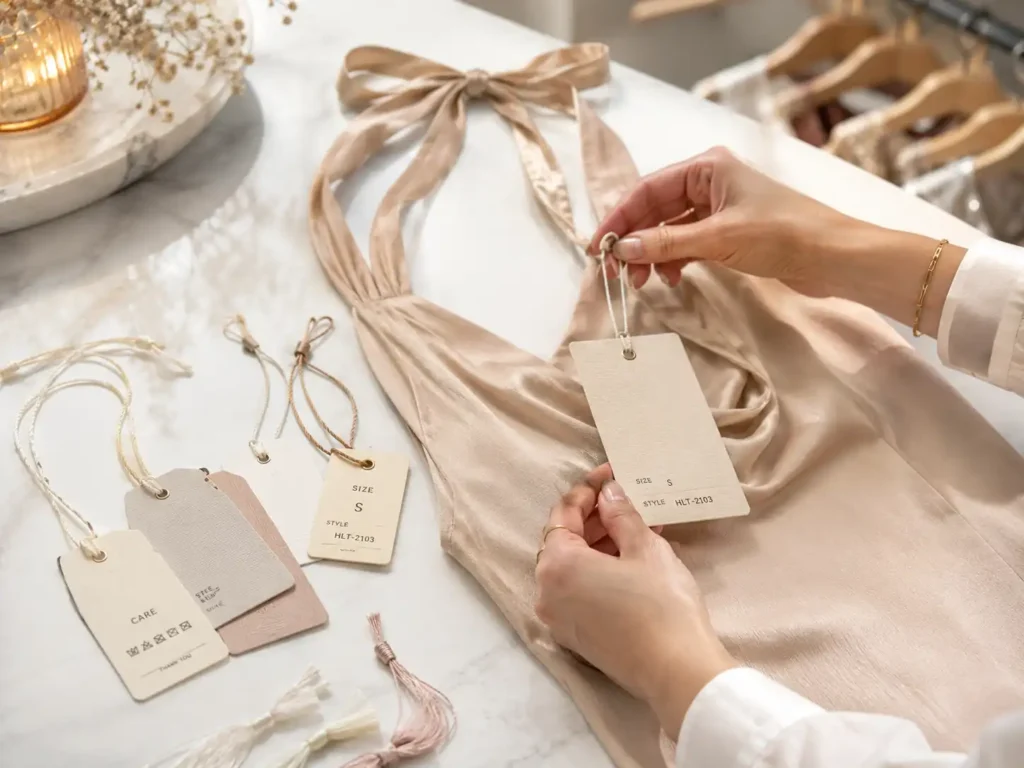
- Artwork approval
- Material and finish
- Attachment position
- SKU or price information where supplied
- Packing protection
Barcode and SKU
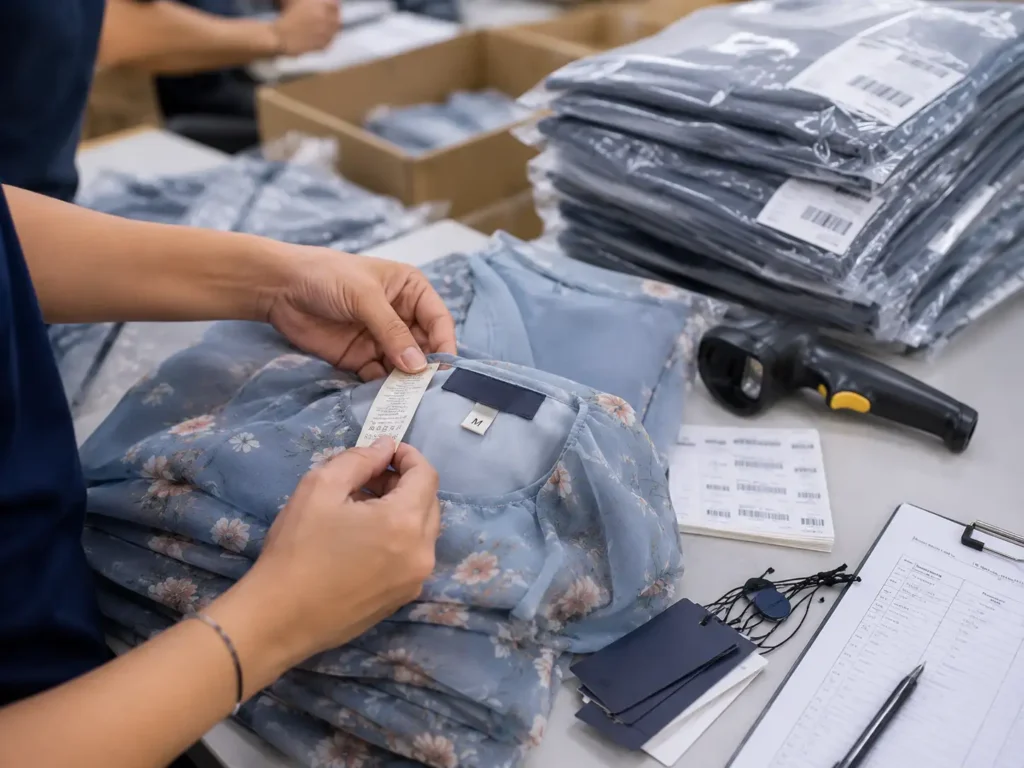
Ecommerce and retail programs rely on accurate style, color and size identification. A correct dress placed in the wrong SKU bag can create warehouse errors even when garment quality is perfect.
- Barcode file confirmation
- Size/color matching
- Sticker placement
- Polybag verification
- Carton ratio check
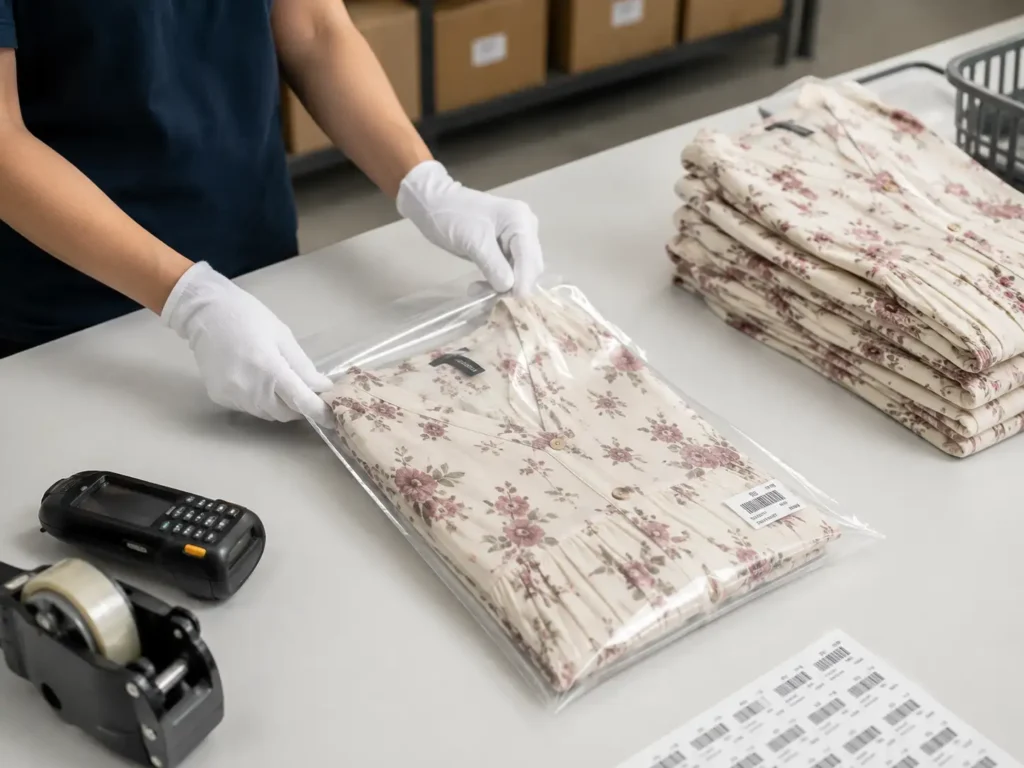
Polybag Packing
Polybags protect garments while carrying size or barcode information according to the packing program.
Bag size, material, printing and folding direction should match garment requirements.
Satin and embellished garments may need more attention to folding and internal protection so surface appearance is preserved after transportation.

Carton and Warehouse Marks
Outer-carton information helps logistics teams move finished goods into the correct warehouse or distribution channel.
Packing control can include:
- carton marks
- style identification
- size/color ratio
- carton quantity
- warehouse labels
- packing list alignment
Protecting Designs, Compliance and Inspection Requirements
NDA and Design Protection
Protected materials can include:
- tech packs
- patterns
- garment samples
- label artwork
- packaging files
- unreleased designs
- order information
Compliance by Project
Certification and compliance requirements need verification against the actual material, supplier, factory, batch and document scope.
Jinfeng can source certified-material options where available and coordinate project requirements, but certification should never be assumed across every fabric or production program.
Relevant questions include:
- Which certificate is required?
- Which material supplier does it cover?
- Is the required color or batch included?
- Is a transaction document needed?
- Does the final garment require additional testing?
Third-Party Support
Third-party testing or inspection can be coordinated according to market and project requirements.
Support may involve organizations such as SGS, Intertek, Bureau Veritas or ITS where relevant.
Testing institutions issue their own conclusions; Jinfeng coordinates manufacturing access, samples or production information required for the agreed process.
Inspection requirements should ideally be defined before production so sampling, QC and shipping schedules can accommodate them.
Built for Repeat Orders and Seasonal Collections
A production partner becomes more valuable after the first successful program. Retained patterns, material references, technical records and packing standards create a stronger base for new colors, repeat orders and future seasonal development.
Preserve Approved Standards
Repeat production should not restart from memory.
Jinfeng can retain project references including:
- patterns
- measurement specifications
- BOM information
- fabric references
- color information
- trim records
- packing requirements
- QC notes
- Golden Sample references
Retained information helps teams identify what should remain unchanged and what needs fresh approval.
A repeat order may still require review when material batches, colors, trims or packaging change. A new satin batch, for example, may show a different shade or hand feel even when supplied under the same general material description.
Long-term production is therefore based on preserved standards plus controlled re-confirmation, not an assumption that every repeat order is automatically identical.
New Colors and Collection Extensions
Successful dresses are often extended into additional colors, fabrics or related silhouettes.
A new color can require:
- color approval
- shade review
- trim color matching
- lining review
- label or barcode updates
- SKU changes
A fabric change can affect:
- drape
- stretch
- recovery
- pattern
- lining
- cost
- production timing
New styles built around proven blocks may develop faster because previous fit information creates a starting point, but every garment still needs review against its actual design and material.
Develop, Launch and Repeat
A long-term dress production relationship generally follows a cycle:
Develop — review line sheets, fabrics, patterns and samples.
Approve — finalize fit, PP standards and production files.
Launch — move approved styles through bulk production, QC and branded packing.
Repeat — use preserved records for repeat colors, repeat styles or future collections while re-confirming changes.
Jinfeng’s internal content system identifies long-term production partner, repeat-order support and Test → Launch → Repeat as standard expressions for ongoing manufacturing relationships.
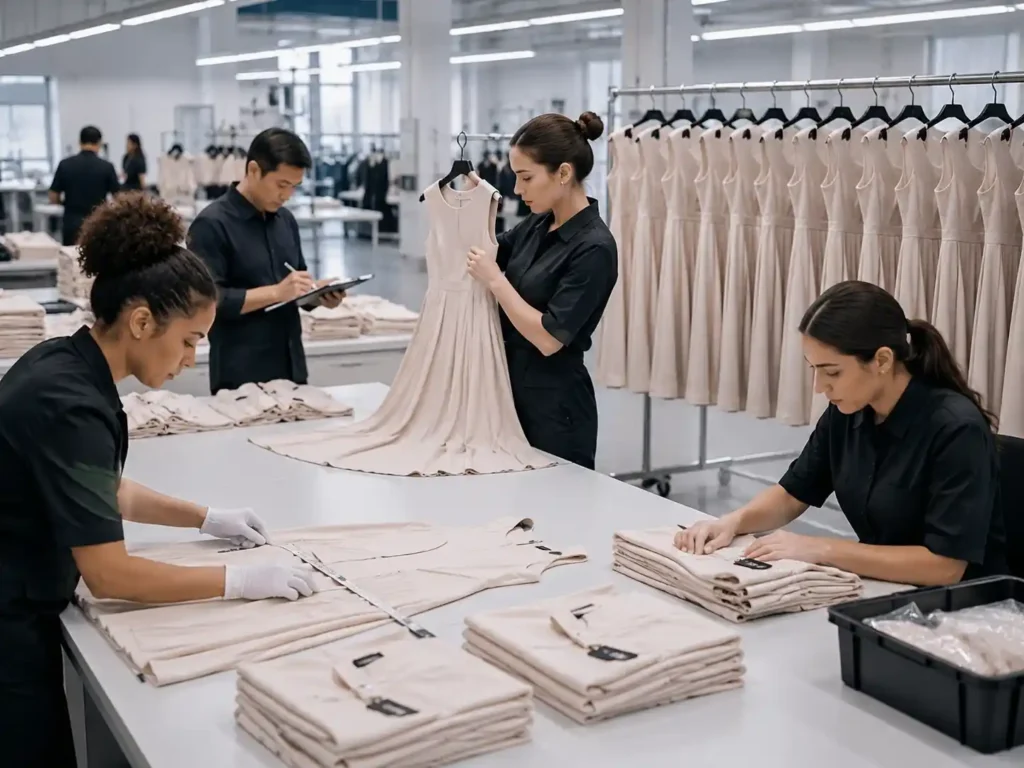
Dress Programs Built Around Real Production Scale

US Occasionwear Collection
Program Profile
- 18 dress styles
- 46,800 pcs total order
- 3–5 commercial sizes by style
- Satin, mesh and lace constructions
- Multiple color groups
- Private-label packing
The development challenge centered on keeping three very different material families consistent within one collection.
Satin styles required surface, zipper and pressing control; mesh designs needed transparency and lining decisions; lace styles required placement and edge-finishing review.
Sample work concentrated on neckline balance, bust shaping, slit placement and lining length before PP approval.
For bulk transfer, each style moved forward with its own approved pattern, measurements, material reference, trim information, sewing requirements and packing instruction rather than relying on one general collection note.
Production allocation was planned by construction group, while QC priorities changed by fabric and silhouette.

US Partywear Program
Program Profile
- 24 styles
- 72,000 pcs total order
- Bodycon, mesh-panel and sequin dresses
- XS–XL commercial size range
- Multiple SKU and barcode combinations
- Ecommerce-ready packing
The main production risk came from combining fitted silhouettes with materials that behaved differently under tension.
Bodycon styles required close review of bust-waist-hip relationships, stretch recovery and hem ride-up. Mesh panels needed stable neckline and cut-out construction. Sequin styles required protection against surface abrasion and decorative loss during handling.
Development samples were reviewed by category rather than applying one fit correction across the whole collection.
Before production, PP references locked materials, fit, construction and branded components. Inline QC focused on repeated construction points where defects could spread quickly across large quantities.
Packing control matched style, color and size information with SKU and barcode files before carton completion.

European Private Label Collection
Program Profile
- 12 styles
- 28,800 pcs total order
- Midi, maxi and structured dresses
- 4 principal color directions
- Main labels, care labels and hangtags
- Multi-SKU carton packing
The project required garment development and brand execution to move together.
Structured styles needed additional review around bust support and internal construction, while fluid maxi dresses required fabric and length control. Private-label components were developed alongside garment samples so label placement, hangtags and SKU information were not left until the end of bulk production.
The production handover connected approved garment references with packaging instructions. QC therefore checked both garment workmanship and brand execution.
The same production records created a technical base for later repeat-order discussions without assuming that new material batches or colors could bypass approval.
Frequently Asked Questions About Dress Production
Look beyond unit price. Review development capability, pattern and sample resources, material sourcing, PP control, bulk-production structure, QC stages, private-label execution, confidentiality and repeat-order records. A strong production partner should explain how an approved sample becomes repeatable production information, not simply show finished garment photographs.
Yes. Jinfeng can work from tech packs as well as reference images, sketches, original samples and line sheets. Development review can cover construction, fabric direction, measurements, trims, pattern requirements and potential production risks before sample work begins. More complete files generally allow a more accurate evaluation.
Yes, subject to development review. A reference image can communicate silhouette and visual direction, but production still requires decisions about measurements, materials, internal structure, trims, lining and workmanship. Pattern and sample development convert the visual reference into information suitable for fit review and production.
The confirmed standard starts from 200 pcs per style/color, subject to fabric availability, color development, trims, construction complexity, packaging and production planning. The figure refers to each style and color combination rather than an entire order distributed across many styles or colors.
Yes, project feasibility is reviewed from the complete style mix. Large programs require planning around fabrics, trims, style complexity, quantity by style and color, size ratios, factory allocation, QC and delivery windows. Production release can then be organized by approved style rather than treating every SKU as if it were at the same stage.
Approved patterns, measurements, fabric references, trim information, sewing instructions, label placement, packing instructions and QC checkpoints are transferred into production. PP approval and Golden Sample references help create a common standard for merchandising, production and inspection teams.
Yes. PP samples are used to confirm production details before bulk release, while Golden Samples can provide a retained physical reference for production, inspection, packing and repeat orders. Relevant details may include fabric, measurements, construction, trims, labels and packing standards.
Yes, according to project requirements. Jinfeng can coordinate with third-party inspection or testing organizations where needed. Inspection scope, timing, testing requirements and responsible institution should be agreed before shipment planning so the production calendar can accommodate the required process.
Yes. NDA-based cooperation can cover tech packs, patterns, samples, labels, packaging files, order information and unreleased designs. Product images, client branding or confidential files should not be used publicly without authorization.
Previous patterns, measurement information, BOM records, fabric references, trim details, QC notes, packing requirements and Golden Sample references can support repeat production. New colors, changed fabrics, revised trims or new packaging still require re-confirmation because material behavior and production conditions can change between batches.

Start Your Dress Production Program in China
A useful production review begins with enough information to understand the collection rather than a request for a generic unit price. Send Jinfeng Apparel your available development files, style mix and production objectives. Our team can review garment complexity, material direction, sampling requirements, approximate production structure, private-label needs and the information still required before quotation or development begins.
For multi-style programs, a line sheet helps us see the whole collection and identify shared fabrics, trims, size ranges and production relationships between styles. Tech packs or reference garments then provide deeper technical information for individual products.
Please include whatever is already available:
- Tech packs or specification sheets
- Line sheet or style list
- Reference images or original samples
- Target quantity by style and color
- Preferred fabrics or material direction
- Commercial size range and size ratio
- Color plan
- Label and packaging requirements
- Inspection or compliance requirements
- Target production and delivery window


