
Slip Dress Fit Solutions
Fit engineering for fashion brands developing satin, bias-cut and fluid-woven slip dresses across multiple styles, colors and size ranges.
- 2 sample rooms support first samples, fit revisions and PP confirmation.
- 7+ senior pattern makers focus on balance, proportion, grading and pattern correction.
- 20+ sample machinists turn fit comments into revised garments for approval.
- 15+ QC inspectors support measurement, workmanship and bulk consistency checks.
- 18+ sewing lines help transfer approved fit standards into commercial production.
Common Slip Dress Fit Problems and Likely Causes
A slip dress can look simple on a hanger and still fail on the body. Gaping, twisting, pulling or an uneven hem usually points to a specific interaction between pattern balance, fabric behavior, strap position, construction or grading. Start with the visible symptom, then check the variables most likely to create it.
| Visible Fit Problem | Likely Causes | What Needs Checking | Development Direction |
|---|---|---|---|
| Neckline gaping | Excess front length, bust mismatch, unstable edge, strap position | Front balance, neckline shape, bust projection, strap attachment | Correct front pattern, stabilize edge, revise strap point, refit sample |
| Armhole gaping | Incorrect armscye shape, insufficient bust shaping, excess front width | Armhole curve, side bust, front width, shoulder/strap relation | Reshape armhole, rebalance bust area, review strap angle |
| Bust flattening or pulling | Insufficient bust room, poor front balance, fabric too firm for pattern | Bust width, bust length, fabric drape, neckline tension | Add or redistribute shaping, adjust front length, reassess fabric |
| Hip drag lines | Insufficient ease, bias movement, front/back imbalance | Hip measurement, grain, ease, side seam position | Rebalance pattern, adjust ease, review grain and fabric growth |
| Side seams twisting | Pattern imbalance, cutting inconsistency, bias distortion | Grain alignment, front/back balance, panel symmetry | Correct pattern balance, improve cutting control, recheck after hanging |
| Straps slipping | Strap point too wide, back width imbalance, incorrect strap length | Front/back attachment, back neckline, strap angle | Reposition attachment points, rebalance back, confirm on fit sample |
| Front or back hem drops | Bust/seat projection, bias growth, uneven hang | Body balance, fabric relaxation, length reference | Rebalance pattern, allow fabric to settle, re-level hem after fitting |
| Slit pulls open | Hip tension, slit starts too high, weak stabilization | Hip ease, slit height, seam tension, reinforcement | Rework slit height/shape, rebalance ease, reinforce construction |
What a Well-Fitted Slip Dress Should Achieve
Stable Neckline
Natural Bust Shape
Clean Armhole
Balanced Straps
Skimming Hip Line
Level Hem Balance
Different Slip Dress Designs Need Different Fit Logic
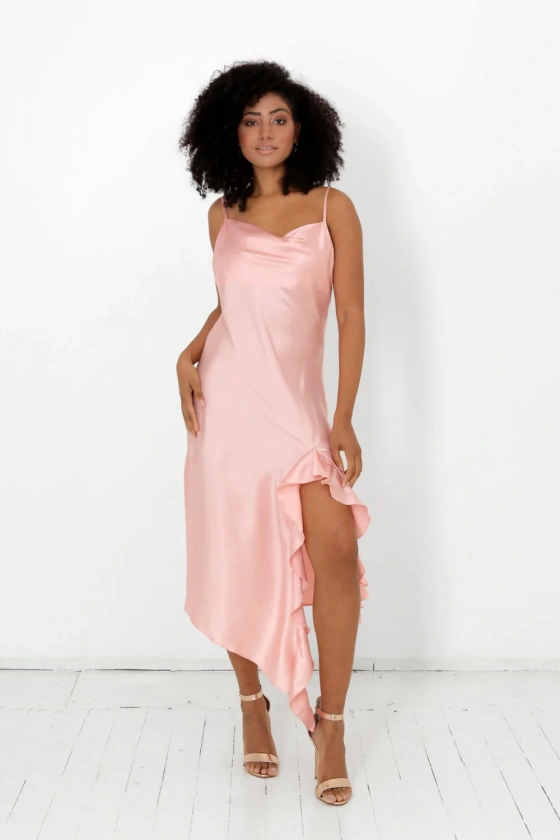
Bias-Cut Slip

Straight-Grain Slip

Cowl-Neck Slip

V-Neck Slip
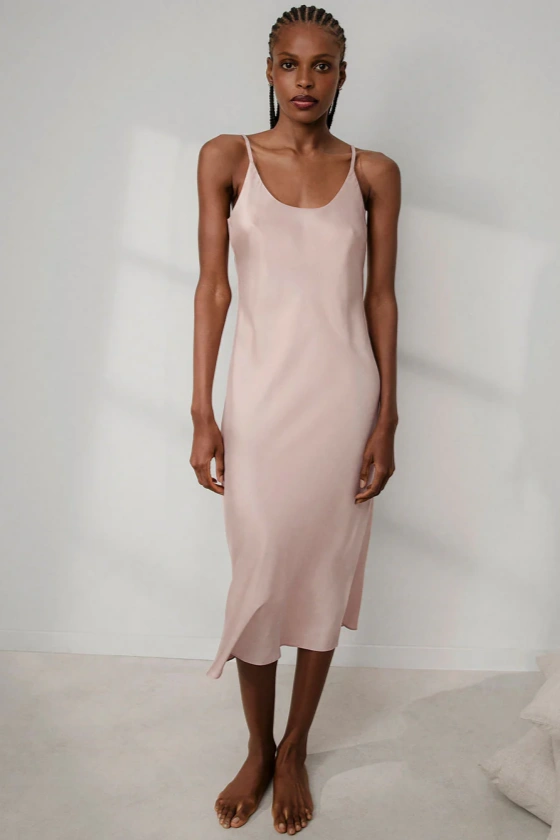
Low-Back Slip
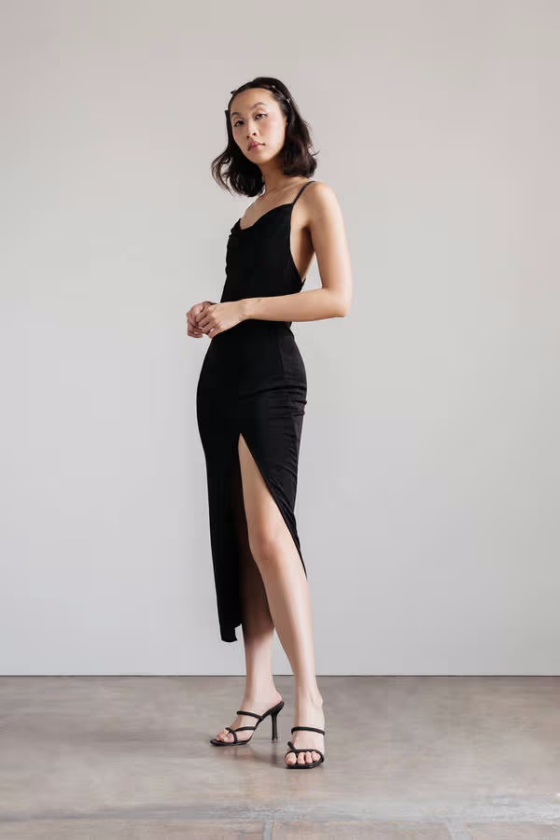
Cross-Back Slip

Lined Slip Dress

Mini to Maxi
Fabric Choice Changes Slip Dress Fit
Fabric is part of the fit system. Weight, drape, surface friction, diagonal movement and recovery determine how a slip dress settles over the bust and hip, how stable the neckline remains and whether side seams or hems shift after cutting and sewing.
| Fabric Direction | Typical Behavior | Main Fit Risk | Development Check |
|---|---|---|---|
| Lightweight polyester satin | Fluid, smooth, often slippery in cutting and sewing | Seam waviness, neckline instability, visible pulling | Drape, edge stability, seam appearance, lining compatibility |
| Heavier polyester satin | More body and visual weight | Reduced fluidity, stronger drag at tight areas | Ease through bust/hip, cowl behavior, hem weight |
| Viscose/rayon fluid woven | Soft hand and strong drape; may relax noticeably | Length growth, hip clinging, seam movement | Relaxation behavior, shrinkage direction, pattern balance |
| Stretch satin | Added comfort and recovery depending on construction | Over-reliance on stretch, neckline distortion, inconsistent recovery | Stretch direction, recovery, negative/positive ease strategy |
| Silk or silk-blend direction | Lightweight, sensitive and highly drapable depending on quality | Handling marks, seam show-through, growth, delicate edge control | Fabric-specific sewing trial, drape, opacity, support method |
| Lightweight lining | Can improve opacity and comfort | Lining restricts shell or creates visible tension | Shell/lining length, hip ease, static behavior, hem relationship |
Bias-Cut Fit Requires Grain, Growth and Balance Control
Bias-cut slip dresses gain their fluid character from diagonal grain behavior. The same movement that creates an elegant drape can also produce growth, twisting, uneven hems and changing hip tension. Reliable development depends on controlling pattern balance and fabric behavior together from cutting through PP approval.
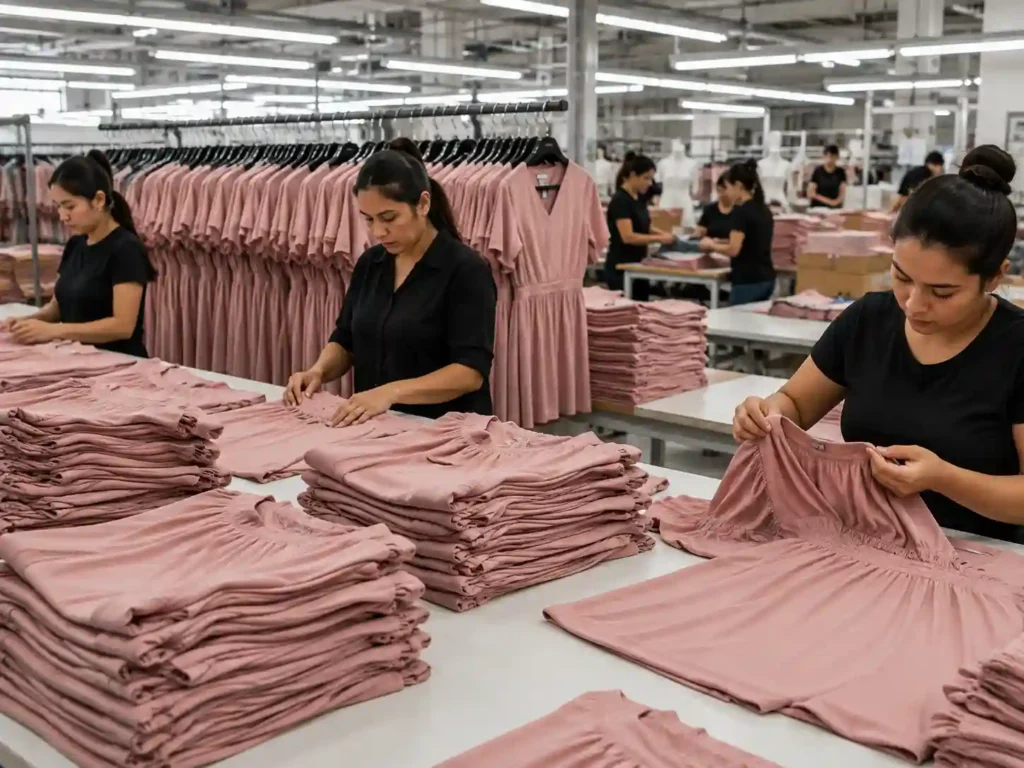
Control Grain and Growth
Bias movement begins before sewing. Pattern pieces need consistent grain orientation, accurate cutting and enough handling discipline to avoid distortion while pieces are moved, joined and pressed. Once assembled, the garment can continue to relax under its own weight, especially in longer silhouettes or fabrics with pronounced diagonal movement.
Fit review should therefore look beyond one immediate measurement reading. A dress may measure correctly on the table yet hang differently after relaxation or on a body with more bust or hip projection. Side seams that initially look vertical can migrate forward or backward as the fabric seeks a lower-tension path. Hem lines can also become uneven as different areas of the garment carry different loads.
Jinfeng approaches bias fit by checking grain, front/back balance, key body measurements, side-seam position and hem behavior as connected variables. When a fit comment shows hip drag, twisting or uneven length, the correction is not automatically “add width” or “trim the hem.” The team first reviews where the distortion begins, whether the pattern distributes volume correctly and whether the fabric has been allowed to settle before final leveling.
For longer bias styles, the development record should preserve the approved pattern, fabric reference and fit comments so bulk cutting follows the same direction. Any fabric substitution requires renewed attention because a new satin or viscose quality may grow differently even when the composition appears similar on a specification sheet.

Balance Drape and Movement
A successful bias slip should move with the body while keeping the intended neckline, hip line and vertical balance.
Too little ease can create diagonal tension from the hip or seat; too much uncontrolled width can cause the silhouette to collapse and side seams to wander. Bust projection can pull additional length into the front, while seat projection can affect back hem balance.
The fit process should identify where the garment needs freedom and where it needs control. Necklines may require stabilization, straps need reliable anchor points, and shell/lining combinations should not fight each other. Slits should open naturally during movement without being forced apart by hip tension.
Fit comments are translated into pattern actions rather than isolated sewing fixes. A revised sample is then used to confirm whether the correction solved the original symptom without creating a new problem elsewhere. For example, adding hip ease may improve drag lines but alter side-seam position; shortening a strap may close a neckline but raise an armhole too far. Each revision is judged across the whole garment.
Bulk readiness comes only after the approved fit, pattern, measurements, fabric direction and construction are aligned. That sequence protects the fluid appearance brands expect from bias-cut satin while reducing avoidable variation when the style moves from sample room to sewing line.
Bust, Neckline and Armhole Fit Need One Diagnosis
The upper body is the most visible fit zone on a slip dress. Bust room, front length, neckline shape, armhole curve and strap position influence each other. Correcting one point without reviewing the surrounding pattern can close one gap and create another.
Read the Symptom First
Neckline gaping can come from excess front length, insufficient bust shaping, a neckline curve that does not match the intended body profile, or straps anchored too far apart. Armhole gaping can come from the armscye itself, excess front width, poor side-bust distribution or a strap angle pulling the upper edge away from the body. Bust flattening usually signals a different problem: not enough width or length where the body needs volume, fabric that is too firm for the chosen silhouette, or tension created elsewhere in the garment.
Jinfeng reviews the upper-body area as a connected shape. Key checks include bust circumference, front width, front length, neckline depth, armhole depth, strap length and strap attachment. Photos from front, side and three-quarter views are useful because drag lines reveal direction. A horizontal pull often suggests insufficient room, while diagonal lines can indicate balance or distribution problems.
The team avoids treating strap adjustment as the universal answer. Shortening straps may temporarily close a neckline but can also raise the armhole, shift the bust point and change overall length. Taking in the side seam may reduce an armhole gap while removing needed hip ease or moving the seam away from a vertical hang. Fit correction starts from the root relationship, not the fastest alteration.
Correct Pattern, Then Refit
Once the likely cause is identified, changes are transferred into the pattern and measurement record. The correction may involve reshaping the neckline, redistributing bust volume, adjusting front length, refining the armhole curve, moving strap attachment or changing the amount of ease. Construction details such as lining, facing, binding or edge stabilization are reviewed at the same time because they can change how the upper edge behaves.
A revised sample confirms whether the garment now sits closer to the intended body line without restricting movement. The review checks front and side appearance, coverage, strap tension and how the dress behaves when standing, walking and sitting. For cowl necklines, the goal is not to eliminate all looseness; the goal is controlled drape with a stable base. For clean V-necks or straight necklines, edge control is more critical.
Approval should be recorded in the final pattern, size chart, construction notes and PP sample.
Those references become the standard for grading and bulk measurement so a correction made in the sample room is not lost when the style reaches production.
Strap, Shoulder and Back Balance Shape the Whole Dress
Thin straps carry more influence than their size suggests. Their length, angle and attachment points change neckline tension, armhole coverage, back depth and overall body length. Low-back and cross-back designs add another layer because tension travels diagonally across the upper body.

Position Before Shortening
A strap that slips off the shoulder may be too long, but length is only one variable. If the back attachment sits too far toward the arm, the strap can slide even when shortened. If the front point is too wide, shortening may pull the neckline outward instead of stabilizing it. Back width and neckline shape also affect where the strap naturally wants to sit.
For low-back slips, limited upper-back structure means strap placement carries more of the garment’s control. A wide back can stand away from the body; a narrow back can pull side seams toward the rear. Cross-back designs create diagonal load paths that can lift the back, lower the front or distort the armhole when strap tension is uneven.
Jinfeng evaluates strap length together with front and back attachment points, neckline depth, armhole shape and body length. Adjustable sliders may be useful for wearability, but hardware range cannot compensate for a base pattern that is out of balance. The sample should sit correctly within the intended adjustment range rather than depending on one extreme slider position.

Confirm Movement and Coverage
Static front-view fitting is not enough for a slip dress with a low back or narrow straps. The garment needs to be checked through natural movement because shoulders rotate, straps shift and the upper edge can open as the wearer changes posture. A fit sample should maintain intended coverage without forcing the wearer to constantly readjust the garment.
Construction also matters. Strap width, fabric type, lining, attachment method and hardware can change how tension is transferred. A narrow self-fabric strap made from a fluid satin behaves differently from a more stable tape or lined strap. If the shell fabric stretches on the diagonal, the finished strap may lengthen under wear unless its construction is planned accordingly.
Approved strap points and finished lengths should be defined in production references, then checked consistently during sample measurement and bulk QC. That turns a subjective styling detail into a controlled fit component across multiple sizes and production batches.
Waist, Hip and Side-Seam Fit Should Move Cleanly
Slip dresses are expected to skim rather than grip unpredictably. Waist and hip issues often appear as drag lines, fabric catching, side seams shifting or the dress riding upward. The correction depends on ease distribution, grain, front/back balance and fabric behavior rather than one circumference measurement alone.

Diagnose Drag and Twist
Horizontal tension at the hip often indicates insufficient room, while diagonal lines can point to where the garment is being pulled off balance. A dress may have enough total hip circumference yet still fit poorly if the volume is distributed incorrectly between front and back. Seat projection, abdomen shape and the intended silhouette all influence where space is needed.
Bias-cut styles add movement because the fabric can redistribute under tension. A hip that feels only slightly tight may pull the diagonal grain, move the side seam and change hem balance. Straight-grain styles are more stable, but they can look rigid if ease is not shaped to the intended line. The waist should also be reviewed for whether the design is meant to skim, follow the body closely or fall from bust to hip with minimal waist suppression.
Jinfeng uses fit comments, measurements and visual drag-line direction together. The goal is to identify the first point of tension and correct the pattern there rather than simply increasing the full garment width.

Correct Ease by Area
Pattern correction can redistribute width, alter front/back balance, refine side shaping or adjust grain and panel geometry. The revised sample then checks whether the side seam hangs more vertically, whether the hip releases naturally during walking and sitting, and whether the hem remains balanced after the change.
Fabric choice remains part of the decision. A heavier satin may need different ease than a lighter fluid woven because the heavier fabric resists folding and can show tension more clearly. A stretch satin may tolerate closer fit, but recovery and stretch direction still need to be confirmed so the garment does not grow unevenly or distort at the neckline.
For multi-size programs, the approved base-size correction is translated into grade rules rather than copied blindly. Hip growth, body length and strap or neckline changes may require different increments depending on the size strategy. The aim is a consistent silhouette across the size range, not identical numbers applied to every point.
Hem, Length and Slit Balance Finish the Silhouette

Hem Hang
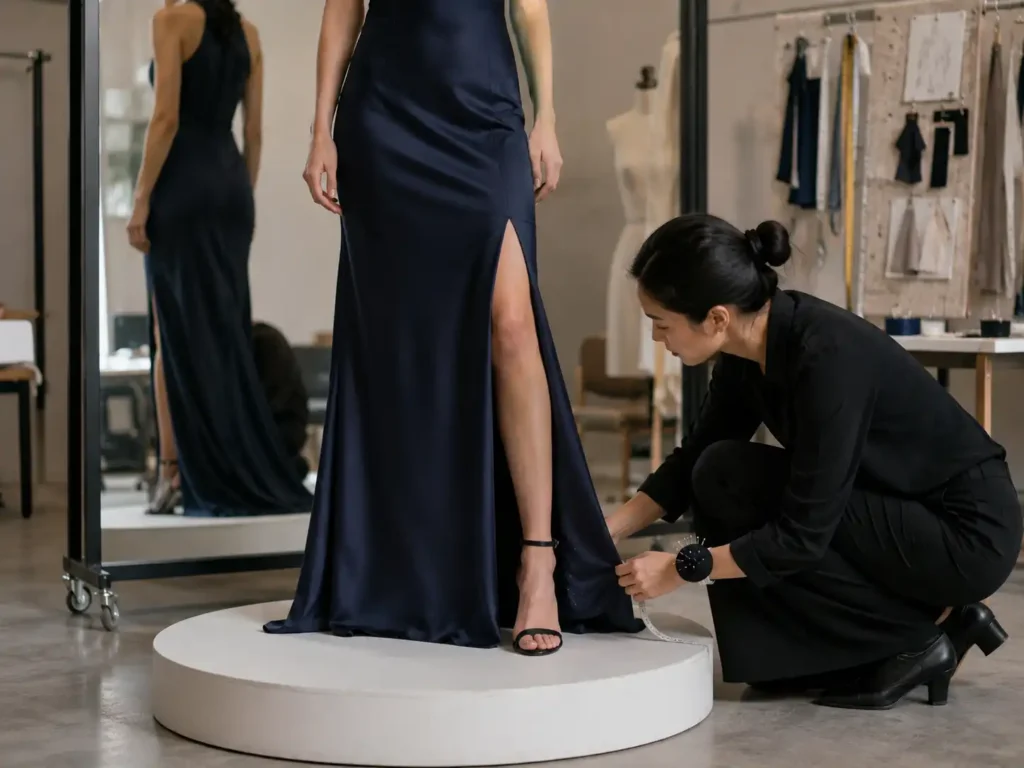
Length Balance

Slit Stability
Pattern Correction Turns Fit Comments Into Production Standards
Fit feedback only creates value when it becomes controlled pattern and specification changes. Jinfeng links comments, measurements and sample observations to the final pattern, grade rule, PP sample and QC references so a correction survives the move from development into production.
Diagnose Before Altering
A fit comment such as “armhole gaps” or “hip feels tight” is a symptom, not an instruction to remove or add a fixed amount. Pattern makers first review the surrounding geometry: neckline, bust distribution, front/back balance, grain, side-seam position and fabric behavior. Photos, measured points and the approved design intent help distinguish whether the issue comes from dimensions, balance, material or construction.
For slip dresses, the direction of drag lines is especially useful. Tension running toward the hip can reveal insufficient ease or balance; a neckline pulling upward may show that the front lacks vertical room; a side seam rotating can indicate unequal front/back tension or bias movement. The pattern correction is selected to address the cause while preserving the intended silhouette.
Jinfeng’s 7+ senior pattern makers support this development stage, working with the sample rooms and sample machinists so pattern changes can be verified on a revised garment rather than approved only on paper.
Record Every Approved Change
Each accepted correction should be traceable. Pattern changes, measurement changes, fabric replacement, trim adjustment, sewing method and approval status are carried forward into development records.
The final reference set can include the approved pattern file, size chart, fabric reference, trim information, construction notes and PP sample.
This discipline becomes more important when a collection contains 10-30 styles.
Multiple necklines, lengths and fabric groups can create a large number of small decisions.
Relying on chat history or memory makes it easy for one revision to disappear between sample and bulk.
A structured handover keeps the latest approved version visible to merchandising, production and QC teams.
Lock the PP Reference
Before bulk production, fabric, color, trims, measurement, construction, labels and packing instructions should be confirmed at the appropriate stage.
Any later change can affect cost, material availability, scheduling and consistency. If a brand requests a post-approval change, the impact should be reviewed before production continues rather than absorbed informally.
The result is a clear production standard: approved fit, final pattern, size chart, grade rule, material references and QC measurement points all point in the same direction. That is what turns a successful sample into a repeatable garment.
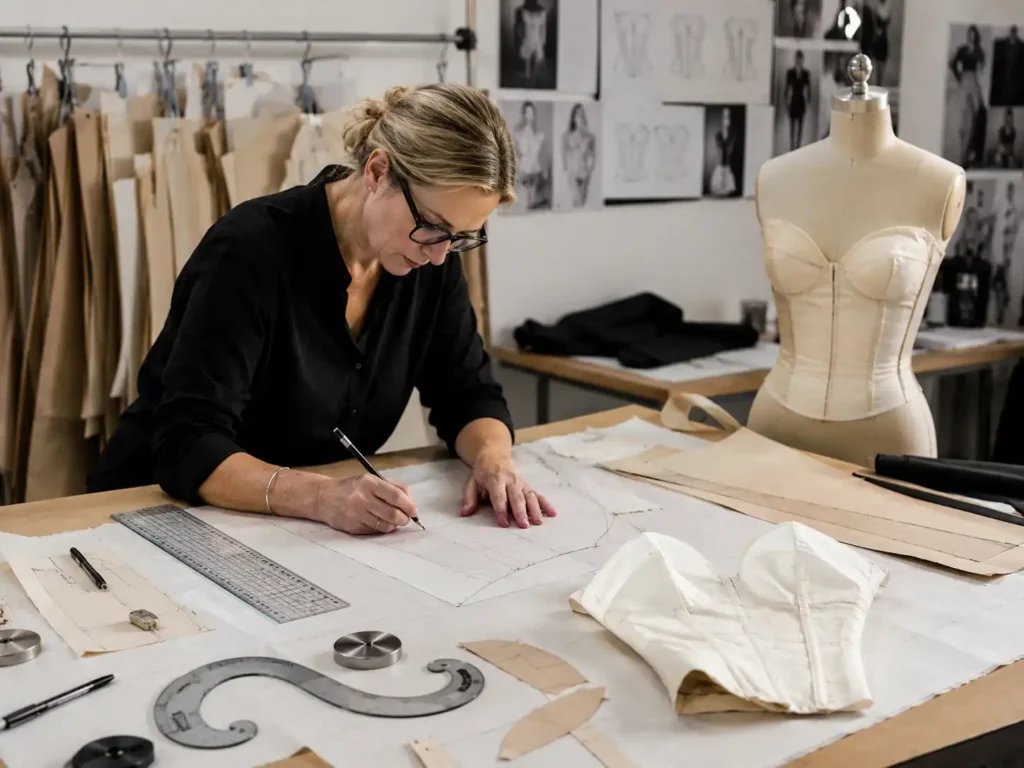
Fit Sampling Builds Confidence Before Bulk Production
Sampling is where a slip dress becomes measurable, wearable and correctable. Jinfeng uses 2 sample rooms, 7+ senior pattern makers and 20+ sample machinists to move from development input through fit review, revision and PP confirmation without treating the first sample as a finished answer.

First Sample Tests the Idea
The first sample is used to make the design real enough to evaluate. Reference images, tech packs, original samples, sketches or line sheets can all provide a starting point, but the development team still needs fabric direction, quantity plan, size range and target market to judge the style properly.
For a slip dress, the first sample verifies neckline shape, bust room, waist and hip balance, strap position, length, lining, slit, drape and construction feasibility. Fabric behavior is reviewed at the same time because an elegant sketch can fail when the selected satin is too rigid, too light, too transparent or too unstable for the intended cut.
A first sample is not automatically a final approval sample. Its value is to expose the real development decisions: where the pattern needs correction, whether the fabric supports the silhouette, which construction details need refinement and what information is still missing before production can be locked.
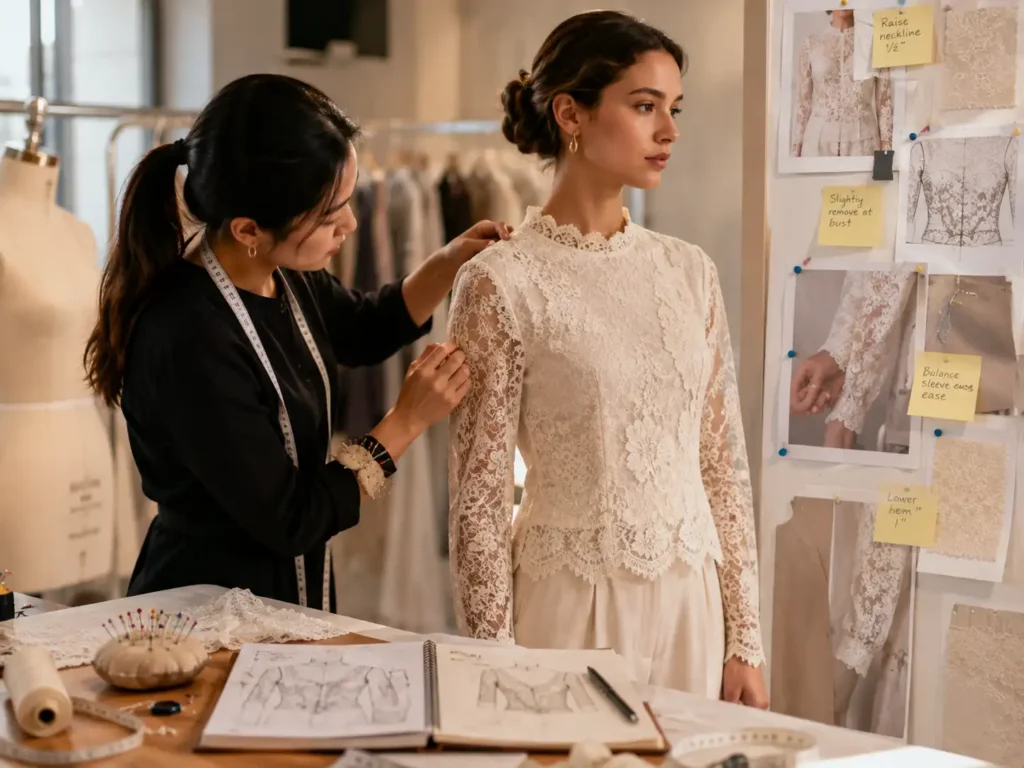
Fit and Revision Close Gaps
Fit comments are converted into measurable actions. Jinfeng reviews bust, waist, hip, dress length, strap length, armhole, neckline depth and slit height where relevant, then records pattern and construction changes. Revised samples are used when needed to confirm that a correction solves the original problem without creating a new one.
For example, closing a neckline gap may change armhole height; adding hip ease may alter side-seam hang; replacing a lining may change how the shell moves. Each revision is therefore reviewed as a complete garment rather than a checklist of isolated alterations.
Once fit, fabric, measurements, construction and trims are approved, the PP sample becomes the pre-production reference. The handover includes final pattern, size chart, grade rule, fabric and trim references, sewing instructions, labels and packing requirements as applicable. Jinfeng’s sample-to-bulk process is designed to keep those decisions connected when production begins.
Size Grading Should Preserve Fit, Not Multiply Errors
Base Size First
Grading should start from a base pattern with approved balance. If the base size still has neckline gaping, hip drag or side-seam twist, grading only multiplies the problem.
Fit comments are resolved first, then the final pattern becomes the reference for size development.
Grade by Fit Zone
Bust, waist and hip do not always grow at the same visual rate, and strap length or neckline depth should not be increased mechanically just because circumference increases. Grade rules are reviewed by point of measurement and silhouette. XS-XL programs can be planned with a size breakdown, while plus-size, petite or tall directions require separate evaluation when included in the range.
Verify Production Sizes
Multi-size production needs more than pattern grading. Size labels, cut bundles, measurement tolerance, packing identification and carton breakdown must correspond to the approved size plan. Jinfeng can work from a brand’s existing grading rules and QC standards, allowing the production process to follow established requirements instead of replacing them with generic factory assumptions.
Construction Details Can Improve or Distort Slip Dress Fit
A correct pattern can still produce a poor garment when sewing, edge control, lining or pressing changes the shape. Slip dresses use lightweight and fluid materials that reveal tension quickly, so construction decisions must protect the approved silhouette instead of fighting it.
Control Seams and Edges
Seam behavior matters visually and dimensionally. Excess tension can create puckering or shorten an edge; poor handling can stretch a bias section; inconsistent seam allowance can move the finished measurement away from the approved sample. Necklines and armholes need finishing appropriate to the design so the edge stays smooth without becoming rigid.
The correct method depends on fabric and construction. A clean lined neckline behaves differently from a bound edge, and a cowl needs enough freedom to drape. Underarm finishing must remain comfortable while preserving coverage. Side seams on fluid fabrics should hang cleanly without visible roping or torque. Zipper insertion, when used, should not create a hard vertical area that pulls against an otherwise fluid silhouette.
Jinfeng reviews construction at sample stage and transfers the approved method into production instructions. No equipment claims are needed to prove control; the meaningful evidence is the approved sample, sewing standard, measured result and consistent workmanship across bulk production.
Manage Lining and Pressing
Lining is not a separate inner garment. If it is too tight through the bust or hip, it can pull the shell inward; if too long, it can appear below the hem; if its movement differs strongly from the outer fabric, the dress may twist or feel restricted. Lining length, ease, attachment and slit behavior should be checked on the same fit sample as the shell.
Pressing can also change appearance. A fluid satin may show seam impressions, shine or distortion when handled poorly. The production goal is not aggressive flattening but a clean finish that respects the intended drape. Approved seam shape and garment dimensions should remain stable after finishing.
During bulk production, workmanship checks focus on the fit-sensitive areas: neckline, armhole, straps, side seams, zipper or opening, lining, slit and hem. Measurement control is combined with visual inspection because a garment can meet one numeric tolerance and still show twisting or puckering. Fit consistency comes from matching measurements, construction and appearance to the approved reference.
Lining, Trims and Support Details Affect Wearability
Small components can change how a slip dress sits on the body. Lining weight, strap adjusters, zippers, bindings and stabilization should be selected for the shell fabric and design rather than added as generic accessories.
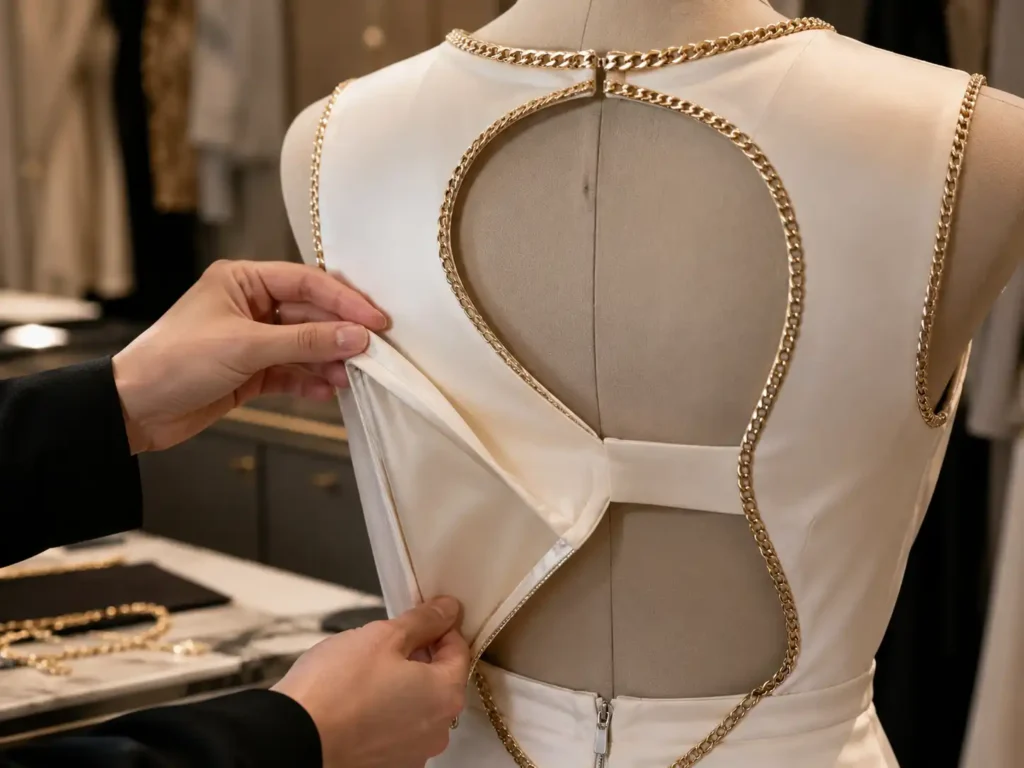
Lining Balance

Strap Hardware

Zippers and Openings
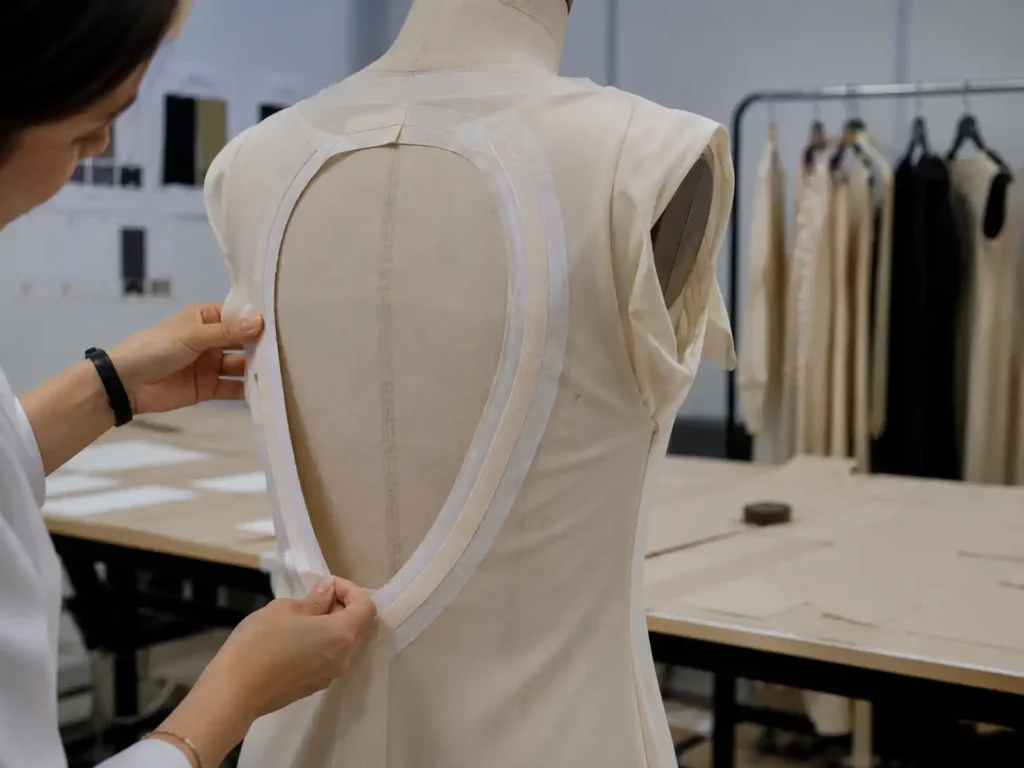
Edge Stabilization
Approved Fit Must Stay Consistent in Bulk Production
A beautiful sample has little value if bulk garments drift in measurement, fabric behavior or workmanship. Jinfeng transfers approved fit into production through final pattern references, material confirmation, sewing standards, inline checks and final inspection rather than relying on the sample room alone.

Transfer the Approved Standard
After PP approval, the production handover should align the final pattern, size chart, grade rule, shell fabric, lining, trims, construction details, label placement and packing instructions.
The approved sample acts as a visual and dimensional reference, while the production documentation tells each team what must remain unchanged.
For slip dresses, special attention is paid to variables that can change the silhouette: grain direction, fabric batch behavior, strap finished length, neckline and armhole shape, bust/hip measurements, side-seam hang, slit construction and hem level. A change in fabric lot, trim or sewing method can affect fit even when the style number stays the same, so production teams need a clear reference for comparison.
Jinfeng’s 18+ sewing lines and 6+ flexible production lines support different womenswear structures, with production allocated according to product type, material, complexity and schedule. The objective is controlled assignment rather than sending every style to the same line. Complex or first-time styles need production units familiar with their construction and QC points.

Measure and Inspect During Production
Measurement control is not saved for the final carton. Inline checks can identify drift before the full order is completed. Bust, waist, hip, dress length, strap length, armhole, neckline depth and slit height are reviewed according to the approved size chart and agreed tolerance where applicable. Visual inspection also checks twisting, seam appearance, lining exposure, zipper behavior, label accuracy and packing requirements.
Jinfeng has 15+ QC inspectors supporting production and final checks. For established brands with an existing quality manual, AQL requirement, defect list or third-party inspection procedure, requirements can be reviewed before production and converted into specific checkpoints. Third-party testing or inspection can also be coordinated by project when required; scope, laboratory, cost and timing should be confirmed before commitment.
The result is a cleaner sample-to-bulk bridge: fit decisions made during development remain visible through cutting, sewing, finishing, measurement and packing rather than disappearing after PP approval.
Jinfeng Resources Support Fit Development and Production Scale

Development Resources

Production Resources

Line Capacity

Quality Support
Slip Dress Programs Reflect Real Order Complexity
Current brand programs commonly contain 10-30 styles and total order quantities in the 20,000-80,000 piece range. The examples below are anonymized order profiles using commercially realistic figures within that operating range, with emphasis on the fit problem, development action and production control rather than brand identity.

Satin Neckline Program
Market: United States
Collection: 18 slip-dress styles
Order scale: approximately 42,000 pcs
Main constructions: clean V-neck, cowl neck, adjustable strap and low-back satin styles
Size range: XS-XL
The development focus was upper-body consistency across several neckline directions. Early fit review identified a mix of neckline opening, armhole looseness and strap-balance issues. Instead of applying one alteration to all styles, pattern changes were separated by neckline structure. Clean V-neck styles required tighter control of front balance and edge stability, while cowl styles needed enough controlled excess to preserve drape.
Fit comments were recorded by style, translated into revised pattern and measurement points, then checked again before PP confirmation. Strap finished length and attachment position were tracked as fit points rather than treated only as trim details. During bulk production, QC attention remained on neckline appearance, armhole coverage, strap setting and size measurement so the approved sample standard carried into multiple colors and sizes.

Bias Midi Program
Market: North America
Collection: 12 bias-cut midi styles
Order scale: approximately 28,000 pcs
Main fabrics: fluid satin and viscose-type woven directions
Development focus: hip drag, side-seam movement and hem balance
The fit challenge came from how different fabrics behaved on the bias. A pattern that looked balanced in one fabric did not automatically hang the same way after a material change. Development review therefore combined hip ease, grain alignment, side-seam position and relaxation behavior rather than approving fit from circumference measurements alone.
Revised samples were used to check whether added or redistributed ease released drag lines without making the silhouette loose. Hem leveling was reviewed only after the garment had settled appropriately. Fabric references and approved pattern direction were then carried into production documentation so cutting teams could follow the same orientation. Bulk QC concentrated on side-seam hang, hip measurement, finished length and visual twisting.
Multi-Style Launch Program
Market: United States
Collection: 24 slip and occasion-dress styles
Order scale: approximately 68,000 pcs
Size range: XS-XL with multiple colorways
Production focus: sample-to-bulk transfer across a seasonal launch
The main risk was not one difficult fit point but the number of decisions moving at the same time. Different styles used different necklines, lengths, fabrics, linings and trims, so one generic production instruction would have created confusion. Styles were grouped by fabric and construction needs, while the approved pattern, measurements, trim references and packing information remained style-specific.
Development records were used to distinguish the latest approved revisions from earlier samples. PP references were locked before bulk production, and line allocation considered fabric and construction complexity. QC checkpoints were tied back to each style’s critical fit points rather than using one identical checklist for the full assortment. That approach helps a large seasonal program remain manageable even when the collection contains many SKUs.
Slip Dress Fit Frequently Asked Questions
Neckline gaping can come from excess front length, insufficient bust shaping, unsuitable neckline geometry, strap placement or unstable fabric/edge construction. The correction depends on the root cause. Shortening straps or taking in side seams can sometimes hide the symptom while creating a higher armhole, distorted bust or new balance problem. Fit photos, measurements and the pattern are reviewed together before deciding the revision.
Armhole gaping may require reshaping the armscye, redistributing bust volume, reducing excess front width or changing strap position. Lowering or tightening one edge without reviewing the surrounding pattern can reduce coverage or distort the neckline. A revised fit sample is the safest way to confirm whether the correction works across the upper body.
The team reviews hip ease, front/back distribution, grain, side-seam position and fabric growth. Adding total circumference is not always enough because the garment may still be unbalanced. Pattern changes are checked on a revised sample, and material behavior is considered again if the shell fabric changes during development.
Yes. Existing patterns can be reviewed together with fit comments, measurements, photos, the target fabric and any approved reference sample. The final correction route depends on file quality and the stage of development. Pattern changes should be carried into the updated size chart, grade rule and PP reference before bulk production.
Yes. An original garment can provide useful information about proportion, construction and finish. The team still needs to clarify desired changes, target fabric, size range, quantity, labels and market requirements. Replication should not assume the original sample is already correct for the new fabric, size strategy or commercial production process.
Control begins with grain direction, cutting consistency, careful handling, fabric-specific relaxation and fit review. Longer styles and fluid fabrics may show more visible growth. Final hem balance should be confirmed after the garment has settled appropriately, and any fabric substitution should trigger a renewed review rather than using the previous assumption unchanged.
The approved base-size pattern is graded using defined rules for key points such as bust, waist, hip, armhole, neckline, strap placement and length. XS-XL programs can follow a brand’s existing grade rules. Plus-size, petite or tall ranges should be reviewed according to the intended fit and proportions instead of being created by a single uniform enlargement formula.
There is no responsible fixed number for every style. A first sample may move directly toward approval when fabric, pattern and construction are straightforward, while a bias-cut, low-back or fit-sensitive design may need revision. The required sequence is based on unresolved fit risk, with PP confirmation used before commercial production is locked.
Regular custom garment projects typically start from 200 pcs per style/color. Fabric stock, custom dyeing, printing, special trims, certified materials, packaging and production scheduling can change the workable minimum. Multiple sizes can be planned within a style/color quantity using a reasonable size ratio; multiple colors normally need separate quantity planning.
Yes, NDA arrangements can be discussed before technical files are reviewed. Tech packs, patterns, reference images, sample photos, labels and packaging information should be treated as project materials. Share any existing confidentiality requirements when submitting the development brief so the document-handling process can be aligned before detailed review.

Send Your Slip Dress Fit Project for Review
Send the current tech pack, reference images, size chart, fabric direction and the fit issue you are seeing. If a sample already exists, include front, side and back photos plus marked fit comments. Jinfeng can then review whether the issue is most likely connected to pattern balance, fabric behavior, strap/neckline geometry, grading, construction or sample-to-bulk control.
For collection programs, add the line sheet, style count, quantity per style/color, size range and target delivery window. Regular custom garment production typically starts from 200 pcs per style/color, while material, trim, color and packaging requirements are evaluated by project. NDA arrangements can be discussed before confidential tech packs, patterns or brand files are shared.
Please prepare:
- Company and target market
- Tech pack, sketch or reference sample information
- Current fit photos and comments
- Fabric direction or swatch reference
- Size chart and grading rules, if available
- Quantity per style/color and size ratio
- Style count for the collection
- Lining, trim and label requirements
- Existing QC standard or inspection requirement
- Target PP approval and delivery window
- Files requiring NDA protection


