 Skip to content
Satin vs Silk for Dresses: Which Fabric Should You Choose?

Your trusted Women’s Apparel Manufacturer from China
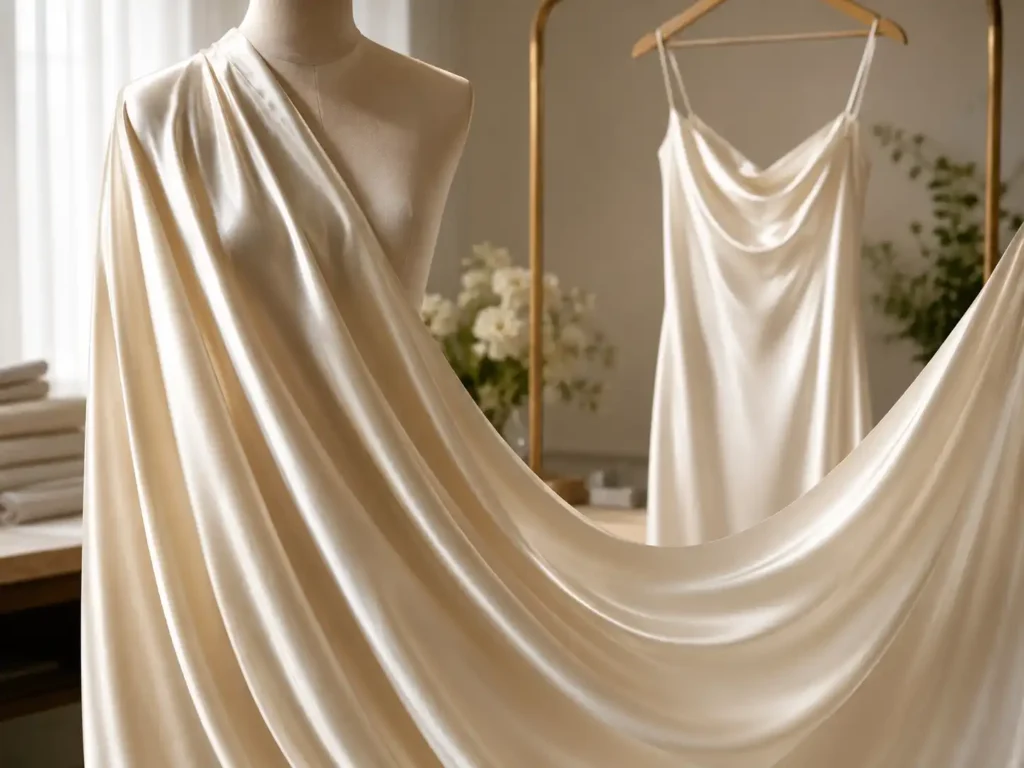
Satin and silk are often treated as two competing dress fabrics, but that comparison starts with a technical mismatch. Silk is a fiber, while satin is a weave, which means a dress can actually be made from silk satin, polyester satin, acetate satin, stretch satin, or another satin construction. For fashion teams, that distinction matters because the fabric name alone does not tell you how a dress will drape, photograph, breathe, stretch, recover, wrinkle, sew, press, pack, or perform after repeated wear.
Silk usually offers a softer natural luster, higher moisture regain, and a refined hand, while synthetic satin usually gives brands more control over price, color repeatability, weight, stretch, and production consistency. Neither is automatically better for dresses. The right choice depends on silhouette, season, target retail price, care expectations, opacity, lining, comfort, order scale, and the visual effect the collection needs to deliver.
The difference becomes obvious when two champagne slip dresses are placed side by side. Under studio lighting, both may look fluid and expensive. After a fitting, three hours of wear, pressing, folding, carton compression, and another round of photography, the gaps begin to show. One may hang more naturally, one may crease less, one may expose every seam allowance, and one may be far easier to reorder in the same shade. That is where a fabric comparison becomes a real product-development decision.
What Is the Difference Between Satin and Silk?
Satin is a weave structure that creates a smooth, lustrous surface, while silk is a natural protein fiber. Satin can be made from silk, polyester, acetate, nylon, or blends, so “satin versus silk” is not a direct fiber-to-fiber comparison. For dresses, the useful comparison is usually between specific constructions such as polyester satin, silk satin, stretch satin, silk crepe, or silk charmeuse.
Satin Is a Weave, Silk Is a Fiber
The easiest way to avoid confusion is to separate fiber from construction. Silk tells you what the yarn is made from. Satin tells you how yarns are interlaced to create a smooth face with relatively long surface floats. Those floats reflect light more strongly than a plain weave and create the polished appearance people associate with satin. The same structure also helps explain why satin can show snagging, seam puckering, press marks, grain-direction differences, and surface contamination more clearly than many matte fabrics.
Silk brings a different set of properties because they come from the fiber itself. It is a fine natural filament with a soft hand and relatively high moisture regain. Textile references commonly place standard silk moisture regain at around 11%, compared with well under 1% for polyester. That difference helps explain why silk can feel more comfortable against the skin in some conditions, although actual dress comfort still depends on weave density, lining, body coverage, fit, and the climate in which the garment is worn.
Silk Can Be Woven Many Ways
Silk does not automatically mean shiny, fluid, or lightweight. Silk yarn can be woven into satin, charmeuse, chiffon, crepe, organza, twill, habotai, georgette, and many other structures. A silk organza dress may feel crisp and hold dramatic volume, while a silk satin slip can fall close to the body with very little resistance. Both are silk, yet they need different patterns, seams, linings, finishing methods, and care instructions.
The same logic applies to synthetic satin. Two fabrics labeled “100% polyester satin” can behave very differently if one is an 85 gsm high-gloss satin and the other is a 190 gsm matte satin. In contemporary womenswear, satin commonly appears across an approximate 80–220 gsm working range, with lighter qualities used for slips and fluid summer dresses and heavier qualities used for eveningwear, sculpted silhouettes, or more structured bodices. Weight, finish, stretch, and opacity therefore matter as much as the fiber label.
What Silk Satin Actually Means
Silk satin combines silk fiber with a satin weave, which is why it often delivers both the smooth reflective face of satin and the soft, nuanced luster associated with silk. It can be an excellent choice for premium slip dresses, bias-cut evening styles, and occasionwear where the natural-fiber story supports the retail position. However, it also requires realistic expectations around cost, handling, snag sensitivity, pressing, cleaning, and repeat sourcing.
“Silk-like satin” is different. That wording generally describes a synthetic or blended satin designed to imitate some of silk’s softness or visual character. It should not be treated as a silk-composition claim. In commercial development, the distinction affects fiber labeling, care labels, product descriptions, price architecture, and customer expectations. A brand can absolutely use silk-like satin successfully, but the product should be specified and marketed according to its verified composition rather than its visual resemblance.
The Specification Matters More Than the Name
A fabric request such as “champagne satin” leaves too many decisions unresolved for serious development. A useful specification should define composition, construction, approximate GSM or momme where relevant, stretch direction, stretch percentage if critical, surface finish, sheen level, opacity, color standard, lining requirement, and target garment use. This information helps the development team compare materials that can actually solve the same product problem instead of choosing by name alone.
A fitted party dress, for example, may need medium stretch, strong recovery, low transparency, controlled shine, and enough body to support a zipper without rippling. A bias-cut slip needs a different combination: lower bending stiffness, fluid drape, clean seam behavior, and a lining that follows the shell without restricting movement. The more clearly those performance needs are defined, the easier it becomes to choose between silk satin, polyester satin, stretch satin, or an entirely different fabric.
Fabric Direction | Typical Working Specification | Surface Character | Best-Suited Uses | Main Development Risk |
Lightweight polyester satin | About 80–120 gsm | Smooth, medium to high sheen | Slip, cowl-neck, summer dresses | Transparency, seam puckering, creasing |
Matte polyester satin | About 110–180 gsm | Low to medium sheen | Bridesmaid, occasion, midi dresses | Shade consistency, pressing marks |
Stretch satin | About 140–220 gsm | Smooth, controlled sheen | Bodycon, corset, fitted party dresses | Recovery, zipper waves, seam tension |
Heavy satin | About 170–220+ gsm | Dense, structured | Evening, formal, sculpted dresses | Seam bulk, weight, pressing |
Silk satin | Often specified by momme | Soft, nuanced natural luster | Premium slips, luxury occasionwear | Cost, care, snagging, repeat sourcing |
How Do Satin and Silk Perform in Dresses?
Silk often feels softer and manages moisture better, while synthetic satin usually offers stronger cost control, repeatability, and a wider choice of weights and stretch levels. Drape, opacity, wrinkling, luster, and sewing behavior vary widely in both categories, so the better dress fabric is the one that supports the intended silhouette, climate, lining, care routine, and retail positioning.

Drape and Movement
Drape is one of the first things a customer notices, but it does not come from the word “silk” or “satin” alone. It is created by the interaction of fiber fineness, yarn structure, weave density, weight, bending stiffness, finishing, and pattern shape. Lightweight silk satin can collapse softly around the body, which works beautifully for cowl necklines, bias skirts, draped bodices, and minimal slip dresses. A carefully selected lightweight polyester satin can also achieve fluid movement, even if the hand and reflection are not identical.
As weight increases, satin starts to support shape instead of simply following the body. Medium and heavy satins can create cleaner A-lines, smooth fitted midis, structured evening columns, or corset-style bodices. The wrong weight produces predictable problems: cloth that is too light may reveal seam allowances, zipper tape, or underwear lines, while cloth that is too heavy may fight a cowl neckline, make gathers bulky, or cause a slip silhouette to look stiff rather than effortless.
Comfort and Breathability
Silk has a genuine fiber-level advantage in moisture interaction because its standard moisture regain is around 11%, while polyester is typically below 1%. In practice, that can help silk feel less clammy next to the skin in warm conditions. It does not mean every silk dress is automatically cooler, because a dense satin weave, full lining, tight silhouette, long sleeves, or internal corset structure can reduce the practical benefit significantly.
Garment architecture often matters as much as fiber content. A loose, open-back polyester satin dress may feel more comfortable in summer than a fitted silk satin dress lined through the body. Stretch can also change the wearer’s experience. A polyester-spandex satin may absorb less moisture than silk but still feel better in a close-fitting bodycon style because the fabric moves with the wearer rather than resisting movement. Comfort should therefore be evaluated on the complete sample, not only by touching the fabric on a hanger.
Shine and Perceived Quality
Satin’s reflection can create instant visual value, but it can also magnify the wrong details. Silk satin usually gives a softer, less uniform luster that shifts with movement. Polyester satin can range from highly reflective to deliberately matte depending on filament shape, delustering, yarn fineness, weave density, and finishing. That broad range means synthetic satin should not be treated as one visual category or automatically associated with a low-end look.
The right sheen depends on the product story. A high-gloss satin can be exactly right for a nightclub mini, editorial party dress, or dramatic evening piece. A matte satin often suits bridesmaid, wedding-guest, and premium occasion collections because it photographs with less glare and can make wrinkles less visually aggressive. Before bulk approval, brands should photograph the chosen fabric under daylight, soft-box lighting, and direct flash, because satin can look surprisingly different across these conditions.
Wrinkles, Snags, and Wear
Long satin floats make the surface vulnerable to snagging from rough tables, damaged fingernails, zipper teeth, sequins, rhinestones, cardboard edges, or poorly maintained machinery. Lightweight satin can also show folding creases quickly after packing and carton compression. These issues are not small finishing details; they directly affect how the garment looks when it reaches a warehouse, photo studio, retail floor, or customer.
Silk can be delicate for different reasons. Fine silk satin may show abrasion, water marks, pressure impressions, or handling damage more readily than a sturdy synthetic satin. Higher price does not automatically mean higher physical durability. For either material, final inspection should include surface condition, seam appearance, zipper flatness, grain direction, press marks, stains, hem balance, and packaging creases. A realistic packing trial before bulk shipment can expose problems that a perfect hanging sample never reveals.
Which Fabric Fits Each Dress Style?
Lightweight satin or silk satin works particularly well for slips and draped dresses, while medium and heavy satin better support cocktail, evening, and structured silhouettes. Stretch satin is often more suitable for bodycon and corset dresses. The fabric should follow the required movement, opacity, support, climate, lining, and fit rather than forcing one satin quality across every style in a collection.
Slip and Bias-Cut Dresses
Slip dresses expose fabric behavior more clearly than almost any other silhouette because there are fewer seams, layers, and decorative details to disguise what the cloth is doing. If the satin is too stiff, the dress loses its liquid movement. If it is too thin, every seam allowance, bra line, underwear edge, or change in body contour can become visible. Lightweight satin around 80–120 gsm is commonly considered for fluid slip development, but the final choice must still be tested for opacity, color, and finishing.
Bias cutting introduces its own risks. When panels are cut near 45 degrees to the warp and weft, the fabric gains mechanical give and a beautiful tendency to follow the body. It can also lengthen under gravity, rotate at the side seam, or drop unevenly at the hem. For unstable constructions, allowing the assembled garment to hang before final hemming can reduce surprises. Lining must be equally fluid; a stiff or undersized lining can destroy the movement of an otherwise excellent shell fabric.
Occasion and Bridesmaid Dresses
Occasionwear needs to look polished in real movement, event lighting, flash photography, and group photographs. Satin works well because its surface creates visual depth without requiring heavy embellishment, but the appropriate sheen depends on the brand. Matte or controlled-luster satin is often easier to use across bridesmaid programs because it can feel refined without creating excessive glare, while medium-weight qualities usually provide better opacity and smoother coverage than very light satin.
Color consistency deserves special attention for bridesmaid programs because several dresses may be worn side by side at the same event. Small shade differences that might go unnoticed in unrelated retail pieces become obvious in a group. Fabric roll control, consistent cutting direction, and clear color approval therefore matter. Cocktail and evening collections allow more freedom: a fluid cowl-neck style may use lighter satin, while a clean strapless midi or formal column can benefit from more body and a more stable zipper area.
Bodycon and Corset Dresses
Classic non-stretch silk satin is not automatically the best material for a bodycon or corset dress. These silhouettes place greater demands on stretch, recovery, dimensional stability, seam strength, zipper behavior, and internal support. Stretch satin, often made with polyester and spandex, can be more practical because it follows the body while still maintaining the smooth face expected from satin. Many fitted satin applications sit roughly in the 140–220 gsm range, although the correct weight depends on structure and compression.
Recovery matters as much as stretch. A fabric that stretches easily but does not return close to its original dimensions can bag at the seat, hips, waist, or knees after only a few hours of wear. Corset dresses introduce additional layers such as cups, boning, underwire, fusible reinforcement, or power mesh. If the shell satin is too thin, these internal components can telegraph through the surface. If it is too heavy, cup seams and princess seams may become bulky, so sample development has to balance coverage and construction.
Summer and Structured Dresses
Summer and structured dresses sit at opposite ends of the same decision. Summer styles usually benefit from lower weight, reduced body coverage, and a lining that does not overpower the shell. Silk’s higher moisture regain can support comfort, but ventilation still matters. A loose halter dress in lightweight polyester satin may feel cooler than a tightly fitted silk satin dress with full lining, cups, and internal reinforcement because the garment itself allows more air movement.
Structured dresses need more body. A heavier satin around 170–220 gsm or above can support a clean A-line, sculpted mini, formal column, or structured bodice. Extra weight creates smoother visual planes and can reduce transparency, but it also increases seam bulk, pressing demands, and zipper stress. It is completely reasonable for one collection to use several satin qualities when the silhouettes require different behavior. Standardizing the wrong fabric simply to simplify purchasing can make the product weaker.
Dress Style | Common Fabric Direction | Useful Working Range | Main Development Check |
Slip dress | Lightweight satin or silk satin | About 80–120 gsm, or suitable silk weight | Opacity, bias drop, seam puckering |
Bridesmaid dress | Matte or medium satin | About 110–180 gsm | Shade consistency, pressing, group photography |
Cocktail dress | Medium satin | About 120–190 gsm | Zipper flatness, lining, hem balance |
Bodycon dress | Stretch satin | About 140–220 gsm | Stretch recovery, seam tension, bagging |
Corset dress | Medium or heavy stretch satin | About 160–220 gsm | Internal structure showing through |
Structured evening dress | Heavy satin | About 170–220+ gsm | Seam bulk, pressing, weight |
Is Polyester Satin the Same as Silk Satin?
Polyester satin and silk satin can use the same basic weave concept, but different fibers give them different moisture behavior, hand, care requirements, cost structures, and sourcing realities. Silk satin is often chosen for natural-fiber luxury and nuanced luster, while polyester satin offers broader commercial options in weight, stretch, shade programs, repeatability, and price. Neither is automatically superior for every dress.

Feel and Luster
Silk satin is often valued for the way its surface reflects light without looking perfectly uniform. The luster tends to move softly across folds, which can give a slip or evening dress a quieter, more natural sense of depth. Polyester satin covers a much wider visual range than many shoppers realize. Low-cost bright satin may produce a mirror-like reflection, but better polyester qualities can be matte, dense, soft, and highly controlled in appearance.
Hand feel is equally variable. Silk often feels soft and cool at first touch, while polyester may feel drier or warmer depending on yarn and finish. Modern finishing can narrow the gap substantially, which is why fiber content alone should not be used to predict quality. A well-finished matte polyester satin may feel more appropriate for an occasion dress than a silk satin that is too light, too delicate, or too glossy for the intended silhouette. Side-by-side comparison under the same lighting is far more useful than judging materials in isolation.
Comfort and Care
Silk’s higher moisture regain can support next-to-skin comfort, especially in lightweight garments, while polyester absorbs comparatively little moisture. In a real dress, however, stretch, lining, body coverage, and garment ease may matter more than the fiber difference. A fitted silk dress with a full lining and corset structure can feel warmer than a relaxed polyester satin slip with an open back and minimal internal layers.
Care expectations are equally important. Silk usually requires more cautious cleaning, pressing, stain treatment, and storage. Polyester satin is often easier to maintain, but the care label still needs to reflect the complete garment. A polyester dress with rhinestones, bonded trims, padding, boning, or delicate surface decoration may still require specialist cleaning. The best choice depends partly on the customer’s lifestyle: an expensive special-occasion dress can reasonably demand careful maintenance, while a frequent partywear purchase may need a simpler care routine.
Cost and Repeatability
Polyester satin is generally easier to integrate into a large commercial collection because the supply base is broad and the material can be produced in many weights, finishes, colors, and stretch constructions. Silk normally carries a higher raw-material cost, and the difference becomes more important in full skirts, draped maxis, or layered dresses that consume several meters of shell fabric. A small material price difference per meter can become significant once cutting loss, lining, sampling, and production wastage are included.
Garment cost should therefore be considered as a system rather than as fabric price alone. Fabric consumption, directional cutting, lining, trims, sewing complexity, pressing, QC handling, packaging, and expected retail price all influence the commercial result. Repeatability matters as well. A brand that expects bestseller reorders needs reliable fabric references, color standards, supplier codes, and sealed samples. Specialty silk qualities can sometimes be harder to reproduce exactly months later, while commercial polyester qualities may offer a more predictable reorder path, although dye-lot control remains necessary.
When Polyester Satin Is the Better Choice
Polyester satin is often the stronger choice when the collection needs stretch, multiple coordinated colors, heavier structured weights, easier repeat production, or tighter cost control. In a fitted party dress, stretch satin may perform better than non-stretch silk satin because it supports movement and recovery. In a bridesmaid program, a stable matte polyester satin may be easier to manage across several colors and repeated production windows. In a sculpted evening dress, a heavier synthetic satin can provide body that a lightweight silk quality does not.
Silk satin becomes more compelling when natural-fiber positioning, hand feel, subtle luster, and premium storytelling are central to the product. The decision should follow the promise made to the customer. If the product is sold as natural-material luxury, verified silk content matters. If the collection is trend-driven occasionwear where fit, color consistency, repeatability, and price architecture matter more, a carefully selected polyester satin can be the more professional choice rather than a compromise.
How Do Satin and Silk Affect Dress Production?
Smooth, reflective fabrics demand disciplined production because minor cutting, sewing, pressing, and handling errors become easy to see. Grain direction can change apparent shade, bias panels can lengthen after sewing, zipper areas can wave, and satin floats can snag. Stable cutting, tested machine settings, compatible lining, controlled pressing, clean handling, and surface-focused QC are essential for keeping the approved sample consistent in bulk.
Grain and Cutting
Directional cutting is one of the most important controls in satin production because the surface reflects light differently depending on yarn direction. Front, back, sleeve, and skirt panels cut in opposite directions can appear to be different shades even when they come from the same roll. The risk is especially visible on large uninterrupted areas such as maxi skirts, fitted columns, princess-seamed bodices, and long sleeves, where the eye can compare adjacent surfaces easily.
This requirement can increase fabric consumption because marker makers lose some freedom to rotate pattern pieces for better yield. The small saving from aggressive marker efficiency is rarely worth obvious panel-to-panel reflection differences on a finished dress. Bias-cut styles introduce a separate problem: panels may lengthen or rotate after assembly because diagonal fabric behavior is less dimensionally stable. Larger test panels and realistic hang time help identify this before the final hem is locked.
Seams and Zippers
Satin is unforgiving around seams because reflected light exaggerates ripples that would disappear on a textured crepe. Needle size, needle condition, thread, stitch length, upper and bobbin tension, feed balance, presser-foot pressure, and sewing direction can all change the appearance. Machine settings should therefore be established through sewing trials using the actual production fabric instead of relying on a generic satin setting.
Invisible zippers deserve particular attention. During installation, the shell fabric may stretch while the zipper tape stays comparatively stable, leaving a wavy center-back seam. This is especially obvious on fitted satin bodycon, corset, and occasion dresses. Stabilization, balanced feeding, appropriate seam allowances, and a controlled pressing sequence can improve flatness. The zipper area should be checked on a mannequin or fit model because some distortions only become visible when body tension is applied.
Pressing and Finishing
Pressing can improve satin dramatically, but excessive heat or pressure can also create permanent surface damage. High temperature may alter luster or distort fibers, while heavy pressure can imprint seam allowances, zipper tape, or internal structure onto the face of the garment. Steam and moisture also need testing because different fiber compositions and finishes react differently. A pressing method should be established on scrap production fabric before it is used on finished garments.
Cleanliness matters just as much as temperature. Satin can reveal oil, dust, water marks, adhesive, chalk, fingerprints, and lint more readily than many matte materials. Dark satin makes dust obvious, while pale satin makes small stains more visible. Garments should be allowed to cool and stabilize after pressing before they are folded. Packing a warm satin dress immediately can set fresh creases or impressions that become difficult to remove later.
Bulk QC
Satin inspection needs to combine measurement control with visual surface control. A garment can sit within the approved size tolerance and still look unacceptable if it has a snag across the front body, a zipper wave, uneven sheen direction, press shine, or a twisted lining. Bulk standards should describe observable conditions so inspectors can make consistent decisions instead of relying on vague phrases such as “luxury finish” or “premium quality.”
For satin dresses, practical checkpoints include incoming fabric shade, weight, width, surface defects, cutting direction, seam puckering, needle marks, zipper flatness, lining position, stains, snagging, pressing marks, hem balance, and packing creases. For higher-risk projects, brands may also request composition, shrinkage, colorfastness, strength, or other laboratory testing based on market and product requirements. The key is to define what matters before bulk sewing begins, not after finished garments are already packed.
Control Point | What to Check | Practical Reason |
Incoming fabric | Shade, width, weight, surface defects, snagging | Stops obvious material issues before cutting |
Cutting | Grain direction, marker direction, layer movement | Controls visual shade and panel balance |
Sewing | Seam puckering, needle marks, stitch tension | Reflective surfaces amplify construction defects |
Zipper | Flatness, symmetry, seam stretch | Waves are highly visible on fitted dresses |
Lining | Length, twisting, opacity support | Affects drape, comfort, and appearance |
Pressing | Shine marks, seam impressions, heat response | Surface damage may be permanent |
Final appearance | Snags, stains, color variation, hem balance | Directly affects customer perception |
Packing | Fold lines, surface protection, carton compression | Prevents warehouse and shipping damage |
How Should Fashion Brands Choose the Fabric?
Start with the finished product rather than the prestige of the fiber name. Define the silhouette, season, target retail price, climate, care expectations, stretch, opacity, sheen, and production quantity before comparing materials. Then test real swatches and complete garment samples. The best fabric is the one that can deliver the intended appearance consistently through development, bulk production, shipping, photography, sale, and wear.

Start With the Product Brief
A clear product brief reduces unnecessary swatching and prevents the development team from comparing fabrics that were never commercially suitable. Useful inputs include the dress category, target retail price, target market, season, expected order quantity, preferred composition, desired sheen, required stretch, opacity, lining, hand feel, and care expectation. Reference photographs, an original garment, a tech pack, or a physical fabric swatch make the discussion more precise.
Retail price deserves special attention because a technically beautiful material can still be the wrong choice if it pushes the finished garment beyond the collection’s price architecture. The opposite is also true: a low-cost satin is not a successful saving if it makes the dress visibly weaker than the brand position. Good cost engineering tries to preserve the characteristics customers notice most while adjusting less critical elements, which may involve changing composition, weight, lining, construction, or trim rather than simply choosing the cheapest fabric.
Compare Swatches Properly
A swatch should be tested, not merely touched. Hold the material vertically and watch how it falls. Fold it loosely and observe whether it springs back or keeps a sharp crease. Place a hand or contrasting backing behind it to judge transparency. Photograph it under daylight, warm interior lighting, soft-box lighting, and direct flash. For fitted garments, stretch a measured section and watch how closely it recovers after release.
The surface should also be challenged realistically. Rub it lightly against zipper tape, a rhinestone trim, or another rougher garment component to identify snag sensitivity. For pale colors, compare the shell over different lining shades because white, ivory, nude, and tonal lining can change the apparent color of the dress. Most importantly, drape a larger piece. A small swatch can feel wonderful in the hand while behaving very differently across a full skirt, cowl neckline, or bias panel.
Lock the Specification
Once the fabric is approved, the decision should be documented well enough to reproduce it. A useful production record normally includes supplier reference, composition, construction, color, weight, width, stretch direction, finish, approved hand feel, lining reference, and any critical performance requirement. When appearance depends heavily on direction, the cutting instruction should also specify grain orientation so the bulk does not reinterpret what was approved in sampling.
The sealed sample remains one of the most practical references because several problems only become visible after fabric and construction interact. Zipper bulging, seam puckering, chest coverage, hem behavior, lining drag, and body tension cannot be judged from a flat swatch. For repeat orders, retaining pattern information, measurement files, fabric codes, color references, trims, packing instructions, and an approved garment reduces the risk of rebuilding the product from memory months later.
Approve the Garment, Not Just the Fabric
The final decision should be based on the complete garment after fitting, pressing, and packing. A beautiful satin may become too transparent across the hip, a heavy satin may make gathers bulky, or a fluid silk satin may show every internal seam on a fitted bodice. The sample should therefore be evaluated for movement, opacity, seam appearance, zipper flatness, lining behavior, grain direction, pressing response, and how it looks after realistic folding and storage.
For brands developing satin slip dresses, cocktail dresses, bridesmaid dresses, eveningwear, party dresses, or wedding-guest collections, a manufacturer with fabric sourcing and dress-development experience can help compare different satin directions before bulk production. Jinfeng Apparel works with multiple satin categories used in contemporary womenswear and can review the fabric together with pattern, lining, zipper, sample, and production requirements. The most productive starting point is a clear style reference, target market, fabric feel, quantity plan, and price position rather than a request for “the best satin.”
Conclusion
Satin versus silk is not a contest with one permanent winner. Silk can be the stronger choice when natural-fiber positioning, nuanced luster, moisture interaction, and a premium hand justify higher material and care demands. Polyester or blended satin can be more effective when stretch, color programs, structural weight, repeatability, or price control matter more. The professional choice is the fabric that makes the dress look intentional and keeps performing after sampling, production, packing, shipping, photography, and real wear.
For a fashion brand, that means moving beyond names and asking better questions: What should the dress feel like after three hours of wear? How should it look under flash photography? Does the fabric hide or expose internal structure? Can the shade be repeated next season? Will the customer accept the care instructions? Once those questions are answered, satin, silk satin, and other silk constructions become practical tools rather than confusing labels.
Share This Article :

Jerry Lee
Categories

Latest blogs
Table of Contents
Here, developing your OEM/ODM private label clothing collection is no longer a challenge—it’s an excellent opportunity to bring your creative vision to life.

