 Skip to content
Backless Dress Pattern Development
From open-back concept to a production-ready pattern with controlled fit, support, fabric behavior and bulk repeatability.
- Develop from tech packs, sketches, reference images or approved physical samples.
- Control 6 critical development points: back depth, side coverage, bust support, strap angle, waist balance and fabric direction.
- 7+ senior pattern makers and 20+ sample machinists support fit-led development and revisions.
- Typical first-sample windows range from about 7-25 days depending on construction, fabric and trim complexity.
Pattern Development Capacity Built Around Complex Dress Fit
Pattern Development Team
Production Continuity
Quality Follow-Through
Development Support for Established Fashion Product Teams
Product Development Teams
Technical and Fit Teams
Sourcing and Merchandising Teams
What Backless Dress Pattern Development Really Requires
More Than an Open Back
Production-Ready Output
Backless Dress Designs Need Different Pattern Strategies

Deep Open Back

Halter Backless Dress

Cross-Back Dress

Cowl-Back Dress

Bodycon Open Back

Satin Slip Backless

Structured Corset Back

Backless Maxi Dress
Start With the Right Development Inputs
Tech Pack
Sketch or CAD
Reference Image
Physical Sample
Target Fabric
Size Range
Engineer the Back Opening Without Losing Garment Balance
Backless pattern development becomes difficult when the desired open-back line competes with the structure needed to hold the front bodice in place. Jinfeng approaches the exposed back as part of a complete tension system, with each correction checked against the fabric, silhouette and wearing movement.
Back Depth and Side Coverage
The first decision is not simply how low the back should sit; it is how the opening changes the remaining support around the side body and waist. A deeper opening removes fabric that normally resists outward and downward movement. If the side seam is left unchanged, the garment can rotate toward the front, expose more side body than intended or create a floating edge near the waist.
Development starts by defining the visual limit of the opening, then locating the points that still need to anchor the garment. Side coverage is assessed from front, side and three-quarter views because a back shape that appears controlled from directly behind may expose too much at the side seam. Waist shaping, side seam angle and opening curvature can then be adjusted while protecting the front silhouette.
For close-fitting woven dresses, small corrections may be distributed through dart manipulation, princess seams or waist shaping instead of forcing one large adjustment into the back edge. For stretch constructions, the pattern also considers negative ease and recovery so the opening holds its shape after movement.
Bust Stability and Front Control
A backless dress often loses the horizontal support normally provided by the back bodice. Bust stability therefore depends more heavily on the front pattern, side body, waist anchoring, straps and internal structure. Increasing cup coverage alone does not solve the problem if the garment is still free to move downward or outward.
Pattern development checks bust point position, under-bust shaping, neckline tension, side seam location and the relationship between the front waist and back opening. Structured styles may use cups, under-bust seams, boning, lining or stabilizing layers. Softer styles may rely more on strap geometry, fabric stretch and a controlled waist fit.
Fit evaluation should confirm that support works without over-compression. A garment can appear secure on a mannequin yet distort on the body if the neckline is being pulled upward, the side seam is rotating or the waist is carrying excessive tension. Corrections are made at the pattern level so support is distributed rather than concentrated in one component.
Strap Angle and Tension
Straps are structural lines in many backless designs. Halter straps pull toward the neck, cross-back straps introduce diagonal tension, and narrow shoulder straps can become the primary connection between front and back. Attachment points therefore need to be positioned as part of the pattern rather than added after the bodice is approved.
During development, strap angle is checked against neckline position, armhole shape, bust height and back-edge behavior. Excess tension can narrow the neckline, lift the armhole or create neck pressure. Insufficient tension can allow the back edge to gape or the front bodice to drop. Stretch materials require recovery allowance, while woven ties require enough adjustment range for dressing and wear.
The approved sample should record finished strap length, attachment location, hardware allowance where used, and any elastic or stabilizing components. Those details become part of the production reference so operators do not recreate strap placement by eye.
Pattern Balance and Grain Direction
Backless dresses are sensitive to imbalance because fewer fabric areas remain to absorb tension. Side seams that swing forward, a waistline that tilts, one back edge that sits higher, or a neckline that twists can all indicate an underlying balance issue rather than a simple sewing defect.
Pattern review considers front-to-back balance, dart or seam distribution, grain direction, stretch direction and the weight of attached skirt panels. Bias-cut satin requires particular attention because fabric can lengthen and rotate after cutting or hanging.
Mesh and jersey need stretch direction and recovery considered before negative ease is finalized. Structured woven styles need accurate grain and seam positioning to maintain clean edges.
Fit corrections are documented in the pattern and sample record before the style moves forward. The goal is not only a visually strong sample but a pattern that behaves predictably when cut repeatedly in production fabric.
Fabric Behavior Changes Backless Pattern Engineering
Fabric choice changes how much support the pattern must create and how much movement the garment can absorb. Stretch, recovery, drape, surface slip, bias growth and transparency should be considered before finalizing back depth, ease, edge finish or internal support.
| Fabric Direction | Pattern Development Focus | Main Risk | Development Check | Typical Use |
|---|---|---|---|---|
| Woven Satin | Accurate contouring, stable back edge, controlled seam tension | Gaping, seam rippling, visible distortion | Back-edge shape, side seam balance, pressing response | Occasion, party, slip-inspired dresses |
| Stretch Satin | Negative ease plus recovery allowance | Opening widens after wear | Stretch %, recovery, waist hold, strap length | Bodycon and fitted evening styles |
| Bias-Cut Satin | Grain control and allowance for fabric growth | Twisting, length growth, uneven back drape | Hang test, side seam fall, strap position | Slip and fluid maxi styles |
| Power Mesh | Stretch direction, lining relationship, edge stabilization | Overstretch, transparency, neckline deformation | Recovery, lining tension, edge reinforcement | Bodycon and panelled styles |
| Jersey | Negative ease and recovery matched to silhouette | Back opening loses shape | Stretch/recovery, bust-waist-hip balance | Fitted casual and occasion dresses |
| Chiffon | Drape with internal support from lining or bodice structure | Back edge collapses or floats | Layer balance, lining, seam finish | Soft occasion and maxi dresses |
| Crepe | Stable shaping with moderate drape | Rigid opening or local puckering | Dart/seam shaping, edge finish, movement | Tailored and occasion dresses |
| Velvet | Nap direction, thickness and seam behavior | Bulk, edge distortion, uneven visual finish | Grain/nap, seam allowance, pressing method | Evening and seasonal dresses |
Build Support Without Closing the Open-Back Look
The strongest backless dresses hide support inside a clean silhouette. Internal components should solve specific fit problems without adding unnecessary stiffness, thickness or visible construction. Selection depends on neckline, back depth, fabric weight, bust requirement and expected movement.

Cups and Bust Shaping
Built-in cups can improve shape and coverage, but cup placement must align with the pattern rather than being inserted after the outer shell is completed. Development checks cup size, bust point, neckline position, under-bust support and lining attachment. A cup that sits correctly in a closed-back bodice may shift when the back is removed because the surrounding tension system changes.
Cup choice also affects grading. Larger sizes may need different cup coverage, stronger anchoring or altered seam shaping rather than a simple proportional increase. For soft backless dresses, lighter support may be more appropriate when the design depends on drape rather than corsetry.

Boning and Side Structure
Boning can stabilize a low-back bodice when placed along seams or support lines that transfer load toward the waist. The goal is not to make every backless dress rigid. Boning is useful when the front needs shape retention, the side body must resist collapse or the neckline would otherwise move during wear.
Pattern and sewing construction must leave enough room for channels, seam allowances and lining while keeping the outer shell smooth. Boning length, termination points and seam position are tested during sampling so the structure supports the body without creating pressure points or visible ridges.

Strap Angle and Tension
Elastic or gripper elements can stabilize selected edges, especially on close-fitting or strapless-influenced designs. They should not compensate for an inaccurate pattern. If the back opening is already too loose or the waist balance is wrong, stronger elastic may create puckering instead of improving fit.
Development checks elastic ratio, finished length, stretch recovery and seam compatibility. Edge stabilization may also use clear elastic, narrow tapes, stay stitching or lining structure depending on fabric and finish. The selected method should preserve the intended visual line after repeated movement.

Waist Anchoring and Closures
The waist often becomes the main anchor when back coverage is minimal. Waist shaping, seam placement, internal stay structures and closure position can determine whether the upper bodice remains stable. Zippers, hooks, ties or concealed closures must be located where they support dressing and fit without interrupting the open-back design.
For long or heavy skirts, anchoring becomes even more important because skirt weight pulls downward on the bodice. Sample fittings evaluate the completed garment rather than only the upper bodice, allowing the pattern to account for final weight and movement before approval.
Correct Backless Fit Problems Before Production
Fit issues on open-back dresses often come from pattern balance, fabric behavior or load distribution rather than sewing alone. Early diagnosis avoids repeated sample rounds and prevents a visually acceptable sample from becoming unstable when graded or produced in volume.
| Fit Failure | Likely Development Cause | Pattern / Construction Correction | Approval Check |
|---|---|---|---|
| Back edge gaping | Excess edge length, weak anchoring, poor curve balance | Reshape opening, redistribute suppression, stabilize edge | Standing and movement views remain flush |
| Front bodice drops | Insufficient upper support or waist anchoring | Rebalance front, strengthen support path, revise straps/waist | Bust and neckline stay at approved height |
| Excess side exposure | Opening too wide or side seam too far forward | Increase side coverage, revise seam angle, reposition opening | Side view matches coverage target |
| Straps slip | Incorrect angle, length or anchor position | Reposition attachment and reset finished length | Straps remain stable during arm movement |
| Neck pressure on halter | Too much load transferred to neck | Rebalance bodice and waist, reduce strap load | Support holds without excessive neck tension |
| Side seam rotates | Front/back imbalance or uneven stretch | Rebalance pattern, grain and ease distribution | Side seam hangs vertically on body |
| Back opening twists | Grain distortion, asymmetric tension or bias growth | Correct grain, stabilize edge, rebalance strap tension | Left/right opening remains symmetrical |
| Waist creeps downward | Weak anchoring or skirt weight overload | Improve waist fit/support and distribute skirt load | Waist remains at target level after movement |
Sample Development Turns Pattern Theory Into Wearable Fit
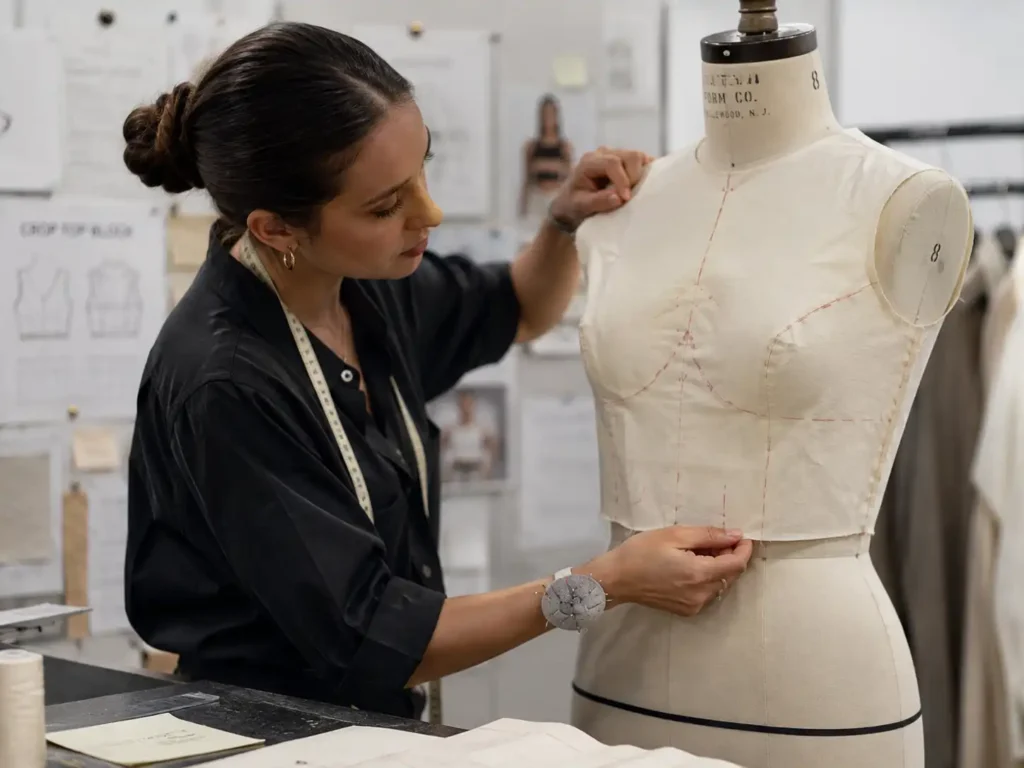
First Pattern Review

First Sample

Fit Sample

Revised Sample

PP Sample

Golden Reference
Fit Review Must Include Real Body Movement

Front Stability

Side Coverage

Back Edge
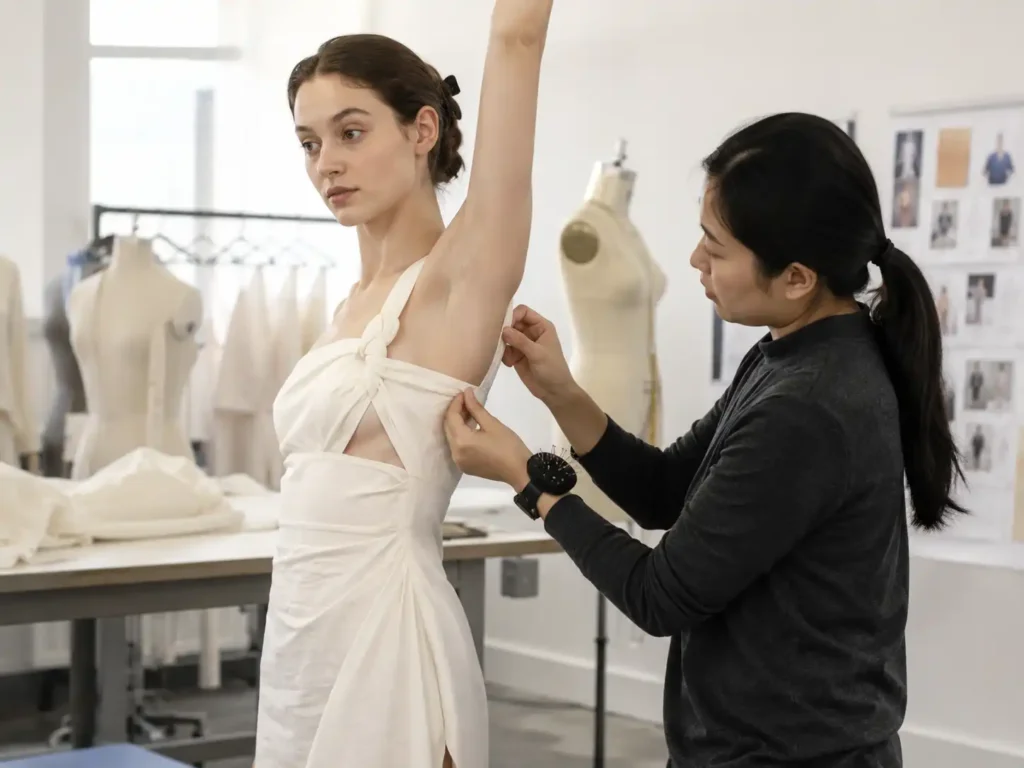
Arm Movement

Sitting and Walking

Recovery Check
Grade Open-Back Fit Across the Full Size Range
Grading a backless dress requires more than enlarging the base pattern proportionally. Bust volume, shoulder width, torso length, waist relationship and side coverage change across sizes, while the open-back visual needs to remain recognizable and secure.

Preserve Coverage, Not Only Shape
The opening can appear proportionally similar on CAD while producing very different side exposure on the body. Grading rules should protect key coverage points around the side bust, waist and upper back. Critical coordinates can be controlled separately from general body increments so the design does not become progressively more exposed in larger sizes.
Base-size approval should therefore identify the non-negotiable visual and fit points: back depth from a defined landmark, minimum side coverage, strap attachment position, waist level and neckline relationship. Those controls guide grading decisions instead of allowing every edge to scale automatically.
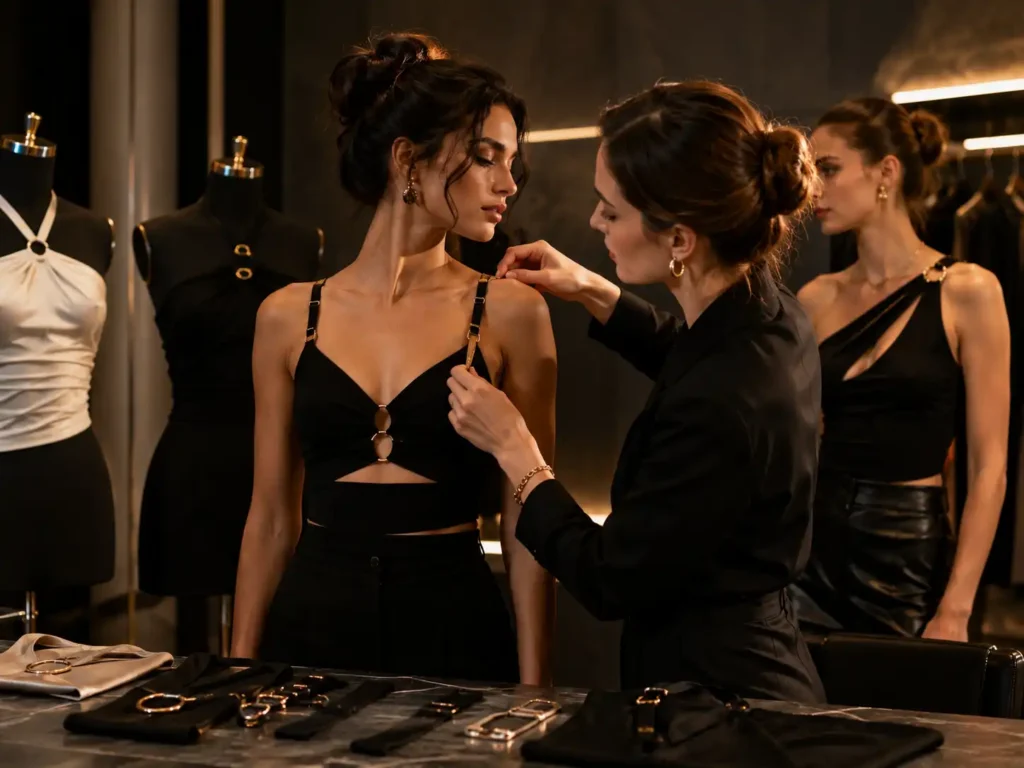
Recheck Strap Length and Angles
Strap lengths rarely scale perfectly from one size. Shoulder breadth, bust height and torso depth can alter the distance between attachment points. Halter, cross-back and tie constructions require particular care because length changes affect both comfort and the direction of tension through the bodice.
Graded samples or size-set checks should verify finished strap length, adjustment range where hardware is used, and attachment positions. A strap that is only slightly short may pull the armhole or neckline out of position; a slightly long strap may allow the entire upper bodice to drop.
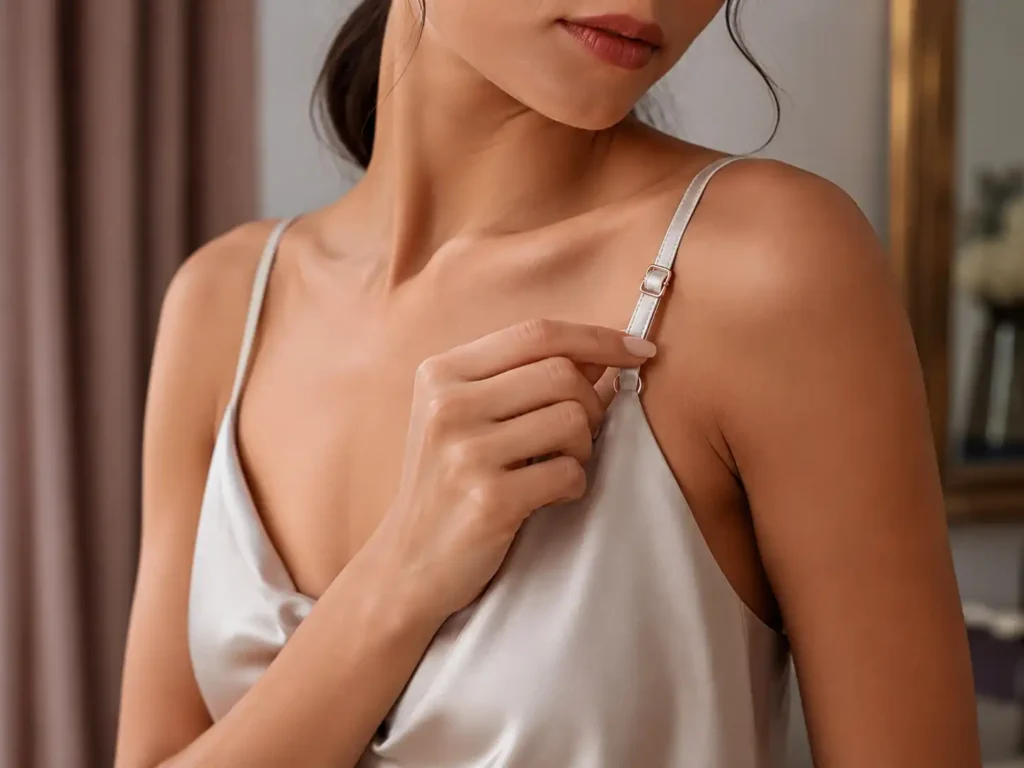
Adjust Support With Size
Internal support may need to evolve across the range. Cup coverage, under-bust shaping, elastic length, boning position and waist anchoring should remain appropriate for changing body volume. Simply enlarging the outer shell while keeping support components unchanged can create inconsistent fit between sizes.
Development teams can define size-dependent support specifications where needed, especially for fitted occasionwear and corset-influenced designs. The goal is a consistent wearing experience rather than identical internal component dimensions.

Confirm Size-Set Balance
Before bulk, selected sizes should be checked for back depth, side coverage, bust position, waist level, strap behavior and overall balance.
Measurement tolerance alone cannot confirm an open-back dress fits correctly because two garments can share the same numerical back width while sitting differently on the body.
Size-set feedback is transferred into the graded pattern and specification so the approved corrections are captured before full production cutting.
Transfer the Approved Pattern Into Clear Production Instructions
An approved sample only becomes useful at scale when pattern, measurement and construction decisions are locked into production references. Jinfeng connects the developed fit with the documents and physical standards used by cutting, sewing, finishing and QC teams.
Approved Pattern
Size Specification
Fabric and Trims
Construction Notes
PP Reference
Golden Standard
Keep the Approved Backless Fit Stable in Bulk
Incoming Fabric Control
Cutting Accuracy
Sewing-Stage Checks
Measurement and Fit Points
Pressing and Finishing
Final Inspection
Finished garments are checked against approved measurements, workmanship and visual reference. Final review can be supported by AQL or client-appointed inspection when required by the project, with attention kept on both numerical compliance and visible fit-related construction.
Frequently Asked Questions About Backless Dress Pattern Development
A tech pack is the clearest starting point, but development can also begin from a sketch, CAD, reference image or physical sample. Useful inputs include target measurements, size range, back depth, fabric direction, trim details, support requirements and launch timing. Missing technical decisions can be identified during project review before pattern cutting begins.
Yes. A reference image can define silhouette and visual direction, while hidden construction still needs to be engineered. Development covers pattern shape, seam placement, lining, support, closures, straps, edge stabilization and fit measurements that cannot be confirmed from a photograph alone.
Gaping is usually addressed by correcting edge length, back curvature, waist anchoring, side seam balance or strap tension. Stronger elastic is not automatically the right solution. The cause is identified during fitting and the correction is transferred into the pattern before the next sample is made.
Yes, where the design and fabric support it. Options may include cups, under-bust seams, boning, lining, elastic, side structure or waist anchoring. Support is selected according to neckline, back depth, silhouette and intended comfort rather than adding the same corset construction to every style.
Stretch, recovery, drape, weight, grain direction and surface slip can all change fit. A woven satin, stretch satin, mesh and jersey version of the same visual design may require different ease, edge control and support. Production fabric should be approved before final PP confirmation when material behavior affects fit.
Simple first samples commonly take about 7-10 days, normal dresses around 10-15 days, and more complex corset, strapless, lace, mesh or sequin constructions around 15-25 days. Special fabrics or custom trims can extend timing depending on sourcing and supplier lead times.
Yes. Development can include first sample, fit sample, revised sample and PP sample, with a Golden Sample or equivalent approved reference used where required. Revision count depends on structure, fabric and how much design direction changes during development.
Yes. Grading covers standard garment dimensions while also protecting open-back coverage, strap placement, bust support and waist balance. Selected size-set checks are useful for styles where proportional grading alone may change the visual opening or stability across sizes.
Production MOQ starts from 200 pieces per style/color, subject to fabric availability, color, trims, construction, packaging and production conditions. Fabrics, special dyeing, prints, lace, sequins, custom hardware or packaging can have separate supplier minimums.
Yes. NDA support can cover tech packs, sketches, samples, patterns, size charts, fabrics, trims, labels, packaging, quantities, target pricing and launch information. Unreleased styles and confidential brand materials are not used publicly without authorization.

Start Your Backless Dress Pattern Development
Send the development information already available and Jinfeng Apparel can review the style from a pattern, fit and production perspective. The first discussion focuses on whether the intended back opening, fabric, support structure and size range can be developed into a stable garment before sampling begins.
Clear inputs make it easier to identify risk early, plan the correct sample route and avoid late pattern changes after materials or production timing have been committed.
Please include:
- Tech pack, sketch, CAD, reference image or physical sample details
- Target fabric or preferred fabric direction
- Back depth, neckline and coverage requirements
- Size range and base-size measurements
- Strap, cup, boning, lining or support requirements
- Colorways and estimated quantity by style/color
- Label, packaging and finishing requirements
- Target launch or required production window


