 Skip to content
Bias-Cut Pattern Development
Develop fluid bias-cut womenswear with pattern, fabric and fit decisions built around real garment behavior.
Jinfeng Apparel supports fashion brands, product development teams and sourcing teams with bias-cut pattern development for slip dresses, midi dresses, maxi dresses, skirts, cowl-neck styles, backless silhouettes and occasionwear. Development connects fabric selection, grain direction, pattern balance, sample fitting, documented correction and pre-production approval so a fluid design can move toward repeatable bulk production.
- 2 sample roomssupporting development and revision
- 7+ senior pattern makersworking across dress and womenswear structures
- Satin options commonly evaluated across approximately 80–220 gsm, depending on silhouette and required body
- Typical sample development ranges from 7–25 days, depending on construction complexity and material readiness
- Bias-led fit reviews focus on bust coverage, waist/hip ease, side-seam balance, finished length, lining movement and drape
Bias-Cut Development Built for Established Fashion Programs
Fashion Product Teams
Common concerns include:
- Sample drape changing after hanging
- Side seams moving toward front or back
- Hip areas becoming tighter than expected
- Necklines opening more than intended
- Hem levels changing after the garment settles
- Lining and shell moving differently
Sourcing and Production Teams
Jinfeng combines pattern development with fabric review, sampling, revised samples, PP approval, production documentation and QC rather than treating pattern making as an isolated service.
Occasion and Premium Fashion Brands
Slip dresses, satin occasion dresses, cowl-neck styles, backless silhouettes and fluid midi or maxi dresses depend heavily on controlled drape.
Development therefore focuses on how the garment sits on a moving body, not only how measurements look on a flat specification sheet.
What Bias-Cut Pattern Development Actually Controls
Bias-cut pattern development adapts a garment pattern to the way a selected fabric hangs, stretches, contracts and redistributes around the body on the diagonal grain. The objective is not simply to rotate a straight-grain pattern. Development must control silhouette, ease, seam balance, neckline behavior, finished length and the relationship between shell, lining and construction.
Pattern Dimensions Must Follow Fabric Behavior
A pattern can measure correctly on paper and still produce the wrong garment after cutting and hanging.Diagonal-grain fabric can move more freely than the same material cut on straight grain. Depending on fiber, weave, weight and finish, the garment may lengthen vertically, narrow across some areas or redistribute tension between bust, waist and hip.
For a commercial dress, pattern decisions therefore need to consider:
- Where the garment should skim rather than grip
- How much ease is required at hip and seat
- Whether a cowl neckline can fall cleanly without excessive opening
- Whether side seams remain visually balanced
- Whether straps carry too much garment weight
- Whether the hem needs correction after the fabric settles
Fit Is a Three-Dimensional Result
Bias-cut garments are evaluated on the body, mannequin and measurement table together.
A technically acceptable development process compares:
Flat measurements: bust, waist, hip, length, neckline, strap and slit dimensions.
On-body balance: how those dimensions redistribute after dressing.
Visual drape: whether the fabric falls smoothly through the waist and hip without pulling, collapsing or twisting.
Movement: whether the silhouette remains controlled while walking, sitting and turning.
The pattern becomes production-ready only after those factors are reconciled through sampling and revision.
Fabric Behavior Comes Before Pattern Compensation
Fabric selection is part of bias-cut pattern development, not a separate purchasing decision. Two fabrics with similar composition can behave differently because of weave density, weight, yarn construction, finish, surface friction and recovery.
Drape, Weight and Dimensional Movement
Light fluid fabrics can produce the soft body-skimming effect associated with bias-cut dresses, but they can also exaggerate instability.
During development, Jinfeng reviews characteristics such as:
- Fabric weight and body
- Softness and drape
- Surface slip
- Directional stretch
- Recovery
- Transparency
- Shrinkage risk
- Lining compatibility
- Pressing sensitivity
- Snagging risk
A lightweight satin may produce excellent movement but require careful control around the hip, neckline and hem. A heavier crepe satin may provide more body and a more stable silhouette. Viscose-based fabrics can create excellent fluidity but require attention to dimensional change. Stretch satin introduces another variable because mechanical stretch and bias movement operate together.
Fabric Changes Can Trigger Pattern Changes
Switching fabric after the first sample is not simply a material substitution.
A replacement fabric may change:
- Bust and neckline behavior
- Waist and hip ease
- Garment length
- Side-seam position
- Cowl depth
- Lining movement
- Hem shape
- Sewing method
- Cost and consumption
Jinfeng’s development records treat fabric changes as technical changes whenever they affect fit or construction.
Bulk-relevant revisions are transferred into updated patterns, size charts, BOM information, sewing instructions and QC checkpoints rather than remaining as informal comments.
Fabric Choices for Bias-Cut Womenswear Development
The best fabric is determined by the intended silhouette, retail positioning, opacity, movement and production requirements. The values below are development references rather than fixed rules; final selection must be checked against the actual fabric lot and sample.
| Fabric Direction | Typical Development Character | Bias-Cut Focus | Construction Attention |
|---|---|---|---|
| Lightweight Satin | Fluid, glossy, close to body | Hip ease, neckline, side seam, finished length | Snagging, pressing, lining, seam appearance |
| Crepe Satin | Fluid with slightly more body | Waist-to-hip balance, drape, hem fall | Surface direction, zipper flatness, pressing |
| Silk-Like Satin | Smooth, fluid, visually premium | Grain control, silhouette, neckline stability | Surface protection, clean seams, packing |
| Viscose / Rayon Woven | Soft and mobile | Length change, side seams, waist/hip balance | Shrinkage, handling, hem correction |
| Chiffon | Very light and sheer | Panel balance, lining, flowing hem | Transparency, narrow seams, edge control |
| Stretch Satin | Fluid with added stretch | Bust/hip fit, recovery, strap load | Stretch direction, zipper or pull-on structure |
Bias Grain and Pattern Engineering Control Points
Bias-cut construction depends on how pattern geometry, grain orientation and body balance interact. A professional development process therefore evaluates the entire garment rather than treating individual measurements as isolated values.

Grain Direction and Panel Balance
Grain placement influences both drape and stability.For simple silhouettes, panel direction may look straightforward on paper, yet commercial development still needs to consider whether the front and back hang consistently after assembly. Asymmetrical silhouettes, cowl necklines, open backs, curved seams or diagonal panels can create additional tension if grain orientation is not coordinated across the garment.
Pattern review should examine:
- Grain direction on every major panel
- Front-to-back balance
- Center line behavior
- Side seam fall
- Seam intersection
- Waist position
- Hip shaping
- Hem direction
- Lining grain strategy

Bust, Waist and Hip Balance
Bias-cut fit cannot be evaluated only from circumference measurements.
A dress may technically meet bust, waist and hip specifications while still showing:
- Pull lines through the hip
- Excess fabric at the waist
- Bust collapse
- Neckline opening
- Side-seam migration
- Uneven front and back length
Pattern makers therefore review how the fabric distributes over the body.
For slip and occasion silhouettes, Jinfeng’s established fitting checkpoints include bust coverage, strap length, bias drape, waist and hip ease, lining movement and finished dress length.

Necklines, Straps and Open-Back Construction
Bias-cut styles frequently use minimal structure, so small pattern errors become visually obvious.
Cowl depth must work with fabric weight. Thin straps need correct position and length because they influence neckline height and garment balance.
Backless silhouettes must maintain front bust coverage while reducing support at the back.
Pattern development should therefore coordinate neckline, strap, armhole, side coverage and back opening as one system rather than correcting each feature independently.
Fit and Drape Must Be Evaluated on the Body
Bias-cut development succeeds when the garment looks intentional from the front, side and back while remaining wearable in motion. A smooth flat pattern is only the starting point.

Bust and Neckline Control
Slip and cowl silhouettes can shift vertically as the fabric settles. A neckline that looks correct immediately after sewing may sit lower after hanging or when the body moves.
Fit review checks:
- Bust coverage
- Cowl depth
- Neckline stability
- Strap position
- Strap length
- Armhole exposure
- Side bust coverage
For photo-ready and occasionwear styles, small changes can materially alter the visual result.
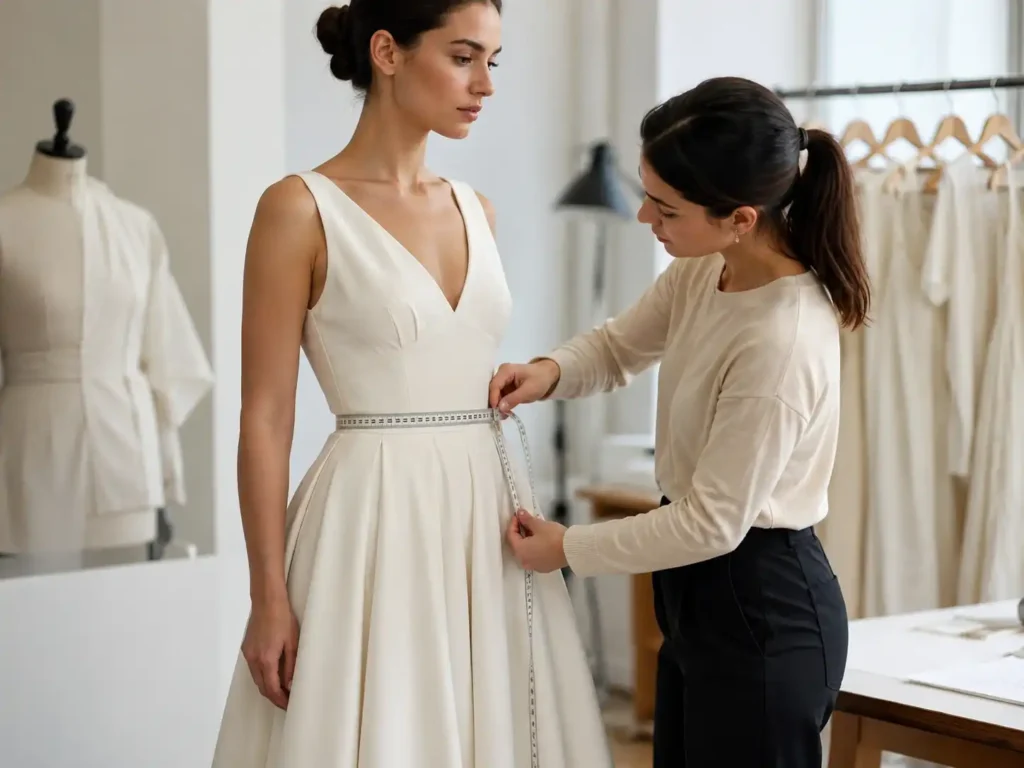
Waist and Hip Drape
The hip is often the most sensitive area in a bias-cut dress.Too little ease can make the fabric grip and stop flowing. Too much can remove the clean body-skimming character expected from the silhouette.
Fit review therefore checks:
- Waist position
- Hip ease
- Seat balance
- Side-seam direction
- Fabric pooling
- Pull lines
- Lining movement
Jinfeng’s sample review process includes internal measurement, mannequin assessment, on-body fitting where required, structure checking, fabric risk review and documented correction points.

Length, Slit and Hem Balance
Finished length should be evaluated only after the garment has had sufficient opportunity to settle during sample development.
A bias-cut hem can change differently across front, side and back. Slits can also appear higher or lower after the garment redistributes on the body.
Final correction should therefore reference:
- Target finished length
- Front/back balance
- Side length
- Slit height
- Lining length
- Intended shoe and styling proportion where relevant
Bias-Cut Styles We Develop for Fashion Collections

Slip Dress

Cowl-Neck Dress

Bias Midi Dress

Bias Maxi Dress

Bias Skirt

Backless Bias Dress

Side-Slit Bias Dress

Occasion and Resort Bias Styles
From Tech Pack to First Bias-Cut Sample
Project Review
The team first reviews:
Intended silhouette, Fabric direction, Target fit, Size range, Construction details, Lining, Trims, Expected quantity, Launch timing
Structure Analysis
Pattern and development teams identify the areas most likely to affect the garment’s result, including bust, waist, hip, neckline, straps, side seams, openings, slits and finished length.
Fabric Direction
Pattern Development
Sample Sewing
Internal Review
Fit Samples Turn Drape Problems Into Pattern Decisions
A first sample creates something real enough to evaluate. A fit sample and revised sample turn observations into measurable corrections.

First Sample: Validate the Direction
The first sample is not expected to be the final production standard.Its purpose is to verify:
- Fabric direction
- Overall silhouette
- Bust and neckline behavior
- Waist and hip balance
- Length
- Strap position
- Lining
- Construction feasibility
- Initial sewing method
For bias-cut styles, the first sample also reveals where gravity and fabric mobility are changing the intended shape.
A garment may look correct immediately after sewing yet show different behavior after hanging or wearing. Those changes need to be separated from ordinary pattern errors.
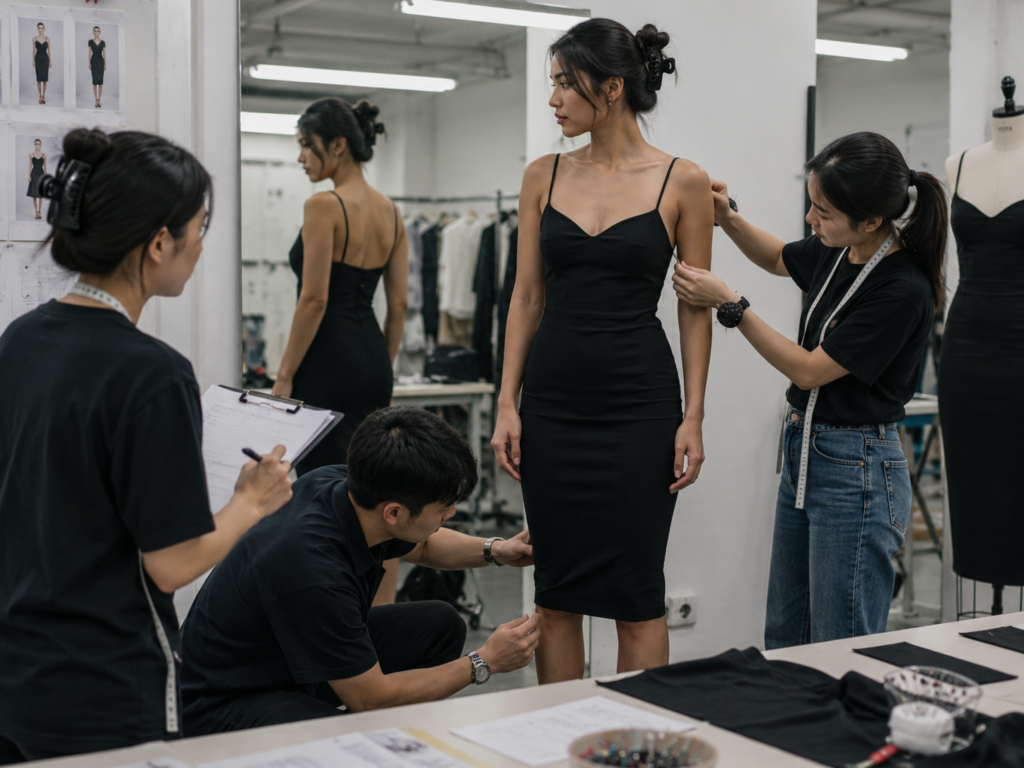
Fit Review: Diagnose the Cause
Comments such as “too tight,” “too low,” “too long” or “not flowing correctly” are not sufficient production instructions.
Fit review converts them into specific decisions:
Bust: change circumference, neckline shape or strap position?
Waist: modify width, position or distribution?
Hip: increase ease, rebalance the panel or change fabric?
Side seam: correct pattern balance or investigate fabric distortion?
Length: alter pattern length or correct post-hanging growth?
Lining: change length, ease, attachment or material?

Revised Sample: Record the Solution
Once the cause is identified, revisions can include pattern correction, measurement adjustment, fabric substitution, construction change, trim adjustment or lining correction.
Bulk-relevant changes are recorded in the updated pattern, size chart, BOM, sewing instructions and QC checkpoints.
Jinfeng’s revision process is built around documented correction rather than verbal agreement alone.
Pattern Correction Before Bulk Production
Bias-cut garments should not move into production while unresolved fit behavior remains in the sample. Final pattern correction connects approved visual results with measurable production standards.

Convert Comments Into Final Pattern Changes
Client feedback can arrive as fitting photographs, marked measurements, written comments or reference comparisons.The pattern team reviews every change against:
- Bust
- Waist
- Hip
- Garment length
- Strap length
- Neckline depth
- Armhole
- Slit
- Lining
- Seam direction
- Fabric behavior
When a correction affects more than one area, the full pattern balance must be checked again.

Lock the Technical Record
Approved revisions need to move from sample comments into production documents.
Final records may include:
- Final pattern version
- Updated measurement chart
- Grading direction
- Fabric approval
- Trim approval
- BOM
- Sewing instruction
- Lining instruction
- QC measurement points
- Packing requirements
Jinfeng’s defined process requires sample feedback to be converted into updated patterns, measurement charts, BOM information, sewing instructions and QC checklists before bulk production.

Re-Sample When the Change Is Structural
Not every modification can be treated as a minor adjustment.
Changing the principal fabric, neckline structure, back construction, major ease distribution or sewing method can materially change the garment.
Significant revisions normally require another revised sample before PP approval.
The goal is not to minimize sample rounds at any cost.
The goal is to prevent unresolved development risks from being multiplied across thousands of garments.
PP Sample and Golden Sample Define the Production Standard
Bias-cut bulk production needs a clear point where development stops and controlled execution begins.

PP Sample
The pre-production sample confirms the final combination of:
- Pattern
- Measurements
- Fabric
- Color
- Trims
- Construction
- Lining
- Labels
- Packing
- Allowed tolerances
- Critical QC points
Major structural or material changes after PP approval require renewed evaluation because they can affect fit, cost, timing and production risk.

Golden Sample
The Golden Sample provides a physical reference for:
- Pre-production meeting
- Production-line comparison
- In-line inspection
- Final garment inspection
- Packing review
- Third-party inspection where required
- Repeat orders
- Quality dispute reference
Jinfeng defines the PP Sample as the most important final sample before bulk production and the Golden Sample as the sealed reference for production and QC.
From Approved Bias-Cut Sample to Repeatable Bulk Production
A successful development sample is valuable only when the approved silhouette can be reproduced consistently through cutting, sewing, finishing and packing.
Cutting and Pattern Version Control
Bias-sensitive fabrics require disciplined handling before sewing begins.Production should work from the approved pattern version, confirmed fabric and clear grain direction. Cutting teams need to avoid unnecessary stretching or distortion while laying and moving the material.
Important controls include:
- Correct pattern version
- Correct grain reference
- Fabric shade grouping where necessary
- Directional surface consistency
- Controlled handling during cutting
- Panel identification
- Lining-to-shell matching
Sewing and In-Line Stability
Bias-cut panels can move more than straight-grain panels while sewing.
Seams should therefore be evaluated for:
- Puckering
- Stretching
- Twisting
- Uneven feeding
- Side-seam direction
- Neckline deformation
- Zipper distortion
- Lining exposure
Early production pieces are especially important because they show whether the approved sample method is being reproduced correctly on the line.
Measurement and Finished Garment Review
Finished-garment QC should not rely only on flat measurements.
Bias-cut styles also require visual review of:
- Front/back balance
- Side seams
- Bust and neckline
- Hip drape
- Dress length
- Slit position
- Lining
- Hem level
- Pressing
- Overall silhouette

Bias-Cut Quality Risks and Control Points
Quality control should follow the risks created during development. The most useful checkpoints are the ones directly connected to fabric behavior, pattern balance and the approved sample.
| Risk | Typical Cause | Development Check | Bulk Control |
| Side-Seam Twisting | Grain imbalance, fabric distortion, uneven sewing feed | Fit sample and side-view assessment | Cutting direction, sewing check, finished garment review |
| Uneven Finished Length | Bias settling, uneven panel movement | Hang and remeasure sample before final correction | Finished length inspection after pressing |
| Hip Pulling | Insufficient ease or fabric behavior mismatch | Fit sample at standing and movement positions | Key measurement and silhouette inspection |
| Neckline Dropping | Bias growth, strap loading, cowl imbalance | Neckline and strap review after settling | Strap length and neckline check |
| Lining Exposure | Shell and lining move differently | Lining length and ease comparison | Lining position during final inspection |
| Satin Snagging | Surface sensitivity during cutting and sewing | Fabric handling review | Cutting, line, finishing and packing inspection |
| Shade Difference | Satin reflection or fabric-lot variation | Fabric approval under consistent lighting | Lot control and garment shade comparison |
| Pressing Marks | Excess heat or pressure | Sample pressing method approval | Finishing control and final appearance check |
What Strong Bias-Cut Development Partners Should Demonstrate
Experienced fashion teams should evaluate more than whether a supplier has previously sewn a slip dress. Bias-cut development requires several connected capabilities.
Fabric Judgment
Dedicated Pattern Development
Fit and Drape Review
Documented Revision
PP and Production Standards
Bulk Quality Control
Bias-Cut Development Timelines and Project Readiness
General Timelines
- Simple styles: approximately 7–10 days
- Standard dress development: approximately 10–15 days
- Complex styles: approximately 15–25 days
- Special fabrics or trims: timing follows material development and supplier availability
Those ranges cover sample development rather than guaranteed end-to-end bulk delivery dates. Bias-sensitive fabrics may require additional evaluation when the first sample needs to settle before final hem or pattern correction.
Project Readiness Requirements
- Tech pack or reference image
- Target fabric
- Size range
- Quantity plan
- Color plan
- Target market
- Desired launch timing
- Private-label requirements
- Packing requirements
Frequently Asked Questions About Bias-Cut Pattern Development

Send Your Bias-Cut Project for Development Review
Bias-cut styles deserve technical review before fabric is committed and production quantities are locked.
Send your design information and Jinfeng can evaluate the garment structure, material direction, fit-sensitive areas, sampling requirements and production path. For a more useful first review, include:
- Reference image, sketch or tech pack
- Intended product type
- Preferred fabric or swatch
- Size range
- Quantity per style/color
- Color plan
- Target market
- Desired launch date
- Label requirements
- Packing requirements
- Any known fit or drape problems from previous samples

