 Skip to content
Romper Manufacturer for Fashion Brands
Custom women’s romper development with controlled fit, fabric behavior, bulk consistency and retail-ready private-label delivery.
Jinfeng Apparel develops adult women’s rompers for established fashion brands, sourcing teams and product development departments. Projects may begin from a tech pack, reference image, line sheet, sketch or original sample, followed by fabric selection, pattern work, sampling, PP approval, bulk production and final packing.
- MOQ starts from 200 pcs per style/color for standard custom programs.
- Romper fit is reviewed through torso length, front and back rise, waist placement, hip room, leg opening and movement comfort.
- Two sample rooms, 7+ senior pattern makers and 20+ sample machinists support fit correction before bulk production.
- Six owned women’s fashion factories, 100,000+ pcs regular monthly capacity and 15+ QC inspectors support multi-style production.
Romper Manufacturing Capacity Fashion Brands Can Verify
Since 2008
Two Sample Rooms
Seven Pattern Makers
Six Owned Factories
100,000+ Monthly Capacity
Fifteen QC Inspectors
Built for Established Fashion Brands and Product Teams
Global Fashion Brands
Premium Ecommerce Brands
DTC Fashion Labels
Resort and Partywear
Retail Private Label
Sourcing Development Teams
Where Women’s Romper Programs Commonly Go Wrong
Incorrect Torso Length
Poor Rise Balance
Wrong Waist Placement
Fabric Pattern Mismatch
Sample Bulk Drift
Retail Packing Errors
Custom Women’s Rompers for Different Fashion Markets
Romper development should follow the sales channel, wearing occasion, fabric behavior and expected retail finish. Jinfeng Apparel supports adult women’s playsuits and short one-piece garments across casual, resort, party, tailored, denim, printed and stretch categories.

Casual Rompers

Resort Rompers

Party Rompers

Tailored Rompers

Denim Rompers

Printed Rompers

Long-Sleeve Rompers

Knit Rompers
Fit Engineering for Production-Ready Women’s Rompers
Romper fit depends on a connected measurement system. Upper-body balance, waist position, rise, hip volume and movement allowance must be developed together, then transferred into measurable production standards.
Torso Length Controls the Entire Garment
A romper links the shoulder line to the crotch, so vertical body length affects almost every visible and functional area. Development normally begins by identifying the intended shoulder or strap position, bust level, waist location and crotch point. High-point shoulder to waist and waist to crotch measurements are reviewed separately because two garments can share the same total length while placing the waist in very different positions. The pattern also needs enough vertical ease for movement without creating excess folding at the midsection. Woven styles usually require more carefully distributed ease than stretch styles because the fabric cannot compensate for a short pattern. Strapless and halter constructions add another challenge: support and neckline security must be maintained while the torso remains long enough for sitting and reaching. Fit comments such as “pulls at crotch,” “waist sits too high,” or “back neckline gaps” are converted into specific pattern corrections rather than solved by simply adding length everywhere. Jinfeng Apparel records the approved torso relationships in the final pattern and measurement file so bulk garments can be checked using the same points.
Front and Back Rise Need Separate Balance
Front rise, back rise and total crotch length describe related but different parts of the lower body. The front must remain clean through the abdomen and center front, while the back needs enough curve and length for seat volume and bending. Adding equal length to both sides rarely solves a fit problem. A garment that pulls at the back waist may need more back rise or seat shape, not a longer front. A loose front crotch may come from excessive front rise, incorrect crotch extension or too much hip ease. During development, the fit is reviewed from standing, sitting, walking and bending positions.
Side seams should remain reasonably vertical, the waist seam should not tilt sharply, and the short should not ride into the crotch during movement. Fabric behavior also matters: soft rayon may drop and grow, rigid denim may require greater shaped ease, and stretch jersey may need negative ease with controlled recovery. Approved front and back rise measurements become dedicated QC points because even small production variation can change comfort across an entire size range.
Bust, Waist and Hip Work as One System
Romper fit cannot be corrected by treating bust, waist and hip as independent circumferences. Bust shaping affects front length and waist level; waist placement affects rise depth; hip ease affects seat comfort and leg opening. A fitted party romper may use darts, princess seams, cups, boning or stretch panels to control the upper body, while a casual style may rely on gathering, elastic or relaxed ease. The pattern team studies how volume moves through the garment and where the design expects definition. For woven styles, bust and hip ease must be sufficient for dressing and movement. For stretch styles, negative ease is selected according to actual fabric stretch and recovery rather than a generic percentage. Size grading requires proportional decisions: adding the same amount at every seam can distort necklines, waist height, pocket position and crotch shape. Jinfeng Apparel therefore reviews grade rules for key vertical and horizontal measurements, including shoulder or strap position, armhole, bust, waist, hip, front rise, back rise, inseam, leg opening and total garment length. The goal is a consistent silhouette, not merely larger measurements.
Movement and Dressing Access Must Be Tested
A garment can measure correctly and still fail during real wear. Rompers need enough opening for dressing, enough torso and rise length for sitting, and enough shoulder or back width for reaching. Closure choice changes the entire wearing experience. A center-back zipper may create a clean front but needs sufficient length and waist clearance. A side zipper can preserve the back design but may be difficult when the waist is highly fitted. Button fronts, snaps, wrap constructions and elastic waists offer different speed, security and visual results. Long sleeves, narrow armholes, corset uppers or non-stretch fabrics require additional movement checks. Sample review should include reaching forward, raising arms, sitting, bending and taking a long step. Stress should not concentrate at the crotch, waist seam, shoulder strap, zipper end or pocket opening. Jinfeng Apparel uses fit comments and movement observations to adjust pattern length, ease distribution, closure opening and reinforcement details before PP approval. Bulk production then follows the locked structure and measurement tolerances rather than relying on visual similarity alone.
Choose Romper Fabrics by Fit and Market Position
Fabric selection determines silhouette, comfort, construction method, MOQ, risk and retail appearance. The same romper design can require a different pattern, lining plan, seam method and inspection standard when moved from rayon to satin, denim or stretch knit.
| Fabric Direction | Best-Fit Rompers | Pattern / Construction Effect | Main Production Risk | QC Focus |
|---|---|---|---|---|
| Cotton Poplin | Casual, utility, shirt-style | Stable structure; needs planned bust, hip and movement ease | Shrinkage, wrinkles, seam puckering | Shrinkage, grain, waist level, seam flatness |
| Rayon / Viscose | Resort, printed, relaxed | Fluid drape; pattern must control distortion and drop | Shrinkage, twisting, cutting movement | Pre-treatment, panel direction, length stability |
| Linen Blend | Summer, resort, tailored casual | Crisp-to-relaxed body; often needs comfortable ease | Wrinkle, slubs, batch shade | Weight, shade, seam slippage, pressing |
| Satin | Party, occasion, evening | Slippery surface; accurate grain and stable seam construction | Snags, shine direction, needle marks, pressure lines | Surface protection, color, zipper flatness, pressing |
| Denim | Utility, casual, festival | Weight and wash change torso, rise and seam bulk | Shrinkage, thick intersections, wash variation | Pre/post-wash measurements, hardware, topstitching |
| Crepe / Suiting | Tailored, structured, premium | Supports clean lines, collars, waist seams and pockets | Interfacing mismatch, shine, seam impression | Structure, symmetry, pressing, closure alignment |
| Jersey / Rib | Fitted, casual, lounge | Stretch percentage and recovery determine pattern ease | Growth, weak recovery, wavy seams | Relaxation, stretch direction, seam recovery, size stability |
| Lace / Mesh | Party, layered, statement | Requires lining, coverage planning and delicate joining | Transparency, tearing, pattern mismatch | Coverage, motif position, seam finish, skin comfort |
Romper Design Details Built Around Brand Direction

Necklines and Collars

Sleeves and Shoulders

Waistline Structures

Zippers and Openings

Elastic Drawcord Belts

Pockets and Utility
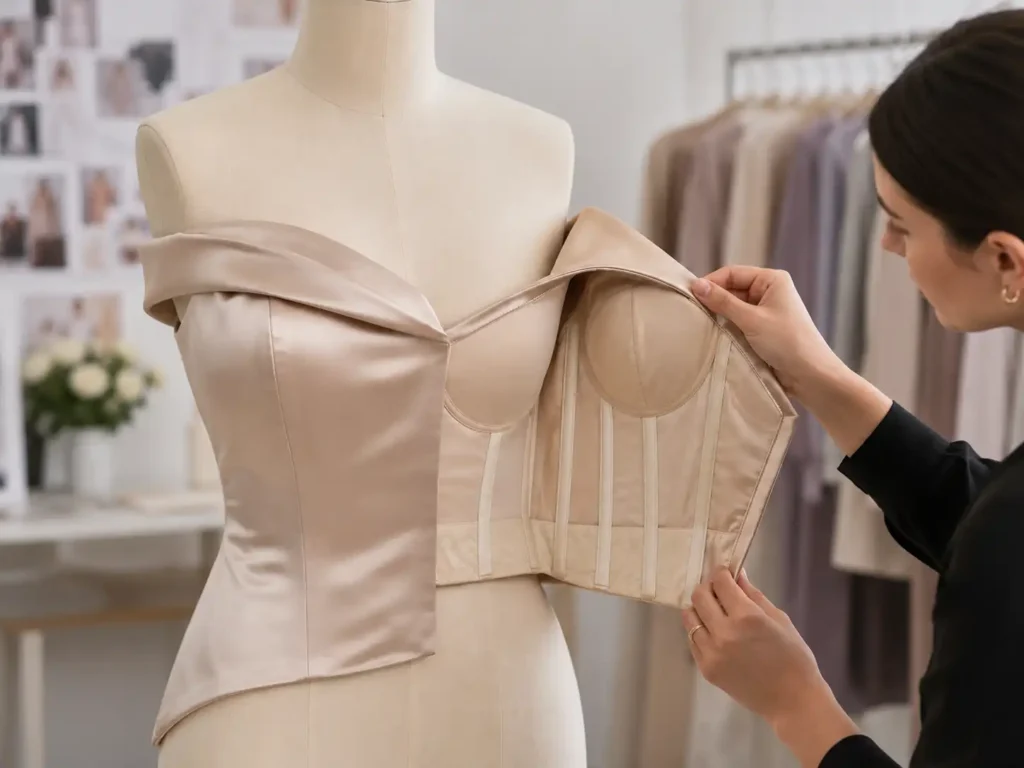
Lining and Support

Prints Embroidery Trims
Workmanship That Protects High-Stress Romper Areas
Romper workmanship must protect stress points created by a joined body structure. Crotch seams, waist joins, closures, armholes, straps and pockets receive repeated tension during dressing and wear, so construction details are defined before bulk sewing.
Crotch and Seat Seam Reinforcement
The crotch seam carries movement from both the torso and the short, making it one of the most important structural areas. Seam type and reinforcement depend on fabric weight, stretch and intended fit. Stable woven fabrics may use overlocked or bound seam allowances with reinforcement at the deepest curve, while stretch garments need a stitch system that extends without breaking. Thick denim intersections require controlled seam grading so bulk does not create pressure against the body. Lace, mesh or delicate satin may need support tape, lining or alternate joining methods to prevent tearing and seam slippage. The pattern must also provide enough front and back rise; stronger sewing cannot correct a short crotch. During sample review, stress is observed while sitting, stepping and bending. Bulk checks cover stitch density, skipped stitches, seam security, seam allowance, reinforcement position and clean finishing. Any weakness found during inline inspection is corrected before the same operation expands across the full order.
Waist Seam and Closure Alignment
The waist often joins the upper and lower garment sections, so alignment errors can twist the entire romper. Side seams, darts, princess seams, pockets and zipper seams should meet according to the approved construction. At center-back or side zippers, seam intersections must remain flat and the zipper must travel smoothly across the waist thickness. Structured waistbands may use interfacing, while elasticized waists need a controlled ratio and even distribution. Tie waists and belts require consistent anchor points and reinforced loops.
During production, the line follows notch positions and operation instructions from the approved sample. Inline inspection checks waist level, seam matching, elastic measurement, closure flatness and left-right symmetry. Final pressing should sharpen the intended shape without creating seam impressions, glazing or pressure marks, especially on satin, crepe and dark suiting.
Armhole Strap and Shoulder Stability
Sleeveless and open-neck rompers depend on stable armholes and secure shoulder details. Narrow straps must carry garment weight without stretching, twisting or detaching. Adjustable straps need correct slider direction and secure turn-back length. Strapless designs may require grip tape, cups, boning or an internal waist stay so support does not rely only on a tight upper edge.
Off-shoulder elastic must recover after repeated stretching, while tailored shoulders need balanced pad, sleeve and neckline construction. Armholes should provide coverage without cutting into the underarm or gaping during movement. Sample fitting establishes strap length, attachment angle, neckline position and armhole shape. Bulk inspection checks symmetry, bartacks, elastic join strength, cup position, boning ends, facing stability and left-right balance. Stress testing is concentrated at attachment points rather than limited to visual inspection.
Pocket Hem and Internal Finishing
Small finishing details influence perceived quality and long-term wear. Pocket openings need reinforcement because the wearer repeatedly pulls against the edge. Side-seam pocket bags should lie flat and remain clear of the crotch and zipper. Short hems must be even from front to back and compatible with the fabric: narrow rolls suit lightweight rayon, clean double turns suit stable cotton, coverstitch suits knit, and faced hems may support tailored silhouettes.
Lining and facing edges should remain hidden during movement. Seam allowances need consistent treatment so internal bulk does not change fit or create visible ridges. Final inspection reviews pocket depth, opening strength, hem width, leg-opening symmetry, loose threads, lining attachment, seam cleanliness and pressing. Packing methods are selected to avoid crushing structured collars, cups, boning, sequins or sharp waist creases.
What We Review Before Developing Your Romper
Reference Image
Tech Pack
Original Sample
Size Range
Material Direction
Quantity Launch Plan
Romper Sampling from First Pattern to PP Approval
Sampling converts a design direction into measurable fit, construction and material standards. Romper development usually needs more fit attention than separate tops or shorts because the torso and rise must work through one garment.
Project Review and Material Direction
Development begins with a review of the design source, target market, planned quantity, size range, material direction, trims, branding and launch date. The team identifies high-risk points such as a short torso, low back, fitted waist, rigid fabric, narrow zipper opening, custom print or delicate decoration. Material sourcing and pattern planning move together because the fabric can change required ease, seam method and lining. A rayon resort style may need shrinkage and distortion control, while a satin party style may need grain-direction, surface and zipper planning. Standard swatches can often be reviewed quickly, whereas custom dyeing, printing, certified fabric or special trims may extend the development path. The outcome is a clearer sample brief rather than a premature promise based only on a reference image.
First Sample and Internal Review
The first sample establishes silhouette, base fit, material direction and construction feasibility. Standard women’s fashion samples often require about 10-15 working days after complete information and suitable materials are ready. Simpler constructions may move in roughly 7-10 working days, while complex corset, lace, mesh, sequin or heavily structured rompers may require about 15-25 working days.
Timing remains dependent on material availability and trim development. Before sending images or the physical sample, the sample room reviews key measurements, workmanship, symmetry, closure operation and obvious fit risk. Internal checking does not replace the brand’s fit approval, but it prevents avoidable mistakes from reaching the review stage.
Fit Sample and Pattern Correction
Fit review should use a consistent model or dress form aligned with the brand’s base-size standard. Comments need to describe the location, direction and amount of change whenever possible. For example, “add 1.5 cm at back torso length,” “lower front waist 1 cm,” or “increase back rise without changing front rise” gives the pattern maker a controlled action.
General comments such as “make it fit better” are converted into measurable questions before revision. Photos from front, back, side and movement positions help explain balance. Revised samples commonly require about 7-15 working days after comments, materials and trim decisions are confirmed. Several corrections may be combined into one revision, but major fabric or structure changes can require a new development path.
Photo-Ready and Sales Samples
A photo-ready or salesman sample may follow a different priority from a fit sample. Campaign garments need clean surface quality, correct visual proportions, representative trims and strong pressing, while sales samples may need a broader style-color range for showroom or wholesale appointments.
When bulk fabric is not yet available, the temporary sample material should be close enough in weight, drape and stretch to avoid presenting a misleading silhouette. Label and packaging can be included when the sample will appear in retail or media content. Photo and sales samples should not automatically be treated as bulk approval unless measurement, construction, material and trim standards have also been confirmed.
PP Sample and Golden Standard
The pre-production sample is the final approval point before bulk cutting. It should reflect confirmed bulk fabric, color, trims, measurements, sewing method, label placement and packing direction. PP samples generally require about 7-15 working days once final materials are ready, although special decoration or replacement materials can extend timing. Approval comments are closed before the production file is released. A sealed golden sample, together with the final pattern, measurement specification, BOM, trim card and QC checklist, gives the production line and inspection team one shared reference. Changes requested after PP approval are evaluated for cost, timing and material impact because even a small change may affect already prepared components or graded patterns.

How Approved Romper Samples Become Bulk Standards
A physical sample alone cannot protect bulk consistency. Every approved correction must be converted into controlled files, material references and inspection points before cutting begins.
Final Pattern and Size Grading

The final base-size pattern contains all approved fit and construction corrections. Grading then expands the style across the planned size range using rules suited to a joined garment. Torso length, waist placement, front rise, back rise and hip growth need separate decisions; simply enlarging every seam by the same amount can distort proportions. Pattern notches, drill marks, pocket positions, closure points and seam allowances are checked before release. When a brand provides an existing block or graded measurement chart, differences are reviewed and resolved rather than silently overwritten. The released pattern version is identified so sample-room drafts or earlier revisions cannot be used by mistake during bulk cutting.
Measurement Specification and Tolerances

The measurement specification defines how the finished garment will be checked. Romper files normally include high-point shoulder or strap reference, bust, waist, hip, total torso length, front rise, back rise, total crotch length where required, inseam, leg opening, sleeve length, armhole and total garment length. Measurement methods are described clearly because two teams can obtain different results when the garment is stretched, folded or positioned differently. Tolerances are selected according to fabric and construction rather than copied from unrelated products. Critical fit points receive tighter attention, while flexible or gathered areas may allow a different control range. QC reports refer to the same approved methods.
BOM Sewing and Trim Records

The bill of materials identifies the approved fabric, lining, interfacing, elastic, zipper, buttons, hooks, cups, boning, labels, hangtags and packing components.
Color, size, supplier reference and placement are recorded where needed. Sewing instructions define seam type, stitch appearance, reinforcement, edge finish, pressing and key construction order. A romper often requires special notes at crotch seams, waist joins, zipper intersections, strap attachments and pocket openings. Trim cards or approved physical references reduce color and specification drift. Replacement materials are not introduced into bulk without review because a different zipper tape, elastic recovery or lining stretch can change fit and appearance.
PP Lock and QC Handover

PP approval closes the development stage and opens controlled bulk execution. The production team receives the final pattern, graded files, approved sample, measurement specification, BOM, sewing instructions, label layout, packing guide and QC checklist. A pre-production meeting can highlight risks such as print direction, satin surface protection, denim shrinkage, elastic measurement or complex pocket construction. The first pieces from the line are checked before output expands. Inline findings are recorded and corrected at source. Final inspection compares the finished order with the approved standards, while packing review confirms color, size, barcode, polybag and carton requirements. The handover creates traceability from the approved sample to each production checkpoint.
Production Planning for Multi-Style Romper Collections
Factory Matching
Material Booking
Style Prioritization
Color Size Control
Inline Coordination
Finishing Packing Flow
Quality Control Built for Women’s Romper Production
Fabric Trim Inspection
Cutting Bundle Control
Inline Sewing Checks
Measurement Inspection
Wear Movement Review
Final Packing Inspection
Romper MOQ and Cost Planning for Fashion Brands
Jinfeng Apparel’s basic MOQ starts from 200 pcs per style/color. Final MOQ and price depend on material availability, color development, trims, construction, size range, packaging and production schedule. Accurate quotations are prepared after the style and quantity structure is understood.
| Planning Factor | How It Affects the Order | Information Needed |
|---|---|---|
| Standard custom MOQ | Starts from 200 pcs per style/color | Style count, color count and total quantity |
| Multiple sizes | Sizes can be divided within an approved style/color quantity | Size range and ratio |
| Multiple colors | Each color normally needs to meet the applicable MOQ | Color plan and priority colors |
| Stock fabric | Often supports faster confirmation and the basic MOQ | Composition, weight, hand feel and color |
| Custom dyeing | May require dye-house minimums and lab-dip approval | Pantone or physical color standard |
| Custom printing | May add artwork, screen, strike-off and fabric minimums | Print file, repeat size and color standard |
| Special trims | Custom zippers, hardware, elastic or decoration may have separate minimums | Trim drawing, color and finish |
| Complex construction | Cups, boning, lining, lace or sequins increase labor and QC | Construction notes and sample reference |
| Private-label packing | Labels, hangtags, printed bags or boxes may carry separate minimums | Artwork and packing specification |
| Rush scheduling | Material readiness and available line capacity determine feasibility | PP status, required date and shipping method |
Private Label Rompers Ready for Retail Distribution
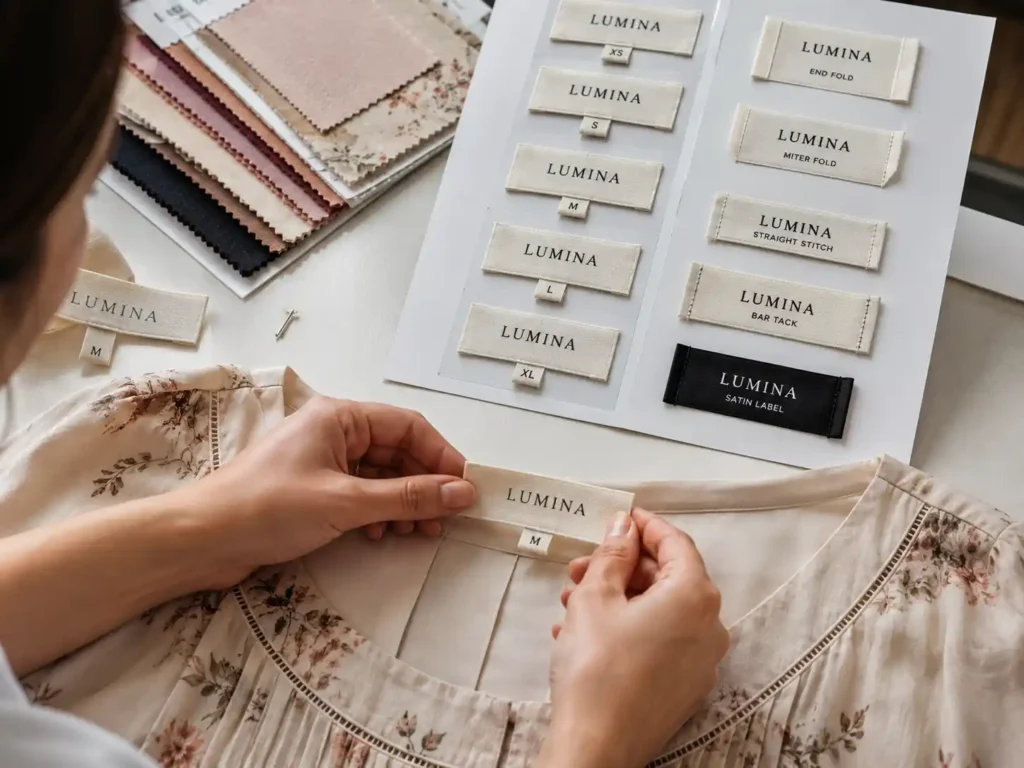
Woven Main Labels

Size Labels

Care Labels
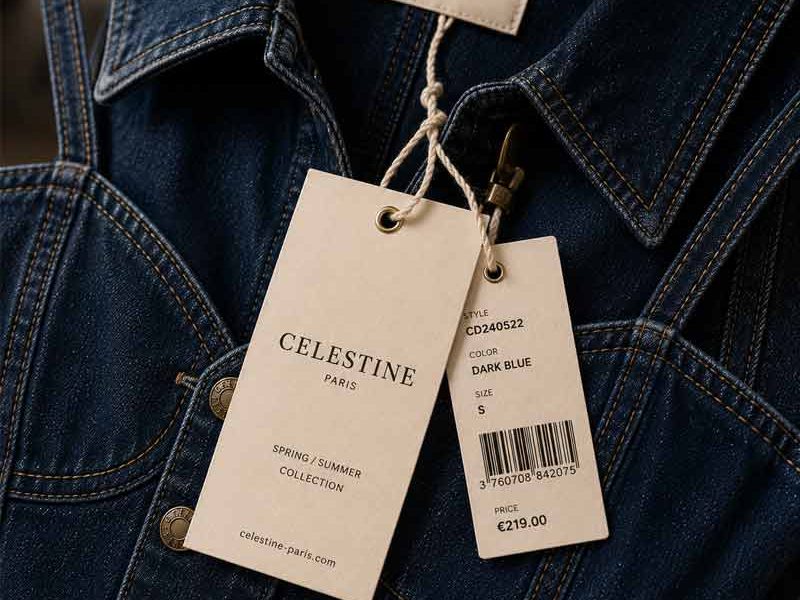
Hangtags and Strings

Barcode SKU Labels

Polybags and Stickers
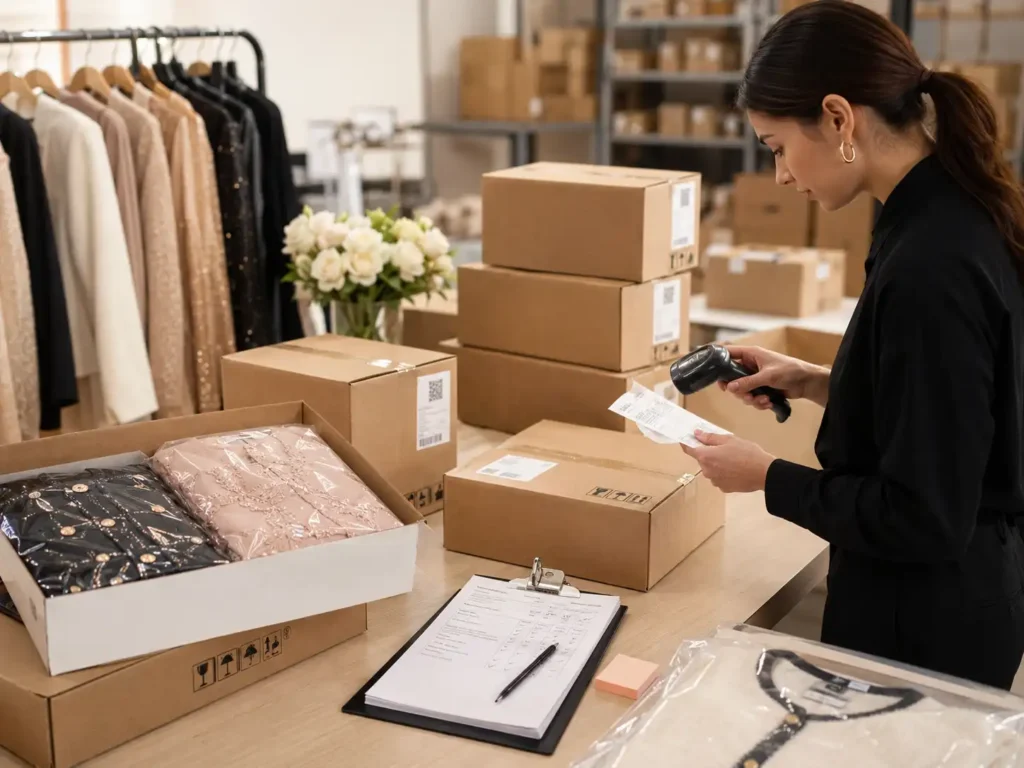
Cartons and Marks

Warehouse Packing
Plan Romper Production Around Your Launch Calendar
Development Deadline
Photo Sample Window
PP Approval Date
Bulk QC Window
Freight Strategy
Delivery Documents
Compliance Support Based on Each Romper Project
Compliance requirements vary by market, brand policy, material, factory and order. Jinfeng Apparel coordinates available documentation and testing support according to the factory and supply chain assigned to the program.
Factory Information
Audit Coordination
Certified Fabrics
Third-Party Testing
Fiber Care Content
Inspection Records
A Multi-Style Romper Program Moved into Bulk Production
The following anonymized structure reflects a representative brand-order profile within Jinfeng Apparel’s regular multi-style cooperation range. Brand identity, artwork and unpublished product details remain protected.
Program Scope and Commercial Targets

An established US womenswear label prepared an 18-style warm-weather romper program for ecommerce, wholesale and seasonal campaign use. The approved order structure totaled 42,600 pieces across six core colors and an XS-XL size range. Quantities varied by style according to channel forecast, with stronger commercial silhouettes carrying deeper units and image-led designs carrying lower but still production-efficient volumes. The range included printed rayon resort rompers, cotton utility styles, stretch jersey fitted styles, tailored crepe pieces and satin party rompers. Development needed to support one visual brand direction while respecting very different fabric behavior and fit requirements. The commercial timeline included campaign samples, wholesale review pieces, PP approval, bulk delivery and private-label packing. The program was organized by material family and construction difficulty rather than handled as one undifferentiated group.
Fit and Material Risks Found During Sampling

Early fit review identified three recurring risks. Several woven styles had insufficient back torso length, causing the waist to rise and the crotch to pull while sitting.
Two printed rayon styles showed length growth and panel movement after fabric relaxation, requiring pattern and cutting adjustments. A fitted satin style had a narrow center-back opening that made dressing difficult even though the standing fit looked correct.
The development team separated the corrections: back torso and back rise were adjusted without adding unnecessary front length; rayon panels were reviewed for shrinkage, grain and relaxed cutting; the satin closure was lengthened and the waist intersection was re-engineered for smoother zipper movement. Revised samples were checked through front, back, side and movement positions before the PP stage.
Bulk Control Across 18 Styles

The collection was divided across production resources according to woven, stretch, tailored and delicate-fabric capability.
Final patterns, grade rules, measurement files, BOMs, sewing notes and trim records were released by style. Critical QC points included torso length, front and back rise, waist position, hip, inseam, leg opening, zipper operation and movement comfort. Printed styles received direction and color checks; satin pieces received surface-protection and pressing controls; jersey styles received stretch and recovery checks. Inline inspection concentrated on waist joins, crotch seams, closures and pocket openings before line output increased. Private-label packing covered woven labels, care labels, hangtags, barcode stickers, size stickers, polybags and carton marks linked to the final color-size matrix.
Delivery Result and Repeat-Order Readiness

The production plan used staged finishing and inspection so completed styles did not wait for every complex item before entering packing. Priority campaign and launch quantities were identified by SKU, while the main order followed the agreed freight plan. Final pattern, material, trim, measurement and packing records were retained for future use. The completed file set allowed repeat-order review to begin from the approved standard rather than restarting with a reference image. New colors and changed fabrics would still require material, MOQ, shade and fit confirmation, but the original construction and grading foundation remained available. The representative program shows how a 10-30 style brand order can be controlled through grouping, documented approval and product-specific QC rather than relying on one general production checklist.
Repeat Romper Orders Without Rebuilding Every Detail
Final Pattern Records
Measurement Files
Fabric References
Trim and BOM Records
QC Revision History
Packing Requirements
Romper Manufacturing Frequently Asked Questions

Send Your Romper Project for Manufacturing Review
The first review will focus on garment structure, material direction, torso and rise risk, sample requirements, MOQ fit, private-label needs and launch timing. Clear information allows the team to return a useful development route rather than a broad estimate based on one image. Files may include a tech pack, line sheet, original sample photos, size chart, fabric reference, print artwork, trim details, quantity plan and packing guide.
- Reference images or front, back and detail sketches
- Tech pack, measurement chart or existing brand block
- Fabric composition, weight, stretch, color or swatch reference
- Style count, colors, size range and target quantity
- Main label, care label, hangtag, barcode and packing requirements
- Target sample date, launch date and delivery destination


