 Skip to content
Cut-Out Jumpsuit Manufacturer
Custom Cut-Out Jumpsuits Built for Confident Fit and Repeatable Production
- 7 fit zones reviewed before bulk production: bust, underbust, waist, hip, torso length, rise and inseam.
- Medium-complexity jumpsuit first samples are generally planned in 12-18 days; corset, mesh, lace or sequin structures usually require 15-25 days.
- Size development supports US, UK, EU, AU and alpha sizing from XS-XL, with extended, plus, petite or tall ranges developed from the brand size chart.
- MOQ starts from 200 pieces per style/color, while custom dyeing, special trims, exclusive fabrics and branded packaging may carry separate supplier minimums.
Jinfeng Apparel develops fashion-led cut-out jumpsuits from tech packs, reference garments, sketches, line sheets or images. Pattern work connects the opening shape with torso length, bust coverage, waist position, rise, crotch comfort and fabric recovery, so the approved sample can become a stable production standard across colors and sizes. Manufacturing support covers fabric and trim sourcing, sample revisions, PP approval, bulk production, product-specific inspection, private-label packing and export delivery.
Manufacturing Capacity for Complex Cut-Out Jumpsuit Programs
Since 2008
Six Owned Factories
Ten Plus Partners
Two Sample Rooms
Development Team
Production Control
Built for Established Fashion and Sourcing Teams
Best Fit For
- Custom fashion jumpsuit collections
- Partywear and occasionwear programs
- Premium ecommerce assortments
- Multi-style seasonal development
- Repeat-order and new-color programs
- Private-label retail delivery
Project Boundaries
Jinfeng Apparel focuses on custom development, sampling, bulk manufacturing and branded delivery. The production system is not built around ready-stock wholesale, single-piece fulfilment, dropshipping or micro production. Projects seeking only the lowest unit price without allowing suitable fabric, pattern work, fit correction, workmanship and quality control are unlikely to achieve a reliable cut-out jumpsuit. Clear boundaries allow development resources to stay focused on commercially viable programs.
- MOQ starts at 200 pieces per style/color
- Each color is normally assessed separately
- Special materials may carry higher minimums
- Sample fees cover development work
- Final timing follows confirmed materials and approvals
What Makes Cut-Out Jumpsuits Hard to Manufacture?
A cut-out jumpsuit combines two sensitive areas in one garment: an exposed opening that must stay secure and a connected upper-and-lower-body pattern that must move comfortably. Small pattern or fabric errors can shift the opening, pull the crotch, distort the waist or create inconsistent coverage across sizes.
Openings Follow Body Landmarks
A cut-out cannot be positioned only by measuring from the garment edge. The opening normally relates to the underbust, natural waist, high hip, side seam, center front or center back. When the base pattern changes across sizes, the opening needs its own grade rule. Proportional enlargement can make larger sizes too exposed or move an underbust opening below the intended support line. The pattern team records reference points, opening width, opening depth, curve shape, connecting strap position and finished-edge allowance. Fit review then checks the garment standing, seated and in motion.
A front opening may look balanced on a mannequin while exposing too much during arm movement. A side-waist opening may rotate toward the front when the hip shape or side seam is incorrect. A back cut-out may gape when the back waist is too long or the fabric lacks recovery. Reliable development uses body landmarks, pattern balance and movement testing together.
One Pattern Connects Two Bodies
A jumpsuit joins bodice and trousers, so torso length, waist position, front rise, back rise, crotch depth and inseam cannot be corrected independently. Reducing torso length may lift the waist opening but also increase shoulder tension or crotch pull. Adding rise may improve sitting comfort but change the visual proportion between the opening and hip. For a halter or one-shoulder style, upper-body tension also affects how the trouser section hangs.
Development therefore starts with a base size and target fit. The team checks shoulder-to-waist length, bust point, underbust, waist level, high hip, full hip, front and back rise, crotch extension, thigh ease and inseam. Fit notes are translated into pattern corrections rather than hidden with extra seam allowance. A balanced pattern gives the opening a stable frame and reduces the risk of side seam twisting or waistband collapse.
Fabric Tension Changes Exposure
High-stretch jersey, power mesh, ponte, stretch satin, crepe and non-stretch suiting respond differently around a cut-out. Stretch fabric can enlarge the opening under body tension. A firm woven fabric may hold the shape but restrict movement unless enough ease, darts, panels or closure access is built into the pattern. Bias-cut satin can lengthen around a curved opening, while mesh may require stabilization to prevent a wavy edge.
Fabric evaluation covers weight, stretch percentage, recovery, drape, transparency, shrinkage, surface friction and seam behavior. The same pattern cannot simply move from ponte to light jersey without adjustment. A fabric change during sampling may alter the opening size, lining requirement, seam method, support structure and finished measurements. Reassessment protects both appearance and wearability.
Bulk Production Magnifies Small Errors
A sample is made by a small development team, while production involves layered cutting, repeated sewing operations, multiple sizes, color batches and finishing. A 3 mm sewing variation around one curved edge can become visually obvious when two openings must be symmetrical. Uneven elastic tension can make one side flatter than the other. Incorrect grain direction can distort a waist opening after pressing or wear.
Bulk control converts the approved sample into measurable instructions. Pattern version, opening dimensions, notch position, seam allowance, reinforcement, stitch type, elastic length, lining coverage, zipper location and pressing method are recorded. Cutting and sewing checks are scheduled before final inspection, because finished-garment inspection alone cannot efficiently correct repeated construction errors.
Cut-Out Jumpsuit Styles for Commercial Collections
Product development can cover close-fitting partywear, structured occasionwear, soft draped silhouettes and fashion rompers. Each direction requires a different balance of fabric, support, opening placement, fitting method, sewing sequence and inspection points.

Side Cut-Out Jumpsuits

Underbust Cut-Out Jumpsuits

Front Keyhole Jumpsuits

Backless Cut-Out Jumpsuits

Bodycon Cut-Out Jumpsuits

Wide-Leg Cut-Out Jumpsuits
Wide-leg silhouettes combine a fitted or supported upper body with a fluid trouser section. Crepe, satin, stretch woven fabrics and selected viscose blends can create suitable drape.
The pattern must control waist position, front and back rise, high hip, crotch extension and leg balance so the trouser hangs cleanly without pulling the cut-out area. A fitted bodice may use cups, boning or shaped seams, while the lower section needs enough movement for walking and sitting. Bulk pressing must preserve the intended leg line without stretching satin or marking delicate surfaces.

Corset Cut-Out Jumpsuits

Cut-Out Rompers
Rompers use the same connected-body principles as full-length jumpsuits but add short-leg balance and greater visibility around the hip and seat.
The pattern needs enough back rise and crotch extension for movement without making the front appear loose. Side or waist openings must remain secure when the wearer sits. Jersey, stretch crepe, denim, satin and printed woven fabrics can be used according to the market direction. Hem width, short length, pocket placement, lining and closure access are important production decisions.
Size and movement checks should be completed before confirming the grade rule.
Cut-Out Placement Built Around Body Proportions

Front Keyhole

Underbust Opening

Side Waist Cut-Out

Midriff Opening

Back Waist Opening

Hip Cut-Out
Fit Engineering for Cut-Out Jumpsuit Production
Jumpsuit fitting is a linked system rather than a list of isolated measurements. The pattern must keep the opening secure while balancing upper-body length, bust support, waist position, hip shape, front and back rise, crotch extension, inseam and movement.
Torso Length Controls the Whole Garment
Torso length is one of the first measurements reviewed because it connects the bodice, waist and trouser section. A short torso pattern can pull at the shoulder, drag the neckline downward, raise the waist opening and create crotch pressure. A long torso pattern may cause the opening to gape, the waist to sag and the upper body to wrinkle. The problem can appear different on halter, strapless, one-shoulder and long-sleeve silhouettes, so one generic correction is rarely enough.
Pattern review uses shoulder-to-waist or high-point-shoulder references, front and back waist length, bust point, underbust, waist seam position and rise. Fit comments should describe both appearance and sensation: where the garment pulls, where excess length collects and how the opening moves during sitting or arm movement. Adjustments are recorded by pattern version. When a brand develops petite, tall or extended sizes, torso length needs a dedicated grade rule rather than width-only grading.
A cut-out can make a torso problem more visible because the opening acts like a frame around the body. Even when the total garment length appears correct, uneven front and back balance may tilt the opening or pull the side seam. The approved PP sample establishes the relationship between torso length, opening position and crotch comfort for bulk production.
Bust, Underbust and Waist Must Work Together
Cut-out jumpsuits frequently expose areas near the bust or waist, leaving less fabric to distribute tension. Bust circumference alone does not define fit. Upper bust, full bust, underbust, bust point distance, cup position, neckline height and waist circumference may all affect coverage. A strapless corset style may need cups, boning and grip elastic, while a jersey halter style may rely on stretch recovery and strap angle.
The pattern team reviews whether the design needs positive ease, close fit or controlled negative ease. Woven fabrics use shaped seams, darts, panels and closures to create form. Stretch fabrics may need less width but still require adequate recovery and support. A double layer can improve opacity and stability, yet it also changes stretch and seam thickness. A cut-out placed below the bust should follow the support line, not simply the visual position from a flat sketch.
Sample fitting checks neckline movement, cup placement, side coverage, underarm pressure, waist stability and whether the opening changes when the wearer breathes or raises her arms. For extended sizes, bust support and opening proportion may need separate adjustments.
The goal is a secure garment with the intended visual exposure, not an over-tight pattern used to prevent movement.
Rise and Crotch Determine Wearability
Front rise, back rise, crotch depth and crotch extension determine whether the jumpsuit can be worn comfortably for standing, walking and sitting. A short back rise may pull down the neckline or lift the back cut-out. A short front rise can create pressure or drag lines. Excess crotch depth can look loose and reduce the clean line expected from bodycon or tailored styles. Changes to rise also affect the vertical distance between waist opening and hip.
Pattern correction separates vertical depth from horizontal extension. Adding length at the wrong position can solve one symptom and create another. The development team checks natural waist to crotch level, front and back body shape, seat angle, thigh ease and fabric stretch. Stretch garments still need correct rise; elasticity cannot replace a balanced crotch pattern. Woven styles may require a zipper, opening or seam arrangement that allows entry without distorting the bodice.
Movement testing includes sitting on a chair, stepping, bending and raising the arms. Any pressure at the shoulder, neckline or crotch is recorded along with visible drag lines. Revised samples are measured again because visual improvement alone does not establish a production standard. Bulk inspection later compares rise, inseam and torso measurements with the confirmed specification.
Hip, Inseam and Leg Balance Finish the Fit
The lower section must support the upper design instead of competing with it. Hip ease affects side seam position, cut-out rotation and crotch comfort. Inseam and outseam balance influence whether trousers twist, flare evenly or hang straight. Wide-leg silhouettes need clean vertical fall; bodycon styles need controlled stretch and recovery; flared shapes require knee and hem positions that match the intended proportion.
Pattern development reviews high hip, full hip, thigh, knee, leg opening, inseam and outseam. Pocket bags, side zippers, lining and cut-out panels can add bulk at the hip, so construction needs to be considered before the final pattern is approved. A light satin may show every seam ridge, while ponte can hide small irregularities but add weight. Mesh panels can change tension between front and back sections.
Size grading is based on the brand chart, base size and target market. Jinfeng Apparel can develop US, UK, EU, AU and alpha sizing from XS-XL, with extended, plus, petite or tall ranges evaluated from the supplied standards. Larger sizes are not created by proportional enlargement alone. Bust support, waist-hip balance, opening placement, strap width, rise and movement need their own review.
Fabrics Chosen for Structure, Stretch and Stability
Fabric selection determines how the opening holds shape, how the garment moves and how the approved sample behaves in production. Weight, stretch, recovery, drape, opacity, surface finish, shrinkage and seam performance are evaluated together rather than selected by appearance alone.
| Fabric Direction | Typical Stretch | Visual Result | Main Cut-Out Risk | Best Use | Core Production Control |
|---|---|---|---|---|---|
| Stretch jersey | High | Smooth, close fit | Opening growth and seam waviness | Bodycon and halter styles | Recovery, elastic tension, stitch stretch, size tolerance |
| Ponte or Roma | Medium to high | Firm and sculpted | Heavy seams or restricted movement | Structured fitted jumpsuits | Weight, stretch balance, seam bulk, pressing |
| Stretch satin | Medium | Glossy and fitted | Puckering, snagging, shine variation | Party and occasionwear | Grain direction, needle choice, lining, pressing protection |
| Non-stretch satin | Low | Fluid or tailored | Pulling at torso and crotch | Wide-leg and corset styles | Ease, zipper access, seam stability, surface protection |
| Crepe | Low to medium | Clean and structured | Limited movement if over-fitted | Tailored and wide-leg styles | Drape, rise, waist shaping, pressing |
| Power mesh | High | Sheer support and contrast | Transparency or uneven tension | Panelled and layered cut-outs | Layering, recovery, seam tension, coverage mapping |
| Lace | Low or variable | Textured and decorative | Fraying, placement shift, exposure | Occasion and corset styles | Motif placement, lining, edge finish, seam allowance |
| Sequin fabric | Low to medium | High-impact statement | Skin irritation, sequin loss, seam bulk | Party and evening jumpsuits | Sequin clearance, lining, needle control, abrasion protection |
| Velvet | Low to medium | Rich depth and soft shine | Nap direction and seam marking | Winter partywear | Cutting direction, pressure, steaming, surface protection |
| Suiting fabric | Low | Tailored and sharp | Restricted movement or bulky waist | Structured jumpsuits | Ease, darts, rise, closure, seam pressing |
Stretch Is Measured With Recovery
A fabric can stretch far and still be unsuitable if it fails to return to its original dimensions. Recovery influences waist security, cut-out shape, knee bagging and seat stability. Development compares stretch direction, extension and recovery after repeated handling. A bodycon pattern built in firm ponte will not behave the same in a light jersey with similar initial stretch. The fabric may need a revised pattern, lining, internal elastic or different edge construction.
Drape Changes Pattern Balance
Satin, viscose, crepe and selected polyester blends create different vertical fall. Soft drape can make wide-leg trousers elegant, but bias movement may lengthen around curved openings or cause side seams to shift.
Structured fabric can hold an angular cut-out but may need additional ease for sitting. Sample evaluation includes hanging, movement and pressing, not only flat measurements.
Transparency Requires Coverage Planning
Mesh, lace, light jersey and pale satin often need intentional coverage. Lining should protect the bust, crotch and selected body areas without appearing unexpectedly inside the opening.
A full lining may change stretch and weight, while partial lining requires clean attachment lines. Power mesh can provide support without fully hiding the body, but its tension and shade must be coordinated with the shell fabric.
Special Materials Change MOQ and Timing
Stock fabrics in regular colors are generally the most compatible with the standard MOQ. Custom dyeing, custom weaving, exclusive printing, certified fabrics, imported materials, specialty lace and sequin fabrics may follow mill or supplier minimums. Color approval, lab dips, strike-offs, fabric testing and material arrival can extend the schedule. Fabric selection is therefore linked to quantity, launch date, target cost and production risk from the beginning.
Clean Cut-Out Edges That Hold Their Shape
The edge around an opening is both a design line and a load-bearing construction area. Finishing method depends on fabric stretch, curve shape, transparency, lining, seam bulk and the amount of tension created during wear.
Clean-Finished Facing for Woven Shapes
Facing is suitable for many woven or structured cut-outs because it creates a clean external edge without visible binding. The facing pattern must follow the opening curve accurately, include compatible grain direction and avoid excessive width in narrow areas. Interfacing may be used when the shell needs more stability, but excessive stiffness can create a hard outline or reduce comfort. Seam allowances are trimmed, clipped or notched according to the curve, then turned and pressed with surface protection where needed.
Understitching helps keep the facing inside the garment, especially around satin, crepe and suiting. A loose facing may roll outward, while a tight facing can shrink the opening. Attachment points are planned so the facing does not move during wear or washing. Bulk QC checks opening shape, facing visibility, seam smoothness, symmetry and pressing marks. For sheer or partially lined designs, facing depth and color should be reviewed from the outside before approval.
Binding for Stretch and Sheer Fabrics
Binding can create a narrow, controlled edge on jersey, mesh and selected woven materials.
The binding fabric, cut direction, finished width and feed tension must match the opening. Too much tension gathers the edge and reduces the opening; too little tension creates a wavy, stretched finish. Curved or angular shapes may need different handling at corners and connection points.
Fold-over elastic, self-fabric binding, mesh binding or a separate knit tape can be considered. The choice affects appearance, recovery, skin comfort and production efficiency.
Samples should be worn and stretched before the method is approved. Bulk instructions define cut length, attachment ratio, stitch type, overlap position and finished width. QC checks evenness, skipped stitches, puckering, edge recovery and whether the binding twists after pressing or movement.
Elastic Stabilization Without Over-Tightening
Clear elastic or narrow elastic can stabilize openings in stretch garments, strapless areas and backless structures. The purpose is to control growth and improve contact with the body, not to make the edge as tight as possible. Excess tension can create indentation, discomfort, rolling or a visibly smaller opening. Insufficient tension allows gaping and movement.
Development starts with fabric recovery, edge length and wearing position. Elastic width, softness, extension and sewing method are tested in the sample. Transparent elastic may be hidden in the seam allowance, while grip elastic can add security to strapless or low-back areas.
Each method needs skin-comfort review. Production records specify elastic length by size and the points where tension starts or stops. QC compares left and right sides and checks whether the garment lies flat when relaxed.
Stay Tape and Reinforcement at Stress Points
Diagonal openings, narrow connectors, hardware attachments, strap joins and zipper ends can carry concentrated stress. Stay tape, woven tape, clear elastic, reinforcement patches or bar tacks may be used according to the design. Reinforcement must support the area without becoming visible, stiff or uncomfortable. The pattern and sewing sequence should allow the reinforcement to sit inside the structure rather than being added as a late repair.
The development team identifies stress points during fitting and movement. Pulling, stretching or seam distortion indicates where support may be needed. Hardware rings or sliders require enough seam allowance and a secure fold-back construction. Bulk QC checks reinforcement position, stitch density, loose threads and connector strength. A decorative cut-out should not rely on a single weak seam at the point of highest tension.
Understitching, Topstitching and Pressing
Understitching keeps internal layers away from the visible edge. Topstitching can add control and a design line, but stitch distance, thread, tension and needle size must suit the fabric. Satin often requires fine, even stitching and protected pressing. Ponte may tolerate stronger topstitching but can show impressions if seam bulk is not reduced. Mesh and lace may need minimal visible stitching or a carefully selected binding approach.
Pressing completes the shape. Excess heat can mark satin, flatten velvet, damage sequins or distort stretch fabric. Insufficient pressing leaves bulky or uneven curves. The approved sample records the expected finish, including whether the edge should be sharp, softly rolled or fully invisible.
Production inspection checks the garment before and after pressing because some defects appear only when heat and pressure are applied.
Support and Coverage for Confident Wear

Bra Cup Options

Boning Support

Grip Elastic

Double-Layer Coverage

Adjustable Straps

Secure Closures
Customize Silhouettes, Details and Brand Finishes

Neckline and Straps

Leg Shape

Sleeves and Shoulders

Closures and Hardware

Embellishment Direction

Color and Print
Complex Sample Development Before Bulk Production
A cut-out jumpsuit sample is used to build a production standard, not simply to show a design. Each stage answers a different question about construction, fit, presentation, material readiness or bulk repeatability.
First Sample
The first sample tests the initial interpretation of the tech pack, reference garment, sketch or image. For a medium-complexity jumpsuit, the usual planning range is 12-18 days after the required materials and development details are available. Corset, lace, mesh, sequin or highly structured versions generally require 15-25 days. Special fabrics or trims can extend the schedule according to supplier timing.
The development team checks construction feasibility, opening placement, torso length, bust-waist-hip balance, rise, crotch comfort, leg line, closures, lining and support. The first sample is not treated as the final bulk standard. Comments are separated into pattern, measurement, fabric, trim and workmanship categories so each correction can be traced.
Fit Sample
A fit sample focuses on body balance and movement. It may use final or equivalent fabric depending on availability, but any substitution is recorded because drape and stretch affect the result.
The garment is measured against the size chart and reviewed on a fit model or according to supplied fit feedback. Standing, sitting, walking, bending and arm movement reveal problems that flat measurements cannot show.
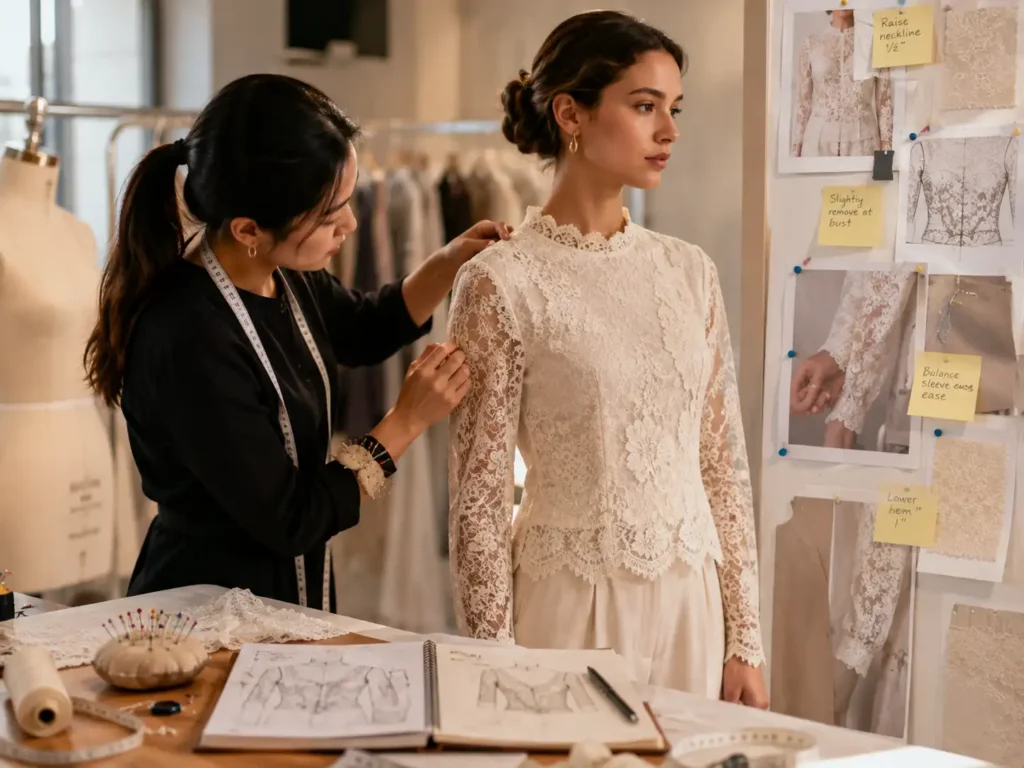
For cut-out styles, fit review records opening width and depth, body landmark position, gaping, pressure, coverage and symmetry. The fit sample also checks rise, inseam, shoulder tension and leg balance. Changes are translated into a revised pattern and measurement file.
Revised Sample
A revised sample confirms whether recorded corrections solved the identified problems.
Revised samples are commonly planned in 7-15 days, with complex changes confirmed according to the work required. A fabric replacement, altered neckline, new cup, different boning structure or changed opening may require more than a simple sewing adjustment.
Revision records include pattern changes, measurement changes, fabric or trim updates, sewing method, client comments and approval status.
Clear records prevent old comments from reappearing in later samples. Additional revisions are planned when fit, material or construction still needs verification.
Photo-Ready Sample
A photo-ready sample is prepared for campaign, ecommerce or showroom use.
Visual finish, pressing, color, trim appearance and presentation receive additional attention. A photo sample may be made in a selected size and color before the full bulk standard is finalized. It should not be confused with a PP sample unless the material, construction, measurements, labels and packing have also been approved for production.
Priority photo samples can be scheduled around hero styles and launch dates in multi-style programs. The sample plan should identify which styles need photography first and which can follow through the normal approval sequence.
PP Sample
The pre-production sample is made using final approved fabric, trims, construction, measurements, labels and relevant packing details. PP samples are normally planned in 7-15 days once final materials are ready.
The PP stage checks whether the approved design can be reproduced under production conditions.
Cut-out dimensions, support structures, seam methods, elastic lengths, zipper specifications, size labels and packaging are reviewed.
Bulk production should not begin until PP approval and production files are complete. Late changes after approval may affect cost, material use and schedule.
Golden Sample
The Golden Sample is the sealed visual and construction reference used alongside the size chart, workmanship instructions and QC checklist. It represents the approved standard for fabric, color, fit, opening shape, trims, labels and finishing. Production, QC and finishing teams refer to the same standard rather than relying on verbal instructions.
A Golden Sample does not remove normal production variation, but it creates a clear comparison point. Any approved deviation should be documented before production continues. Records are retained for repeat orders, new colors and future development, with fabric batch and color differences reviewed again when needed.
From Design Reference to Production-Ready Jumpsuits

Project Review

Fabric Direction

Pattern Development

First Sample
Fit Revision

PP Approval

Bulk Production

QC and Delivery
Locking the Approved Standard Before Production
PP approval turns a successful sample into an executable manufacturing standard. Fabric, color, measurements, cut-out dimensions, support details, sewing methods, labels and packing instructions need written confirmation before bulk work begins.
Material Standard
The final material record covers shell fabric, lining, mesh, interfacing, elastic, cups, boning, zippers, hardware and decorative trims. Supplier, color, composition, weight, width and relevant batch information are recorded where available. Material substitutions after PP approval require review because stretch, drape, color and seam behavior may change the fit or opening shape.
Measurement Standard
The confirmed size chart defines base measurements, grade rules and tolerances. Cut-out jumpsuits need product-specific points such as torso length, front and back rise, crotch depth, inseam, opening width, opening depth, connector length and placement from fixed landmarks. Measurement methods should be clear enough for production and QC teams to repeat consistently.
Construction Standard
Construction records define seam type, seam allowance, edge finish, elastic length, reinforcement, understitching, topstitching, zipper application, lining attachment, boning channel and pressing method. Photos or detail diagrams can support written instructions. Production teams should not decide critical construction details during sewing.
Branding Standard
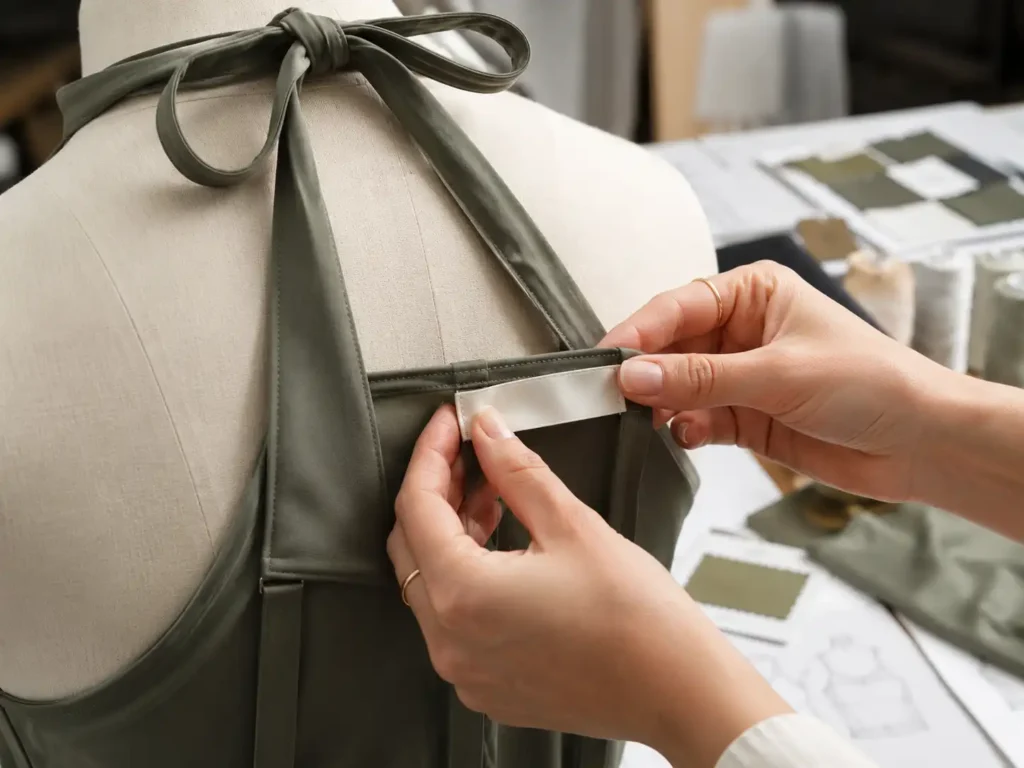
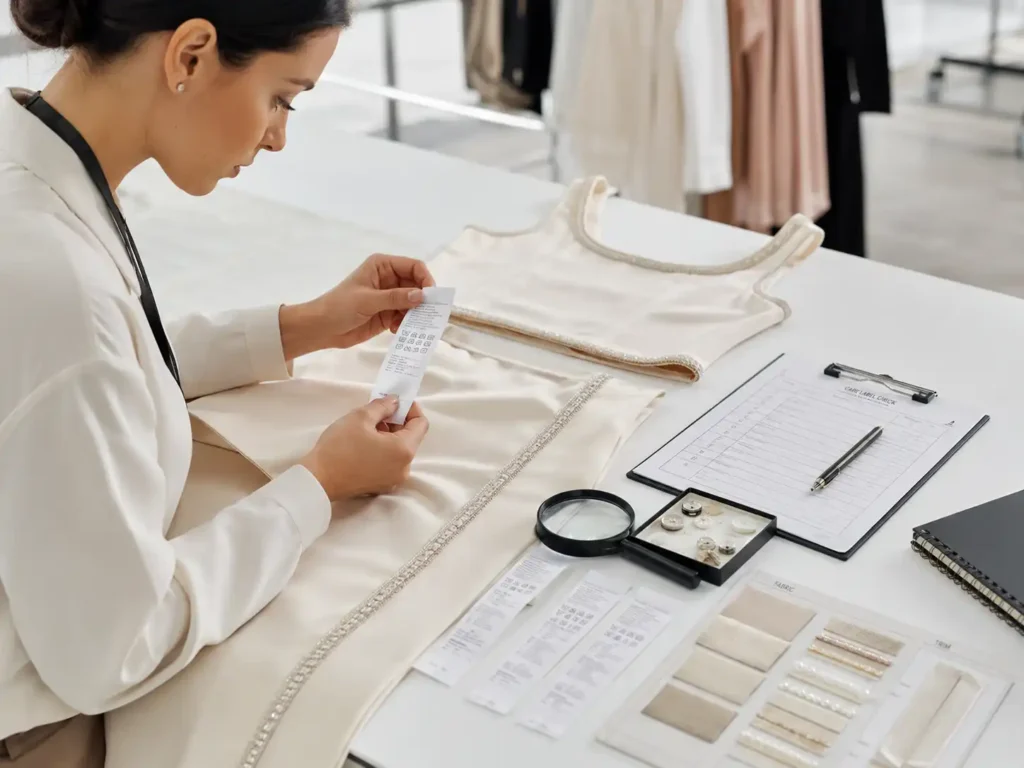
Main label, size label, care label, hangtag, barcode, SKU label, polybag and carton mark files are checked before production. Label content and placement follow the brand-approved artwork and size system. Any local compliance wording remains subject to final brand or compliance review.
Change Control
Changes after PP approval are possible only after assessing materials, pattern, cost, schedule and production impact. A new opening shape, fabric, zipper or size chart can require an updated sample or approval record. Written change control protects both parties from relying on incomplete chat messages or outdated files.

Quality Control Points for Cut-Out Jumpsuits
Quality control begins with material and cutting preparation, then continues through sewing, measurement, finishing and packing. Product-specific checkpoints are necessary because cut-out stability, torso balance and crotch comfort cannot be judged from general garment appearance alone.
| QC Stage | Inspection Focus | Key Data or Method | Common Risk Controlled |
|---|---|---|---|
| Fabric inspection | Weight, width, stretch, recovery, shade, defects | Approved swatch, batch record, roll inspection | Weak recovery, shade variation, surface damage |
| Cutting preparation | Pattern version, grain, direction, relaxation, marker | Final pattern and cutting plan | Distorted opening, twisting, size mix-up |
| Cut-panel check | Notches, symmetry, opening pieces, reinforcement | Bundle comparison and piece check | Mismatched left/right curves, missing support |
| Sewing in-line check | Seam tension, elastic feed, binding, facing, zipper | Approved operation sample and work instruction | Wavy edge, puckering, uneven tension |
| Measurement check | Bust, waist, hip, torso, rise, inseam, opening | Confirmed size chart and tolerance | Fit variation, exposure, crotch discomfort |
| Fit and movement review | Coverage, gaping, pressure, mobility | Base-size or project-specific fit review | Pulling, opening shift, restricted movement |
| Finishing check | Pressing, lining, cups, boning, hardware | Golden Sample comparison | Shine marks, visible lining, support movement |
| Packing QC | Style, color, size, labels, barcode, quantity | Packing instruction and SKU list | Wrong label, mixed size, warehouse errors |
| Final inspection | Workmanship, measurements, packing, order quantity | AQL or agreed inspection plan | Unacceptable production variation |
Incoming Material QC
Fabric and trims are checked before cutting or sewing begins. Inspection priorities include composition or approved description, color, hand feel, width, weight, stretch, recovery, defects and shade grouping. Satin requires surface and shine-direction care; mesh needs transparency and recovery review; sequins and lace require placement and damage checks. Zippers, elastic, cups, boning, labels and packaging materials are matched against approved specifications.
Cutting QC
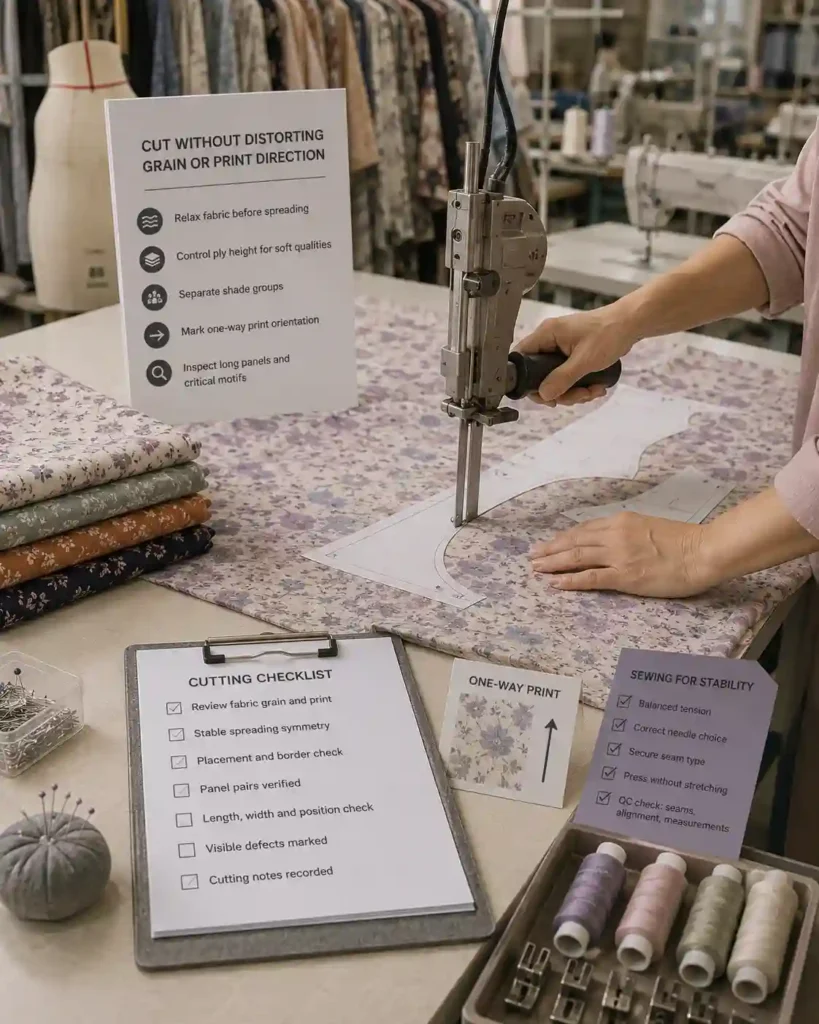
Cutting establishes opening shape and garment balance. Final pattern version, fabric direction, relaxation, shrinkage allowance, shade grouping and marker planning are confirmed before bulk cutting. Cut panels are checked for notches, symmetry, paired parts and reinforcement pieces. Directional satin, velvet, lace motifs and prints require additional control to avoid visible mismatch.
Sewing and In-Line QC
In-line inspection targets the operation where a defect can still be corrected efficiently. For cut-out jumpsuits, checks include elastic tension, facing roll-out, binding width, opening symmetry, strap length, zipper flatness, cup position, boning security, rise seams and crotch construction. Repeated defects are corrected at the operation rather than left for final inspection.
Measurement and Finished-Garment QC
Finished garments are measured according to the confirmed method and tolerance. Opening points are measured from stable landmarks. Size labels, hangtags, barcodes, polybags and carton breakdown are checked against packing records. AQL inspection can be arranged according to the agreed standard, but AQL is not a replacement for incoming, cutting, in-line and finished-garment checks.
Capacity for Multi-Style Seasonal Jumpsuit Programs
Factory Allocation
Multi-Style Planning
Material Grouping
Flexible Production
Quality Assignment
Repeat and Multi-Batch Orders
MOQ, Quotation and Timeline Planning
A useful quotation needs enough information to identify fabric, pattern, trim, production and packing requirements. Quantity alone cannot define the price or schedule for a cut-out jumpsuit with linked fit, support and workmanship risks.
MOQ Is Calculated Per Style and Color
The basic MOQ starts from 200 pieces per style/color.
One style in one color at 200 pieces meets the standard garment MOQ. One style in two colors normally requires 200 pieces per color. Several styles totaling 200 pieces do not equal the standard MOQ. Stock fabrics and regular colors are generally the most compatible with the base quantity.
Custom dyeing, custom weaving, exclusive printing, certified fabrics, imported materials, specialty lace, sequin fabrics, special hardware and branded packaging may carry separate supplier minimums. The material MOQ can be higher than the garment MOQ. Early material review prevents a style from being quoted at a quantity the supply chain cannot support.
Size Planning Affects Development and Cost
Alpha sizing from XS-XL can be developed from the brand size chart, together with US, UK, EU or AU sizing.
Extended, plus, petite and tall ranges are evaluated according to the supplied standards. A wider size range increases pattern grading, cutting separation, measurement checks, labels, packing breakdown and fabric use. Size ratio should reflect the target market rather than splitting every size evenly.
A standard 200-piece color can be divided across several sizes when the ratio is production-friendly. Extended sizes may need separate fit review, additional fabric allowance or a dedicated base size. The quotation should identify the proposed size breakdown instead of listing only a total quantity.
Sample Timing Follows Complexity
Simple first samples are generally planned in 7-10 days, standard dresses in 10-15 days, and medium-complexity dresses, sets or jumpsuits in 12-18 days. Corset, strapless, lace, mesh, sequin or other complex structures usually require 15-25 days. Samples needing custom fabric or special trims can require 20-35 days or follow the supplier schedule. Revised and PP samples are commonly planned in 7-15 days, depending on the work and material readiness.
Timing starts after the required information and suitable materials are available. Delayed feedback, changed fabric, new trims, revised size charts or added details can reset part of the development schedule. The timeline should show first sample, feedback, revision and PP approval rather than one unsupported completion date.
Bulk Timing Starts From Confirmed Inputs
Bulk scheduling begins after order terms, PP sample, size chart, fabric, trims, labels, packing and production files are approved.
Material booking, arrival, inspection, pre-production meeting, cutting, sewing, in-line QC, finishing, packing, final inspection and shipment preparation are planned as separate milestones. Style complexity, order volume, color count, size range, material lead time, inspection requirements and peak-season capacity all affect the confirmed delivery date.
Jinfeng Apparel does not use one fixed lead time for every garment. A schedule based on verified material and production status is more reliable than an early promise made before PP approval. Brands with a fixed launch or warehouse date should submit the required arrival window during the first review.
Quotation Inputs
A stronger initial quotation can be prepared when the project includes:
- Tech pack, original sample, line sheet, sketch or clear reference images
- Quantity per style/color
- Fabric composition, hand feel or visual direction
- Color plan and any Pantone or physical standard
- Size range, base size and size ratio
- Cut-out position, support, lining and closure details
- Main labels, care labels, hangtags, barcodes and packing
- Testing, audit or third-party inspection requirements
- Target launch, shipment or warehouse date
Initial estimates may use a range when materials or construction are not confirmed. Final pricing is locked after fabric, trims, sample standard, workmanship, quantity and packing are approved.

Private-Label Jumpsuits Prepared for Retail Delivery
Woven Labels
Size and Care Labels

Hangtags

Barcode and SKU Labels

Branded Polybags

Cartons and Marks
Anonymous Project Evidence from Complex Womenswear Programs
Brand names, logos, tech packs, unpublished designs, pricing and original order files remain protected. The following anonymized programs use commercially realistic quantities and illustrate how multi-style fashion orders can be structured around fit, material, approval and delivery control.

US Partywear Jumpsuit Program
A US partywear brand developed 16 jumpsuit and romper styles across black, chocolate, red and selected metallic tones. Total production reached 32,400 pieces, with individual style/color quantities ranging from 600 to 3,200 pieces. The assortment included side-waist openings, underbust cut-outs, halter necks, stretch satin, ponte, mesh panels and rhinestone details.
Development was grouped by stretch bodycon, woven wide-leg and structured bustier construction. Hero styles received photo-ready samples first, while fit work continued on the remaining designs. Main technical attention covered torso length, underbust position, cup placement, side opening symmetry, rise and zipper flatness. Several styles required two fit revisions because the original visual references did not include complete measurements.
Before production, final materials, cut-out dimensions, cups, boning, hardware, labels and polybag stickers were locked through PP approval. Production was divided across suitable fashion lines according to construction. In-line checks focused on elastic tension, opening stability, size measurements and rhinestone attachment. Delivery was arranged in two batches so priority launch styles could move before the remaining assortment.

UK Occasionwear Collection
A UK occasionwear label developed 24 styles with a total order of 61,200 pieces. The program combined satin wide-leg jumpsuits, corset cut-out styles, lace-panel designs, one-shoulder silhouettes and coordinated party dresses. Order quantities were concentrated in core black, navy, wine and champagne, with selected fashion colors used on the strongest styles.
The main challenge was keeping one brand fit across several fabric systems. Non-stretch satin needed more torso and rise ease than stretch crepe. Lace and mesh inserts required different lining coverage and edge finishes. Corset styles used cups and boning, while softer silhouettes relied on shaped seams and secure closures. Sample tracking separated fabric changes, pattern changes, trim approvals and visual comments, preventing one style’s revision from being copied into another.
The brand used XS-XL alpha sizing based on its own chart, with additional attention to bust and torso balance in the upper sizes. PP approval locked measurement methods and opening landmarks. Bulk production was released by material group. Final inspection combined measurement review, workmanship checks, label verification and agreed AQL inspection. Packing data was organized by style, color, size and retail SKU.

Australian Ecommerce Launch
An Australian ecommerce brand placed a 12-style launch order totaling 24,000 pieces. The range focused on high-stretch bodycon jumpsuits, backless cut-outs, asymmetric straps, contrast power mesh and flared legs. Most styles used one or two core colors, allowing quantities to remain concentrated and material management to stay controlled.
The first development round showed opening growth after movement on two light-jersey styles. The solution combined improved fabric recovery, revised negative ease, adjusted opening dimensions and localized clear elastic. Another style required a longer back rise and corrected strap angle to prevent the back opening from lifting when seated. Fit comments were converted into pattern updates and measured reference points before the revised samples were made.
Photo samples were prioritized for campaign production, followed by PP samples in final materials. Bulk QC checked stretch recovery, seam tension, strap security, opening dimensions, rise, inseam and size labels. Packing included branded polybags, barcode stickers and SKU-level carton breakdown. The program created reusable pattern, fabric, trim and packing records for future color extensions and replenishmen
Compliance Support and Brand Design Protection
Quality Management
Factory Audit Support
Fabric Documentation
Third-Party Testing
Label and Market Review
NDA Protection
Cut-Out Jumpsuit Manufacturing Frequently Asked Questions

Start Your Cut-Out Jumpsuit Project
Send the available development files to Kelly for an initial structure, fabric, MOQ and schedule review. A complete tech pack is helpful, but an established brand can also begin with a line sheet, original-sample photos, reference images or a clear concept supported by quantities and launch timing. Jinfeng Apparel will review the opening structure, torso and rise risks, material direction, support requirements, sample route, production fit and private-label needs before recommending the next step.
Please include:
- Company name and target market
- Tech pack, line sheet, sketch or reference images
- Quantity per style/color
- Preferred fabric or desired hand feel
- Color plan and any Pantone references
- Size range, base size and size ratio
- Cut-out position and intended coverage
- Cups, boning, lining, elastic or closure requirements
- Main labels, care labels, hangtags, barcodes and packing
- Required testing, inspection or audit information
- Target launch, shipment or warehouse date


