 Skip to content
Partywear Production for Fashion Brands
Partywear moves fast, but the manufacturing cannot be careless. Jinfeng Apparel develops and produces partywear collections for fashion brands that need strong visual impact, controlled fit, complex fabric handling and repeatable bulk execution. Our work covers design review, fabric sourcing, pattern development, sample revision, PP approval, production coordination, QC, private-label packing and export delivery.
- MOQ starts from 200 pcs per style/color for qualified bulk programs.
- 2 sample rooms, 7+ senior pattern makers and 20+ sample machinists support complex sample development.
- 15+ QC inspectors cover fabric, cutting, sewing, garment and packing control.
- Partywear programs can include satin, mesh, lace, sequin, bodycon, corset, cut-out, cocktail and occasion styles.
Production Capacity Built for Multi-Style Partywear
6 Owned Factories
10+ Long-Term Partners
100,000+ Pcs Monthly Capacity
18+ Sewing Lines
6+ Flexible Lines
12+ Merchandisers
Built for Established Partywear and Fashion Programs
Global Fashion Brands
Partywear and Occasionwear Labels
Product Development Teams
Sourcing and Merchandising Teams
Ecommerce and Multi-Channel Brands
Long-Term Collection Programs
Partywear Styles We Develop and Produce

Satin Party Dresses

Mesh Bodycon Dresses

Sequin Statement Dresses
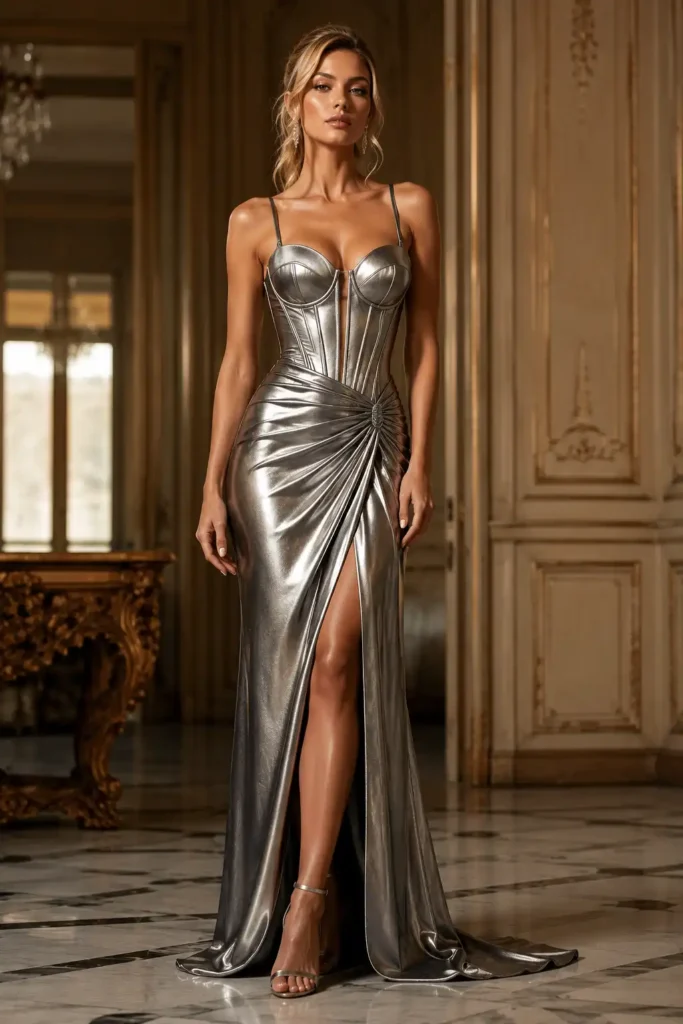
Corset Party Dresses
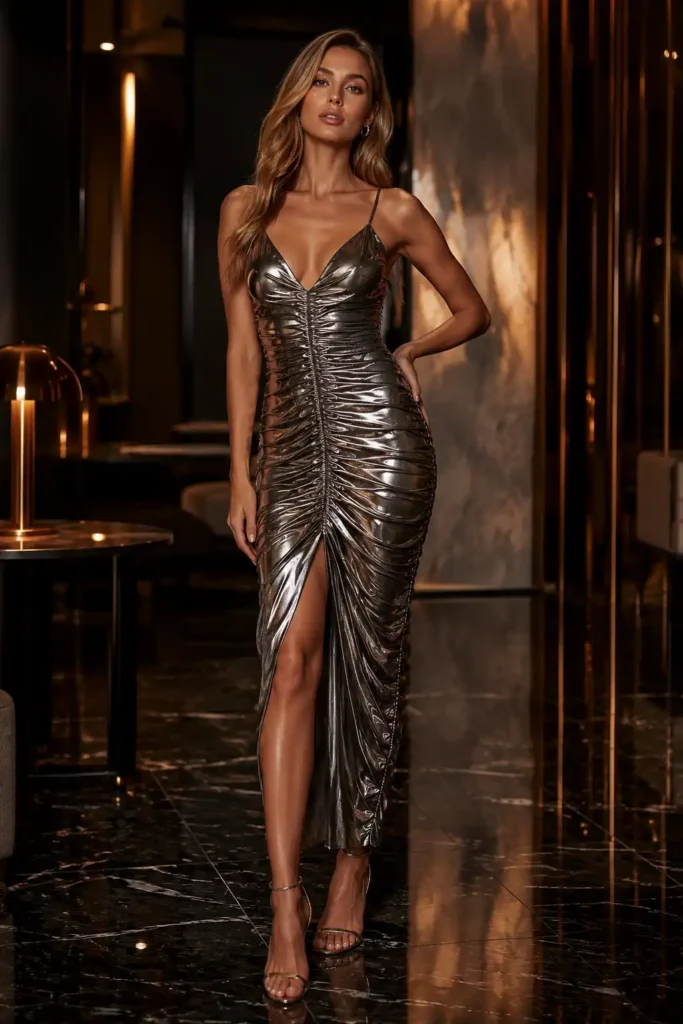
Ruched and Draped Dresses

Cut-Out and Backless Styles

Cocktail and Occasion Crossover

Party Jumpsuits and Matching Sets
Partywear Looks Simple Until Production Starts
Strong partywear depends on small manufacturing decisions that become highly visible on the body, in studio photography and under retail lighting. Problems often appear when a supplier treats a fitted or embellished style like a standard dress and waits until final inspection to find defects. Risk control needs to begin before the first sample and continue through PP approval, cutting, sewing, finishing and packing.
Fit Can Shift Fast
Transparency Can Change
Surface Damage Is Expensive
Structure Must Stay Stable
Bulk Variation Is the Real Risk
Packing Can Ruin the Finish
Fabric Engineering for Partywear Production
Fabric selection defines both the visual language of a partywear collection and the manufacturing risk behind it. Jinfeng Apparel reviews fabric direction together with silhouette, lining, stretch, trims, target finish and bulk feasibility. Substitution can be considered when MOQ, cost, color availability or stability creates a conflict, but any alternative needs swatch and sample approval because a similar fabric can still change drape, shine, recovery or fit.
| Fabric Direction | Commercial Effect | Main Production Risk | Control Focus |
|---|---|---|---|
| Satin | Smooth shine, premium party finish | Snagging, shade difference, creasing, zipper rippling | Cutting direction, color review, seam handling, pressing, protective packing |
| Stretch Mesh | Sheer layers, fitted body lines, cut-out support | Transparency, holes, weak recovery, unstable lining | Stretch direction, lining coverage, edge finish, recovery and measurement review |
| Sequin Fabric | High-impact statement look | Sequin loss, needle damage, scratching, bulky seams | Cutting method, seam preparation, lining, edge protection, packing separation |
| Lace | Texture, feminine occasion detail | Motif mismatch, tearing, fraying, lining conflict | Motif placement, seam planning, edge finish, lining color and damage inspection |
| Chiffon | Light movement and layered drape | Slippage, sheerness, uneven hems, puckering | Cutting control, lining length, seam tension, hem balance and pressing |
| Stretch Jersey | Bodycon fit and movement | Poor recovery, distortion, seam waviness | Stretch direction, recovery check, grading, bust-waist-hip measurements |
| Crepe / Structured Woven | Clean cocktail shapes and defined lines | Press marks, seam imbalance, restricted movement | Pattern ease, seam allowance, pressing and fit review |
| Velvet / Pile Fabric | Rich surface for seasonal partywear | Nap direction, pressure marks, shade appearance | Nap control, cutting direction, low-pressure handling and packing |
Fit and Construction Control for High-Impact Styles
Partywear earns attention through silhouette. The same design can look premium or unstable depending on how bust support, waist position, hip shaping, neckline depth, strap angle, slit height and fabric stretch work together. Jinfeng Apparel approaches fit-sensitive styles through pattern development, sample fitting, measurement review and documented corrections rather than relying on visual approximation alone.
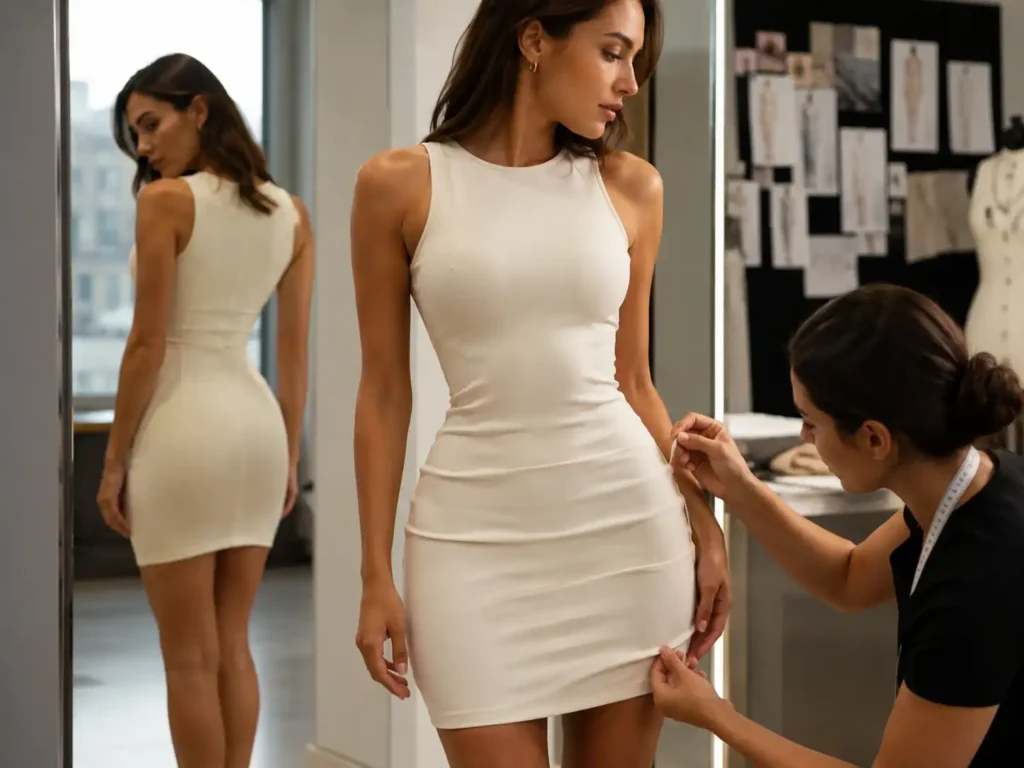
Bodycon and Stretch Fits
Bodycon construction starts with fabric behavior. Stretch percentage alone is not enough; recovery, direction and surface stability influence whether the garment holds shape after movement. Bust, waist and hip points need to work with the negative or controlled ease of the fabric. Side seams should remain balanced, hemlines should resist excessive ride-up, and lining must not reduce stretch differently from the outer layer. During sample review, visual fit and measured dimensions are checked together so corrections can be transferred into the final pattern and grading rules.
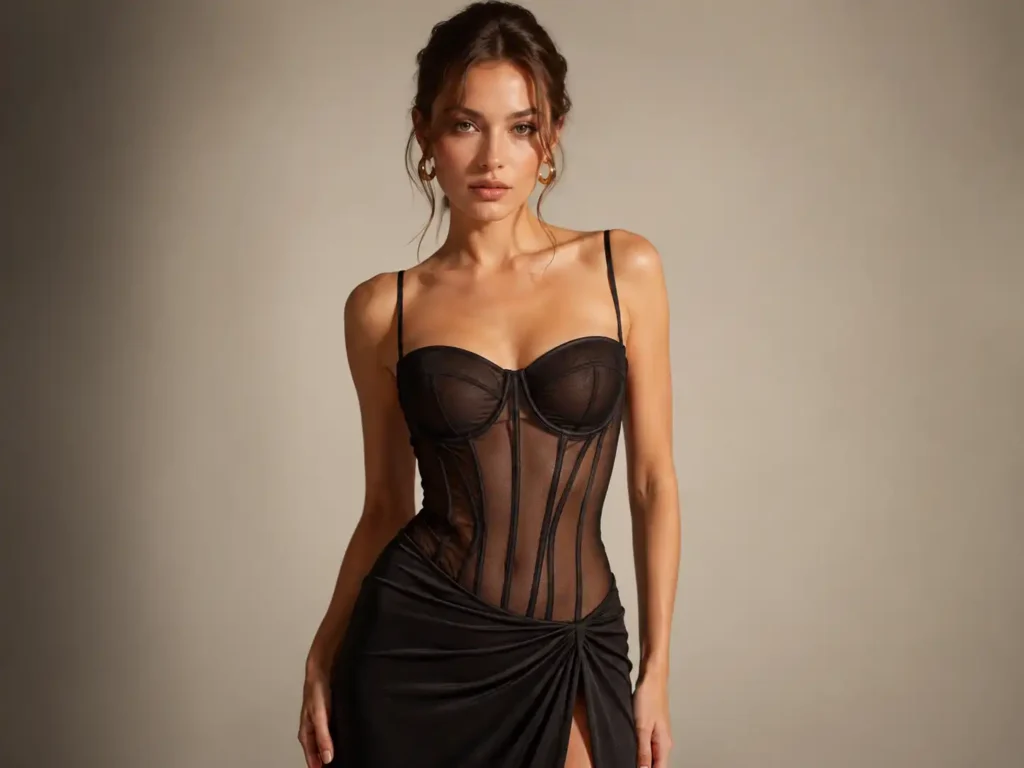
Corset and Bust-Support Structures
Corset partywear brings more engineering into a small area of the garment. Cup position, cup shape, boning length, waist suppression, lining layers, zipper or hook placement and neckline security all affect wearability. A sample can look acceptable from the front while still creating pressure, gaping or instability from the side and back. Corrections need to be recorded in the pattern and construction instructions before PP approval. Bulk QC then compares critical support points, symmetry and measurements against the approved standard.

Cut-Out, Strapless and Backless Styles
Cut-outs depend on proportion and tension. If an opening shifts by even a small amount, exposure, waist shape and seam balance can change. Strapless designs need support without visible instability, while backless and halter styles depend on strap angle and neckline geometry. Jinfeng reviews bust coverage, armhole exposure, strap length, neckline depth, side seam position and movement range during development. The goal is not only an attractive static photo but a garment that keeps its intended shape when worn.

From Tech Pack to a Production-Ready Partywear Sample
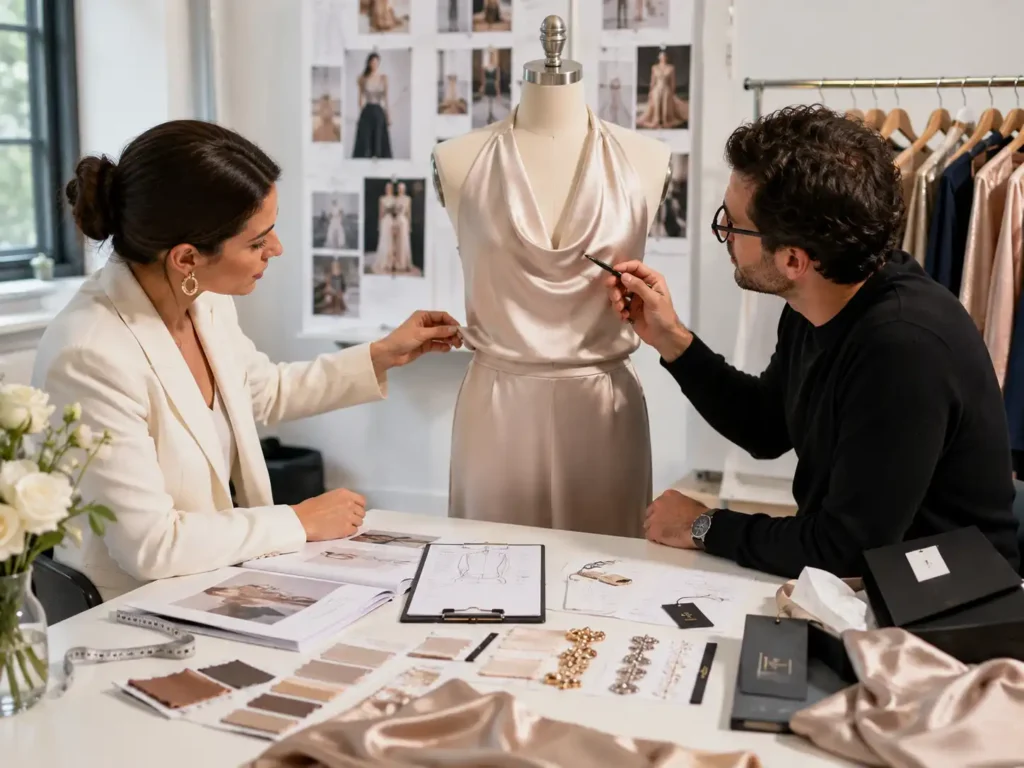
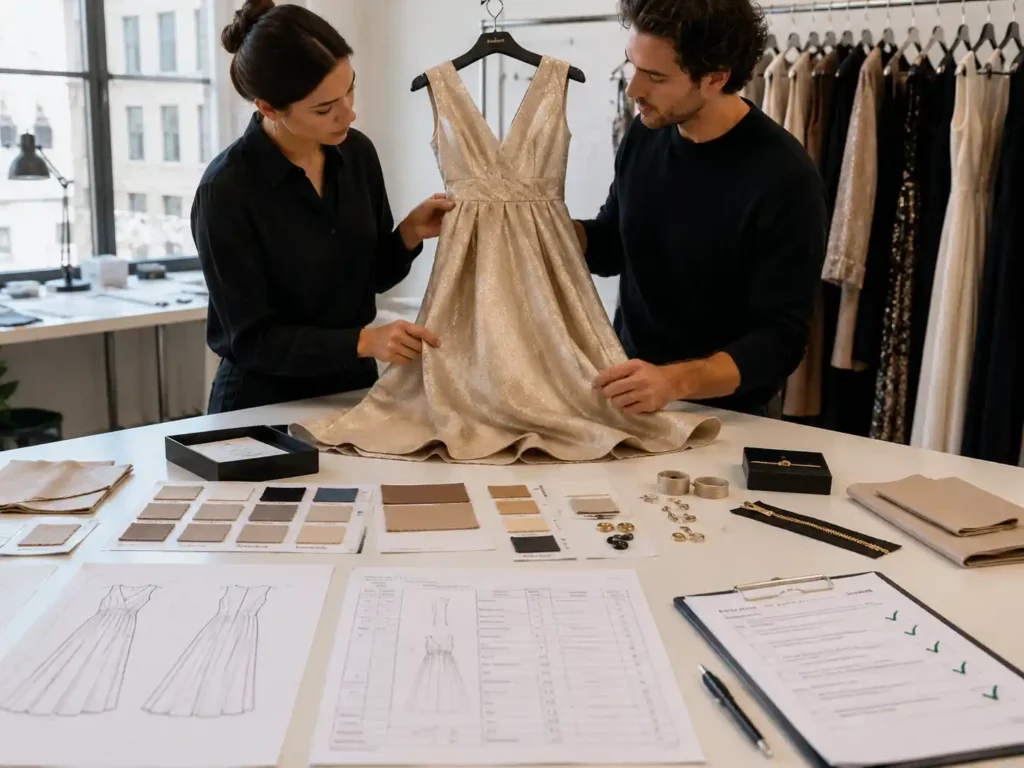
Sample development is where visual ambition is converted into manufacturable construction. Jinfeng Apparel can begin from a tech pack, reference image, original sample, sketch or line sheet, but development becomes more accurate when product measurements, fabric direction, quantity plan, size range and target market are clear from the start. Complex partywear is reviewed for construction and material risk before sewing begins so the first sample has a defined purpose instead of becoming an expensive trial-and-error garment.
- Project Review: The team first checks silhouette, intended fabric, closure, lining, support structure, trims, cut-outs, ruching, embellishment and likely production risk. Missing information is identified before pattern work begins. For a corset dress, cup and boning direction may need clarification; for mesh, transparency and lining coverage matter; for sequin, seam and packing risks should be considered early.
- Pattern and First Sample: Senior pattern makers translate approved information into a first pattern for fit and construction testing. The first sample is used to validate proportion, fabric behavior, structure and sewing feasibility. It is not treated as an automatic bulk standard. Jinfeng Apparel has 2 sample rooms, 7+ senior pattern makers and 20+ sample machinists supporting development across custom womenswear programs.
- Revision and Fit Correction: Feedback can address bust-waist-hip proportion, strap length, neckline, armhole, dress length, slit, lining, zipper, cup shape, boning, ruching, fabric choice or trim specification. Bulk-relevant changes are recorded into updated patterns, size charts, BOM information, fabric and trim records, sewing instructions and QC checkpoints.
- Preparation for PP: Once fit, fabric, color, trims, construction, labeling and packing direction are approved, the style can progress toward PP sample confirmation. Sample timing is evaluated by project because material readiness, structure complexity, special trims and revision scope vary substantially between a satin mini dress and an embellished corset style.
Photo-Ready, PP and Golden Samples Serve Different Jobs

Photo-Ready Sample
PP Sample
Golden Sample

Multi-Style Partywear Collections Need Structured Management
A collection with 10-30 styles is not simply a larger version of a single-style order. Different fabrics arrive at different times, complex structures need more sample review, launch priorities change, and packing data grows quickly as colors and sizes multiply. Jinfeng Apparel organizes multi-style programs around grouped information so development and production can move in parallel without losing control of individual styles.
- Fabric Grouping: Satin, mesh, lace, sequin, stretch jersey and structured woven styles are grouped by sourcing and handling requirements. Material readiness can then be tracked without delaying unrelated styles.
- Complexity Grouping: Simple fitted styles, medium-complexity satin or mesh styles, and high-risk corset or embellished styles should not share identical sampling and production assumptions. More complex garments receive stronger fit, construction and QC attention before bulk release.
- Sample Priority: Photo-shoot pieces, hero SKUs, high-risk styles and early launch items can be prioritized according to the collection calendar. Priority is based on commercial need, not only on which style entered the sample room first.
- Production Allocation: Styles can be distributed according to fabric, construction, volume, finishing requirements, line availability and QC needs across Jinfeng’s owned factories and long-term production partners. Allocation is reviewed by project rather than treated as unlimited capacity.
- SKU and Packing Control: Color, size, label, barcode, polybag and carton information needs to remain style-specific. Production documents, packing lists and carton marks help reduce mixing errors as the assortment grows.
- Progress Tracking: Material arrival, cutting, sewing, inline QC, finishing, packing and shipment preparation can be tracked by key milestone for larger or complex programs. Risks are raised when they affect approved delivery plans.
Bulk Production Starts Only After Standards Are Clear
Production Allocation
Material Readiness
Cutting Preparation
Sewing and Inline Review
Finishing and Packing


Partywear Quality Control From Fabric to Packing
Quality control for partywear cannot be reduced to a final visual check. The most expensive bulk failures often begin earlier: wrong fabric direction, damaged mesh, unstable stretch, incorrect lining, inconsistent ruching, misaligned cups, zipper distortion or inaccurate labels. Jinfeng Apparel has 15+ QC inspectors covering material, production, garment and packing stages, with inspection points adjusted to the risk profile of each style.
- Fabric and Trim Inspection: Satin is reviewed for shade, snagging and surface marks; mesh for holes, stretch and recovery; lace for motif condition and damage; sequin fabric for surface loss and abrasion risk. Zippers, bra cups, boning, elastic, labels, hangtags and packaging materials are checked against approved specifications before use.
- Cutting QC: Pattern reference, grain or stretch direction, motif position, shade grouping, size bundling and fabric defects are controlled before pieces move into sewing. For satin and velvet, directional handling is especially important; for mesh and bodycon products, stretch direction can directly change fit.
- Inline Sewing Control: Critical construction points are checked during sewing: zipper flatness, neckline stability, bust support, ruching direction, seam balance, lining position, slit security and trim placement. Early correction prevents the same mistake from spreading across a full production run.
- Measurement and Fit Checks: Bust, waist, hip, strap length, dress length, neckline, slit position and other style-specific measurements are compared against approved standards. Size grading and tolerance need to be monitored because an attractive sample size does not guarantee consistent fit across XS-XL or other approved ranges.
- Final Appearance and Packing QC: Finished garments are checked for symmetry, stains, damage, loose threads, pressing, embellishment condition, labels, size identification, barcode, polybag and packing instructions. Final inspection can also be coordinated with AQL, client inspection or third-party inspection requirements by project.
Private-Label Partywear Ready for Retail and Ecommerce
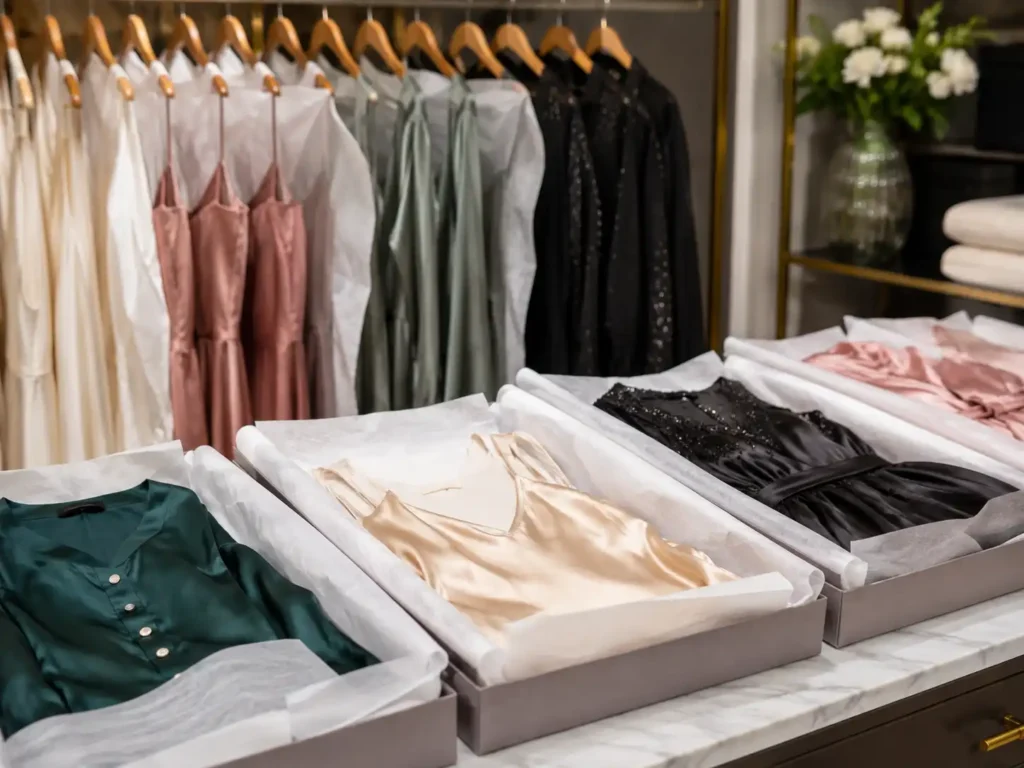
Garment Identity
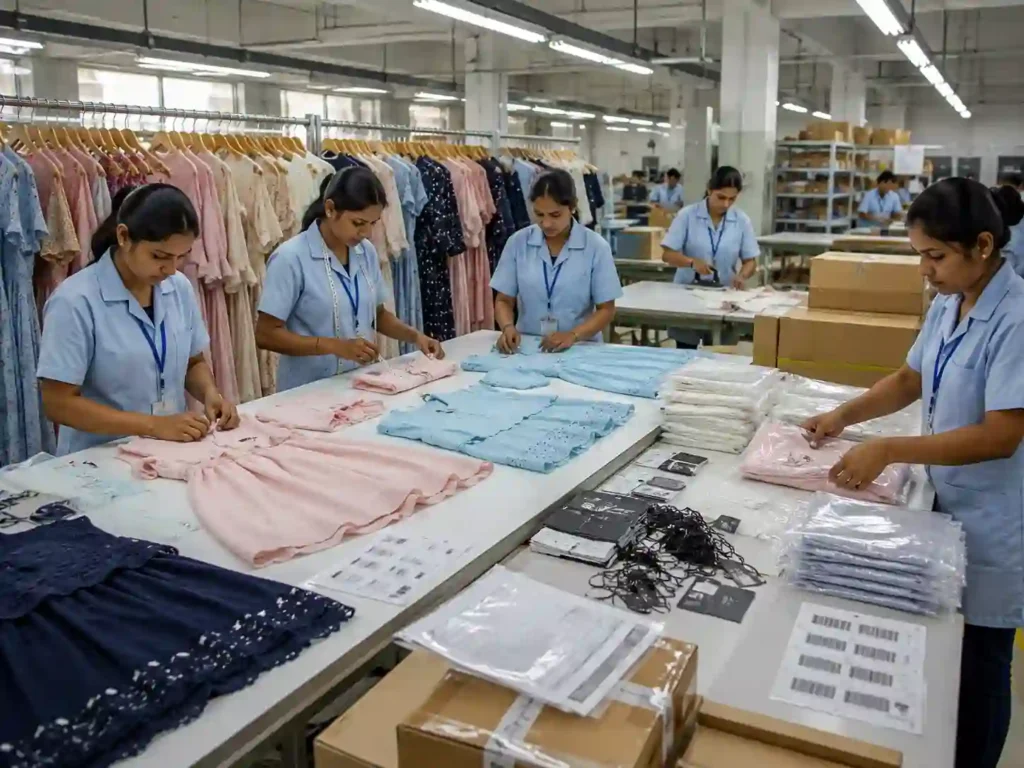
Retail Presentation
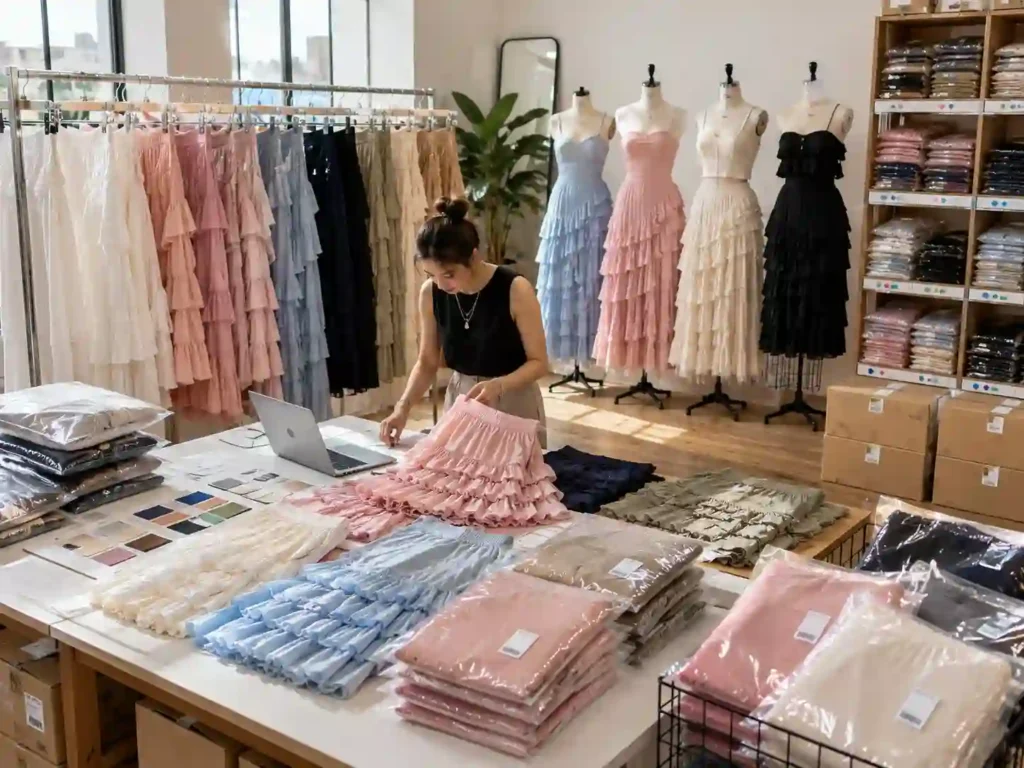
Ecommerce Identification

Protective Packing

Carton and Warehouse Data

Private-Label MOQ Boundaries
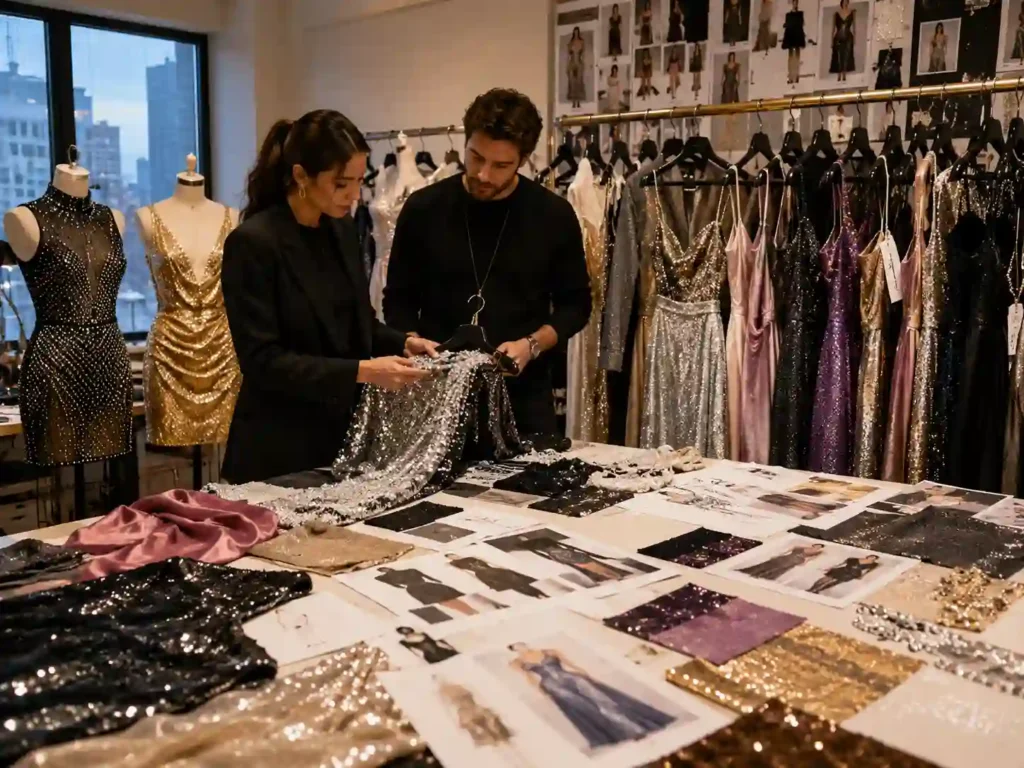
MOQ and Cost Logic for Partywear Programs
Jinfeng Apparel’s base MOQ starts from 200 pcs per style/color. The number is a production unit, not a combined total across unrelated colors or styles. For example, one style in black at 200 pcs can be evaluated as one production unit, while 100 black plus 100 white does not automatically meet a 200 pcs-per-color structure. Multi-style programs should therefore be planned by style, color, size ratio and material requirement before pricing is finalized.
Partywear pricing is influenced by more than sewing minutes. Satin weight and width, mesh layers, lace placement, sequin density, corset support, cups, boning, rhinestone trims, lining, zippers, ruching, cut-outs, grading, QC, private-label materials, packing method and delivery plan all affect cost. A fitted jersey mini and a fully lined sequin corset dress should not be expected to share the same cost structure even when the garment length is similar.
Cost optimization is reviewed around the commercial appearance of the style. Possible directions include selecting a more stable fabric, reducing unnecessary layers, adjusting embellishment density, simplifying overly complex construction, consolidating colors, using a more efficient size ratio or creating a staged packaging plan. Critical fit, support, lining coverage, label accuracy and bulk consistency should not be weakened simply to reach the lowest quoted price.
Sample fees are quoted separately from bulk unit pricing because pattern work, fabric sourcing, trims, individual sewing, fitting, revision and sample preparation happen without bulk efficiency. Eligible sample-fee deduction can be evaluated when the approved style proceeds into a qualifying bulk order under agreed project terms.
Production Progress and Delivery Managed by Milestone

Material Confirmation

Production Milestones
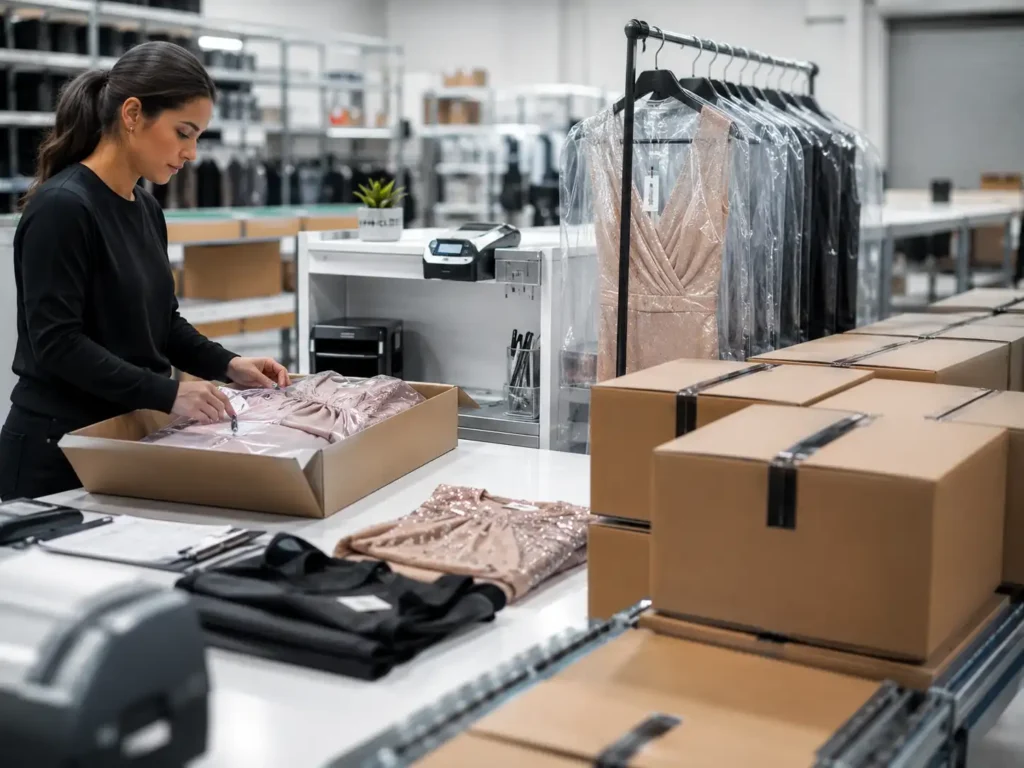
Delivery Planning

Launch Priorities
Brand Protection, NDA and Compliance Review
Unreleased Design Protection
Label and Packaging Protection
Compliance by Project
Frequently Asked Questions About Partywear Production
Jinfeng Apparel develops dresses and related womenswear across satin party dresses, mesh bodycon styles, sequin dresses, corset dresses, cut-out designs, ruched dresses, cocktail styles, occasionwear, jumpsuits and matching sets. Product feasibility is reviewed according to fabric, fit, structure, trims, quantity, size range and production requirements before sampling or bulk planning.
Yes, these fabrics are within Jinfeng Apparel’s supported womenswear direction. Each material is handled differently. Satin needs shade, snagging, direction and pressing control; mesh needs transparency and recovery review; lace needs motif and damage control; sequin fabric requires seam, abrasion, lining and packing protection.
Fit-sensitive styles are reviewed through pattern development, sample fitting, measurement checks and documented corrections. Bodycon styles focus on stretch direction, recovery and bust-waist-hip balance. Corset styles add cup shape, boning, waist shaping, neckline stability, closure position and lining. Final pattern and PP approval should be completed before bulk production.
Yes. Development can begin from reference images, tech packs, sketches, line sheets or original sample information. More complete inputs improve accuracy. Fabric direction, measurements, size range, quantity plan and construction details should be clarified before a complex style moves too far into sampling.
The base MOQ starts from 200 pcs per style/color. Special fabrics, custom colors, printed materials, embellishment, private-label trims and packaging may carry separate supplier MOQs. A multi-style collection should be reviewed by style and color rather than by one combined order total.
No. Sample scheduling depends on material readiness, pattern complexity, structure, trims and the amount of revision required. A clean satin mini, a stretch-mesh bodycon dress and an embellished corset style should not be assigned one universal timeline. Project information is reviewed before a realistic sample plan is confirmed.
Bulk transfer uses confirmed pattern and size information, approved fabric and trims, sewing instructions, PP reference, labels, packing requirements and QC checkpoints. Major changes after PP approval can affect cost, materials and schedule, so production standards should be locked before bulk release.
Yes. Support can include woven labels, care labels, size labels, hangtags, barcode stickers, SKU labels, polybags, carton marks, packing ratios and packing lists. Custom packaging materials may have separate MOQs, so brand files should be reviewed before final production planning.
Jinfeng Apparel’s QC system covers incoming material, cutting, sewing, inline review, garment inspection, pressing and packing. AQL inspection, client inspection and third-party inspection support can be coordinated by project when standards, timing and required documentation are provided in advance.
NDA-based cooperation is supported. Tech packs, original samples, patterns, unreleased sample images, label artwork, packaging files and order information are treated as project materials. Public case presentation should use authorized, anonymized or self-developed content rather than exposing confidential brand data.

Plan Your Next Partywear Production Program
A strong partywear collection needs more than an attractive first sample. Fit, fabric, construction, production allocation, QC, private-label details and delivery planning have to work together before a brand can scale a style into a commercial order. Jinfeng Apparel supports established fashion programs that need structured development from initial references through sampling, PP approval, bulk production, packing and export coordination.
For a useful first review, send the information already available. A complete tech pack is welcome, but a well-organized line sheet or reference set can also start the discussion when the commercial direction is clear.
- Tech pack, line sheet or reference images
- Style count and product categories
- Quantity per style/color
- Fabric direction or approved materials
- Size range and size ratio
- Private-label and packaging requirements
- Target launch or delivery window
- QC, warehouse or inspection requirements


