
Satin Jumpsuit Manufacturer
Custom satin jumpsuit development for fashion brands that need controlled shine, accurate one-piece fit, and repeatable bulk production.
Jinfeng Apparel develops satin jumpsuits from reference images, original samples, sketches, line sheets, and technical packs. Our work connects fabric behavior with torso length, crotch depth, waist placement, bust support, trouser balance, lining, closures, pressing, and retail packing. Every approved style moves through pattern development, fit review, material confirmation, PP approval, production control, quality inspection, and export coordination.
- Medium-complexity jumpsuit first samples are normally planned within 12-18 days, subject to fabric and trim availability.
- Production starts from 200 pcs per style/color, with higher requirements possible for custom dyeing, special trims, or complex packaging.
- Patterns can be developed for US, UK, EU, AU, alpha, extended, petite, or tall size systems based on the brand’s own size chart.
- Satin surface control covers shine direction, shade grouping, snag prevention, seam appearance, pressing marks, and packing creases.
Manufacturing Capacity Built Around Fashion Jumpsuit Programs
Since 2008
Jinfeng Apparel has focused on custom womenswear development and production since 2008. Long-term experience covers dresses, skirts, jumpsuits, matching sets, occasionwear, partywear, and private-label collections for overseas fashion markets. The accumulated knowledge is especially valuable when a one-piece garment must balance an upper-body silhouette with trouser movement and stable bulk execution.
Six Owned Factories
Six owned women’s fashion factories provide production options across woven and fashion-led womenswear.
Style allocation is based on satin type, construction complexity, order size, workmanship level, launch timing, and finishing requirements rather than sending every order to the same production unit.
Ten Plus Partners
More than ten long-term satellite production partners add capacity for multi-style and multi-batch programs.
Partner allocation follows approved specifications, production files, quality checkpoints, and merchandising control so parallel styles can move without losing version discipline.
Two Sample Rooms
Seven Plus Pattern Makers
Fifteen Plus Inspectors
Built for Brands With Defined Collection and Production Plans
Global Fashion Brands
Occasionwear Labels
Premium Ecommerce Brands
Sourcing Teams
Product Development Teams
Private Label Programs
Where Satin Jumpsuit Development Commonly Breaks Down
Satin Surface and Shade Risk
- Confirm fabric face, grain, and shine direction before marker release.
- Record dye lots and separate shade groups before cutting.
- Protect rolls, cutting tables, bundles, sewing stations, and finished garments from rough surfaces.
- Review pressing temperature, pressure, steam, and protective cloth on approved fabric.
One-Piece Fit and Movement Risk
Jumpsuit fit connects the neckline, shoulder, torso, waist, seat, crotch, thigh, and leg in one continuous structure.
A bodice may appear correct while the wearer feels pulling at the shoulder or crotch. Added length in the wrong area can create waist collapse, back pooling, or excess front rise.
- Check standing, sitting, walking, bending, reaching, and dressing movement.
- Confirm shoulder-to-crotch length independently from garment length.
- Review front rise, back rise, seat room, and thigh movement.
- Balance the waist position with bust, hip, and trouser proportions.
Bulk Reproduction and Finishing Risk
Approved samples are made one piece at a time, while bulk garments move through repeated cutting, sewing, pressing, inspection, and packing operations. Without a Golden Sample, final BOM, measurement tolerances, sewing instructions, and satin-specific QC points, approved details can drift across sizes, colors, and production batches.
- Lock fabric, trims, pattern version, workmanship, measurements, and packing before release.
- Use inline checks rather than waiting for final inspection.
- Compare zipper flatness, seam appearance, leg balance, and hem level against the approved sample.
- Pack satin garments with enough protection to reduce friction and hard fold marks.
Satin Jumpsuit Collections We Develop for Fashion Markets

Evening Jumpsuits

Party Jumpsuits

Wedding Guest Jumpsuits

Cocktail Jumpsuits

Resort Jumpsuits
Office-to-Evening Jumpsuits
Custom Satin Jumpsuit Product Matrix

Wide-Leg Satin Jumpsuit

Halter Satin Jumpsuit

One-Shoulder Satin Jumpsuit

Strapless Satin Jumpsuit
Wrap-Front Satin Jumpsuit

Backless Satin Jumpsuit

Corset Satin Jumpsuit

Ruched Satin Jumpsuit
Satin Fabric Selection for Shape, Drape, and Movement
Fabric selection determines whether a jumpsuit looks fluid, structured, luxurious, commercial, or unstable. Satin describes a surface and weave effect rather than one fixed fiber. Polyester, acetate, viscose, silk blends, elastane blends, and other constructions can produce very different shine, hand feel, recovery, opacity, care requirements, cost, MOQ, and bulk performance.
Lightweight Fluid Satin
Lightweight satin works well for cowl necks, halter styles, relaxed resort jumpsuits, soft wrap fronts, and wide legs with flowing movement. The fabric can create elegant drape, but it also exposes seam allowances, underwear lines, body contours, and pressing mistakes more easily. Opacity must be checked in the final color because pale shades can behave differently from dark shades. Static, cling, snagging, and edge stretching require attention during sampling.
A full lining is not always desirable because it may reduce movement or add heat. Partial lining, bodice lining, shorts lining, double-layer panels, or carefully selected seam finishes can provide coverage without making the garment heavy. Cutting direction must remain consistent across the bodice and trousers, and bundle protection is important because light satin marks quickly when handled against rough surfaces.
Medium-Weight Balanced Satin
Medium-weight satin is a versatile option for wedding guest, cocktail, evening, and party jumpsuits. It can support a defined waist, clean neckline, wide leg, drape, or controlled ruching without feeling overly rigid.
The fabric generally provides better opacity and seam coverage than very light satin, yet it still needs accurate tension, needle selection, pressing, and zipper installation.
Selection is based on the design rather than weight alone. A medium satin with a crisp hand may suit a strapless or tailored silhouette, while a softer construction may work better for gathers and wrap details. Bulk approval should include hand feel, face and back identification, shade, shine direction, width, composition, stretch, recovery, shrinkage, colorfastness, and compatibility with lining and trims.
Structured and Heavy Satin
Structured satin is used when the style needs volume, a clean corset shape, sculpted pleats, a firm waistband, a dramatic wide leg, or a formal silhouette. More body can hide undergarment lines and support sharp design details, but it also increases seam thickness, pressing sensitivity, fold memory, and packing requirements. Layered areas such as waistband intersections, pocket openings, zipper ends, and hem turns need controlled construction to avoid visible bulk.
Pattern ease must be reviewed because a fabric with limited drape cannot absorb the same fullness as a softer satin. A heavy garment also places more load on strapless, halter, or one-shoulder bodices. Internal support, waist anchoring, and closure strength may need adjustment. Packing tests should confirm whether folding creates hard lines and whether hanger packing, tissue protection, or alternative carton arrangements are preferable.
Stretch Satin
Stretch satin supports fitted, ruched, body-skimming, corset-inspired, and movement-focused styles.
The specification must state whether stretch is two-way or four-way, the direction of greatest stretch, recovery behavior, and expected negative or positive ease. A fabric that stretches well but recovers poorly can grow at the seat, knee, waist, or neckline after wear.
Pattern development considers stretch direction at the bodice and trouser sections separately. Zippers, lining, stay tape, cups, and boning should not fight the fabric movement. Sewing tension and differential handling require trials to avoid wavy seams. Size grading cannot rely only on proportional increases; fit must account for recovery, compression, torso length, and comfort across the intended size range.
Match Satin Structure to the Jumpsuit Silhouette
The same satin should not be applied across every design. A fabric may perform beautifully in a fluid halter style and fail in a strapless corset silhouette. Early matching of drape, body, stretch, opacity, support, and pressing behavior reduces repeated sampling and protects the intended retail appearance.
| Jumpsuit Style | Preferred Satin Direction | Use With Care | Main Manufacturing Controls |
|---|---|---|---|
| Wide leg | Medium fluid or structured satin | Very thin satin with limited opacity | Grain direction, hip drape, side-seam balance, leg twist, hem level |
| Halter | Lightweight to medium fluid satin | Heavy satin with excessive neck load | Neck support, armhole coverage, front drape, back closure, torso length |
| One shoulder | Medium satin with stable body | Loose weave or weak recovery | Internal support, neckline control, asymmetric tension, side-bust coverage |
| Strapless | Structured or controlled stretch satin | Very soft satin without support | Cups, boning, grip elastic, waist stay, zipper flatness, upper-edge security |
| Wrap front | Fluid medium satin | Slippery satin with weak edge stability | Overlap, modesty, edge control, waist tie, front rise, concealed fastening |
| Backless | Medium or stretch satin | Soft bias-prone satin | Back-edge stabilization, front support, waist anchor, dressing access |
| Corset | Structured satin over suitable support layers | Thin satin that reveals internal seams | Cup shape, boning, seam smoothness, waist comfort, closure strength |
| Ruched | Stretch satin or fluid satin with controlled ease | Heavy non-stretch satin for dense gathers | Gathering ratio, recovery, placement marks, seam tension, grading |
| Tailored | Matte or medium structured satin | Highly fluid satin | Pocket shape, crease control, waistband, straight grain, pressing finish |
Jumpsuit Fit Engineering From Shoulder to Hem
One-piece garments expose fit problems that separate tops and trousers can hide. The upper body and lower body cannot shift independently, so a small error in torso length, rise, waist position, or seat room can affect the full silhouette. Fit development uses the brand’s own size chart, base size, grade rules, measurement tolerances, target market, fabric stretch, and preferred fit.
Torso Length and Body Balance
Torso length is not the same as total garment length. The critical measurement runs through the body and controls whether the jumpsuit pulls at the shoulder, presses into the crotch, collapses at the waist, or pools at the back. Pattern makers review the front and back body lengths separately because bust projection, shoulder slope, posture, and back shape can change the required distribution.
Fit samples are checked while standing, sitting, reaching, and bending. Length is added where the garment needs it, not simply at the waist or crotch seam. Strapless and halter designs require extra care because upper-body support changes how the garment hangs. A secure bodice cannot compensate for a short torso, and extra rise cannot correct an incorrectly placed waist.
Crotch Depth, Rise, and Seat Room
Front rise, back rise, crotch extension, seat angle, and thigh ease determine comfort and appearance. Insufficient length can cause pulling, horizontal drag lines, and restricted movement. Excess length can create a dropped crotch, front folds, or loose fabric below the seat. Satin makes many of these problems more visible because reflected light emphasizes tension lines.
The approved fit should allow normal sitting, walking, stair movement, and dressing access without losing the intended silhouette. Wide-leg styles need clean seat-to-leg flow; fitted styles require controlled ease and suitable stretch. The crotch curve is adjusted with the torso, waist, hip, and fabric behavior in mind rather than treated as an isolated measurement.
Waist Placement and Bust-Hip Proportion
The waistline controls both visual proportion and functional balance. A waist set too high may shorten the bodice and pull the rise upward. A low waist can lengthen the torso visually but create excess fabric above the hip. Wrap fronts, belts, elastic sections, waist seams, pleats, and cut-outs all change how the waist is perceived and supported.
Bust, underbust, waist, high hip, full hip, and seat measurements are reviewed together.
Curved seams, darts, princess lines, gathers, or internal shaping may be used to distribute volume. The goal is not a single generic fit but a pattern aligned with the label’s intended silhouette, from relaxed resort dressing to fitted occasionwear.
Size Grading and Movement Across Markets
Jinfeng Apparel can develop US, UK, EU, AU, alpha, extended, petite, or tall sizing according to supplied standards. Grading starts from an approved base size and defined grade rule. Key jumpsuit measurements may require different increments from a dress because torso length, rise, seat, thigh, inseam, and leg opening must remain coordinated.
Extended sizing requires more than proportional enlargement. Bust support, armhole coverage, strap width, back coverage, waist-hip balance, crotch depth, thigh ease, lining comfort, closure strength, and fabric recovery are reviewed according to the design. Measurement tolerances are agreed by point of measure and product risk, then used during inline and final inspection.
Design Details That Protect Fit, Support, and Finish
Neckline and Bust Support
Straps and Shoulder Structures
Zipper and Dressing Access
Lining, Facing, and Opacity
Waist Shaping, Belts, and Cut-Outs
Pockets, Closures, and Functional Details
Sample Development From Reference to PP Approval

Project File Review
The development team reviews reference images, technical packs, original samples, measurements, fabric direction, quantity, target price, size range, label requirements, and launch timing.
Missing information is identified before pattern work begins. Structural risks, special trims, custom colors, and likely MOQ effects are discussed early.

Satin Direction and Swatch Review

Pattern Development
A senior pattern maker develops or corrects the base pattern around the brand’s size chart and fit preference.
Torso length, front and back rise, waist, bust, hip, seat, thigh, leg line, neckline, and closure access are reviewed as one system. Construction allowances are adapted to satin behavior and planned seam finishes.

First Sample
The first sample tests silhouette, structure, fabric behavior, initial workmanship, and overall feasibility. It is not treated as a final production standard.
The garment is measured, photographed, and reviewed for upper-body support, waist position, crotch comfort, leg balance, surface appearance, lining, closures, and pressing.

Fit Review and Comments

Revised Sample
Revised samples are normally planned within 7-15 days, subject to the scope of corrections and material availability. Pattern versions, measurements, construction, and sample comments are updated together.
Major design changes may require a new development stage rather than being treated as a minor correction.

Colorway and Detail Approval
Approved fabric quality is confirmed across required colors. Colorway review may cover bulk shade, lining, thread, zippers, elastic, labels, hardware, and decoration.
A color change can alter opacity, shine, dye-lot behavior, and trim matching, so approval is not based on a digital color reference alone.

PP Sample and Production Release
Movement Tests Before a Satin Jumpsuit Is Approved
Standing, Walking, and Stair Movement
Sitting, Bending, and Reaching
Sitting increases the required body length and changes pressure at the waist, seat, rise, and neckline.
Bending and reaching reveal whether the back opening gaps, the front neckline shifts, straps tighten, or the crotch pulls upward. Wrap fronts, cut-outs, low backs, and strapless bodices receive extra coverage and security checks.
Dressing, Closure, and Recovery
The wearer must be able to put on and remove the garment without overstressing the zipper, neckline, straps, or satin surface.
Closures are operated repeatedly, and the garment is checked after wear for seat growth, knee bagging, stretched edges, wrinkling, or permanent distortion. Stretch satin receives particular attention to recovery after sitting and movement.
Bulk Production Managed Around Approved Standards

PP Approval Release

Incoming Material Inspection

Shade Grouping and Roll Control

Directional Cutting Control

Line Setup and Pilot Garments

Inline Measurement and Workmanship Checks

Pressing, Finishing, and Final Review

Packing and Shipment Preparation
Satin Jumpsuit Workmanship Standards at Critical Operations
Workmanship quality is most visible where satin meets tension, thickness, directional shine, or pressing. Small technical decisions at cutting, sewing, zipper installation, hemming, and finishing can determine whether a garment looks premium or unstable under studio and retail lighting.
Directional Cutting and Bundle Protection
Satin panels must follow the approved face and shine direction unless the design deliberately uses contrast. The marker plan identifies directional requirements for the bodice, trousers, sleeves, waistbands, belts, facings, and visible components. Cut panels are bundled with clean separators and protected from rough surfaces, staples, sharp clips, dirty tables, and excessive pressure.
Pattern accuracy matters because slippery fabric can shift during spreading and cutting. Notches, drill points, pocket positions, pleat lines, gathering marks, zipper points, and waist alignment are checked before release. Mismatched panels can produce twisting, uneven hems, distorted seams, or obvious shade differences after assembly.
Seam Tension, Needle Control, and Surface Appearance
Needle size, point type, thread, stitch density, foot pressure, machine tension, operator handling, and seam finish are tested on approved fabric. The goal is a secure seam without needle damage, puckering, feed marks, or visible tension. Curved seams, bias areas, armholes, necklines, crotch curves, and long trouser seams receive particular attention.
Seam allowances must remain smooth under the satin face. Bulky intersections are reduced through grading, clipping, under-stitching, or controlled construction. Pressing is used to set the seam, not to force a poor seam flat. When lining and outer fabric have different stretch or shrinkage behavior, the assembly method is adjusted to prevent pulling.
Invisible Zipper Flatness and Closure Strength
An invisible zipper should follow the body without waves, bumps, or visible teeth. Stabilization, seam allowance, zipper tape preparation, insertion sequence, top closure, and pressing are tested during sampling. The zipper location must also allow dressing without placing excessive force on the satin or internal support.
Waist seams and shaped areas can create thickness near the zipper. Seam allowances may be graded or redirected to reduce bulk. Hooks, eyes, snaps, or tabs are selected where needed to protect the zipper head and hold alignment. Bulk inspection checks closure length, top position, seam matching, slider function, and fabric caught in the teeth.
Hem Balance, Final Pressing, and Light Inspection
Jumpsuit hems are checked with the intended silhouette and footwear allowance in mind. Wide legs require even front and back balance, matched inseams and outseams, straight grain, and consistent turn-up depth. Cropped or tapered styles need clean openings without twisting. Hem method is chosen according to satin weight, opacity, structure, and desired finish.
Final pressing follows an approved sequence and tested settings. Protective cloths, shaped boards, low-friction surfaces, and controlled steam can help prevent glazing, water marks, seam impressions, and hard creases. Finished garments are viewed from several angles because reflective satin can hide defects under flat light and reveal them immediately under directional light.
Satin-Specific Quality Control From Fabric to Packing
Incoming Satin Inspection
Cutting and Panel Inspection
Sewing and Inline Inspection
Measurement and Fit Control
Final Surface and Appearance Inspection
Packing QC and Pre-Shipment Review
MOQ, Sample Timing, Sizing, and Commercial Planning
Accurate planning depends on style structure, fabric availability, color development, trims, sample status, quantity, size range, packaging, and launch timing. Commercial terms are confirmed after the development brief is reviewed rather than estimated from a product image alone.
| Planning Item | Jinfeng Apparel Framework | Key Conditions |
|---|---|---|
| Production MOQ | From 200 pcs per style/color | Custom dyeing, printing, special trims, certified materials, or custom packaging may require higher quantities |
| Medium-complexity jumpsuit first sample | Normally 12-18 days | Approved brief, available satin, standard trims, and timely confirmation |
| Revised sample | Normally 7-15 days | Depends on pattern changes, material changes, and comment scope |
| PP sample | Normally 7-15 days | Final materials, labels, measurements, construction, and packing direction must be available |
| Supported size systems | US, UK, EU, AU, alpha, extended, petite, and tall | Development follows the brand’s base size, grade rule, tolerance, and fit preference |
| Bulk production calendar | Issued after PP approval and material confirmation | Style count, total quantity, color count, complexity, packing, inspection, and shipment plan affect timing |
| Quotation basis | Fabric, lining, trims, consumption, construction, quantity, size range, color count, packing, and trade term | Reference images without quantity and material direction cannot support an accurate unit price |
| Multi-style programs | Managed by separate style files and shared milestone tracking | Each style keeps its own pattern version, BOM, approvals, QC points, and packing data |
Private Label and Retail Packing for Satin Jumpsuits
Main and Size Labels
Care and Fiber Labels
Hangtags and Brand Accessories
Barcode and SKU Control
Folding, Tissue, and Hanger Options
Cartons and Export Marking
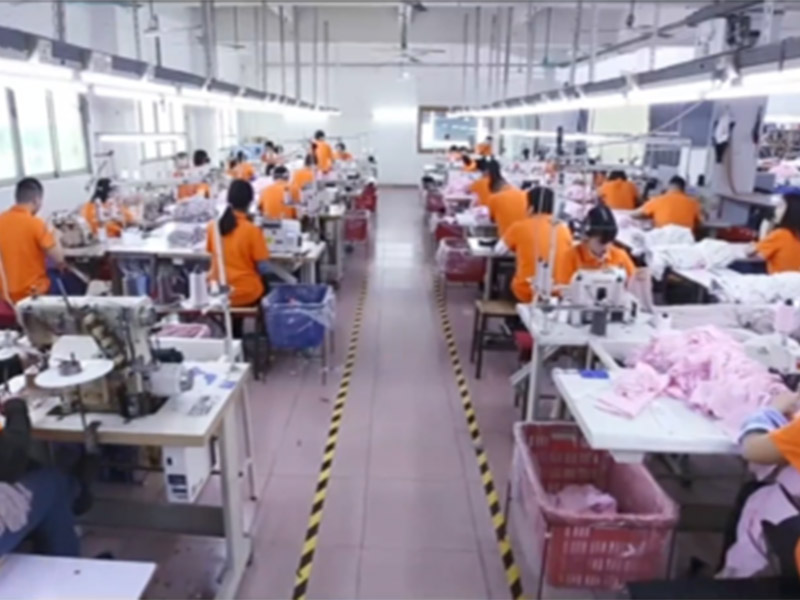
A Coordinated Manufacturing Network for Complex Womenswear
Jinfeng Apparel combines development, merchandising, production, quality, packing, and export coordination rather than relying on a single sewing workshop. Resources are assigned according to product structure, satin behavior, workmanship level, quantity, and launch schedule.
- Development and Pattern Resources
Two sample rooms, more than seven senior pattern makers, and more than twenty sample machinists support style analysis, pattern development, fit samples, revisions, photo samples, PP samples, and production transfer. Development files record materials, measurements, pattern versions, comments, construction, and approval status so bulk teams work from controlled information. - Production Allocation
Six owned women’s fashion factories and more than ten long-term satellite partners support coordinated womenswear production. The network includes more than eighteen sewing lines and flexible production resources. Allocation considers fabric type, one-piece construction, support systems, finishing requirements, style count, order volume, inspection needs, and delivery sequence. - Merchandising and Quality Coordination
Merchandisers track approvals, material status, sample comments, production milestones, packing, inspection, and shipment information. More than fifteen inspectors cover incoming fabric, cutting, sewing, finished garments, pressing, packing, and pre-shipment checks. Large multi-style programs can use milestone sheets, approval records, and issue logs for clearer follow-up. - NDA and Unpublished Design Protection
NDA-based cooperation can cover brand identity, technical packs, line sheets, original samples, patterns, measurements, fabric direction, trims, labels, packaging, target prices, quantities, launch calendars, and unpublished designs. Public case material is anonymized unless written authorization permits brand identification or image use.
Launch Calendars, Export Delivery, and Repeat Orders
Development and production are planned backward from the required launch or warehouse date. Material approvals, sample comments, PP release, production, inspection, packing, freight booking, and transit all need realistic milestones. Fast decisions at the right stage are more valuable than rushed changes after bulk production begins.
Launch-Date Planning
A project schedule can include brief confirmation, swatch approval, first sample, fit comments, revised sample, colorway approval, PP sample, material arrival, cutting, sewing, finishing, final inspection, packing, and shipment.
Brand feedback dates are included because delayed approvals move later milestones. Photo samples and campaign deadlines can be planned separately from PP approval when required.
Export and Split-Shipment Coordination
Sample courier, air freight, sea freight, client-appointed forwarders, and mixed air-plus-sea plans can be coordinated according to urgency, volume, destination, and cost. EXW, FOB, CIF, DAP, or project-specific DDP arrangements are reviewed with the shipment route and forwarder.
Commercial invoices, packing lists, carton marks, and shipment records are prepared around the confirmed trade term.
Repeat Orders and Multi-Batch Production
Approved patterns, size charts, grade rules, BOMs, fabric references, color records, trim details, sewing instructions, packing requirements, QC points, and Golden Samples can be retained for repeat orders. Replenishment speed still depends on material availability, color continuity, trim availability, quantity, and current production capacity. Any changed fabric, color, construction, or packaging is re-approved before repeat production.
Anonymous Satin Jumpsuit Programs at Commercial Scale

US Occasionwear Collection - 18 Styles, 42,600 Pieces

UK Multichannel Range - 24 Styles, 68,400 Pieces
A UK multichannel fashion program included 24 satin jumpsuit styles in UK 6-18, with five principal colors and separate online and retail allocations. The collection combined tailored satin, draped evening silhouettes, fitted stretch satin, wide legs, and cropped cocktail styles. Development complexity came from different stretch behaviors, multiple neckline support systems, and a large size range.
The program used separate base blocks for fluid, structured, and stretch styles. Strapless and one-shoulder garments received internal support trials, while stretch satin styles were checked for seat and knee recovery after wear. Size grading focused on torso length, rise, bust support, hip balance, thigh ease, and leg opening rather than proportional enlargement alone. Bulk production was divided across approved units under shared milestone tracking. A 58-day production and packing calendar supported phased inspection and three delivery lots. Barcode, carton assortment, and size-ratio checks were integrated into packing QC because online and store allocations used different SKU quantities.

Australian Resort and Event Program - 12 Styles, 27,600 Pieces
Frequently Asked Questions About Satin Jumpsuit Manufacturing

Send Your Satin Jumpsuit Development Brief
A useful project review starts with enough information to assess fabric direction, pattern complexity, sample requirements, MOQ, production allocation, packing, and launch timing. Kelly coordinates the first review and routes the brief to the relevant development, sourcing, pattern, merchandising, and production teams. Files can be sent by email or discussed through WhatsApp before formal sampling begins.
For a more accurate response, include:
- Reference images, sketches, technical packs, line sheets, or original sample photos
- Target quantity by style and color
- Preferred satin composition, hand feel, stretch, color, or supplied fabric reference
- Size range, base size, grade rules, and fit preference
- Lining, cups, boning, zippers, hardware, belts, or decoration requirements
- Main labels, care labels, hangtags, barcode, polybag, hanger, and carton requirements
- Required sample date, launch date, warehouse date, or shipment window
- Target trade term and destination market


