...

Mesh Dress Quality Control

Structured inspection for sheer, stretch, ruched, lined, printed, corset, and embellished mesh dresses produced for global fashion collections.

Mesh dress quality depends on more than final appearance. Fabric openings, stretch direction, transparency, lining tension, seam recovery, panel balance, grading, labels, and packing all affect whether an approved sample can be repeated across bulk production. Jinfeng Apparel manages mesh dress programs through sample approval, material control, in-line inspection, final garment checks, and order-specific testing or third-party inspection coordination.

  • 6 owned factories + 10+ partners: production resources matched by dress construction, fabric behavior, order structure, and delivery plan.
  • 18+ sewing lines: separate production planning for woven, stretch, party, occasion, repeat-order, and multi-style programs.
  • 2 sample rooms + 7+ pattern makers: fit, transparency, lining, grading, and construction risks reviewed before bulk release.
  • 15+ QC inspectors: incoming, cutting, sewing, in-line, final, packing, AQL, and client-inspection support.

Quality Control for Every Brand Function

Different teams read mesh dress risk from different angles. Development focuses on appearance and fit, sourcing controls materials and timing, while quality and operations protect bulk consistency, labeling accuracy, and warehouse acceptance.

Product Development Teams

Development teams need confidence that a sketch, reference sample, or tech pack can be converted into a stable construction. Mesh direction, neckline coverage, lining shape, ruching distribution, cut-out placement, zipper behavior, and size grading must be settled before the final pattern is released. Early review prevents attractive sample details from becoming difficult or inconsistent production methods.

Sourcing and Merchandising

Sourcing and merchandising teams manage fabric availability, color approval, material MOQ, sample comments, calendar changes, and production status. Mesh projects require clear records because outer mesh, lining, thread, zipper, elastic, labels, and packaging may follow different supply timelines. A complete approval path reduces late substitutions and prevents unrecorded changes from reaching production.

Quality and Operations

Quality and operations teams need measurable standards rather than broad promises. Inspection instructions should cover visible mesh damage, transparency, seam appearance, dimensional tolerance, lining position, attachment strength, labels, barcodes, folding, and carton information. Defect classification and release decisions must follow the brand quality manual, approved sample, and order-specific inspection plan.

Where Mesh Dress Defects Usually Begin

Many visible defects originate before final inspection. Identifying the production stage behind each problem makes corrective action faster and prevents the same issue from spreading across several sizes, colors, or styles.

Holes and Snags

Open mesh structures can show broken yarns, needle damage, hook marks, sharp-trim contact, or rough handling more clearly than compact fabrics. Surface inspection begins at fabric receipt and continues during spreading, cutting, sewing, finishing, and packing. Damaged pieces should be marked and isolated before they are combined with approved panels.

Wavy Seams

Excessive thread tension, unsuitable stitch settings, differential feeding, or stretched handling can make side seams and necklines ripple. The defect often becomes more visible after the garment is hung or worn. Sewing trials on production fabric should be approved before the line begins, followed by in-line checks on early output.

Uneven Transparency

Transparency can change across body zones, lighting conditions, mesh layers, and lining colors. A garment may appear acceptable flat but reveal excessive exposure when stretched over the bust, hip, or seat. Coverage zones should be reviewed on a form or fit model using the approved outer mesh and production lining.

Lining Distortion

Outer mesh and lining may have different stretch, recovery, weight, and length behavior. Poor balance can pull side seams forward, create wrinkles, lift the lining hem, or make the outer layer collapse. Pattern length, seam joining method, and ease must be checked together rather than treating the lining as a separate component.

Panel Twisting

Incorrect stretch direction, off-grain cutting, mixed bundle orientation, or unequal panel tension can rotate side panels and disrupt print or seam placement. Cutting instructions should identify fabric direction, panel face, symmetry, and size bundle control. Early garment checks should compare left and right structure before large quantities continue.

Weak Recovery

A mesh dress can fit correctly at first wear and still lose shape after sitting, movement, steaming, or repeated stretching. Recovery problems affect necklines, armholes, waist seams, ruching, and close-fitting skirts. Fabric approval should consider both extension and return behavior, while garment inspection should include movement and resting review where relevant.

Quality Priorities by Mesh Dress Construction

A single inspection checklist cannot cover every mesh dress. Construction, lining strategy, stretch, decoration, and wearing occasion determine which risks require the closest attention during sampling and bulk production.

Bodycon Mesh Dresses

Close-fitting mesh styles rely on controlled negative ease, stable stretch recovery, smooth side seams, and consistent bust-waist-hip proportions. QC should check whether the outer mesh and lining stretch together without creating pressure lines or transparent stress zones. Side seams, center-back seams, zipper areas, and lining hems require flat inspection and on-form review across the approved size range.
  • Control focus: recovery, body measurements, side-seam balance, coverage, and wash stability.
  • Common risk: fabric looks smooth flat but becomes over-transparent or distorted on body.

Ruched Mesh Dresses

Ruching can conceal small dimensional differences, yet poor distribution creates obvious imbalance between left and right sides. Stitch anchoring, elastic length, panel length, and gathering ratio should follow the approved sample. Inspectors should compare fullness, seam position, hem level, and visual symmetry before pressing, because aggressive finishing can flatten or shift approved ruching.
  • Control focus: gathering ratio, anchor points, symmetry, seam strength, and hem balance.
  • Common risk: one side appears fuller or shorter after sewing and finishing.

Printed Mesh Dresses

Printed mesh requires alignment between artwork direction, panel orientation, stretch, and size grading. Placement should be reviewed around bust seams, waistlines, side seams, center front, and hem panels. Color variation can become visible where stretched areas lighten. Cutting plans should separate shade lots and preserve approved print direction, while final inspection compares placement against the approved sample and production artwork.
  • Control focus: print direction, motif position, shade, panel matching, and stretch color change.
  • Common risk: approved artwork shifts across sizes because placement rules were not graded.
Layered Sheer Dresses

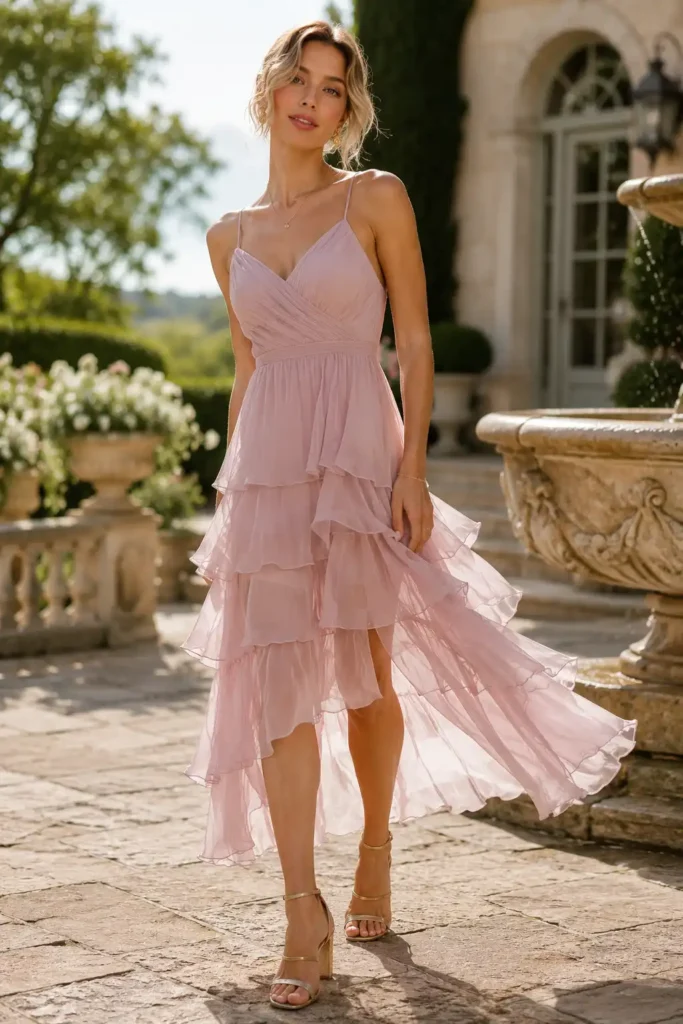
Layered sheer styles may combine two mesh layers, mesh over chiffon, or mesh over a fitted lining. Each layer needs correct length, suspension, and seam joining so the garment hangs freely rather than twisting. Inspectors should check the dress after hanging, movement, and folding. Layer edges, lining exposure, slit alignment, and static cling need attention before packing approval.
  • Control focus: layer balance, hang, lining visibility, hem level, and packing recovery.
  • Common risk: outer and inner layers behave differently after steaming or transport.

Corset and Mesh Dresses

Structured mesh dresses add cups, boning, underwire, support panels, or anti-slip details to a delicate outer material. QC must protect mesh from rigid component edges while confirming cup symmetry, neckline stability, waist shaping, zipper flatness, and wearer comfort. The approved sample should define support component position and covering method so production does not expose hard edges or create pressure points.
  • Control focus: cup placement, boning, edge protection, neckline coverage, and zipper balance.
  • Common risk: support components improve shape but damage or distort adjacent mesh.

Embellished Mesh Dresses

Sequins, rhinestones, bead chains, appliques, embroidery, or lace motifs add weight and surface contact to mesh. Attachment methods must suit the mesh strength and stretch direction. QC should check decoration placement, loose components, sharp edges, backing comfort, mesh distortion, and folding protection. Heavy decoration zones may require reinforcement that remains invisible from the front.
  • Control focus: attachment security, weight distribution, comfort, placement, and packing.
  • Common risk: decoration passes visual review but causes tearing, scratching, or panel sagging.

Incoming Mesh Fabric Inspection Before Cutting

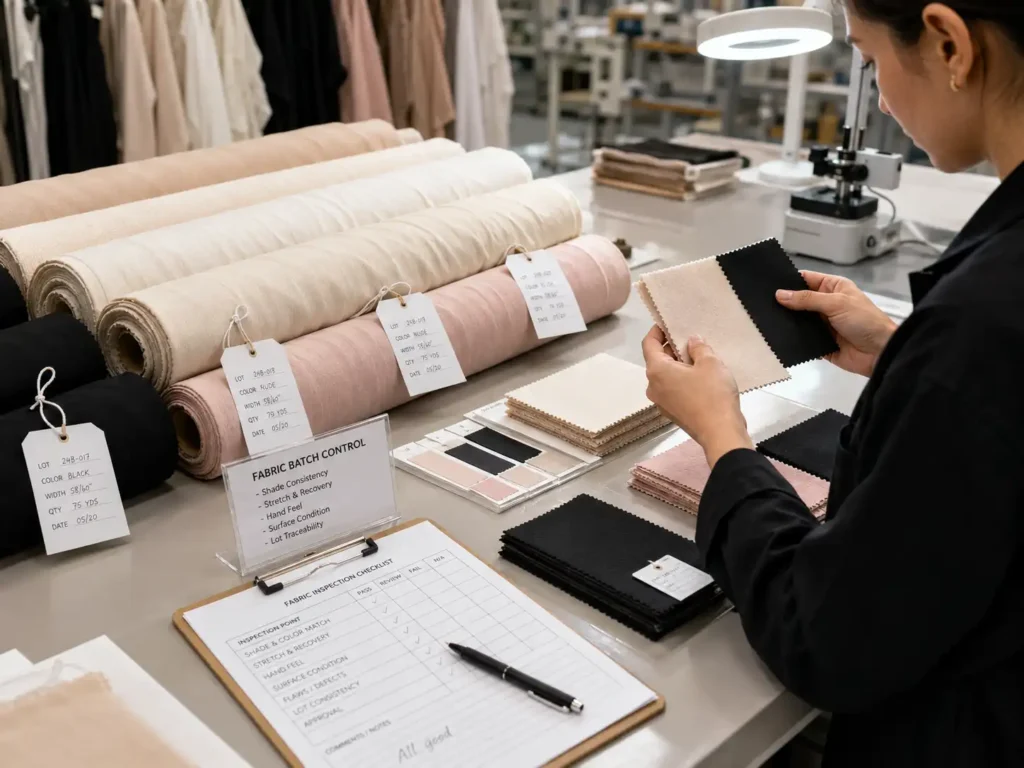
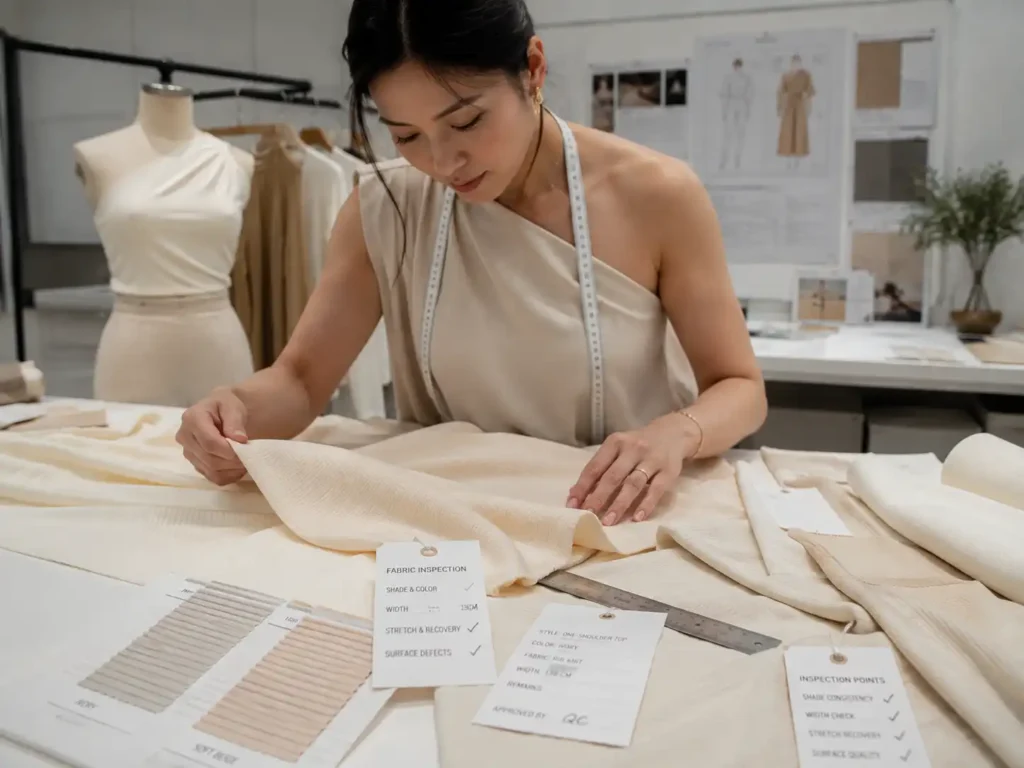
Material approval must translate into measurable receiving checks. Each roll or lot is reviewed against the approved fabric reference, production order, color approval, and construction requirements before panels are released for cutting.

Inspection PointWhat to CheckApproval BasisAction When Unacceptable
Fabric identityComposition, width, weight, construction, lot, and colorPurchase specification and approved fabric referenceHold the lot and reconfirm before spreading
Surface conditionHoles, snags, broken yarns, stains, oil marks, barre, and edge damageOrder defect standard and visible-zone requirementMark, segregate, replace, or revise cutting allowance
Mesh structureOpening size, density, uniformity, face direction, and distortionApproved swatch or production sampleSeparate abnormal rolls and review production suitability
Stretch directionLengthwise, crosswise, and diagonal extensionPattern and construction instructionCorrect cutting direction or revise pattern plan
Recovery behaviorReturn after extension, bagging, curl, and permanent growthApproved sample behavior and fit requirementReplace material or adjust construction before sampling
TransparencyOpacity in relaxed and stretched states under relevant lightingApproved outer mesh, lining, and coverage zonesRevise lining, color, layer count, or fabric choice
Shade consistencyRoll-to-roll, lot-to-lot, and lining color relationshipColor standard, lab dip, or approved bulk colorShade-sort, separate cutting lots, or request replacement
Shrinkage and stabilityDimensional change after agreed care or steam conditionsProject testing requirementAdjust pattern allowance or reject unsuitable material

Transparency and Lining Must Work Together

Transparency is a design feature only when coverage, lining, color, and fit remain controlled. Review must reflect real wear rather than a flat garment viewed under one factory light.

Transparency Under Real Lighting

Mesh opacity changes with color, opening size, yarn thickness, stretch, layer count, and lighting direction. A light-colored mesh over a matching lining may appear balanced on a table but become noticeably more transparent across the bust, hip, seat, or thigh when worn. Flash photography and strong retail lighting can also reveal lining edges or body zones that are not obvious under soft room lighting. Sample approval should identify intended sheer areas, protected coverage zones, and the acceptable relationship between outer mesh and lining. Inspection can then compare production garments under consistent lighting and, where relevant, on a form or fit model. The aim is not to remove the sheer effect; the aim is to reproduce the approved effect across sizes and colors without accidental exposure.

Outer Mesh and Lining Tension

Outer mesh and lining must hang and stretch as one garment while retaining their separate visual functions. A firm lining under highly elastic mesh can restrict movement and pull seams inward. A very elastic lining under stable mesh can create bubbles or excess fullness. Length mismatch may lift the lining hem, drag the outer layer, or rotate side seams. Pattern development should compare stretch percentage, recovery, weight, and seam joining method. Fit samples should be checked standing, sitting, walking, and after short resting periods. Production inspection should confirm that seam allowance, lining notches, attachment points, and hem lengths follow the approved construction rather than relying on visual adjustment at the end of the line.

Lining Color and Coverage

Lining color changes the apparent color and depth of the outer mesh. Nude, tonal, contrast, black, or white linings can produce very different visual results even when the outer layer is unchanged. The approved combination should be recorded by color code and physical reference. Coverage boundaries around neckline, armhole, bust, cut-out, slit, and hem need clear measurements or pattern references. A vague instruction such as “lined to mid-thigh” is not enough for consistent production across sizes. The approved sample should define where the lining begins and ends, whether the lining is free-hanging or attached, how it behaves at seams, and how much ease is allowed. Final inspection then checks both coverage and the visual transition from lined to sheer areas.

Stretch Recovery and Seam Stability Control

Stretch mesh must extend for wear, return for shape retention, and pass through seams without rippling or breaking. Fabric behavior and sewing method are approved together before bulk production.

Stretch Direction Review

Pattern pieces are positioned according to the intended direction of maximum stretch, recovery, print, and visual grain. Bodycon panels may require greater crosswise stretch, while straps, waistbands, or support zones may need controlled extension. Mirrored panels should follow the same direction so left and right sides respond equally during wear. Cutting instructions must identify face, direction, pair control, and any zone requiring reinforcement. A panel cut in the wrong direction can still be sewn successfully but will produce a different fit, recovery, and transparency level. Bundle checks therefore begin before sewing, not after a completed garment shows distortion.

Recovery After Movement

Extension alone does not define performance. A mesh dress should recover after pulling over the body, sitting, walking, and normal handling. Review may include controlled extension, relaxation time, visual bagging, neckline return, armhole return, waist-seam stability, and hem shape. Steam and finishing can alter recovery, especially when heat-sensitive fibers or elastane blends are involved. The approved sample establishes expected behavior, and any required laboratory or internal test method is recorded before production. When recovery is weak, options may include a different mesh, altered lining, adjusted negative ease, reinforcement, or revised construction. Forcing the original pattern onto an unsuitable mesh usually transfers the problem to later stages.

Seam Appearance and Strength

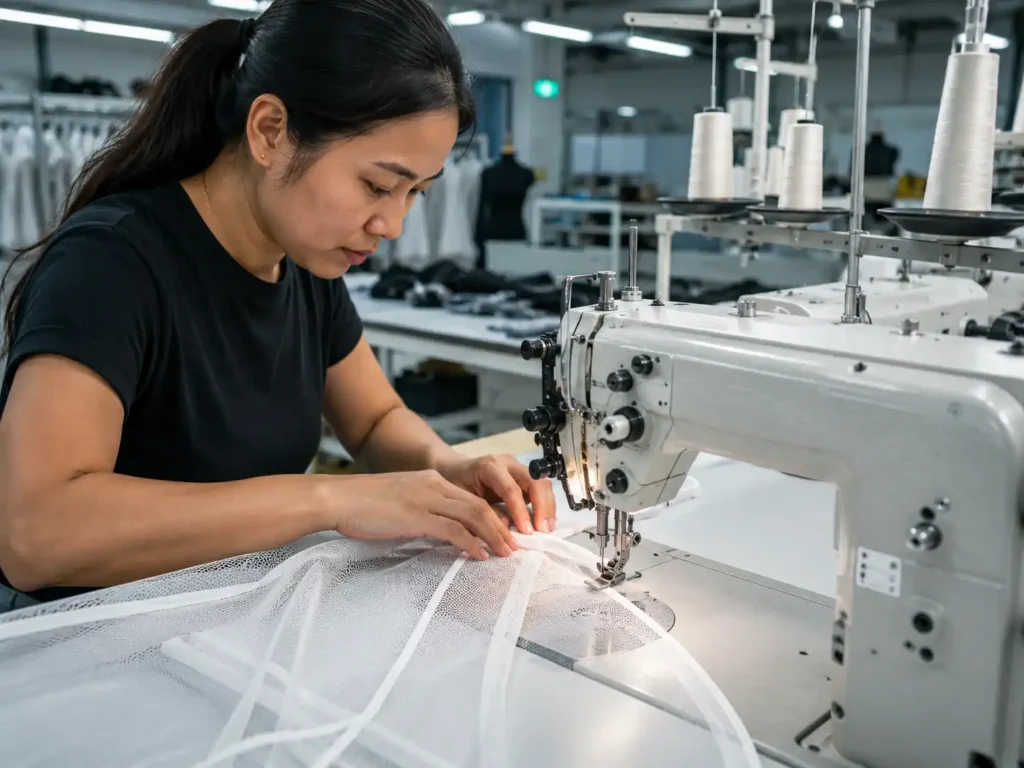
Stable seams must stretch with the garment without creating waves, skipped stitches, open seams, excessive bulk, or visible thread damage. Production trials should confirm stitch type, seam allowance, thread, needle, tension, feed, and finishing method on the approved mesh and lining combination. Early line output is reviewed before volume increases. Side seams, neckline edges, armholes, ruching channels, zipper joins, and high-stress cut-out corners deserve closer attention because small changes can affect both appearance and strength. Inspection should compare seams in a relaxed state, under gentle extension, and after hanging. Repair methods also need limits; repeated needle penetration can weaken delicate mesh or leave visible holes.
Accurate Cutting, Panels, and Placement

Cutting establishes the geometry of the garment. Direction, symmetry, print placement, and bundle identity must remain controlled before delicate mesh reaches the sewing line.

Stretch and Grain Direction

Markers and cutting instructions identify the approved stretch direction, face, nap or visual direction, and panel orientation. Mesh can appear symmetrical while behaving differently by direction. Incorrect orientation changes fit, transparency, seam recovery, and drape. Spread tension must remain controlled so layers are not stretched during cutting and allowed to shrink afterward.

  • Check: marker direction, fabric face, spread tension, panel orientation, and relaxation.
  • Release basis: approved pattern, fabric reference, and cutting instruction.

Panel Symmetry

Left and right mesh panels, cut-outs, yokes, cups, side inserts, and ruching sections are paired and checked before bundling. Symmetry is especially important when seams remain visible through sheer fabric. Notches, balance marks, and panel dimensions help prevent one side from being eased differently or attached at the wrong position.

  • Check: paired panels, notches, seam curves, opening positions, and layer count.
  • Release basis: final pattern and approved sample comparison.

Print and Motif Placement

Printed, flocked, embroidered, lace-applique, or patterned mesh requires placement rules that survive size grading. Center motifs, border designs, stripe directions, and visual focal points should be measured from stable garment references. Placement cannot rely only on the smallest size sample because bust, waist, hip, and length changes affect artwork position.

  • Check: artwork direction, center position, seam matching, and graded placement.
  • Release basis: approved artwork, marker, and size-specific placement instruction.

Bundle and Size Control

Cut panels are separated by style, color, size, shade lot, and orientation. Bundle tickets and production files prevent similar-looking mesh pieces from being mixed across sizes or colors. Shade sorting remains important because transparent fabrics can reveal lot differences after layering. Cut-panel inspection catches holes, edge damage, missing notches, and count errors before sewing.

  • Check: style, color, size, lot, quantity, pair identity, and panel damage.
  • Release basis: cutting plan, bundle record, and production order.

Pattern, Fit, and Size Grading Control

Fit control connects design appearance with wearer safety and repeatable production. Mesh stretch can hide pattern errors during a quick fitting, so structure and measurements require deliberate review.

Core Measurement and Structure Points

Mesh dress patterns are reviewed through bust, upper bust, under bust, waist, high or low waist, hip, front and back length, neckline depth, armhole, strap length, slit height, lining length, and hem balance. Jumpsuit-style mesh garments also require crotch length and movement allowance. Measurement points are linked to construction rather than copied blindly from a standard chart. A deep neckline, strapless bodice, cut-out waist, corset panel, or high slit changes how measurements should be taken and tolerated. The final pattern, approved size chart, grade rule, and measurement tolerance become production documents. Inspectors use the same references for first output, in-line measurement, final inspection, and repeat orders.

Fit Review by Mesh Behavior

Bodycon mesh needs controlled negative ease and reliable recovery. Layered mesh needs enough ease for the outer layer to move independently without collapsing. Corset and mesh combinations need stable support at cups, boning, waist, and neckline without transferring excessive tension into transparent panels. Ruched mesh needs sufficient base-panel length to achieve the approved gathering rather than compensating through stretch. Fit review should consider standing posture, sitting, walking, arm movement, strap stability, neckline security, underarm coverage, and lining position. Any change to mesh weight, stretch, lining, elastic, or support components can alter fit and should return to sample review rather than entering bulk production as an undocumented substitution.

Size Grading Across the Range

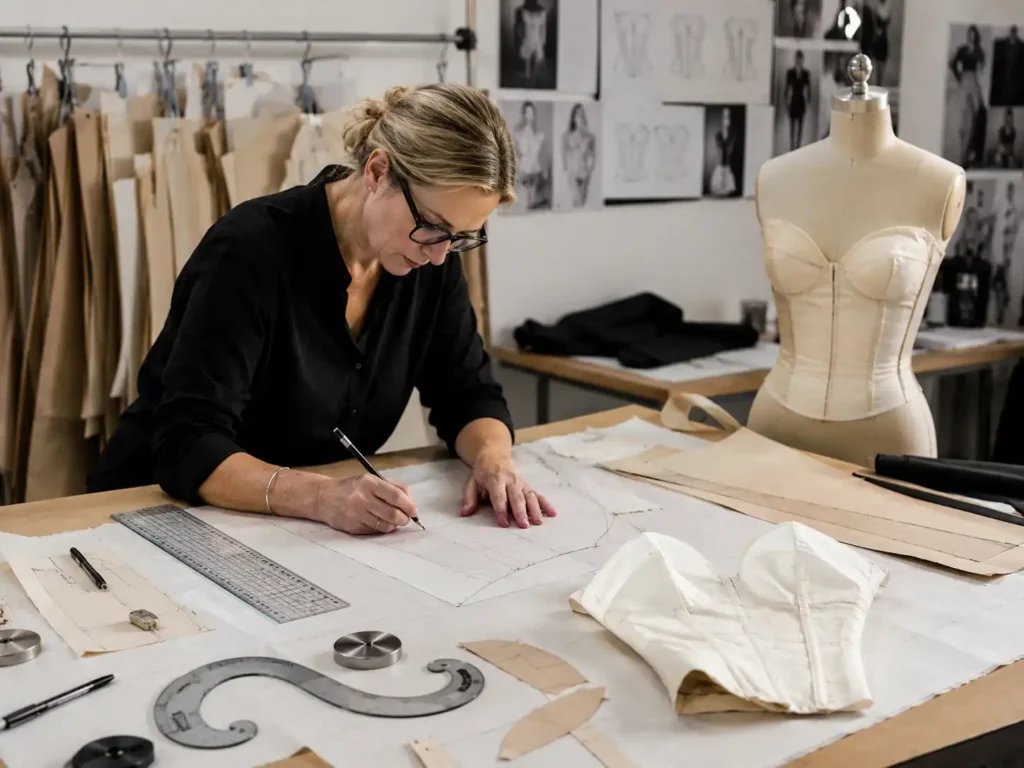
Grading should preserve design proportion, coverage, and support across the intended size range. Larger sizes may require changes in strap width, armhole coverage, cup placement, neckline stability, lining ease, and support rather than proportional enlargement alone. Mini lengths, high slits, cut-outs, and sheer zones need size-specific safety review. Jinfeng Apparel supports pattern development through 7+ senior pattern makers, 2 sample rooms, and 20+ sample machinists. Those resources allow fit comments, pattern corrections, sample revisions, PP sample approval, and Golden Sample control to remain connected before bulk release.
Sample Approval Before Bulk Production
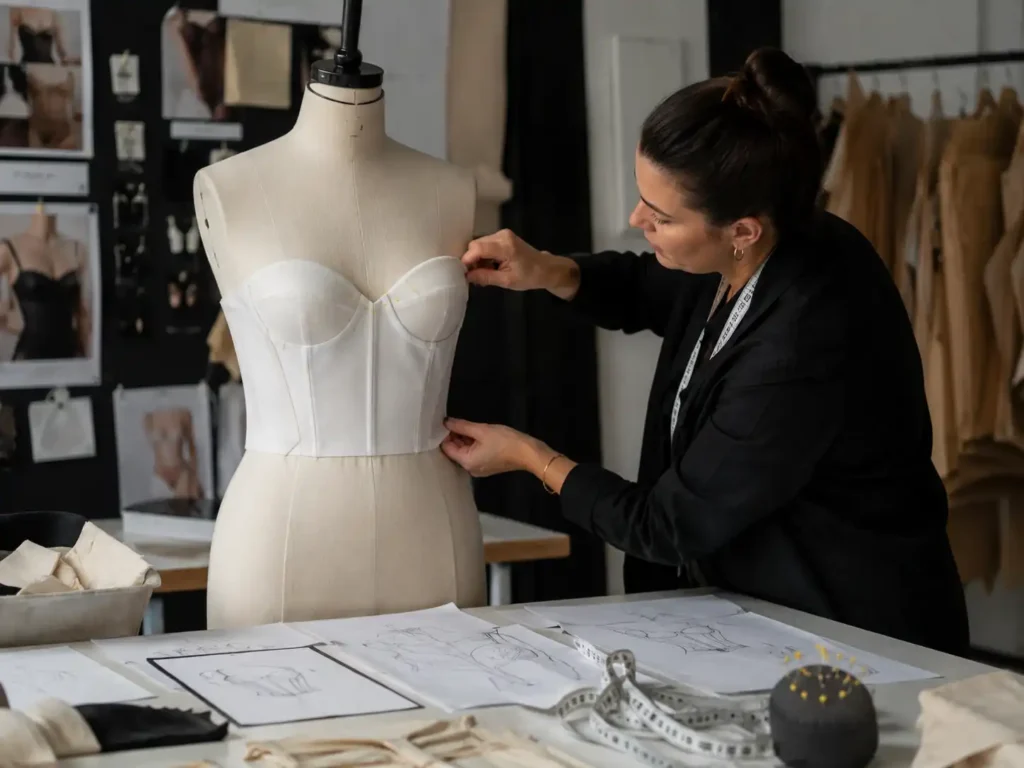
Mesh dress sampling moves from concept validation to production lock. Each sample has a different purpose, and no single prototype should be expected to settle every material, fit, construction, and packing decision.

First Sample

The first sample tests whether the design can be translated into a workable garment. Pattern structure, mesh direction, lining approach, seam method, transparency, support details, and overall proportion are reviewed. Simple styles may require 7-10 days, standard dresses 10-15 days, and complex mesh, corset, lace, or sequin styles commonly require 15-25 days, subject to material availability.

Fit Sample

Fit samples focus on body measurements, coverage, movement, neckline security, armhole shape, strap position, waist and hip balance, slit height, and lining behavior. Comments should distinguish pattern changes from sewing corrections or material changes. Fit approval is strongest when feedback identifies measurement values, visual references, and priority levels rather than relying on broad statements such as “make it fit better.”

Revised Sample

A revised sample confirms whether agreed comments have been applied and whether one correction created a new problem elsewhere. Revised samples commonly require 7-15 days, depending on change scope, fabric, trim, and pattern complexity. Every revision should update the sample comment sheet, pattern version, size chart, BOM, and construction notes that will later guide production.

PP Sample

The pre-production sample uses final or approved bulk-intent materials and confirms construction, workmanship, labels, measurements, color, fit, and packing direction before production release. Major design or structural changes should not remain open after PP approval. Changes that affect bulk production must enter the production file and be re-confirmed rather than communicated only through chat or marked photographs.

Golden Sample

The Golden Sample becomes the physical standard for production, in-line inspection, final inspection, repeat orders, and dispute review. It should match the latest approved pattern, size chart, BOM, construction details, labels, and visual requirements. Golden Sample control is particularly important for mesh because transparency, stretch, seam appearance, and lining balance are easier to judge with a physical reference than text alone.

Production File Lock

Bulk release requires a controlled document set: final pattern, approved size chart, grade rule, BOM, material approvals, color approvals, construction sheet, sample comments, PP approval, Golden Sample reference, QC checklist, label files, packing instructions, quantity breakdown, and shipment plan. Clear version control prevents outdated sample comments or artwork from returning during production.

Quality Control Through Every Production Stage

Quality is built through connected control points. Final inspection confirms shipment risk, but material, cutting, sewing, measurement, finishing, and packing checks prevent defects from becoming large-scale rework.

Incoming Material QC

Mesh, lining, zippers, elastic, cups, boning, labels, hangtags, polybags, and cartons are checked against approved specifications. Material identity, color, surface, quantity, dimensions, and order-specific test documents are reviewed before release. Nonconforming materials are held for replacement, sorting, corrective action, or written approval.

Cutting QC

Cutting QC checks pattern version, direction, face, size, quantity, symmetry, print placement, notches, panel damage, and bundle identity. Delicate mesh should be handled without unnecessary tension or rough contact. Shade lots and lining combinations remain separated where visual differences could appear after assembly.

Sewing Setup Review

Before volume production, line teams review the Golden Sample, construction sheet, seam method, stitch appearance, special attachments, support details, measurements, and risk points. Trial output confirms that approved workmanship can be repeated on production materials. Problems are corrected before the line accelerates.

In-Line Inspection

In-line inspectors review early and ongoing production for seam waves, skipped stitches, panel twisting, lining position, ruching balance, zipper flatness, decoration security, measurements, and visible mesh damage. Findings are communicated while repair remains possible. Repeated defects trigger root-cause correction rather than repeated end-line trimming.

Measurement Inspection

Measurements are checked at defined garment points using the approved size chart, tolerance, and measurement method. Mesh garments should rest consistently before measurement because handling stretch can change readings. Critical fit points receive closer monitoring, especially neckline depth, bust, waist, hip, strap length, slit height, lining length, and overall garment length.

Final Garment Inspection

Final inspection reviews appearance, workmanship, measurements, function, symmetry, transparency, lining, pressing, stains, repairs, loose threads, holes, snags, and approved visual details. Garments are compared with the Golden Sample and production documents. Repairable items are corrected and rechecked before packing.

Packing QC

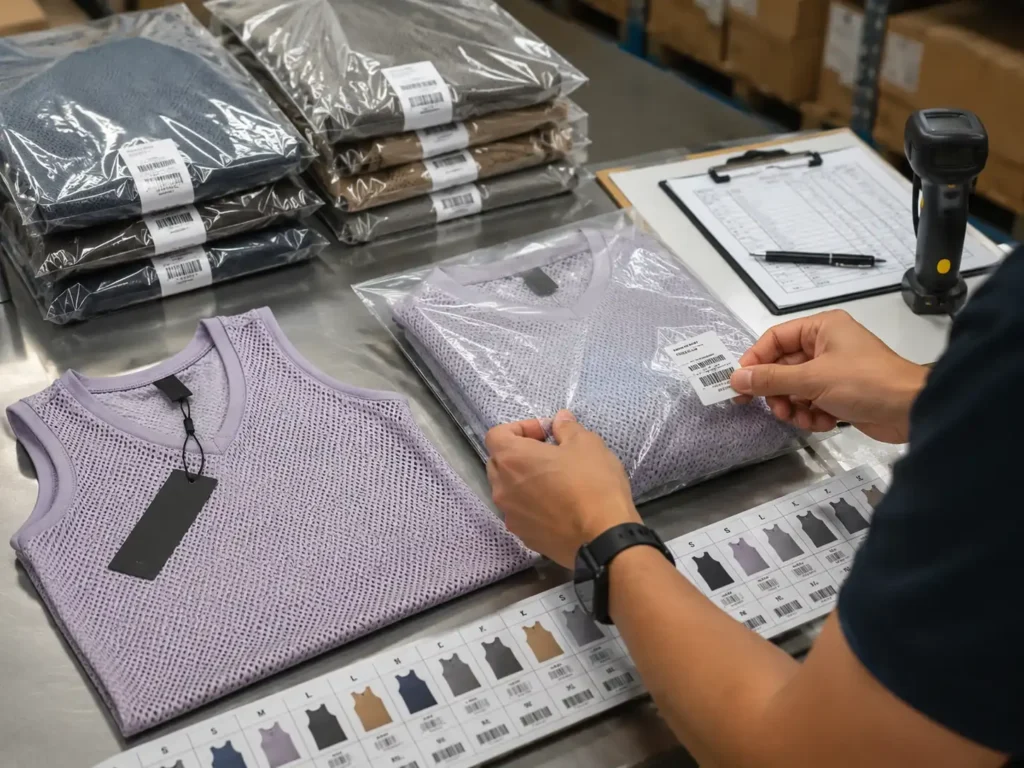
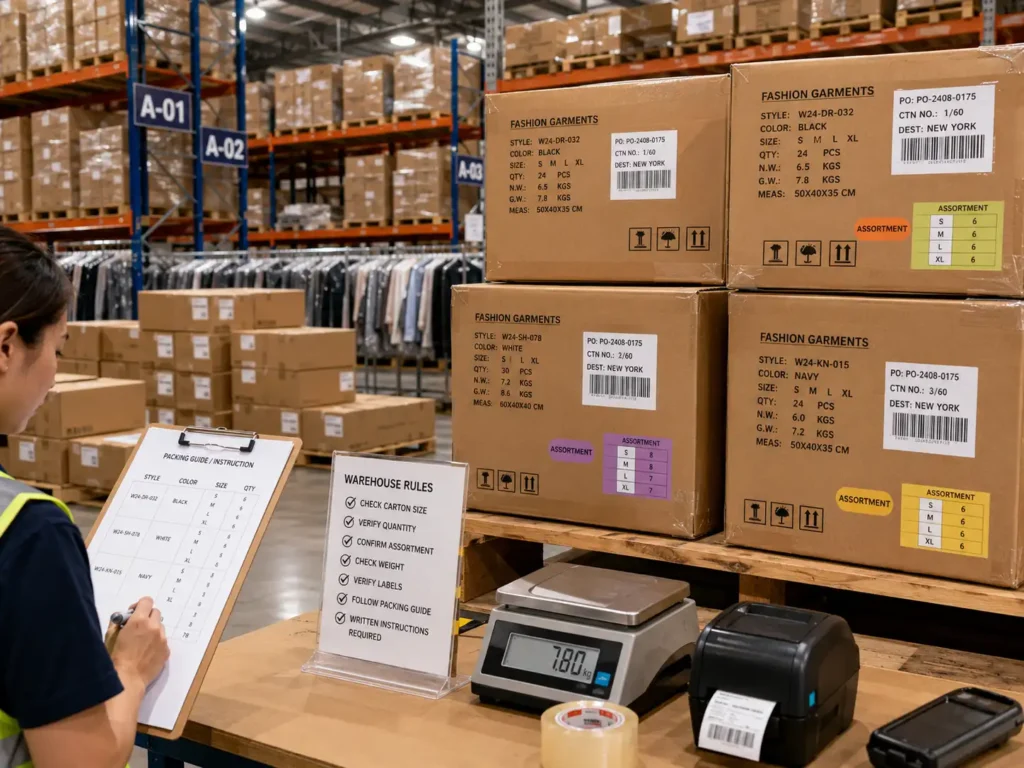
Packing QC confirms main labels, size labels, care labels, hangtags, barcodes, SKU labels, folding, polybags, stickers, carton marks, packing ratios, and carton quantities. Mesh protection is reviewed to prevent snagging, decoration damage, color transfer, hard folds, or excessive compression during transport and warehouse handling.

AQL or Client Inspection

Final statistical inspection, AQL sampling, client-appointed inspection, or third-party inspection can be arranged according to the agreed quality plan. Defect definitions, inspection level, acceptable limits, sample size, and release authority must be confirmed for the order. Final inspection supports process control; it does not replace it.

Workmanship Details That Decide Garment Quality
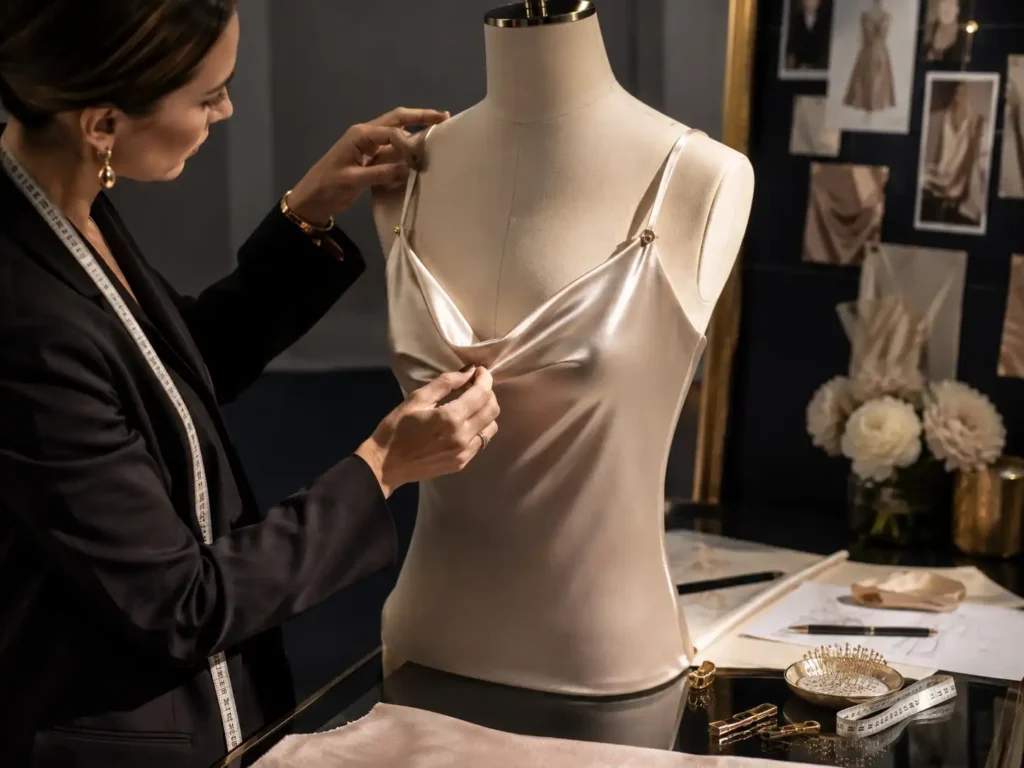
Small construction details become highly visible on sheer fabric. Inspection therefore combines flat appearance, measurement, stretch behavior, wearer movement, and comparison with the approved sample.

Necklines and Armholes

Necklines and armholes must remain smooth, symmetrical, and secure without stretching, gaping, visible repair holes, or lining exposure. Binding, elastic, clean finish, or facing methods are reviewed for both appearance and recovery. On-body checks confirm coverage and movement, especially for deep-V, halter, strapless, off-shoulder, and cut-out constructions.
  • Inspect: shape, depth, symmetry, edge recovery, stitch damage, and coverage.
  • Reject risk: open edge, severe gaping, exposed body zone, or unstable support.

Side Seams and Panels

Side seams should hang vertically or follow the approved design line without twisting, rippling, or pulling the lining. Sheer fabric makes seam allowance and thread tension visible, so neat internal control matters. Panel widths, cut-out edges, print direction, and left-right symmetry are checked before final finishing hides the production stage where the error began.
  • Inspect: seam line, panel width, tension, allowance, symmetry, and hang.
  • Reject risk: twisted side, open seam, visible distortion, or mismatched panels.

Ruching and Draping

Ruching should follow the approved gathering ratio, anchor position, direction, and visual balance. Unequal elastic or panel length can shorten one side, expose lining, or shift a seam. Draped mesh requires stable attachment at anchor points without excessive bulk. Inspection compares fullness, fold direction, length, and left-right appearance before and after finishing.
  • Inspect: gathering ratio, anchor strength, symmetry, length, and visual flow.
  • Reject risk: uneven fullness, broken gathering stitches, or distorted hem.

Zippers and Closures

Invisible zippers, metal zippers, hooks, snaps, and back closures must operate smoothly without catching mesh or creating waves. Reinforcement may be required where delicate mesh meets rigid closure tape. QC checks zipper length, top alignment, seam flatness, function, security, internal comfort, and consistency with lining and support panels.
  • Inspect: function, alignment, reinforcement, seam wave, and mesh protection.
  • Reject risk: jammed closure, exposed teeth, damaged mesh, or uneven top edge.
Slits and Cut-Outs

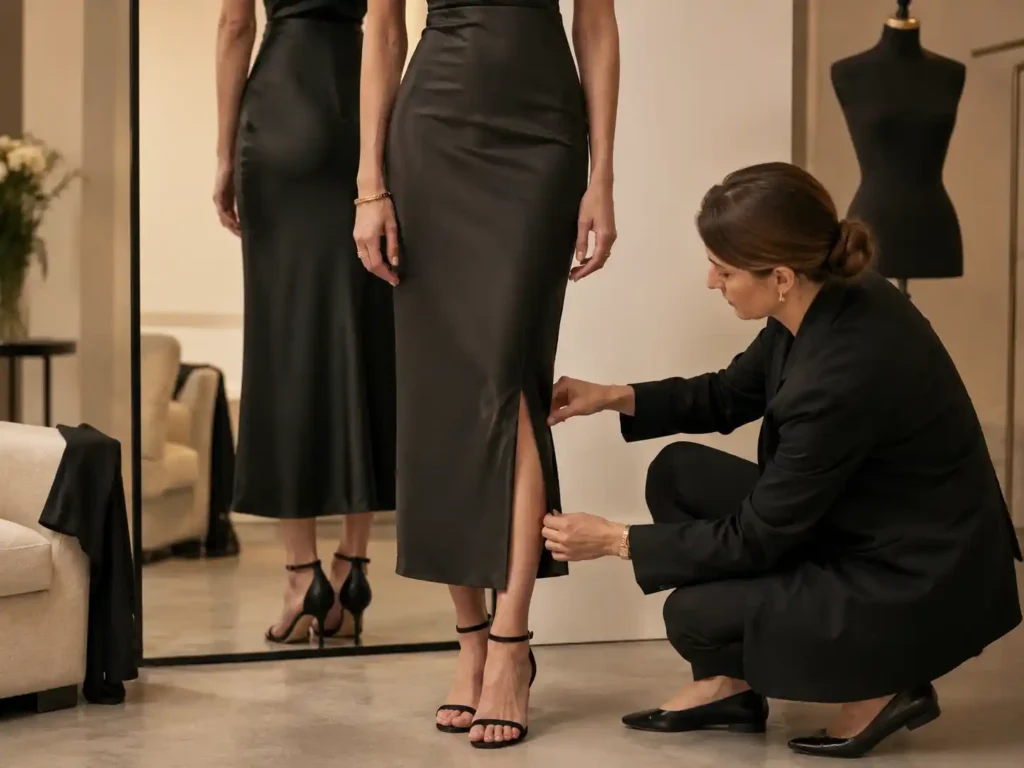
High slits and cut-outs require accurate position, reinforcement, edge recovery, and coverage. Corners can become stress points where mesh tears or stitches open. The approved sample should define slit height and cut-out dimensions by size. Inspection confirms measurement, symmetry, movement, seam security, and the relationship between outer mesh and lining.
  • Inspect: height, width, symmetry, corner reinforcement, and wearer movement.
  • Reject risk: excess exposure, open corner, distorted edge, or wrong position.

Hems and Layer Balance

Mesh hems may be raw, narrow finished, bound, rolled, or combined with a lining hem. The chosen method should preserve drape without stretching or stiffening the edge. Maxi and layered styles are checked after hanging because uneven length can appear only after the garment settles. Folding and packing should not create permanent hard creases.
  • Inspect: hem finish, circumference, level, layer length, drape, and recovery.
  • Reject risk: uneven hem, stretched edge, lining exposure, or damaged finish.

Defect Classification and Corrective Action

Defect decisions must follow the approved quality manual and product risk. Classification considers wearer safety, function, appearance, retail acceptance, repairability, quantity affected, and the likelihood of recurrence.

Critical Defects

Critical defects create a safety, legal, or serious use risk under the agreed standard. Examples may include sharp exposed components, unsafe closure failures, severe coverage failure outside approved design, or restricted-material nonconformance when relevant. Affected goods are held, the order risk is assessed, and release requires authorized disposition rather than routine repair approval.
  • Action: stop, isolate, escalate, investigate, and obtain release authority.
  • Evidence: defect record, affected quantity, root cause, correction, and reinspection.

Major Defects

Major defects can make the garment unfit for sale, visibly different from approval, functionally unreliable, or unacceptable to the retail channel. Open seams, visible holes, severe seam waves, incorrect measurements, wrong labels, zipper failure, major transparency variance, or obvious panel distortion may fall into this category according to the brand standard.
  • Action: hold affected goods, repair or replace, and perform defined reinspection.
  • Evidence: defect map, repair method, quantity status, and inspection result.

Minor Defects

Minor defects do not usually affect safety or function but reduce finish or presentation. Loose threads, small removable marks, slight noncritical appearance variation, or minor packaging presentation issues may be classified as minor when the quality manual allows. Repeated minor defects can still indicate process instability and should not be ignored simply because each item appears repairable.
  • Action: correct before packing and monitor recurrence by line and operation.
  • Evidence: repair check, trend record, and operator or process feedback.

Root-Cause Correction

Corrective action should address the source rather than only the visible garment. Material damage may come from storage or handling; seam waves may come from tension or feeding; twisting may come from cutting direction; transparency variance may come from shade, stretch, or lining; wrong barcodes may come from file control. Production resumes after the cause, correction, and verification method are clear.
  • Action: contain, analyze, correct, verify, document, and prevent recurrence.
  • Evidence: updated instruction, approved repair, trial output, and follow-up inspection.

Testing and Third-Party Inspection Support

Testing scope depends on fabric type, intended market, care method, retailer standard, and product risk. Jinfeng Apparel can coordinate project-based testing and work with appointed inspection or laboratory partners.

Fabric Composition

Composition testing can verify whether the material matches the declared fiber content and approved specification. Accurate composition supports care labels, product claims, customs information, and market compliance. Testing requirements should identify the tested material, color, lot, method, and report ownership rather than assuming one report covers every future batch.

Shrinkage and Stability

Dimensional stability review can cover washing, steaming, relaxation, or other agreed care conditions. Mesh, lining, elastic, thread, and support materials may change differently. Pattern allowance and finishing instructions should reflect approved results. A fabric that passes appearance review can still create garment length, neckline, or lining problems after care.

Colorfastness

Colorfastness testing may include washing, rubbing, perspiration, water, or other relevant conditions. Dark mesh over light lining, contrast layers, prints, and decorative materials deserve careful review because transfer can remain visible through the garment. Testing scope and acceptance values follow the target market and brand standard.

Stretch and Recovery

Stretch testing can examine extension, return, growth, and repeated-cycle behavior. The result is interpreted together with garment construction and fit, because identical stretch percentages can perform differently when mesh weight, opening, lining, seam, or pattern ease changes. Testing supports material decisions but does not replace fit approval.

Seam and Trim Strength

Seam, zipper, strap, snap, hook, decoration, cup, boning, and other attachment checks can be arranged according to garment risk. Mesh may fail around an attachment even when the attachment itself remains secure. Test setup should reflect the actual construction and identify whether failure occurs in the seam, mesh, trim, or reinforcement layer.

Market-Specific Testing

Chemical or regulatory testing may be required for fiber content, pH, formaldehyde, azo dyes, restricted substances, flammability, labeling, or retailer protocols, depending on market and product. Jinfeng Apparel can coordinate with SGS, Intertek, BV, ITS, or a nominated provider. Document scope is confirmed by factory, material supplier, order batch, and project requirement.

Private Label and Packing Accuracy

A garment can pass workmanship inspection and still fail commercial delivery through incorrect labels, barcodes, SKU data, folding, or carton information. Retail-ready control protects warehouse acceptance and launch timing.

Main and Size Labels

Main labels and size labels are checked for artwork, wording, color, position, orientation, size designation, and attachment quality. Sheer garments require careful placement so labels do not show through unintended zones or irritate the wearer. Label approval includes physical sample, file version, and placement instruction.

Care and Fiber Labels

Care labels should match confirmed composition, care method, target-market wording, and required company or origin information. Position, fold, readability, and wash durability are reviewed. A label file should not be released before composition and care decisions are complete, particularly when outer mesh and lining use different materials.

Hangtags and Accessories

Hangtags, security tags, spare components, tissue, cards, and other accessories are checked against artwork and packing instructions. Attachment methods should avoid snagging mesh or leaving visible holes. Quantity control matters when several tags or inserts are required for different markets, channels, or warehouse programs.

Barcode and SKU Labels

Barcode, style, color, size, PO, season, destination, and SKU information must match the order breakdown and be scannable. Multi-style mesh programs can include many visually similar colors and sizes, so file control and verification are essential. Incorrect barcode data can create warehouse rejection even when the garment is physically correct.

Polybag and Folding

Polybag size, warning text, ventilation, adhesive position, folding method, and protective inserts are confirmed by project. Mesh should not contact sharp hangtags, rigid decorations, exposed zipper edges, or rough accessories. Embellished and layered garments may need tissue, interleaving, or adjusted folds to protect the surface and preserve drape.

Cartons and Packing Lists

Carton marks, carton numbers, quantities, color-size ratios, mixed-size rules, weight, destination, and packing lists are cross-checked before shipment. Compression should suit the garment structure. Maxi, corset, heavily ruched, or embellished mesh dresses may need different carton planning from compact unlined mesh styles.

Production Resources Behind Consistent Quality

Verified production and project resources provide the operating base for sample control, multi-style planning, in-line inspection, finishing, packing, and repeat-order management. Resources are assigned according to construction and order needs.

Verified Jinfeng Apparel FactValue for Mesh Dress Programs
6 owned women’s fashion factoriesMatch development, woven, stretch, party, occasion, and repeat-order work with suitable production units.
10+ long-term satellite partnersSupport capacity coordination, multi-style programs, seasonal expansion, and multi-batch delivery planning.
100,000+ pcs regular monthly capacityProvide a defined production base across owned and coordinated resources, subject to style complexity and schedule.
18+ sewing linesPlan different dress constructions, materials, and order groups without treating every style as the same operation.
6+ flexible production linesSupport multi-style, multi-color, multi-size collections and controlled repeat-order or replenishment programs.
2 sample roomsDevelop first samples, fit samples, revisions, photo samples, PP samples, and Golden Samples.
7+ senior pattern makersControl bust, waist, hip, neckline, armhole, strap, slit, lining, length, and grading requirements.
20+ sample machinistsTest delicate mesh sewing, lining, ruching, support, cut-outs, closures, and complex construction before bulk.
15+ QC inspectorsSupport incoming, cutting, sewing, in-line, garment, packing, AQL, and client-inspection activities.
12+ merchandisersManage files, approvals, materials, sample comments, order progress, packing data, and shipment coordination.
30+ finishing and packing workersControl final appearance, labels, folding, polybags, carton marks, ratios, and shipment preparation.

QC Records Available by Project

Quality records make approvals traceable and help production, merchandising, inspection, and repeat-order teams work from the same standard. Document scope is confirmed for each order and protected under client confidentiality requirements.

Approved Sample Record

Sample records identify sample type, date, version, fabric, color, size, construction status, measurement status, comments, approval decision, and remaining open points. Photographs support the record but do not replace the physical sample, pattern, or measurement file. Final approvals should connect directly to the PP Sample and Golden Sample used for bulk.

Fabric and Color Approval

Material records can include fabric reference, supplier lot, composition, weight, width, stretch direction, recovery, transparency, lining combination, color approval, test requirement, and delivery status. Physical swatches and approved color references reduce confusion when the same mesh quality is developed in several colors or combined with different linings.

Measurement Report

Measurement reports compare inspected values with the approved size chart and tolerance at defined points. Reports identify style, color, size, sample or production stage, quantity checked, result, and correction status. Mesh garments should follow a consistent resting and measurement method so handling stretch does not create misleading readings.

In-Line Inspection Record

In-line records track defects by operation, line, size, color, and production stage. Seam waves, panel twist, open seams, visible holes, lining issues, closure problems, and repeated measurement deviations can be identified before full quantity completion. Corrective action and follow-up results remain linked to the same issue.

Final Inspection Report

Final reports can cover workmanship, measurements, function, appearance, defect classification, inspected quantity, packing, carton checks, and release status. When AQL or third-party inspection is required, the report format, sampling plan, defect definitions, and release authority follow the agreed inspection protocol.

Packing and Shipment Checklist

Packing records confirm approved labels, barcode data, SKU, polybag, folding, inserts, carton marks, carton numbers, ratios, quantities, packing list, and shipment documents. For multi-style orders, records help prevent correct garments from being assigned to the wrong SKU, carton, warehouse, or launch destination.

Mesh Dress Quality Control Frequently Asked Questions

Common defects include holes, snags, broken yarns, seam waves, skipped stitches, panel twisting, uneven transparency, lining distortion, weak stretch recovery, incorrect print placement, open seams, uneven ruching, damaged decoration, wrong measurements, and packing errors. Inspection priorities depend on the mesh type, lining, dress structure, approved sample, and intended sales channel.
Incoming inspection compares fabric identity, composition, width, weight, color, lot, surface condition, mesh opening, density, stretch direction, recovery, transparency, shade, and order-specific test requirements with approved references. Unacceptable rolls are held, marked, sorted, replaced, or reviewed before spreading. Fabric release should occur before panels enter the cutting process.
Transparency is reviewed in relaxed and stretched states under relevant lighting. Coverage zones around bust, hip, seat, armhole, cut-out, slit, and lining edges are compared with the approved sample. Outer mesh color, opening size, stretch, layer count, and lining color are approved together. Production inspection then checks consistency across sizes and colors.
Seam trials are completed on approved production materials before volume sewing. Stitch type, needle, thread, tension, feeding, seam allowance, and finishing method are adjusted to suit the mesh and lining. Early line output is reviewed for rippling, skipped stitches, open seams, and stretched edges. Repeated waves trigger process correction rather than end-line pressing alone.
Stretch recovery can be reviewed through controlled extension, resting time, visual bagging, neckline and armhole return, seam stability, movement, steaming, or agreed laboratory methods. Results are interpreted with fit and construction because extension percentage alone does not guarantee stable wear. Unsuitable material may require replacement, lining changes, adjusted ease, reinforcement, or pattern revision.
A PP Sample should confirm final or approved bulk-intent mesh, lining, trims, color, pattern, measurements, fit, transparency, seam method, workmanship, support details, labels, and packing direction. Major structural decisions should be closed before production release. Any change affecting bulk must enter the controlled production file and receive approval.
Measurements follow the approved size chart, tolerance, measurement points, and garment-resting method. Critical points may include bust, upper bust, under bust, waist, hip, neckline depth, armhole, strap length, slit height, lining length, and overall length. Inspectors compare readings by size and production stage and investigate repeated deviation rather than adjusting individual garments only.
Yes. Jinfeng Apparel can coordinate with SGS, Intertek, BV, ITS, or a nominated inspection and testing provider for fabric tests, garment tests, AQL inspection, pre-shipment inspection, packaging checks, or project-specific requirements. Scope, method, sample selection, cost, documents, and release authority are confirmed for the order.
AQL is applied according to the agreed inspection level, defect classification, acceptable limits, lot size, sample size, and brand quality manual. Critical, major, and minor definitions must be confirmed before inspection. AQL supports final shipment evaluation but does not replace incoming, cutting, sewing, in-line, measurement, final garment, and packing controls.
Provide the tech pack, reference images or sample, fabric and lining requirements, size chart, color and quantity breakdown, target market, quality manual, test requirements, defect definitions, AQL plan, labels, barcode files, packing instructions, warehouse rules, and launch schedule. Complete files allow risk review, sample planning, quotation, production allocation, and inspection preparation to begin more accurately.

Send Your Mesh Dress Quality Requirements

Share the files that define how the mesh dress should look, fit, perform, and arrive at the warehouse. Jinfeng Apparel can review product structure, mesh and lining direction, sample needs, production feasibility, quality checkpoints, testing requirements, private-label details, packing instructions, and order timing before the project moves forward.

Clear source files allow the development and quality teams to identify risks early, separate design decisions from manufacturing corrections, and prepare a more accurate sampling and bulk-production plan.

  • Tech pack, sketch, reference photographs, or original sample
  • Mesh and lining composition, weight, stretch, color, or swatches
  • Size chart, grade rule, fit reference, and measurement tolerance
  • Style-color-size quantity breakdown and target launch calendar
  • Quality manual, defect definitions, AQL or inspection requirements
  • Labels, hangtags, barcode, SKU, polybag, carton, and warehouse instructions
  • Testing, third-party inspection, shipment, and split-delivery requirements
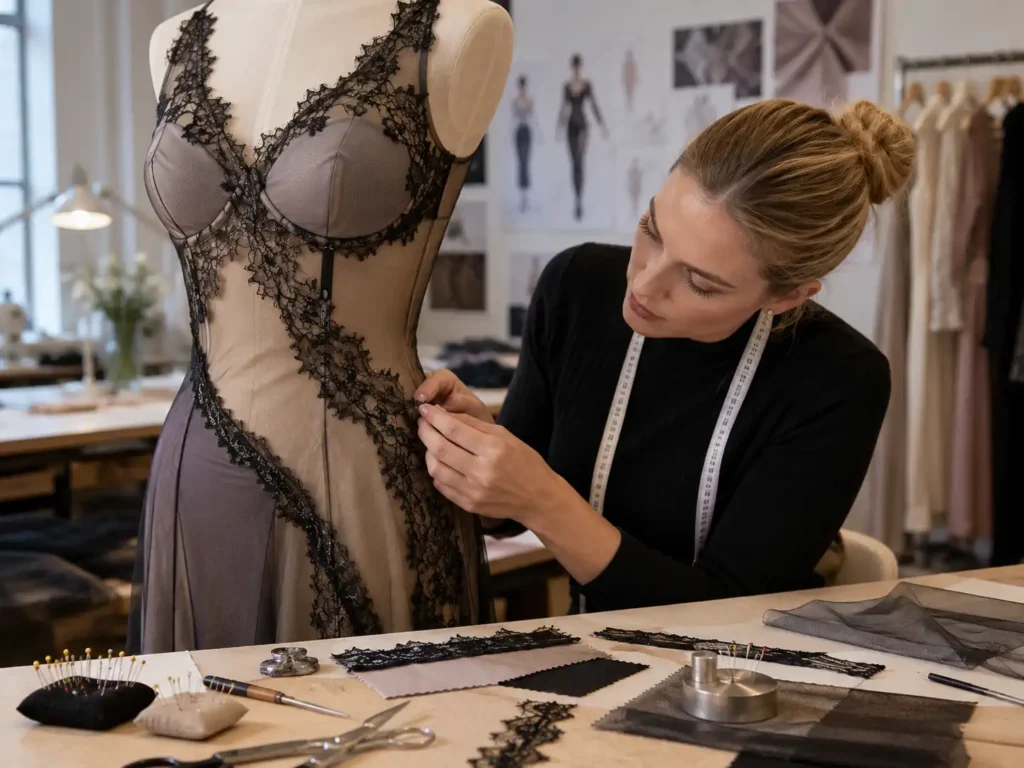
Tell Us About Your Dress Project

Share your product details, estimated quantity and development requirements. Our team will review your project and provide practical OEM/ODM production feedback.

Premium Women’s Apparel Production for Fashion Brands

From dress sample development to bulk production, JF Apparel supports fashion brands with confidential OEM/ODM manufacturing, reliable quality control and scalable production support.

START YOUR DRESS PROJECT

Ready to Develop Your Next Dress Collection?

Share your design concept, product requirements or sourcing plans with our team. We’ll review your project and provide practical feedback on development, materials, MOQ and production.

7-10 Days

Sample Development

200 PCS

Starting MOQ

Fast Response

Professional Follow-Up