Stretch Jumpsuit Manufacturer for Fashion Brands
Fashion-led stretch jumpsuits engineered for reliable fit, controlled recovery, scalable production and retail-ready brand delivery.
Jinfeng Apparel develops custom stretch jumpsuits from reference images, original samples, sketches, line sheets or complete tech packs. Pattern work, fabric selection and sample review focus on full-body balance rather than isolated bust, waist and hip measurements.
- Fit review covers at least 10 critical control points, including shoulder-to-crotch length, front rise, back rise, waistline, hip balance, inseam and thigh ease.
- Fabric approval considers stretch direction, recovery, opacity, shrinkage, surface stability and seam behavior before bulk material is released.
- Seasonal programs can include 10-30 coordinated styles and total order volumes from 20,000 to 80,000 pieces, subject to material readiness and production allocation.
- Standard MOQ starts from 200 pieces per style/color, with separate requirements for custom-dyed, printed, certified or specially developed materials.
Built for Stretch Jumpsuit Programs at Brand Scale
Since 2008
6 Owned Factories
10+ Production Partners
2 Sample Rooms
7+ Pattern Makers
15+ QC Inspectors
Manufacturing Support for Established Fashion Brand Teams
Fashion Brand Groups
Ecommerce Fashion Labels
Sourcing and Development Teams
Where Stretch Jumpsuit Production Commonly Loses Control
Weak Recovery
Incorrect Torso Length
Crotch Imbalance
Opacity Loss
Seam Breakdown
Bulk Size Drift
Stretch Jumpsuit Styles Developed for Fashion Collections

Bodycon Jumpsuits

Flare-Leg Jumpsuits

Wide-Leg Jumpsuits

Long-Sleeve Jumpsuits

Cut-Out Jumpsuits

Backless and Halter

Party and Club Styles

Stretch-Woven Utility
Fabric Options for Fashion Stretch Jumpsuits
Fabric choice sets the limits for fit, support, drape and opacity. Composition alone is not enough; stretch direction, recovery, weight, surface and production stability must be reviewed against the intended silhouette.
| Fabric Direction | Reference GSM | Stretch / Recovery | Best-Fit Silhouettes | Main Bulk Controls |
|---|---|---|---|---|
| Polyester-Spandex Jersey | 160-260 | Medium-high stretch; medium-high recovery | Bodycon, long-sleeve, flare, casual fashion | Opacity by color, shrinkage, side-seam twist, surface pilling |
| Nylon-Spandex Jersey | 180-300 | High stretch; high recovery | Sculpted, fitted, active-fashion crossover | Heat sensitivity, shine variation, seam impression, color migration |
| Rib Knit | 180-320 | High crosswise stretch; recovery depends on structure | Fitted casual, flare, cut-out, matching programs | Rib alignment, width growth, light-color transparency, neckline stability |
| Ponte / Roma | 220-360 | Moderate stretch; firm recovery and support | Structured bodycon, tailored, wide-leg, office-to-evening | Thickness at seams, pressing, shrinkage, needle marks, weight balance |
| Stretch Satin | 120-220 | Low-medium stretch; recovery varies by construction | Party, evening, corset-inspired, wide-leg | Snagging, shine direction, seam puckering, color difference, pressing |
| Power Mesh | 80-180 | High stretch; firm recovery when specified correctly | Panels, lining, shaping zones, cut-outs | Transparency, edge stability, seam comfort, color matching |
| Stretch Mesh | 70-160 | Medium-high stretch; softer recovery | Layered, ruched, printed, bodycon and party styles | Transparency, print distortion, holes, seam slippage, lining coverage |
| Stretch Woven | 140-260 | Low-medium stretch; controlled recovery | Utility, tailored, wide-leg, travel and casual fashion | Directional cutting, shrinkage, pocket stress, zipper balance, pressing |
How Stretch, Recovery and Opacity Are Evaluated
Stretch performance is assessed as a garment-development issue, not a marketing label. Material behavior is compared with pattern values, seam construction, color, lining and intended wear before the sample becomes the production standard.
Stretch Direction Changes Pattern Behavior
Two-way and four-way stretch fabrics do not support the same pattern strategy. Crosswise stretch may help bust, waist and hip fit while providing limited vertical forgiveness through the torso. Four-way stretch can improve movement, yet excessive vertical growth may lower the waistline, lengthen the rise or create folds after wear. Jinfeng Apparel reviews the dominant stretch direction, usable stretch range and recovery before deciding negative ease, torso allowance and seam direction. A fabric with a high spandex percentage can still behave poorly when knitting density, yarn type, finishing or heat history is inconsistent.
- Crosswise stretch is compared with bust, waist, hip and thigh reduction values.
- Lengthwise stretch is reviewed against shoulder-to-crotch balance and garment growth.
- Bias or directional surface effects are checked before marker planning and cutting.
- Approved material references are recorded for bulk matching and repeat-order review.
Recovery Determines Long-Term Silhouette
A material may stretch easily but recover slowly. Weak recovery can produce loose knees, seat growth, neckline relaxation, waist rippling and a garment that photographs well only during the first fitting. Sample review should include repeated extension and relaxation around the fullest body points, followed by a resting period before measurements are compared. High-compression recovery is not always desirable either; excessive resistance can create uncomfortable shoulder pressure, crotch pulling or restricted breathing. Recovery targets are set according to the intended silhouette, not simply maximized.
- Bodycon styles need controlled return without excessive compression.
- Flare and wide-leg styles need stable upper-body recovery with clean lower-leg drape.
- Cut-out edges need recovery that keeps openings secure without cutting into the body.
- Repeated-wear areas such as knees, seat and elbows receive additional visual review.
Opacity Must Be Checked Under Stretch
Opacity is evaluated at the actual stretch level expected in wear. A relaxed swatch on a table can hide transparency that appears across the hip, seat, bust or thigh. Light colors generally need closer review, while printed mesh may distort as the pattern opens. Options include increasing GSM, changing the base fabric, adding self-fabric reinforcement, using power mesh or adding a partial lining. Lining is not automatically the best answer because it can reduce stretch, increase heat and change the outer silhouette. The final solution must preserve both appearance and movement.
Shrinkage and Surface Stability Affect Bulk Fit
Stretch fabrics can change in width, length and hand feel after relaxation, heat or washing. Material conditioning and test review help identify width growth, length shrinkage, rib distortion, twisting, pilling or shine change before cutting.
When a style uses two materials, such as jersey with power mesh, both materials must behave compatibly through sewing and care. Bulk fabric is checked against the approved reference, and any meaningful difference requires review before production continues.
Jumpsuit Fit Engineering from Shoulder to Crotch
Fit is built through connected measurements. Torso length, waistline, front and back rise, hip shape and inseam must move as one system, especially when elastic recovery changes how the garment sits on the body.
Shoulder-to-Crotch Balance Comes First
Shoulder-to-crotch length is the central vertical measurement for a one-piece garment. A shortage pulls the neckline, shoulder and crotch upward; excess length creates pooling at the waist, lower back or front rise. The value cannot be corrected reliably by adding length at one random seam. Pattern review considers where vertical length is needed: upper torso, waist position, front rise, back rise or seat depth. Stretch direction matters because lengthwise stretch may add temporary comfort but can also cause the garment to drop after wear. Fit comments should describe the visible symptom and the wearer’s movement experience, allowing the pattern maker to place the correction accurately.
Front and Back Rise Need Different Control
Front rise and back rise serve different body shapes and movement requirements. A flat front does not guarantee enough back-seat depth, while adding equal length to both sides can create excess fabric at the front.
Jinfeng Apparel reviews crotch curve shape, seat angle, waist placement, hip ease and thigh entry together. The wearer is asked to sit, step, bend and raise the knee. Drag lines toward the crotch, pressure at the shoulder, back-waist gaping or front folds are recorded and translated into pattern changes rather than hidden through stronger stretch.
Waistline Controls the Visual Proportion
High, natural and low waist positions create different leg proportions and torso requirements. The waist seam, waistband, cut-out edge or internal shaping line must sit consistently across sizes.
Moving the waistline without revisiting the rise and torso can cause a visually long body, a low crotch or compressed upper section. For bodycon and party silhouettes, waist shaping may use contour seams, ruching, power mesh or elastic support. Each method affects comfort, recovery and bulk measurement differently, so the approved construction must be locked before production.
Hip, Thigh and Inseam Must Support Movement
A fitted hip should follow the intended silhouette without forcing the side seam forward or restricting the thigh. Negative ease is set according to fabric recovery and brand fit, while inseam and thigh values are checked during walking, sitting and stair movement. Flare-leg products also require accurate knee placement; a knee line positioned too high or low changes the entire silhouette. Wide-leg styles need enough rise and hip control to prevent the garment from looking dropped. Fit approval records both measurements and on-body observations because numbers alone cannot explain all stretch-garment behavior.
Size Grading and Movement Validation for Bulk Production
Grading is reviewed by body region rather than enlarged by one uniform increment. Stretch recovery, target fit and silhouette influence how bust, waist, hip, torso length, rise and inseam progress across the size range.
| Control Point | Fit Risk | Grading Focus | Movement Check | Bulk QC Focus |
|---|---|---|---|---|
| Bust / Upper Bust | Compression, gaping or neckline distortion | Circumference plus neckline and armhole relationship | Reach forward, lift arms, breathe normally | Bust, neckline width/depth, armhole shape |
| Waistline | Waist seam rises, drops or ripples | Waist position and circumference by silhouette | Sit, bend and twist | Waist level, elastic recovery, seam balance |
| Hip / Seat | Over-tightness, side-seam shift or seat growth | Hip increment, seat depth and negative ease | Walk, sit and climb steps | Hip, back rise, side-seam position |
| Torso Length | Shoulder and crotch pulling or waist pooling | Upper torso, waist position and total body length | Raise knee, reach, bend | Shoulder-to-crotch, front/back body length |
| Front / Back Rise | Cutting-in, front folds or low crotch | Different front and back curve progression | Sit and deep bend | Rise, crotch curve, waist alignment |
| Thigh / Knee | Restricted step or flare starting at wrong point | Thigh ease and knee placement | Long step, squat and stair motion | Thigh, knee line, seam twist |
| Inseam / Total Length | Incorrect break, pooling or short leg | Inseam progression and heel/shoe target | Walk and sit | Inseam, outseam, hem width and balance |
| Sleeve / Armhole | Shoulder drag or restricted reach | Sleeve pitch, bicep and armhole depth | Lift, reach and cross arms | Sleeve length, bicep, armhole and shoulder seam |
Custom Design Details for Distinctive Jumpsuit Collections

Necklines and Backs

Cut-Out Placement

Contour Seam Lines
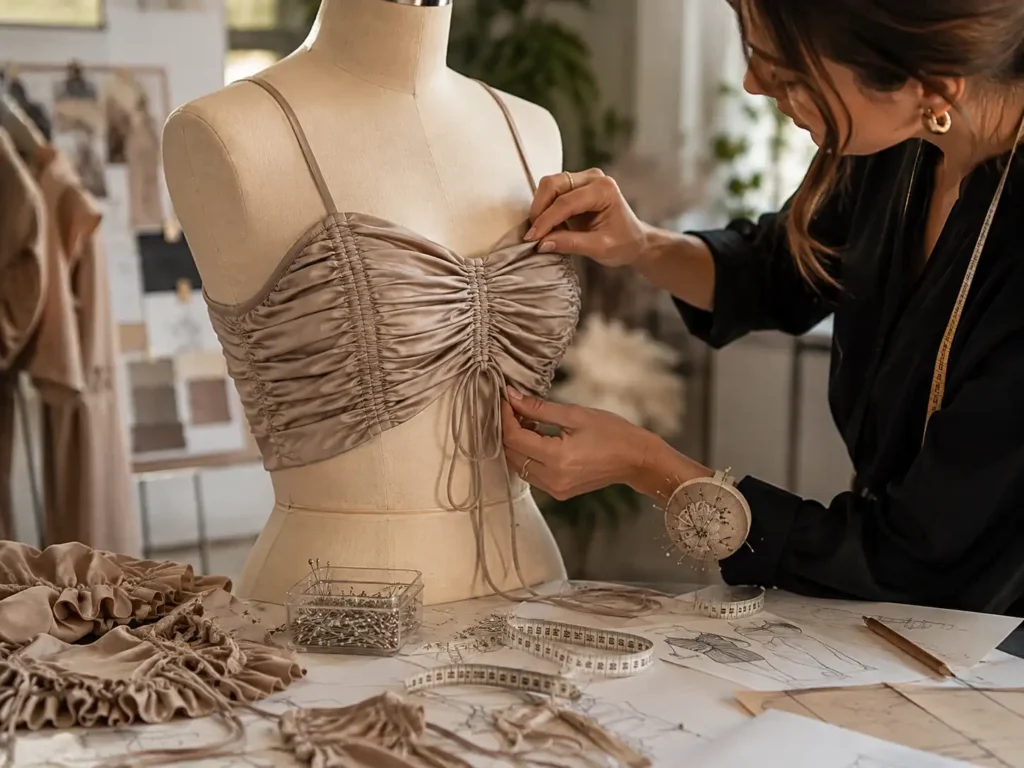
Ruching and Gathering

Cups and Boning

Closures and Openings
From Tech Pack to Approved Stretch Jumpsuit Sample
Sampling converts the visual concept into a production standard. Pattern, fabric, trims, fit comments and construction changes remain connected through documented versions until the PP sample is approved.
Project Review and Material Direction
Development begins with the tech pack, reference image, original sample, line sheet or sketch. The team reviews silhouette, neckline, closure, lining, stitch requirements, target size range, color plan, quantity and launch date.
Material direction is selected according to support, drape, recovery, opacity, cost and supply availability. Early review identifies areas that cannot be judged from a front image alone, such as back rise, shoulder-to-crotch length, zipper opening or internal support. A more complete brief produces a more accurate sample plan and quotation.
Pattern Development and First Sample
The first pattern translates measurements and design lines into a wearable one-piece structure. Fabric behavior is considered before negative ease and vertical allowance are set. The first sample verifies overall proportion, not only styling. Common review points include neckline security, armhole shape, waist placement, hip fit, front and back rise, inseam, knee line, total length and ease of dressing. A typical first-sample planning range is 10-20 working days after key fabric and trims are available. Complex cut-out, corset, mesh or custom-trim styles may require 15-25 working days. Ranges are confirmed after material and construction review.
Fit Review and Revision
Fit comments work best when measurements, front-side-back photos and movement feedback are supplied together. Comments are classified by pattern, fabric, trim, construction or workmanship cause. A low crotch, for example, may come from excess torso length, back-rise shape, vertical fabric growth or incorrect waist placement. Revised samples commonly require 7-15 working days after comments and material decisions are confirmed. Major fabric substitutions or structural redesigns may restart part of the development process. Revision records update the pattern, measurement chart, BOM and sewing instruction rather than living only in email.
PP Approval and Golden Sample
The PP sample locks the production standard for fabric, color, measurements, construction, trims, labels and packing. Any change after PP approval can affect cost, timing, material quantities and QC standards, so changes are documented and re-approved before production. The golden sample and final production files are transferred to the assigned production unit. Bulk planning commonly falls within 30-50 days after PP approval and material readiness, depending on order volume, style complexity, color count, size ratio and production calendar. Firm dates are issued through the confirmed project timeline.
Sample Approval Standards Before Bulk Production
Fabric Approval
Fit Approval
Construction Approval
Appearance Approval
Branding Approval
Packing Approval
Controlled Knit Production for Consistent Bulk Orders
Stretch production is managed around material relaxation, directional cutting, seam elasticity, measurement stability and approved pattern transfer. The goal is consistent wear and appearance across colors, sizes and production batches.
Material Release Before Cutting
Bulk material is compared with the approved reference before cutting. Review may include shade, hand feel, width, weight direction, visible defects, stretch direction, recovery and shrinkage risk. Fabric is allowed to relax according to material behavior so pieces are not cut while under avoidable tension. Mixed-lot or shade concerns are identified early and separated where needed. Cutting direction is controlled because rib lines, sheen, print or directional stretch can change appearance and fit. Marker planning also considers size ratio and material utilization without compromising grain or stretch direction.
First-Piece and Sewing Standards
The first production pieces confirm that the approved sample standard has transferred into the assigned line. Seam construction, stitch elasticity, seam allowance, panel matching, zipper application, ruching, elastic tension, label placement and measurements are checked before volume sewing continues. Stretch seams need enough extensibility for wear without excessive waviness or tunneling. Necklines, cut-outs and armholes are watched closely because edge handling can change circumference and recovery. Approved corrections are added to production instructions and communicated before output increases.
Inline Measurement and Shape Control
Inline inspection prevents small deviations from becoming finished bulk problems. Measurements focus on the product’s sensitive points: bust, waist, hip, torso length, front rise, back rise, thigh, inseam, neckline and total length. Side-seam twist, waist-level shift, uneven leg length, flare imbalance, neckline growth and seat looseness are reviewed visually. Stretch garments may require a consistent resting condition before measurement so results are comparable. When a deviation appears, the team checks whether the cause comes from cutting, sewing tension, fabric behavior or handling.
Finishing, Resting and Final Shape
Finishing must improve presentation without changing stretch, shine or measurements. Heat and pressure are controlled according to fabric sensitivity, especially for nylon blends, stretch satin, rib, mesh and surface-finished materials. Finished garments are allowed to settle before final measurements where needed. Threads, seam appearance, zipper function, symmetry, surface marks and labels are checked before folding. Packaging method is selected to reduce hard creases, snagging or compression damage. Production records support repeat-order review when the same fit, material and construction are used again.
Quality Control for Stretch Jumpsuit Production

Fabric Inspection

Cutting Check

First-Piece Review

Inline Inspection

Final Garment Review

Packing Inspection
Private Label and Retail-Ready Delivery Support

Brand Labels
Woven labels, printed labels, size labels and care labels are developed or applied according to approved artwork, material, size, color and placement.Composition, care and country-of-origin content are confirmed with the brand’s destination-market requirements.
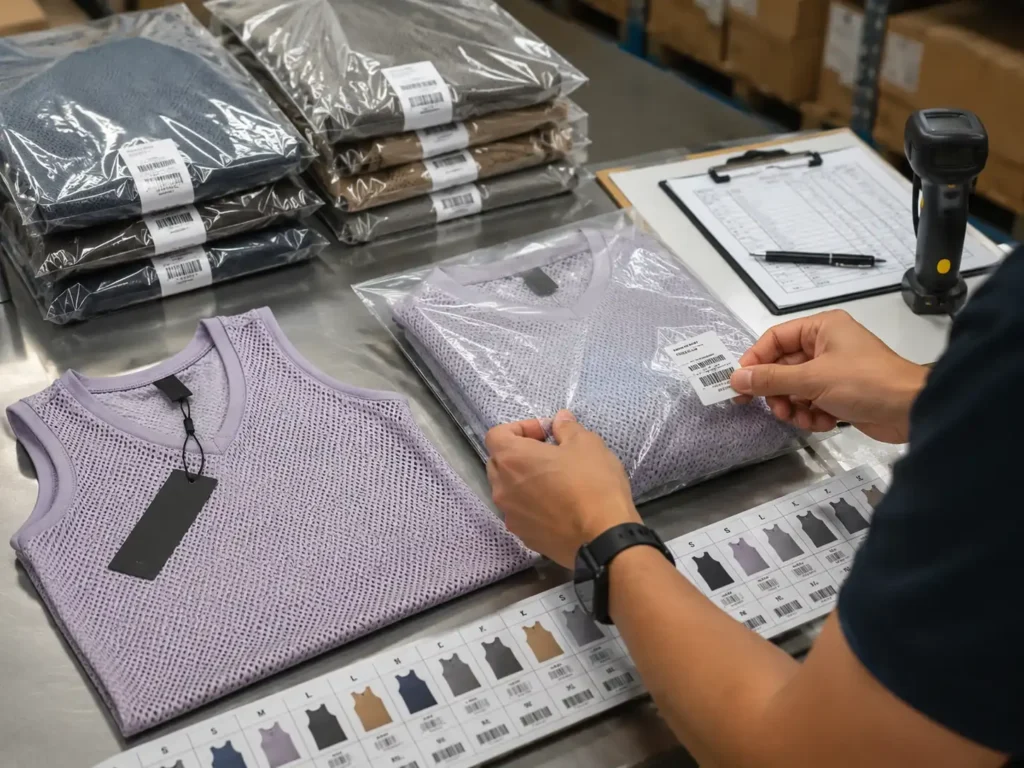
SKU and Ecommerce Packing
Hangtags, hang strings, barcode stickers, SKU labels, polybags, stickers and inserts can be organized by style, color and size.
Barcode scan checks and packing-list consistency help reduce receiving and inventory errors.
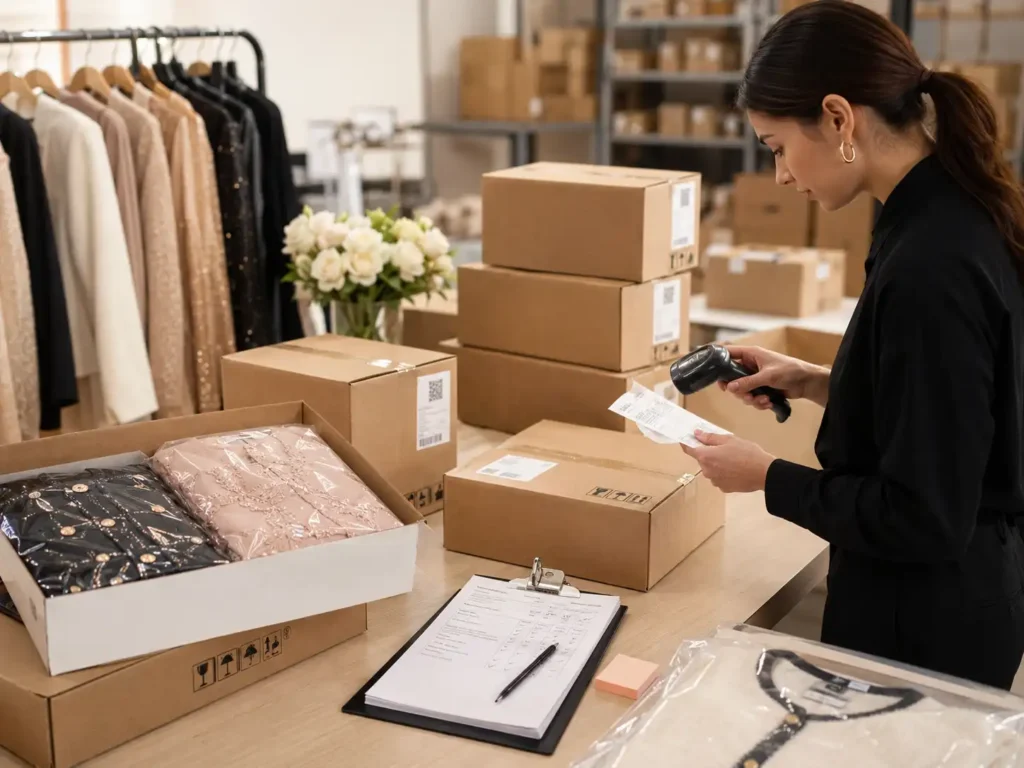
Cartons and Warehouse Rules
MOQ, Quotation Inputs and Project Planning
MOQ and Material Conditions
- Provide quantity by style, color and size rather than only one total-order number.
- Identify core colors and priority sizes for the first production plan.
- Share any custom material, testing, trim or packing requirement before quotation.
- Confirm the target warehouse or shipment window so production and logistics can be planned together.
Information Needed for Quotation
A quotation is built from fabric, trims, pattern work, sampling, construction, cutting, sewing time, finishing, QC, packing, wastage, testing, logistics scope and reasonable production margin. The most useful submission includes a tech pack or clear reference, target quantity, color plan, size chart, fabric preference, trim details, label artwork, packing instructions and launch date. When material or construction is not final, Jinfeng Apparel can provide development direction first, followed by a revised quotation after key decisions are approved.
- Tech pack, original sample, sketch, line sheet or complete reference photos
- Quantity per style/color and proposed size ratio
- Target fabric, hand feel, GSM direction, stretch and opacity expectations
- Labels, hangtags, barcode, polybag and carton requirements
- Sample deadline, photo date, PP approval target and delivery window
Multi-Style Collections, Reorders and Delivery Planning

Seasonal Collection Development
Programs with 10-30 styles can be grouped by fabric family, fit block, construction complexity, trim set and launch priority. Hero styles and photo samples move first, while related styles follow a controlled review sequence.
Grouping reduces version confusion and helps the brand compare fit across the collection.

Repeat and Replenishment
Approved pattern, measurement, material, trim, sewing and packing records help accelerate repeat review.
Reorders still require confirmation of fabric lot, color, availability, schedule and any requested change. A new material or altered fit is treated as a new approval point rather than assumed identical.

Split Delivery Strategy
Large launch programs can be divided by hero styles, priority colors, core sizes or warehouse needs. Express or air freight may support urgent samples or initial launch quantities, while sea freight supports larger planned volumes. Typical transport planning ranges are about 3-7 days by express, 5-12 days by air and 20-40 days by sea, subject to destination, booking, customs and season.
Anonymized Stretch-Fit Womenswear Manufacturing Cases

42,600-Piece Bodycon Program

28,800-Piece Party Collection

71,400-Piece Multi-Drop Program
Brand Protection, Testing and Export Coordination
NDA and Design Protection
Testing by Project
Export and Forwarders
Stretch Jumpsuit Manufacturing Frequently Asked Questions

Start Your Stretch Jumpsuit Project
Send Kelly the information needed to review product feasibility, material direction, sample planning, MOQ, quotation and delivery timing. A complete brief helps the development team identify fit and production risks before sampling begins, especially for bodycon, cut-out, corset-inspired, mesh-panel or multi-material jumpsuits. Tech packs are welcome, but a structured reference package can also be assessed. Include front and back images, target quantity, color plan, size range, preferred fabric, label and packing needs, launch date and destination. Confidential files can be handled under NDA-based cooperation.
- Company name, market and primary sales channel
- Tech pack, line sheet, sketch, original-sample notes or reference images
- Quantity per style/color and proposed size ratio
- Fabric composition, GSM, stretch, recovery and opacity direction
- Design details, trims, labels, barcode and packing requirements
- Sample deadline, campaign date, PP approval target and delivery window