
Bodycon Jumpsuit Manufacturer
Fashion-focused development and production for fitted jumpsuits, rompers, flared silhouettes, partywear, clubwear, and premium ecommerce collections. Jinfeng Apparel turns reference images, original samples, and tech packs into production-ready bodycon jumpsuits with controlled torso length, crotch depth, waist placement, stretch recovery, seam strength, and bulk measurement consistency.
- MOQ starts from 200 pcs per style/color
- 2 sample rooms for structured development and revision work
- 7+ senior pattern makers supporting fit correction and size grading
- 20+ sample machinists handling fitted and detail-intensive womenswear
- 15+ QC inspectors supporting fabric, inline, measurement, and packing checks
Development Resources for Fitted Jumpsuit Programs
Since 2008
Six Owned Factories
Two Sample Rooms
Seven Pattern Makers
Twenty Sample Machinists
Fifteen QC Inspectors
Built for Established Fashion and Ecommerce Programs
Global Fashion Brands
Product Development Teams
Premium Ecommerce Programs
Common Bodycon Jumpsuit Development Failures
Torso Length Pressure
Incorrect Crotch Depth
Uneven Negative Ease
Transparency Under Stretch
Weak Stretch Recovery
Twisted Seams and Zippers
Bodycon Jumpsuit Styles We Develop
The product range centers on fashion bodycon silhouettes rather than generic one-piece sportswear. Each style is reviewed around selling occasion, visual proportion, fabric behavior, fit pressure, opening method, movement, and bulk repeatability. Development can begin from a tech pack, original sample, sketch, or well-defined visual reference.

Long-Sleeve Jumpsuits

Sleeveless Jumpsuits

Backless and Cut-Out

Zip-Front Jumpsuits

Bodycon Rompers

Flared-Leg Jumpsuits
Fashion Bodycon Versus Performance One-Pieces
Fashion-Led Bodycon
Athleisure-Inspired Fashion
Athleisure-inspired fashion jumpsuits may use nylon-blend interlock, compact jersey, rib structures, front zips, square necks, racer backs, or sculpted panel lines. Comfort, recovery, and movement remain important, but the intended use is lifestyle or fashion rather than technical training. Projects requiring engineered compression zones, seamless circular knitting, bonded performance construction, or specialized sports testing need separate capability evaluation before development. Clear product positioning at the beginning prevents the wrong fabric, pattern, or construction route from being selected.
Fabric Selection Matrix
Fabric choice sets the limit for fit, opacity, support, comfort, surface appearance, and recovery. A material can feel soft in hand yet perform poorly after extension, sewing, pressing, or repeated wear. Jinfeng Apparel reviews composition, weight, stretch direction, recovery, thickness, color, surface, and construction before the final pattern route is approved.
| Fabric Direction | Typical Weight Guide | Best Applications | Main Development Risks | Control Focus |
|---|---|---|---|---|
| Stretch Jersey | 180-280 GSM | Soft bodycon, long sleeve, sleeveless, ruched styles | Curling, show-through, weak recovery, seam growth | Stretch direction, recovery, selective double layer, seam trial |
| Ponte / Roma | 260-380 GSM | Structured bodycon, zip-front, clean contour shapes | Excess stiffness, bulky seams, limited vertical stretch | Weight balance, panel shape, zipper support, pressing |
| Rib Knit | 220-360 GSM | Casual contour, tank, long sleeve, lifestyle jumpsuits | Growth, uneven rib recovery, width variation | Relaxation, rib alignment, wash review, measurement rest time |
| Stretch Mesh | 80-180 GSM | Party, cut-out, layered, sleeve and panel details | Transparency, edge distortion, skipped stitches | Lining plan, binding, reinforcement, needle and seam trial |
| Stretch Satin | 180-280 GSM | Occasion, evening, sleek fashion silhouettes | Puckering, snagging, zipper waves, pressure marks | Cutting direction, fine handling, stabilization, controlled pressing |
| Stretch Velvet | 220-360 GSM | Winter partywear, evening, premium statement styles | Nap mismatch, seam marks, visual shade change | Direction control, low-pressure handling, panel matching |
Engineering Torso, Crotch, and Body Balance
A successful bodycon jumpsuit must hold a controlled silhouette without forcing the wearer into a rigid posture. Pattern engineering connects shoulder position, bust shaping, waist level, hip curve, rise, inseam, and fabric stretch. Fit decisions are validated on the full garment because correcting one area can shift tension into another.
Torso Length and Rise
Torso length is reviewed from shoulder reference points through the body to the crotch, with separate attention to front and back balance. Bust projection, back shape, waist placement, and hip depth influence the length needed on each side. Adding equal length around the whole garment rarely solves a local problem. A short front torso can pull the neckline and create diagonal lines from bust to crotch. A short back torso can drag the waist upward and flatten the seat. Pattern correction may involve shoulder position, front length, back length, rise shape, crotch extension, or waist placement.
Fit review includes sitting, bending, walking, raising the arms, and turning the torso. The garment should recover without leaving deep horizontal folds, severe crotch pressure, or neckline movement. Vertical stretch is considered, but fabric elasticity should not be used to hide an incorrect pattern. For high-risk silhouettes, a toile or test garment may be used before the final fashion fabric is cut, especially when the selected material is expensive, delicate, or difficult to replace.
Bust, Waist, and Hip Ease
Negative ease is distributed by body zone and fabric behavior. A compact ponte may need less reduction than a soft, high-stretch jersey. A lined bust may behave differently from an unlined waist, even within one garment. As an early development reference, fitted zones may use roughly 4%-12% negative ease depending on stretch, recovery, thickness, support, lining, and intended compression; final values come from sample fitting rather than formula alone.
Bust shaping can use darts, princess seams, contour seams, under-bust seams, gathering, cups, or stretch distribution. Waist suppression must remain compatible with breathing and sitting.
Hip shaping must control side seams and seat coverage without creating drag lines. Measurements are reviewed alongside visual fit because two garments with the same flat hip measurement may perform differently due to pattern shape, seam placement, fabric recovery, and torso balance.
Waistline and Leg Proportion
Natural-waist, high-waist, and low-waist visual positions change the entire body proportion. The pattern waist must coordinate with rise depth, hip level, torso length, zipper position, and contour seam direction. A visually high waist can lengthen the leg line but may create pressure below the rib cage. A lower waist can suit Y2K-inspired designs but needs enough upper-hip control to prevent sliding or folding.
Leg shape begins at the hip, not at the knee. Straight, tapered, bootcut, and flared silhouettes require different thigh ease, knee placement, inseam shape, outseam balance, and hem circumference.
On flared designs, both legs are checked for matching grain and twist. Hem length is reviewed with the intended footwear and market preference. Petite, regular, or tall options require separate commercial planning rather than simple hem changes when torso and rise proportions also differ.
Movement and Wear Testing
Static fitting shows silhouette; movement testing reveals performance. A sample is reviewed while the wearer sits, walks, steps upward, bends, rotates, and raises both arms. Observations include neckline movement, shoulder pressure, armhole cutting, waist displacement, crotch tension, seat drag lines, knee bagging, leg twist, zipper distortion, and hem movement. Fit notes are recorded by area so revisions can be traced to the corresponding paper pattern and sample version.
After movement, the garment rests before recovery is assessed. Measurements and appearance are compared with the pre-wear condition. Areas showing permanent growth may require a fabric change, reduced stress, additional support, revised seam construction, or different ease. A visually tighter pattern is not always the correct solution; excessive reduction can worsen transparency, seam strain, and wearer discomfort.
Design Details Shaped for Secure Wear
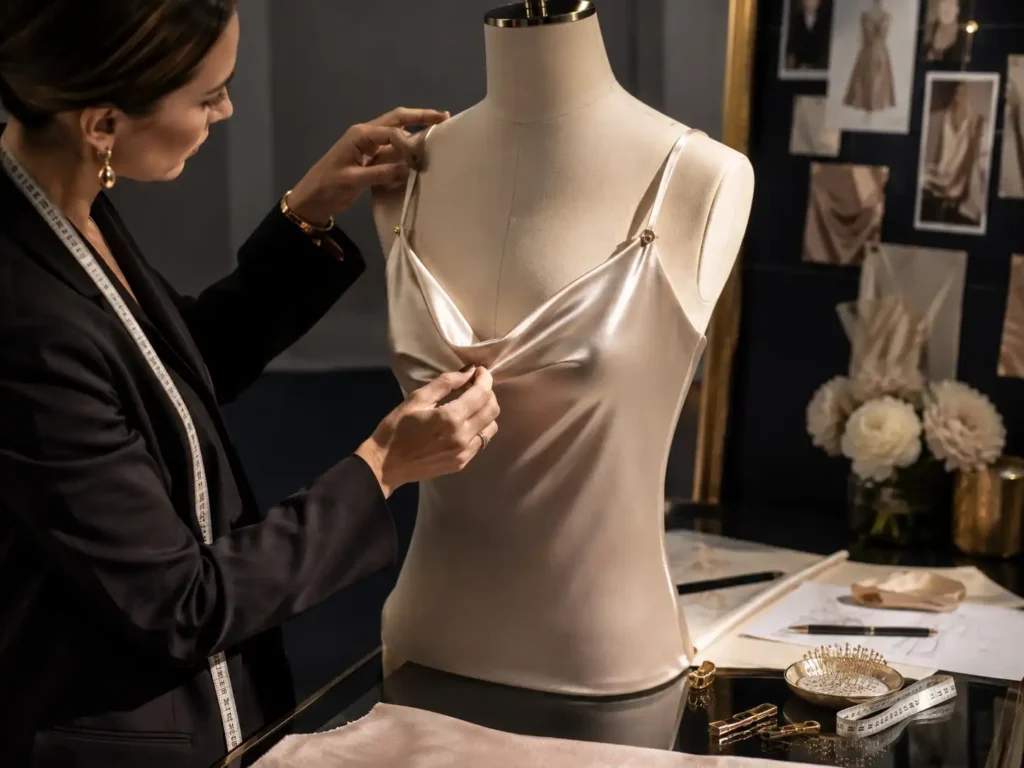
Necklines and Bust Shapes

Sleeves and Armholes

Backless Structures

Cut-Out Placement

Zippers and Openings

Ruching and Contour Seams
Workmanship Built for Stretch and Movement
Workmanship determines whether a fitted jumpsuit keeps its shape after dressing, sitting, movement, and repeated wear. Seam type, thread behavior, reinforcement, zipper handling, internal finishing, and pressing are selected around the exact fabric and stress map rather than applied as one standard recipe.
Stretch-Compatible Seams
Crotch intersections, zipper ends, underarms, shoulder-strap joins, cut-out corners, backless anchors, and narrow bridges carry concentrated stress. Reinforcement can include stitch direction changes, secure bartacks, internal tapes, clear elastic, stable facing, power mesh, extra seam allowance, or local backing. Reinforcement remains hidden and flexible so the garment does not develop hard points or visible shadows.
More reinforcement is not always better. Heavy backing can create stiffness, marks, or reduced stretch. The correct method depends on fabric weight, opacity, seam position, wearer movement, and final appearance. Sample fitting helps locate actual stress paths before the bulk method is fixed. High-risk points are then included in inline inspection instructions and final appearance review.
Reinforced Stress Points
Crotch intersections, zipper ends, underarms, shoulder-strap joins, cut-out corners, backless anchors, and narrow bridges carry concentrated stress. Reinforcement can include stitch direction changes, secure bartacks, internal tapes, clear elastic, stable facing, power mesh, extra seam allowance, or local backing. Reinforcement remains hidden and flexible so the garment does not develop hard points or visible shadows.
More reinforcement is not always better. Heavy backing can create stiffness, marks, or reduced stretch. The correct method depends on fabric weight, opacity, seam position, wearer movement, and final appearance. Sample fitting helps locate actual stress paths before the bulk method is fixed. High-risk points are then included in inline inspection instructions and final appearance review.
Smooth Zipper Installation
A zipper can change the stretch distribution of an entire bodycon garment. Tape stability, zipper length, curve, seam allowance, panel shape, and pressing must be coordinated. Front zippers face bust and waist tension, while back zippers follow the spine and seat curve. Side zippers need enough opening for dressing and must remain smooth against the body.
Local stabilization may be added along the zipper seam, but the surrounding panel still needs controlled flexibility. The zipper is checked closed, partially open, and during dressing. Final review covers waves, buckling, exposed tape, mismatched top edges, uneven seam lines, slider movement, stopper security, and skin protection on the inside.
Clean Internal Finishing
Bodycon garments sit close to the skin, making internal bulk and rough edges easy to feel. Lining seams, binding, facing, elastic joins, cups, boning channels, zipper guards, labels, and care-label placement are planned to reduce irritation and visible ridges. Interior construction should support the silhouette without appearing through the outer fabric.
Selective lining often performs better than lining every panel. Double layers can improve opacity and support at the bust, waist, or seat while leaving sleeves, legs, or mesh sections lighter. Internal layers are checked for stretch compatibility so one layer does not restrict or distort another. Final pressing uses controlled heat and pressure according to surface sensitivity and fabric direction.
Size Grading and Measurement Control
A strong base-size sample is only the beginning. Bodycon jumpsuits require coordinated grading across bust, waist, hip, torso, rise, inseam, armhole, neckline, and leg shape. Larger and smaller sizes need proportion control rather than equal enlargement or reduction at every point.
Brand-Specific Size Ranges
Development can follow letter sizing, numeric sizing, market-specific charts, or an existing brand block. Common programs cover XXS-XXL or selected ranges such as XS-XL, with additional petite, tall, or extended sizes evaluated according to volume and fit data. The base size should represent the core market and model fitting plan, not simply the middle label in the range.
Coordinated Grading
Bust, waist, hip, front rise, back rise, torso length, thigh, knee, inseam, sleeve, and armhole do not grow at identical rates. Back rise may need more development than front rise across larger sizes. Bust projection and upper-bust width may change differently from waist. Flare knee position and hem width need visual grading so the silhouette remains recognizable across the range.
Measurement Tolerances
Critical points are identified before bulk production. A common working reference may use around +/-1.0 cm at selected fitted circumference points and around +/-1.0-1.5 cm for selected lengths, while fabric behavior, seam construction, garment size, and the brand’s quality manual remain the final authority. Stretch garments are rested before measurement to reduce false readings caused by handling.
Size-Set Validation
A size set can be prepared when the range, order scale, or fit risk requires broader validation. Selected sizes are checked for neckline stability, bust coverage, waist placement, torso comfort, rise, seat shape, inseam, leg twist, and overall proportion. Findings are recorded against the grading rules before production patterns are released. Plus-size or tall programs receive separate proportion review rather than simple scaling.
Information Needed Before Sample Development
Reference or Sample
Tech Pack
Fabric Direction
Quantity Plan
Size and Color Plan
Label and Launch Needs
From First Sample to Production Approval
Sample development converts design direction into a controlled production standard. Each round should answer defined questions about fabric, fit, construction, appearance, and commercial feasibility. Revision notes remain connected to the pattern and sample version so approved changes are not lost before bulk production.
Project and Risk Review
The opening review covers style structure, fabric direction, fit sensitivity, closure access, lining, trims, size range, quantity, labels, packing, and timing. High-risk elements are identified before pattern work. A short initial review can often be completed within 1-2 working days once the main files are available, while material sourcing or complex clarification may take longer.
Fabric Swatch Confirmation
Available swatches are compared for weight, stretch, recovery, opacity, surface, color, and intended silhouette. When sourcing is needed, a 3-10 working day planning window may be used depending on material availability, color, supplier response, and shipment of physical swatches. Final material approval should occur before a fitted pattern is locked.
Project and Risk Review
The opening review covers style structure, fabric direction, fit sensitivity, closure access, lining, trims, size range, quantity, labels, packing, and timing. High-risk elements are identified before pattern work. A short initial review can often be completed within 1-2 working days once the main files are available, while material sourcing or complex clarification may take longer.
Fabric Swatch Confirmation
Available swatches are compared for weight, stretch, recovery, opacity, surface, color, and intended silhouette. When sourcing is needed, a 3-10 working day planning window may be used depending on material availability, color, supplier response, and shipment of physical swatches. Final material approval should occur before a fitted pattern is locked.
Fit Review
Feedback should separate measurement changes, pattern changes, construction changes, fabric changes, trim changes, and visual comments. Photos can identify proportion and appearance, while physical fitting remains more reliable for torso pressure, crotch comfort, movement, and recovery. Fit comments are recorded by sample version and body area.
Revised Sample
A revised sample commonly requires around 5-8 working days after complete comments and materials are available. Major fabric, structure, or size-chart changes may restart parts of the development work. The revised sample is compared with the previous version so improvements and new risks can be identified rather than judged in isolation.
PP Sample
The pre-production sample uses approved bulk fabric, color, trims, labels, workmanship, measurements, and packing direction whenever possible. A typical planning range is 5-7 working days after all production materials are ready. The PP sample confirms what the production team will follow; it should not be treated as a decorative final sample.
Golden Sample Control
The sealed golden sample, approved pattern, measurement chart, bill of materials, trim references, workmanship notes, and packing instructions form the production standard. Any approved deviation is recorded before cutting begins. Bulk inspection compares garments against the same controlled reference, helping prevent drift between sample approval and shipment.

Bulk Production for Stretch Fashion Jumpsuits
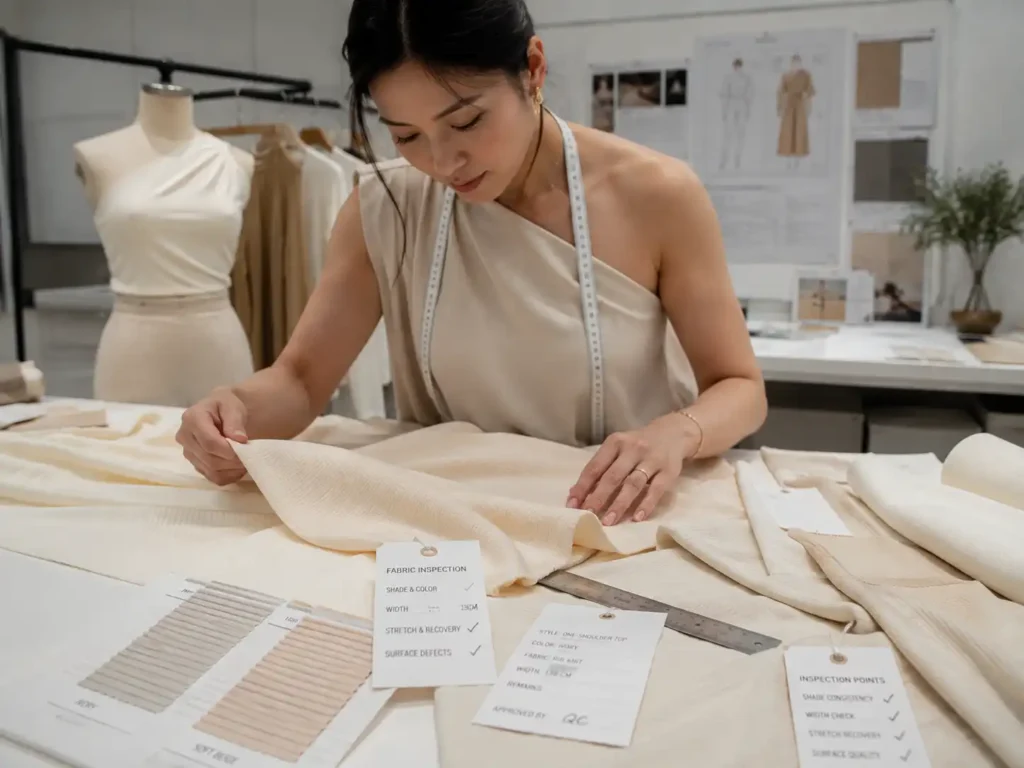
Fabric Inspection
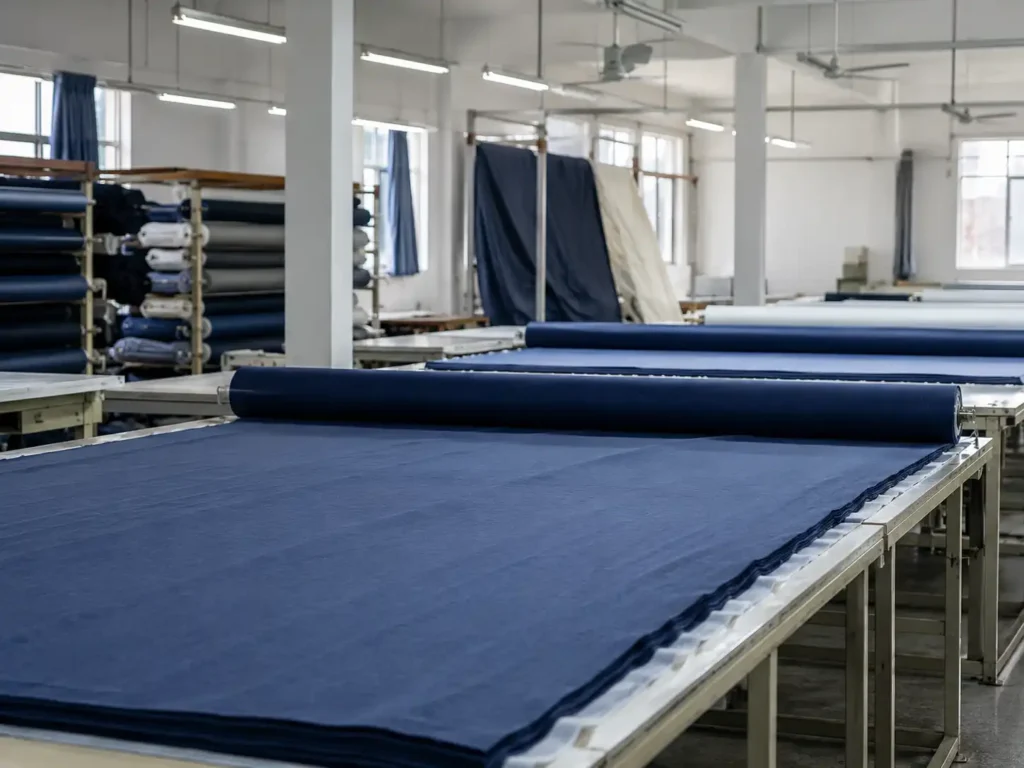
Fabric Relaxation
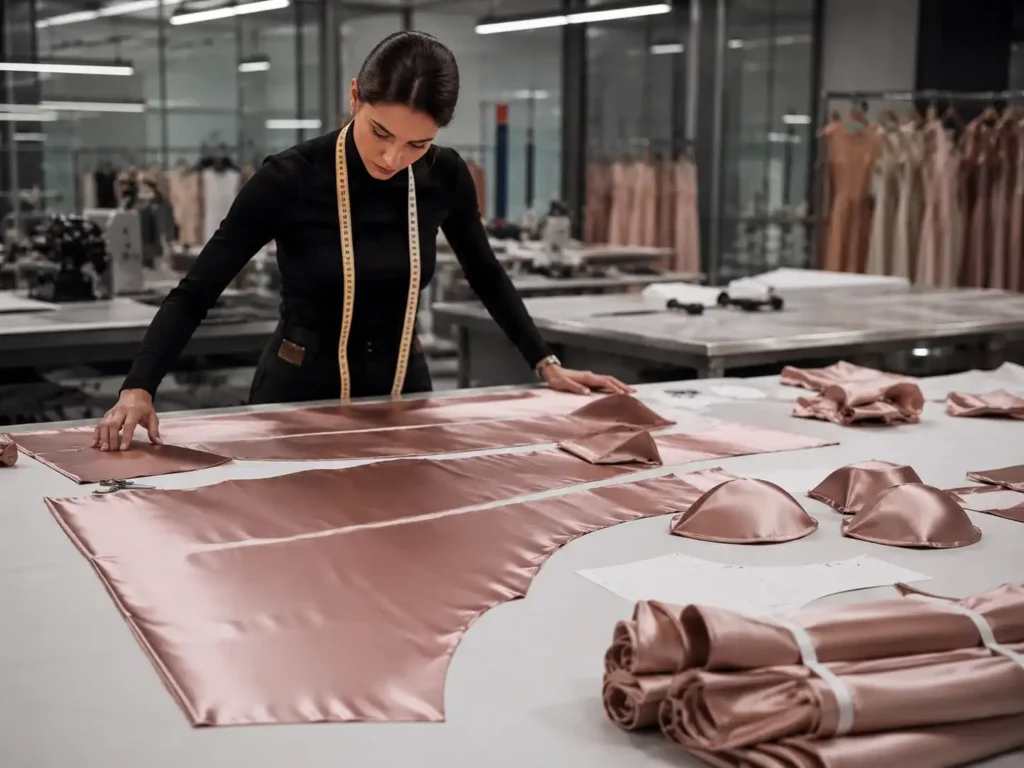
Marker and Cutting
Sewing and Assembly
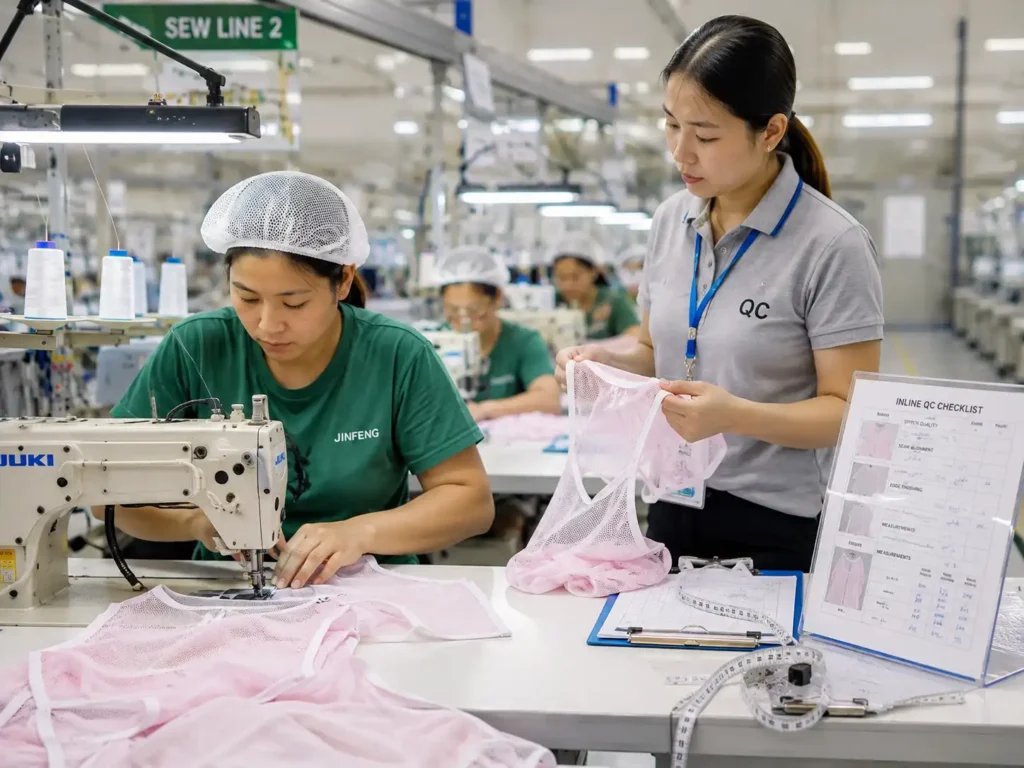
Sewing sequences are planned around stretch control, lining, openings, high-stress joins, and appearance. High-risk operations such as crotch assembly, zipper installation, neckline binding, cut-out finishing, ruching, and strap attachment receive early inline review. Construction methods approved during sampling are translated into clear production instructions.

Inline Inspection
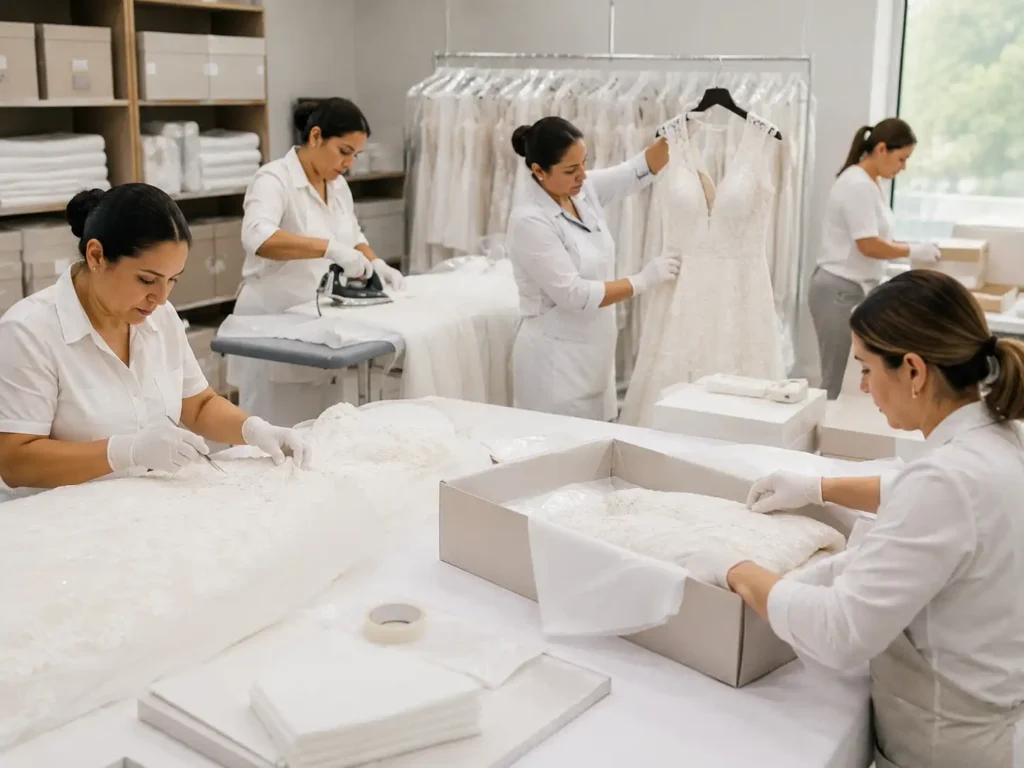
Finishing and Packing
Bodycon Jumpsuit Quality Control Points
Bust-Waist-Hip Control
Torso and Crotch Check
Shoulder-to-crotch length, front rise, back rise, waist position, and inseam connection are checked because small errors can create strong discomfort.
Flat measurements are supported by garment-shape review and selected fitting where required. Crotch seams are also inspected for stitch security, seam allowance, smoothness, and reinforcement at the intersection.
Stretch Recovery Review
Selected fabric or garment zones are extended under a consistent internal method and allowed to recover before comparison.
Excess growth, rippling, or shape loss may indicate unstable fabric, unsuitable seam construction, or excessive pattern stress. Recovery findings are especially important at knee, seat, elbow, waist, and neckline areas.
Opacity Under Tension
Light-colored and thin materials are reviewed under extension at bust, hip, seat, and thigh zones. Inspection considers normal indoor light, stronger backlight, lining coverage, seam shadows, and underwear visibility. Color and size can change the result, so a dark base-size sample alone is not enough for a program containing ivory, white, pale pink, or other light tones.
Seam Extension
Zipper Flatness
Zippers are checked closed, opened, and during dressing. Review covers wave, buckling, tape exposure, uneven top edges, slider movement, stopper security, seam smoothness, and skin protection.
The surrounding panel should remain visually clean without becoming overly rigid from stabilization.
Side-Seam Balance
Side seams and inseams are checked for rotation, mismatched length, grain distortion, and panel twisting.
Garments may be hung or laid flat after resting to observe natural balance. Flared legs receive extra comparison between left and right knee position, flare start, hem circumference, and twist.
Label and Packing Accuracy
Private Label and Retail-Ready Packing
Brand Labels
Hangtags
Barcode and SKU
Polybags and Inserts
Carton Packing
Warehouse Requirements
MOQ, Sample Timing, and Delivery Planning
Project planning becomes more reliable when fabric, style complexity, sample rounds, order quantity, color count, size ratio, private-label materials, and shipment method are reviewed together. The ranges below support early scheduling and are confirmed after materials and specifications are clear.
| Project Stage | Typical Planning Range | Main Conditions |
|---|---|---|
| Initial project review | 1-2 working days | Clear references, quantity, size range, and product direction |
| Fabric and trim direction | 3-10 working days | Stock availability, swatches, custom color, special trims |
| First sample | 7-12 working days | Starts after key materials and development details are ready |
| Revised sample | 5-8 working days | Complete fit comments and available materials |
| PP sample | 5-7 working days | Bulk fabric, trims, labels, and workmanship confirmed |
| Bulk production | 30-45 days | Style complexity, order volume, color and size breakdown, line schedule |
| Final QC and packing | 3-7 days | Inspection level, packing complexity, barcode and warehouse requirements |
| International transit | 7-35 days | Air, express, sea route, destination, customs, and seasonal capacity |
Capacity for Multi-Style Bodycon Collections
Large programs need development depth and production organization, not only headline capacity. Jinfeng Apparel combines six owned women’s fashion factories with more than ten long-term satellite production partners, allowing style allocation according to fabric, construction, quantity, and delivery sequence.
Development Allocation
Two sample rooms, more than seven senior pattern makers, and more than twenty sample machinists support staged development across multiple styles. Launch-critical and high-risk designs can be prioritized, while commercial core fits move through a separate approval sequence. Sample status, comments, pattern versions, and material decisions are tracked by style.
Production Allocation
More than eighteen sewing lines and over six flexible production lines can be assigned according to garment structure and order rhythm. Stretch jersey, mesh, lined satin, velvet, zip-front, and cut-out designs may require different line experience and handling. Allocation follows confirmed PP standards rather than treating every bodycon style as one production category.
Program Management
Multi-style orders are separated by style, color, size, fabric batch, trim version, label file, packing instruction, and shipment plan. A consolidated master schedule gives visibility across fabric readiness, sample approval, cutting, sewing, inline inspection, finishing, and dispatch. Changes are recorded with responsibility and timing impact.
Repeat-Order Support
Pattern files, measurement charts, sample revisions, fabric references, trim details, workmanship notes, golden samples, and packing records can be retained for repeat orders. New fabric batches, new colors, and changed size ratios are still reviewed because a repeat style can behave differently when materials or commercial conditions change.
Anonymous Multi-Style Bodycon Jumpsuit Program
A representative program for an established online womenswear brand illustrates how product development, fit control, bulk allocation, and split delivery can work across a large fitted-jumpsuit collection. Brand identity, artwork, pricing, and unreleased designs remain confidential.

Program Scope
The collection covered 20 bodycon jumpsuit and romper styles with a total order quantity of 52,800 pieces. Styles included long-sleeve contour jumpsuits, sleeveless square-neck shapes, backless cross-strap designs, front-zip silhouettes, short rompers, and flared-leg options. The main size range was XS-XL, with selected commercial styles extended according to the brand’s existing size chart.
Fabric and Color Plan
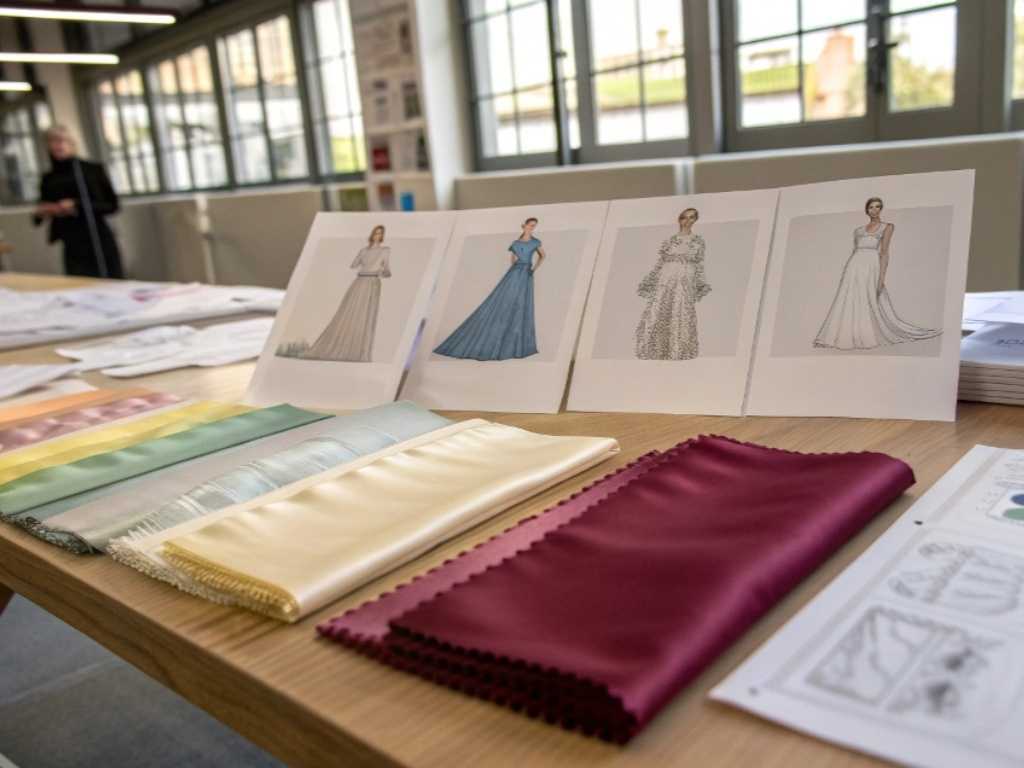
Four main fabric groups were used: compact stretch jersey, ponte, stretch mesh combinations, and a heavier rib knit. Most styles carried two or three colors, with black, chocolate, burgundy, navy, ivory, and seasonal accent tones distributed according to sales forecasts. Light colors received separate opacity review and selective double-layer solutions.

Development Challenge
The first development wave exposed three connected problems: shoulder-to-crotch pressure on two long-sleeve styles, back-waist gaping on a low-back style, and zipper waves across the bust on two front-zip designs. Correcting only one measurement would have shifted tension elsewhere, so the pattern team reviewed front and back torso balance, rise, waist position, panel shape, and stabilization together.
Sample Correction
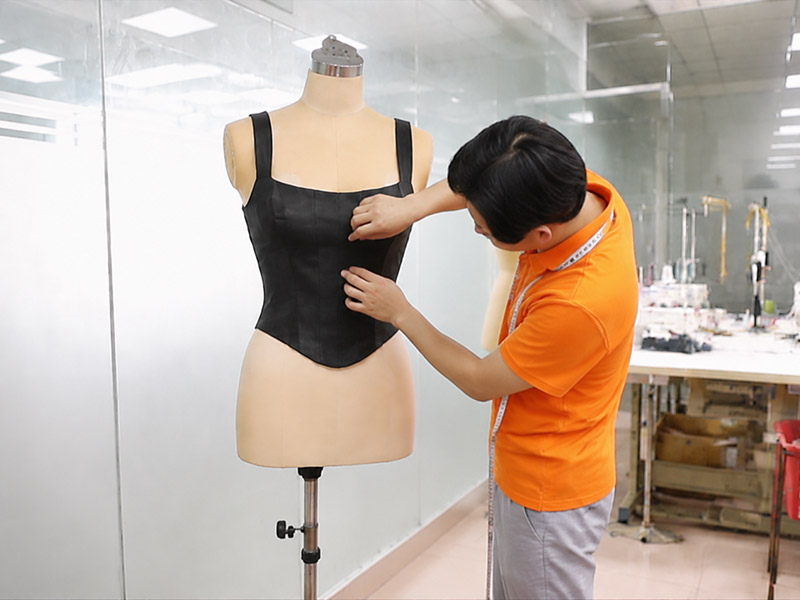
The program moved through three sample waves. Core silhouettes were fitted first to establish the brand’s bodycon block, followed by backless and cut-out styles, then flared and trim-heavy versions. Revisions adjusted front torso length, back rise, waist suppression, shoulder angle, zipper seam support, cut-out edge control, and selected lining panels. Approved changes were recorded by pattern version and style.

Bulk Execution
Bulk production was allocated across lines according to fabric group and construction. The approved production window was 42 days after PP approval and bulk material readiness, followed by final QC and packing. Inline attention focused on crotch seams, side-seam rotation, zipper flatness, ruching symmetry, stretch recovery, and light-color opacity.

Delivery Result
The order shipped in three planned batches aligned with the brand’s launch calendar and warehouse intake. Core black and chocolate styles moved first, followed by seasonal colors and later-approved complex designs. Pattern, measurement, material, label, and packing records were archived for replenishment and new-color review. The program created a repeatable base for future fitted jumpsuit drops without treating every new style as an unrelated project.
Bodycon Jumpsuit Manufacturing Questions
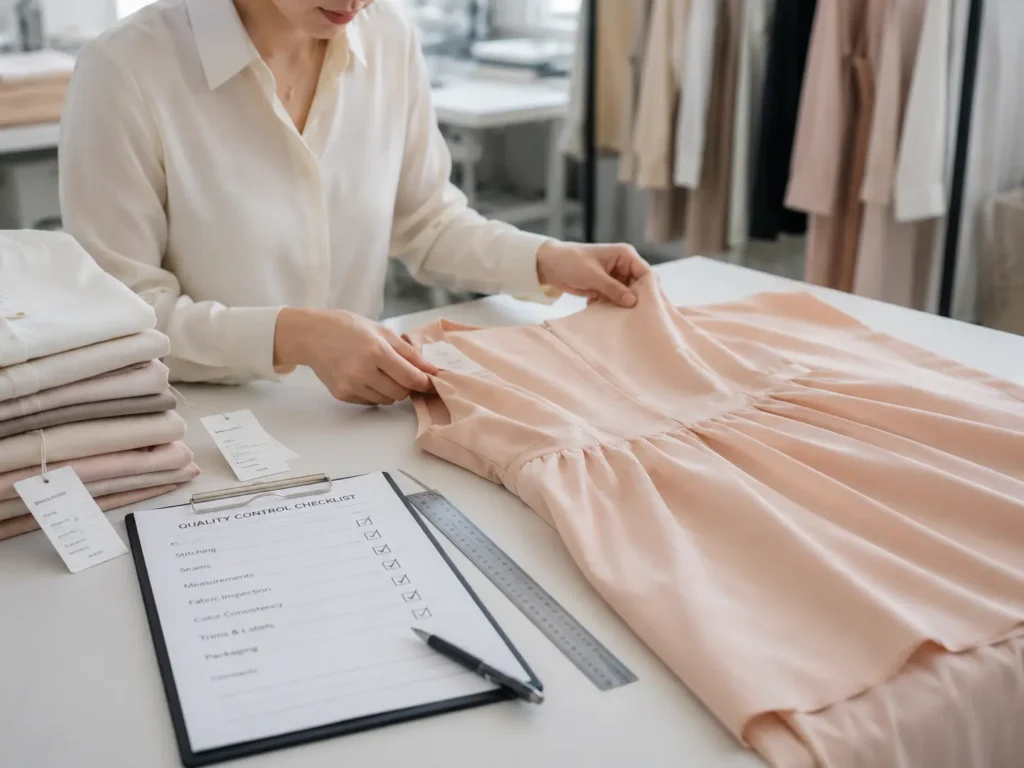
Start Your Bodycon Jumpsuit Project
Send the available development files for an initial review of product direction, fabric suitability, fit complexity, sample route, MOQ, cost drivers, and production timing. A complete tech pack is helpful, although a clear reference image, original garment, or organized style brief can also begin the discussion.
For a more accurate review, include:
- Reference images, flats, tech packs, or original sample details
- Target quantity per style and color
- Preferred fabric composition, weight, stretch, or hand feel
- Color plan and size range
- Measurement chart or existing brand block
- Neckline, cut-out, zipper, lining, support, and trim requirements
- Brand labels, hangtags, barcode, packaging, and warehouse needs
- Sample deadline, campaign date, launch window, and delivery destination


