GOTS Fabric Sourcing Support

Certified fabric sourcing coordination for fashion brands developing organic cotton dresses, skirts, jumpsuits, matching sets, tops, and private-label womenswear.

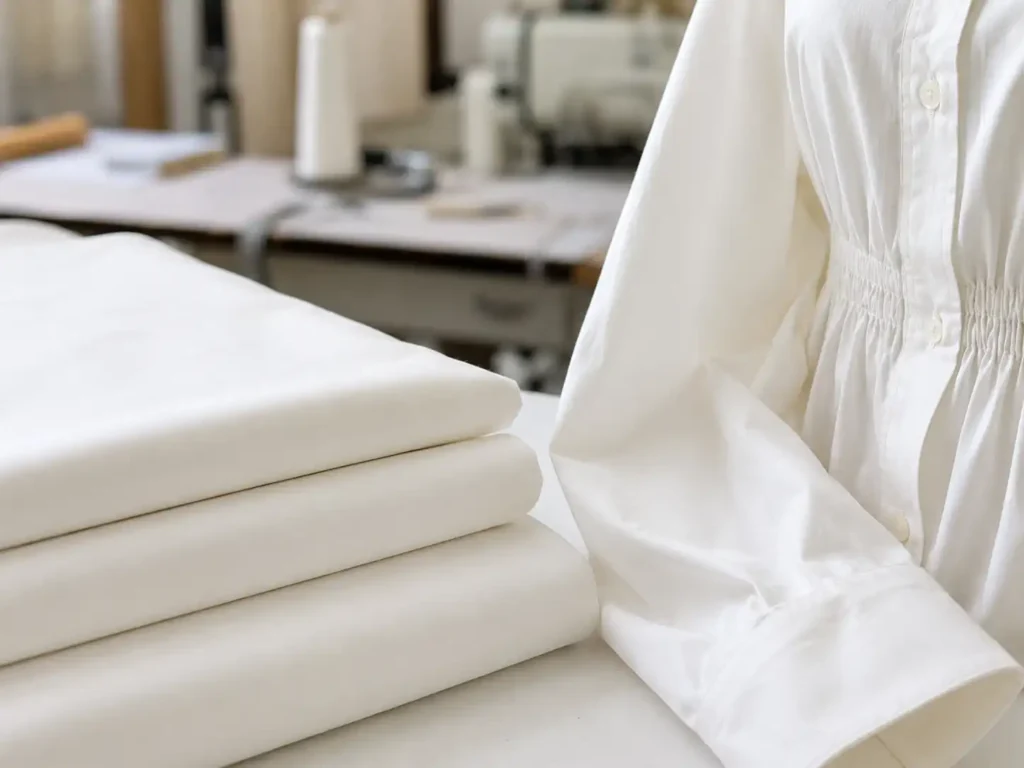
Jinfeng Apparel connects material requirements with garment execution. We help sourcing, development, and sustainability teams define the fabric specification, screen certified mill options, review available documentation, coordinate swatches and colors, validate the fabric in samples, and control approved material references through bulk production. Certification scope, facility coverage, color availability, supplier MOQ, batch documentation, and the Transaction Certificate route are confirmed by project before quotation or production planning.

  • 6 fabric directions: organic cotton woven, jersey, rib, poplin, lining, and project-specific blends.
  • 3 document checkpoints: supplier identity and Scope Certificate, covered product and process scope, and the Transaction Certificate route for the applicable shipment.
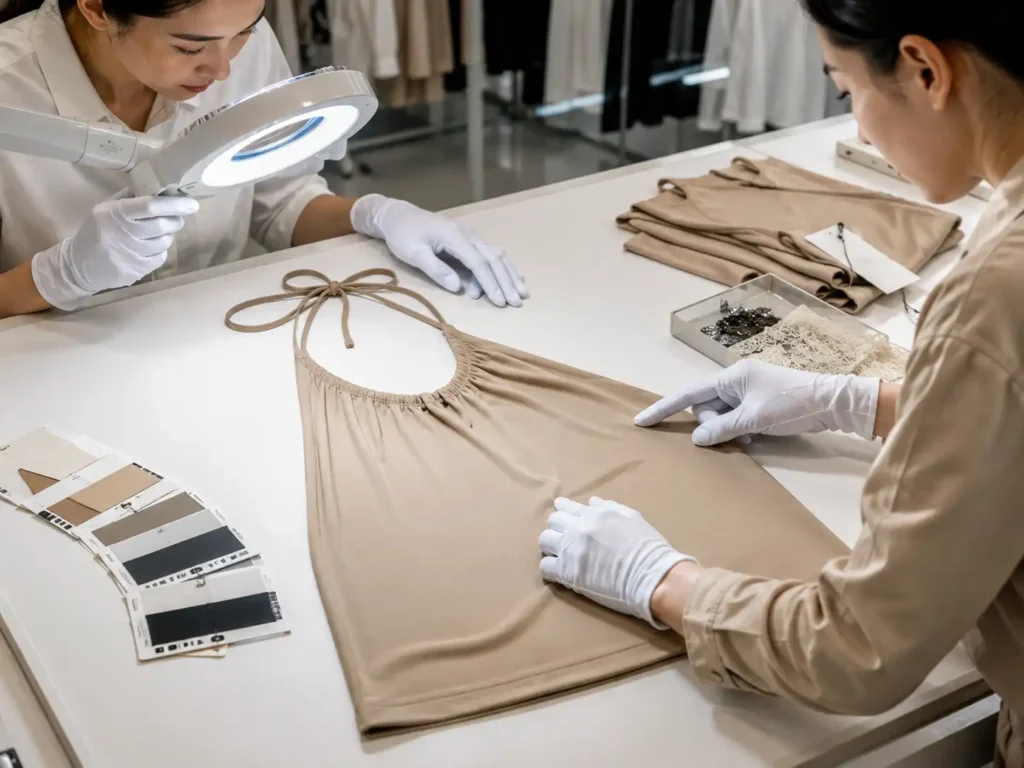
  • 2 sample rooms: supported by 7+ senior pattern makers and 20+ sample machinists for garment-level material validation.
  • Commercial planning: Jinfeng garment MOQ starts at 200 pcs per style/color; certified fabric mill MOQ, color MOQ, and document cost are reviewed separately.

Manufacturing Support Behind Every Fabric Decision

A fabric sourcing decision only creates value when the selected material can move through pattern development, sampling, bulk production, inspection, and branded delivery without losing the approved appearance or documentation trail.

Structured Production Network

Since 2008, Jinfeng Apparel has focused on custom womenswear development and production. Six owned women’s fashion factories and more than ten long-term satellite production partners allow production allocation by fabric type, garment structure, workmanship level, order schedule, and repeat-order requirement. The network is used to match garment execution to the selected material rather than forcing every fabric into one production line.

Pattern and Sample Capacity

Two sample rooms, 7+ senior pattern makers, and 20+ sample machinists support the transition from fabric swatch to production-ready garment. Organic cotton jersey, rib, poplin, woven cotton, and lining can change shrinkage allowance, ease, drape, seam behavior, opacity, pressing response, and measurement stability. Sample validation reveals those effects before a bulk commitment is made.

Bulk and Project Control

A regular monthly womenswear capacity of 100,000+ pieces is supported by 12+ merchandisers and order follow-up specialists, 15+ QC inspectors, and 30+ finishing and packing workers. The operating value is not a capacity claim alone; it is the ability to carry approved fabric references, color standards, measurement files, sewing instructions, labels, and packing requirements into repeatable bulk execution.

What GOTS Fabric Sourcing Support Covers

The service combines material sourcing, document coordination, garment development, and production control. It is designed for fashion programs that require more than a supplier list or a generic organic cotton claim.

Source the Right Material

The process begins with the garment, not with a random fabric catalogue. Product type, silhouette, construction, target hand feel, weight, drape, stretch, opacity, color plan, lining requirement, care expectation, target price, order quantity, market, and certification objective are translated into a usable fabric brief. Certified mill candidates are screened against the brief instead of being selected only because a certificate is available.

Review Available Evidence

Jinfeng coordinates supplier details, current Scope Certificate information, product categories, fields of operation, facility coverage where available, composition records, color and batch information, and the requested Transaction Certificate route. Document review is a sourcing control step, not a substitute for a certification body, legal advisor, or brand compliance approval.

Execute in Garments

Approved options move into swatch review, color confirmation, pattern development, first sample, fit correction, revised sample, PP approval, Golden sample sealing, bulk production, QC, private-label packing, and delivery coordination. Fabric approval remains connected to the final garment requirements, reducing the gap between a promising material sample and a commercially stable collection.

Is Jinfeng the Right Sourcing Partner?

Clear supplier fit protects development time. Jinfeng Apparel is structured for brands and sourcing teams with defined product direction, sampling requirements, production quantities, and a need to connect material selection with garment manufacturing.

Best Fit For

Global womenswear brands, mid-to-large fashion businesses, sourcing offices, product development teams, sustainability teams, merchandising departments, occasionwear labels, premium ecommerce programs, and private-label collections with a planned assortment, sample budget, size range, launch window, and bulk production schedule.
  • Dresses, skirts, jumpsuits, matching sets, tops, and coordinated womenswear collections.
  • Projects requiring supplier screening, swatches, color development, sample validation, QC, labels, and delivery.
  • Seasonal programs with 10-30 styles and coordinated bulk production across multiple colors and sizes.

Not Designed For

Retail fabric purchases, ready-stock fabric resale, dropshipping, one-piece customization, fragmented quantities without a production plan, or requests for an immediate fixed price without product, material, color, size, quantity, certification, and delivery information.
  • The regular garment MOQ starts at 200 pcs per style/color.
  • Certified fabric mills may require a separate fabric or color MOQ above the garment MOQ.
  • A total quantity spread across many styles or colors does not automatically meet the production or fabric mill requirement.

Where GOTS Fabric Sourcing Projects Commonly Fail

Most failures are not caused by a lack of organic cotton options. They occur when certification evidence, fabric performance, commercial conditions, and garment execution are reviewed at different times by different teams.

Certificate and Fabric Do Not Match

A supplier may hold a valid Scope Certificate while the proposed fabric, product category, processing activity, facility, or shipment falls outside the relevant scope. Common warning signs include expired documents, a certificate issued to another legal entity, missing product coverage, an unclear subcontracting route, and no agreed Transaction Certificate process for the final delivery. Supplier certification must be connected to the exact fabric and order route under review.

The Fabric Fails in Sampling

A material may look suitable on a hanger but behave differently in a dress or fitted set. Organic cotton jersey can torque or relax; rib can lose recovery; poplin can become too transparent; woven cotton can shrink or crease beyond the design expectation; lining and shell can react differently after care. Pattern balance, seam construction, opacity, zipper behavior, pressing, movement, and measurement stability need garment-level validation.

Commercial Limits Appear Too Late

Fabric mill MOQ, custom color MOQ, lab dip timing, sample yardage, certificate administration, testing, freight, color-batch availability, and replenishment conditions can change cost and launch timing. A garment order may satisfy Jinfeng’s production MOQ while failing the mill’s minimum quantity. Early commercial review prevents a design team from approving a sample built on a material that cannot support the planned color or order structure.

From Fabric Brief to Production-Ready Material

Each stage has a defined input, decision, and output. The sequence prevents certificate review, material selection, sample development, and bulk planning from becoming disconnected tasks.

Project Requirement Review

Collect the style reference or tech pack, garment category, construction, target market, quantity per style/color, size range, launch date, preferred composition, desired hand feel, color story, testing requirement, private-label details, and intended GOTS-related claim. Missing information is listed before mill outreach begins.

Fabric Specification Development

Translate the garment into measurable fabric requirements: woven or knit structure, composition, weight, width, stretch, recovery, drape, opacity, surface, shrinkage expectation, color method, lining compatibility, care route, and target cost. A precise specification reduces irrelevant supplier options and inconsistent quotations.

Certified Mill Screening

Contact suitable mill or supplier resources and compare availability, certificate information, product scope, color options, stock position, custom development conditions, sample yardage, fabric MOQ, production lead time, replenishment potential, testing records, and requested Transaction Certificate arrangements.

Swatch and Color Review

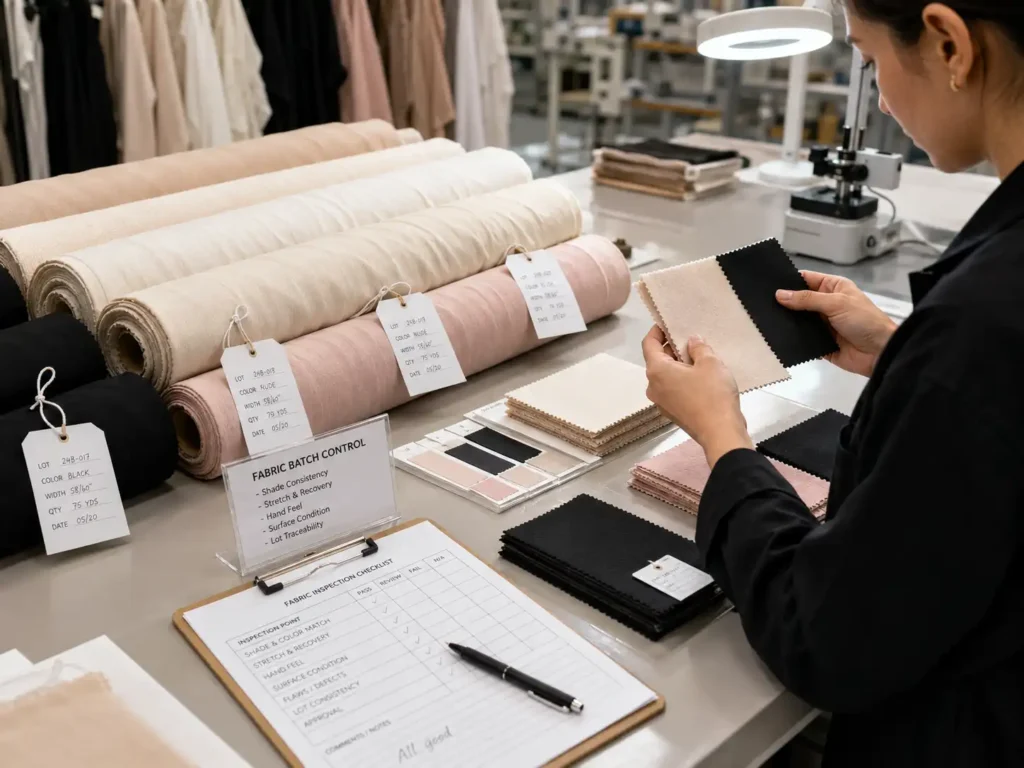
Organize fabric photos, videos, hanger cards, cut swatches, shade references, available colors, lab dip requirements, and supplier codes. Shortlisted options are compared under the same garment brief, preventing hand feel, shade, weight, and performance decisions from being made from isolated photos.

Garment Sample Validation

Develop the fabric through pattern work, first sample, fit review, revised sample, photo sample where required, PP sample, and Golden sample. Record changes to measurements, shrinkage allowance, lining, stitch type, needle, seam allowance, zipper, elastic, pressing, care, and packing.

Bulk Material Control

Confirm approved supplier reference, composition record, color standard, batch plan, bulk quantity, inspection requirements, production allocation, PP standard, QC checkpoints, label information, packing instructions, shipping documents, and any applicable Transaction Certificate request before bulk execution.

How We Review GOTS Supplier Documentation

Document review follows the material and transaction route. A certificate logo on a website or PDF is not enough to approve a fabric. The review connects the legal supplier, certified scope, product, process, facility route, validity period, and shipment evidence.

Review PointWhat Must Be ConfirmedRisk Controlled
Legal entitySupplier name, address, invoicing entity, and relationship to the certified operation.Prevents use of an unrelated company certificate.
Certificate statusCertificate number, approved certification body, issue date, validity, and database record where available.Detects expired, altered, or unverified documents.
Product scopeWhether the relevant fabric or product category is listed within the certified scope.Avoids assuming every product sold by a certified entity is certified.
Field of operationSpinning, knitting, weaving, wet processing, manufacturing, trading, or other applicable activities.Confirms the required process is covered.
Facility routeCovered facilities, approved subcontracting route, and production location where information is available.Reduces gaps between the certificate and the actual processing route.
Shipment evidenceTransaction Certificate requirement, issuing route, product details, shipment details, timing, and cost.Connects a specific delivery to its certification evidence.

GOTS Fabric Directions for Womenswear

Jinfeng sources project-specific organic cotton and GOTS-related options through suitable mill resources. Availability, certified scope, composition, color, batch, MOQ, cost, and lead time remain subject to supplier confirmation. Each direction below is evaluated for garment performance as well as documentation.
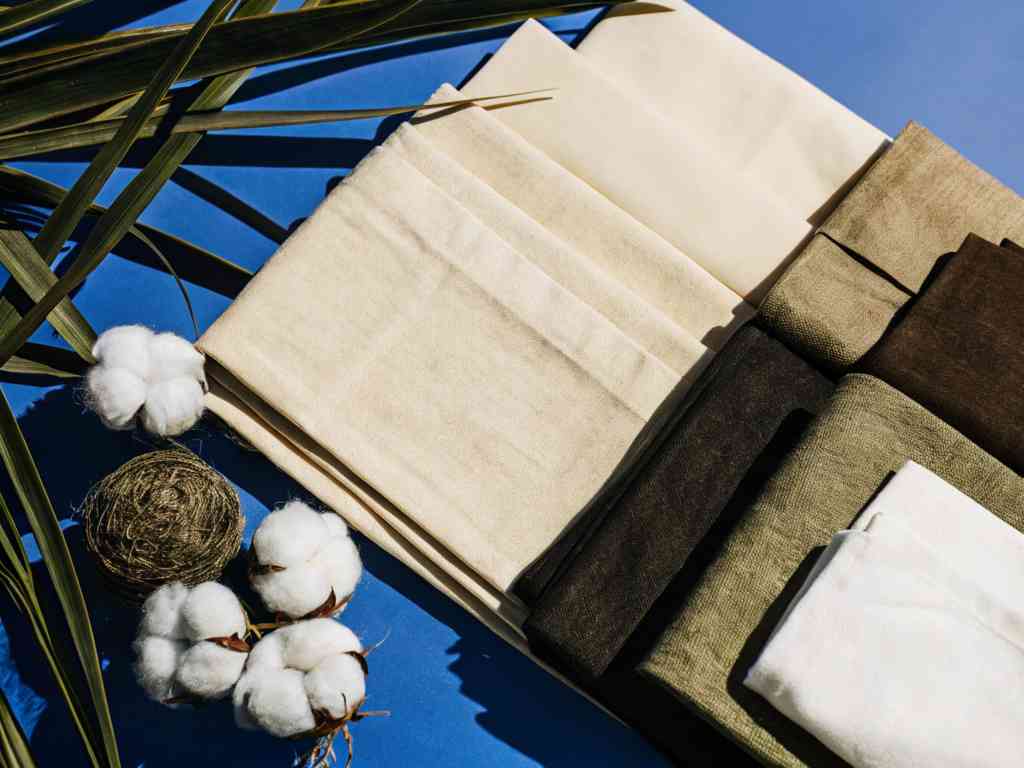
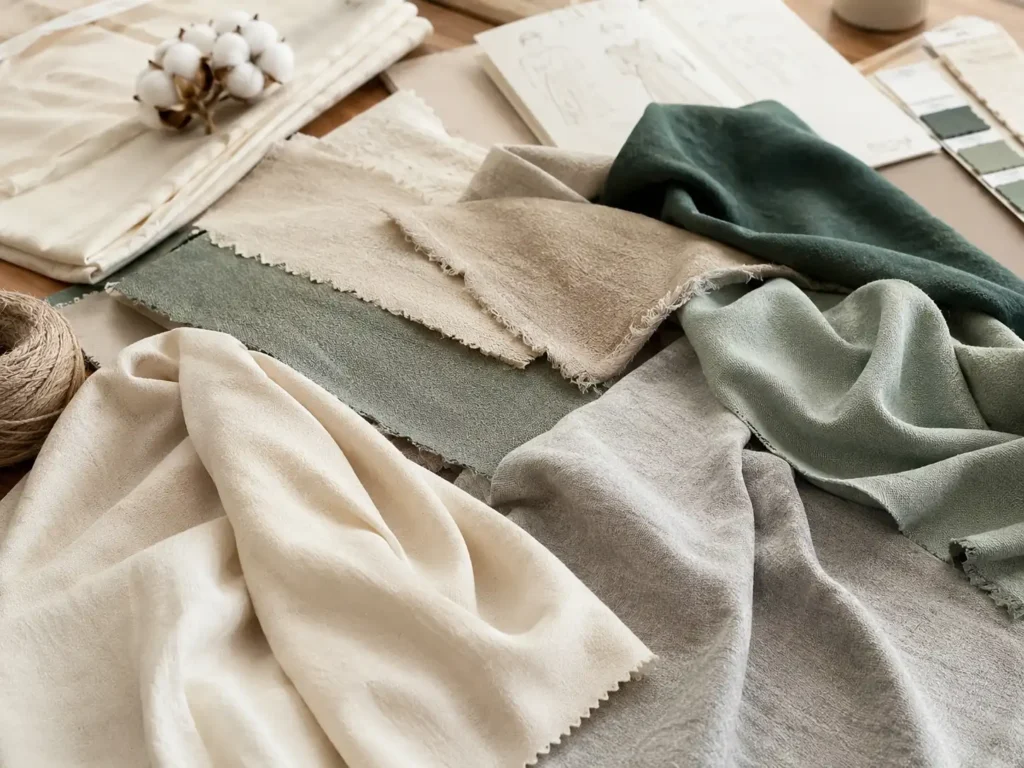
Natural cotton fabrics in earth tones with cotton bolls

Organic Cotton Woven

Suitable for casual dresses, structured day dresses, skirts, jumpsuits, light jackets, and coordinated sets. Review weave, yarn count, weight, width, shrinkage, opacity, drape, wrinkle character, seam appearance, and lining requirement. A crisp woven may support shirt-dress structure, while a softer weave may suit gathered, tiered, or relaxed silhouettes. Custom color and custom construction can raise mill MOQ and development time.

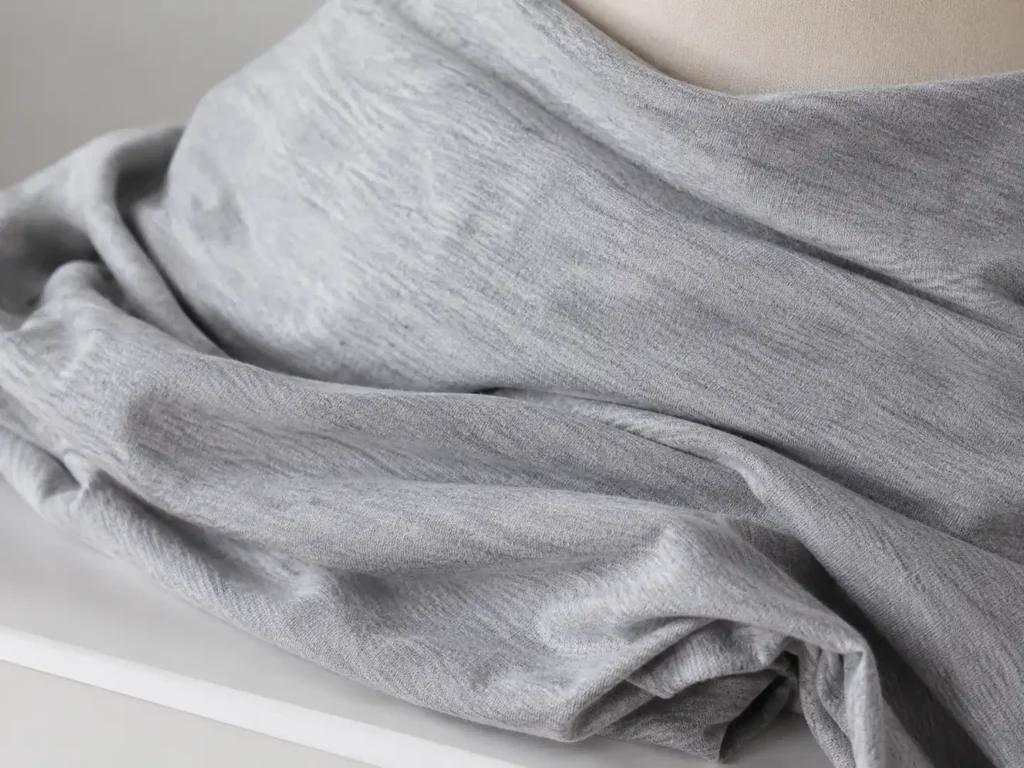
Organic Cotton Jersey

Suitable for relaxed dresses, fitted knit dresses, tops, soft matching sets, and comfort-led collections. Control weight, stretch direction, recovery, spirality, shrinkage, surface pilling, neckline stability, seam growth, and wash response. A jersey with attractive hand feel can still create side-seam twisting or length change if relaxation and cutting direction are not controlled.

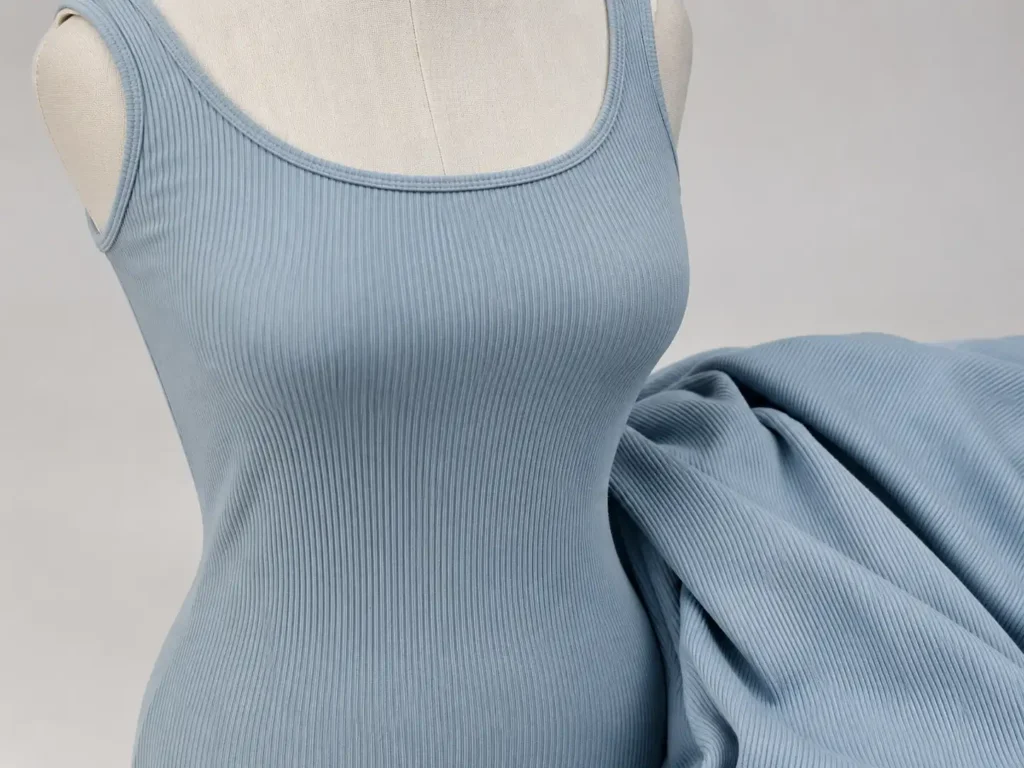
Organic Cotton Rib

Suitable for body-skimming dresses, tanks, tops, cardigans, and knit sets. Review rib gauge, weight, vertical growth, crosswise stretch, recovery, opacity, edge curl, stitch density, binding method, and measurement tolerance. Rib can support a premium close-to-body appearance, but weak recovery may change bust, waist, hip, strap, and garment-length measurements after wear or care.

Organic Cotton Poplin

Suitable for shirt dresses, A-line dresses, skirts, blouses, tailored casual sets, and summer structures. Review density, surface smoothness, crispness, transparency, crease behavior, needle marks, seam puckering, collar and placket response, color depth, and shrinkage. Light colors may require lining or double-layer construction, while heavier poplin can change the intended drape and cost.

Organic Cotton Lining

Suitable where the brand wants a natural-fiber lining direction for dresses, skirts, structured bodices, and selected occasionwear. Confirm composition, weight, color, softness, shrinkage, static behavior, seam slippage, shell compatibility, and care route. Shell and lining must be tested together because different shrinkage or movement can distort hems, waistlines, openings, and internal structure.

Organic Cotton Blends

Blends may improve drape, elasticity, durability, softness, crease recovery, or cost, but they require exact composition and certification review. Confirm the organic fiber percentage, additional fiber, GOTS label grade sought, supplier scope, processing route, color method, performance benefit, care requirement, and final claim eligibility. A commercially useful blend should be selected for measurable garment value rather than sustainability language alone.

Match GOTS Fabrics to Womenswear Categories
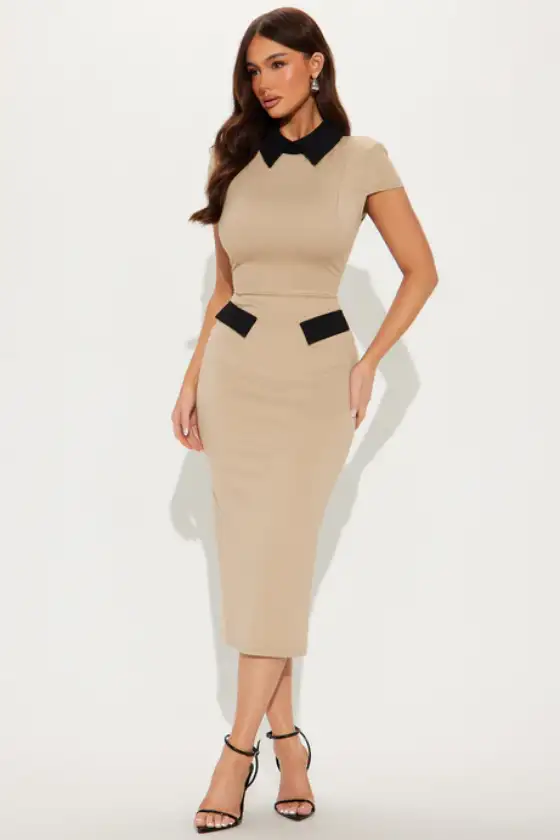
The same organic cotton fabric should not be applied to every silhouette. Product category, fit, construction, movement, opacity, care, finishing, and margin determine which material direction deserves sampling.

Casual Dresses

Jersey, poplin, and soft woven cotton can support relaxed mini, midi, and maxi dresses. Development focuses on drape, opacity, neckline stability, waist placement, skirt volume, shrinkage, and packing creases. The fabric must hold the intended silhouette without making the dress feel heavier, stiffer, or more transparent than the design reference.

Shirt Dresses

Poplin and suitable woven cotton options are reviewed for collar shape, placket flatness, cuff structure, button stability, seam puckering, transparency, and wrinkle character. The selected weight must support a clean shirt structure while retaining comfortable movement through the shoulder, bust, waist, sleeve, and skirt.

Rib Knit Dresses

Rib directions are evaluated for close fit, stretch recovery, bust-waist-hip proportion, neckline hold, strap stability, hem growth, and post-wash measurements. Pattern reduction and measurement tolerance should follow the actual fabric recovery rather than a generic stretch-fabric rule.

Skirts

Woven and knit options are matched to mini, midi, maxi, gathered, A-line, slit, and fitted skirt structures. Waistband behavior, zipper flatness, hip ease, lining coverage, hem balance, movement safety, and shrinkage determine whether a fabric can maintain the approved length and silhouette in bulk.

Matching Sets

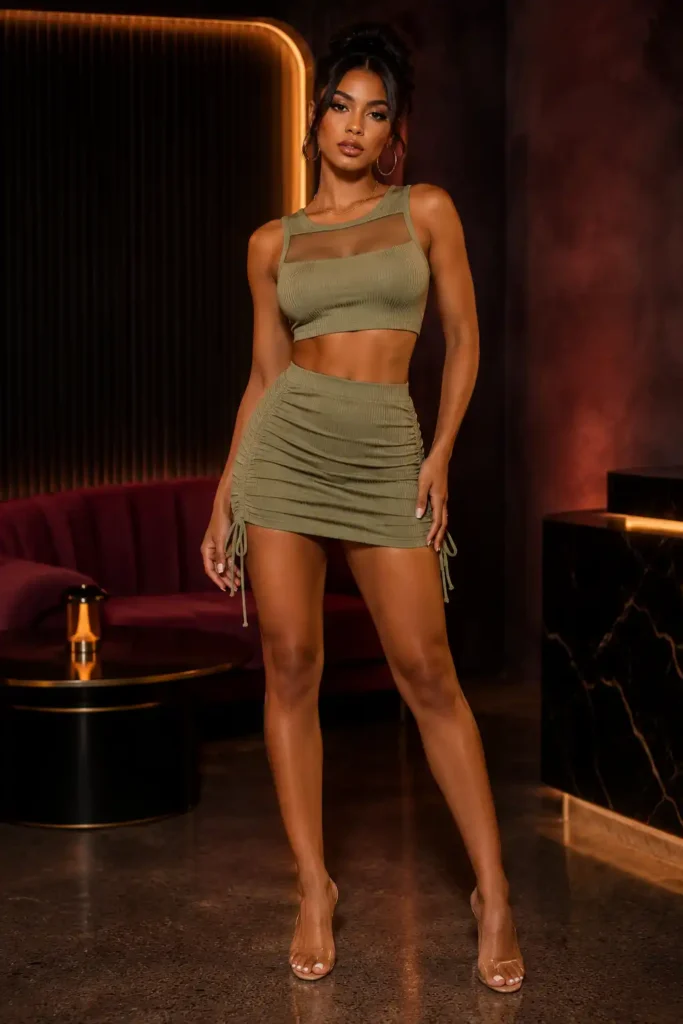
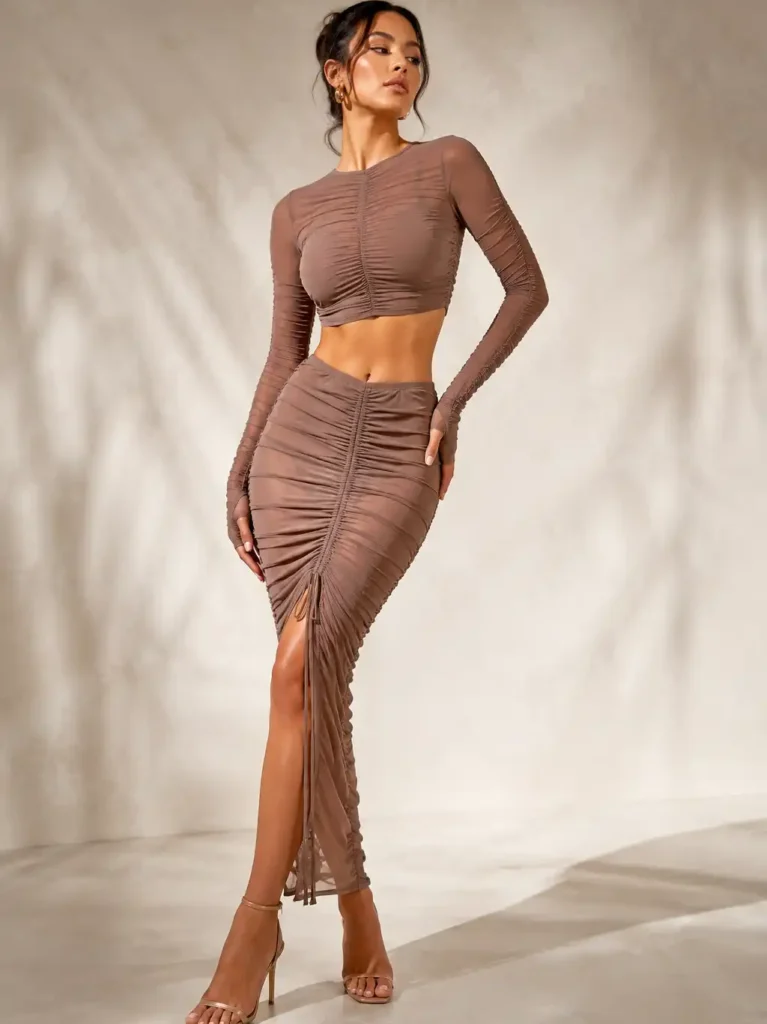
Top-and-skirt or top-and-trouser sets require consistent color, hand feel, shrinkage, and size pairing across both pieces. The fabric plan also considers whether components are sold together or separately, how SKU labels are arranged, and whether color-batch variation could create mismatched sets.

Fashion Tops

Jersey, rib, poplin, and soft woven materials can support crop tops, tanks, corset-inspired casual tops, blouses, and camisoles. Review bust coverage, strap and binding performance, hem stability, opacity, lining, closure, and pairing with the planned bottom or dress collection.

Jumpsuits

Woven or knit options must support waistline placement, torso length, crotch depth, seat ease, leg movement, zipper function, and sitting comfort. Fabric shrinkage, stretch, weight, and recovery influence the complete vertical balance more strongly than in a separate top or skirt.

Private-Label Collections

Multi-style programs require a controlled fabric architecture: core materials, accent materials, shared colors, price tiers, sample priority, supplier grouping, and repeat-order records. A smaller number of well-selected and documented fabrics can support stronger bulk consistency than a fragmented material list with weak replenishment potential.

Validate Fabric Before Bulk Production

A swatch approval confirms interest, not production readiness. Jinfeng validates shortlisted materials through specification review, color and performance checks, and complete garment sampling so the approved reference can become a measurable bulk standard.

Swatch and Specification Review

Each shortlisted option is recorded by supplier, article number, construction, composition, weight, width, color, surface, hand feel, drape, stretch, recovery, transparency, lining requirement, estimated shrinkage, MOQ, lead time, certificate information, and replenishment conditions. Physical swatches are compared with the garment reference under consistent lighting and handling. Photos and videos support communication, but final decisions should not rely only on a screen because shine, density, softness, opacity, and surface texture can change substantially in person.

The development team also tests whether the proposed material supports the pattern concept. A crisp poplin may improve a shirt dress but create excessive volume in a gathered maxi. A soft jersey may deliver comfort but lose neckline stability. A rib may create a premium fitted surface but grow vertically during wear. A lining may feel soft alone but restrict the shell fabric after sewing. Potential conflicts are documented before pattern cutting.

Color, Shrinkage, and Performance Review

Stock colors are checked against the brand’s physical standard, Pantone direction, collection palette, shell-and-lining combination, and available batch quantity.

Custom colors require a lab dip or other agreed color approval route, with timing and dye-lot MOQ confirmed before sample approval. Natural fibers can display shade, crease, and surface variation; those characteristics should be separated from unacceptable color inconsistency.

Performance review may include internal evaluation and project-specific third-party testing coordination. Relevant checks can cover dimensional change, colorfastness, pilling, spirality, stretch and recovery, seam behavior, opacity, abrasion, and care response. Test scope depends on fabric, product, market, brand standard, and intended claim. Testing cost and lead time are reviewed before being added to the project schedule.

Garment Sample Validation

The selected material moves through pattern development and the appropriate sample sequence. First samples reveal silhouette and construction response. Fit samples test bust, waist, hip, shoulder, armhole, neckline, strap, torso, crotch, slit, and length. Revised samples convert comments into updated patterns, measurement charts, fabric records, sewing instructions, and QC checkpoints. Photo samples focus on visual readiness when required. PP samples confirm the approved production standard, and the Golden sample becomes the physical reference for bulk production and final inspection.

Sample timing is quoted after style complexity, fabric availability, color development, trim requirements, and review rounds are known. Stock-material styles generally move faster than custom-dyed or specially developed certified fabric projects. Jinfeng does not promise one universal sample time because a stable schedule depends on complete inputs and timely approvals.

Plan MOQ, Cost, and Lead Time

Commercial planning separates the garment production requirement from the fabric mill requirement. Certified materials may add supplier MOQ, color MOQ, documentation, testing, sample yardage, and longer replenishment cycles. A complete quantity plan is required before a reliable quotation can be prepared.

Planning VariableCommercial EffectRequired Decision
Garment MOQJinfeng regular production starts at 200 pcs per style/color.Provide quantity by style, color, and size ratio.
Fabric mill MOQThe mill minimum may exceed the garment MOQ and may be based on kilograms, meters, construction, or article.Confirm fabric consumption and allocate the minimum across eligible styles where permitted.
Stock colorCan reduce development time, but stock quantity, shade batch, certificate scope, and replenishment must still be checked.Reserve or approve the actual available batch.
Custom dyeAdds lab dip approval, dye-lot MOQ, color risk, and production time.Approve physical color and schedule before sample lock.
Custom constructionSpecial knitting, weaving, finishing, or composition may require development and a higher minimum.Decide whether the material value justifies the commercial threshold.
Certification documentsSupplier and certification body procedures may add administration, timing, or cost.State Scope Certificate and TC requirements in the RFQ.
TestingThird-party or brand-specific tests can affect cost and critical path.Confirm test standard, laboratory, sample quantity, and pass criteria.
Multi-color programEach color may carry a separate dye or fabric minimum.Consolidate colors or increase quantity where needed.
Launch scheduleFabric sourcing, sample approval, PP approval, bulk production, QC, and freight must fit one calendar.Set approval deadlines and delivery buffer before order placement.

Turn Certified Fabric Into Production-Ready Garments

Certified material evidence does not remove the engineering work required to produce a stable garment. Pattern, construction, sample approval, production instructions, and QC standards must be rebuilt around the actual selected fabric.

Align Fabric Behavior With the Pattern

Pattern development considers fabric width, shrinkage, stretch, recovery, drape, thickness, opacity, seam stability, pressing response, and the relationship between shell, lining, interfacing, elastic, zipper, and other trims. A change from conventional cotton to an organic cotton option can alter ease, garment length, waist placement, neckline hold, sleeve balance, hem movement, and consumption. Jinfeng updates the pattern and measurement chart to the chosen article instead of treating the fabric as an interchangeable material.

Fitted dresses and rib garments require fabric-specific reduction and recovery control. Woven shirt dresses require collar, placket, sleeve, and seam-puckering control. Gathered dresses require weight and volume review. Jumpsuits require complete vertical balance. Structured bodices may need compatible lining, cup, boning, or reinforcement. Each product is assessed on its own construction logic.

Build an Approval Standard Through Samples

The sample route is selected according to project risk. A first sample confirms the basic interpretation. Fit review identifies measurement and balance changes. Revised samples document corrected patterns and sewing methods. Photo-ready samples support campaign timing where required. The PP sample confirms approved fabric, color, trims, construction, measurements, labels, and packing. The Golden sample is sealed as the bulk reference.

Comments are converted into controlled files rather than left in scattered messages. Pattern versions, measurement charts, BOM, fabric reference, color standard, trim details, sewing instructions, label artwork, packing instructions, and QC checkpoints are updated before production. A reliable record protects bulk consistency and gives repeat orders a defined starting point.

Transfer the Sample Standard to Production

Before cutting, the production team receives the approved PP and Golden sample standard, fabric and color references, measurement chart, grade rules, BOM, stitch and seam requirements, zipper and trim positions, lining method, label placement, packing method, and inspection criteria. Incoming material review, fabric relaxing where required, cutting control, sewing instruction, inline inspection, garment measurement, pressing, final inspection, and packing QC are connected to the same approved reference.

Production timing is issued after PP approval, material readiness, order quantity, color and size plan, packaging, QC requirement, and delivery method are confirmed. Complex styles, custom colors, special trims, testing, or multi-batch delivery require a project-specific schedule rather than a fixed universal lead time.

Control Fabric Consistency Through Bulk Production

Bulk control begins before sewing. Material identity, batch, shade, shrinkage, cutting direction, garment measurements, workmanship, and packing records are managed as connected checkpoints.

Incoming Fabric Review

Verify supplier article, quantity, color, composition information, width, visible defects, surface, hand feel, and supporting documents against the approved record. Fabric received under a similar commercial name is not accepted as equivalent without review. Differences are isolated before cutting so they do not become garment-wide defects.

Batch and Shade Control

Identify dye lots and fabric batches, compare shade under agreed lighting, and plan cutting and SKU allocation to reduce visible variation. Shell, lining, binding, and trims are reviewed together. Multi-batch orders require records that show which batch was used for each production lot and delivery.

Relaxing and Shrinkage

Cotton knits and selected woven materials may require controlled relaxing before cutting. Shrinkage information is compared with pattern allowance and size tolerance. Fabric that changes dimensions, spirals, or grows after handling can create systematic length, width, side-seam, neckline, and fit problems if the risk is not controlled before cutting.

Cutting Direction Control

Control face and back, grain direction, nap or surface direction, stripe or print placement where applicable, batch separation, size bundles, cut quantity, and defective areas. Correct bundle identification prevents shade mixing, size mixing, missing components, and left-right inconsistency before the pieces reach sewing.

Inline Garment Control

Inspect neckline, shoulder, strap, armhole, waistline, zipper, gathering, lining, slit, seam allowance, stitch density, symmetry, fabric damage, and measurements during sewing. Early correction limits the spread of repeated defects. Finished garments are compared with the Golden sample and approved measurement tolerance.

Packing and Record Retention

Final inspection covers appearance, measurement, labels, barcode or SKU information, polybag, folding, carton marks, and packing quantity. Jinfeng retains approved patterns, fabric references, trim records, measurement files, QC notes, and packing instructions for repeat-order review. New supplier batches, colors, or certificate periods are reconfirmed rather than assumed identical.

Support Responsible GOTS Product Claims

Material documentation, final-product eligibility, and market-facing claims are related but separate responsibilities. Clear ownership prevents a sourcing file from being used as an unsupported garment claim.

Jinfeng Support

Jinfeng can coordinate mill and supplier information, collect available certificate files, record fabric composition and article details, communicate Transaction Certificate requirements, support sample and bulk traceability, prepare care-label and fiber-content information from approved records, apply private-label artwork, coordinate third-party testing, and retain project files for production and repeat-order reference.

Supplier and Certifier Role

The certified supplier and its approved certification body control the Scope Certificate and Transaction Certificate process. The documents must correspond to the certified entity, product, processing scope, validity period, and shipment. A certification logo, marketing statement, or mill relationship is not a substitute for the applicable official evidence.

Brand Approval

The brand should confirm the intended product claim, final garment certification route, label grade, certification mark use, license information, market wording, legal review, and any retailer-specific requirements. Final consumer-facing language should be approved by the brand or its compliance advisor. Jinfeng follows the approved files and does not independently authorize a GOTS claim.

Download the GOTS Fabric Sourcing Checklist
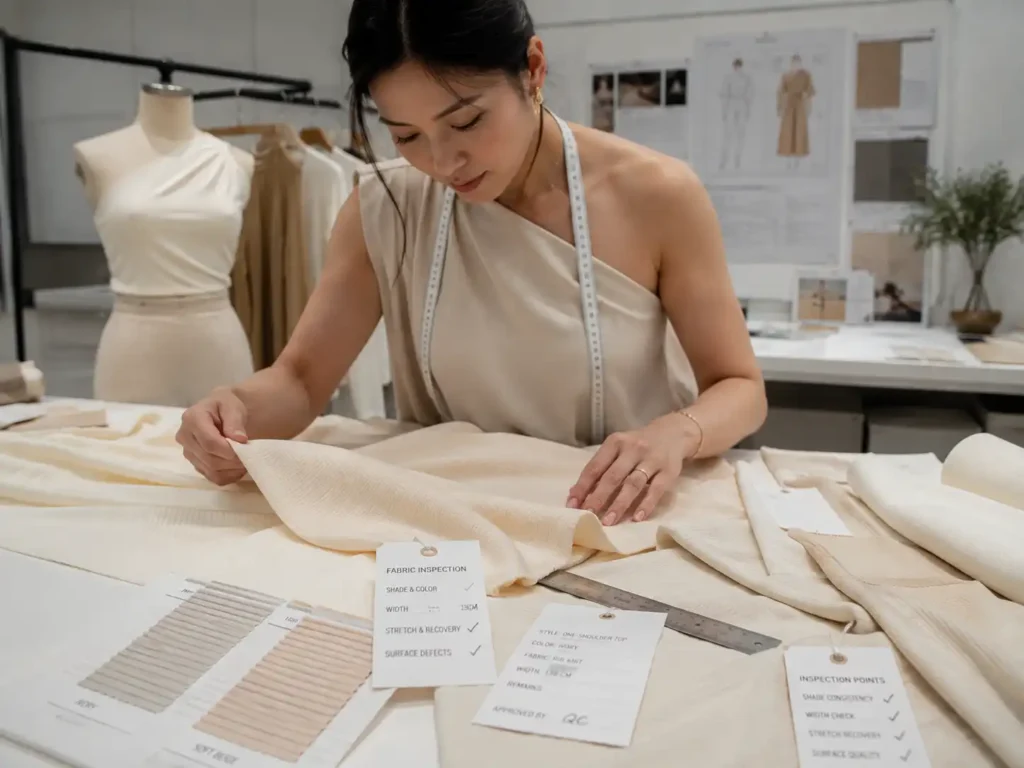
A complete brief shortens supplier screening and improves quotation quality. The resource set is designed for sourcing, product development, sustainability, merchandising, and compliance teams preparing a coordinated womenswear project.

Fabric Sourcing Brief

Collect product category, style reference, construction, preferred composition, fabric type, target weight, hand feel, drape, stretch, opacity, color plan, order quantity per style/color, size range, target cost, launch date, market, testing, certification, labels, packing, and delivery requirements. A shared brief keeps design and sourcing decisions aligned.

Certificate Review Checklist

Record supplier legal entity, certificate number, certification body, validity, product category, field of operation, facility route, composition, article number, color or batch relevance, subcontracting information, and Transaction Certificate requirement. The checklist helps teams identify missing evidence before sample or order approval.

Sample Approval Checklist

Review fabric identity, color, hand feel, weight, width, opacity, shrinkage, stretch, recovery, pattern response, fit, measurements, lining, zipper and trims, workmanship, pressing, care, label information, packing, PP approval, Golden sample, and bulk QC checkpoints. Comments are recorded as controlled production changes.

GOTS Fabric Sourcing Frequently Asked Questions

Yes. Jinfeng can source organic cotton and GOTS-related fabric options through suitable mill and supplier resources for custom womenswear projects. Availability depends on fabric construction, composition, color, supplier stock, fabric mill MOQ, certificate scope, batch, lead time, target price, and requested documentation. Options are reviewed against the garment brief before sampling.
Jinfeng provides GOTS fabric sourcing, supplier-document coordination, garment development, QC, private-label packing, and delivery support. A final garment may only carry a GOTS claim when the required certified chain and approved labelling route are confirmed for the project. Current factory, processor, trader, and supplier certification must be checked before the claim is approved.
The review covers the supplier legal entity, certificate number, approved certification body, validity period, product category, field of operation, relevant facilities or processing route, fabric article, composition, color or batch, and Transaction Certificate requirement. Any uncertainty is returned to the supplier or certification body for confirmation.
A Scope Certificate shows that a certified entity is able to process or trade specified product categories within its approved GOTS scope during the valid period. It does not prove that every product sold by the entity is certified, and it does not prove the certified status of a specific shipment.
A Transaction Certificate is issued through the certified supplier’s certification body and lists the applicable certified products and shipment details. It is used as evidence for a specific delivery. Jinfeng can communicate the requirement and coordinate project information, but does not issue the certificate.
No. Organic fiber content and GOTS certification are not interchangeable claims. The supplier, product, processing route, certification scope, and shipment documents must support the intended claim. A fabric described as organic cotton may be suitable for a collection without being eligible for a GOTS-labelled final product.
The regular Jinfeng garment MOQ starts at 200 pcs per style/color. The certified fabric mill may have a separate minimum by article, color, dye lot, meter, or kilogram. Custom dyeing, special construction, certified materials, and requested documents can require a higher commercial quantity.
Custom color sourcing can be reviewed through available mills. The process may require a lab dip or physical color approval, dye-lot MOQ, sample yardage, colorfastness review, and additional lead time. Stock colors are often more flexible, but stock batch, quantity, shade, certificate scope, and replenishment still require confirmation.
The fabric is reviewed by specification and validated in garment samples. Depending on project risk, checks may include dimensional change, colorfastness, pilling, spirality, stretch and recovery, seam behavior, opacity, care response, and garment measurements. Third-party testing can be coordinated by project with the agreed laboratory, standard, cost, and timeline.
Yes. Jinfeng supports woven labels, size labels, care labels, hangtags, barcode stickers, SKU labels, polybags, stickers, cartons, carton marks, and warehouse labels. Fiber-content and care information are prepared from approved supplier or test records. Final market wording and GOTS claim approval remain with the brand and its compliance route.

Send Your Fabric and Collection Brief

Share the information required to evaluate fabric availability, certification route, garment development, MOQ, cost, sample sequence, bulk schedule, QC, labels, and delivery.

A complete submission allows the sourcing and technical teams to return a useful project assessment instead of a generic fabric list or unsupported price estimate.

  • Company, target market, product category, and planned launch window.
  • Reference images, tech packs, line sheet, original sample photos, or current fabric references.
  • Quantity per style/color, number of styles, color plan, size range, and delivery split.
  • Preferred composition, fabric construction, weight, hand feel, drape, stretch, opacity, and lining direction.
  • Required Scope Certificate, Transaction Certificate, testing, labelling, and final-product claim route.
  • Private-label artwork, barcode or SKU files, packing instructions, warehouse requirements, and freight plan.


Tell Us About Your Dress Project

Share your product details, estimated quantity and development requirements. Our team will review your project and provide practical OEM/ODM production feedback.

Premium Women’s Apparel Production for Fashion Brands

From dress sample development to bulk production, JF Apparel supports fashion brands with confidential OEM/ODM manufacturing, reliable quality control and scalable production support.

START YOUR DRESS PROJECT

Ready to Develop Your Next Dress Collection?

Share your design concept, product requirements or sourcing plans with our team. We’ll review your project and provide practical feedback on development, materials, MOQ and production.

7-10 Days

Sample Development

200 PCS

Starting MOQ

Fast Response

Professional Follow-Up