 Skip to content
Mesh Matching Set Manufacturer
Custom mesh co-ords developed for global fashion brands, from fabric direction and paired fit to bulk production and private-label delivery.
- 8 core mesh directions evaluated for stretch, support, transparency, print, surface stability, and lining compatibility.
- 5 paired-control checkpoints cover color batch, top-to-bottom proportion, size pairing, trim consistency, and SKU accuracy.
- MOQ starts from 200 pieces per style and color, subject to fabric, print, trim, and packaging requirements.
- US, UK, EU, AU, alpha, extended, petite, and tall size development can follow the brand’s own chart and grade rules.
Jinfeng Apparel develops mesh matching sets as complete retail looks rather than unrelated tops and bottoms. Fabric stretch, recovery, transparency, lining coverage, waist placement, garment length, embellishment weight, and packing logic are reviewed together before production. The result is a coordinated set built for campaign imagery, reliable fit, repeatable bulk quality, and private-label delivery across partywear, clubwear, resortwear, festival fashion, and premium ecommerce collections.
Built for Serious Womenswear Production
Since 2008
Six Owned Factories
100,000+ Monthly Capacity
Two Sample Rooms
Seven Pattern Makers
Fifteen QC Inspectors
Who We Develop Mesh Sets For
Global Fashion Brands
Premium Ecommerce Brands
Partywear Labels
Clubwear Brands
Resortwear Collections
Sourcing Teams
Where Mesh Matching Sets Commonly Fail
Wrong Transparency
A fabric can look acceptable when folded on a sourcing table yet become far more transparent after stretching over the bust, waist, hips, or seat. Lighting also changes the result. Development checks the mesh alone, over the selected lining, and on a fitted sample. Coverage zones are marked clearly so production does not shorten, shift, or substitute the lining without approval.
- Review in natural and indoor light
- Check stretched and relaxed states
- Confirm front, side, and back coverage
Weak Stretch Recovery
- Match pattern ease to recovery
- Check waistband rebound
- Re-measure after fit testing
Mismatched Color Batches
- Confirm lab dip or physical standard
- Match shell and lining color
- Pair sets by approved batch
Poor Set Proportions
- Fit the outfit together
- Approve front and side balance
- Record top-to-bottom measurements
Wavy Mesh Seams
- Validate seam method in sampling
- Control stretch during sewing
- Inspect curved and exposed edges
Incorrect Size Pairing
- Match size labels and SKU files
- Verify both pieces before sealing
- Separate cartons by packing rule
Custom Mesh Sets We Manufacture

Mesh Crop Top Sets
- Best for partywear, clubwear, and festival drops
- Common fabrics: stretch mesh, printed mesh, soft mesh
- Main risks: neckline stretch, hem rolling, waist-gap imbalance

Mesh Skirt Sets
- Options: mini, midi, maxi, asymmetric, slit, ruched
- Main controls: waist stability, hip ease, coverage, hem balance
- Retail benefit: strong complete-look value with separate-wear potential

Mesh Pants Sets
- Best for clubwear, festival fashion, and statement collections
- Main risks: seat transparency, knee bagging, twisted legs, uneven flare
- Fit review: standing, walking, sitting, and light movement

Corset Mesh Sets
- Suitable for premium partywear and occasion-led capsule ranges
- Main controls: cup position, support, boning comfort, seam symmetry
- Bulk focus: consistent structure without rough internal finishing
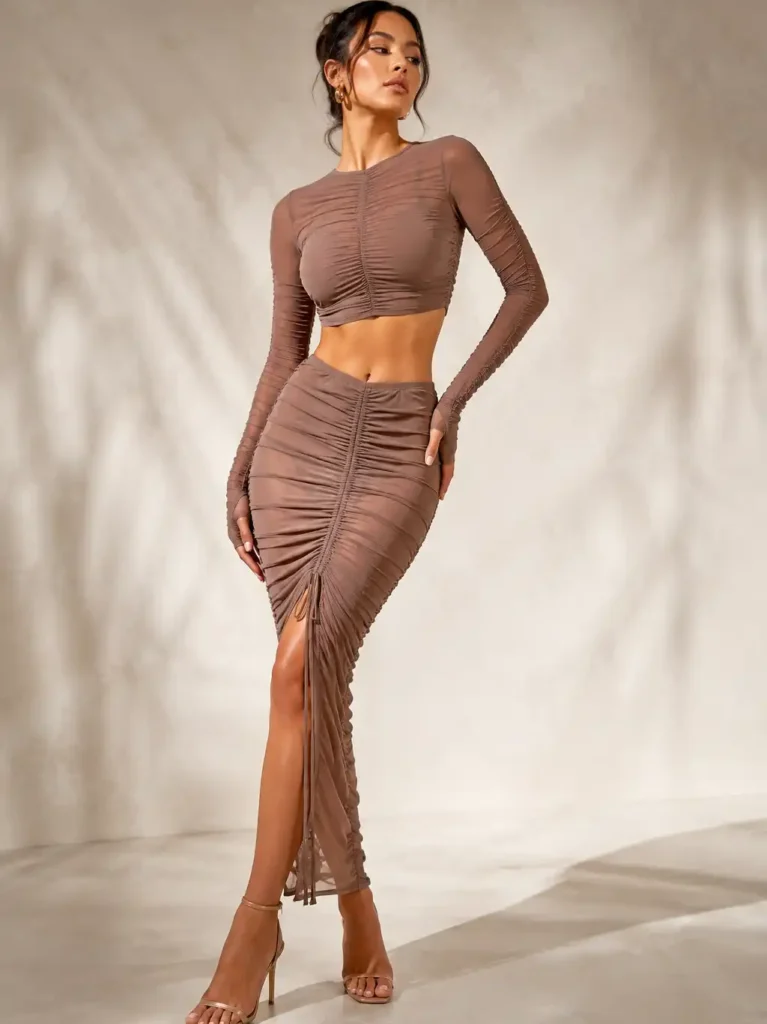
Ruched Mesh Sets
- Common placements: side seams, center front, center back, hip panels
- Main risks: uneven gathering, twisting, loose elastic, length variation
- QC focus: symmetry, finished length, recovery, and seam security

Printed Mesh Sets
- Suitable for resort, vacation, party, and digital-first collections
- Main risks: pale print, distortion, batch shift, unwanted seam breaks
- Planning need: print method, artwork file, color standard, repeat direction

Three-Piece Mesh Sets
- Strong for campaign styling and higher perceived outfit value
- Main controls: component compatibility, size pairing, complete packing
- Packing need: clear three-piece checklist before polybag sealing

Resort Mesh Sets
- Best for vacation, cruise, beach-club, and summer capsule programs
- Main risks: excessive transparency, weak drape, travel creasing, long hems
- Construction focus: clean edges, soft lining zones, light internal finishes
Mesh Sets Designed for Your Market

Partywear

Clubwear

Festival Fashion

Resortwear

Vacation Collections

Occasionwear
Select the Right Mesh for Each Set
Fabric selection controls the final silhouette, transparency, recovery, comfort, print result, and production risk. Jinfeng Apparel reviews mesh by composition, weight, stretch direction, recovery, hand feel, openness, color, surface stability, lining compatibility, MOQ, cost, and lead-time impact. A reference image may guide the look, but the approved fabric must support the actual pattern and bulk plan.
| Mesh Direction | Typical Behavior | Suitable Set Applications | Development Focus | Main Bulk Risk |
|---|---|---|---|---|
| Stretch Mesh | Flexible, body-following, medium to high transparency | Bodycon tops, fitted skirts, fitted pants, ruched sets | Stretch direction, recovery, pattern ease, seam tension | Sagging, wavy seams, size drift |
| Power Mesh | Firmer support, stronger compression, lower drape | Corset panels, support zones, waist panels, structured tops | Compression level, comfort, lining, panel shape | Excess pressure, visible panel edges |
| Soft Mesh | Lightweight, fluid, delicate surface | Sleeves, overlays, maxi skirts, relaxed resort sets | Drape, snag resistance, clean edge finishing | Holes, snags, unstable hems |
| Printed Mesh | Visual surface changes with stretch and lining | Resort sets, party co-ords, flared trousers, maxi skirts | Artwork scale, color, distortion, repeat direction | Print shift, pale color, motif distortion |
| Double-Layer Mesh | Reduced transparency, fuller hand feel | Fitted tops, skirts, dresses, coverage-led sets | Layer alignment, stretch balance, seam bulk | Twisting layers, heavy seams |
| Tulle Direction | Crisp or soft volume with limited recovery | Layered skirts, sleeves, decorative panels, occasion sets | Stiffness, edge comfort, volume, lining | Scratchy edges, crushed layers |
| Embellished Mesh | Rhinestones, sequins, embroidery, flock, bonded detail | Partywear, clubwear, festival sets | Decoration weight, stretch loss, skin contact | Falling decoration, tearing, abrasion |
| Mesh-Lining Composite | Outer mesh supported by stretch or woven lining | Retail-ready fitted sets, occasion sets, opaque zones | Lining stretch, color, length, attachment points | Lining exposure, incompatible recovery |
Control Transparency Without Losing the Design
A mesh set should reveal exactly what the design intends and cover everything the brand expects to protect. Transparency planning is completed by body zone, fabric stretch, color, lighting, and end use. The goal is not to make every style opaque; the goal is to make sheerness deliberate, repeatable, wearable, and consistent with the campaign concept.

Fully Sheer Design
Fully sheer pieces may be appropriate for layering, clubwear, resort overlays, or editorial styling. The development file should still define the intended underlayer, seam appearance, label placement, and areas where internal construction must remain clean because every seam allowance can be visible. Edge finishing, thread color, elastic attachment, and closure choice receive greater attention when no lining is available to conceal the inside.

Partial Lining
Partial lining keeps selected zones covered while preserving transparent sleeves, shoulders, waist panels, side sections, or lower-skirt areas. Common coverage zones include bust cups, front bodice, short skirt lining, brief lining, and selected hip panels. The lining edge must sit at an intentional position and remain stable during movement. A poorly placed edge can be more distracting than full transparency because it creates a visible horizontal line across the body.

Double-Layer Mesh
Two layers of mesh can soften transparency while retaining the fabric character. Layering also changes stretch, weight, hand feel, heat, drape, and seam thickness. Both layers need compatible stretch direction and recovery. Cutting marks should prevent one layer from twisting away from the other, especially around fitted waists, curved necklines, ruched side seams, and long skirts where small misalignment can create spiraling or uneven hems.

Built-In Coverage
Built-in coverage may use stretch lining, bonded cups, short lining, brief construction, bodysuit-style bases, or lined corset panels. The inner layer must support the outer design without creating visible bulk, tight edges, or color contrast under the mesh. Coverage is confirmed while standing, sitting, walking, and under stronger lighting. For ecommerce photography, studio-flash exposure can also be considered before the final sample is approved.

Color and Skin Contrast
Black mesh over black lining appears far less transparent than pale mesh over a contrasting skin tone. Nude lining also varies by market and brand direction. Jinfeng Apparel can review outer and inner color combinations through swatches and samples, but the brand should define the intended visual effect. A lining described only as “nude” is not precise enough for bulk approval without a physical or Pantone-related reference.

Lining Length and Slits
Skirt and trouser lining length must work with the outer garment, slit position, movement, and styling intention. A lining that ends too high may feel unfinished or expose too much when seated; a lining that extends too low can block the sheer effect or show below a slit. The approved PP sample records shell length, lining length, slit height, attachment method, and any position-specific measurement needed for production inspection.
Develop the Top and Bottom as One Look
A matching set succeeds when each piece is strong enough to sell alone and proportioned well enough to create a complete outfit. Jinfeng Apparel reviews the upper and lower patterns together, using the brand’s size chart, base size, fit preference, fabric stretch, and target market rather than applying one generic co-ord block.

Upper-Body Fit Control
The upper piece may be a crop top, halter, corset, bandeau, shrug, long-sleeve top, bodysuit-inspired top, or draped overlay. Core checks include bust circumference, upper bust, underbust, cup position, neckline depth, shoulder or strap length, armhole shape, back coverage, hem tension, and lining placement. Stretch mesh can create false confidence during a flat measurement check, so fit is reviewed on the body and compared with the intended visual proportion.
- Confirm neckline security and bust coverage
- Check strap length and adjustment range
- Review crop length against the planned waistline
- Record stretched and relaxed appearance where needed

Lower-Body Fit Control
The lower piece may be a mini, midi, maxi, fitted skirt, ruched skirt, legging, flare, wide-leg trouser, or short.
Development covers waist placement, waistband tension, hip ease, rise, crotch depth, thigh fit, knee recovery, inseam, side seam balance, hem opening, slit height, and lining coverage.
The selected mesh and lining must move together without one layer dragging, twisting, or restricting the other.
- Fit at waist, hip, seat, and movement points
- Check recovery after sitting and walking
- Confirm lining length and slit relationship
- Review hem balance on both legs or skirt sides

Midriff and Waist Proportion
The visible space between a crop top and the lower garment is part of the design.
A 2-3 cm change in crop length or waist position can transform the look from polished to awkward, especially in a fitted set.
The base-size outfit is therefore approved as a complete look.
Grade rules then consider whether the exposed midriff should remain visually consistent as bust, waist, torso, and garment lengths increase across sizes.

Size-System Development
Jinfeng Apparel can develop US, UK, EU, AU, and alpha-size programs, including XS-XL and extended ranges based on the brand’s own chart. Base size, grade rules, measurement tolerance, target market, fit-model comments, fabric stretch, and brand preference must be confirmed. Plus-size or extended-size development is not handled as simple proportional enlargement; bust support, armhole coverage, waist-hip balance, strap width, back coverage, length, and lining comfort require specific review.
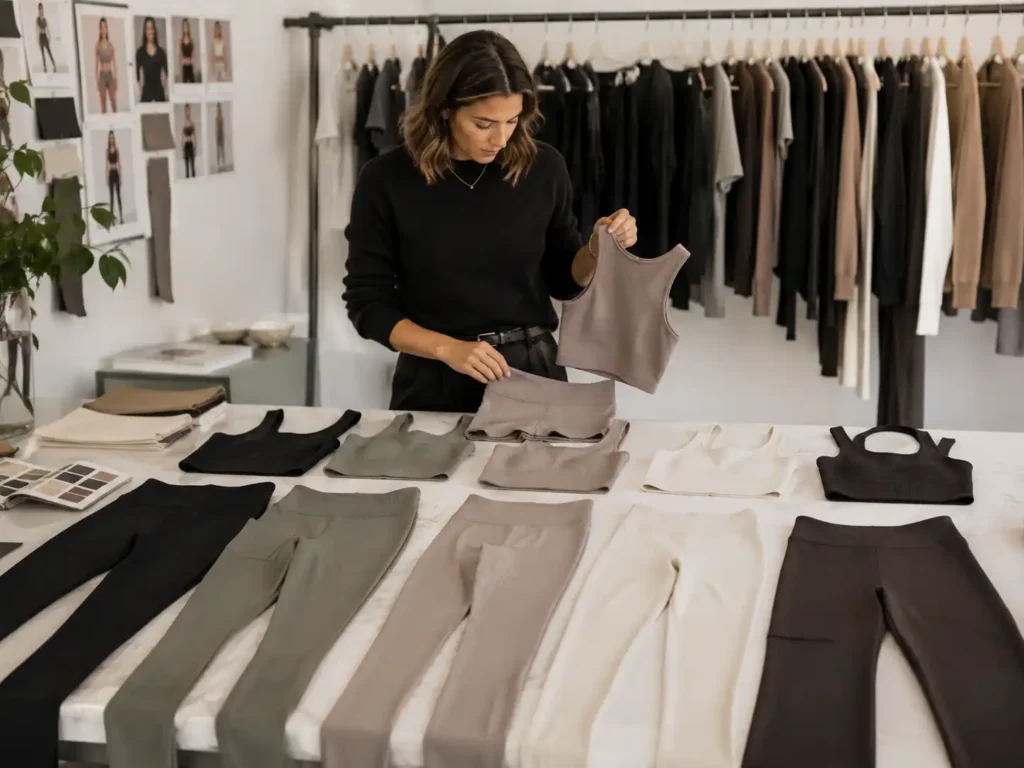
Mixed-Size Set Planning
Some brands sell the top and bottom only as one coordinated size; others allow separate sizing. Both systems are possible, but the retail and packing logic must be decided early.
Separate sizing increases SKU count, labels, stock complexity, barcode rules, and packing control. One-size pairing is simpler but may not suit brands whose audience frequently needs different top and bottom sizes. The chosen system influences production breakdown and warehouse data.

Fit Approval Records
Fit comments should move from email or annotated photos into a controlled revision record.
Changes to bust, waist, hip, strap, armhole, neckline, back height, crop length, skirt length, rise, slit, and lining are reflected in the pattern, measurement file, and revised sample.
Bulk production starts only after the approved version, final pattern, grade rules, and reference sample are aligned.
Design Details We Can Develop

Ruched Construction
- Options: fixed ruching, drawcord ruching, elastic ruching
- Main risks: left-right imbalance, loose elastic, twisting, length variation
- Best suited to: party tops, fitted skirts, mini sets, bodycon co-ords

Cut-Out Panels
- Confirm cut-out size and position on a fit model
- Review stretch around narrow connecting sections
- Protect high-stress joins from tearing
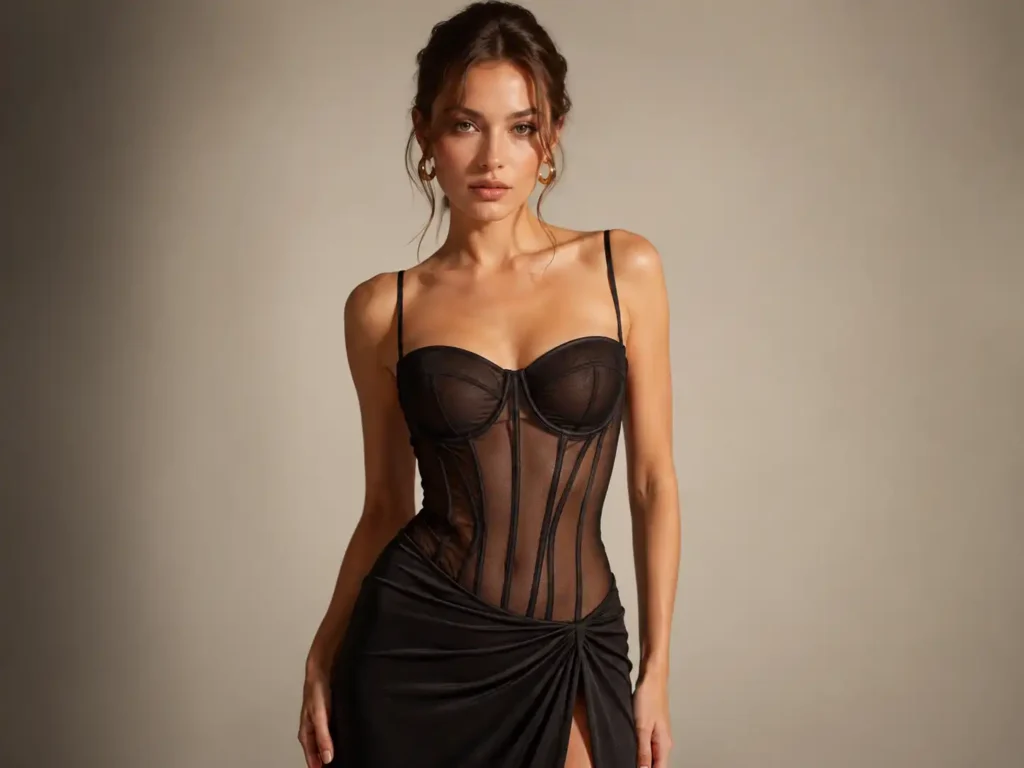
Corset Structure
- Structure options: soft corset, semi-structured, full internal support
- Main risks: cup displacement, boning discomfort, visible internal edges
- QC focus: symmetry, support, closure, clean internal finishing

Adjustable Straps
- Options: elastic straps, fabric straps, clear straps, halter ties
- Main controls: length range, slider hold, attachment security
- Color matching: strap, ring, slider, thread, and mesh

Side Slits
- Confirm shell and lining treatment separately
- Reinforce the slit opening
- Check symmetry and walking comfort

Flared Legs
- Main variables: rise, crotch depth, knee point, flare width
- Suitable linings: short lining, full stretch lining, selective coverage
- Main risks: twisted legs, seat transparency, knee bagging

Layered Skirts
- Options: two-layer, tiered, asymmetric, gathered, draped
- Main risks: uneven layers, bulky waist, crushed volume, static
- Packing focus: protect shape without oversized packaging

Asymmetric Shapes
- Suitable for premium partywear and occasion-led sets
- Main controls: support, balance, drape, hem position
- Fit review: front, side, back, and movement views
Print, Color and Embellishment Options

Custom Printed Mesh

Solid Color Mesh

Rhinestone Mesh

Sequin Details

Flocked Mesh
Embroidered Mesh
Start with the Right Development Information
Tech Pack
Reference Image
Original Sample
Size Chart
Quantity Plan
Launch and Packing Plan
From First Sample to Production Approval

Project Review

Fabric Direction

Pattern Development

First Sample

Fit Revision

PP Sample Approval
Keep Every Set Consistent in Bulk
Sample approval only creates value when the same material, proportion, construction, and packing logic can be carried into production. Jinfeng Apparel transfers approved patterns, size charts, fabric references, trim standards, sewing instructions, label positions, packing files, and QC points into a production handover so the sample room and bulk team work from the same standard.
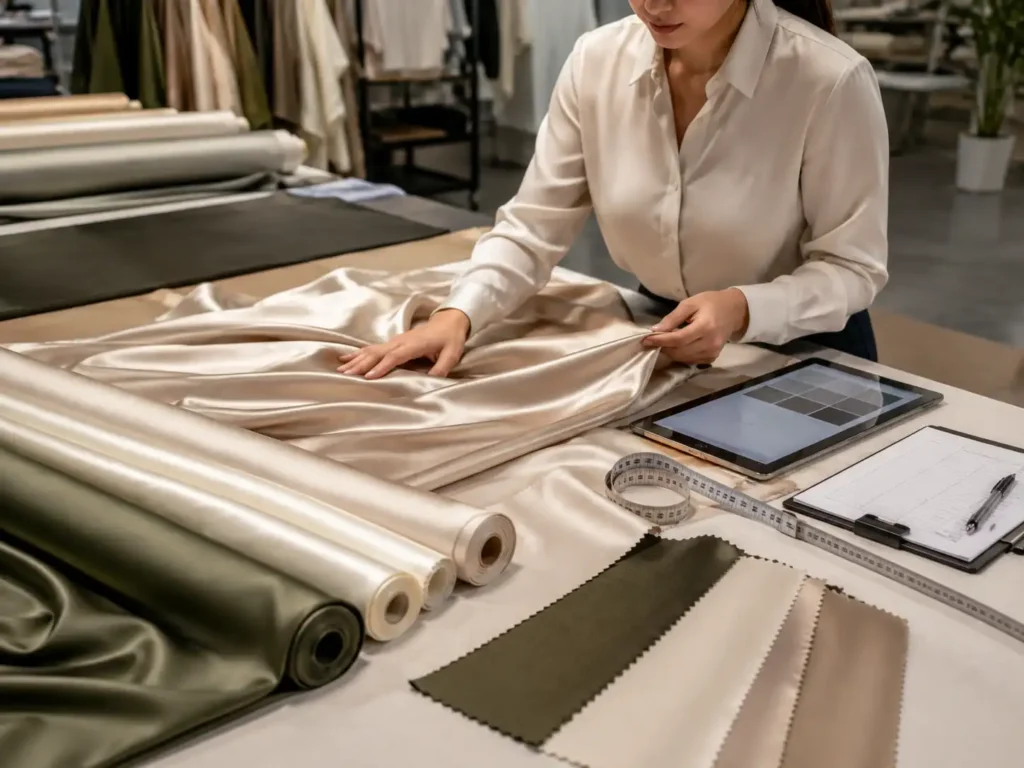
Fabric Batch Control
Outer mesh, lining, elastic, thread, zippers, and decoration are checked against approved references before cutting. Matching sets should use coordinated material batches wherever feasible, especially when the top and bottom are sold in one package. Shade differences are easier to notice in transparent fabric because the lining and skin tone alter the final appearance. Material records therefore link each approved component to the correct style and color program.
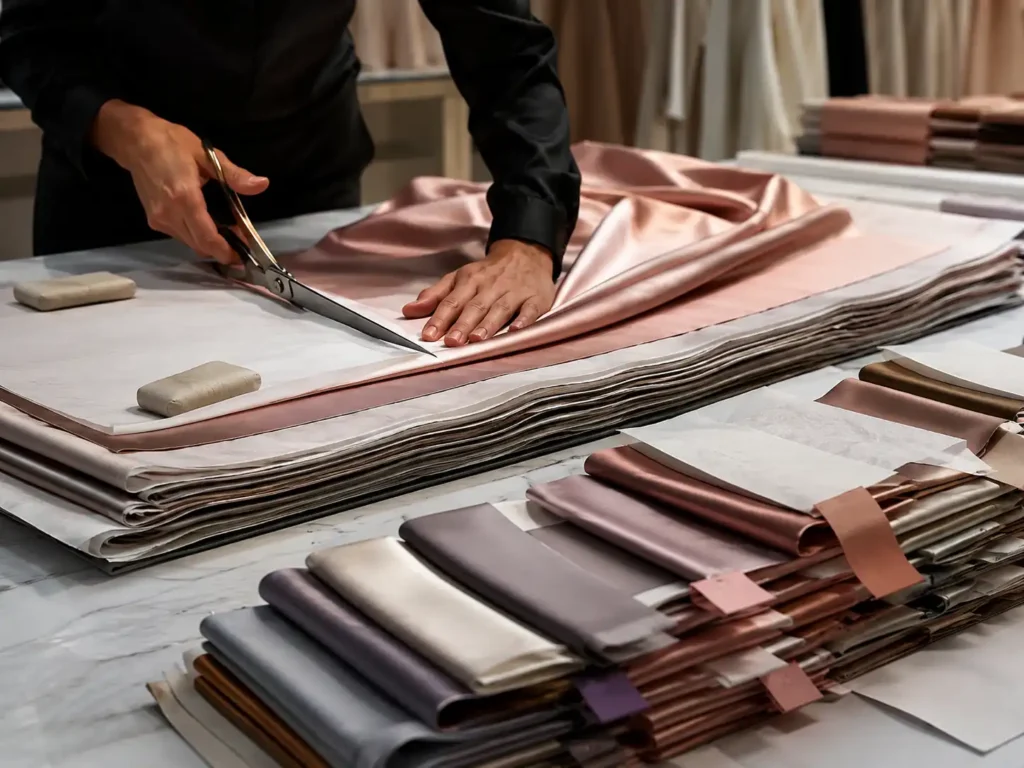
Cutting Direction Control
Stretch direction and print direction are marked before cutting. A panel cut on the wrong direction can change fit, recovery, drape, and print appearance even when the measurements appear correct. Top and bottom components are separated by style, color, size, and fabric group. Delicate mesh also requires careful handling so cut panels do not stretch, snag, or become mixed before sewing.
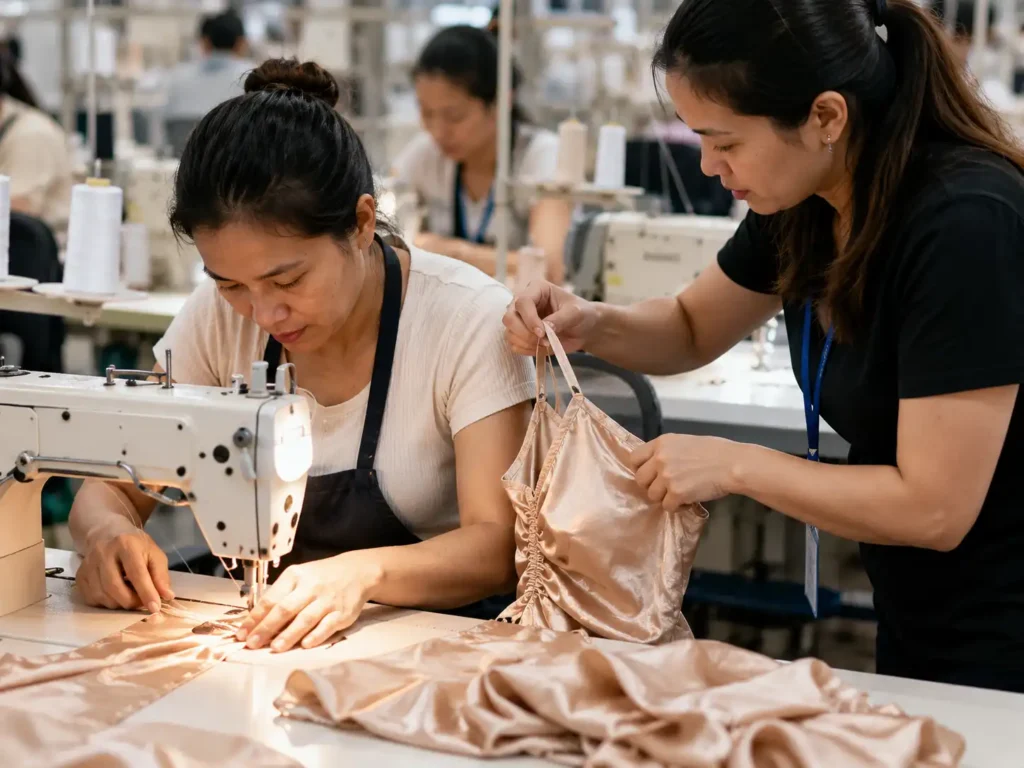
Sewing Tension Control
Mesh can ripple, stretch, or tunnel when seam tension and handling are inconsistent. The approved seam method is validated during sampling and communicated through the production standard. Inline inspection pays particular attention to necklines, armholes, hems, cut-outs, zippers, ruched seams, waistbands, and long trouser or skirt seams. Garments are checked in a relaxed state and on form where needed because flat appearance alone can hide fit distortion.
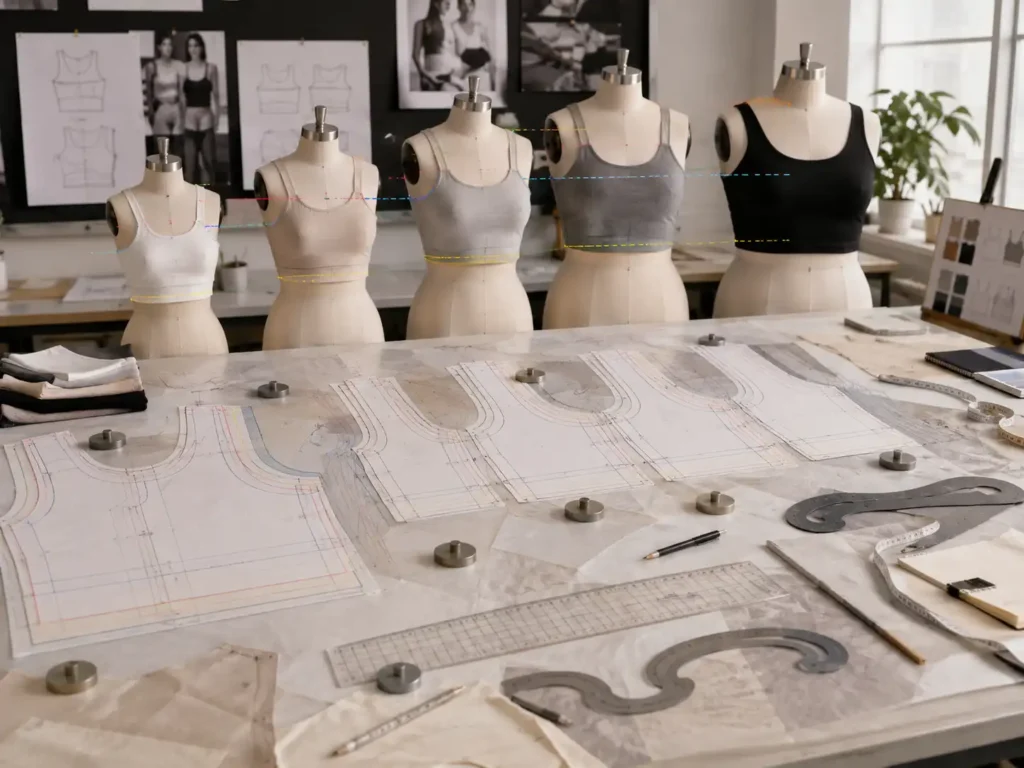
Paired Proportion Control
The top and bottom are measured individually, but final evaluation also checks the outfit as a pair. Crop length, waistband position, visible midriff, skirt or trouser length, print balance, and overall silhouette should remain aligned with the PP sample. Grading results are reviewed at key sizes so the proportional relationship does not drift as bust, torso, waist, hip, and garment length change.

Size and SKU Pairing
Packing instructions define whether the set uses one coordinated size, separate top and bottom sizes, or another approved combination. Labels, barcode files, SKU tables, polybag stickers, and carton breakdowns must reflect the same rule. Before sealing, both pieces are checked for style, color, size, label, and physical completeness. A set with one wrong component is treated as a full packing defect, not a minor label issue.

Production Calendar Control
Multi-style mesh collections are planned by material readiness, sample approval, style difficulty, production allocation, QC capacity, and shipment priority. A planning reference for standard bulk programs is often around 35-55 days after PP approval and complete material readiness, while custom print, special embellishment, complex style groups, or phased deliveries require a project-specific calendar. Confirmed dates are built around actual approvals rather than inquiry date alone.
Quality Checks for Mesh Matching Sets
Mesh quality control combines garment inspection with paired-set verification. The inspection plan is prepared around the approved style, fabric, fit, decoration, size system, and packing method. Individual pieces may pass separate checks and still fail as a complete set if color, size, proportion, labels, or components do not match.
| Inspection Stage | Top Check | Bottom Check | Complete-Set Check |
|---|---|---|---|
| Incoming Fabric | Holes, snags, shade, stretch, recovery, transparency | Holes, snags, shade, stretch, recovery, lining compatibility | Same approved shell and lining direction for paired pieces |
| Cutting Review | Panel shape, stretch direction, neckline, sleeve or strap pieces | Waist, hip, rise, leg or skirt panels, slit and length direction | Correct style, color, size bundle and print orientation |
| Inline Sewing | Neckline, armhole, straps, cups, corset panels, ruching, seam waviness | Waistband, hip seams, rise, crotch, slit, hem, leg twist, ruching | Construction method and appearance match the approved sample |
| Measurement | Bust, underbust, crop length, strap, armhole, neckline, hem | Waist, hip, rise, inseam, skirt length, slit, lining length | Top-to-bottom proportion follows approved size and grade rules |
| Final Garment | Transparency, lining exposure, closure, decoration, loose threads | Coverage, recovery, movement, hem balance, decoration, finishing | Color match, complete components, correct labels and clean appearance |
| Packing Check | Main label, size label, care label, barcode, folding | Main label, size label, care label, barcode, folding | Correct pair, SKU, polybag, sticker, hangtag, carton and quantity |
Private-Label Sets Ready for Retail
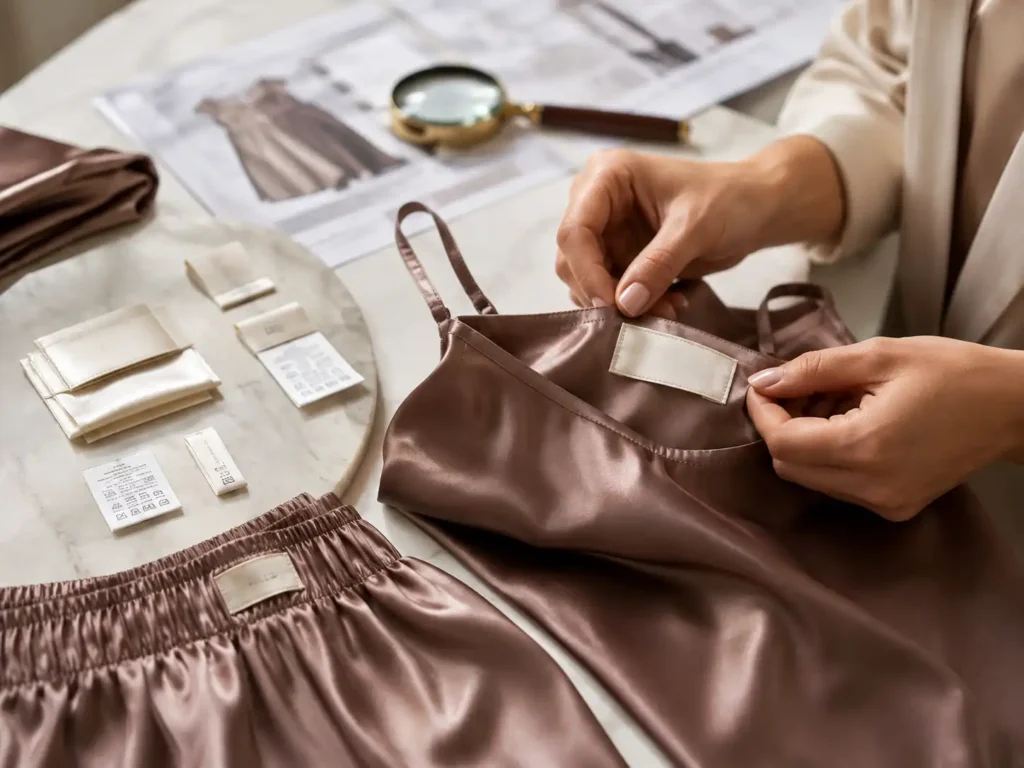
Woven Labels

Size Labels

Care Labels
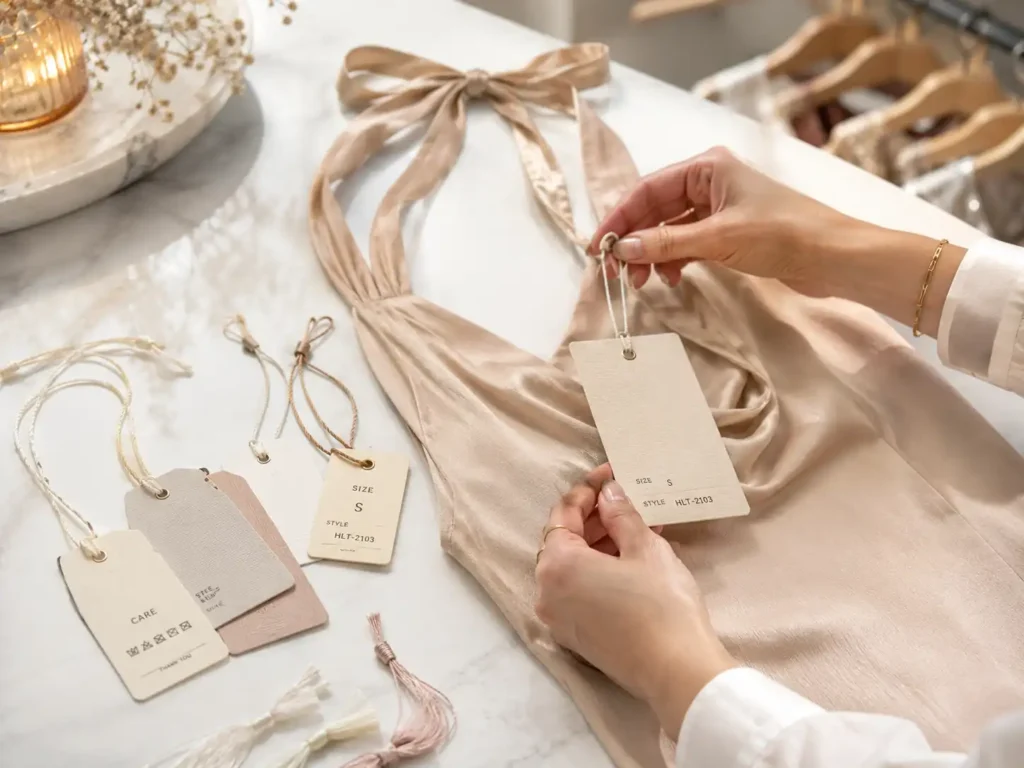
Hangtags
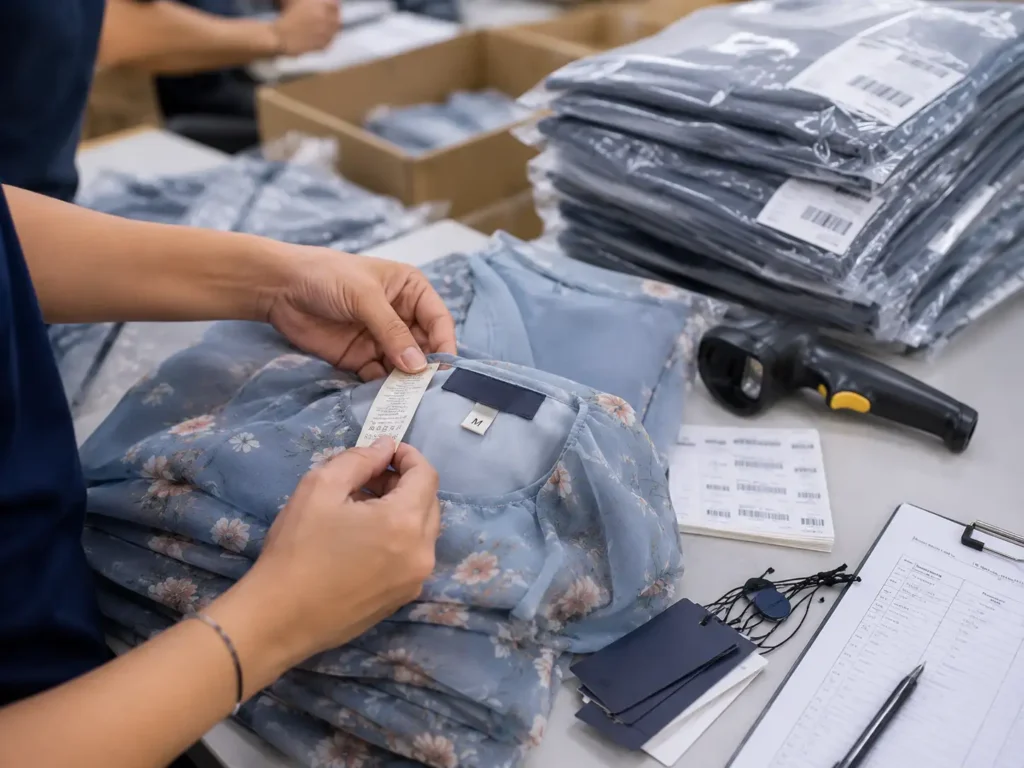
Barcode and SKU

Branded Packaging
MOQ and Quotation for Mesh Set Projects
MOQ Planning
Cost Review
The largest cost variables usually include outer mesh, lining, print or dyeing, decoration, pattern complexity, sewing time, number of components, size range, labels, packing, QC intensity, and quantity. Cost optimization may use a better-aligned stock fabric, consolidated colors, revised decoration density, simplified internal construction, improved cutting layout, shared trims, or split-shipment planning without weakening the brand-level appearance. An initial price range can be reviewed from reference images and quantity information, but final pricing requires confirmed fabric, lining, trims, construction, measurements, decoration, labels, packing, and delivery conditions. A low preliminary figure that ignores those details creates risk later. Jinfeng Apparel therefore separates project evaluation, sample costing, and final bulk quotation so commercial decisions follow the approved product standard.
Capacity for Multi-Style Mesh Collections
Factory Allocation
Sample Capacity
Merchandising Control
Production Grouping
QC Coverage
Finishing and Packing
Mesh Set Programs Solved in Production
The following anonymous programs reflect the order structure commonly handled for established fashion labels: 10-30 styles per development group and total order quantities between 20,000 and 80,000 pieces. Brand names, original tech packs, unpublished designs, prices, and proprietary files remain protected under NDA-based cooperation.
U.S. Partywear Collection
A U.S. partywear label planned 16 mesh matching-set styles across ruched mini skirts, corset tops, flared trousers, asymmetrical tops, and three-piece looks.
The order totaled 31,200 pieces across three core colors and an XS-XL size range. Early samples showed inconsistent bust coverage, excessive midriff gaps on two crop-top sets, and different recovery between the outer mesh and lining on fitted skirts.
Jinfeng Apparel divided the program into four construction groups: stretch-mesh ruched sets, corset-support sets, trouser sets, and embellished looks. Fabric and lining combinations were rechecked before pattern revision. Crop length and waistband height were approved together, while selected lining zones were extended by 2-4 cm according to style. The PP stage locked color, mesh direction, ruching ratio, cup position, labels, barcode files, and set-packing rules.
Bulk production moved in two delivery phases, with eight campaign-priority styles released first. QC focused on neckline recovery, cup symmetry, seam waviness, uneven ruching, lining exposure, rhinestone loss, and top-to-bottom size pairing. Final packing used one retail SKU per coordinated set, with both pieces verified before polybag sealing.
European Printed Mesh Program
A European premium ecommerce label developed 12 printed mesh sets totaling 24,600 pieces. The range combined long-sleeve tops with maxi skirts, halter tops with flared trousers, and soft overlay sets for vacation launches. Two artwork directions and two base color stories were used across the collection. Development risk centered on print saturation, motif distortion over the hip, long-hem balance, and visible differences between mesh and lining colors.
Artwork was tested against the selected stretch mesh before full garment sampling. Pattern panels were reviewed to reduce distracting seam breaks, and the brand approved controlled motif movement rather than exact print matching at every join. Lining colors were selected after seeing the printed mesh over physical swatches under indoor and natural light. Trouser rise, knee point, flare width, and maxi-skirt length were revised from fit feedback.
Production was grouped by print base and lining family. Inspection compared print shade, stretch distortion, leg twist, hem balance, seam waves, lining exposure, and paired-color accuracy. Three shipment groups were prepared around the brand’s launch sequence, with hero styles and priority sizes released first and remaining stock delivered under the same barcode and carton-mark system.
Australian Club and Resort Drop
An Australian fashion label combined clubwear and resort directions in an 18-style mesh-set program totaling 42,000 pieces. The range used stretch mesh, soft mesh, power-mesh support panels, and selected rhinestone details. Products included fitted crop-and-skirt sets, long-sleeve tops with trousers, draped halters with maxi skirts, and three-piece overlay looks. The brand required strong photography, comfortable warm-weather wear, and retail-ready private labels.
The styles were separated into fitted, structured, and fluid groups. Fitted looks received recovery and waistband testing; structured tops received cup, boning, lining, and closure review; fluid resort styles received drape, static, transparency, and packing-recovery checks. Several designs used different coverage zones across colors, so lining approvals were recorded by style and color rather than treated as one general standard.
Bulk QC focused on holes, snags, cut-out symmetry, strap security, trouser recovery, skirt hem balance, rhinestone attachment, and complete three-piece packing. Labels, care content, barcodes, polybag stickers, and carton marks were checked against the brand’s SKU file. Delivery was split between launch-critical stock and the main replenishment volume.
Compliance Support and Design Confidentiality
Compliance and Testing Support
NDA and Design Protection
Mesh Matching Set Frequently Asked Questions

Develop Your Next Mesh Matching Set
Send Jinfeng Apparel a reference image, tech pack, original sample, sketch, or line sheet for a focused development review. Include enough commercial and technical information to evaluate fabric direction, transparency, lining, fit, MOQ, sample scope, quotation, production timing, private labels, and shipment planning.
The more complete the project file, the faster the team can identify workable options and avoid assumptions that later affect price or delivery.
Please prepare:
- Product combination: top + skirt, top + trousers, three-piece set, or another coordinated structure
- Quantity per style and color, plus the proposed size breakdown
- Preferred mesh, lining, print, color, decoration, and trim direction
- Target market, size chart, base size, grade rules, and fit preference
- Label, barcode, SKU, polybag, carton, and warehouse requirements
- Target sample date, launch date, delivery window, and destination market


