...

Satin Matching Set Manufacturer

Custom satin two-piece collections developed for established fashion brands, premium ecommerce programs, occasionwear labels, resortwear lines and multi-channel retailers.

  • 200 pcs per style/color – standard MOQ, subject to satin availability, color development, trims, construction and packing requirements.
  • 2 sample rooms, 7+ senior pattern makers and 20+ sample machinists – structured support for tops, skirts, trousers, corset sets and coordinated fit development.
  • 6 owned factories plus 10+ long-term production partners – production allocation for multi-style, multi-color and multi-batch womenswear programs.
  • 100,000+ pcs monthly capacity – planned around approved PP samples, fabric readiness, workmanship complexity and launch schedules.

Jinfeng Apparel develops satin matching sets as complete commercial products, not two unrelated garments. Fabric batch, shine direction, top-to-bottom proportion, size pairing, workmanship, labeling and protective packing are controlled from development through repeat production.

Built for Structured Fashion Programs

Clear product direction, professional sampling and planned bulk production create the best working conditions for satin matching sets. Early alignment on style count, color plan, size range, fabric direction and launch timing helps the development team give useful answers before pattern work begins.

Best Program Fit

Jinfeng Apparel works with established womenswear brands, sourcing teams, product developers, premium ecommerce programs, occasionwear labels and retailers managing seasonal assortments. Projects are strongest when each style has a reference image, tech pack, original sample or line sheet, together with a realistic quantity plan and target launch window.
  • Multi-style collections and seasonal drops
  • Private-label bulk production and repeat orders
  • Satin tops, skirts, trousers and coordinated sets
  • Projects requiring fit, fabric and workmanship review

Complete Manufacturing Scope

Development can begin from a tech pack, original sample, sketch, reference image, line sheet or approved fabric swatch. Support covers product review, fabric and trim sourcing, pattern development, sample sewing, fit correction, PP sample approval, bulk production, QC, private-label packing and export coordination.

  • OEM, ODM and private-label production
  • Pattern and sample revision records
  • Bulk fabric, trim and packing control
  • Repeat-order files retained for future production

Satin Set Programs We Support

Different sales channels require different satin weights, silhouettes, packing formats and launch rhythms. Product planning starts with the collection role, expected retail presentation and the fit standard needed across tops and bottoms.

Global Fashion Brands

Large seasonal programs require more than a single attractive sample. Style grouping, fabric allocation, PP approvals, production scheduling, QC windows and packing instructions must remain traceable across many SKUs. Jinfeng Apparel supports coordinated development for brands managing multiple styles, colors, sizes and delivery batches.

Premium Ecommerce

Strong photography and clean on-body proportion matter because satin reflects light and exposes small fit or pressing faults. Development focuses on neckline position, crop length, waist placement, hip fit, hem balance and surface presentation so product images and delivered garments follow the same approved direction.

Occasionwear Labels

Occasion sets often combine draping, corset structure, fitted skirts, wide-leg trousers, lining and delicate trims. Sampling verifies support, coverage, movement, seam quality and pressing before bulk production. Color and shine consistency remain central when both pieces are sold as one look.

Partywear Collections

Partywear programs frequently use corset tops, mini skirts, cut-outs, ruching, asymmetric drapes and high-impact colors. Development balances visual impact with bust support, secure openings, lining coverage and wearable proportions, while bulk control protects satin surfaces from needle marks, snags and pressing damage.

Resortwear Programs

Resort satin sets favor relaxed shirts, camisoles, wrap tops, shorts, fluid skirts and wide-leg trousers. Fabric hand feel, airflow, travel creasing and loose-fit proportion become more important than rigid structure. Packing methods are planned to reduce deep folds before retail or campaign use.

Multi-Channel Retailers

Retail programs need accurate SKU pairing, hangtags, barcodes, polybags, carton assortments and size ratios across ecommerce and store distribution. Product files define whether top and bottom share one set code or require separate internal codes, preventing warehouse re-pairing and packing errors.

Where Satin Matching Sets Commonly Fail

A coordinated look can lose commercial value when fabric, fit and packing are managed as separate tasks. The most expensive failures often appear after photography, warehouse receiving or first customer returns rather than during a quick factory inspection. Review Production Risks

Shade Difference

Top and bottom may look acceptable alone but visibly different together when fabric comes from separate dye lots or the lining shifts the apparent color. Bulk planning keeps coordinated pieces within an approved fabric and color standard, with physical swatches, lab dips or bulk color approvals used where required.

Shine Direction

Satin changes appearance when panels are cut in different directions. A top can look darker than its skirt under studio lighting even when both pieces use the same roll. Fabric-face marking and cutting-direction instructions help preserve one visual language across the complete set.

Seam Puckering

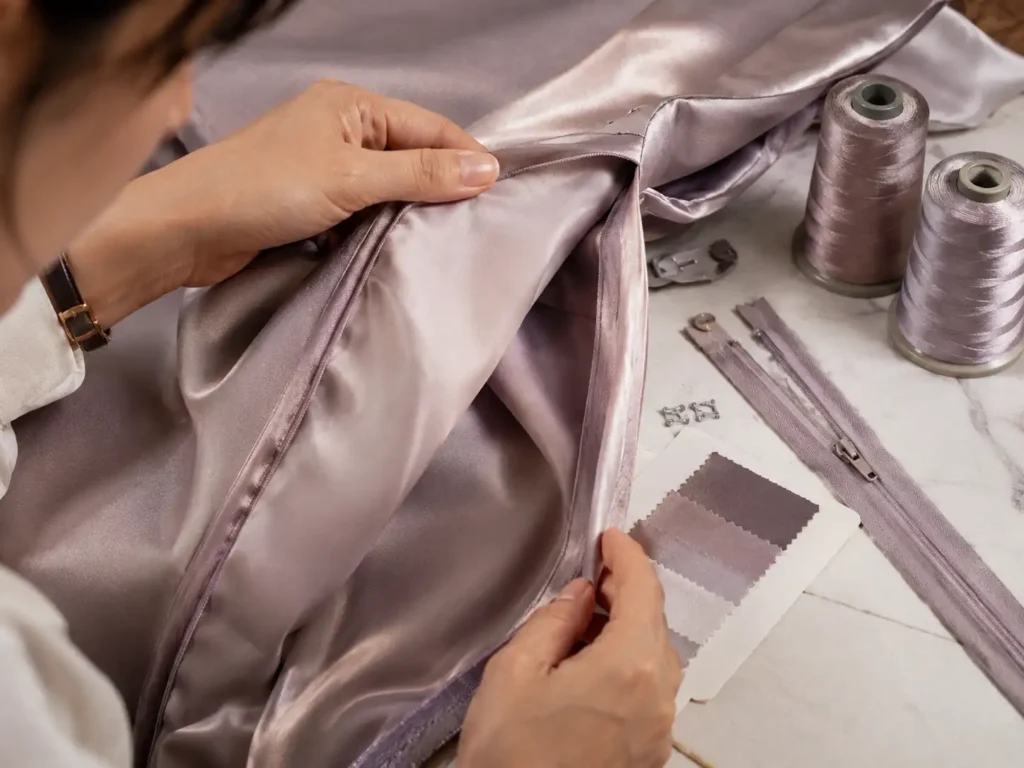
Lightweight satin reacts strongly to needle size, thread tension, seam construction and pressing. Puckered side seams, rippled invisible zippers or stretched necklines become highly visible on smooth surfaces. Sample sewing establishes a workable construction standard before bulk line execution.

Weak Proportion

A well-fitted top and a well-fitted bottom can still create a poor set when the crop length, waist rise or exposed midriff is wrong. Coordinated fitting evaluates both pieces together and records top length, waist position, hip shape and total silhouette as linked decisions.

Pairing Errors

Separate size labels, hangtags and barcodes create room for packing mistakes. A correct small top paired with a medium skirt can pass individual garment checks but fail the final product. Set-level inspection confirms style, color, size, label and SKU pairing before bagging.

Packing Creases

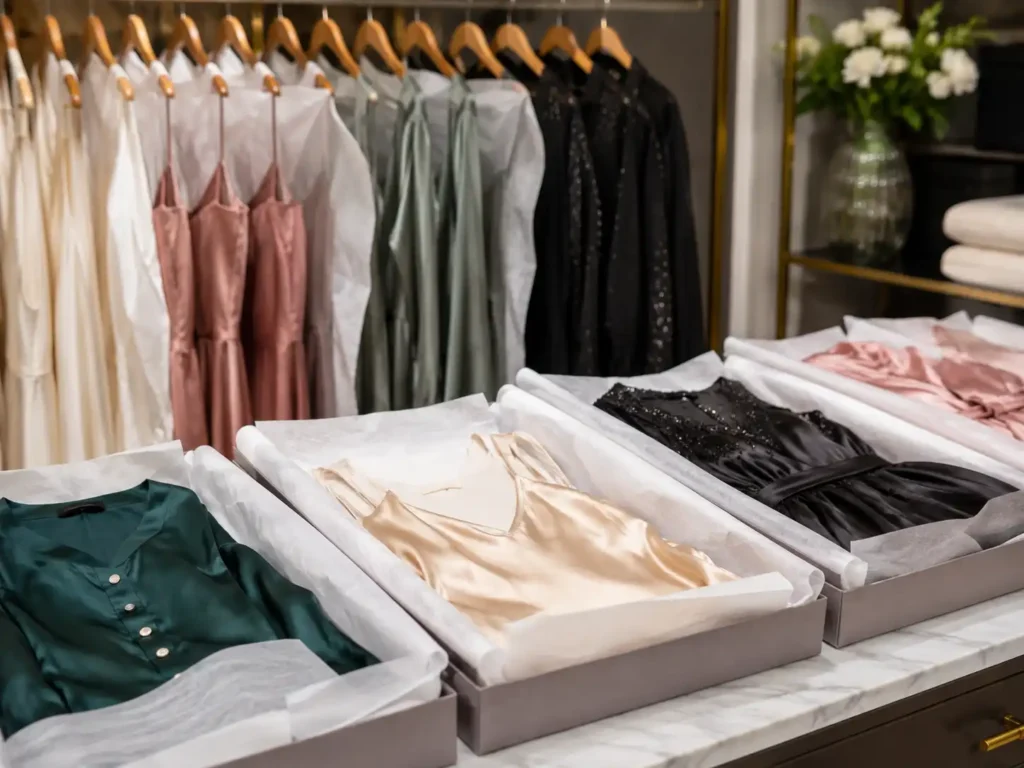
Glossy satin can develop deep fold lines, abrasion, shine marks or pressure damage during packing and carton compression. Folding points, tissue protection, polybag size and carton density are reviewed according to garment structure, fabric weight and shipment method.

Satin Matching Sets We Manufacture

Product development covers fluid, fitted and structured set formats for occasionwear, partywear, resortwear and premium fashion collections. Each combination follows its own fabric, pattern, lining, trim and QC logic rather than one standard construction method.

Cami and Midi Skirt

A clean cami-and-skirt set depends on balanced strap length, neckline depth, bust coverage and skirt waist position. Lightweight satin creates fluid movement but exposes seam puckering and lining shadows. Sampling checks the combined silhouette, hem level and the amount of skin shown between both pieces.
  • Best for: occasion, dinner, resort and premium ecommerce
  • Fabric direction: lightweight or matte satin
  • QC focus: straps, neckline, side seams, hem balance

Crop and Maxi Skirt

A crop top paired with a maxi skirt creates a strong campaign silhouette, yet small proportion errors can make the set look unbalanced. Pattern work controls finished top length, waistband height, hip ease, slit position and skirt sweep. Long satin skirts also need careful hanging and pressing to keep the hem level.
  • Best for: resort, wedding guest and event collections
  • Fabric direction: fluid satin or crepe-back satin
  • QC focus: crop-to-waist gap, slit height, hem and shine

Corset and Mini Skirt

Structured party sets require controlled bust shaping, cup position, boning, lining, zipper application and waist definition. The skirt must support the same visual line without excessive tightness or ride-up. Sample revisions often focus on cup shape, underarm comfort, waist seam alignment and mini length.
  • Best for: partywear, clubwear and birthday drops
  • Fabric direction: stretch satin or supported woven satin
  • QC focus: support, symmetry, zipper, waist and coverage

Halter and Trousers

Halter tops place pressure on neckline shape, neck comfort, armhole coverage and bust security. Wide-leg trousers need correct rise, hip ease, grain direction and hem length. Coordinated fitting prevents a visually heavy top or trousers that overpower the intended line.
  • Best for: evening, resort and event dressing
  • Fabric direction: medium-weight satin with controlled drape
  • QC focus: neckline, armholes, rise, side seams and hem

Shirt and Wide-Leg Pants

Relaxed shirt sets look simple but require clean collar points, smooth front plackets, even sleeve hems and balanced body volume. Trousers must hang straight without twisting. Matching fabric direction across large panels is especially important because satin reflection can magnify slight cutting differences.
  • Best for: resort, travel and elevated casual collections
  • Fabric direction: matte satin or crepe-back satin
  • QC focus: collar, placket, trouser grain and set color

Blazer and Trouser Set

Tailored satin sets combine fashion shine with internal structure. Interlining, shoulder shape, lining, pocket construction, lapel pressing and trouser balance must work without making the satin look stiff or marked. PP approval should lock pressing method and internal support before bulk cutting.
  • Best for: occasion, holiday and statement tailoring
  • Fabric direction: medium to heavy satin
  • QC focus: lapels, interlining, lining, crease and pressing

Draped Top and Skirt

Draped satin demands controlled grain, fold placement and seam anchoring. Small changes in fabric weight can alter the entire look, so the selected satin should be tested in the intended sample rather than judged from a swatch alone. Bulk sewing uses approved drape points and symmetry references.
  • Best for: cocktail, wedding guest and premium drops
  • Fabric direction: soft satin with stable drape
  • QC focus: fold placement, symmetry, seam anchoring and shine

Resort Shirt and Shorts

A resort set needs relaxed volume without looking oversized or losing shape. Shorts require comfortable rise, waistband stability, pocket control and enough seat room. Shirt length and shorts proportion are reviewed together so the set works buttoned, open or styled with other collection pieces.
  • Best for: vacation, cruise and summer capsule programs
  • Fabric direction: lightweight matte satin
  • QC focus: waistband, pockets, rise, shirt length and travel creasing

Built for Set Sales and Separate Styling

Built for Set Sales and Separate Styling A strong matching set can support full-look merchandising, separate-item styling and collection extensions from the same approved fabric direction. Product development therefore considers both the coordinated look and the commercial value of each individual piece.

Higher Order Value

A complete look allows merchandising teams to present a stronger outfit proposition than a single top or skirt. The same program can also offer separate-item purchasing when SKU planning permits, creating more styling routes without developing an unrelated product family.

Campaign Consistency

One approved satin direction can connect campaign imagery across tops, skirts, trousers and dresses. Matching shine, color and drape creates a recognizable seasonal story while reducing the visual disconnect that occurs when similar pieces are sourced from unrelated fabric lots.

Collection Extension

A successful satin direction can expand into a slip dress, cami, midi skirt, wide-leg trouser, shirt, corset top and matching set. Pattern, fabric and trim records help product teams build a broader capsule while maintaining a consistent surface and quality level.

Repeat Potential

Approved patterns, measurements, fabric references, trim details and packing instructions are retained for repeat production. Reorders still require confirmation of current fabric batch, color availability, trim supply and delivery schedule, but previous records reduce the need to rebuild the style from zero.

Choose Satin by Structure, Not Appearance Alone

Satin selection affects drape, fit, transparency, lining, seam behavior, pressing and final price. A glossy swatch may photograph well but fail in a fitted corset or wide-leg trouser. Fabric approval therefore considers the complete garment structure and expected bulk performance.

Satin DirectionTypical WeightStretchSuitable Set FormatsMain Development Risks
Lightweight satin70-110 gsmLowCamis, shirts, fluid skirts, relaxed shortsTransparency, seam puckering, static, fold marks
Matte satin90-160 gsmLowPremium occasion sets, resort shirts, skirtsShade variation, dull/bright panel mismatch
Stretch satin150-240 gsmMediumCorset sets, fitted skirts, body-led stylesRecovery, seam tension, shine at stress points
Crepe-back satin100-220 gsmLow-MediumDraped tops, trousers, skirts, reversible texture ideasFace-direction control, pressing and hand-feel change
Heavy satin180-300 gsmLowBlazer sets, structured skirts, formal trousersBulk at seams, interlining response, pressure marks
Printed satinVaries by baseVariesResort sets, seasonal capsules, statement co-ordsPrint placement, color batch, repeat direction and MOQ

Control Color, Shine and Fabric Direction Together

Pantone approval alone does not guarantee a matching satin set. Surface reflection, panel direction, lining color and lighting conditions can make one piece appear darker, warmer or glossier than the other. Visual consistency is built through linked fabric and production controls.

Physical Color Standard

Color evaluation may use a Pantone reference, physical standard, lab dip, fabric swatch or approved bulk cutting. Satin should be checked under more than one lighting condition because gloss can shift the perceived tone. Approval records identify the selected reference for sampling and bulk production.

Single Batch Planning

Where the design and quantity allow, coordinated tops and bottoms are planned from the same approved fabric and dye lot. Material reservation needs to reflect cutting consumption, wastage, replacement allowance and the full style/color quantity rather than only the first production piece.

Face Direction Marking

Fabric face and cutting direction are defined before bulk cutting. Direction marks help prevent a front panel, sleeve, trouser leg or skirt panel from reflecting light differently. The standard is especially important for large, uninterrupted satin surfaces used in shirts, skirts and trousers.

Lining and Thread Match

Lining can change the apparent color of pale satin and become visible at seams or edges. Thread, zipper tape, hooks, buttons and labels are selected in relation to the approved outer fabric. Trims that look close in isolation can still appear wrong beside a glossy finished garment.

Bulk Color Approval

Custom-dyed or high-sensitivity colors may require a bulk color approval before full cutting. The review considers depth, undertone, surface shine, lining interaction and comparison between rolls. Any material change is recorded before production proceeds.

Photography Review

Natural light, indoor light and studio lighting reveal different aspects of satin. Development photos can support communication, but physical fabric and garment approvals remain the stronger standard. Campaign teams should receive an approved photo-ready sample based on the same confirmed fabric direction.

Develop Satin Tops Around Fit and Support

The top defines neckline security, bust shape and the visual distance to the bottom. Pattern decisions vary sharply between a relaxed shirt, a soft cami, a halter top and a structured corset, even when all four use satin. Review Top Structures

Cami and Slip Tops

Fine straps, neckline depth, bust coverage and underarm exposure are reviewed together. Adjustable sliders can improve wearability across sizes, but strap width, hardware scale and tension must suit the fabric. Lining or facing prevents edge distortion and controls transparency in light colors.

Halter Tops

Halter construction needs a secure neckline, comfortable neck pressure and controlled armhole shape. Sample fitting checks whether the top shifts during movement, whether the bust remains supported and whether the back opening creates enough stability without visible strain.

Corset Tops

Corset and bustier structures may include bra cups, boning, lining, hooks, zippers, panel seams and anti-slip support. Pattern development balances visual shaping with breathing room and comfort. Cup position, under-bust seam, waist definition and side height are locked through fitting and revised samples.

Shirts and Blouses

Satin shirts depend on collar shape, front placket stability, button spacing, sleeve hang and smooth side seams. Large panels reveal cutting-direction errors quickly. The shirt must also balance with the selected trouser or skirt volume so the full set looks deliberate rather than oversized.

Engineer Skirts and Trousers for Clean Balance

Satin bottoms need a stable waist, smooth hip line and controlled grain. Waistband construction, zipper placement, lining, rise, slit height and hem handling influence comfort and the way the entire set hangs on the body.

Mini and Fitted Skirts

Mini skirts require secure waist fit, enough hip ease, controlled ride-up and suitable lining coverage. An invisible zipper should sit flat without rippling the side or back seam. Stretch satin may improve movement, but recovery and shine at stress points must be tested during fitting.

Midi and Maxi Skirts

Longer skirts depend on grain control, waist placement, hip transition and hem balance. Bias or fluid shapes can grow after hanging, so the finished sample should be allowed to settle before the final hem is confirmed. Slit height is reviewed while standing, walking and sitting.

Wide-Leg Trousers

Trousers require correct front and back rise, hip ease, crotch depth, leg balance and grain direction. A satin trouser can twist or show drag lines when panels are off-grain. Pocket bags, zipper position, lining and waistband structure are selected to avoid bulk and visible impressions.

Resort Shorts

Relaxed shorts need comfortable seat room, smooth pocket openings and a waistband that remains stable without feeling rigid. Elastic-back or fully elastic designs require recovery checks, while tailored fronts need clean interfacing and pressing. Shirt length and short rise are fitted as one outfit.

Fit Both Pieces as One Complete Look

Separate approvals do not guarantee a coordinated fit. The sample review measures how top length, waistband height, rise, bust shape, hip line and hem position work together across the intended size range. Feedback is converted into revised patterns and measurement files rather than left in message threads.

Observed IssueLikely CauseDevelopment Action
Too much midriff exposureTop length and bottom rise developed separatelyAdjust finished top length, waistband position or both; refit the full set
Top hem overlaps awkwardlyCrop length or waistband height is too longRebalance the gap and confirm movement while sitting and walking
Skirt pulls across hipInsufficient hip ease, lining restriction or zipper tensionCorrect outer and lining patterns; review seam allowance and zipper application
Corset looks heavy with skirtTop volume, cup shape or waist seam overwhelms bottomRefine panel proportions and review skirt shape as part of one silhouette
Shirt and trousers look oversizedBoth pieces carry relaxed volume without hierarchyReduce one area of volume and control shirt length, trouser width or shoulder line
Set changes across sizesGrading treats top and bottom as unrelated blocksReview graded balance, crop gap, waist placement and key measurement tolerances together

Design Details That Define Premium Satin Sets

Small components decide whether a satin set feels refined or inexpensive. Every visible and hidden detail is reviewed for appearance, comfort, durability, bulk availability and compatibility with the approved fabric and garment structure.

Adjustable Straps

Metal or plastic sliders should match strap width, garment color and intended price level. Adjustment range is tested against neckline height and bust coverage. Strap tension must support the garment without cutting into the shoulder or distorting a lightweight satin edge.

Invisible Zippers

Zipper tape, teeth and puller color are selected against the outer fabric. Sewing must keep the seam flat and the opening smooth. Reinforcement, seam allowance and pressing are controlled to prevent rippling, exposed tape or a visible ridge through the satin.

Covered Buttons

Covered buttons create a cohesive look for shirts, blouses and tailored sets, but fabric must sit smoothly without fraying or uneven shine. Button spacing, shank strength, buttonhole size and spare-button requirements are confirmed before bulk accessory ordering.

Draping and Ruching

Drape points and gathering ratios are translated into pattern and sewing instructions. Symmetry, fold direction, stitch anchoring and seam placement are checked on the sample. Bulk production follows approved reference photos or templates so the visual effect does not change from piece to piece.

Boning and Cups

Support components are selected by flexibility, shape, comfort and fabric weight. Cup position, boning length, channel placement and lining coverage are verified during fit review. Strong support should not create hard edges, visible lines or discomfort at the side seam.

Waistband Support

Interlining or elastic can stabilize the waist, yet the wrong material may leave pressure marks, stiffness or bubbling. Width, adhesion, stretch, recovery and seam bulk are tested according to skirt, trouser or short construction and the approved satin weight.

Lining and Facing

Lining controls transparency, comfort, internal finish and the way satin moves. Color, weight, stretch and static behavior should suit the outer fabric. Facing depth and attachment points are planned to avoid rolling edges, visible seam shadows or lining that restricts drape.

Slits and Cut-Outs

Slit height and cut-out shape are assessed for movement, coverage and edge stability. Reinforcement must support the opening without creating visible thickness. Bulk QC checks symmetry, seam security and whether the opening stays aligned after pressing and packing.

Move from Reference to Production-Ready Approval

Sampling is a controlled conversion process covering structure, fabric, fit, workmanship, cost alignment and bulk feasibility. Clear records connect every approved change to pattern, measurement, BOM, trim, sewing, QC and packing files.

Project Review

The development team reviews style references, tech packs, original samples, fabric preferences, color plan, size range, quantity, labels, packing and launch date. Initial feedback identifies missing information, structural risks, fabric direction, trim requirements and whether the project fits standard MOQ conditions.

Fabric Direction

Available satin options are compared by composition, weight, stretch, hand feel, drape, transparency, shine, color availability, supplier MOQ and expected lead time. A fabric substitution is not treated as a simple color change because pattern, lining, cost and workmanship may also need revision.

Pattern Development

Patterns are built around garment structure and the intended coordinated fit. Key points can include bust, under bust, waist, hip, crop length, waistband position, rise, slit height and hem. Pattern information is updated when feedback changes fit or construction.

First Sample

The first sample validates design structure, fabric direction, workmanship feasibility and initial proportion. It is not automatically the bulk standard. Comments may address neckline, bust shape, waist placement, top length, hip fit, drape, lining, zipper, trim or surface finish.

Set Fitting

Both pieces are fitted together to check exposure, proportion, movement and the full silhouette. Measurement results are compared with the size chart, while comments are classified as fit, fabric, workmanship, trim, color, packaging or cost-related issues.

Revised Sample

Approved feedback becomes a revised pattern, measurement chart, BOM, fabric record, trim record, sewing instruction and QC checkpoint. Simple satin sets may follow one first sample and one revised sample; medium structures may require one or two revisions; corset-led or complex sets often need around two revisions, subject to the actual design.

PP Sample

PP approval begins only after structure, measurements, fabric, color, trims, workmanship, labels, packing and bulk cost are sufficiently confirmed. Major design changes after PP approval can affect material booking, production timing and price, so the standard should be treated as a production lock.

Golden Sample

The sealed sample and approved files form the reference for bulk production, final inspection and future repeats. A photo sample or salesman sample may serve a different purpose and should not be assumed to replace the approved PP or Golden sample standard.

Production Controls for Delicate Satin Surfaces

Satin requires disciplined handling from incoming inspection through final packing. Smooth, reflective surfaces reveal needle damage, oil marks, pressing faults, abrasion and direction errors quickly, so bulk control must protect both appearance and construction.

Incoming Fabric Review

Fabric is checked against approved type, color, hand feel, weight direction, surface condition and available batch information. Roll issues such as shade variation, marks, snags, creases or inconsistent shine are identified before cutting decisions are finalized.

Face and Grain Marking

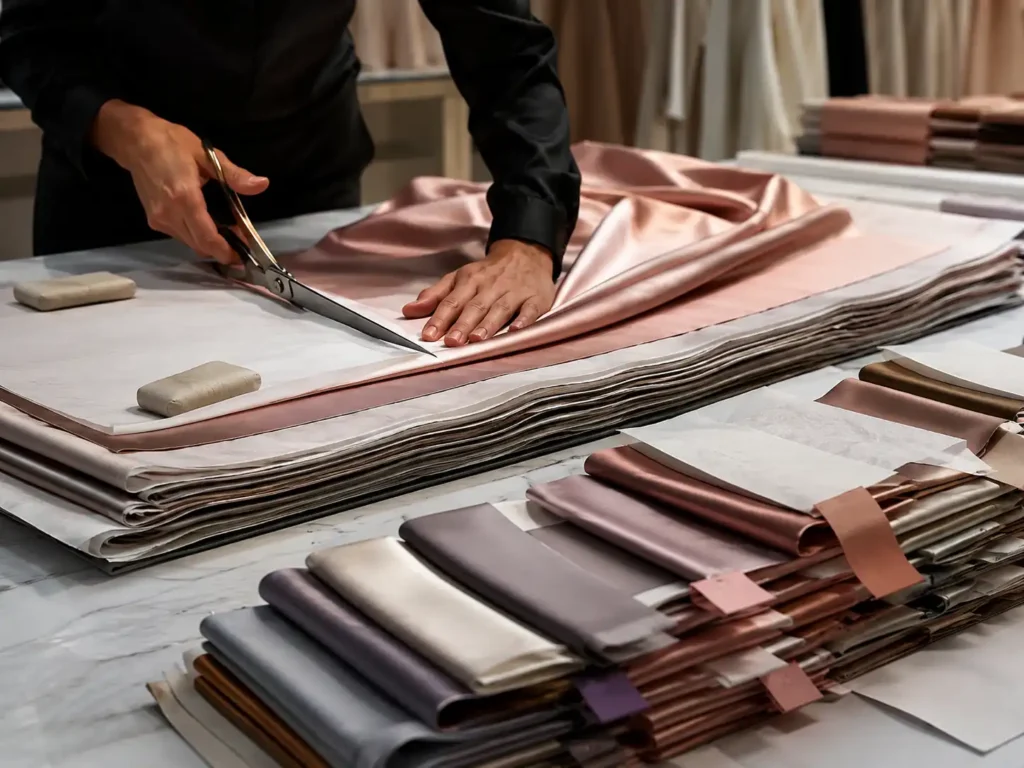
Cutting instructions identify fabric face, panel direction and grain requirements. Coordinated tops and bottoms follow the same approved visual orientation. Large panels for shirts, trousers and maxi skirts receive particular attention because direction changes are easy to see under light.

Protected Cutting

Clean cutting surfaces and controlled bundle handling reduce abrasion, dirt and snagging. Piece identification supports style, color and size control while preventing satin components from being mixed with unrelated bundles or reversed during assembly.

Needle and Tension Setup

Needle choice, thread, stitch density, tension and sewing speed are adjusted to the selected satin and seam type. Trial seams help identify puckering, needle marks, skipped stitches or stretching before the main production run continues.

Seam and Opening Control

Side seams, curved bust seams, invisible zippers, plackets, waistbands and hems are checked for smoothness and symmetry. Areas under tension receive additional attention because satin can show stress lines or permanent holes after incorrect stitching.

Controlled Pressing

Temperature, pressure, steam and protective cloth methods are selected to avoid glazing, water marks, seam impressions and crushed texture. Pressing direction and garment support are standardized against the approved sample, especially for lapels, waistbands and long hems.

Garment Separation

Light colors, dark colors, embellished pieces and highly polished surfaces may require separate handling. Finished garments are not placed against rough accessories or dirty surfaces. Protective layers reduce friction before inspection and packing.

Surface Inspection

Final surface review looks for snags, needle damage, oil, dirt, shine marks, color mismatch, pressing impressions and abrasion. Inspection combines individual garment checks with set-level comparison so both pieces meet one visual standard.

Quality Control Built Around the Complete Set

Inspection follows the approved files and Golden sample from material arrival through packing. Separate garment checks remain important, but coordinated products also require set-level verification covering appearance, proportion, labels, size pairing and carton assortment.

Fabric Inspection

Incoming satin is reviewed for batch consistency, surface faults, color, direction and suitability for the approved style. Material concerns are raised before full cutting when correction is still possible without disrupting finished garments.

Cutting Verification

Cut components are checked for size, grain, face direction, notches, panel identification and bundle accuracy. Top and bottom components remain traceable by style, color and size to reduce mixing across a multi-style production program.

Inline Workmanship

Production checks focus on seams, zippers, straps, cups, boning, waistbands, pockets, draping, lining and visible symmetry. Problems are classified, corrected and rechecked rather than left for final inspection when rework becomes more difficult.

Measurement Review

Relevant measurements are compared with the approved chart and tolerance. Fit-sensitive points include bust, waist, hip, top length, strap length, waistband, rise, inseam, slit height and hem. Out-of-tolerance pieces are separated for correction or disposition.

Set Proportion

Completed tops and bottoms are reviewed together for color, shine, crop gap, waist placement, silhouette and styling balance. The check protects the coordinated look that cannot be judged from individual pieces alone.

Shade and Surface

Inspection compares both pieces under consistent lighting and checks for snags, stains, needle marks, glazing, water marks, fold impressions and uneven pressing. Color and shine should follow the approved physical standard.

SKU Pairing

Style code, color, size label, hangtag, barcode and set configuration are matched before bagging. Where mixed top and bottom sizes are permitted, the packing instruction defines the exact pairing logic and internal identification method.

Packing Inspection

Polybag size, tissue protection, folding, warning labels, barcode position, carton assortment and carton marks follow approved instructions. Packed sets are checked again to prevent compression damage, missing pieces or incorrect retail information.

Private-Label Packing Without Pairing Errors
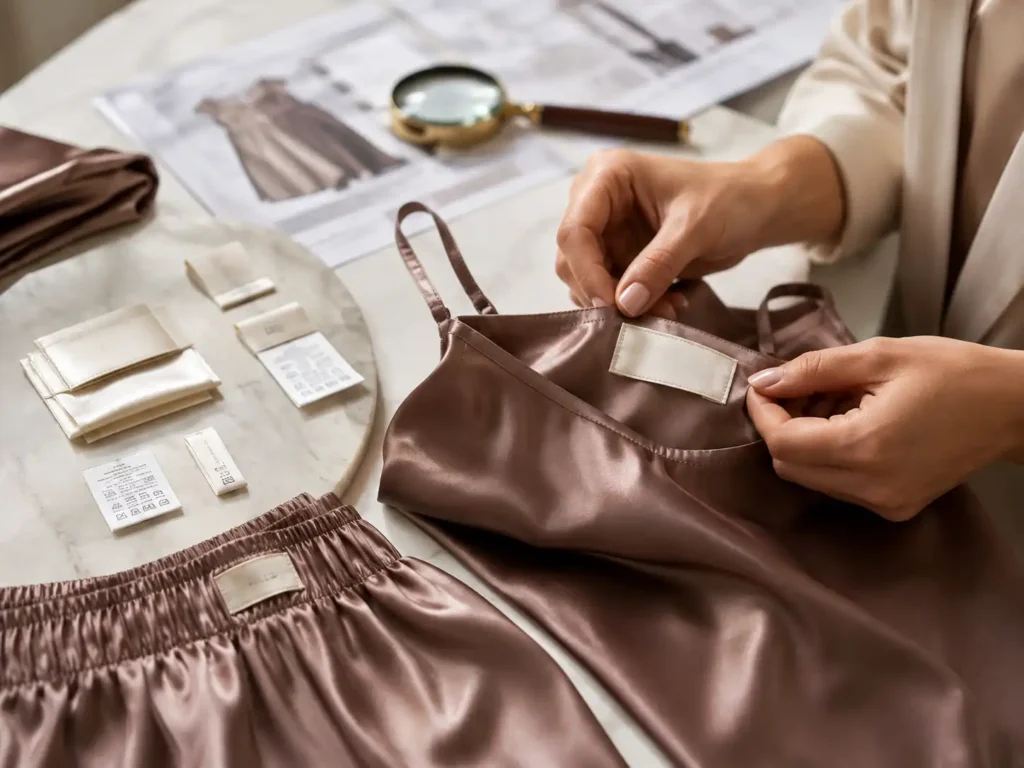
Satin sets often carry more SKU and packing complexity than a single garment. Label positions, barcode logic, top-and-bottom size combinations, protective folding and carton assortments are confirmed before bulk packing begins.

Brand Labels

Main labels, size labels, care labels and country-of-origin information are positioned according to the garment structure and approved artwork. Softness, edge finish and attachment method matter because labels can affect comfort in camis, corset tops and lightweight skirts.

Hangtags and Barcodes

Hangtag strings, barcode stickers, prices and SKU information are checked against the packing list. A coordinated set can use one retail barcode while still carrying internal identification for each piece, depending on the brand’s warehouse and sales system.

Size Pairing

Top and bottom may share one size or use a pre-approved mixed-size configuration. Mixed pairing increases complexity, so the order file must define every allowed combination, label rule and packing code before production packing starts.

Protective Folding

Fold lines are selected to avoid crushing cups, boning, lapels, waistbands and draped areas. Tissue, card support or wider polybags may be used when the approved presentation requires added protection. Carton density is reviewed against fabric sensitivity and shipment method.

Carton Assortment

Carton plans identify style, color, set size, quantity, destination and mark requirements. Multi-channel programs may require separate store, ecommerce or regional assortments. Packing teams follow approved lists and final checks before carton sealing.

Export Documents

Commercial invoice, packing list, carton information and shipment coordination are prepared according to the confirmed trade and logistics arrangement. DDP or other delivery terms are evaluated by project rather than presented as a default for every destination.

Commercial Planning Based on Real Product Requirements

MOQ, price and timing depend on the style/color structure, fabric route, trims, sample status, packing requirements and production schedule. Accurate planning begins after the collection information is complete enough to evaluate material and workmanship rather than relying on a reference image alone.

MOQ by Style and Color

Standard MOQ starts from 200 pcs per style/color. One style in two colors normally requires 200 pcs per color. Several styles totaling 200 pcs do not equal the standard MOQ. Custom dyeing, printing, special lace, unique hardware, certified material or custom packaging may carry separate supplier minimums.

Quotation Inputs

A useful quotation requires reference images or tech packs, target quantity, color plan, size range, preferred satin, lining and trim direction, labels, packing and launch date. Price reflects fabric, trims, pattern work, cutting, sewing time, pressing, QC, packing, wastage, testing where required, logistics and reasonable production margin.

Sample Planning

Sample timing is confirmed after fabric availability, structural complexity, trim development and review rounds are assessed. Simple satin sets normally require fewer rounds than corset, tailored, draped, lined or custom-dyed programs. First sample, revised sample, PP sample and Golden sample have different roles and should not be combined into one approval.

Bulk Scheduling

Bulk production begins after PP approval, material readiness and production files are locked. The schedule includes material booking, cutting, sewing, inline inspection, finishing, final inspection, packing and shipment preparation. Early confirmation of color, trims and packing gives the production plan more stability.

Capacity Allocation

Jinfeng Apparel operates 6 owned women’s fashion factories and works with more than 10 long-term production partners, supporting over 100,000 pcs in monthly capacity across its network. Allocation depends on product structure, fabric type, workmanship, order size, quality requirements and delivery window.

Launch-Date Planning

A launch date is converted into backward milestones for sample review, revision, PP lock, material arrival, production, QC, packing and transport. Urgent timing is evaluated against real material and production status; a smaller quantity is not automatically faster when special satin, custom colors or complex construction are involved.

A Development Partner Beyond Basic Sewing

Long-term value comes from product judgment, documented approvals and production control. Jinfeng Apparel combines womenswear-focused pattern development, satin sourcing, sample revision, multi-factory coordination, QC, private-label packing and repeat-order records for structured fashion programs.

Womenswear Focus

Core production centers on dresses, skirts, jumpsuits, matching sets, fashion tops and private-label womenswear. Product development is organized by occasion, silhouette, fabric, design detail, color direction, sales channel and product combination rather than a general claim to manufacture every clothing category.

Pattern Resources

Two sample rooms, 7+ senior womenswear pattern makers and 20+ sample machinists support fit and structure development. Work covers bust, under bust, waist, hip, top length, strap, armhole, neckline, slit, rise, inseam, lining and other style-specific points.

Fabric Judgment

Satin, stretch satin, chiffon, lace, mesh, jersey, ponte, crepe, velvet, sequin fabric, organza, rayon, linen, denim and suiting are matched to product structure and wearing occasion. Material substitutions are reviewed for drape, stretch, transparency, pattern impact, cost, MOQ and timing.

Project Management

Twelve-plus merchandisers coordinate development information, materials, approvals, production and delivery. Key changes move into formal patterns, size charts, BOMs, fabric records, trim records, sewing instructions, QC checklists and packing files so decisions do not rely on memory.

Quality and Packing

Fifteen-plus QC inspectors and 30+ finishing and packing workers support measurement, workmanship, surface, label, barcode, pairing and packing control. Inspection standards are aligned with the approved files and project requirements rather than a single generic claim of high quality.

NDA and Records

NDA-based cooperation protects tech packs, patterns, samples, trims, private-label details and unpublished designs. Pattern, fabric, trim, measurement, workmanship and packing records can be retained for seasonal collections, multi-batch delivery and repeat production.

Satin Set Programs Managed at Collection Scale

The following anonymized production scenarios reflect the scale and operating logic of established fashion programs. Brand identities, original designs, prices and unpublished materials remain protected. Order structures are shown to illustrate how multi-style satin sets are developed and controlled.

US Partywear Program

Market: United States
Collection: 18 satin matching-set styles
Order scale: 21,300 sets / 42,600 garments
Products: corset-and-skirt, halter-and-trouser and draped top-and-mini combinations
Colors: black, red, chocolate and seasonal metallic tones
Sample path: first sample, two revision rounds for structured styles, PP and Golden sample approval
Main risk: visible shine differences between corset panels and skirts, plus zipper rippling on fitted pieces.
Control: the fabric plan grouped coordinated pieces by approved dye lot and face direction.

Corset styles received separate cup, boning and waist reviews. Inline checks focused on seam symmetry, zipper flatness, shade, surface marks and top-to-bottom proportion. Packing files linked both pieces to one set SKU while retaining internal piece identification for verification.

Premium Ecommerce Drop

Market: North America and Europe
Collection: 15 satin set styles
Order scale: 28,800 sets / 57,600 garments
Products: cami-and-midi, crop-and-maxi, shirt-and-trouser and resort shirt-and-short sets
Size range: XS-XXL, with approved size ratios by style
Main risk: inconsistent midriff exposure across sizes and deep packing creases before campaign replenishment.
Control: top length, waistband height and crop gap were reviewed together during graded fitting.

Long skirts were allowed to settle before final hemming. Folding points and polybag dimensions were revised by structure, while cartons were separated by destination and ecommerce allocation. Repeat files retained pattern, measurement, satin, trim, barcode and packing standards for the next production batch.

Resortwear Collection

Market: United States and Australia
Collection: 12 satin and printed-satin set styles
Order scale: 16,400 sets / 32,800 garments
Products: relaxed shirts, camis, wide-leg trousers, wrap skirts and tailored shorts
Color direction: six solids plus three print stories
Main risk: print-direction mismatch, trouser twisting and color variation across separate set pieces.
Control: print repeat and grain direction were marked at cutting, while large shirt and trouser panels followed one approved orientation.

Trouser patterns were corrected after movement fitting to improve rise and leg balance.

Final set inspection compared print placement, color, shirt-to-bottom proportion, barcode pairing and travel-fold presentation before export packing.

Frequently Asked Questions About Satin Matching Sets

Standard MOQ starts from 200 pcs per style/color. MOQ is calculated by style and color rather than total garments across a collection. Special dyeing, custom printing, exclusive trims, certified fabric, custom hardware or complex packaging can carry separate supplier minimums. Quantity and color structure should be shared before final fabric and production planning.
Yes. Reference images, sketches, original samples, line sheets and tech packs can all support initial review. More complete files lead to more accurate structure, fabric, fit and cost decisions. At minimum, include the intended product type, color plan, target quantity, size range, market, preferred satin direction and launch date.
Mixed-size pairing can be evaluated, but it increases SKU, labeling, packing and warehouse complexity. The order file must define every permitted top-and-bottom combination, barcode method and packing rule. Where one retail set code is used, internal identification remains important for QC and final pairing checks.
Color control may include physical standards, Pantone references, lab dips, approved fabric swatches, dye-lot planning, fabric-face marking and bulk color approval. Coordinated pieces are compared together under consistent lighting. Lining, thread, zipper tape and trims are also reviewed because nearby materials can alter the perceived color of satin.
The best satin depends on silhouette, support, drape, transparency and target price. Lightweight satin suits fluid camis and shirts, stretch satin supports fitted sets, matte satin suits premium occasionwear, and heavier satin can support tailored pieces. Fabric weight, stretch, hand feel and bulk behavior should be tested in the actual garment structure.
Simple sets may follow one first sample and one revised sample. Medium-complexity styles may require one or two revisions. Corset, tailored, highly draped, lined or trim-heavy sets often need around two revisions, depending on the structure and quality of initial information. Design changes after sampling can add new rounds, cost and time.
No. The first sample validates initial structure, fabric direction, fit and workmanship feasibility. Comments are converted into revised patterns and production files. Bulk production should follow an approved PP sample and Golden sample together with confirmed measurements, BOM, fabric, trims, sewing, labels, packing and QC instructions.
Yes. Support covers main labels, size labels, care labels, hangtags, barcodes, polybags, SKU stickers, tissue protection, set pairing, carton assortments and carton marks. Every requirement is confirmed against the approved artwork and packing instruction before bulk packing. Special packaging may affect MOQ, price and schedule.
Pattern, measurement, fabric, trim, workmanship and packing records can be retained for future production. A repeat order still requires confirmation of current fabric batch, color availability, trim supply, quantity, testing needs and schedule. New colors or replacement materials may require fresh approval and sometimes a new sample.
Yes. NDA-based cooperation can protect tech packs, patterns, samples, trims, private-label details, unpublished designs, order information and launch plans. Project images, brand names and confidential files are not used publicly without authorization. Anonymized process or case information is used only without exposing protected brand assets.

Start Your Satin Matching Set Project

Send the collection information available today, even when several technical details still need development.

Kelly and the Jinfeng Apparel team will review product structure, satin direction, trim requirements, size planning, MOQ conditions, sample route, bulk risks and the launch schedule before confirming the next step. Complete files support a more accurate quotation, while early reference materials can begin a feasibility review.

  • Reference images, sketches, original samples or tech packs
  • Style count and intended product combinations
  • Target quantity by style and color
  • Size range and any mixed-size set requirements
  • Preferred satin, stretch, weight, shine and lining direction
  • Brand labels, hangtags, barcodes and packing instructions
  • Target market, launch date and delivery destination
  • Any audit, testing, documentation or NDA requirements

Tell Us About Your Dress Project

Share your product details, estimated quantity and development requirements. Our team will review your project and provide practical OEM/ODM production feedback.

Premium Women’s Apparel Production for Fashion Brands

From dress sample development to bulk production, JF Apparel supports fashion brands with confidential OEM/ODM manufacturing, reliable quality control and scalable production support.

START YOUR DRESS PROJECT

Ready to Develop Your Next Dress Collection?

Share your design concept, product requirements or sourcing plans with our team. We’ll review your project and provide practical feedback on development, materials, MOQ and production.

7-10 Days

Sample Development

200 PCS

Starting MOQ

Fast Response

Professional Follow-Up