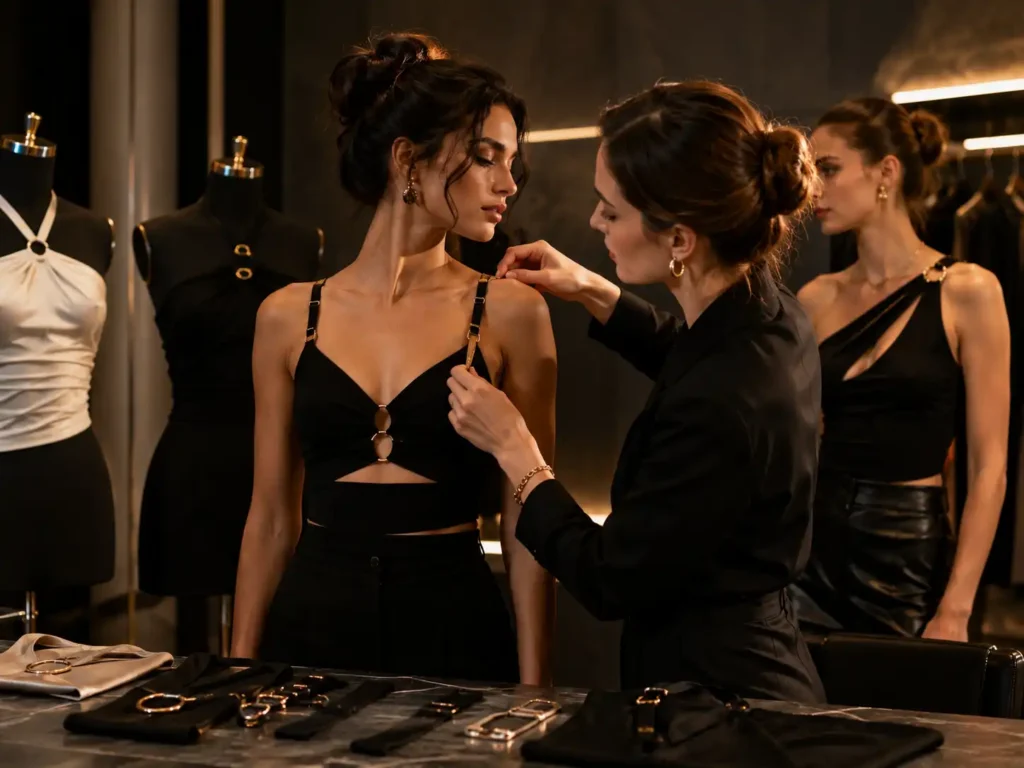
...

Clubwear Matching Set Manufacturer

Custom clubwear sets engineered for strong silhouettes, coordinated fit, reliable bulk production and retail-ready private-label delivery.

  • MOQ starts from 200 pieces per style/color for production-ready clubwear programs.
  • 2 sample rooms, 7+ senior pattern makers and 20+ sample machinists support coordinated top-and-bottom development.
  • 6 owned women’s fashion factories, 10+ long-term production partners and 100,000+ pieces of regular monthly capacity support multi-style collection planning.
  • 15+ QC inspectors review fabric shade, stretch recovery, measurements, trim security, size pairing and set packing before shipment.

Jinfeng Apparel develops crop-top-and-skirt sets, corset sets, mesh sets, sequin sets, satin sets, fitted-pants sets and three-piece clubwear collections for established fashion brands. Development covers fabric direction, pattern correction, sample revisions, PP approval, bulk control, branded packing and export coordination. Each program begins with an assessment of silhouette, stretch, coverage, construction and launch timing, so visual impact remains compatible with wearability and repeatable production.

A Manufacturing System Built for Clubwear Collections

Clubwear sets combine fashion speed with demanding fit, material and packing controls. Jinfeng Apparel organizes sampling, production and inspection around coordinated garments rather than treating each piece as an unrelated top or bottom.

Since 2008

Women’s fashion development experience since 2008 covers bodycon, partywear, occasionwear, mesh, satin, lace, sequin, jumpsuits, skirts, crop tops and matching sets. Long-term manufacturing records support seasonal extensions, style redevelopment and repeat production. Fit comments, pattern updates and material references can be carried into later programs, reducing avoidable reconstruction while preserving review points for new colors, fabrics or trims.

Six Owned Factories

Six owned women’s fashion factories allow product allocation by fabric behavior and construction. Stretch knits, structured partywear, woven satin pieces and coordinated sets can be assigned according to pattern difficulty, surface sensitivity, order timing and inspection needs. Factory assignment is confirmed during production planning, so a mesh corset set and a ponte fitted set do not automatically follow the same sewing route.

Ten Plus Partners

More than 10 long-term satellite production partners provide additional flexibility for multi-style collections, color extensions and phased delivery. Extra capacity is used through project review rather than uncontrolled subcontracting. Material group, workmanship level, approved sample, QC standard and delivery plan remain linked to the assigned production unit, helping collection teams manage larger order structures without losing traceability.

Two Sample Rooms

Two sample rooms support parallel development when a collection includes crop tops, corsets, skirts, fitted pants and coordinating layers. Seven-plus senior pattern makers and 20-plus sample machinists can organize styles by fabric group, fit priority and launch order. Coordinated pieces are reviewed together, allowing midriff spacing, waist position, skirt length and pant rise to be corrected before isolated decisions create an unbalanced outfit.

Fifteen Plus Inspectors

Fifteen-plus QC inspectors review incoming materials, cutting, sewing, in-line quality, finished garments, pressing, packing and AQL requirements. Matching-set inspection adds fabric shade, stretch recovery, top-bottom measurement pairing, trim security, label accuracy and polybag matching. Brand-supplied quality manuals, measurement tolerances and defect classifications can be integrated into the project checklist before bulk output begins.

Monthly Capacity

Regular monthly capacity exceeds 100,000 pieces across the manufacturing network. Capacity planning is confirmed by style complexity, material arrival, PP approval, factory allocation, inspection windows and packing requirements. A large collection can be divided by fabric and construction group, while campaign styles, priority colors and warehouse dates are reflected in the production sequence rather than relying on one general completion promise.

Clubwear Programs Developed for Established Fashion Brands

A productive manufacturing relationship begins with clear product direction, realistic quantities, approved development steps and a defined sales calendar. Jinfeng Apparel is structured for branded collections requiring sampling, bulk production, private labels and repeatable quality.

Clubwear Labels

Dedicated clubwear labels often need fitted silhouettes, exposed-skin placement, stretch comfort, trend-led trims and frequent color updates. Development centers on campaign impact without sacrificing neckline stability, seam strength, coverage or movement. Collection records also support repeat bestsellers, revised color stories and related styles built from approved fabric and pattern directions.

Fast Fashion Brands

High-frequency fashion programs require several styles to move through fabric confirmation, sampling, revision and bulk planning at the same time. Jinfeng Apparel groups styles by material, pattern complexity, trim family and launch priority. Hero products can move ahead for photography or approval while related styles remain visible through separate revision and production records.

Premium Ecommerce

Online fashion teams depend on strong campaign samples, accurate size charts and consistent bulk garments. Fit, color and fabric hand feel receive close attention because imagery, reviews, returns and repeat sales are affected by production accuracy. Barcode, SKU, polybag and carton files can also be incorporated for ecommerce warehouse receiving and phased inventory plans.

Partywear Collections

Partywear programs combine satin, mesh, lace, sequins, velvet, fitted knits and statement trims. Production planning must account for surface damage, skin contact, lining, pressing and protective packing. Seasonal drops often include several color and size combinations, so material batches, trim finishes and packing lists need organized control before production volume increases.

Sourcing Teams

Sourcing and vendor-management teams require clear factory allocation, MOQ boundaries, sample stages, quality checkpoints, packaging records and shipment documents. Jinfeng Apparel can align project files with internal approval procedures, inspection manuals and nominated forwarders. Communication can be structured around style status, material readiness, approval actions, production progress, QC findings and shipment preparation.

Retail Programs

Retail-oriented programs may require size assortments, barcode files, carton markings, warehouse labels, packing ratios and phased shipments. Set configuration must be decided early when top and bottom pieces are sold together, separately or through mixed SKU structures. Accurate pairing and carton planning reduce receiving errors when large quantities and multiple store or warehouse destinations are involved.

Where Clubwear Matching Set Projects Commonly Fail

Strong campaign imagery can hide production weaknesses. The most expensive failures often appear after sample approval, when fabric batches, grading, trims, packing and factory execution no longer match the approved outfit. Review Style Risks

Weak Stretch Recovery

A fabric may stretch easily but fail to recover, causing waistbands, necklines and fitted panels to grow during wear. Recovery must be evaluated with garment structure, negative ease, seam type and expected movement rather than judged by hand stretching alone. Shell and lining also need compatible stretch, or the inner layer may pull the outer garment out of shape.

Unbalanced Set Proportions

A crop top, mini skirt or fitted pant can look acceptable alone but feel visually wrong as a set. Top length, waist position, rise, skirt length and exposed midriff need to be reviewed together on the intended body proportions. Independent sample comments can easily create a longer top and higher waistband, removing the visual space planned by the original design.

Shade Mismatch

Top and bottom pieces cut from different dye lots can create visible shade differences, especially in black, red, neon tones, satin and mesh. Batch control, shade grouping and packing records help prevent mismatched sets reaching final cartons. Thread, lining, zippers and elastic also require color review because nearby components can make small differences more noticeable under club or studio lighting.

Unstable Openings

Strapless necklines, cut-outs, halters, low backs and high slits can stretch, roll, gape or shift. Stabilization may involve elastic, lining, tape, edge construction, boning or pattern correction depending on material and intended fit. Movement testing during sample review is essential because a garment can appear stable on a dress form yet fail during walking, sitting or arm movement.

Trim Discomfort

Chains, rhinestones, zippers, hooks, sequins and boning can scratch skin, add unwanted weight or distort a garment. Attachment method, backing, lining, edge finish and stress-point testing must be reviewed during sampling. Decorative placement should also account for sitting and body contact, not only front-view photography, especially around underarms, waist, side seams and upper thighs.

Packing Errors

A correct garment can still fail at delivery when top and bottom sizes, barcodes, hangtags or colors are paired incorrectly. Set packing requires a dedicated matching check before polybag sealing and carton completion. Combined-SKU and separate-SKU programs need different instructions, so label structure, size pairing and carton assortment must be locked before bulk packing materials are printed.

Clubwear Matching Sets We Develop

Clubwear collections need more than visual variety. Each silhouette below requires a different balance of stretch, structure, coverage, trim weight, pattern engineering and packing control. Jinfeng Apparel develops coordinated garments as commercial outfits, with clear specifications for every component and for the complete set.

Crop Top Skirt Sets

Crop-top-and-skirt sets work best when bust fit, top length, skirt waist, hip shaping and exposed midriff are developed as one proportion. Common fabrics include jersey, rib knit, power mesh, stretch satin and coated materials. Sampling reviews neckline security, hem recovery, waistband stability, skirt movement and matching shade. Multi-color bulk orders require disciplined cutting and set pairing so tops and skirts remain visually consistent.

Corset Matching Sets

Corset sets may combine molded cups, boning, underwire, lining, hook-and-eye closures, zippers, lace-up details or structured seam panels. The top must create support without excessive pressure, while the bottom maintains a compatible waistline and silhouette. Pattern development reviews cup position, under-bust shape, waist reduction, closure strength and seam bulk. Trim placement and inner finishing receive equal attention because discomfort quickly damages perceived quality.

Mesh Two-Piece Sets

Mesh sets can use transparent mesh, power mesh, flocked mesh, embellished mesh or layered constructions. Key decisions include stretch direction, transparency, lining coverage, seam appearance and edge recovery. A visually light garment may require hidden reinforcement at necklines, straps, waist openings and cut-outs. Top and bottom components should be cut from controlled material batches to maintain color, stretch and surface character across the complete outfit.

Sequin Party Sets

Sequin sets create strong evening impact but require careful control of backing fabric, seam thickness, skin contact, needle damage, loose sequins and packing pressure. Lining and edge binding help prevent scratching, while trim-free seam allowances improve sewing stability. Sample approval should include movement testing and visual inspection under direct light. Bulk packing may require protective tissue, careful folding and reduced compression around heavily embellished areas.

Satin Clubwear Sets

Stretch satin and woven satin can produce sleek corset tops, asymmetric tops, mini skirts, draped panels and fitted pants. Development must manage shine direction, snagging, crease marks, seam puckering, zipper flatness and shade variation. Stretch satin also requires recovery and fit testing. Cutting direction and pressing standards should be recorded before bulk production because inconsistent handling can change appearance even when fabric composition is identical.

Top And Pants Sets

Fitted-pants sets require coordinated control over bust, waist, hip, rise, inseam, thigh and hem opening. Stretch materials need enough recovery to maintain shape, while woven pants need correct ease and movement. The top length must relate to waistband height and rise. Sample fittings should include sitting, walking and bending so the final outfit performs beyond a static campaign pose. Zipper position, waistband construction, pocket bags and seam lines are also reviewed because added bulk can disturb a close-fitting silhouette.

Top And Shorts Sets

Shorts-based sets suit birthday, festival, resort-night and summer clubwear ranges. Pattern development focuses on rise, seat coverage, leg opening, waistband hold and inner-thigh comfort. Short lengths must be commercially attractive without creating exposure during movement. Matching tops can repeat color, texture, trims or cut-out lines, but both pieces still need independent wearability when sold as separate SKUs. Linings, pocket construction and hem finishes are selected to avoid bulk or visible ridges under fitted outer materials.

Three-Piece Club Sets

Three-piece sets may combine a bralette or corset, skirt or pant, and bolero, shrug, mesh layer or cropped jacket. Additional pieces increase styling options but also multiply grading, labeling, SKU and packing risks. A shared fabric and trim map helps control the collection. Development should identify which component carries the main fit function, which layer provides styling impact and how every piece is packed for accurate retail presentation.

Build Coordinated Products With More Selling Flexibility

A matching set can operate as one outfit, two independent products or the foundation of a wider capsule. Product architecture should be decided before sampling because labeling, pricing, size pairing, photography and packing all change according to the selling model. Plan A Capsule

Complete Outfit Selling

A complete set offers immediate styling value and strong campaign impact. The top and bottom need a deliberate proportion, fabric relationship and trim language, while movement and coverage remain secure across both pieces. Set pricing, labeling and packing must stay clear so the outfit moves through warehouse receiving as one controlled unit. Combined sizes, mixed sizes and set-level barcodes should be decided before label artwork is released.

Separate Piece Selling

Selling each component separately can expand size flexibility and average basket value. Independent SKUs require separate labels, barcodes, care information, photography and inventory planning. Both garments also need finished interiors and balanced design because either piece may be worn outside the original outfit. Material shade and visual coordination still matter, since shoppers may purchase the two pieces at different times and expect a consistent match.

Capsule Extensions

One approved fabric group can support a corset, crop top, mini skirt, short, fitted pant and mesh overlay. Shared colors and trims reduce visual fragmentation while different silhouettes create broader merchandising options. Pattern blocks, grade rules and fit records help maintain consistency across later extensions. New details should still be sampled when they alter load points, exposure, recovery or construction sequence.

Repeatable Core Styles

A strong-selling set can return in new colors, updated trims or alternate fabrics. Repeat orders move more efficiently when pattern versions, measurements, fabric references, trim specifications, workmanship notes and packing files are retained. New materials still require review because changed stretch, weight, drape, shine or shrinkage can alter fit and sewing behavior even when the original pattern remains unchanged.

Clubwear Fabric Selection Matrix

Fabric selection determines silhouette, comfort, transparency, recovery, sewing behavior, photography and bulk stability. Jinfeng Apparel compares hand feel, weight, stretch direction, recovery, drape, shine, shrinkage, color risk, lining needs, MOQ and lead-time effect before a material is approved for sampling or bulk production.

Fabric DirectionBest-Fit ProductsDevelopment FocusBulk RiskQC FocusCommon Support
Jersey / Rib KnitCrop tops, skirts, fitted pantsStretch direction, recovery, negative easeGrowth after wear, twisting, neckline deformationMeasurements, seam recovery, wash stabilityElastic, clean binding, coverstitch
Ponte / RomaStructured sets, fitted skirts, pantsCompression, thickness, smooth silhouetteSize inconsistency, seam impressionsWeight, recovery, side-seam balanceStable waistbands, concealed zippers
Power MeshTransparent layers, cut-outs, fitted setsTransparency, stretch, lining mapRuns, holes, edge growth, shade variationSurface inspection, stretch direction, seam securityLining panels, elastic stabilization
Stretch SatinCorset tops, mini skirts, fitted setsShine direction, recovery, drapeSnagging, puckering, creasing, color differenceCutting direction, zipper flatness, pressingLining, boning, fine needles
LaceCorset sets, party tops, skirtsPattern placement, edge use, transparencyMisaligned motifs, holes, frayingMotif alignment, seam finish, lining coverageNude lining, lace trim, binding
Sequin FabricParty sets, holiday dropsBacking, weight, skin contactLoose sequins, broken needles, scratchingSequin security, seam thickness, packing protectionFull lining, protected folds
VelvetWinter clubwear, evening setsPile direction, pressure marks, drapeShade change by direction, crushingNap alignment, surface marks, pressingSoft lining, protective packing
PU / Coated / DenimStructured tops, mini skirts, street-club setsThickness, seam allowance, edge finishCracking, needle marks, dye transfer, stiffnessSurface review, seam strength, folding methodMetal trims, topstitching, tissue protection

Fit Engineering for Tops, Skirts and Pants

Coordinated fit is the foundation of a successful matching set. A top and bottom cannot be graded or approved as unrelated garments when exposed midriff, waist placement, body contour and movement shape the complete visual result.

Upper-Body Security and Proportion

Clubwear tops often use strapless, halter, asymmetric, deep-V, corset or cut-out structures. Development reviews upper bust, full bust, under bust, cup position, neckline depth, strap length, armhole shape and back coverage. Support can come from cups, boning, elastic, lining, tape or pattern contouring. Sample review includes standing, sitting and movement checks because a neckline stable on a dress form may shift during dancing or arm movement. Top length is assessed with the matching waistband position, not as an isolated dimension. A 1-2 cm change can alter torso proportion, exposed midriff and the visual waistline. Fit comments are recorded with measurements and sample images so each revision produces a clear pattern action rather than a vague instruction such as “make it tighter.”

Skirt and Pant Engineering

Mini skirts require a balance between visual impact and secure coverage. Development reviews center-front, side and center-back length, hem shape, slit position, rise during walking and waistband movement. Stretch fabrics may shorten when worn over the hip, while woven skirts need enough ease for sitting. Fitted pants require correct front rise, back rise, crotch curve, hip contour, thigh width and inseam. Excessive negative ease can create seam stress and transparency; insufficient recovery can create bagging at the seat and knee. Test fittings include walking, sitting and bending. Built-in shorts, linings or stable inner layers can be evaluated when a design needs additional coverage without changing the exterior silhouette.

Grading, Tolerance and Material Response

A size chart defines how top and bottom measurements change across the intended range. Bust, waist and hip increments may not follow the same rate, particularly for corset tops and fitted skirts. Jinfeng Apparel records grading rules, critical measurements and style-specific points of measure before size-set or bulk production. Brands may supply their own chart, block, fit model standard and tolerance manual. Material stretch is reviewed by direction and by garment location because necklines, waistbands, cut-outs and straps respond differently even when cut from one fabric. Shell, lining, elastic and seam construction must work together. Fit approval should use the final bulk material whenever possible, since a similar-looking substitute may change recovery, compression and finished measurements.

Construction Details Behind High-Impact Clubwear

Visual impact comes from controlled structure, not decoration alone. Each design detail changes fit, sewing sequence, material compatibility, inspection points and packing protection. Jinfeng Apparel develops the detail and the production method together.

Corsetry And Boning

Corset-inspired tops may use flexible boning, plastic boning, spiral steel, underwire, cups, fusible support or multi-layer lining. Boning length and protected ends affect comfort, while seam-channel accuracy affects symmetry. The structure should match target support, fabric weight and selling position. Bulk inspection checks cup placement, bone channels, closure alignment, inner-surface comfort and whether the matching bottom sits at the intended waist level.

Cut-Out Stabilization

Cut-outs concentrate tension around narrow edges and corners. Unsupported openings may grow, roll or twist after wear. Solutions can include elastic, clear tape, lining, binding, facing, stay stitching or pattern reshaping. The selected method depends on fabric stretch, edge width and exposure. Sample fittings review flatness across standing, sitting and arm movement, while bulk checks compare opening shape and left-right symmetry.

Straps And Necklines

Thin straps, halter ties, sliders, rings and asymmetric straps carry both visual and structural load. Attachment points need reinforcement without creating visible lumps. Hardware dimensions, plating color, strap width and adjustment range should be confirmed before sampling. Neckline edges receive recovery checks so they remain close to the body. Strap length is measured after construction because hardware and elastic behavior can change the finished result.

Ruching And Drawstrings

Ruching can shape the body, adjust length or create surface texture. Drawstring channels, elastic gathering and fixed ruching produce different control. Development reviews symmetry, gathered volume, tie length, stopper or end finish, and the effect on hem balance. Bulk checks compare left-right gathering, secure anchoring and adjustment range. A coordinating skirt or top should show related ruching density rather than an accidental mismatch.

Mesh And Lining Maps

Partial lining can preserve transparency while protecting selected coverage zones. A lining map identifies which panels remain single-layer, double-layer or fully lined. Lining stretch must stay compatible with the shell to avoid pulling and distortion. Seam allowances, color, edge finish and attachment points are confirmed before PP approval. Shade and transparency are viewed under both normal and stronger light because campaign lighting can reveal hidden differences.

Zippers Chains And Trims

Invisible zippers, metal zippers, hooks, snaps, chains, rhinestones and decorative rings must suit fabric weight and skin contact. Zippers need to lie flat on fitted seams. Heavy trims require reinforced attachment points and controlled placement. Decorative surfaces are inspected for sharp edges, plating inconsistency, missing elements and damage before packing. Protective folding may be needed so hardware from one piece does not mark the coordinating garment.

How We Keep Every Set Consistent

Matching-set quality depends on coordinated control from fabric booking to final packing. The complete outfit should arrive with aligned shade, proportion, size, labels and presentation, even when several styles and colors move through production at once.

Same-Batch Fabric Planning

Top and bottom pieces are planned from the same approved fabric batch whenever possible. Material booking, roll identification and cutting records reduce visible shade or hand-feel differences. Special attention is given to black, red, neon tones, satin, velvet, mesh and coated materials. When one batch cannot cover the full program, shade grouping and controlled allocation help keep paired components visually compatible.

Shade Grouping

Incoming fabric is reviewed for color variation before cutting. Shade grouping allows components to be matched within the same outfit rather than mixing noticeably different tones. Lining, thread, zippers and elastic are checked against the approved color direction. Satin shine, velvet pile and coated surfaces are also reviewed by direction because appearance can change even without a true dye difference.

Proportion Control

Approved measurements preserve the relationship between top length, waist position, skirt or pant rise and total outfit silhouette. Alterations discovered during production are not applied to one component without checking the coordinating piece. Critical points are included in production measurement sheets, and early units can be compared with the PP sample before full-line output continues.

Size Pairing

Packing instructions define whether sizes are fixed as S/S, M/M and L/L or whether mixed pairings are required. Finished pieces are measured and paired according to the approved configuration. Separate-SKU programs follow independent labeling and inventory rules. Pairing instructions also identify how incomplete or rejected components are replaced without creating new shade or measurement mismatches.

SKU And Barcode Accuracy

Style numbers, colors, sizes, barcodes and hangtags are checked against approved packing files. Matching sets may use one combined SKU or two linked SKUs, so the commercial structure must be confirmed before labels and polybags are ordered. Scan checks, visual file comparison and packing records reduce the risk of warehouse rejection or incorrect online inventory.

Packing Verification

Packing QC confirms top-bottom pairing, folding direction, protective materials, size stickers, barcode placement, polybag configuration and carton assortment. Embellished, velvet, PU and structured corset pieces may require extra protection to avoid abrasion or pressure marks. Random packed sets can be reopened before carton sealing to verify components and retail presentation against the approved instruction.

From Design Reference to Approved Clubwear Sample

Sample development converts an image, sketch, original garment or tech pack into measurable production instructions. Clubwear samples receive special attention to stretch, exposure, support, trim comfort and the relationship between coordinating pieces.

Project Review, Fabric and Trim Direction

Initial review covers silhouette, neckline, top length, bottom rise, fabric direction, lining, closure, trims, size range, quantity plan and launch timing. Missing details are identified before pattern work begins. A reference image can guide visual direction, yet controlled sampling still requires construction, material and measurement decisions. Available fabric options are compared by composition, weight, stretch, recovery, drape, transparency, shine, color availability and MOQ. Cups, boning, zippers, hooks, chains, rhinestones, elastic, labels and packing materials are reviewed for compatibility. When a material change affects compression, transparency or drape, pattern and lining decisions are reassessed rather than carried over automatically.

Pattern, First Sample and Revision Timing

Pattern makers establish the garment shape using the approved size chart, fit preference and construction direction. First samples focus on silhouette, proportion, movement and key details. Internal reference timing is 7-10 days for simple first samples, 12-18 days for medium-complexity sets or jumpsuits, and 15-25 days for corset, strapless, lace, mesh or sequin styles. Custom materials or special trims may require 20-35 days or the supplier’s development cycle. Fit comments are converted into measurable actions covering neckline depth, strap length, cup position, waist suppression, rise, skirt length, lining coverage and cut-out shape. Revised samples generally require 7-15 days, depending on the modification scope and material readiness.

PP Approval and Multi-Style Sample Management

The PP sample confirms final fabric, color, trims, measurements, construction, labels and packing direction before bulk production. PP samples generally require 7-15 days after final materials are available. Approved elements are recorded as the production standard, and later changes may affect costing, material booking and factory scheduling.

For collections containing 10-30 styles, sample priorities can be arranged by hero SKU, campaign date, fabric readiness, pattern complexity and bulk timeline. Style groups receive separate revision trackers and approval status, reducing confusion when several tops, skirts, pants and layers are being developed in parallel.

Specialized Production Matched to Each Clubwear Style

Different clubwear constructions perform best within different production environments. Jinfeng Apparel allocates styles according to fabric behavior, sewing difficulty, finishing requirements, order scale and available factory capacity.

Partywear Production

Party and clubwear production focuses on mesh, lace, satin, sequins, velvet, cut-outs, draping and statement details. Key controls include transparent panel placement, embellishment security, lining comfort, zipper flatness, pressing method and protective packing for delicate surfaces. The factory team receives approved samples, material records and workmanship instructions for the assigned style group rather than relying on visual reference alone.

Stretch Womenswear

Dedicated knit and stretch capacity supports bodycon silhouettes, crop tops, bodysuits, fitted skirts, ponte sets, jersey sets and stretch jumpsuits. Production control covers stretch direction, recovery, seam type, neckline growth, side-seam balance, wash stability and bulk measurements. Shell, lining and elastic performance are reviewed together so one component does not restrict or distort another during wear.

Matching Set Coordination

Matching-set production coordinates tops, skirts, shorts and pants through shared fabric records, proportion standards, size pairing, label files and packing instructions. Production management follows individual garment quality and complete-outfit accuracy. Material bundles, style numbers and packing rules remain separated by color and size, supporting multi-style orders without confusing components during finishing or final packing.

Our Clubwear Matching Set Production Process

A controlled workflow keeps design, sampling, material, factory, quality and packing decisions connected. Each stage creates information needed by the next team, reducing the risk of approved details being lost before bulk delivery.

Requirement Review

Reference images, tech packs, samples, line sheets, quantities, size ranges and launch targets are reviewed to define scope. The project brief records selling model, set configuration, missing specifications, quality requirements and required approvals. Early clarity prevents pattern work from starting before neckline, length, fabric, lining, closure or packing direction has been defined.

Material Direction

Fabric and trims are selected according to silhouette, stretch, transparency, support, surface effect, cost, availability and bulk risk. Swatches, color references and trim specifications are linked to each style. Custom dyeing, special lace, hardware or embellishment timelines are identified before sample and delivery commitments are finalized.

Pattern Development

Patterns convert fit preference and design structure into measurable pieces, seam construction, support zones and grading rules. Coordinating garments are reviewed together so top length, waist position, skirt length and pant rise create the intended outfit. Pattern versions and measurement charts are updated whenever approved fit changes occur.

Sample Review

First samples are checked for fit, proportion, movement, fabric response, trim comfort and production feasibility. Comments identify measurable changes rather than relying on general visual feedback. Revised samples, photo samples, salesman samples or size sets can be arranged according to launch, sales and approval needs.

PP Approval

Final fabric, color, measurements, workmanship, labels and packing are locked through the approved pre-production sample and related files. The PP standard connects design approval with bulk execution. Late changes are reviewed for material, price, timing and quality effects before any revised instruction reaches production.

Bulk Production

Material inspection, relaxation when required, cutting, bundle control, sewing, in-line checking, finishing and measurement review follow the approved sample and latest files. Complex styles may receive an early-unit review before full output, helping correct construction or measurement drift before larger quantities are affected.

Set Packing

Top and bottom pieces are matched by style, color, size, SKU and barcode before protective folding, polybag sealing and carton packing. Special packing protects sequins, velvet, PU, chains, rhinestones and corset structures. Pairing records help verify complete sets and separately sold components.

Shipment Coordination

Packing lists, commercial documents, carton marks, cargo details and pickup information are prepared for the nominated freight arrangement. Priority styles, colors or sizes can be separated for approved split shipments. Final delivery timing also depends on forwarder booking, transport mode, customs and warehouse receiving requirements.

Workmanship Designed for Movement and Close-Up Inspection

Clubwear receives close visual attention in photography and repeated physical stress during wear. Workmanship therefore needs clean exterior lines, comfortable interiors, secure stress points and construction capable of holding the intended silhouette.

Seam, Edge and Opening Construction

Stretch jersey, power mesh, satin, lace, sequins, velvet and PU cannot share one sewing method. Stitch type, needle, thread, seam allowance and reinforcement are selected according to stretch, thickness, surface sensitivity and stress. Fitted seams need enough strength without becoming rigid, while transparent panels require neat internal construction. Necklines, cut-outs, armholes and waist openings are checked for waviness, rolling, stretching and asymmetry. Binding, facing, lining, elastic or stabilizing tape may be used according to the design. Edge tension is controlled so openings remain close to the body without cutting into skin or losing recovery after repeated wear.

Stress Points, Zippers and Structural Support

Strap joins, zipper bases, hooks, slit ends, drawstring anchors and chain attachments experience concentrated force. Reinforcement should remain discreet while resisting movement. Bartacks, backing layers, seam tape or localized pattern changes can be used. Fitted skirts, corset tops and satin pieces expose zipper problems immediately, so zipper length, tape weight, seam stabilization, pressing and insertion method are reviewed together. Cups, boning channels, underwire, lining and support layers are inspected for position, symmetry and comfort. Sample testing determines whether a construction is ready before sewing instructions are released to the bulk line.

Embellishment and Interior Finish

Sequins, rhinestones, beads and chains need secure placement, comfortable backing and consistent spacing. Decorative layouts are compared with approved reference positions, while loose surfaces, sharp edges and missing elements are identified during in-line and final checks. Packing reduces friction between decorated pieces. Interior quality is equally important: lining length, seam coverage, boning ends, cup edges, elastic joins and care labels are reviewed for scratching, bulk and show-through. Premium perception depends on how the outfit feels during extended wear, not only how it appears in a campaign image.

Turning Approved Samples Into Repeatable Bulk Production

Bulk consistency depends on version control and disciplined handover. A visually approved sample is useful only when patterns, measurements, fabric, trims, sewing instructions, color references and packing files all point to the same final standard.

Production Standards and First-Unit Control

Every approved revision is reflected in the active pattern set, measurement chart, BOM and workmanship instruction. Old versions are separated to prevent accidental cutting. Fabric records include name, composition, weight, color, stretch direction, hand feel and approved supplier reference; trim records cover dimensions, finish, color and attachment method. Complex styles may receive an early production-unit review before full-line output. Measurements, seam construction, lining, trims, zipper behavior, proportion and surface appearance are compared with the PP standard. Corrections are made before a problem spreads across a large quantity. The same review can confirm whether top and bottom pieces remain visually balanced after bulk materials and production sewing methods are applied.

In-Line Measurement and Repeat-Order Readiness

Critical points such as bust, waist, hip, top length, skirt length, rise, inseam, strap length and neckline depth are checked during production. Measurement tolerances can follow the brand’s quality manual or an agreed project standard. Repeated deviation triggers production correction rather than waiting for final inspection. Pattern files, grade rules, fabric references, trim records, sewing notes, QC findings and packing instructions are retained for future production. Repeat orders can move more efficiently when approved conditions remain available, yet new colors, new batches and substituted fabrics still receive review because shade, stretch, drape or supplier performance can change. After-shipment feedback may be added to the repeat-order record to prevent known issues from returning.

Quality Control for Fit, Stretch and Set Accuracy

Quality control follows materials, cutting, sewing, finished garments, pressing, packing and shipment preparation. Clubwear sets add coordinated checks for stretch behavior, exposure zones, shade, component sizing, trims and top-bottom pairing.

QC StageMain ChecksClubwear Set RiskControl Record
Incoming FabricShade, weight, surface, stretch, defectsTop-bottom mismatch, weak recovery, visible marksFabric inspection and batch records
CuttingDirection, size, panel accuracy, shade groupingSatin shine mismatch, twisted knit panels, wrong mesh directionCutting and bundle identification
SewingSeam type, tension, reinforcement, symmetryPopped seams, wavy openings, uneven ruchingIn-line inspection notes
Fit MeasurementsBust, waist, hip, length, rise, strapsPoor proportion, exposure, inconsistent sizingMeasurement sheets and tolerance review
Structural DetailsCups, boning, lining, zippers, cut-outsDiscomfort, bulging, unstable openingsWorkmanship checklist and sample comparison
EmbellishmentsSequins, rhinestones, chains, hardwareLoose trims, sharp edges, missing elementsTrim-security inspection
Finished AppearancePressing, balance, stains, surface marksSatin creases, velvet crushing, PU damageFinished-garment review
Set PairingStyle, color, size, top-bottom matchMixed sizes, shade mismatch, missing componentPairing and packing checklist
Labels and BarcodesMain label, size, care, hangtag, SKUWrong retail data or warehouse rejectionLabel and barcode verification
Final InspectionQuantity, workmanship, measurements, packingRepeated defects reaching shipmentAQL or client-defined inspection record

Private-Label Packing for Complete Clubwear Sets

Private-label packing protects brand presentation and keeps coordinated garments accurate through warehouse receiving. Label structure, SKU logic and packing configuration should be approved before bulk materials are ordered.

Main And Size Labels

Woven labels, printed labels and size labels can be developed according to supplied artwork and dimensions. Placement must remain comfortable on fitted garments and should not interrupt transparent or open-back designs. Sets sold as one unit may still require identification in both pieces depending on brand and market rules. Label color, fold type, attachment method and location are confirmed before bulk production.

Care Label Information

Care labels can include fiber content, washing instructions, country-of-origin information and brand-specific text. Final wording remains subject to destination-market and brand requirements. Placement should avoid show-through on mesh and discomfort on close-fitting areas. When the top and bottom contain different materials or trims, care instructions may require separate review rather than one repeated label file.

Hangtags And Strings

Hangtags, strings, seals and attachment positions are checked against approved artwork. A complete set can use one coordinated hangtag arrangement, while separately sold components need independent retail identification. Attachment should not damage delicate satin, mesh, sequins or coated surfaces. Style, color, size and barcode information must match the garment and the commercial SKU structure.

Barcode And SKU Labels

Barcode files, style numbers, colors and sizes must align with the selling model. Combined and separate SKUs require different workflows. Scan verification and visual checks help prevent mislabeled pieces, wrong online inventory or warehouse rejection. Mixed-size set pairings also need clear rules so the barcode reflects the actual top and bottom combination packed inside.

Protective Polybag Packing

Standard folding is adapted for corsetry, sequins, velvet, PU, chains and rhinestones. Tissue, covers or reduced fold pressure can limit abrasion, crushing and trim transfer. Size stickers, warnings and suffocation notices are positioned according to approved instructions. The fold should keep the set compact without forcing cups, boning or heavy embellishment into damaging pressure points.

Cartons And Warehouse Marks

Carton assortments, carton marks, gross and net weight, dimensions and warehouse labels are prepared according to the shipping plan. Phased or split shipments require clear separation of priority styles, colors and sizes in packing lists and cartons. Final carton checks compare physical contents with SKU, quantity and destination records before pickup preparation.

MOQ and Quotation for Clubwear Set Projects

Jinfeng Apparel’s MOQ starts from 200 pieces per style/color. Final quantity requirements depend on fabric availability, custom dyeing, special trims, color development, construction complexity, size assortment, packing configuration and production schedule.

What Shapes The Quotation

A reliable quotation needs a reference image or tech pack, fabric direction, color plan, size range, quantity per style/color, label requirements, packing method and expected delivery window. Corsetry, custom hardware, heavy embellishment, multiple mesh layers and special packaging add material and labor variables. A visual reference alone can support an initial feasibility review, but not a fully controlled bulk price.

What Changes The MOQ

Stock fabric and standard trims generally allow more direct planning. Custom dyeing, exclusive prints, special lace, sequin patterns, molded hardware, branded packaging or low-volume color splits may carry supplier-level minimums above the garment MOQ. Matching-set projects must also define whether the quoted unit represents one complete set or separate top and bottom pieces.

Brand Protection and Long-Term Collection Support

Mature fashion programs rely on secure files, repeatable standards and a manufacturing partner able to retain project knowledge across seasons. Jinfeng Apparel supports NDA-based cooperation and organized records for approved projects.

NDA-Based Cooperation

NDA review can be completed before detailed tech packs, samples, patterns, labels, packaging files or unpublished collection information are shared. Project materials are used for the approved development, production, quality and delivery work. Communication access can be limited to the relevant project teams, helping fashion groups review sensitive launches without exposing unreleased styling, commercial quantities or warehouse plans.

Confidential Product Files

Design files, patterns, size charts, fabric and trim details, pricing information, order quantities, barcodes, SKU structures and launch plans are not published or shared without authorization. Public examples use anonymized descriptions, internally developed samples or approved content. Factory photographs and process images intended for marketing are checked to avoid revealing brand labels, purchase-order details, unreleased designs or private packaging artwork.

Repeat-Order Records

Pattern versions, measurement files, fabric references, trim specifications, workmanship notes, packing requirements and QC findings can be retained for future production. Repeat orders still receive material and schedule confirmation when color, batch or construction conditions change. Records can support bestseller replenishment, same-style new colors, same-pattern new fabrics and seasonal collection extensions while preserving clear approval points for every updated element.

Frequently Asked Questions

Jinfeng Apparel develops crop-top-and-skirt sets, corset sets, mesh two-piece sets, sequin party sets, satin sets, top-and-pants sets, top-and-shorts sets, three-piece sets and coordinated separates. Project feasibility depends on fabric, structure, trims, quantity and delivery requirements.
MOQ starts from 200 pieces per style/color. Fabric mills, custom dyeing, special lace, sequins, hardware, prints and branded packing may carry additional minimum requirements. Quantities are reviewed by style and color, not combined across unrelated designs.
Yes. Reference images, sketches, original samples, line sheets and tech packs can begin a project review. Measurements, fabric, construction, lining, closure, trims, size range and quantity still need confirmation before accurate sampling and bulk pricing.
Mixed-size pairing can be arranged when defined before labeling and packing. The brand must provide pairing rules, SKU logic, barcode files and packing instructions. Separately sold components can also be prepared as independent SKUs.
Approved fabric references, batch identification, shade grouping, cutting records and set-pairing checks are used to reduce visible differences. High-risk materials and colors receive added review. Lining, thread, zippers and elastic are also compared with the approved direction.
Yes. Support covers main labels, size labels, care labels, hangtags, strings, barcode labels, SKU stickers, polybags, protective materials, cartons and carton marks. Final files and destination requirements must be supplied or approved before bulk ordering.
Yes. Brand-supplied measurement tolerances, defect classifications, inspection checklists, AQL requirements, packing standards and warehouse rules can be reviewed and integrated into project control. Third-party inspection support can also be coordinated when required.
Timing is confirmed after reviewing construction, material availability, trim development, quantity, sample revisions, PP approval, factory capacity and packing needs. Available materials and clear approvals support faster planning; custom dyeing, corsetry, embellishment and complex mesh layering require additional time.
Yes. Approved pattern, measurement, fabric, trim, workmanship, QC and packing records can support repeat production. New colors and material substitutions still need confirmation because shade, stretch, drape and supplier availability may change.
No. Client designs, samples, patterns, tech packs, labels, packaging and unpublished styles remain confidential unless written permission is provided. Public project descriptions are anonymized and exclude private files.

Start Your Clubwear Matching Set Program

Share enough project detail for a focused manufacturing review. Jinfeng Apparel can evaluate silhouette, fabric direction, stretch and recovery, pattern risk, trim requirements, MOQ, sampling route, production allocation, private-label packing and launch timing before a formal development plan is confirmed.

Clear files help the team distinguish a visually strong concept from a production-ready style and identify decisions needed before sampling begins.

Please include:

  • Reference images, sketches, original samples or tech packs
  • Planned styles and quantity per style/color
  • Fabric preference, color direction and surface effect
  • Target size range and brand measurement chart
  • Cups, boning, lining, zippers, chains, rhinestones or other trim requirements
  • Main labels, care labels, hangtags, barcode and packaging files
  • Sample approval target, warehouse date and preferred shipment method
  • Quality manual, AQL level or inspection requirements when applicable

Kelly coordinates initial project review and directs suitable programs to the development, merchandising, production and quality teams. Contact Jinfeng Apparel through info@jinfengapparel.com or WhatsApp +86 18929465598. NDA-based review is available before confidential collection files are shared.
Form Fields: Name | Tel/WhatsApp (optional) | Email Address | Message | Upload Your Files
Submit Button: Send Inquiry


Tell Us About Your Dress Project

Share your product details, estimated quantity and development requirements. Our team will review your project and provide practical OEM/ODM production feedback.

Premium Women’s Apparel Production for Fashion Brands

From dress sample development to bulk production, JF Apparel supports fashion brands with confidential OEM/ODM manufacturing, reliable quality control and scalable production support.

START YOUR DRESS PROJECT

Ready to Develop Your Next Dress Collection?

Share your design concept, product requirements or sourcing plans with our team. We’ll review your project and provide practical feedback on development, materials, MOQ and production.

7-10 Days

Sample Development

200 PCS

Starting MOQ

Fast Response

Professional Follow-Up