Skip to content
Low Waist Skirt Manufacturer
Develop low waist skirts that keep the intended silhouette from first fitting through repeat bulk production.
- Low waist placement is reviewed against high hip, full hip, waistband width, front length, back length, and intended styling position before grading begins.
- Simple low waist skirt first samples are commonly developed in 7-10 days after fabric, trims, measurements, and construction details are confirmed.
- MOQ starts from 200 pcs per style/color, with fabric, color, trim, print, wash, and packaging requirements reviewed separately.
- Two sample rooms, 7+ senior pattern makers, and 20+ sample machinists support multi-style skirt development for global fashion programs.
Low Waist Skirt Development Backed by Measurable Capacity
Since 2008
Six Owned Factories
100,000+ Monthly Capacity
Two Sample Rooms
Seven Pattern Makers
Fifteen QC Inspectors
Built for Structured Fashion Programs and Seasonal Collections
Global Fashion Brands
Fast-Fashion Teams
Product Developers
Sourcing Offices
Retail Programs
Private Label Collections
Low Waist Skirt Problems That Damage Sell-Through
Incorrect Waist Position
Unstable Hip Balance
Rolling Waistband
Unsafe Mini Coverage
Distorted Size Grading
Sample-Bulk Drift
How We Build Production-Ready Low Waist Skirts
Pattern Engineering
Key controls include:
- Curved or shaped waistband geometry for the selected wearing position
- Hip ease or negative ease based on fabric stretch and recovery
- Side-seam balance viewed from front, side, and back
- Center-back shaping for coverage and zipper stability
- Length balance for mini, micro, midi, and asymmetric silhouettes
Material Validation
Validation can include:
- Fabric swatch and hand-feel review
- Stretch and recovery comparison
- Shrinkage or wash testing by project
- Lining compatibility and color matching
- Interlining bonding and waistband support review
Controlled Sampling
Simple first samples commonly take 7-10 days after all inputs are confirmed. Revised samples usually require 7-15 days, while complex pleating, mesh layering, sequin work, specialty washing, or custom materials require separate scheduling.
Production Transfer
Approved development information is converted into a production package that line supervisors, sewing teams, QC inspectors, finishing teams, and packing teams can follow. The package includes the final pattern, graded nest, size chart, measurement tolerance, fabric reference,
BOM, trim card, sewing instruction, label placement, packing instruction, PP sample, Golden Sample, and QC checklist. Change requests after PP approval are reviewed for cost, material, fit, timing, and production impact before implementation.
Custom Low Waist Skirt Styles We Manufacture
Low waist skirts can serve different fashion positions, from sharp tailoring and Y2K denim to partywear mesh, stretch bodycon, cargo utility, and coordinated sets. Each style group requires its own pattern, material, construction, and QC logic.

Low-Rise Mini Skirts
Low-rise mini skirts can be developed in suiting, crepe, twill, denim, satin, ponte, jersey, or layered mesh. The main controls are the exact low waist level, high-hip comfort, full-hip balance, front and back coverage, zipper position, waistband stability, lining length, and hem shape.
Tailored minis need clean pressing and flat closures; stretch minis need recovery control so the garment does not loosen, rotate, or climb during wear.

Micro Mini Skorts

Pleated Low-Waist Skirts

Low-Rise Denim Skirts

Cargo and Twill Skirts

Stretch Bodycon Skirts

Satin and Mesh Skirts

Matching-Set Skirts
Low waist skirts can be developed with crop tops, corset tops, halter tops, fitted mesh tops, satin camis, or knit pieces. Set development controls color-batch consistency, fabric direction, top-to-skirt proportion, size pairing, label placement,
SKU structure, and packing. Sets can be packed together or separately according to the selling model, but each option requires a clear barcode, size, color, and carton plan before production.
Engineering Waist Placement, Hip Balance, and Coverage
The low waist silhouette succeeds only when three systems work together: the wearing line, the hip fit, and the finished coverage. Pattern decisions are reviewed in front, side, and back views rather than judged from a flat sketch alone.
Defining the Low Waist Line
A low waist line is a planned wearing position, not a universal number below the natural waist. The same vertical drop can sit differently on bodies with different torso lengths, hip shapes, and proportions. Development begins with the brand’s intended styling reference, target fit model, and size chart. Pattern makers then identify the low waist circumference, high-hip level, full-hip level, waist-to-hip depth, waistband width, and visual line required by the design.
A shaped waistband normally follows the body more accurately than a straight strip at a low position. The curve must account for front and back body shape, zipper placement, side seam, and seam allowance. A wider waistband may need stronger interlining and more shaping; a narrow waistband may need cleaner stabilization to avoid rolling. Any belt loops, straps, cut-outs, buckles, or hardware must be positioned after the true wearing line is established.
Fit review looks for gaping, compression, horizontal drag lines, waistband tilt, side-seam movement, and uneven front-to-back placement. The approved line is then recorded through measurements, pattern notches, construction notes, and photo references so the production team does not rely on visual guesswork.
Balancing High Hip and Full Hip
Low waist fit places more pressure on the transition between the upper hip and full hip. A skirt can match the low waist measurement yet still fail because the hip curve is too straight, the waist-to-hip depth is wrong, or the side seam does not follow the body. Woven skirts normally require controlled positive ease, while stretch bodycon styles may use negative ease based on tested recovery. The amount cannot be copied from another fabric without validation.
Pattern review compares front and back hip shaping, side-seam angle, dart or panel position, center-back shaping, closure behavior, and hem fall. Too much front volume can make the skirt rotate backward; insufficient back shaping can pull the waistband down or shorten rear coverage. Heavy cargo pockets, belts, metal trims, or layered mesh can also shift the garment during wear and must be considered in the fit.
Movement testing covers walking, sitting, bending, and turning. Inspectors look for upward riding, downward slipping, side-seam drift, zipper strain, waistband folding, and fabric relaxation.
Approved ease and recovery are transferred into grade rules and measurement tolerances for bulk control.
Controlling Mini Length and Movement
Mini and micro silhouettes require separate front, back, and side analysis. A single finished-length measurement cannot show whether the rear coverage is adequate or whether the hem remains balanced after the skirt settles on the hip. The pattern therefore records center-front length, center-back length, side length, hem shape, lining length, inner-short length, and slit or vent position where relevant.
Target model height and intended footwear influence styling, but production standards still need fixed measurement points. Fit photos should show front, side, and back views in standing and seated positions. For skorts, the inner short must provide coverage without becoming visible from the approved exterior view. For asymmetric hems or slits, movement review confirms that the opening remains within the brand’s intended exposure level.
Bulk inspection compares finished lengths against the approved size chart and Golden Sample. Pressing, hanging, fabric relaxation, and packing can alter the visual hem line, especially in satin, rayon, viscose, bias-cut panels, or layered mesh. Final packing methods are selected to reduce creasing, pleat crushing, and distortion.
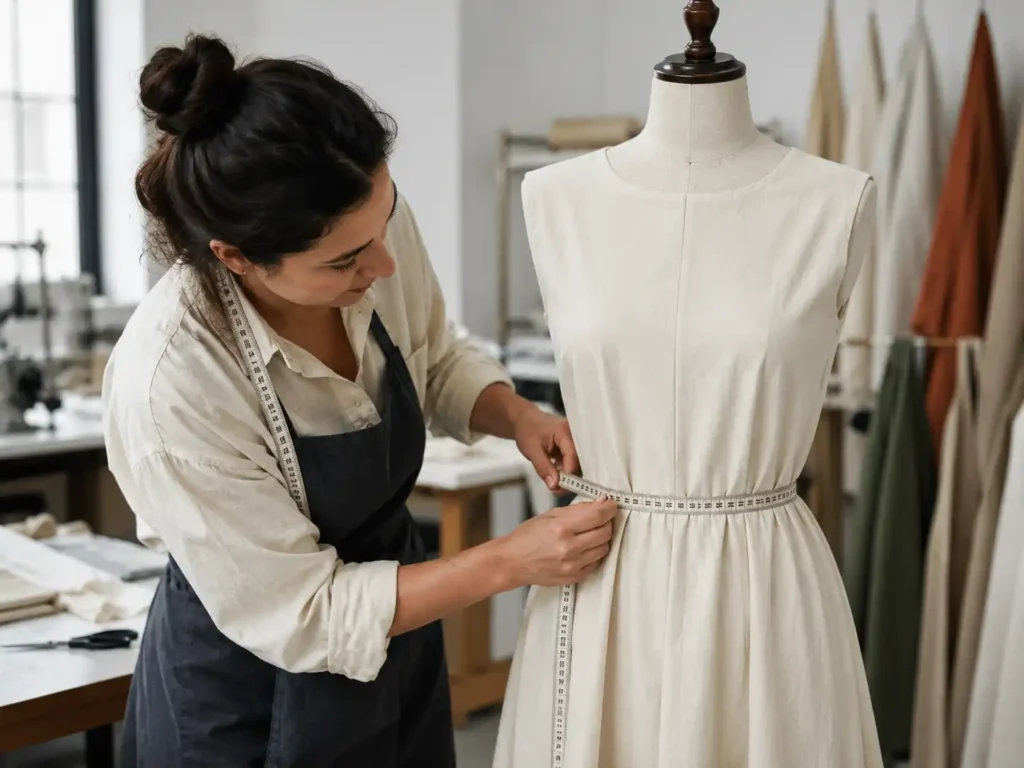
Waistband, Closure, and Lining Control Details

Shaped Waistbands

Interlining Support

Zipper Placement

Hooks and Buttons

Lining and Shorts

Elastic Adjustment
Fabrics Selected for Fit, Drape, and Market Position
Material choice changes the waist hold, hip fit, movement, finish, and production risk of every low waist skirt. Fabric direction is reviewed against silhouette, target price, color plan, lining, trims, care requirements, and bulk availability.
| Fabric Direction | Best Use | Fit Behavior | Main Risk | Control Method |
|---|---|---|---|---|
| Suiting / Crepe | Tailored minis, pleated skirts, office-to-evening styles | Structured with controlled drape | Waistband stiffness, pressing marks, seam bulk | Interlining test, seam review, pressing standard, hem balance |
| Denim | Y2K minis, cargo skirts, raw-edge or washed styles | Firm with wash-dependent shaping | Shrinkage, torque, shade variation, thick seams | Wash sample, shrinkage allowance, shade band, bulk measurement |
| Ponte | Bodycon and clean fitted skirts | Stable stretch with strong recovery | Excess compression, seam impression | Recovery test, negative-ease review, stitch and seam selection |
| Jersey | Soft fitted skirts and casual coordinated sets | Flexible, fluid, sensitive to relaxation | Stretch-out, curling, side-seam drift | Grain control, relaxation, elastic seam, recovery check |
| Satin | Party, occasion, asymmetric, or bias-inspired skirts | Fluid with visible shine direction | Snagging, color variation, seam show-through | Grain planning, protected cutting, flat zipper, controlled pressing and packing |
| Mesh / Lace | Layered party skirts, lined minis, sheer design panels | Light or stretch-dependent | Transparency, holes, edge damage, lining mismatch | Layer plan, hole inspection, lining approval, reinforced seams |
| Cotton Twill | Cargo, utility, belted, and structured casual skirts | Firm with clean topstitching | Shrinkage, pocket distortion, hardware weight | Shrinkage review, pocket template, bartack and hardware checks |
| Rayon / Viscose | Resort, fluid midi, printed, and soft draped skirts | Soft hand feel and strong drape | Shrinkage, wrinkling, hem drop | Fabric test, relaxed cutting, hem balance, anti-crease packing |
Design Details Developed for Stable Bulk Production

Pleats

Ruching

Asymmetric Hems

Slits

Cargo Pockets

Belts and Hardware

Rhinestones and Sequins

Prints and Panels
Size Grading That Preserves the Low Waist Silhouette
A successful grade keeps the intended wearing line, hip balance, movement, and coverage through the full range. Jinfeng Apparel can work with US, UK, EU, AU, alpha, extended, petite, or tall standards according to the supplied brand specification.
Building the Grade Rule
Low waist skirt grading begins with the brand’s approved base size and target size chart. Key points include low waist circumference, high hip, full hip, waist-to-hip depth, waistband width, front length, back length, side length, hem width, slit position, zipper length, lining length, and inner-short dimensions. Each point is reviewed for functional and visual impact rather than increased by one universal increment.
The waistband curve may require separate front and back growth. High-hip and full-hip increments must reflect the brand’s body standard, while the waist-to-hip depth may change across extended sizes. For stretch styles, grade rules are checked against material recovery and intended negative ease. For woven minis, added circumference must not produce gaping or move the waistline upward.
Jinfeng Apparel’s pattern team can develop XS-XL, numeric US ranges, extended sizes, and petite or tall adjustments when the brand provides clear standards, fit feedback, and tolerance requirements. Plus-size or extended-size work is not treated as simple proportional enlargement; hip shape, length, coverage, waistband support, and fabric performance are reviewed separately.
Motion and Coverage Review
Fit review includes front, side, and back views in standing, walking, sitting, bending, and turning positions.
The aim is to check whether the skirt remains at the intended line, whether the waistband rolls or gaps, whether the side seam stays balanced, and whether front and back coverage remain acceptable. For fitted styles, inspectors also look for horizontal drag lines, fabric whitening, zipper strain, and seam distortion.
Micro mini skorts require additional review of inner-short rise, crotch depth, leg opening, inseam, attachment position, and exterior visibility. Pleated styles are checked for opening over the hip. Cargo styles are checked for pocket weight and garment rotation. Stretch mesh or jersey styles are checked after wearing time to identify relaxation that may not appear during the first fitting minute.
Fit feedback is most useful when photos show the same angles and movements across sizes. Measurements, written comments, and marked images are converted into pattern revisions and recorded before the next sample.
Measurement Control in Bulk
The approved size chart, grade rule, measurement tolerance, final pattern, PP sample, and Golden Sample form the bulk measurement standard. Fabric relaxation and shrinkage are considered before cutting. Cut panels are bundled by size, and in-line checks verify critical points before a large quantity is completed. Finished-garment measurements focus on low waist, high hip, full hip, front length, back length, side length, hem width, waistband width, and inner-short dimensions where applicable.
Out-of-tolerance findings are classified by severity and production stage. Corrective action may include pattern correction, seam adjustment, waistband rework, pressing correction, or size segregation. Reinspection confirms the action before packing. Repeat-order records retain the approved pattern version, size chart, fabric reference, trim details, measurement tolerance, and packing requirement for faster and more consistent replenishment.

From Reference Image to Approved Production Sample
Project Review
Structure Review
Fabric Direction
Pattern Making
First Sample
Fit Feedback
Revised Sample
PP and Golden Sample
Transferring Approved Samples Into Repeatable Bulk Standards
The approved sample must become a complete production language. Clear PP locking, documented handover, and controlled changes reduce the gap between the development room and the sewing line.
Locking the PP Standard
PP approval locks the elements that define the finished garment: shell fabric, lining, color, dye lot or approved shade, trims, zipper, hardware, waistband support, measurements, construction, stitch method, label placement, hangtag, barcode, polybag, folding, carton assortment, and carton marks. Approval is recorded through files and physical references, not through informal memory.
The PP sample is reviewed with the final size chart, BOM, trim card, artwork, and packing instruction. Any remaining differences are resolved before bulk material cutting. A photo sample or salesman sample does not automatically replace PP approval because presentation samples may use different materials, quantities, or finishing standards.
Building the Production Handover
The production team receives the final pattern, graded nest, size chart, tolerance, fabric reference, BOM, trim approval card, sewing instruction, label placement, packing instruction, PP sample, Golden Sample, and QC checklist. Line supervisors review critical points before sewing begins, including waistband curve, zipper position, seam allowance, topstitching, pleat marking, lining attachment, inner-short connection, and hem finish.
Material inspection, fabric relaxation, cutting, cut-panel checking, bundling, sewing, in-line inspection, pressing, finishing, garment measurement, appearance inspection, packing, and final inspection follow the approved production order. Style, color, size, and version records remain separated for multi-style projects.
Controlling Changes After Approval
Changes after PP approval are reviewed before implementation because a new fabric, color, zipper, waistband width, lining, label, hardware, packaging material, or measurement can affect cost, MOQ, sample timing, production schedule, and fit. The change request is documented with the reason, affected files, material status, pattern impact, new approval requirement, and delivery impact.
A significant material or construction change may require a revised PP sample. Minor approved changes are updated in the production order, BOM, trim card, sewing instruction, size chart, or packing file. Controlled change management protects the launch schedule and prevents different teams from working from conflicting versions.

Capacity Organized for Multi-Style Low Waist Programs
Product-Based Allocation
Eighteen Sewing Lines
Six Flexible Lines
Merchandising Control
Finishing and Packing
Multi-Batch Delivery
Quality Control Built Around Low Waist Skirt Risks
Quality control follows the garment from material arrival to final packing. Inspection points are selected for low waist fit, waistband stability, hip balance, length, closure, lining, decoration, labels, SKU accuracy, and bulk consistency.
| Production Stage | Low Waist Skirt Check | Risk Controlled |
|---|---|---|
| Incoming fabric | Weight, width, stretch, recovery, shade, defects, shrinkage reference | Fit change, color variation, material shortage |
| Fabric relaxing | Relaxation time and direction before cutting | Measurement change, twisting, shrinkage after sewing |
| Cutting | Grain, panel direction, size bundle, notches, print or stripe position, fabric damage | Side-seam drift, mismatch, distorted silhouette |
| In-line sewing | Waistline, waistband curve, zipper, pleats, pockets, lining, inner-short attachment, stitch quality | Bulk repetition of construction errors |
| Measurement | Low waist, high hip, full hip, front/back/side length, hem, waistband, inner short | Size inconsistency and coverage variation |
| Appearance | Symmetry, seam flatness, pressing, shine marks, puckering, drag lines, hardware position | Poor retail presentation and fit perception |
| Decoration | Rhinestones, sequins, embroidery, hardware, bartacks, sharp edges | Missing parts, weak attachment, skin discomfort |
| Packing | Main label, care label, size, barcode, SKU, polybag, folding, carton assortment | Warehouse rejection, wrong SKU, scanning failure |
| Final inspection | Approved sampling standard, quantity, workmanship, measurement, appearance, packing | Shipment-level nonconformity |
| Inspection coordination | AQL or client inspection by project, records, corrective action, reinspection | Unresolved defects before shipment |
Private Label Packaging Ready for Retail Operations

Main and Care Labels

Hangtags

Barcode and SKU

Polybag Packaging
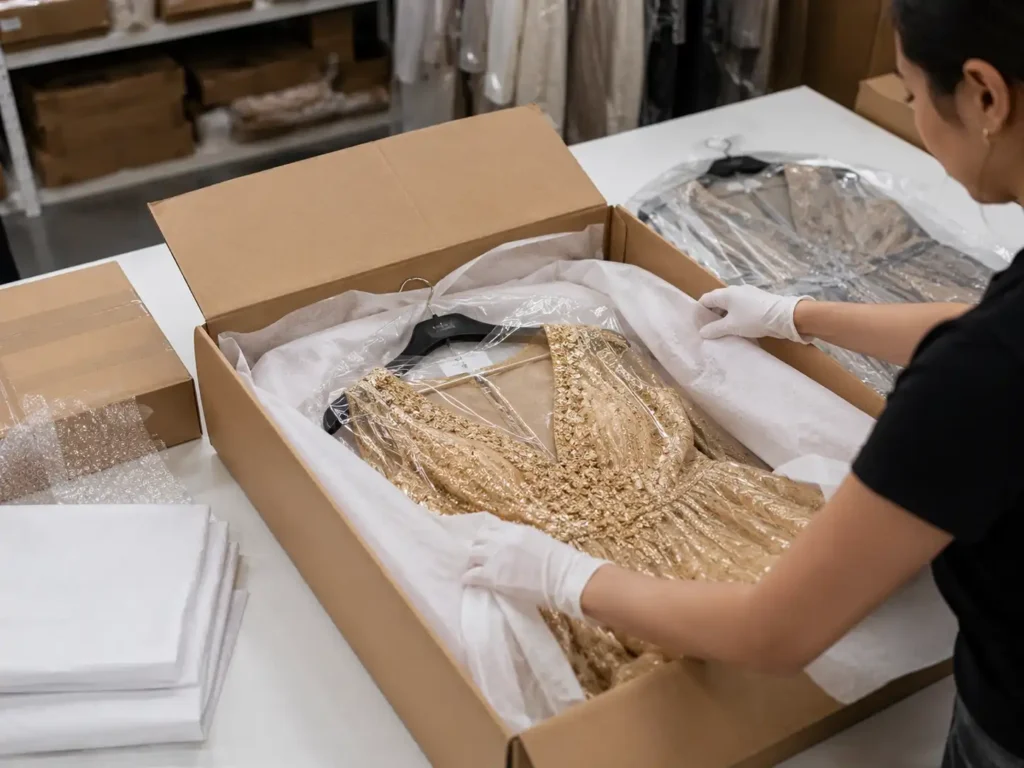
Folding and Protection

Cartons and Documents
MOQ, Costing, and Production Planning Explained Clearly
MOQ by Style and Color
Costing Inputs
Supplier-Based MOQ
Production Calendar
Anonymous US Low Waist Skirt Collection Case
An anonymized US fast-fashion womenswear program shows how a multi-style low waist skirt collection can be developed, approved, produced, packed, and handed over without exposing the brand name, original files, prices, or unpublished designs.
Project data snapshot:
- Market: United States
- Collection: 18 low waist skirt and skort styles
- Total order volume: 46,800 pieces
- Product mix: 6 tailored or satin minis, 4 micro skorts, 3 pleated skirts, 3 cargo or denim styles, and 2 mesh party skirts
- Size range: XS-XL
- Color structure: five core color families distributed by style
- Sample route: first sample, one or two revised samples by complexity, PP sample, and Golden Sample
- Delivery plan: 14-week program from confirmed materials to final packed handover, divided into two prioritized batches
Development Challenge
The collection used several material groups and different wearing positions while the brand wanted one recognizable low waist attitude across every style.
Early references showed inconsistent waist drops, and the same numeric length produced different coverage on tailored minis, stretch skirts, and skorts. Pleated styles opened too early over the high hip, while two stretch styles relaxed after sitting.
Denim wash development also changed the waist and hip measurements from the raw sample.
The first task was to create a measurement language shared across the collection. The team defined low waist, high hip, full hip, waist-to-hip depth, center-front length, center-back length, side length, waistband width, closure position, lining, and inner-short measurements.
Styles were then grouped by woven structured, stretch fitted, washed denim, and layered party construction so each group could use a suitable pattern and material-control method.
Manufacturing Actions
Pattern makers corrected waistband curves and separated front and back growth rules. Skort patterns were adjusted for inner-short rise and hidden coverage. Pleat release points were moved below the high-hip pressure area. Stretch styles were reworked after recovery review, and the denim styles included raw-to-wash shrinkage allowances based on wash samples.
Sampling was prioritized by commercial importance and construction risk. Hero styles entered first fitting before secondary colors. Final approvals were converted into style-specific pattern files, size charts, grade rules, fabric references, BOMs, trim cards, sewing instructions, label placements, packing instructions, QC checklists, PP samples, and Golden Samples. The 18-style program was allocated across suitable production groups instead of being treated as one uniform sewing package.
QC focused on low waist level, high-hip comfort, full-hip balance, waistband rolling, zipper flatness, pleat symmetry, inner-short coverage, denim shade and shrinkage, mesh damage, satin surface marks, label placement, barcode accuracy, and size-color carton assortment.
Delivery Result
The project calendar used six weeks for material confirmation, pattern work, first samples, revisions, and PP locking. Weeks 7-12 covered bulk material control, cutting, sewing, in-line inspection, finishing, and staged measurement review. Weeks 13-14 covered final inspection, retail packing, carton verification, and two-batch handover based on launch priority.
The first batch contained key campaign styles and priority sizes. The second batch contained the remaining volume and replenishment structure. Packing lists, carton marks, style-color-size breakdowns, and barcode files were separated by batch. Pattern, measurement, material, trim, packing, and inspection records were retained for color extensions and repeat production.

Design Protection and Project-Based Compliance Support
NDA and Design Protection
Material and Testing Support
OEKO-TEX, GOTS, GRS, organic, recycled, or other material directions are confirmed by fabric type, supplier, color, batch, certificate scope, validity, MOQ, and current availability.
SGS, Intertek, BV, ITS, or other testing can be coordinated by project according to the agreed product and destination requirements. Final regulatory decisions and label content should be confirmed by the brand, importer, laboratory, or qualified compliance adviser.
Audit and Inspection Cooperation
Low Waist Skirt Frequently Asked Questions

Start Your Low Waist Skirt Program
Send Jinfeng Apparel the available development information for a focused review of style structure, low waist position, fabric direction, sample requirements, MOQ, costing inputs, bulk risks, private labels, and delivery planning. A complete tech pack is helpful but not required for the first evaluation; a clear reference image, original sample photos, line sheet, brand size chart, and preliminary quantity plan can also establish the next step. Kelly coordinates the initial review and routes the project to the relevant development, merchandising, pattern, material, production, or QC team.
Please include:
- Company name, market, and sales channel
- Reference image, tech pack, sketch, or original sample photos
- Quantity per style/color and expected number of styles
- Fabric preference, color plan, trims, wash, print, or decoration
- Size range, fit standard, and available size chart
- Main labels, care labels, hangtags, barcodes, polybags, and carton requirements
- Target sample date, launch date, and preferred shipment plan
- Inspection, testing, audit, NDA, or warehouse requirements