 Skip to content
Resortwear Matching Set Manufacturer
Custom resortwear matching sets developed for global fashion brands, premium ecommerce labels, retail programs and multi-style private-label collections.
Jinfeng Apparel turns coordinated resort concepts into production-ready sets through fabric and print development, separate upper-and-lower-body pattern engineering, sample revision, bulk consistency control and retail-ready delivery. Our Guangdong manufacturing system supports woven and knit resort sets, seasonal capsules and repeat programs without reducing a matching set to two unrelated garments.
- 8 core set structures: shirt-and-shorts, crop-and-maxi, halter-and-skirt, cami-and-pants, bandeau-and-wrap, blouse-and-trousers, top-and-midi, and three-piece sets.
- 12-18 days: a typical first-sample reference for medium-complex matching sets when suitable materials and development information are available.
- 100-220 gsm viscose direction: commonly evaluated for soft resort silhouettes, with shrinkage, opacity and wash dimensions checked before bulk use.
- MOQ from 200 pcs: per style and color, subject to fabric, print, trim, construction and packing requirements.
Manufacturing Capacity Built for Resortwear Collections
Since 2008
6 Owned Factories
10+ Production Partners
2 Sample Rooms
7+ Pattern Makers
15+ QC Inspectors
Built for Established Resortwear and Fashion Brands
Resortwear Brands
Vacation Fashion Labels
Premium Ecommerce Brands
Swim Extensions
Multi-Channel Retailers
Sourcing Teams
Where Resortwear Matching Sets Commonly Go Wrong
Color Batch Differences
Print Scale Mismatch
Poor Set Proportions
Unstable Size Pairing
Lightweight Fabric Risks
Packing Mix-Ups
Custom Resortwear Matching Sets We Manufacture

Shirt and Shorts Sets

Crop and Maxi Sets

Halter and Skirt Sets

Cami and Pant Sets

Bandeau and Wrap Sets

Blouse and Trouser Sets

Top and Midi Sets

Three-Piece Resort Sets
Designed to Sell Together and Separately
A strong matching-set program creates more selling options from one development story. Commercial planning begins before sampling so product architecture, SKU structure and repeat potential remain clear.
One Fabric Story, Multiple Selling Units
A coordinated fabric or print can support a shirt, crop top, skirt, shorts and trouser, allowing merchandising teams to build complete looks and individual add-on purchases.
Pattern blocks should not be copied blindly across items; each garment receives its own fit and construction review while staying visually connected through color, trim and finishing. When a top becomes a bestseller, the same approved pattern can be offered with another bottom or a new seasonal print after material and fit checks.
Set-Level and Component-Level SKU Control
Retail programs may sell the outfit as one set, list top and bottom separately, or use both methods across channels. Jinfeng can follow the approved SKU structure through labels, barcodes, polybags and carton ratios. A set sold under one SKU requires exact top-bottom quantity balance and pairing checks. Separates require independent quantity, size and barcode records, even when cut from the same material lot. Clear decisions at quotation and PP-sample stages prevent repacking work later.
Repeat Programs Built from Approved Records
Pattern versions, measurement files, fabric references, trim details, sewing instructions, color records and packing instructions are retained for repeat-order support. A repeat in a new color still requires shade and material confirmation; a new fabric on an existing pattern may require fit review because drape, stretch and shrinkage can alter the silhouette. Record retention improves speed without treating every reorder as identical by default.

Build a Cohesive Resortwear Capsule Collection

Eight-Style Core Capsule

Twelve-Style Print Story

Multi-Color Repeat Program
Fabrics Selected for Drape, Comfort and Travel
Resortwear material selection should connect hand feel, opacity, wash behavior, print performance, construction and final packing. Fabric names alone do not predict how a set will fit or travel.
| Fabric Direction | Typical Weight | Best-Matched Sets | Development Focus | Bulk Control |
|---|---|---|---|---|
| Linen Blends | 120-240 gsm | Shirt-shorts; blouse-trousers | Drape, opacity, natural crease level, shrinkage | Dye lot, panel shade, pressing, fold marks |
| Viscose | 100-220 gsm | Crop-maxi; cami-pants; wrap sets | Shrinkage, wash dimensions, softness, seam stability | Relaxing, cutting direction, hem growth, pressing |
| Rayon | 90-200 gsm | Printed co-ords; maxi sets | Print clarity, shrinkage, opacity, recovery | Lot control, seam handling, wash review |
| Cotton Poplin | 90-180 gsm | Shirt-shorts; structured sets | Crispness, transparency, colorfastness, sleeve volume | Shade, puckering, seam press, measurement |
| Chiffon | 60-130 gsm | Layered skirts; soft blouse sets | Transparency, lining, seam slippage, hem balance | Snagging, panel direction, rolled hem, pressing |
| Satin / Crepe | 100-260 gsm | Premium evening resort sets | Luster direction, snagging, drape, crease behavior | Shade, grain direction, pressing, packing |
| Rib Knit | 180-320 gsm | Fitted crop-skirt; top-pant sets | Stretch, recovery, opacity, length growth | Relaxing, twist, seam stretch, wash dimensions |
| Printed Wovens | 90-220 gsm | Vacation co-ords; three-piece sets | Repeat size, direction, base cloth, colorfastness | Strike-off approval, placement, lot and cut control |

Keep Prints and Colors Consistent Across Every Piece
Print and color control is central to resortwear. Artwork must work on different garment areas, and every component needs a common approval path from digital file to bulk fabric.
Artwork and Base-Fabric Review
- Development starts by reviewing file quality, repeat structure, motif size, color count, direction and intended garment placement. The same artwork behaves differently on poplin, viscose, satin and knit because surface, absorption, luster and stretch change the visual result. Base cloth is therefore approved as part of the print, not as a separate late decision. Border prints, engineered placements and one-way motifs receive special marker and cutting instructions.
Strike-Off, Scale and Placement Approval
- A strike-off or printed sample allows color, edge clarity, repeat size and base-cloth interaction to be reviewed before bulk printing. Scale may be adjusted for a small top, a maxi skirt or a wide trouser so one motif does not overwhelm one component and disappear on another. Placement references identify front center, side seam, neckline, waistband, pocket and hem relationships. Approved photos and swatches become part of the production file.
Bulk Lot and Component Pairing
- Bulk fabric is reviewed for color, hand feel, width, print direction, repeat consistency and visible defects. Cutting plans keep coordinated components within controlled lots where possible. Thread, zipper, lining and label colors are matched to the approved fabric rather than selected from generic descriptions. For repeats, the previous color record is used as a reference, but every new dye or print lot still requires approval because exact visual duplication cannot be assumed.
Pattern Development for Balanced Set Proportions
Matching sets need independent pattern accuracy and shared visual balance. Upper and lower pieces are developed separately, then assessed together on fit, exposure, movement and styling.
Upper-Body Fit Control
- Top development covers bust width, neckline shape, armhole depth, shoulder or strap length, under-bust position, top length and hem stability. A halter, bandeau, cami and relaxed shirt cannot share the same support logic. Lightweight woven tops may need lining, facing, internal elastic or structure to hold the approved shape. Fit feedback is converted into updated pattern points and measurements rather than handled as informal sewing comments.
Lower-Body Fit Control
- Bottom development covers waist position, waistband shape, hip ease, rise, thigh width, skirt sweep, slit height, inseam and finished length. A soft viscose trouser requires enough ease for movement but controlled rise and crotch shape; a wrap skirt needs overlap that remains secure across the size range. Measurement tolerances and grade rules are defined before bulk cutting, then checked during production and garment inspection.
Set Proportion and Size Pairing
- The completed look is reviewed for the space between top hem and waistband, the relationship between upper volume and lower volume, and overall length balance. A cropped top may pair with a higher waist; an oversized shirt may require a cleaner short or trouser line. Separate size charts support different bust-waist-hip relationships, while packing rules define how sizes are paired when the outfit is sold as one set. Extended size ranges are reviewed by garment proportion, not created through uniform enlargement alone.

Custom Details That Define Your Resortwear Collection

Adjustable Straps

Elastic Waistbands

Drawstring Details

Wrap Constructions

Zippers and Closures

Slits and Openings
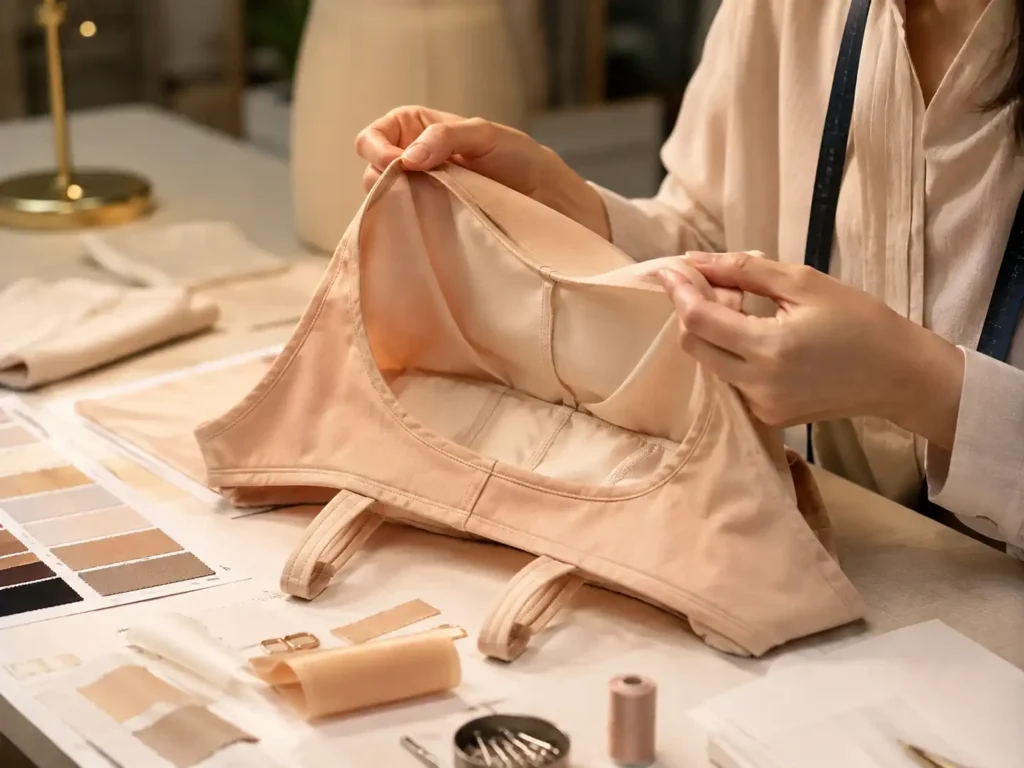
Lining and Coverage

Pockets and Fastenings
Workmanship Standards for Lightweight Resort Sets
Lightweight fabrics reveal uneven seams, tension marks and poor pressing quickly. Workmanship control connects fabric handling, stitch choice, seam finishing, symmetry and final presentation.
Seam Construction by Fabric Behavior
Seam allowance, stitch density, thread type and edge finish are selected after considering fraying, transparency, stretch and seam slippage. Chiffon and fluid rayon need clean, low-bulk finishes and controlled feeding; poplin needs smooth topstitching and balanced pressing; stretch knit needs enough seam elasticity without waviness. Workmanship instructions identify high-risk areas such as armholes, waist seams, tie points, zippers, slits and pocket openings. The aim is a stable garment with an appearance suitable for close ecommerce photography.
Symmetry, Gathering and Alignment
Resort sets often include ruching, gathers, wrap edges, tie fronts, collars or directional prints. Left-right symmetry, gather distribution, seam matching and motif alignment are checked against the sealed sample. Top and bottom components are assessed together for color and visual alignment, while each garment keeps its own workmanship criteria. One-way prints and border layouts receive cutting references so design placement does not depend on operator judgment during bulk production.
Pressing, Hem Balance and Final Hand Feel
Pressing is planned around material sensitivity. Satin can show shine marks or pressure lines; linen blends need a controlled natural finish rather than a flattened surface; viscose may lengthen during hanging and pressing; chiffon hems can become uneven if handled too early. Garments may need resting before final length review. Finishing teams check shape, seam appearance, labels, loose threads, stains and folding before packing. Fold method and bag size are selected to reduce avoidable creasing during transport.

From Design Reference to Approved Resortwear Sample
Project Review
Fabric Direction
Pattern Development
First Sample
Fit Review
Revised Sample
PP Sample
Golden Sample
Production Release
Bulk work begins only after commercial quantity, schedule, material, sample, packing and payment requirements are confirmed.
MOQ and Quotation for Resortwear Matching Sets
The standard MOQ starts from 200 pieces per style and color. Final quantity rules depend on how the outfit is sold, how materials are sourced and whether printing, dyeing, trims or packing carry separate minimums.
How a Matching Set Is Counted
When a top and bottom are sold as one set under one style, the quoted quantity normally refers to complete finished sets.
Every set still contains two separately developed and produced garments, so fabric use, pattern work, sewing content, labels and packing must be calculated by component.
When top and bottom are sold independently, each component requires its own quantity, size ratio, SKU and packing structure.
Three-piece sets add another component and increase material, workmanship and pairing control.
What Changes the Price
- Fabric and yield: composition, weight, width, shrinkage, print method, pattern size, marker efficiency and cutting loss.
- Construction: lining, pockets, wrap layers, gathering, complex waistbands, zippers, elastic, ties and finish level.
- Color and print: stock color, custom dye, digital print, screen print, placement print, strike-off work and color approvals.
- Size and assortment: size range, grade complexity, color count, ratio splits and set-pairing requirements.
- Private label: woven labels, care labels, hangtags, barcodes, polybags, inserts, cartons and warehouse labels.
- Testing and inspection: material tests, client protocols, third-party inspection and market-specific documentation requested for the project.
A Manufacturing System for Multi-Style Resort Programs

Factory Allocation

Flexible Style Management

Project Team Coordination
Controlled Production from Fabric Approval to Packing
Bulk Material Approval
Incoming Inspection
Pattern and Marker Check
Cutting by Lot
Bundle and Size Control
Sewing Production
In-Line Inspection
Finishing and Measurement
Packing and Shipment Review
Quality Control for Lightweight Coordinated Sets
Quality control covers material, cutting, sewing, garment, pressing and packing stages. Resort sets receive additional checks for shade pairing, print direction, size combination and travel presentation.

Fabric Shade and Lot

Print Scale and Direction

Shrinkage and Wash

Transparency and Lining

Set Measurement Pairing

Seam and Hem Balance

Trim and Elastic Stability

Packing Crease Protection
Private Label Resort Sets Ready for Retail

Labels and Brand Identity
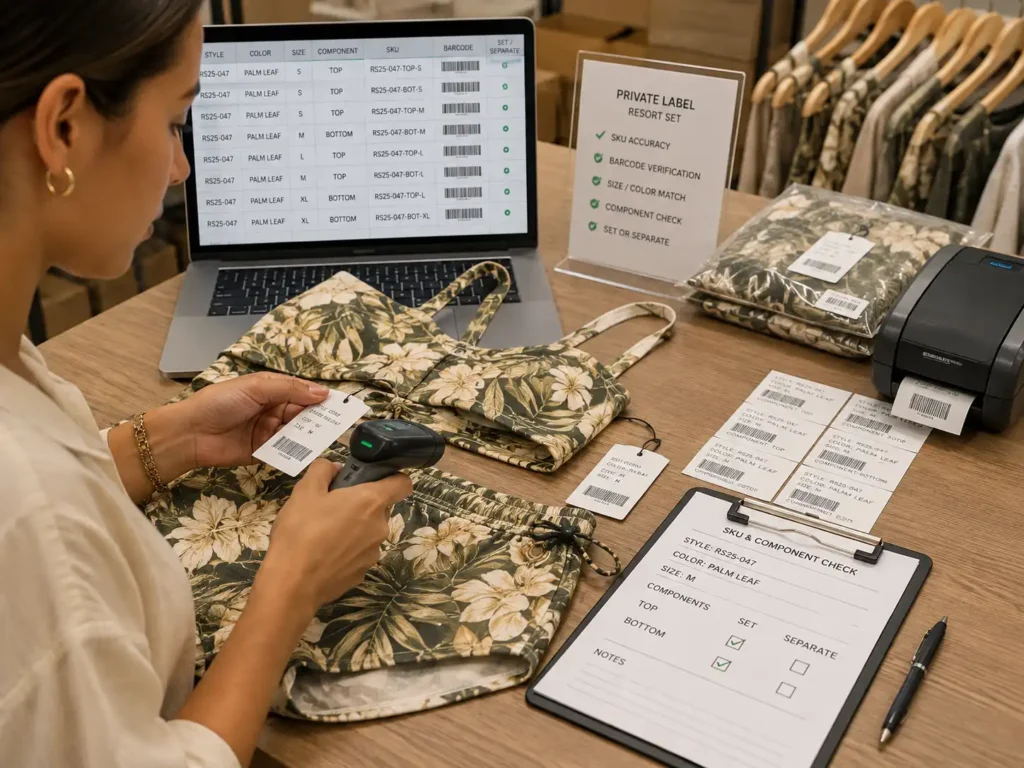
SKU and Barcode Structure

Set Packing Method

Carton and Warehouse Preparation
Testing Support and Confidential Product Development
Material and Market Requirements
NDA and Design Protection
Representative 48,000-Piece Resortwear Program
The following anonymous program model reflects the 10-30 style and 20,000-80,000 piece order range currently associated with Jinfeng brand projects. Figures illustrate a realistic planning structure rather than identifying a specific brand or disclosing protected order records.
| Program Area | Approved Structure | Control Method | Commercial Result |
|---|---|---|---|
| Assortment | 18 styles; 10 sets; 48,000 units | Style grouping by fabric, print and delivery priority | Clear hero styles and supporting assortment |
| Materials | Viscose, linen blends, poplin and satin-crepe | Weight, opacity, shrinkage, lot and hand-feel approval | Consistent fabric story across categories |
| Prints | 3 exclusive repeats and 4 solid colors | Strike-offs, scale review and garment-specific placement | Coordinated imagery without identical placement |
| Sampling | First, revised, photo-ready and PP samples | Separate pattern files and combined set fitting | Campaign samples and bulk standards kept distinct |
| Sizing | XS-3XL; separate top and bottom charts | Grade rules, tolerances and set-pairing checks | Better proportion across the intended range |
| Production | Allocated by structure and material category | BOM, production order, in-line QC and Golden Sample | Multi-style production remained traceable |
| Packing | Set SKUs plus selected separate component SKUs | Barcode mapping, component count and carton-ratio control | Retail and ecommerce channels received correct formats |
| Delivery | Priority launch styles followed by main volume | Shipment planning by SKU and warehouse need | Launch-critical units separated from main replenishment |
Resortwear Matching Set Frequently Asked Questions
MOQ starts from 200 pieces per style and color. Final requirements depend on fabric availability, custom dyeing or printing, trims, construction, packing and the way top and bottom quantities are structured.
When the outfit is quoted and sold as one complete set, quantity usually refers to complete sets. Top and bottom are still costed and controlled as separate garment components. Separately sold pieces require independent quantities, SKUs and packing instructions.
Yes. Reference images can support an initial structure review. A formal sample becomes more accurate when accompanied by measurements, fabric direction, target quantity, size range, construction notes and intended fit. Tech packs, original samples and line sheets are also accepted.
Common directions include linen blends, viscose, rayon, cotton poplin, chiffon, crepe, satin and rib knit. Selection depends on silhouette, opacity, drape, print method, wash behavior, price direction and packing requirements.
Yes, subject to artwork quality, base fabric, print method, repeat size, color count, MOQ and supplier schedule. Strike-off approval, scale review, placement and bulk fabric checks are planned before production.
Color control uses approved swatches, bulk fabric approval, dye-lot records, incoming inspection, lining and trim matching, and controlled cutting and pairing. New repeat lots still require approval because minor differences can occur between dye or print runs.
Yes. Separate charts and grade rules are recommended when top and bottom require different bust, waist, hip, rise, length or ease logic. Packing instructions define the intended size pairing when sold as one set.
A medium-complex matching set commonly needs about 12-18 days for a first sample when suitable materials are available. Revised and PP samples commonly require 7-15 days. Custom fabrics, prints, trims or complex structures extend the schedule.
Yes. Options include main labels, size labels, care labels, hangtags, barcode stickers, SKU labels, polybags, inserts, cartons, carton marks and warehouse labels. Set-level and component-level packing structures can be followed.
Controls cover incoming materials, cutting, sewing, in-line inspection, garment measurement, pressing, packing, AQL inspection and client inspection support. Matching sets receive additional checks for shade, print direction, size pairing and component quantity.
Yes. NDA-based cooperation can protect tech packs, original samples, patterns, measurements, print files, labels, packaging, pricing, order information and unpublished collections.
Yes. Jinfeng supports multi-style, multi-color and multi-size programs through style allocation, separate BOMs and production files, project timelines, QC checklists and packing instructions. Final capacity and schedule are reviewed by project.

Start Your Resortwear Matching Set Project
Send the available project files to Kelly for a structured feasibility and quotation review. The most useful inquiry includes the complete set composition, reference images or tech packs, target quantities by style and color, fabric or print direction, intended size range, private-label requirements, target market and planned launch window.
When artwork is involved, attach the repeat file or a clear print reference. When top and bottom will be sold separately, include the expected quantity and SKU structure for each component. Jinfeng will review product construction, material availability, pattern requirements, sampling path, MOQ conditions, bulk-production considerations, packing structure and the information still needed before a formal quote. Clear inputs allow the team to identify risk early and provide a more accurate development route rather than a generic estimate.
- Product files: tech pack, line sheet, reference images, sketches or original-sample photos.
- Commercial plan: styles, colors, quantity, size range, target price direction and launch date.
- Material direction: fabric composition, hand feel, weight, print artwork, Pantone or approved swatch.
- Brand delivery: labels, hangtags, barcodes, polybags, cartons, warehouse and inspection requirements.


