 Skip to content
Partywear Matching Set Manufacturer
Custom co-ord collections engineered for strong fit, coordinated fabrics, reliable bulk execution and retail-ready private-label delivery.
- Develop 10-30 style partywear programs across corset tops, skirts, trousers, halters, bustiers and tailored co-ords.
- Complex first samples using corset, mesh, lace or sequin construction normally require about 15-25 days after materials and specifications are ready.
- MOQ starts from 200 pcs per style/color, with material and trim minimums reviewed separately before sampling.
- Production planning can support multi-style programs in the 20,000-80,000-piece range through coordinated factory allocation, QC and packing control.
Built for Structured Partywear Production
A partywear collection needs development depth as well as production capacity. Jinfeng Apparel combines dedicated sample resources, pattern control, factory allocation and quality follow-up for coordinated tops and bottoms.
Since 2008
Long-term focus on custom women’s fashion development, sampling, bulk production and export coordination for overseas fashion programs.
6 Owned Factories
10+ Production Partners
2 Sample Rooms
7+ Pattern Makers
15+ QC Inspectors
Made for Established Fashion Programs
Fashion and Occasionwear Brands
Sourcing and Product Teams
Partywear Sets We Develop

Corset Top and Mini Skirt

Satin Cami and Maxi Skirt

Mesh Top and Ruched Skirt

Sequin Bustier and Trousers

Halter Top and Slit Skirt

Tailored Party Co-ord
Build a Commercial Partywear Capsule
Hero Set Extensions
Fabric Story Extensions
Launch Assortment Balance
Fabrics Selected for Partywear Impact

Satin

Mesh and Power Mesh

Sequin Fabrics

Lace

Velvet
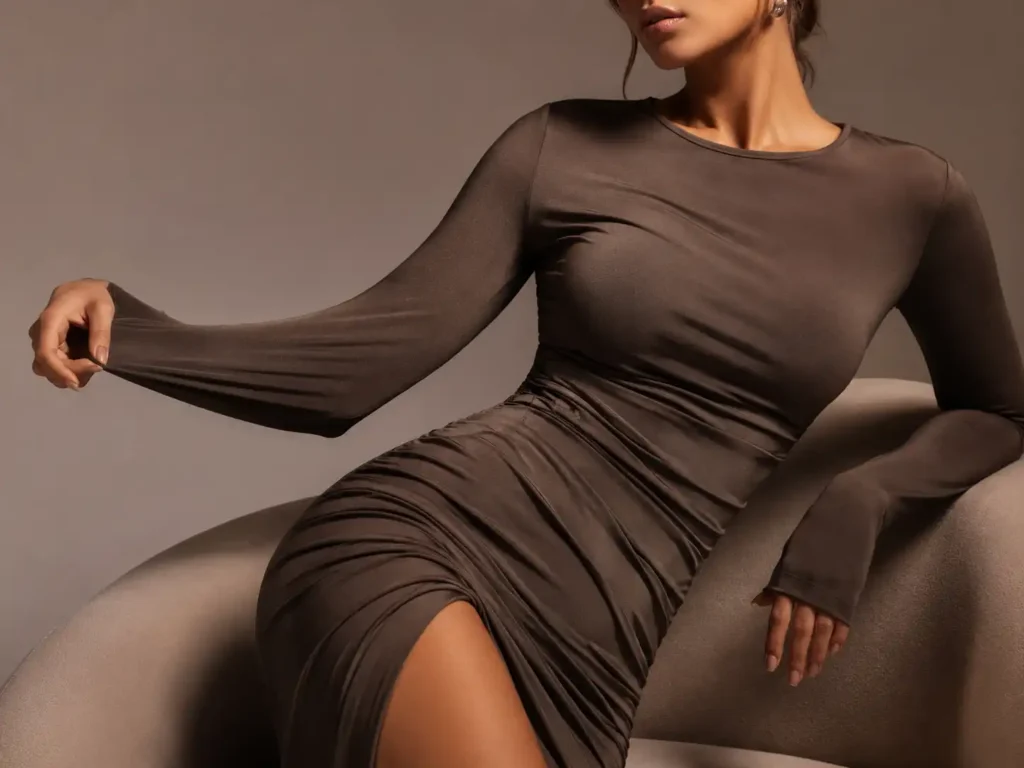
Stretch Knit and Jersey
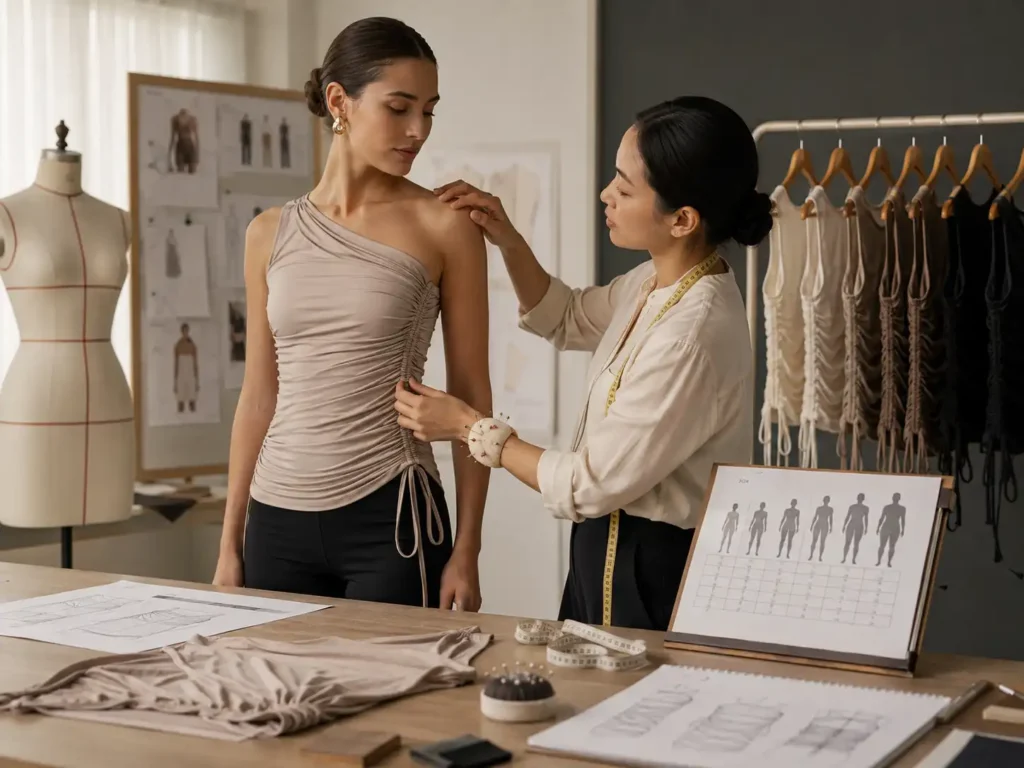
Fit Both Pieces as One Look
A matching set is judged through the complete silhouette. Pattern development connects bust shape, top length, waist placement, hip line, skirt balance and trouser rise so the outfit remains intentional across sizes and during movement.
Control the Upper Piece
- Corset, bustier, halter and cami tops require more than a bust measurement. Pattern makers review bust volume, cup position, underbust level, neckline depth, armhole shape, strap angle, back width and closure tension. A top that fits a mannequin can still lift, gape or roll during movement. Jinfeng uses fitting comments and measured corrections to define where support comes from: cup, boning, lining, elastic, shoulder strap, halter tie or back closure. Crop length is checked while standing, sitting and raising the arms. The hem must align with the selected skirt or trouser rise without exposing more than the intended design.
Control the Lower Piece
- Mini skirts, maxi skirts and trousers each create different balance. Mini skirts need secure waist fit, enough hip allowance and controlled hem coverage. Maxi skirts require a stable waist, smooth hip transition, even hem sweep and a slit height that works through walking and sitting. Trousers need balanced front and back rise, seat shape, thigh room and inseam. A high-waist trouser can visually shorten a crop top, while a low-rise skirt increases exposed waist distance. Pattern review therefore treats the lower piece as part of the complete outfit rather than an isolated garment.
Grade the Complete Silhouette
- Size grading must preserve design relationships instead of adding the same amount everywhere. Bust growth, waist growth, hip growth, top length and skirt length may follow different rules. Strap position and cup spacing also need review across the range. For XS-XL or extended size programs, Jinfeng can work from an approved base size, measurement chart and brand-specific grade rules. Separate-size selling may require independent top and bottom grading, SKU mapping and packing instructions. Bulk measurement checks compare critical points against the approved tolerance and Golden sample before sets are paired.
Construction Details Behind Partywear Sets
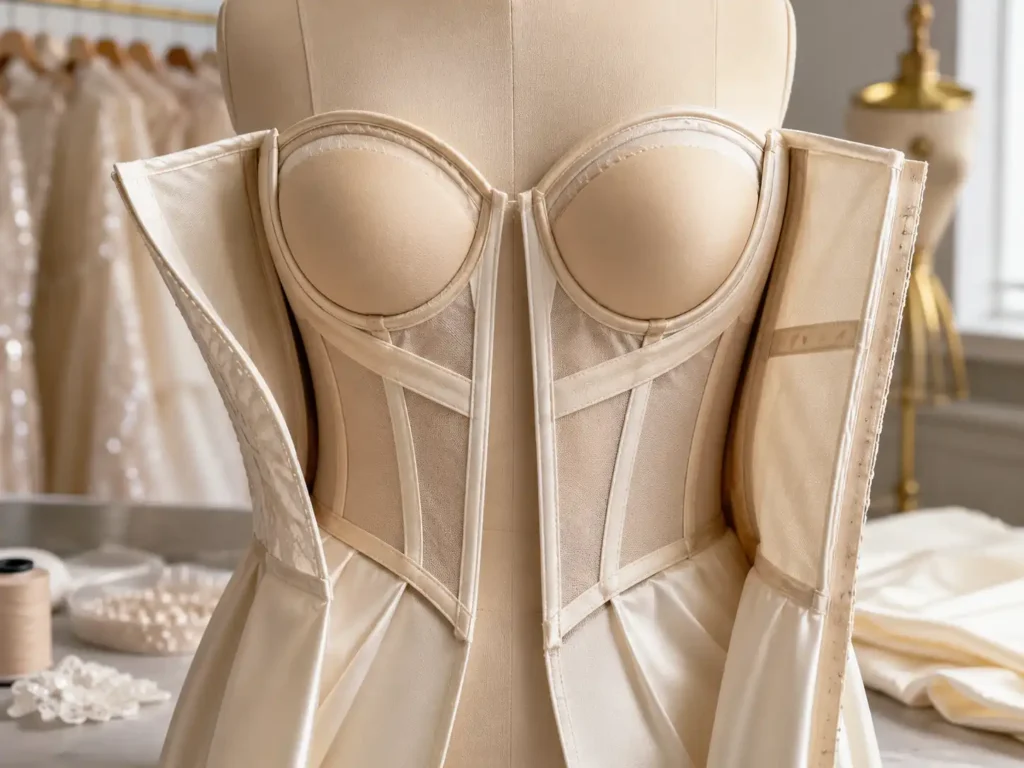
Bra Cups and Bust Support

Boning and Corset Structure

Lining and Coverage
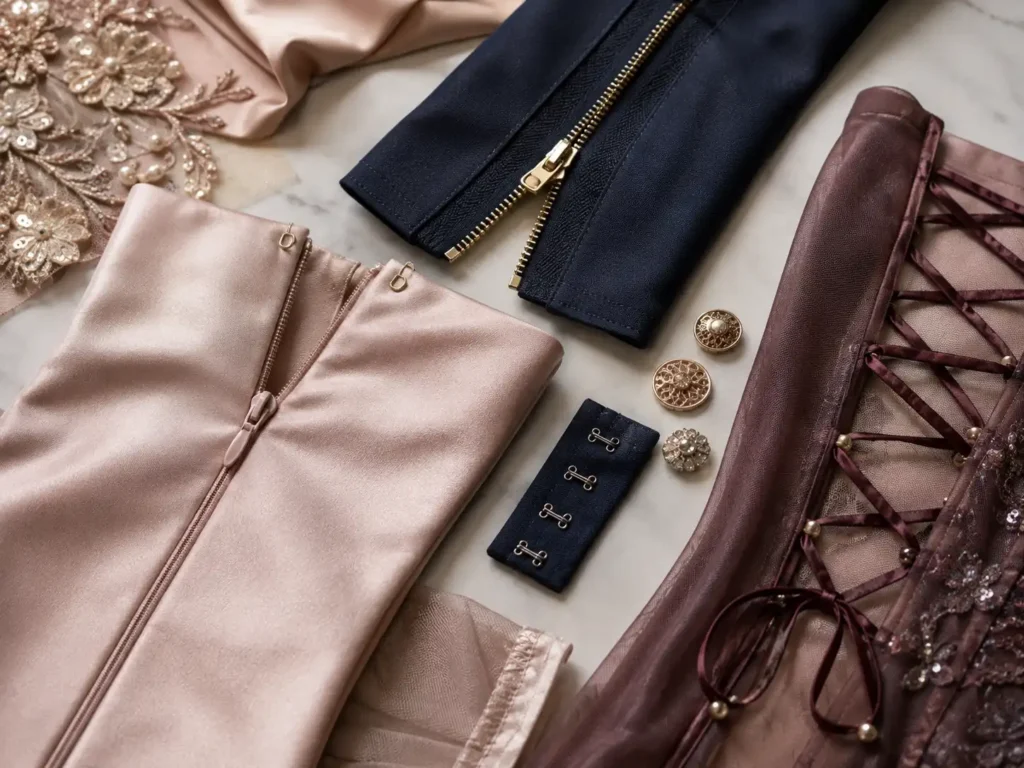
Zippers and Closures

Straps and Adjusters

Rhinestones, Chains and Trims
Keep Both Pieces Visually Consistent
A matching set can fail even when both pieces pass inspection separately. Fabric batch, cutting direction, lining, thread, zipper and packaging data must remain connected so the top and bottom arrive as one approved commercial look.
| Risk | Typical Cause | Production Control |
|---|---|---|
| Color difference | Different dye lots, surface shine or lighting response | Use one approved bulk lot where possible; record dye lot; approve shell, lining, thread and zipper colors together. |
| Uneven satin shine | Panels cut in opposite directions | Mark face and direction before cutting; use directional lay plans for both pieces. |
| Print mismatch | Top and bottom planned separately | Approve placement maps, repeat scale and cut orientation as a coordinated set. |
| Transparency mismatch | Different mesh layers or lining colors | Confirm layer count, lining tone and stretch density on the PP sample. |
| Different recovery | Top and bottom use separate stretch batches | Test stretch and recovery; keep approved batch references; recheck patterns after fabric change. |
| Trim color conflict | Zippers, thread, elastic or hardware ordered independently | Issue one trim approval record covering both pieces and every colorway. |
| Size pairing error | Separate packing streams or unclear SKU rules | Define top/bottom size logic, scan or check pair codes, and verify before polybag sealing. |
| Packing abrasion | Sequins, stones or hardware touch the other piece | Use tissue, inner protection or separate sleeves inside the coordinated outer pack. |
Send Your Set for Review
Files From Your Team
Review From Jinfeng

Validate Complex Details Before Bulk
Partywear sampling is a controlled engineering stage. Appearance, fit, support, transparency, movement and repeatability are checked before the PP sample becomes the production reference.
First Sample: Confirm Direction
- The first sample establishes the basic structure, proportion and material direction. Simple styles may require about 7-10 days; standard women’s fashion styles commonly require about 10-15 days; complex corset, strapless, lace, mesh, sequin or evening structures normally need about 15-25 days after materials and specifications are ready. The first version is not treated as a final bulk standard. Fit comments, fabric behavior, trim performance and workmanship are recorded by location and cause, then converted into pattern, measurement, BOM or sewing updates.
Revised Sample: Remove Production Risk
- A revised sample tests the agreed corrections. Medium-complexity styles commonly need one or two revision rounds, while corset, strapless, mesh, lace and sequin structures may require around two rounds depending on fit and design changes. Review points include cup position, boning, neckline security, top length, waist placement, skirt coverage, trouser rise, mesh transparency, lining and decoration. Changing the fabric or major structure can require a fresh evaluation because stretch, drape, support, cost and pattern behavior may change together.
PP and Golden Sample: Lock the Standard
- The PP sample confirms the final structure, measurements, grade rules, fabric, dye lot direction, lining, zippers, cups, boning, labels, packaging, workmanship and allowed tolerances before bulk. Major design changes after PP approval affect cost and timing. The Golden sample is sealed with the final pattern, BOM, trim approvals, size chart, sewing instruction, QC points and packing standard. Production teams, inspectors and repeat-order teams use the same reference instead of relying on conversation history.
From Set Concept to Bulk Production
Project Brief
Confirm product category, style count, quantities, market, size range, target launch, private-label needs and responsible contacts.
Structure Review
Assess upper and lower construction, support, lining, closures, movement, commercial fit and the relationship between both pieces.
Fabric Direction
Review weight, stretch, recovery, drape, transparency, surface direction, color method, supplier MOQ and bulk availability.
Pattern Development
Build or correct patterns around bust, waist, hip, top length, skirt balance, trouser rise, grade rules and design proportions.
First Sample
Test the initial shape, support, fabric behavior, workmanship and set proportion; record corrections by location and reason.
Revision and Fit
Update pattern, measurement chart, BOM, trims, construction and QC points; verify movement and appearance across relevant sizes.
PP Approval
Lock fabric, color, trims, labels, packaging, workmanship, tolerances and the approved production standard.
Bulk and QC
Allocate production, inspect materials, control cutting and sewing, measure garments, check surfaces, pair sets and verify packing.
Delivery and Records
Prepare shipment files, coordinate the forwarder, preserve approved patterns and material records, and document repeat-order differences.
MOQ and Cost Factors Explained
MOQ starts from 200 pcs per style/color. Final pricing depends on both pieces as a coordinated production unit, including shared materials, separate operations, set pairing and retail packaging. Special materials and trims can carry supplier minimums above the garment MOQ.
| Cost Factor | How It Changes the Quote |
|---|---|
| Shell fabric | Weight, width, consumption, color method, stretch, surface risk and wastage for the top and bottom. |
| Lining and support | Full or partial lining, power mesh, cups, boning, interfacing, elastic and reinforcement. |
| Pattern and grading | Two garment patterns, coordinated proportion, size range, separate-size selling and brand grade rules. |
| Sewing time | Corset channels, ruching, narrow hems, zippers, clean finishing, tailored structure and surface handling. |
| Decoration | Sequin clearance, rhinestone placement, embroidery, chains, flowers, fringe and hand attachment. |
| Color quantity | Separate fabric purchasing, lab dips, cutting management, trim matching, labels and packing by color. |
| Size ratio | Grading complexity, cutting efficiency, pair mapping, label counts and packing accuracy. |
| Sample development | Pattern work, material preparation, sewing, fitting, revisions, PP confirmation and Golden sample sealing. |
| Private label packing | Main labels, care labels, hangtags, barcodes, polybags, inserts, protection and carton marks. |
| Testing and logistics | Project-specific testing, inspection, shipment method, documentation and destination requirements. |

Plan Production Around Your Launch
Holiday, birthday and event-led collections lose value when approvals, materials and shipment planning happen too late. A workable calendar starts from the launch date and sets clear decision deadlines for every stage.
Prioritize Styles Before Sampling
- A 10-30-style range should not enter the sample room without priority. Hero looks for campaign photography, commercial core sets and high-risk fabric styles need different timing. Simple pieces may reach a first sample in about 7-10 days, standard styles in about 10-15 days, and complex corset, mesh, lace or sequin work in about 15-25 days after materials and specifications are ready. Running every style at equal priority can delay the pieces that control the launch.
Lock Decisions Before Production
- Bulk timing is issued after PP approval, material confirmation, final quantity, color breakdown, size ratio and packing requirements are known. Fabric dyeing, custom print, special trims, decoration and retail packaging can add separate preparation windows. The calendar therefore includes approval cutoffs rather than a single final ship date. Late changes to color, fabric, structure or packaging move the production plan because new materials, patterns or samples may be required.
Plan Shipment Before Packing
- Shipment planning begins while production is running. Priority SKUs, campaign colors or core sizes can be separated for an earlier air shipment when the commercial need justifies the cost, while the main volume follows by sea. Carton labels, packing lists and warehouse instructions must support the split. Brands using an appointed forwarder can provide booking instructions, warehouse address, cut-off time and required documents before goods are released.
Control Both Pieces Through Bulk Production
Bulk production treats every matching set as one commercial product with two connected manufacturing routes. Materials, patterns, operations, QC and packing data remain linked from cutting through carton release.
Material and Cutting Control
Incoming fabric is checked against the approved type, color, hand feel, width, stretch and surface direction. Dye lots and visible shade differences are recorded before cutting. Directional materials such as satin, velvet, sequins and printed fabrics receive specific lay and marker instructions. Top and bottom panels follow the same approved direction where the design requires a unified look. Cutting bundles carry style, color, size and component identification so pieces do not enter the wrong sewing route. Lining, interfacing, mesh and support materials are verified against the production BOM before the first sewing operation begins.
Sewing and Workmanship Control
First output from key operations is reviewed before volume work continues. Corset channels, cups, zippers, waist seams, ruching, slits, trouser rise and decorative placements receive defined checkpoints. Sewing instructions identify seam type, stitch density, reinforcement, elastic length, trimming and pressing restrictions. Satin needs controlled tension and handling; mesh needs stable edges and clean stretch seams; sequins need protected seam allowances and safe inner finishing. Inline inspection catches twisting, measurement drift, uneven gathers, surface damage and trim problems before large quantities reach final finishing.
Set Pairing and Packing Release
Finished tops and bottoms are measured and inspected before pairing. Size labels, color codes, SKU data and sales configuration determine whether both pieces enter one polybag or separate inner sleeves. Pairing checks confirm the correct style, color and size combination, especially where top and bottom sizes can differ. Surface-sensitive sets may require tissue, backing cards or protective covers. Packing teams follow approved fold, barcode, polybag, carton ratio and carton-mark instructions. QC and shipment records remain linked to the same production batch for later repeat-order review.

QC Built for Partywear Sets
Fabric Inspection
Cutting Direction
Sewing and Structure
Measurements and Fit
Surface and Appearance
Pairing and Packing
Private Label Sets Ready for Retail

Main and Size Labels

Hangtags and Inserts

Barcode and SKU Logic

Protective Packing

Carton and Warehouse Labels

Confidential Brand Files
Built for Multi-Style Partywear Programs
Style-Level BOM Control
Sample Version Control
Color and Dye-Lot Control
Size and Ratio Planning
Factory Allocation
Repeat-Order Records
Representative Partywear Program Structures
US Holiday Party Drop
European Eventwear Capsule
Multi-Drop Ecommerce Program
Partywear Matching Set Frequently Asked Questions

Develop Your Next Partywear Set
Send Kelly the product files and commercial details needed for a focused review. A useful brief includes the top and bottom design, reference images or tech packs, planned quantity per style/color, fabric direction, color plan, size range, desired selling method, private-label requirements and target launch date.
Jinfeng Apparel will review structure, fit, material suitability, trims, sampling route, MOQ, production risk and the information needed for quotation. For multi-style programs, identify campaign-priority styles and expected total volume so sample and factory allocation can be planned in the right order. Files can be shared under NDA, including unpublished designs, patterns, labels, packaging and launch information.
- Reference image, tech pack, original sample or line sheet
- Quantity per style/color and expected total program volume
- Fabric, color, size range and separate-size requirements
- Logo labels, hangtags, barcode, polybag and carton instructions
- Target sample date, launch date and shipment destination


