Skip to content
Rhinestone Top Manufacturer for Partywear Brands
Custom partywear tops engineered around rhinestone placement, fashion fit, material behavior, bulk consistency and retail-ready private-label delivery.
- 6 core product structures: crop, corset, bustier, mesh, halter and bodysuit tops.
- Complex first samples generally require 15-25 days after materials and development details are confirmed.
- MOQ starts from 200 pcs per style/color; special rhinestones, chains, custom colors and packaging may carry separate supplier minimums.
- Multi-style programs can be organized across 10-30 styles by fabric group, trim group, launch priority and production complexity.
Development Capacity Behind Every Partywear Program
Since 2008
6 Owned Factories
10+ Production Partners
2 Sample Rooms
7+ Pattern Makers
15+ QC Inspectors
Built for Established Partywear Product Programs
Best Project Fit
Manufacturing Scope
Where Rhinestone Party Tops Commonly Fail
Stone Retention
Fabric Mismatch
Unstable Bust Fit
Uneven Placement
Skin Contact
Packing Damage
Rhinestone Top Styles for Partywear Collections

Rhinestone Crop Tops

Rhinestone Corset Tops

Crystal Mesh Tops

Rhinestone Halter Tops

Embellished Bustier Tops

Rhinestone Bodysuit Tops
Build Rhinestone Tops Into Complete Partywear Collections
Hero Statement Tops
Matching Party Sets
Collection Coordination
Rhinestone Applications Selected for Design and Wearability
Decoration method determines shine, weight, labor, comfort and durability. Jinfeng Apparel reviews each option against fabric structure, placement area and intended retail appearance.

Hotfix Rhinestones

Sewn-On Stones

Rhinestone Chains

Crystal Straps

Crystal Fringe

Mixed-Size Layouts
Rhinestone Placement Must Support the Garment Structure
A strong layout follows the pattern, body movement and support zones. Decorative placement is reviewed as part of garment engineering, not as a separate graphic layer.

Neckline and Bust Placement
The bust area combines shape, exposure control and visual focus. Dense rhinestone placement near a deep neckline can add weight and pull the edge away from the body. Corset and bustier styles require cup position, upper-bust tension, center-front height and under-bust support to be stable before decoration begins.
Placement lines should follow panel seams and bust curves without crossing areas that need high stretch. Large stones sit better on stable panels, while small stones can follow curved transitions. Sewn-on stones may require lining coverage to hide thread and backing. A first sample checks symmetry from front, side and three-quarter views.
Fit review also considers bra compatibility, movement, armhole exposure and skin contact. A visually strong motif loses value if the neckline gaps, the cup shifts or the edge scratches during wear.

Straps, Shoulders and Halter Lines
Straps carry tension, and rhinestone chains or crystal straps add weight. Connection points need reinforcement based on the base fabric and strap construction. Narrow mesh edges, soft satin and lightweight jersey cannot carry the same load as structured woven panels.
Halter tops require neck comfort, tie security or hardware strength, while shoulder straps require correct angle and length across the size range. Decorative components are checked for sharp edges, twisting and sliding. Adjustable sliders must work without damaging the rhinestone chain or changing the intended appearance.
Bulk standards identify strap length, attachment position, reinforcement method and left-right symmetry. Random manual placement is avoided because a few millimeters of variation can change neckline balance.
All-Over Surface Placement
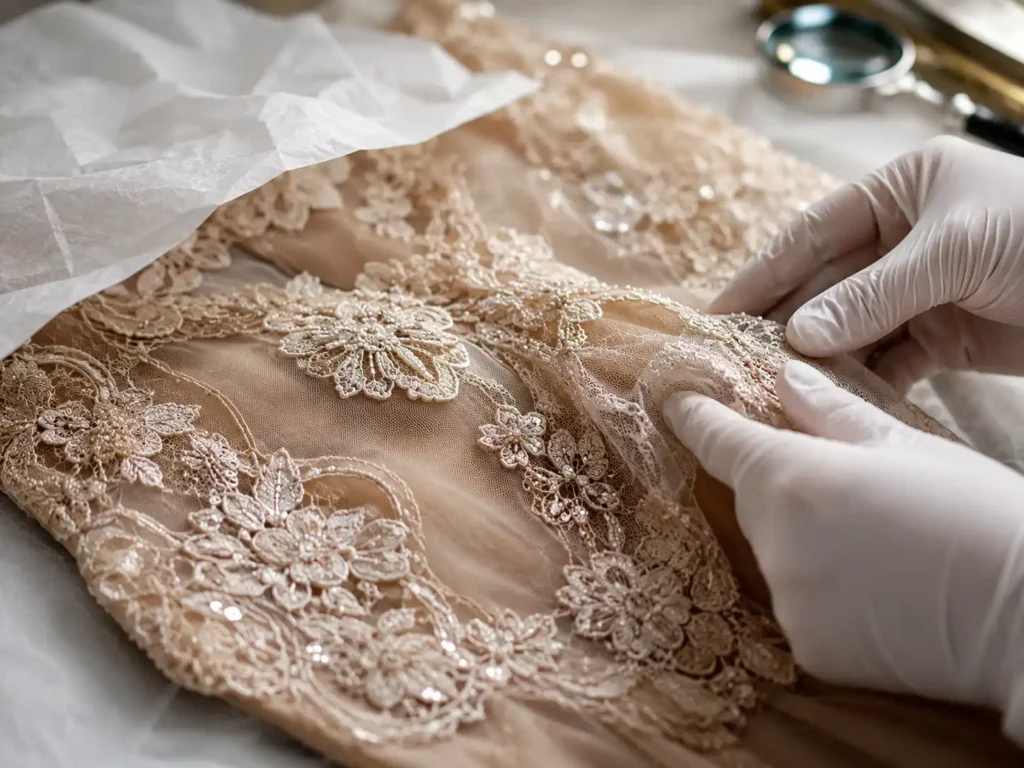
All-over rhinestone surfaces need density planning under both relaxed and stretched conditions. On mesh or jersey, stone distance expands when worn; an attractive flat layout may look sparse or uneven on body. Too much coverage can also reduce stretch, increase stiffness and create adhesive stress.
Development starts with the expected stretch direction, garment ease and body zone. High-motion areas receive smaller stones, lower density or flexible spacing. Stable center panels can carry stronger motifs. Placement artwork and physical approval are both used because digital spacing alone cannot predict every fabric response.
Production inspection checks alignment, missing stones, adhesive residue, surface marks, stretch behavior and overall weight. The approved sample remains the visual benchmark.

Hem, Fringe and Edge Placement
Hem and edge decoration influences movement and packing. Crystal fringe must hang evenly, avoid closures and remain clear of neighboring garments. Rhinestone chains along hems need enough flexibility to follow the line without turning, buckling or pulling the fabric downward.
Placement near side seams, zippers or hook-and-eye closures requires extra space for sewing and finishing. Decorative ends are secured so they do not detach during wear. Edge binding or lining may be added where backing could touch skin.
Packing instructions define fold lines, protective tissue and fringe direction. Garments are not compressed in a way that forces stones into delicate surfaces or traps fringe under heavy folds.
Match Rhinestones With the Right Partywear Fabrics
Material choice controls drape, stretch, transparency, support, heat tolerance and packing behavior. The same rhinestone artwork can produce very different results when moved from stable woven fabric to mesh, satin or jersey.
| Fabric Direction | Suitable Top Structures | Rhinestone Focus | Main Production Risk | Sample Check |
|---|---|---|---|---|
| Power Mesh | Mesh tops, bodysuits, corset inserts | Lightweight spacing, gradient layouts | Stretch separation, transparency, edge damage | Stone distance under stretch; lining coverage |
| Stretch Mesh | Bodycon crops, sheer party tops | Small hotfix stones, mixed-size layouts | Recovery loss, adhesive stress, hole risk | Multi-direction stretch and neckline stability |
| Stretch Jersey | Crop tops, fitted halters, bodysuits | Flexible spacing and smaller stones | Twisting, poor recovery, cracked adhesive | Side-seam balance and recovery after wear |
| Stretch Satin | Corset, bustier and halter tops | Localized motifs, straps and panel lines | Heat marks, snagging, crease pressure | Heat trial, shine direction and zipper flatness |
| Velvet | Winter party tops, structured crops | High-contrast stones and focal placement | Pile crushing, pressure marks, shade direction | Surface recovery and low-pressure packing |
| Sequin Fabric | Holiday tops and matching sets | Selective rhinestones, crystal chains | Weight, needle damage, scratching, loss | Seam clearing, lining comfort and trim balance |
| Structured Woven | Corset and bustier tops | Sewn-on stones, chain and dense motifs | Panel distortion and pull-through | Reinforcement, cup support and attachment strength |
Fit Engineering for Structured Rhinestone Party Tops

Bust Coverage

Cup Position

Strap Balance

Neckline Stability

Waist and Hem
Closures and Support
Control Weight, Skin Contact and Party Movement
Skin Contact
Weight Distribution
Movement Performance
Develop the Rhinestone Top Before Scaling Production
Design Review
Material Direction
Pattern Development
First Sample
Revision and Fit
PP Approval
Sampling Timelines for Complex Rhinestone Tops
First Sample: 15-25 Days
Revised Sample: 7-15 Days
PP Sample: 7-15 Days
Multi-Style Priorities
Size Range Planning
Production Calendar
Approve Every Rhinestone Detail Before Bulk Production
A trim approval system converts decorative choices into repeatable specifications. Physical references and written records prevent substitutions, density changes and placement drift.
Build a Controlled Trim Specification
Every approved rhinestone component should have an identifiable specification: stone type, size, color, finish, backing, attachment method, supplier reference and intended placement. Chains, straps and fringe also require length, width, link structure, end hardware and color confirmation.
A visual image alone is not enough because lighting can change the perceived color and shine. Physical swatches or approved sample references provide a stronger standard. For mixed-size layouts, placement artwork defines the distribution and transition between sizes.
Special colors, large stones, custom chains and packaging components may carry separate supplier minimums and development time. These conditions are reviewed before final quotation and PP preparation.
Lock BOM and Placement Records
The bill of materials connects the approved fabric, lining, cups, boning, closures, rhinestones, labels and packing materials to the style. Placement records identify motif dimensions, distances from seams, left-right symmetry points and decoration sequence.
Production teams need to know whether stones are applied before assembly, after panel construction or after full garment completion. The sequence affects seam access, heat exposure, lining, inspection and repair. Approval records also state where substitution is not allowed.
A change in rhinestone grade, chain weight or backing can alter appearance, comfort and cost. Any proposed change returns to review before bulk use.
Keep Approval Traceable
Revision records capture material replacement, pattern change, trim adjustment, sewing method, measurement update, client comment and approval status. Traceability is especially important across multi-style collections where several similar trims may be used in different positions.
Approved trim cards and sample references support incoming material inspection and bulk comparison. The same records can be retained for repeat orders, new colors or future collection extensions, while new fabric batches and trim batches still require confirmation.
NDA-based handling protects brand names, unpublished designs, placement artwork, labels and packaging files throughout development and production.

Transfer Approved Samples Into Repeatable Bulk Standards
The handover from sample room to production determines whether approved details survive at scale. Final patterns, material references and inspection criteria move together.
Lock the Production Reference
Bulk production begins from an approved PP sample, final pattern, size chart and confirmed grade rule. Fabric color, stretch direction, lining coverage, cup shape, boning position, closure specification and rhinestone layout are included in the reference package.
A Golden sample can support production, QC, packing and repeat-order comparison. It gives pattern makers, sewing teams, finishers and inspectors one physical benchmark instead of relying on separate messages or photographs.
Changes after production lock are reviewed for material, cost, schedule and quality impact. Uncontrolled late changes create mismatched materials and inconsistent garment versions.
Build the Production File
The production file covers construction sequence, seam details, stitch requirements, reinforcement points, trim application, measurement tolerances, label position and packing instructions. Rhinestone-specific notes identify placement reference points, attachment method, repair rules and surface protection.
Cutting and sewing teams receive clear instructions for stretch direction, mesh handling, satin protection, sequin clearing, panel matching and closure installation. A production file reduces variation between sample makers and bulk operators.
For multi-style programs, files are separated by style and color while shared fabric or trim groups are coordinated centrally.
Connect Production and QC
QC checkpoints are defined before the first bulk pieces are completed. Inspectors compare materials, measurements, decoration, symmetry, closures, lining and finished appearance against the approved references.
First-piece review and inline inspection identify drift before the entire quantity is completed. Missing stones, wrong spacing, heat marks, neckline changes or size deviations can then be corrected earlier.
Packing standards are added to the same control system so surface protection, labels, barcodes and carton information remain consistent with the garment standard.

Workmanship Details That Protect a Premium Finish
Clean Neckline Edges

Stable Corset Panels

Balanced Stretch Seams
Flat Closures
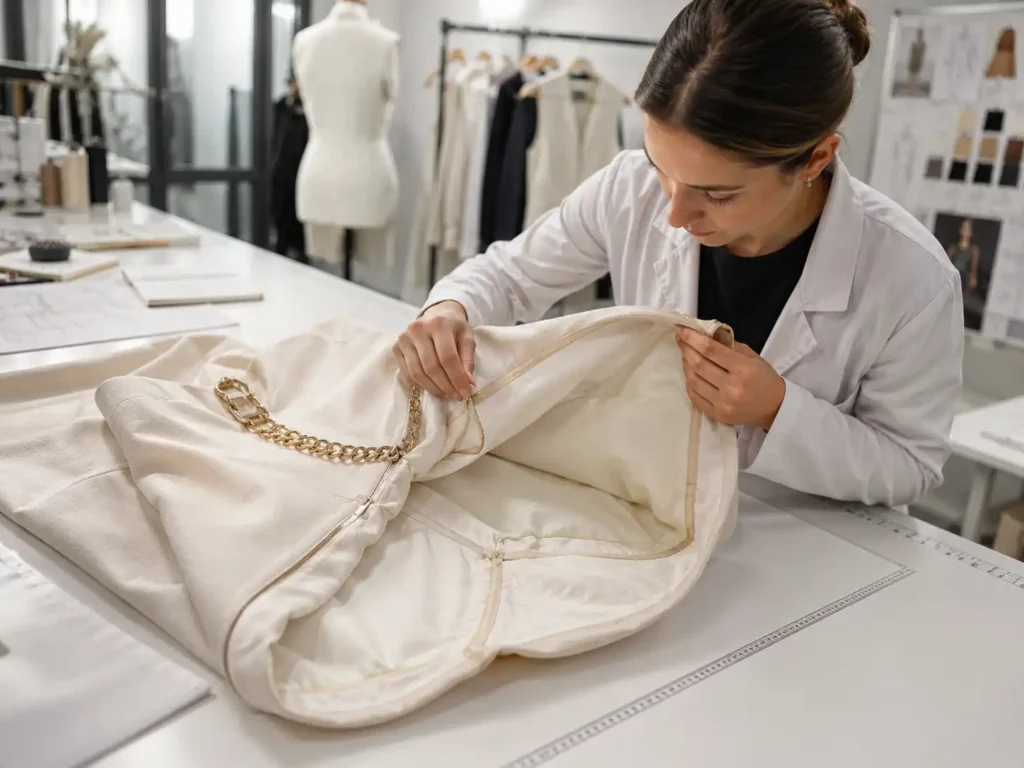
Protected Backing

Controlled Pressing
Quality Control From Materials to Packed Garments
Fabric Inspection
Trim Batch Check
Cutting Inspection
Placement Alignment
Attachment Review
Inline Measurement
Finished Garment
Packing Inspection
Private-Label Packing Built Around Rhinestone Protection

Brand Labels
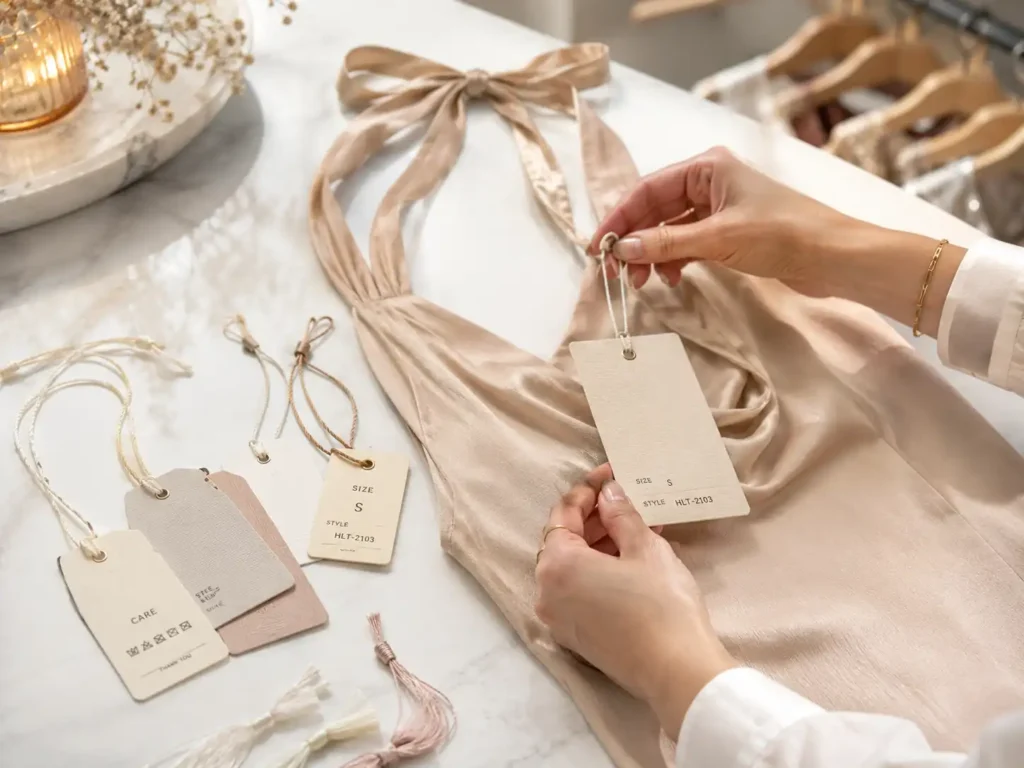
Hangtags and Strings
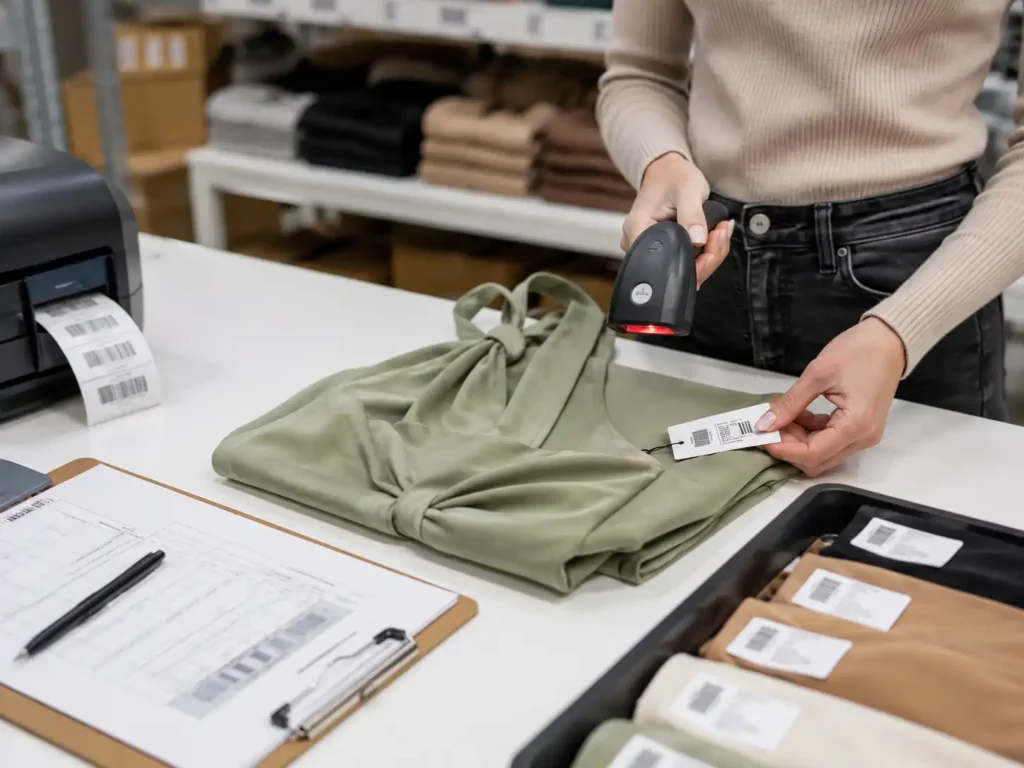
Barcode and SKU
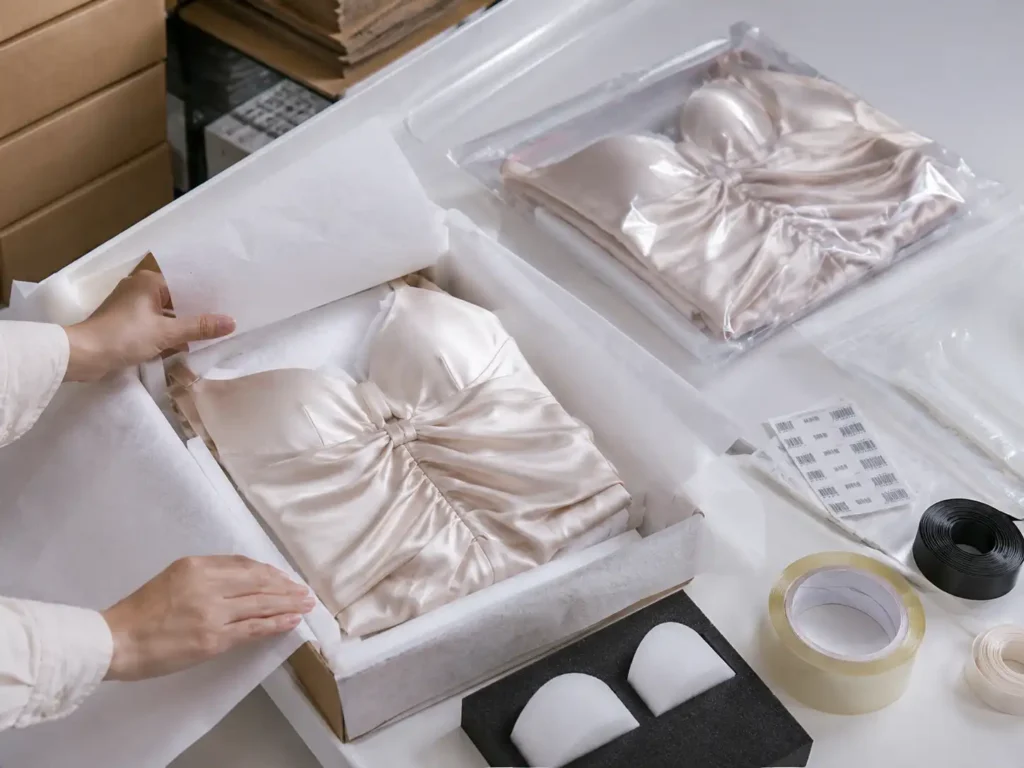
Protective Folding

Individual Polybags

Carton Control
Plan MOQ, Size and Timing With Clear Variables
Project planning is strongest when quantity, color, size, sample stages, bulk schedule and shipment method are reviewed together. One number cannot represent every rhinestone program.
| Planning Variable | Reference Direction | Main Effect | Confirmation Point |
|---|---|---|---|
| MOQ | From 200 pcs per style/color | Fabric, trim, color and packaging minimums may increase requirements | Before formal sampling and quotation |
| Size Range | Commonly XS-XL; wider ranges by project | Grade rules affect bust, strap, armhole, torso and closure positions | Before pattern grading and PP approval |
| Complex First Sample | Typically 15-25 days | Material readiness and structural difficulty drive timing | After key fabric, trim and design details are confirmed |
| Special Material Sample | 20-35 days or supplier timing | Custom rhinestones, chains, colors or fabrics add development time | Before committing to launch dates |
| Revised / PP Sample | Typically 7-15 days | Scope of change and final material readiness affect timing | After feedback and final material decisions |
| Bulk Calendar | Project-specific after PP lock | Style count, total quantity, materials, QC and packing define schedule | Before material booking and factory allocation |
| Multi-Style Program | 10-30 styles can be grouped | Priority, fabric family, trim family and complexity guide sequencing | At line-sheet and launch-calendar review |
| Delivery Strategy | Express, air, sea or air-sea split | Launch urgency, carton volume, cost and warehouse date guide method | Before final packing and booking |
Production Resources for Multi-Style Partywear Programs
Development Resources
Production Network
Project Coordination
Frequently Asked Questions About Rhinestone Top Manufacturing

Start Your Rhinestone Top Project
- Reference image, sketch, original sample or tech pack
- Style list and quantity per style/color
- Fabric, lining and rhinestone direction
- Target size range and size ratio
- Private-label, barcode and packing requirements
- Target launch date or delivery window
Send Jinfeng Apparel the product information needed to assess structure, materials, trim requirements, MOQ, sampling and production planning. Kelly coordinates initial review with the relevant development and production teams, then returns with feasibility points, missing information and the proposed next step. A complete brief reduces repeated clarification and makes fabric sourcing, rhinestone selection, pattern development and quotation more accurate. Files remain protected under NDA-based handling throughout development and production.