...

Halter Top Manufacturer for Fashion Brands

Fit-led development, fabric-specific construction and controlled bulk production for halter tops designed around modern fashion collections.

  • Six halter fit checkpoints reviewed during development: neckline depth, neck-strap length, bust coverage, armhole depth, back stability and hem balance.
  • MOQ starts from 200 pieces per style and color, subject to fabric availability, custom color work, trims, structure and packing requirements.
  • Seven-plus senior pattern makers and two sample rooms support woven, knit, satin, mesh, lace, corset-inspired and lined halter constructions.
  • Multi-style programs can combine 10-30 styles, coordinated color plans, client-defined US sizing, private labels and retail-ready packing.

Jinfeng Apparel develops custom halter tops from reference images, tech packs, original samples, sketches or line sheets. Pattern work begins with the relationship between the neckline, neck strap, bust line, underarm coverage and back opening, because a visually strong halter can still fail when pressure, coverage or stability is not balanced. Fabric direction, lining, cups, elastics, closures and packing are reviewed before bulk production so approved styling can be repeated across sizes, colors and future orders.

Manufacturing Capacity for Fashion Brand Programs

A halter collection needs development depth as well as scalable production. Jinfeng combines dedicated sampling resources, a womenswear-focused factory network and documented QC checkpoints for multi-style programs.

Since 2008

Long-term womenswear manufacturing experience supports structured development from design review and fabric selection through pattern correction, bulk production and export coordination. The team understands how trend-led tops must balance appearance, wearing stability, repeatability and commercial timing.

6 Owned Factories

Six owned women’s fashion factories provide production coverage for woven, knit, occasion, party, dress and coordinated-set programs. Factory allocation is based on fabric behavior, construction difficulty, sewing skill, order quantity and delivery sequence rather than assigning every style to one line.

10+ Production Partners

More than ten long-term satellite partners expand capacity for large seasonal assortments and mixed construction groups. Allocation remains linked to approved samples, production instructions, inline inspection and final packing requirements, helping a 10-30 style order move without losing style-specific control.

2 Sample Rooms

Two sample rooms support first samples, fit revisions, sales samples, photo samples and pre-production approvals. Development work is separated from bulk sewing so neckline shape, strap angle, bust coverage, lining and closure decisions can be corrected before production standards are released.

7+ Pattern Makers

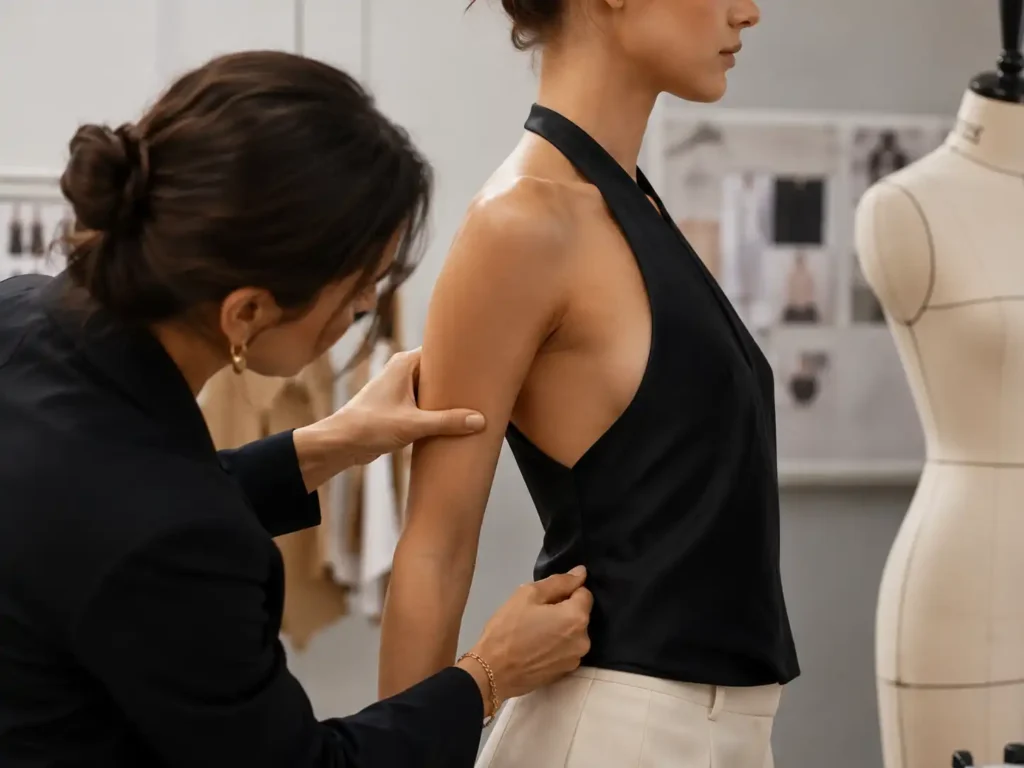
Senior pattern makers review more than flat measurements. Halter development considers upper-bust shape, neckline tension, armhole exposure, strap pull direction, back opening, hem balance and fabric stretch. Base-size approval is completed before grading into the client’s confirmed size range.

15+ QC Inspectors

QC coverage includes material review, cutting checks, sewing-line inspection, measurement verification, garment appearance, labels, barcode matching, packing and carton information. Inspection points are selected around the risks of each halter structure and fabric group.

Built for Established Womenswear and Fashion Teams

The manufacturing model suits teams managing defined product direction, sampling approvals, seasonal quantities and brand delivery requirements. Each group receives support around the decisions most likely to affect the final garment.

Global Fashion Brands

Suitable for structured vendor onboarding, seasonal calendars, defined quality manuals, multi-style assortments and long-term replenishment. Project files can include tech packs, BOMs, measurement charts, label artwork, packing instructions, inspection requirements and nominated forwarder details.

Premium Ecommerce

Photo-ready fit, clean neckline shape, controlled coverage and accurate SKU packing matter as much as sewing quality. Support can include campaign samples, color planning, XS-XL grading, barcode lists, polybag stickers, mixed-size packing rules and staggered release preparation.

Partywear Labels

Party and going-out collections often combine satin, power mesh, sequins, lace, corset details and exposed-back structures. Development focuses on visual impact while controlling scratch risk, transparency, cup placement, strap security, stretch recovery and packing marks.

Resortwear Brands

Resort halters require breathable fabrics, strong color direction, print placement, travel-friendly packing and comfortable neck construction. Rayon, viscose, linen blends, lightweight crepe and printed woven fabrics can be reviewed against drape, shrinkage, transparency and wrinkle expectations.

Product Teams

Product developers can submit reference images, original samples, tech packs, line sheets or fabric swatches. Each style is reviewed for pattern risk, fabric suitability, construction, target price, sample sequence and production feasibility before the first sample is cut.

Private Label Programs

Brand labels, care labels, size labels, hangtags, barcodes, polybags and carton marks can be coordinated around approved artworks and packing instructions. Label wording and market compliance remain subject to final confirmation by the brand or its appointed compliance adviser.

Where Halter Top Development Commonly Goes Wrong

Halter tops transfer garment weight through the neck, bust and back rather than conventional shoulder seams. Small pattern or material errors can quickly become fit complaints, return risk or bulk inconsistency.

Excess Neck Pressure

A narrow strap, heavy fabric, deep neckline or unsupported bust can place too much load on the neck. Development must distribute tension through strap width, angle, back support and body length instead of correcting discomfort by simply adding strap length.
  • Review strap width and pull angle
  • Check garment weight and stretch
  • Fit on body before grading

Unstable Bust Coverage

Coverage changes when the neckline opens, the strap pulls upward, the armhole drops or the fabric stretches. Bust width, upper-bust shape, cup position, lining and closure tension must be evaluated together, especially for plunge, draped and backless designs.
  • Confirm neckline depth
  • Check movement and side coverage
  • Align lining or cups with shell

Underarm Gaping

An armhole can look correct on a table but open away from the body during wear. Gaping may come from incorrect side length, excessive armhole depth, poor strap angle, unstable fabric or insufficient upper-bust shaping.
  • Review side seam balance
  • Control armhole curve
  • Test across sizes

Loose Back Structure

Open-back designs need a stable lower anchor. Tie backs, elastic channels, hook-and-eye closures, smocking, zippers and structured panels each change fit behavior. Back width and closure position must support the front without creating distortion.
  • Choose closure by fabric
  • Check pull distribution
  • Verify symmetry and comfort

Lining Mismatch

A lining with the wrong stretch, weight or color can pull the shell, expose edges or change drape. Mesh, satin, lace and jersey require different lining logic. Shell and lining patterns may also need separate reduction or ease.
  • Match stretch direction
  • Control edge exposure
  • Approve color and hand feel

Bulk Variation

Approved styling can drift when strap lengths, neckline depth, cup position or elastic tension are not translated into measurable production standards. A sealed sample, updated pattern, measurement chart and sewing instruction must work together.
  • Lock PP standards
  • Measure critical points
  • Inspect during sewing

Custom Halter Top Styles for Fashion Collections

Product development is organized by structure, fabric behavior and wearing occasion. Each direction below requires different pattern decisions, sample checks and production controls rather than a shared generic top block.

Tie-Neck Halter

Adjustable ties offer fitting flexibility and a strong resort or going-out look, yet tie length, width, end finish and skin pressure require clear standards. Lightweight woven, jersey and stretch satin are common choices. Sampling checks whether the knot stays secure, the neckline remains level and the back anchor prevents the front from shifting during movement.

Fixed-Neck Halter

A fixed neck band creates a clean, polished line for premium ecommerce and occasion ranges. The circumference must be comfortable while holding the front at the approved height. Closure type, seam bulk and fabric stretch determine whether a hook, button, zipper or back-neck opening is needed. Grading must preserve both comfort and neckline position.

High-Neck Halter

High-neck silhouettes can feel minimal, sculptural or evening-led depending on fabric and body fit. Key controls include neck circumference, shoulder cutaway, armhole depth, bust shaping and back opening. Stable woven fabrics may need darts or panel shaping, while stretch knit versions rely on recovery and edge stabilization to avoid neckline growth.

Plunge Halter Top

A plunge halter needs precise control over neckline depth, bust coverage and front stability. Options may include hidden mesh, cups, under-bust seams, elastic support or body tape guidance. The sample must be evaluated during movement, not only in a static pose, because neckline opening and side exposure change when the wearer sits, bends or turns.

Draped Cowl Halter

Cowl halters depend on grain direction, fabric weight and neckline extension. Satin, viscose, lightweight jersey and crepe create different folds. Pattern work must control drape volume without pulling the neck or exposing the lining. Bulk cutting direction, shine direction and handling rules are essential for consistent front folds and color appearance.

Backless Halter Top

Backless styling increases dependence on neck construction, lower-back anchoring and side-body fit. Tie backs, elastic backs, smocking, zipper panels or hook closures can be selected according to the desired appearance and support level. Armhole coverage and side seam placement need careful review, especially when the back opening extends below the bust line.

Corset Halter Top

Corset-inspired halters may combine cups, boning, under-bust shaping, fitted panels and structured closures. Fit cannot be solved by reducing the body circumference alone. Cup volume, apex position, boning length, neckline tension, waist shaping and comfort must be developed as one system. Sewing accuracy and symmetry become major bulk inspection points.

Asymmetric Halter

One-sided or twisted halter forms create a strong fashion statement but introduce unequal tension. Pattern development must control neckline twist, side seam balance, bust position and hem level. Stretch, drape and seam placement are evaluated on body so the asymmetry looks intentional without rotating the garment or pulling one side upward.

Match Halter Structure With the Right Fabric

Fabric selection determines how a halter carries weight, follows the bust, holds the neckline and responds after washing or repeated wear. Recommendations are based on structure, hand feel, stretch, transparency, target price and bulk availability.

FabricBest UseFit BehaviorSupport DirectionMain Bulk Risk
Rib KnitFitted crop tops, casual setsHigh stretch; visible rib directionSelf-layer or light liningNeckline growth, poor recovery, shade variation
JerseyDraped, tie-neck and body-fit stylesSoft to firm depending on weightOptional double layer or shelf supportCurling edges, seam stretch, twisting
PonteStructured fitted haltersStable stretch with bodyUsually partial support onlyBulk thickness, seam impression, heat marks
Stretch SatinParty, evening and fitted stylesGloss plus controlled stretchStretch lining may be requiredSnagging, shine direction, seam puckering
Matte SatinDraped and premium woven stylesFluid with limited stretchSoft woven liningBias distortion, press marks, color variation
Power MeshLayered, sheer and body-contour stylesHigh stretch and recoveryStrategic lining or double layerTransparency, holes, edge distortion
LaceRomantic, occasion and party stylesVaries by motif and baseColor-matched liningMotif placement, damage, scratch risk
Chiffon / CrepeResort, draped and tie stylesLight drape; low stretchUsually linedTransparency, fraying, seam slippage
Rayon / ViscoseResort and printed haltersFluid hand with shrinkage riskDepends on weight and colorShrinkage, distortion, print direction
Linen BlendSummer and resort collectionsBreathable with limited giveOptional light liningWrinkle, shrinkage, neckline stress

Engineering Fit Beyond a Flat Measurement Chart

Halter fit is controlled through connected measurements and forces. Jinfeng reviews the garment on body, updates the pattern and turns approved fit into measurable standards for grading and bulk inspection.

Neck Pressure and Strap Load

Neck comfort depends on more than strap length. A heavy satin body, structured cups, dense embellishment or double-layer knit can increase downward load. Strap width, angle, fabric stretch, closure position and lower-back anchoring determine how the load is distributed. During fitting, the team checks whether the strap cuts into the skin, shifts toward the side of the neck or needs excessive tightness to hold the bust. A suitable correction may involve widening the strap, changing its angle, reducing front weight, adding back support or adjusting the neckline rather than simply making the tie longer.

  • Measure finished strap length and width
  • Check pressure after movement and wear time
  • Record closure position and elastic tension
  • Grade neck and body changes separately

Bust Coverage and Front Stability

Bust coverage is shaped by neckline depth, front width, upper-bust contour, cup position, armhole curve and fabric recovery. Plunge and draped designs often need hidden support, while stretch knit styles may rely on double layers or controlled negative ease. The fit review checks front opening during standing, sitting, bending and arm movement. When cups are used, apex height, cup edge, under-bust position and lining alignment are marked against the approved sample. Measurements are written into the size chart so bulk teams can verify critical points instead of relying on visual judgment alone.

  • Confirm neckline depth from HPS or defined reference
  • Measure upper-bust and side coverage
  • Align cup and lining placement
  • Check movement before PP approval

Armhole Shape and Side Coverage

Armhole gaping often comes from an interaction between strap pull, side seam length, fabric stretch and upper-bust shaping. Reducing the armhole opening without reviewing the full pattern can create pulling or wrinkles. Pattern makers evaluate the armhole curve, side-body angle, bust dart or panel line and back width together. For very open styles, the team confirms how much side exposure is intended and whether a lining, facing, elastic edge or hidden tape is needed. Grading rules protect the approved balance across the full size range rather than enlarging every point by the same amount.

  • Check armhole depth and curve
  • Review gaping from front and side
  • Match edge finish to fabric
  • Inspect symmetry in bulk

Back Opening and Hem Balance

The back is the lower anchor for many halters. Tie backs allow adjustment but can move; elastic backs improve flexibility but may create gathering; zippers give structure but require precise circumference; smocking changes stretch and visual texture. The lower edge must remain level while the front is held at the approved height. During sampling, back width, closure tension, hem position and side seam verticality are checked together. A balanced pattern prevents the front from climbing, the hem from tilting and the side seam from rotating after the wearer tightens the neck strap.

  • Choose closure by support need
  • Check hem level after tying
  • Measure back width and elastic length
  • Seal the approved closure method

Control the Details That Define Halter Fit

Neckline, strap and armhole details shape both appearance and wearing security. Each option is confirmed through dimensions, material specification, on-body review and production checkpoints.

Fixed Neck Band

A fixed band creates a refined finish but leaves little room for fitting error. Neck circumference, closure overlap, seam bulk and interfacing must be matched to fabric stretch and the intended neckline height.
  • Confirm finished circumference
  • Specify closure and overlap
  • Check seam comfort

Adjustable Neck Tie

Tie construction allows personal adjustment and works well for resort, party and draped styles. Tie width, finished length, end shape and reinforcement at the join influence security and comfort.
  • Set minimum and maximum tie length
  • Reinforce attachment points
  • Test knot stability

Slider Adjustment

A slider provides repeatable adjustment for camisole-inspired halters. Strap material, slider width, ring size and stitch reinforcement must work together without slipping or twisting.
  • Match hardware to strap width
  • Test repeated adjustment
  • Check skin contact

Hook-and-Eye Neck

Hooks can create a clean back-neck closure for structured or high-neck designs. Placement must avoid pressure points, while overlap and reinforcement keep the opening flat and secure.
  • Specify hook count and size
  • Stabilize attachment area
  • Check easy dressing

Controlled Neckline

High, plunge, draped and twisted necklines each require a defined reference point and tolerance. Edge finish, lining turn, hidden mesh and stay tape can change both shape and comfort.
  • Measure from an agreed point
  • Control left-right balance
  • Inspect edge rolling

Armhole Finish

Binding, facing, elastic, lining turn and clean-finish methods react differently on woven, mesh and stretch fabrics. The finish must support the curve without standing away or cutting into the body.
  • Select finish by stretch
  • Set edge tension
  • Check gaping and puckering

Support, Comfort and Closures Inside the Garment

Internal construction should support the intended silhouette without adding unnecessary bulk. Lining, cups, elastics, boning and closures are selected according to fabric, neckline, back opening, target price and wearing occasion.

Soft Woven Lining

Lightweight woven lining can improve opacity and comfort in satin, chiffon, lace and printed woven halters. Grain direction, color, shrinkage and seam allowance must be compatible with the shell so the lining does not pull or show at the neckline.
  • Match shell and lining color
  • Check shrinkage relationship
  • Control edge exposure

Stretch Lining

Stretch lining supports mesh, jersey and body-fit halters while preserving movement. Stretch percentage and recovery should be assessed in the same directions as the shell. Excess tension can distort the neckline; insufficient tension can create loose inner layers.
  • Compare two-way or four-way stretch
  • Set lining reduction
  • Test recovery after wear

Fixed Bra Cups

Sewn-in cups can improve shape and coverage in fitted, plunge or occasion styles. Cup size, apex height, spacing, edge softness and attachment points must align with the pattern and confirmed size chart.
  • Approve cup shape and thickness
  • Mark cup placement
  • Check grading method

Removable Cups

Removable cups provide flexibility for knit or lifestyle styles but require a stable pocket opening and clear packing control. Pocket size, access point and cup orientation must prevent folding or movement during wear and laundering.

  • Specify pocket opening
  • Match cup to size range
  • Verify packing quantity

Elastic Support

Under-bust, neckline, back or edge elastics can add security. Elastic type, width, elongation, recovery and insertion ratio must be specified; using operator judgment alone can create uneven tightness across bulk production.

  • Confirm elastic specification
  • Record cut length or ratio
  • Inspect tension consistency

Boning and Closures

Structured halters may use flexible boning, hook-and-eye tape, zippers or reinforced panels. Boning length and end protection affect comfort, while closure placement controls circumference and dressing ease. Each component is tested within the complete garment structure.
  • Select suitable rigidity
  • Protect boning ends
  • Check closure alignment

Build Halter Tops Into a Complete Collection

A commercially useful halter program often extends beyond one top. Coordinated bottoms, shared fabrics and controlled color families allow fashion teams to create stronger outfits while simplifying material purchasing and repeat-order planning.

Halter Top With Mini Skirt

A fitted or draped halter paired with a mini skirt works well for party, festival and going-out capsules. Development checks the visual proportion between top length, exposed waist and skirt rise. When both pieces use the same stretch fabric, shade, recovery and surface finish are approved from one bulk lot whenever possible. Separate size choices, matching-set packing and single-item barcodes can be planned according to the sales model. For body-fit sets, the top and skirt should be fitted together so waistband pressure and top hem position create the intended gap without riding or overlap.

Halter Top With Maxi Skirt

A halter and maxi skirt can form a resort, occasion or summer event set. Lightweight woven fabrics require careful direction control because the top may use small bias or curved panels while the skirt consumes wider lengths. Print placement, stripe direction and color continuity are reviewed across both garments. The top’s neckline support must remain comfortable even when the fabric is very fluid. Packing may require tissue, hanger or fold instructions to reduce satin marks, creasing or print transfer before the set reaches a studio, store or warehouse.

Halter Top With Trousers

Pairing a halter with wide-leg trousers creates a polished evening, vacation or occasion look. Fabric drape and color consistency must connect the two items, while the top and trouser can use different linings or support materials. The merchandising plan may sell pieces separately or as a coordinated set, affecting SKU labels, size ratios and carton breakdowns. Fit reviews should consider the trouser rise and top hem so the exposed waist remains controlled across sizes. Shared fabric booking can improve color consistency and simplify repeat-order sourcing.

Resort Mix-and-Match

Resort programs may combine printed halters, solid bottoms, wrap skirts and relaxed trousers. A planned fabric and color matrix helps prevent an assortment from becoming fragmented. Jinfeng can review which styles can share shell fabric, lining, trims, labels and packing materials, while keeping each silhouette technically suitable. Print scale, motif direction, shrinkage and color fastness need confirmation before samples. Reorder records can retain approved print reference, pattern, material source, trim card and packing rules for later seasonal extensions.

What We Review Before Starting Development

Clear project inputs improve the first sample, quotation accuracy and timeline planning. Each document or reference answers a different manufacturing question and reduces avoidable revisions later.

Reference Image

A front, back and detail reference helps identify neckline shape, strap route, back opening, hem length and styling intent. Images support structural review but do not replace confirmed measurements, materials or construction decisions.

Tech Pack

A tech pack can define flat sketches, measurement points, tolerances, stitching, BOM, labels and packing. The development team reviews missing or conflicting information before pattern work begins rather than following unclear instructions mechanically.

Original Sample

An original garment provides fit, balance, hand feel and construction references. Jinfeng records which elements should be copied, corrected or changed, because a source sample may contain fit or workmanship issues that should not be repeated.

Fabric Swatch

A swatch helps confirm hand feel, weight, stretch, transparency, color and surface finish. The team checks whether the fabric suits the intended neckline, support structure and target price, then searches for matching or alternative resources.

Line Sheet

A line sheet shows style count, color plan, quantity, target season and commercial relationship between products. It helps group fabrics, prioritize hero styles, plan sample order and allocate production resources for a 10-30 style assortment.

Launch Window

The launch date is converted into sample, approval, material booking, production, QC, packing and shipping milestones. Custom dye, exclusive print, special lace, complex support or retail packing should be identified early because each may extend the critical path.

From Design Reference to Production-Ready Sample

Sampling converts visual direction into approved materials, pattern, measurements and construction standards. A standard first sample is generally planned for 7-12 working days after suitable materials are available; structured or embellished styles may require 10-18 working days.

Requirement Review

The team checks style images, tech pack, quantity, fabric direction, target price, size range, labels and delivery window. Missing information is listed before development starts so pattern and sourcing decisions follow one approved brief.

Structure Analysis

Neckline depth, strap direction, bust coverage, armhole exposure, back support, hem balance and closure method are mapped. Risks are discussed before cutting, especially for plunge, backless, draped or corset-inspired halters.

Fabric Direction

Available fabrics are reviewed for hand feel, stretch, drape, transparency, color, MOQ and lead time. Swatch photos, videos, cards or physical samples can be used before the first garment sample is made.

Pattern Development

The base pattern is created around the client’s measurement chart, fit reference and selected fabric. Shell, lining, cup, facing, elastic and boning patterns are separated when needed so each layer supports the intended shape.

First Sample

Sample machinists follow the development brief while recording construction issues. The first sample establishes appearance, body fit, material behavior and technical questions that cannot be resolved on a flat sketch alone.

Fit Review

Measurements and on-body appearance are checked together. Neck pressure, neckline opening, side coverage, strap position, back stability and hem balance are reviewed in movement as well as a standing pose.

Revised Sample

Approved comments are translated into updated patterns, measurements, BOM, material records and sewing instructions. A revised sample is used when fit, fabric, support or construction changes are significant enough to affect production.

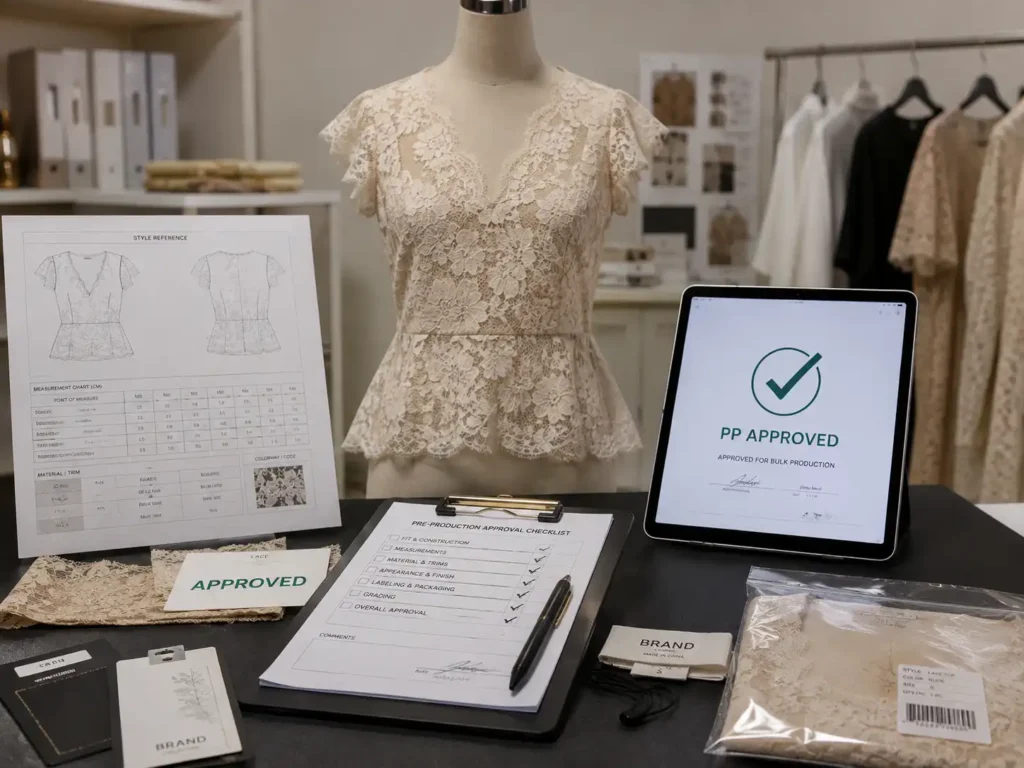
PP Sample Approval

The pre-production sample locks shell, lining, trims, measurements, workmanship, label placement and packing direction. A Golden sample and approved files become the reference for bulk production and inspection.

Turn Fit Feedback Into Controlled Production Standards

Sample comments become useful only when every approved change reaches the pattern, measurement chart, material record, sewing instruction and quality checklist. Jinfeng manages revisions as traceable production inputs.

Diagnose the Real Cause

A visible fit issue may have more than one cause. A neckline that opens can come from excess depth, insufficient upper-bust shaping, weak fabric recovery, incorrect strap angle or loose back support. The development team classifies comments into fit, fabric, measurements, workmanship, color, trims, design accuracy, comfort, labeling, packing or cost alignment. Photos, marked measurements and on-body feedback are compared with the current pattern and material. The correction direction is agreed before a revised sample is made, reducing repeated trial-and-error changes that solve one area while creating another problem.

Update Every Linked File

An approved change is recorded in the documents used by sourcing, pattern, sampling, production and QC. Pattern pieces, graded rules, measurement charts, BOM, fabric approvals, trim cards, cup or boning positions, elastic specifications, stitch instructions and label placements are updated where relevant. Comments should not remain only in email or WhatsApp threads. A structured revision record shows the original issue, selected solution, responsible file, sample version and approval status. When a new fabric has different stretch, weight or drape, the pattern is re-evaluated rather than assuming the previous version remains valid.

Lock the PP Reference

Pre-production approval confirms the version intended for bulk. The PP reference includes the physical sample, approved pattern, size chart, material source, color, lining, cups, elastics, closures, workmanship, labels and packing direction. Critical halter measurements such as finished neck strap, neckline depth, armhole depth, bust width, back width and body length receive defined tolerances. Production teams use the sealed sample and written instruction together; QC compares output against both. Any change after PP approval is documented for cost, timeline and production impact before implementation.
How Approved Halter Tops Move Into Bulk Production

Bulk production begins only after the approved sample and production files are aligned. Standard programs are commonly planned around a 30-45 day production window after PP approval and material readiness; complex multi-style programs may require 45-60 days.

Bulk Material Approval

Shell, lining, trims, cups, elastics, closures, labels and packing materials are checked against approved references. Dye lots, print lots and substitute materials require confirmation before cutting.

Incoming Fabric Check

Material is reviewed for color, width, surface defects, stretch direction, transparency, damage and quantity. Satin shine direction, mesh holes, lace damage and printed-fabric direction receive fabric-specific attention.

Cutting Preparation

Markers and cutting instructions reflect size ratio, fabric direction, print or motif placement and shell-lining relationships. Bundles are separated by style, color and size to reduce mixing across a large assortment.

Production First Piece

A first production piece verifies the factory’s interpretation of the PP sample and technical files. Neckline, strap, armhole, cup, elastic, closure, label and measurement points are checked before full-line output increases.

Sewing Instructions

The production sheet records stitch type, stitch density, seam allowance, thread color, edge finish, strap reinforcement, lining method, cup position, elastic ratio, closure placement and label location.

Controlled Sewing

Styles are assigned according to material and construction skill. Operators receive approved samples and instructions, while production management monitors difficult steps such as curved binding, satin handling, mesh joining and symmetrical support placement.

Inline Inspection

QC checks strap length, neckline shape, armhole curve, back construction, left-right symmetry, seam quality, lining exposure and fabric damage during sewing. Problems are corrected before they spread through the order.

Final Garment Check

Finished garments are measured and reviewed for appearance, fit-related dimensions, stains, holes, snagging, broken stitches, loose trims, pressing marks and closure function. Agreed AQL or client inspection rules can be coordinated by project.

Packing and Delivery

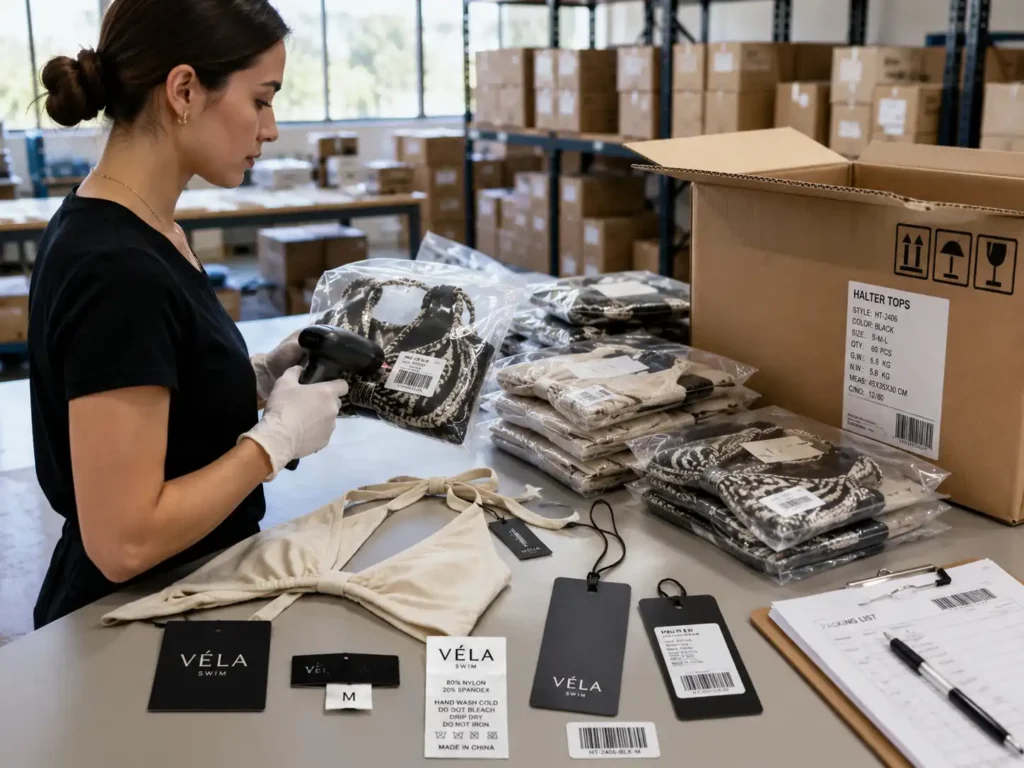
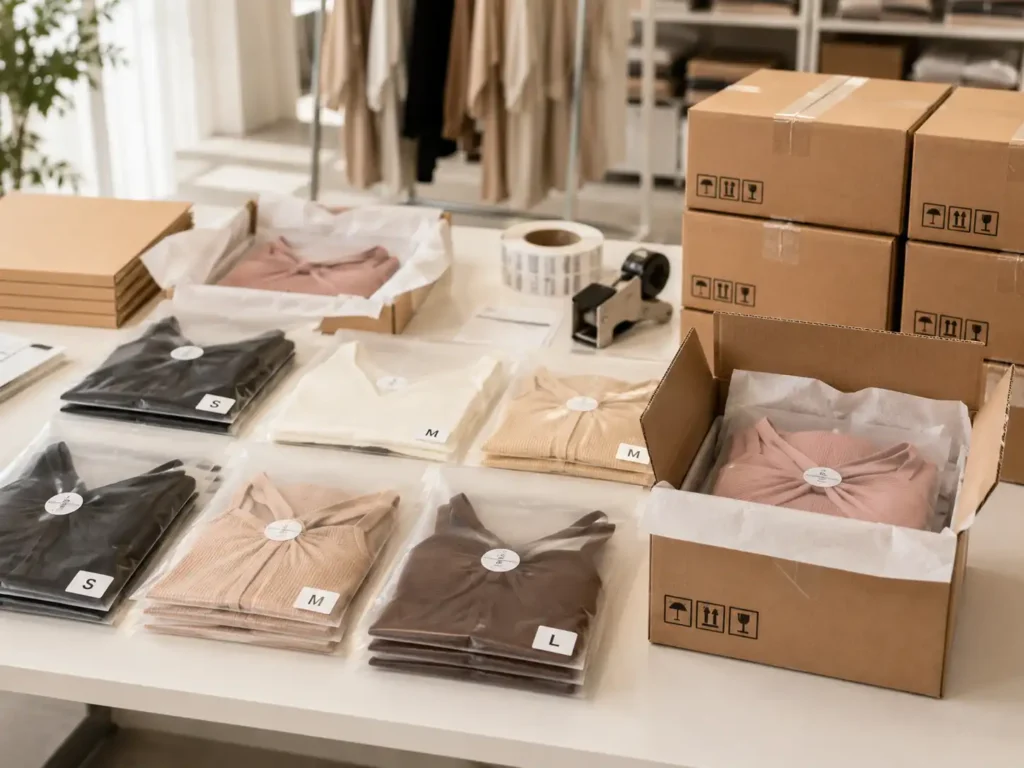
Approved labels, barcodes, size stickers, polybags, carton marks and packing ratios are checked against the packing list. Commercial invoice, carton measurements, gross and net weight and shipment coordination can follow the appointed logistics plan. Plan Bulk Production Send Quantity Plan

Quality Checks Focused on Halter Construction
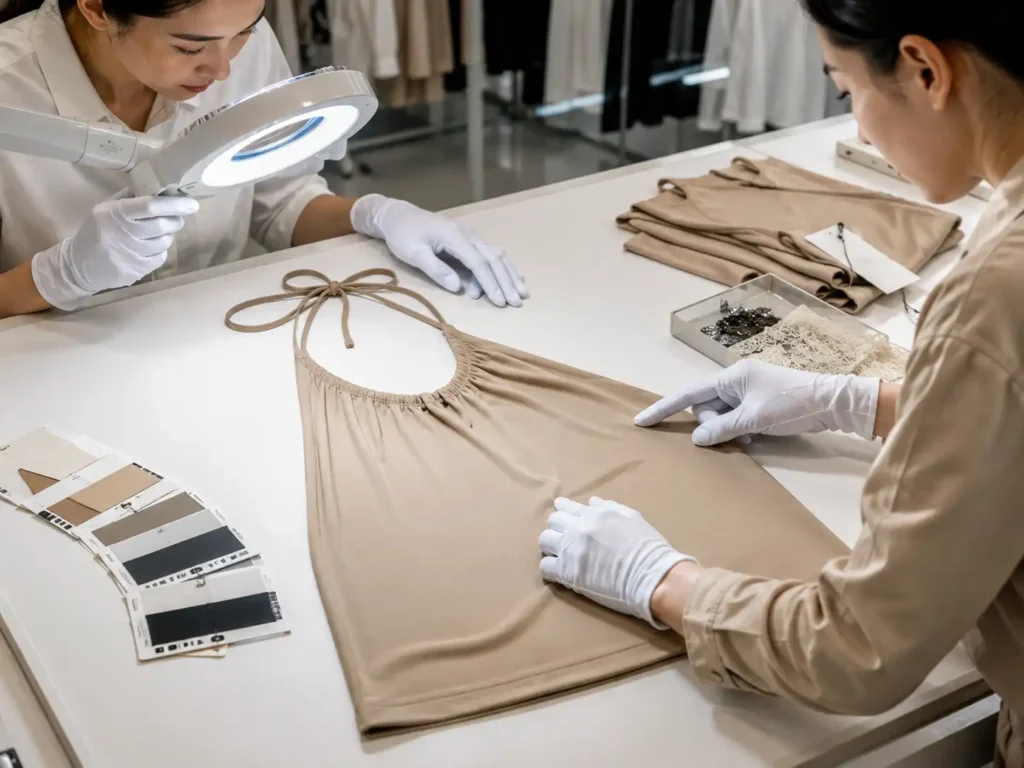
Inspection points are selected around the way a halter is worn and supported. The goal is to prevent fit-critical errors during production rather than discovering a repeated defect after the full quantity is complete.

Fabric Surface

Shell and lining are checked for shade, holes, snagging, stains, print direction, lace damage, sequin loss and visible defects. Directional fabrics are marked before cutting so shine or motif orientation remains consistent.
  • Confirm approved lot
  • Check damage before cutting
  • Separate affected panels

Neck Strap Length

Finished strap length, width and attachment position are measured against the approved size chart. Adjustable ties and fixed neck bands use different control methods, and elasticized parts require tension or cut-length standards.
  • Measure defined finished points
  • Check reinforcement
  • Verify size grading

Neckline Shape

Neckline depth, curve, left-right symmetry and edge finish are inspected on a flat surface and on body where required. Draped fronts are compared with the approved fold and grain direction.
  • Control depth tolerance
  • Check rolling or stretching
  • Compare drape balance

Bust Coverage

Front width, upper-bust shape, cup placement and side coverage are reviewed to reduce opening or exposure. Lined or structured styles receive checks for shell-lining alignment and internal support position.
  • Measure coverage points
  • Inspect cup symmetry
  • Check movement stability

Armhole Depth

Armhole depth and curve affect side coverage and comfort. Inspectors compare both sides, confirm edge tension and look for gaping, pulling, puckering or lining exposure.
  • Measure both sides
  • Check edge finish
  • Review symmetry

Back Stability

Back width, tie length, elastic tension, smocking, zipper or hook placement are checked according to the approved structure. The hem should remain level when the closure is used as intended.
  • Test closure function
  • Check tension and recovery
  • Verify hem balance

Garment Measurements

Critical measurements include bust width, upper-bust width, body length, neckline depth, strap length, armhole depth, back width and hem width. Tolerances are connected to the confirmed size chart and sample.
  • Measure by size plan
  • Record nonconformance
  • Correct before packing

Labels and Packing

Brand labels, care labels, size labels, hangtags, barcodes, polybag stickers, packing ratios and carton marks are checked against approved artwork and lists. SKU accuracy protects warehouse receiving and online fulfillment.
  • Match style-color-size data
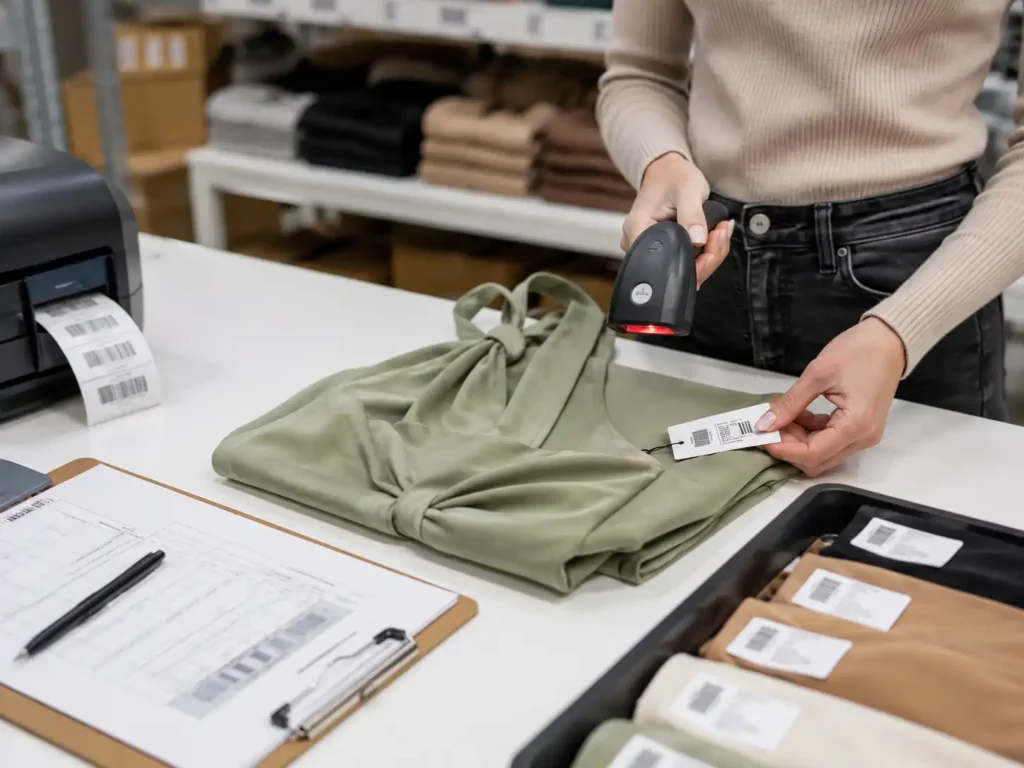
  • Scan barcodes when required
  • Verify carton breakdown

Coordinate Multiple Styles, Colors and Launch Deadlines

Large fashion programs are managed as connected groups rather than unrelated orders. A 10-30 style assortment may contain different fabrics, risks, approval paths and shipment priorities, requiring clear grouping and milestone control.

Group Styles by Manufacturing Logic

A seasonal halter program may include rib-knit basics, stretch-satin party tops, lined mesh styles, structured corset halters and printed resort pieces. Grouping only by delivery date can create production instability because each fabric and construction requires different suppliers, sample skills and sewing methods. Jinfeng reviews the line sheet and groups styles by shell fabric, lining, support system, closure, workmanship difficulty and factory fit. Shared materials are identified where commercially suitable, while high-risk styles receive separate sample and production checkpoints. The result is a production map that protects style identity while using the factory network efficiently.

Build a Controlled Approval Calendar

The project calendar works backward from campaign photography, wholesale market dates, ecommerce launch, warehouse cut-off and expected transit. Sample milestones can include first sample, fit review, revised sample, sales or photo sample, size-set review and PP approval. Material milestones include swatch confirmation, lab dip, bulk color, print strike-off, trim approval and packing artwork. A delay in one critical style should not automatically stop the full collection; priorities and dependencies are visible so approved groups can move forward while complex items continue development.

Manage Color and Size Complexity

Color count and size range affect material purchasing, cutting efficiency, sewing control, inspection and packing. A brand-defined US range such as XS-XL can be graded after base-size approval; extended sizes require dedicated review because neckline, cup, armhole and strap changes are not always linear. Color planning should consider fabric supplier MOQ, dye-lot consistency and shared lining or trim options. Quantity ratios by style, color and size are confirmed before material booking. Packing files then connect the garment size chart with size labels, barcode lists, polybag stickers and carton breakdowns.

Stage Delivery Around Commercial Priorities

When a launch window is tight, hero styles, priority colors or core sizes can be scheduled for an earlier shipment while the remaining volume follows the main production plan. Air and sea split shipment may support early ecommerce availability without moving the entire order by air. Each split requires separate SKU allocation, packing lists, carton marks and shipping instructions. Jinfeng can also coordinate with a nominated forwarder, providing cargo details, carton measurements, gross and net weight, commercial invoice and pickup preparation according to the brand’s logistics workflow.

MOQ and Quotation for Custom Halter Tops

MOQ starts from 200 pieces per style and color. Final production conditions depend on fabric availability, custom color work, construction, trims, size distribution, packaging and schedule. A clear quantity plan allows faster project evaluation.

Project FactorPlanning DirectionWhat Must Be ConfirmedCommercial Impact
Stock FabricFrom 200 pcs/style/colorExisting shade and suitable quality availableMore direct sampling and material booking
Custom DyeSupplier-dependentColor, fabric quantity and lab dip approvalHigher material MOQ or longer lead time
Two Colors200 pcs per colorEach color treated as a production unit100 black + 100 white does not meet standard MOQ
Special Lace / MeshProject reviewMotif, width, shade, stock and damage allowanceMaterial MOQ and wastage may increase
Cups / BoningGarment MOQ plus trim reviewCup sizes, boning, elastic and closuresSample cost and assembly time increase
Custom PackagingSeparate supplier MOQ may applyWoven labels, hangtags, printed bags, boxesExcess packaging or higher first-order cost
Multi-Style Program200 pcs/style/color baseline10-30 styles grouped by material and scheduleTotal quantity does not replace style-color MOQ

Private Label Details Ready for Brand Delivery

Private-label completion connects the garment with ecommerce, retail and warehouse systems. Artwork, material, placement, SKU information and packing instructions are approved before bulk execution.
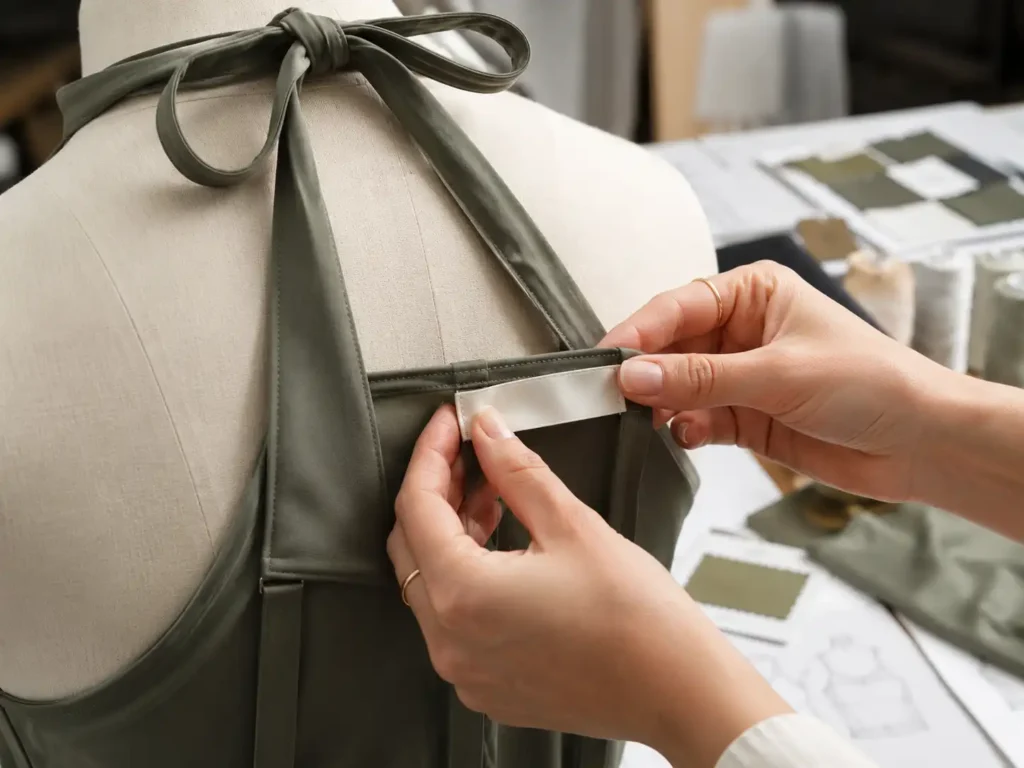
Woven Brand Labels

Woven labels can be placed at the back neck, side seam or another approved position. Size, fold type, edge softness, stitch location and skin comfort are reviewed, particularly on open-back or close-fitting halters.
  • Approve artwork and dimensions
  • Choose soft edge construction
  • Check visible placement

Care Labels

Care labels may include fiber composition, care instructions, size, country of origin, RN number, importer information or batch reference. Jinfeng can produce the approved content; final legal wording remains subject to brand confirmation.
  • Provide final label text
  • Confirm market and language
  • Match garment composition

Size Identification

Neck labels, side-seam size labels, polybag size stickers and carton size breakdown must match the confirmed size chart and SKU list. A grading change should trigger an update across every identification file.
  • Align size chart and labels
  • Check sticker consistency
  • Verify carton ratios

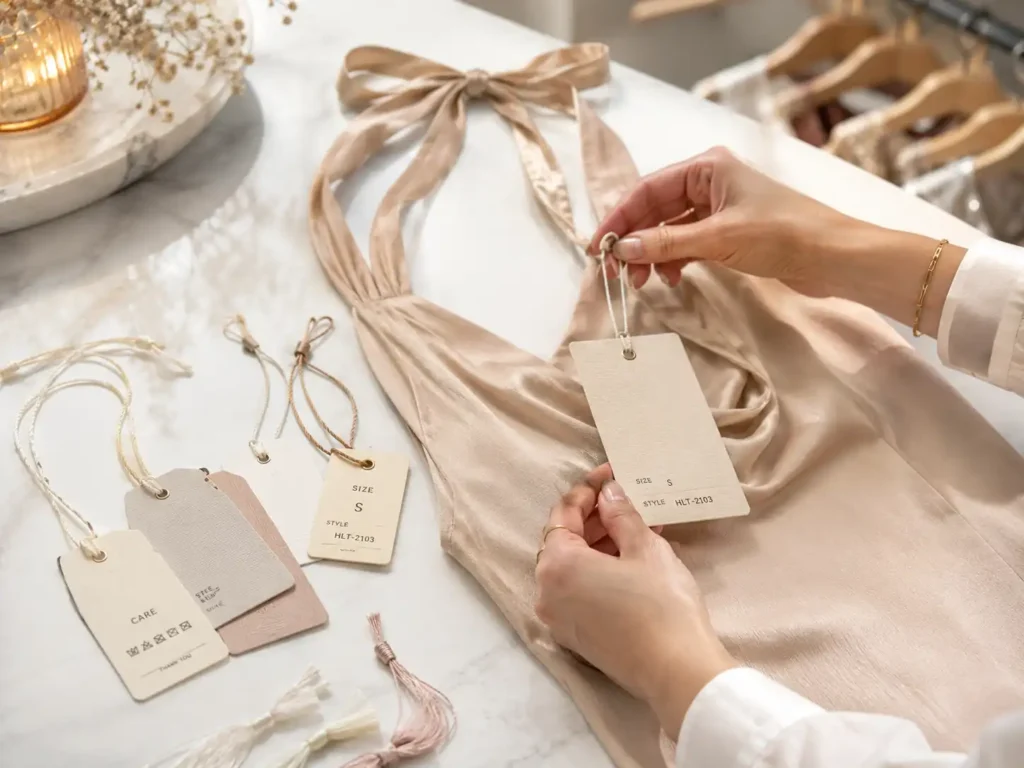
Hangtags and Tickets

Hangtag paper, finish, string, attachment point and barcode area can be coordinated with garment styling. Delicate satin, mesh or lace may need a placement method that avoids snagging or visible puncture.
  • Confirm artwork and stock
  • Protect delicate fabric
  • Check attachment security

Barcode and SKU

UPC, EAN or brand SKU lists are matched by style, color and size. Barcode printing and placement can be reviewed before packing, with scan checks arranged when required by the program.
  • Receive approved data file
  • Match style-color-size
  • Verify before carton closing

Polybags and Cartons

Polybag thickness, warnings, ventilation, size stickers, folding, tissue, hanger use, carton marks and packing ratios follow approved instructions. Warehouse labels and PO references can be added when supplied.
  • Confirm packing guide
  • Control fold and pressure
  • Match packing list

Why Fashion Brands Develop Halter Tops With Jinfeng

The value comes from the connection between product understanding, sample development, controlled production and repeat-order records. Each capability supports a specific risk in fashion-brand manufacturing.

Womenswear Focus

Jinfeng is organized around premium custom women’s fashion, including tops, dresses, skirts, jumpsuits and matching sets. Halter development draws on experience with bodycon, corset, mesh, satin, lace, partywear and resort structures rather than generic blank-top production.

Fit-Led Pattern Work

Seven-plus senior pattern makers review bust proportion, neckline, straps, armholes, back opening and body balance. Fit comments are converted into updated patterns, measurement charts and grading rules before production approval.

Fabric-Specific Control

Satin, stretch satin, lace, mesh, power mesh, jersey, rib knit, ponte, crepe, rayon, viscose and linen blends are reviewed through their own drape, stretch, transparency, shrinkage, surface and bulk-risk characteristics.

Sample-to-Bulk Discipline

PP samples, Golden samples, approved materials, sewing instructions, critical measurements and QC checkpoints provide one production reference. Inline checks focus on fit-related details before repeated errors spread across the order.

Scalable Factory Network

Six owned factories and more than ten long-term production partners allow multi-style assortments to be matched by fabric, construction and schedule. Allocation is supported by production management, merchandising, QC and packing coordination.

Repeat-Order Records

Confirmed patterns, grading, fabric references, trim details, measurements, workmanship and packing rules can be retained. Reorders still receive material and price review, but approved records reduce repeated setup and preserve brand consistency.

Halter Top Manufacturing Frequently Asked Questions

MOQ starts from 200 pieces per style and color. Stock fabric, standard colors and regular trims are more likely to fit the baseline. Custom dye, exclusive print, special lace, custom hardware, complex support or branded packaging may carry separate supplier minimums.

Yes. Front, back and detail images can start a feasibility review. A reference image shows styling but may not define measurements, fabric, lining, support or construction. Jinfeng will identify missing information before pattern and sample work begins.

A standard first sample is generally planned for 7-12 working days after suitable fabric and trims are available. Structured cups, boning, custom dye, lace placement, sequins or complex draping may extend development to approximately 10-18 working days.

Client-defined US, UK, EU or AU size charts can be reviewed. A range such as XS-XL can be graded after the base size is approved. Extended sizing requires dedicated fit and grading review because neckline, bust, armhole and strap changes may not be linear.

Yes. Fixed or removable cups can be reviewed according to neckline, bust coverage, fabric and target fit. Cup shape, size, apex height, spacing, edge softness, pocket construction and grading method should be approved during sampling.

Neck comfort is reviewed through strap width, length, angle, fabric stretch, garment weight, back support and neckline position. Fit evaluation checks pressure during movement and wear, then approved dimensions and construction are recorded for production.

Yes. Satin requires control over shine direction, snagging, bias distortion, seam puckering, color and packing marks. Mesh requires control over stretch direction, transparency, holes, edge stability and lining coverage. Each fabric group follows its own sample and QC points.

Jinfeng can coordinate woven labels, care labels, size labels, hangtags, barcodes, polybags, size stickers, carton marks and retail or warehouse packing instructions. Final artwork, label wording, SKU files and packing guides must be approved before bulk execution.

A standard program is commonly planned around 30-45 days after PP approval and material readiness. Complex multi-style assortments, custom materials, embellishment, extensive size ranges or special packing may require approximately 45-60 days. The confirmed schedule follows the approved project calendar.

Yes. NDA-based cooperation can cover tech packs, original samples, patterns, measurement charts, material and trim plans, private-label files, unpublished designs, quantities, target prices and launch schedules. Proprietary project information is not published without authorization.

Start Your Custom Halter Top Project

Send Kelly a reference image, tech pack, original sample or line sheet for a focused feasibility review. The team will assess neckline structure, strap direction, bust coverage, armhole depth, back support, fabric behavior, lining, cups, closures, MOQ fit and production risk.

For a multi-style program, include quantity by style and color, size range, color plan, private-label requirements, priority launch styles and the target delivery window.

  • Style files and preferred fabric or trim direction
  • Quantity per style/color, size range and color plan
  • Labels, barcodes, packing guide and delivery destination

Tell Us About Your Dress Project

Share your product details, estimated quantity and development requirements. Our team will review your project and provide practical OEM/ODM production feedback.

Premium Women’s Apparel Production for Fashion Brands

From dress sample development to bulk production, JF Apparel supports fashion brands with confidential OEM/ODM manufacturing, reliable quality control and scalable production support.

START YOUR DRESS PROJECT

Ready to Develop Your Next Dress Collection?

Share your design concept, product requirements or sourcing plans with our team. We’ll review your project and provide practical feedback on development, materials, MOQ and production.

7-10 Days

Sample Development

200 PCS

Starting MOQ

Fast Response

Professional Follow-Up