
Satin Top Manufacturer for Occasionwear Brands
Custom Satin Tops Developed for Refined Occasionwear Collections
Jinfeng Apparel develops draped, fitted, corset-inspired, halter, strapless, and asymmetric satin tops for established occasionwear labels and multi-style womenswear programs. Development covers fabric direction, pattern correction, structured support, sample revision, PP approval, bulk production, satin-specific quality control, private-label packing, and export coordination.
- Since 2008, with 6 owned women’s fashion factories and 10+ long-term production partners.
- 2 sample rooms, 7+ senior pattern makers, and 20+ sample machinists support complex top development.
- 100,000+ pieces of monthly capacity across women’s fashion categories.
- MOQ starts from 200 pieces per style and color, subject to fabric, trims, construction, and packing requirements.
Manufacturing Capacity Behind Your Satin Top Program
Development Team
Production Network
Quality Management
Built for Established Occasionwear Product Teams
Best-Fit Programs
- Clear launch calendar and target market
- Defined style, color, and size plan
- Professional sample budget
- Bulk production plan
- Private-label or retail-ready packing needs
- Potential for seasonal repeats or color extensions
Production Boundaries
- MOQ starts from 200 pieces per style and color
- Multiple styles do not combine into one 200-piece MOQ
- Custom dyeing and special trims may require higher supplier MOQ
- Sample development is charged separately
- Bulk production starts after required approvals
Where Satin Top Programs Commonly Lose Quality
Wrong Satin Choice
Collapsed Necklines
Unstable Bust Fit
Puckered Seams
Sample-Bulk Differences
Missed Launch Windows
Satin Top Styles for Occasionwear Collections

Cowl-Neck Satin Tops

Halter Satin Tops

Corset Satin Tops
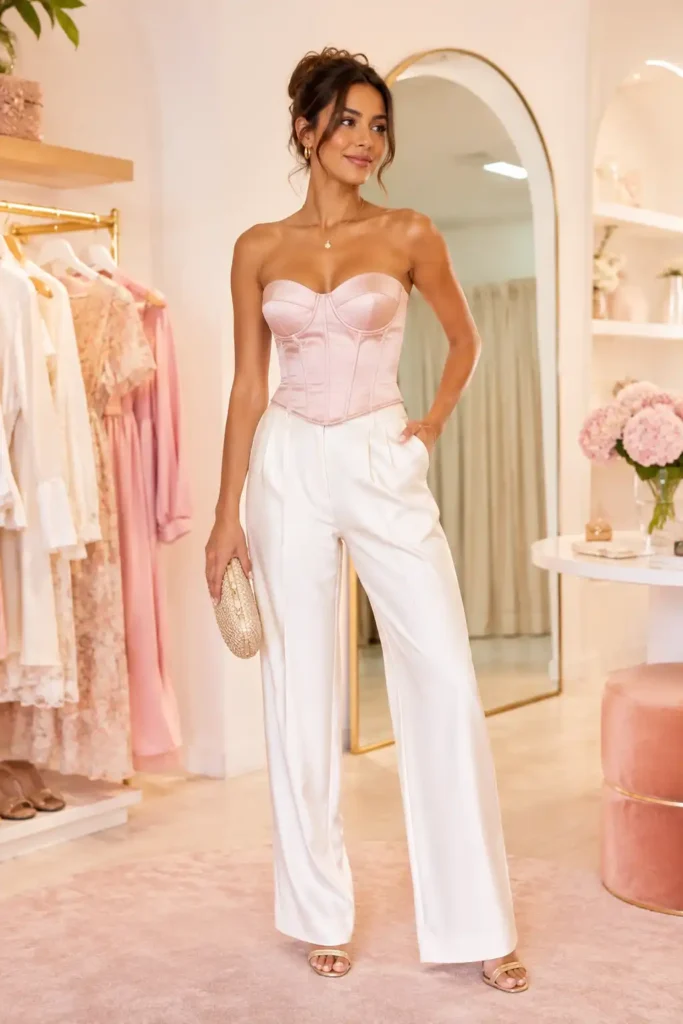
Bustier Satin Tops

Strapless Satin Tops

One-Shoulder Satin Tops

Draped Satin Blouses

Asymmetric Satin Tops
Build Coordinated Satin Occasionwear Collections

Top and Skirt Sets

Evening Separates
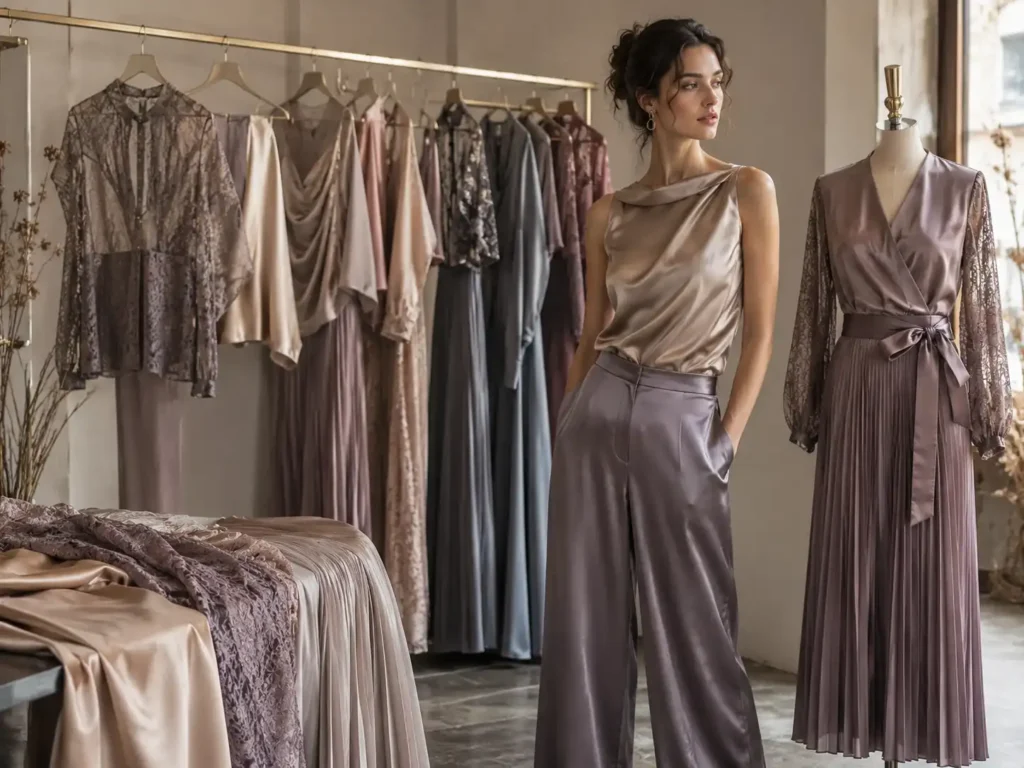
Mixed-Fabric Capsules
Satin can be combined with lace, mesh, crepe, sequin, chiffon, jersey, or suiting. Material mixing needs careful control of weight, stretch, shrinkage, surface friction, lining, seam allowance, and pressing temperature. The goal is a coherent collection without creating avoidable bulk-production risk at each fabric transition.
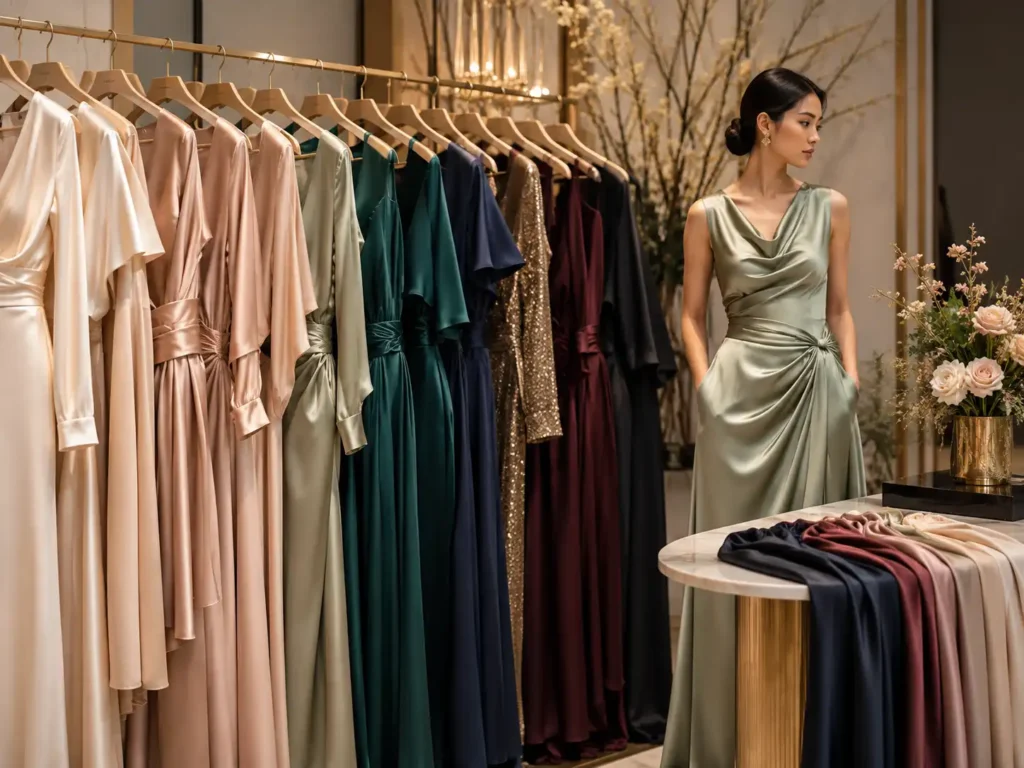
Seasonal Color Stories
Occasionwear often relies on black, ivory, champagne, chocolate, navy, burgundy, jewel tones, soft pastels, and holiday metallic effects. Satin reflects light differently across colors, so Pantone references, physical swatches, lab dips, lighting conditions, lining color, and bulk dye-lot approval are reviewed before production. Core colors can be prioritized before extending into additional seasonal shades.
Satin Selection Guide for Occasion Tops
Satin selection starts with the garment structure and end use. Surface appearance alone is not enough. Jinfeng Apparel reviews composition, weight, width, stretch, recovery, transparency, hand feel, shine, drape, dye-lot risk, supplier MOQ, lead time, lining choice, and pressing behavior before recommending a development direction.
| Satin Direction | Best Use | Drape and Support | Main Production Risk | Development Focus |
|---|---|---|---|---|
| Matte Satin | Refined blouses, one-shoulder tops, wedding guest separates | Medium drape with controlled shine | Press marks, shade variation, seam impression | Color approval, seam flatness, pressing test |
| Stretch Satin | Fitted corset, bustier, strapless, body-skimming tops | Medium support with stretch | Recovery loss, seam tension, zipper rippling | Stretch direction, pattern reduction, recovery check |
| Heavy Satin | Structured bustier, sculpted neckline, premium evening tops | High body and shape retention | Bulk, stiffness, visible seam ridges | Internal structure, seam grading, pressing pressure |
| Lightweight Drapey Satin | Cowl neck, halter, wrap, fluid blouse | High drape and movement | Slippage, transparency, puckering, twisting | Grain direction, lining, cutting control, hem balance |
| Satin-Back Crepe | Reversible design ideas, structured drape, cleaner matte contrast | Balanced drape with textured reverse | Surface mismatch, press response, edge control | Face-side confirmation, seam finish, styling intent |
| Charmeuse-Like Satin | Premium camisoles, fluid evening separates | Soft hand and fluid drape | Snagging, needle marks, seam puckering | Fine sewing method, handling protection, crease-safe packing |
Control Satin Before Problems Reach Bulk Production
Shine Direction
Shade Consistency
Snag Prevention
Seam Puckering
Needle and Press Marks
Crease-Safe Handling
Custom Details for Distinctive Satin Occasion Tops

Cowl Depth
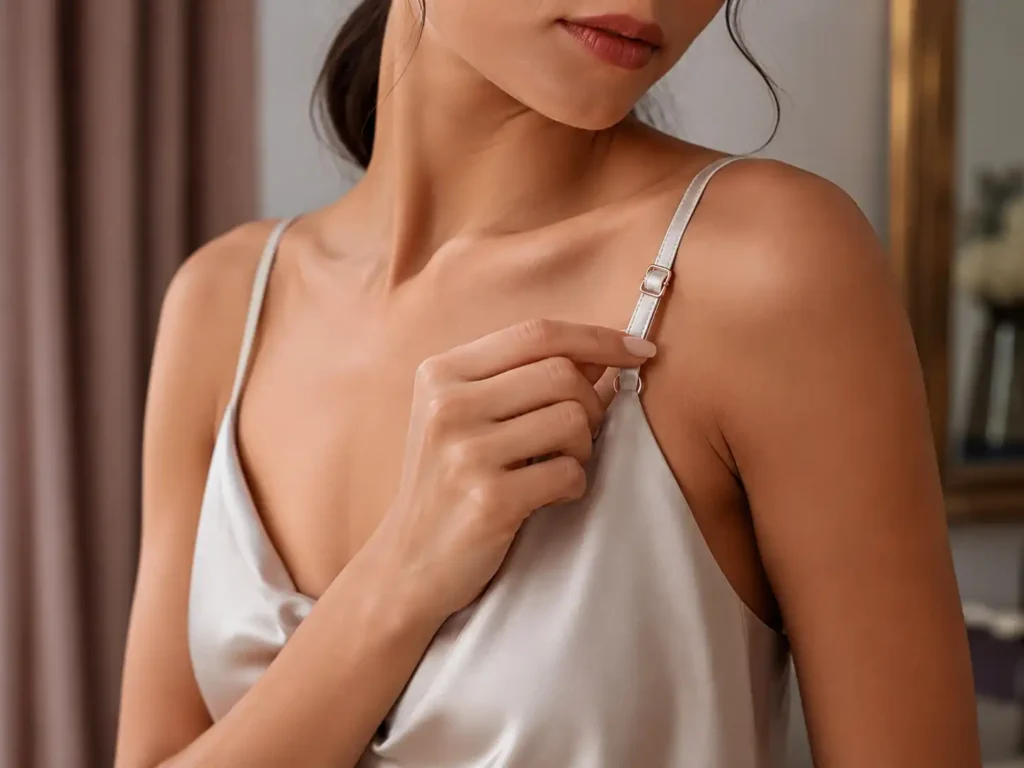
Adjustable Straps

Cups and Boning
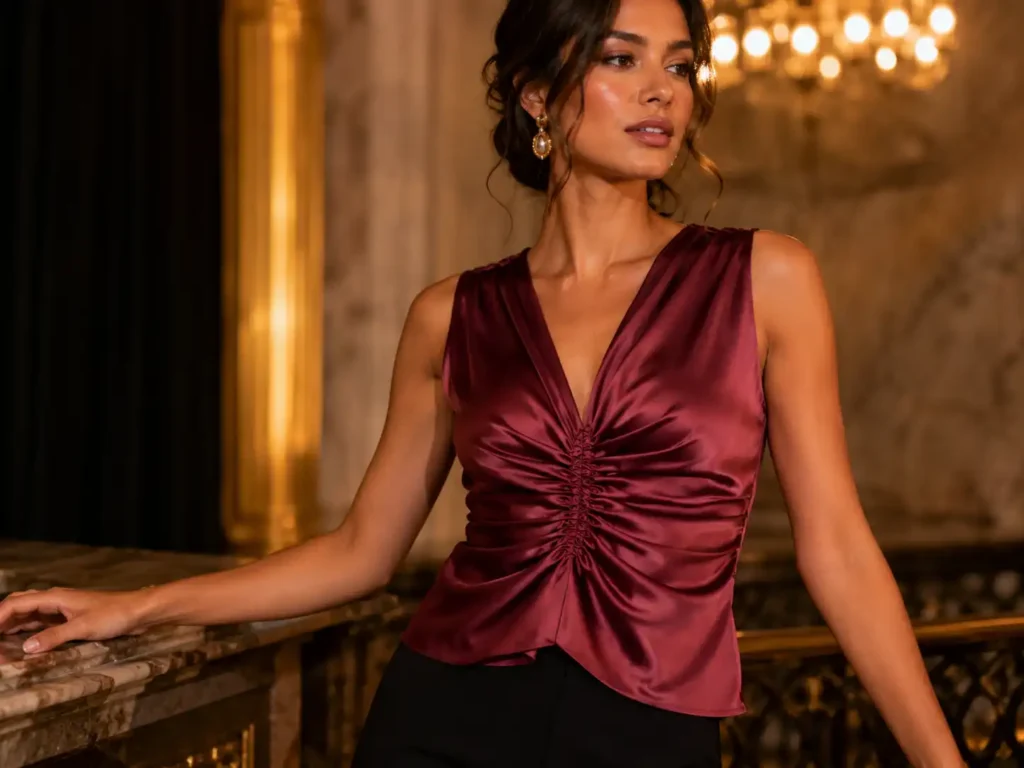
Ruching and Gathers

Tie-Back Structures

Bows and Statements

Cut-Out Details
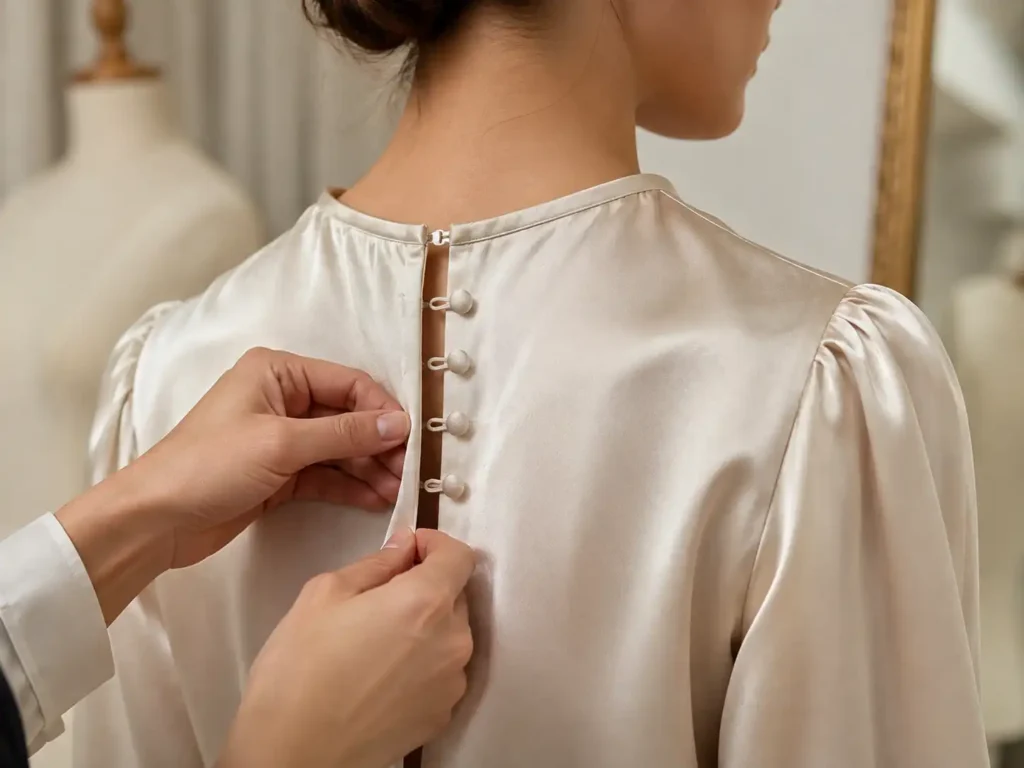
Closure Options
Engineer Fit Around Bust, Neckline, and Support
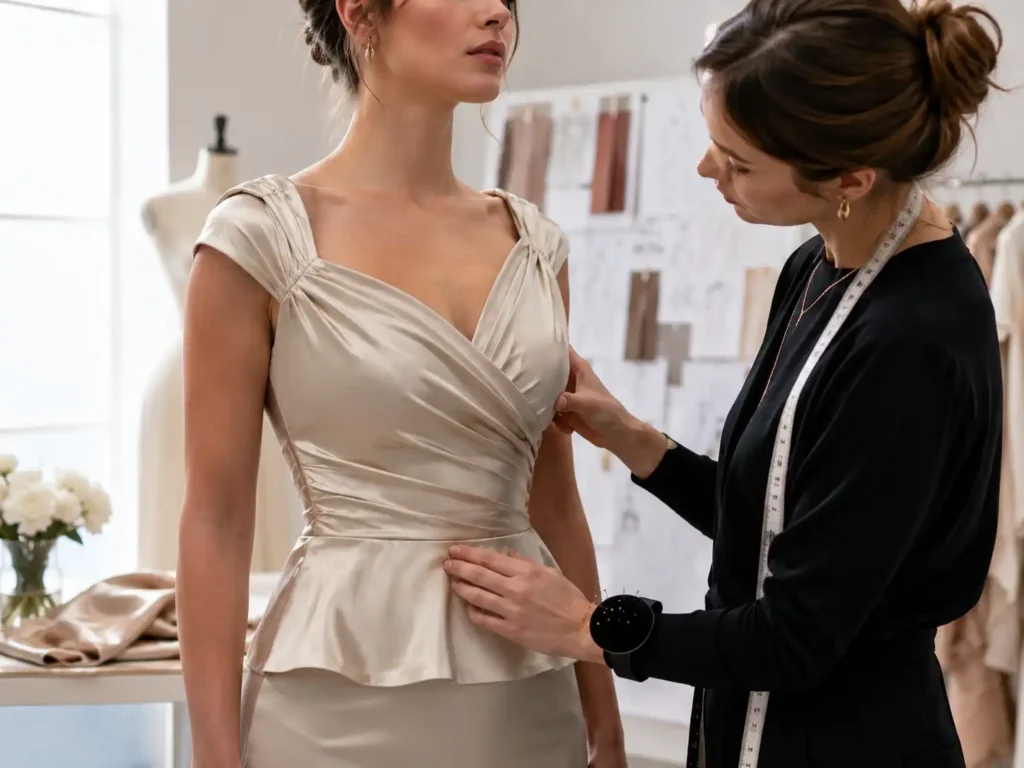
Bust Coverage
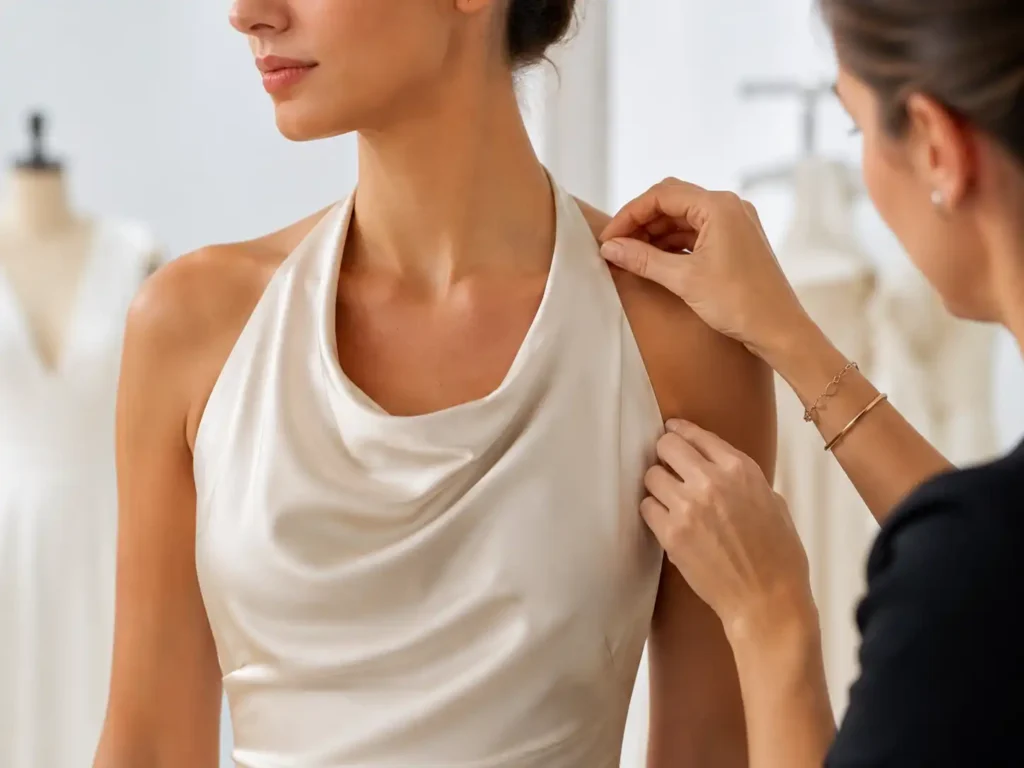
Neckline Stability

Underbust Position

Strap Length

Armhole Coverage

Waist and Hem Placement
Workmanship That Keeps Satin Clean and Refined
Fine workmanship on satin is visible in the way surfaces remain smooth, edges stay controlled, and internal structure does not disturb the outer face. Production instructions are built around the approved fabric and sample rather than generic sewing methods.
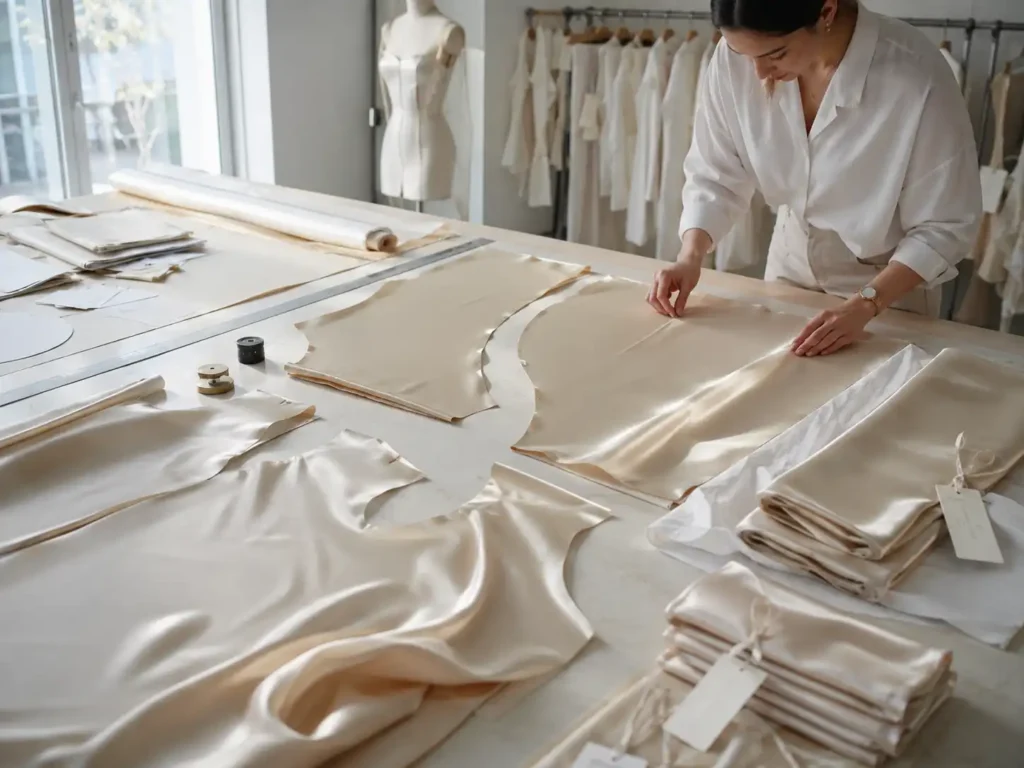
Directional Cutting and Panel Control
Visible panels are cut with planned grain and shine direction. Fronts, backs, sleeves, straps, ties, collars, peplums, and matching-set components are identified and grouped. Cut panels are reviewed for surface damage, shade, direction, notches, and distortion before sewing. Sensitive satin is handled in protected bundles to reduce abrasion and edge fraying.
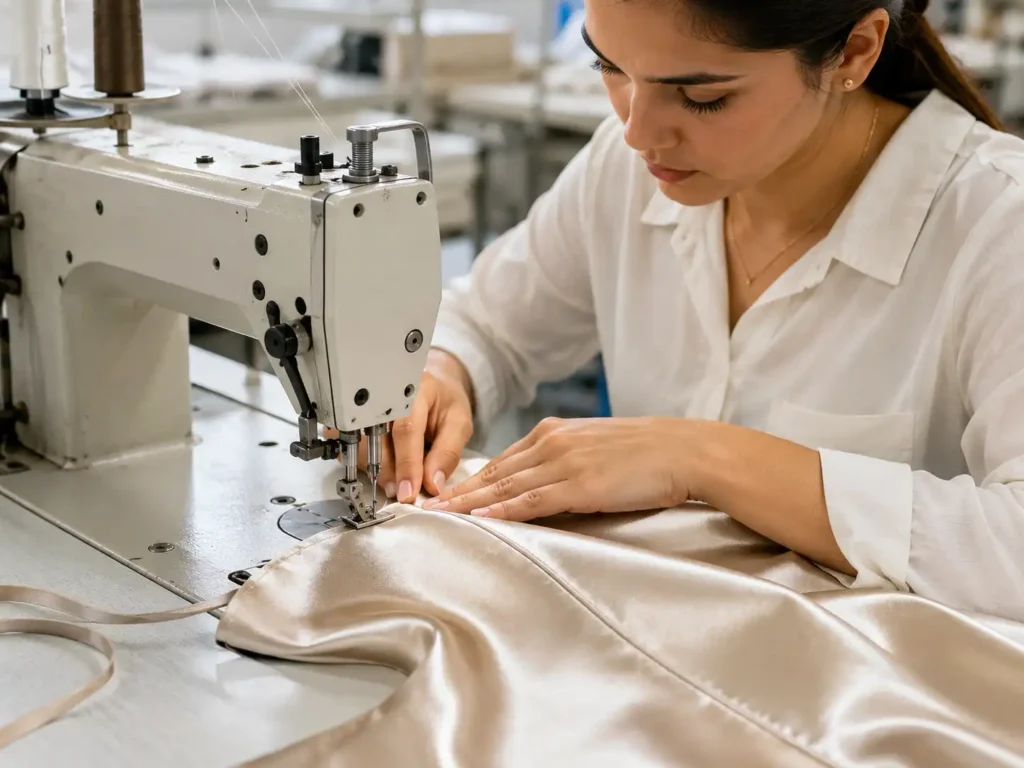
Seam Engineering and Flat Construction
Seam type, allowance, stitch length, tension, thread, needle, pressing sequence, and internal grading are selected to reduce puckering and ridges. Curved bust seams, darts, zipper seams, bias seams, necklines, armholes, and narrow hems require different handling. Inline checks focus on flatness, symmetry, smooth feeding, and stitch security before defects spread through a production batch.
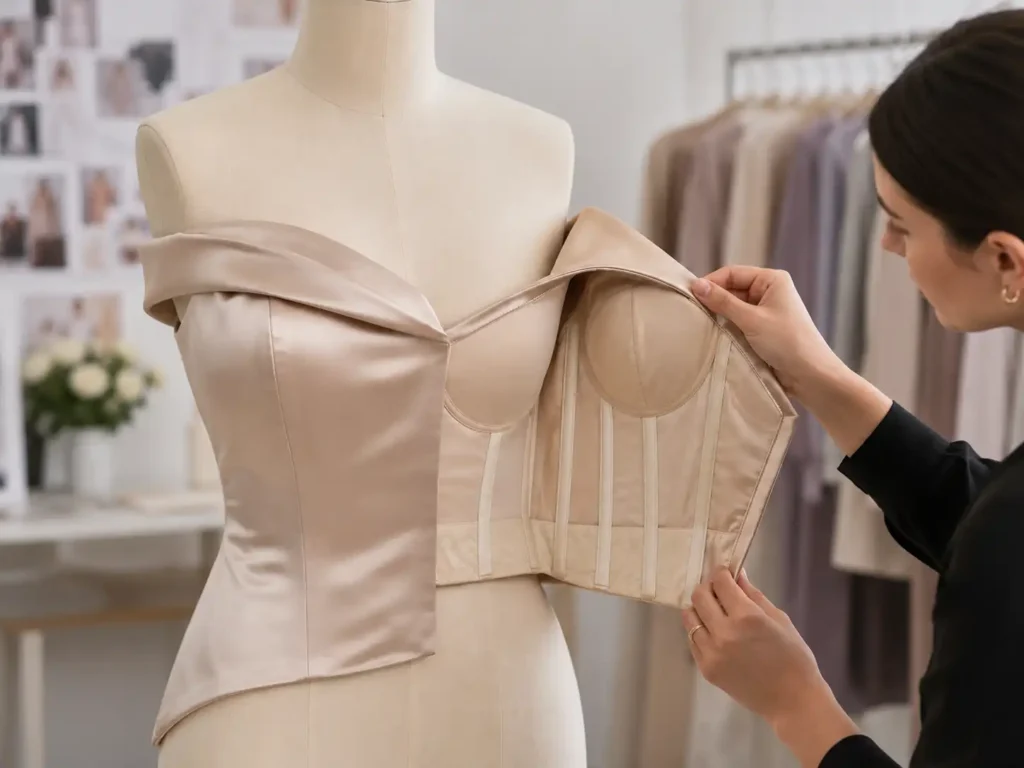
Lining and Internal Support
Lining is selected according to opacity, stretch, hand feel, static behavior, support, and intended wear. Structured tops may need supportive layers, cups, boning channels, reinforcement tape, or elastic. Fluid tops may need partial lining, facing, or lightweight stabilization. Internal construction is checked for twisting, exposure, bulk, discomfort, and compatibility with the outer satin.
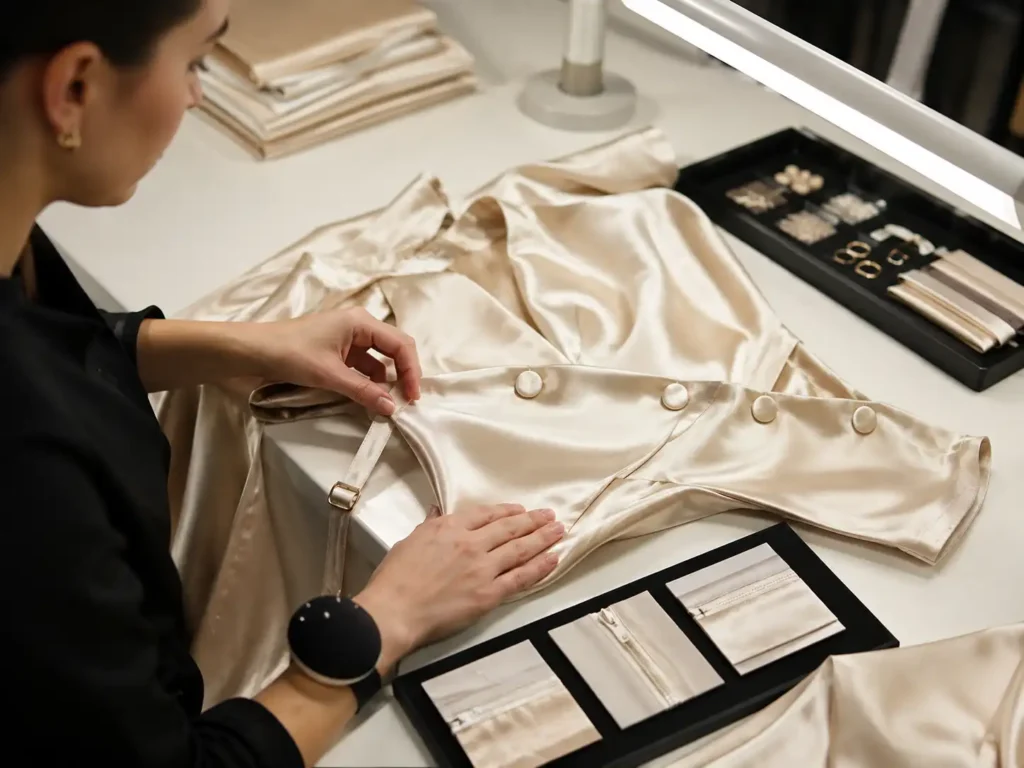
Closures, Edges, and Finishing
Invisible zippers, hooks, covered buttons, ties, strap hardware, binding, facing, narrow hems, and clean-finished edges are checked for smooth operation and visual alignment. Zipper bulging, top-edge waviness, uneven binding, exposed lining, loose threads, stains, and rough corners are corrected before final pressing. Finished garments are reviewed under lighting that reveals surface and seam defects.
From Design Reference to Approved Satin Top Sample
Style Review
Fabric and Trim Direction
Pattern Development
First Sample
Revision and Fit Review
PP and Golden Sample
MOQ, Cost, and Production Feasibility
MOQ starts from 200 pieces per style and color. Final feasibility depends on satin availability, dyeing, trims, lining, construction, size ratio, color count, private-label materials, packing, and production schedule. Accurate quotation requires a complete view of the garment rather than a reference image alone.
| Cost and MOQ Driver | What Must Be Confirmed | Effect on Production |
|---|---|---|
| Satin Fabric | Composition, weight, width, stretch, stock color or custom dye, supplier MOQ | Affects drape, fit, consumption, color control, lead time, and unit cost |
| Construction | Cowl, ruching, cups, boning, cut-outs, lining, zipper, hand details | Changes pattern work, sample rounds, sewing time, QC points, and loss allowance |
| Color Plan | Number of colors, quantity per color, lab dips, dye lots | MOQ is normally calculated per style and color; each color needs separate control |
| Size Range | Base size, XS-XL or wider range, grade rule, size ratio | Affects grading, cutting ratio, measurement control, labels, and carton breakdown |
| Private Label | Woven labels, care labels, hangtags, barcodes, polybags, cartons | Packaging suppliers may have separate MOQ and development time |
| Delivery Plan | Approval date, material booking, production window, inspection, freight | Rush timing is reviewed only after materials, PP status, capacity, and logistics are known |
From PP Approval to Controlled Bulk Delivery

PP Sample Approval
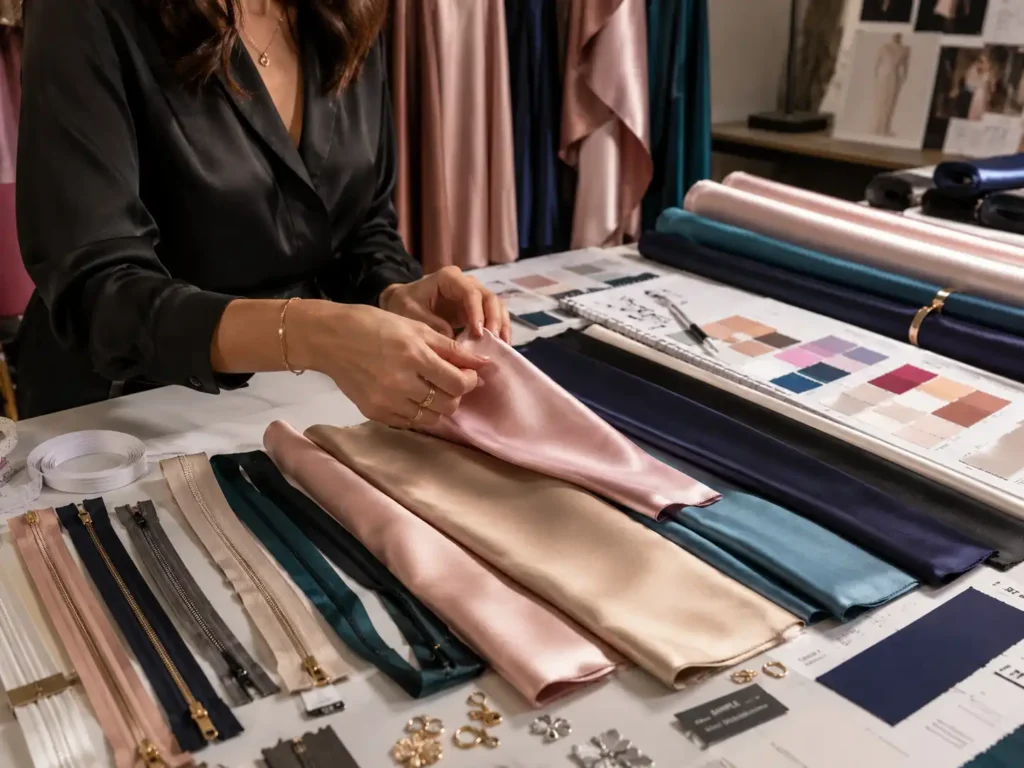
Material Confirmation
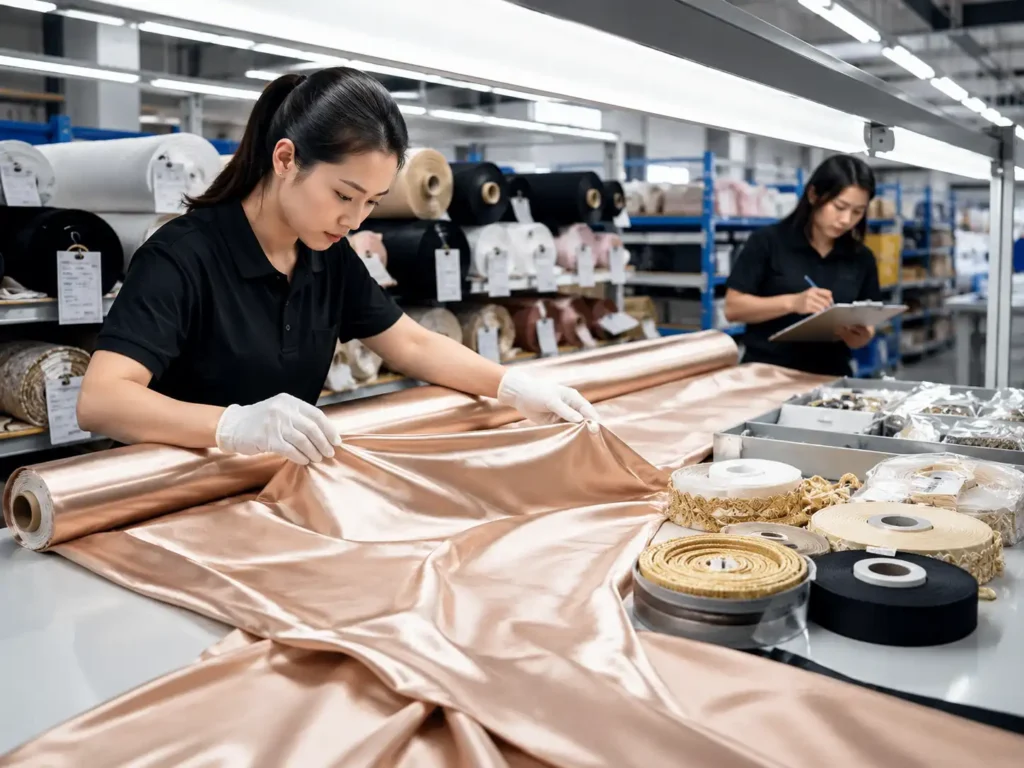
Incoming Inspection
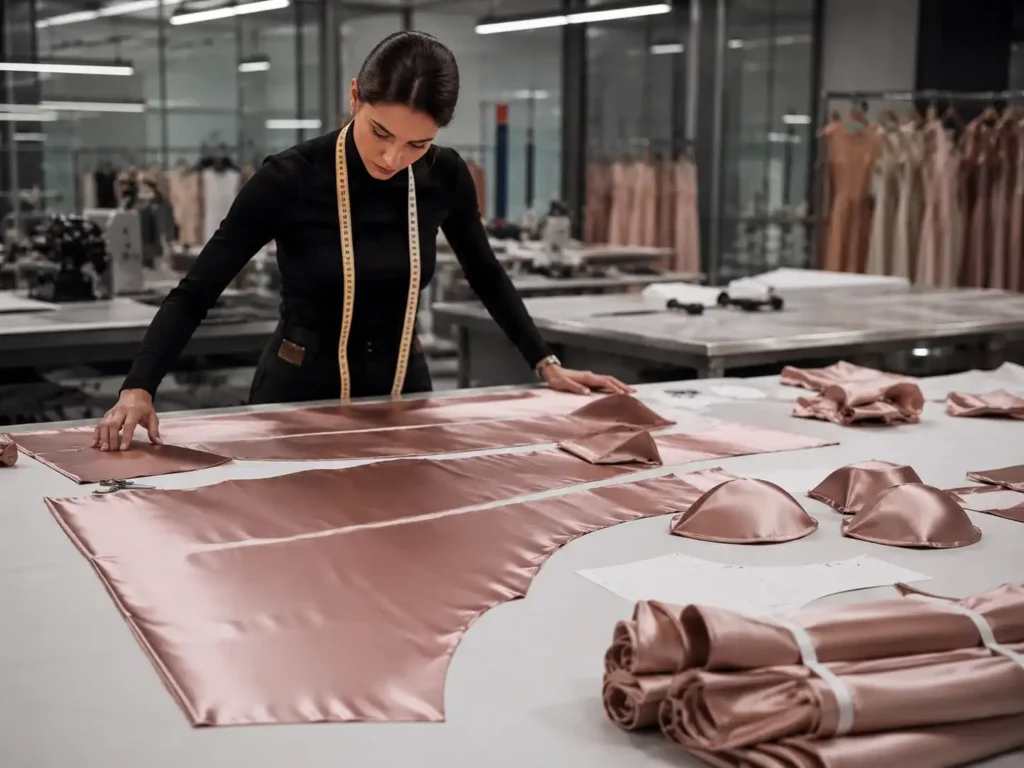
Cutting Control
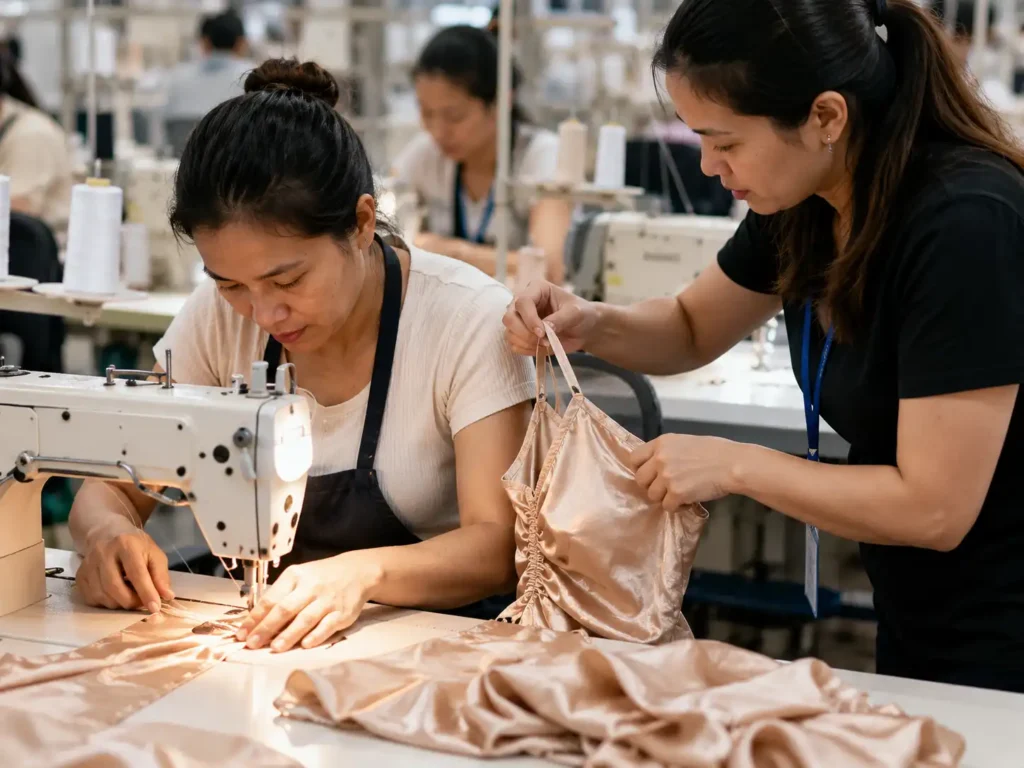
Sewing and Inline Checks
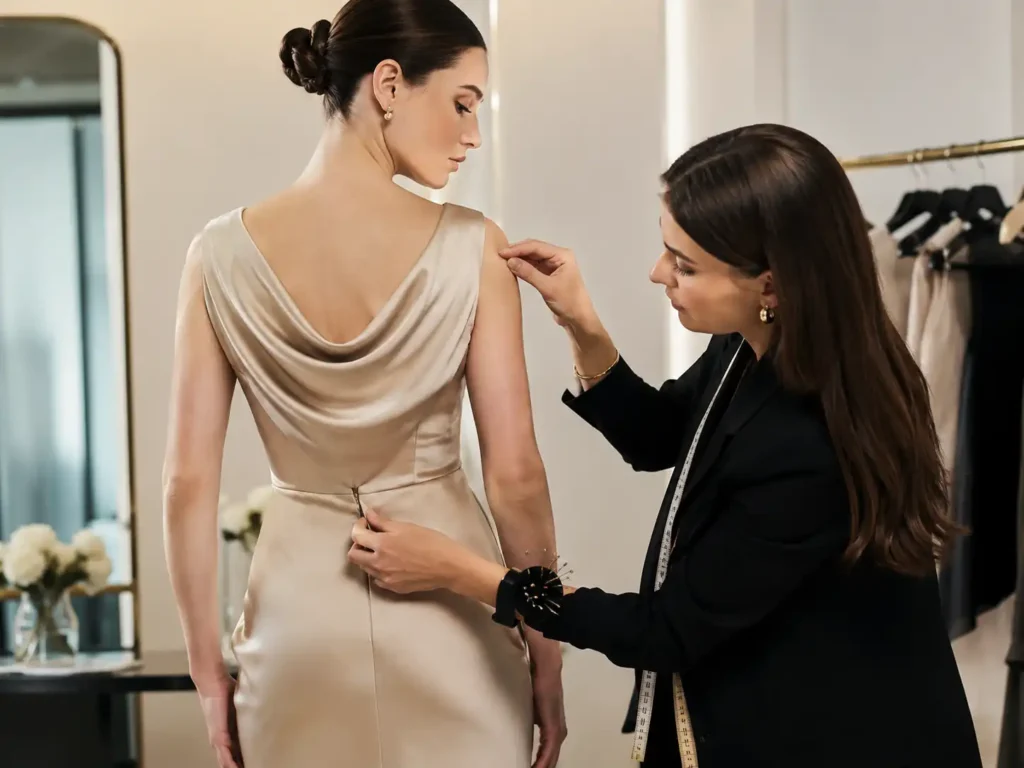
Final Appearance Review
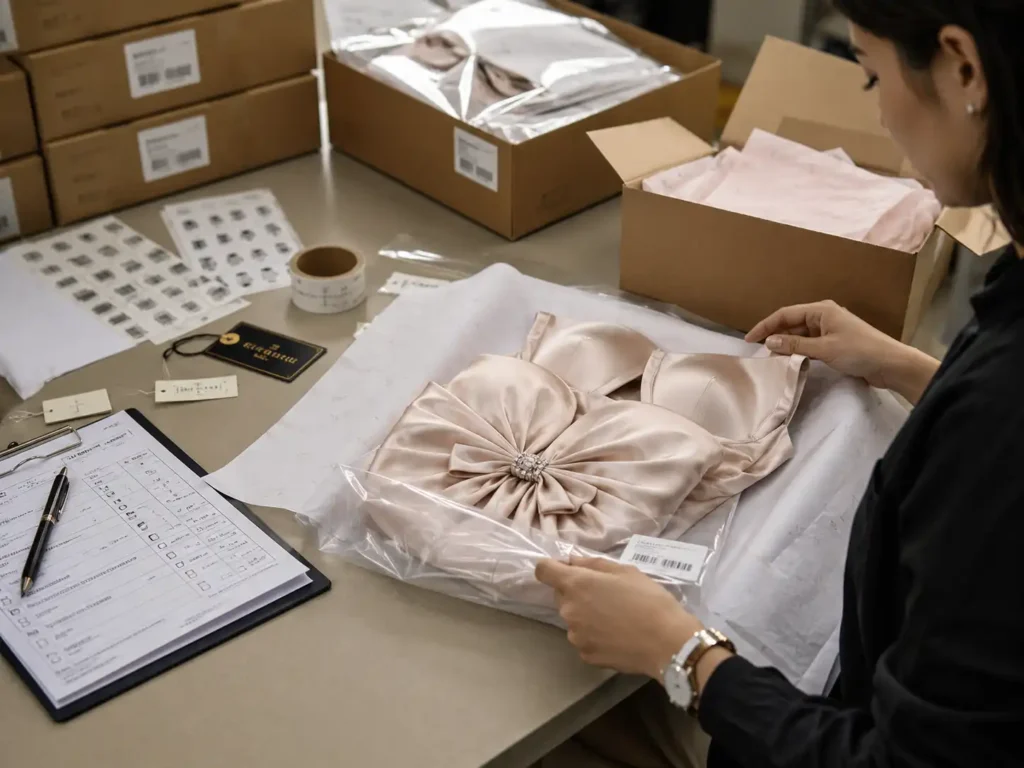
Packing Verification

Shipment Coordination
Satin-Specific Quality Control from Fabric to Packing
Fabric Surface Check
Shade and Shine Review
Cut-Panel Direction
Sewing Tension Check
Key Measurement Control
Fit-Sensitive Review
Pressing and Appearance
Packing Protection
Pressing, Private Labels, and Surface-Safe Packing
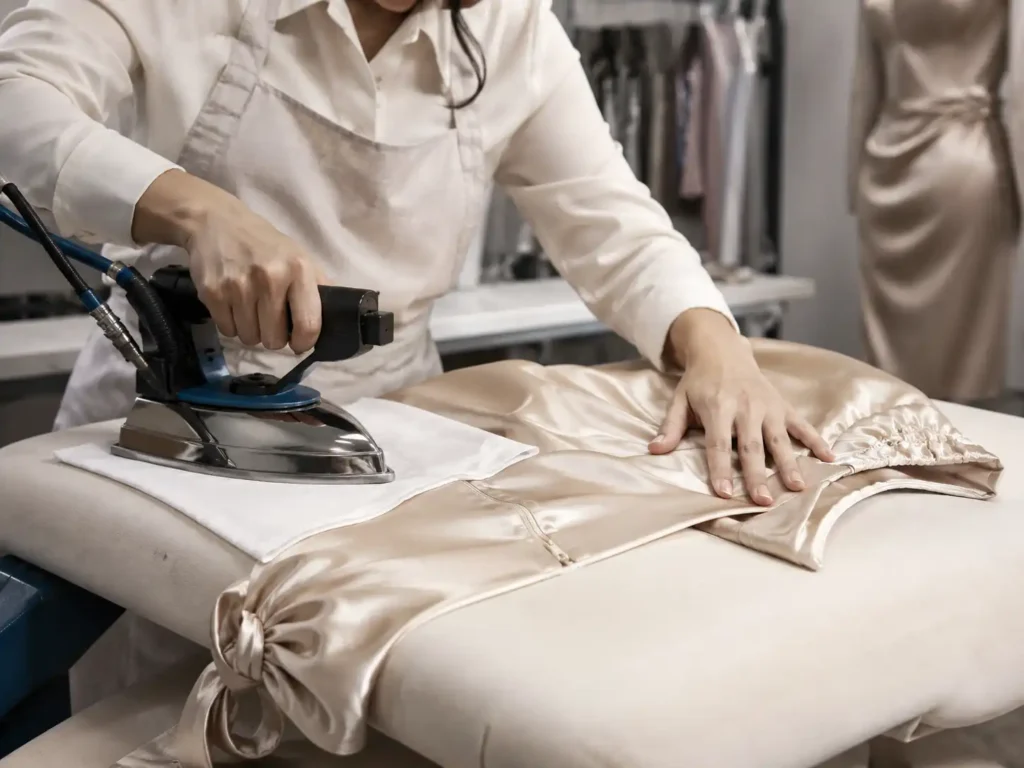
Controlled Pressing
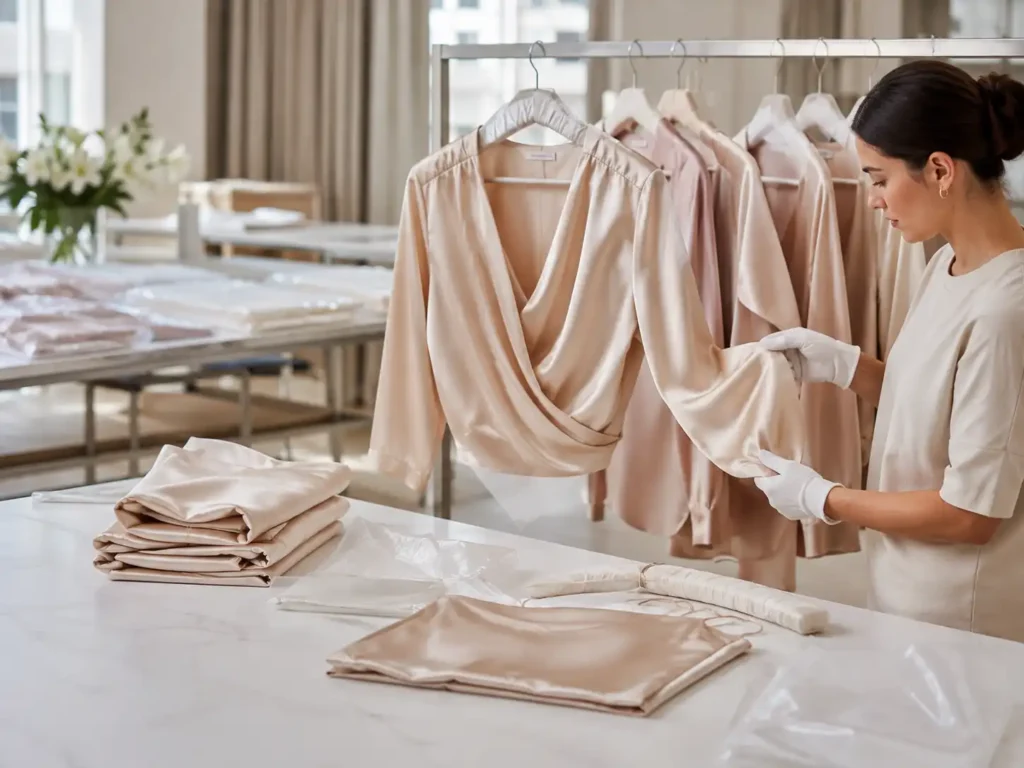
Cooling and Handling
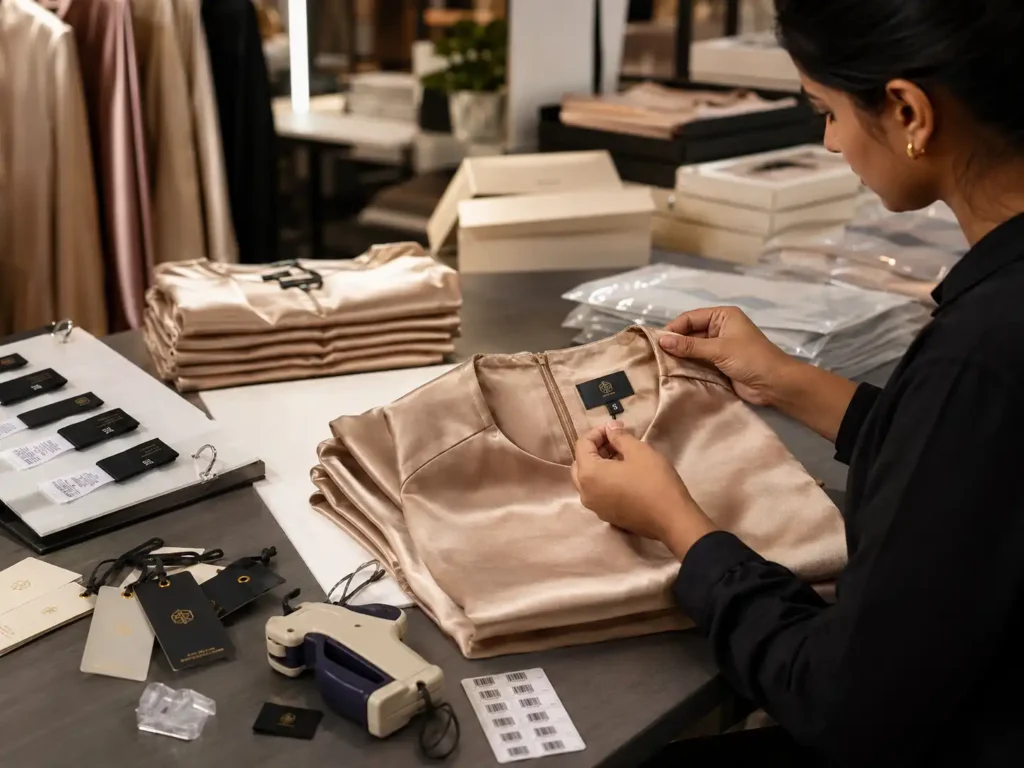
Private Label Application
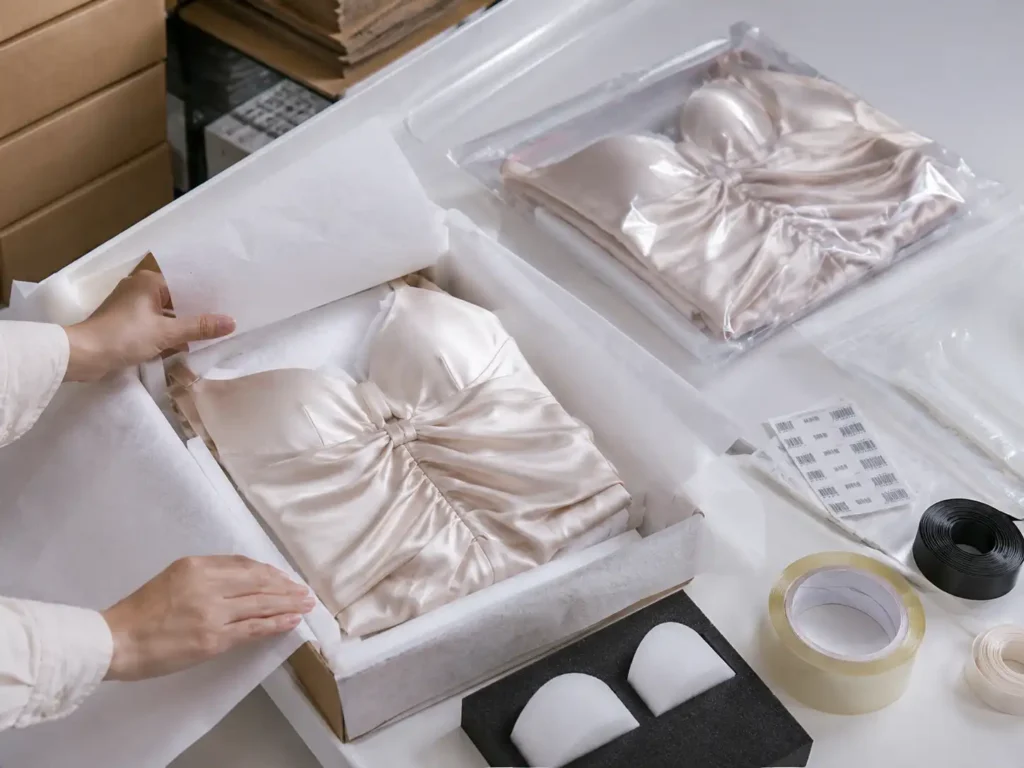
Protective Packing
Manage Multi-Style Launches and Repeat Satin Orders
Style Grouping
Fabric Grouping
Sample Priority
Revision Records
Repeat-Order Records
Multi-Batch Delivery
Protect Unreleased Designs and Brand Information
Design Protection
Private Label Confidentiality
Compliance and Inspection Support
Occasionwear Programs Managed from Sample to Delivery
US Satin Occasionwear Program
US Private-Label Program
UK Wedding Guest Collection
Satin Top Manufacturing Frequently Asked Questions

Start Your Satin Top Development Program
Send Kelly and the Jinfeng Apparel team enough information to evaluate structure, fabric direction, sampling requirements, MOQ, production feasibility, and the next development step.
A complete brief allows faster review and reduces avoidable revisions before pattern work begins. Files can be submitted by email or discussed through WhatsApp, followed by formal confirmation through project documents.
Please include:
- Reference image, tech pack, original sample, sketch, or line sheet
- Target satin, hand feel, shine level, stretch, or approved swatch
- Style quantity and quantity per color
- Base size, size range, grade rule, and planned size ratio
- Bust support, lining, cups, boning, strap, closure, and trim requirements
- Main label, care label, hangtag, barcode, SKU, and packing requirements
- Target sample purpose, launch date, delivery date, and preferred shipment method
- Target market and any testing, inspection, or warehouse-receiving requirements

